


Postpartum shedding and postpartum regrowth are two different hair problems, and the cut that solves one can make the other more obvious.
Postpartum hair loss peaks around four to six months after birth, and the short regrowth that follows takes another six to twelve months to reach cheekbone length. That means most new mothers need two different haircuts within a year, not one. The 25 styles below are grouped by where you are in that cycle, because a blunt collarbone cut that hides thinning ends at month four does nothing about the halo of one-inch hairs standing up at your hairline at month nine.
Each section covers a stage: length and weight for heavy shedding, fringe shapes that cover new growth at the hairline, layered cuts that blend regrowth past the cheekbone, short crops that turn the whole thing into texture, and low-tension styles for a fragile hairline. Face shape guidance, a salon script, and honest trim schedules follow the gallery.
| Stage | What Your Hair Is Doing | Cut That Helps |
|---|---|---|
| Months 3 to 6 | Heavy shedding; ponytail feels half as thick; ends look see-through | Blunt perimeter, collarbone or shorter, minimal visible layers |
| Months 6 to 10 | Shedding slows; a band of one to three inch regrowth appears at the hairline | Fringe or face-framing pieces the short hairs can blend into |
| Months 10 to 18 | Regrowth reaches cheekbone to chin; it kinks and separates from longer hair | Soft layers cut to meet the regrowth length instead of fighting it |
| Any stage | Hairline is fragile and breaks easily under tension | Low-tension styles: nape ponytails, loose twists, sized-up braids |
Cuts for the Heavy Shedding Phase
Between months three and six the problem is density, not length. Taking off two to three inches and keeping the perimeter blunt puts every remaining strand at the same length, which is the cheapest way to look like you have more hair than you do. Heavy layering backfires here, since layers work by removing weight from hair that no longer has weight to spare, and our gallery of layered cuts built for thin hair covers the same problem outside pregnancy.
1. Collarbone Cut with a Blunt Perimeter
Cutting straight across at the collarbone concentrates whatever density is left into a single visible line, which the eye reads as thickness. The technique matters more than the length: scissors held horizontally with tension, and no point cutting into the ends, because notching the perimeter is what makes postpartum ends look wispy.

2. Chin-Length Blunt Bob
Fine hair that has lost a third of its density gains the most from going shorter, because a chin-length line carries far less weight pulling it flat at the root. If your hair is coarse or very thick even after shedding, this length will widen at the jaw instead of falling clean, and a longer version works better. Our bob shapes for fine hair break the density question down further.

3. Soft A-Line Lob
The front pieces fall about an inch longer than the back, creating a diagonal from nape to chin that pulls the eye downward. Round and square faces get the most from that angle, since the vertical pull offsets width at the cheek and jaw.
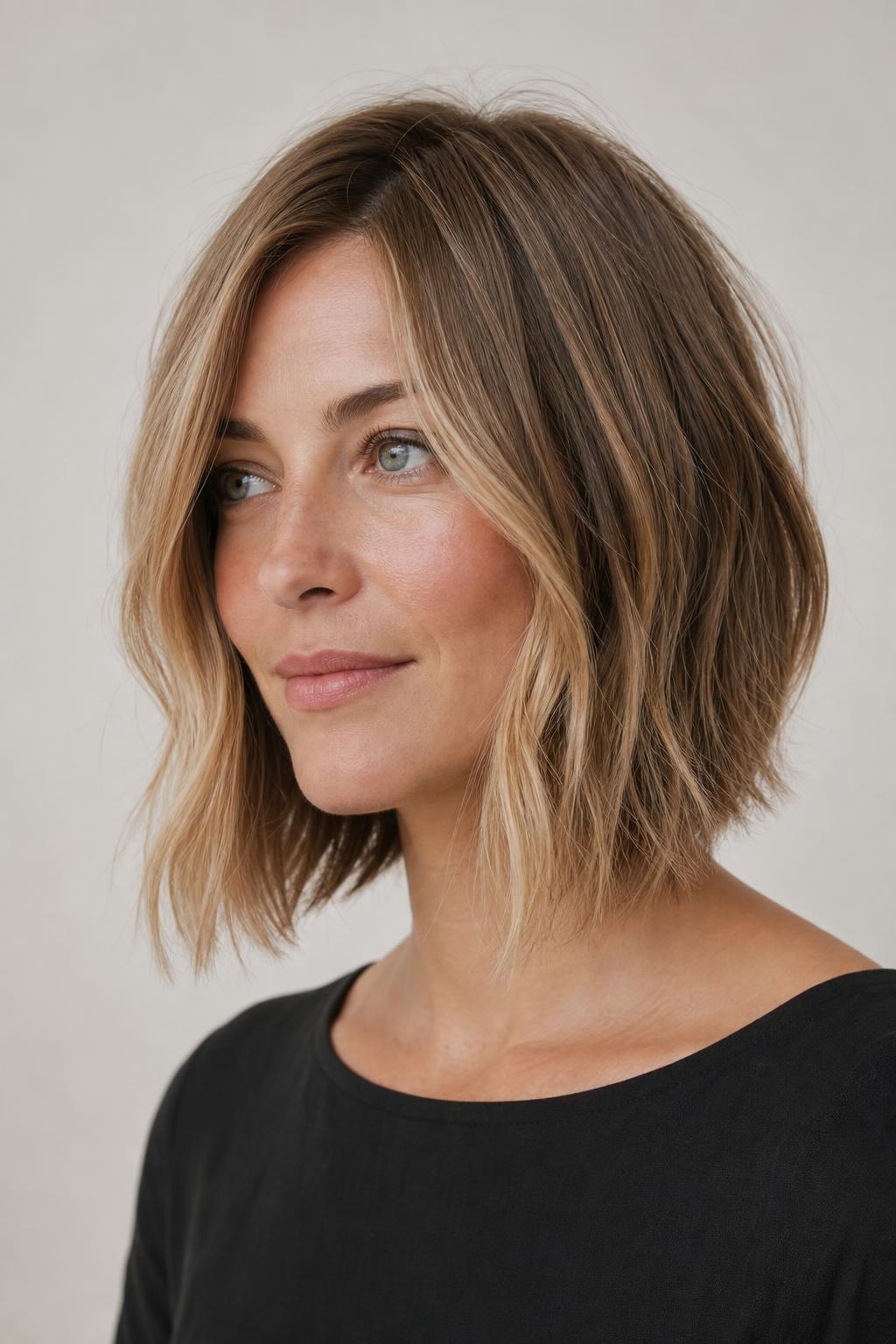
4. Shoulder Cut with Internal Layers Only
Unlike a standard layered cut, where the layers show on the surface as separate lengths, internal layering removes bulk from underneath and leaves the outer line untouched. You keep the solid perimeter that makes hair look dense while losing the weight that drags fine roots flat, so ask for the layers to stay below the occipital bone. Both approaches are compared in our look at internal layers and visible layers.

5. Blunt Midi with a Deep Side Part
Moving the part two inches off center and drying against the hair’s natural fall builds root lift on the heavy side with no product at all. Flip your head over, rough-dry the roots for thirty seconds, then set the part where it lands.

6. Textured Bob with Point-Cut Ends
If your hair is thick enough that a fully blunt line looks heavy even after shedding, ask for it in these words: soft point cutting on the last half inch only, nothing above it, and no thinning shears anywhere. That phrasing stops a stylist reaching for texturizing scissors, which is the most common way postpartum hair ends up thinner than it started.

Fringe and Face-Framing That Cover the Regrowth Halo
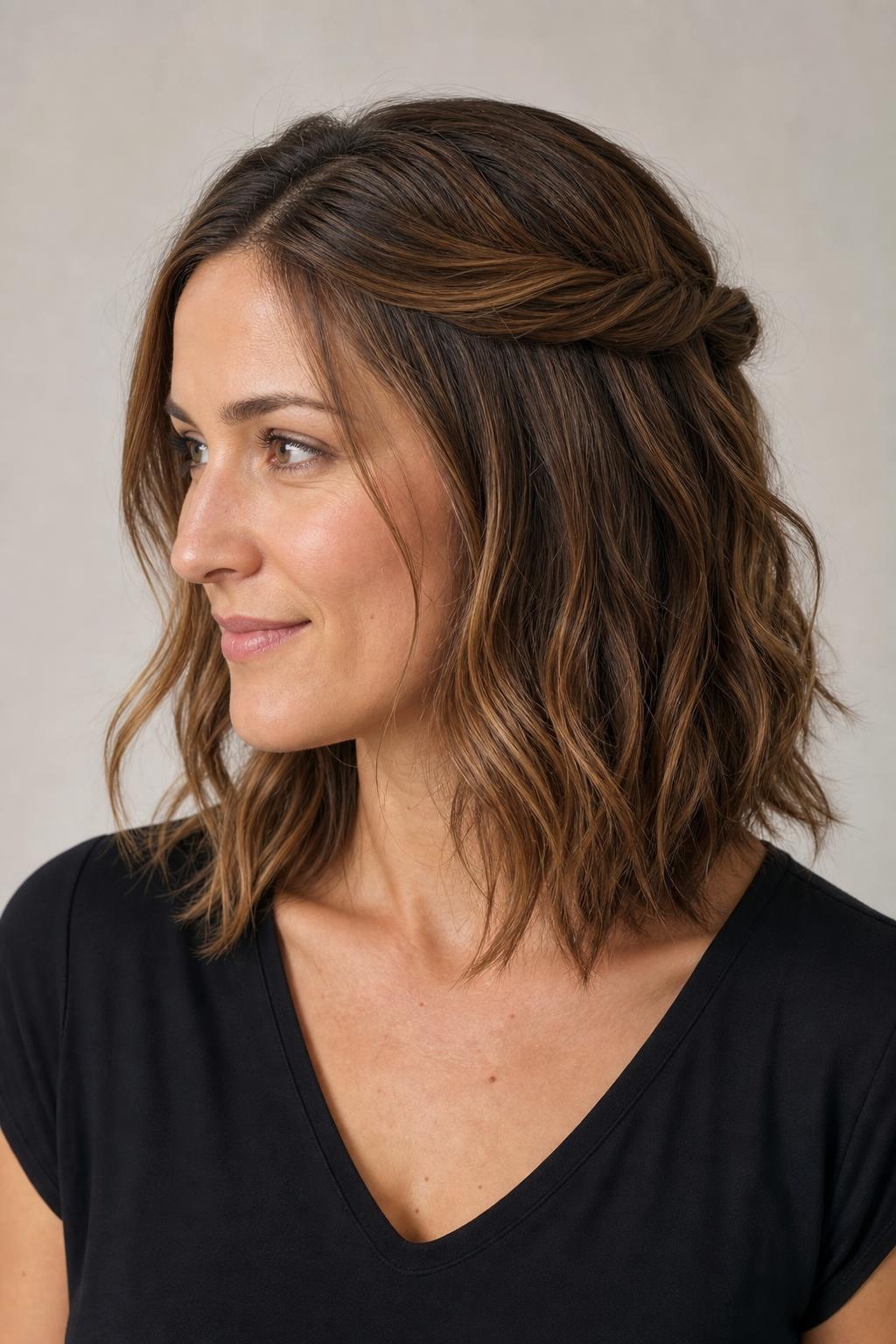
Somewhere between months six and ten the shedding stops and something more annoying starts. Every follicle that shed at once regrows at once, producing a band of one to three inch hairs across the hairline that stands straight up. Nothing makes them lie flat, because they are too short to carry any weight. The workable answer is to cut the hair around them to a length they can join, so the short hairs have a longer companion to blend into.
7. Full Blunt Fringe
A blunt fringe cut to brow level covers the entire regrowth band in one move, which is why it is the most common postpartum request stylists get. The trade-off: a trim every three to four weeks, five minutes each morning drying it forward with a flat brush, and roughly eight months to grow back to a length that tucks behind the ear.

8. Curtain Bangs at Cheekbone Level
Split at the center and angled back toward the cheekbone, curtain bangs cover the hairline without the commitment of a blunt fringe. If you have grown-out highlights that stopped mid-pregnancy, the darker natural base at the front works in your favor here and behaves like a deliberate shadow root against lighter mid-lengths. Pairing them with longer pieces is covered in our guide to curtain bangs cut into layers.

9. Side-Swept Fringe
Cut on a diagonal from just above the brow down to the cheekbone, this covers a hairline regrowing unevenly, which happens often when one side sheds harder than the other. It should be cut dry and combed into its natural fall so the stylist can see where your growth pattern pushes the hair. A cowlick at the front corner will fight a blunt fringe forever, but a side sweep works with it.
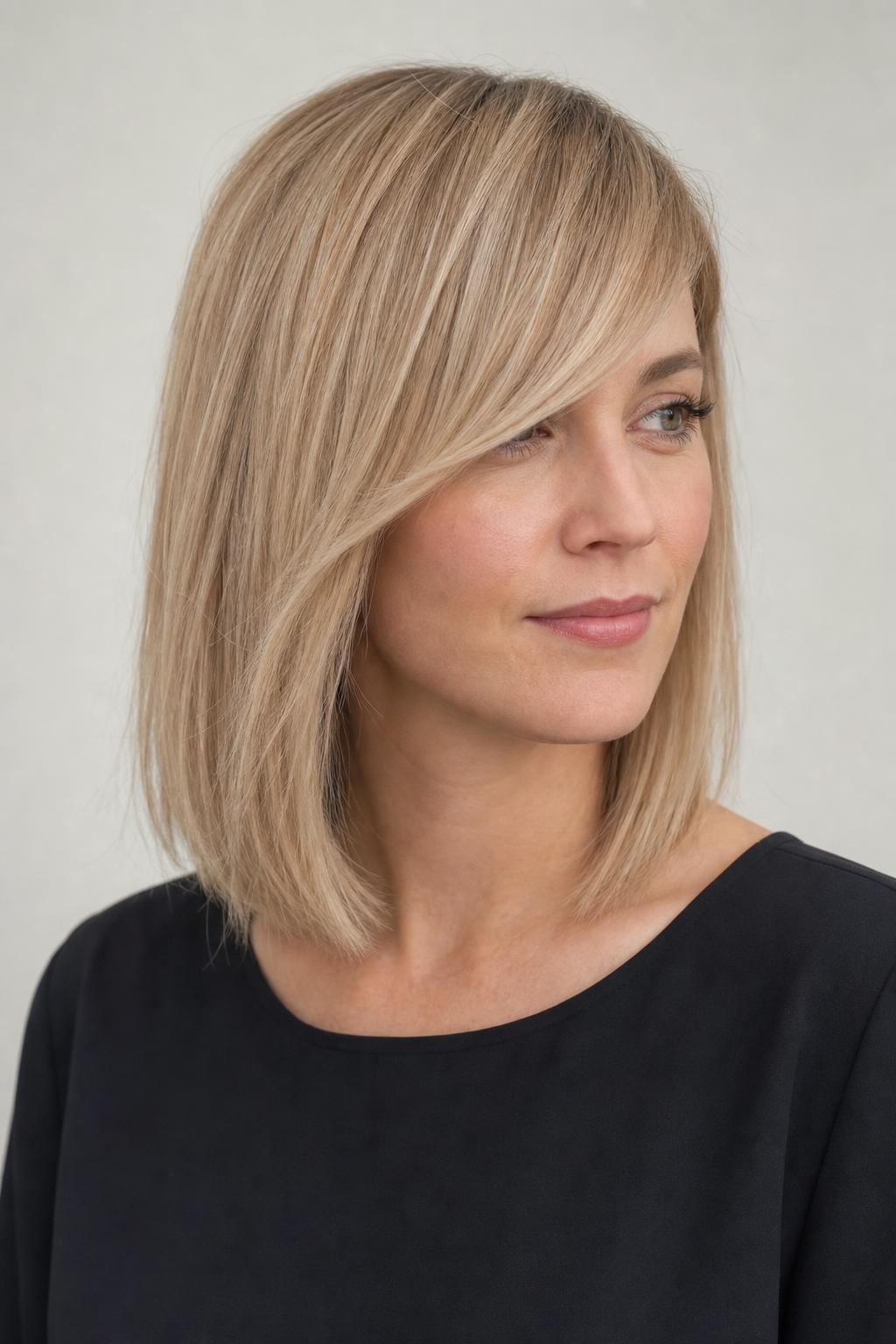
10. Wispy Bottleneck Bangs
Narrow at the center and flaring wider at the sides, bottleneck bangs suit long and oblong faces because the horizontal band across the forehead shortens the visual length of the face. On round faces the same shape adds width, so ask for the flare to start lower.

11. Birkin Bangs with Long Layers
Thick, medium-density hair carries this heavy brow-length fringe better than fine hair, because it needs enough strands to look full without being combed forward from halfway back on the crown. If your density is still recovering, taking the fringe from too deep a section leaves a thin patch behind it that shows every time you tie your hair up.

12. Micro Face-Frame Starting at the Chin
For anyone who does not want a fringe at all, the request is: two face-framing pieces starting at chin level, connected into the rest of the length, no shorter pieces above them. Those two words, connected and no shorter, are what stop a stylist adding the shelf of short layers that would expose the regrowth instead of covering it. Our walkthrough of how to ask for face-framing layers has the wording for each face shape.
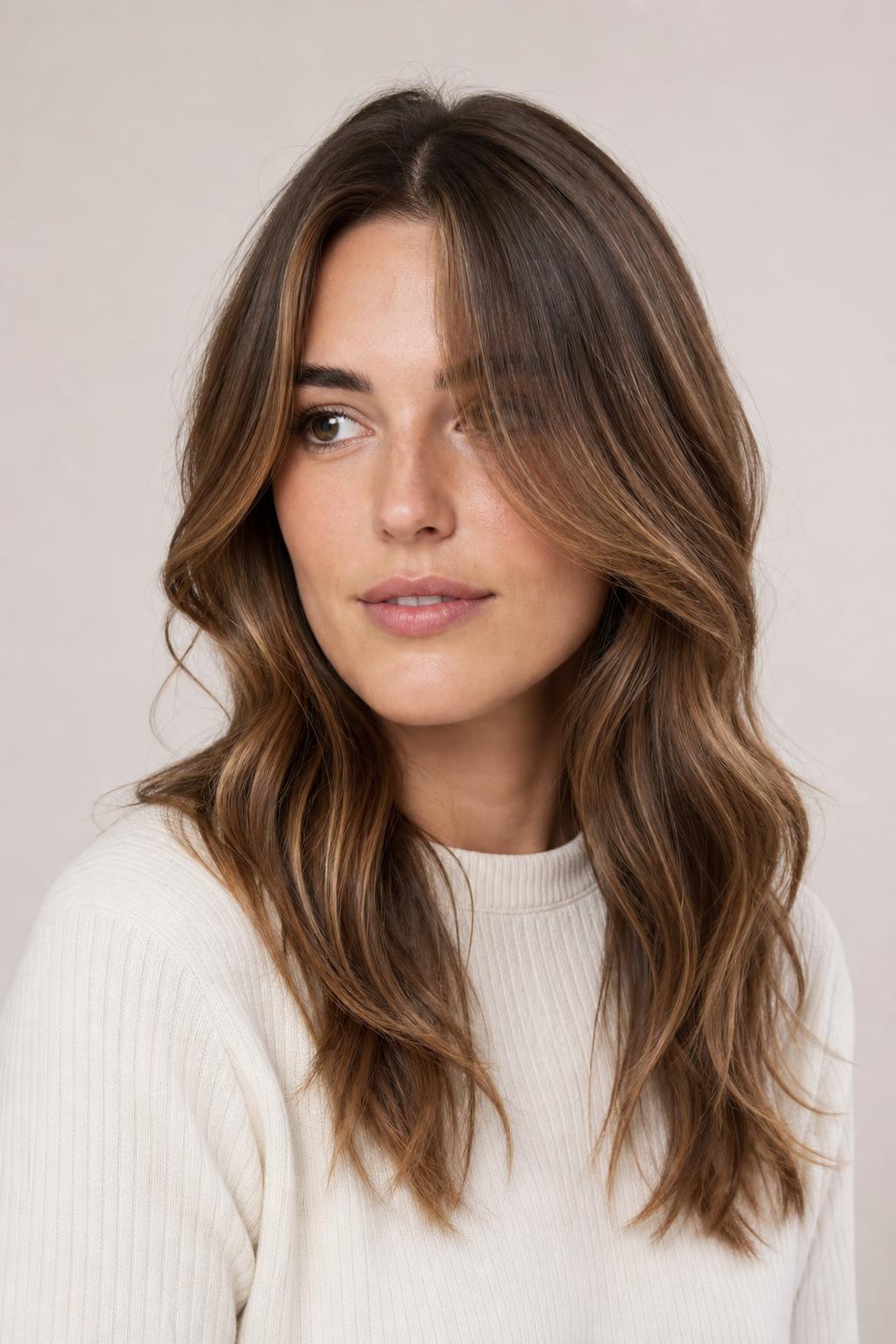
13. Grown-Out Fringe Tucked Behind One Ear
Once a fringe reaches chin length it stops covering the forehead and starts falling into your eyes. Work a light cream through the fringe only, tuck it behind one ear while damp so it dries that way, and leave the other side down over the hairline. The asymmetry buys three months before you decide whether to recut.

Layered Shapes for Regrowth Past the Cheekbone
By months ten to eighteen the regrowth has reached cheekbone or chin length, and because those hairs all end at the same point they form a visible shelf. This is where layering finally helps: cut the surrounding hair to meet that shelf and an accident becomes a shape. Tell your stylist where your regrowth ends before they start, since layers cut above that line make the separation worse.
14. Modern Shag with Short Crown Layers
A shag differs from a standard layered cut in where the shortest pieces land: a shag puts them at the crown and around the face, while a layered cut keeps the shortest length lower down the head. That crown placement is exactly what postpartum regrowth needs, since your shortest natural hairs are already at the top.

15. Butterfly Layers Starting at the Jaw
The short interior layers stop at the jaw and the long perimeter stays untouched, so the cut looks dramatic while removing very little length. It grows out unusually well, with ten to twelve weeks between trims. Budget ten minutes with a round brush, though, since air-dried butterfly layers mostly disappear.

16. Long Layers with a Rounded Crown
Soft layers cut into the top third build a rounded silhouette at the crown, and this is the cut where a money piece earns its place. Two lighter sections at the front draw the eye up and forward to the fullest part of the shape, away from a thinner part line. Keep the lightener off the first inch of root so you are not processing fragile new growth.
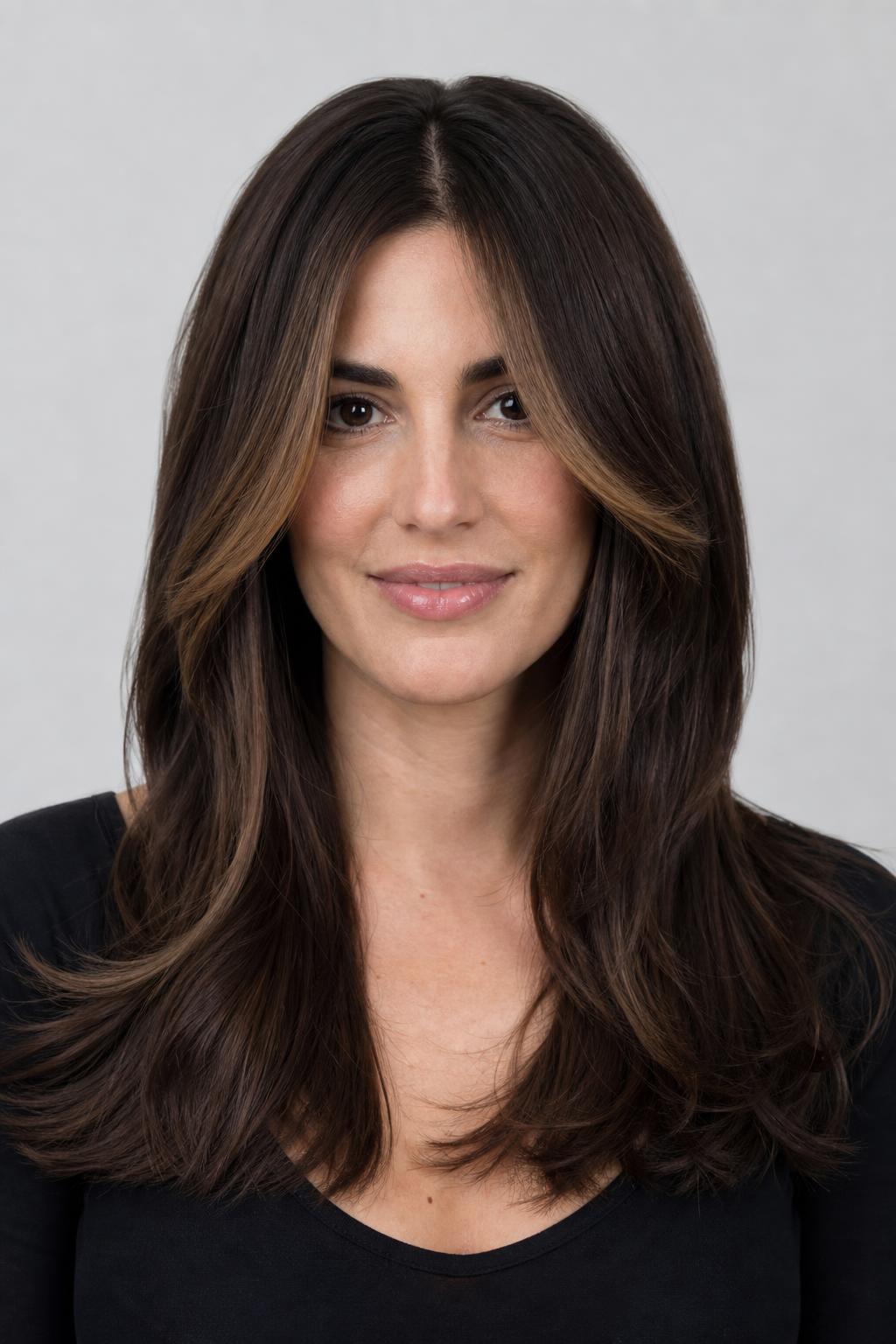
17. Feathered Midi Shag
Feathering angles the scissors into the hair rather than straight across, leaving each layer with a soft tapered end instead of a hard stop. On medium to thick wavy hair it removes just enough weight for the waves to lift. Skip it while your density is still dropping, since feathering fine hair mid-shed makes the ends look sparse.

18. Bixie for a Full Reset
Somewhere between a pixie and a bob, the bixie keeps enough length at the sides to cover the ears while cropping the back and crown short. Fine and medium hair that has come through shedding gets more visible fullness from this than from any long cut, because the whole head is now close to the regrowth length.
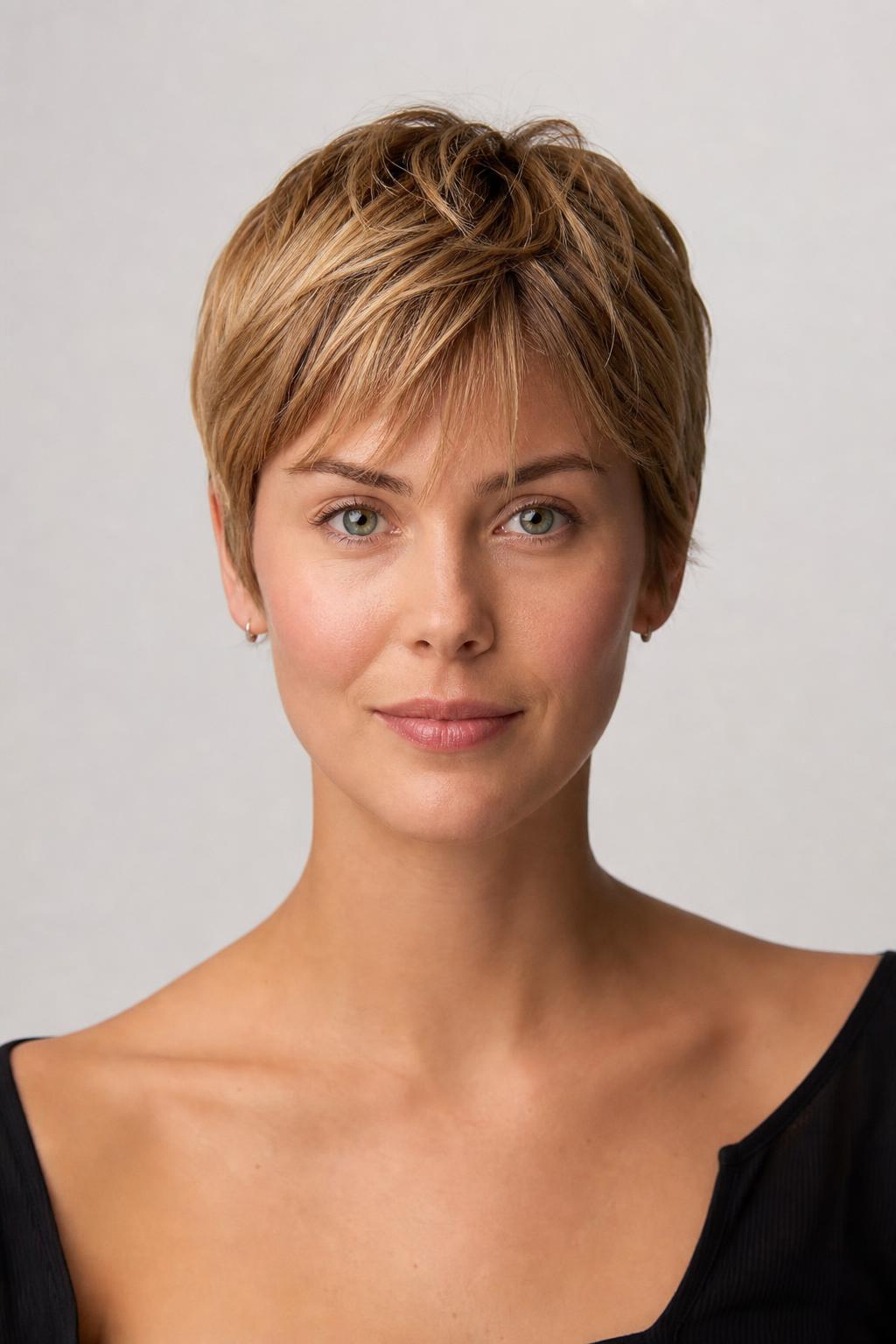
19. Wolf Cut with a Soft Perimeter
Oval and heart-shaped faces carry the wolf cut most easily, because the volume concentrates at the crown and temples where those shapes have room for it. Square faces should ask for a soft perimeter rather than a choppy one, so the widest section falls below the jaw instead of level with it.

Short Cuts That Turn Regrowth Into Texture
Cutting short is the decision women most often talk themselves out of and then wish they had made sooner. If your shortest hairs are two inches long, bringing everything within a few inches of them removes the contrast entirely, and what looked like damage starts looking like texture. Short cuts also cost the least time each morning. The trade-off is trim frequency, and it is not small.
20. Tapered Pixie with a Textured Crown
The wording to bring in is: keep the crown between two and three inches, taper the nape and sides close, leave the front long enough to sweep. Give the length in inches rather than relying on a photo, because postpartum regrowth at the crown will not lie the way it does in a picture of hair that has never shed.
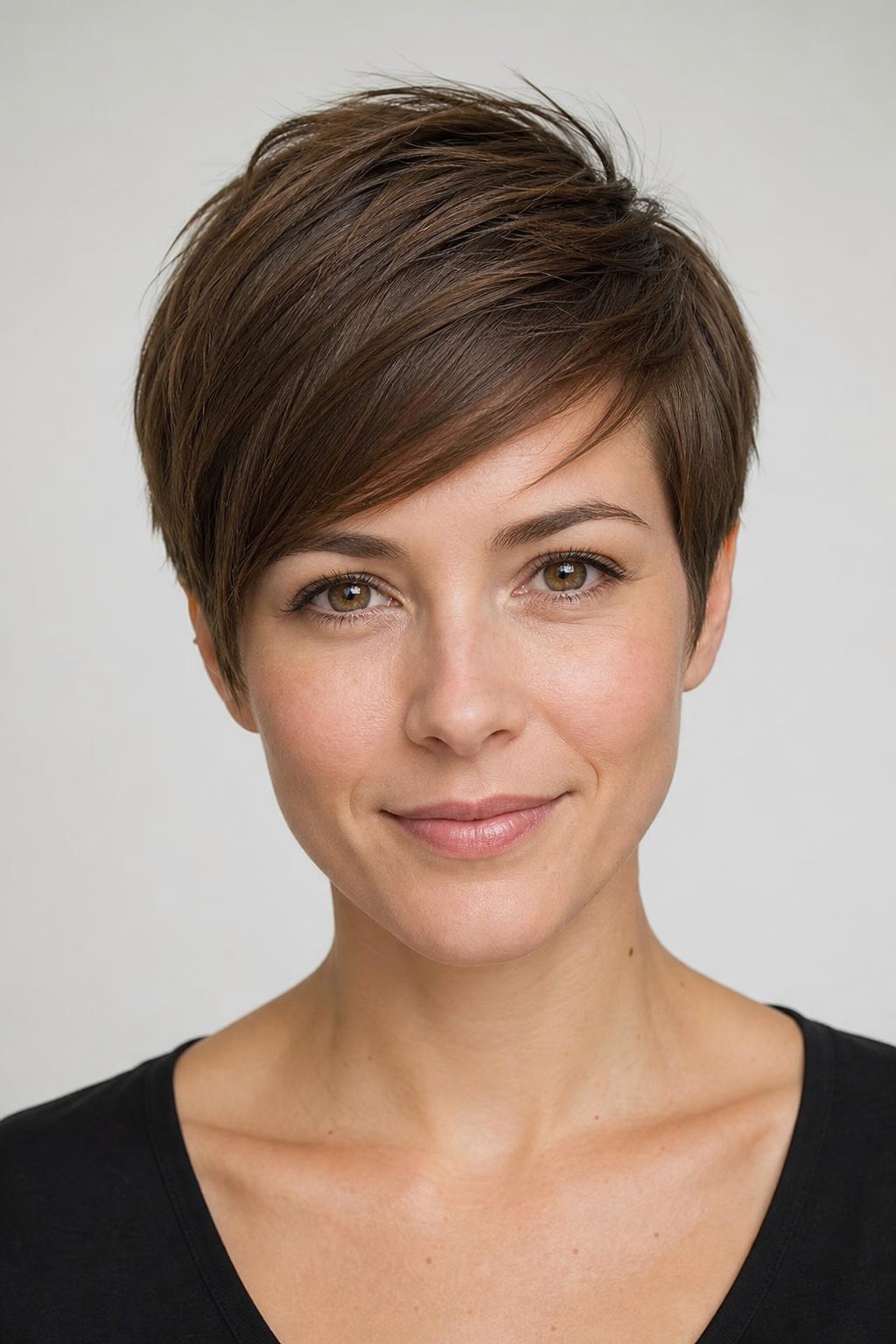
21. Pixie Bob with a Stacked Back
Graduated layers stacked at the back build a rounded lift just above the nape, where postpartum hair tends to look flattest, while the front stays long enough to reach the jaw. The stacking is cut with the hair elevated and over-directed toward the back of the head, which is what makes the shape rounded rather than a straight diagonal.
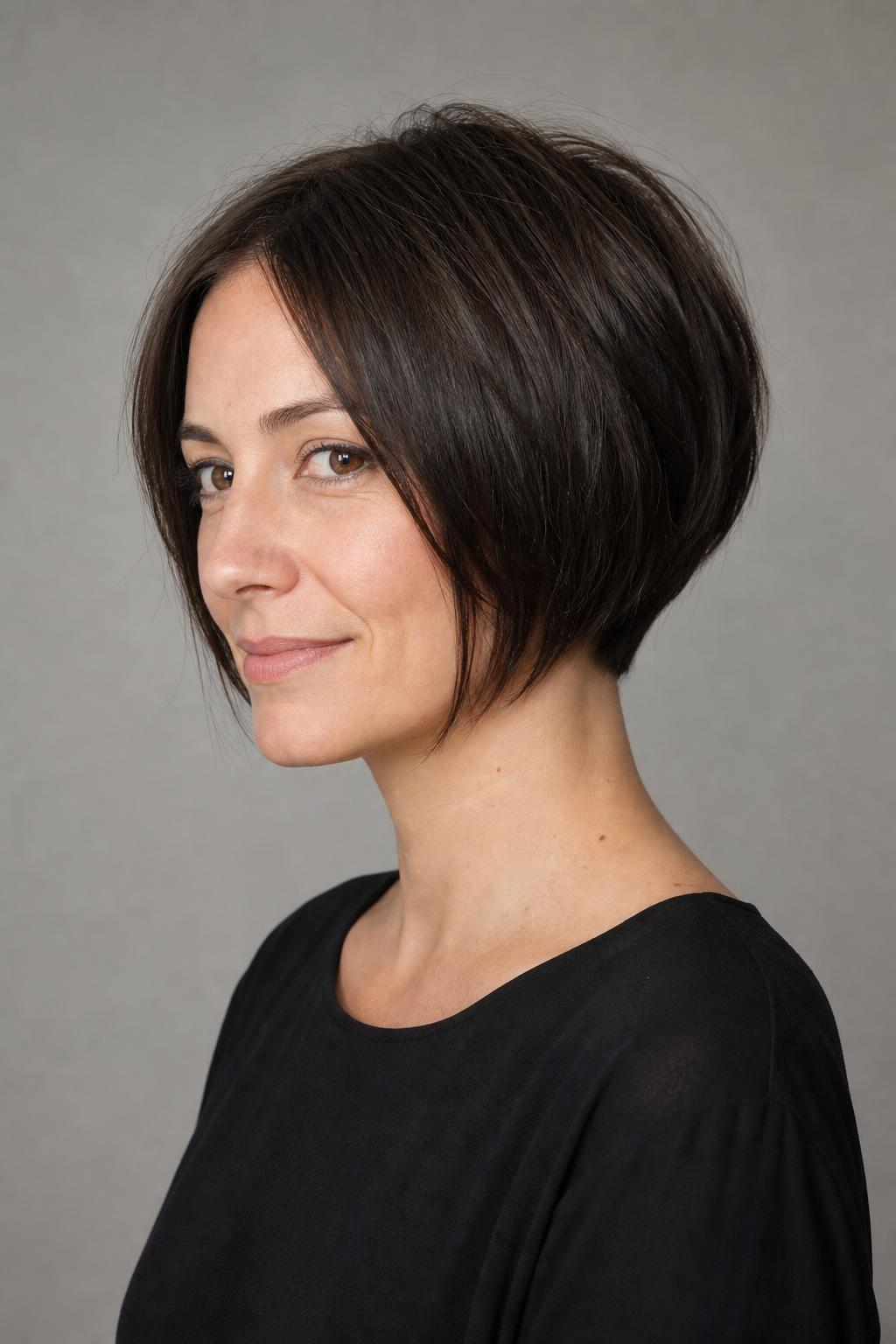
22. Cropped Cut with a Soft Root Shadow
Going short is the easiest moment to correct eighteen months of grown-out color, since most of the old lightener leaves with the cut. A soft root shadow rather than a full root touch-up keeps the line from reappearing as a hard band in six weeks, and it stretches salon visits to every ten weeks instead of every five.

Low-Tension Styles for a Fragile Hairline
Some days the cut is irrelevant and you just need hair out of reach of small hands. The risk is real: a hairline carrying a band of brand new one-inch hairs breaks easily, and repeated tension there can turn temporary shedding into a permanently thinner front line. Every style below moves the anchor point away from the hairline and spreads the weight.
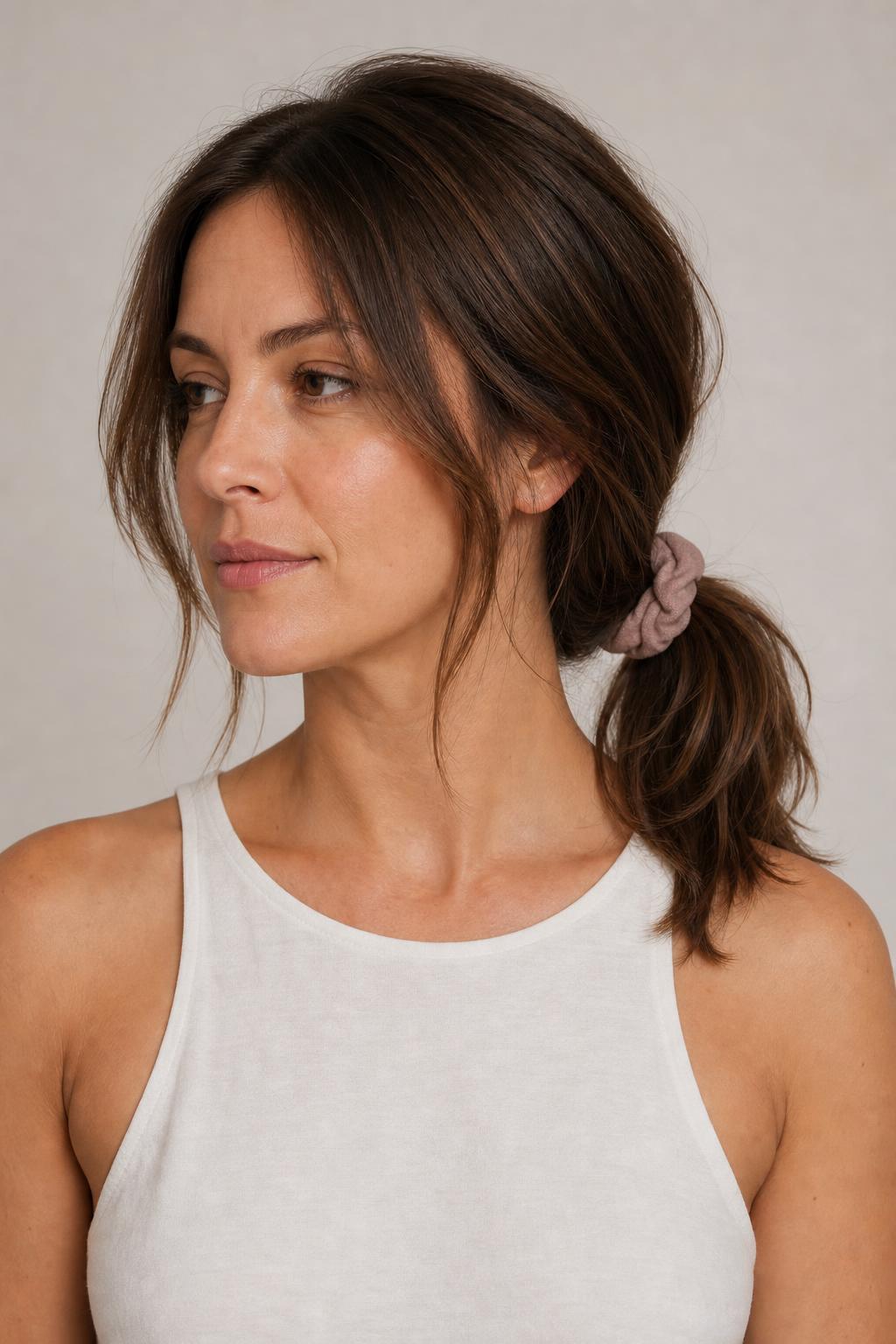
23. Low Nape Ponytail on a Fabric Scrunchie
Gathering at the nape rather than the crown drops most of the pull off the hairline, and a wide fabric scrunchie spreads the remaining tension across an inch of hair instead of a thin elastic groove. Move the position up or down half an inch each day so the same strands are not stressed repeatedly.
24. Loose Twisted Half-Up
Unlike a half-up ponytail, which pulls every gathered strand back to a single point, a twisted half-up rolls the side sections inward and pins them, so tension travels along the twist instead of concentrating at the root. Take the sections from behind the ear rather than at the temple, which leaves the fragile front hairline untouched.
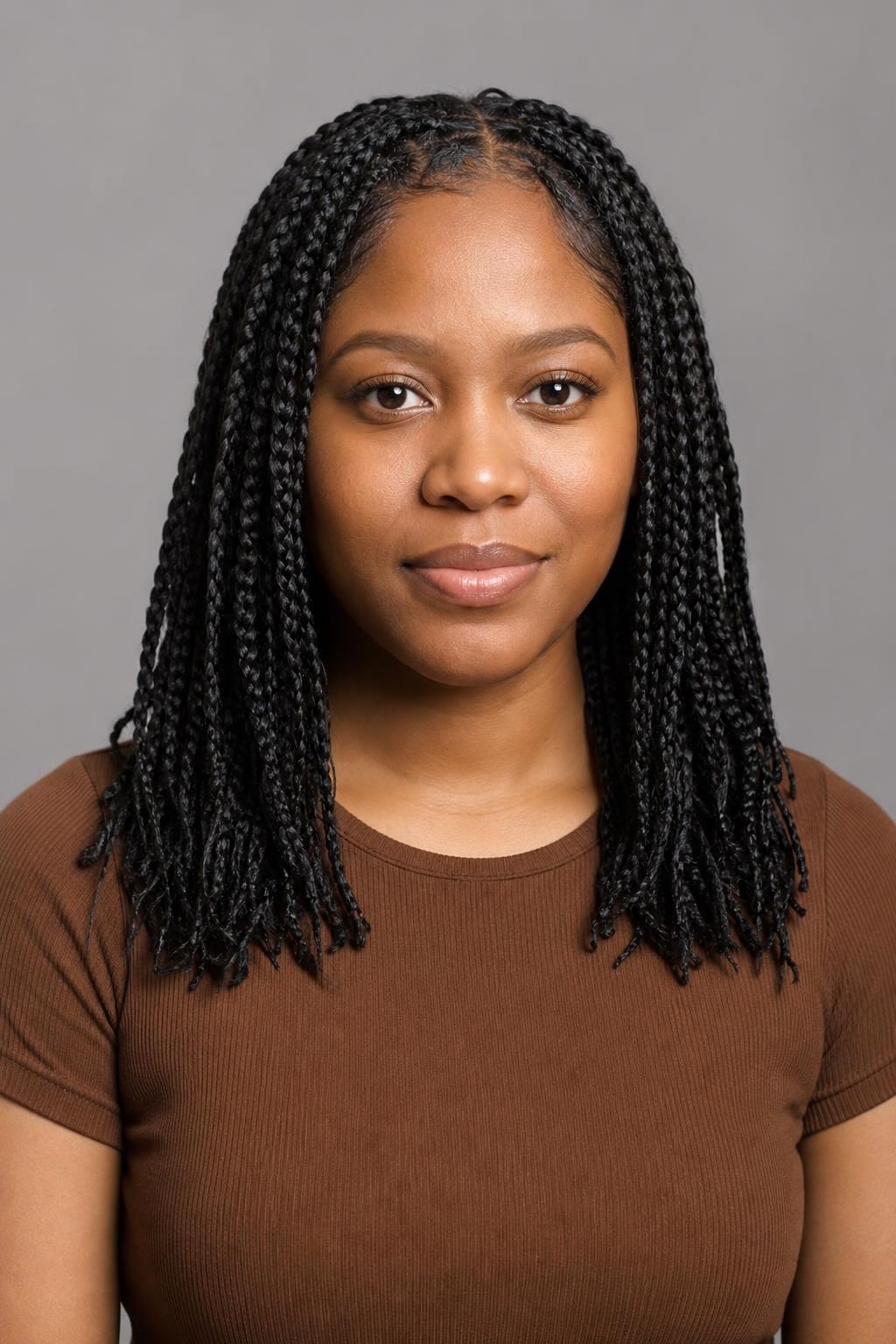
25. Knotless Braids with a Softened Hairline
Type 4 hair going through postpartum shedding needs braids sized up and started without tension, which is what knotless installation does: the braider begins with your own hair and feeds extensions in gradually rather than anchoring a knot at the scalp. Ask for the perimeter row to be left loose over the edges, and keep the install to six weeks. Our gallery of knotless braids with curly ends shows the sizing that suits recovering density.
Choosing the Right Postpartum Cut for Your Face Shape
Face shape decides where the fullness in a cut should land, and postpartum hair has less fullness to place, so the choice carries more weight than usual. The rule holds: put volume where the face is narrow and keep it away from the widest point. The table names the version of each cut that puts density in the right place, and the shape to skip while density is recovering.
| Face Shape | Best Postpartum Cut | Best Fringe | Avoid for Now |
|---|---|---|---|
| Oval | Blunt collarbone cut or a shag | Curtain bangs at cheekbone level | Nothing structural; heavy thinning shears are the only real risk |
| Round | A-line lob angled past the chin | Side-swept fringe | Chin-length blunt bob with a center part |
| Square | Wolf cut with a softened perimeter | Curtain bangs starting below the brow | Blunt line that stops level with the jaw |
| Heart | Shoulder cut with internal layers | Wispy bottleneck bangs | Very short pixie that exposes a narrow chin |
| Oblong | Chin-length blunt bob | Full blunt fringe at brow level | Long flat length with no fringe or crown lift |
| Diamond | Pixie bob with a stacked back | Soft curtain bangs | Slicked-back styles that expose the whole hairline |
Stylist tip: Arrive at the consultation with your hair dry and styled the way you actually wear it, not freshly washed and straightened. A stylist needs to see where your regrowth stands up and which side shed harder before deciding where the shortest layer lands, and neither is visible on wet hair.
What to Tell Your Stylist
Most postpartum haircut disappointments come from a vocabulary gap. You say your hair is falling out, the stylist hears thin hair and reaches for the technique used on naturally fine hair, which is texturizing. Your hair is not fine, it is temporarily less dense, and removing more of it makes the recovery look worse for months.
Say where you are in the cycle: “I am seven months postpartum, the shedding has stopped, and I have about two inches of regrowth at my hairline.” State the boundary: “Please do not use thinning shears or a razor anywhere.” Then ask the question that decides the cut: “Where does my regrowth end, and can we cut the shortest layer to meet it?” Bring two photos of hair with your density and texture right now, not the hair you had before pregnancy. Judging where your density actually stands is easier with the reference points in our guide to choosing a haircut by hair density.
Styling Postpartum Baby Hairs Without Breaking Them
The short hairs at your hairline are brand new, which makes them thinner and more elastic than the rest of your hair, and they break under treatment older hair shrugs off. Anything that holds them down by force snaps them, and a broken regrowth hair restarts the clock.
A pea-sized amount of light styling cream pressed over the hairline with your fingertips, rather than combed through it, adds just enough weight for the shorter hairs to lie in the same direction as the rest. A soft boar-bristle baby brush works better than a toothbrush, which drags. If you blow-dry, dry the front section forward and turn it back only once it is dry, since hair sets in whatever direction it dries.
Stylist tip: Sleep on a silk or satin pillowcase through the regrowth phase. Friction against cotton is the most overlooked cause of breakage in the exact one-inch band you are trying to grow, and it happens for eight hours a night with no one watching.
Maintenance and Realistic Timelines
The postpartum haircut question is really a time question: shorter cuts save minutes every morning but cost salon visits. Postpartum shedding usually starts around three months after birth and resolves within a year, according to Cleveland Clinic guidance on postpartum hair loss, and Johns Hopkins Medicine describes the same pattern as a temporary shift in the growth cycle rather than true hair loss. Plan the cut around that window instead of reacting week to week.
| Cut | Trim Frequency | Daily Styling | Grow-Out Behavior |
|---|---|---|---|
| Blunt collarbone cut | 8 to 10 weeks | 5 minutes | Very forgiving; the line softens gradually |
| Chin-length blunt bob | 5 to 6 weeks | 10 minutes | Shows grow-out by week 5 at the nape |
| Full blunt fringe | 3 to 4 weeks | 5 minutes, non-negotiable | Awkward from week 5; about 8 months to tuck away |
| Modern shag | 10 to 12 weeks | 5 to 15 minutes | Grows out gracefully; layers blend as they drop |
| Tapered pixie | 4 to 5 weeks | 3 to 5 minutes | Loses shape at the nape first; weeks 6 to 10 are awkward |
| Knotless braids | Take down at 6 weeks | 2 minutes | Leave 1 to 2 weeks loose between installs |
When a Big Postpartum Haircut Is Not the Right Call
Cutting is not always the answer. In four situations, waiting serves you better than booking.
- You are less than three months postpartum and have not started shedding. Cutting now means recutting in four months when the density drops, so book a consultation instead.
- Your shedding is still increasing week over week. Hold the length, keep the ends lightly trimmed, and reassess when daily shedding drops back toward normal.
- You are losing hair in distinct round patches rather than evenly across the scalp. That is not typical postpartum shedding, and a dermatologist is the right first call, not a salon.
- Your hairline is receding at the temples and has not recovered by eighteen months. That points to traction rather than hormones, and regrowth treatment options are worth reviewing with a professional before any cut.
Postpartum Hair Myths That Lead to Salon Regret
Three pieces of advice circulate constantly in new-parent groups, and all three cause avoidable damage.
Myth: Thinning Shears Will Even Out the Regrowth
Reality: Thinning shears remove strands at random lengths throughout a section, which creates more short hairs, not fewer. The regrowth halo is a short-hair problem, so adding short hairs makes it worse for months. If weight genuinely needs removing, ask for internal layering under the surface instead.
Myth: Cutting Your Hair Makes It Grow Back Faster
Reality: Growth happens at the follicle, and nothing done at the ends changes the rate, which is roughly half an inch a month. What a cut does change is how the growth looks, since removing damaged ends means the length you gain stays instead of breaking off.
Myth: Wait Until the Shedding Stops Before Doing Anything
Reality: Waiting makes sense for a dramatic restructure, but small moves are worth making early. A blunt trim, a change of part, and low-tension ties all help during shedding and cost nothing if your hair changes. Doing nothing for six months means reaching the regrowth stage with damaged ends on top of everything else.
FAQ
How Long Does Postpartum Hair Loss Last?
Shedding typically begins three to four months after birth, peaks between months four and six, and settles by twelve months. The regrowth phase runs longer, so plan for roughly eighteen months until new hairs blend into your length. If shedding is still increasing past the one-year mark, raise it with a doctor rather than a stylist.
Should I Cut My Hair Short After Having a Baby?
Short cuts help if your regrowth is short and your styling time is near zero, since the contrast between new and old hair shrinks as the lengths converge. The trade-off is salon frequency: a pixie needs trimming every four to five weeks, versus eight to ten for a collarbone cut.
What Haircut Hides Postpartum Regrowth at the Hairline?
A fringe covers it most completely, with a full blunt fringe at brow level hiding the entire band and curtain bangs covering most of it for less upkeep. Without bangs, face-framing pieces starting at chin level give the short hairs a longer neighbor to lie against. Avoid a tight center part with no shorter pieces anywhere.
Can I Color My Hair While Shedding Postpartum?
Yes, with two adjustments. Keep lightener off the first inch of root so brand new growth is not processed, and choose a root shadow over a hard root line so the grow-out is not a fresh problem in six weeks. Many stylists suggest a demi-permanent gloss in this phase, since it deposits tone without lifting.
Do Hair Ties Make Postpartum Shedding Worse?
Tight ties do not cause the hormonal shedding, but they add breakage on top of it, and that breakage lands on the newest and most fragile hairs. Switch to a wide fabric scrunchie, anchor at the nape, and shift the position slightly each day.
Why Does My Postpartum Regrowth Have a Different Texture?
New hairs often come in with more kink or wave than your existing length, because they are short, fine, and not yet weighed down by their own length. Most of that settles once the hair passes shoulder length. Until then, soft layers around the face give the wavier new growth somewhere to fall within the shape.
Are Bangs a Bad Idea With Thinning Hair?
Bangs are one of the better ideas during postpartum recovery, provided the section is taken shallow. A fringe taken from too far back on the crown borrows density from an area that is already recovering, and the thin patch shows every time you tie your hair up. Ask for a triangle no more than two inches back from the hairline.
The right approach to postpartum hair loss hairstyles depends less on which cut is trending and more on which month you are in. During heavy shedding, keep the perimeter blunt and resist any suggestion of thinning shears. Once the regrowth halo appears, add a fringe or face-framing pieces so the short hairs have somewhere to blend. Book the consultation, say which month you are in, and let the stylist cut for the hair you have this season.
Hair results vary based on your natural hair type, texture, density, and condition. Always consult with a licensed hairstylist before making significant changes, especially with chemical treatments or dramatic length changes. Postpartum hair loss that continues past twelve months, occurs in distinct patches, or comes with other symptoms should be discussed with a doctor. Photos may show styled results that require professional tools and products to replicate.

1 response