

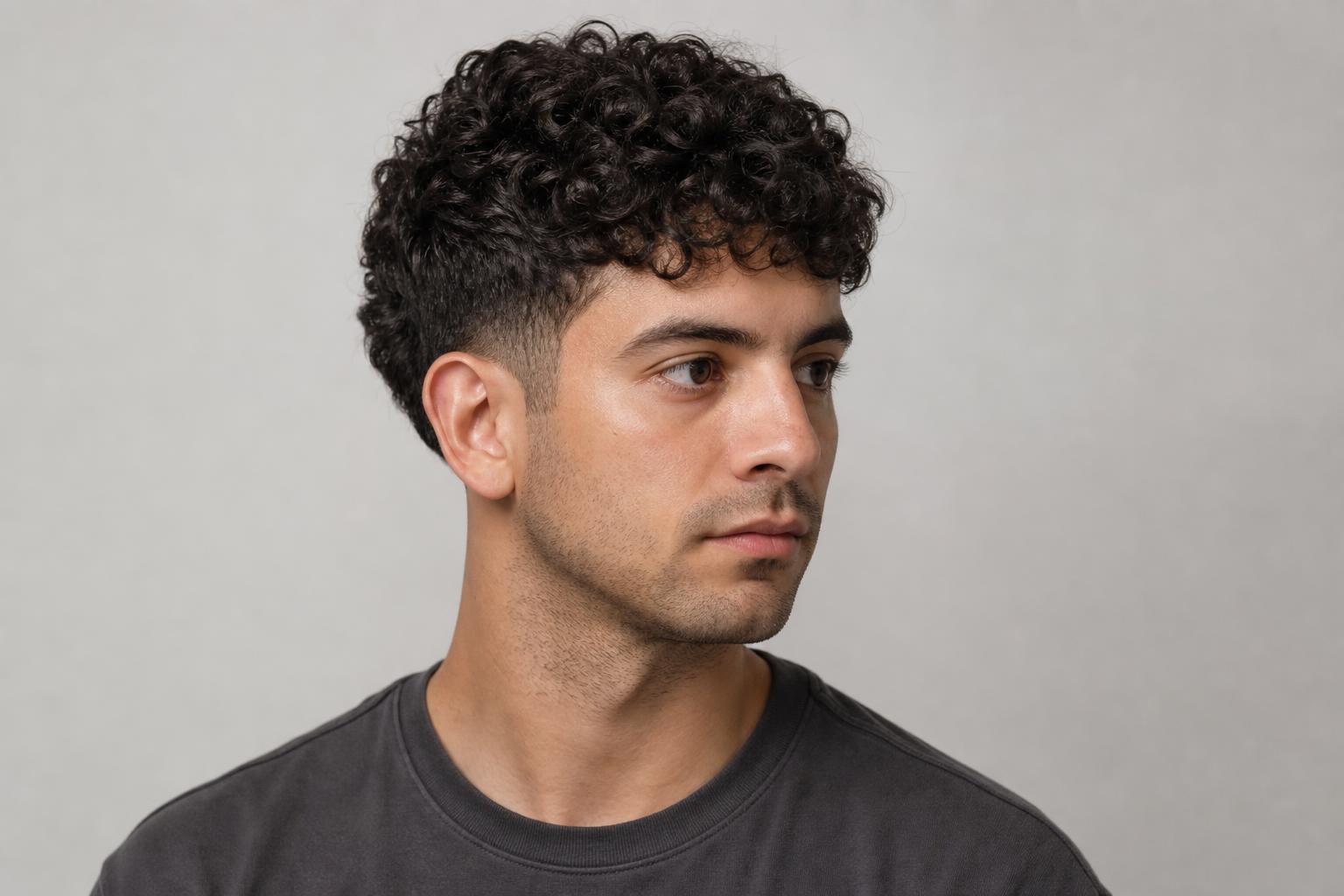
Your curl type decides the cut more than your face shape does, and the single most useful thing you can tell a barber is your pattern number, because a 2c and a 3c need opposite amounts of length left on top.
Curly hair falls into loose waves at 2a, defined S-shapes at 2c, spirals at 3a to 3c, and tight coils from 4a upward, and every one of those patterns shrinks by a different amount when it dries. That shrinkage figure, between 20 percent for a loose wave and over 50 percent for a tight coil, is why the same cut looks completely different on two men with what they both call curly hair. These 25 haircuts are grouped by curl type so you can find the shapes that work with your pattern rather than against it.
After the gallery: a shrinkage table with the length to ask for at each pattern, why dry cutting is not optional, the face shape breakdown, exact barber wording, a realistic product routine, and the cuts to avoid at each curl type.
| Factor | Details |
|---|---|
| Covered here | Patterns 2b through 4c, from loose waves to tight coils |
| Cutting method | Dry, in the natural curl clump, never combed wet and stretched |
| Maintenance | Sides every 2 to 4 weeks; full reshape every 8 to 12 weeks |
| Avoid | Thinning shears, razors on curl ends, and any barber who combs the top flat before cutting |
| Daily styling | 3 to 8 minutes; more product on tighter patterns, less on looser ones |
Cuts for Loose Waves and 2c Curl
At 2b and 2c the hair bends but does not spiral, so it carries weight downward and needs length removed from the interior rather than the surface. The failure mode at this pattern is the triangle: heavy at the bottom, flat at the top. Every cut in this section fixes that by taking bulk out of the mid-section while leaving the ends alone.
1. Textured Crop with Interior Weight Removed
The barber works scissors over comb through the mid-lengths and removes about an inch of interior bulk without touching the outer surface, which lets the wave lift at the root instead of collapsing. Ask for internal weight removal rather than thinning, because thinning shears shred wave ends into frizz. Around three inches on top and a short taper underneath.
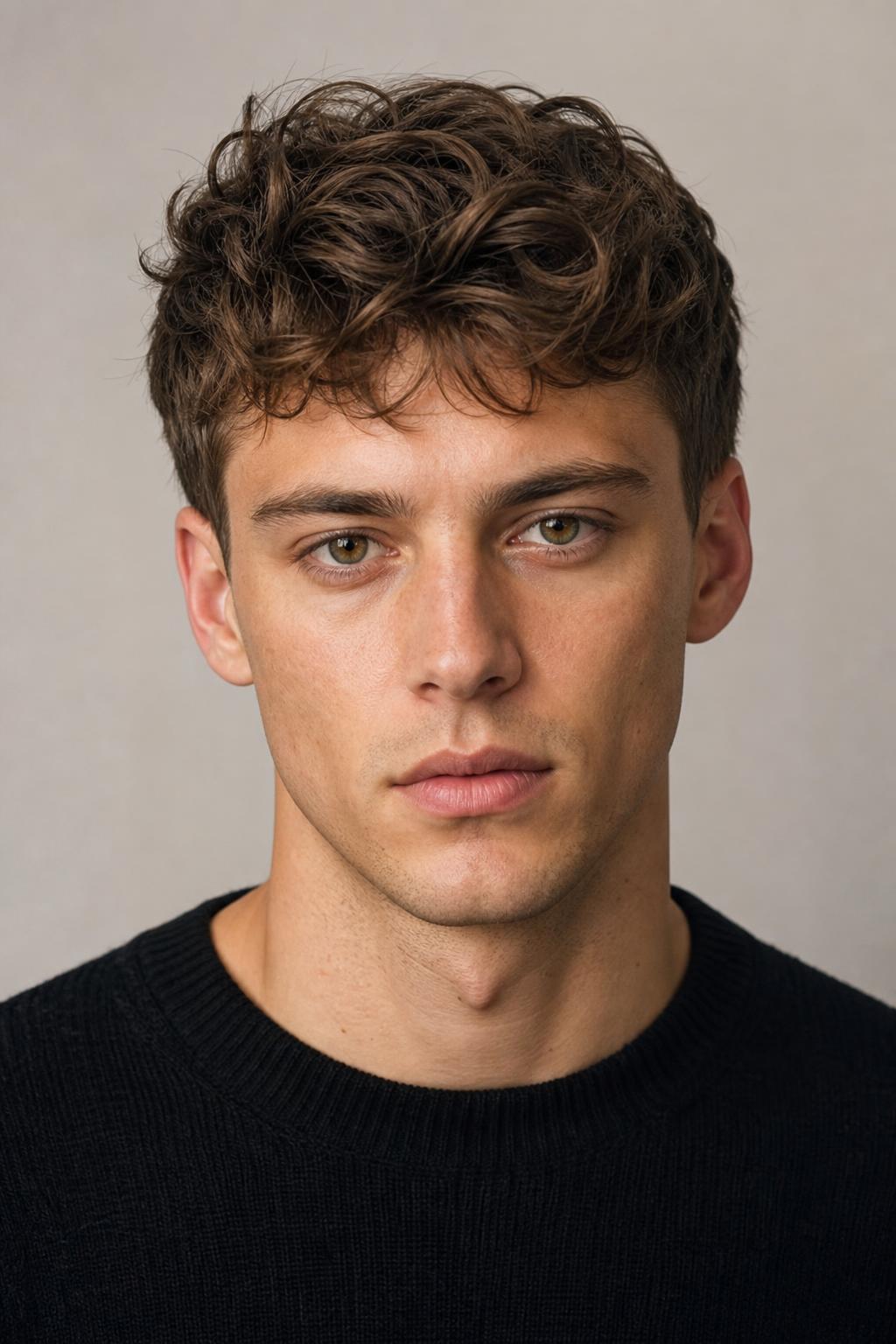
2. Mid-Length Waves for a Square Face
A square jaw wants softness above it, and loose waves left at four to five inches with the sides tapered rather than faded give exactly that without adding width at the cheek. Keep the perimeter irregular so nothing runs parallel to the jawline. This length also sits comfortably in most workplaces.
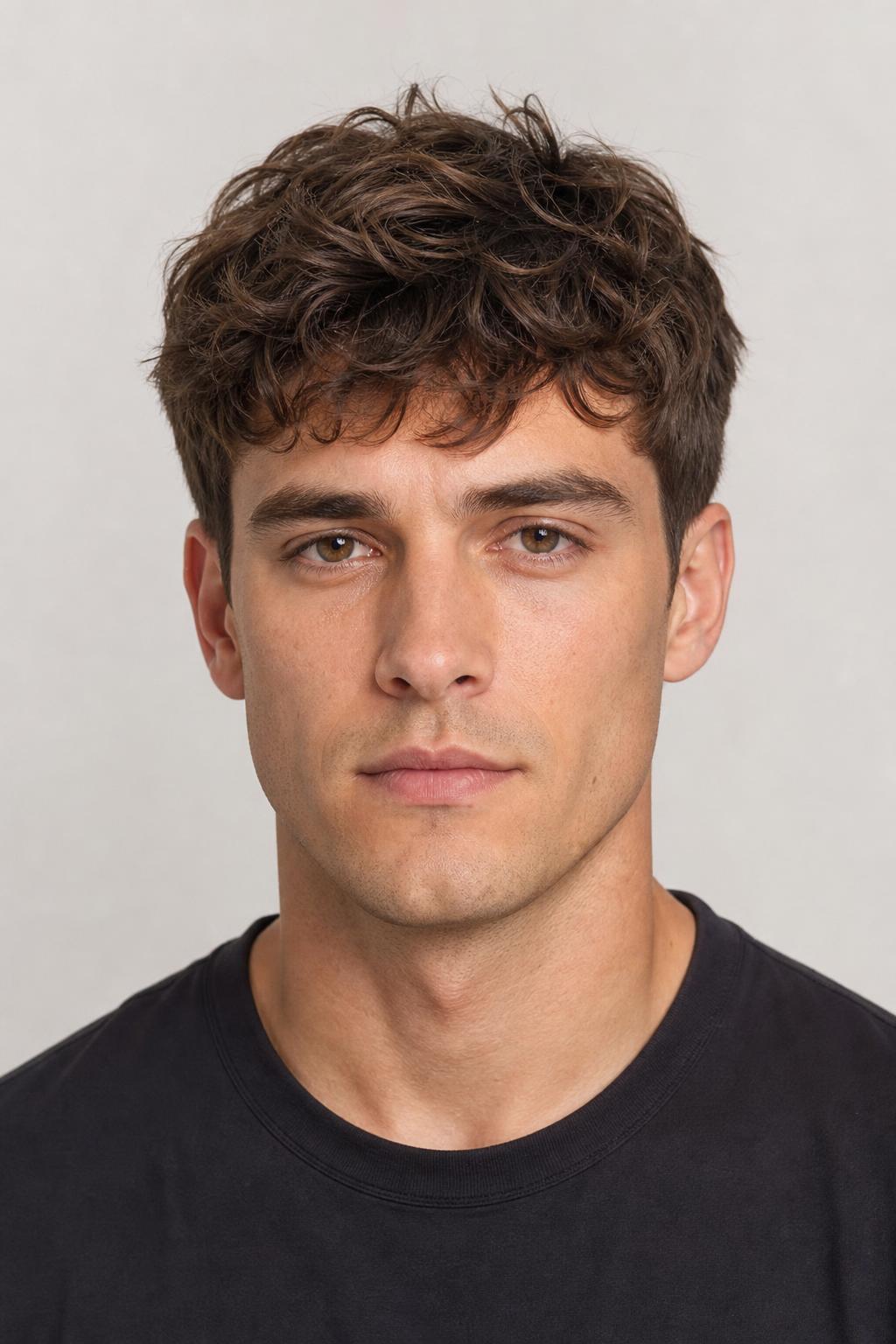
3. Short Waves on Fine 2b Hair
Fine wavy hair has the least structural support of any pattern here and goes limp past three inches, so the answer is to keep it short and let the blunt perimeter do the work. No layering at all in the top section. Two to two and a half inches is where fine 2b holds its bend longest.
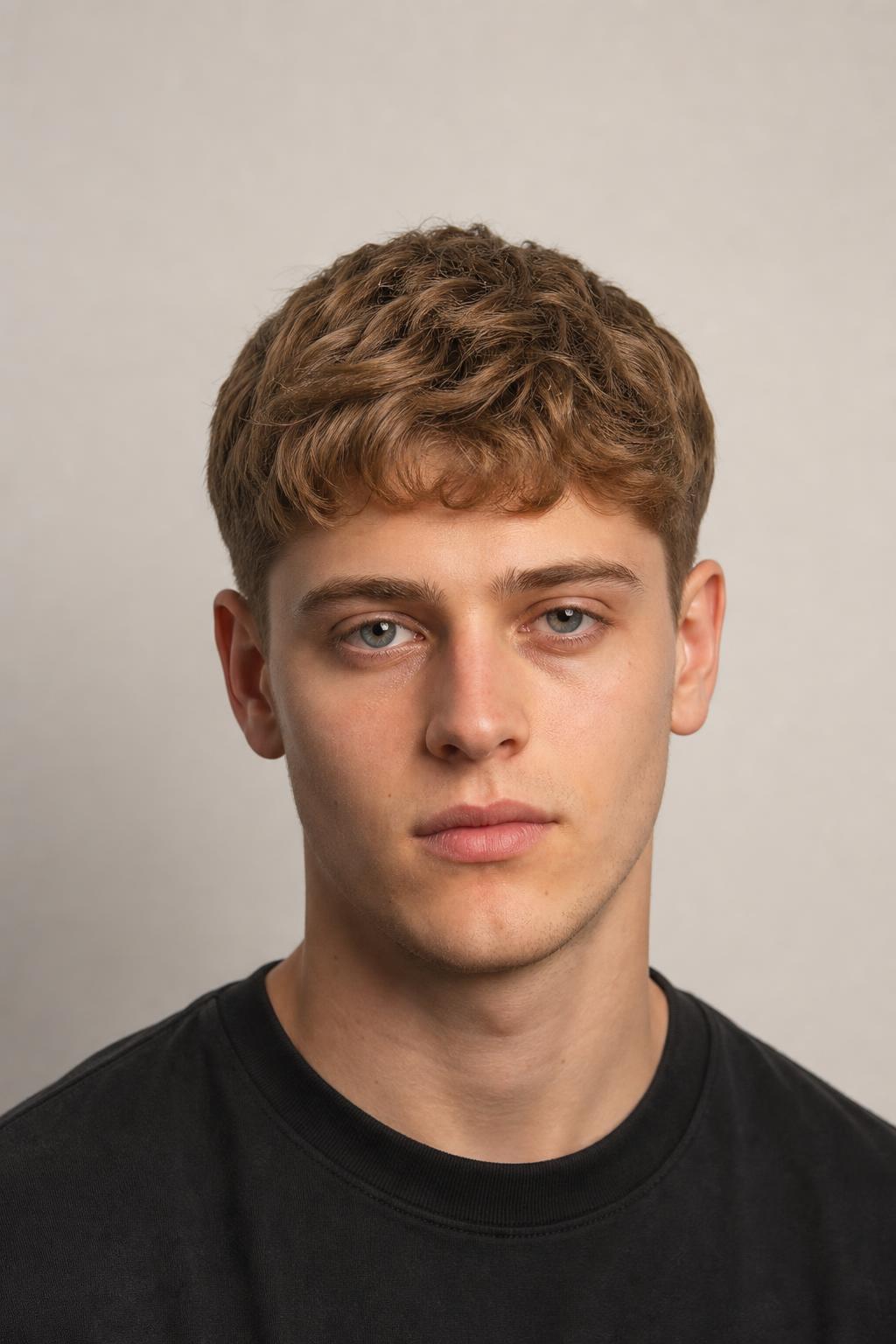
4. Salt Spray Scrunch for Wave Definition
Spray sea salt spray on damp hair, cup a handful upward against the scalp, hold for three seconds, release, and repeat across the head. Scrunching upward is what forms the S-bend; combing or brushing straightens it out completely. Air-dry from there and resist touching it.
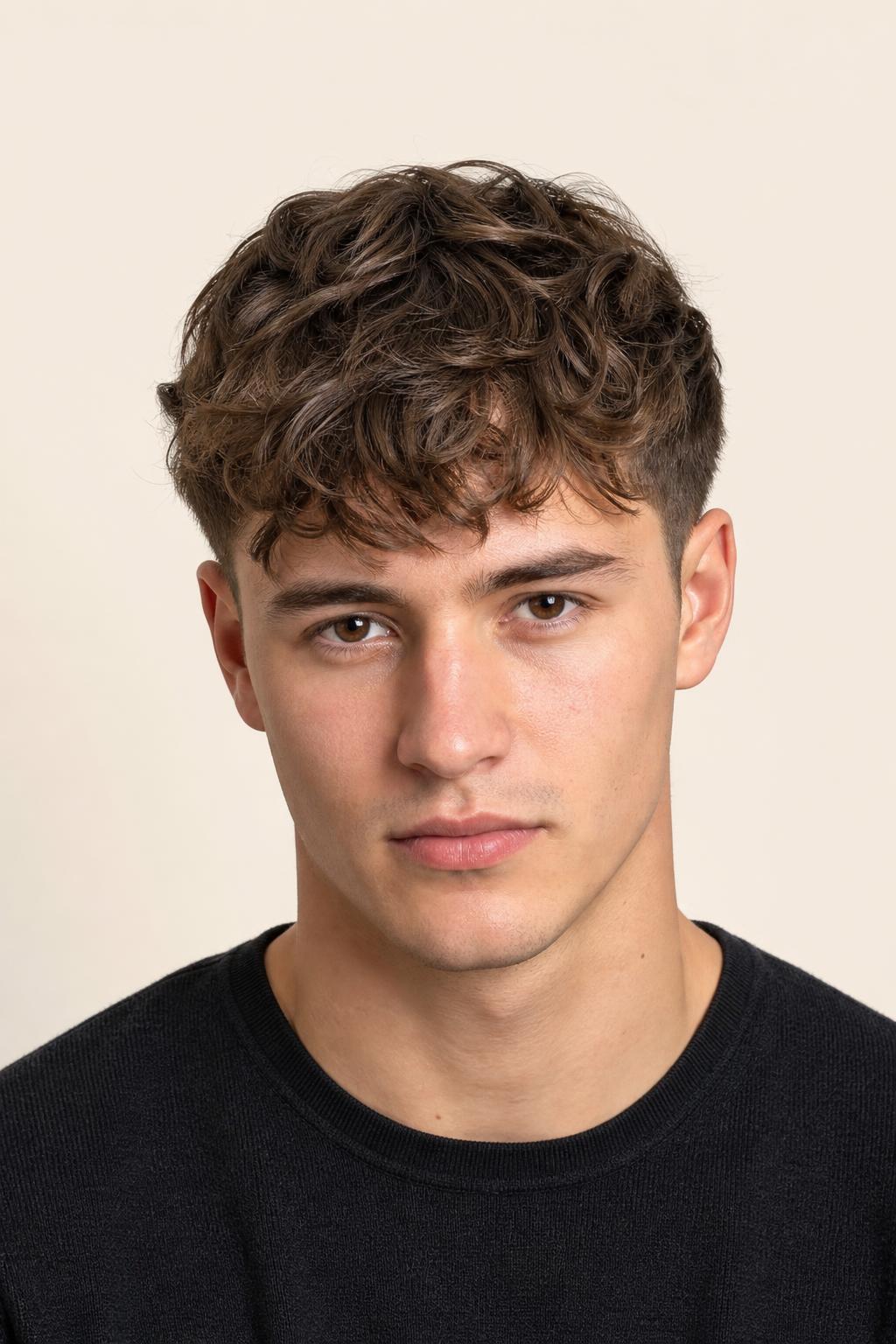
5. Ten-Week Wave Cut
Waves grow out more gracefully than any tighter pattern because there is no defined shape to lose, so a full reshape stretches to ten or twelve weeks. The sides are the limiting factor at three to four weeks if you are running a taper. Weight builds in the mid-lengths as it grows, which is the signal to book.
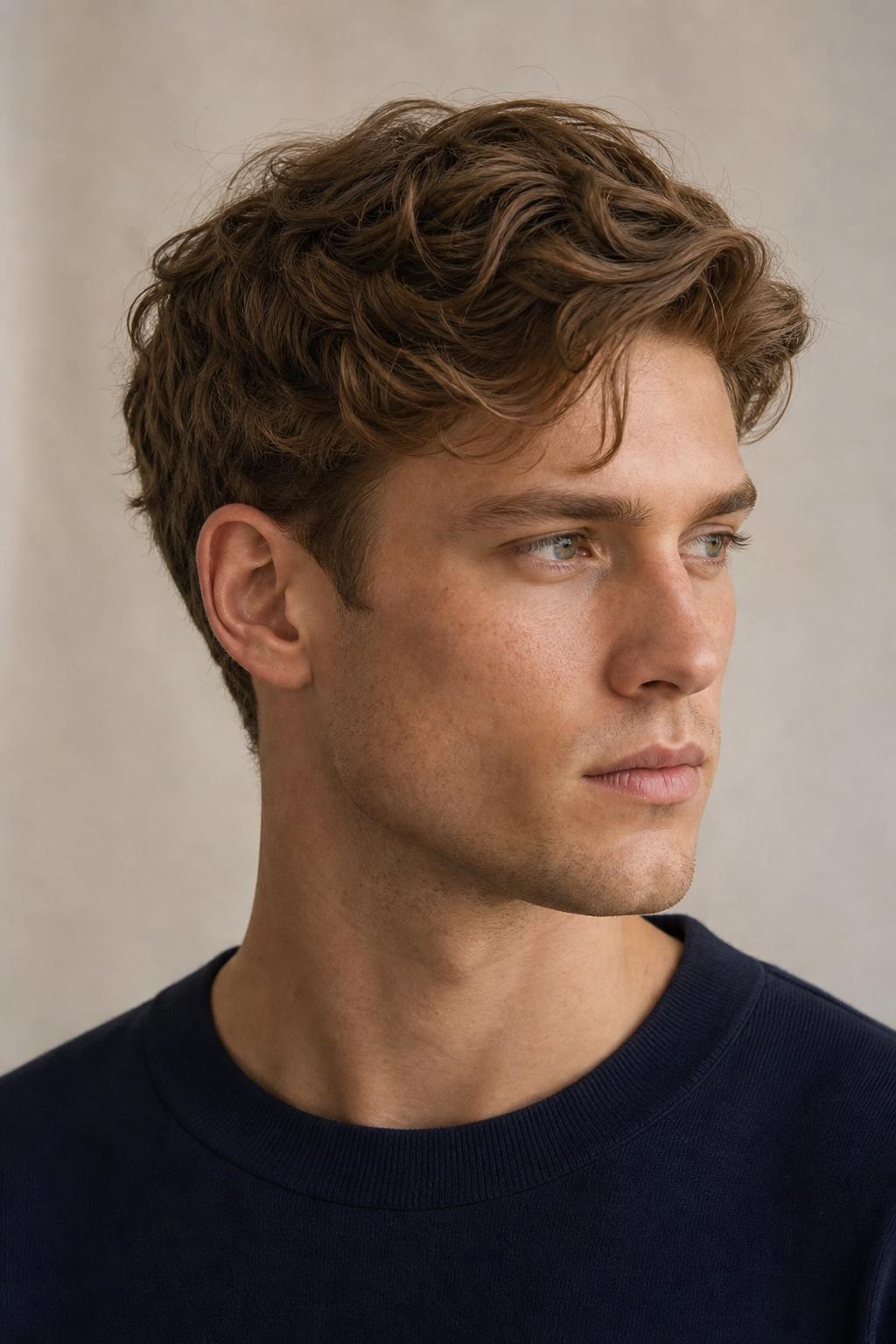
Cuts for 3a and 3b Spirals
This is the range where curl becomes a shape in its own right, spiralling into defined clumps that hold volume without help. Density is the variable that matters most: 3b in particular piles outward and needs interior space to grow up instead of sideways. Everything here should be cut dry, in the curl’s natural resting position.
6. High-Volume 3b Crop with Interior Space
Small square sections of interior length are removed from underneath the curl mass, leaving the outer curls untouched, which lets the whole top climb rather than spread. It takes a barber 20 minutes longer than a standard crop and it is the single technique that makes dense 3b wearable short. The finished height sits around three and a half inches.
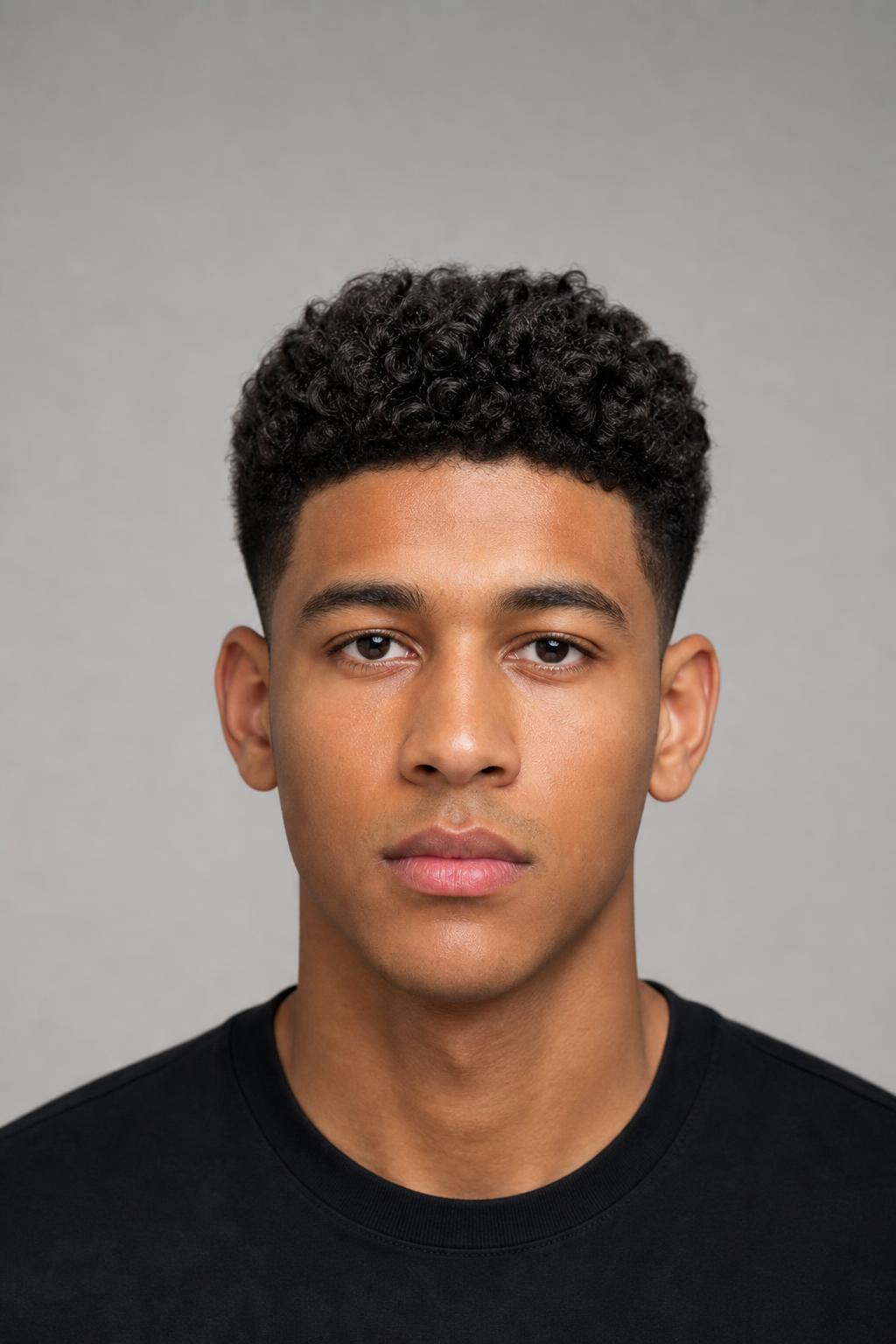
7. Say This for a Dry Cut on 3a Curls
Open with: “Cut it dry, curl by curl, in its natural position, and do not comb it out.” Barbers trained on straight hair default to wetting and combing, and that single habit is behind most bad curly cuts. Add the finished length you want to see, not the stretched length, and let them do the math.
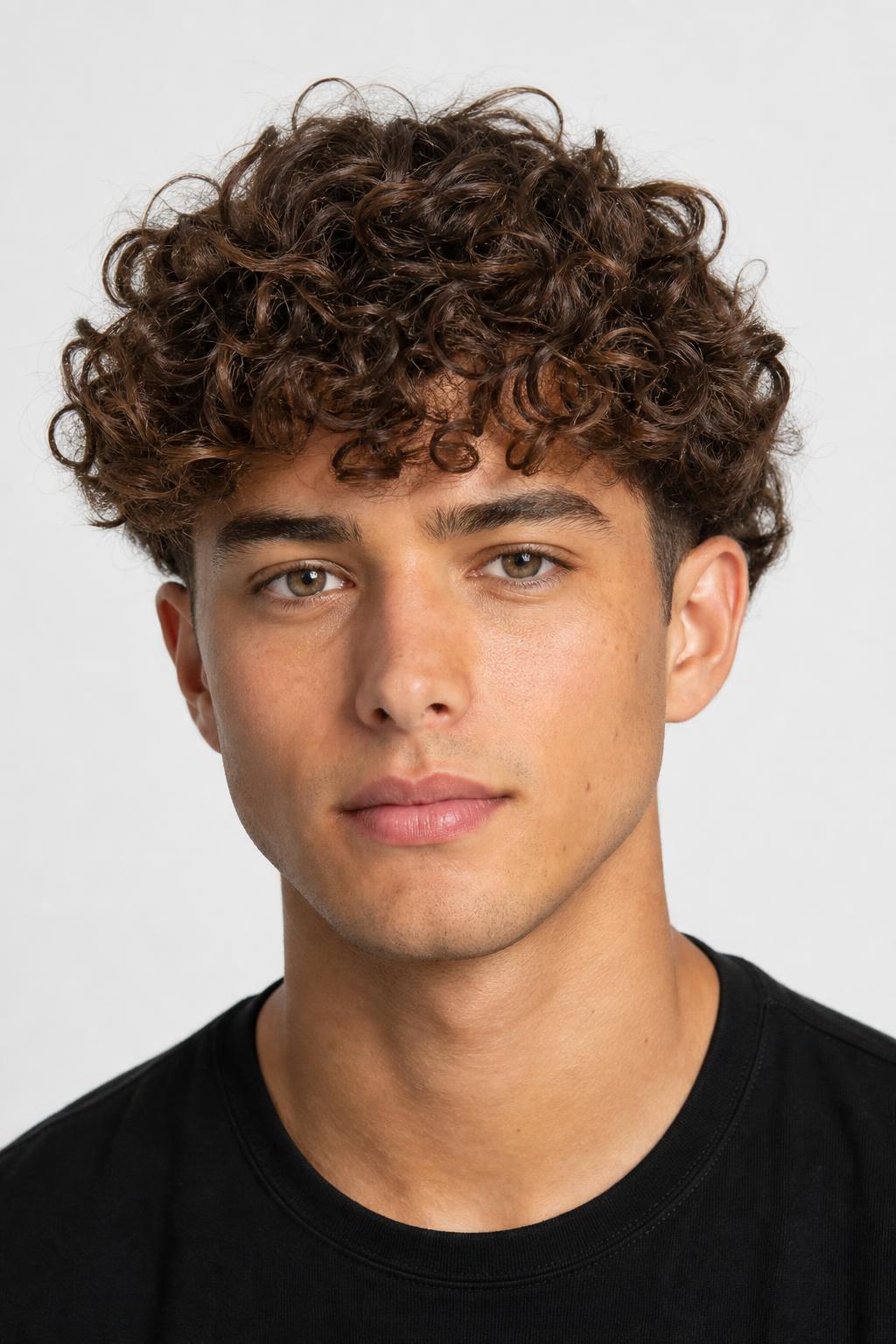
8. Curly Fringe Left Forward
Where a crop pushes everything up and back, this version leaves the front section long enough to fall onto the forehead in two or three defined spirals. It suits high foreheads and softens a long face. The rest of the top stays shorter so the fringe reads as deliberate rather than as overgrowth.
9. Curly Mullet with a Short Front
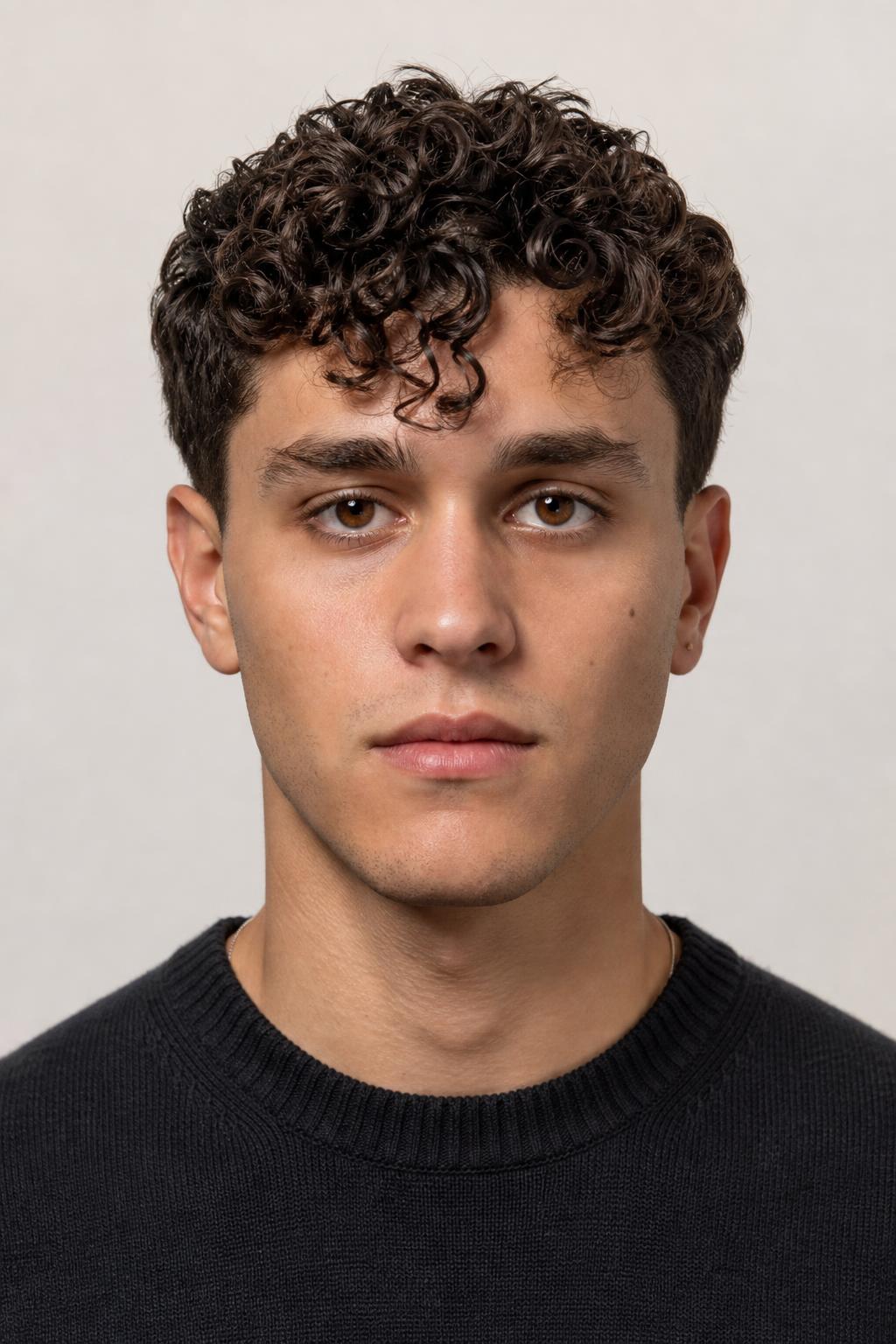
The front and sides stay cropped while the back is left four to six inches to curl freely at the nape, which gives the silhouette a hard break rather than a gradual one. Curl hides the transition that makes a straight-haired mullet look severe, so this reads far softer than the same cut on straight hair. It also grows out into a usable longer shape, which is the practical argument for it, and follows the same build as a curly mullet at any length.
10. Round Curls for a Long Face
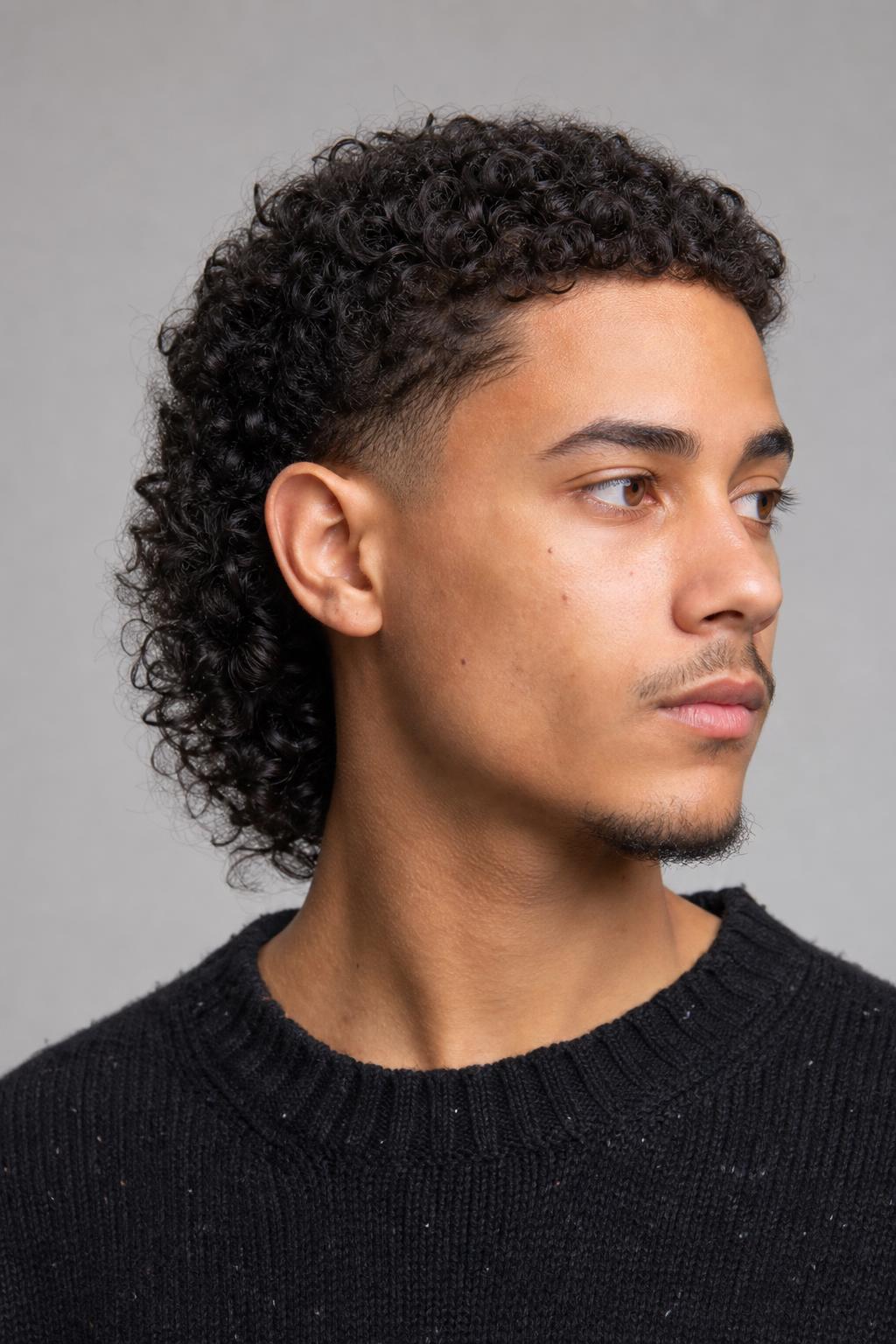
A long face needs the curl mass to sit wide rather than tall, so the barber keeps the top under three inches and leaves more length at the temples where a crop would normally take it away. The widest point of the hair should land level with the cheekbones. Height at the crown is the one thing to avoid.
11. Loose Curls on Fine 3a Hair
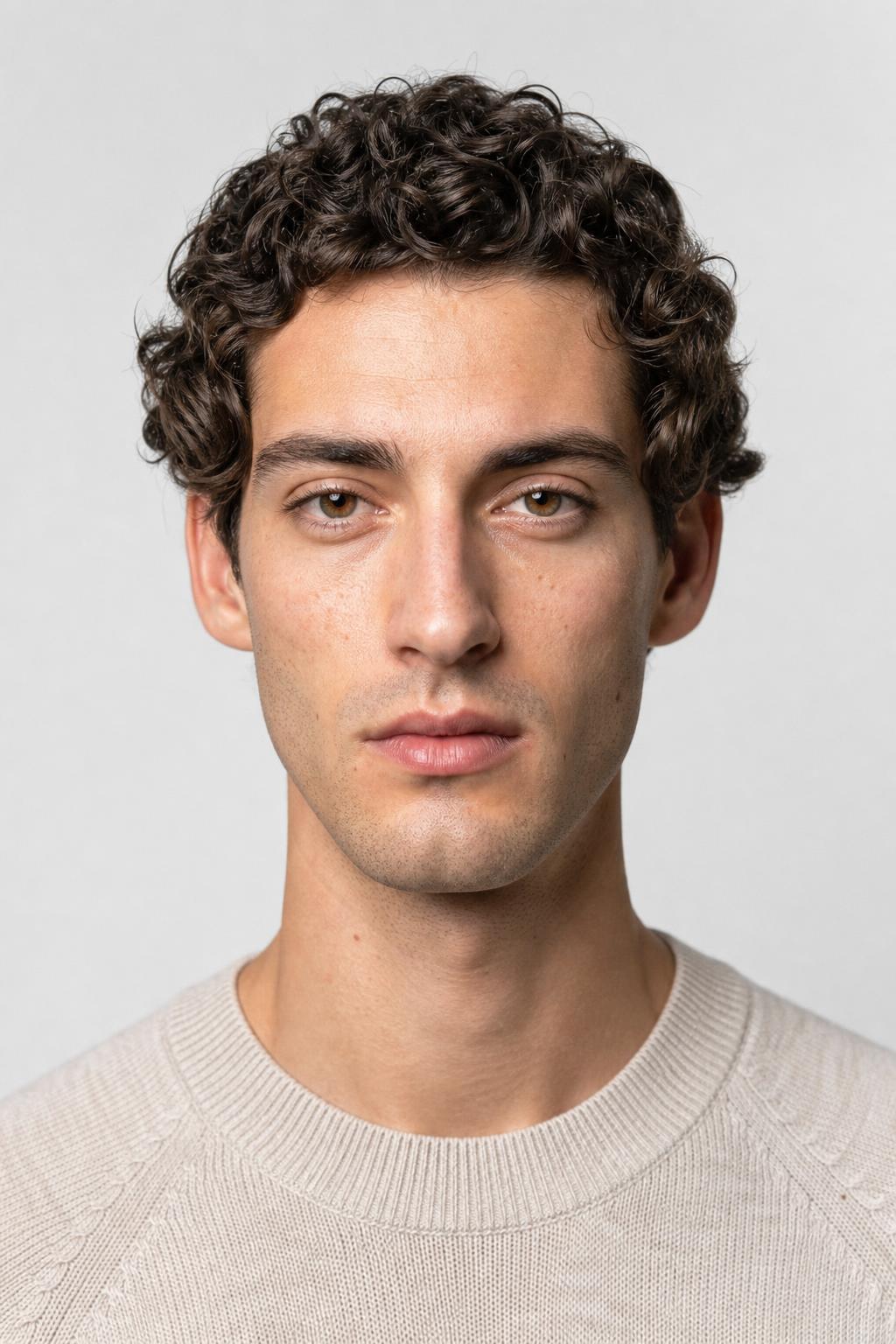
Fine 3a produces beautiful definition and almost no volume, which is the opposite of the usual curly problem, so the cut needs to keep every strand and add lift at the root instead. No interior removal at all here. A root-lifting spray at the scalp before diffusing does more than any cutting technique can.
12. Diffused Curls with a Low Heat Finish
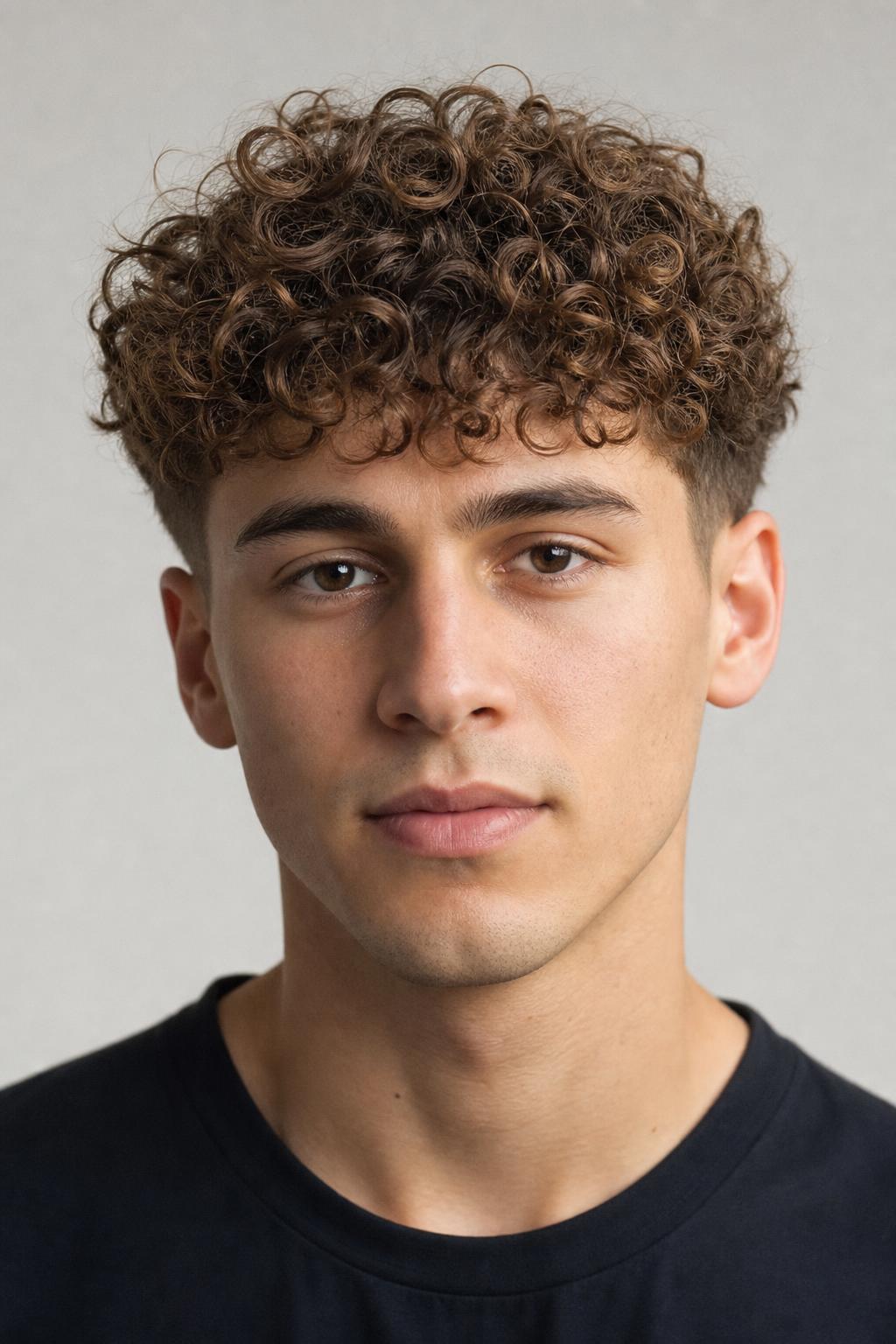
Apply curl cream to soaking wet hair, attach the diffuser, and dry on low heat with high airflow, head tipped forward for two minutes then upright for two. High heat is what sets frizz into the outer layer, and it cannot be undone until the next wash. Four minutes gets you 80 percent of the way; the last 20 percent happens on its own.
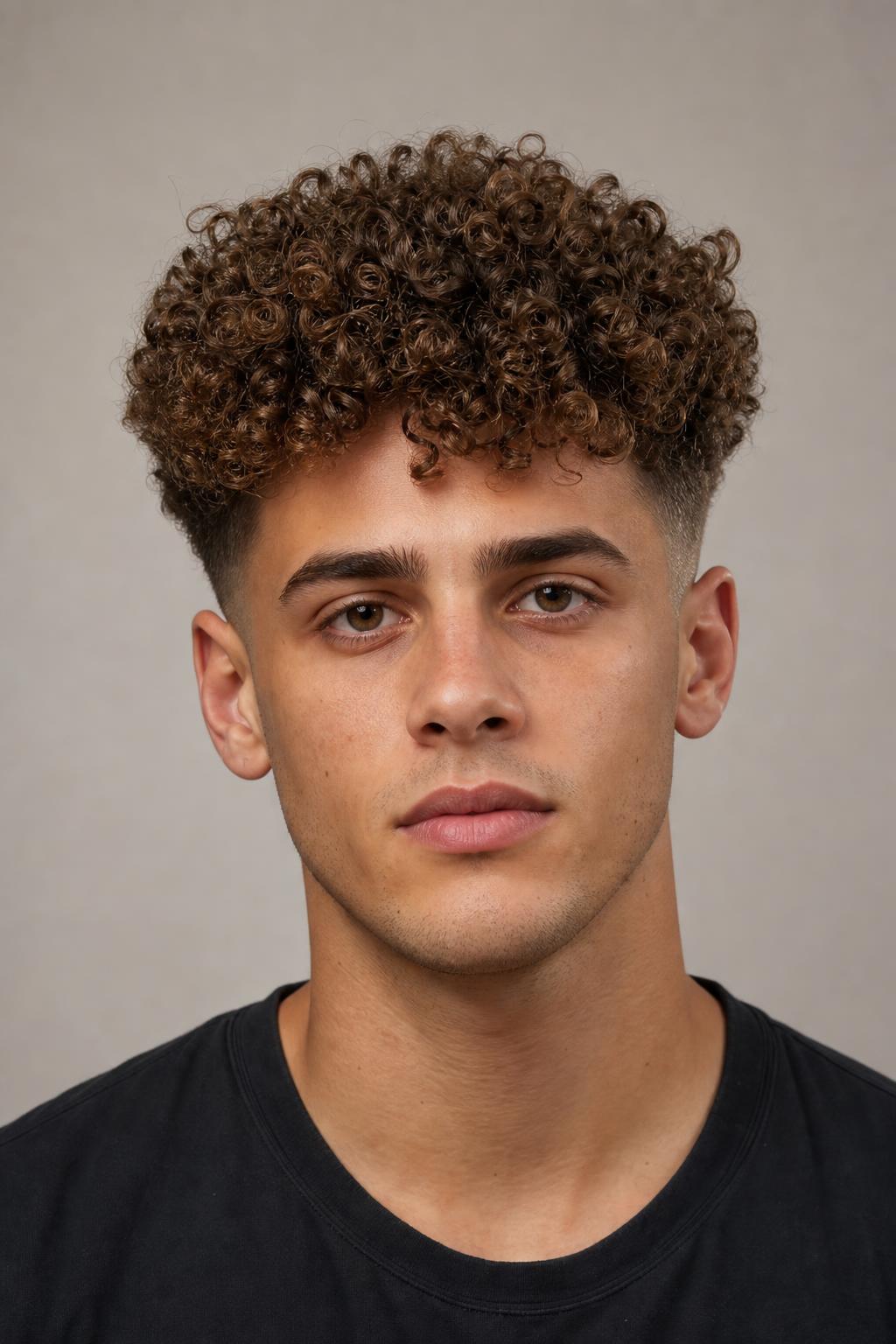
13. Twelve-Week Reshape on 3b
Spiral curl hides uneven growth better than any other pattern, so a full reshape at twelve weeks is realistic where straight hair would need six. What gives it away is the outline going square at the sides as the mass widens. Book the reshape when the silhouette stops being round.
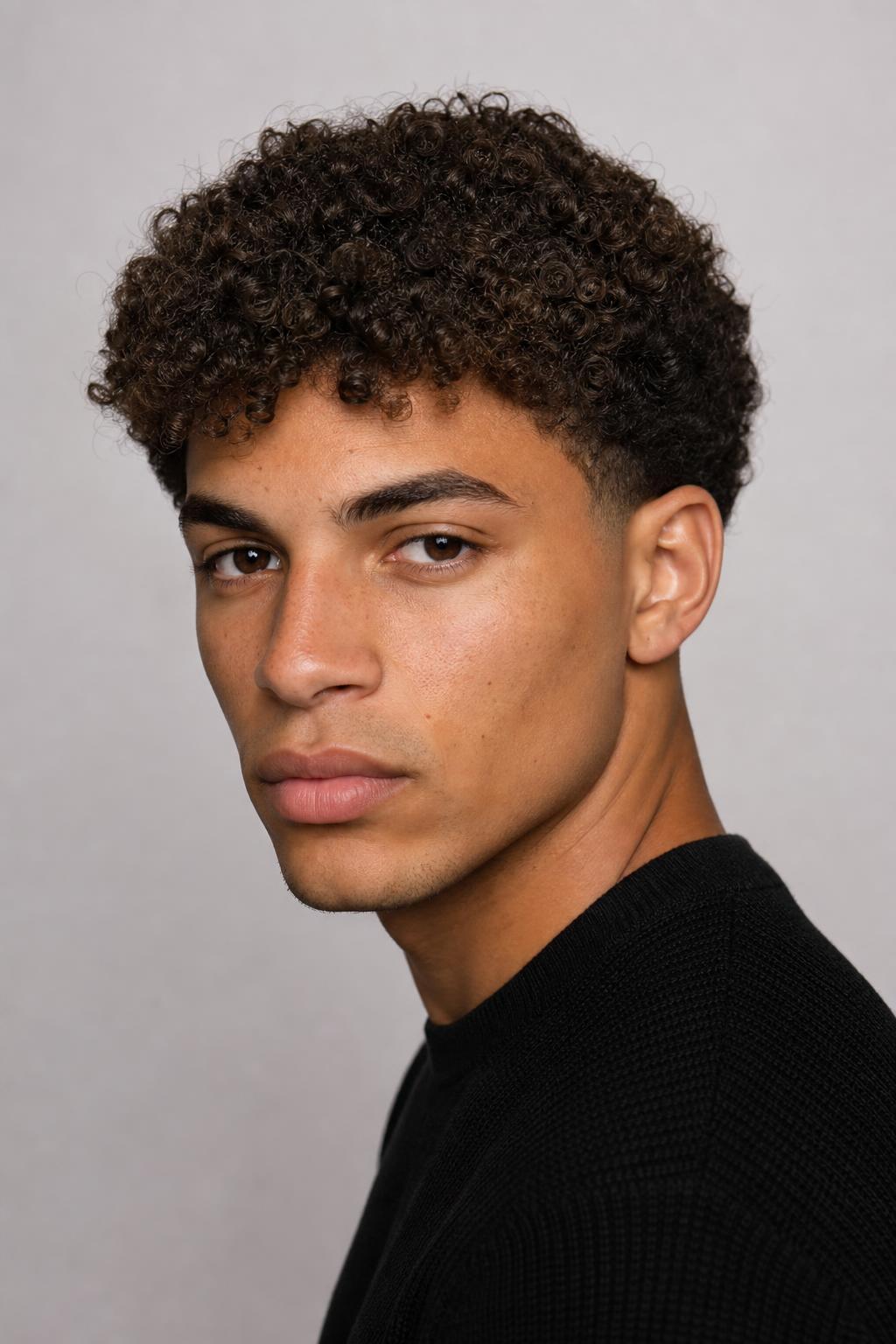
14. Lightened Curl Tips on a Dark Base
Lifting only the outer tips of the curl clumps two levels catches light on the surface of the spiral and makes the definition read more sharply from a distance. Keep the roots and the interior at natural depth. Curly hair is drier than straight by default, so a bond treatment at every wash is not optional after lightening.
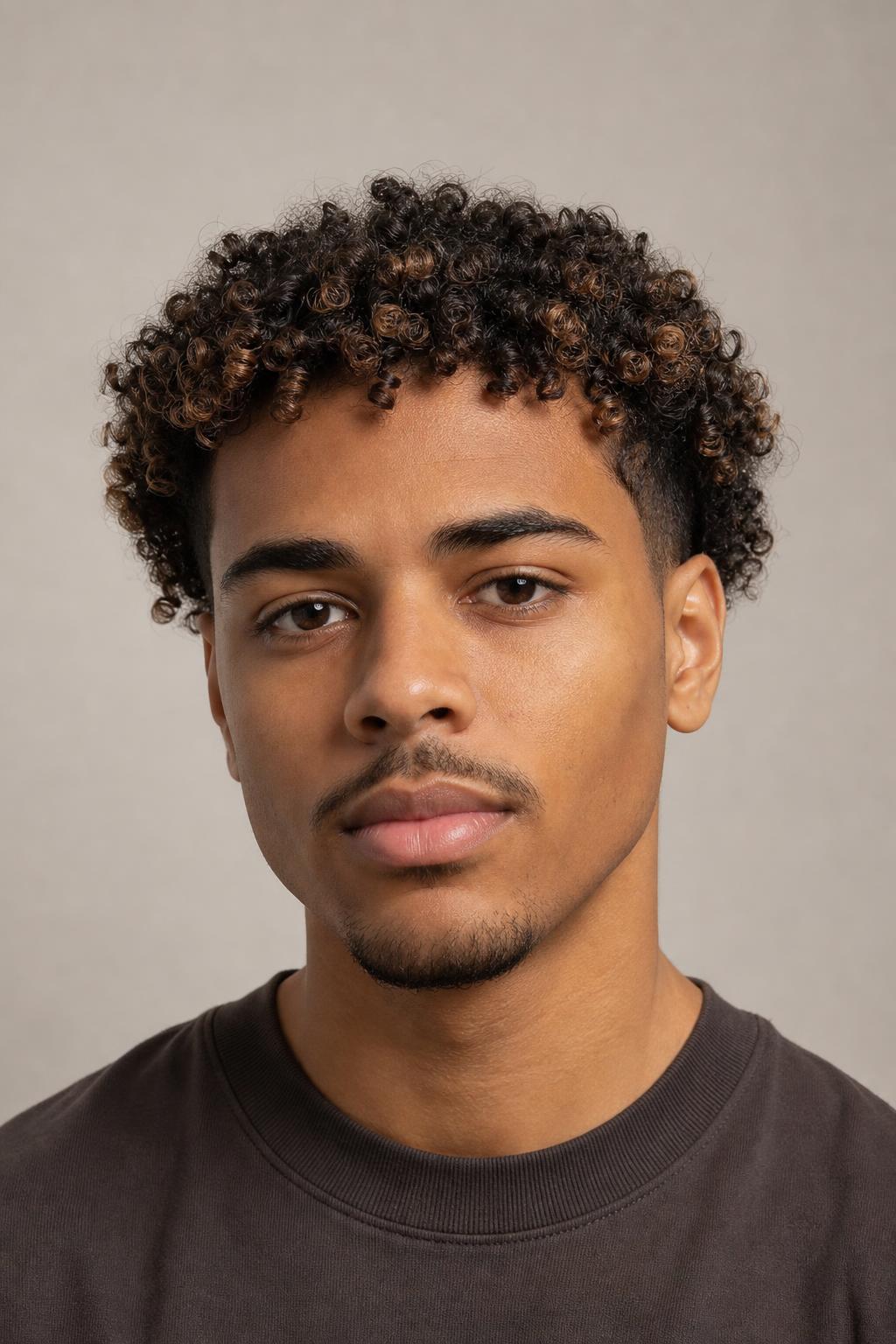
Cuts for 3c and 4a Coils
From 3c upward the curl becomes a coil and shrinkage passes 50 percent, which changes the whole conversation about length. Four inches of stretched hair shows as under two. The cuts here rely on the coil’s natural density to hold a shape without product, and they overlap with the afro taper fade family, which shares the same cutting logic at 4a and tighter.
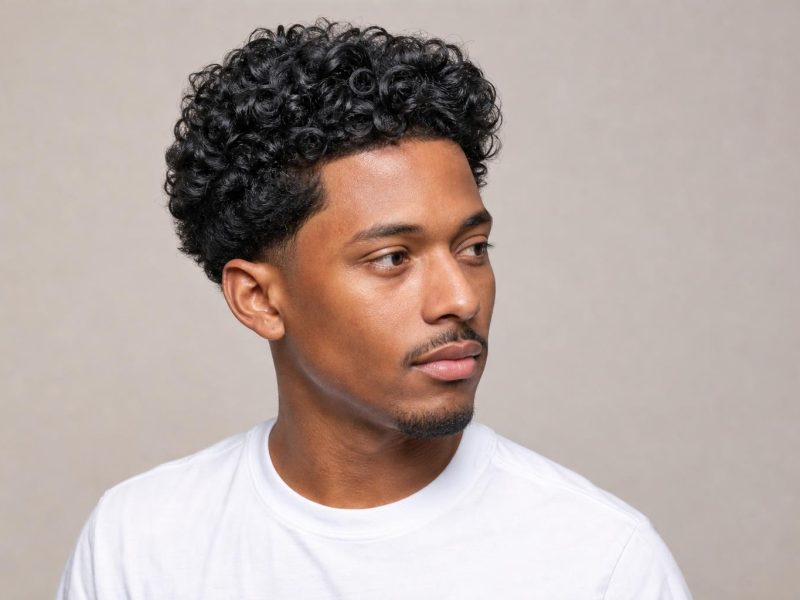
15. Taper Fade with a Coily Top
Clippers take the sides down in a gradual taper while the top is left at three to four inches stretched, which shows as roughly two inches of dense coil. The gradient does the shaping so the top needs almost no cutting at all. This is the most common men’s curly cut in the world for good reason, and the standard taper fade on curly hair is the template.
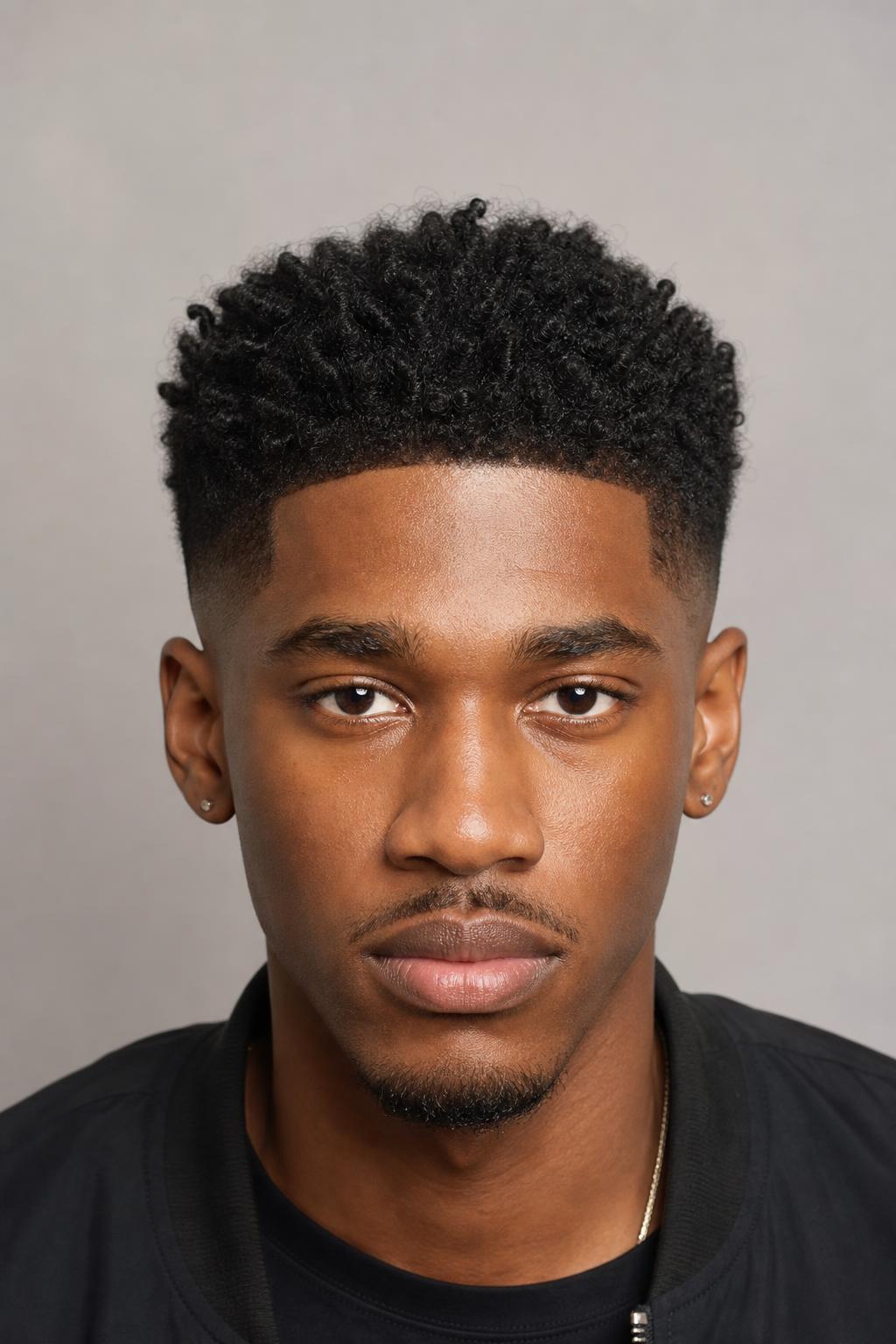
16. Low Fade for a Round Face
A round face wants the coil mass tall and the sides tight, and a low fade keeps the shortest point near the ear so the top has maximum apparent height. Do not let the barber round the top corners off, since the squarer outline counteracts the roundness of the face. The low fade on curls is the version to bring a photo of.
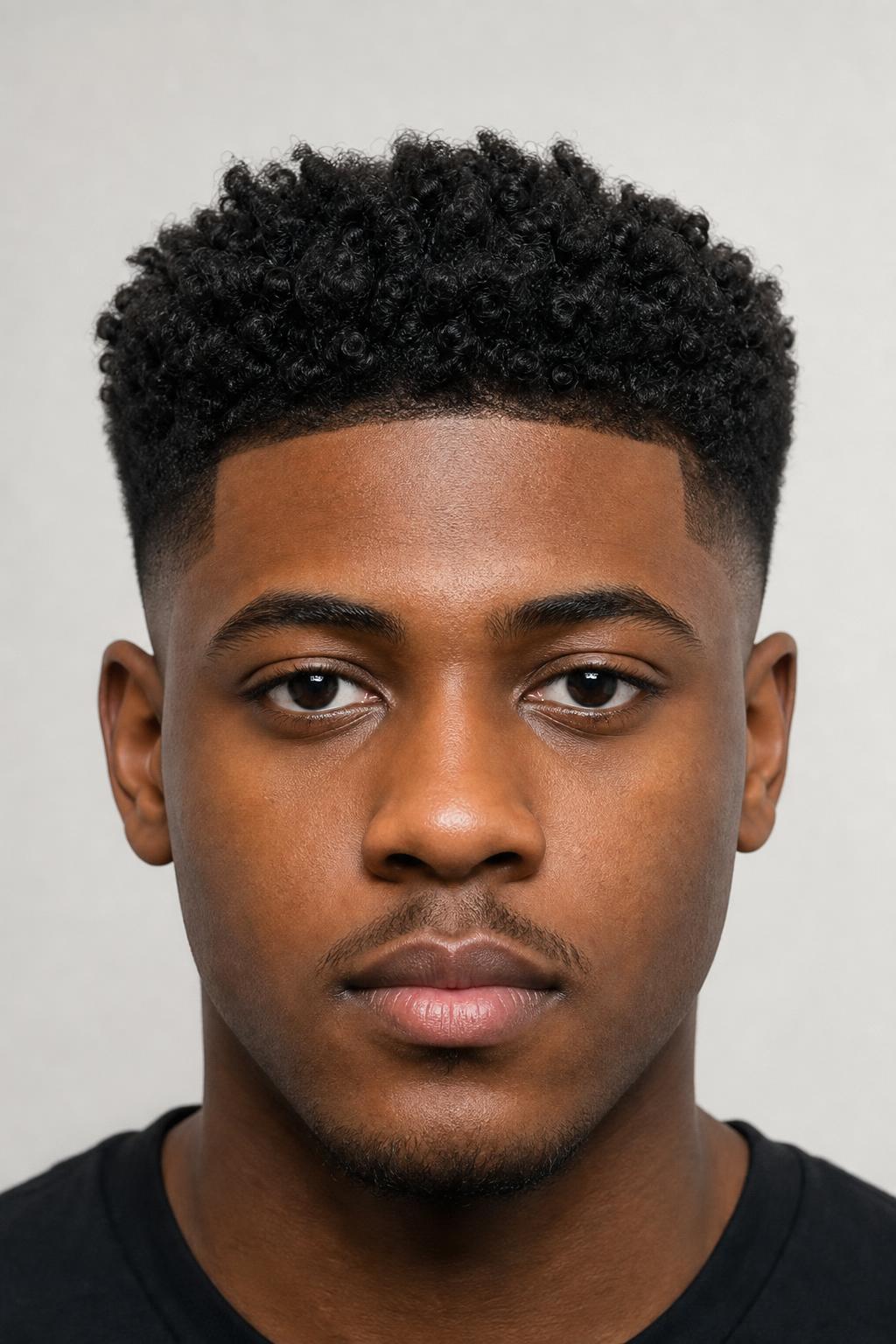
17. Sponge-Twisted Coils on 4a
A curl sponge worked in small circles over damp 4a hair clumps the coils into defined twists in about three minutes, which is faster and cheaper than any product-based method. It works best on one to two inches of length. Overworking the same spot creates a bald-looking patch, so keep the sponge moving.
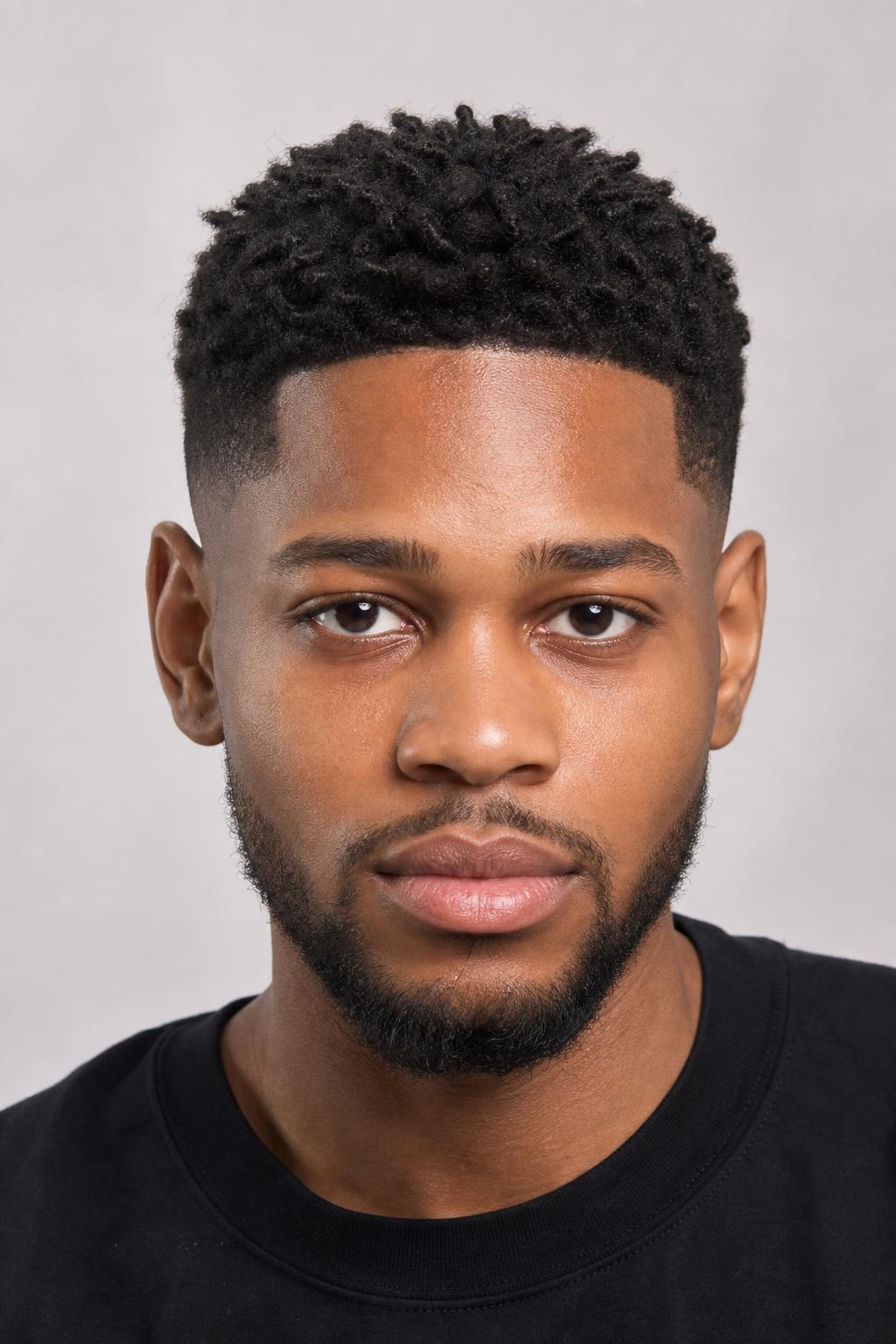
18. Burst Fade with a Coily Top
The fade curves in a semicircle around the ear and leaves the nape longer, which keeps the back of the head from looking abrupt when the top is dense. It takes ten extra minutes and gives the cut a rounder read from the side. Pair it with a slightly taller top so the curve has something to sit against, exactly as it works in standard burst fade shapes.
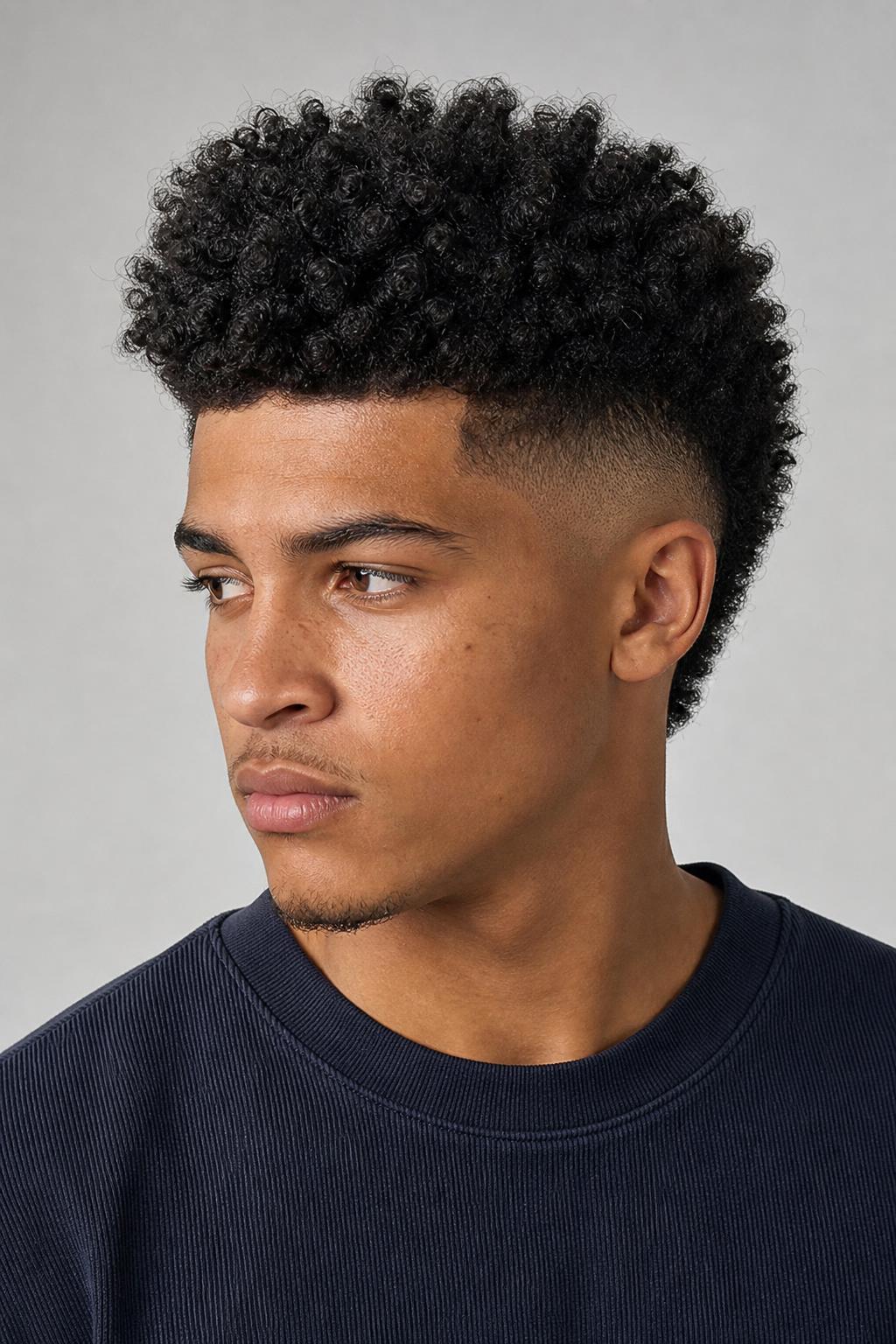
19. Dense 3c Cut for Thick Density
Very dense 3c is the one texture where a barber can leave real height without the shape widening, because the coils lock together and support each other. Three inches of visible height is achievable and holds all day with nothing but a leave-in. The trade is a longer appointment, since dry coil cutting cannot be rushed.
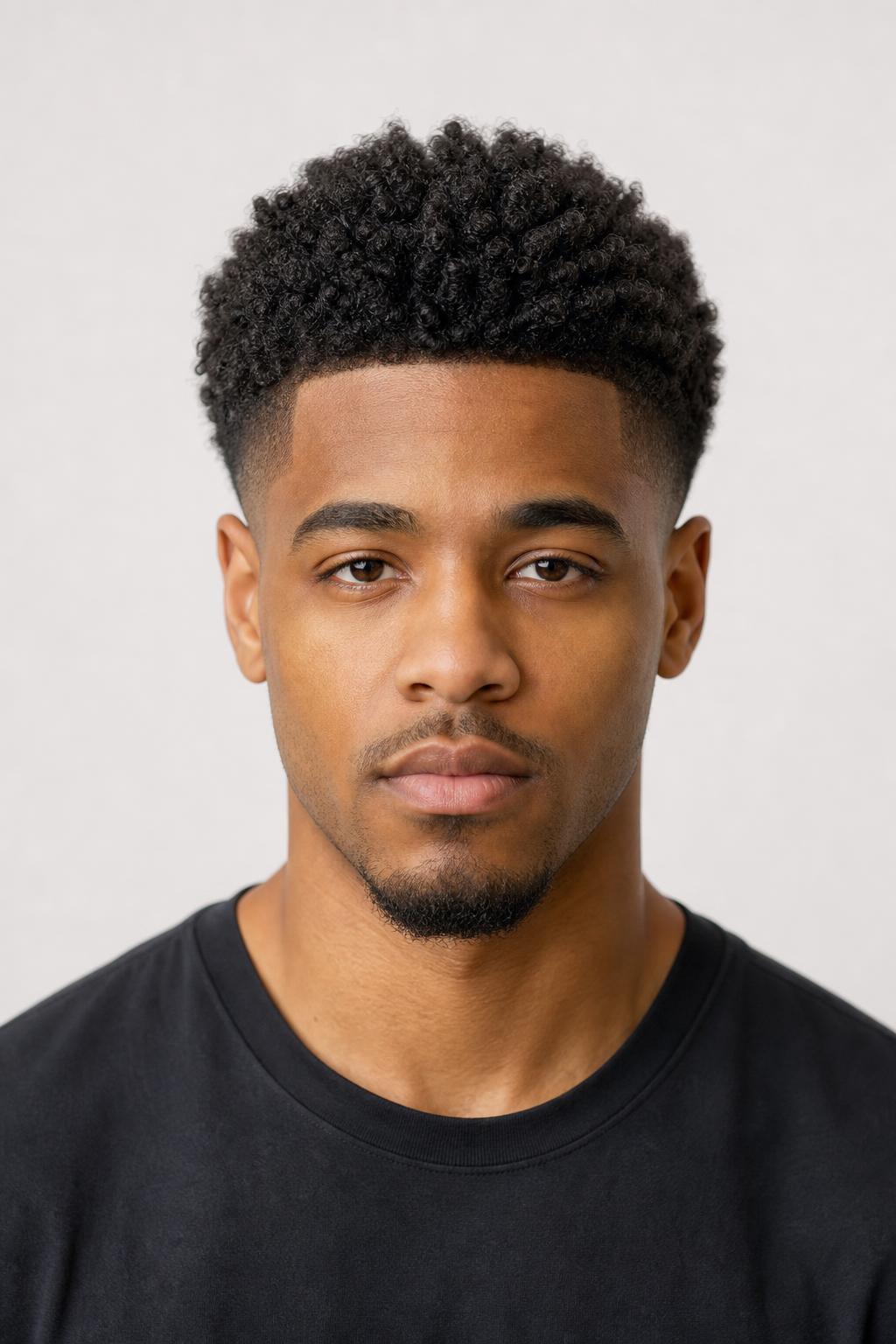
20. Leave-In and a Pick
Work a leave-in conditioner through damp hair with your fingers, let it dry fully, then lift from the root with a wide-tooth pick to build height. Picking damp hair breaks the coil clumps and creates frizz; picking dry hair separates and lifts them. Thirty seconds and it doubles the apparent volume.
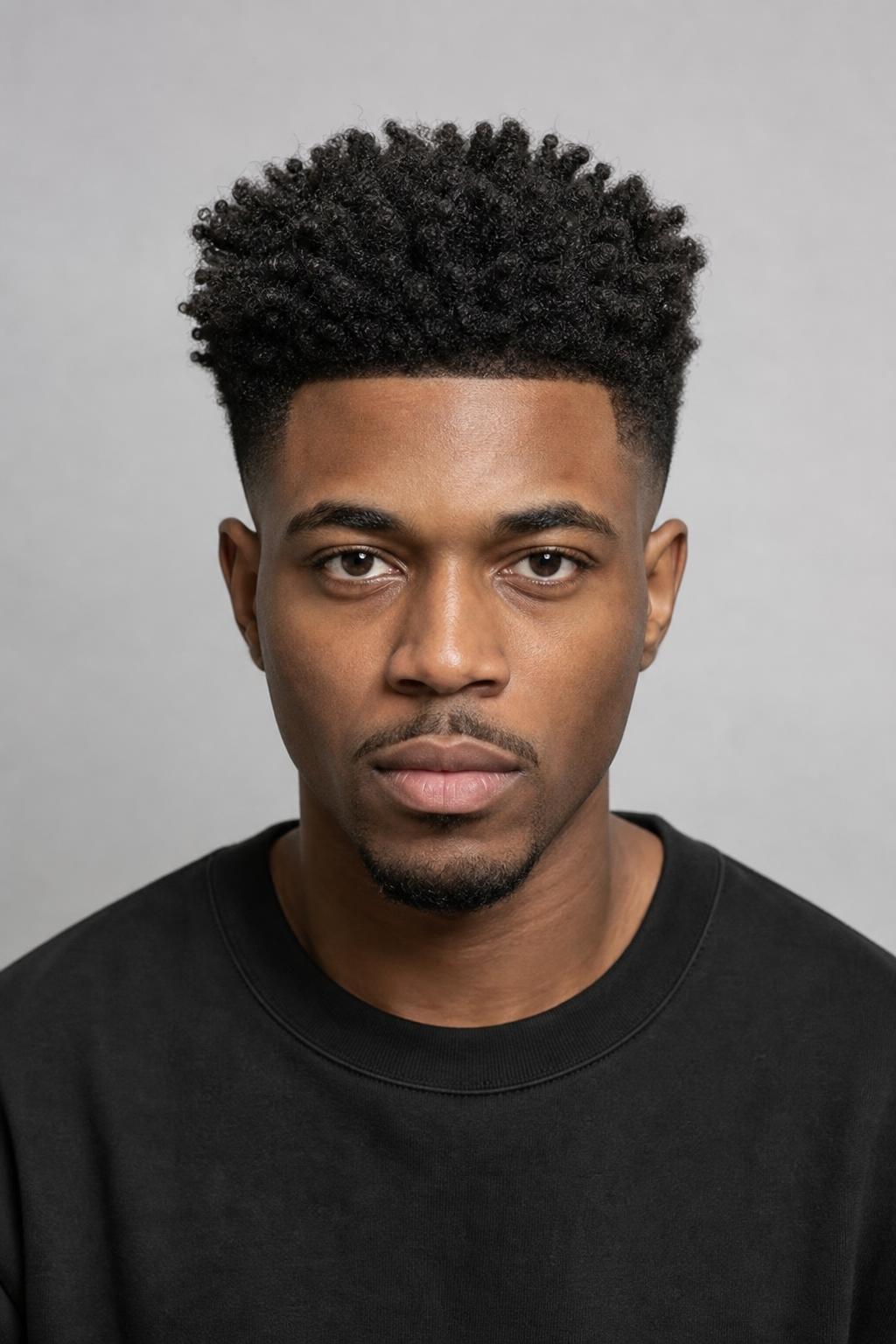
Longer Curly Cuts
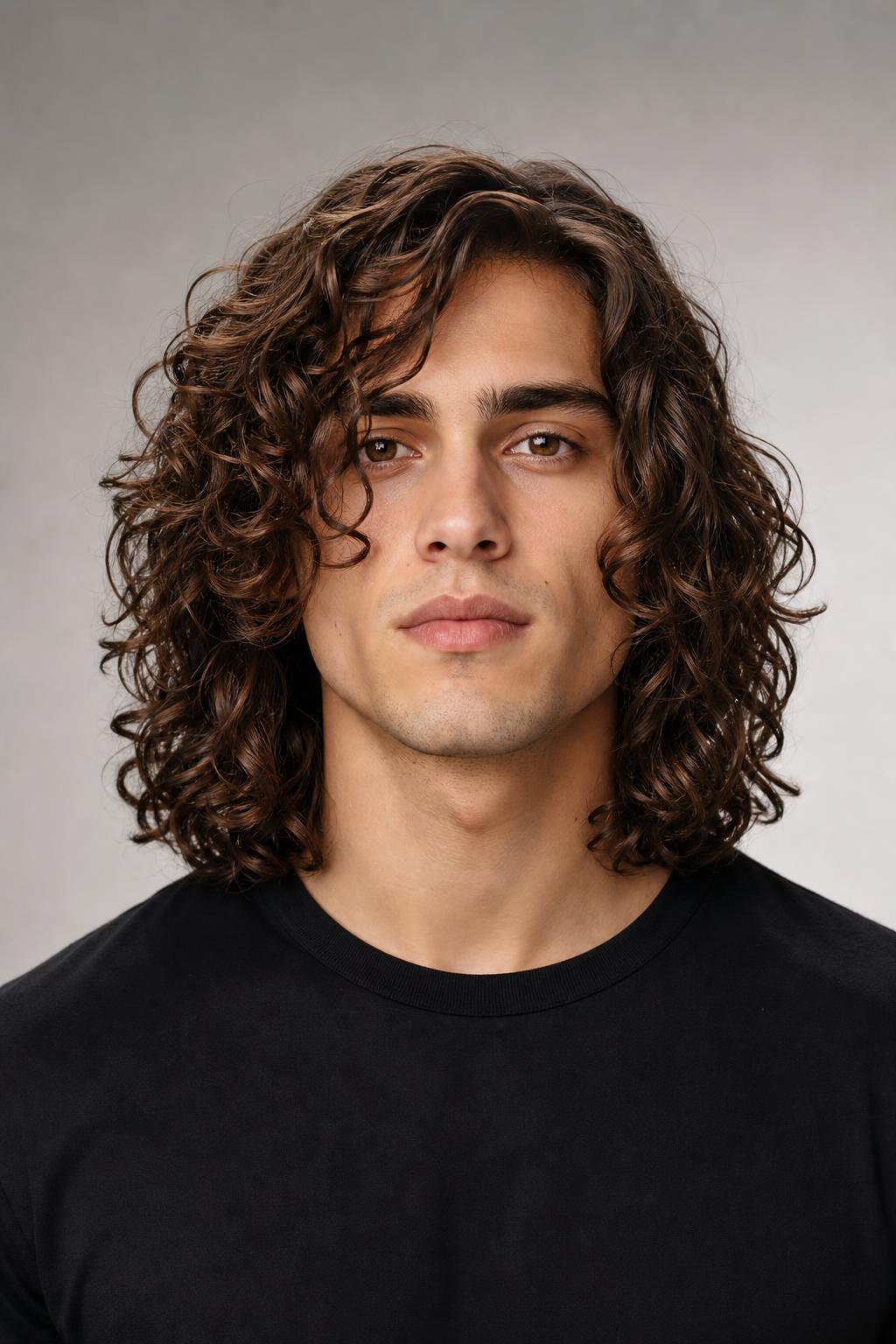
Past four inches of visible length, curly hair stops being a crop and becomes a hairstyle with its own weight and fall. Every pattern can do it, but the timeline varies enormously: a 2b man reaches shoulder length in about 18 months, while 4a hair takes closer to four years for the same visible drop. The reward is the widest range of daily options in this whole article.
21. Shoulder-Length 2c Waves
At this length the interior weight removal becomes essential rather than optional, since 18 inches of wave carries enough mass to pull the root flat. The barber removes bulk from underneath in long vertical sections. Trim every ten weeks to keep the ends from splitting, and never let anyone put a razor near them.

22. Ask for Length Without Losing the Shape
The sentence that protects long curly hair is: “Dust the ends only, do not take any length off the top or the sides, and no layers I did not ask for.” Barbers add layers to long curly hair reflexively, and unwanted layers on curl take six months to grow back into line. Repeat it before they start, not after.
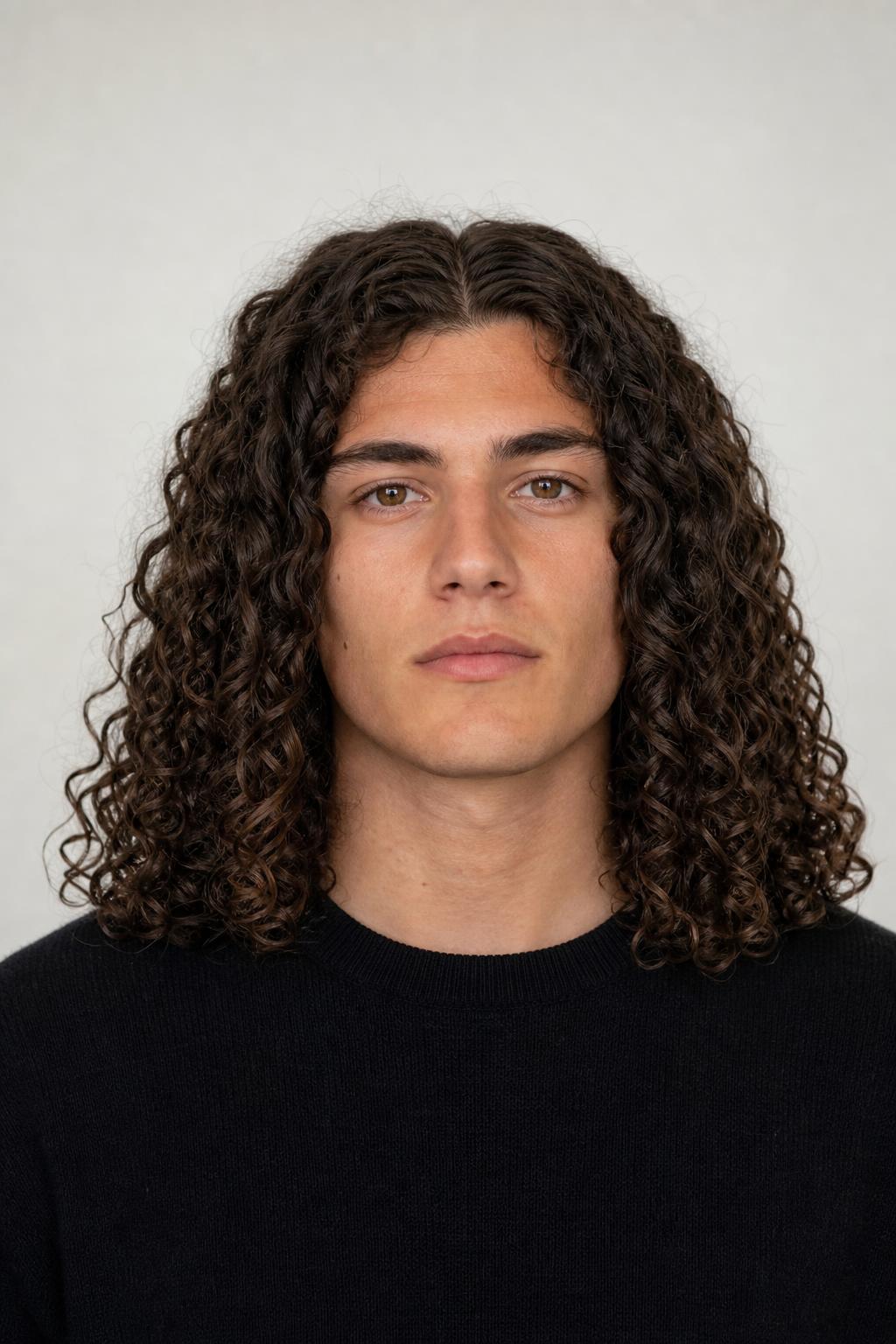
23. Long Curls Tied Half Up
Gathering the top half into a fabric tie keeps the curl shape at the face while getting the bulk off your neck, and on curly hair it creates a natural high volume at the crown that straight hair cannot manage. Use fabric rather than elastic to avoid a permanent dent in the curl. Practical for work and for the gym.
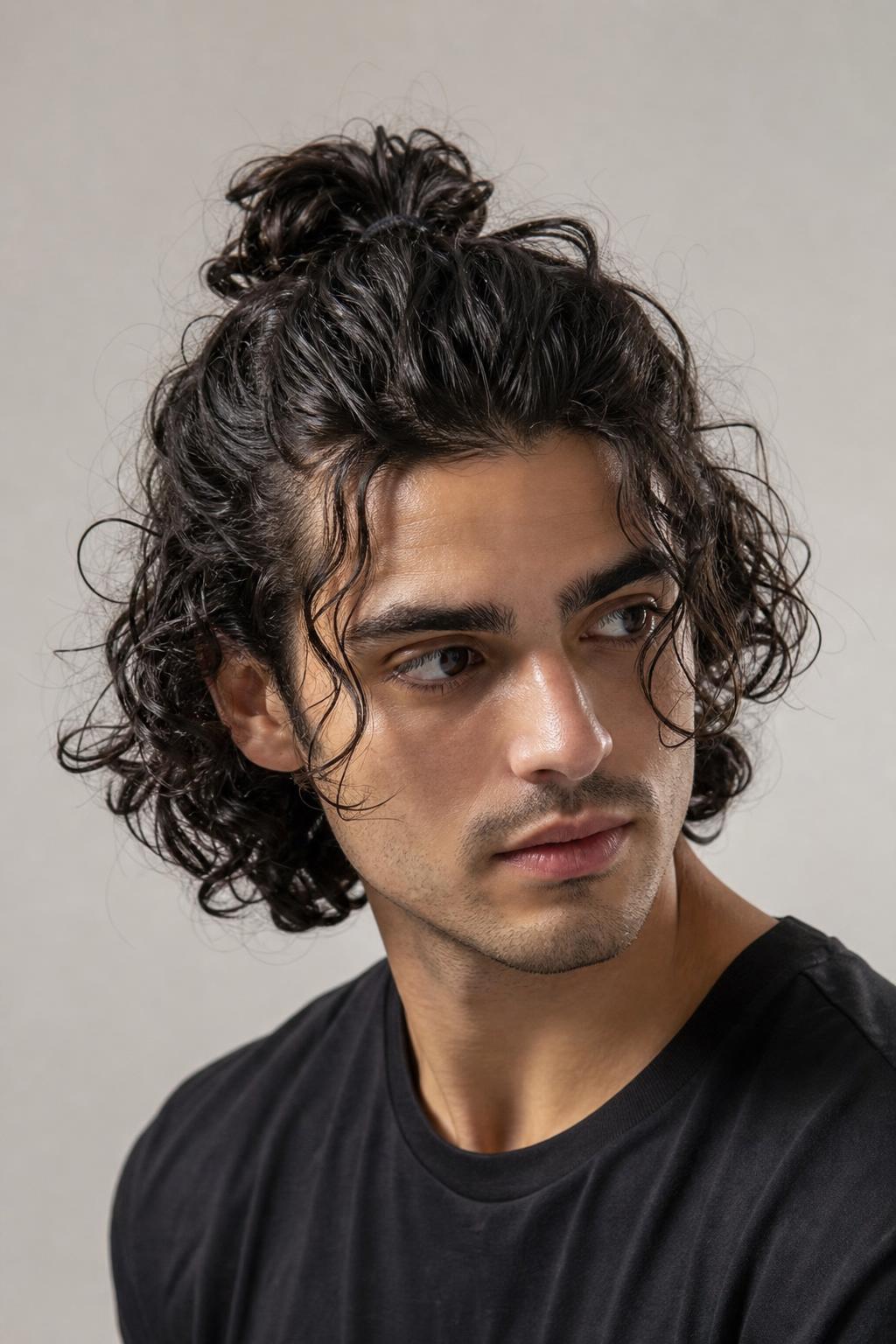
24. Long Curls on Coarse Density
Coarse curly hair at length behaves differently from fine: it holds its own shape but resists any styling you impose on it, so the cut has to build the silhouette rather than the product. Expect a longer appointment and a stylist who works in sections. Deep conditioning every second wash keeps the ends from going wiry.
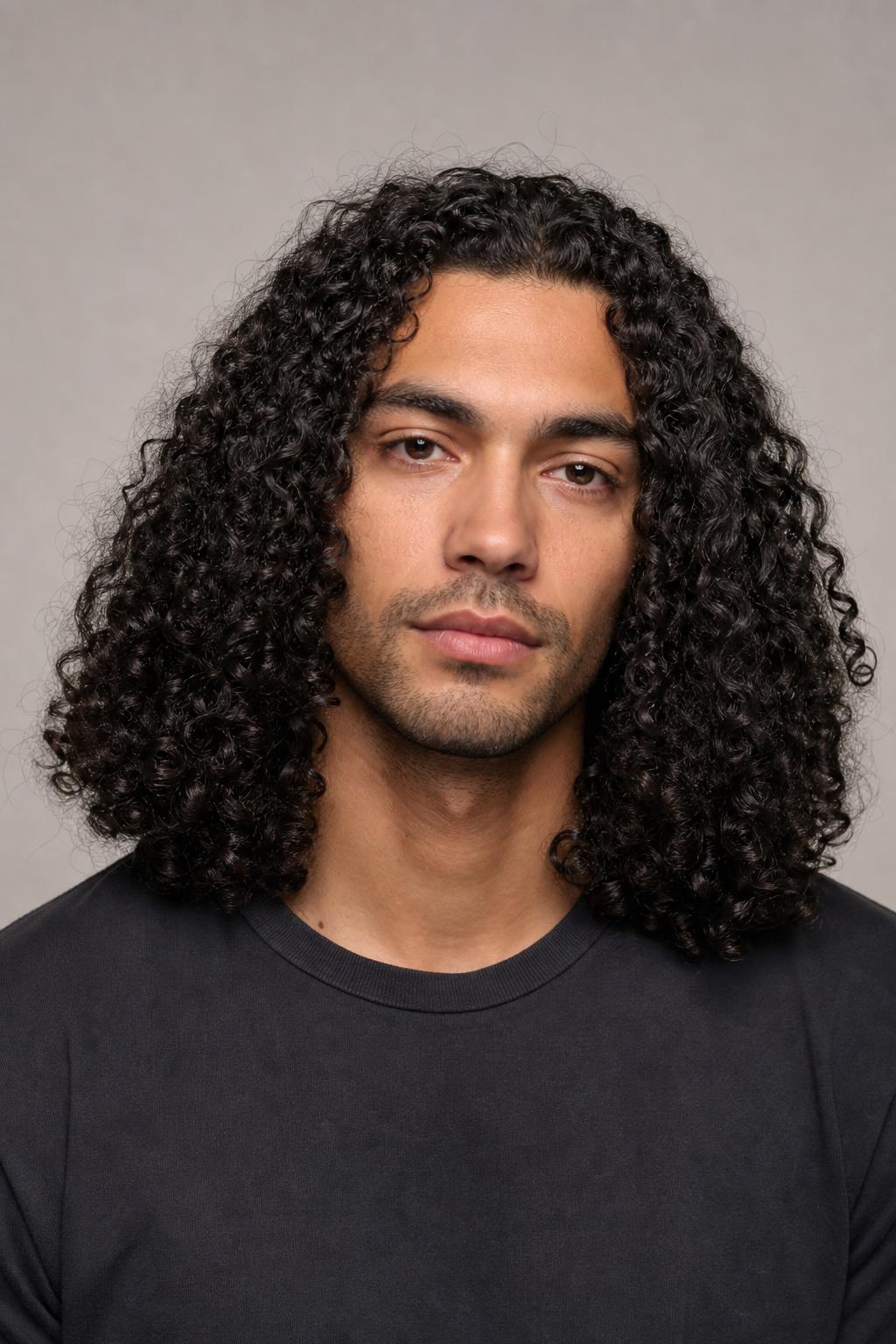
25. Refreshing Long Curls Between Washes
Mist water with three drops of leave-in through the top layer, cup sections upward, and let them dry, which reforms the clumps without a full wash. Washing long curly hair daily strips it and leaves the ends brittle within a month. Two to three washes a week is the ceiling for any pattern in this article.
Shrinkage by Curl Type and What Length to Ask For
Shrinkage is the reason curly men walk out of barbershops with hair inches shorter than they wanted. The number below is how much visible length you lose when the hair dries in its natural pattern, and it is the figure to hand your barber before they pick up the shears.
| Curl Type | Typical Shrinkage | Ask For (Stretched) | Visible Result |
|---|---|---|---|
| 2b to 2c wave | 20 to 25 percent | 4 inches | About 3 inches |
| 3a loose spiral | 30 percent | 4.5 inches | About 3 inches |
| 3b springy curl | 40 percent | 5 inches | About 3 inches |
| 3c tight coil | 50 percent | 5 inches | About 2.5 inches |
| 4a to 4c coil | 60 to 75 percent | 5 to 6 inches | 1.5 to 2 inches |
Stylist tip: Do not tell your barber a number of inches. Point at your own head and say “I want it to look like this when it dries,” holding your hand at the finished height. Inches are measured stretched by every barber trained on straight hair, and that single mismatch causes more short curly cuts than any other factor.
Why Curly Hair Has to Be Cut Dry
Wet curly hair is stretched to its full length and every strand hangs in the same direction, which tells the barber nothing about where the hair actually lands when it dries. Cut wet, and the curls spring up unevenly as they dry because each one shrinks by a slightly different amount depending on its position on the head. The result is the stepped, uneven outline most curly men have experienced at least once.
Dry cutting means the barber cuts each curl clump where it naturally falls, checking the silhouette as they go. It is slower, usually 45 to 60 minutes against 25 for a standard cut, and it typically costs more. Ask before booking whether the barber cuts curls dry, and if the answer is vague, ask to see photos of their curly clients. A barber who wets and combs your hair flat before cutting is about to give you a straight-hair cut on curly hair, which is worth stopping before the first section comes off.
Stylist tip: Arrive with your hair styled the way you normally wear it, clean and dry, and do not let anyone shampoo you first. The barber needs to see the hair in the state you will actually walk around in, including how it sits at the front hairline and where your cowlicks push. Turning up with wet hair costs you the most useful information in the room.
Face Shape and Volume Placement
With curly hair the question is never whether you get volume, it is where you let it sit. The curl mass is going to occupy space; face shape decides whether that space should be tall, wide, or forward. The table applies to any pattern from 2c upward.
| Face Shape | Best Variation | Where the Volume Goes | Avoid |
|---|---|---|---|
| Oval | Textured crop or curly fringe, any fade height | Anywhere; most balanced shape | Nothing structural |
| Round | Low or drop fade with a tall top | Height at the crown, tight at the sides | A wide low curl mass, which doubles the width |
| Square | Mid-length waves or a soft-edged crop | Softness above the jaw, moderate height | Hard geometric outlines that echo the jaw |
| Heart | Curly fringe with fullness kept low | At the jaw and forward on the forehead | Piled height at the crown, which widens the forehead |
| Oblong | Wide crop under three inches with temple width | Sideways at cheekbone level | High fade with a tall top, which stretches the face |
| Diamond | Curly fringe forward with a low taper | Forward at the forehead and down at the jaw | Slicked-back shapes exposing a narrow forehead |
Cuts to Avoid at Each Curl Type
Some standard barbershop cuts fight curl rather than working with it. These are the four combinations that reliably disappoint, and what to take instead.
- A blunt one-length cut on 3b or tighter builds a triangle, wide at the bottom and flat on top, because the coils stack outward as they shorten; ask for interior weight removal and a rounded outline instead.
- Thinning shears anywhere on any curl pattern shred the ends mid-strand and produce permanent frizz that only grows out, which is why every good curly barber owns none.
- A hard disconnected undercut on 2b or 2c leaves the top with nothing to blend into and the wave collapses over the shelf; a tapered side keeps enough length for the wave to connect, and a low taper on curly hair is the safe default.
- A razor cut on any curl above 2c splits the cuticle along the strand and turns defined ends into fuzz within two washes; scissors only, always.
FAQ
What Is the Best Haircut for Men with Curly Hair?
A taper or fade on the sides with two to four inches of visible length on top suits more curl patterns than any other shape, because the gradient does the work and the curl supplies the volume. From there the variation is in fade height and top length, both of which come down to face shape. Anyone from 2c to 4c can wear this shape well.
How Do I Know My Curl Type?
Wash your hair, apply nothing, and let it air-dry untouched, then look at the shape a single strand makes. A gentle S is 2b or 2c, a spiral you could wrap around a finger is 3a to 3b, a tight corkscrew narrower than a pencil is 3c, and a zigzag with no visible loop is 4a and above. Most heads carry two patterns, and the tighter one should drive the cut.
Should Men with Curly Hair Use Conditioner Every Day?
Conditioner yes, shampoo no. Curly hair is drier than straight hair because scalp oil cannot travel down a bent strand, so rinsing with conditioner between washes keeps the curl supple without stripping it. Two to three shampoos a week is the ceiling for most patterns, and tighter coils can go longer.
How Often Should Curly Hair Be Cut?
Every 8 to 12 weeks for a full reshape, and every 2 to 4 weeks for the sides if you run a fade. Curl hides uneven growth well, so the top stretches much further than a straight-haired cut would. The signal to book is the silhouette going square at the sides instead of staying round.
Can I Get a Fade with Curly Hair?
Yes, and fades suit curly hair particularly well because the contrast between bare sides and dense curl on top is stronger than it is on straight hair. Low, mid, burst, and drop fades on curly hair all work; the height should be chosen by face shape. Fades on curls need a clean-up every two to three weeks to stay sharp.
Why Does My Curly Hair Get Frizzy After a Haircut?
Almost always because the ends were cut with a razor or thinning shears, both of which split the strand along its length instead of cleanly across it. It can also come from a wet cut, where uneven shrinkage leaves ends at inconsistent points in the curl. Neither is fixable with product; both grow out in three to six months.
What Products Do Men with Curly Hair Actually Need?
A leave-in conditioner and one styling product, which is a curl cream for definition or a salt spray for looser waves. That is genuinely the whole list for most men. Skip gel, which flakes, and anything silicone-heavy, which builds up and flattens the curl over a few weeks.
The right men’s haircut for curly hair starts with knowing your pattern and how much it shrinks, then finding a barber who will cut it dry in its natural position. Show up with your hair clean, dry, and styled the way you wear it, name your curl type out loud, and describe the finished height with your hand rather than in inches. Get those three things right and almost any shape in this gallery is available to you.
Hair results vary based on your natural hair type, texture, density, and condition. Always consult with a licensed hairstylist before making significant changes, especially with chemical treatments or dramatic length changes. Photos may show styled results that require professional tools and products to replicate.



3 responses