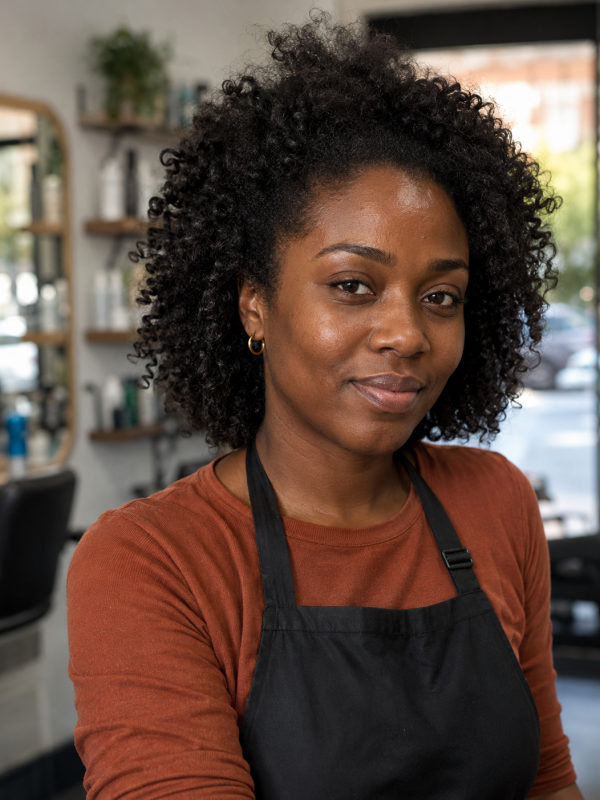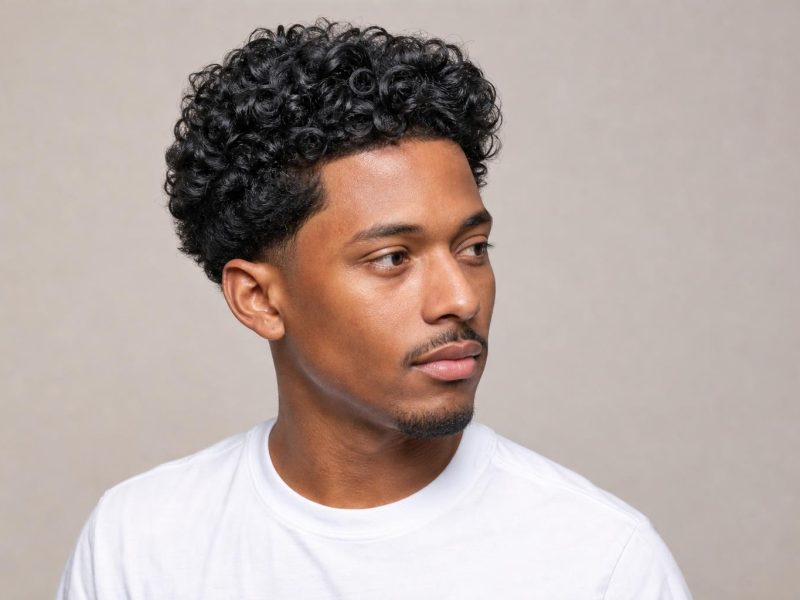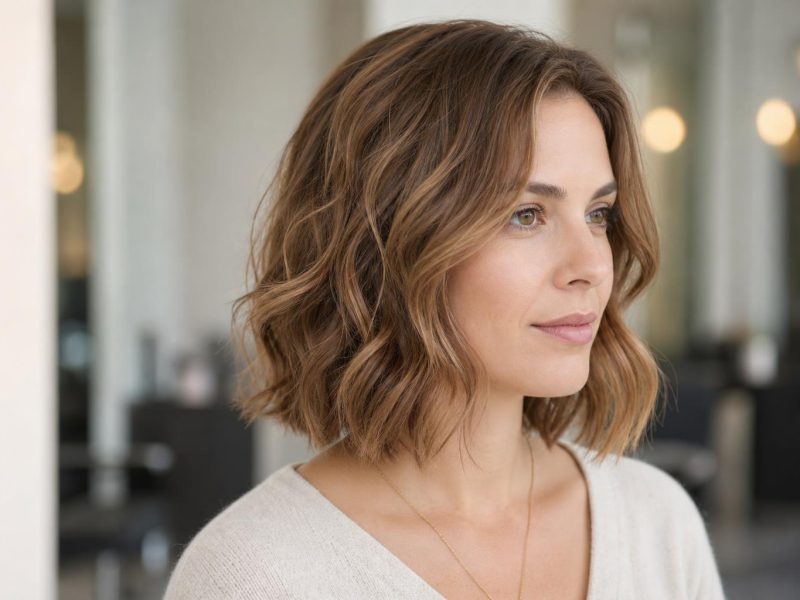


A wavy perm is less about the size of the rod than about how the hair is wrapped around it, and asking for the wrap by name is the difference between loose waves and a head of 1980s curls.
A wavy perm is a chemical perm set on large rods or foam rollers, typically three-quarters of an inch in diameter or bigger, so the hair dries into soft S-shaped waves instead of curls. The wrap technique matters as much as the rod: a spiral wrap on jumbo rods gives the loose, lived-in beach wave most people want, while a traditional horizontal wrap on the same rods gives rounder, more uniform waves with lift at the root. Results usually last three to six months, and the waves relax noticeably after the first few washes, which is why stylists set them a little tighter than the photo.
This guide explains how each wrap technique changes the wave, which rod size to ask for at your length, how the service differs for women and men, who should skip it, and how to look after the result so it lasts the full six months.
| Factor | Details |
|---|---|
| Best for | Straight or barely wavy hair, medium density, virgin or lightly colored |
| Rod size | Roughly 3/4 inch and up, or foam rollers; smaller on short hair |
| Lasts | 3 to 6 months; grows out at the root, not all at once |
| Chair time | About 1.5 to 3 hours depending on length and wrap |
| Avoid if | Hair is bleached, recently relaxed or keratin-treated, or already breaking |
What a Wavy Perm Is
Every perm works the same way underneath. A waving lotion, usually a thioglycolate, breaks some of the cystine disulfide bonds that hold the hair’s shape; the hair is held around a rod while that happens; then a neutralizer rebuilds the bonds in the new position. A 2021 review of perm chemistry in the Journal of Cosmetic Science points out that the reaction speed varies a lot between people’s hair, and that “resistant” hair is simply hair where too few bonds break in the processing time. That is why the same perm can take beautifully on one person and barely hold on another.
What makes a perm wavy rather than curly is geometry. A larger rod means fewer turns of hair around it, which means a longer, flatter bend. A wavy perm is a set of choices, not one product: rod size, wrap direction and processing time together decide the result. If you want the softest possible version that is designed to relax over weeks, a light perm is the gentler, looser relative of the services below.
Stylist tip: Bring photos of waves on hair that is your length and density, not just a wave you like. The same wrap looks tight on a chin-length bob and relaxed on hair that falls past the shoulders, because long hair’s weight pulls the pattern open.
The Wrap Decides the Wave
Most wavy perm guides stop at rod size. In the salon, the wrap pattern changes the look just as much, and it is the part most clients do not know to ask about.
| Wrap Technique | How It Is Wound | Wave Result | Best Length |
|---|---|---|---|
| Croquignole (standard) | Horizontal, from ends to scalp | Even, rounded waves, tighter at the ends, lift at the root | Chin to shoulder |
| Spiral on jumbo rods | Vertical, hair twisted along the rod | Long, loose S-waves, the same size from root to tip | Shoulder and longer |
| Brick lay | Rods staggered like bricks | Seamless wave with no visible parting lines | Any, especially short layered cuts |
| Twist wrap | Section twisted before rolling | Broken, piecey texture that looks air-dried | Chin to mid-back |
| Foam roller set | Soft bendable rollers in mixed sizes | Irregular beach wave, softest finish | Shoulder and longer |
A Spiral Wrap on Large Rods Gives the Beach Wave Most People Picture
When a stylist winds hair vertically and twists it along a jumbo rod, each section dries into a long S that is the same width from root to end. On hair past the shoulders, this is the closest a perm gets to a curling-wand wave that does not fall out by lunch. Ask for alternating directions on each section, or the waves line up into ridges.
A Croquignole Wrap Adds More Root Lift Than a Spiral
The traditional horizontal wrap starts at the ends and rolls up to the scalp, so the ends get the most turns and the tightest bend. That builds volume at the crown, which is why it suits fine hair and shorter cuts, but on long hair it can leave the ends noticeably curlier than the mid-lengths.
A Twist Wrap Hides the Perm Best
Twisting each section before rolling breaks the wave into uneven pieces, so it grows out and moves like natural texture instead of a set pattern. It is the version to ask for if you want people to assume your hair is naturally wavy.
Wavy Perm Rod Size by Hair Length
Short hair needs smaller rods to make even one full bend; long hair needs larger rods because its weight will stretch the wave. These ranges are typical starting points, and your stylist will adjust for density and how resistant your hair is.
| Hair Length | Rod Size for Waves | Usual Wrap | What to Expect |
|---|---|---|---|
| 2 to 4 inches (men’s tops, pixies) | Medium rods, about 1/2 to 5/8 inch | Croquignole or brick lay | Texture and movement more than a full wave |
| Chin to shoulder | Large rods, about 3/4 to 1 inch | Croquignole or twist | One to two full waves per section |
| Shoulder to mid-back | Jumbo rods or foam rollers, 1 inch and up | Spiral or foam roller set | Loose S-waves that relax by about a third over the first month |
| Past mid-back | Jumbo rods, sometimes one size smaller than expected | Spiral | Weight pulls waves looser at the top; ask about adding layers first |
Wavy Perm for Women
For women, the cut underneath matters as much as the perm. A one-length cut with a wavy perm tends to form a triangle, flat on top and wide at the ends, so most stylists add long layers before perming anything past the collarbone.
Bobs and Lobs Suit a Croquignole or Twist Wrap
At chin to shoulder length, large rods with a croquignole wrap give a full, rounded wave, while a twist wrap looks messier and more modern. If your hair is shorter than your chin, look at perms built for short hair, since the rod sizes and expectations change again at that length.
Long Hair Needs Layers Before a Spiral Wave
On hair past the shoulders, long layers starting around the chin let the waves stack instead of dragging each other down. A spiral wrap on jumbo rods, or a foam roller set for a less even look, gives the loose beach wave most clients bring photos of.
Fine Hair Gets Volume From a Wave at the Root
Fine, flat hair often benefits more from a wavy perm than any other type, because the bend at the root lifts the hair off the scalp. Keep the rods on the larger side and processing on the shorter side, since fine hair takes a perm quickly.
Wavy Perm for Men
Men’s wavy perms are usually done on the top only, with the sides left short or faded. The hair on top is typically two to five inches, so the rods are smaller than on women’s long hair, and the goal is movement you can push back or to the side rather than defined curl.
A Top-Only Perm Keeps the Sides Clean
Ask your barber or stylist to perm only the hair above the parietal ridge and leave the sides for clippers. The sides get cut short again within a few weeks anyway, so perming them wastes time and money. Men with thick, straight hair that will not hold a style tend to see the biggest difference; the wavy hairstyles for men gallery shows cuts that pair well with the result.
Medium-Length Men’s Hair Suits a Twist Wrap
At ear to chin length, a twist wrap on medium-large rods gives the loose, surfer-style texture that looks unplanned. Keep the ends lightly layered so the wave does not pile up at ear level.
Who Should Not Get a Wavy Perm
Perming is a chemical process that weakens the hair, and it adds to whatever damage is already there. A 2005 study in the Journal of Cosmetic Science found that perming and bleaching both make the hair’s outer cuticle layers come away more easily, through different mechanisms, which is why stacking the two on the same strands is risky.
- Bleached or highlighted hair: lightened strands are already fragile and can snap during processing; ask about a perm only on unlightened sections, or skip it.
- Hair colored with henna or metallic dyes: some of these react badly with perm solutions, so tell your stylist about any home color from the last year.
- Relaxed or keratin-treated hair: these services also change the hair’s bonds, and a stylist will usually want the treated length grown out or cut off first.
- Hair that is already breaking or very porous: a quick hair porosity test helps; highly porous hair absorbs the lotion too fast and can over-process.
- You want a wave that looks exactly like your photo from day one: perms look tightest in the first week and relax after that, so the first few days are rarely the final result.
Common Wavy Perm Myths
Perms have changed since the tight sets of the 1980s, but a few old ideas still put people off or lead to the wrong request.
Myth: Bigger Rods Always Mean Looser Waves
Reality: Rod size only works relative to hair length. A large rod on four inches of hair may not make even one full wave, while the same rod on long hair gives a soft bend. Length, wrap and rod size have to be chosen together.
Myth: A Wavy Perm Washes Out in a Few Weeks
Reality: The waves relax, but the bonds do not revert. What changes is new growth coming in straight at the root, at roughly half an inch a month, so the perm grows away from the scalp over three to six months rather than disappearing.
Myth: Perms Only Work on Women’s Long Hair
Reality: Some of the most natural-looking results are on men’s hair and short cuts, where a small amount of texture changes how the hair lies and styles each morning.
Aftercare and Maintenance
Most of the wave’s life is decided in the first 48 hours, while the rebuilt bonds finish setting. After that, the goal is to keep the hair moisturized and avoid stretching the wave while it is wet.
| When | What to Do |
|---|---|
| First 48 hours | No washing, no tight ponytails, no clips or hats that crease the hair, no heavy sweating |
| First week | Skip heat styling; air-dry or diffuse on low; detangle only with a wide-tooth comb |
| Each wash | Gentle shampoo, rich conditioner, then scrunch in a light curl cream or mousse |
| Every 6 to 10 weeks | Trim dry ends so the wave keeps its shape |
| 3 to 6 months | Straight regrowth becomes obvious; wait for at least 2 to 3 inches before re-perming only the new growth |
Day-to-day styling is where a wavy perm saves time: soak the hair with a leave-in, scrunch, and let it dry. The wavy hair routine steps apply almost exactly to permed waves, and a diffuser on low heat keeps them from frizzing on humid days. Prices vary widely by city and hair length, so ask for a quote at the consultation rather than going by a salon’s starting price.
Stylist tip: Never re-perm the whole length. Ask for the solution on the new growth only, with the old perm protected, or the ends get processed twice and turn dry and frizzy within a month.
What to Tell Your Stylist
Name the wave size, the wrap and your hair history. For long hair, a script might be: “I’d like a loose wavy perm, spiral wrap on jumbo rods, alternating directions, starting about two inches from the root. My hair has not been bleached, but I colored it with a box dye eight months ago. I want long S-waves, not curls, and I’d like long layers first so it doesn’t go triangular.”
For a men’s top-only perm: “Perm just the top, medium-large rods, twist wrap for a messy texture. Leave the sides for clippers. I want waves I can push back, not defined curls.” In both cases, ask whether the stylist will do a test strand if your hair has any color history.
FAQ
How Long Does a Wavy Perm Last?
A wavy perm usually lasts three to six months. The waves relax slightly over the first few weeks, and after that the result grows out from the root as new straight hair comes in. Looser waves on very long hair tend to look relaxed sooner than waves on shorter cuts.
What Is a Wavy Perm Called at the Salon?
Salons may call it a body wave, beach wave perm, loose perm or wavy perm, and the names are not used consistently. Describe the rod size and wrap you want, or bring photos, rather than relying on the service name on the menu.
Can You Get a Wavy Perm on Short Hair?
Yes, but short hair needs smaller rods to make a full wave, so the result looks more textured than wavy. At two to four inches, expect movement and lift rather than long S-waves.
Does a Wavy Perm Damage Your Hair?
Any perm weakens the hair to some degree because it breaks and rebuilds internal bonds. Healthy, unbleached hair usually handles a wavy perm well; bleached, relaxed or already breaking hair is where the real damage happens.
How Soon Can You Wash Your Hair After a Wavy Perm?
Wait 48 hours before the first wash. Washing earlier can loosen the waves before the bonds have fully set. Skip tight ponytails and clips for the same period.
Can Men Get a Wavy Perm?
Yes, and most men’s wavy perms are done on the top only, leaving the sides short. It suits thick, straight hair that is hard to style, and the result can be pushed back, parted or left messy.
A wavy perm that looks natural comes from matching the wrap, the rod size and the cut to your hair length and history. Take a photo of waves on hair like yours, name the wrap you want, and be honest about any color or treatments so your stylist can set the wave that will still look good at month four.
Hair results vary based on your natural hair type, texture, density, and condition. Always consult with a licensed hairstylist before making significant changes, especially with chemical treatments such as perms. Photos may show styled results that require professional tools and products to replicate.