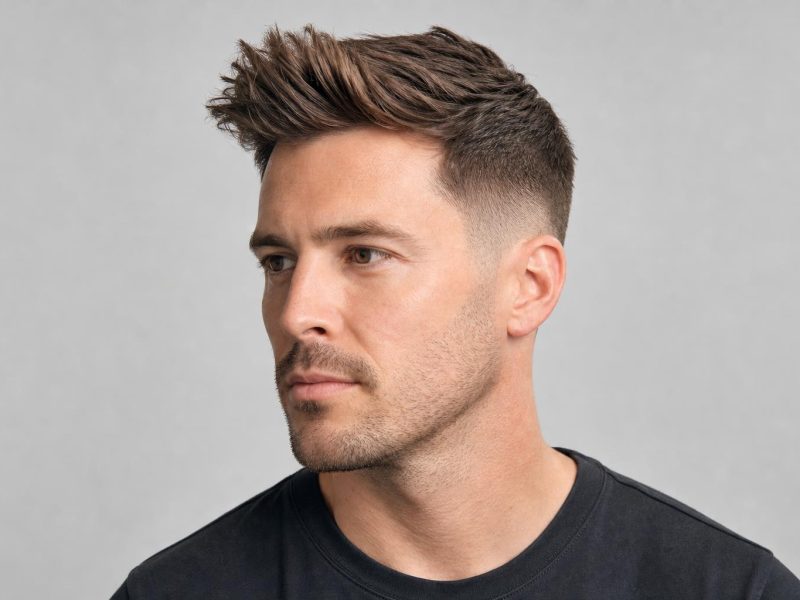

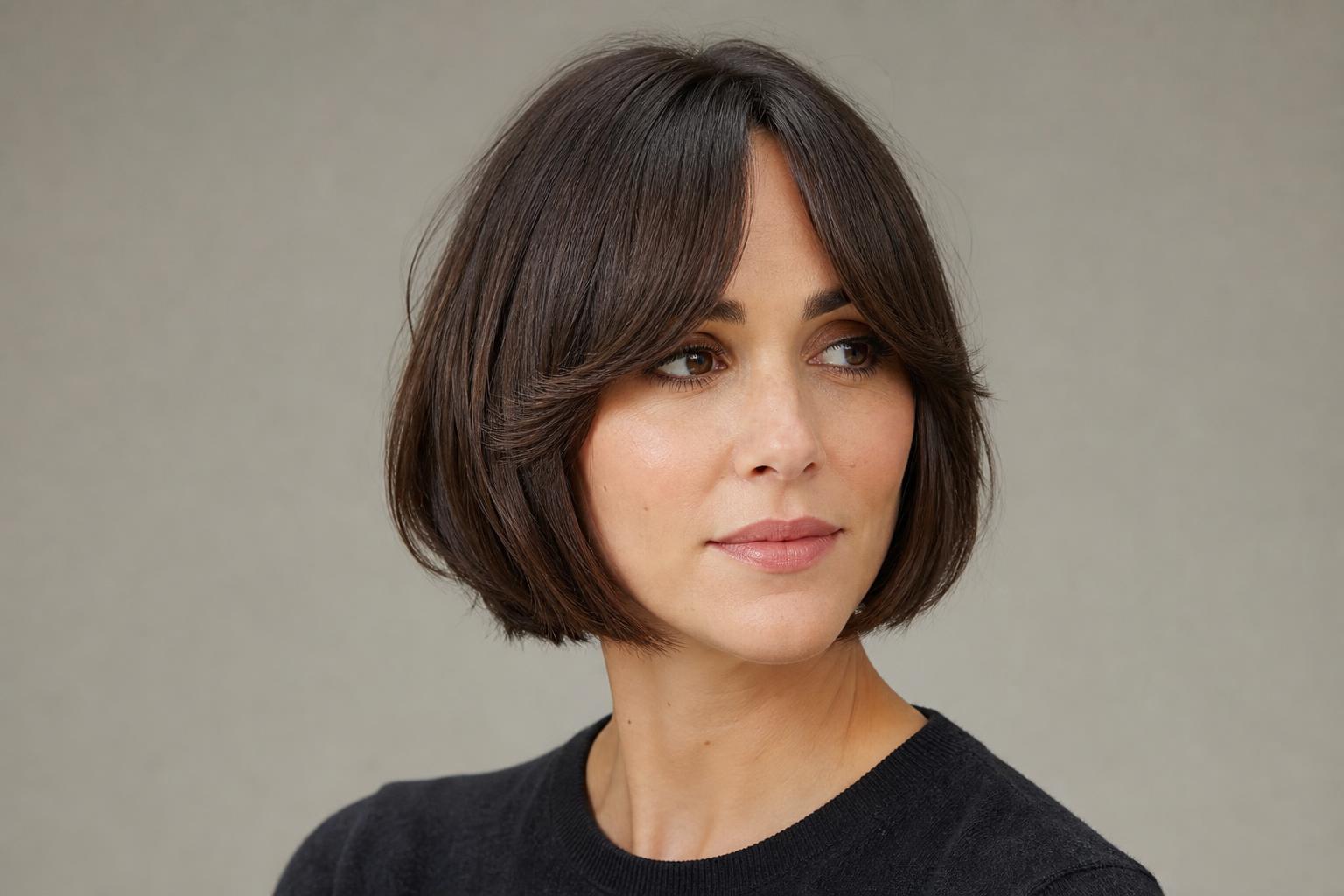
A diamond face is widest at the cheekbones and narrow at both the forehead and the chin, so the haircut has one job: add width at the top and the jaw while keeping bulk away from the middle.
The cuts that flatter a diamond face all do the same three things. They put fullness at the forehead, usually through a fringe. They keep the sides from widening at cheekbone level, which is why a layer starting at the cheek is the most common mistake. And they leave weight around the jaw, because a chin tapering to a point needs balancing. A chin-length rounded bob and a mid-length cut with layers beginning at the jaw are the two most reliable shapes.
Below are 28 cuts organized by length, with the bangs, layer placement, and parting that make each work. After the gallery you will find which fringe suits this shape, the wording for your appointment, a maintenance table, and the cuts worth skipping.
Confirm the Shape Before You Pick the Cut
Pull your hair back, face a mirror straight on, and compare three measurements: forehead at the hairline, cheekbones at their widest, and jaw at its widest. A diamond face measures widest at the cheekbones, with the forehead and jaw narrower and the chin coming to a soft point. It is easily confused with a heart shape, which shares the pointed chin but has a wide forehead, and with an oblong face, which is long without a dominant cheekbone.
| Factor | Details |
|---|---|
| Goal | Widen the forehead, soften the cheekbones, add fullness at the jaw |
| Best lengths | Chin-length bobs, collarbone lobs, mid-length cuts with jaw-level layers |
| Best bangs | Curtain, side-swept, and soft wispy fringes; blunt bangs on taller foreheads |
| Layer placement | Start layers at the jaw or below, never at the cheekbone |
| Avoid | Slicked-back styles, severe center parts, and volume at the ears |
Short Cuts and Pixies for Diamond Faces
Short hair works on a diamond face as long as the volume goes to the crown rather than the sides. Height at the top balances a narrow chin, and a fringe covers the narrow forehead that short cuts otherwise expose. The rule throughout this section is keeping the hair close at the ears, since bulk there lands on the widest measurement.
1. Textured Pixie with a Full Fringe
Cutting the fringe full and slightly rounded, rather than straight across, softens the top of the face and hides the narrow hairline. The rest is kept short with point-cut ends so the crown holds height. Ask for the sides tapered close behind the ear rather than tucked, which keeps the width off the cheekbone.
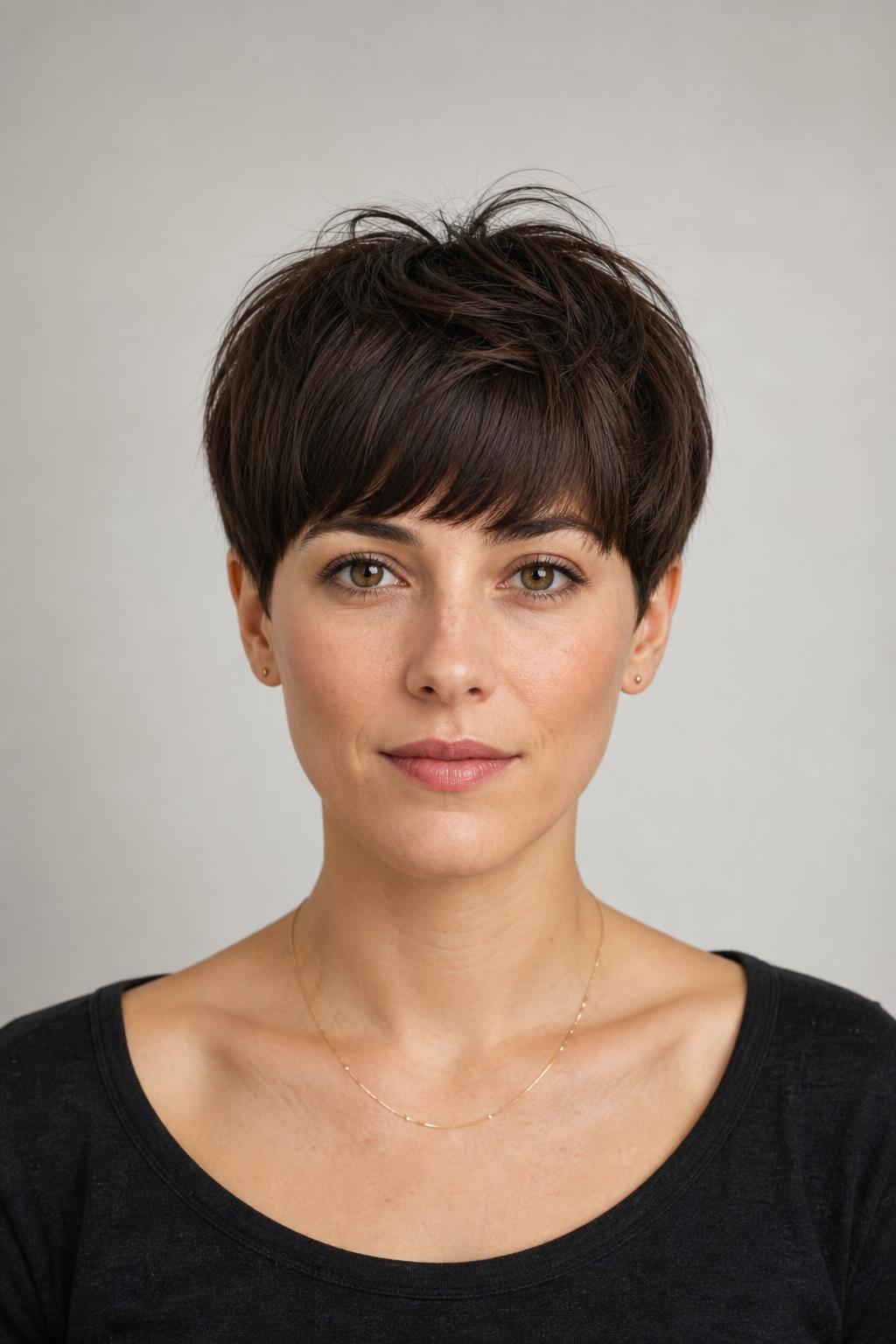
2. Side-Swept Pixie with Volume at the Crown
Diamond faces gain the most from asymmetry, and a deep side sweep breaks the symmetry that makes strong cheekbones look wider than they are. The crown is left an inch longer than the sides so the height lands above the forehead. This is the cut to choose if your cheekbones are the feature you most want softened.

3. Curly Pixie for 3b Hair
Springy 3b curls build their own height at the crown, which does most of the balancing work without any styling. Keep three inches through the top so the curl pattern can form fully, and have it cut dry so the stylist can see where each curl lands. Curls at the ear must be cut shorter than they look wet, or they widen where you least want it.
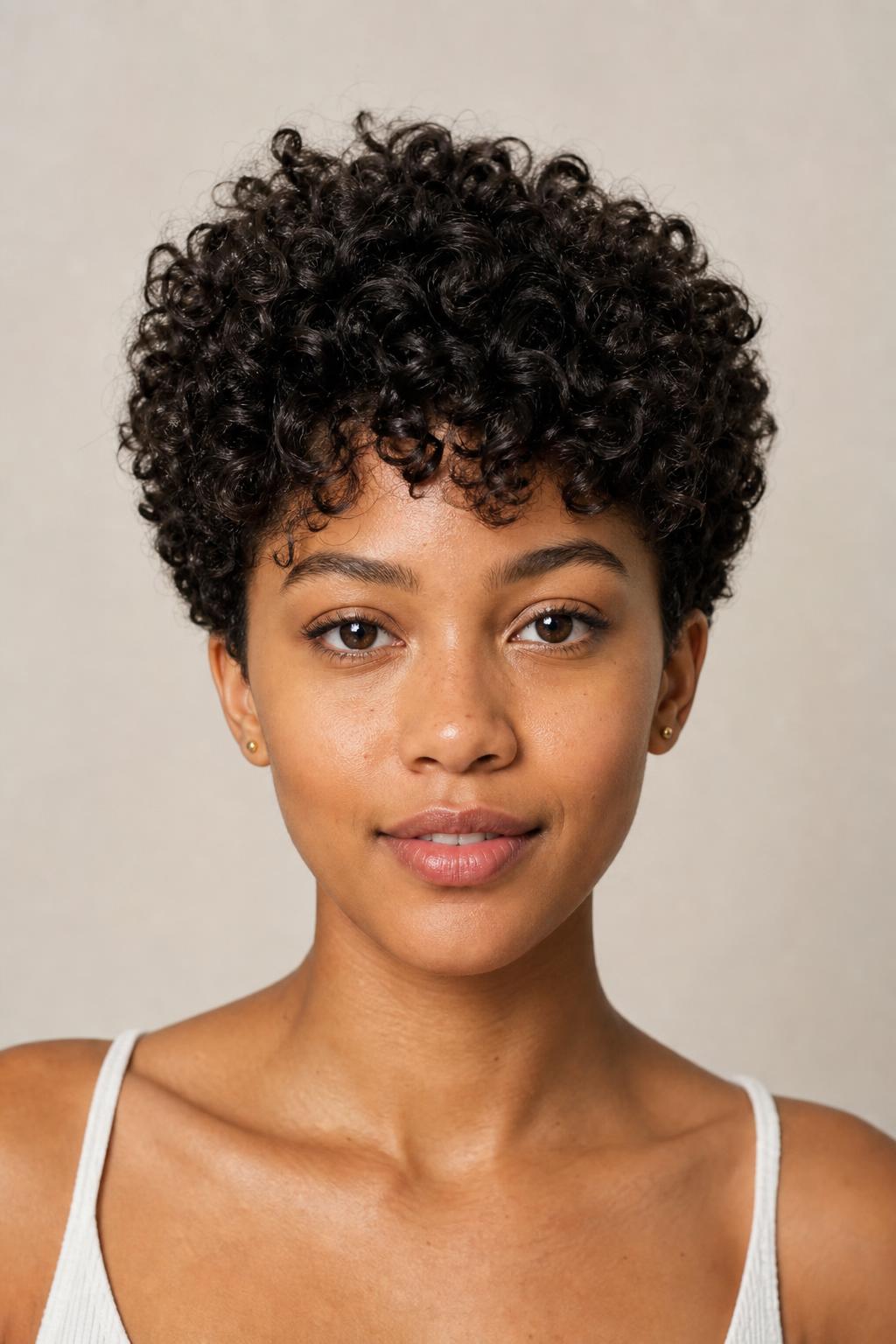
4. Choppy Pixie with Piecey Ends
Working a texture paste through with fingertips, then pushing the front forward, is the whole styling routine here. The choppy cut leaves ends at different lengths so they separate rather than lie flat, which keeps the shape from looking helmet-like. Two minutes in the morning, no heat needed.
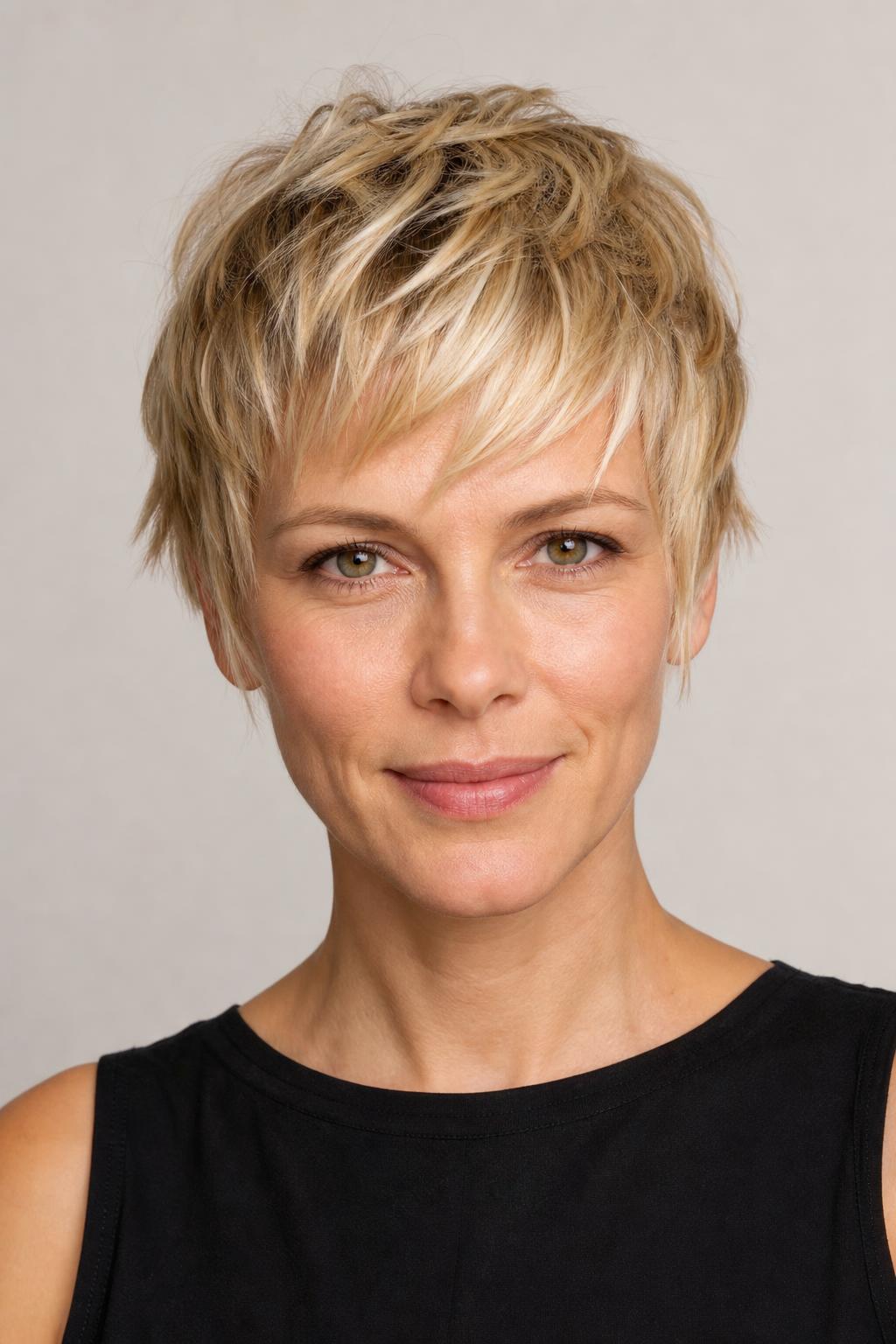
5. Grown-Out Pixie at Ear Length
The awkward stage between a pixie and a bob lands right at ear length, and on a diamond face it can be held there for a while rather than rushed through. Trim only the nape and the fringe every five weeks and let the sides grow past the ear, where they start adding useful weight toward the jaw.
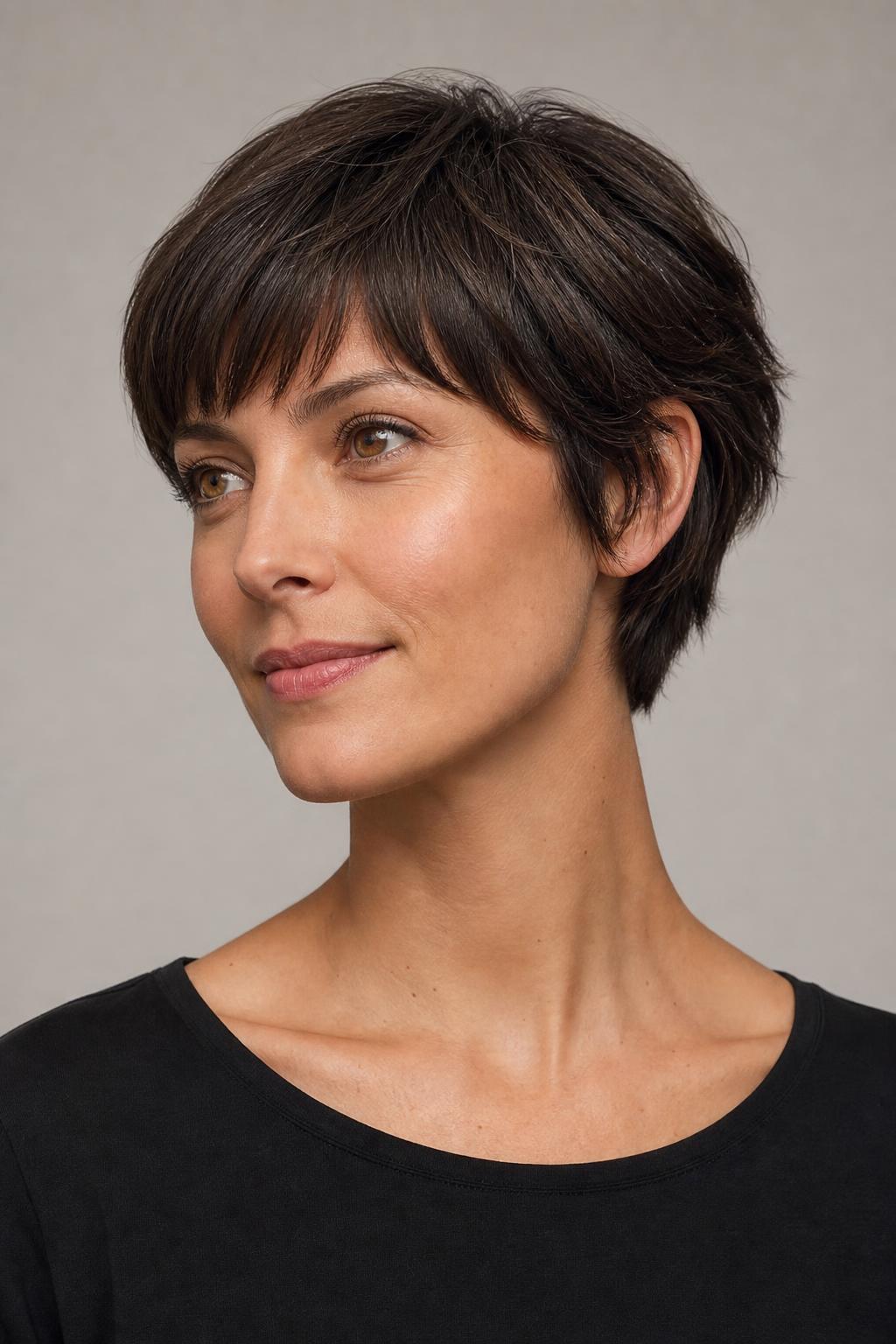
6. Honey-Lit Pixie with a Soft Root Shadow
Lighter pieces placed through the fringe and crown pull the eye upward, which quietly widens the narrowest part of the face. A soft root shadow keeps the regrowth line invisible and stretches the salon visit to ten or twelve weeks. Keep the sides at the base color, since brightness at the ear draws attention to the cheekbone.
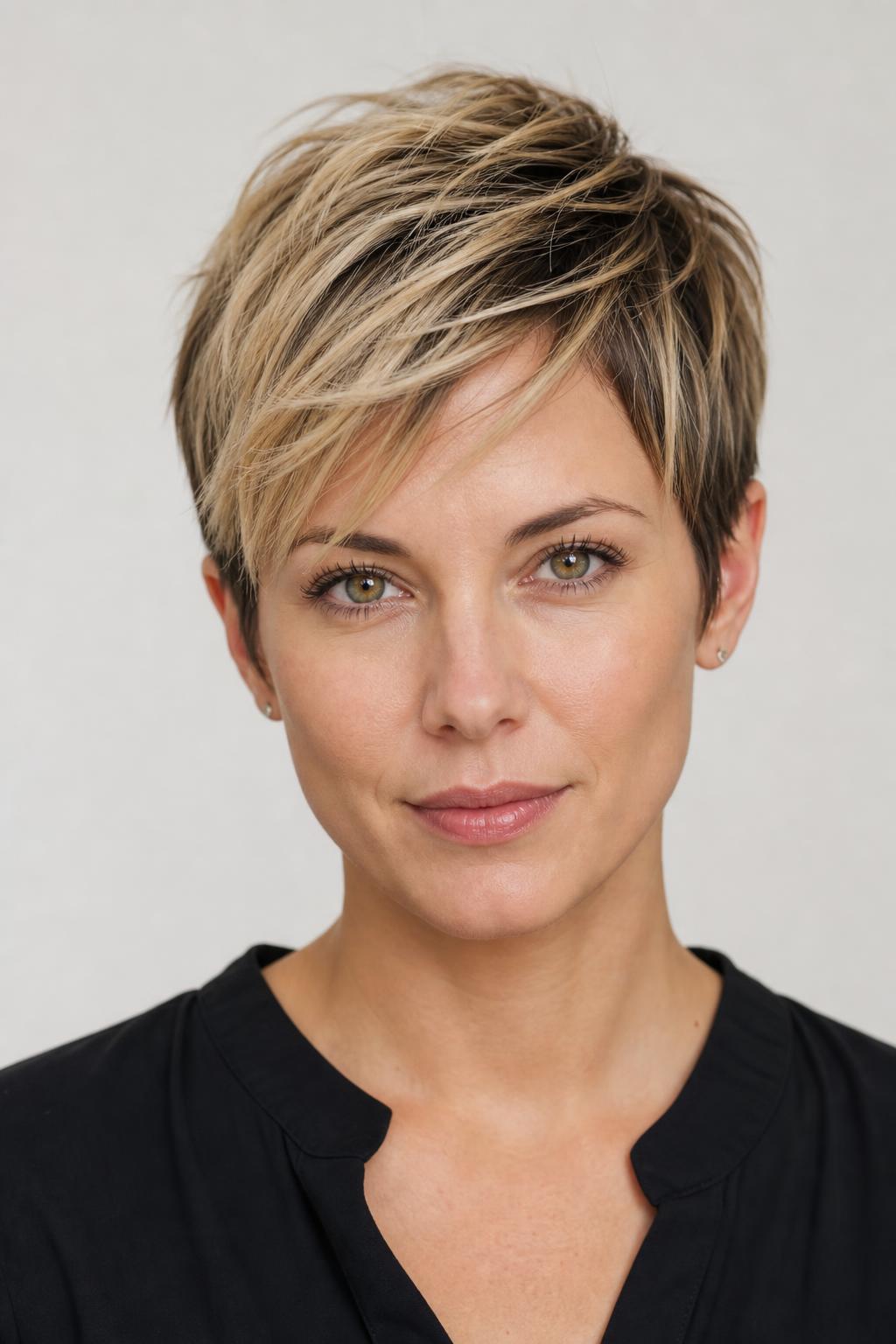
7. Bixie with Wispy Bangs
Ask for a bixie, which is a pixie carrying bob-length weight at the back, with wispy bangs cut to just below the brow. The words worth using are keep the weight low at the nape and taper the sides in behind the ear. That combination keeps fullness near the jaw where a diamond face needs it.
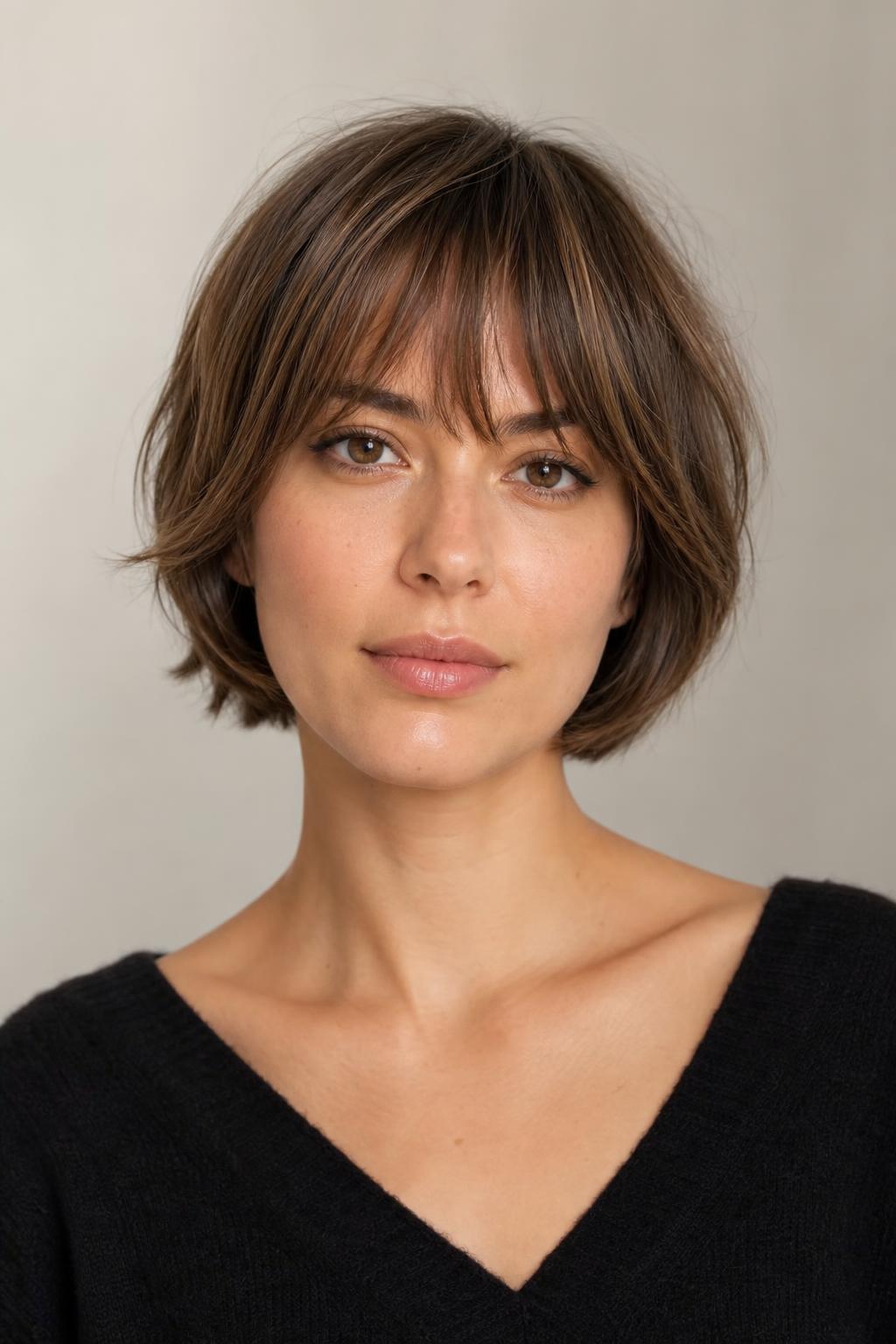
Bobs and Lobs That Balance the Jawline
This is the strongest length range for a diamond face, and the reason is geometry. A bob finishing at or just below the chin puts its heaviest section where the face is narrowest, which broadens the jaw and balances the cheekbones above. The variable to control is where the perimeter falls: at the chin it widens the jaw, at the cheek it widens the cheekbone.
8. Chin-Length Rounded Bob
Where a blunt bob cuts one flat line, a rounded bob curves gently inward at the ends so the perimeter hugs the jaw rather than flaring past it. Both are chin length, but the rounded version puts more visual weight under the chin, which is what a pointed jaw needs. It is the most reliable single cut on this list.

9. Blunt Bob for Fine Straight Hair
Fine straight hair gets more from a blunt perimeter than from layers, because every strand finishing at the same point builds a solid edge that looks denser than it is. Cut at chin level with no internal layering, the weight line falls at the jaw and does the widening. Skip the razor and ask for scissors, since razoring thins the very edge you are relying on.

10. Jaw-Grazing A-Line Bob
The A-line is cut shorter at the back and angled longer toward the front, which sends two forward-pointing lengths down past the chin. Those front pieces narrow the cheek visually as they pass it and add length at the jaw. Ask for a soft angle rather than a steep one, since a dramatic A-line pulls too much attention to the chin.
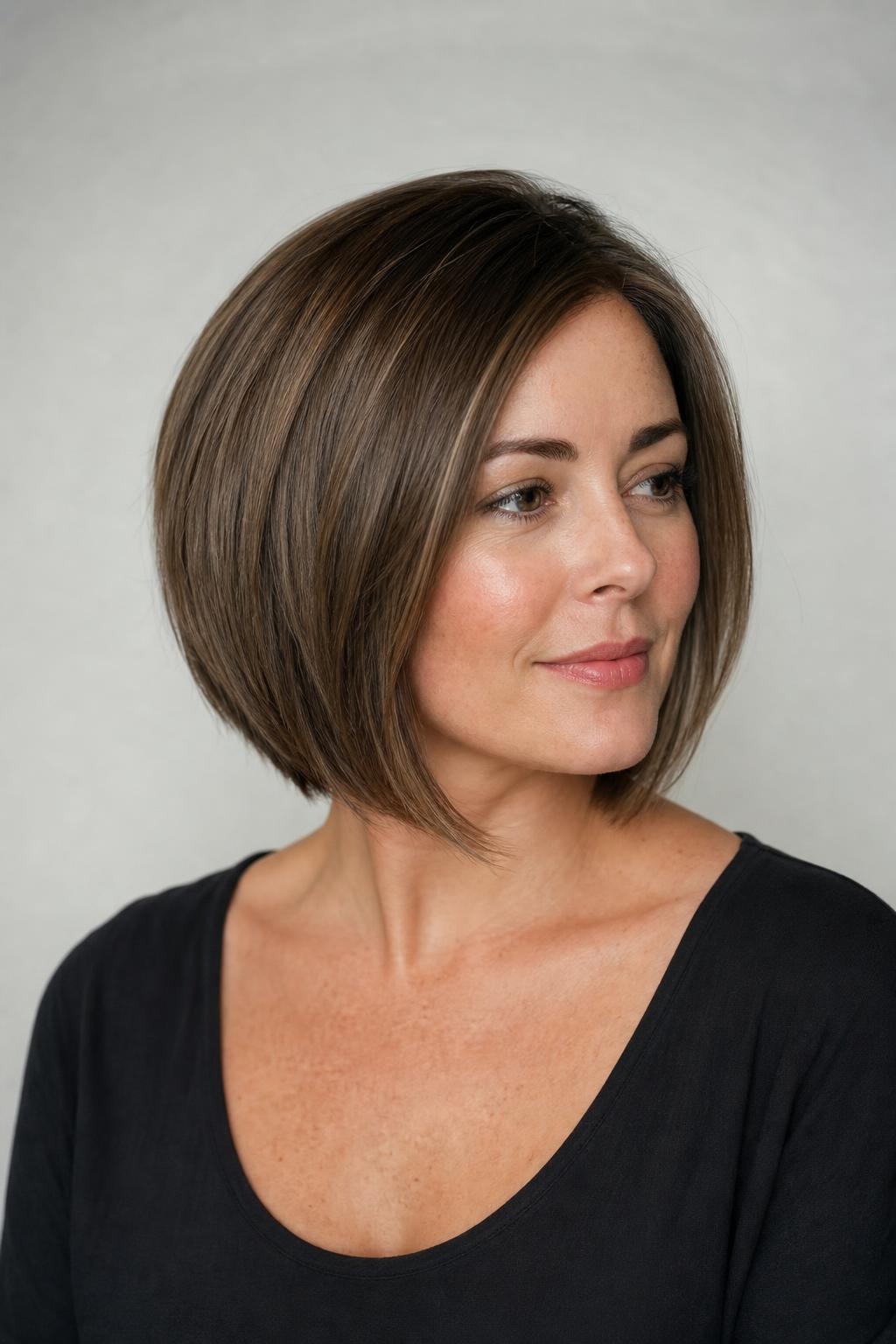
11. Textured Lob with Beach Waves
Wrapping one-inch sections around a 1.25-inch barrel, leaving the last two inches straight, gives the loose bend this cut depends on. The waves add width low down at the collarbone and keep the hair from lying flat against the cheek. Finish with a sea salt spray rather than a hairspray so the movement stays soft.

12. Collarbone Lob with Curtain Bangs
Curtain bangs are close to a default for this face shape, since they split at the center and sweep outward to cover the narrow forehead corners. Paired with a lob finishing at the collarbone, the fringe widens the top while the length adds bulk below the jaw. Ask for the shortest point at the cheekbone and the longest blending into the length. Curtain bangs on wavy hair need cutting an inch longer to allow for the bend.

13. Italian Bob with a Full Fringe
Ask for an Italian bob, which is a chin-length blunt cut with a slight inward bevel, and add a full fringe cut at brow level. The words to use are keep the perimeter blunt and bevel the ends under, and cut the fringe wide enough to reach my temples. Fringe width matters more than fringe length on a narrow forehead. The difference between the Italian and French versions comes down to where the perimeter falls.
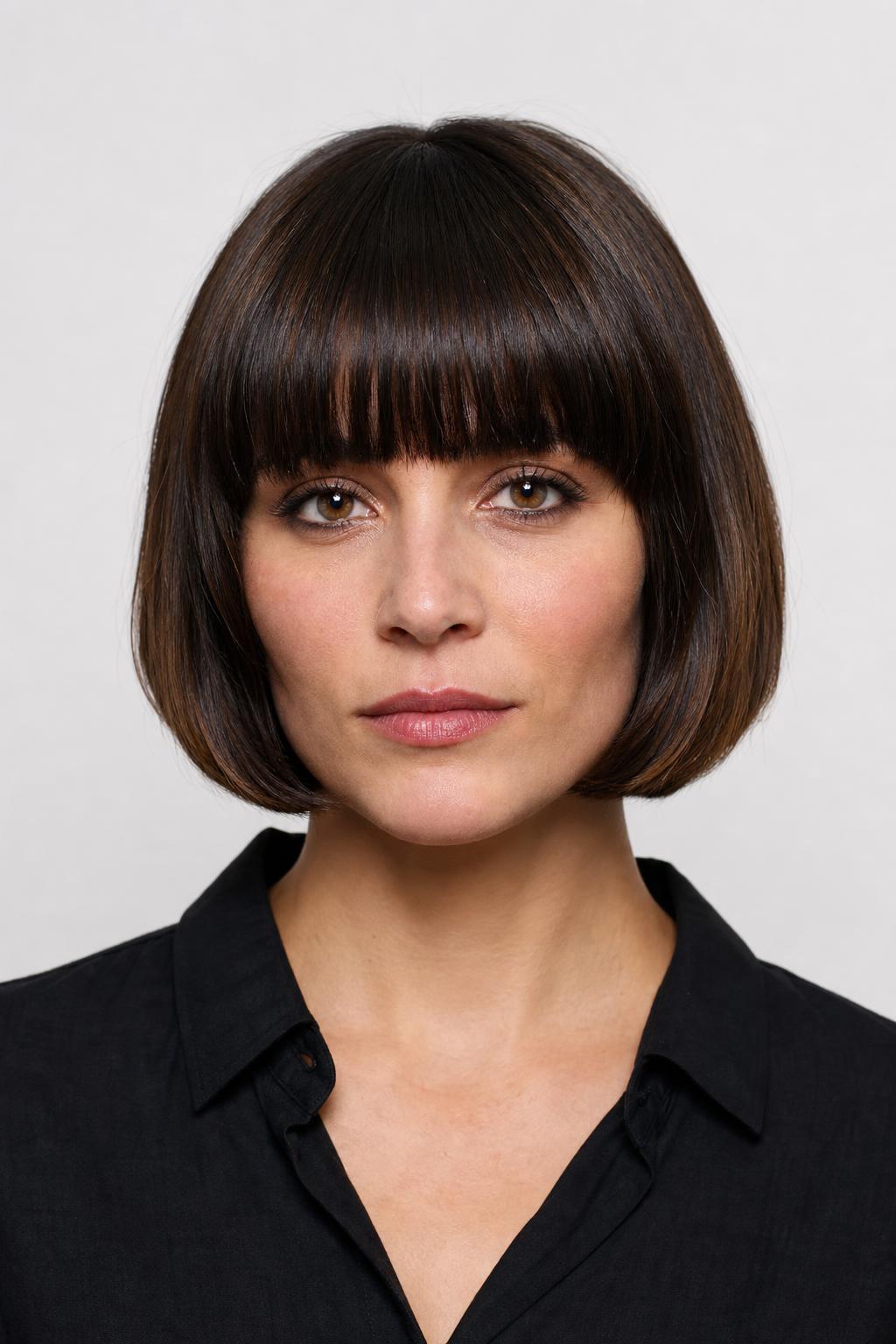
14. Low-Maintenance Blunt Lob
Trims stretch to ten weeks on a blunt lob with no layers, since there is no internal shape to lose. Daily styling runs five minutes with a smoothing cream and a rough blow-dry. The trade-off is honest: it holds its line but has no built-in volume, so fine hair needs a root mousse to avoid falling flat against the cheek.

Medium-Length Cuts with Layers Below the Cheekbone
Medium length gives the most room to place layers deliberately, and placement is everything here. Layers beginning at the jaw or below open the hair where the face needs width, while layers beginning at the cheekbone push volume into the widest measurement. When a stylist asks where the shortest layer should fall, the answer is the jaw.
15. Shoulder-Length Shag
A shag builds its shortest pieces high, which is usually wrong for this shape, so the version that works pushes the layering start down to jaw level and keeps the crown lighter than a traditional shag. The result has the movement of a shag without the cheekbone width. Say jaw-level layers, not face-framing at the cheek, or you will get the standard version.

16. Caramel Balayage on Mid-Length Layers
Placing the lightest pieces at the ends and around the fringe, and keeping the mid-lengths deeper, draws the eye to the top and bottom of the face rather than the middle. Caramel on a natural brunette base needs a gloss refresh every eight weeks, though the balayage itself stretches to four months. Avoid bright pieces at the cheek, which spotlight the widest point.

17. Face-Framing Layers Starting at the Jaw
The stylist takes a section at the front, holds it forward, and cuts the shortest piece level with the jaw rather than the cheek. Everything behind it graduates longer, so the frame opens downward instead of outward. This one adjustment fixes more diamond-face haircuts than any other single change.
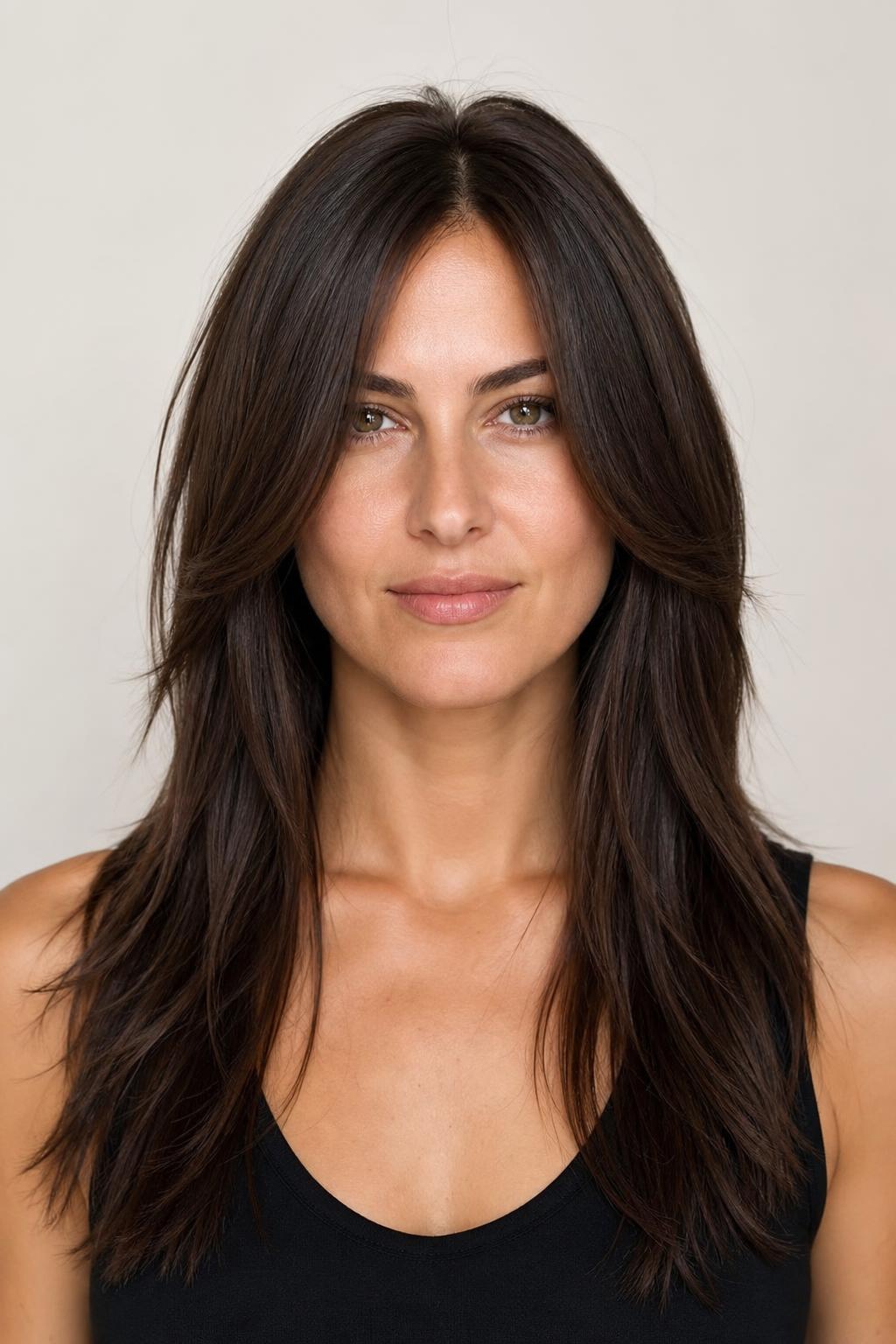
18. Medium Cut for 2c Waves
A 2c wave pattern expands horizontally as it dries, which is useful at the jaw and unhelpful at the cheek, so the cut needs weight removed high and left low. Ask for internal layers through the top section only, with the perimeter kept heavy. Diffuse on low speed with the head upright rather than flipped, which keeps the volume from spreading sideways. Our 2c-specific cutting notes apply at shorter lengths too.

19. Wolf Cut with Jaw-Level Layers
Diamond faces can carry a wolf cut, provided the sharp contrast between short crown and long perimeter is softened and the shortest layer drops to the jaw. The volume then lands above the forehead and below the cheek, which is exactly the distribution this shape wants. A standard long wolf cut puts its shortest pieces too high and needs this adjustment.
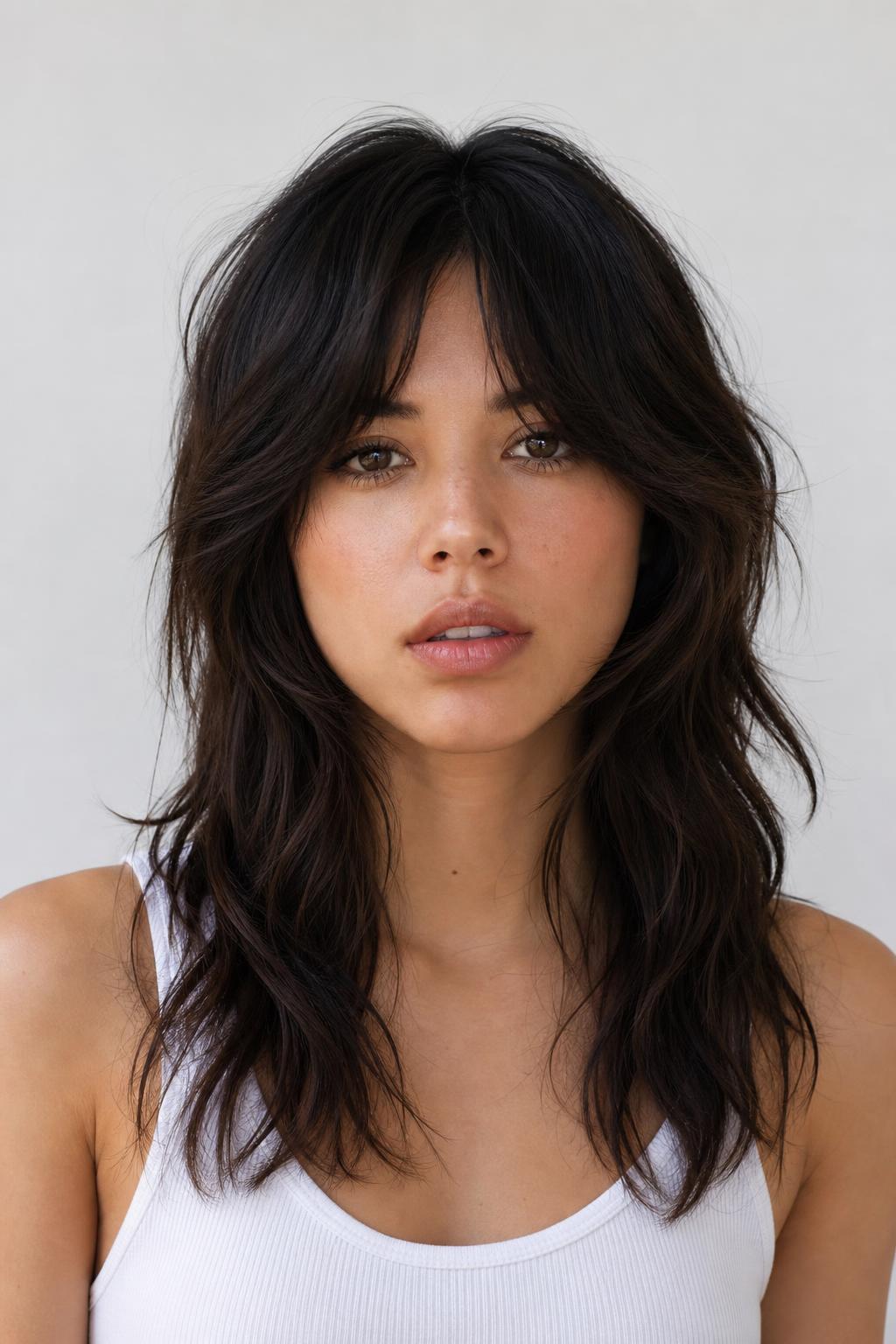
20. Blunt Mid-Length with Minimal Layering
Eight to ten weeks between appointments and almost no daily styling makes this the practical choice for anyone with no patience for a blow-dry. One length to the collarbone with two or three long internal layers keeps the weight low, and grow-out is invisible because no short layer can drop out of place.

21. Shoulder-Length Curls with a Wide Fringe
Diffusing with the head upright and scrunching upward from the ends builds the curl volume at the top rather than the sides. The wide curly fringe covers the narrow hairline while the shoulder-length curls fill out the jaw. Apply a curl cream to soaking wet hair, not damp, or the pattern breaks up as it dries.

Long Cuts and Bangs for Diamond Faces
Long hair suits a diamond face when it is shaped rather than simply long. Left one length and flat, it hangs against the cheek and adds width at the widest point. Add a fringe and layers beginning at or below the jaw and the same length becomes flattering, because volume moves to the top and the ends.
22. Long Cut with Layers Beginning at the Chin
Unlike a long blunt cut, which keeps all its weight at the ends, this version opens up from the chin down so the hair falls away from the face rather than against it. The layers are long and gradual, removing bulk without creating a step. Anyone whose long hair looks heavy through the cheek should ask for this before considering a shorter cut.
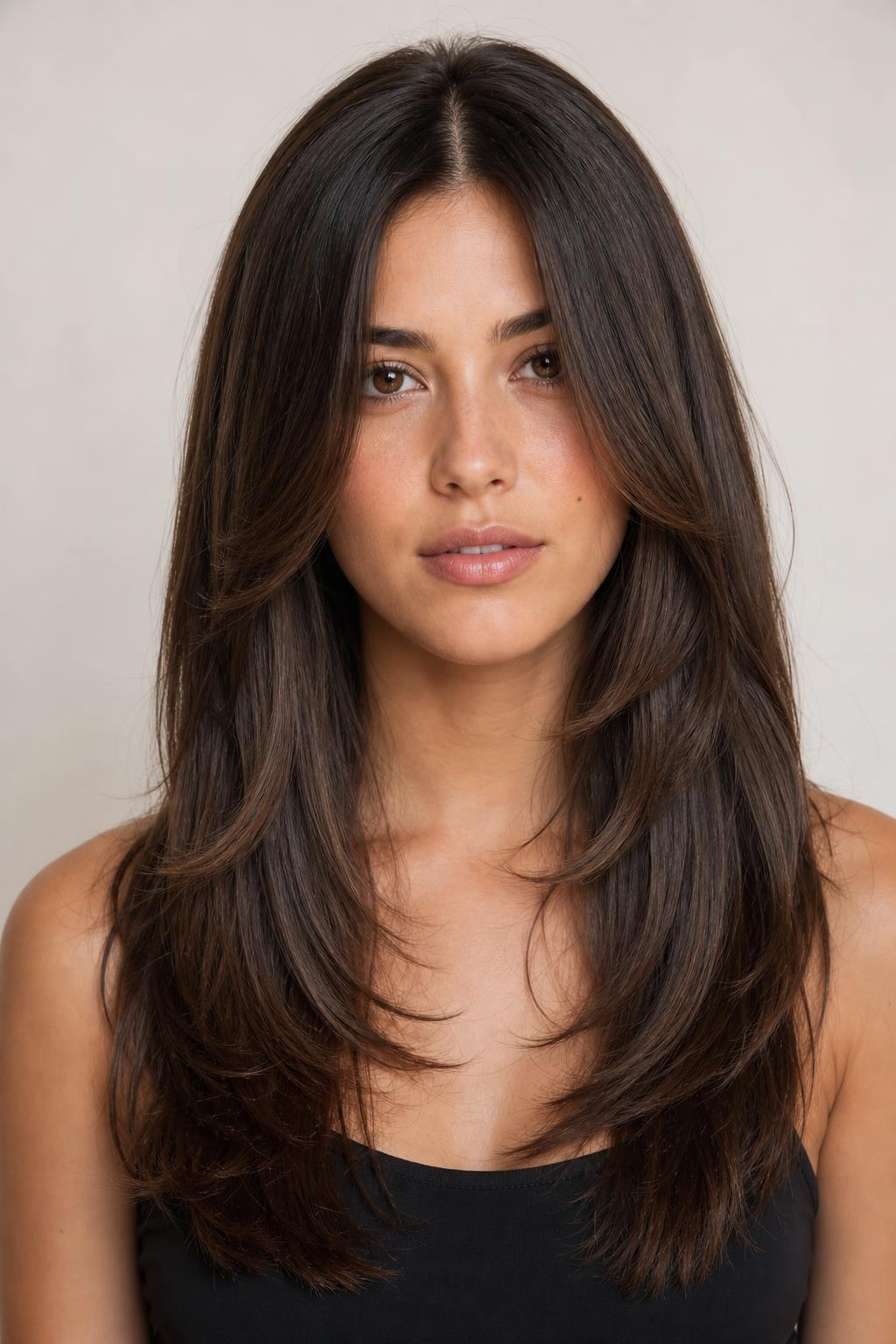
23. Cool Ash Brunette on Long Hair
Cool ash tones flatten the shadow that strong cheekbones cast under overhead light, which softens the widest part of the face without touching the cut. The tone is a demi-permanent gloss over a natural brunette base, refreshed every six to eight weeks. Warm golden shades do the reverse, deepening that shadow and sharpening the angle.

24. Long Hair with Curtain Bangs
Ask for curtain bangs starting at the outer corner of the eyebrow, with the shortest point at the cheekbone and a long blend into the length. Adding the phrase keep them wide at the top tells the stylist to take the section back further, which is what widens a narrow forehead. Trim them every four weeks, separately from the rest of the cut.

25. Long Cut with a Deep Side Part
A deep side part is the fastest correction available for a diamond face, since it breaks the symmetry that makes cheekbones look wider than they are and sends a diagonal sweep of hair across the forehead. Nothing needs to be cut to try it. Move the part about two inches off center, toward whichever side your hair naturally falls.
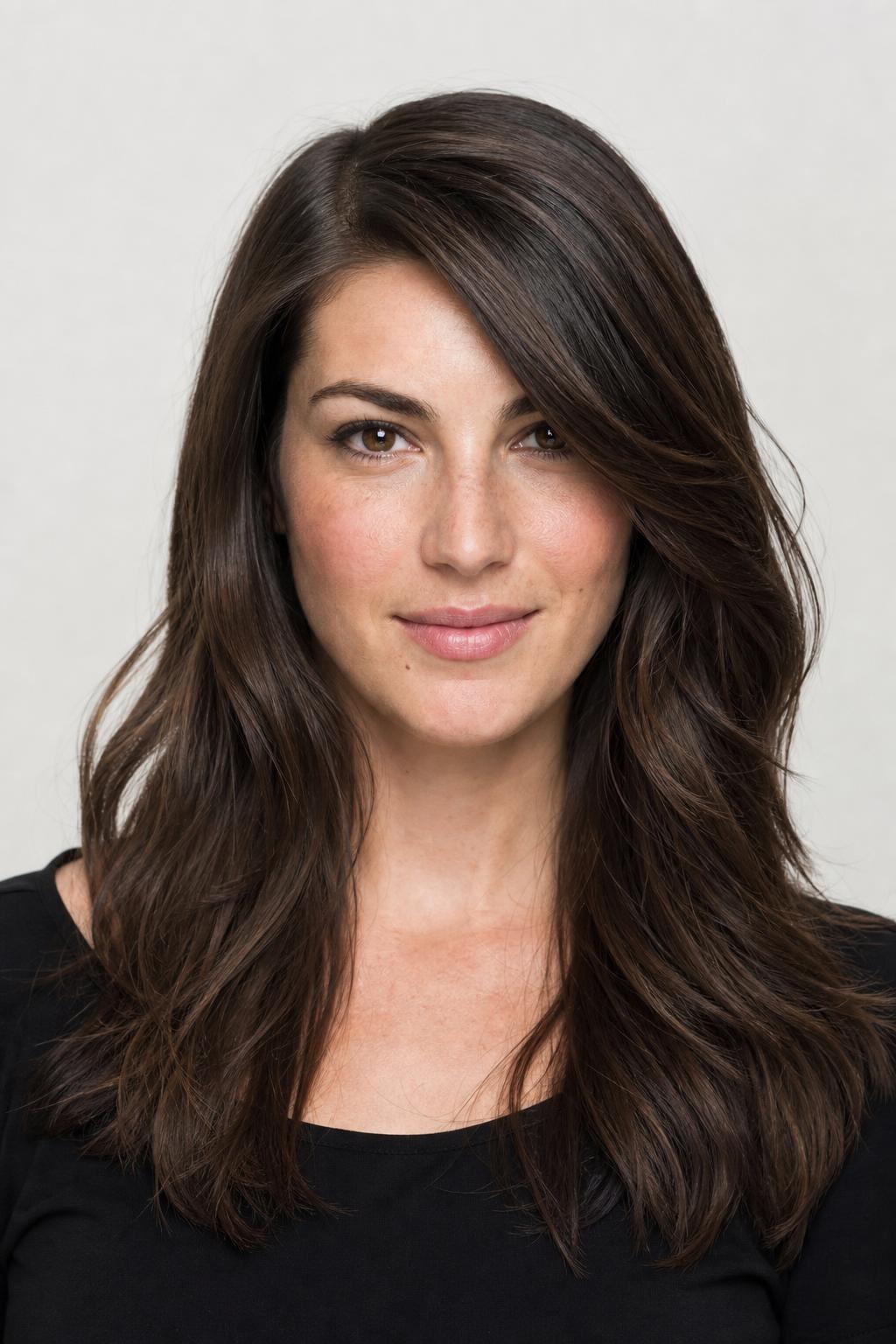
26. Loose Waves Set with a Large Barrel
A 1.5-inch barrel held vertically, wrapping away from the face and leaving the ends out, produces a wave that widens at the jaw instead of the cheek. Alternate the direction on each section so the waves separate rather than merge into one curtain. Brush through with fingers only once cooled.
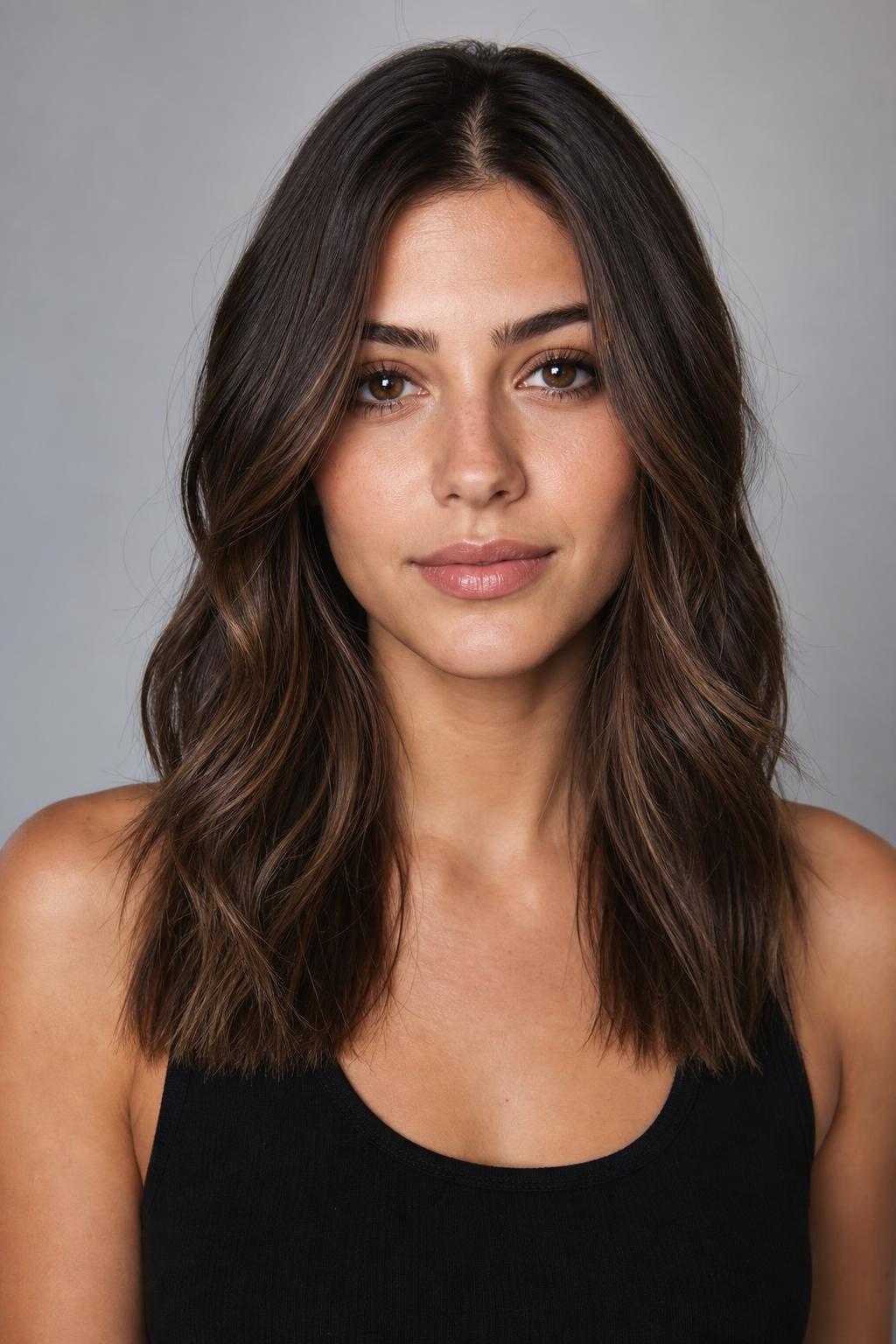
27. Long Layers with Point-Cut Ends
Point cutting the ends of long layers, cutting into them vertically rather than straight across, removes the heavy blunt line that can otherwise land right at cheek level on longer layers. The stylist works section by section with the tips of the shears. It costs almost no length and changes how the hair falls against the face.

28. Long Blunt Cut with Grown-Out Curtain Bangs
Grown-out curtain bangs reach the jaw and stop functioning as a fringe, becoming the shortest face-framing layer instead, which is exactly where a diamond face wants one. That makes this the rare cut where skipping the fringe trim improves the shape. Book the length every twelve weeks and leave the front alone entirely.
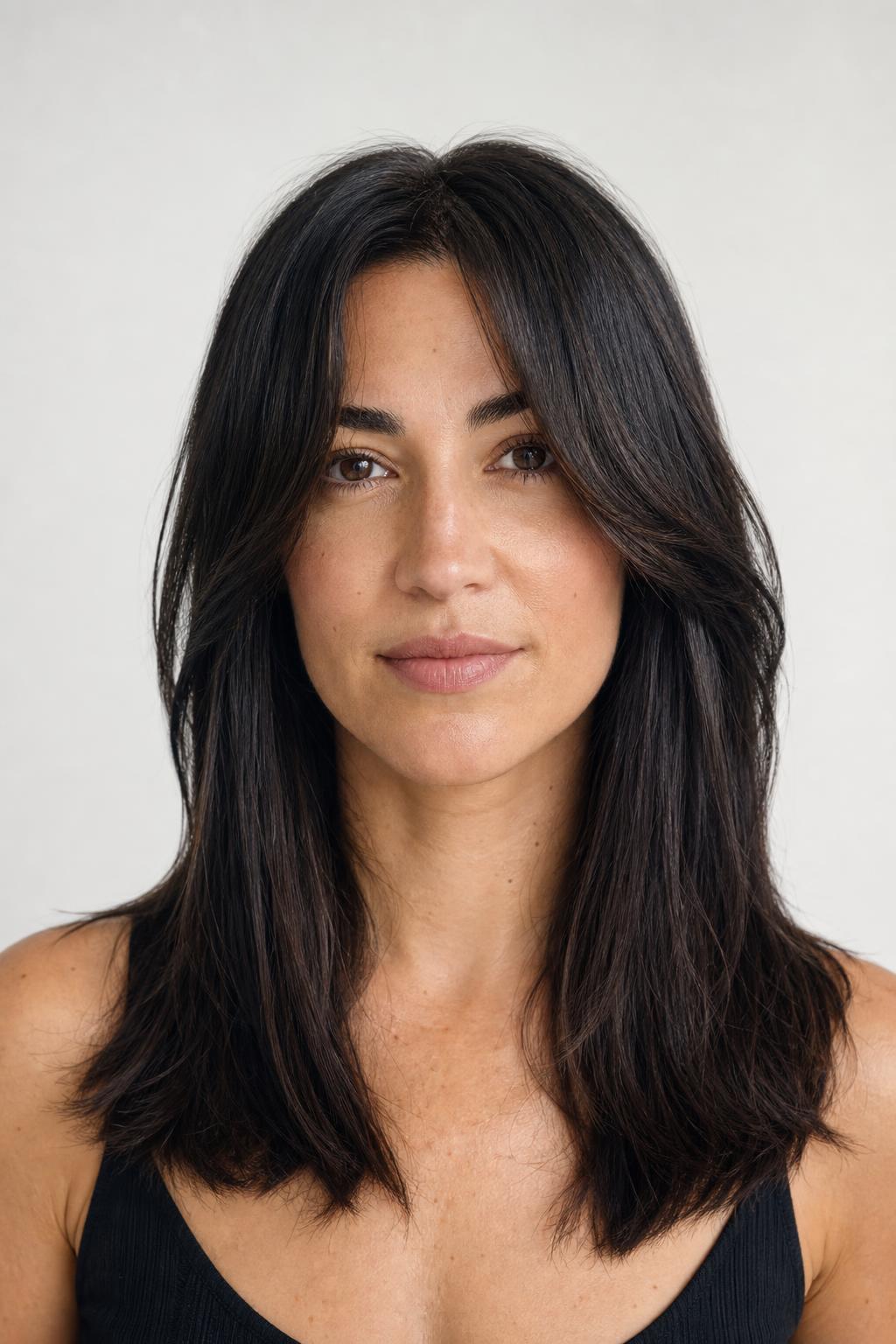
The Right Fringe Is the Fastest Fix
If you change one thing for a diamond face, change the fringe. A narrow forehead is this shape’s defining feature, and a fringe addresses it in one appointment without altering length, color, or your routine. Width matters more than length: a fringe covering only the center of the forehead does little, while one taken back to the temples widens the whole top of the face.
| Fringe Type | How It Works Here | Best Paired With | Trim Cycle |
|---|---|---|---|
| Curtain bangs | Split at center and sweep out across the narrow forehead corners | Lobs, mid-length layers, long hair | 4 to 5 weeks |
| Side-swept | Adds asymmetry, which softens the strong horizontal cheekbone line | Pixies, A-line bobs | 5 to 6 weeks |
| Wispy or soft | Covers the hairline without adding weight to a small forehead | Bixies, fine hair at any length | 3 to 4 weeks |
| Full blunt | Draws a wide horizontal line at the top; needs a taller forehead to work | Italian bobs, blunt chin-length cuts | 3 weeks |
| Curly fringe | Occupies more horizontal space than straight hair of the same length | Curly pixies, shoulder-length curls | 6 to 8 weeks |
Stylist tip: Before committing to a fringe, pull a section forward and hold it flat against your forehead. Judge it from a photo taken straight on rather than in the mirror, since a mirror reverses the image and most people misjudge width in it. If the forehead looks broader in the photo, the fringe will work.
What to Tell Your Stylist
Saying you have a diamond face rarely gets you far, because stylists use these labels inconsistently. Describe the correction instead, in terms of where hair should be heavier and where it should not. Two instructions carry almost the whole cut on this shape.
The first: “Start the face-framing layers at my jaw, not my cheekbone.” That single sentence prevents the most common mistake, which is a layer landing on the widest measurement and pushing it wider. The second: “Keep the fringe wide, taken back toward my temples, and cut the shortest point at my cheekbone.” Together they place weight low and width high, which is the whole strategy for this face shape. Add a photo of the exact framing length you mean, because jaw is a two-inch range depending on whose jaw you mean.
Stylist tip: Ask for the cut to be checked with your hair pushed fully behind your ears at the end of the appointment. Hair tucked back exposes the cheekbone and the jaw at once, and if the shape still balances with nothing framing the face, it will hold up on days you tie it back.
Maintenance and Styling
The cuts that suit this shape rely on a precise weight line or layer start, and both drift as hair grows. A chin-length bob at week eight has become a cheek-skimming bob, moving the widest part of the cut onto the widest part of the face. Trim timing matters more here than on an oval or round face.
| Cut | Trim Frequency | Daily Styling | Key Products | Grow-Out Behavior |
|---|---|---|---|---|
| Pixie or bixie | 4 to 5 weeks | 3 to 5 min | Texture paste, light hold spray | Widens at the ears first, which is the wrong direction |
| Chin-length bob | 5 to 6 weeks | 10 to 15 min | Heat protectant, smoothing serum | The weight line drifts up to the cheek by week 8 |
| Lob or blunt mid-length | 8 to 10 weeks | 5 to 10 min | Smoothing cream, sea salt spray | Forgiving; the perimeter simply drops lower |
| Layered mid-length or shag | 8 to 12 weeks | 10 min | Texturizing spray, light mousse | Layers blend downward, which suits this shape |
| Any cut with bangs | Fringe every 3 to 5 weeks | Add 2 min for the fringe | Round brush, light dry shampoo | Curtain bangs improve as they grow; blunt ones do not |
Diamond Face Myths That Lead to Salon Regrets
Face shape advice gets copied between articles until the qualifications fall off, and a few claims about this shape are now repeated as rules. Each is either wrong or badly incomplete.
Myth: Diamond Faces Should Avoid Short Hair
Reality: Short hair works well as long as the volume goes to the crown and the sides stay close at the ear. The advice originally warned against short cuts with bulk at the ears, which is a specific problem, not a length problem. A pixie with height on top and a fringe is one of the most flattering options available for this shape.
Myth: A Center Part Always Suits a Diamond Face
Reality: A center part splits the face into two matching halves and draws a straight line down through its narrowest points, which emphasizes rather than softens the cheekbones. Curtain bangs are the exception, because although they split at the center they sweep outward and add width. A part moved two inches off center is safer.
Myth: Long Hair Balances a Pointed Chin on Its Own
Reality: Length alone does nothing; placement does. Long hair left one length hangs flat against the cheek and adds width at the widest point while leaving the chin unbalanced. It needs layers starting at or below the jaw, or a fringe, before the length starts working in your favor.
When These Cuts Are Not the Right Choice
A few situations override the face shape logic entirely, and it is worth checking them before booking.
- Your hair is very fine and low density. A chin-length blunt bob relies on weight it may not have, so ask for a slightly longer lob with a mousse-supported root instead.
- You have 4a to 4c texture. Shrinkage means a chin-length target can finish above the ear, so the cut has to be planned around your curl pattern rather than a length in inches.
- You tie your hair back most days. Bangs and jaw-level framing lose their effect the moment everything is pulled up, so prioritize a shape that works tied back.
- Your forehead is tall as well as narrow. A full blunt fringe suits you, while a wispy one will not cover enough to make a difference.
- You are between two shapes. If your jaw and cheekbones measure within half an inch of each other, follow the guidance for the shape closer to a triangle or pear proportion instead.
FAQ
What Haircut Is Most Flattering for a Diamond Face Shape?
A chin-length rounded bob with curtain bangs is the most reliable combination, because it adds width at both the forehead and the jaw in one cut. If you want to keep length, a mid-length cut with the shortest face-framing layer starting at the jaw achieves the same balance. The common factor is weight low and width high, never volume at the cheekbone.
Should Someone with a Diamond Face Have Bangs?
Yes in most cases, because a narrow forehead is the defining feature of this shape and bangs address it directly. Curtain and side-swept fringes suit the widest range of hair types, while a full blunt fringe works when the forehead is tall as well as narrow. Take the fringe section back toward the temples, since width does more here than length.
What Length Should Layers Start on a Diamond Face?
At the jaw or below, never at the cheekbone. A layer starting at the cheek pushes volume into the widest part of the face and makes the whole shape look broader through the middle. Tell your stylist the exact landmark rather than a measurement, since jaw is unambiguous while two inches from the top is not.
Do Diamond and Heart Face Shapes Suit the Same Haircuts?
They overlap on the chin but differ at the forehead, which changes the fringe advice completely. A heart shape has a wide forehead that a heavy fringe would widen further, while a diamond has a narrow one that benefits from exactly that. Both do well with weight around the jaw, so bobs and jaw-level layers suit either.
What Haircut Works for a Diamond Face with Curly Hair?
A shoulder-length curly cut with a wide fringe, cut dry so shrinkage is accounted for. Curl already supplies the width a narrow forehead needs, and the length keeps volume near the jaw. Ask for layers placed to stop the curl expanding at ear level, which is the one place this face shape cannot afford extra width.
Do Men and Women Follow the Same Rules for a Diamond Face?
The principles match but the cuts differ, since men’s lengths give less room to place weight at the jaw. The men’s version relies more on fringe width and on avoiding tight fades above the ear, which is covered in our guide to men’s cuts for angular face shapes. In both cases the rule is the same: nothing tight at the cheekbone.
The best haircuts for diamond face shapes are the ones that move weight away from your cheekbones and put it where the face runs narrow, at the forehead and the jaw. Whichever length you land on, take the two sentences from the stylist section with you and a photo showing where you want the shortest front piece to fall. That one detail decides more about how the finished cut suits you than the style name ever will.
Hair results vary based on your natural hair type, texture, density, and condition. Always consult with a licensed hairstylist before making significant changes, especially with chemical treatments or dramatic length changes. Photos may show styled results that require professional tools and products to replicate.