

Hair slugging is not a new trend, and the research behind it is narrower than the videos suggest.
Hair slugging means coating the mid-lengths and ends in oil, wrapping them in a sock, scarf, or silk cap, and leaving it for several hours or overnight before washing it out. The technique works best as a pre-wash treatment on dry, damaged, or coarse hair, and it works badly on fine hair, oily scalps, and anyone prone to flaking. Oil choice matters more than wrap choice, because only a few oils actually penetrate the strand rather than coating it.
This guide covers what the research does and does not support, which oils are worth using and which just sit on top, how to apply and then remove it without ending up greasy, how often is too often, and the specific hair and scalp types that should skip it altogether.
What Slugging Is, and Why It Is Older Than TikTok
The name came across from skincare, where slugging means sealing the face under an occlusive layer overnight. Applied to hair, the idea is the same: put oil on, trap it, leave it. The practice itself long predates the label, since pre-wash oiling has been standard in South Asian hair care for centuries under the name champi, and the wrapping step is closer to a traditional oil treatment than to anything new.
Understanding it as pre-wash oiling rather than as an overnight mask changes how you use it. The oil is not being absorbed as a leave-in conditioner. It is doing its work during the hours it stays on and during the wash that removes it, which is exactly the protocol the useful research tested.
What the Research Actually Supports
The study everyone gestures at is a 2003 paper by Rele and Mohile in the Journal of Cosmetic Science, which compared coconut oil, mineral oil, and sunflower oil for preventing hair damage. Coconut oil was the only one of the three that meaningfully reduced protein loss from the hair shaft, cutting it by up to 39 percent in damaged hair used as a pre-wash treatment. The researchers put this down to lauric acid, whose small, straight molecular shape lets it move into the shaft rather than resting on the surface.
Two caveats matter and rarely get mentioned. First, that figure comes from a pre-wash protocol, so it supports slugging as an oil treatment you wash out, not as a product you leave in permanently. Second, mineral oil and sunflower oil did not produce the same effect, which means the result belongs to coconut oil specifically rather than to oil as a category. Petroleum jelly, which some slugging videos recommend, is an occlusive rather than a penetrating oil, and it is genuinely difficult to wash out of hair.
Stylist tip: Apply the oil to dry hair, not damp hair. Water already occupies the space inside the shaft that you are trying to get oil into, so oiling wet hair mostly leaves a coating on the surface that rinses away without doing much.
Choosing an Oil for Your Hair Type
Weight and molecular behavior are what separate these, not price or marketing. Penetrating oils move into the strand and change how it behaves; sealing oils stay on the surface and slow moisture leaving. Both are useful, but they solve different problems and suit different textures.
| Oil | Behavior | Best For | Watch Out For |
|---|---|---|---|
| Coconut | Penetrates the shaft | Coarse, damaged, or chemically treated hair | Can feel stiff on protein-sensitive hair |
| Olive | Partially penetrates | Thick, dry hair that tolerates weight | Heavy; needs a thorough wash to remove |
| Argan | Mostly seals the surface | Medium hair wanting shine without weight | Less repair benefit than its reputation implies |
| Jojoba | Light, close to natural sebum | Fine hair and anyone testing slugging cautiously | Milder effect; will not rescue badly damaged ends |
| Petroleum jelly | Purely occlusive, no penetration | Very little; generally not worth it on hair | Extremely hard to wash out; causes buildup |
Porosity changes how much oil your hair will take before it looks greasy rather than conditioned. Hair that resists water also resists oil, so a low-porosity head needs far less product and gentle warmth to get anything in at all, while porous, previously lightened lengths will drink up a surprising amount. Working out where your hair falls, using the checks in our guide to testing hair porosity properly, saves a lot of trial and error here.
How to Slug Without Ending Up Greasy
The most common complaint is that hair still feels coated after washing. That is almost always an application problem rather than an oil problem, and it comes down to how much you use, where you put it, and how you wash it out.
Apply Only from the Mid-Lengths Down
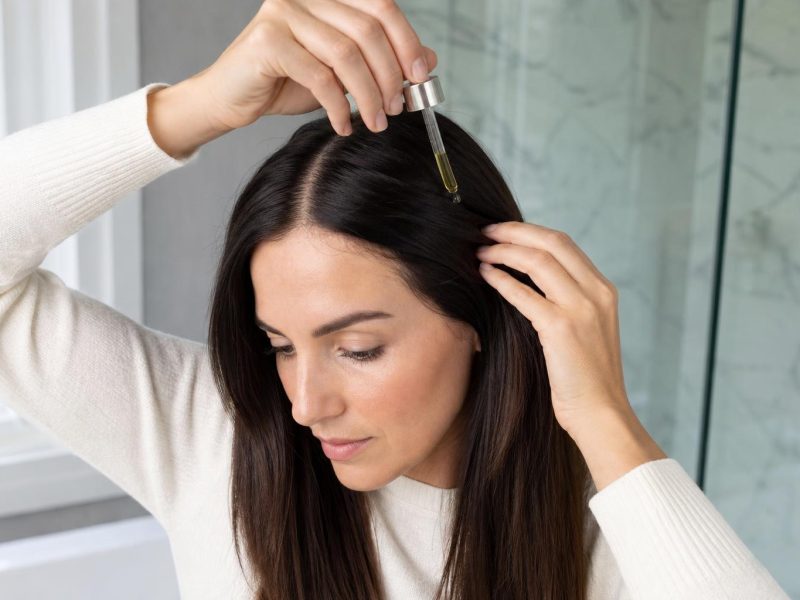
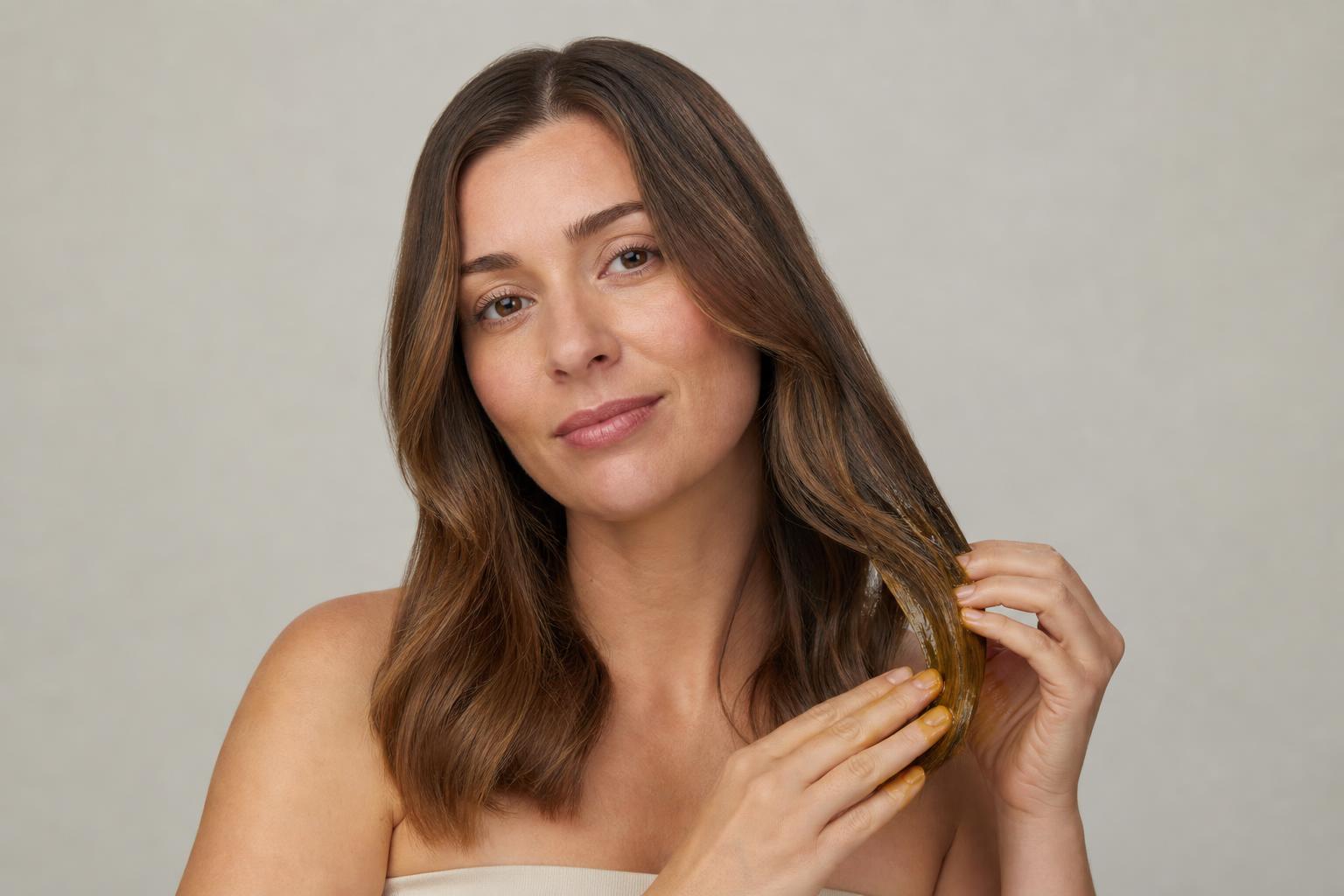
Start below the ears and work toward the ends, where the hair is oldest and most damaged. The scalp produces its own oil and does not need more, and keeping the roots clear is what makes the difference between a treatment and a greasy morning. Use roughly a teaspoon for shoulder-length hair and adjust from there.
Wrap It Loosely in Something Smooth
Braid or twist the oiled length, then wrap it in a silk scarf, a cotton sock, or a satin cap. The wrap is there to keep oil off your pillow and to hold gentle warmth against the hair, not to compress it. Wrapping tightly against the scalp overnight traps heat and sebum at the follicle, which is a reliable way to trigger irritation.

Shampoo Twice, on Dry Hair First
This is the step that fixes the greasiness complaint. Work shampoo into the oiled hair before adding any water, which lets the surfactants bind to the oil directly instead of being diluted. Rinse, then shampoo a second time normally. Adding water first is why so many people report needing three or four washes to feel clean again.
How Often Is Too Often
Once a week is plenty for most hair, and once every two weeks suits fine or low-porosity hair better. There is a real limit here rather than a marketing one. Repeatedly saturating hair with oil and water causes the shaft to swell and contract more than usual, a pattern known as hygral fatigue, and over months that weakens the strand and shows up as breakage rather than shine.
The other reason to space it out is buildup. Oil that is not fully removed attracts dust and product residue, which flattens the hair and makes styling harder. If your hair starts looking dull and limp a few weeks into a slugging routine, that is the signal to clarify and cut the frequency rather than to add more oil. Slotting the treatment into a wider weekly hair care routine keeps it from quietly becoming an every-other-day habit.
Stylist tip: Do the treatment the night before a wash day you already had planned. Slugging fails most often for practical reasons rather than technical ones, because people apply oil on a Tuesday, find they have no time to wash properly on Wednesday, and spend two days with flat, coated hair.
When Slugging Is Not the Right Choice
This is the section the brand blogs leave out, and it matters more than the technique itself. Slugging suits a fairly narrow set of hair, and for several groups it actively makes things worse.
- Fine or low-density hair. Oil weight is the enemy of volume, and fine strands take days to recover their body after a heavy treatment. If you want to test it anyway, use jojoba, use half what you think you need, and stay in the bottom third of the length.
- An oily scalp. Adding oil to a scalp that already overproduces gives you nothing and costs you a wash cycle. Keep the treatment strictly below the ears, or skip it.
- Dandruff or a flaking scalp. The yeast associated with dandruff feeds on the oils present on the scalp, so an occlusive overnight layer tends to make flaking and itch worse rather than better. Scalp problems need a routine aimed at the scalp itself, not a length treatment.
- Low porosity hair that already resists product. If water beads on your hair, oil will too. The result is a surface film rather than a treatment, and buildup arrives quickly.
- Protein-sensitive hair. Coconut oil reduces protein loss, which sounds universally good, but hair that already feels stiff or snaps rather than stretches tends to respond badly. Switch to a lighter sealing oil and focus on moisture instead.
What to Expect, Honestly
A good slugging session leaves the ends softer, visibly shinier, and easier to detangle, and it reduces the roughness that makes hair snag on itself. On coarse or curly textures it can noticeably improve how the hair clumps and defines for a few days afterward.
What it does not do is repair damage. Split ends stay split, bleached hair stays bleached, and no oil rebuilds a cuticle that is already gone. The improvement is real but temporary, lasting until the next few washes, which is exactly what you would expect from a treatment that works by reducing protein loss during washing rather than by adding structure back. Anyone hoping to stretch time between washes will get more from refreshing technique between wash days than from more oil.
FAQ
How Long Should You Leave Hair Slugging In?
Two to eight hours covers the useful range, and overnight is convenient rather than superior. Most of the benefit happens in the first few hours as the oil moves into the shaft, so a long afternoon session before an evening wash works just as well as sleeping in it. Leaving it longer than one night adds buildup risk without adding benefit.
Should You Slug on Wet or Dry Hair?
Dry hair, in almost every case. Water fills the internal space that penetrating oils would otherwise move into, so oiling damp hair leaves most of the product sitting on the surface. The one exception is if you are using a sealing oil purely for surface shine and slip, which works on either.
Does Hair Slugging Make Your Hair Grow Faster?
No. Growth happens at the follicle and is governed by genetics, hormones, and general health, none of which an oil on the mid-lengths reaches. What slugging can do is reduce breakage at the ends, so hair retains more of the length it grows. That often looks like faster growth without being it.
Can You Slug with Petroleum Jelly Like the Skincare Version?
You can, but it is the weakest option here. Petroleum jelly seals the surface without penetrating, so it delivers none of the protein-loss benefit that gives slugging its evidence base, and it is notoriously difficult to shampoo out of hair. A penetrating oil does the job better and washes out in two rounds of shampoo.
Why Is My Hair Greasy After Washing Out a Slugging Treatment?
Almost always because water was added before shampoo. Apply shampoo directly to the dry, oiled hair and work it through before wetting, so the surfactants bind the oil rather than being diluted by water. Then rinse and shampoo a second time. Applying oil above the ears also produces this result regardless of washing technique.
Is Hair Slugging Safe for Color-Treated Hair?
Generally yes, and porous color-treated hair is one of the groups that benefits most, since a pre-wash oil treatment reduces protein loss during the wash. Keep it to once a week, and be aware that oil treatments can slightly soften fresh color, so leave a few days after a salon appointment before your first session.
Hair slugging earns its place as a weekly pre-wash treatment for coarse, dry, or previously lightened hair, and it earns its bad reputation among people who applied a heavy oil root to tip and then could not wash it out. Match the oil to your texture, keep it below the ears, wash it out with shampoo before water, and give it a week between sessions. If your hair is fine or your scalp flakes, this is a trend worth skipping rather than modifying.
Hair results vary based on your natural hair type, texture, density, and condition. Always consult with a licensed hairstylist before making significant changes, especially with chemical treatments or dramatic length changes. Photos may show styled results that require professional tools and products to replicate.