
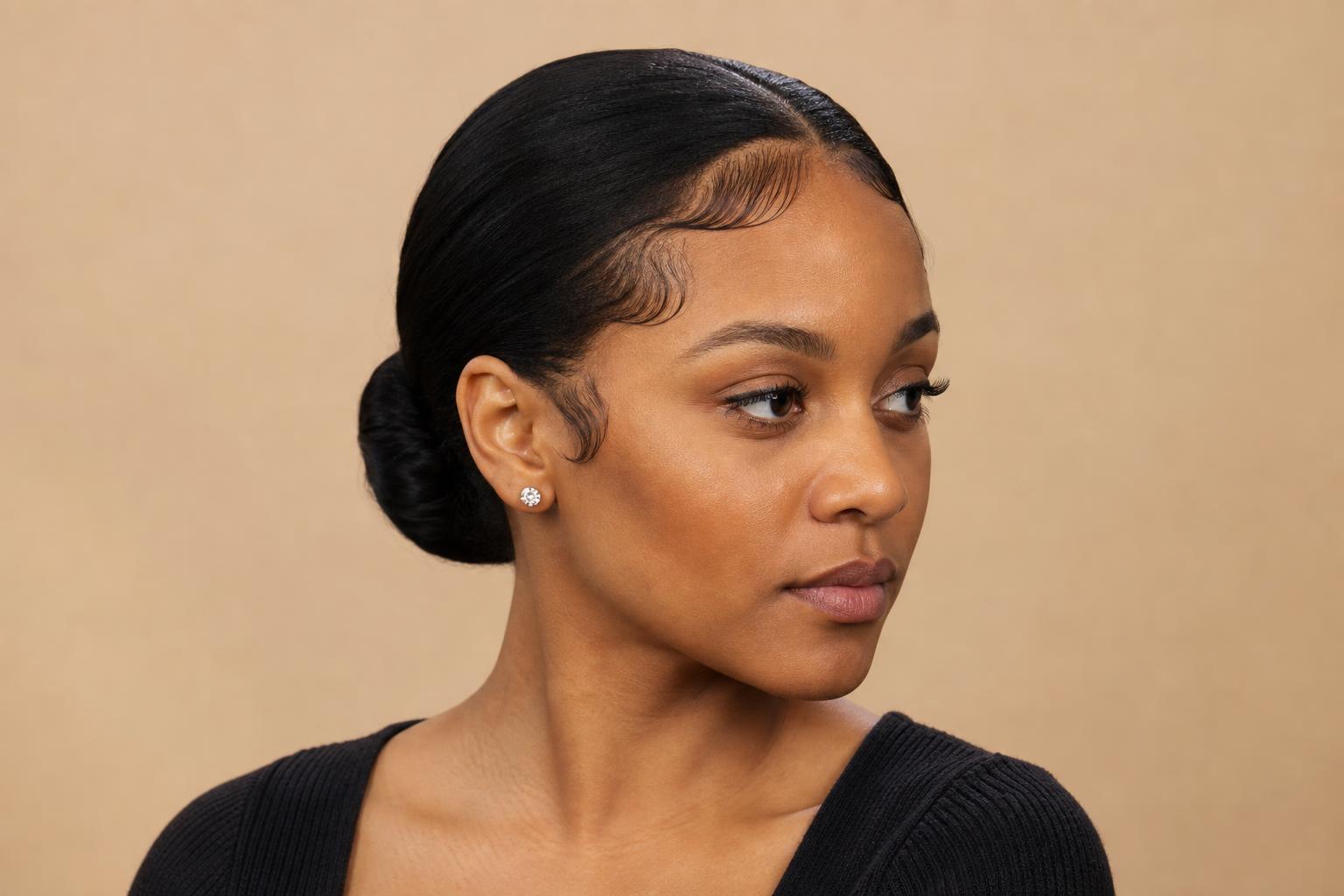
Baby hairs are short because of how their follicles are programmed, not because they broke off, which is why no oil, serum or growth treatment will ever make them match the rest of your hair.
The fine hairs along your hairline grow from follicles with a shorter growing phase than the ones further back on your head. A strand can only get as long as its follicle stays in that phase, so these ones stop at an inch or two and shed while the hair behind them keeps going. That is normal, permanent and true of almost everyone regardless of hair type.
What is not normal is a hairline that used to have baby hairs and now does not. This guide covers how to tell genuine baby hairs from breakage and from early traction damage, how to lay them without cumulative harm, a rest-day schedule that protects the follicles, and the point at which thinning edges need a dermatologist rather than a different gel.
Baby Hairs Are Short by Design, Not by Damage
Every follicle cycles through a growing phase, a transition and a resting phase before shedding and starting again. How long a hair gets depends almost entirely on how long that growing phase lasts, which is why scalp hair reaches waist length and eyebrows do not. Follicles along the hairline run a shorter cycle than the ones on the crown, so their hairs shed before reaching any real length.
Those hairs are also finer in diameter and often softer in texture, which is what gives a hairline its soft edge rather than a hard line. They frame the face, soften a slicked-back style and give the forehead a gradual transition instead of an abrupt one. Fighting them is a losing project, and working with them takes about two minutes.
The useful consequence is diagnostic. Because real baby hairs are short by design, they have soft tapered tips, run evenly along the whole hairline and have been there as long as you can remember. Anything that appeared recently, feels coarser, or shows up in a patch rather than a line is a different thing entirely.
Baby Hairs, Breakage and Thinning Edges Look Similar and Are Not
Three different situations produce short hairs at the front of the head, and they need three different responses. Getting this wrong wastes months, because the products sold for one do nothing for the others. Check the tips of the hairs and where they are distributed.
| What You See | Tips of the Hairs | Where They Are | What It Is and What to Do |
|---|---|---|---|
| Fine, soft, always been there | Tapered to a soft point | Evenly along the whole hairline | Genuine baby hairs; style them, do not try to grow them |
| Coarser than the baby hairs, new | Blunt, snapped, sometimes split | Patchy, worst where tension was | Breakage; ease the tension and it grows back |
| Hairline has moved back | A thin band of hairs left in front of bare scalp | Temples first, then the front | Early traction alopecia; stop the style and see a dermatologist |
| Round bare patch near a part | No hairs at all in the patch | Along a parting line, often one or two spots | Tension at the part; change the parting and watch for regrowth |
| Thinning with itch or flaking | Variable, scalp looks irritated | Anywhere, not just the hairline | Needs a diagnosis, not a styling change |
The Band of Hairs in Front Is the Sign to Take Seriously
Traction damage often leaves a narrow strip of short hairs standing in front of an area that has gone sparse, so the hairline appears to have two edges. Dermatologists treat that pattern as a strong indicator, and it matters because the condition is reversible early and scarring later. Anyone who can see it should stop the style causing it now rather than after the next install.
Patches Along a Parting Line Point at the Part, Not the Product
A case series of braid and ponytail-associated hair loss in young girls found that 83.87 percent of lesions appeared near the parting lines of the scalp rather than at the outer hairline, with a mean age of just under six. More striking is what happened next. Average duration was 1.2 months and every patient regrew the hair within one and a half months of changing the hairstyle, yet 37.5 percent had already been treated for suspected alopecia areata before the cause was identified.
How to Lay Edges Without Paying for It Later
Laying edges is not the problem. Brushing, gelling and pressing the finest hairs on your head flat against the scalp several times a week, then wrapping them tight overnight, is the problem. Done occasionally and gently it costs the follicles very little, and the difference comes down to four things.
Use a Soft Brush and Let the Product Do the Work
A soft-bristle edge brush or an old toothbrush with worn bristles moves gel into place without dragging on the root. Firm bristles give a sharper finish and pull far harder, which is the trade nobody names out loud. If you find yourself pressing to get the shape, the product is too stiff or too dry rather than the brush being too soft.
Less Gel, Applied Warm
A pea-sized amount covers an entire hairline. Warming it between your fingertips first makes it spread with almost no mechanical force, where cold gel straight from the tub needs brushing back and forth to move. Excess product also flakes by the afternoon, which is what sends people back to re-brush the same hairs a second time in one day.
The Scarf Comes Off in Fifteen Minutes
Wrapping a silk or satin scarf around the hairline while the gel sets is what gives a smooth finish, and fifteen to twenty minutes is all it needs. Sleeping in a tied scarf keeps steady tension on the follicles for eight hours, every night, which is a far bigger cumulative load than the styling itself. Swap to a loose bonnet for sleeping, the same overnight protection our sleek bun tutorial recommends for pulled-back styles.
Stylist tip: If the skin around your hairline looks tight or shiny after styling, or you feel the pull when you raise your eyebrows, take it down and start again with less product. Tension you can feel is tension the follicle is carrying.
A Weekly Schedule That Gives the Hairline Rest Days
The cumulative load matters more than any single session, so the most useful change most people can make is scheduling days where nothing touches the hairline at all. Three or four rest days a week cuts the total stress substantially without giving up the look on the days it matters.
| How Often You Lay Them | Risk Level | What to Change |
|---|---|---|
| Once or twice a week | Low | Nothing; keep the scarf time short |
| Three or four times a week | Moderate | Use a softer brush and less product; no overnight scarf |
| Daily | High | Build in three no-product, no-brush days each week |
| Daily plus a tight bun or ponytail | High and compounding | Loosen the pulled style first; it does more damage than the gel |
| Daily under braids or a wig | Highest | Leave the front rows out of the install and skip edge gel entirely |
The last row deserves emphasis. A protective style already holds the hairline under constant tension for weeks, so adding daily brushing and gel on top of it doubles the load on hair that has no rest in between. Our guides to Ghana braid patterns and passion twists both cover the front-row tension rules worth insisting on at the appointment.
When Thinning Edges Need a Doctor Rather Than a Product
Traction alopecia is reversible in its early stage and permanent once the follicles scar, which makes the timing of that appointment the single most important decision. A clinical study of women attending hair salons documented how common the condition is among people whose routine styling involves sustained tension. Book an appointment if any of the following applies.
- Your hairline has visibly moved back compared with photographs from a year or two ago.
- There is a thin band of short hairs standing in front of a sparse area, which is the pattern dermatologists watch for.
- You see small bumps, redness or tenderness along the hairline after styling, all of which mean inflammation rather than simple pulling.
- The area has been bare for more than a year, since follicles that have scarred will not respond to styling changes alone.
- Thinning is happening elsewhere on the scalp too, which points to a cause other than tension.
- You have changed your styling and seen no regrowth after three to four months, which is longer than the recovery window in the published case series.
Regrowth, when it comes, is slow enough to be discouraging. Hair grows roughly half an inch a month, so a hairline that has receded half an inch takes several months of doing nothing to it before the change becomes obvious. Photograph it monthly in the same light rather than judging in the mirror daily.
Baby Hair Myths Worth Dropping
Myth: Oils and Serums Will Grow Your Baby Hairs Longer
Reality: Genuine baby hairs are short because their follicles run a short growing cycle, and no topical product changes that cycle. What oils can do is reduce breakage on the hairs you have and keep the skin comfortable, which is worth something and fits alongside the wash habits in our scalp care routine. If hairs that were previously longer have gone short, that is breakage rather than baby hair, and easing the tension is the fix.
Myth: Shaving or Trimming Them Makes Them Grow Back Thicker
Reality: Cutting a hair changes nothing about the follicle that produced it. A freshly cut hair feels coarser because the blunt end lacks the natural taper, which is where the impression comes from. Trimmed baby hairs will grow back to exactly the same length and fineness as before.
Myth: Everyone Has Baby Hairs and Losing Them Is Just Age
Reality: Hairlines do soften and recede gradually with age and with hormonal changes, and a hairline that visibly retreats over one or two years is not typical aging. Traction damage moves faster than age does. Treating a sudden change as inevitable is how people miss the reversible window.
Myth: Laying Edges Always Causes Damage
Reality: Frequency and force cause damage, not the practice itself. A soft brush, warm gel, a pea-sized amount, a short scarf set and several rest days a week adds up to very little strain on the follicle. What accumulates is daily brushing, stiff product, overnight wrapping and a tight pulled-back style underneath it all.
What to Tell Your Stylist or Braider
Say the sentence before the appointment starts rather than partway through. Ask for your edges and the front hairline to be left out of the install entirely, and for the first two rows to be braided loose enough that you can lift your eyebrows without feeling it. A braider can adjust the first two rows in minutes and cannot undo a whole head at the end.
If you are already seeing thinning, say so plainly and ask what the braider recommends instead. Experienced braiders will suggest starting the rows behind the hairline, using fewer and thicker rows, or skipping extensions at the front the way many of the styles in our gentler braided styles for young hairlines gallery do, and a braider who dismisses the concern is telling you something useful about whether to rebook.
Stylist tip: Go into an appointment with clean, moisturized, detangled hair and no gel on the hairline. Product at the front makes a braider grip harder to get a clean part, which is the opposite of what you want at the most fragile place on your head.
FAQ
Can You Grow Baby Hairs Longer?
Not if they are genuine baby hairs, because the follicle’s growing phase is what caps their length and no product extends it. What you can do is stop losing them to breakage, which means gentler brushing, less product and fewer tight styles. If hairs that used to be long are now short, that is breakage and it does grow back once the tension stops.
Do Baby Hairs Mean Your Hair Is Growing Back?
Sometimes, and the tips tell you which. New regrowth after shedding has a soft tapered point and appears across an area that was previously sparse, while permanent baby hairs have always been along the hairline and have not changed. Regrowth also gets longer month by month, so photograph the area and compare after eight weeks rather than guessing.
Is Laying Edges Bad for Your Hairline?
Done once or twice a week with a soft brush and a small amount of product, the strain is minor. Done daily with a stiff brush, heavy gel and an overnight scarf, it becomes one of the more common contributors to traction damage at the temples. The frequency and the force are what matter, not the practice itself.
How Long Does It Take for Edges to Grow Back?
Three to six months of leaving the area alone is a realistic window when the follicles are still healthy, since hair grows around half an inch a month. Published cases of tension-related loss in children showed regrowth within roughly six weeks of changing the hairstyle, though adults with longer exposure usually take longer. No regrowth after four months means it is time to see a dermatologist.
What Is the Best Gel for Baby Hairs?
Pick by stiffness rather than by brand. A gel soft enough to spread with warm fingertips lays edges with far less brushing than a firm-hold formula, which is the whole game for protecting the follicle. Alcohol-heavy formulas dry the fine hairs and make them snap, so check that alcohol is not high in the ingredient list.
Why Are My Baby Hairs Suddenly Frizzy?
Usually because they are breaking rather than because their texture changed. Repeated brushing, product buildup and friction from a scarf or pillowcase roughen the cuticle on hairs that are already the finest on your head. Give them a week with no product and no brushing and see whether the texture settles, which also tells you whether tension was the cause.
Sources
- Braids or Pony-Tail-Associated Traction Alopecia in Female Children (PMC)
- Hair care and epidemiological-clinical profile of traction alopecia among women in hair salons (PMC)
Baby hair is worth understanding before it is worth styling, because the same short hairs along a hairline can mean three completely different things. Check the tips and the distribution first, treat genuine baby hairs as a feature to work with rather than a problem to solve, and give the hairline real rest days so the one thing that does cause lasting damage never gets the chance to accumulate.
This article is for general information and is not medical advice. If your hairline is receding, tender, inflamed or not regrowing after a styling change, see a board-certified dermatologist or a trichologist experienced in textured hair.