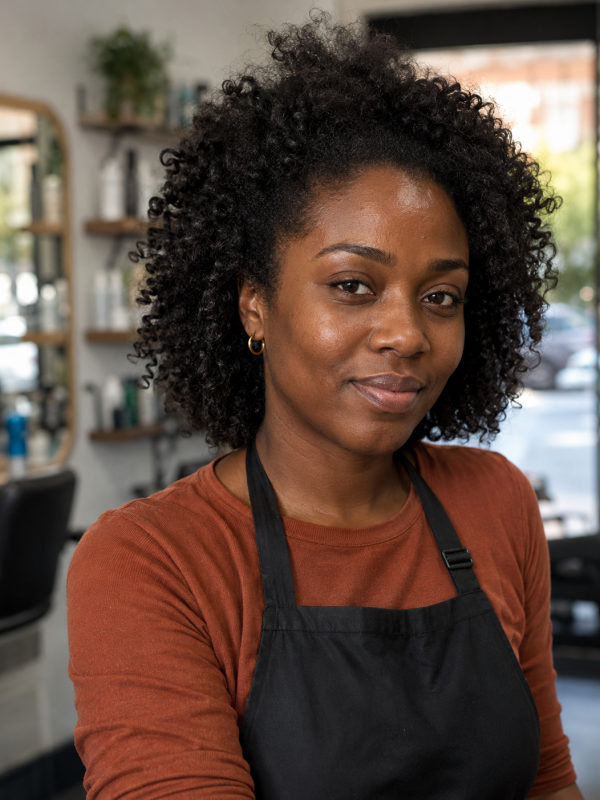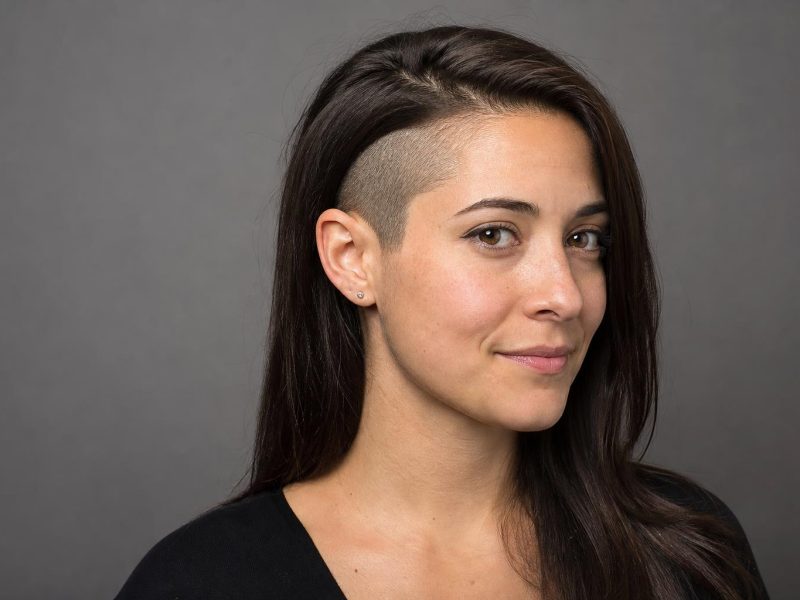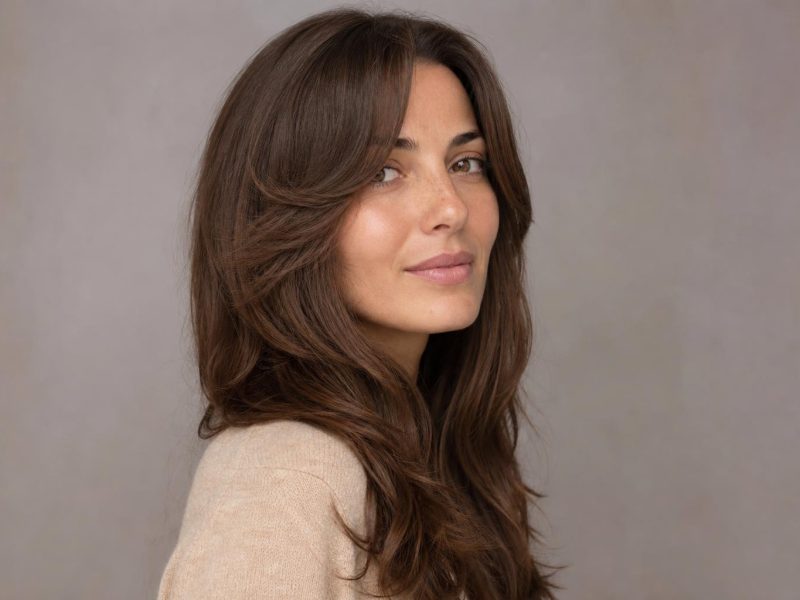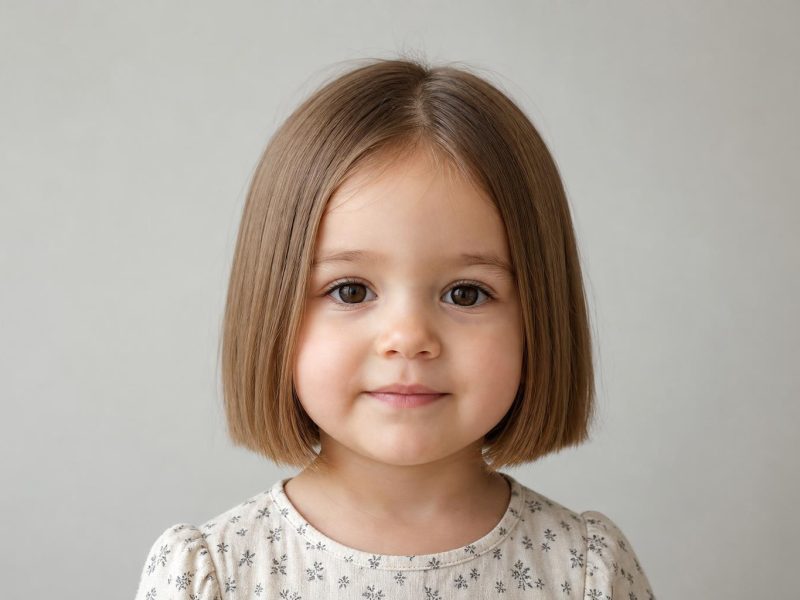
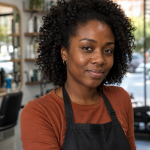
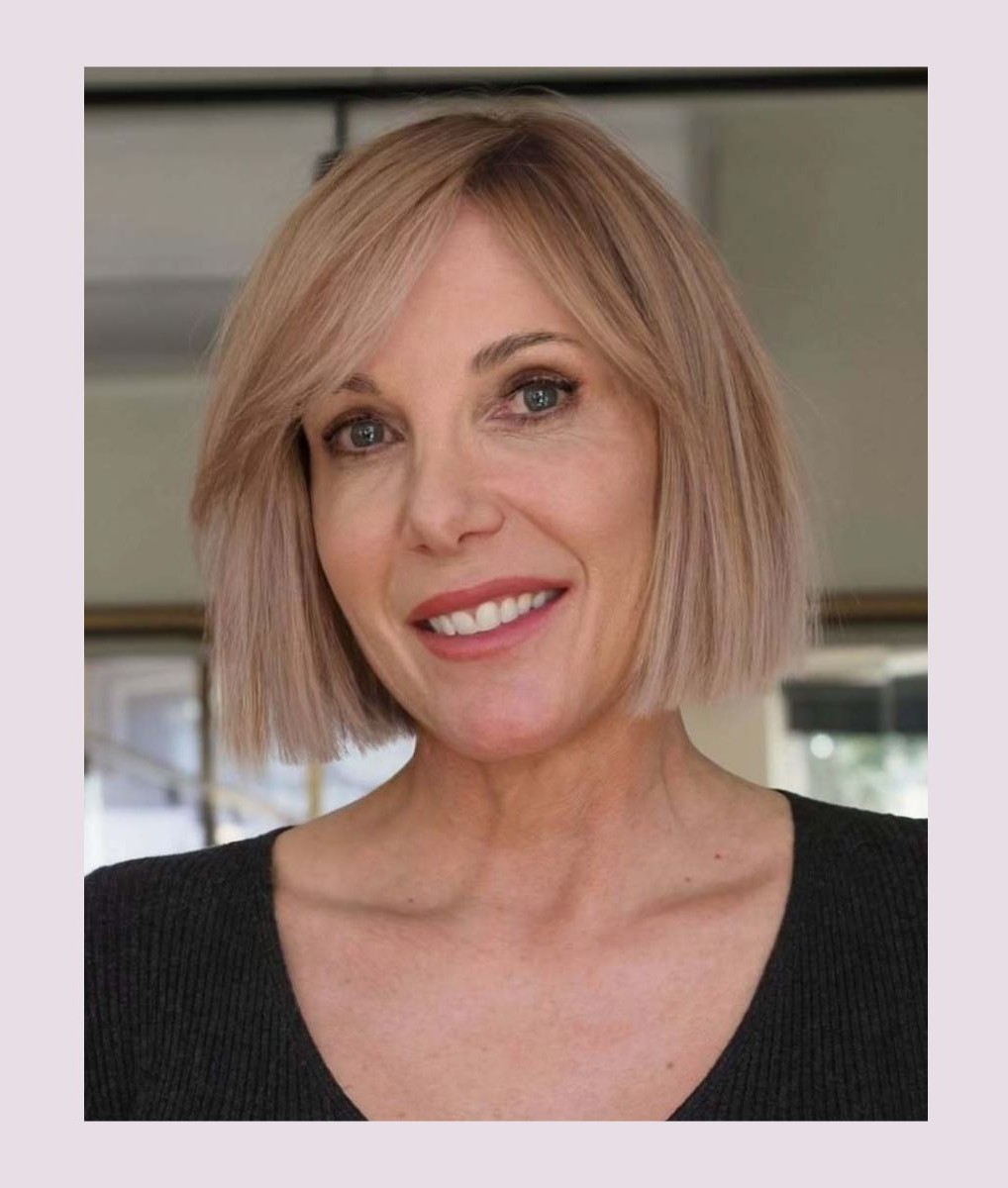
From sharp pixies to long layered waves, check out 45 flattering hairstyles for women over 40 for every length and texture.
Hairstyles for women over 40 cover every length. Here are 45 options organized by short, medium, and long to make browsing fast. Each entry notes what makes the cut work technically, who it suits, and what to tell your stylist to get it right. After the gallery, there’s a face shape reference table and a quick salon communication guide so you walk in with a real plan.
Short Hairstyles for Women Over 40
Short cuts are particularly well-suited to the finer or lower-density hair that’s common in your 40s. They remove excess weight, create shape, and most styles can be styled in under five minutes. The entries below range from pixie cuts to chin-length bobs and cover every face shape and texture.
1. Classic Short Pixie Cut
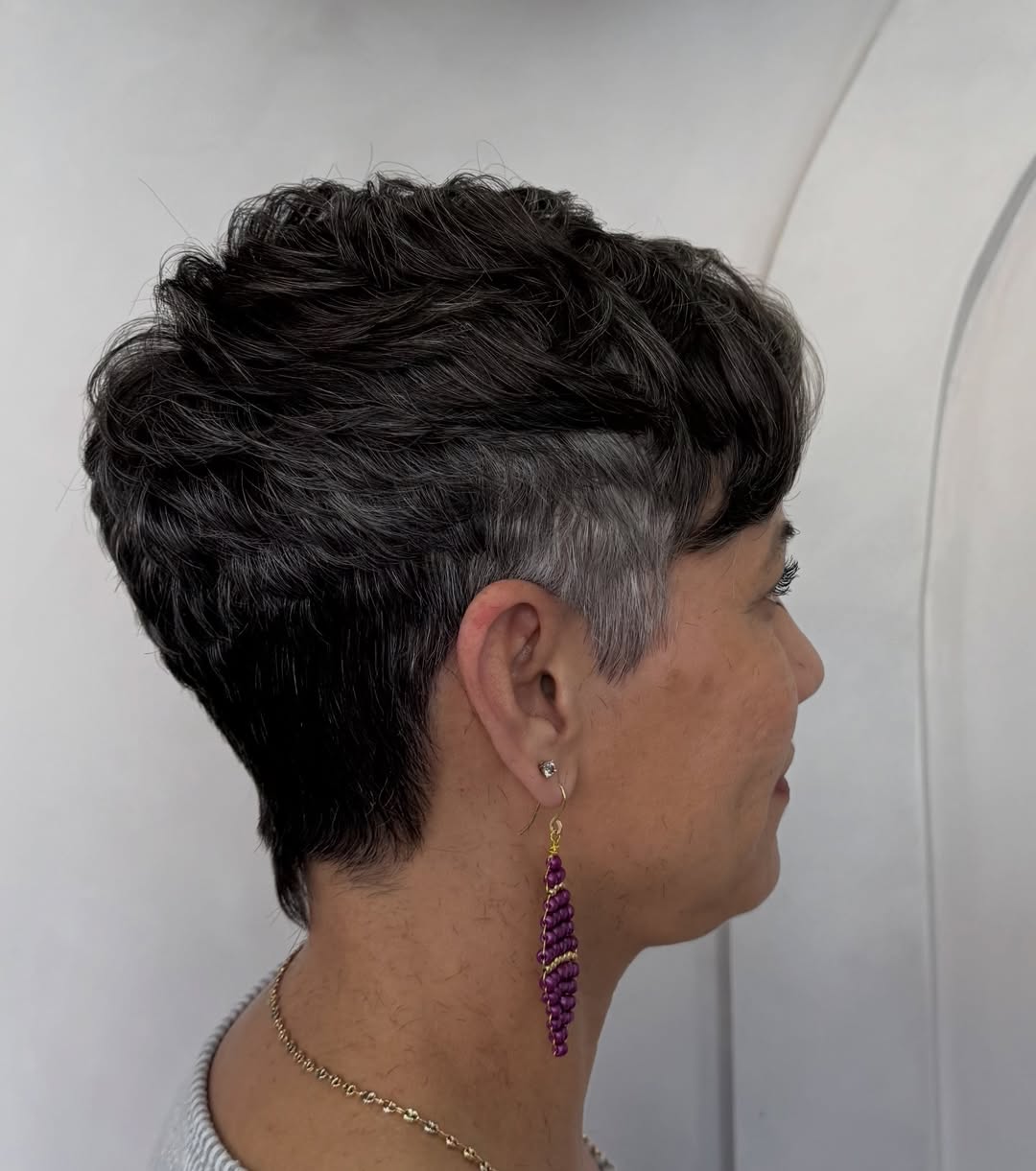
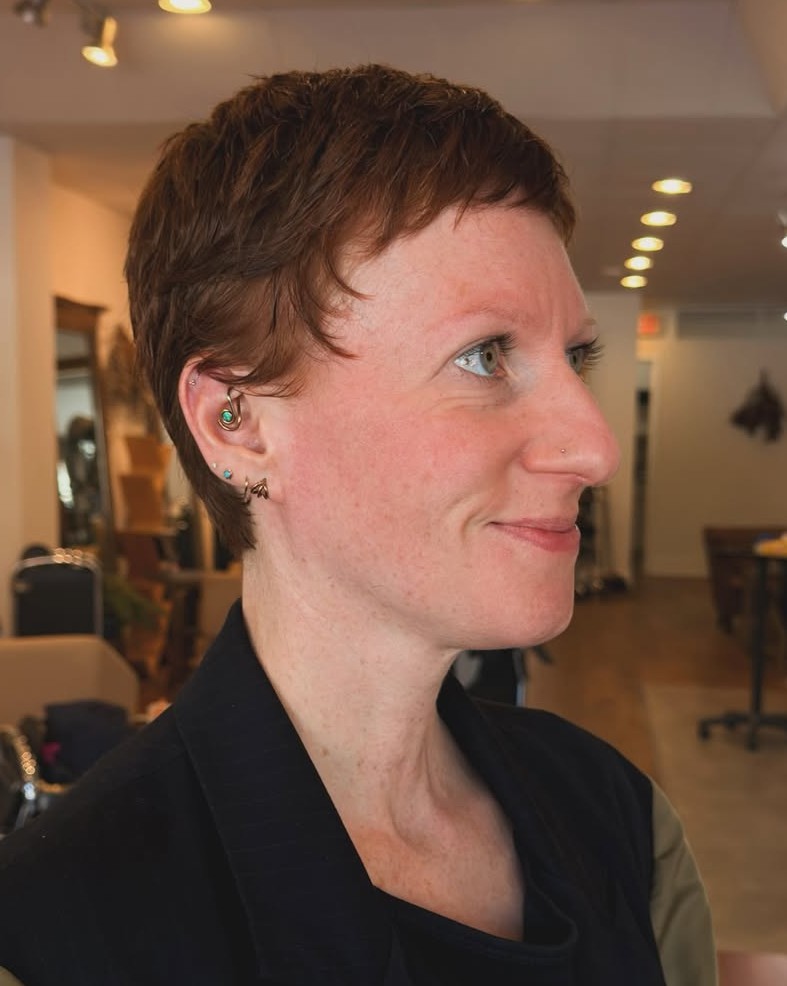
A clean pixie with close-tapered sides and a textured crown lifts the face and keeps the nape tidy between appointments. Leave about an inch and a half at the top so you can style it forward, back, or to the side. Oval and heart-shaped faces wear this version best.
2. Textured Pixie with Layered Top
Point-cut layers through the crown create separation and volume without adding bulk. This is exactly what fine or medium-density hair needs. A small amount of texturizing paste worked through dry hair gives it a lived-in finish.
3. Tapered Pixie with a Soft Nape
A softly faded nape rather than a hard clippered line reads more polished and grows out gracefully for 5–6 weeks. Thick hair gets excellent density control from the tapered structure at the sides and back.
4. Side-Swept Pixie with Wispy Bangs
A diagonal fringe swept across the forehead softens a square or round face by creating a horizontal visual break at the brow. Ask your stylist to keep the bangs razor-thin at the ends rather than blunt so they don’t look heavy as they grow.
5. Pixie Bob (Bixie)
The bixie sits between a pixie and a chin-length bob. It’s ideal for women who want short-cut ease without committing to something close to the scalp. The longer front pieces frame the face and give more styling flexibility than a traditional pixie.
6. Blunt Chin-Length Bob
A blunt-cut bob at chin length reads polished whether blown out smooth or left to air-dry with a wave; medium-to-thick hair holds the blunt edge longest and needs a trim every 5–6 weeks to keep the line sharp.
7. Textured Bob with Piece-y Ends
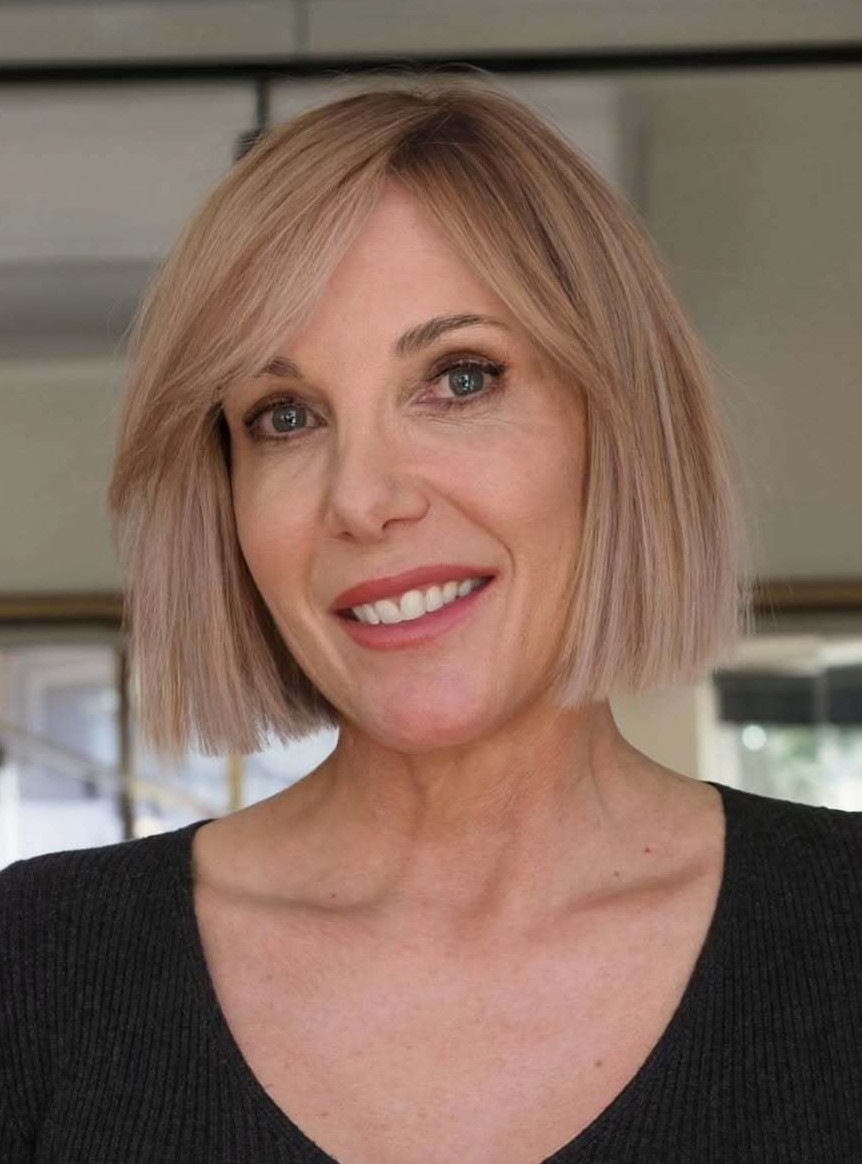
Piece-y ends are created with point cutting at the perimeter rather than a blunt scissor cut. The resulting edge moves more freely and looks deliberately deconstructed. On straight hair, a light pomade pulled through dry ends sets the effect without stiffness.
8. Angled Bob
An angled bob is shorter at the nape and longer toward the chin, creating a diagonal line that elongates visually. It flatters round and square face shapes most. The stacked back section adds crown volume naturally without relying on product.
9. Stacked Bob
The stacked bob uses layers that build volume at the back of the head, which corrects flat spots that are common when hair loses some of its natural body. Ask for the stack to start just below the occipital bone for the volume to sit exactly where it counts.
10. Bob with Curtain Bangs
Curtain bangs parted in the center soften the hairline and frame the eyes without the daily maintenance of a full fringe. They grow out into face-framing layers rather than going through an awkward in-between stage. This combination suits oval, heart, and square face shapes in particular.
11. French Bob
The French bob (blunt at the cheekbone with a strong straight fringe) works best on medium-to-thick hair that holds the hard lines without going limp. If you want the look without a full fringe, ask for a brow-skimming curtain version.
12. Short Shag with Micro Fringe
A shag at short length with choppy layers and a textured curtain fringe brings a relaxed energy and requires minimal product. The layering creates texture on its own. Wavy and naturally textured hair gets the best results from this structure.
13. Curly Cropped Cut
A cropped cut on curly hair should be dry-cut. Your stylist needs to see the curl pattern at its natural length to avoid over-removing length due to shrinkage. Leave at least 2 inches of crown length so the curls coil rather than frizz.
14. Silver Pixie
Letting gray grow into a precise pixie looks intentional and modern. The color and cut work together rather than looking like an absence of a decision. A toning shampoo every 2–3 washes keeps the silver bright and prevents the yellow undertone natural gray can develop.
15. Ear-Length Bob with a Deep Side Part
An ear-length bob with a deep side part creates an asymmetric fall that adds visual length to round faces and creates a sense of density on fine hair. This cut grows cleanly into a chin-length bob with no awkward intermediate phase.
Medium-Length Hairstyles for Women Over 40
Collarbone-to-shoulder length gives the most styling flexibility. It’s long enough to pull back, but short enough to air-dry fast, and the weight lands at a point where most hair types behave predictably. The styles below cover classic lobs, textured shags, wolf cuts, and a few that work particularly well with color.
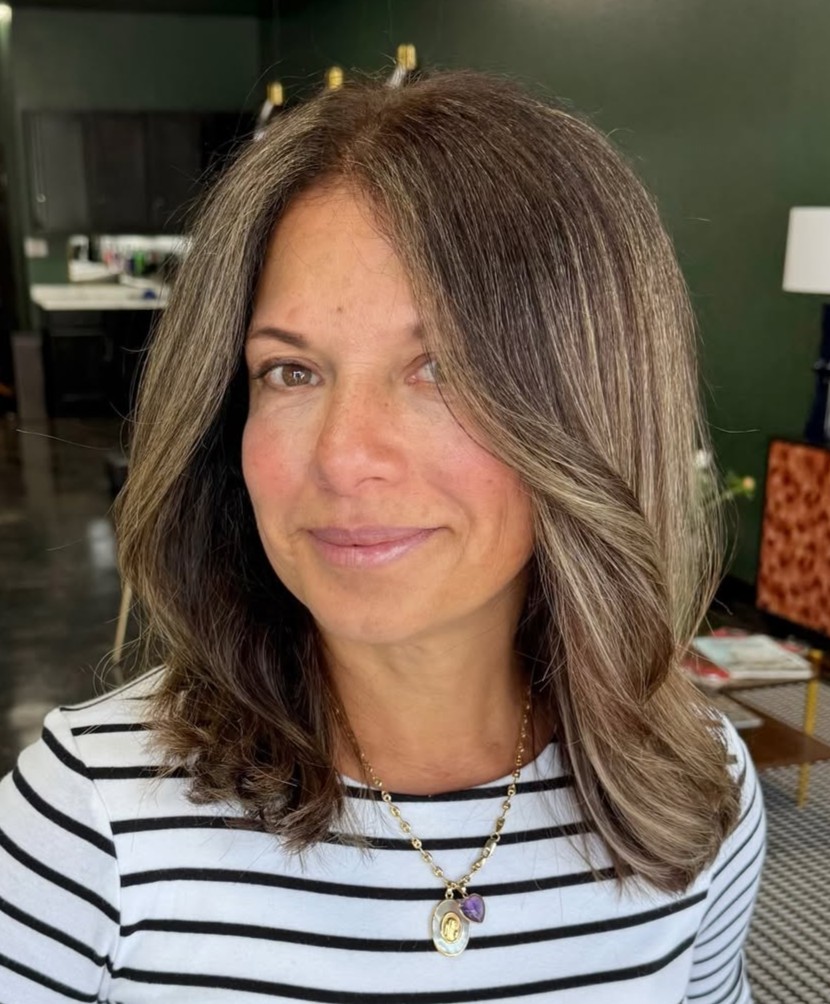
16. Classic Lob at Collarbone Length
A lob cut to graze the collarbone frames the neck without the styling demands of longer hair. On straight and wavy hair, a single-length lob with minimal layering keeps the look clean and strong.
17. Layered Lob with Soft Movement
Internal layers through a lob add movement and reduce bulk on medium-to-thick hair that tends to sit heavy at the ends. The layers should start at cheekbone level and blend through the midsection, not stack at the bottom, which creates a dated triangle silhouette.
18. Wolf Cut at Mid-Length
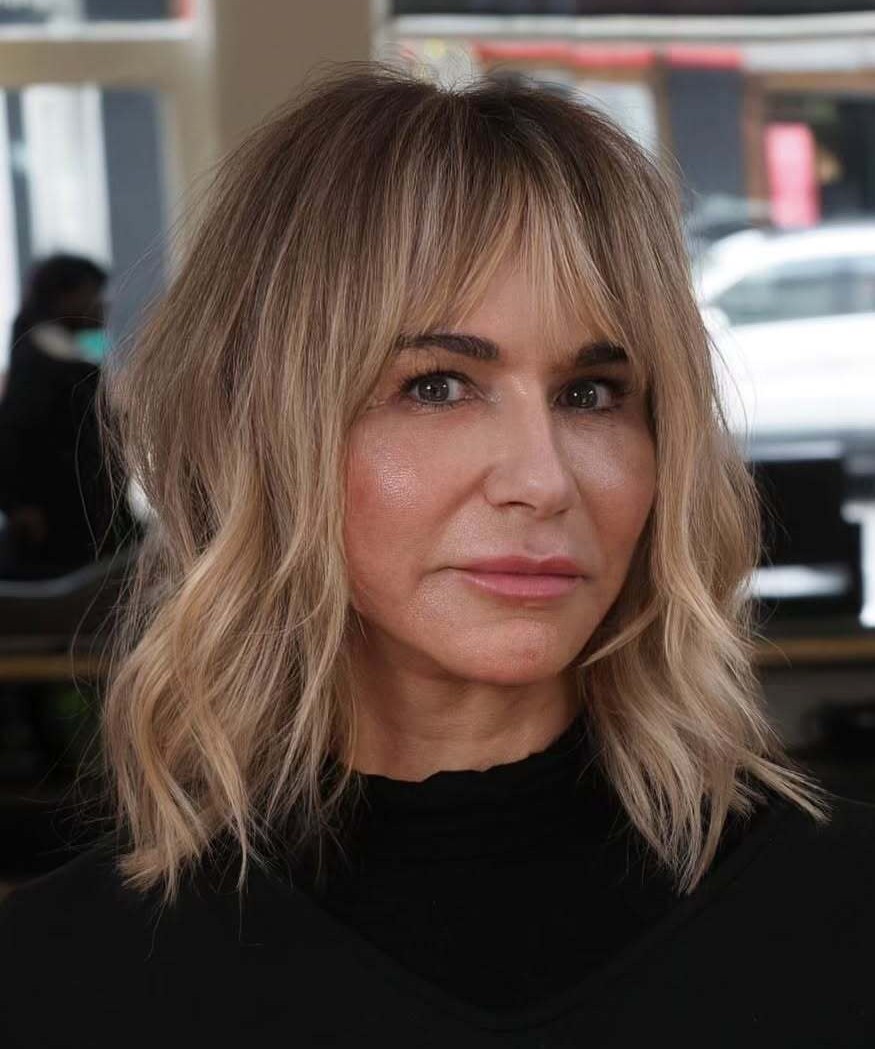
The wolf cut uses heavy curtain bangs, disconnected layers, and a shaggy silhouette that works well at shoulder length when the layers are calibrated to your density. Thick hair gets dramatic volume, while medium-density hair gets a softer, more blended result.
19. Mid-Length Shag with Curtain Bangs
A shag at shoulder length works especially well for naturally wavy or curly hair because the choppy layer structure works with the texture rather than fighting it. Curtain bangs on a shag can air-dry and push to the sides without looking unkempt.
20. Textured Collarbone-Length Cut
A single-length cut at collarbone height with point-cut ends rather than a blunt edge feels more current and requires very little product to look finished. It’s also a clean reset when growing out a bob with no messy in-between phase.
21. Wavy Lob with Face-Framing Layers
Face-framing layers starting at cheekbone level create a soft curtain effect that draws the eye inward and adds definition without a full fringe. On naturally wavy hair, these layers enhance the wave pattern because there’s less weight pulling the wave out.
22. Asymmetrical Lob
An asymmetrical lob with one side cut noticeably longer creates a diagonal sweep that adds visual interest to straight or fine hair. Keep the longer side at collarbone length and the shorter at jaw length. That ratio is most flattering on oval and square face shapes.
23. Blunt Lob with Internal Layers
A strong perimeter line with internal layers that remove midsection bulk gives thick hair the best of both worlds — a polished outer edge that still moves freely. Expect to return every 7–8 weeks; the weight line at the perimeter softens noticeably once ends start splitting.
24. Side-Parted Shoulder-Length Cut
A deep side part on shoulder-length hair creates an asymmetric fall that works for round faces by directing attention away from the face’s widest point. Thin hair benefits here, as the weight on one side creates an illusion of density.
25. Feathered Layers at Shoulder Length
Feathered layers create volume at the cheekbones and open up hair that tends to sit flat at the sides; a modern version uses point-cut edges rather than heavy razor shaping, which keeps the look current. This works best on medium-density hair with enough body to hold the shape.
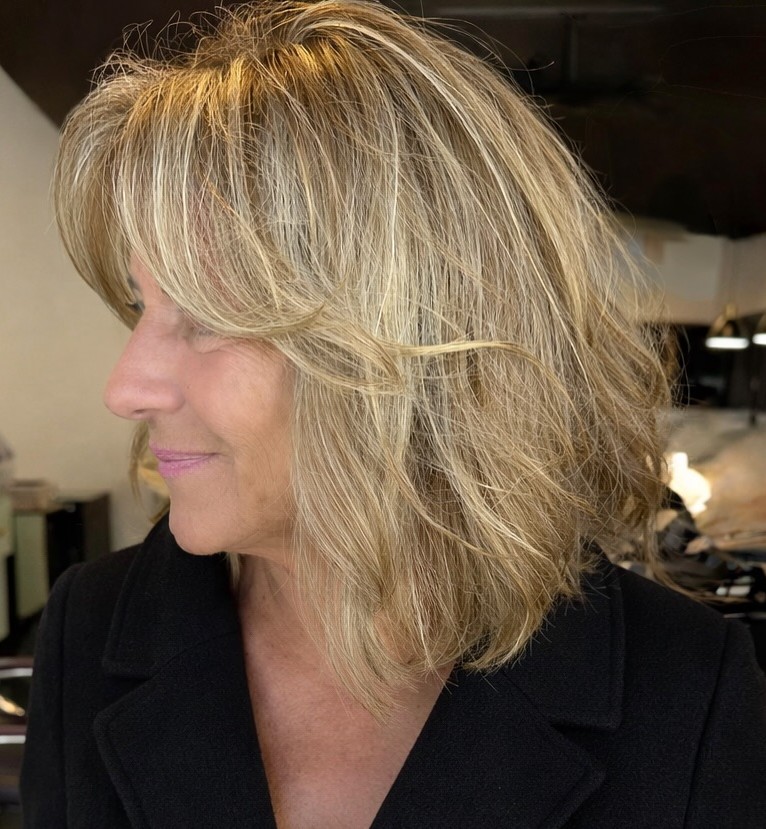
26. Curly Mid-Length with Diffused Volume
Curly hair at mid-length works best when the cut removes bulk through the midsection with a dry layer cut. This keeps volume where you want it and controls width at the sides. A curl cream applied section by section while wet, followed by diffusing on medium heat, gives the best definition with minimal frizz.
27. Balayage Lob with Money Pieces
Balayage through a lob highlights the layering structure. Lighter pieces catch light through the midsection and make the cut look more three-dimensional. Money pieces around the face brighten the complexion, and the grow-out blends softly rather than creating a hard root line.
28. Curtain Bangs on Mid-Length Hair
Curtain bangs with layers at shoulder length soften the hairline and add face framing with almost no daily styling commitment. They can air-dry and push to each side casually.
29. Half-Up Style on a Lob
A half-up section at the crown — twisted, clipped, or tied — turns a regular lob into a polished look in under two minutes, which makes it a useful everyday option for women who don’t always have time for a full blowout. Wavy lobs work best; pin-straight hair benefits from a small amount of tousle spray first.
30. Textured Shag at Shoulder Length
A shoulder-length shag with choppy, disconnected layers creates high movement and low maintenance. Air-drying with a texturizing spray usually gives enough shape without a diffuser. Naturally wavy and thick straight hair gets the most out of this structure.
Long Hairstyles for Women Over 40
Long hair after 40 needs enough structural layering to prevent looking heavy or shapeless. Strategic face-framing and regular trims separate long hair that looks effortless from long hair that just hasn’t been cut. The styles below focus on the techniques that make length look intentional at this stage.
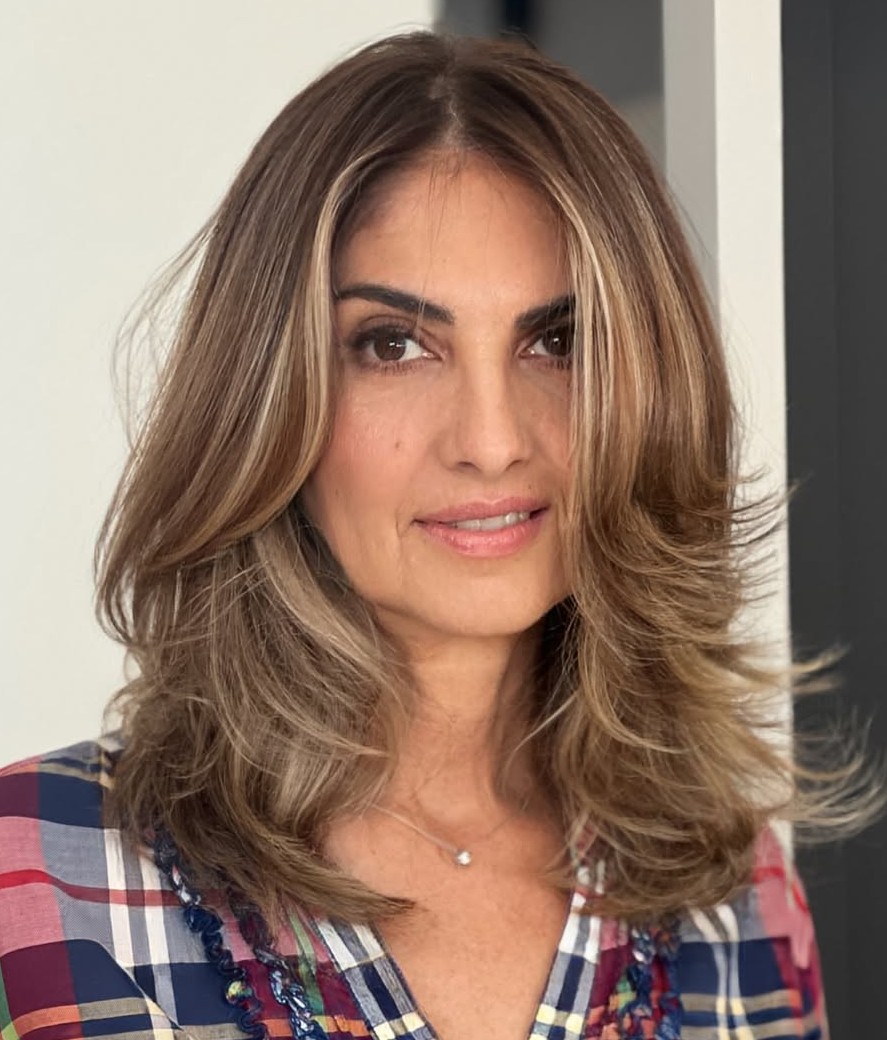
31. Long Layers with Face-Framing Pieces
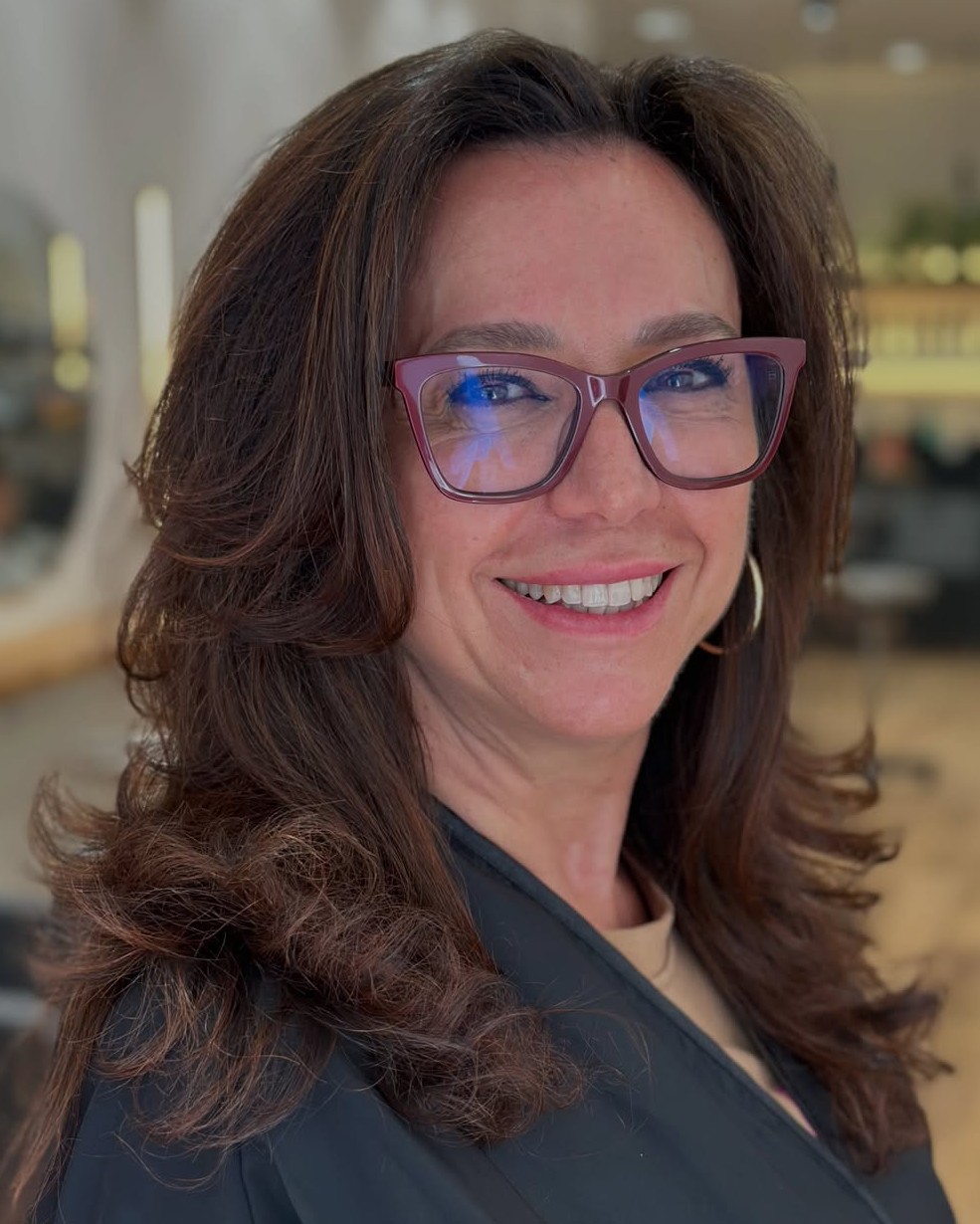
Long face-framing layers starting at cheekbone level that blend through the midsection and taper toward the ends give long hair movement and prevent the face from being dragged down by weight.
32. Beachy Waves on Long Hair
Loose waves created with a 1.25-inch curling iron, wrapped away from the face and brushed out after cooling, add texture and volume to long hair that looks flat when straight. Salt spray worked through dry hair before styling helps waves hold longer without stiffness.
33. Long Wolf Cut
A wolf cut at long length uses heavy, choppy crown layers with wispy, feathered ends. It works best on medium-to-thick wavy or straight hair with the density to support dramatic layer contrast. Ask your stylist to blend the layers carefully so there are no harsh disconnect lines.
34. Long Shag with Curtain Bangs
A shag at long length with curtain bangs immediately frames the face while keeping the body of the hair long. The layering through the crown creates movement that straight long hair rarely achieves on its own. On straight hair, this cut requires minimal styling because the layers do the visual work.
35. Sleek Straight Long Hair
A precisely cut long style blown out smooth with a flat iron works for professional and polished occasions. On fine hair, avoid over-layering, which removes weight and causes smooth blowouts to fall flat. A lightweight smoothing serum on damp hair before blow-drying controls frizz without adding weight.
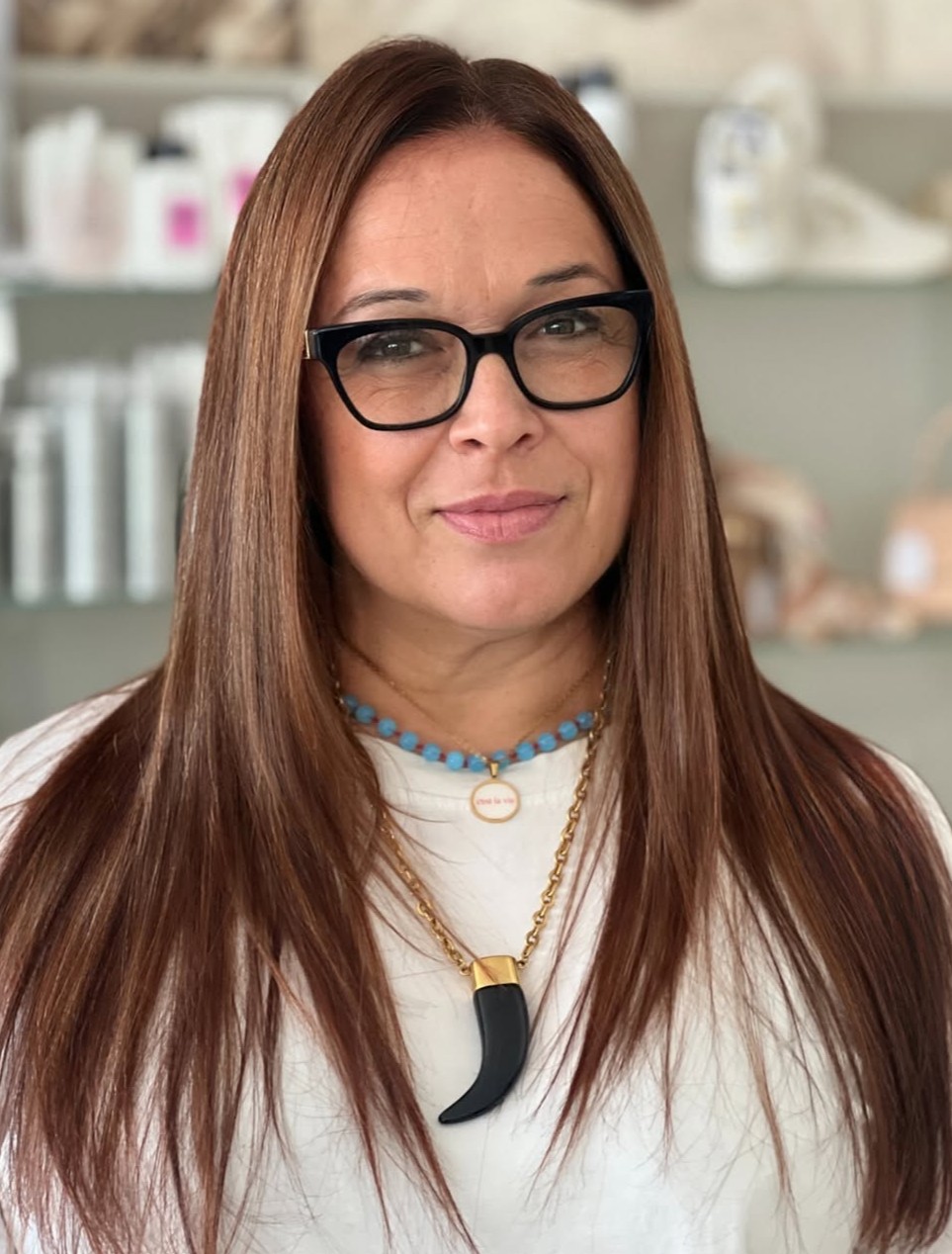
36. Romantic Soft Waves
Soft, flowing waves made with a large-barrel wand (1.5–2 inches) look natural and warm on long hair of any density. Women with naturally coarse or wiry hair get a smoother wave by using a heat protectant cream rather than a spray before styling.
37. Curtain Bangs on Long Hair
Curtain bangs on long hair are one of the lowest-commitment changes you can make. They frame the eyes, soften the hairline, and grow out gracefully into face-framing layers with no awkward intermediate stage. The most common mistake is cutting them too short; ask your stylist to start with the bangs reaching at least cheekbone level.
38. Long Curly Layers
Long curly hair needs layers that remove bulk through the midsection without thinning the ends. Dry cutting each curl individually (a DevaCut approach) preserves the coil shape and gives the most accurate result. Communicate your desired dry length to your stylist, since curly hair shrinks 20–50% depending on curl pattern.
39. Half-Up Half-Down on Long Hair
A loosely pinned half-up section at the crown keeps long hair manageable without sacrificing length and works as a polished look for occasions where hair fully down feels too casual. Keep the section loose rather than tightly pulled. It reads more current and suits a wider range of face shapes.
40. Long Hair with Balayage Highlights
Balayage painted through long layers makes hair look thicker and more dimensional. A warm caramel tone through brunette midsections or a lighter contrast through blonde mid-lengths both add depth effectively. Touch-ups every 3–4 months are typically sufficient because the grow-out blends rather than creating a hard root line.
41. Natural Gray Long Layers
Long gray hair with the right layer structure looks intentional and striking. Toning shampoo every 3–4 washes keeps silver cool and bright rather than yellow. This is a compelling option for women who want to lean into their natural color rather than maintain a color service.
42. Soft Boho Braids on Long Hair
Loose plaits or a half-up braided crown work best on long hair with some texture or natural wave. Smooth straight hair makes braids look controlled rather than relaxed. After braiding, pull individual sections slightly outward to loosen the structure and give the style an effortless finish.
43. Long Textured Layers
Heavy point cutting through long hair creates internal texture that removes bulk without shortening the overall length. The ends look deconstructed rather than blunt, and the hair moves in sections rather than as a flat sheet. This is one of the best options for thick straight hair that looks heavy at length.
44. Butterfly Cut on Long Hair
The butterfly cut uses wispy, heavily layered pieces through the crown that contrast with longer, heavier ends. It creates significant crown volume and suits oval and oblong face shapes particularly well. Ask your stylist for this by name, as the technique differs from a standard long layer cut.
45. Long Hair with a Deep Side Part and Face-Framing Layers
A deep side part with long layered hair is one of the most timeless combinations after 40. It creates a sweep across the forehead that works like a fringe without the commitment, while the layers add movement without removing length. Round and square face shapes get the most benefit from the elongating effect of this side-part fall.
How to Choose the Right Hairstyle After 40
Hair in your 40s often behaves differently than it did a decade earlier: density can decrease, texture can shift, and the hairline may change. The most flattering cut isn’t necessarily the one you’ve worn for years; it’s the one that works with your current hair, not against it.
Stylist tip: If your hair has changed texture significantly (more frizz, more wave, less body), ask your stylist to assess your current porosity before recommending a cut. High-porosity hair from years of color or heat responds differently to layering and blunt cuts than low-porosity hair does.
| Face Shape | What Works Well | What to Avoid |
|---|---|---|
| Oval | Most cuts work; great for experimenting with length and bangs | Overloading the crown with volume |
| Round | Angled bobs, deep side parts, lobs with length past the jaw | Chin-length cuts with center parts; styles that add width at the sides |
| Square | Soft layers, side-swept and curtain bangs, lengths past the jaw | Blunt cuts ending exactly at the jaw; hard horizontal lines |
| Heart | Lobs, chin-length bobs, volume at the jaw rather than the temples | Very high-volume tops; full fringes that add width at the forehead |
| Oblong/Long | Curtain bangs, waves, collarbone-length bobs, side volume | Very long straight styles with center parts |
Hair texture matters as much as face shape. If your hair is naturally wavy or curly, choose a cut that works with that texture. Cuts designed for straight hair will require daily styling on wavy hair, which defeats the purpose.
What to Tell Your Stylist
Bringing a reference photo is the single most useful thing you can do before a salon appointment. It eliminates ambiguity about length, texture, and silhouette in a way that words rarely do. Beyond the photo, three details make the biggest difference: how much daily styling time you realistically have, whether your hair texture or density has changed recently, and what specifically doesn’t work about your current cut. Stylists consistently say that last point is the most useful. Knowing what’s not working narrows down the options faster than any abstract description.
Stylist tip: If gray is growing in, mention whether you’re planning to keep coloring or transition to natural. Gray hair has a different texture than pigmented hair and can behave differently with the same cut structure.
FAQ
What hairstyles look best for women over 40 with fine hair?
Blunt or lightly textured bobs and lobs work best. The perimeter weight creates the illusion of density that heavy layering removes. A stacked bob builds volume specifically at the back to address crown flatness. Avoid razor cutting, which thins ends further; ask for point cutting or a clean scissor finish instead.
Should women over 40 avoid long hair?
No, long hair after 40 looks great when the cut has the right structure. The key is healthy ends and a deliberate shape, which usually means trims every 8–10 weeks and a layer structure that prevents the hair from looking heavy. Very long hair on fine or low-density hair can look thin at the ends; a lob or mid-back cut is often a better trade-off.
How often should I get a haircut after 40?
Short cuts like pixies and close-cropped bobs need a trim every 4–6 weeks to stay sharp; lobs and shoulder-length cuts can stretch to 7–8 weeks. Long hair can go 10–12 weeks before ends look ragged — though if you color your hair, your color schedule often drives the trim schedule anyway.
Are curtain bangs a good idea for women over 40?
Curtain bangs are one of the most forgiving fringe options at any age. They soften the hairline, frame the eyes, and grow out into face-framing layers without an awkward stage. Curtain shape works across almost all face shapes with minimal daily styling. The most common mistake is cutting them too short; keep them at least at cheekbone level.
What is the best hairstyle for transitioning to gray hair after 40?
A lob or layered mid-length cut gives your colorist room to use blending techniques to ease the transition without an obvious line of demarcation. Going shorter into a pixie or cropped bob also works and eliminates the grow-out line faster. Toning products are essential during any gray transition to keep the new growth looking polished rather than dull.
The right hairstyles for women over 40 aren’t defined by age rules — they’re defined by what works with your current hair texture, density, and how much time you’re willing to spend styling. Whether you’re drawn to something short from this collection or looking for a sharper version of the length you already have, take two or three reference photos to your next appointment and ask your stylist which one best fits your natural growth pattern and face shape. A cut adjusted to your specific hair will always outperform a copy of something you saw on someone else.
Disclaimer: This article is for informational and inspirational purposes only. Individual results may vary based on hair type, texture, density, and the techniques used by your stylist. Always consult a licensed professional before making significant changes to your hair.