

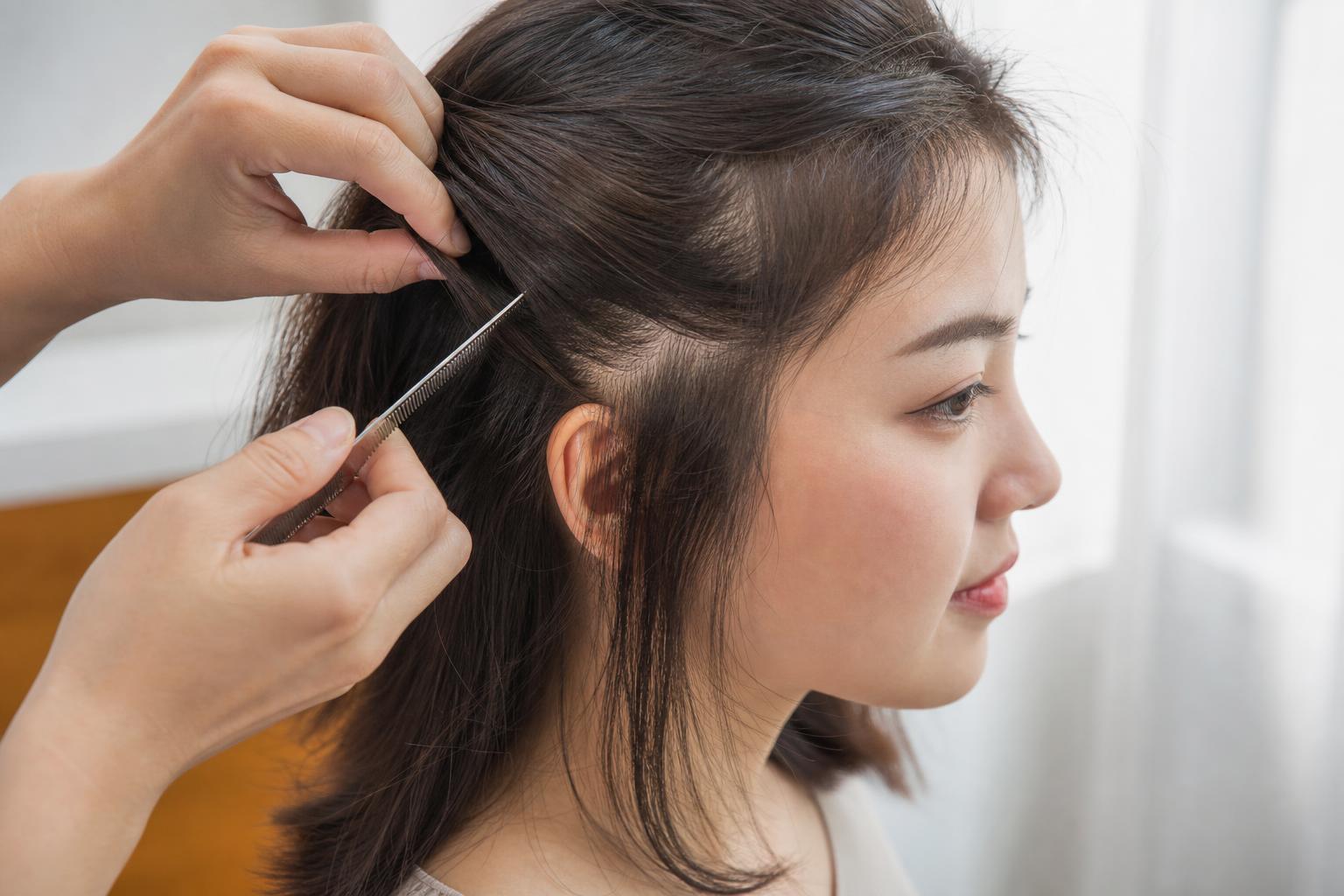
The fastest way to tell lice from dandruff is to flick a white speck with your fingernail, because a dandruff flake falls away and a nit stays glued to the hair.
Lice vs dandruff comes down to attachment and movement. Dandruff is loose flakes of scalp skin that brush off easily and scatter across the scalp and shoulders, while head lice are tiny crawling insects that lay oval eggs, called nits, cemented to the hair shaft close to the scalp. If the white specks slide off, it is almost certainly dandruff; if they refuse to budge and cluster behind the ears or at the nape, check for lice.
This guide lays out the differences side by side, walks through a two-minute check you can do at home with a comb and good light, covers the look-alikes that fool most people, and explains what to do next for each. The lice facts here come from the CDC and the American Academy of Pediatrics, so the treatment timing is the real schedule rather than a guess.
Lice vs Dandruff at a Glance
The two are easy to confuse from a distance because both leave small pale specks in the hair and both can itch. Up close they behave completely differently. Dandruff is a skin condition; lice are a parasite, and the table below covers every clue you can check without a microscope.
| Clue | Head Lice | Dandruff |
|---|---|---|
| What it is | Tiny insects that feed on blood from the scalp | Scalp skin shedding faster than normal |
| What you see | Oval, teardrop-shaped nits and sesame-seed-sized lice | Irregular white or yellowish flakes of varying size |
| Flick test | Nits stay stuck and must be slid off with a fingernail | Flakes fall or brush away easily |
| Where | Behind the ears and at the nape, close to the scalp | Spread across the scalp, often on shoulders and collars |
| Movement | Live lice crawl quickly away from light | Nothing moves |
| Itch | Often worse at the nape and behind the ears, sometimes a tickling feeling | Mild to moderate, across the scalp, often with oiliness |
| Contagious | Yes, mainly through head-to-head contact | No |
| Treated with | Lice medicine plus combing, repeated on a schedule | Antidandruff shampoo used regularly |
What Head Lice and Nits Actually Look Like
Most people expect to see lice crawling everywhere, but a typical case involves only a handful of live insects and a scattering of nits. According to the CDC’s head lice overview, adult lice are roughly 2 to 3 millimeters long, about the size of a sesame seed, and they move by crawling because they cannot hop or fly.
Nits Are Cemented to the Hair Near the Scalp
Nits are oval, about the size of a knot in a thread, and range from yellowish white to tan or coffee-colored. They are glued to the side of the hair shaft rather than resting on it, so they will not shake loose. Freshly laid nits are found close to the warm scalp. The CDC notes they take about 6 to 9 days to hatch, and nits more than a quarter inch from the scalp are unlikely to hatch or are already empty shells.
Live Lice Hide from Light and Move Fast
Adult lice and the smaller nymphs are grayish white to tan and quickly crawl away from a parted section of hair, which is why they are harder to spot than nits. An adult can live about 30 days on a person’s head but dies within two days once it falls off. First-time itching can take four to six weeks to appear, because the itch is an allergic reaction to the bites rather than the bites themselves.
What Dandruff Actually Looks Like
Dandruff flakes are irregular pieces of skin, flat rather than oval, and they vary in size from fine powder to larger yellowish scales. They rest loosely on the scalp and along the hair, fall onto dark clothing, and look worse a day or two after washing. Research on the scalp yeast Malassezia, summarized in PLoS Pathogens, links dandruff to this naturally present fungus breaking down scalp oil, which irritates the skin of sensitive people and speeds up shedding.
Dandruff is not caused by poor hygiene, and it cannot be passed to anyone else. Very small, dry, white flakes with a tight-feeling scalp often point to a different problem, and this guide on dandruff versus dry scalp explains how to separate the two.
How to Check for Lice at Home in Two Minutes
A careful look in good light answers the question for most families. You need bright daylight or a strong lamp, a fine-tooth metal lice comb, a regular comb, a little conditioner and a white paper towel. Checking on wet, conditioned hair slows live lice down and makes the comb glide.
- Seat the person in bright light and part the hair in small sections behind the ears and at the nape, where nits are most often found.
- Find a white speck close to the scalp and push it with a fingernail to see whether it slides off freely or stays stuck to the strand.
- Dampen the hair, work conditioner through it, and detangle with a regular comb.
- Pull the fine-tooth comb from the scalp to the ends one section at a time, wiping it on the paper towel after every stroke.
- Look at the towel under the light for moving lice or oval specks, using a magnifying glass if you have one.
Finding a live louse confirms an active case. Only nits far from the scalp, with no live lice after a thorough combing, usually means an old case rather than a current one, but repeat the check in two or three days to be sure.
Stylist tip: Many salons will stop a cut or color service if they spot nits, and ask you to rebook after treatment. If anyone in the house has been scratching, do this check the evening before an appointment, since it spares a wasted trip and keeps the salon’s tools out of the picture.
Other Things That Look Like Lice or Dandruff
Plenty of white specks are neither lice nor dandruff, and misreading them leads to unnecessary lice treatments that dry out the scalp. Run through these look-alikes if your speck does not quite match either description.
- Hair casts: small white tubes of scalp material that wrap around the strand and slide up and down it easily, unlike a nit glued to one side.
- Product residue: dried hairspray droplets, gel flakes and dry shampoo powder look like dandruff but crumble between your fingers and wash out completely.
- Scalp psoriasis: thick, silvery scales on red patches that often extend past the hairline, which this guide to scalp psoriasis and dandruff helps tell apart.
- Dry scalp: fine, powdery flakes with tightness and no oiliness, usually worse in cold, dry weather.
- Sand, lint and debris: irregular specks that fall out with normal brushing.
What to Do If It Is Lice
Treat only people with live, crawling lice or nits within a quarter inch of the scalp, and follow the product label exactly. The CDC treatment guidance gives a clear sequence that most failed treatments skip part of.
- Do not use conditioner or a two-in-one shampoo before applying lice medicine, because it can stop the medicine from reaching the lice.
- Comb the hair and remove nits and lice every two to three days for the next two to three weeks.
- Retreat about a week after the first treatment, at 7 to 9 days depending on the product, if the medicine does not kill eggs.
- Machine wash bedding, hats and clothing used in the two days before treatment in hot water at 130 degrees Fahrenheit, then dry on high heat.
- Seal items that cannot be washed in a plastic bag for two weeks, and soak combs and brushes in hot water for 5 to 10 minutes.
- Skip fumigant sprays and foggers, which the CDC warns can be toxic, and do not worry about pets, since animals do not spread head lice.
The American Academy of Pediatrics’ 2022 clinical report on head lice keeps over-the-counter pyrethroid products as the first choice when medicine is needed, and advises that children should not be kept out of school because of head lice. If two correctly timed treatments fail, call a pediatrician or doctor about prescription options.
What to Do If It Is Dandruff
Dandruff responds to a shampoo with an antifungal or cell-slowing active ingredient, such as zinc pyrithione, selenium sulfide, ketoconazole, salicylic acid or coal tar. Leave the lather on the scalp for three to five minutes before rinsing, and use it two to three times a week until the flakes settle, then once a week to keep them away. This rundown of dandruff shampoo ingredients explains which active suits oily or sensitive scalps, and the full plan to get rid of dandruff for good covers what to do when one shampoo stops working.
Stylist tip: Do not reach for a lice product to treat flakes just in case. Lice treatments do nothing for dandruff, and several leave the scalp drier and flakier, which makes the next check even harder to read.
Common Lice and Dandruff Myths
Stigma around both conditions keeps some unhelpful beliefs going. These four cause the most confusion and wasted effort.
Myth: Only Dirty Hair Gets Lice
Reality: Lice spread through head-to-head contact and have nothing to do with how often hair is washed. Freshly washed hair gets lice just as easily, which is why outbreaks are common among young children who play close together.
Myth: Dandruff Is Contagious
Reality: Dandruff cannot spread through shared brushes, hats or pillows, because it comes from how an individual scalp reacts to yeast that nearly everyone carries. The details are covered in whether dandruff can spread.
Myth: Lice Can Jump from One Head to Another
Reality: Lice only crawl. They move between heads during direct contact and, less often, through shared hats, combs, towels or bedding.
Myth: An Itchy Scalp Means Lice
Reality: Itching has many causes, including dandruff, dry skin, product sensitivity and eczema, and a first lice case can take weeks to itch at all. Always look for nits or live lice before treating.
When to See a Doctor Instead
Home checks and over-the-counter products handle most cases, but some signs need a professional look.
- Open sores, crusting or swollen lymph nodes at the back of the neck, which can mean infected scratches.
- Lice still crawling after two properly timed treatments.
- Thick scales, red patches or flaking that spreads to the face, ears or body.
- Flakes with hair loss or a scalp that is painful to touch.
- Lice or nits in the eyelashes or eyebrows, which need a different treatment than the scalp.
FAQ
Can You Have Lice and Dandruff at the Same Time?
Yes, the two are unrelated, so a person with dandruff can pick up lice like anyone else. Flakes make nits harder to spot, so rely on the flick test and a fine-tooth comb rather than a quick glance. Treat the lice first, then return to an antidandruff shampoo once combing is finished.
Will Dandruff Shampoo Kill Lice?
No, antidandruff shampoos are not designed or approved to kill lice or their eggs. Using one on a lice case only delays proper treatment. Use a product labeled for head lice and follow its retreatment timing.
How Long Can Lice Live on a Pillow or Hat?
Adult lice usually die within two days once they are off a human head, according to the CDC. Nits generally cannot hatch away from scalp warmth. That is why washing bedding and clothing from the two days before treatment is enough, with no need to deep-clean the whole house.
What Do Nits Look Like Compared to Dandruff?
Nits are uniform oval specks about the size of a knot in a thread, fixed to one side of a hair near the scalp. Dandruff flakes are flat, irregular in shape and size, and lift away with a touch. Under a magnifying glass, a nit has a smooth, shiny shell while a flake looks papery.
Can Adults Get Head Lice?
Yes, adults get head lice, most often parents and caregivers of school-age children. The check and treatment steps are the same as for children. Check everyone in the household when one person has lice, and treat only those with live lice or nits close to the scalp.
Why Does My Scalp Itch If I Do Not Have Lice or Dandruff?
An itchy scalp with no flakes or nits often comes from product buildup, a reaction to fragrance or hair dye, dry skin or tension from tight styles. Switching to a fragrance-free shampoo for two weeks helps narrow it down. This guide to itchy scalp causes walks through the rest.
Sources
- Centers for Disease Control and Prevention: About Head Lice
- Centers for Disease Control and Prevention: Treatment of Head Lice
- American Academy of Pediatrics: Head Lice Clinical Report, Pediatrics 2022
- PLoS Pathogens: Malassezia Fungi and Their Association with Dandruff
Telling lice vs dandruff apart takes one good light, a fingernail and a fine-tooth comb: loose flakes point to dandruff, while specks glued near the scalp or anything that crawls point to lice. Match the treatment to what you actually find, follow the retreatment schedule if it is lice, and see a doctor if the signs do not fit either one. More scalp and flake guides are gathered in our hair care section.
This article is for general information and is not a substitute for medical advice. Hair and scalp results vary based on your natural hair type, texture, density, and condition. Consult a doctor or pharmacist about lice treatments for young children, during pregnancy, or if symptoms persist, and consult a licensed hairstylist before making significant changes to your hair.


1 response