

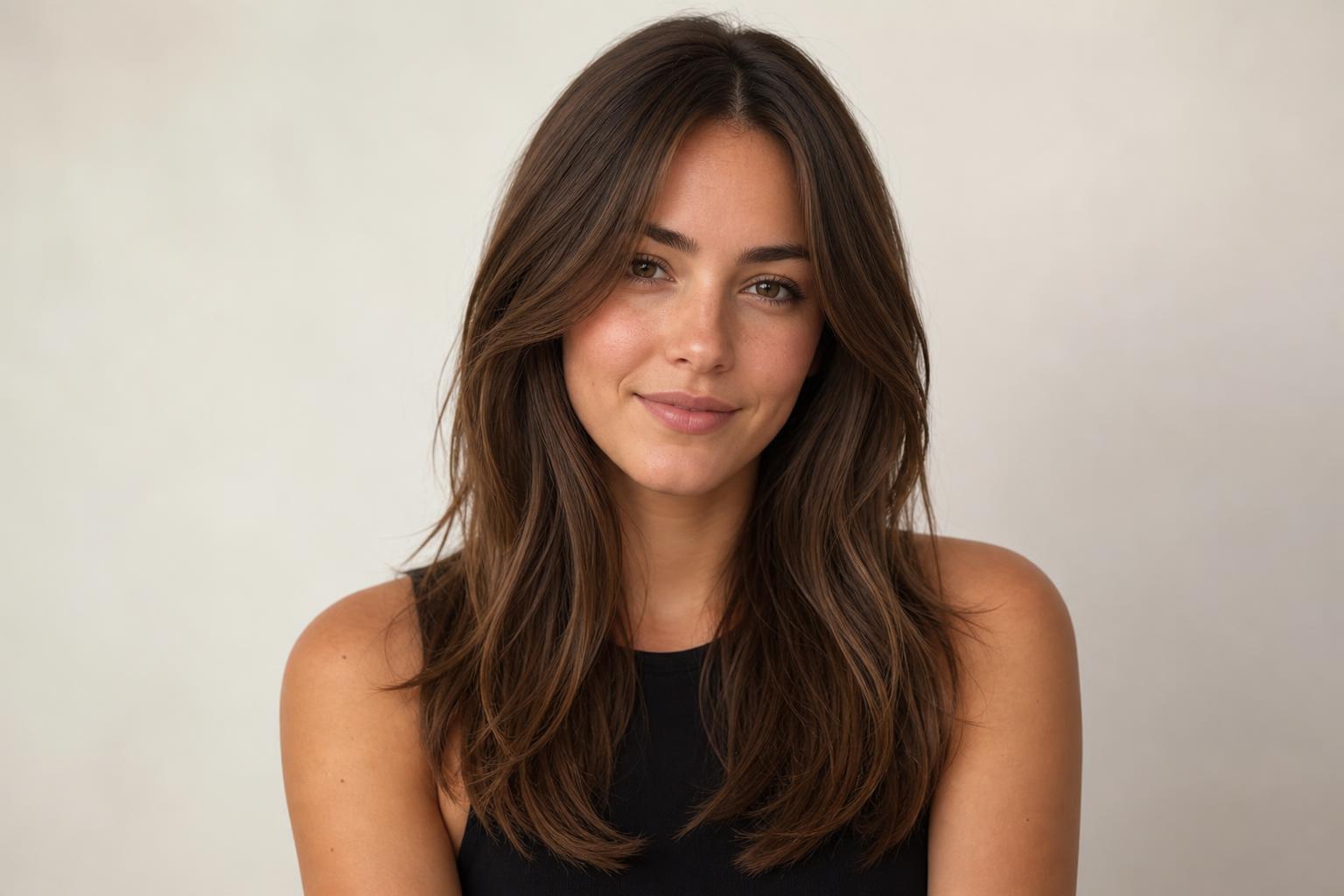
Short layers and long layers have nothing to do with how long your hair is, which is why so many people ask for the wrong one.
The words describe how high on your head the shortest piece is cut. Short layers start high, often around the cheekbone or eye line, and leave a big gap between the shortest and longest hair. Long layers start low, usually below the chin or at the shoulder, so the gap is small and the change is subtle. You can have short layers in waist-length hair and long layers in a bob, which is the part that confuses almost everyone.
This comparison covers what each one does to volume and movement, which hair types and densities suit which, how the two grow out, why most well-cut heads use a mix of both, and the exact wording that gets you the version you want. There is also a section on when short layers are the wrong call, since that is where most layering regret starts.
| Feature | Short Layers | Long Layers |
|---|---|---|
| Where the shortest piece falls | Cheekbone to chin | Collarbone to mid-back |
| Main effect | Volume and lift at the crown | Movement and swing at the ends |
| Effect on the outline | Softens and breaks up the perimeter | Keeps the perimeter dense and clean |
| Best hair density | Medium to thick | Fine to medium |
| Daily styling | 10 to 20 minutes, product usually needed | 5 to 10 minutes, often air-dries well |
| Trim frequency | Every 6 to 8 weeks | Every 10 to 14 weeks |
| Grow-out | Visible and awkward from week 8 | Blends quietly, rarely noticeable |
| Ponytail behavior | Short pieces escape around the face | Gathers cleanly |
Layer Length Describes Elevation, Not Hair Length
When a stylist cuts layers, they lift a section of hair away from the head at an angle and cut across it. The higher that angle, the shorter the top pieces end up compared to the bottom ones. Short layers come from high elevation and produce a big gap between the shortest and longest hair on your head. Long layers come from low elevation and produce a small gap. Neither term says anything about your overall length, which is set entirely by where the perimeter is cut.
That gap is the whole story. A wide gap means the weight has been taken out high up, so the hair underneath has less pressing down on it and springs up. A narrow gap means the weight stays low, so the hair keeps its full outline and only the last few inches move. Every effect people attribute to layering, from crown volume to swishy ends, traces back to where that gap falls on your head.
Stylist tip: Ask your stylist to hold up the shortest piece and show you exactly where it falls against your face before they cut the rest. Thirty seconds of that beats any amount of describing, and it is the only way to be sure you and your stylist mean the same thing by “short.”
Short Layers Build Volume by Removing Weight High on the Head
Cut a section at the crown to cheekbone length and you have removed a serious amount of weight from the top of the head. The hair left behind lifts at the root, the shorter pieces flick out slightly at their ends, and the whole shape becomes rounder and fuller through the upper half. This is the mechanism behind shags, wolf cuts, and butterfly cuts, all of which rely on short interior pieces to create their silhouette.
The trade-off is control. Short layers need product and usually need heat to behave, because the shorter pieces have their own opinion about which direction to go. They also expose your hair’s growth patterns, so a cowlick at the crown or a strong wave on one side becomes far more obvious than it was under a heavier cut. Thick hair benefits most, since the weight removal is doing real work, and the shaping options in our guide to layered cuts for thick hair show how far that can be taken before the shape starts widening.
Long Layers Remove Weight Low and Keep the Outline Heavy
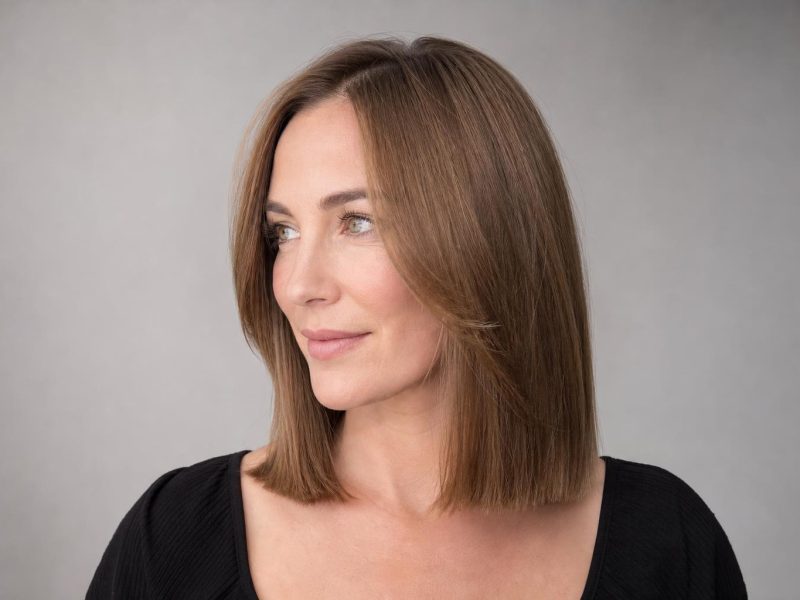
Long layers take the shortest piece down to the collarbone or below, so the top of the head keeps all its weight and only the lower portion is opened up. The result is a cut that still looks like one length from a distance but moves in sections when you turn your head. Nothing about the outline changes, which is why long layers are the safe first step for anyone who has never had layers before.
Fine hair is the main beneficiary. Because the perimeter stays dense, the ends still look full, and the small amount of movement added higher up keeps the cut from looking flat. The classic pairing is long layers with a soft fringe, and long layers with curtain bangs is the version most people are actually picturing when they say they want their hair to look like it does in the shampoo commercial.
Most Good Haircuts Use Both at Once
Here is the part the comparison articles miss. Almost no professional cut is purely one or the other. A skilled stylist will place short layers where volume is needed, usually the crown and the pieces around the face, and long layers everywhere else so the perimeter stays strong. What you are really choosing is the ratio, not the category.
This matters for the consultation. Asking for “short layers” as a blanket instruction can produce short pieces all the way around the head, including at the nape where they will stick out and refuse to blend. Asking for short layers “at the crown and around the face only, with long layers through the back” gets you the volume without the fallout. Cuts built on that mix behave differently in the mirror than a uniform layering job does, which is one of the reasons a shag and a standard layered cut feel so different to live with even at the same length.
Match the Layer Height to Your Density and Texture
Density decides how much weight there is to remove and texture decides how the hair behaves once it is gone. Getting both right matters more than face shape, because a layer height that fights your density will look wrong from every angle regardless of how well it frames your face.
| Hair Type | Better Choice | Why | What Goes Wrong Otherwise |
|---|---|---|---|
| Fine and low density | Long layers, kept minimal | Keeps the perimeter dense so the ends still look full | Short layers leave the ends stringy and the ponytail thin |
| Fine but high density | A mix, short at the crown only | Lots of individual strands need shaping without losing the outline | All-over long layers leave the shape heavy and helmet-like |
| Medium and wavy | Either, depending on the look | Enough body to hold a short layer and enough weight to carry a long one | Layers cut too evenly can flatten the natural wave pattern |
| Thick and coarse | Short layers, weight removed internally | Bulk has to come out somewhere or the shape triangles | Long layers alone leave a heavy pyramid with movement only at the tips |
| Curly, 3a to 3c | Short layers, cut dry | Curls need separation to stop them stacking on each other | Long layers on curls collapse into one solid mass with no shape |
| Straight and slippery | Long layers with point-cut ends | Straight hair shows every line, so soft edges matter more than height | Short layers create visible steps that cannot be styled away |
Face Shape Changes Where the Shortest Piece Should Land
Face shape does not decide short versus long, it decides height. Once you know which category suits your density, the face shape question is only about where the front pieces begin, because that is what the eye actually notices. Everything behind the ear is a texture decision rather than a framing one.
Round and full faces do better with the shortest front piece below the jaw, since anything landing level with the cheek adds width exactly where you do not want it. Long or oblong faces benefit from the opposite, with front pieces starting around the cheekbone to break up the vertical line and build width across the middle of the face. Square jaws soften when the front pieces are angled back and start just below the jaw corner, while heart-shaped faces want the fullness built low, around the chin, to balance a wider forehead. If you are unsure of your density as well as your shape, our guide to choosing a cut by hair density is the better starting point, because density is the constraint that overrides face shape when the two disagree.
Grow-Out Is the Real Difference in Daily Life
Both cuts look good the day you get them. What separates them is what happens in month two and month three, which is when most people decide whether they liked the haircut. Short layers announce themselves as they grow, because the gap between the shortest and longest hair stays wide while everything slowly drops into an in-between length. Long layers vanish gracefully, since the gap was small to begin with.
| Timeline | Short Layers | Long Layers |
|---|---|---|
| Weeks 1 to 6 | Best phase, maximum lift and separation | Soft movement, very little styling needed |
| Weeks 7 to 12 | Crown flattens, front pieces lose their angle | Barely changed, still holds its shape |
| Months 4 to 8 | Awkward middle stage, pieces hang without purpose | Blends into one length on its own |
| Cost per year | Roughly 7 to 8 appointments | Roughly 4 to 5 appointments |
Stylist tip: If you are between the two, ask for long layers first and book a follow-up four weeks later to go shorter if you want more. You cannot put hair back, and a second appointment costs less than eight months of growing out a layer height that did not suit you.
When Short Layers Are the Wrong Choice
Short layering is the more dramatic of the two and it fails in specific, predictable ways. Choose long layers instead when any of these apply.
- Your hair is fine and low density, since removing weight high up leaves the ends looking sparse rather than light.
- You are growing your hair out, because a short crown layer resets the clock on reaching one length.
- You wear a ponytail most days, as the short pieces will escape it and hang around your face by mid-morning.
- You have a strong cowlick at the crown or hairline, which short layers expose rather than control.
- You have five minutes for hair in the morning and no interest in a round brush, since short layers rarely air-dry into a finished shape.
There is one more honest caveat about how the layers are cut rather than where. Thinning shears used to soften a short layer create split, frizzy regrowth that shows up around week six, and a razor does something similar on hair that is dry or coarse. The differences between a razor cut and a scissor cut matter more on short layers than on long ones, because the shorter piece has less length below it to hide a rough edge.
What to Tell Your Stylist
Skip the words short and long entirely and name a landmark instead. Say, “I would like the shortest layer to finish at my collarbone, with everything blended down from there,” or, “I want the shortest piece around my cheekbone at the front, staying long through the back.” Then add what you want it to do, since volume and movement call for different techniques even at the same height.
Two more clauses are worth having ready. Ask for point cutting on the ends rather than a blunt line, which softens the transition between layers and keeps the cut from looking stepped. And say how much time you spend styling, honestly, because a stylist who knows you air-dry will cut a different layer height than one who assumes you blow-dry daily. A browse through the women’s haircut galleries before you book gives you the reference photos that make the rest of the conversation easy.
FAQ
Common questions about choosing between the two layer heights.
Do Short Layers Make Hair Look Thinner?
They can, on fine or low-density hair, because removing weight high on the head leaves less hair filling out the perimeter. On thick hair the effect is the opposite, since the bulk that was making the shape wide comes out and the cut looks lighter and better balanced. The deciding factor is density rather than the layers themselves.
Can I Have Short Layers in Long Hair?
Yes, and it is one of the most common combinations in salons right now. Waist-length hair with a short layer starting at the cheekbone is essentially what a butterfly or octopus cut is. The overall length stays exactly where it was while the interior does all the shaping work.
Which Layers Are Better for Curly Hair?
Short layers usually win on 3a and tighter patterns, because curls need vertical separation or they stack on top of each other and form a triangle. The key condition is that the cut is done on dry hair, so the stylist can see where each curl actually falls. Long layers on curls tend to disappear entirely once the hair shrinks.
How Do I Fix Short Layers I Regret?
You cannot shorten the wait, but you can shorten the awkward phase by having the perimeter trimmed slightly every ten weeks so the gap between the layers closes faster. Face-framing pieces can also be reshaped into a curtain fringe, which gives the short pieces a job while they grow. Expect six to twelve months for a cheekbone-length layer to reach collarbone length.
Are Long Layers the Same as Face-Framing Layers?
No, though they often appear in the same haircut. Long layers describe the layer height through the whole head, while face-framing is a separate cut applied only to the front sections around the face. You can have long layers with no face-framing at all, or face-framing on otherwise one-length hair.
Which Option Holds a Blowout Longer?
Long layers hold longer because there is more weight keeping the hair in position, and fewer short pieces to fall out of the shape. Short layers give you a better first day, with more volume and more visible movement, then drop faster. If you blow-dry twice a week and want it to last, the weight of a longer layer is on your side.
Choosing between long layers and short layers comes down to how much weight your hair can afford to lose and how much time you will spend styling what is left. Name a landmark on your body rather than a category, ask for the mix rather than one extreme, and start longer than you think you want. Hair only moves in one direction between appointments, so the conservative version is the one you can always shorten.
Hair results vary based on your natural hair type, texture, density, and condition. Always consult with a licensed hairstylist before making significant changes, especially with chemical treatments or dramatic length changes. Photos may show styled results that require professional tools and products to replicate.


1 response