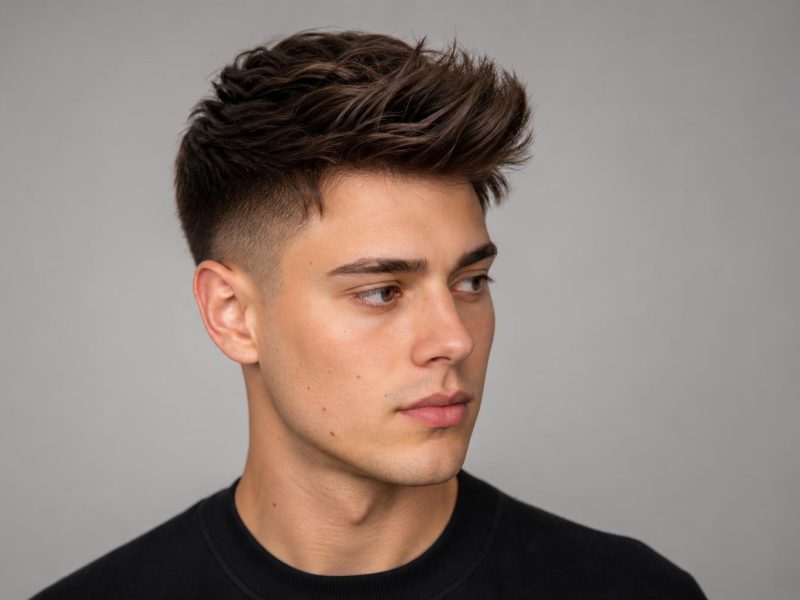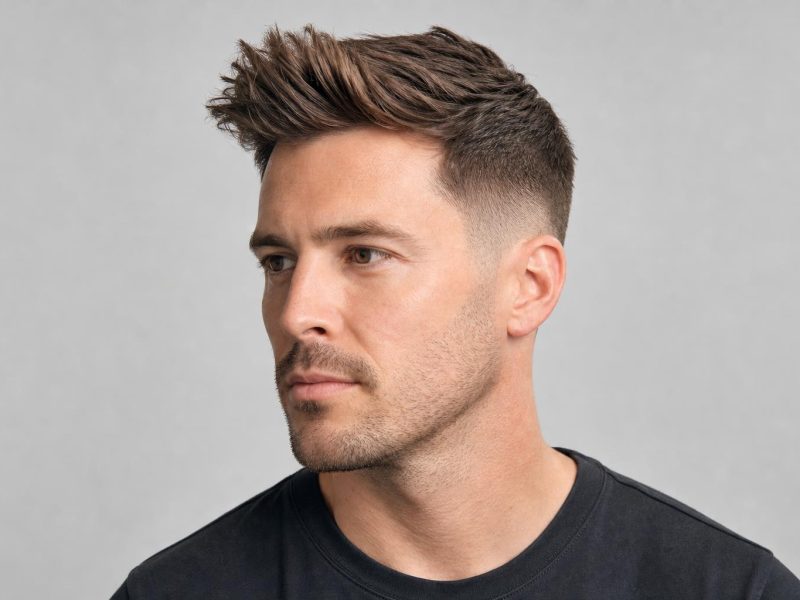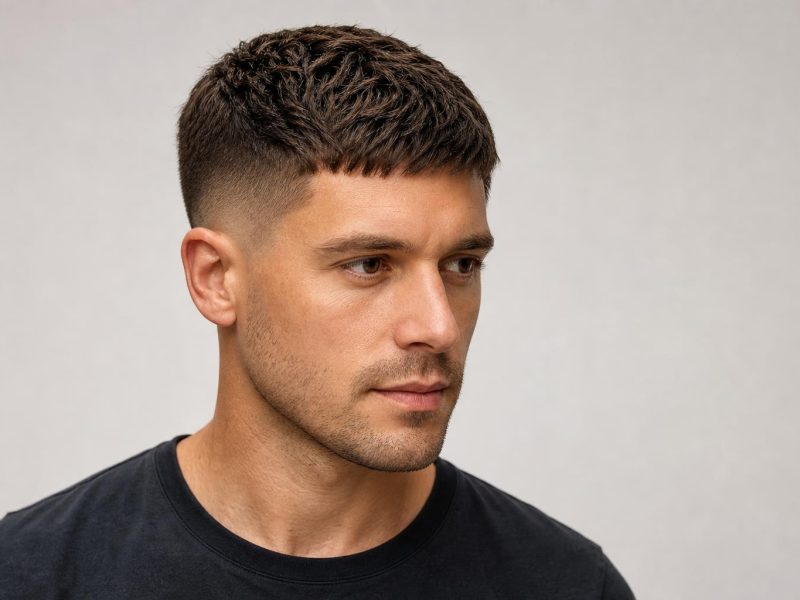

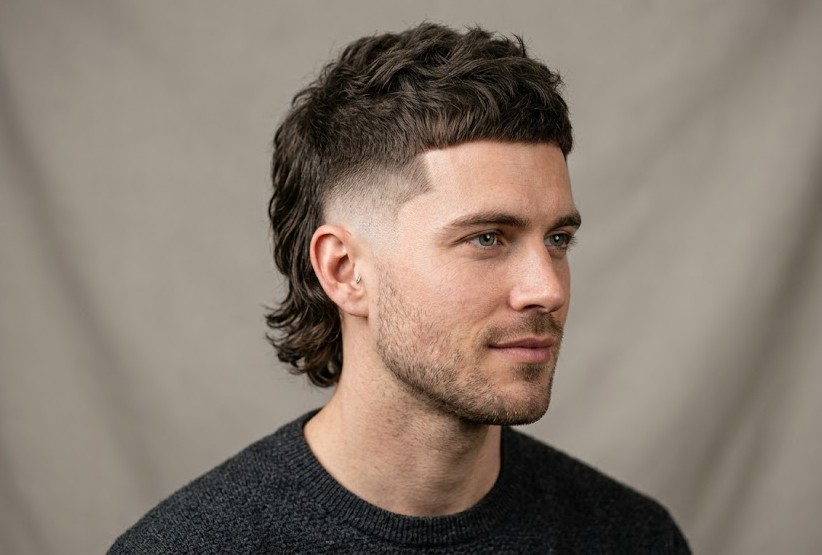
The mullet fade is the men’s haircut that won’t apologize for itself — and in 2026, it’s the sharpest, most technically refined version the cut has ever been.
A modern mullet fade keeps length at the back while using a fade — low, mid, high, skin, burst, or drop — to clean up the sides and create deliberate contrast rather than the blunt, shapeless silhouette of the classic version. The result looks intentional and, depending on the variation, can work at a desk job or a festival equally well. Below are 30 stylist-approved modern mullet fade styles organized by fade type, back length, and texture — with face shape guidance, honest maintenance expectations, and the exact language to use at your next barber visit.
This gallery covers every major fade type (low taper, mid taper, high taper, skin fade, burst fade, and drop fade) paired with different back lengths, textures, and detail work. A face shape compatibility table, a comparison between the most-confused fade combinations, and a barber script section follow the gallery.
| Factor | Details |
|---|---|
| Best for | Oval, oblong, diamond, and square faces; straight, wavy, or curly hair; medium to thick density |
| Maintenance | Fade refresh every 2–5 weeks; back shape trim every 6–8 weeks |
| Works with | Straight, wavy, curly, coily, and textured hair; medium and thick density |
| Avoid if | Very fine, low-density hair; round faces without height-adding top detail |
| Salon time | 50–90 minutes depending on fade type and back length |
Low Taper Mullet Fades
A low taper starts at or just above the ear and blends down toward the neckline, leaving noticeably more hair on the sides than a mid or high fade. It produces the least visual contrast of any fade type, which makes it the most practical mullet variation for workplaces that stop short of banning the cut entirely. The back length still reads as a mullet, but nothing about the sides signals that you’ve gone all in. If you’re committing to the mullet for the first time, this is where to start — you’re not locked into anything extreme, and it grows out with minimal awkwardness.
1. Low Skin Taper Mullet
The sides fade to skin starting just above the natural hairline, while the back maintains 3–5 inches of length that can be left natural or styled with a small amount of matte clay. The transition is gradual — nothing aggressive — and the contrast comes from the back length rather than the harshness of the fade. Works on oval and oblong faces, where the extra back length doesn’t shorten the visual profile.
2. Low Taper Textured Mullet
Scissor work on the top and through the crown creates defined, separated pieces rather than a smooth surface, giving the low taper enough visual interest to hold attention alongside the longer back. Barbers typically point-cut the top to remove bulk without losing length, which is the right move on medium to thick hair — without it, the top lays flat and the proportions look off. A sea salt spray worked into damp hair and diffused gives this version its best result.
3. Low Taper Mullet with Line-Up
A crisp lineup — a straight edge razor line across the forehead hairline — elevates a low taper from casual to precise. It works especially well on straight or slightly wavy hair where the forehead line is naturally clean and easy to define. Square and diamond faces benefit most here, because the horizontal line at the forehead reinforces strong angular features. Ask your barber for a “straight line-up, not arched” if you have a wide forehead.
4. Low Taper Mullet with Fringe
The top is left longer toward the front to create a textured fringe — not blunt bangs, but a pushed-forward or side-swept section that adds softness at the forehead. This pairs naturally with the low taper because neither element is extreme, and together they produce a look that reads as deliberately styled rather than accidental. Round faces need to avoid a full blunt fringe here — a slightly side-swept version prevents extra width at the temples.
5. Low Drop Taper Mullet
A drop taper curves downward behind the ear rather than running flat around the head, following the natural shape of the skull and creating a subtle arc that flows into the back. It’s the gentler sibling of the drop fade — same curve, less contrast. Men with longer head shapes (oblong faces) find this variation particularly good because the curved line at the sides breaks up the straight vertical of an oblong profile. Very natural-looking once grown out slightly, which makes maintenance forgiving.
Mid Taper and Mid Fade Mullet Styles
The mid fade or mid taper starts at the temple, roughly halfway up the head, which creates noticeably more contrast between the clean sides and the length on top and through the back. This is the sweet spot for most mullet fade requests — enough structure to look intentional, enough restraint to remain wearable across different settings. Most barbershop mullet requests land here by default, which means you need to be specific about whether you want a soft blend (taper) or a defined skin-level line (mid skin fade).
6. Mid Skin Fade Mullet
The fade goes to bare skin at mid-temple height, creating a sharp horizontal threshold where clean sides meet the textured length above. This is the version most guys picture when they search for a modern mullet — high contrast, clearly structured, and still tidy enough for most environments. Skin at the sides requires a refresh every 2–3 weeks before regrowth softens the edge, so budget the upkeep into your decision. It suits oval and square faces best; round faces need the top to carry more volume to avoid the fade making the head look wider.
7. Mid Taper Mullet with Defined Nape
Rather than letting the back grow out naturally, the neckline is shaped — either squared off for a structured finish or V-pointed for a slightly edgier look. Either way, the defined nape turns the back of the head into a deliberate feature rather than a shapeless extension. Ask your barber which shape suits your natural neckline growth pattern, because a squared neckline on a V-shaped natural hairline requires frequent touching up, while following the natural line keeps maintenance simpler.
8. Mid Fade Mullet, Short Back
The back stays at 1.5–2 inches rather than the longer flow of most mullet variations — this is the entry point for men who want the mullet structure without committing to dramatic back length. It grows out as a natural mid-length mullet over 6–8 weeks, so it’s also a useful transition cut for men deliberately growing toward a longer version. The proportions work well on shorter men because the back length doesn’t visually compress the figure the way longer versions can.
9. Mid Taper Mullet with Textured Top
Layers through the crown and through the top of the back create a split between the cleaned-up sides and the textured upper section that has its own movement. The trick barbers use here is graduating the layering so it’s heaviest at the crown and lightens toward the tips of the back, which creates volume at the top without the back looking weighed down. If your hair grows densely, ask your stylist to use thinning shears through the mid-lengths rather than just the tips.
10. Mid Fade Mullet with Edgar Fringe
A blunt, horizontal fringe cut across the forehead at roughly mid-forehead height — the Edgar cut’s signature — combined with a mid fade and mullet back creates a high-contrast geometric look that is heavily associated with Gen Z barbershop culture. The blunt fringe and sharp fade together form strong horizontal lines that help wide or round faces look balanced. Keep the fringe length consistent — it requires a touch-up every 3–4 weeks before it starts to lose its defining line.
High Taper and High Fade Mullet Styles
A high taper or high fade starts near the temples and climbs toward the crown, leaving only the upper section of the head with full hair. This produces the most dramatic silhouette of the straight-line fades — wide sides, full top, long back — and it’s a confident choice that doesn’t hide what it is. High fades on a mullet require the top to do real work visually: if the crown is flat or the back doesn’t have enough body, the sides being so short leaves no middle ground to save the proportions. This is not the variation for men with very fine hair.
11. High Skin Fade Mullet
Bare skin runs from above the ear up toward the lower crown, with the division between shaved and full hair sitting high on the head. The back flows from this full upper section into 3–6 inches of length, creating maximum contrast. This is the most visually striking version of the mullet fade and also the most maintenance-intensive — skin shows regrowth within 7–10 days, and an unrefreshed skin fade looks significantly worse than any other grow-out. Weekly edge trims between full appointments are the reality.
12. High Taper Mullet, Fluffy Top
Volume-focused cutting through the crown — texturizing shears removing weight without removing length — produces an airy, lifted top section that contrasts deliberately with the tight sides. The result is what gets called “fluffy” in barbershop shorthand: soft, rounded, high-volume rather than structured and piece-y. Medium to thick hair does this naturally; fine hair needs a volumizing mousse applied at the roots before blow-drying upward. It works well on oblong faces where the added width at the crown softens a narrow profile.
13. High Taper Mullet with Long Back Flow
The back extends to 4–7 inches — past collar-touching territory — which fully commits to the “party in the back” ratio the cut was always built around. The high taper makes the contrast between the short sides and the flowing back as pronounced as possible without going to skin. This version needs layers through the back to avoid bulk; without layering, the back section lies flat and heavy rather than moving. Point cutting through the back perimeter gives the ends lightness and prevents a blunt horizontal line that dates the look.
14. High Taper Mullet with Waves
360 waves through the top section, produced by brushing, moisturizing, and durag compression, sit above tight high-tapered sides and feed into the mullet back. This is technically demanding — the crown waves and the back length require separate care routines, because the back needs moisture and leave-in while the wave section needs wave-specific brushing and a pomade that doesn’t flake. It suits men with naturally coarse or medium hair that can hold a wave pattern; fine hair won’t compress into defined waves regardless of technique.
Burst Fade Mullet Styles
The burst fade is the most visually distinctive fade type available for a mullet. Instead of a horizontal taper line running around the head, it follows a semicircular arc around the ear — imagine the fade radiating outward from the ear like a sunburst. The shape is curved, which preserves weight and length behind the ear and directs the eye naturally toward the longer mullet back. It pairs especially well with curly and wavy hair, where the natural texture behind the ear integrates seamlessly into the back length.
15. Low Burst Fade Mullet
The burst arc stays close to the ear and doesn’t climb high on the side, creating a subtle semicircle that is noticeable up close but reads as a clean, natural shape from a distance. This is the burst fade variation that works in conservative environments — the structure is there, but it doesn’t demand attention. Good starting point for men new to the burst fade who want to see how the curved shape works with their head proportions before committing to a more dramatic version.
16. Mid Burst Fade Mullet
The arc rises to mid-ear level and the fade contrast is more defined, creating a clearly visible curved boundary between the tight fade and the fuller upper section and back. This is the most popular burst fade mullet variation — prominent enough to be a deliberate aesthetic choice, restrained enough to work across most settings. Oval and diamond faces read particularly well with the mid burst because the curve around the ear naturally emphasizes defined cheekbones.
17. High Burst Fade Mullet
The semicircle climbs above mid-ear toward the crown, leaving only the upper section of the head with full hair and creating a pronounced curved temple-to-back silhouette. From the front, the effect is dramatic; from the side or back, the full volume of the top and back is visible above a clean arc. This version suits men with strong head shapes — prominent crown, defined cheekbones — because the tight sides expose the skull shape completely. Asymmetric or flat head shapes become more visible with this degree of fade.
18. Burst Fade Mullet, Curly Natural Back
The back is left to fall in its natural curl or coil pattern rather than blown out or straightened — the curl texture becomes the primary visual feature of the back section. The burst arc keeps the sides clean and defined without chopping off the curl volume behind the ear, where the transition from fade to natural curl feels organic rather than forced. Ask your barber to detangle and stretch the back before making any length decisions; wet curls sit 30–50% shorter than their dry length, and cutting to the wrong length wet is one of the most common mullet mistakes on curly hair.
19. Burst Fade Mullet with Shaved Design
A razor line, geometric shape, or part line is shaved into the fade arc — common placements are a hard part above the ear, a curved line that follows the burst arc itself, or a geometric detail at the temple. This takes the burst fade from a clean cut to a statement piece, and it reads best on men who already wear bold clothing and aren’t trying to use the haircut to fit in. Designs fade out faster than the rest of the cut — most designs need touching up within 2 weeks — so the maintenance reality is more frequent barber contact than a plain burst fade requires.
20. Burst Fade Mullet with Beard Blend
The burst fade at the sideburn is tapered to connect cleanly into a beard, either by fading the sideburn into stubble and then into full beard, or by running a hard line between the fade and the beard perimeter. This requires the barber to work the fade and the beard in one session — mention it before the cut starts, because the starting height of the fade changes based on where the beard begins. Men with round faces benefit from ensuring the beard adds length below the jaw, which a fade-into-beard setup helps emphasize.
Drop Fade and Skin Fade Mullet Styles
A drop fade curves downward behind the ear, following the natural skull shape, rather than maintaining a flat horizontal line around the head like a standard taper. The curve “drops” toward the nape on each side, which creates an arc that frames the back of the head and emphasizes the transition into the mullet’s back length. A skin fade at any height takes the base color to bare skin at its lowest point, maximizing contrast. Both are high-impact options that reward men with naturally defined head shapes.
21. Drop Fade Mullet, Medium Back
The drop fade curves behind the ear and the back is left at 2.5–4 inches — enough to register as a mullet without being a commitment to long-hair territory. The curved neckline created by the drop fade makes the back section look more intentional than a standard horizontal taper would, because the curve follows the skull rather than running against it. Men with oblong faces find that the drop fade’s curved neckline softens the vertical length of their profile more effectively than a flat taper line.
22. High Skin Fade Drop Mullet
The skin fade reaches up to the upper portion of the sides and then curves down behind the ear via the drop pattern, before the full back length emerges below the nape. This combination creates a sculpted frame around the back of the head that draws the eye directly to the mullet’s length. It is the most technically demanding variation in this gallery — a barber who rushes the curved blend leaves visible lines where the skin-fade zone meets the drop transition — so a 60–75 minute appointment minimum is appropriate.
23. Drop Fade Mullet, Natural Wavy Back
Wavy hair is left to follow its natural movement through the back, which adds body without requiring styling time — the wave texture does the visual work on its own. The drop fade keeps the sides and nape clean, so the waves read as intentional rather than unkempt. Sea salt spray worked into damp back sections and air-dried (or diffused on low heat) is the styling approach that keeps this version looking fresh without daily effort. Men with 2a–2c wave patterns get the most natural result; tighter waves or straight hair need different techniques.
24. Skin Fade Mullet, Slick Back Top
The top section is swept back and held with a medium-hold pomade rather than being textured forward, creating a more polished surface that contrasts with the skin fade sides and the longer back. This is one of the more office-appropriate mullet fade configurations because the slicked-back top adds a formal quality that the fade and back still undercut slightly. Works best on straight to slightly wavy hair where the slick-back stays smooth; very wavy or curly hair resists staying flat and the look reads messy rather than polished.
Texture-Specific and Specialist Mullet Fade Styles
Some mullet fade variations are built entirely around hair texture — the fade type is secondary to the cutting and styling technique used on the top and back. These styles suit specific hair types in ways that a general fade-and-length description doesn’t capture. If your hair is curly, coily, wavy, or particularly fine or thick, the following variations are the most relevant entries in this gallery.
25. Curly Mullet Fade
The back is left to grow in natural curls rather than being blown out or ironed flat, and the fade — typically a mid or burst — keeps the sides clean enough that the curls read as the focal point rather than the whole composition looking overgrown. Curl definition through the back benefits from a leave-in conditioner worked in on wash days and a small amount of curl cream on dry days when definition flattens. Dry cutting is the right approach for the back section — cutting curly hair wet leads to cutting too much length because curls shrink significantly when dry.
26. Wavy Wolf-Mullet Hybrid Fade
Wolf cut layering — aggressive layers through the crown and sides that create disconnected pieces and face-framing length — is combined with mullet back length and a fade on the sides. The result sits between a wolf cut and a mullet with distinct layering that gives the top a lot of movement and the back intentional length. This is one of the most high-maintenance cuts in this gallery from a styling perspective: the layering needs sea salt spray and some diffusing or blow-drying to avoid looking flat, and the back length needs periodic trimming to maintain the right ratio to the top layers.
27. Coily Mullet with Low Taper
Tight coils at 3c–4c are kept at natural volume through the crown and through the back, with only a gentle low taper reducing bulk at the sides near the ear. The shape is determined by the natural coil pattern rather than by scissors creating an artificial silhouette, which means the proportions change with washing and shrinkage. A moisturizing routine — leave-in, oil, and curl cream on wash days — is not optional here; the back length needs consistent moisture to look defined rather than dry and shrunken. This version is worn primarily by men who are comfortable in the natural hair care space and already have a moisture routine.
28. Straight Hair Mullet, Mid Skin Fade
Straight hair needs deliberate intervention to avoid lying flat through the back — the natural weight of straight hair pulls it downward without the built-in volume that wavy or curly textures provide. Point cutting through the ends of the back creates the separation that straight hair lacks, and a light texturizing spray worked into damp hair before air-drying gives the ends enough definition to look structured rather than droopy. The mid skin fade helps here because the contrast between the clean sides and the full top draws the eye away from the flatness that straight hair can create through the back.
29. Thick Hair Mullet, High Taper
Thick hair holds the mullet’s shape better than any other texture but also builds bulk fastest, particularly through the back. The high taper removes density from the sides completely, but the real work happens through thinning shears or point cutting in the back — without weight removal, the back section expands outward as it grows rather than falling in a clean column. Ask your barber specifically to thin the mid-lengths of the back on every visit, not just the tips. The high taper maximizes the contrast that thick hair can achieve and prevents the sides from looking heavy despite the density.
30. Short Mullet Fade, Grown-Out Style
This is the mullet in its early growth stage — 6–10 weeks from a standard short cut — where the back is noticeably longer than the top but not yet at full mullet length. Rather than waiting awkwardly, this stage is styled intentionally with a mid taper that cleans up the sides and defines the shape, making the asymmetric length between top and back look like a deliberate choice rather than a missed appointment. For men unsure whether they want to commit to a full mullet, this is the testing ground: it grows into a proper mullet in another 6–8 weeks if you like it, and cuts clean if you don’t.
How to Choose the Right Mullet Fade for Your Face Shape
The mullet’s combination of short sides and longer back creates strong vertical and horizontal lines that interact differently with each face shape. The fade type and back length together determine whether the cut flatters or competes with your natural proportions.
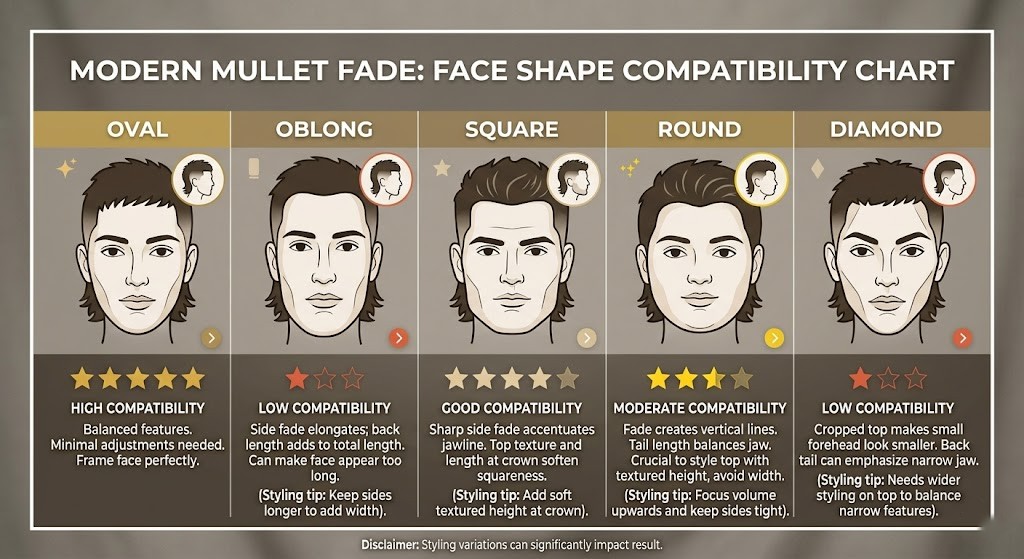
| Face Shape | Best Fade Type | Back Length | Avoid |
|---|---|---|---|
| Oval | Any — high, mid, low, burst, drop | Short to long, all work | Nothing excludes oval — most versatile |
| Oblong / Long | Drop fade or low taper; avoid high straight fades | Short to medium back; avoid very long flowing back | High taper with long back — both add vertical length |
| Square | Mid or high taper; burst fade | Medium to long — adds some vertical above the jaw | Hard line-up paired with a blunt fringe — doubles down on angular lines |
| Round | High fade with volume on top; avoid low fades that emphasize width | Medium — some back length adds vertical interest | Low fade with a flat top — makes the head look wider |
| Diamond | Mid burst fade — curves follow the diamond’s natural widest point at cheekbones | Medium — adds balance above and below widest point | Slicked-back top without volume — exposes a narrow forehead |
| Heart | Low to mid taper; avoid high contrast fades | Medium — adds volume below the jawline | Very high skin fade — exposes a wide upper head against a narrow jaw |
Mullet Fade Comparison: Fade Types Side by Side
The biggest source of miscommunication at the barber for mullet fades is the word “fade” itself — it covers several technically distinct techniques that produce different silhouettes. Here’s how the main options compare.

| Feature | Taper Fade | Burst Fade | Drop Fade | Skin Fade |
|---|---|---|---|---|
| Shape | Horizontal line around the head | Semicircular arc around the ear | Curves downward behind the ear toward the nape | Goes to bare skin at the base; any shape above |
| Contrast level | Low to high depending on height | Medium to high | Medium — softer at the nape | Highest — bare skin is maximum contrast |
| Best hair type | Any | Curly, wavy, textured | Any — especially oblong head shapes | Straight to wavy; shows scalp health |
| Maintenance | Refresh every 3–5 weeks | Refresh every 3–4 weeks | Refresh every 3–5 weeks | Refresh every 1–2 weeks (regrowth visible quickly) |
| Best for mullet because | Versatile; works across all settings | Curved arc preserves back weight naturally | Follows skull shape; elongates oblong heads | Maximum contrast with the longer back |
What to Tell Your Barber
The mullet fade relies on more precise terminology than most haircuts, because “mullet” without qualifiers still conjures the 1980s version in some barbers’ mental references. The more specific you are about fade type, height, back length, and top texture, the more likely you are to walk out with what you came in for. Bring at least one reference photo alongside the verbal description — it removes ambiguity about back length and fade height that words alone can miss.
Stylist tip from our contributor barber team: Tell your barber the setting the cut needs to work in before describing the style. “I work in a casual office but I want something with character” gives the barber useful context to calibrate the fade height and back length — a good barber will immediately suggest a mid taper rather than a skin fade if they know you need some degree of professional tolerance.
For a low or mid taper mullet: “I want a mid taper on the sides — not a skin fade, just a clean blend — with the back left at [X inches]. Keep the top textured, not slicked.”
For a burst fade mullet: “I want a burst fade — a rounded semicircular arc around the ear — at mid height. Fade to skin at the arc. Back to stay at [X inches], layered so it has movement.”
For a skin fade mullet: “Skin fade starting at [low / mid / high] on the sides, blended smooth — no choppy lines. Keep the back at [X inches], point-cut the ends so they’re not blunt.”
For a drop fade mullet: “Drop fade on the sides — so the line curves down behind the ear toward the nape rather than running straight around. Skin or close-crop at the base, back to [X inches].”
When a Mullet Fade Is NOT the Right Choice
The mullet fade suits most men — but not all situations, hair types, and face shapes. Knowing the exceptions upfront prevents a regrettable appointment.
- Very fine, low-density hair: a mullet needs back weight to register as intentional, and fine hair through the back often lies flat and thin rather than flowing. A textured pixie-to-nape style with a taper gives a similar short-sides-longer-back silhouette without demanding density the hair doesn’t have.
- Round faces with flat tops: a round face needs vertical height, and a mullet fade with no volume on top (flat, slicked, or very short crown) removes the one element that creates a lengthening effect. Volume at the crown is non-negotiable on a round face — if you’re not willing to add it, a different cut will serve you better.
- Strict formal dress codes: a skin fade or high fade mullet is visually distinctive enough that it creates friction in very conservative professional environments. A low taper version is the most office-compatible, but no mullet variation is invisible — go in knowing that and decide whether the trade-off is worth it.
- Men in the early stages of growing out very short hair: the top and back both need at least 2–3 inches of length for the proportions of a mullet to exist. Attempting a mullet fade before there’s enough length to work with produces something that looks like an unfinished cut rather than an intentional style. Wait until there’s working length, then bring in the fade.
Mullet Fade Maintenance
The back of the mullet and the fade have completely different maintenance schedules, and conflating them is the most common reason a mullet fade looks overdue before it actually needs a full appointment.
| Element | Frequency | Notes |
|---|---|---|
| Skin or high fade refresh | Every 1–2 weeks | Regrowth at skin level is immediately visible; weekly edge cleanup between full appointments |
| Mid or low taper refresh | Every 3–5 weeks | Grows out gradually; more forgiving between appointments than skin fades |
| Back length trim | Every 6–8 weeks | Trim back perimeter to maintain shape; ends split faster without regular trimming |
| Neckline cleanup | Every 2–3 weeks | Neckline growth beneath the back length looks unkempt before the rest of the cut does |
| Shaved design touch-up | Every 1–2 weeks | Designs blur faster than plain fades; a blurred design looks significantly worse than no design |
Daily product guide: textured mullet tops respond best to a small amount of sea salt spray (3–5 sprays into damp hair, scrunched) with a light matte clay or texture paste worked in at the crown. Use a pea-sized amount of clay — most men use too much and end up with product buildup that makes the cut look greasy by midday. The back section only needs product on styling days; regular air-drying is enough on days you’re not working the texture. For the slick-back top version (entry 24), swap the clay for a medium-hold pomade with a low-shine finish — enough grip to keep the slick-back in place without making the sides and back look over-styled by comparison.
FAQ
What Is the Difference Between a Taper Fade Mullet and a Burst Fade Mullet?
A taper fade runs in a horizontal line around the head, blending from longer on top to shorter at the base. A burst fade follows a semicircular arc around the ear, preserving weight behind the ear rather than fading it away — which works naturally with the mullet’s back length because the curve directs the eye toward the longer section. Burst fades suit curly and wavy hair particularly well because the curved boundary between tight sides and textured back integrates smoothly with natural curl patterns.
How Long Does the Back Need to Be for a Mullet Fade?
Most barbers consider 2 inches of back length the minimum for the mullet proportions to read as intentional. The sweet spot for a modern mullet is 3–5 inches — long enough to be visible from the front when the head tilts slightly, short enough to style. Longer backs (5–7 inches) work well with wavy and curly hair that has natural volume; straight hair at that length needs layering or it lies flat and can look shapeless.
Does a Mullet Fade Work in a Professional Setting?
A low taper mullet with a medium back length (2–3 inches) is the most office-compatible version — the back is noticeable but not dramatic, and the low sides don’t read as extreme. High skin fades and very long backs are the configurations most likely to create friction in conservative workplaces. The honest answer is that the cut depends on your specific environment: creative industries, tech, and retail typically have no issue with any mullet fade variation; finance, law, and client-facing roles in traditional sectors are where the low taper version becomes the only practical choice.
How Often Do I Need to Go to the Barber for a Mullet Fade?
Expect a full appointment every 3–6 weeks depending on your fade type. Skin fades need the most frequent attention — regrowth at bare-skin level is visible within 7–10 days, and most skin fade mullet wearers do a quick edge cleanup every 10–14 days between full appointments. Mid and low tapers are more forgiving, typically looking clean for 3–5 weeks before the blend softens enough to be noticeable. The back length needs trimming less often than the fade — every 6–8 weeks is standard.
Can Curly Hair Pull Off a Mullet Fade?
Curly hair is actually one of the best textures for a mullet fade. The natural volume through the back adds body that straight hair doesn’t have, and a burst fade in particular integrates with curly hair more organically than a straight taper does. The key instruction to your barber: cut the back dry, not wet. Curly hair shrinks 30–50% when dry, and a wet cut almost always results in less back length than intended. A leave-in conditioner and curl cream on wash days keeps the back defined between appointments.
What Products Work Best for a Mullet Fade?
For textured tops: a matte clay or fiber paste applied to slightly damp hair gives flexible hold without weighing the texture down. Use a pea-sized amount maximum — buildup turns to grease by midday. For the back section: sea salt spray or a lightweight texturizing spray on damp hair before air-drying adds separation to straight and wavy hair without stiffness. For curly backs: a leave-in conditioner followed by a curl cream, applied section by section to wet hair before air-drying or diffusing on low. Avoid heavy pomades through the back — they weigh down length and make it look flat.
What Guard Number Should I Tell My Barber?
For a mid fade, guards #1.5 to #2 at the boundary blend smoothly into the longer upper section. For a skin fade, the base goes to 0 (bare skin) with #0.5 and #1 blending up to the longer hair above. For a burst fade, the arc itself typically runs to 0 or 0.5 at the curve with guards #1 and #1.5 blending outward. Rather than specifying guard numbers — which mean different things on different clippers — it’s more reliable to bring a reference photo and describe the fade height (“starting at the temple” vs “just above the ear”) verbally. Let the barber choose the guards based on their equipment.
Is the Mullet Fade Trending or Fading Out in 2026?
The modern mullet fade is at peak adoption across mainstream barbershops in 2026 — booking data from major barbershop groups consistently lists it among the most requested cuts for men in the 18–35 demographic. The key shift from 2024 to now is that the cut has moved from being primarily a Gen Z statement piece to a broadly accepted option across age groups. The textures and fade combinations have also diversified significantly: it is no longer just burst fades and curly hair but a full range of fade types and textures. There’s no sign of the trend reversing in the next 12 months.
The modern mullet fade is one of the most technically interesting men’s haircuts available right now precisely because it rewards specificity — the right fade type, height, back length, and top texture combination for your face shape and hair type produces something genuinely distinctive rather than a generic result. Bring two or three reference photos from this gallery to your next appointment and tell your barber which face shape guidance applies to you. A barber who cuts a lot of mullets will use that information before picking up the clippers, and the difference between a tailored mullet fade and a generic one is exactly that kind of upfront detail.
Hair results vary based on your natural hair type, texture, density, and growth patterns. Always consult with a licensed barber or hairstylist before making significant changes. Photos may show styled results that require professional tools and products to replicate.