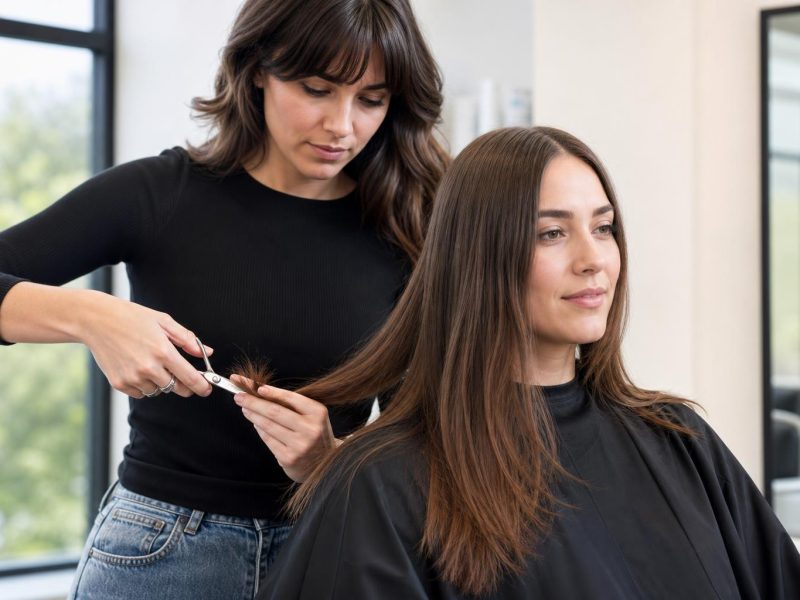

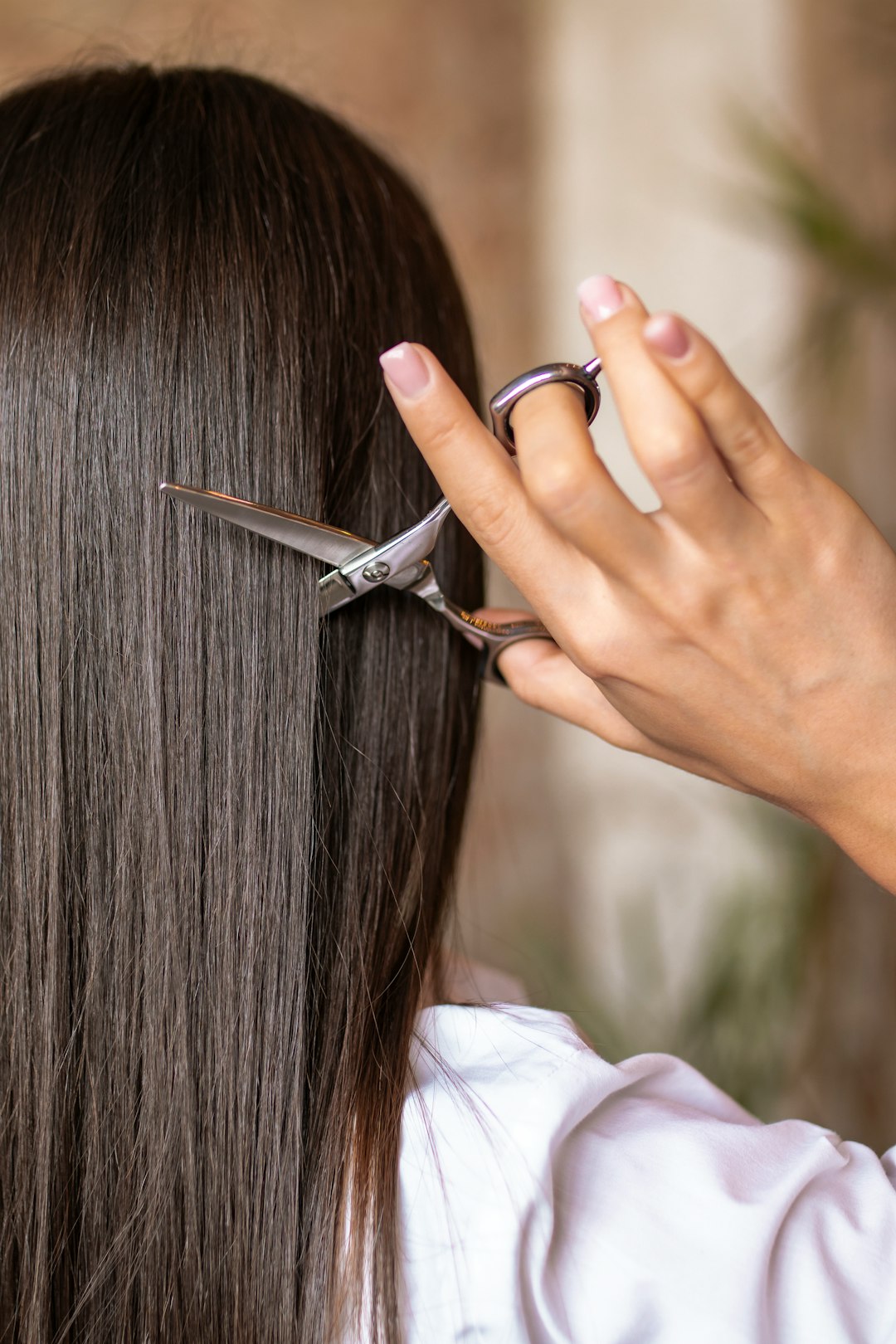

The tool your stylist reaches for shapes how your hair moves, holds its line, and behaves on grow-out — and choosing the wrong one for your texture is the most common cause of a cut that looks nothing like the inspo photo.
A razor cut and a scissor cut produce different finishes because they contact the hair differently at the strand level. A razor blade slides diagonally across each strand, creating a tapered, feathered end that scatters light and falls with natural ease. Scissors close straight across, leaving a flat, clean edge that reflects light uniformly and makes the hair appear denser at the ends. The tool choice directly determines how soft or sharp the result looks, how the hair moves, and how long it holds its shape between trims.
This guide covers what each technique does structurally, which hair types respond well to each, the styles each produces best, and the exact words to use in the salon so your stylist knows precisely what you want. If you have fine hair, curly hair, or chemically treated hair, the tool choice matters as much as the cut itself.
How a Razor Cut Works
A razor cut uses a lightweight feather razor with a replaceable blade to slide across each strand at a diagonal angle rather than cutting straight across. Because the blade travels along the shaft, each strand ends in a tapered point rather than a flat edge. This is called a bevel, and it is what creates the soft, feathered texture that makes razor-cut hair look lighter and more movement-driven than scissor-cut hair at the same length.
The technique also removes weight as it cuts. A stylist using a razor on the mid-lengths and ends is simultaneously shortening the hair and thinning it, so the overall density goes down with each stroke. For thick hair that needs bulk removed, this efficiency is genuinely useful. For hair that is already fine or fragile, it becomes a problem. The razor does not distinguish between hair that has weight to spare and hair that cannot afford to lose any.
Stylist tip: A razor should only be used on damp hair, never dry. Dry hair is brittle, and dragging a blade across it causes uneven breakage rather than a clean bevel. If your stylist reaches for a razor on dry hair, ask them to wet your hair first or switch to scissors.
How a Scissor Cut Works
Scissors cut by closing two straight blades against each other, severing the hair perpendicular to the shaft. The result is a clean, flat edge on each strand, what stylists call a blunt line. That flat edge reflects light uniformly, making the hair appear denser and fuller at the ends than a razor-cut finish does at the same length.
Within scissor cutting, there are several sub-techniques that produce very different results. A blunt cut takes every strand straight across, creating maximum structure and density. Point cutting angles the scissor tips into the ends to soften the line and add texture without removing weight. Slide cutting moves the scissors down the shaft at an angle to thin and lengthen. A skilled stylist layers these techniques to produce almost any finish, ranging from a precision-sharp perimeter line to a soft, shaggy texture, all without touching a razor blade. The style range available from scissors alone is broader than most clients realize.
How Hair Type Changes the Outcome
The same technique produces entirely different results depending on your hair’s texture, density, wave pattern, and condition. Knowing which category your hair falls into before the appointment prevents the most common version of this decision going wrong: asking for soft, feathered texture and leaving with something thin and flat instead, or asking for structure and getting a heavy, block-like result that fights your natural wave.
Fine Hair Gets Fuller Results from Scissor Cuts
Fine hair already has limited density at the ends. Razor cutting thins those ends further, which can push them from soft and feathered into limp and sparse. A scissor cut, particularly with a blunt perimeter line or light point cutting at the ends, keeps more weight intact and makes fine hair appear thicker. On fine, straight hair, a blunt scissor-cut perimeter is one of the few techniques that creates visible density rather than removing it. Choosing a technique that matches your natural density matters as much as the shape itself, and the right haircut for your hair density starts before the cut even begins.
There is one nuanced exception: light razor work at the internal layers only, with scissors kept at the perimeter, can work on fine hair that also has a thick mid-shaft that tends to puff rather than fall. But the perimeter must stay scissor-cut, and this approach requires a stylist who is precise about where the razor goes and where it does not.
Thick and Coarse Hair Responds Well to Razor Work
When hair is dense enough that weight is the problem, a razor is one of the most efficient tools for addressing it. The beveling action removes bulk as it cuts, reshaping heavy, triangle-shaped hair into something that moves and falls properly. A scissor-only cut on very thick hair often leaves the ends heavy and block-like unless the stylist adds significant point cutting or texturizing afterward. Many stylists use both tools on thick hair, reaching for the razor on internal layers and scissors to clean the perimeter line, to get weight removal without sacrificing a defined finish.
Straight Hair Holds a Razor Cut Best Over Time
Straight hair has a flat cuticle that responds predictably to the angled bevel a razor creates. The feathered ends blend naturally as the hair grows, which is why a razor cut on straight hair stays wearable for 8 to 10 weeks. The lived-in texture that straight-haired clients are often after, movement that looks effortless rather than styled, is one of the best arguments for choosing a razor. It delivers visual softness without requiring much daily effort to maintain.
Wavy Hair Depends on Your Specific Wave Pattern
Loose waves in the Type 2a to 2b range can handle razor cutting well. The natural wave adds enough texture to prevent ends from going sparse, and the razor’s weight-removal enhances how the wave moves and separates. Tighter waves in the 2c to 3a range are less predictable: razor cutting can make them fluffier and harder to manage without significant product. For wavy hair, the right choice often comes down to your styling routine. If you diffuse regularly, the razor’s texture works in your favor; if you air-dry and prefer minimal product, scissors give you more control over the result.
Curly and Coily Hair Needs Scissors, Not a Razor
For Type 3b through 4c curl patterns, razors are almost always the wrong tool. Curly and coily hair has a raised, open cuticle that the scraping motion of a razor roughens further, causing frizz along the entire shaft rather than just at the cut ends. The tighter the curl, the more precisely each coil needs to be respected, and that precision requires a clean scissor cut that follows the curl’s natural shape. Tight curls cut with a razor often lose coil definition entirely and turn to a frizzy mass rather than distinct, separated coils. A well-trained scissor cut preserves the structural integrity of each curl and allows the natural pattern to express itself fully.
Razor vs. Scissor Cut: A Side-by-Side Comparison
The practical differences between these two techniques come down to seven key factors. Use this as a reference when deciding what to ask for, or share it with your stylist to make sure you are both working toward the same outcome.
| Factor | Razor Cut | Scissor Cut |
|---|---|---|
| Edge produced | Tapered, feathered, angled bevel | Flat, clean, blunt line |
| Best hair type | Thick, coarse, straight to loose wavy | Fine, damaged, curly, coily |
| Finish | Soft, airy, lived-in movement | Structured and dense (blunt) or textured (point-cut) |
| Weight effect | Removes weight while cutting | Preserves weight; sub-techniques soften selectively |
| Grow-out | Gradual, blends naturally into new growth | More defined; blunt lines become visible as they grow |
| Trim frequency | 8–10 weeks (grows out gracefully) | 6–8 weeks for blunt-edge styles; longer for textured cuts |
| Best styles | Shag, lived-in layers, soft fringe, feathered lob | Blunt bob, French bob, one-length cuts, precision styles |
In terms of specific styles, razor cuts suit the airy bob, shag cuts, and anything where soft, movement-driven ends are part of the look. Scissor cuts suit the kitty cut and blunt bobs, where a clean perimeter is the defining element of the shape. If you are deciding between a layered bob vs choppy bob, the tool matters as much as the structure: a choppy bob depends on a blunt scissor line to create its edge, while a layered bob can benefit from razor work in the internal layers.
When a Razor Cut Is the Wrong Choice
Razor cuts are often marketed as an upgrade — more texture, more movement, more personality. For specific hair conditions and textures, a razor delivers the opposite. Knowing when to decline is as important as knowing when to ask for one.
Damaged or Over-Processed Hair Cannot Handle Razor Stress
Bleached, heat-damaged, or chemically over-processed hair has a compromised cuticle that is more porous and fragile than healthy hair. A razor blade pulls slightly as it cuts, and on damaged strands that pulling creates micro-tears along the shaft rather than a clean bevel. The result is increased breakage, rough texture, and split ends that worsen faster than normal grow-out would produce. If your hair has significant damage, stay with scissors-only cuts until the condition improves.
Very Fine Hair Loses Density Rather Than Gaining Texture
The common expectation is that a razor adds body. For medium-to-thick hair, that holds true. For very fine hair, the feathered ends have less weight and less tension pulling each strand downward, so the style scatters and looks thin rather than full. If a stylist recommends a razor cut on very fine hair without any qualification, ask what they are hoping to achieve and whether point cutting can produce the same softness with less weight removal.
Tight Curls Depend on Structural Definition a Razor Cannot Preserve
Type 3c and 4 curl patterns depend on intact, defined coils that reflect the hair’s natural curl formation. A razor disrupts the cuticle along the shaft, which is exactly what triggers the frizz and loss of pattern definition that curly-haired clients often describe after a cut that went wrong. A precise scissor cut preserves the coil’s structure and lets the curl behave as it naturally would between washes.
Growing Out Heavy Layers Needs Weight, Not More Razor Work
If you are trying to grow out heavily razored layers, do not razor the new growth to blend it into the existing texture. As hair grows, it needs density to fill in properly. A scissors-only approach through the grow-out phase lets the ends build back up gradually. Ask your stylist to cut scissors-only until the overall density feels restored before considering razor work again.
What to Tell Your Stylist
Most clients never think to ask which tool their stylist is planning to use. Raising it at the consultation is one of the most practical things you can do, because a single sentence determines the entire finish of the cut. If you want a razor cut, state it explicitly at the start of the appointment. If you want a scissor-only cut, say so before any work begins, not halfway through.
For a razor cut, say: “I want soft, lived-in texture with feathered ends. Can you use a razor on the mid-lengths and ends?” For a blunt scissor cut: “I want a clean, dense line at the perimeter, scissor-only, no razoring on the ends.” For a combination cut on thick hair: “I’d like the weight removed through the layers with a razor, but keep the outside line scissor-cut and blunt.”
Bring inspo photos to your appointment that specifically show the texture and finish you want, not just the length. A photo of razor-cut ends versus scissor-cut ends is immediately clear to any stylist. If you are getting a bob, knowing how to ask for a bob by finish type rather than just length saves your consultation from mismatched expectations on both sides.
Stylist tip: Ask your stylist to confirm the razor blade is fresh before they start. A dull blade drags and tears rather than gliding cleanly, which produces rough, frayed ends rather than a smooth bevel. Most stylists replace blades between clients, but it is reasonable to ask, particularly if you have fine or color-treated hair that is already prone to splitting at the ends.
Maintenance and Grow-Out Behavior
How long your cut stays wearable, and how easy the in-between weeks are, depends partly on which technique was used. Tell your stylist your maintenance level before the cut so the approach matches how you actually live with your hair, not just how it looks freshly styled.
Razor-cut hair grows out more gradually because the feathered ends blend into new growth rather than creating a sharp contrast line. Most razor cuts stay wearable for 8 to 10 weeks before needing a refresh. Scissor cuts with blunt perimeters show grow-out faster: typically around week 5 to 6, the clean line softens and begins to look undone. Scissor cuts with point-cut or textured ends land in between, holding their shape for 6 to 8 weeks.
Daily styling also differs. Razor-cut hair needs product to look deliberate rather than undone. A light texturizing spray or sea salt spray helps the feathered ends separate and fall properly; without it, the same softness that makes razor-cut hair look effortlessly airy in the salon can look slightly unkempt at home. Scissor-cut blunt styles hold their shape with less daily product, though they need heat protection during blow-drying to keep the perimeter from frizzing before it is fully dry.
FAQ
Can I Ask for a Combination of Both Techniques?
Yes, and many stylists use both tools in a single cut. A common approach is razor work on internal layers to remove weight and add movement, then scissors on the perimeter for a defined finish. This is especially useful for thick hair that needs bulk removed but benefits from a clean outside edge. Ask specifically: “Use the razor internally for the layers, but keep the perimeter scissor-cut and blunt.”
Does a Razor Cut Make Hair Grow Faster or Slower?
No. Growth rate is controlled entirely by follicle activity at the scalp and is not affected by the tool used at the ends. What changes is how the ends behave as they grow: a razor-cut bevel blends into new growth more gradually than a blunt scissor-cut line, which is why razor cuts often feel like they hold their shape longer between trims.
Will a Razor Cut Make My Fine Hair Look Thinner?
For most fine hair types, yes. A razor removes weight from the ends, which are already sparse on fine hair, and the result is ends that scatter rather than create a solid mass. Fine hair generally does better with a scissor cut, particularly a blunt or lightly point-cut perimeter that preserves as much weight as possible. If a stylist wants to use a razor on fine hair, ask them to limit it to internal layers only and check the density after your first wash at home before committing to a full razor approach.
Is a Razor Cut Better for Adding Texture to Thick Hair?
A razor cut is one of the most efficient tools for reducing bulk in thick hair. The beveling action removes density as it shortens, which can transform a heavy, triangle-shaped silhouette into something that moves freely. Scissor-only cuts on very thick hair are possible but typically require significant additional point cutting or texturizing afterward to achieve a similar weight-removal effect.
Can Curly Hair Ever Be Cut with a Razor?
Loose waves in the Type 2a to 2b range can handle razor cutting reasonably well, since the wave pattern adds enough texture to absorb the feathering. For tighter curl patterns at Type 2c and above, scissors are almost always the better choice. A razor roughens the cuticle along the shaft, which causes frizz and disrupts coil definition, and the tighter the pattern, the more pronounced that disruption becomes.
Does It Matter If the Razor Blade Is New?
Significantly. A fresh blade glides through the hair cleanly and creates a smooth bevel. A dull blade drags and tears, producing rough, frayed ends rather than a polished feathered edge. Most professional stylists replace blades between clients, but asking before the cut is not unreasonable, especially with fine or color-treated hair that is already prone to splitting at the ends.
How Do I Know If My Stylist Used a Razor or Scissors?
Check how the ends look and behave after a wash without product. Razor-cut ends look softer and scatter when air-dried; scissor-cut ends look denser and more uniform along the perimeter. If your hair feels thinner than expected after a cut, a razor was likely involved. If the line feels sharper and more defined than you wanted, the stylist probably stayed with scissors throughout.
Understanding the razor cut vs scissor cut distinction gives you real control over what you walk out of the salon with. Neither technique is better across the board: the right one depends on your hair’s texture, density, and the specific finish you want. Bring your reference photos, name the technique, and ask how your stylist plans to approach the layers versus the perimeter. One clear question at the start of your appointment is the most reliable way to make sure the result matches what you came in for.
Hair results vary based on your natural hair type, texture, density, and condition. Always consult with a licensed hairstylist before making significant changes, especially with chemical treatments or dramatic length changes. Photos may show styled results that require professional tools and products to replicate.