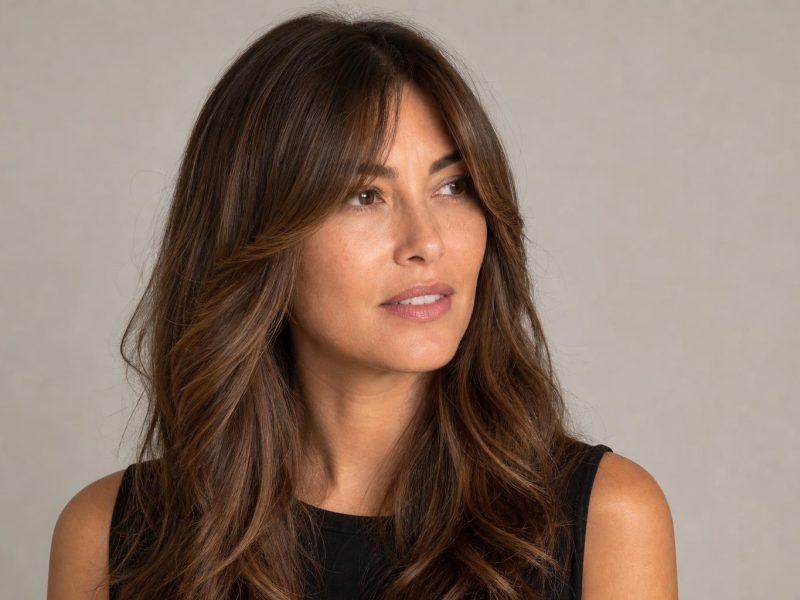


The Italian fringe frames the eyes with soft, piece-y density that finishes the relaxed Italian-girl look without ever turning into a heavy blunt line.
An Italian fringe is a wispy, piece-y fringe cut to fall right at or just below the brows, with softened ends that separate and move instead of falling in one solid curtain. It looks relaxed rather than styled, which is the whole point of the La Dolce Vita aesthetic. This works best on hair with a little natural bend and a medium density, though a good stylist can adapt it for fine or thick hair with the right cutting technique.
Below are 18 Italian fringe ideas sorted by finish and hair texture, followed by a face shape breakdown, the exact language to bring to your stylist, and an honest look at the upkeep. Whether you want a barely-there wisp or a fuller feathered frame, there is a version here that fits your growth pattern and your morning routine.
| Factor | Details |
|---|---|
| Best for | Wavy and straight hair with medium density; oval, square, and heart faces |
| Length | Brow-level to just below the brows, softened and piece-y at the ends |
| Maintenance | Fringe trim every 3 to 4 weeks; 5 minutes of daily styling |
| Avoid if | You have a strong cowlick at the hairline or want a wash-and-go fringe |
| Salon time | 15 to 30 minutes to add to an existing cut |
What Makes an Italian Fringe Different
The Italian fringe sits between a blunt fringe and full curtain bangs. It has more density across the front than a curtain bang, which parts in the middle and sweeps away, but its ends are softened with point cutting so it never looks heavy or helmet-like. The result is a fringe that frames the eyes and adds a lived-in softness to the face. It became a signature of the relaxed Italian-girl aesthetic because it pairs a defined shape with a finish that looks like you did almost nothing to it.
Stylist tip: Ask for the fringe to be cut dry, not wet. Wet hair stretches and springs back shorter once it dries, and on a fringe that lands at brow level, even half an inch of shrinkage changes where it hits your face.
Soft and Wispy Italian Fringe Styles
These versions keep the fringe light and airy, with plenty of separation between the pieces. They suit anyone who wants the shape of a fringe without a solid line of hair across the forehead, and they grow out more gracefully than a blunt cut.
1. Feathered Brow-Skimming Fringe
Light feathering through the ends lets this fringe rest just above the lashes and separate on its own. It flatters oval and heart faces because the softness draws attention to the eyes without adding width. Point cutting is what creates the wispy tips, so ask for that rather than a straight-across line.
2. Center-Split Italian Fringe
A subtle split down the middle gives this fringe two soft halves that frame the eyes and open up the face. Square faces benefit from the way the parting breaks up a strong forehead line. It bridges the gap between a full fringe and a proper curtain style, so it is a comfortable first step if a heavier fringe feels intimidating.
3. Piece-y Textured Wisps
Separated, textured pieces give this fringe a deliberately undone look that never turns fussy. Fine hair gets the most from this style because the visible gaps make thin hair look intentional rather than sparse. A touch of texture spray worked through with your fingers keeps the separation defined all day.
4. Grown-Out Italian Fringe
Cut slightly longer so the ends brush the tops of the cheekbones, this version already looks like it is halfway grown out, which is part of the appeal. It is forgiving between trims and blends into face-framing layers as it lengthens. If you are nervous about commitment, this is the low-stakes way in.
5. Airy See-Through Fringe
A sheer, low-density fringe that lets a little forehead show through borrows from Korean styling but keeps the softer Italian shape. The lightness stops it from overwhelming smaller features, so it works on delicate face shapes. Readers drawn to this weightless finish will also find plenty of ideas in our guide to sheer see-through bangs.
6. Soft Side-Leaning Fringe
This fringe falls with a gentle lean to one side instead of sitting straight, which softens a square jaw and adds a little asymmetry. It is the most casual of the wispy group and needs almost no styling beyond a quick finger-comb. The lean should come from the way it is cut, not from daily effort with a brush.
Blunt and Fuller Italian Fringe Styles
For those who want more presence, these versions keep more weight across the fringe while still softening the ends so it never turns solid or stiff. They make a stronger style statement and suit thicker hair that can carry the density.
7. Blunt Fringe with Softened Ends
The body of the fringe stays full and even while the very ends are broken up, giving you a defined shape without a hard edge. Thick, straight hair holds this beautifully because it has the density to fill the fringe out. Expect to trim it often, since a blunt line shows growth within two to three weeks.
8. Rounded Bardot-Inspired Fringe
Slightly longer at the sides and shorter in the center, this rounded shape nods to 60s Italian cinema. The curve draws the eye inward and flatters a longer face by adding a horizontal line. It pairs especially well with a lob or a shoulder-length cut for that retro-modern balance.
9. Full Fringe with Curtain Edges
A dense fringe through the middle that lengthens into curtain-style pieces at the outer edges gives you the best of both worlds. The heavier center makes a statement while the longer sides keep it wearable and easy to pin back. This hybrid suits anyone deciding between a full fringe and wavy curtain bangs.
10. Choppy Italian Fringe
Uneven, chopped lengths create a fringe with real edge and movement, ideal for medium to thick hair that can look bulky in a blunt shape. The choppiness removes weight so the fringe rests lighter on the forehead. A little pomade on the fingertips separates the ends for the modern, slightly grungy finish.
11. Heavy Brow-Length Fringe
This full, brow-length fringe makes the boldest statement in the group and frames the eyes dramatically. It works best on coarse or thick hair with enough weight to hang cleanly rather than splitting apart. Because it falls low, book a trim every three weeks to keep it out of your line of sight.
12. Fringe with Face-Framing Extension
The fringe flows straight into longer face-framing pieces with no visible break, creating one continuous soft frame around the face. This is a flattering choice for round faces because the vertical lengths on either side create the illusion of a longer shape. It also grows out with almost no awkward stage, blending into face-framing bangs as it lengthens.
Italian Fringe by Hair Texture
Texture changes how a fringe falls, splits, and holds its shape. These six ideas are matched to specific hair types so you can picture the cut on your own hair rather than on a styled model.
13. Fine-Hair Italian Fringe
On fine hair, a slightly wider fringe pulled from further back on the crown borrows extra density so the fringe does not look thin. A light root-lifting mousse at the base keeps it from separating into strands by midday. Avoid over-thinning, since fine hair has little weight to spare.
14. Wavy Italian Fringe
Natural waves give this fringe built-in movement, so it needs only a quick rough-dry to fall into shape. The bend keeps the pieces from sitting flat and adds that undone Italian softness on its own. A curl cream smoothed over the ends stops frizz without weighing the wave down.
15. Curly Italian Fringe
Cut dry and a touch longer to account for spring-back, a curly fringe forms soft ringlets that frame the forehead. The stylist should shape it curl by curl rather than in a straight line, which prevents the triangular pouf curls can create up front. For more on styling curls around a fringe, our curly curtain bangs guide covers the technique in depth.
16. Straight Blunt-Soft Fringe
Poker-straight hair carries a fuller fringe cleanly, so this version keeps more weight while softening only the last quarter-inch. A flat iron run lightly through the fringe, then broken up with fingers, gives the polished-but-relaxed finish. It is the most structured option and suits anyone who likes a defined frame.
17. Thick-Hair Tapered Fringe
Thick hair needs internal weight removed or the fringe hangs like a heavy block on the forehead. A tapered cut hollows out the underside so the top surface stays smooth while the fringe lies flat. This is the difference between a fringe that breathes and one that puffs out by lunchtime.
18. Coarse Textured Fringe
Coarse hair holds a strong shape, so this fringe leans into that with defined, separated pieces and a matte finish. A lightweight styling paste tames any wiry ends without making the fringe greasy. The natural body means it rarely falls flat, which is a genuine advantage coarse hair has over finer textures here.
How to Choose an Italian Fringe for Your Face Shape
A fringe changes the proportions of your face more than almost any other cut, so matching the shape to your face shape matters. The table below pairs each face shape with the Italian fringe variation that balances it best.
| Face Shape | Best Variation | Ideal Length | Avoid |
|---|---|---|---|
| Oval | Feathered brow-skimming fringe | At the brows | Very heavy blunt lines that hide balanced features |
| Round | Fringe with face-framing extension | Longer at the sides | Short rounded fringe that adds width |
| Square | Center-split or soft side-leaning fringe | Just below the brows | Hard blunt fringe that echoes the jaw line |
| Heart | Airy see-through fringe | At the brows | Wide full fringe that widens the forehead |
| Oblong | Rounded Bardot-inspired fringe | Fuller and brow-length | Wispy see-through styles that elongate further |
What to Tell Your Stylist
Bring a photo, but also be ready to describe the finish in words, since the same photo can be cut heavy or light depending on how you explain it. Ask for a soft, piece-y fringe that lands at brow level, cut dry, with point-cut ends for separation. Say clearly whether you want to still see gaps of forehead through it or prefer a fuller frame, because that single detail decides how much hair the stylist leaves in.
Stylist tip: Tell your stylist where you naturally part your hair and where your cowlicks sit before any cutting starts. A fringe cut against a cowlick will lift and separate no matter how you style it, and a good stylist will adjust the shape or width to work with that growth pattern instead of fighting it.
Maintenance and Styling
A fringe is the highest-maintenance part of any haircut because it grows into your eyeline fast. Expect a fringe trim every 3 to 4 weeks, and many salons do these for free between full cuts, so ask. Daily styling takes about 5 minutes: a quick blast with a round brush or vent brush while the fringe is still slightly damp, directing it forward and down, then a light finger-comb to break up the pieces. Skip heavy creams and oils near the hairline, since they drag the fringe down and make it look greasy by afternoon. If you want to place a fringe within the wider bang family before committing, our overview of every type of bangs is a useful reference.
When an Italian Fringe Is Not the Right Choice
This fringe suits many people, but not everyone, and choosing honestly saves you a regretful grow-out.
- You have a strong cowlick or double crown at the front hairline, which lifts and splits the fringe no matter how it is cut. A side-swept fringe that works with the growth is a better fit.
- You want a genuinely wash-and-go style, since even the airy versions need a quick daily shape to avoid separating oddly.
- Your hair is very oily at the roots, because a fringe rests against the forehead and picks up oil faster than the rest of your hair, meaning more frequent washing or dry shampoo.
- You are growing out a previous fringe, in which case adding length through a longer fringe paired with a lob is a gentler transition than cutting it short again.
FAQ
What Is the Difference Between an Italian Fringe and Curtain Bangs?
An Italian fringe keeps more density across the front and falls closer to the brows, while curtain bangs part in the center and sweep away from the face. The Italian version looks like a true fringe with softened edges, whereas curtain bangs are really face-framing pieces. If you cannot decide, a full fringe with curtain edges gives you elements of both.
Will an Italian Fringe Suit Fine Hair?
Yes, with the right cutting approach. Pull the fringe from slightly further back on the crown to borrow density, and ask the stylist not to over-thin it, since fine hair has little weight to spare. A light root-lifting mousse keeps a fine fringe from separating into thin strands by the afternoon.
How Often Does an Italian Fringe Need Trimming?
Plan on a fringe trim every 3 to 4 weeks to keep it from growing into your eyes. Blunt, fuller versions need trimming closer to every 2 to 3 weeks because a heavier line shows growth faster. Many salons trim a fringe for free between your full appointments, so it is worth asking when you book.
Can I Style an Italian Fringe Without Heat?
Wavy and curly textures can air-dry a fringe well by scrunching in a little curl cream and letting it fall naturally. Straight and fine hair usually needs a quick round-brush blast to stop the fringe sitting flat against the forehead. If you want to avoid heat entirely, choose a wavy or grown-out version rather than a blunt one.
How Is an Italian Fringe Different from a French Fringe?
Both are soft, undone European styles, but a French fringe tends to be a touch more tousled and cropped, while the Italian version leans slightly fuller and more brow-grazing. The distinction is subtle and often comes down to styling. Our gallery of French fringe ideas shows the cooler, cropped end of the spectrum for comparison.
Does an Italian Fringe Work with Glasses?
It can, but the fringe should be cut to rest above the top rim of your frames so the two do not compete for the same space. Bring your glasses to the appointment and put them on before the stylist finalizes the length. A slightly softer, see-through version tends to rest more comfortably over frames than a heavy blunt one.
The right Italian fringe comes down to how much density you want on your forehead and how much time you are willing to give it each morning. Bring two reference photos to your stylist, be specific about whether you want to see forehead through the fringe, and ask for a dry cut with point-cut ends. Cut and styled to your own growth pattern, an Italian fringe delivers that relaxed La Dolce Vita softness that looks like you were simply born with good hair.
Hair results vary based on your natural hair type, texture, density, and condition. Always consult with a licensed hairstylist before making significant changes, especially with chemical treatments or dramatic length changes. Photos may show styled results that require professional tools and products to replicate.