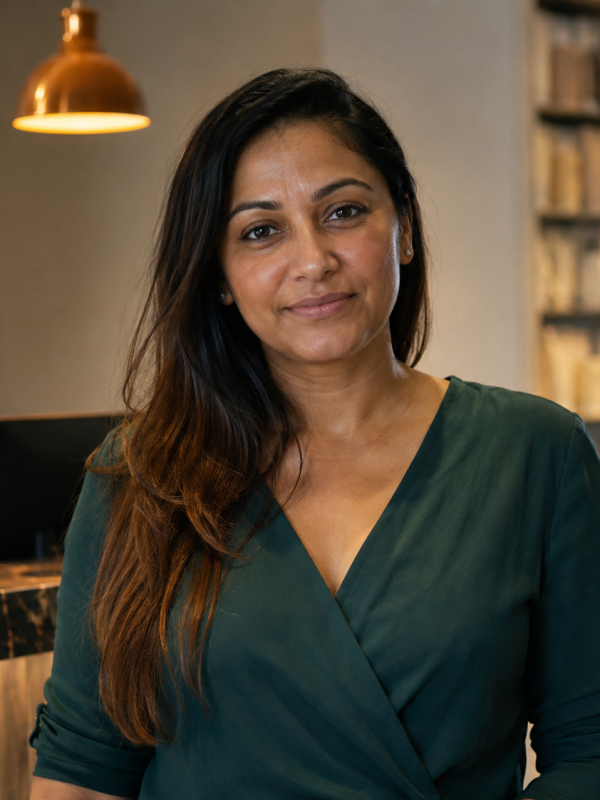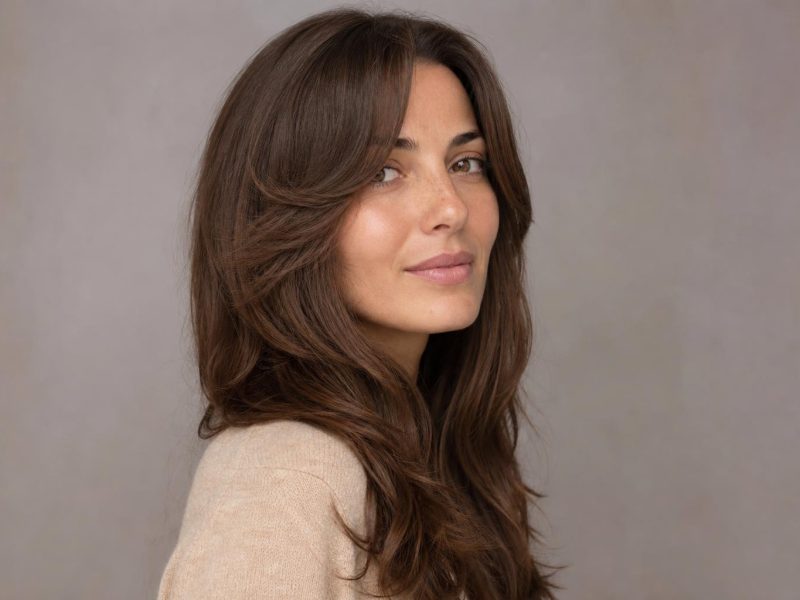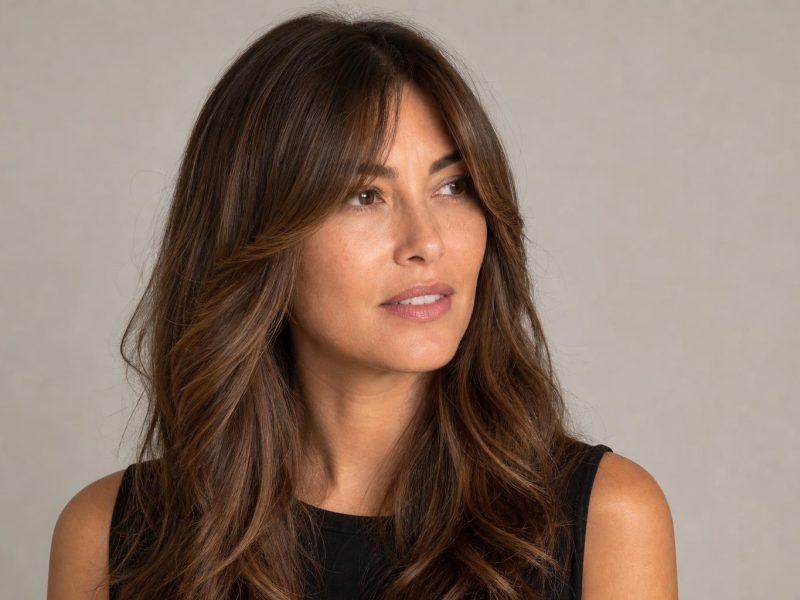

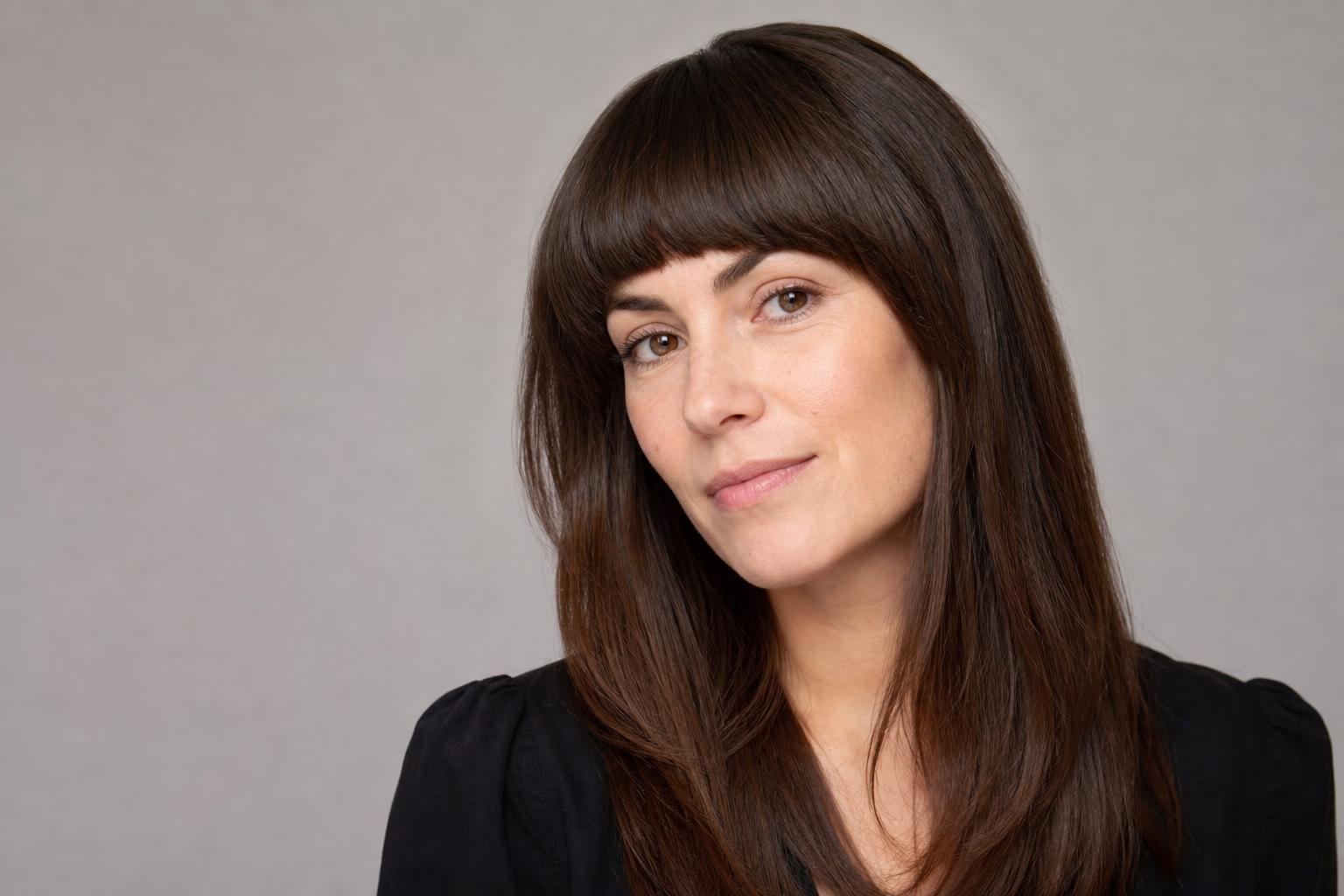
An arched fringe is cut to follow the curve your face already has, which is why stylists reach for it when a straight bang looks too severe.
Arched bangs are a full fringe cut in a curve: shortest at the center of the forehead and gradually longer toward the temples, so the hem echoes the natural arc of the brow line. That rounded shape softens the hard horizontal of classic blunt bangs while keeping their coverage, making the arch the middle ground between a graphic fringe and a swooping curtain style. Here are 15 arched bangs ideas, plus the face shape logic, salon wording, and trim schedule that keep the curve looking cut rather than grown.
The collection starts with classic and soft versions, moves through pairings with bobs and short cuts, and ends with textured and modern takes. If you are still mapping the fringe landscape, our overview of the main types of bangs places the arch among its relatives.
What Makes a Fringe Arched
The arch is a cutting pattern, not a styling trick. The stylist starts at the center of the forehead with the shortest length, then cuts outward in small sections, letting each one grow slightly longer so the hem forms a continuous, symmetrical curve that opens toward the eyes. A blunt fringe is one straight line; a curtain fringe splits in the middle; an arched fringe stays connected across the forehead and bends. Because the curve mirrors the brow line, the fringe frames the eyes without cutting across them, and the corners melt into the lengths at the temple with no hard step.
The shape carries a strong 1960s memory: the rounded mod fringe and the soft French takes on it were built on exactly this curve, which is why the arch pairs so naturally with retro-leaning cuts like the ones in our Birkin bangs gallery. Modern versions loosen the edges with point cutting so the curve whispers instead of announcing itself.
Stylist tip: The center length decides everything. Have your stylist set the shortest point between mid-brow and the top of the brow, then build the curve from there; an arch that starts below the brows shortens the eyes, and one that starts too high turns the curve into a halo.
Classic and Soft Arched Bangs
The first five looks keep the arch clean and wearable, the versions stylists cut most often for first-time fringe clients. Each pairs the curve with a different length and texture so you can see how flexible the shape is.
1. Classic Brow-Following Arch
The blueprint version: a full fringe whose hem curves from mid-brow at the center to the outer corner of each eyebrow. Cutting it takes longer than a straight bang because the curve is built in a dozen small sections, so book a full fringe appointment rather than a quick trim. Straight, medium-density hair holds the shape with a single pass of a flat brush and dryer.
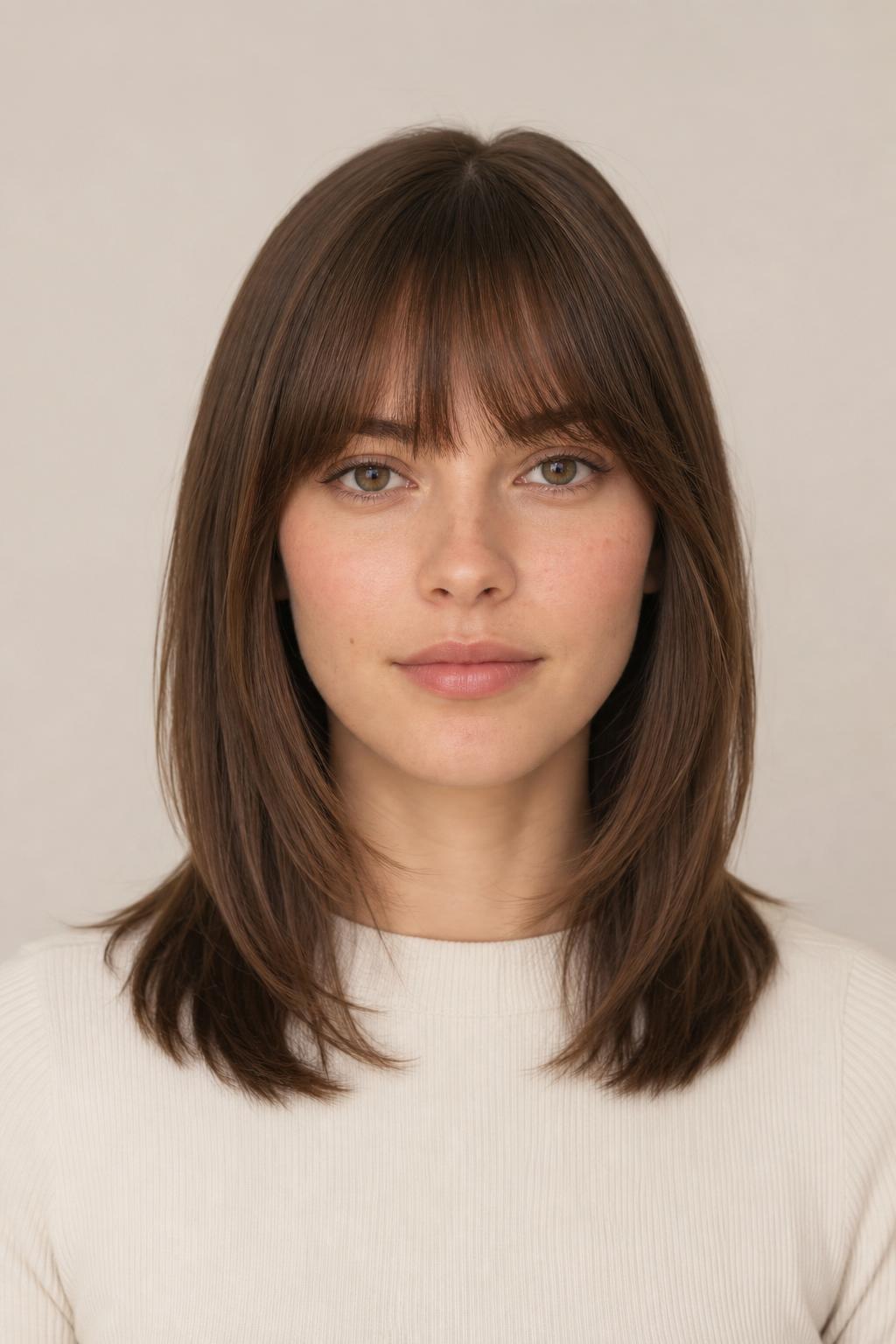
2. Soft Arch with Point-Cut Edges
Point cutting the hem breaks the curve into soft teeth, which reads as texture up close and still as an arch from conversational distance. Ideal for anyone who wants the rounded shape without the doll-like precision of a solid line. It also buys forgiveness between trims, since regrowth blurs into the already-broken edge.
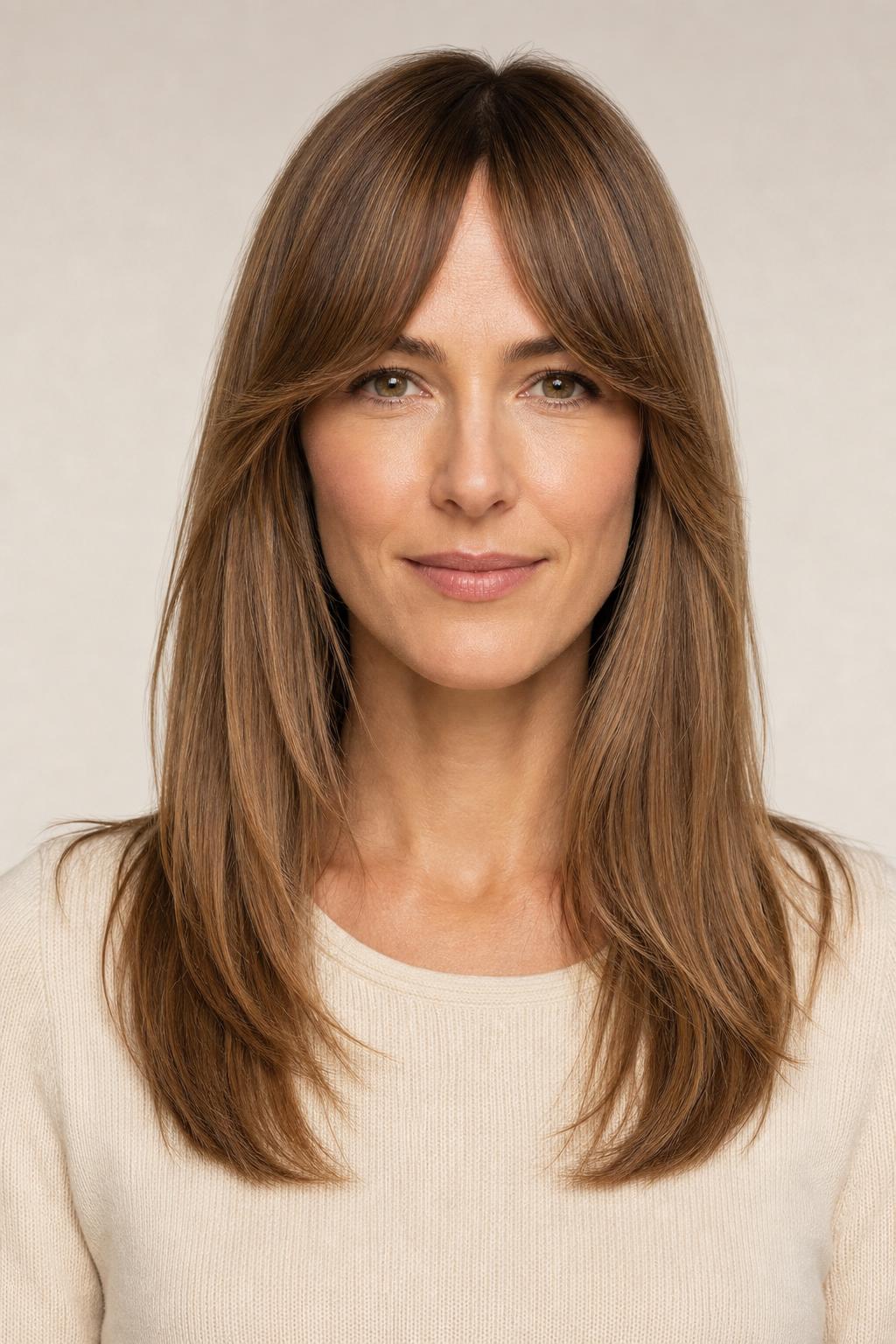
3. Sheer Arched Fringe for Fine Hair
Fine hair can wear the arch by lowering the density instead of the ambition: a shallow section cut into the same curve gives a see-through fringe with a rounded hem. The transparency keeps the forehead from disappearing, which matters on smaller faces. Our see-through bangs collection shows how sheer fringes behave day to day if the density question worries you.
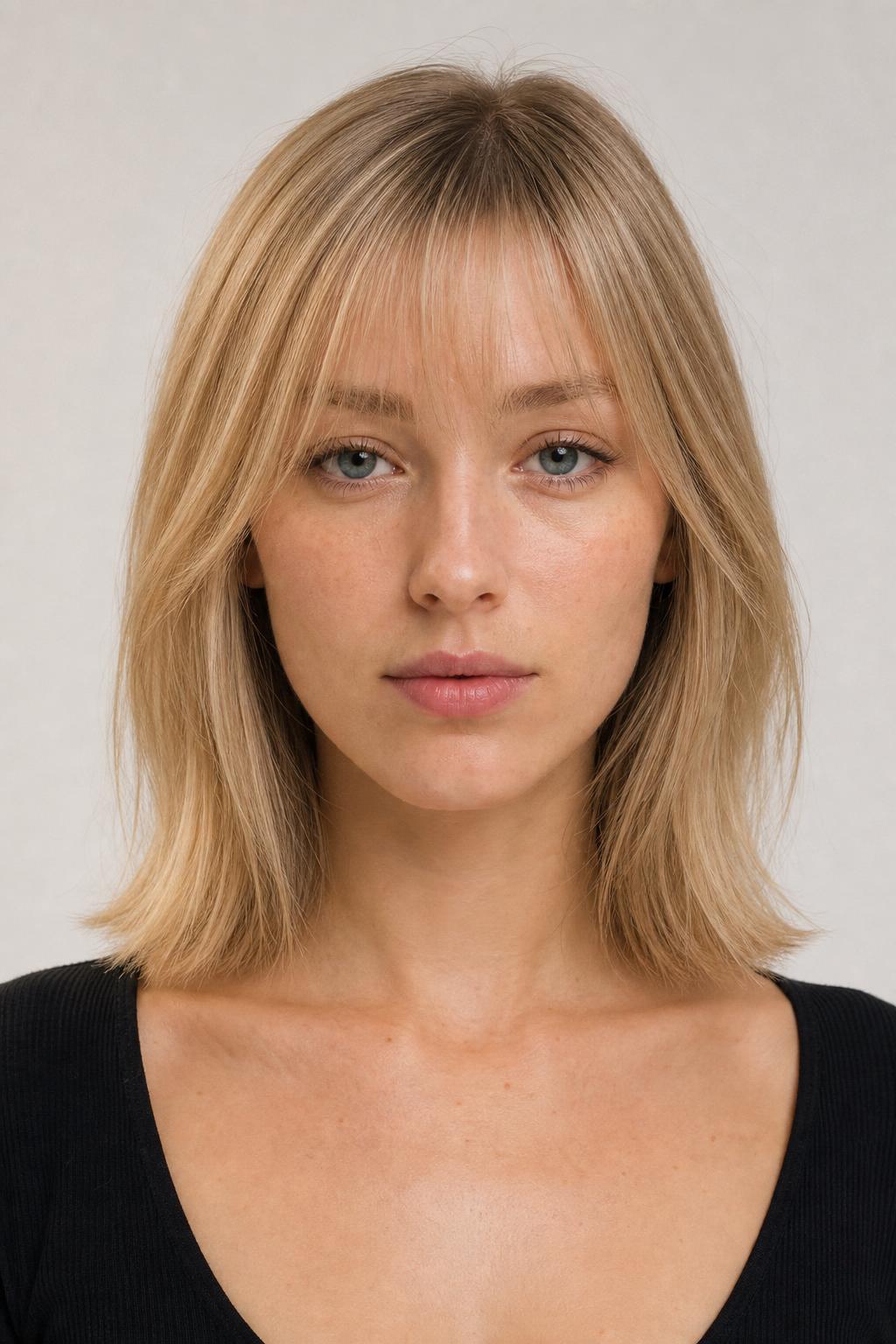
4. Arched Fringe Blended into Face-Framing Layers
Extending the arch past the temples turns the fringe’s corners into cheekbone-length face-framing pieces, one continuous curve from brow to jaw. The blend removes the fringe’s usual boundary, so the whole front hairline works as a single soft frame. Ask for the transition to start at the outer brow corner, where the arch naturally wants to keep falling.
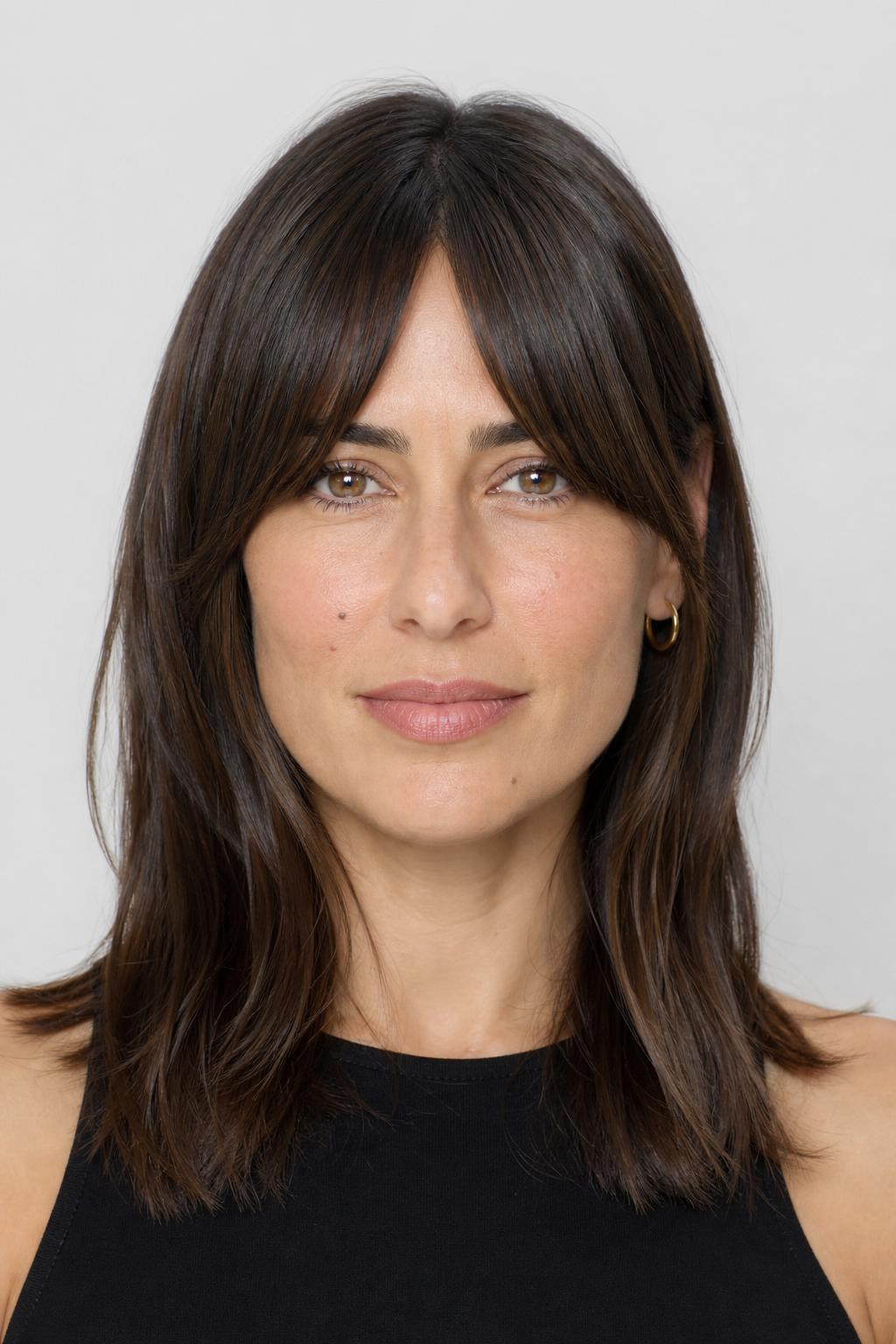
5. Deep Rounded Arch with Long Straight Hair
A deeper section gives this arch real density, and against waist-grazing straight hair the rounded fringe becomes the haircut’s single decorative moment. The weight of the fringe means it needs a proper blow-dry, brushed flat then rounded under with a medium brush for the last few seconds. Thick, straight hair carries it best; the curve collapses on strong waves.
Arched Bangs with Bobs and Short Cuts
Short perimeters repeat the arch’s curve at jaw or ear level, which makes these pairings feel designed rather than assembled. The five looks here run from retro homage to current-season crops.
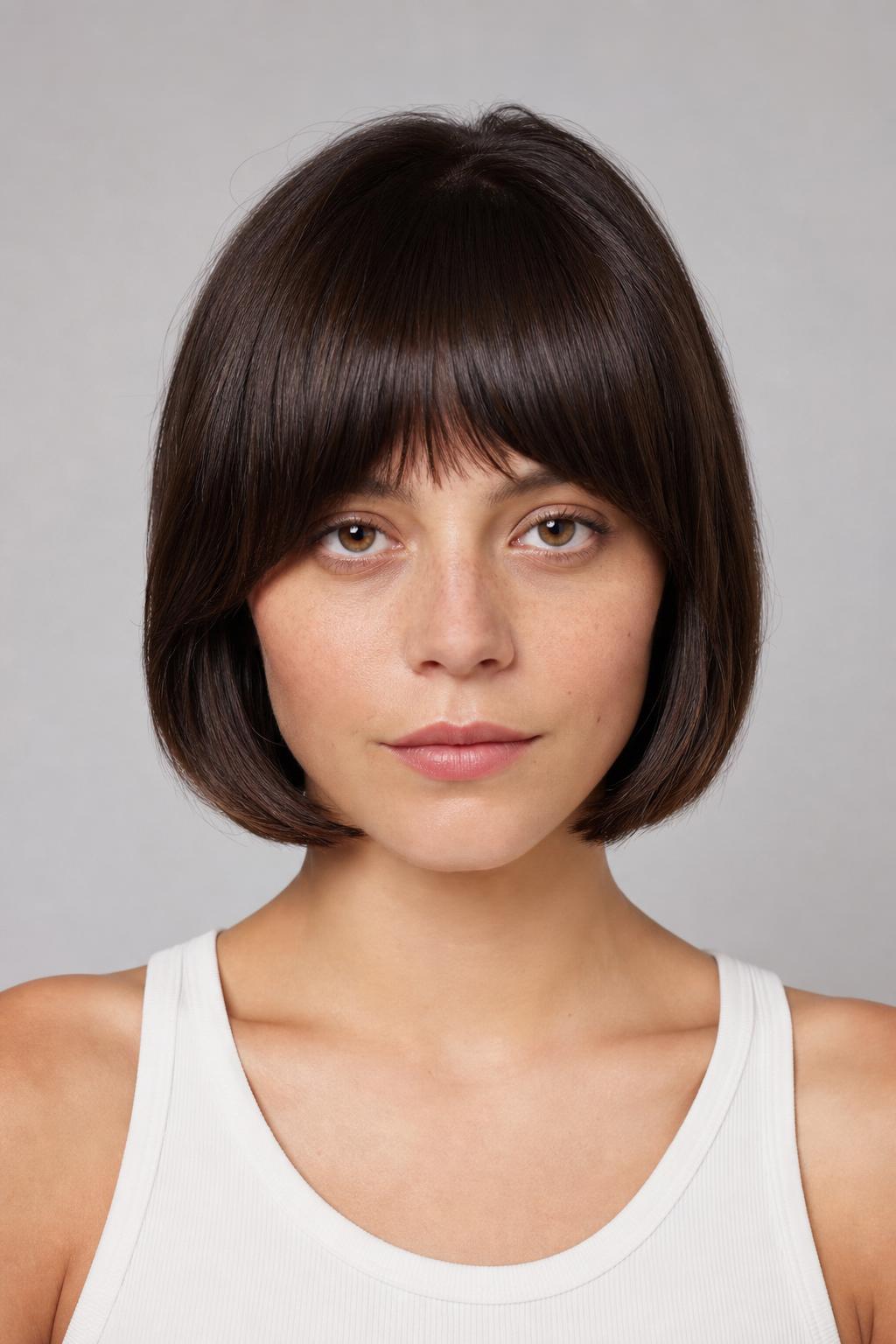
6. Sixties Mod Bob with a Rounded Fringe
A chin-length bob curved under at the ends plus a rounded fringe is the full mod silhouette, two arcs stacked on one face. Glossy, straight hair sells the reference; a smoothing serum pressed over the surface finishes it. Keep both curves trimmed on the same schedule or the proportions drift apart.
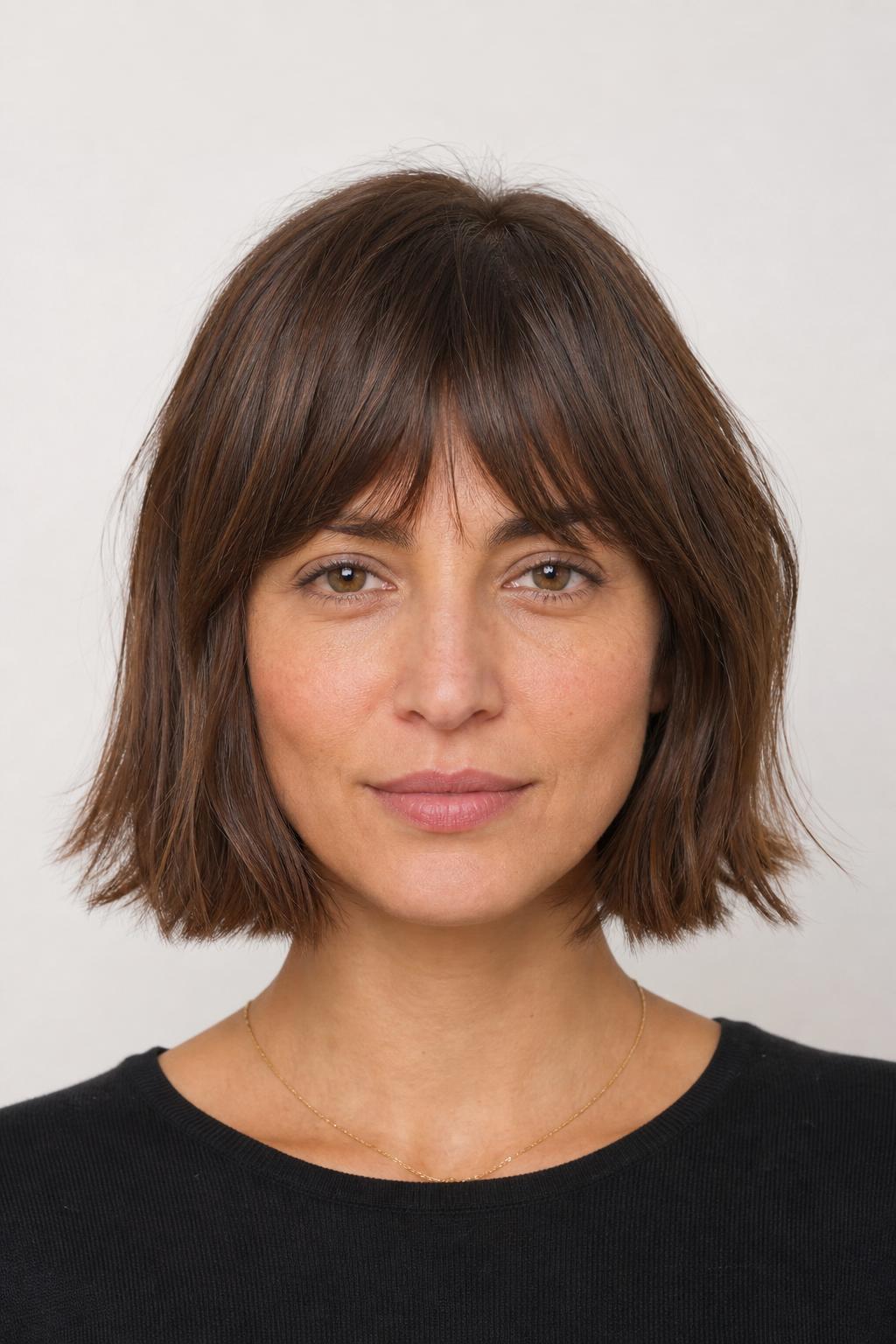
7. French Bob with a Softened Arch
Where the mod version is polished, this one is undone: a jaw-length French bob with an arched fringe whose edges are razored soft. The curve keeps the fringe from looking like a straight Parisian bang, a small difference that changes the whole cut’s mood. It belongs to the same family as the fringes in our French fringe spotlight, with the arch as its signature.
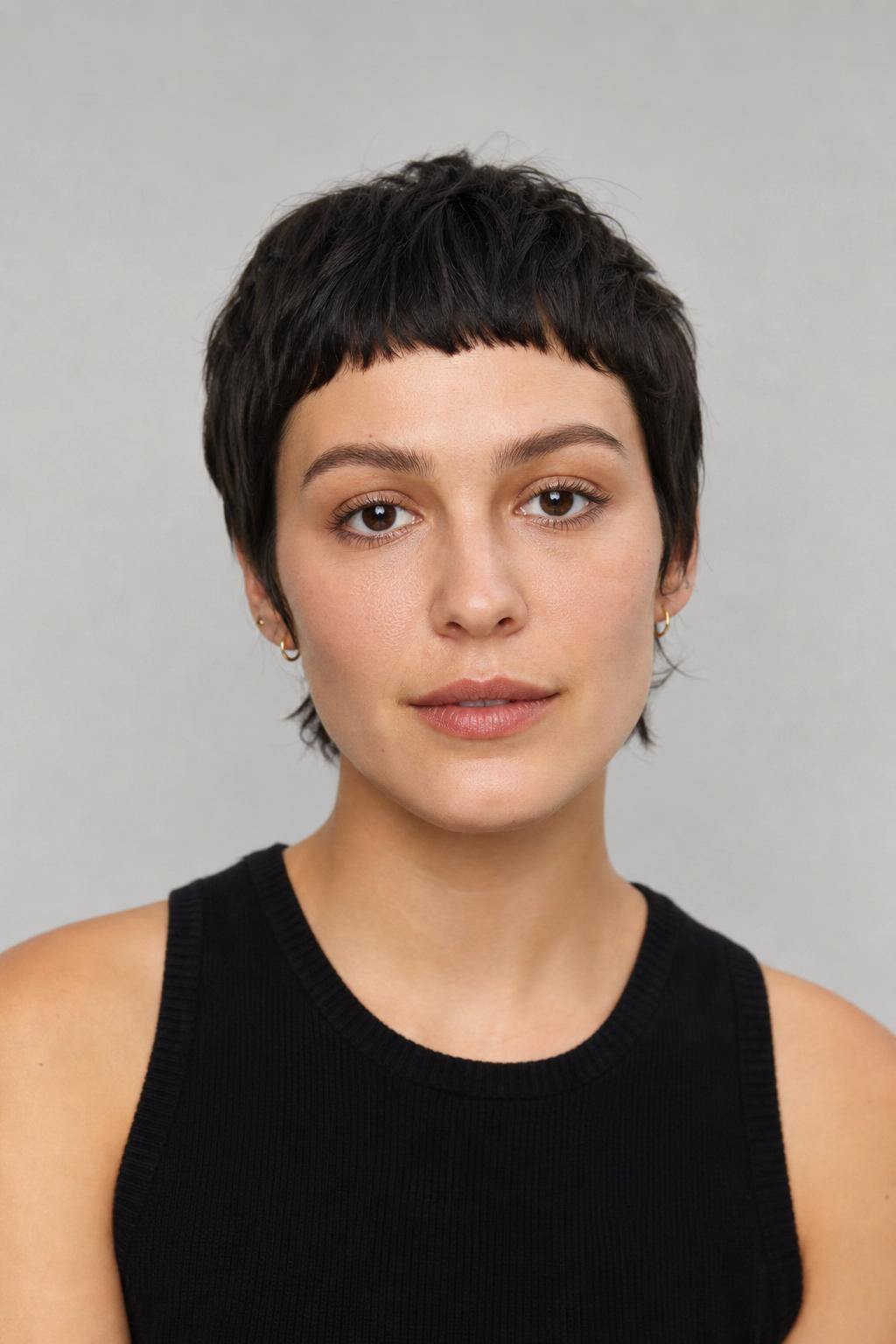
8. Arched Micro Fringe on a Pixie
Shrinking the arch to micro length keeps the curve but moves it high on the forehead, where it outlines the face like a drawn line. On a pixie the fringe is most of the visual information, so the rounded shape does heavy lifting for softness. A fingertip of light wax defines the curve’s edge without flattening it.
9. Rounded Fringe with a Shaggy Bob
Layered shag texture beneath a clean arched fringe is a deliberate contrast: order above, movement below. The fringe needs to stay slightly denser than the shag’s top layer or it gets absorbed into the mess. Wavy hair works here because only the fringe needs smoothing; everything behind it is supposed to be lived-in. More pairings of fringes with soft bob shapes live in our bob with bangs gallery.
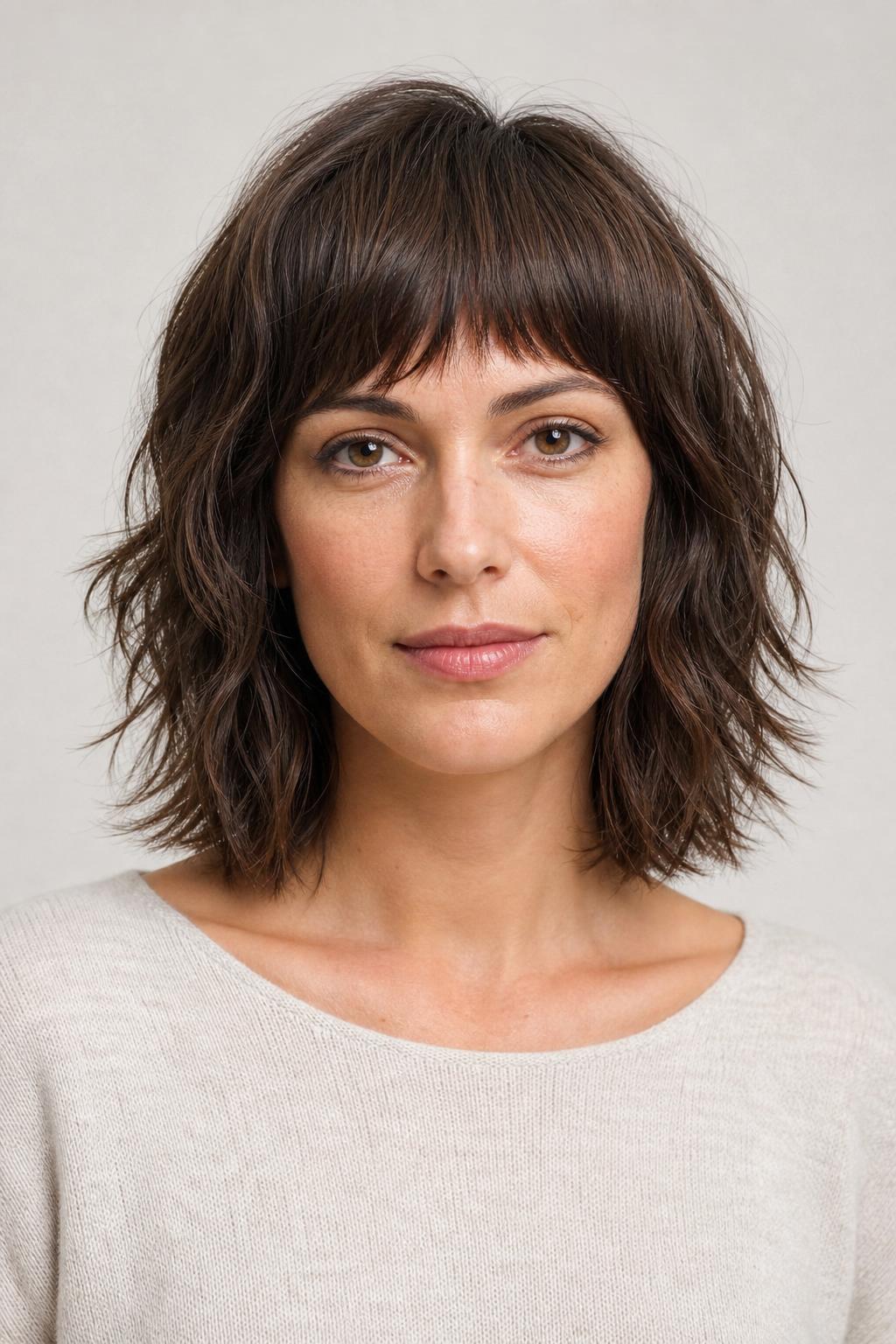
10. Copper Arch with an Ear-Length Crop
Saturated copper turns the curve into a color statement, and the ear-length crop removes everything that would compete with it. The arch’s lowest points land beside the eyes, pulling attention there the way a frame pulls attention to a picture. Color-treated hair needs the fringe’s ends kept blunt; bleach-fragile tips fray the curve fastest.
Textured, Curly, and Modern Takes
The arch survives texture better than most precision fringes because its shape is a curve, and curls already speak that language. These last five looks bend the classic pattern toward curl, wave, and current styling.
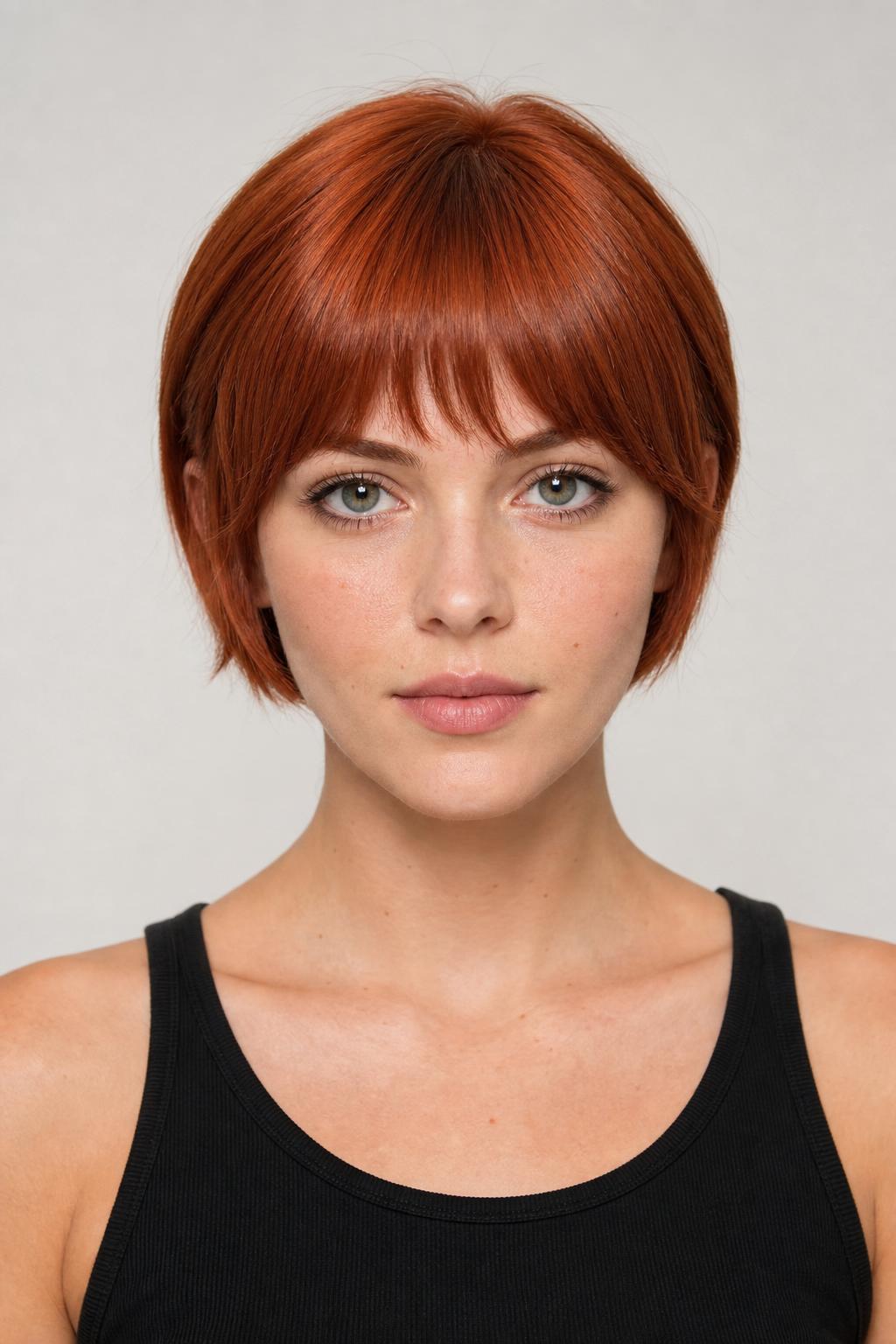
11. Curly Arched Fringe Cut Dry
On curls the arch is cut dry, spiral by spiral, so the finished curve shows at the hair’s true resting length. The rounded shape flatters curl especially well since each coil ends along the arc rather than at a straight line that fights the texture. Between washes, reshape with a damp palm and a drop of curl cream; brushing kills both the curl and the curve. Curl-first fringe ideas continue in our curly bangs gallery.
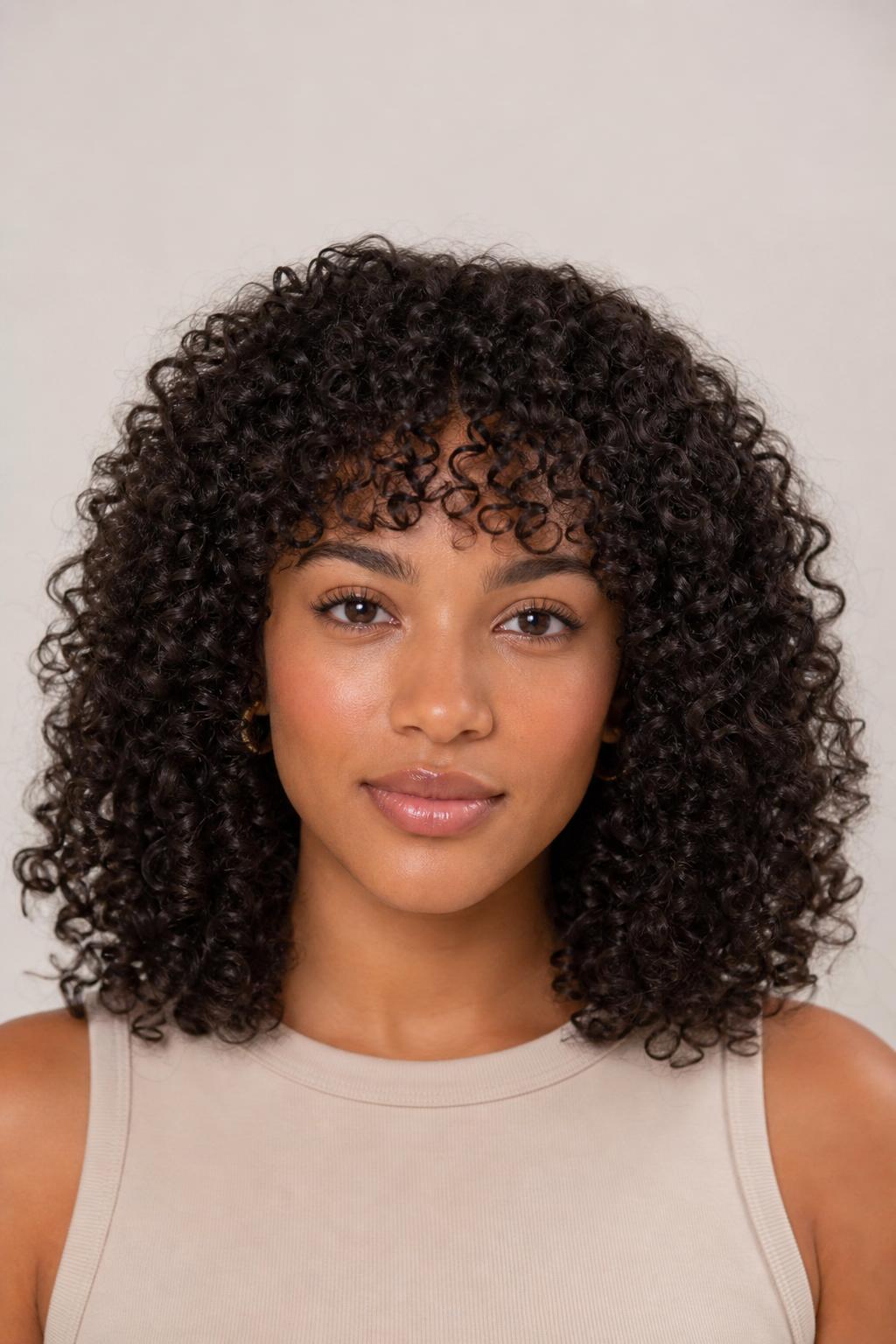
12. Wavy Arch with a Center Softening
A gentle wave through an arched fringe blurs the curve into something beachier, and letting the center split occasionally is part of the look. The cut underneath is still an arch, which is why the fringe falls back into shape after a night’s sleep instead of needing a restyle. Medium-density wavy hair gets this result with a diffuser and nothing else.
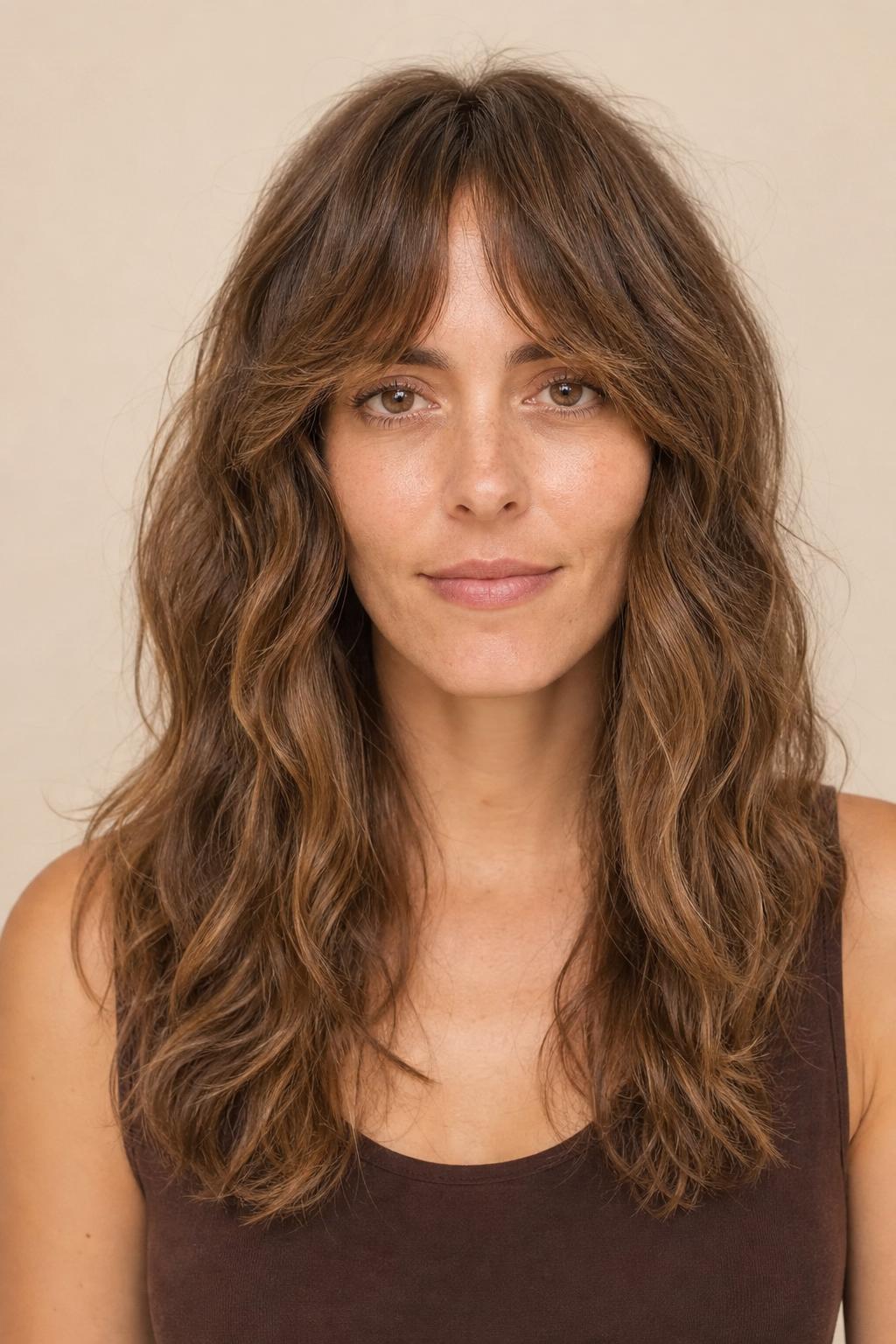
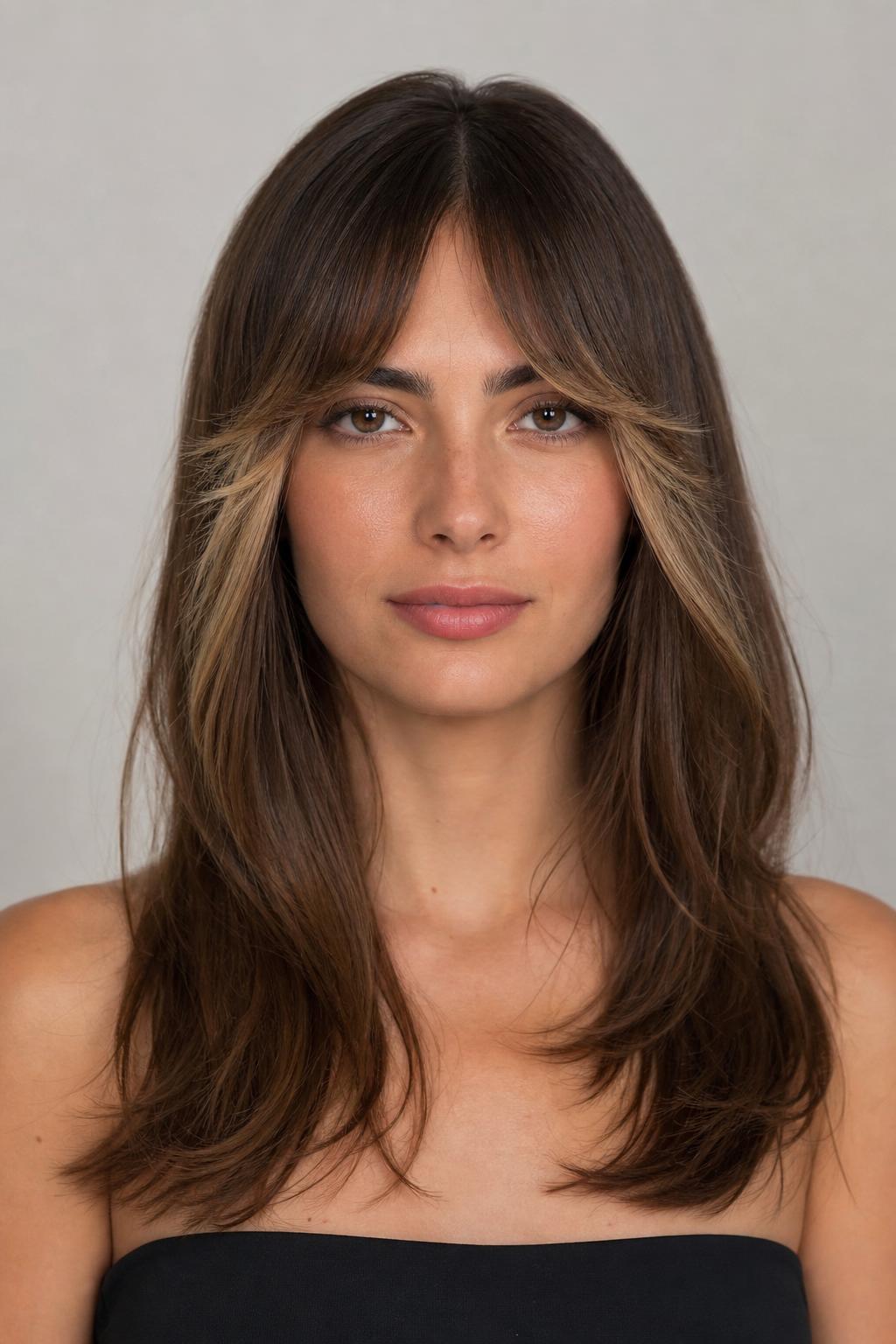
13. Arched Fringe with Money-Piece Highlights
Bright face-framing highlights placed at the fringe’s longer corners light the arch from its endpoints, exaggerating the curve without another millimeter of cutting. The center stays the natural depth so the roundness shows in color as well as length. Ask the colorist to keep the money pieces inside the fringe’s outer inch; wider placement flattens the effect.
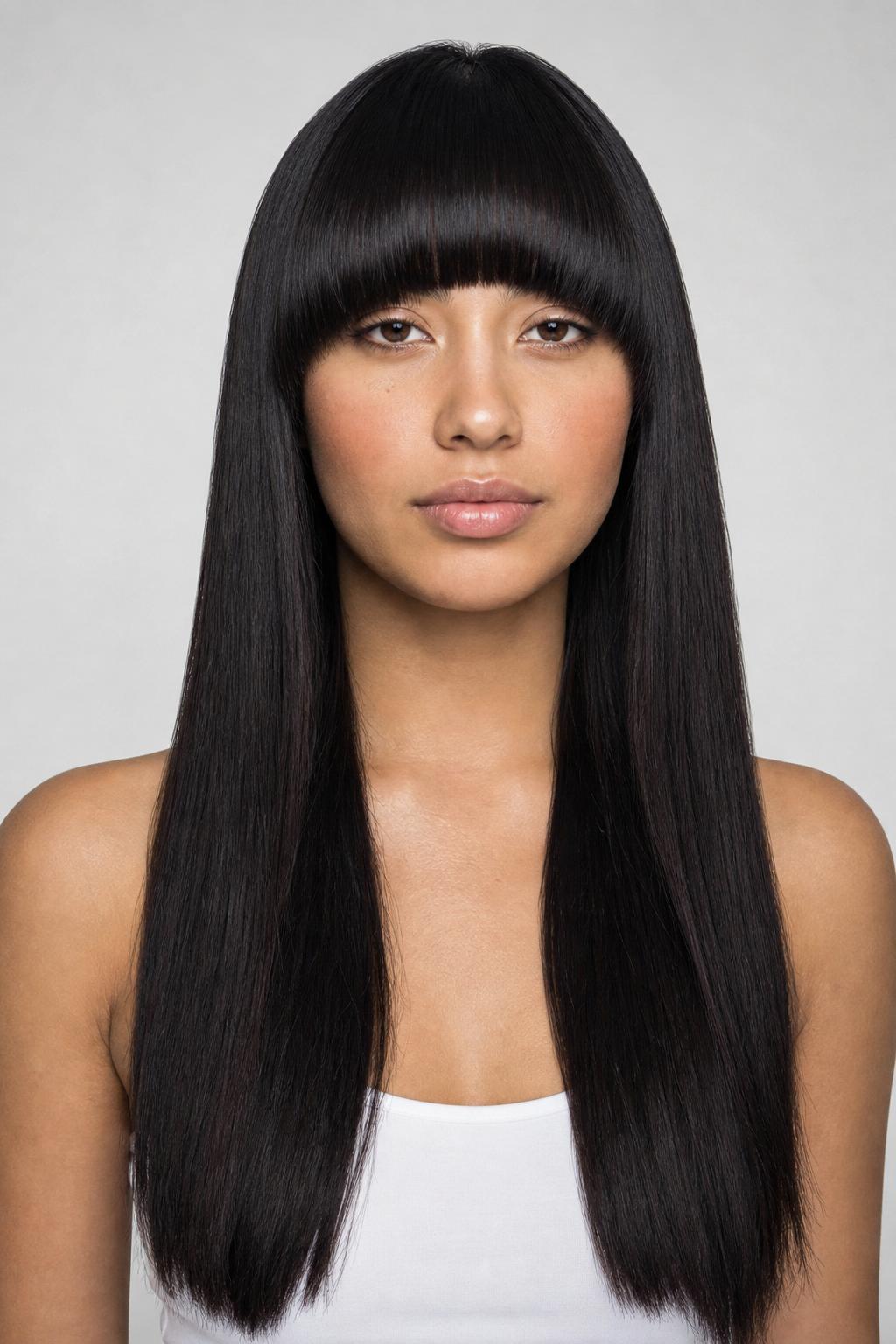
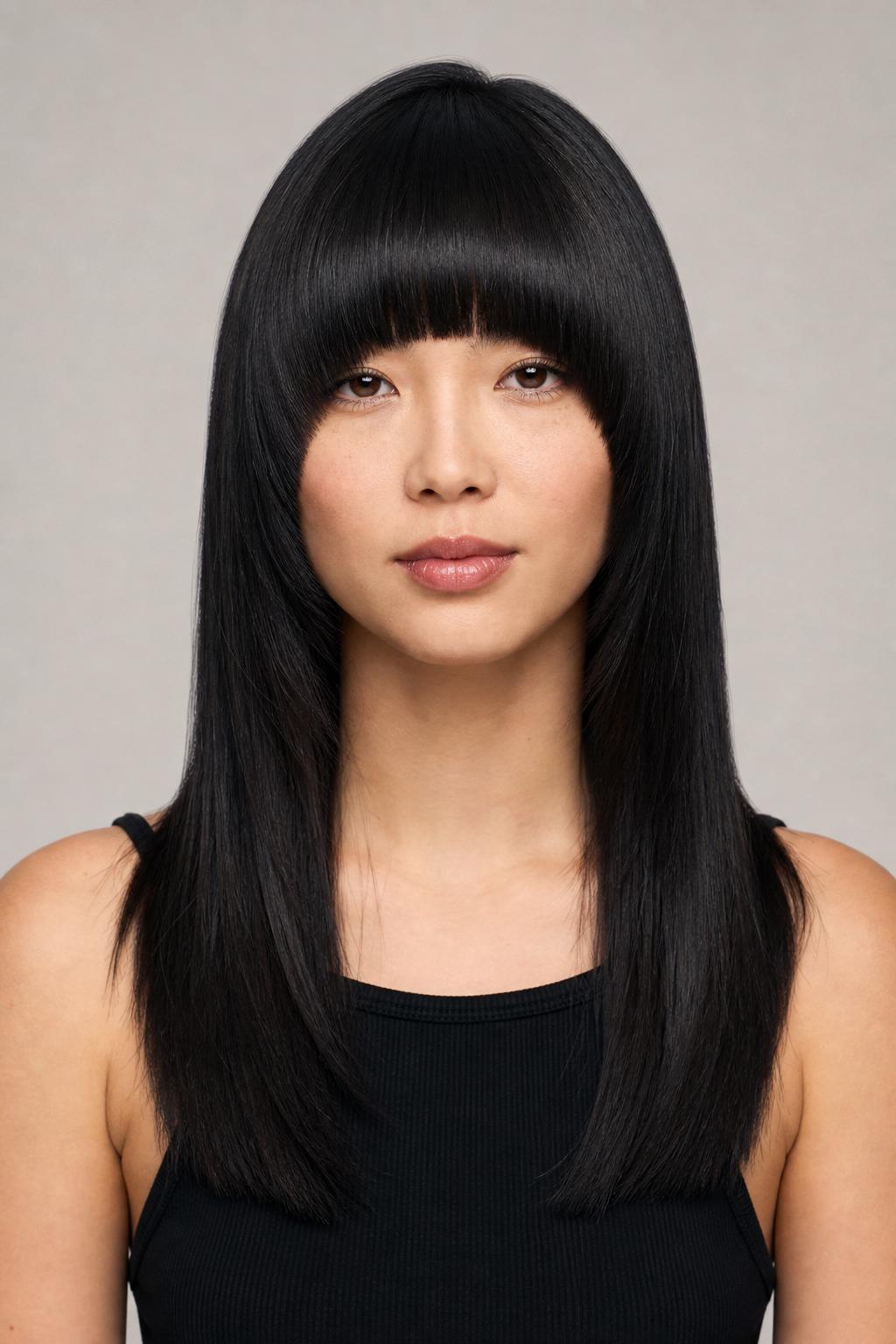
14. Thick Graphic Arch on Straight Black Hair
Maximum density, minimum softening: a solid arched hem on poker-straight black hair is the boldest version of this fringe, a striking curve you can see from across a street. It demands trims every 3 weeks and a daily 5-minute smooth-down, and it repays the effort by being the most memorable cut in this collection. Confident bone structure and low frizz are the entry requirements.
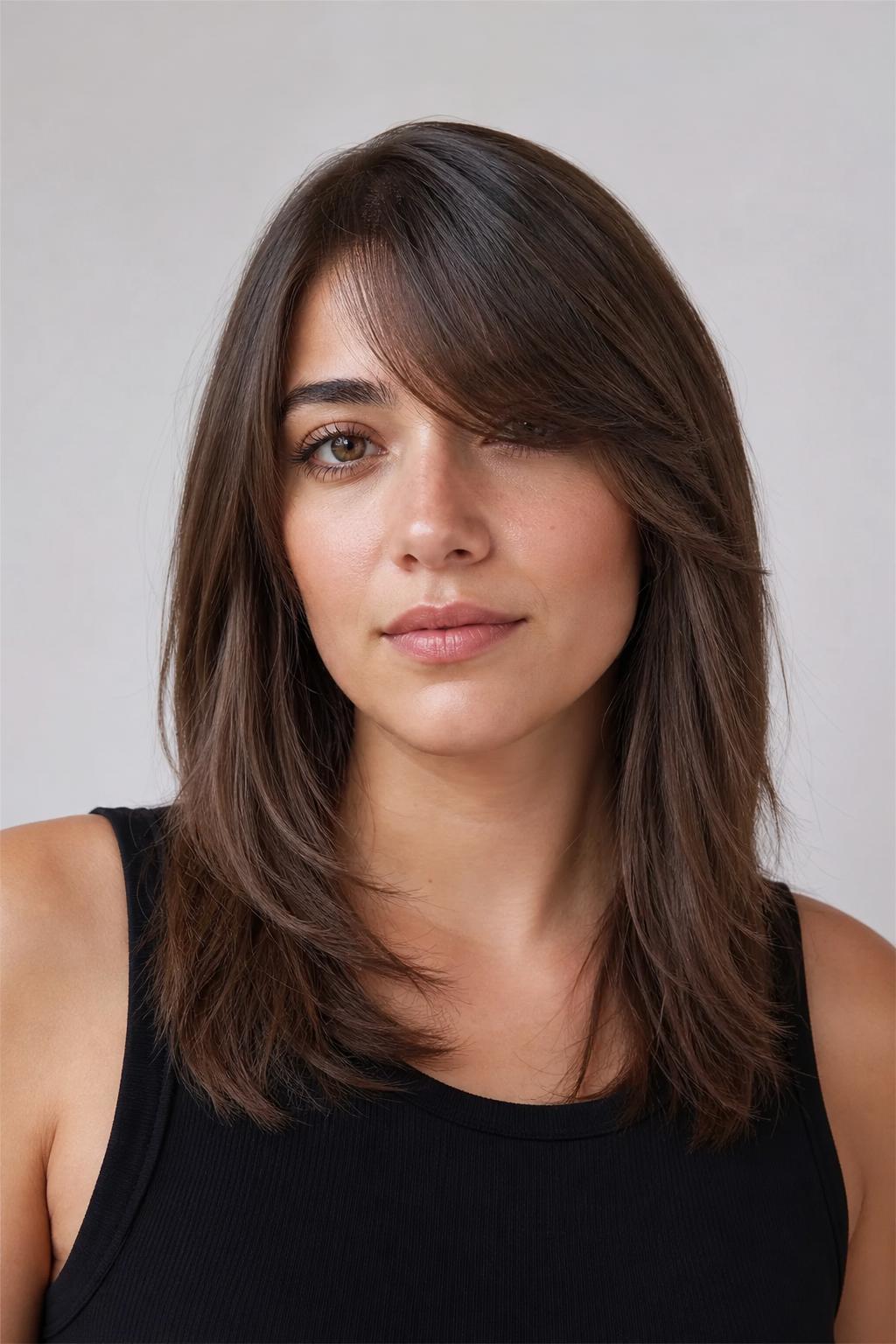
15. Grown-Out Arch Worn Swept
Every arch eventually reaches eye length, and this look is the planned version of that stage: the curve swept to one side, corners tucked toward the temples. Because the original cut was rounded, the grown fringe layers itself around the face instead of hanging in one flap. It is the reason stylists call the arch a low-regret fringe; even its exit is wearable.
How to Choose an Arch for Your Face Shape
Because the arch is a curve, the question is how deep the bend should be and where its lowest points land. Deeper curves add roundness; shallower ones behave almost like straight bangs. The table gives the starting point for each shape.
| Face Shape | Best Arch | Center Length | Avoid |
|---|---|---|---|
| Oval | Any depth; classic brow-following works instantly | Mid-brow | Nothing structural; pick by hair type |
| Round | Shallow arch with long temple corners | Top of brow | Deep curves that repeat the face’s roundness |
| Square | Medium arch with point-cut, softened edges | Mid-brow | Solid graphic hems that contrast the angular jaw |
| Heart | Arch blended into cheekbone face-framing | Mid-brow to brow top | Micro arches that widen the forehead visually |
| Long / Oblong | Deep, full arch with real density | Brow top, no higher | Sheer versions that leave the forehead tall |
| Diamond | Soft shallow arch ending above the cheekbones | Mid-brow | Corners that land at cheekbone width |
What to Tell Your Stylist
The word “arched” alone is not reliable salon vocabulary, so describe the geometry: “a full fringe cut in a curve, shortest at the center of my forehead at mid-brow, rounding longer toward the temples, with the corners blending into the lengths.” Specify the edge too, solid for the graphic look or point cut for softness. If your reference photo shows a 1960s-style rounded fringe, say whether you want the literal retro density or a lighter modern read of it; the same photo honestly supports both cuts. Still deciding if any fringe suits your routine? Start with our decision guide on whether you should get bangs before booking.
Stylist tip: Ask your stylist to check the arch’s symmetry with your face relaxed and your glasses or usual part in place, looking straight into the mirror. The curve’s two halves are cut separately, and a client who tilts their head during the cut walks out with one corner visibly lower, the most common arched-fringe complaint in the chair.
Maintenance and Styling
The arch needs its curve maintained, and curves show wear faster than straight lines: expect trims every 3 to 4 weeks for dense graphic versions and every 4 to 6 for soft or sheer ones. Daily styling is a 3-to-5-minute blow-dry, brushing the fringe flat side to side first, then rounding the last pass with a medium brush so the hem bends inward slightly. Waves and curls swap the dryer for a diffuser or air-drying with a curl cream reshape. The one product rule: keep heavy oils off the fringe, because the curve depends on the hair falling freely, and weighed-down strands straighten the arc into a flat line by afternoon.
FAQ
What are arched bangs?
Arched bangs are a full fringe cut in a curved line, shortest at the center of the forehead and gradually longer toward the temples. The hem follows the natural arc of the brow line, which frames the eyes without cutting straight across them. They cover like blunt bangs but soften the face the way rounder shapes do.
Are arched bangs the same as curtain bangs?
No. Curtain bangs split at a center part and sweep to the sides, leaving the mid-forehead open, while arched bangs stay connected across the forehead in one curved hem. The arch is a full-coverage fringe; the curtain is an open one. A grown-out arch can be styled into a curtain shape, but the cuts start from different patterns.
Who do arched bangs suit best?
Long, oval, and heart-shaped faces get the most from the arch, since the curve adds a soft horizontal that shortens and balances the face. Round faces should keep the curve shallow with longer corners so the fringe does not repeat their own roundness. Straight to gently wavy hair holds the shape most easily; curls need a dry cut.
How often do arched bangs need trimming?
Every 3 to 4 weeks for dense, defined versions and every 4 to 6 weeks for softer point-cut ones. The curve is the first thing regrowth erases, because the center grows past its short point and flattens the arc. Most salons offer quick fringe trims between full cuts, which is the economical way to keep the shape.
Can I style arched bangs with a straightener?
Yes, but bend the iron rather than pulling it straight down. Glide the plates through the fringe with a slight inward rotation at the hem so the ends curve toward the forehead, keeping the arc the cut created. A flat vertical pass straightens the curve out visually and makes the corners look accidentally uneven.
Do arched bangs work with glasses?
Generally yes, because the curved hem rises away from the frames at the center where glasses are tallest. Keep the center length at mid-brow or higher so the fringe clears the top rim, and choose frames with a rounded top line if you want the shapes to echo each other. You can compare more frame-friendly options across our bangs and fringes section.
Arched bangs earn their place by doing two jobs at once: covering the forehead like a classic fringe while curving with the face instead of against it. Pick your depth from the face shape table, bring a photo from this gallery, and describe the curve in plain geometry at the consultation. A well-cut arch is the rare fringe that looks deliberate on day one and still graceful on its way out.
Hair results vary based on your natural hair type, texture, density, and condition. Always consult with a licensed hairstylist before making significant changes, especially with chemical treatments or dramatic length changes. Photos may show styled results that require professional tools and products to replicate.