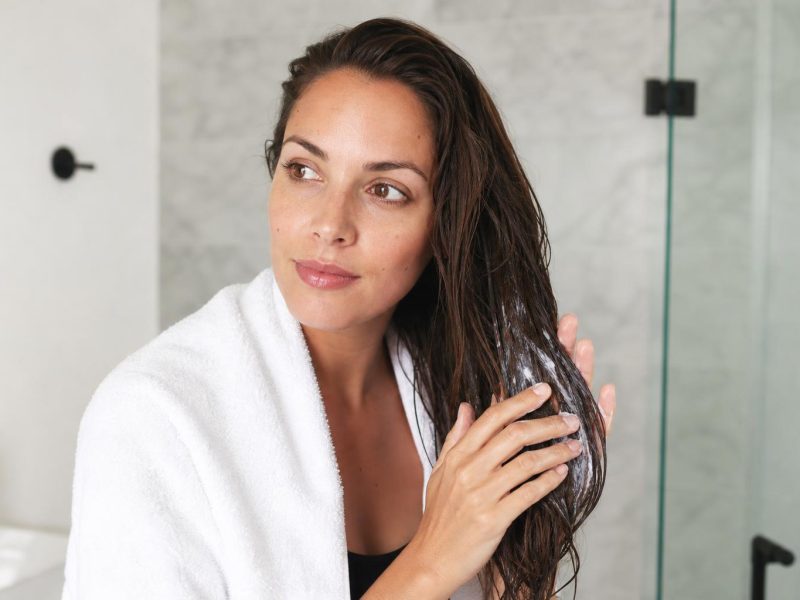


In a humid climate the haircut matters more than the product, because weight and shape decide how far your hair can swell before it looks like frizz.
Humidity puts water into the hair shaft, and the shaft swells to hold it. On straight fine hair that shows up as puffing at the crown, on wavy hair as a halo of loose ends, and on curls as sudden shrinkage and expansion at the same time. The 20 haircuts below handle it three different ways: heavy blunt shapes that give the swelling nowhere to go, textured cuts that make the extra volume look deliberate, and short cuts that remove the length humidity has to work on.
Each entry names what the cut does under damp air, which textures it suits, and how it holds up over a whole summer. After the gallery there is a porosity and density breakdown, the exact requests to make at your appointment, the reason humidity does this in the first place, and the situations where cutting is the wrong fix.
| Factor | Details |
|---|---|
| Best for | Anyone living through months above 60 percent humidity, or traveling somewhere tropical |
| Maintenance | Blunt shapes every 5 to 7 weeks, textured shapes every 8 to 12 weeks, minimal daily styling |
| Works with | Every texture, though high-porosity hair needs the most weight |
| Avoid if | You want a poker-straight finish that holds all day without a keratin treatment |
| Salon time | 40 to 60 minutes for a blunt cut, 60 to 90 minutes for a dry-cut curly shape |
Why Damp Air Turns Smooth Hair into Frizz
Hair holds its shape through weak bonds that break when the shaft takes on water and reform as it dries. In humid air those bonds keep breaking and reforming all day, so hair drifts back toward its natural pattern no matter how it was styled in the morning. The shaft also physically swells as it absorbs moisture, which lifts the cuticle and makes individual strands stand away from the ones around them.
Two things determine how badly this shows. Porosity decides how fast water gets in: high-porosity hair, whether from color, heat, or genetics, has a more open cuticle and swells quicker. Weight decides what happens next: a strand that swells inside a heavy blunt cut has neighbors holding it down, while the same strand in a heavily thinned cut has nothing to push against and lifts free. That second factor is entirely in your stylist’s hands.
Blunt and Weighted Cuts That Resist Swelling
The counter-intuitive part of humid-climate hair is that removing bulk usually makes frizz worse, not better. Thinning shears leave thousands of short broken-off ends through the interior, and every one of them lifts when it takes on moisture. Weight is what suppresses that. These seven cuts keep the perimeter dense and do their shaping through length and line rather than through removal.
1. Chin-Length Blunt Bob with Heavy Ends
Cut in one uninterrupted line at the chin with no thinning anywhere, this bob uses its own weight to hold the ends down as the air gets damp. The density at the perimeter is the whole mechanism, which is why asking for it to be “softened” defeats the point. Straight to loosely wavy hair at medium density gets the cleanest result.

2. One-Length Collarbone Cut
Coarse, thick hair carries enough weight at collarbone length to stay put through an afternoon outdoors. There are no layers to separate, so the only frizz that shows is at the very surface, and a drop of oil smoothed over the top handles that. Fine hair will find this length goes limp rather than frizzy, which is a different and easier problem.

3. Blunt Lob with a Deep Side Part
Round and square faces gain a useful diagonal from a deep side part, and in humidity that part also does structural work by pulling the crown flat where puffing usually starts. The lob sits just below the shoulder so the weight of the length keeps everything hanging. Anyone whose blunt cut tends to go flat in dry weather will find this the one climate where that works in their favor.

4. Long Hair with Zero Layers
Growing hair to mid-back with nothing removed produces the most humidity-stable shape available, and it holds that way for the three to four months between trims. The only upkeep is a dusting of the ends to stop splitting, which is a fifteen-minute appointment. The trade-off is real weight and a long drying time, and on fine hair it can look flat rather than full.
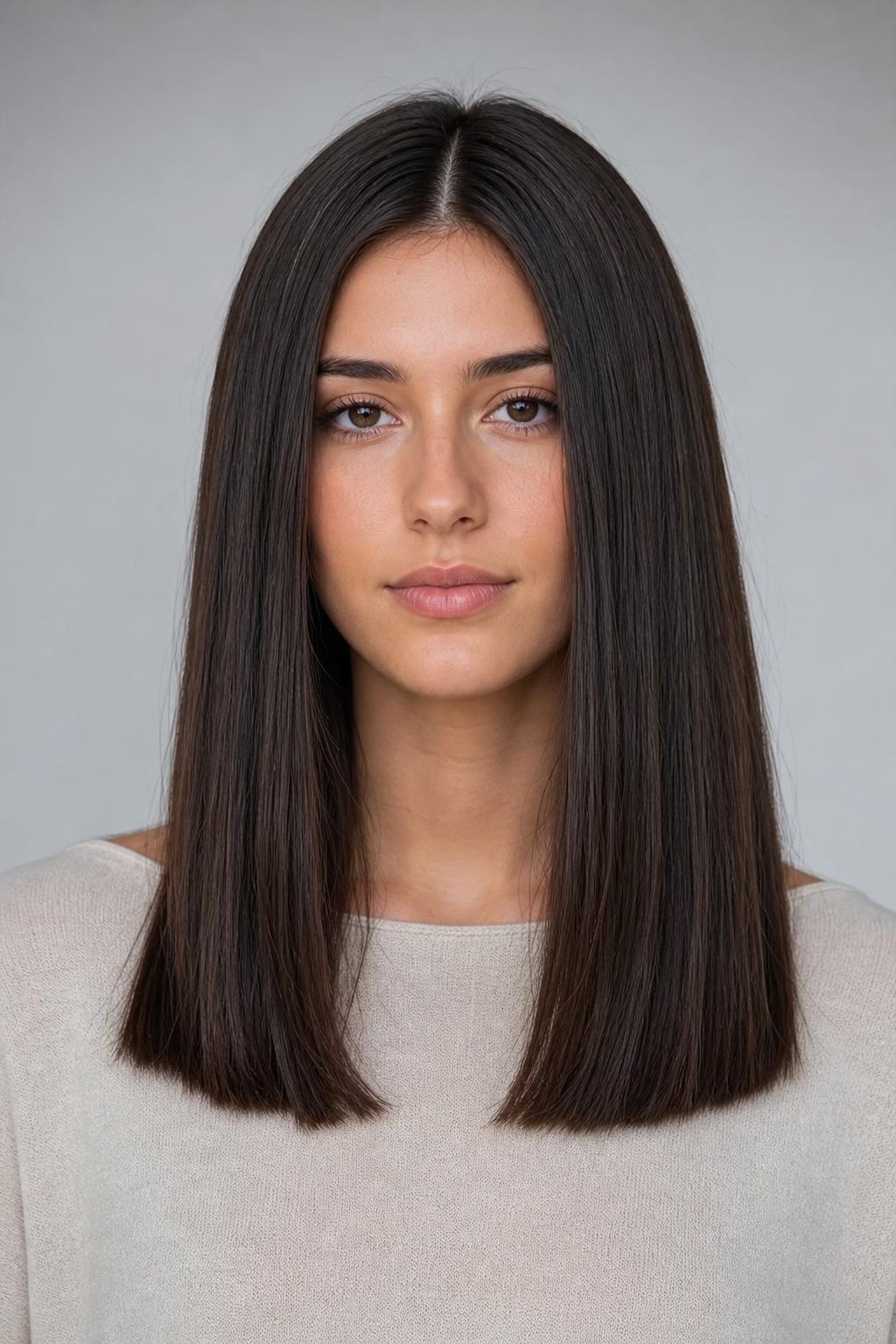
5. Italian Bob Cut Just Below the Ear
Where a French bob sits high and blunt at the jaw, the Italian version drops slightly lower and carries more body through the sides, which suits thick hair that would otherwise flare outward in damp air. The extra inch of length is enough weight to stop the flare. The full breakdown of how the two bobs differ is worth reading before you choose between them.

6. Blunt Bob with a Curved Perimeter
Blow-dry this one flat for ninety seconds with a paddle brush and the curved hem tucks under on its own, holding that shape far longer than a straight-across cut would. The curve means the ends point inward rather than outward, so swelling pushes them toward the neck instead of away from it. That single detail is why curved perimeters outlast straight ones in a humid summer.
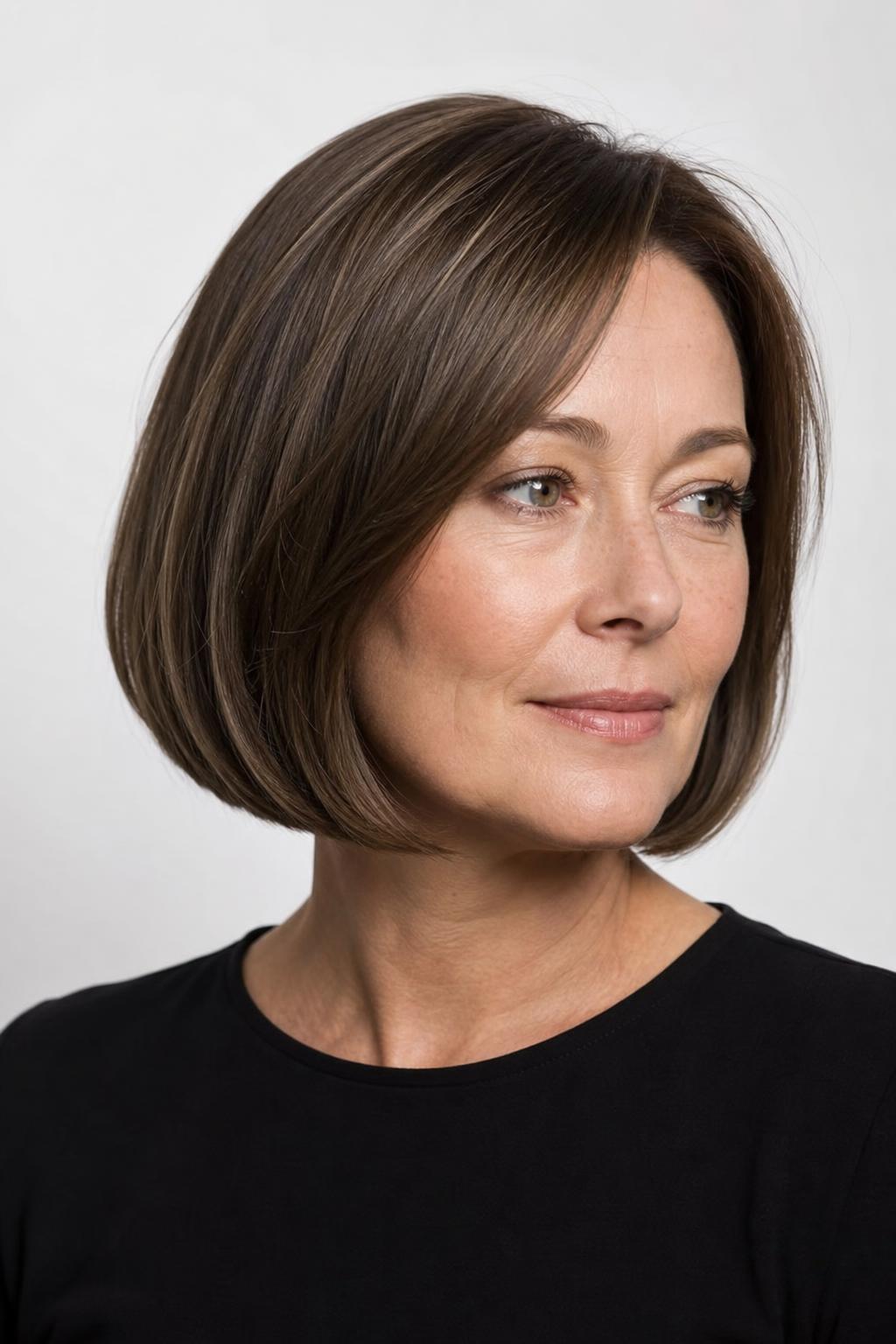
7. Weighted Long Bob for Coarse Hair
Ask for “no thinning shears anywhere, and remove bulk only from the interior with point cutting if you must.” That phrasing matters, because most stylists reach for thinning shears on coarse hair by reflex and it is the worst possible choice in a humid climate. The result is a long bob that sits heavy at shoulder length and stays there.

Textured Cuts That Make the Volume Look Deliberate
The other strategy is to stop fighting. A cut built around visible texture reads as finished when humidity adds volume, where a smooth cut reads as ruined. The distinction is not about how much hair is removed but about where: these shapes take length out in long, connected pieces rather than in short broken ones, so the extra body lands as movement instead of fluff. This is the approach that pairs with air-drying rather than heat.
8. Curly Shag with a Rounded Perimeter
Rounding the outline instead of cutting it straight lets 3a to 3b curls expand evenly in every direction rather than widening at one point. The layers are cut curl by curl on dry hair so the stylist can see where each one springs to. It is a shape that looks the same on a dry day and a wet one, which is the whole point.
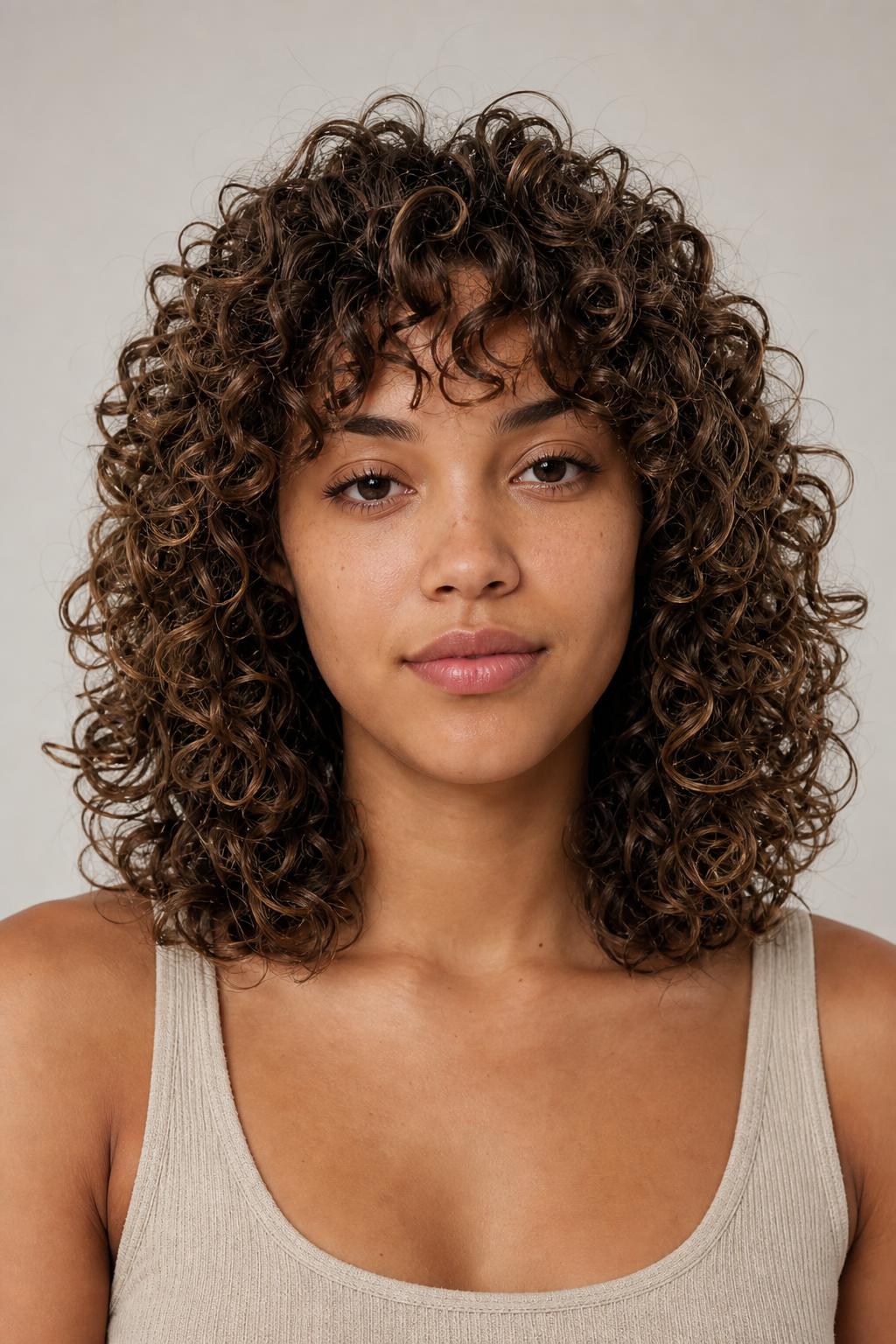
9. Wavy Lob with Long Layers
Medium-density 2b waves get their best summer result from a lob with layers that begin at the collarbone and stay long. Because the layers are connected rather than choppy, swelling adds body through the mid-lengths instead of frizz at the ends. Anything shorter or choppier and the same texture starts separating into individual pieces.

10. Modern Shag with Bottleneck Bangs
Bottleneck bangs narrow at the center and widen toward the temples, so the section that touches a damp forehead is small and the rest blends into the length. Push them apart with fingers and they sit correctly without a dryer. It is the one fringe shape that does not need daily heat in a climate that undoes heat within the hour.

11. Long Layered Cut with Face-Framing Pieces
Oblong and heart-shaped faces get width where they need it when face-framing pieces start at the jaw and are left long. In humid air those front pieces are the first to lift, so cutting them long enough to have their own weight is what stops them curling upward at the cheek. Keep the interior layers below the shoulder.

12. Wolf Cut with Weight Kept at the Ends
Unlike the standard wolf cut, which thins the perimeter to a wispy point, this version keeps the ends dense while retaining the short crown layers. That leaves the shape and contrast intact without giving humidity a fringe of loose ends to lift. Anyone new to the cut should know how a wolf cut behaves day to day before committing in a humid month.

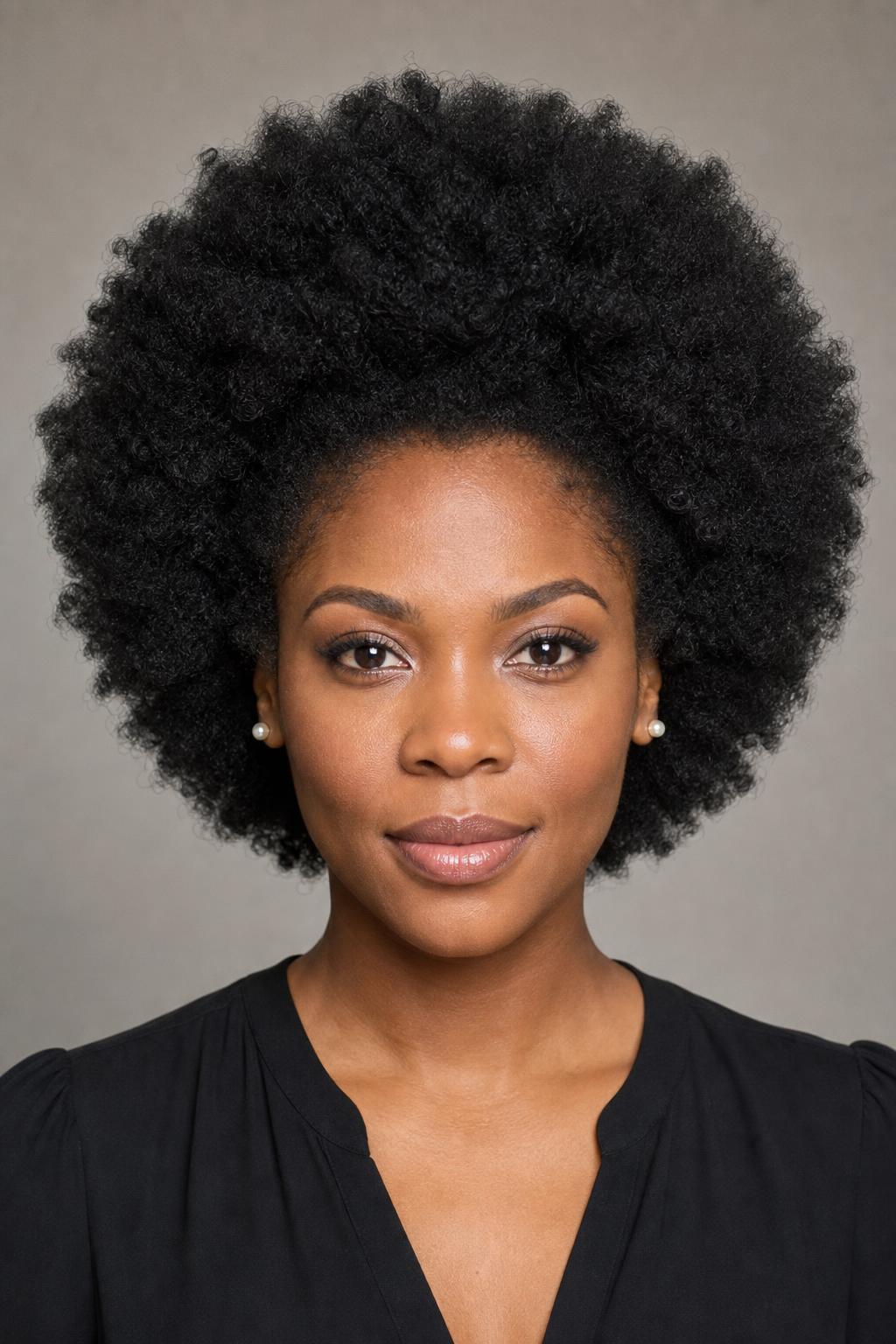
13. Coily Cut Shaped into a Round Afro
Cutting 4b to 4c coils into an even rounded shape means humidity expands the whole outline at once rather than pushing one section out of line. There is no direction for it to go wrong. Shape it every five to six weeks to keep the circle even as the crown grows faster than the sides.
14. Shoulder-Length Cut with Piecey Point-Cut Ends
Point cutting the last inch into long tapered pieces, rather than slicing across the ends, gives a shoulder-length cut deliberate separation. When the air adds volume it lands as piecey definition rather than a solid triangle. Ask specifically for vertical point cutting at the perimeter and nothing above it.

Short Cuts That Remove the Problem
Below the ear there is not enough length for humidity to build a halo, and drying time drops to a few minutes even in air that never quite dries anything. Short cuts also let you rinse and restart at midday, which is a genuine option in a tropical climate and not one longer hair offers, and it is the same logic behind the cuts built around frequent washing. The trade-off is trim frequency, since every short shape here depends on a clean line that grows out fast.
15. Tapered Pixie with a Close Nape
Taking the nape and sides close removes the exact area where sweat and damp air collect against the skin. Two inches left on top is enough to have a shape and short enough that swelling cannot lift it into a puff. Thick, coarse hair sees the biggest improvement, since the taper takes out the density that otherwise expands sideways.

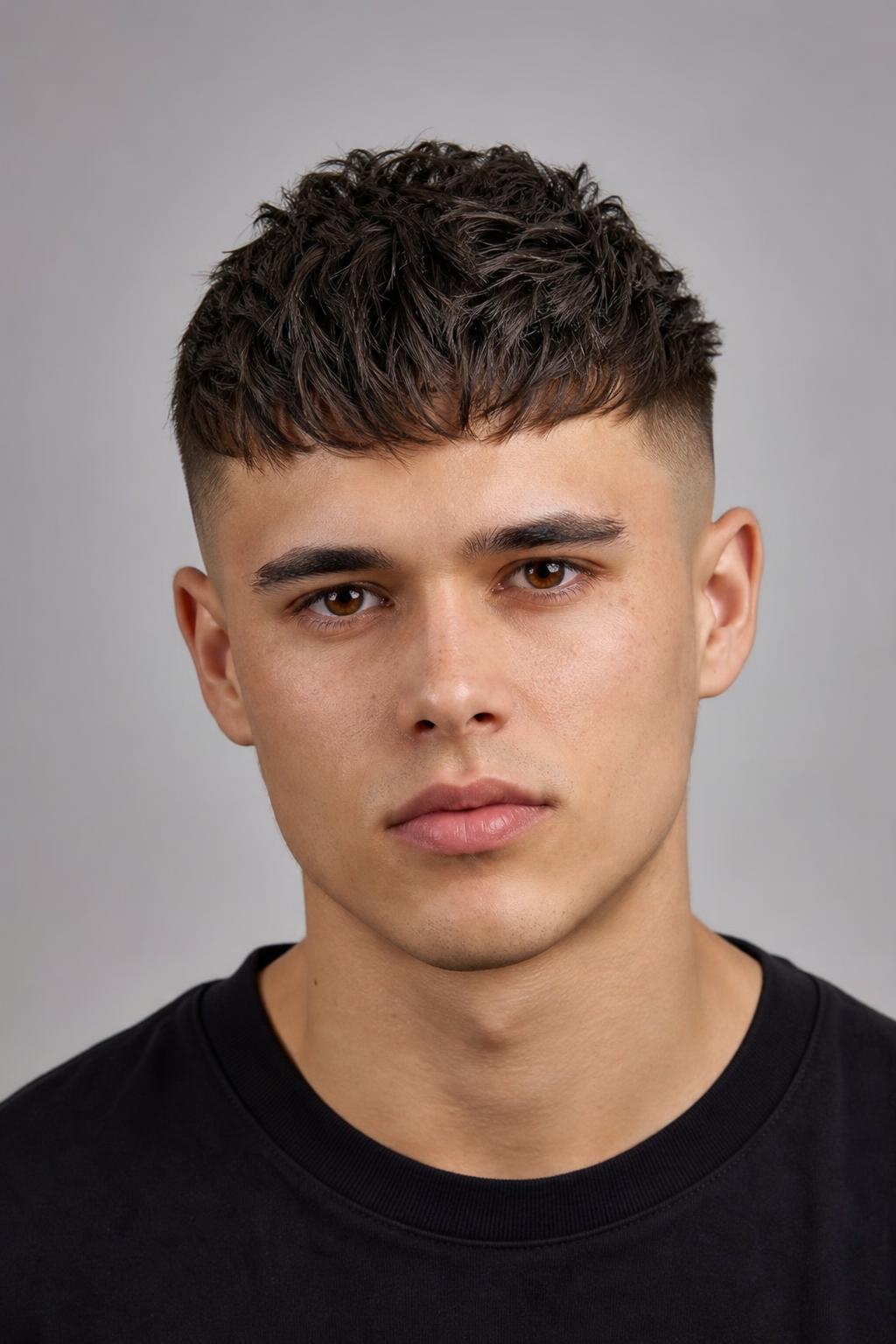
16. Skin Fade with a Textured Top
A skin fade puts bare scalp where a barber would otherwise leave the shortest hair, which is the single most effective way to keep a head cool in tropical heat. The two inches of textured length on top can be raked forward with a light clay and it stays. Book every three weeks, because a fade grown past that stops looking like a fade.
17. Buzz Cut at a Number Two
There is nothing for humidity to act on at a quarter inch, which makes a number two buzz the only genuinely frizz-proof cut on this list. It also dries instantly and needs no product at all. The honest limitation is that it shows scalp on thinning hair and offers no shape adjustment for face shape.

18. Micro Bob at Ear Level
Oval and heart-shaped faces carry an ear-level bob well, because ending the line high draws focus up to the cheekbones rather than out at the jaw where damp hair tends to widen. Nothing touches the neck, and the whole cut air-dries in about ten minutes. A strong square jaw is better served by keeping the front corners slightly longer.

19. Cropped Cut with Wispy Bangs
Cutting a short crop with soft wispy bangs rather than a blunt fringe means the front section can lift a little without looking wrong. Blunt bangs in humid air separate into visible strips within an hour, and no amount of product prevents it. Wispy pieces are already separated, so nothing changes.

20. Bixie with Choppy Layers
Sitting between a pixie and a bob, the bixie keeps enough length at the nape to cover it while the choppy crown layers stay short. In damp air that crown lifts, which is exactly what the cut wants, so the shape improves rather than collapses. It suits fine to medium hair that goes flat in dry weather and finally has body in summer.

Choosing by Porosity and Density
Two people in the same city with the same haircut can have completely different summers, and porosity is usually why. High-porosity hair takes on water fast and needs weight and sealing; low-porosity hair resists water and mostly needs to avoid heavy product buildup. Density then decides how much length you can carry before the cut becomes a burden, and knowing whether your pattern is curly or coily narrows the row you should be reading.
| Hair Profile | Best Cut Strategy | Ideal Length | Avoid |
|---|---|---|---|
| Fine, low porosity | Blunt line, minimal removal | Chin to collarbone | Heavy creams and oils, which flatten more than humidity does |
| Fine, high porosity | Short crop or bixie with choppy layers | Nape length or shorter | Long lengths, which frizz along the whole shaft |
| Medium, wavy | Long connected layers or a weighted lob | Collarbone to mid-back | Short choppy layers above the ear |
| Thick, coarse | Blunt weight or a close taper, nothing between | Two inches, or collarbone and longer | Thinning shears anywhere in the cut |
| Curly, high porosity | Dry-cut rounded shape, weight left at the ends | Chin to shoulder | Wet cutting, which lands two inches short once it dries |
| Coily, dense | Even rounded shaping or a full taper | Two to five inches | Asymmetric shapes that read as uneven when they expand |
What to Tell Your Stylist in a Humid Climate
The most useful sentence you can say is where you live and what your hair does there, not what you want it to look like. “I live in Houston and by noon my ends are lifting away from each other” tells a stylist to add weight; “I want something sleek” tells them to blow-dry it smooth and send you into weather that undoes it in twenty minutes. Say the problem, not the fantasy.
Ask for three specific things. No thinning shears, since they create short interior ends that lift as they absorb moisture. A perimeter left dense, with any bulk removal done inside the cut. And a finish check on air-dried hair, or at minimum a clear answer to “what will this look like if I do not blow-dry it?” A stylist who cannot answer that has not cut for your climate.
Stylist tip: Book your appointment in the middle of the humid season, not before it. A cut shaped on hair behaving at its worst is one you can trust for the rest of the year, and it tells your stylist exactly how much your hair expands rather than making them estimate.
Maintenance Through a Humid Season
Humid months change the schedule as much as the shape. Blunt lines lose their edge faster because every strand is doing structural work, while textured shapes stretch further than they would in winter. Washing frequency also shifts, since scalps produce more oil in heat, and the temptation is to over-wash and raise porosity in the process. Building the season around a routine matched to your hair type matters more than any single product.
| Cut | Trim Frequency | Product Category | Grow-Out Behavior |
|---|---|---|---|
| Blunt bob | 5 to 6 weeks | Lightweight smoothing serum on the surface only | Line softens by week 6 and frizz reappears at the ends |
| Long one-length | 12 to 16 weeks | Leave-in conditioner through the mid-lengths | Extremely forgiving, ends split before the shape changes |
| Curly shag | 10 to 12 weeks | Curl cream plus a light gel cast | Grows out well, though the crown flattens around week 10 |
| Tapered pixie | 3 to 4 weeks | Matte paste, a pea-sized amount | Sides expand outward first in damp air |
| Skin fade | 2 to 3 weeks | Light matte clay | Fade line blurs quickly and the shape loses contrast |
Stylist tip: Apply styling product to soaking wet hair rather than towel-dried hair in a humid climate. Water is already in the shaft at that point, so the product seals it in and blocks more from getting in later. Applied to damp hair, the same product sits on top and lets moisture keep moving through.
When Cutting Is Not the Answer
A haircut solves the structural half of the problem. These are the cases where something else is going on and reaching for the scissors will disappoint you.
- Your hair only frizzes since you started coloring it. That is porosity damage rather than the climate, and a bond-repair treatment plus a longer gap between lightening sessions does more than any cut.
- You want genuinely straight hair through a tropical summer. No cut delivers that. A professional smoothing treatment is the honest answer, with the trade-offs that come with it.
- Your frizz is only at the hairline and temples. Those short pieces are usually breakage or new growth, not a cut problem, and cutting more will not shorten them further.
- You already have a very short cut and it still puffs. At that length the issue is product weight and drying method rather than shape, so a lighter clay and finger drying will do more than another inch off.
FAQ
What Is the Most Frizz-Resistant Haircut for Humid Weather?
A blunt one-length cut with no thinning is the most reliable choice for straight to wavy hair. The weight of an unbroken perimeter holds the ends down as the shaft swells, and there are no short interior pieces to lift. On curly hair the equivalent is a dry-cut rounded shape with weight left at the ends rather than a heavily layered one.
Do Layers Make Frizz Worse in Humidity?
Short choppy layers do, long connected layers usually do not. The problem is interior ends: every layer creates a shorter strand that has nothing above it to hold it down when it takes on moisture. Layers that start below the shoulder and taper gradually keep the perimeter intact, which is why they behave so differently from crown-height layering.
Should I Cut My Hair Short if I Live Somewhere Humid?
Short helps, but only if you go genuinely short. Anything between the ear and the shoulder is the hardest zone, because it has enough length to expand but not enough weight to hang. Either cut above the ear or keep it at collarbone length and longer, and skip the middle.
Why Does My Hair Frizz More Some Days Than Others at the Same Humidity?
Porosity changes day to day depending on what you did to your hair recently. A wash with a clarifying shampoo, a hot tool session, or a swim in chlorinated water all open the cuticle temporarily, so the same air affects you more that week. Hair that has just had a deep conditioning treatment resists the same conditions noticeably better.
Does Getting Thinning Shears Help with Thick Hair in Summer?
No, and this is the most common mistake in humid-climate haircuts. Thinning shears leave hundreds of short blunt ends through the interior of the cut, and each one lifts away from the strands around it once it absorbs moisture. Point cutting or a genuine taper removes the same bulk without creating that halo.
Can I Keep Bangs in a Humid Climate?
Yes, provided they are wispy, curtain, or bottleneck rather than blunt. A blunt fringe sits in one solid piece on a damp forehead and separates into visible strips within an hour. Softer shapes are already separated, so humidity has nothing to change, and they can be pushed into place with fingers instead of a dryer.
Is Air-Drying Better Than Blow-Drying in Humid Weather?
For most textures yes, because a blow-dry only lasts until the air reverses it and the heat raises porosity over time. Air-drying with a light gel or cream lets hair set in its natural pattern, which then holds all day since there is nothing for the humidity to undo. The exception is fine straight hair, which often needs a short rough dry at the roots to avoid looking flat.
How Often Should I Trim in a Humid Climate?
Blunt shapes need trimming more often than they would elsewhere, usually every five to seven weeks. The whole cut depends on an intact perimeter, and split ends compromise that faster in heat and sun. Textured and curly cuts run longer, often ten to twelve weeks, because their shape does not rely on a clean line.
The best haircuts for hot, humid climates are decided by weight and by where length is removed, not by which anti-frizz product sits in your cabinet. Work out whether your hair is better served by heavy blunt weight, by deliberate texture, or by going short enough that the question disappears, then bring the no-thinning-shears request to your next appointment. A cut shaped for the air you actually live in stops the daily negotiation with your hair before it starts.
Hair results vary based on your natural hair type, texture, density, and condition. Always consult with a licensed hairstylist before making significant changes, especially with chemical treatments or dramatic length changes. Photos may show styled results that require professional tools and products to replicate.