

Hair holds fragrance longer than skin does, which is exactly why spraying regular perfume into it is such a bad idea.
Hair perfume is a low-alcohol fragrance mist made specifically for hair, usually built on a water or oil base with conditioning ingredients rather than the 70 to 90 percent alcohol that carries a standard eau de parfum. The porous structure of the hair shaft traps scent molecules and releases them slowly through the day, so a hair mist outlasts perfume on skin. The trade-off is that the same porosity is what makes hair vulnerable to the alcohol in regular fragrance.
This guide covers what separates hair perfume from body fragrance, how to apply it so the scent lasts without coating your roots, how it interacts with color-treated and textured hair, whether the conditioning claims on the bottle hold up, and the situations where you are better off skipping it entirely.
What Hair Perfume Is and How It Differs from Body Fragrance
The difference is the carrier, not the scent. A traditional eau de parfum uses a high concentration of denatured alcohol to dissolve the fragrance oils and to evaporate quickly off skin, leaving the scent behind. That evaporation is fine on skin, which produces its own oils continuously. On hair, which cannot replace what it loses, repeated alcohol exposure dries the cuticle, roughens the surface, and over months contributes to breakage and frizz.
Hair perfumes and hair mists lower the alcohol content substantially and replace the volume with water, glycerin, or lightweight oils, then often add conditioning ingredients such as panthenol, argan oil, or silk protein. Fragrance concentration is usually lower too, which is why hair mists smell softer and closer to the wearer than a perfume does. That is a design choice rather than a weakness, given how close your hair stays to your own nose all day.
| Feature | Hair Perfume or Mist | Eau de Parfum |
|---|---|---|
| Alcohol content | Low or none; water, glycerin, or oil base | Typically 70 to 90 percent denatured alcohol |
| Fragrance concentration | Usually 1 to 5 percent | 15 to 20 percent |
| Added ingredients | Conditioning agents, UV filters, sometimes heat protection | Fixatives only |
| How long it lasts | 4 to 8 hours on hair, longer on clean dry hair | 6 to 10 hours on skin, unpredictable on hair |
| Safe for daily use on hair | Yes | No; occasional use only, and not on colored or damaged hair |
Stylist tip: Read the ingredient list rather than the label. If alcohol denat appears in the first three ingredients, the product is functionally a body fragrance regardless of what the front of the bottle says. A genuine hair mist lists water or a carrier oil first.
How to Apply Hair Perfume So It Actually Lasts
Most of the complaints about hair mist disappearing within an hour come down to where and when it was applied. Fragrance binds to the hair shaft, not to product residue, so a head of hair coated in dry shampoo and styling cream has very little surface for the scent to attach to. Clean, dry, and mid-length is the formula.
Step 1: Start with Dry, Freshly Washed Hair
What you need: Hair that is fully dry rather than damp.
How: Apply after styling is finished, once the hair has cooled from any heat tools.
Why: Damp hair dilutes the mist and carries the scent away as it evaporates, and warm hair from a dryer volatilizes the top notes immediately.
Common mistake: Spraying onto second or third day hair, where existing oil and product block the fragrance from binding to the cuticle.
Step 2: Hold the Bottle Eight to Ten Inches Away
What you need: Enough distance for the spray to break into a fine mist.
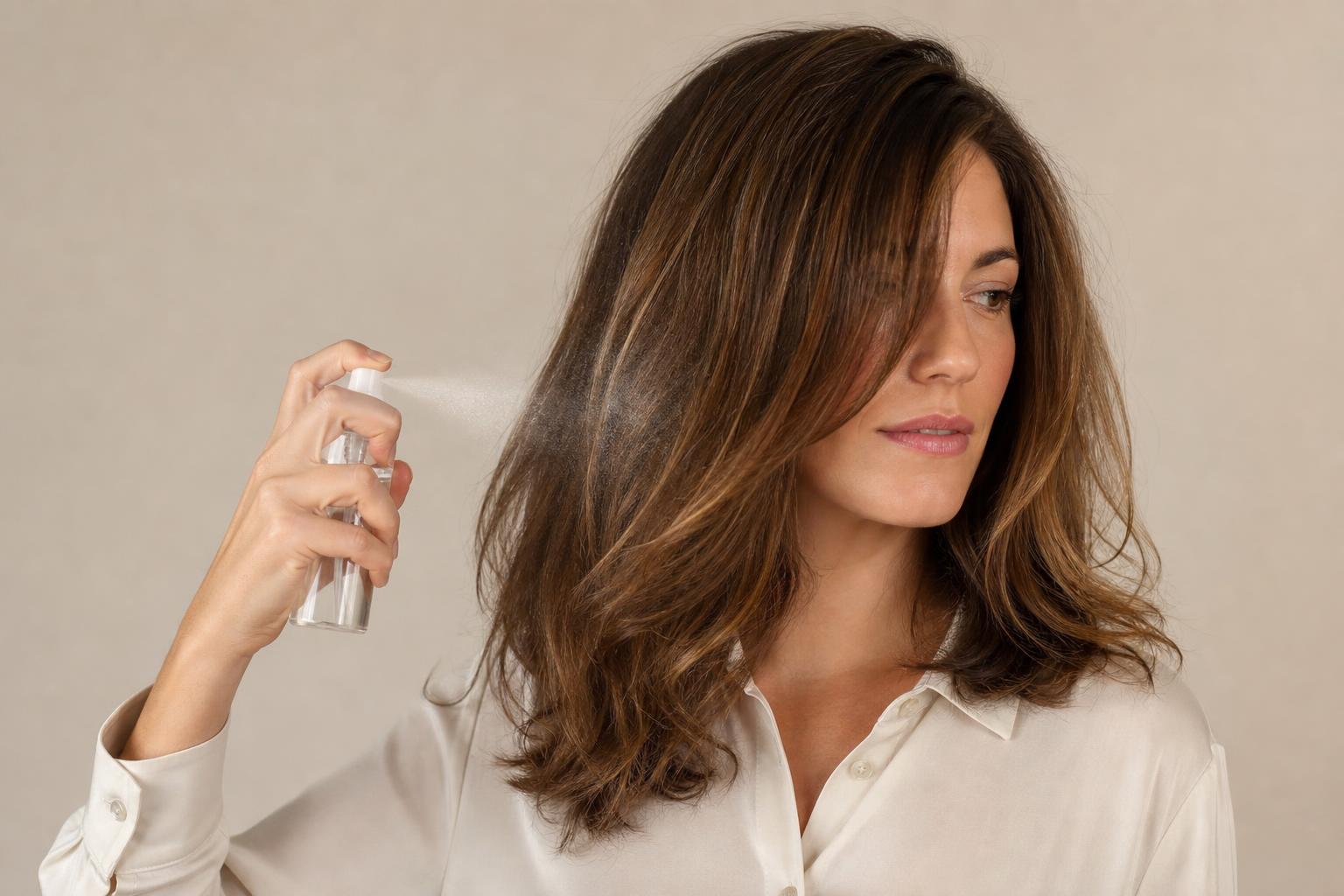
How: Hold it at arm’s length and mist across the hair in a sweeping motion rather than aiming at one spot.
Why: A close spray lands as droplets, which concentrates the product in patches and can leave visible spotting on dark hair.
Common mistake: Spraying at close range into the roots, which is both the least effective placement and the one most likely to build up.
Step 3: Target the Mid-Lengths and Ends
What you need: Two to four sprays, depending on length and density.
How: Mist the section from the ears down, lift the hair and spray underneath as well, and skip the scalp entirely.
Why: The mid-lengths and ends are the most porous part of the hair and hold scent longest. They also move most, which releases the fragrance through the day.
Common mistake: Spraying only the top layer, which means the scent is gone as soon as the surface hair settles.
Step 4: Let It Dry Before Touching or Tying
What you need: Thirty seconds of patience.
How: Leave the hair loose until the mist has evaporated, then style or tie as normal.
Why: Running your hands through wet mist redistributes it unevenly and transfers most of it to your palms.
Common mistake: Tying the hair up immediately, which traps the mist against itself and produces a stronger scent in one spot rather than an even one.
How Long Hair Perfume Lasts by Hair Type
Porosity is the variable that decides how long a scent stays, and it maps closely to hair type and damage history. High-porosity hair has a raised cuticle with more gaps for fragrance molecules to lodge in, so it takes scent up quickly and also releases it faster. Low-porosity hair resists absorption initially but holds what it does take for considerably longer.
| Hair Type | Typical Wear Time | Adjustment |
|---|---|---|
| Fine, low porosity | 6 to 8 hours | Two sprays maximum; more will weigh the hair down visibly |
| Medium, normal porosity | 5 to 7 hours | Three sprays across the mid-lengths |
| Thick, coarse | 4 to 6 hours | Four to five sprays, including underneath the top layer |
| Bleached or high porosity | 3 to 5 hours | Choose an oil-based mist, which clings better than a water base |
| Curly and coily | 6 to 10 hours | Apply to a wash-day style; the coil structure holds scent well |
If you are unsure where you fall, a simple porosity test tells you more about how your hair will behave with any product than texture alone does. High-porosity hair benefits from an oil-based formula because oil bridges the gaps in a raised cuticle and slows the release of the fragrance.
Hair Perfume on Color-Treated and Textured Hair
Color-treated hair is the strongest argument for using a dedicated hair product rather than a body fragrance. Alcohol raises the cuticle, and a raised cuticle releases dye molecules with every wash. A daily habit of spraying eau de parfum through colored lengths will visibly shorten how long a salon color holds its tone, particularly on reds and coppers, where tone shifts show up quickly between salon visits.
Textured and coily hair takes fragrance well because the coil structure gives more surface area and the hair is usually washed less often, so the scent is not stripped every other day. The one adjustment worth making is applying on wash day when the hair is freshly styled and clean, then refreshing lightly rather than layering onto several days of product. Oil-based mists suit this hair best since they double as a light sealant.
For anyone who wears protective styles such as knotless braids, a light mist over braids or twists works well and is one of the few ways to keep a style feeling fresh without disturbing it. Avoid anything heavy or oil-forward at the root, since product that cannot be rinsed out easily builds up against the scalp. Applying to the lengths of the braids only sidesteps that entirely.
Stylist tip: Spray a hair mist onto your brush rather than onto your hair when you want the scent very subtle or your hair is already styled. The bristles distribute a much smaller amount evenly through the length, and it will not disturb a set wave or a smoothed finish.
Common Hair Perfume Myths
Myth: Hair Perfume Is Just Body Perfume in a Different Bottle
Reality: The base formulation is genuinely different. Body fragrance relies on a high alcohol concentration to carry and project the scent; hair mist replaces most of that with water or oil and adds conditioning agents. Some brands do sell lightly rebranded body sprays, which is why the ingredient list matters more than the marketing.
Myth: More Sprays Mean the Scent Lasts Longer
Reality: Beyond about four sprays you are adding weight rather than wear time, since the hair can only hold so much before the surplus stays on the surface. On fine hair the excess shows as a limp, slightly greasy look by mid-afternoon. Two well-placed sprays on clean hair outlast six on dirty hair.
Myth: Hair Perfume Replaces Washing Your Hair
Reality: It masks scent temporarily and does nothing about the oil and bacteria producing it, and layering fragrance over unwashed hair usually produces a worse result than either alone. Use it on clean hair. If you are stretching washes, dry shampoo handles the oil and a light mist can go on afterward.
Myth: Hair Mist Protects Against Heat
Reality: Only if it explicitly states a heat protection claim, and most do not. A fragrance mist applied before a flat iron offers no thermal barrier, and any residual alcohol content can make things worse under heat. Apply a proper heat protectant before styling and the fragrance after everything has cooled.
When to Skip Hair Perfume
Hair perfume is a low-risk product, and there are still a few situations where it does not belong.
- Your scalp is irritated, flaking, or currently being treated. Fragrance is one of the more common contact irritants, and a treated scalp does not need another variable. Wait until the condition has settled.
- You are heading into strong sun for several hours. Some fragrance ingredients, particularly citrus-derived ones, increase photosensitivity, and the exposure lands on the scalp and hairline. A UV-protective mist without citrus notes is the better choice.
- You already wear a distinct perfume on your skin. Two fragrances at close range compete rather than layer, and hair stays closest to your own nose all day. Either match the scent families or pick one.
- Your workplace or gym has a fragrance-free policy. Hair holds scent longer than skin, so a mist applied in the morning is often still detectable at the end of the day.
- You are within a day or two of a chemical service. Freshly colored, relaxed, or keratin-treated hair has an open cuticle and is more reactive to anything applied to it. Give it a couple of days to settle first.
FAQ
Can You Use Regular Perfume on Your Hair?
Occasionally without much consequence, but not as a daily habit. The 70 to 90 percent alcohol in a standard eau de parfum dries the cuticle and, applied repeatedly, contributes to frizz, dullness, and breakage, with colored and bleached hair the most affected. If you do it, spray onto a brush and run that through the lengths rather than misting the hair directly, which cuts the amount landing on any one section.
How Long Does Hair Perfume Last?
Four to eight hours on most hair, with the biggest variables being how clean the hair is and how porous it is. Clean, dry hair holds the scent noticeably longer than second-day hair, because fragrance binds to the cuticle rather than to product residue. Curly and coily hair often holds it longest thanks to the extra surface area of the coil structure.
Where Should You Spray Hair Perfume?
The mid-lengths and ends, from roughly ear level down, holding the bottle eight to ten inches away. Lift the top layer and mist underneath as well, so the scent is not sitting only on the surface. Avoid the scalp entirely, since product there builds up and can cause irritation without adding any wear time.
Does Hair Perfume Damage Your Hair?
A genuine low-alcohol hair mist does not, and many include conditioning ingredients that mildly help. The risk comes from products marketed as hair mists that are essentially body sprays, so check that alcohol denat is not among the first few ingredients. Oil-based formulas are the gentlest option for bleached or high-porosity hair.
Can You Use Hair Perfume on Wet Hair?
You can, but the scent will be considerably weaker and shorter-lived, because the water dilutes the mist and carries much of it off as the hair dries. The exception is a mist that doubles as a leave-in, where the conditioning ingredients are meant to go on damp hair. For fragrance alone, wait until the hair is fully dry and cool.
Is Hair Perfume Safe for Colored Hair?
Yes, and it is a better choice than body fragrance specifically because of the lower alcohol content. Alcohol raises the cuticle and lets dye escape, so a daily habit of spraying eau de parfum through colored lengths shortens how long the tone lasts. Look for a formula with UV filters as well, since sun exposure is the other major cause of color fading.
What Is the Difference Between Hair Mist and Hair Oil?
A hair mist is primarily a fragrance product with light conditioning benefits, applied to dry hair as a finishing step. A hair oil is a treatment product meant to smooth, seal, and add shine, usually applied to damp hair before styling and often unscented or lightly scented. Some oil-based hair perfumes fall between the two, which suits high-porosity hair that needs both.
Hair perfume earns its place by doing one thing a body fragrance cannot: putting scent where it lasts longest without the alcohol that damages the hair holding it. Buy on the ingredient list rather than the label, apply two to four sprays to clean dry mid-lengths from arm’s length, and keep it off the scalp. Done that way it lasts most of a day and costs your hair nothing.
Hair results vary based on your natural hair type, texture, density, and condition. Always consult with a licensed hairstylist before making significant changes, especially with chemical treatments or dramatic length changes. Photos may show styled results that require professional tools and products to replicate.