
Readiness decides a child’s first haircut, not a birthday, and the two signs that matter are hair falling into the eyes and the ability to sit for about ten minutes.
Most children have a first cut somewhere between six months and two years, but the range is wide enough that age is close to useless as a guide. Some babies arrive with enough hair to need trimming at four months and others have very little at three years. What actually determines whether an appointment will go well is whether your child can tolerate someone touching their head, sit reasonably still for ten to fifteen minutes, and be redirected by a distraction when they get restless.
This guide covers how to judge readiness, how often kids need cutting at each age, how to get through the appointment itself, which styles genuinely survive a school week, when cutting at home is reasonable, and the small number of scalp situations that need a doctor rather than a stylist.
Readiness Beats Age for the First Haircut
Three signs together mean a child is ready. The first is practical: hair is falling into their eyes, catching in food, or tangling badly enough that brushing has become a daily fight. The second is physical, meaning they can sit up with steady head control and stay reasonably still while someone works near their face. The third is temperamental, and it is the one most parents underestimate: can they be distracted and redirected when they start to object.
If two of the three are present, book the appointment. If only the first is, a fringe trim at home with blunt-nosed scissors while they watch something is often the better first step, and it delays the full experience until they can handle it. There is no benefit to a ceremonial first haircut at a particular age, and a bad first experience can make the next several appointments considerably harder.
Stylist tip: book the appointment for mid-morning, after a nap and after a meal, and never at the end of a long day. Almost every difficult child haircut is a tired or hungry child rather than a child who dislikes haircuts, and the single most useful thing a parent controls is the timing. Stylists who work with children will tell you the first slot after opening is the calmest of the day.
How Often Kids Need Cutting
Children’s hair grows at roughly the same rate as adult hair, around half an inch a month, but what changes is how much shape there is to lose. A very short boys’ cut shows growth in three weeks; longer hair on a school-age child can go three months. The table below is a starting point rather than a rule, and the honest answer for most families is that you cut when it starts getting in the way.
| Age | Typical Interval | What the Appointment Is For | Expect |
|---|---|---|---|
| Under 2 | 8 to 12 weeks | Keeping hair out of the eyes; tidying tangles | 5 to 10 minutes on a parent’s lap |
| 2 to 4 | 6 to 12 weeks | A basic shape; fringe kept clear of the eyes | The hardest age; plan for distraction |
| 5 to 8 | 6 to 10 weeks | A defined cut they can recognize as theirs | Opinions start here; include them in the choice |
| 9 to 12 | 6 to 12 weeks by style | Whatever they have asked for, within reason | Let them talk to the stylist directly |
| Very short cuts, any age | 3 to 4 weeks | Resetting the fade or clipper length | The shortest cycle of anything here |
Getting Through the Appointment
Two to four is the difficult window, and it helps to understand why rather than treating it as bad behavior. A haircut asks a child to sit still, which is the thing toddlers are least able to do, while simultaneously overwhelming them with an unfamiliar chair, a cape, buzzing clippers, and a stranger touching their head. Most of what works is reducing the number of unfamiliar things at once.
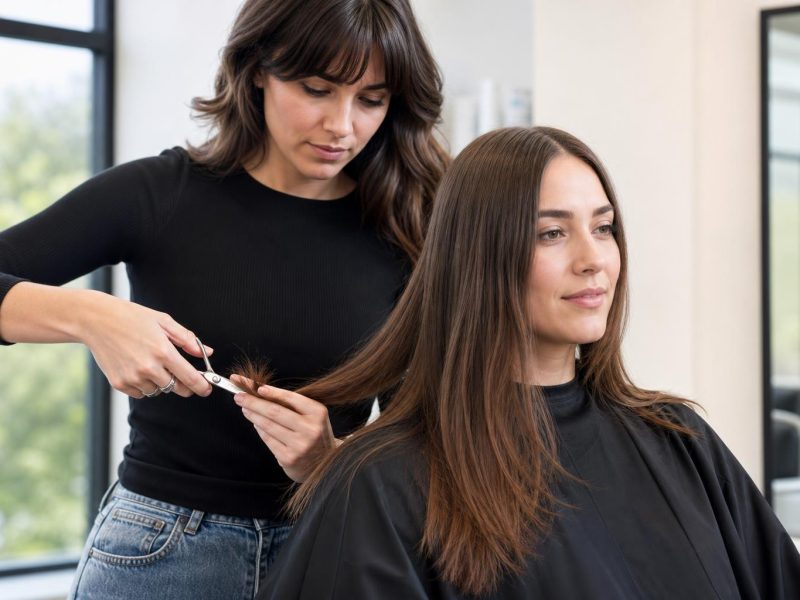
Visit the salon once before the appointment without cutting anything, so the room is familiar. Let your child sit on your lap rather than alone in the chair for the first few cuts. Bring a distraction and start it before the cape goes on rather than after they get upset. And ask the stylist to use scissors instead of clippers for a first cut, since the noise and vibration bother small children far more than the cutting does.
Dedicated children’s salons are worth the premium for the difficult years, mainly because their staff are unhurried and their expectations are calibrated. A stylist who is not fazed by a child squirming will produce a better cut than a more skilled one who is working against the clock. Once a child can sit comfortably, usually around five or six, a regular salon or barbershop is fine.
Styles That Survive a School Week
The practical test for a child’s cut is not how it looks on the day but how it looks on day four, after sleeping on it, playing outside and having a hat pulled on and off. Cuts that need arranging fail this test immediately. The ones below hold up because the shape is built in.
Short Cuts for Boys Hold Their Shape Longest
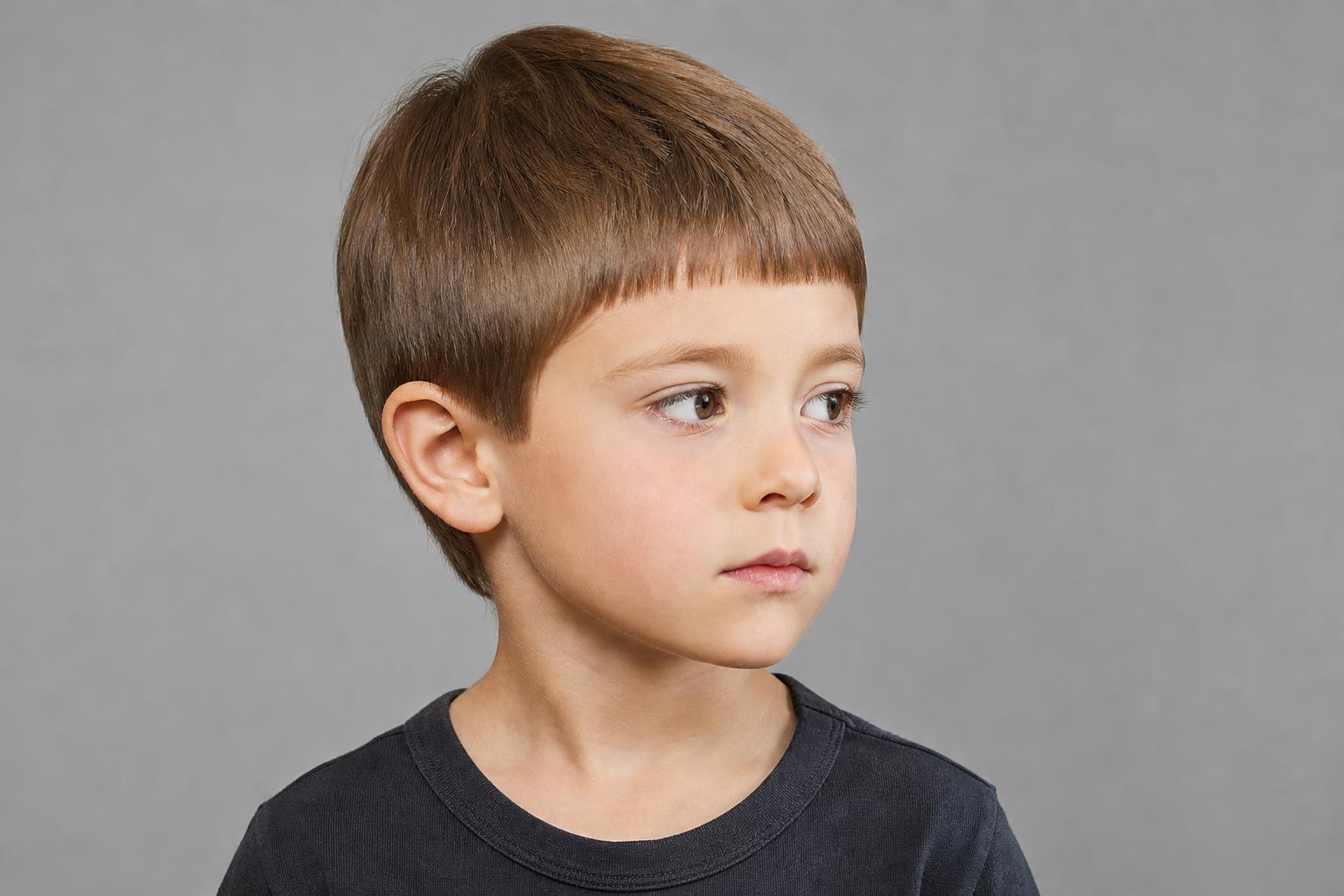
A short back and sides with scissor-cut sides is the most forgiving option, growing out with no visible line and needing nothing in the morning. A clipper cut with a taper is tidier and runs on a shorter cycle of four to five weeks. Skip skin fades for young children, since they need a barber every two to three weeks and that is a lot of appointments to fit around a school schedule. Knowing what each clipper guard leaves behind makes the request specific enough to repeat next time.
A Fringe Needs Its Own Trim Cycle
Any cut with a fringe reaches the eyes within three to four weeks regardless of the rest of the cut, which is why a fringe is the most common reason for an unplanned appointment. Most salons will trim a child’s fringe alone for a small charge or free between cuts, and asking about that at the first appointment saves a lot of trouble. Styles in the fringe family for kids and teens all share this schedule.
Chin to Shoulder Length Works Best for Girls Who Dislike Brushing
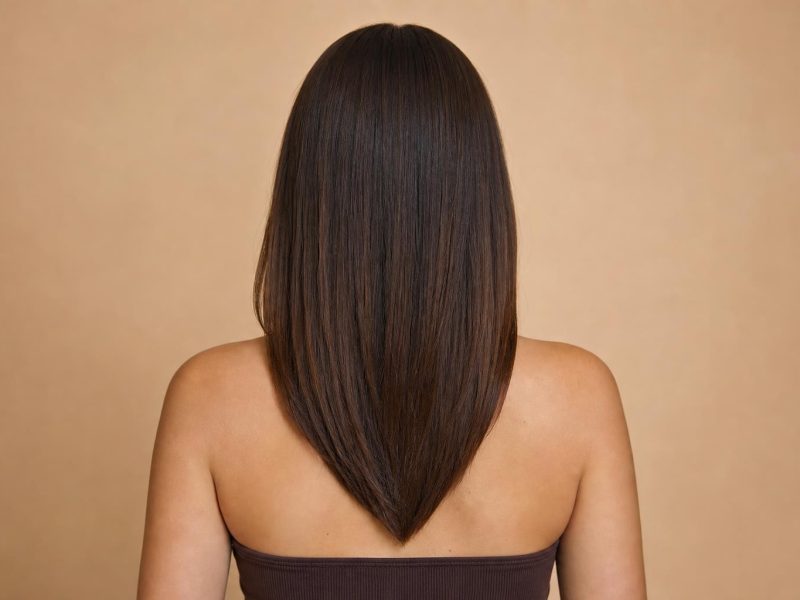
Long hair on a child who resists detangling turns into a daily conflict and eventually into matting at the nape. A chin-length or shoulder-length cut with soft layers reduces tangling substantially while still allowing a ponytail. There is a wider range of short cuts for girls aged three to twelve and of medium lengths that still tie back, and the deciding factor is usually brushing tolerance rather than the look.
Curly and Coily Hair Needs Shaping, Not Layering
Children’s curls should be cut dry so the stylist can see where each one falls, and shaped through the outline rather than layered internally. Layering into a child’s curls removes the density that holds the shape and produces a triangle that takes months to grow out. Keep the routine to a leave-in conditioner on wet hair and a wide-tooth comb, and detangle in the bath rather than dry.
Braided Styles Buy a Week at a Time
Cornrows, box braids and two-strand twists remove daily styling entirely for anywhere from a few days to a couple of weeks, which is why they are the practical answer for many families with textured hair. The one rule that matters is tension, covered below. Age-appropriate braided styles sorted by age and sitting time are worth choosing from with a child’s patience in mind, since a style that takes four hours is a poor fit for a five-year-old regardless of how well it wears.
Tension Is the One Real Safety Issue
Tight braids, tight ponytails and tight buns pull on the hairline, and repeated pulling over months and years can cause traction alopecia, a form of hair loss the American Academy of Dermatology links directly to hairstyles that pull. Children are more vulnerable than adults because their hair is finer and because the same style often gets redone weekly for years.
The test is simple and a child will tell you: if it hurts, stings, or produces small bumps along the hairline, it is too tight. Loosen the front sections, use fabric-covered elastics rather than rubber bands, and take braids down before they reach the point of matting. Rotating between a tight style and a loose one, rather than keeping a child’s hair pulled back permanently, removes most of the risk.
Stylist tip: tell your braider directly that you want the edges left loose, and say it before they start rather than partway through. A common belief is that tighter braids last longer, and they do not by much; grip comes mostly from clean sectioning and hair texture. Losing a couple of days of wear is a good trade for the hairline your child keeps.
Cutting Kids’ Hair at Home
A fringe trim and a clipper cut at a single guard length are both reasonable at home. Anything involving a blend, a fade, layering or shape is not, and the results are usually visible enough that a salon has to cut it shorter to fix. Knowing which side of that line you are on saves money without costing you a bad month.
For a fringe, work on dry hair, comb it flat, and cut a little below where you want it to sit, since hair springs up slightly once released. Cut with the scissor tips held vertically rather than straight across, which produces a softer line and hides small errors. For a clipper cut, start two guard sizes longer than your target, move against the direction of growth with slow overlapping passes, and check the back with a hand mirror before deciding you are finished.
What to Tell the Stylist
Say three things: what your child can tolerate, how often you can realistically come back, and what the cut needs to survive. A useful opening is: “She is three and this is her second cut, she will sit on my lap for about ten minutes, we can come every couple of months, and it needs to look fine without brushing.” That sets expectations for the stylist and produces a cut that fits your life rather than the photo.
Once a child is around five, let them speak to the stylist directly and let them choose within limits you set beforehand. A child who picked their own cut tolerates the appointment better and complains about the result less, and the limits are yours to set privately with the stylist in advance. Handing over a small real decision is worth more than any amount of persuading in the chair.
When to See a Doctor Rather Than a Stylist
Most scalp complaints in children are harmless, and a few need a medical opinion before anyone cuts anything.
- Round patches of scale with broken hairs or bald spots. Scalp ringworm is common in children, spreads readily, and needs prescription oral treatment rather than anything topical.
- Intense itching with eggs cemented firmly to the hair shaft. Head lice pass on shared brushes and hats and need treatment plus combing, not a haircut.
- Thinning or bald patches along the hairline in a child who wears tight styles. That is tension damage and it reverses if caught early.
- Persistent flaking that does not clear. Ordinary flaking is harmless and not contagious the way parents often assume, but anything that spreads beyond the scalp in a young child should be looked at.
- Sudden hair loss with no obvious cause, particularly after an illness or a significant change at home.
FAQ
When Should a Child Get Their First Haircut?
When hair starts falling into their eyes or tangling badly and they can sit reasonably still for ten to fifteen minutes, which for most children lands between six months and two years. Age on its own is a poor guide, since hair growth varies enormously between children. If they are not yet able to be redirected by a distraction, a fringe trim at home is a better first step.
How Often Do Kids Need Haircuts?
Every six to twelve weeks for most children and styles, with very short clipper cuts needing three to four weeks and longer hair going up to three months. A fringe is the exception and reaches the eyes within three to four weeks regardless of the rest of the cut. Many salons will trim a child’s fringe alone between appointments for a small charge.
How Do I Get My Toddler to Sit Still for a Haircut?
Book mid-morning after a nap and a meal, visit the salon once beforehand without cutting anything, and start a distraction before the cape goes on rather than after they object. Let them sit on your lap for the first few cuts, and ask the stylist to use scissors rather than clippers, since the noise and vibration bother small children more than the cutting. Two to four is genuinely the hardest age and it passes.
Can I Cut My Child’s Hair at Home?
A fringe trim and a single-guard clipper cut are both reasonable at home; anything involving a fade, layering or shaping is not. Cut a fringe on dry hair with the scissor tips held vertically, slightly below the length you want. For clipper work, start two guard sizes longer than your target and cut against the direction of growth with slow overlapping passes.
What Is the Best Low-Maintenance Haircut for a Child?
A short back and sides with scissor-cut sides for boys and a chin to shoulder length with soft layers for girls, since both hold their shape without daily arranging and grow out without a visible line. Avoid anything with a hard clipper line or a blunt fringe if appointments are hard to schedule. For textured hair, a braided style removes daily work for a week or more at a time.
Are Tight Braids Bad for a Child’s Hair?
Braids themselves protect hair by tucking the ends away; the risk comes from tension at the roots, which can cause traction alopecia over months or years of repeated tight styling. If a child says it hurts or you see small bumps along the hairline, it is too tight. Ask the braider to leave the edges loose, alternate with looser styles, and take braids down before they matt.
Should Kids with Curly Hair Have Their Hair Cut Dry?
Yes, so the stylist can see where each curl actually falls before removing anything, since wet curls stretch and a wet cut comes out considerably shorter. Curly children’s hair should also be shaped through the outline rather than layered internally, because layering removes the density that holds the shape. Detangle in the bath with conditioner rather than dry.
Choosing a kids hair style is mostly a scheduling decision dressed up as an aesthetic one. Pick a shape that still looks right on day four without brushing, be honest with the stylist about how often you can realistically return, and let your child make a small real choice once they are old enough to have an opinion. If braids are part of the routine, ask for the edges left loose every single time.
Hair results vary based on your natural hair type, texture, density, and condition. Always consult with a licensed hairstylist before making significant changes. This article is general information and not medical advice; scalp conditions, hair loss, or persistent flaking in a child should be assessed by a doctor.