

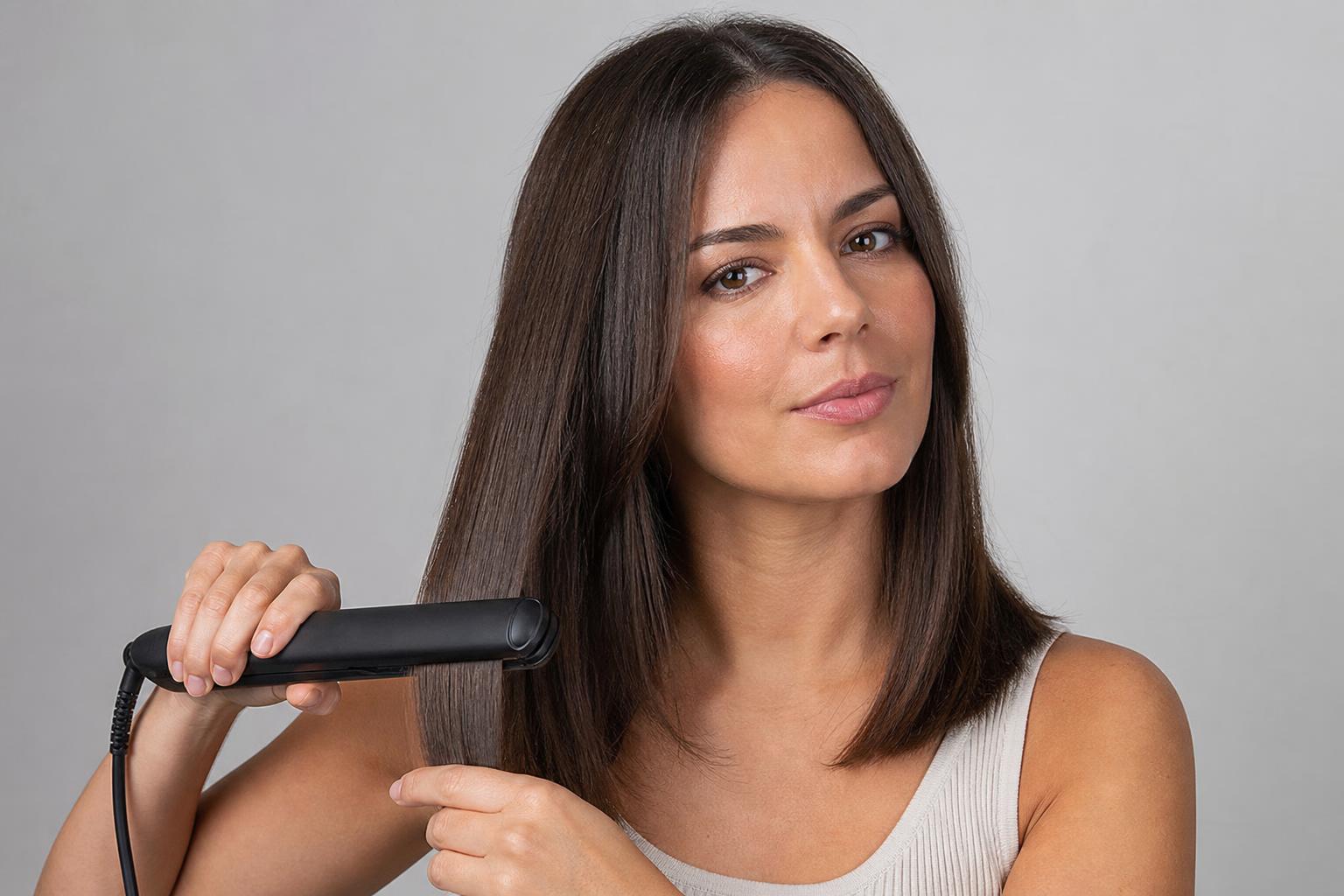
The best hair straightener for you is the one that flattens your hair in one pass, and almost nothing on the box tells you whether it can.
Buy a flat iron on how steadily it holds its set temperature and how wide the plates are relative to your hair’s density, not on the maximum number printed on the dial. A cheap iron loses 40 to 90 degrees the moment cold hair touches the plates, so you make four passes to get the result one pass should have given you. Four passes at 400 degrees does far more damage than one pass at 350, which is why the iron that “runs hotter” often leaves hair in worse shape than the one that runs cooler and recovers faster.
This guide decodes the spec sheet in plain terms: what heat recovery is and how to feel it, how to match plate width to density rather than length, what ceramic, titanium and tourmaline each actually do, which features are worth paying for, how to test the iron already sitting in your bathroom drawer, and when buying a new one will not fix the problem you have.
Heat Recovery Separates a Good Flat Iron From a Bad One
Heat recovery is how fast the plates return to their set temperature after hair pulls heat out of them. Every pass is a heat transfer: the plates give energy to the hair, their surface temperature drops, and the internal heater has to push it back up. On a well-built iron that recovery happens within the length of a single stroke, so the last inch of the section gets the same temperature as the first. On a poorly built one, the plates keep sagging further behind with every section, and by the time you reach the dense hair at the back of your head the iron is running well under what the display claims.
This is the mechanism behind most heat damage people blame on temperature. Contact heating delivers a sharp thermal shock to a small section of hair, and each heating and cooling cycle lifts and loosens the cuticle edges. Repeat that four times per section instead of once and you have quadrupled the cycles, which is why research on thermal changes in the cuticle and cortex keeps pointing at repeated contact rather than a single hot pass as the thing that degrades the fiber. Pass count is the damage variable you control, and the iron either helps you keep it at one or forces it to three.
Stylist tip: Ignore the top number on the dial entirely when you shop. An iron that tops out at 380 and holds it is a better tool than one that claims 450 and delivers 370 under load, and the second one will tempt you to crank it higher to compensate.
Plate Width Is a Density Decision, Not a Length Decision
Most buying guides tell you to size plates to hair length. That is the wrong axis. Plate width determines how much hair you can clamp per section, and how much hair you can clamp per section is set by density, meaning how many strands per square inch you actually have, not by how far down your back the hair falls. Someone with waist-length fine hair works faster on 1-inch plates than on 2-inch plates, because narrow plates give better contact pressure on a thin section and the extra width just adds weight to lift.
The practical test is section thickness. If a clamped section is thicker than about a quarter of an inch, the plates only touch the outer layer and the middle of the section stays wavy, so you go back over it. Wider plates let you take a wider section at the same quarter-inch depth, which cuts your total pass count on thick hair. That is why a 1.5-inch iron on coarse, dense hair is gentler in practice than a 1-inch iron, even though it puts more hot metal against the hair at once.
| Plate Width | Best Density | Also Good For | Where It Struggles |
|---|---|---|---|
| 0.5 to 0.75 inch | Fine and sparse | Pixies, bangs, edges, roots on any length | Anything past the shoulder, where it takes 30 or more sections |
| 1 inch | Fine to medium | The all-round choice; bends and curls easily | Coarse or very dense hair, where pass count climbs |
| 1.25 to 1.5 inch | Medium to thick | Shoulder length and longer, silk presses | Short layers and fringe, where the plates cannot get close to the root |
| 2 inch | Very thick and coarse | Long, dense type 3 and type 4 hair, speed on big heads of hair | Fine hair, short cuts, and anyone with limited wrist strength |
Ceramic, Titanium and Tourmaline Do Three Different Jobs
These three words appear on the same box constantly, which makes people think they are competing options. They are not. Ceramic and titanium describe how the plate delivers heat, and tourmaline describes a coating that emits negative ions when heated. Most mid-range irons are ceramic plates with a tourmaline-infused surface, and the marketing lists both as though you are getting two technologies. The dryer aisle plays the same trick, which is why it helps to read the labels on ionic and ceramic tools the same skeptical way across every heat tool you own.
| Plate Type | How It Heats | Suits | Trade-Off |
|---|---|---|---|
| Ceramic | Warms gradually and spreads heat evenly across the plate, with no hot spots | Fine, fragile, color-treated or already-damaged hair | Slower recovery on dense hair, so pass count rises on thick sections |
| Titanium | Conducts fast and holds a high set temperature under load | Coarse, dense, resistant or tightly coiled hair | Unforgiving on fine hair; a slow pass scorches before you notice |
| Ceramic-coated metal | A thin ceramic shell over an aluminum core, so heating is uneven | Occasional use and travel only | The coating wears through in a year or two and the bare metal snags |
| Tourmaline surface | A coating, not a plate; releases negative ions as it warms | Frizz-prone and humidity-reactive hair | Adds smoothness, not straightening power; it cannot rescue a weak heater |
The counter-intuitive part is that fine hair often does better on the cheaper material. Ceramic costs less than solid titanium and is the safer plate for hair that damages easily, so the upgrade path for fine hair is a better heater and better temperature control, not a more exotic plate. If frizz rather than curl is your actual problem, the plate material matters less than technique, and drying method will move the needle further than a new iron.
Features Worth Paying For, and Features That Are Marketing
Flat iron boxes list a dozen features, and about half of them change how the tool performs. Use this to sort the list before you compare prices, because the two specs that matter most are usually printed in the smallest type.
| Feature | Verdict | Why |
|---|---|---|
| Floating plates | Worth paying for | Plates that pivot keep full contact on an uneven section, which is the difference between one pass and two |
| Adjustable temperature with real numbers | Worth paying for | Low, medium and high tell you nothing; fine hair needs a specific ceiling, not a vague setting |
| Rounded plate edges | Worth paying for | Square edges leave a crease line and make bending the ends impossible |
| Auto shut-off | Worth paying for | A safety feature with no downside, and it saves the plates from hours of idle heating |
| Swivel cord | Nice to have | Genuinely easier to handle on long hair, but it does not change the result |
| Dual voltage | Only if you travel | Useless at home, essential abroad; a converter on a single-voltage iron ruins the temperature control |
| Infrared or far-infrared | Marketing | Any hot surface emits infrared; the phrase adds price, not performance |
| Steam or vapor plates | Skip for most | Adds water to a heat process, needs distilled refills, and rarely beats a good dry iron on a proper blow-dry |
| 450-degree maximum | A warning sign | Almost no hair type needs it, and cheap irons advertise it to distract from weak temperature control |
Once the iron is chosen, the setting matters more than the hardware, and there is no single correct number. Fine and color-treated hair generally straightens between 250 and 300 degrees, medium hair between 300 and 350, and coarse or coily hair between 350 and 400, with our temperature reference for each hair type covering the exceptions. Whatever number you land on, a heat protectant applied to genuinely dry hair is not optional, because a study on cosmetic pretreatments before hot flat ironing found polymer pretreatments cut breakage significantly across repeated ironing sessions.
How to Test the Straightener You Already Own
Before buying anything, spend ten minutes finding out whether your current iron is the problem. These four checks take a section of hair each and tell you more than any review.
Step 1: Check the Plates for Contact and Wear
What you need: a cold iron and a strip of ordinary printer paper.
How: clamp the paper at the tip of the plates, then at the middle, then at the hinge end, and pull each time. The resistance should feel the same in all three places. Then run a fingertip over the cold plate surface looking for rough patches, pits or exposed metal.
Why: uneven grip means the plates no longer meet flat, so part of every section is getting light contact and needs a second pass. Rough patches mean the coating has worn through and the plate is now snagging cuticle on the way down.
Common mistake: testing on a hot iron. Heat expands the plates and hides a misalignment you would feel cold.
Step 2: Measure Recovery With Two Consecutive Sections
What you need: a clean, fully dry head of hair and a heat protectant.
How: straighten one quarter-inch section at your usual setting, note how it looks after a single slow pass, then immediately do the section right next to it the same way. Compare the two.
Why: if the second section comes out visibly less straight than the first, the plates did not recover between passes. That gap is the spec no box prints, and it is exactly what you are paying for when you upgrade.
Common mistake: pausing between the two sections. The delay lets the iron catch up and hides the problem you are trying to find.
Step 3: Count Your Passes Honestly
What you need: nothing except attention for one styling session.
How: count how many times the iron travels down an average section, and time the whole head.
Why: one pass per section is the target. Two is acceptable on coarse or resistant hair. Three or more on healthy, properly dried hair means the tool, the section size or the drying is wrong, and no temperature increase will fix it.
Common mistake: blaming the iron when the hair is not fully dry. Even faintly damp hair steams inside the plates and will never hold a straight result.
Stylist tip: Slow the pass down instead of raising the temperature. A steady three-second glide at 320 degrees straightens more reliably than a fast snatch at 400, and the slow pass is the one that gives the plates time to work through the section.
When a New Flat Iron Is Not the Fix
A straightener is a shaping tool, not a repair tool, and several common complaints are not solved by better hardware. Recognizing your situation on this list will save you the purchase.
- Hair goes straight and then puffs within an hour. That is humidity re-bonding the hair, not a weak iron. A smoothing serum sealed over the finished hair, or a professional smoothing service, addresses it; a hotter iron does not.
- Ends look stringy and split after straightening. The iron is exposing existing damage rather than causing it that morning. Straightening will keep highlighting it until the ends are cut, and a bond-building treatment between appointments only slows the progression.
- You straighten type 4 hair three or more times a week. Frequency, not equipment, is the risk here. Repeated pressing can permanently loosen the curl pattern, and spacing presses further apart protects more hair than any plate material.
- You want straight hair with no daily tool time. No iron delivers that. A professional keratin smoothing treatment shifts the work to the salon for a few months, with its own trade-offs to weigh.
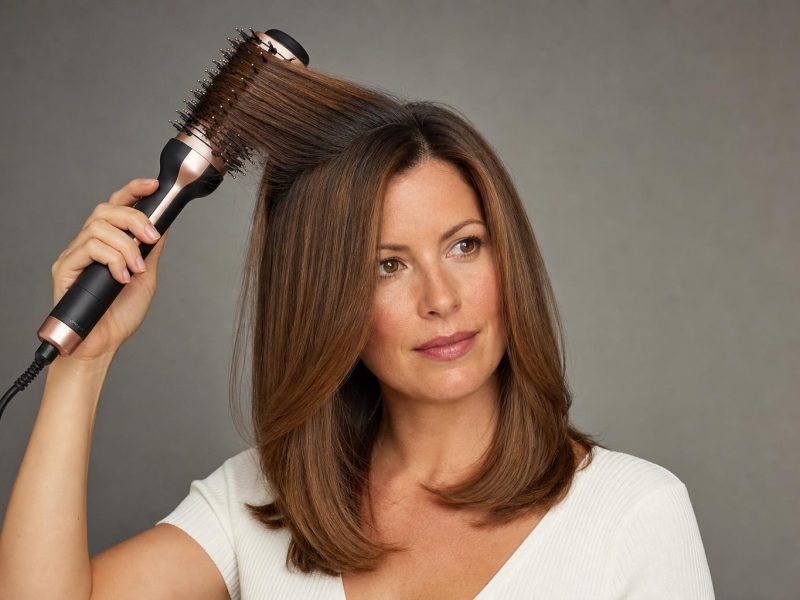
- Your hair is straight already and just lacks polish. A round brush blow-dry or a hot-air brush for smooth, bendy finishes gives shine without adding a second heat pass on top of drying.
Flat Iron Myths That Sell Expensive Irons
Myth: A Higher Maximum Temperature Means a Better Iron
Reality: maximum temperature is the cheapest spec to advertise and one of the least useful. Hair keratin starts denaturing well below the top of most dials, and hair that needs 450 degrees to straighten is usually hair that was not dried properly first. A steady 340 beats an unstable 450 on every measure that matters.
Myth: Ionic and Tourmaline Coatings Make an Iron Straighten Better
Reality: negative ions reduce static and help the cuticle lie flat, which reads as shine and less flyaway. They do nothing for the hydrogen-bond reshaping that actually straightens hair, so an ionic iron with a weak heater still needs three passes. Treat the coating as a finish upgrade, not a performance one.
Myth: You Should Replace a Flat Iron Every Year
Reality: a solid ceramic or titanium iron used two or three times a week lasts three to five years, and the failure point is almost always the coating or the cord, not the heater. Replace it when the paper test shows uneven grip, when you can feel roughness on the plates, or when the cord has a kink you have to hold in place, and not on a calendar.
What to Ask For When You Buy
Store staff and product pages both default to brand comparisons, so steer the conversation to the specs that predict performance. The four questions below cut through it, and the same language works when you ask the stylist who does your hair which iron they reach for on hair like yours.
- “Are these solid plates or a coating over metal, and what is the coating?”
- “How long does it take to get back to temperature after a pass on thick hair?”
- “Do the plates float, and can I feel the give with the iron closed?”
- “What is the lowest setting, not the highest?”
Ask the last one first if your hair is fine or color-treated. An iron whose lowest setting is 300 degrees is unusable on hair that should never see more than 280, and that limitation is rarely on the front of the box. If you are shopping across categories at the same time, the same spec-first approach applies to every heat tool in the hair tools and products section, where the marketing language repeats almost word for word.
FAQ
How Much Should I Spend on a Hair Straightener?
The meaningful jump in quality happens in the middle of the range, not at the top. Below roughly $30 you are buying coated metal plates and loose temperature control, which costs you in extra passes. Above the mid-range, most of the additional money goes to design, cord quality and brand rather than to a measurably better heater, so a well-reviewed mid-priced ceramic iron with digital temperature control serves most hair types as well as a luxury model.
Can I Use a Flat Iron on Wet Hair?
No, unless the tool is specifically built as a wet-to-dry styler, and even those work best on damp rather than soaking hair. Water inside the hair shaft turns to steam between the plates, which forces the cuticle open from the inside and causes the crackling sound people mistake for normal. Dry the hair fully first, including the section underneath at the nape that tends to stay damp longest.
What Plate Width Should I Buy If I Have Thick, Long Hair?
Go to 1.5 inches, and consider 2 inches if your hair is both dense and past the shoulder blades. The wider plate lets you take a wider section at the same thin depth, which cuts the number of sections roughly in half and reduces total heat exposure across the whole head. The trade-off is that wide plates cannot reach the root on short layers or fringe, so many people with thick hair keep a 1-inch iron for the front sections.
Does a More Expensive Iron Actually Damage Hair Less?
Indirectly, yes, because it usually holds temperature better and needs fewer passes. The plates themselves are not gentler in any magic sense; a 350-degree plate is 350 degrees regardless of price. What you are buying is consistency, which shows up as one pass instead of three, and that reduction in contact cycles is where the real difference in hair condition comes from over months of use.
Can I Curl My Hair With a Flat Iron?
Yes, and rounded plate edges are what make it possible. A 1 to 1.25-inch iron with curved edges lets you rotate the tool a half turn and glide, producing a soft bend that suits mid-lengths and ends. For defined, uniform curls a dedicated barrel still wins, and the differences are set out in our comparison of curling wands and curling irons.
Why Does My Hair Go Straight but Not Look Shiny?
Shine comes from a flat, closed cuticle reflecting light in one direction, and multiple passes at a high temperature roughen that surface rather than smoothing it. Drop the temperature by 20 to 30 degrees, slow the pass down, and finish with a drop of lightweight serum smoothed over the mid-lengths and ends. If shine improves immediately, heat was the problem rather than product.
Is a Straightening Brush a Substitute for a Flat Iron?
Not for a truly sleek finish, but it is a reasonable trade for many people. A straightening brush never fully clamps the hair, so it smooths and stretches rather than pressing flat, which suits wavy hair that wants to look tidy rather than poker-straight. It is also more forgiving on the scalp and faster on long hair, at the cost of a result that loosens sooner in humidity.
Choosing the best hair straightener comes down to two questions you can answer without reading a single review: how dense is your hair, and does the iron hold its temperature while you work through it. Match the plate width to your density, pick ceramic for fine or fragile hair and titanium for coarse or resistant hair, insist on real temperature numbers and floating plates, and then run the paper test and the two-section test before you spend anything. If your current iron passes both, the upgrade you actually need is a slower pass and a lower setting.
Hair results vary based on your natural hair type, texture, density, and condition. Always consult with a licensed hairstylist before making significant changes, especially with chemical treatments or dramatic length changes. Photos may show styled results that require professional tools and products to replicate.


1 response