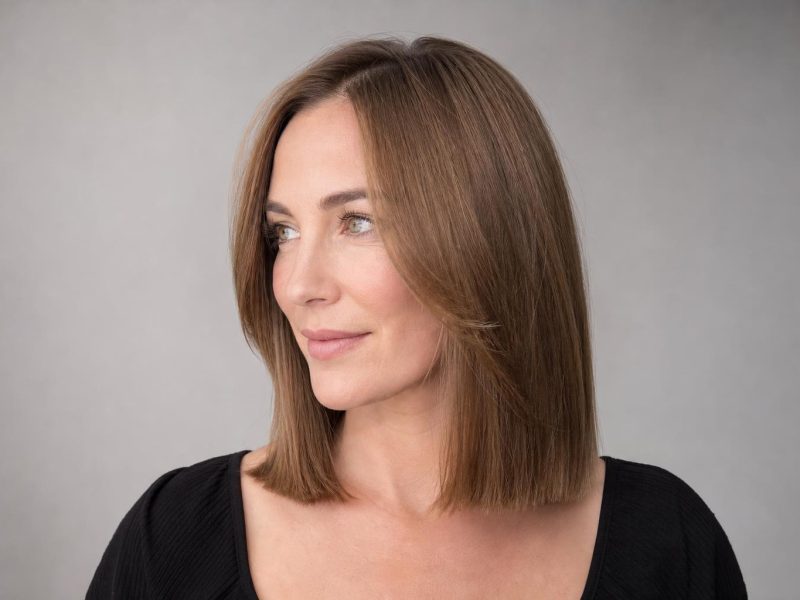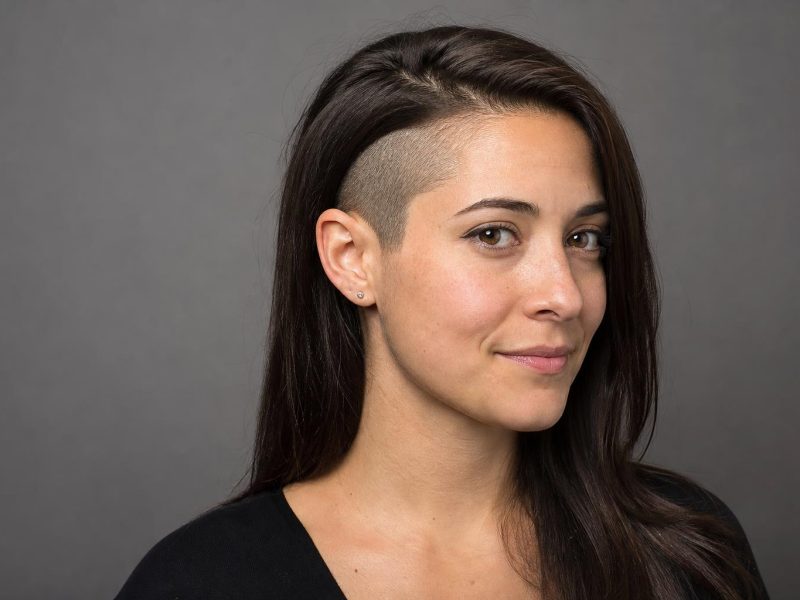

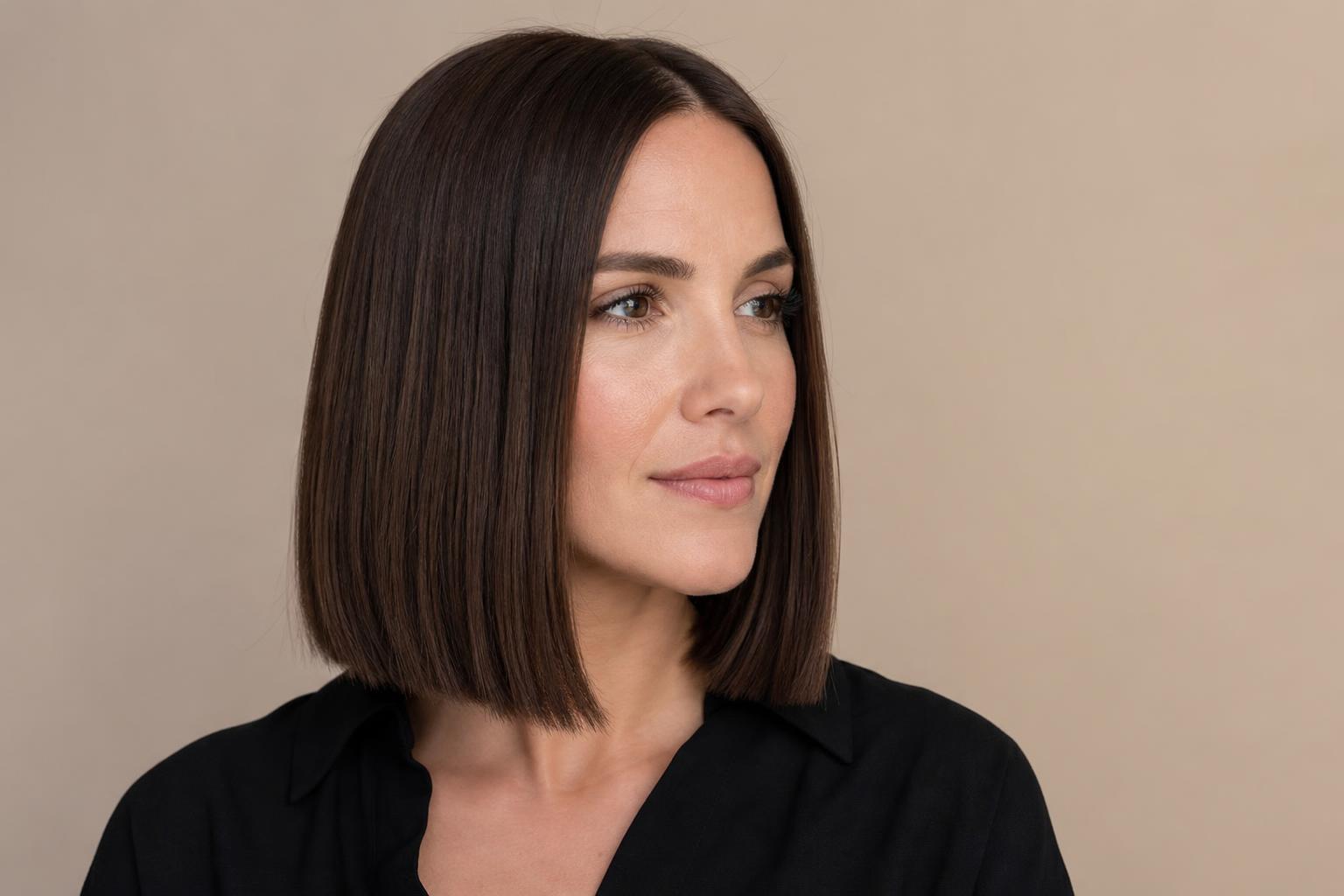
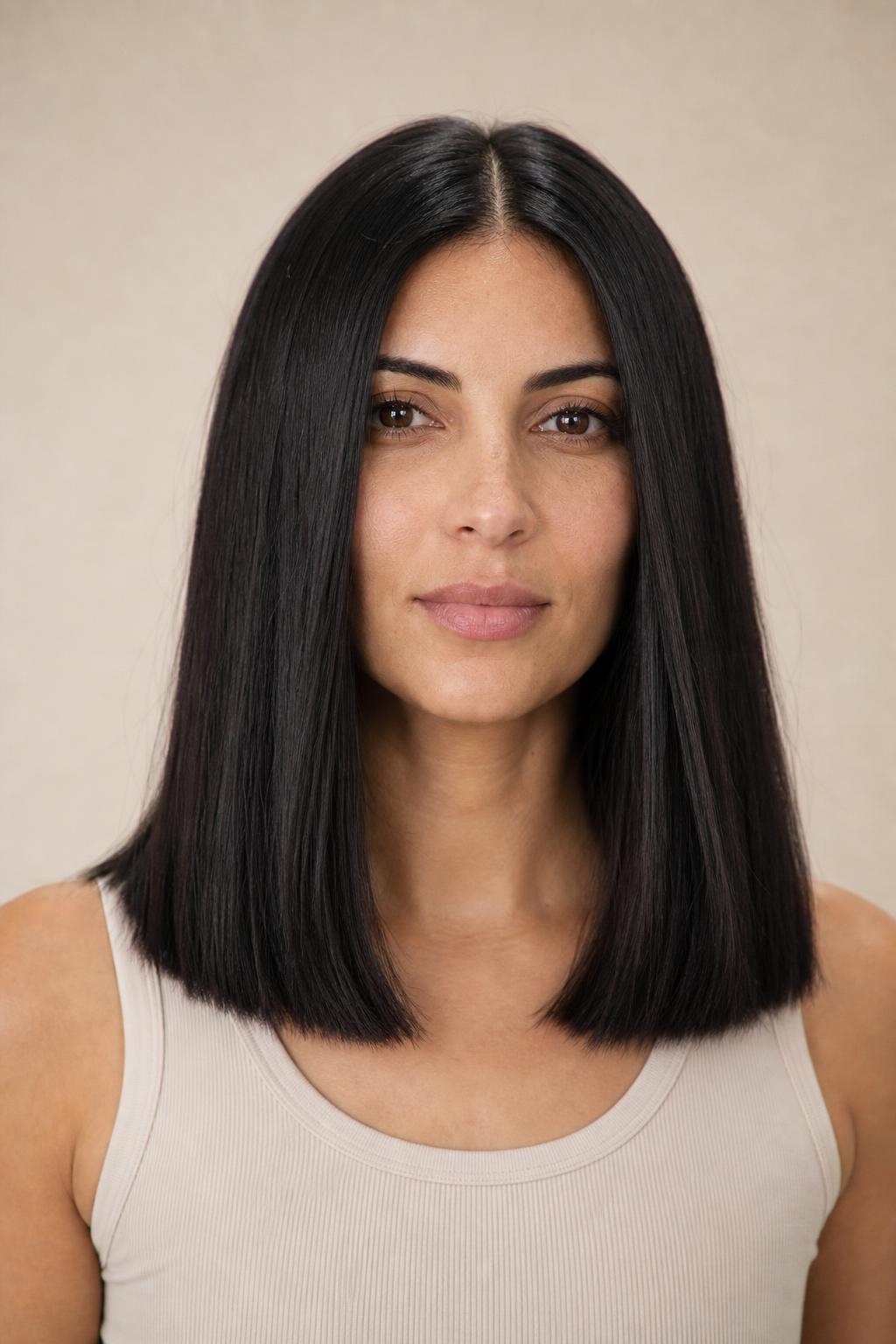
Three haircuts, three inches apart, and completely different amounts of work every morning.
A bob ends at the jaw or above it, a lob ends between the chin and the collarbone, and a midi ends below the collarbone and stops before the mid-chest. That is the whole distinction: three names for three positions of the same perimeter line, separated by roughly two to four inches each. The name your stylist uses matters less than the landmark you point to on your own neck.
This guide breaks down where each length actually lands, which face shapes and hair textures each one flatters, what each costs you in trim frequency and morning styling minutes, and the exact wording to bring into your consultation so you walk out with the length you pictured.
| Length | Where It Ends | Ponytail Possible? | Trim Frequency |
|---|---|---|---|
| Bob | Earlobe to jawline | No, or a stub at best | 5 to 7 weeks |
| Lob | Below the jaw to the collarbone | Yes, low and short | 8 to 10 weeks |
| Midi | Below the collarbone to upper chest | Yes, including buns and braids | 10 to 12 weeks |
The Three Lengths Are Defined by Where the Perimeter Falls
Stylists measure these cuts by the lowest point of the perimeter when hair is dry and hanging naturally, not by inches removed from the root. That distinction matters because two people can ask for the same number of inches off and end up with different categories of haircut depending on their starting length and shrinkage. Point to a landmark on your own body during the consultation and the conversation gets much shorter.
A Bob Ends at the Jaw or Above
Anything from an ear-length crop down to a line grazing the jawbone counts as a bob. The shortest versions expose the neck completely, while a chin-length bob keeps a sliver of length under the jaw and looks softer on angular faces. Because the perimeter falls above the shoulders, nothing pushes the ends outward, which is why bobs hold a clean line better than any other length on this list.

A Lob Ends Between the Chin and the Collarbone
The lob covers the widest territory of the three, running from just under the jaw all the way to the collarbone. Most stylists cut it to graze the top of the shoulder, which is the point where the ends start to flick outward against fabric by mid-afternoon. A collarbone-length version sidesteps that flick by clearing the shoulder line entirely, and it is the variation most people actually mean when they ask for a long bob.

A Midi Ends Below the Collarbone and Above the Mid-Chest
The midi cut occupies a narrow three to four inch stretch that starts below the collarbone and stops before the mid-chest. It is long enough for every updo in your rotation and short enough that the ends stay dense rather than tapering into wispy points. That density is the entire appeal, and it is also why the midi has become the default request for anyone growing out a lob without committing to long hair.
Face Shape Narrows the Choice Faster Than Anything Else
Length changes where the eye stops, and that single effect drives most of the face shape guidance below. A perimeter that ends at the widest part of your face draws attention there; a perimeter that ends past it pulls the eye downward and lengthens the whole frame. Work out where your face is widest, then pick the length that ends somewhere else.
| Face Shape | Strongest Choice | Why It Works | Weakest Choice |
|---|---|---|---|
| Oval | All three | Balanced proportions carry any perimeter position | None, though heavy full bangs hide the balance |
| Round | Lob at collarbone | Ends below the cheek width, creating a vertical line | Chin-length bob with a center part |
| Square | Midi with long layers | Movement past the jaw softens a strong corner | Blunt bob landing exactly on the jaw |
| Heart | Bob at the jaw | Adds width low down to balance a broader forehead | Midi with all the weight at the ends |
| Oblong | Bob or short lob | A horizontal line shortens the visual run of the face | Midi with no bangs and a center part |
| Diamond | Lob with face framing | Fills the narrow chin and forehead around wide cheekbones | Very short bob pulled back off the face |
Long face shapes get the most dramatic result from going shorter, which surprises people who assume length is always the safer choice. If you have been told your face is long or rectangular, the shape-specific guidance for oblong proportions explains why a horizontal perimeter does more work than any amount of layering.
Stylist tip: Stand in front of a mirror and pull your hair back into a low ponytail, then place your flat hand horizontally at the jaw, then the shoulder, then the collarbone. Whichever position makes your face look most balanced is your length, and this takes ninety seconds compared to weeks of regret.
Hair Texture Decides Whether the Length You Picked Will Behave
Face shape tells you which length flatters you; texture tells you whether that length will do what you want without a fight. Density, curl pattern, and how quickly your roots go oily all shift the answer, sometimes enough to override the face shape recommendation entirely.
Fine Hair Looks Densest at Bob Length
Fine hair carries the least weight per strand, so every inch below the jaw drags the whole shape flatter against the head. A blunt bob concentrates what density you have into one solid line, which is the most reliable way to make fine hair look thicker without product. Going to a midi with fine hair is possible, but the ends thin visibly past the collarbone and need a blunt trim every eight weeks to avoid tapering into a point.
Thick Hair Needs Length or Internal Weight Removal
Thick, coarse hair pushed into a short bob tends to widen at the jaw before it falls, producing the triangle everyone dreads. Either go to lob or midi length, where gravity finally wins, or stay short and have your stylist remove internal weight with slide cutting from the mid-shaft down. The second option takes a stylist who is confident with texturizing shears, so ask to see photos of their work on hair like yours before committing.
Curly Hair Should Add Two Inches to Whatever You Picked
A 3a to 3c curl pattern loses roughly two to three inches to shrinkage once it dries, which means a curl cut to jaw length wet finishes somewhere around the ear. Pick your target landmark, tell your stylist you want it to land there dry, and let them work backward from that. Curls also need the perimeter cut dry so the stylist can see where each spiral actually falls rather than guessing at it.
What Each Length Actually Costs You
Shorter hair is faster to wash and dry but needs the salon more often, and longer hair flips that trade. Most people underestimate the salon side and overestimate the styling side, so the numbers below are worth reading before you decide.
| Factor | Bob | Lob | Midi |
|---|---|---|---|
| Salon visits per year | 8 to 10 | 5 to 6 | 4 to 5 |
| Wash-day drying time | 8 to 12 minutes | 15 to 20 minutes | 20 to 30 minutes |
| Daily styling | 5 to 10 minutes, most days | 5 minutes or none | Often none |
| Key products | Heat protectant, smoothing serum | Texturizing spray, light oil | Leave-in conditioner, end serum |
| Grow-out behavior | Shape distorts by week 6 | Softens gradually, stays wearable | Barely noticeable for months |
A bob is the most demanding of the three on the salon calendar, and the trim schedule that keeps a bob sharp is worth planning around before you book the first appointment. On the product side, lobs falling right at the shoulder benefit most from a light texturizing spray, and the product categories that suit lob length differ from what a blunt bob needs.
When None of These Three Lengths Is the Right Call
Length is not the answer to every hair complaint, and cutting into one of these shapes for the wrong reason is how people end up regretting a haircut they researched carefully. Skip all three if any of the following describes you.
- You wear your hair up five days a week. A bob cannot go up at all and a lob only manages a stubby low ponytail, so you would be paying for a shape nobody sees. Stay at midi length or longer.
- Your hair is chemically damaged through the mid-lengths. Cutting to a blunt perimeter concentrates attention on ends that are already fragile, and the line will look ragged within three weeks. Repair first, cut second.
- You have a strong cowlick at the nape. Bobs and short lobs expose the nape completely, and a nape cowlick will push the perimeter up on one side every single day. A midi covers it without a fight.
- You are hoping a shorter cut will make thinning hair look fuller at the crown. Length changes the perimeter, not the density at the part line, so a cut alone will not solve crown thinning.
Stylist tip: If you cannot decide between two adjacent lengths, book the longer one. Going from a midi to a lob takes one appointment and ten minutes in the chair, while going the other direction takes about eight months of growing.
What to Tell Your Stylist
The words bob, lob, and midi mean slightly different things in different salons, so lead with the landmark rather than the label. A phrase that works in any chair: “I want the perimeter to finish right at my collarbone when it is dry, one solid line, no visible layers on top.” Then name the label second, so your stylist can flag it if their definition differs from yours.
Bring two photos rather than one, and pick subjects whose hair density looks like yours instead of subjects whose hair you wish you had. Ask directly how much shrinkage your texture will show once dry, and ask what the shape will look like at week eight rather than week one. The specific language for requesting a bob translates cleanly to the longer versions with the landmark swapped.
FAQ
Is a Lob Just a Long Bob?
Yes, lob is simply a contraction of long bob and describes the same cut carried a few inches lower. The structural difference is that a lob clears the jaw, so the perimeter can interact with the shoulders and flick outward, which never happens on a true bob. Some stylists use lob for anything below the jaw and above the collarbone, and others use it for shoulder-grazing only, so confirm the landmark rather than trusting the word.
Which Length Makes Thin Hair Look Thickest?
A blunt bob at jaw length makes thin hair look thickest, because all the remaining density is concentrated into a single dense perimeter with nothing tapering below it. Skip long layers entirely, which remove weight from exactly the area that needs it. If you want to keep more length, a blunt lob at the collarbone is the next best option, but expect noticeably less visual fullness.
Can I Go from Long Hair Straight to a Bob?
You can, and stylists do it every day, but consider stopping at lob length for one cycle first. Six to eight weeks at lob length tells you whether you actually enjoy short hair, whether your neckline suits it, and how much extra washing you will do, and you can still go shorter afterward. The counterintuitive part is that most people who regret a bob regret the daily upkeep rather than the look.
Does a Midi Cut Work on Curly Hair?
Midi length is one of the friendliest options for 2c to 3b curls because there is enough weight to encourage curl clumping without so much length that the top of the head goes flat. Have it cut dry, curl by curl, and ask for the perimeter to finish two inches below the collarbone so shrinkage lands it where you want. Tighter 4a to 4c textures usually need even more length allowance, closer to three or four inches.
Which Length Is Cheapest to Maintain Over a Year?
A midi cut costs the least, because four to five trims per year against a bob’s eight to ten roughly halves your salon spend at the same per-visit price. The trade-off is more shampoo, more conditioner, and more drying time on wash days. If your salon charges a premium for precision short cuts, the gap widens further in the midi’s favor.
Will a Bob Make Me Look Older?
Length has far less to do with it than the shape of the perimeter and where the volume falls. A stiff, helmet-round bob with volume at the ears is what people picture when they worry about this, while a bob with a soft undone finish and a deep side part does the opposite. Ask for point-cut ends rather than a hard scissor line if softness is your priority.
How Much Length Do I Lose Going from a Midi to a Lob?
Usually three to five inches, since the two lengths are neighbors rather than opposites. Expect the change to feel bigger than the number suggests, because clearing the shoulder line changes how the ends move and how the cut behaves against clothing. Growing that back takes roughly six to nine months at an average growth rate of half an inch per month.
Choosing between a bob vs lob vs midi comes down to two honest answers: where your face is widest, and how many mornings a week you are willing to pick up a brush. Measure the three landmarks on yourself before your appointment, decide which one you want the perimeter to touch, and bring that sentence to the chair instead of a label. The right length is the one you can maintain in the life you actually have.
Hair results vary based on your natural hair type, texture, density, and condition. Always consult with a licensed hairstylist before making significant changes, especially with chemical treatments or dramatic length changes. Photos may show styled results that require professional tools and products to replicate.