
A lob needs four products, not fourteen, and three of them go nowhere near your ends.
The working kit for a lob is a lightweight root product for lift, a mid-length texture product for movement, a heat protectant, and one sealing product for the ends. Everything else is optional. What changes between one head of hair and the next is not the list but the weight of each product and where on the hair it lands, which is why a routine that gives a friend perfect beachy movement leaves your hair greasy at the roots by noon.
This guide covers the five product categories a collarbone-length cut actually uses, a kit built for fine, thick, wavy, curly, and color-treated hair, exact amounts and application points, the products that quietly work against this length, and the order to apply them in so nothing cancels anything else out.
| Hair Type | Root Product | Mid-Length Product | End Product |
|---|---|---|---|
| Fine, straight | Volumizing mousse or root spray | Dry texture spray, used sparingly | Nothing, or a pinhead of serum on splits only |
| Thick, straight | Skip; start below the crown | Smoothing balm to control width | Light oil to seal the perimeter |
| Wavy (2a to 2c) | Foam mousse at the root only | Sea-salt or wave spray on damp hair | Light cream scrunched in after drying |
| Curly (3a to 3c) | Leave-in conditioner on soaking hair | Curl gel over the leave-in | A few drops of oil after the cast breaks |
| Color-treated | Whatever suits the texture above | Add a weekly bond-repair treatment | Leave-in with UV filters through the ends |
The Five Product Categories a Lob Actually Uses
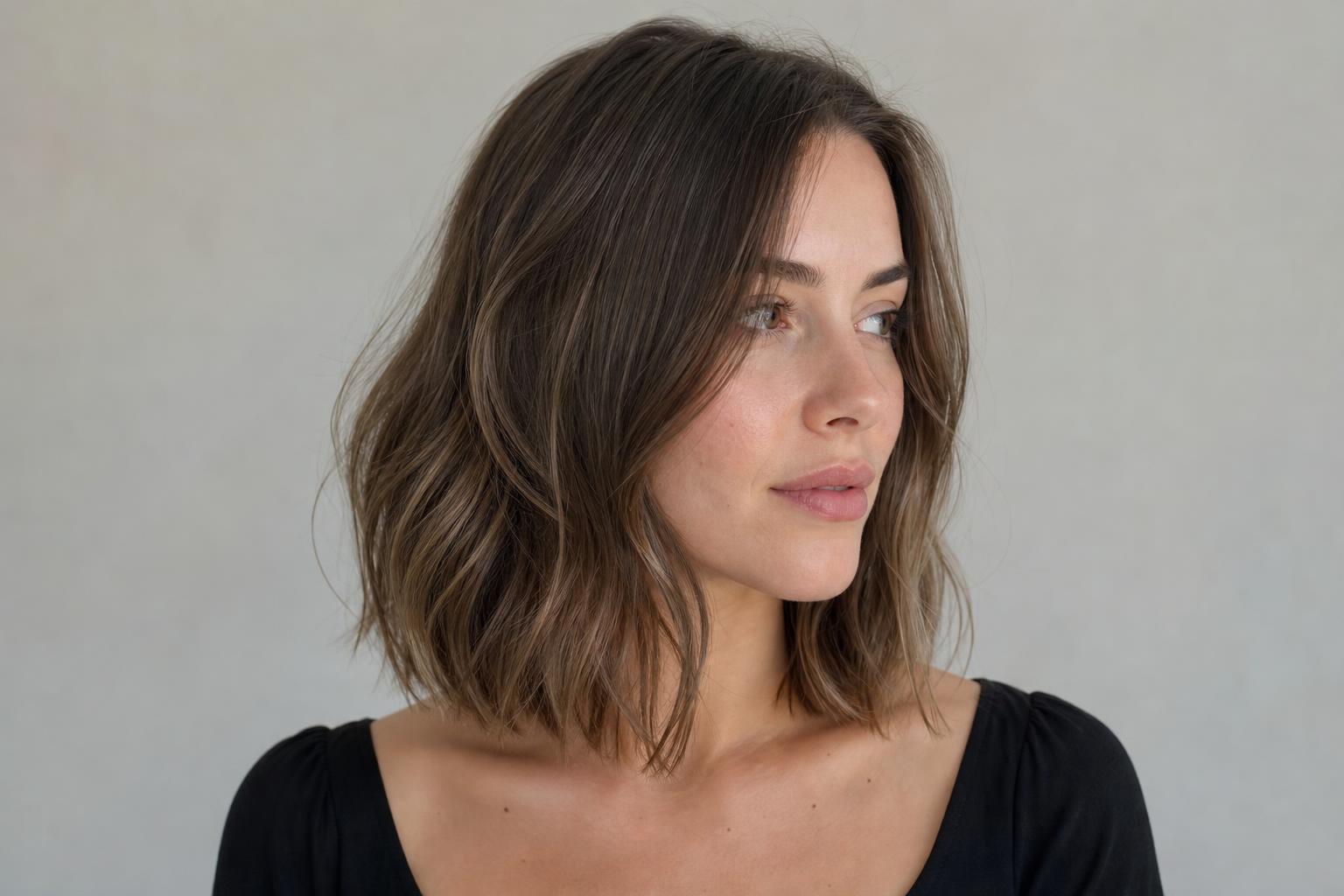
A lob cut somewhere between the jaw and the collarbone is long enough to be pulled flat by its own weight and short enough that every product mistake is visible at eye level. Those two facts govern the whole routine. Each category below solves one specific problem this length creates, and using a product outside its category is where most routines fall apart.
A Lightweight Mousse Does the Root Lift Work
Mousse is the only category that reliably creates lift at the root without adding visible product to the hair, because it dries to a soft structure rather than a coating. Apply it to damp hair only, in a strip along the root area, and stop about two inches from the scalp on the sides so it does not creep down onto the lengths. A golf-ball sized amount covers a full lob; anything more and the hair stiffens instead of lifting.
Texture Spray Belongs at the Mid-Lengths, Never the Roots
Dry texture sprays and sea-salt sprays add grit that keeps hair from slipping back into a flat line, which is exactly what a one-length lob wants to do by mid-afternoon. Spray them from about eight inches away, aimed at the middle third of the hair, then scrunch upward with your hands. The common error is spraying at the root for volume, which builds up on the scalp and produces a gritty, dull top section within two days.
A Leave-In Conditioner Handles the Ends Every Wash Day
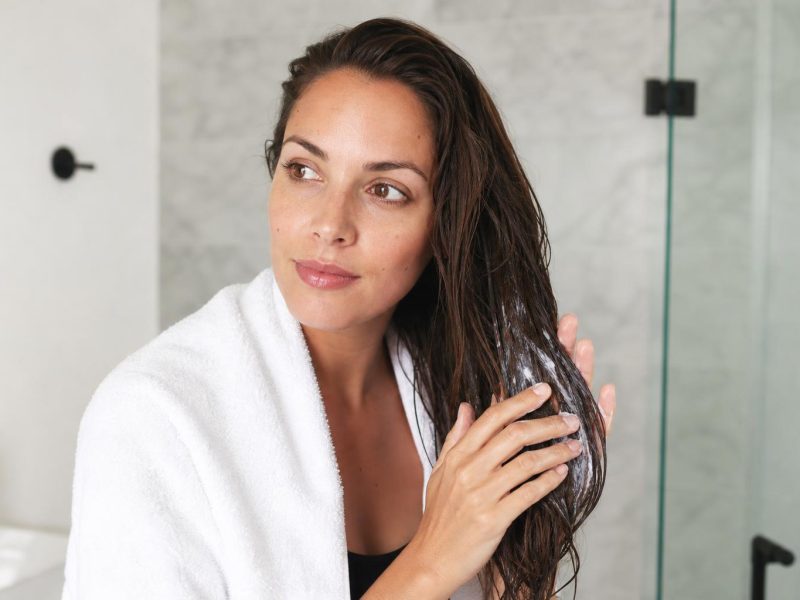
At collarbone length your ends are around two years old, which means they have been through roughly a hundred wash cycles and every bit of heat you have used since. A water-based leave-in applied to the bottom three inches of soaking-wet hair replaces the moisture that length has lost, and it does more for the look of a collarbone-length cut than any styling product applied afterward. Comb it through with your fingers rather than a brush so you are not stretching wet hair.
Heat Protectant Is Not Optional at This Length
Every lob that gets blow-dried or curled needs a heat protectant, and the reason is specific rather than general. A round brush concentrates heat on the mid-lengths and ends for far longer per section than it does on long hair, because there are fewer, shorter sections and each one takes repeated passes to bend. Spray protectant on damp hair before drying and again lightly before any iron work, and treat the two as separate applications rather than one.
One Sealing Product Finishes the Perimeter
The last product goes on dry hair, in a genuinely small amount, and its only job is to make the bottom edge look deliberate. On straight hair use a lightweight serum or oil warmed between your palms and pressed onto the last inch. On wavy or curly hair use a cream instead, since oil alone tends to separate curl clumps that took a whole styling session to form. Two drops is a full application for most people at this length.
Stylist tip: Apply every wet product with your head upright rather than flipped forward. Flipping the head sends product straight to the root area regardless of where you aimed it, which is the hidden cause of most “my roots go flat by lunchtime” complaints.
Building the Kit for Your Hair Type
The five categories stay the same for everyone. What changes is which of them you can skip, how heavy each formula should be, and how far up the hair shaft you apply it. Find your texture below and adjust the routine rather than the shopping list.
Fine Hair Needs Volume at the Root and Nothing Below the Ears
On fine hair the risk is not under-styling but weight, and almost every product marketed as “hydrating” or “nourishing” is too heavy for this density at lob length. Use a foam mousse at the root, a dry texture spray at the mid-lengths, and genuinely nothing on the ends unless you are spot-treating a split. Fine hair also holds a light hairspray better than a cream, so a mist of flexible-hold spray after drying keeps the shape without the greasy look a serum produces. Our guide to shorter cuts built for fine hair follows the same weight principle at a shorter length.
Thick Hair Needs Weight Control Rather Than Hold
Thick hair at lob length does not need help staying up; it needs help not spreading sideways. Skip root products entirely, which is counterintuitive advice most product routines never give, and start with a smoothing balm or cream through the mid-lengths on damp hair. Follow with a small amount of oil at the ends to keep the perimeter dense and the outline clean. Hairspray on thick, dense hair at this length tends to make the width look rigid rather than controlled, so it is worth leaving out of the routine.
Wavy Hair Needs Products That Form a Cast, Not a Coating
Waves at lob length fall out because there is not enough weight below them to hold the bend. A sea-salt or wave spray applied to hair that is damp rather than wet gives the pattern something to dry into, and scrunching while drying sets it. Skip creams before drying, since they soften the wave and coat the strands, and add a light cream only after the hair is fully dry if the ends look frizzy. Diffusing on low speed with medium heat gives a better result than air-drying for anyone who wants definition rather than a soft bend, and the air-drying technique that keeps frizz down transfers to waves with less product than curls need.
Curly Lobs Need Water-Based Products Layered on Soaking Hair
Curls at this length need product applied while the hair is still dripping, which is the single biggest difference between a curly routine and everything above. Work a water-based leave-in through soaking sections, follow immediately with a curl gel over the top to lock the pattern, and then leave the hair completely alone until it is dry. Touching curls mid-dry is what creates frizz, not the products. Once dry, scrunch out the crunchy cast with a drop of oil in your palms.
Color-Treated Lobs Need One Addition, Not a Different Routine
Color changes the condition of the hair rather than the styling logic, so keep the kit for your texture and add a weekly bond-repair treatment on the mid-lengths and ends. Lightened hair at lob length is also the most exposed to sun of any length, since the ends have no upper layers shading them, so a leave-in with UV filters through the bottom half genuinely slows fading. Wash with cool water where you can tolerate it, because heat opens the cuticle and takes tone out with it.
How Much to Use and Where It Goes
Amounts are where routines fail more often than product choice. A lob holds roughly half the product volume of shoulder-blade-length hair, and most people carry over the amount they used before their cut. Use the quantities below as a starting point and adjust down rather than up.
| Product | Amount | Where It Goes | Hair State |
|---|---|---|---|
| Mousse | Golf-ball size | Root area, top and crown only | Damp, towel-dried |
| Leave-in conditioner | Dime-sized | Bottom three inches | Soaking wet |
| Heat protectant | 4 to 6 mists | Mid-lengths and ends, all around | Damp before drying |
| Texture spray | 3 to 4 short bursts | Middle third, from 8 inches away | Fully dry |
| Serum or oil | 2 drops | Last inch, pressed not raked | Fully dry, at the very end |
Order matters as much as amount. Water-based products go on first and oil-based products go on last, because oil blocks water from getting through and a leave-in applied over a serum simply beads off. The workable sequence on a wash day is leave-in, then mousse, then heat protectant, then dry, then texture spray, then serum. On non-wash days, dry shampoo at the root and texture spray at the mid-lengths is the entire routine.
Stylist tip: Emulsify every cream or oil between your palms for a full five seconds before it touches your hair. Product applied straight from the hand lands in one concentrated patch, which is why the same amount can look invisible one day and greasy the next.
Products That Work Against a Lob
Some perfectly good products are wrong for this specific length, usually because they were designed for hair with more weight below them. These four cause more problems than they solve on a lob.
- Heavy hair masks used as regular conditioner. A deep mask on the mid-lengths of a lob leaves the hair limp for two days. Use one every second or third wash, on the ends only.
- High-hold gels on straight hair. Firm-hold gel at this length creates a set shape that cannot move, and a lob relies on movement at the ends to look like a cut rather than a helmet.
- Two-in-one shampoo and conditioner. The combined formula deposits conditioner at the roots where a lob needs the least of it, and under-conditions the ends where it needs the most.
- Thick pomades and waxes. These belong on short cuts. On collarbone-length hair the weight pulls the ends straight down and the shape flattens against the neck within an hour.
What Changes if Your Lob Is Layered
A layered lob and a one-length lob want opposite things from the same product categories. Layers already create the separation and movement that a texture spray is meant to fake, so the spray moves from a daily essential to an occasional refresher, used only on the second or third day. What layers do need is something to keep the shortest pieces from flying loose, which is a job for a light cream through the top layer rather than more product at the ends. On a layered cut at bob or lob length, cutting the total product amount by about a third usually improves the result immediately.
FAQ
Do I Really Need a Different Shampoo for a Lob?
No, shampoo choice depends on your scalp and your color, not on your cut length. What does change is technique: shampoo the scalp only and let the runoff clean the lengths, which prevents the mid-lengths from drying out at a length where the ends are already the oldest hair on your head. If your roots go oily faster since your cut, that is usually product placement rather than shampoo.
Can I Use the Same Products I Used When My Hair Was Long?
Usually yes for shampoo and conditioner, and usually no for stylers. Long-hair styling products tend to be heavier because they are fighting more weight, and the same formula on a lob flattens the shape it was meant to support. Start by halving the amount of anything you already own before buying replacements, since about half the time the product was never the problem.
What Product Gives a Lob That Slight Bend at the Ends?
The bend comes from technique rather than a product, specifically from turning a round brush under for the last two inches while the hair is still slightly warm. A light cream or serum afterward holds the shape, but no product creates the curve on its own. If your ends refuse to bend at all, the cut may lack the perimeter weight the shape depends on, which is a conversation for your next appointment.
How Do I Stop My Lob Going Flat by Midday?
Move your root product higher and use less of it, then finish the root area with cool air before you leave the house. Warm hair collapses as it cools, so setting the shape with a thirty-second blast of cold air locks in whatever lift you created. A texture spray at the crown mid-afternoon revives it, but the fix is at the drying stage rather than the touch-up stage.
Is Dry Shampoo Safe to Use Every Day on This Length?
Daily use is fine on the scalp as long as you brush it through and wash properly at least twice a week. Build-up rather than the product itself causes the problems people report, and at lob length build-up shows quickly because the roots are closer to eye level. Apply it at night rather than in the morning so it has hours to absorb oil before you style.
Which Single Product Makes the Biggest Difference to a Lob?
A heat protectant, though it is the least glamorous answer on the list. The ends of a long bob take repeated direct heat every time you style, and the condition of that bottom inch determines whether the cut looks sharp or frayed from across a room. Protecting it costs ten seconds and preserves the shape between trims better than any styling product.
The best products for a lob are the ones matched to your texture and used in smaller amounts than your last haircut needed: root lift for fine hair, weight control for thick hair, cast-forming product for waves and curls, and a heat protectant for everyone. Buy by category rather than by promise on the bottle, and cut every amount in half the first time you use it on this length. A lob that looks effortless is almost always a lob wearing less product than you would guess.
Hair results vary based on your natural hair type, texture, density, and condition. Always consult with a licensed hairstylist before making significant changes, especially with chemical treatments or dramatic length changes. Photos may show styled results that require professional tools and products to replicate.