
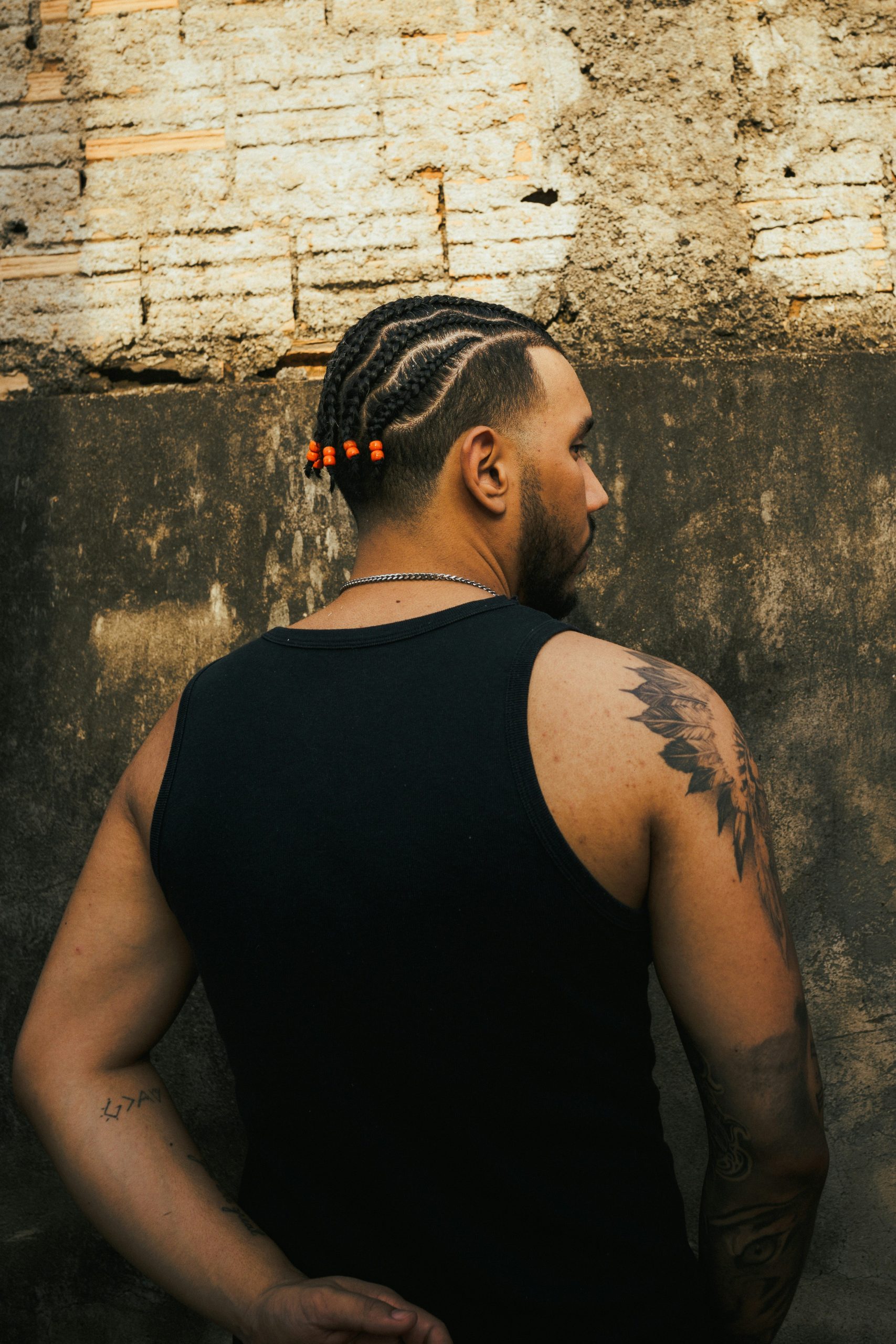

From tight cornrows flat against the scalp to freeform box braids worn shoulder-length, braided hairstyles for men cover the full range from low-maintenance protective styles to intricate custom designs that take 4 or more hours in the braiding chair.
Braids for men work best on type 3 and type 4 natural hair, though straight hair with enough length can hold cornrows and Dutch braids. Here are 30 variations covering cornrows, box braids, knotless braids, two-strand twists, and alternative styles, with guidance on face shape compatibility, minimum hair length by style, and what to tell your braider so you walk out with exactly what you envisioned.
The 30 styles below are organized by technique: cornrows and flat braids first, then box and knotless braids, then twists and alternative braid variations. Each entry includes the key technical detail your braider needs to know, plus realistic maintenance expectations.
| Factor | Details |
|---|---|
| Best for | Type 3–4 natural hair; men who want protective styles or bold, expressive looks |
| Hair length needed | Cornrows: minimum 1.5–2 inches; box braids: minimum 3–4 inches (extensions add length) |
| Duration | Cornrows: 2–4 weeks; box braids: 6–8 weeks; knotless braids: 6–10 weeks |
| Salon time | Cornrows: 1–2 hours; medium box braids: 4–6 hours; long knotless braids: 6–8 hours |
| Avoid if | You have traction alopecia, very fine or damaged hair, or less than 1.5 inches of growth |
Cornrows for Men
Cornrows braid the hair flat against the scalp in continuous rows using a three-strand underhand technique, making them the most accessible braid style for men since they work from as little as 1.5 inches of natural hair. The rows run from the hairline to the nape in straight lines, though braiders can route them in curves, diagonals, or geometric patterns. Pair any cornrow variation with a high taper fade or skin fade on the sides for a finished barbershop look.
1. Straight-Back Cornrows
The braider sections the hair into parallel rows from the forehead to the nape, braiding each row tight to the scalp with an underhand technique that creates a raised, rope-like appearance. Row width determines the final look: wider rows (4–6 across the head) give a bolder, more graphic result, while narrower rows (8–12 or more) create a finer, more detailed pattern across the scalp. On type 4 hair with a clean fade on the sides, this is one of the most-requested men’s braid styles in barbershops right now.
2. Cornrows with Low Fade
Oval and oblong faces get the most benefit from this combination, since the straight-back rows create vertical lines that elongate the face while the low fade keeps the sides tidy without widening the silhouette. Ask for “straight-back cornrows with a skin fade starting at the temple.” The fade runs on a faster schedule than the cornrows: plan for a fresh edge-up every 7–10 days while the cornrows stay intact for 2–3 weeks.
3. Zigzag-Part Cornrows
Rather than straight-line parts, the braider uses a rattail comb to carve sharp zigzag sections before braiding, so the partings themselves become a design element visible from above the head. This technique requires a braider experienced in precision parting, not just in braiding technique. Bring a top-view reference photo, not a side-profile shot, so the braider can see the exact angle and depth of the zigzag pattern you want.
4. Feed-In Cornrows
Extension hair is fed into the braids gradually from root to tip, starting with a small amount at the base and adding more as the braid progresses down the row. The result is a seamless, fuller cornrow with no visible bulk at the root, which is the telltale sign of a less refined braiding technique. Feed-in cornrows are heavier than natural-hair-only cornrows and need scalp oil applied to the parts every 3–4 days to keep the edges moisturized.
5. Stitch Braids
Stitch braids look sharp on men with shorter natural hair (2–3 inches) because the graphic lines show most clearly when the top section is closer to the scalp. A mid fade on the sides lets the stitch pattern read from the front without competing volume on the sides. Bring a front-facing reference photo and confirm the braider has done stitch work before booking, since the precision is a skill beyond standard cornrow technique.
6. Curved Cornrows with Center Part
A hard part shaved down the center of the head splits the rows so they curve outward symmetrically from the part line. Square faces find this variation particularly useful, since the curves soften the linear geometry of a straight-back style while the center part adds visual height at the crown. The hard part needs a fresh shave every 5–7 days to stay crisp; once the part grows in, the design looks grown-out rather than deliberate.
7. Cornrows to Ponytail
Type 4c hair works especially well here, since the tight coil pattern holds tension-based styles longer than looser curl types: the cornrows start at the hairline, run toward the back, and the loose ends are gathered into a rubber-banded ponytail at the nape. Use a satin-lined rubber band rather than a regular elastic to prevent breakage at the ponytail point, where most of the tension concentrates. The braided section creates a neat, polished look from the front while the ponytail adds length and movement at the back.
8. Geometric-Pattern Cornrows
Geometric parting patterns, where sections form triangles, diamonds, or hexagons rather than parallel lines, add a custom design layer before a single braid is placed. The geometry is visible from above, not from the side, so the design only shows fully in top-view photos and when looking down at someone seated. On dark natural hair, the contrast between the pale scalp at the parts and the dark braids makes each geometric shape clear and designed-looking.
9. Cornrows with Beads
Sliding beads onto the ends of cornrows before sealing them adds weight, color, and movement at the tips. Gold, wooden, and clear beads are the most common choices; cowrie shells are a traditional West African option with cultural history that predates the modern barbershop use of the style. The beads protect braid ends from unraveling, which typically extends the style by 3–5 days past when unfinished ends would start to frizz.
10. Cornrows Paired with a Loose Braid at the Back
Cornrows across the top of the head transition into loose hanging braids at the back, drawing on the same aesthetic as pop smoke braids. The front rows are tight and structured; the back section hangs free with braided ends rather than being cornrowed flat all the way down. The style works best when the top cornrows run in the same direction as the loose braids, so the transition looks designed rather than unfinished.
Box Braids and Knotless Braids for Men
Box braids section the hair into square-shaped parts and braid each section individually from root to end, creating a collection of hanging braids that can be worn down, gathered into a bun, or styled multiple ways. Knotless braids are a newer technique that begins without a knot at the root, distributing tension more evenly and causing less stress to the hairline and edges. Both styles work best with 3–4 inches of natural hair; extensions add length and volume beyond what the natural hair provides.
11. Classic Box Braids
At the root of each box braid, the natural hair is folded over the extension hair and braided down in three strands, creating a small knot at the scalp that anchors the braid in place. This knot gives box braids their signature look but also concentrates tension at the root, which is why edges can thin with repeated or overly tight installs. Jumbo box braids (6–8 braids per section, large circumference) install faster and are less heavy overall while still making a strong visual statement.
12. Knotless Box Braids
Ask your braider specifically for “knotless technique, no fold-over knot at the root” to make clear you are requesting the newer method rather than just smaller braids. Not every braider defaults to knotless even when it is available at the salon; you have to request it explicitly. Also confirm the weight of the extension hair before the session: heavy extension fiber on fine natural hair increases tension at the root regardless of whether the technique is knotless or traditional.
13. Medium Box Braids
Medium braids (roughly pencil-width in diameter) offer the best balance between install time (4–6 hours versus 6–8 for small braids), longevity (6–8 weeks), and movement when worn down. On type 3c–4b hair, the natural curl at the root creates a subtle texture at the base of each braid that blends the grow-out phase more gracefully than on very tightly coiled hair, where the contrast between new growth and the braided section is sharper.
14. Long Box Braids
Box braids that reach shoulder length or longer work on natural hair that is at least 4 inches, with the bulk of the length coming from extension hair. Type 4a–4c hair holds the extensions most securely because the tighter curl pattern grips the extension fiber at the root. The longer the braids, the more tension they put on the scalp; most experienced braiders recommend taking down braids before the 8-week mark regardless of appearance to prevent traction issues along the hairline.
15. Box Braids with Taper Fade
Shaved or taper-faded sides paired with box braids on top is one of the most requested men’s braid combinations in barbershops today, since it frames the braids and reduces overall volume for a cleaner silhouette. The challenge is scheduling: the braids last 6–8 weeks but a mid taper fade on the sides needs refreshing every 2–3 weeks. Book the fade first, let it settle for 3–4 days, then schedule the braiding session so the fresh fade is the base for the install.
16. Jumbo Box Braids
Fewer, larger braids (12–20 total) make for a dramatically different silhouette than medium or small braids, and they install in 2–3 hours instead of 4–6. On fine natural hair or hair with any existing damage at the hairline, jumbo braids are a safer choice than small braids, which multiply the number of tension points across the scalp. The larger the braid diameter, the less cumulative stress the style places on the roots during a multi-week wear.
17. Small Box Braids
Fine sectioning produces 40–70 small braids across the head, creating a dense, fluid look that moves differently than larger braid styles and can be formed into more complex updos. Expect 6–8 hours minimum in the braiding chair, and budget more at a first appointment with a new braider since the detailing at that scale takes longer before the braider learns your hair’s behavior. After 4–5 weeks, small braids often begin to frizz at the mid-shaft before the roots show noticeable new growth, so the maintenance window is slightly shorter than with medium or jumbo styles.
18. Box Braids with Gold or Copper Accents
Wrapping a section of the braid in metallic thread, sliding a cuff over it mid-length, or braiding in gold-tone extension hair creates a two-tone effect that catches light without any chemical color process. The accents read most clearly on dark brown or black natural hair where the contrast between hair color and metallic element is strongest. Distribute accents across 4–6 braids spread around the head rather than concentrating them in one area; spread placement creates visual interest while a single cluster looks more like an afterthought.
19. Triangle-Part Box Braids
Triangle sections create a parting pattern visible from above when braids are worn down, turning the base of the style into a design feature rather than a hidden foundation. Style these braids into a half-up bun for special occasions: the triangle parting adds visible structure at the crown when braids are pulled back. Ask specifically for “triangle parts with knotless technique” to reduce root tension on the more complexly shaped sections.
20. Box Braids in a Half-Up Bun
Round and oval faces find that gathering the top half of the braids into a bun at the crown while leaving the lower half to hang down adds height without widening the silhouette. Use a silk scrunchie rather than a rubber band at the bun; rubber bands cut into braids and cause breakage at the wrap point over repeated use. For a more structured look at the ponytail, a bubble braids technique applied to the gathered section adds visual interest to the updo.
Two-Strand Twists and Alternative Braid Styles
Beyond cornrows and box braids, men’s braid styles include two-strand twists, passion twists, flat twists, crochet installs, and Dutch braids for men with straight or wavy hair. Each technique has different installation requirements, longevity, and maintenance needs. These are the styles that get labeled “braids” broadly but use distinct techniques and suit different hair types and commitments.
21. Two-Strand Twists
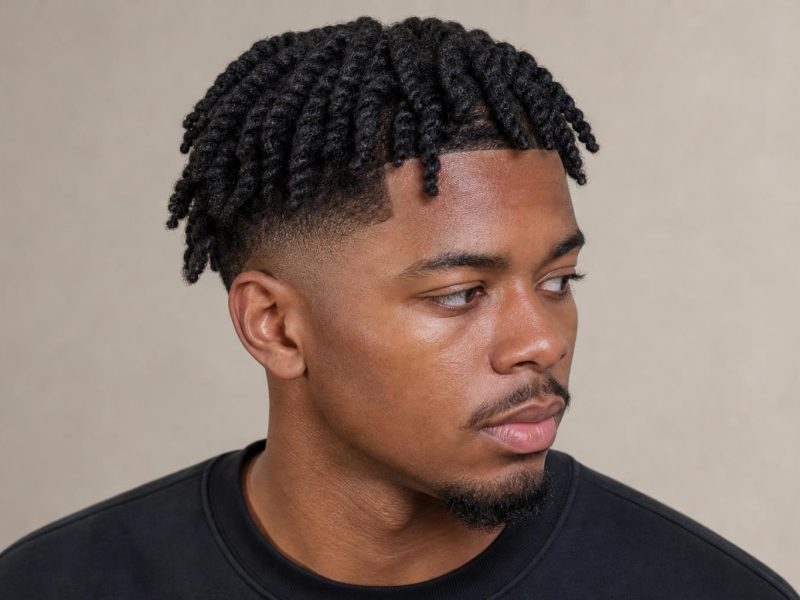
Two strands of hair are wrapped around each other rather than braided through a third strand, creating a softer, rounder profile than cornrows or box braids. The twist pattern uses the hair’s natural tendency to coil, which is why type 4 hair holds two-strand twists most easily: the coils grip each other without slipping the way straight or loosely wavy hair does. On type 4 natural hair, two-strand twists are often the starting point for a loc journey if left in long enough to begin matting at the root.
22. Flat Twists
Flat twists run along the scalp using a two-strand technique rather than a three-strand braid, creating a softer, rounder raised section than a cornrow produces against the scalp. Diamond-shaped faces benefit from flat twists routed diagonally rather than straight back, since the angled lines balance the wide cheekbones and narrow jaw and forehead that define that face shape. On type 3b–4a hair, flat twists last 1–2 weeks before the roots begin to loosen, making them a shorter-wear option than cornrows at a similar scalp level.
23. Senegalese Twists
Senegalese twists use silky Kanekalon or toyokalon extension hair twisted tightly around sections of natural hair, producing a rope-like finish that is smoother and more uniform than two-strand twists made with natural hair alone. At the 6-week mark, the roots show new growth at a different texture than the extension fiber, signaling it is time for a refresh or full takedown. Plan for a dedicated detangling session after removal: the extension fiber can mat around the natural hair during a long wear and takes 1–2 hours to remove cleanly.
24. Passion Twists
Type 3c–4b hair is the sweet spot for passion twists because the natural coil pattern blends with the curled extension fiber (typically Freetress Water Wave) to create a cohesive, textured look rather than a visible seam between natural and extension hair. The curly extension texture gives passion twists a looser, more relaxed profile than the sleek rope-finish of Senegalese twists. A light misting of water and a small amount of flaxseed gel on the roots every 5–7 days keeps the style neat without weighing the twists down between appointments.
25. Starter Locs
Starter locs installed via two-strand twists or interlocking represent the beginning of a loc journey rather than a temporary style, which puts them in a different category from every other option on this list. The first 6–12 months involve a budding phase where the locs look neither like defined twists nor fully mature locs. Men starting locs should have a realistic timeline in mind; the early phase is the hardest cosmetically, and starting right before a major event or professional obligation makes the transition significantly more stressful.
26. Palm Roll Locs
New growth at loc roots is re-twisted and rolled between the palms at each maintenance appointment to encourage the loc to maintain its cylindrical shape rather than spreading flat or locking irregularly. Most loc wearers get a palm roll retwist every 4–6 weeks, though coarser hair types can stretch to 8 weeks between sessions. A natural locking gel applied to the root before rolling helps the new growth knit into the existing loc without slipping undone before the next appointment.
27. Crochet Braids for Men
Crochet installs cut the chair time to 1–2 hours compared to 4–6 for traditional box braids, because a latch hook pulls extension hair through existing cornrow bases rather than braiding each section individually from scratch. Men who want the appearance of box braids or locs without the installation time, or who do not yet have enough natural hair length for a full traditional install, are the strongest candidates for crochet. Nearly any extension texture works: straight, wavy, curly, loc-textured, or braided.
28. Micro Braids
Before booking micro braids, confirm your braider has a portfolio of micro braid work on men specifically: the sections at toothpick-width require a precision level that goes well beyond standard box braid technique, and an 8–10 hour install done poorly is a costly mistake. Men with any existing hairline sensitivity or type 4c hair prone to breakage at the edges should approach micro braids cautiously, since the large number of anchor points multiplies tension across the scalp compared to medium or large braid styles.
29. Dutch Braid for Men with Longer Hair
Men with type 2b wavy hair or similar medium wave patterns find Dutch braids hold longer than men with truly straight type 1 hair because the wave texture gives the strands something to grip. Start the braid at the crown with slightly damp hair and no products, braiding three strands under (not over) to create the raised braid that runs along the scalp. Straight hair slides rather than grips, so a Dutch braid on straight hair starts tight and loosens more quickly than on wavy or curly hair.
30. Braids with Colored Extension Hair
Mixing burgundy, auburn, honey blonde, or vivid-toned extension hair into a box braid or cornrow install adds a two-tone result without any chemical processing of the natural hair. Because the color lives in the extension fiber rather than the natural hair, it is fully temporary and comes out when the braids are removed. Distribute colored braids evenly across the head rather than grouping them in one area; spread placement creates designed color variation, while a single block of one color on one side looks more like a placement error.
How Face Shape Affects Your Best Braid Style

The right braid type and wear pattern can visually balance your face proportions, while the wrong combination can emphasize the widest or longest point. The table below addresses two variables you can control: braid direction and overall volume. The braid type you choose (cornrows versus box braids versus twists) matters less than how you style and wear them relative to your face.
| Face Shape | Best Braid Style | Avoid | Why |
|---|---|---|---|
| Oval | Any style; straight-back cornrows or medium box braids are the standard picks | Nothing specifically | Balanced proportions suit almost all braid volumes and directions |
| Round | Straight-back cornrows, half-up bun, styles with height at the crown | Jumbo box braids worn all-down (adds width around the face) | Vertical lines and crown height elongate round proportions visually |
| Square | Medium box braids with soft movement, curved or diagonal cornrows | Very tight grid-pattern cornrows (emphasizes jaw width) | Softer, looser braid textures reduce the visual weight of a strong jaw |
| Oblong | Box braids with volume at the sides, medium-length worn down | Very long braids straight down (further elongates) | Side volume adds width that visually shortens a long face |
| Heart | Medium-length box braids, low ponytail, styles with volume at the nape | Very short or tight cornrows exposing a narrow chin | Volume lower in the style balances a wider forehead against a narrow chin |
| Diamond | Diagonal flat twists, medium box braids with some forehead framing | Styles pulling all volume to the cheekbone-level midpoint | Volume at the forehead and chin balances the widest point at the cheekbones |
What to Tell Your Braider
Braiders and barbers use different vocabularies depending on their training, so being specific prevents the most common miscommunications. Say: “I want [cornrows / box braids / knotless braids] in [direction or pattern], [medium or small size], with a [fade / taper / natural hairline] on the sides.” If you want a specific parting style, bring a top-view reference photo showing the parting pattern, not just a front or side view of the finished style.
Stylist tip: Wash your hair and detangle completely before your appointment. Braiders work faster and create cleaner parts on clean, product-free hair than on hair with buildup from dry shampoo, gel, or oil. If your hair is very dry or prone to breakage, deep condition 24 hours before the appointment and let it air-dry fully before the session.
For knotless versus traditional box braids, specify “knotless technique, no fold-over knot at the root” to make clear you are requesting the newer method, not just smaller braids. Also confirm the extension hair weight before your session starts: heavy extension fiber on fine natural hair increases tension and breakage risk at the roots regardless of technique. If a braider quotes significantly less time than 4–6 hours for a full medium box braid install, ask how many braiders will be working simultaneously.
Stylist tip: Budget time and cost realistically. A full box braid install on medium-length braids takes 4–6 hours at most salons, and premium braiders who work slower often produce tighter, longer-lasting results. The same discipline in parting and braiding tension that adds an hour to the install is what keeps the style looking clean at week 6 rather than week 3.
Maintenance by Braid Style
Every braid style needs the same basic care routine: keep the scalp moisturized, protect against friction at night, and wash gently without disturbing the braids. The differences are in how long each style lasts, when it starts to look worn, and when it has been in long enough to risk hair damage at the roots.
| Style | Typical Duration | Daily Care | Maximum Wear |
|---|---|---|---|
| Cornrows | 2–4 weeks | Scalp oil on parts, edge control for hairline, silk durag at night | 6 weeks max before tension risk increases |
| Box braids | 6–8 weeks | Lightweight scalp oil 2–3 times per week; diluted shampoo wash every 10–14 days | 8 weeks; hair tangles significantly beyond this |
| Knotless braids | 6–10 weeks | Same as box braids; frizz at roots is less visible due to flat root technique | 10 weeks; lower tension allows slightly longer wear |
| Two-strand twists | 2–3 weeks | Moisture spray or twist butter on roots daily; durag at night | 4 weeks before twists unravel or begin locking |
| Locs | Permanent | Scalp oil, retwist every 4–6 weeks, regular clarifying wash | No maximum; maintain every 4–8 weeks |
When Braids Are Not the Right Choice
Braids are a protective style, but they protect hair only when installed and maintained correctly. In the wrong conditions, braids can cause the same damage they are meant to prevent.
- Less than 1.5 inches of natural hair: Cornrows require enough hair for the braider to work with; braiding hair shorter than this puts extreme tension on very short strands and roots. Wait until the hair is at least 1.5–2 inches for cornrows, 3–4 inches for box braids with extensions.
- Active traction alopecia or a thinning hairline: Tight braid styles pull most at the hairline and temples, the same areas already weakened by traction alopecia. A dermatologist or trichologist can advise whether the hair loss is at a stage where braiding should be paused entirely.
- Severely damaged or over-processed hair: Bleached, heat-damaged, or repeatedly chemically processed hair has weakened bonds along the shaft that cannot withstand sustained tension from braiding. Braiding on compromised hair causes breakage at the mid-shaft. Deep conditioning for 4–6 weeks before braiding significantly reduces this risk.
- Very fine or type 1 straight hair without extensions: Straight, fine hair does not grip braid strands the way coily hair does, causing braids to slip and unravel quickly. Feed-in techniques with extension fiber help, but cornrows and box braids simply do not last as long on straight hair as they do on type 3–4 hair.
FAQ
How Much Hair Do You Need to Get Braids as a Man?
Cornrows need a minimum of 1.5–2 inches of natural hair to hold the braid securely. Box braids and knotless braids with extensions work with 3–4 inches of natural hair, since the extension fiber provides most of the length. Two-strand twists need at least 2–3 inches to twist and hold without unraveling at the root. Hair shorter than these minimums does not give the braider enough to work with, and forcing a braid install on too-short hair increases breakage risk significantly.
How Long Do Braids Last on Men?
Cornrows last 2–4 weeks; box braids and knotless braids last 6–10 weeks; two-strand twists last 2–3 weeks. The range within each style depends on your hair type, growth rate, and how consistently you maintain the style. Type 4c hair tends to hold braids the longest because the tight coil pattern grips the braid, while looser curl patterns and straight hair see styles loosen faster.
Can Men with Straight Hair Get Braids?
Men with straight or fine hair can get cornrows and Dutch braids with enough length (3–4 inches for cornrows, shoulder length for Dutch braids), but the styles will not last as long as they do on coily hair because straight hair lacks the natural grip of a tighter curl pattern. Box braids on straight hair require extension fiber to hold, and even then the style typically lasts 2–3 weeks rather than 6–8. Viking braids, French braids, and Dutch braids are the braid styles most naturally suited to straight hair.
Do Braids Help Men Grow Their Hair?
Braids protect hair from breakage caused by daily manipulation, friction from pillowcases, and environmental exposure, which allows men to retain length they would otherwise lose through breakage. Braids do not stimulate growth at the follicle level; hair grows from the scalp at the same rate whether braided or not. The length gains men see from braiding come from retaining existing growth, not from the braids accelerating the growth rate itself.
What Is the Difference Between Cornrows and Box Braids?
Cornrows are braided flat against the scalp in continuous rows, while box braids are individual braids that hang freely from the scalp after sectioning the hair into square or rectangular parts. Cornrows require less hair and install faster; box braids use more extension hair and take significantly longer. The visual difference is fundamental: cornrows create a scalp-level pattern that is part of the hairstyle’s design, while box braids create a collection of individual hanging braids that can be restyled multiple ways.
How Do I Take Care of My Scalp While in Braids?
Apply a lightweight scalp oil (jojoba, argan, or tea tree diluted in a carrier) to the parts between braids 2–3 times per week using a bottle with a nozzle applicator. Wash the scalp every 10–14 days by diluting shampoo in water and applying it to the scalp only, then squeezing water down the length of the braids rather than scrubbing. Wrap braids in a silk durag or bonnet before sleeping every night to reduce friction and preserve the neatness of the edges.
Whether you want a geometric cornrow pattern paired with a low drop fade, a full set of knotless box braids worn long, or two-strand twists as the start of a loc journey, braids for men work best when you arrive with clean, detangled hair, bring reference photos from the top and front angles, and choose a braider who has documented experience with your specific style and hair type.
Hair results vary based on your natural hair type, texture, density, and condition. Always consult with a licensed hairstylist before making significant changes, especially with chemical treatments or dramatic length changes. Photos may show styled results that require professional tools and products to replicate.