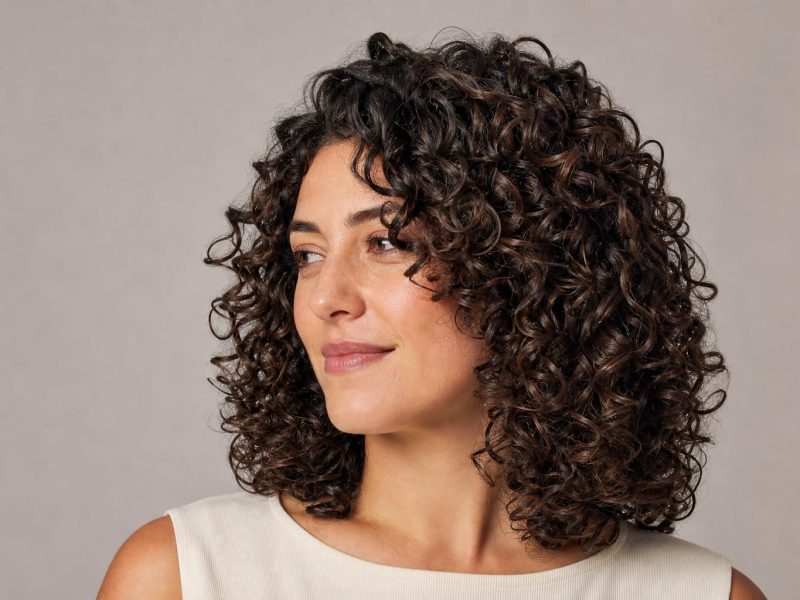

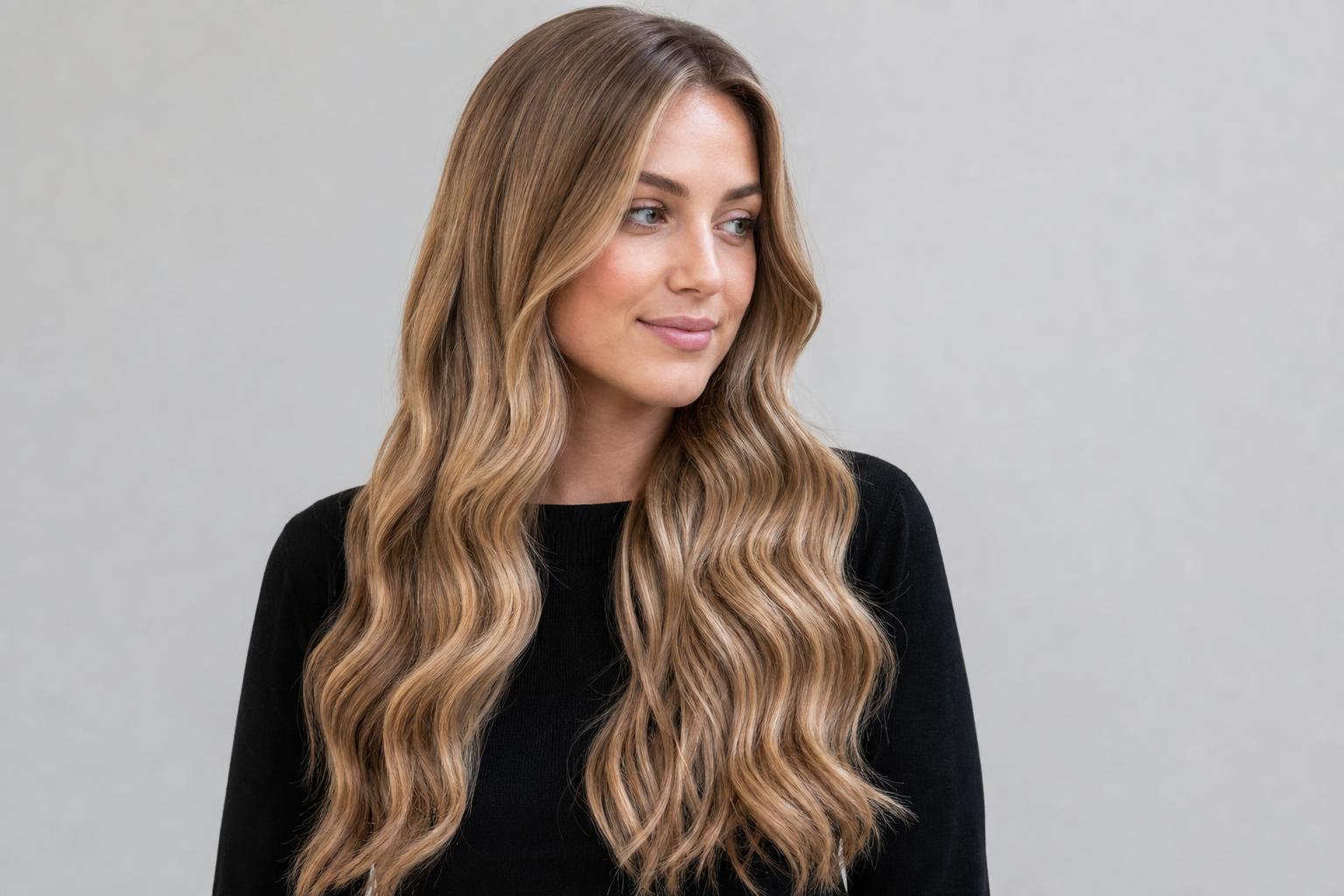
A long barrel curling iron fixes exactly one problem, hair that is too long or too thick to wrap on a standard barrel in a single pass, and it is worth buying only if that is your problem.
A long barrel curling iron has a heating surface of roughly 7 to 9.5 inches instead of the standard 5 to 6, which means hair that falls past the bra strap wraps from root to end in one pass rather than two overlapping ones. The extra reach cuts styling time on long hair by about a third, lets you take wider sections on thick hair, and removes the double-heated band that shows up where two passes overlap. It does not change the size of the curl. That is still set by the barrel’s diameter, so the buying decision is two separate questions: do you need the length, and which diameter suits the wave you want.
This guide explains what the extra length changes and what it does not, sorts out who genuinely benefits from it, matches barrel diameter to hair length and curl result, gives heat settings by hair type, walks through the wrap technique that uses the full barrel without creasing the ends, and lists the situations where a standard iron or no iron at all is the smarter buy.
What the Extra Barrel Length Actually Changes
Two measurements describe every curling iron, and long barrel models change only one of them. Diameter, the width across the barrel, decides how tight the curl is. Length, how far the heated surface runs from the handle to the tip, decides how much hair fits on the barrel at once. A standard iron has 5 to 6 inches of heated barrel, which comfortably holds a one-inch section of shoulder-length hair. Once the hair reaches the mid-back, that same section either overlaps itself on the barrel, which crushes the wave and double-heats the overlap, or has to be curled in two halves, which leaves a visible break where the passes meet.
The long barrel solves that by giving the section room to lie flat in a single spiral. The practical gains are fewer passes, so less total heat contact per strand, and curls that run evenly from root to tip because every part of the section touched the barrel for the same number of seconds. The trade-offs are weight and leverage. A longer barrel makes the tool front-heavy, which tires the wrist on a full head, and the extra reach behind the head takes some practice before it feels natural.
Stylist tip: Measure before you buy. Take a one-inch section from the crown and wrap it around a standard iron or even a cardboard tube of the same diameter. If the hair runs out of barrel before the ends are on, or you have to overlap, a long barrel will help. If it fits with room to spare, the extra length is dead weight.
Who Actually Needs a Long Barrel Curling Iron
Length is the main qualifier, but density and layering change the answer. Thick hair needs the extra barrel earlier than fine hair, because it has to be curled in wider sections to finish in reasonable time, and wider sections need more barrel. Heavily layered hair, by contrast, can often stay on a standard barrel longer, because the layers are shorter than the overall length.
| Hair | Standard barrel (5 to 6 in) | Long barrel (7 to 9.5 in) |
|---|---|---|
| Shoulder length or shorter, any density | Right tool, easier to handle | Unnecessary; harder to control near the face |
| Collarbone to mid-back, fine or medium | Works with one-inch sections | Nice to have; saves 5 to 10 minutes |
| Collarbone to mid-back, thick | Sections must be small; slow | Worth it; two-inch sections in one pass |
| Past mid-back, any density | Overlaps or two passes per section | The right tool |
| Extensions or long layers on a short base | Struggles with the longest pieces | Handles the long pieces and the short ones |
| Styling someone else’s hair from behind | Fine | Easier reach on the back sections |
Extension wearers are the group most often surprised by how much difference the tool makes. Clip-in and tape-in lengths tend to run 20 to 24 inches, and on a standard barrel the extension ends dangle past the tip, so the curl stops short of them and the two textures never match. A long barrel takes the natural hair and the extension in one wrap.
Which Barrel Diameter to Choose
Long barrel irons come in the same diameters as standard ones, usually 1, 1.25, 1.5 and occasionally 2 inches, and the diameter rule does not change with length. A larger barrel gives a looser wave that drops faster, a smaller one gives a tighter curl that holds longer. On very long hair, curls relax more under their own weight, so most people should buy a quarter inch smaller than they would for shoulder-length hair to end up with the same result after an hour.
| Diameter | Result on long hair | Best for | Hold after 6 hours |
|---|---|---|---|
| 1 inch | Defined curls that drop to soft waves | Fine hair, hair that will not hold a curl, beach waves that last | Good |
| 1.25 inch | Loose, polished waves | Medium to thick hair, the all-purpose size, blowout-style bends | Moderate |
| 1.5 inch | Big, soft bends with volume | Thick or coarse hair past the mid-back, body rather than curl | Drops within 2 to 3 hours on fine hair |
| 2 inch | Barely-there bend, smoothing | Very long thick hair wanting a blow-dry finish without a round brush | Low; treat it as a smoothing tool |
If you own only one, the 1.25-inch long barrel covers the most ground on long hair. Fine hair that struggles to hold anything should take the 1 inch and accept slightly more defined curls on day one, because they will be the right wave by evening.
Clamp or Clipless in the Long Version
Long barrels come as clamp irons and as clipless wands, and the difference matters more at this length than at standard length. A clamp holds the ends flat against the barrel, which is the easiest way to guarantee the very tips get curled on hair that is 24 inches long. A wand relies on you holding the ends with a gloved hand, and at long-barrel reach that hand ends up a long way from your body. Beginners and anyone with tired shoulders should take the clamp. People who want a lived-in wave with straighter ends and already have wand technique can take the clipless. The general trade-offs in our curling wand versus curling iron comparison all still apply; the long barrel just amplifies the reach problem.
Heat Settings by Hair Type
Long barrel irons carry the same heat range as standard ones, typically 250 to 430 F, and the same temptation to max the dial. The extra length does not need extra heat. Because each section is wrapped once instead of twice, you can usually run 10 to 20 degrees cooler than you would on a standard barrel and get the same set. These are starting points; if a curl falls out within minutes, raise the heat by 10 degrees rather than holding the iron longer.
| Hair type | Temperature | Hold time per section | Section width |
|---|---|---|---|
| Fine, or bleached and fragile | 280 to 320 F | 5 to 7 seconds | 1 inch |
| Medium, healthy | 320 to 360 F | 7 to 10 seconds | 1 to 1.5 inches |
| Thick or coarse | 360 to 390 F | 8 to 12 seconds | 1.5 to 2 inches |
| Coarse and resistant, holds nothing | 390 to 410 F, never higher | 10 to 12 seconds | 1.5 inches |
| Extensions (human hair) | 300 to 340 F | 6 to 8 seconds | 1 inch, natural hair and extension together |
The same rules from our flat iron temperature guide hold here: hair that has been bleached, relaxed or previously heat-damaged goes on the lowest row regardless of texture, and a thermal spray goes on every section before the barrel touches it. Barrel material shifts the number slightly. Titanium heats hotter at the surface than the dial suggests and suits coarse hair, ceramic runs more evenly and suits fine hair, and tourmaline coatings reduce frizz without changing the temperature.
How to Curl Long Hair With a Long Barrel Iron Step by Step
The technique is the standard clamp-and-wrap method with two changes: sections are wider, and the wrap runs the full length of the barrel instead of stopping partway. It takes 15 to 25 minutes on hair past the mid-back, which is roughly half the time of a standard iron on the same head.
Step 1: Prep Dry Hair With a Thermal Spray and Four Sections
What you need: Completely dry, brushed hair, a heat protectant spray, four sectioning clips.
How: Mist the heat protectant through the lengths and comb it down to the ends, then part the hair from ear to ear and from the front hairline to the nape to make four quadrants. Clip the top two up and start at the nape.
Why: Long hair holds more water than short hair, and even slightly damp ends sizzle and crimp on the barrel. Working from the nape up keeps finished curls out of the way. Our guide to how to use heat protectant covers how much to apply on long hair, which is more than the bottle suggests.
Common mistake: Spraying protectant on the top layer only. The underneath sections get the most barrel contact and the least product.
Step 2: Take a Section as Wide as the Barrel Allows
What you need: A tail comb to draw clean partings.
How: From the bottom quadrant, take a horizontal section 1 to 2 inches wide depending on your hair type in the heat table, and comb it smooth from root to end. Hold it straight out from the head at about 90 degrees.
Why: The extra barrel length is wasted on a skinny section. The point of the tool is that a wider section still lies flat along the barrel in one layer.
Common mistake: Sections so wide that the hair stacks on itself in two layers. If the section is thicker than a pencil when twisted, halve it.
Step 3: Clamp Near the Root and Wrap Toward the Tip
What you need: The iron at its set temperature and a heat-resistant glove on your free hand.
How: Open the clamp, place the section between clamp and barrel about two inches from the root, close, and turn the iron so the hair spirals down the barrel toward the tip in one layer, each turn beside the previous one rather than on top of it. Direct the first section away from the face; alternate direction on every following section. Stop with the last inch of the ends outside the clamp if you want a modern finish, or clamp them fully for a polished one.
Why: Wrapping from root to tip uses the whole barrel, keeps every part of the section in contact for the same time, and produces the even, root-to-end wave that the tool is for.
Common mistake: Wrapping from the ends up, which is the standard-barrel habit. On a long barrel that piles the roots on top of the ends at the tip and double-heats the most fragile hair.
Step 4: Hold, Release, and Let the Curl Cool in Your Hand
What you need: Patience and, for the strongest hold, a few small clips.
How: Hold for the seconds in the heat table, open the clamp, and slide the iron out downward without pulling. Catch the curl in your palm and hold it coiled for 5 to 10 seconds, or pin it to the head with a clip and move on.
Why: Hair sets as it cools, not as it heats. A long curl that is allowed to drop straight while warm relaxes before it has set, which is the main reason long hair “does not hold a curl.”
Common mistake: Brushing or shaking out the curls while they are still warm. Wait until the whole head is done and cool.
Step 5: Break Up the Curls and Set Them Lightly
What you need: Your fingers or a wide-tooth comb, and a flexible-hold spray.
How: Once everything is cool, run your fingers or a wide-tooth comb through from the mid-lengths down, then mist a light spray from a foot away. For beachier texture, a sea salt spray at the mid-lengths instead of hairspray.
Why: Breaking the curls up joins them into waves and removes the ringlet look. A light spray holds the wave without making long hair stiff and heavy.
Common mistake: Spraying up close and heavily. Long hair carries more spray and goes crunchy fast.
Stylist tip: On a long barrel, rest the tip of the iron lightly against the opposite side of your head as you wrap the back sections. It steadies the tool, stops the wrist doing all the work, and keeps the section flat against the barrel instead of drifting off the end.
Mistakes That Waste the Extra Length
Most people who are disappointed with a long barrel iron are using it exactly the way they used their standard one, which throws away the advantage they paid for.
- Curling only the bottom two-thirds of the barrel. If the wrap stops halfway down, the tool is a heavy standard iron. Start the wrap near the handle and use the whole surface.
- Keeping one-inch sections on thick hair. The barrel can take twice that. Smaller sections mean more passes, more heat, and no time saved.
- Overlapping the spiral. Turns that stack on each other create a flat, crimped band and a hot spot. Each turn goes beside the last.
- Holding the iron horizontally for every section. Vertical wraps give a beachy wave, horizontal give volume and bounce; long hair usually looks best with vertical through the lengths and horizontal at the crown only.
- Skipping the cool-down because it takes longer with more hair. The set happens during cooling, and long hair needs it most.
- Buying a 2-inch diameter for “big waves.” On very long hair a 2-inch barrel gives almost no wave after an hour. Go down a size.
When a Long Barrel Curling Iron Is the Wrong Buy
The tool has a narrow job, and outside that job it is more expensive, heavier, and harder to use than the alternatives.
- Hair at or above the shoulder. The reach gets in the way near the face and ears, and a standard barrel gives more control.
- Curly or coily natural texture you want to define rather than reshape. That is a diffuser and product job, not an iron job.
- Hair that is already heat-damaged, snapping, or bleached to the point of gumminess. A heatless curl method overnight gives long hair a wave with no barrel at all while the hair recovers.
- Wanting volume and smoothness rather than curl. A round brush and a dryer, or the blowout at home method, give long hair body without the ringlet stage.
- Travel. Long barrel irons are bulky and many lack dual voltage. A standard mini iron is the travel tool.
- Weak wrists or shoulder issues. The front-heavy weight and behind-the-head reach are real, and an automatic rotating iron or a wand with a shorter barrel may be kinder.
FAQ
What Is the Difference Between a Long Barrel and a Regular Curling Iron?
Only the length of the heated barrel, which runs about 7 to 9.5 inches on a long barrel model versus 5 to 6 on a standard one. The extra reach lets long or thick hair wrap in a single pass. Curl size, heat range and the clamp mechanism are the same across both.
Is a Long Barrel Curling Iron Better for Long Hair?
Yes, once hair passes the mid-back or is thick enough to need two-inch sections. Below that length a standard barrel does the same job with less weight and better control. The gain is faster styling and curls that run evenly from root to tip without a double-heated band where two passes overlap.
What Size Long Barrel Curling Iron Should I Get?
A 1.25-inch diameter suits most long hair and gives loose, polished waves that last the day. Fine hair or hair that drops curls quickly should take the 1 inch. The 1.5 and 2 inch sizes give big, soft body on thick hair but fall out fast on anything fine.
How Long Should I Hold the Curling Iron on Each Section?
Five to seven seconds for fine or fragile hair, seven to ten for medium, and eight to twelve for thick or coarse, at the temperature matched to that type. If the curl does not hold at those times, raise the heat by 10 degrees rather than holding longer. Holding past 15 seconds on any hair type damages the section without improving the curl.
Can I Use a Long Barrel Curling Iron on Extensions?
Yes, on human-hair extensions at 300 to 340 F, and it is one of the best reasons to own one because the barrel takes the natural hair and the extension in one wrap so the textures match. Synthetic extensions melt at curling iron temperatures unless they are labeled heat-friendly, and even then stay under 300 F.
Why Do My Curls Fall Out on Long Hair?
Weight and warmth. Long hair pulls its own curls straight, and curls released while still warm never set. Use a diameter a quarter inch smaller than you think you need, let every curl cool coiled in your hand or a clip before touching it, and finish with a light flexible spray rather than a heavy one.
Do I Need a Heat Protectant With a Long Barrel Iron?
Yes, on every section, and more of it than on short hair because there is more surface to cover. The one-pass advantage of a long barrel reduces total heat contact, but the barrel still runs at 300 F or more directly on the strand. A spray protectant applied to dry hair and combed through to the ends is the standard for irons.
A long barrel curling iron earns its place for hair past the mid-back, thick hair that needs wide sections, and extensions that a standard barrel cannot reach, and it is dead weight for anyone with shorter hair. Buy the 1.25-inch diameter unless your hair is fine, run it 10 degrees cooler than your old iron, and wrap root to tip in one flat spiral. Let every curl cool before you touch it, and long hair will finally hold the wave you set.
Hair results vary based on your natural hair type, texture, density, and condition. Always consult with a licensed hairstylist before making significant changes, especially with chemical treatments or dramatic length changes. Photos may show styled results that require professional tools and products to replicate.