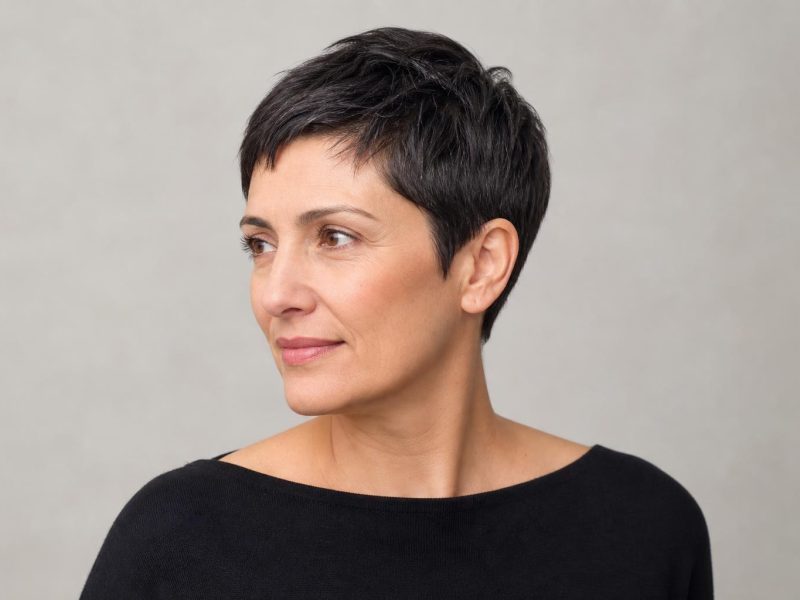

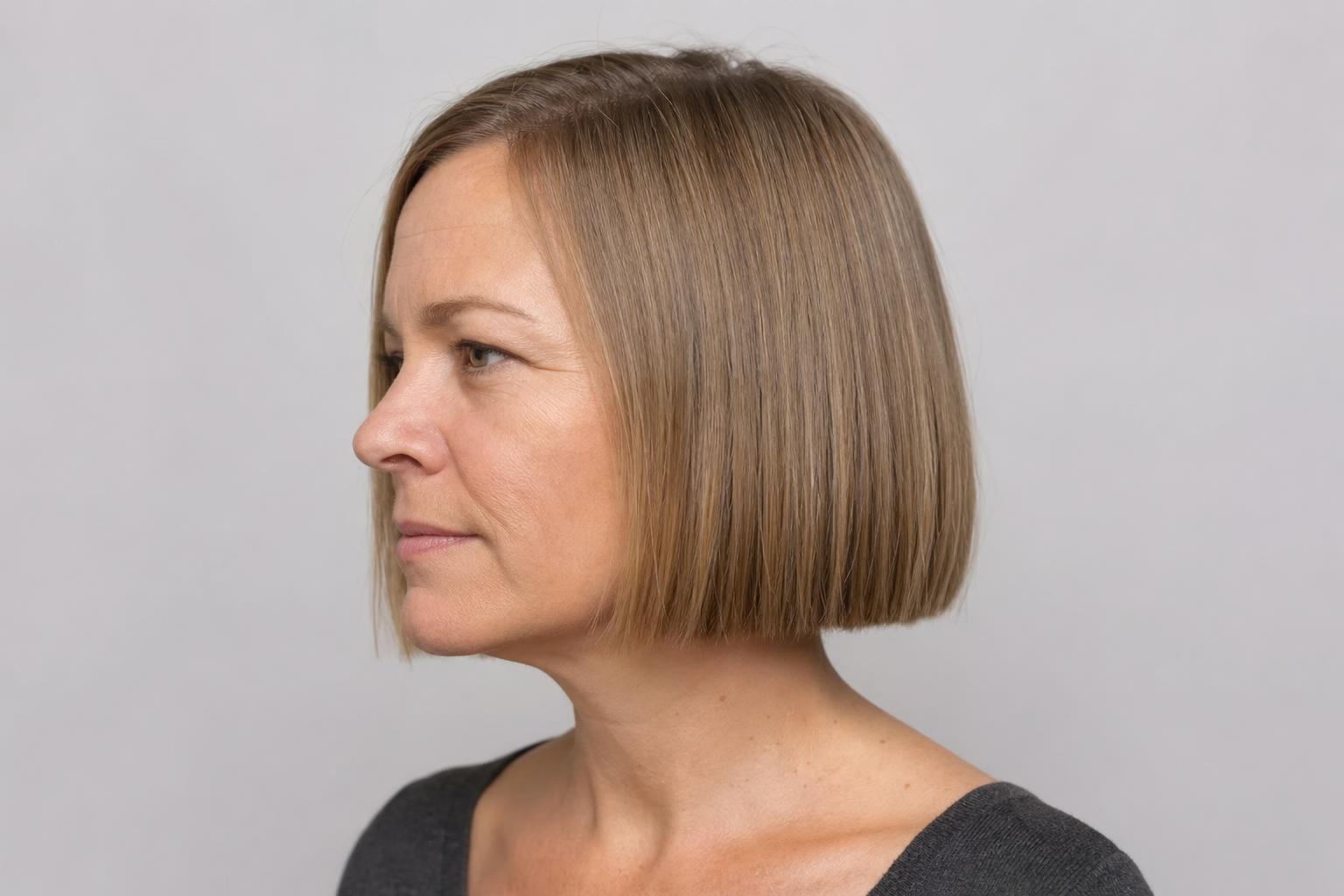
Fine hair and thin hair are two different problems, and the bob that fixes one can make the other look worse.
A low maintenance bob for extremely thin hair keeps the perimeter blunt and the length between the ear and the collarbone, because a solid edge is what makes sparse hair look dense. Fine describes the width of each strand; thin describes how many strands you have. Below are 28 bob variations chosen for hair that is short on both, each with the daily styling time it honestly needs.
The gallery is grouped by blunt cuts, very short bobs, softly layered shapes, and bobs with bangs. After the styles you will find a face shape table, the exact wording to bring to your appointment, a trim and styling-minute schedule, and an honest section on what turns a bob into a high maintenance cut on thin hair.
| Factor | Details |
|---|---|
| Best for | Low density hair, fine to medium strand width, straight to loosely wavy |
| Best length | Ear level to just below the jaw; collarbone is the outer limit |
| Daily styling | 5 to 12 minutes, mostly root drying rather than length work |
| Avoid if | You want heavy layering, waist-length options, or a cut that survives 12 weeks between trims |
| Trim frequency | 5 to 8 weeks depending on how blunt the perimeter is |
Why Thin Hair and Fine Hair Need Different Bobs
Fine hair has a narrow strand diameter, so it goes flat under product weight and struggles to hold a curl. Thin hair has fewer follicles per square inch, so the scalp shows through and the ponytail feels slim regardless of how each strand behaves. Plenty of people have one without the other, and a surprising number have coarse strands growing at low density, which is why generic fine-hair advice often fails them.
For low density specifically, the cut has to concentrate what you have rather than distribute it. That means a blunt or near-blunt perimeter where every strand ends at the same point, a length short enough that gravity is not pulling the ends into a taper, and layering kept to two or three internal sections at most. Our wider gallery of bob haircuts built for fine hair covers the strand-width side of this in more depth.
Blunt Bobs That Build Weight at the Perimeter
A blunt perimeter is the single most effective structural trick for low density hair, because ending every strand at the same horizontal line stacks their combined width into one visible edge. The trade-off is that the line goes soft as it grows, so a blunt bob cut to a single hard line needs the tightest trim schedule of anything here. These seven are the shapes that hold the illusion longest.
1. Jaw-Length Blunt Bob with a Solid Perimeter
Cut in one horizontal line at the jaw with no graduation and no internal removal, so the full weight of the hair lands at the edge. Ask specifically for no texturizing shears anywhere near the perimeter, since even light notching thins the line that is doing all the work. Roughly 8 minutes of blow-drying gets it to a finished state.
2. Chin-Length Blunt Bob with No Internal Layers
The phrase to use is “one length at the chin, no layers, no thinning shears anywhere.” Stylists often add invisible internal layers by habit to remove bulk, which is the correct instinct on thick hair and the wrong one here. Say it before the first section is combed down, not after.
3. Blunt Bob with a Slight Forward Angle
Low density hair with a coarse strand benefits from a half-inch forward angle, because coarse hair holds a horizontal line stiffly and the slight slope stops it looking helmet-like. On genuinely fine strands, skip the angle and stay level. The distinction matters more than most consultations allow time for.
4. One-Length Bob Set on a Deep Side Part
Dry the roots on the opposite side to the part first, then flip the hair over to where you want it, which forces lift at the crown without a single hot tool. A deep side part also stacks more hair over the sparser side of the scalp. Total time is about 6 minutes with a hairdryer and fingers.
5. Blunt Bob at Collarbone Length
Collarbone is the longest a blunt bob can go before the weight starts dragging the shape flat, and it buys you an extra two weeks between trims compared with a jaw-length cut. Expect 7 to 8 weeks rather than 5. Past the collarbone, the ends taper visibly on low density hair no matter how blunt the cut was.
6. Single-Process Espresso Blunt Bob
A single dark tone with no highlights makes each strand look wider against the scalp, which is the opposite of the usual advice to break up color for dimension. Highlights scatter light and let more scalp show through on sparse hair. If you want dimension, keep it to the ends and leave the root and mid-lengths solid.
7. Blunt Bob with a Square Corner at the Nape
Where a graduated bob rounds the back and pushes weight upward, this leaves a squared corner at the nape and keeps the whole perimeter on one plane. Graduation looks fuller in the mirror on day one and thinner by week four, because the stacked layers separate as they grow. The square corner grows out evenly instead.
Short Bobs That Trade Length for Density
Every inch you remove is an inch of weight no longer pulling the roots flat, which is why short bobs consistently look denser than long ones on the same head of hair. The cost is trim frequency, since a shape this precise loses its outline quickly. These are the lengths worth considering when the priority is looking like you have more hair.
8. Ear-Length Micro Bob
Suits oval and heart-shaped faces, where the exposed jaw and neck look deliberate rather than severe. On a round face this length widens the visual proportions, so drop to the jaw instead. It is the shortest bob that still behaves like a bob rather than a crop.
9. Nape-Length Bob with a Tapered Back
The back is cut close at the nape and left slightly longer through the sides, so the shape holds without needing height built by product. The taper here is a scissor-over-comb finish, not a clipper fade. Ask for it to be checked dry, because a nape this short shows every uneven millimeter.
10. French Bob at Cheekbone Level
Bring a photo and say “French bob, ending just below the cheekbone, with a blunt fringe and no layering,” since French bob alone means anything from ear to chin depending on the stylist. Confirm whether the fringe is included before they start cutting. The French bob and its length variations is worth reading before the consultation.
11. Short Bob on Coarse but Sparse Hair
Coarse strands growing at low density hold this length beautifully because the individual strand has enough body to stand away from the scalp on its own. The usual warning about coarse hair going triangular applies at longer lengths, not here. A light smoothing cream on the ends stops the wiriness without flattening the root.
12. Cropped Bob Styled with a Flat Brush
Dry the roots with fingers first, then use a small flat brush only on the last two inches to turn the ends under. A round brush at this length overcurls fine hair and costs you the flat edge that creates the density illusion. Five minutes start to finish.
13. Bixie-Length Bob for Six-Week Trims
Shorter than a standard bob but longer than a pixie, this lands in a rare spot where the grow-out stays wearable for a full six weeks. The shape softens rather than distorting, which is not true of a true pixie. Daily styling drops to about 4 minutes once the length is established.
14. Ash Blonde Short Bob with a Shadowed Root
Leaving the root two shades darker than the lengths does something specific on sparse hair, which is to reduce the contrast between scalp and strand where the scalp shows most. All-over pale blonde does the opposite and makes visible scalp brighter. Ask for a root shadow at every appointment rather than a full root touch-up.
Softly Layered and Textured Bobs
Layering is not banned on thin hair, but the budget is small and where it goes matters enormously. Two or three internal layers placed above the ear add crown movement without touching the perimeter weight, while layered cuts designed for thin hair only work when the removal stays off the last three inches. Every cut in this section keeps the outline solid and does its work underneath.
15. Bob with Two Internal Layers Only
Unlike a fully layered bob where sections cascade from crown to end, this places exactly two internal layers in the top section and leaves everything below untouched. The perimeter stays at full weight while the crown gets enough separation to lift. It is the compromise most stylists will suggest once you rule out heavy layering.
16. Rounded Bob with Crown Volume
Square and rectangular face shapes gain the most here, since height at the crown lengthens the visual proportions and softens a strong jaw. The rounding is built into the cut rather than the styling, so it survives an air-dry. Avoid on a long face, where added crown height stretches things further.
17. Point-Cut Bob with Soft Ends
Point cutting removes far less weight than a razor because the scissor tips take small vertical notches rather than slicing along the strand. On low density hair a razor is the fastest way to lose the perimeter altogether. Specify point cutting by name, and specify that it stops at a quarter-inch depth.
18. Bob with Invisible Layers
The salon term for this is an interior graduation, and asking for it by that name gets a very different result than asking for layers. Add “keep every layer above the occipital bone” so nothing is removed from the bottom third. Stylists appreciate the precision, and it prevents the most common thin-hair haircut regret.
19. Air-Dried Wavy Bob on 2a Hair
A loose 2a wave pattern gives low density hair something fine straight hair cannot buy, which is natural separation that occupies more space. Scrunch a light mousse into damp hair and leave it alone completely. Touching it while it dries is what turns the wave into frizz.
20. Tousled Bob Set with Mousse
Work a golf-ball-sized amount of volumizing mousse into towel-dried roots, tip your head forward, and dry on medium heat with fingers only. Skip the texturizing spray that gets recommended for this look, since salt sprays grip fine strands together and end up revealing more scalp. About 7 minutes.
21. Grown-Out Bob That Holds Its Shape
Cut with a very slight interior graduation, this is the shape that still looks like a haircut at week nine rather than a length that happens to be short. You trade a little day-one sharpness for four extra weeks of wearability. Worth choosing if a five-week salon rhythm is not realistic, and our notes on how often a bob actually needs trimming break down the difference by shape.
Bobs with Bangs and Face-Framing
Bangs are the highest-leverage addition available to thin hair, because they cover the front hairline where density loss shows first and add a horizontal block of hair to the densest part of the head. The catch is that bangs come out of the same limited supply, so a heavy fringe borrows from the top section. These seven manage that trade-off in different ways.
22. Bob with Curtain Bangs and a Root Shadow
Keeping the root a touch deeper than the mid-lengths stops the parting line looking wide where curtain bangs split. Warm caramel through the ends draws the eye down and away from the part. Refresh the shadow every second color appointment rather than every one.
23. Blunt Bob with a Full Fringe
Where wispy bangs let scalp show through at the hairline, a full blunt fringe covers it completely and is the densest option available. The cost is that it uses a wide section of the top, so the crown behind it thins noticeably. Choose this only if your density loss is concentrated at the front.
24. Bob with Cheekbone-Length Face Framing
Round and square faces both benefit from framing pieces starting at cheekbone level, since the diagonal line cuts across the widest part of the face. On a heart-shaped face, drop the starting point to the jaw so the framing does not emphasize a wider forehead. The rest of the perimeter stays blunt in every case.
25. Bob with Wispy Bangs Point Cut at the Tips
The fringe is cut to a straight line first and then point cut only at the very tips, which keeps the body of the bang dense while softening the edge. Cutting wispy bangs by thinning through the middle is what leaves them sparse and separated. Depth is the whole difference between the two techniques.
26. Side-Swept Fringe Bob
Say “a side-swept fringe cut to fall at the outer corner of the eyebrow, taken from a triangular section no wider than the outer edge of my eyebrows.” The section width is the part stylists guess at, and a wide section is what thins the crown behind. Confirm it in the mirror before the cut.
27. Bob with Baby Bangs on Fine Straight Hair
Very fine straight strands hold a micro fringe well because there is no wave fighting the shape and no bulk to remove. On wavy or coarse hair the same cut lifts and separates at the hairline. Only worth attempting if your hair dries genuinely straight without help.
28. Bob with Bangs Set Over a Round Brush
Dry the fringe first, immediately after washing, using a small round brush and rolling it under while the hair is still damp. Fine bangs set in the first two minutes and cannot be re-shaped once dry without wetting them again. Everything else can wait; the fringe cannot.
Matching a Thin-Hair Bob to Your Face Shape
Face shape decides where the bob should end and where the volume belongs, but on low density hair it never overrides the rule about keeping the perimeter blunt. Treat the table below as a guide to length and framing rather than to layering. Where a recommendation conflicts with keeping weight at the edge, keep the weight.
| Face Shape | Best Variation | Ideal Length | Avoid |
|---|---|---|---|
| Oval | Blunt bob, any of the short options | Ear to jaw | Nothing structural; only heavy layering |
| Round | Blunt bob with a deep side part and cheekbone framing | Just below the jaw | Ear-length cuts and center parts, which widen the face |
| Square | Rounded bob with crown height and soft framing | Jaw to collarbone | A blunt line landing exactly at the jaw corner |
| Heart | Chin-length blunt bob with jaw-level framing | Chin to jaw | Very short crops that expose a narrow chin |
| Oblong | Chin-length blunt bob with a full or curtain fringe | Chin level | Crown volume and collarbone length, which lengthen further |
| Diamond | Jaw-length blunt bob with a side-swept fringe | Jaw level | Slicked-back styles that expose a narrow forehead |
What to Tell Your Stylist
The most useful thing you can do in a consultation is name your density and your strand width separately, because most people say “thin hair” and the stylist hears “fine hair.” Those two words send the scissors in opposite directions. Say something closer to “my strands are fine and I also have low density, so I need the weight kept at the perimeter.”
A workable script: “A one-length bob at the jaw, cut with the hair dry so you can see where it actually falls. No thinning shears, no razor, and no layers below the occipital bone. If you want to add movement, two internal layers in the top section only.” That covers every decision point where a thin-hair bob usually goes wrong. If you want the fuller version of a salon consultation, our guide on how to ask for a bob walks through the whole conversation.
Stylist tip: Ask for the cut to be checked and finished dry, even if it was cut wet. Low density hair springs up more than expected as it dries, and a perimeter that looked level while wet often lands uneven once it is dry. The dry check takes ten minutes and is the difference between a sharp line and an approximate one.
Stylist tip: Book the trim before you leave, at five weeks rather than six. On a blunt bob the line goes visibly soft in week five, and a cut booked reactively always happens a fortnight later than it should. Nothing else in the routine matters as much as this.
Daily Styling Time and Trim Schedule
Low maintenance means fewer minutes at the mirror, not fewer salon visits, and on thin hair those two things trade against each other directly. The blunter and shorter the cut, the less you do daily and the more often you go back. Use the table to pick the trade you can actually live with.
| Cut | Trim Frequency | Daily Styling | Key Products | Grow-Out Behavior |
|---|---|---|---|---|
| Ear-length micro bob | 4 to 5 weeks | 4 to 5 min | Volumizing mousse, dry shampoo | Loses its outline fast; awkward from week 6 |
| Jaw-length blunt bob | 5 to 6 weeks | 7 to 8 min | Mousse, light heat protectant | The line softens noticeably in week 5 |
| Collarbone blunt bob | 7 to 8 weeks | 8 to 10 min | Mousse, root-lift spray | Ends taper gradually; still wearable at week 9 |
| Bob with two internal layers | 7 to 9 weeks | 6 to 7 min | Mousse only | The most forgiving option; blends as it grows |
| Bob with a blunt fringe | Perimeter 6 weeks, fringe 3 weeks | 9 to 12 min | Mousse, small round brush, dry shampoo | The fringe dictates the schedule, not the length |
What Makes a Bob High Maintenance on Thin Hair
Most people who describe a bob as high maintenance are describing one of a handful of specific decisions rather than the cut itself. Each of these turns a five-minute morning into a twenty-minute one, and all of them are avoidable at the consultation stage.
- A fringe cut into a wide section. The fringe needs shaping every third week and blow-drying every single day, and it takes density from the crown behind it. A narrow triangular section costs far less on both counts.
- Any layering below the occipital bone. Once weight is removed from the bottom third, the perimeter tapers and the cut needs curling or backcombing daily to look full again.
- Conditioner applied at the root. Silicones and heavy oils flatten fine strands within hours, which is what drives people to wash daily. Keep conditioner to the mid-lengths and ends only.
- All-over light blonde with no root depth. Pale color raises the contrast between hair and scalp exactly where density is lowest, and it needs a toner refresh every six weeks on top of the cut schedule.
- Length past the collarbone. Weight drags the roots flat and the ends taper regardless of how the cut was done, so you end up styling in volume that a shorter cut would have given you for free.
- Choosing a razor cut for softness. A razor thins the strand along its length rather than at the tip, which costs the perimeter weight low density hair cannot spare. Point cutting achieves a softer edge without that loss.
FAQ
Is a Blunt Bob or a Layered Bob Better for Very Thin Hair?
A blunt bob wins for low density hair in almost every case, because ending all the strands at one line makes the perimeter look denser than a tapered edge does. Layers help fine hair that is also dense, where removing bulk creates movement without costing fullness. If you have both fine strands and low density, keep the perimeter blunt and confine any layering to two internal sections above the ear.
What Length Bob Makes Thin Hair Look Thickest?
Somewhere between the ear and the jaw, with the jaw being the safest choice for most face shapes. At that length gravity has not yet pulled the roots flat, and the ends have not started tapering from the weight above them. Anything past the collarbone works against you regardless of how the cut is structured.
Can I Get a Bob If My Scalp Shows Through at the Part?
Yes, and a bob usually improves it, because shorter hair carries less weight and lies less flat against the scalp. Two things help further: switch your part by an inch every few weeks so the hair does not train into one line, and ask your colorist for a root shadow rather than a bright all-over tone. Both reduce how much contrast there is between the scalp and the hair around it.
How Often Does a Low Maintenance Bob Need Cutting?
Five to eight weeks depending on how blunt the perimeter is, with blunter cuts on the shorter end. This is the part of the deal people underestimate, since a bob buys back time in the morning rather than time at the salon. A bob with an interior graduation stretches to nine weeks if the schedule is the constraint.
Do Volumizing Products Actually Work on Fine, Thin Hair?
Mousse and root-lift sprays genuinely help because they coat the strand and add measurable diameter, while most volumizing shampoos do very little beyond cleaning well. Apply mousse to towel-dried roots rather than soaking wet hair, since water dilutes it into nothing. Amount matters more than brand here, and a golf-ball-sized portion is the ceiling before the hair starts feeling coated.
Will a Bob Make Thinning Hair More Noticeable?
A well-cut bob reduces the appearance of thinning rather than revealing it, provided the perimeter stays blunt and the length stays above the collarbone. The version that backfires is a heavily layered, razored bob, which tapers the ends and is the usual reason a bob ends up looking flat instead of full. If thinning is recent or progressing, our guide to styling options for thinning hair covers the color and parting side of the problem.
Should I Cut My Bob Wet or Dry?
Cut wet for the initial shape and check it dry before you leave the chair. Low density hair springs and separates as it dries in a way that hides unevenness while wet, and even straight hair moves enough to shift the line by a quarter-inch. Any stylist comfortable with fine hair will already work this way, and a request for a dry check costs nothing to make.
A low maintenance bob for extremely thin hair comes down to three decisions, which are keeping the perimeter blunt, staying between the ear and the collarbone, and confining any layering to the top section. Bring a photo of a one-length cut to your appointment, say the words “low density” rather than “thin,” and book the next trim before you leave. The cut itself is simple; protecting the weight at the edge is what makes it work.
Hair results vary based on your natural hair type, texture, density, and condition. Always consult with a licensed hairstylist before making significant changes, especially with chemical treatments or dramatic length changes. Photos may show styled results that require professional tools and products to replicate.