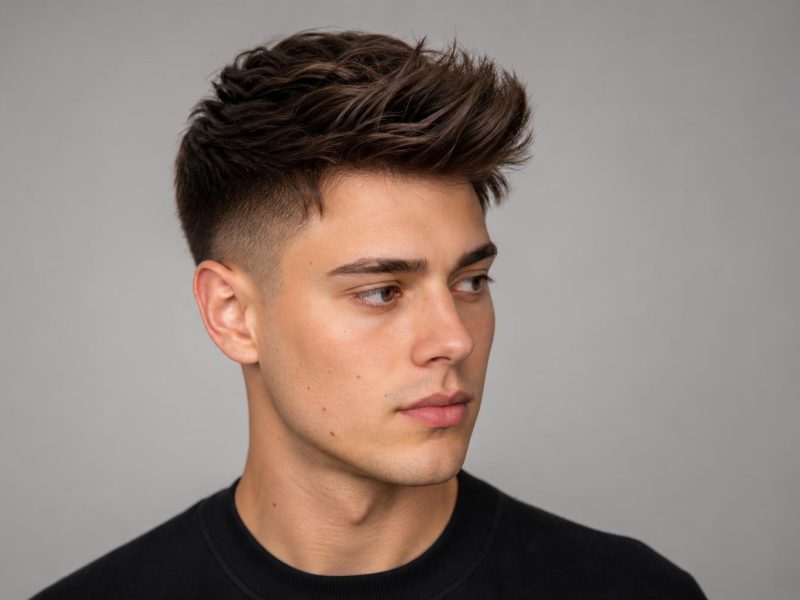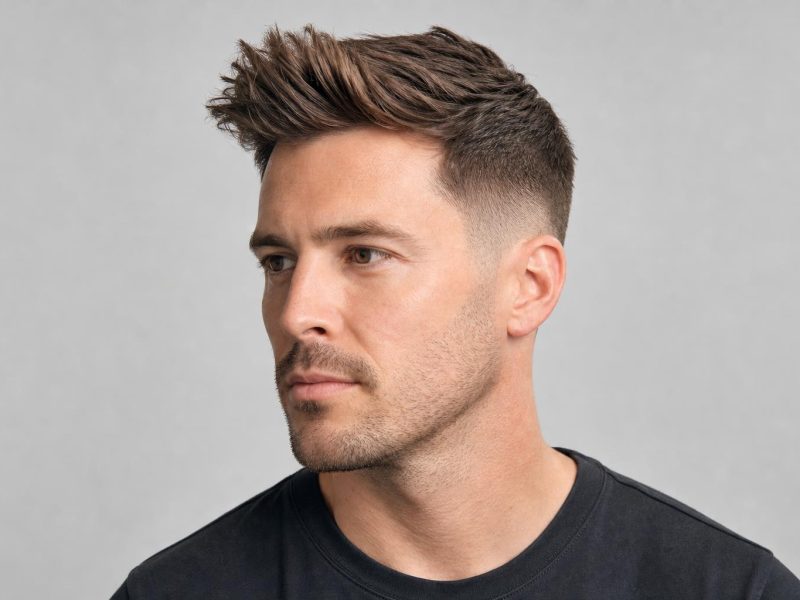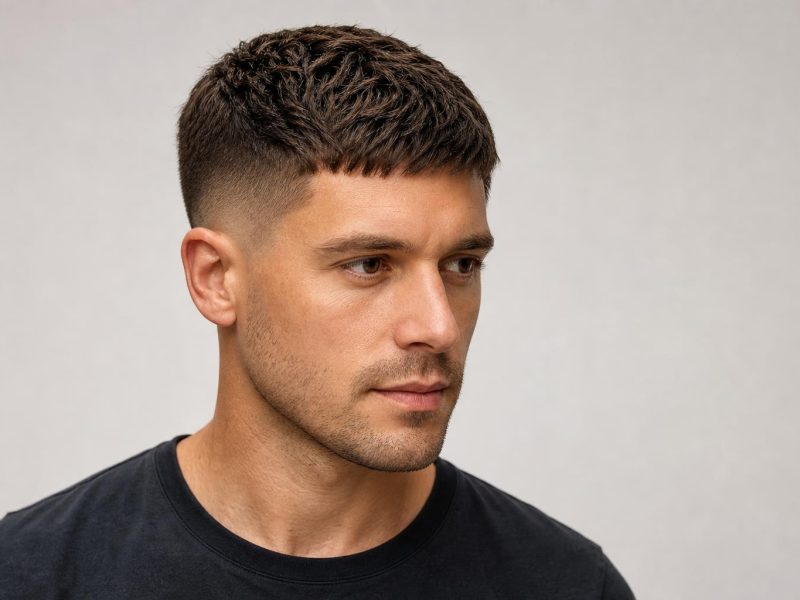

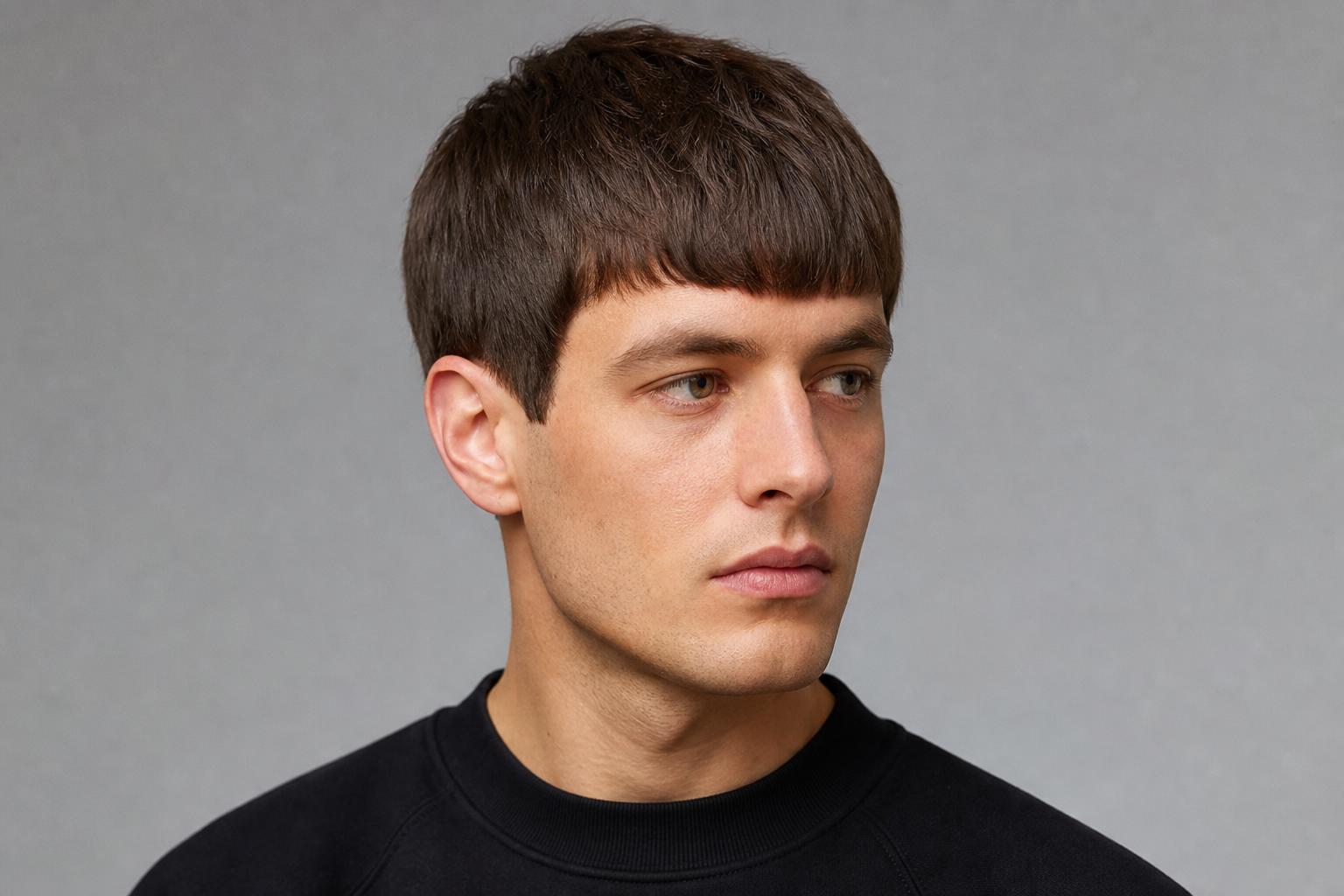
The mod cut is a scissor-finished, fringe-forward men’s haircut rooted in 1960s British youth culture that has re-emerged in 2026 as one of the cleaner alternatives to the oversaturated fade market.
A mod cut is defined by three technical features: a structured fringe cut straight across the forehead or slightly rounded at the corners, scissor-cut or lightly textured sides that are blended rather than faded, and a crown length that allows the fringe to fall forward naturally. The cut typically runs medium length, from about an inch at the sides to 2-3 inches at the crown, but modern takes push the sides longer and add layering at the top to soften the original geometric precision. What distinguishes a mod cut from a bowl cut is the intentionality of the fringe and the deliberate shaping of the crown; a bowl cut has uniform length all the way around, while a mod cut builds in variation.
The original mod movement emerged in London during the late 1950s and reached its peak through the mid-1960s, when British youth borrowed their aesthetic from Italian tailoring and French cinema. The haircut carried that same precision: neat, un-fussy, and deliberately styled to sit perfectly without looking like it took effort. The 2026 version trades some of that geometric rigidity for texture and movement, which makes it more wearable on a wider range of hair types. These 25 styles cover the full spectrum from the original structured fringe to modern textured adaptations, with variations by fade depth, hair type, and face shape. For more men’s haircut options beyond the mod, the men’s haircuts gallery covers the full range of current barbershop styles.
Classic Mod Cut Styles
Classic mod cut styles stay close to the 1960s template: scissor-cut or lightly clipped sides, a defined horizontal fringe, and a crown that sits flat or is lightly shaped to round toward the forehead. These versions work best on straight to slightly wavy hair where the fringe falls cleanly without requiring product to maintain its line. Barbers who specialize in European scissor cuts are the best source for this version of the style.
1. Straight-Across Classic Fringe
The defining feature of this entry-level mod cut is a blunt horizontal fringe cut at mid-forehead, with the fringe line kept level across the full width of the face. The scissor-cut sides taper naturally at the temple without a clipper grade, creating a clean finish that reads as neat rather than faded. Ask your barber for a “1960s mod fringe with scissor-cut sides and no clipper fade” to get as close to the original as possible.
2. Classic Mod Cut for Oval Faces
Oval faces carry the classic straight fringe most naturally because no visual correction is needed: the forehead width and jawline are already balanced, so a horizontal fringe simply adds structure without creating imbalance. A fringe that sits at mid-forehead on an oval face creates the proportional look that made the original mod cut iconic in press photos of the era. The classic version with no fade or taper is the strongest choice for this face shape.
3. Classic Mod Cut on Thick Straight Hair
Thick, straight hair is the original material for a mod cut: the weight of the hair helps the fringe hold its line throughout the day without wax or pomade. On thick hair, the barber should point-cut the interior of the fringe slightly to remove bulk, which prevents the fringe from looking heavy and blocky at the forehead. Avoid blunt-cutting straight through thick fringe without thinning, as this produces the mushroom effect associated with bad bowl cuts rather than the intentional mod look.
4. Low-Styling Classic Mod
A well-cut classic mod takes about 90 seconds to style in the morning: run a small amount of matte clay through slightly damp hair, push the fringe forward and slightly to one side, and let it air-dry in place. Resist the urge to blow-dry the fringe down at the temples, which creates a rigid look at odds with the style’s natural movement. The low daily effort is one reason the mod cut has appealed to men who want a deliberate haircut without a complicated morning routine.
5. 6-Week Trim Cycle Mod Cut
The classic mod cut needs a trim every 5-6 weeks to maintain the fringe line. After week five, the fringe begins to fall into the eyes rather than sitting at forehead level, which changes the proportions of the cut significantly. A fringe trim between full appointments (a 10-minute visit) can extend the look another 2-3 weeks if full trims are not practical.
6. Mod Cut with Side-Parted Fringe
A heavy side part shifts the classic mod fringe from a centered horizontal line to a swept-across look that suits men who find the straight-across fringe too bold. The result sits between a mod cut and a classic side-parted schoolboy style. The color of the base hair has more visual impact in this version because the parting creates a clear line between two sections of hair that may catch light differently.
7. Mod Cut vs. French Crop: Key Differences
A French crop and a mod cut are close relatives, but the French crop typically adds a higher fade or taper on the sides while keeping the fringe textured and slightly disconnected. The mod cut keeps the sides longer and blended, with a fringe that is more structured and sits further down on the forehead. If you want the fringe look with faded sides, ask for a French crop; if you want blended scissor-cut sides with a clean line fringe, ask for a mod cut. These distinctions matter at the barbershop because they change the tools and technique involved.
Modern Textured Mod Cut
The modern textured mod cut keeps the forward-falling fringe but softens the geometric rigidity with layering at the crown, point-cutting at the fringe, and a slight textured finish at the sides. This version is more forgiving on hair that doesn’t fall perfectly straight and better suited to men who want a contemporary men’s haircut that references the mod era without committing to a historical recreation.
8. Textured Fringe with Layered Crown
Layers added at the crown from the occipital bone upward allow the top of the head to sit with movement rather than lying flat like a cap, which gives the textured mod more dimension than its classic counterpart. The fringe retains its forward direction but is point-cut at the leading edge, creating a feathered look rather than a blunt line. This version is the most popular modern adaptation because it works well on both straight and lightly wavy hair.
9. Textured Mod Cut for Square Faces
Square faces benefit from a textured mod cut where the fringe is slightly longer at the center than at the corners, creating a soft arc rather than a sharp horizontal line that would mirror the angular jaw. Adding volume at the crown through layering visually elongates the face, shifting visual weight upward. A textured finish at the sides prevents the style from reading as too boxy alongside a strong jawline.
10. Textured Mod on Wavy Hair
Wavy hair benefits from the textured mod cut more than the classic version: the natural wave in the shaft adds movement to the layers at the crown, and the fringe, when styled forward on damp hair, uses the wave’s natural tendency to fall forward rather than fighting it. On 2a-2b wave patterns, the fringe usually holds its line without product; on 2c hair, a light pomade or paste keeps the fringe from separating at the edges.
11. Wax-Styled Textured Mod
A medium-hold matte wax is the product of choice for the textured mod cut: it allows movement throughout the day without locking the fringe into place, and the matte finish avoids the 1980s wet-look that a pomade produces on this style. Apply to towel-dried hair by working the wax through from roots to ends, then use fingers to direct the fringe forward and let it air-dry. Glossy or wet-look products change the character of this cut significantly and are worth avoiding on the textured version.
12. Ash Blonde Textured Mod Cut
Cool ash blonde on a textured mod cut adds dimension because the layering separates the hair into lighter-catching outer strands and darker interior strands. The lighter tone at the fringe’s surface makes the cut’s leading edge more visible in photos, which is why this color combination is heavily represented in editorial reference images for the style. On natural dark brown or black hair, achieving this requires a two-session lightening process.
13. Textured Mod with Defined Neckline
A squared neckline at the back creates a clean boundary between the hair and the neck that contrasts with the soft, textured quality of the top and sides. Ask your barber for “a squared neckline, no taper at the back” if you want this version. A tapered neckline, by contrast, blends the hair into the skin gradually at the back and creates a softer overall silhouette from behind.
14. Textured Mod Cut vs. Textured Crop
A textured crop is shorter overall, with the crown cut to 1-2 inches and a more pronounced disconnected fade on the sides. The textured mod cut keeps more length at the crown (2-3 inches) and blends the sides rather than disconnecting them with a visible fade line. The result is that the textured crop reads as a barbershop cut with clear fade architecture, while the textured mod reads as a European scissor cut with forward momentum. Both work well for men who want texture without a traditional parted style. Men looking for even sharper contrast between top and sides may prefer the edgar haircut, which uses a more severe disconnected line at the forehead.
Mod Cut with Fade and Taper
Adding a fade or taper to the sides of a mod cut is technically a departure from the original style, but it has become one of the most common modern adaptations because it adds the sharp side-profile finish many men expect from a contemporary barbershop cut. The key is keeping the fade low enough that the sides still appear somewhat present rather than shaved, and maintaining the fringe-forward balance at the top.
15. Low Fade Mod Cut
A low fade that starts at the ear and blends into scissor-cut length above gives the mod cut a contemporary edge without abandoning the balanced proportions of the classic style. The fade should stop below the temporal bone so the sides retain enough weight to balance the fringe length at the top. This version suits men who want the mod fringe look but work in environments where a completely unshaped hairline at the sides would read as unkempt. It also pairs well with mid taper fade techniques when the sides need more gradual blending.
16. Mid Fade Mod Cut
A mid fade starting at the temple area creates more contrast between the shorter sides and the longer fringe, pushing the cut toward the French crop aesthetic while still keeping the fringe-dominant silhouette of the mod. The fade line at mid-head also suits round faces by adding the vertical element of the fade transition to the side profile. Ask your barber to keep the fade transition gradual rather than sharp so the overall cut reads as mod rather than textured crop.
17. Mod Cut with Skin Fade Temple
Skin-faded temples with a longer, textured mod top creates one of the most stark contrasts available within this style family. The nearly bare skin at the temples emphasizes the forward fall of the fringe, making the fringe look fuller and more deliberate by comparison. This version works well for men with a strong, defined hairline who want the visual impact of a skin fade without committing to a full high fade on the sides.
18. Mod Cut for Round Faces with Low Taper
Round faces do better with a low taper than a high fade on the mod cut: a high fade on a round face widens the visual emphasis at the cheekbone level, while a low taper keeps the hair fuller at the sides and shifts visual weight toward the chin. Keep the fringe at or above mid-forehead rather than letting it grow to eyebrow level, which shortens the visible face length and adds to the width problem. Pairing a low taper with a slightly taller, voluminous crown addresses both concerns simultaneously.
19. Mod Cut Taper on Coarse Hair
Coarse hair holds a tapered mod cut well because the shaft diameter gives the sides structure without needing product to prevent them from lying flat. The fringe on coarse hair typically needs a small amount of pomade or paste to stay forward rather than fanning out at the sides. If the fringe on coarse hair is cut too blunt, the weight of the shaft creates a stiff horizontal bar rather than a natural-falling fringe. Ask the barber to point-cut the leading fringe edge even on a classic version to allow some movement.
20. Mod Cut with Burst Fade
A burst fade radiates around the ear in a semicircle, creating a curved transition from skin to length rather than the straight horizontal line of a standard fade. On a mod cut, a burst fade at the ear creates a distinctive profile shape that sets this version apart from the low or mid fade variations. This works well for men who like the mod fringe aesthetic at the top but want more personality in the side architecture. The burst technique is less common than standard fades, so confirm your barber is comfortable with it before starting.
21. Blowout Mod Cut Hybrid
Combining the voluminous, blow-dried lift of a blowout taper with the forward-directing fringe of a mod cut creates a hybrid that has more height and airiness than either style alone. The crown is blow-dried upward and slightly forward rather than flat, then the fringe is directed to fall toward the forehead at a slight angle. This version requires a round brush and a blow dryer to achieve and looks most polished on straight to lightly wavy hair.
Mod Cut by Hair Type
The mod cut performs differently depending on hair type, and some textures require technique adjustments to make the fringe sit correctly. Understanding how your natural hair responds to the cut prevents the most common complaint about mod cuts: that the fringe won’t stay in place or that the sides look too flat or too bulky.
22. Mod Cut on Fine Hair
Fine hair often struggles with the mod fringe because the strand diameter is too small to hold the fringe line without product, causing it to part in the middle or at the sides within an hour of styling. Ask the barber to cut the fringe slightly thicker than usual, with more density at the front, so the combined weight of the strands holds the line better. A volumizing mousse worked through the roots before blow-drying forward adds enough body to help fine fringe keep its shape through the day.
23. Mod Cut on Curly Hair
Curly hair can wear a mod-inspired cut, but the fringe needs to be cut dry so the stylist can see where the curl pattern actually lands rather than guessing from wet hair. A 3a-3b curl that falls to mid-forehead when dry becomes a tight ring near the hairline when wet and cut there. The sides on a curly mod cut should be shaped with scissors rather than clippers to avoid a boxy silhouette, and the fringe typically sits shorter than on straight hair because of shrinkage. The result looks more like a curly textured crop with a mod sensibility than a literal recreation of the style.
24. Mod Cut Barber Communication Script
Tell your barber: “I want a mod cut with a scissor-finished fringe at mid-forehead, sides blended with scissors rather than clippers, and enough length at the crown to allow the fringe to fall forward naturally.” Then specify: “No grade lower than a 3 on the sides” if you want the traditional longer side profile, or “low skin fade at the ear, scissors above” if you want the modern adaptation. Bringing a reference photo is more reliable than any verbal description, since mod cuts range widely from barbershop to barbershop.
25. Mod Cut Grow-Out Behavior
The mod cut has a more forgiving grow-out than fade-based styles: because the sides are cut with scissors rather than clippers, there is no hard fade line to grow out conspicuously. After 4-5 weeks, the fringe begins to fall past its intended length and needs a trim, but the sides still look intentional through week 7-8 for most men. A fringe trim alone at week 5 can reset the look without requiring a full appointment, which makes the mod cut one of the more cost-efficient choices for men who dislike frequent barbershop visits.
Mod Cut vs. Similar Styles
The mod cut is often confused with three other styles at the barbershop: the bowl cut, the French crop, and the textured crop. The differences are technical but matter when communicating with your barber, because each requires a different cutting approach.
| Feature | Mod Cut | Bowl Cut | French Crop |
|---|---|---|---|
| Fringe | Structured, falls forward, mid-forehead | Uniform around the perimeter, consistent length | Textured, shorter, often slightly disconnected |
| Sides | Scissor-blended, longer | Buzzed or faded short, hard contrast | Mid or high fade, more contrast |
| Crown | Medium length, shaped to push fringe forward | Uniform domed shape | Short to medium, textured |
| Best hair type | Straight to slightly wavy, medium density | Straight, fine to medium | Most types; very versatile |
| Reference era | 1960s London mod culture | 1990s revival | 1990s to present |
A bowl cut is the most commonly confused alternative: the key visual difference is that a bowl cut creates a uniform perimeter all the way around the head, while a mod cut has a deliberate fringe that is longer than the sides. The mod cut is intentional in its proportions; the bowl cut emphasizes the geometric uniformity of the perimeter line.
Which Mod Cut Suits Your Face Shape
The fringe length and side profile are the two variables you can adjust on a mod cut to flatter different face shapes. Most face shapes can wear some version of the mod cut when those two variables are dialed correctly.
| Face Shape | Best Mod Variation | Fringe Length | Avoid |
|---|---|---|---|
| Oval | Any variation | Mid-forehead to brow | Nothing specific |
| Round | Taller crown, low taper sides | Above mid-forehead | Fringe at brow level; high fades that widen the sides |
| Square | Textured mod with soft fringe arc | Mid-forehead, slightly curved corners | Perfectly blunt horizontal fringe that echoes jaw width |
| Heart | Classic mod with medium fringe | Brow-grazing | Very short fringe that shows a wide forehead |
| Oblong | Wider, fuller sides; flatter crown | At or below the brow | Tall crown with very short sides; emphasizes face length |
| Diamond | Low taper with medium fringe | Mid-forehead | Very high fade that narrows the forehead further |
What to Tell Your Barber
The mod cut is one of the more communicatively demanding men’s haircuts because it sits at a precise point between several better-known styles, and different barbers have different reference points for what “mod” means. Being specific about the fringe, the sides, and the finish prevents the most common outcome: leaving with a bowl cut or a French crop when you wanted a mod cut.
Use this script at your appointment:
- “I want a mod cut with a scissor-finished fringe at mid-forehead, sitting straight across or very slightly rounded at the corners.”
- “Keep the sides longer and blended with scissors, not clippers. No fade unless we discuss it.”
- “The crown should be long enough that the hair falls forward into the fringe naturally.”
- “Point-cut the fringe edge slightly so it has some movement rather than a hard line.”
Stylist tip from Ryan Whitfield, THP contributor and men’s grooming specialist: Show a reference photo every time, not just on the first appointment. Barbers see dozens of clients per week and may have their own default interpretation of “mod cut.” A photo from this gallery or a similar reference removes ambiguity on what fringe length and side profile you want. It also makes it easier to request “exactly like last time” at your follow-up trim.
Maintaining the Mod Cut
The mod cut sits at an interesting point on the maintenance spectrum: cheaper and less frequent than a weekly high-fade appointment, but more shape-dependent than a crew cut that grows out invisibly. The fringe is the variable that needs the most attention, because even a few millimeters of growth changes where the fringe sits on the forehead.
| Task | Frequency | Notes |
|---|---|---|
| Full trim | Every 5-6 weeks | Fringe hits eye level after 6-7 weeks |
| Fringe trim only | At week 4-5 if needed | 10-minute visit; extends look by 2-3 weeks |
| Daily styling | 1-2 min every morning | Matte clay or paste; direct fringe forward on damp hair |
| Product type | Apply daily | Medium-hold matte wax or paste; avoid wet-look pomade |
Stylist tip: Apply product on slightly damp hair rather than completely dry hair. On dry hair, clay and paste grip the surface and create stiffness; on damp hair, they distribute through the shaft and dry with a more natural, flexible finish that holds the fringe in place without looking like it was set with lacquer.
When the Mod Cut Is Not the Right Choice
The mod cut suits a narrower range of hair types and face shapes than most barbershop staples. Knowing where it underperforms saves you from a frustrating result that neither you nor your barber fully expected.
- Very curly or coily hair (3c and above): The structured forward-falling fringe that defines the mod cut relies on hair that falls in a relatively straight line from root to end. On 3c-4c hair, the curl pattern and shrinkage prevent the fringe from sitting at the intended length, and the sides do not blend as smoothly with a scissor finish. A curly mod-inspired cut is possible with specialist technique, but the result is closer to a textured crop than a true mod cut. Be clear with your barber about your curl pattern before committing.
- Very thin or fine hair with a receding hairline: The mod fringe works best when there is enough density at the front of the scalp to create a defined leading edge. On a noticeably receding hairline, the fringe becomes sparse and the cut draws attention to the recession rather than defining the forehead. A high taper fade or a shorter textured crop tends to work better for men managing a receding line.
- Men who strongly dislike daily styling: The mod cut at its best requires 1-2 minutes each morning to direct the fringe forward and hold it in place with a light product. Without this step, the fringe tends to part in the middle or separate at the sides, which makes the cut look unkempt rather than deliberate. If zero morning styling effort is a firm requirement, a shorter fade-based cut is a more reliable choice.
FAQ
What Is a Mod Cut Haircut?
A mod cut is a medium-length men’s haircut defined by a structured forward-falling fringe, scissor-finished sides that are blended rather than faded, and a crown length that allows the hair to fall naturally toward the forehead. It originated in 1960s London as part of the Modernist youth subculture and has seen periodic revivals, with a significant one underway in 2026 as men look for alternatives to the high-fade styles that have dominated barbershops for the past decade.
How Is a Mod Cut Different from a Bowl Cut?
A bowl cut creates a uniform perimeter length around the entire head, with a consistent depth from the fringe all the way around to the back. A mod cut has a deliberate fringe at the front that is longer than the sides, creating intentional proportion rather than uniform length. The bowl cut’s defining characteristic is its perimeter uniformity; the mod cut’s defining characteristic is its fringe-forward silhouette with blended sides.
What Hair Type Suits the Mod Cut Best?
Straight to slightly wavy hair with medium density suits the mod cut best because the fringe falls naturally in a consistent line from root to end. Fine straight hair can achieve the look with volumizing product and a slightly denser fringe cut. Very curly hair (3c and above) requires significant technique adjustments and usually produces a curly textured crop rather than a true mod cut. Thick straight and coarse hair is excellent for the classic version but needs point-cutting at the fringe to avoid a blocky appearance.
How Often Does a Mod Cut Need a Trim?
A full trim is typically needed every 5-6 weeks to keep the fringe at its intended length. After six to seven weeks without a trim, the fringe falls past the eyebrows and the overall proportions of the cut change noticeably. A fringe-only trim at week four or five can extend the look by two to three weeks without requiring a full appointment. The scissor-cut sides grow out more gracefully than faded sides, so the edges stay presentable longer between appointments than a fade-based style.
What Products Work Best for the Mod Cut?
A medium-hold matte clay or matte paste is the best product for most mod cut variations: it provides enough hold to keep the fringe in place without creating a stiff or wet-look finish. Apply to damp hair by working it from roots through ends, then direct the fringe forward with fingers and allow to air-dry. Avoid strong-hold pomades and gel, which lock the fringe in place without allowing daily movement and make the cut look over-styled. On fine hair, a volumizing mousse as a base layer before clay adds body that helps the fringe hold its shape longer.
Can the Mod Cut Work with a Fade on the Sides?
Yes, and it is one of the most common modern adaptations. A low fade that begins at ear level and blends upward preserves the balanced proportions of the classic mod cut while adding a contemporary barbershop finish. A mid fade creates more contrast and pushes the style closer to the French crop category. The original mod cut used scissor-finished sides without a clipper fade, so a faded version is technically a hybrid, but the term “mod cut with a low fade” is widely understood at barbershops and produces a recognizably mod result.
The mod cut rewards men who want a deliberate, low-maintenance style with clear historical roots and a contemporary edge. Whether you choose the structured classic fringe, a textured modern adaptation, or a faded hybrid, the fundamental proportions remain the same: a fringe that leads the silhouette forward, sides that support rather than compete with it, and a crown length that keeps the whole cut moving in the same direction. Bring a reference photo, be specific about the fringe and side finish with your barber, and revisit for a trim every five to six weeks to keep the mod cut looking the way it should.
Hair results vary based on your natural hair type, texture, density, and condition. Always consult with a licensed hairstylist before making significant changes, especially with chemical treatments or dramatic length changes. Photos may show styled results that require professional tools and products to replicate.