
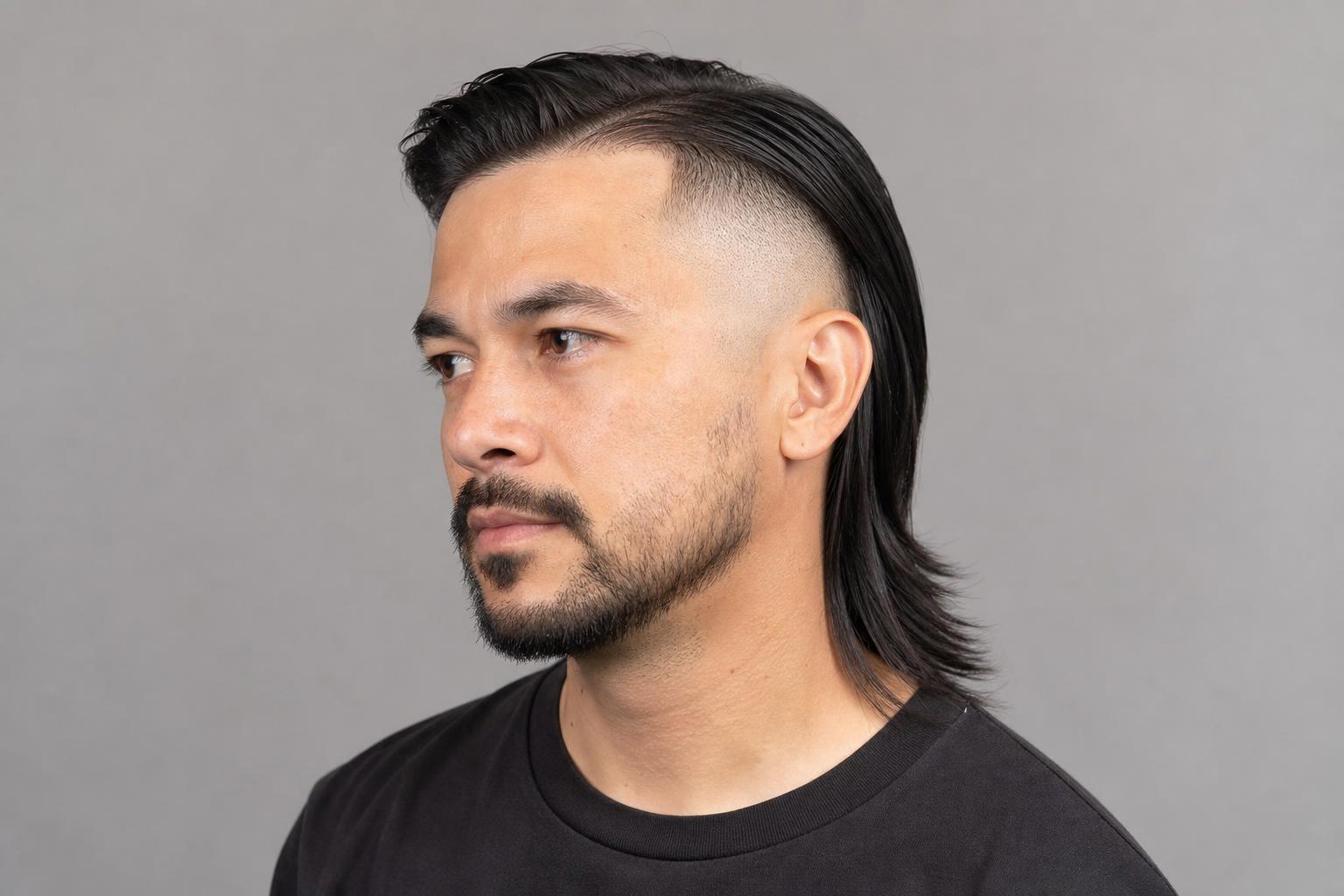
The skullet pairs a shaved crown with long hair at the back — the most committed variation of the modern mullet, and one that works more cleanly than its reputation gives it credit for.
A skullet combines a shaved or closely clipped top with length kept through the back. It takes the mullet’s logic to its furthest point, removing the cropped front section entirely and letting the contrast between bare scalp and long hair carry the whole look. This collection covers 25 skullet styles from high skin fade to soft taper, with guidance on face shape, maintenance, and exactly what to tell your barber.
The style spans a wider range than most people expect. Some versions use a high skin fade to create a near-zero crown; others taper gradually for a softer disconnect. The back section can be trimmed short and blunt, left long and layered, or permed and wavy. The 25 examples below cover that full range.
| Factor | Details |
|---|---|
| Best for | Oval and oblong faces; men leaning into thinning on top; high-contrast personal style |
| Maintenance | Crown and sides every 2–3 weeks; back section every 6–8 weeks (shorter) or every 3–4 months (shoulder+) |
| Works with | Straight, wavy, or thick hair in the back; any texture on top since it’s clipped or shaved |
| Avoid if | Conservative professional environment; round face with weak jaw definition; unwilling to visit barber every 2–3 weeks |
| Salon time | 30–50 minutes for a standard skullet; add 20–30 minutes for a perm or color in the back |
What the Skullet Actually Is
The skullet is a specific technical choice, not just a bold cut with an edge. The top is shaved to skin or buzzed to a zero or one guard. The sides match or fade down from the crown. The back section is left long, typically falling anywhere from collar to mid-back depending on commitment level. The name compounds “skull” and “mullet,” and the construction reflects both: all the mullet’s length at the back, with none of the styled front.
Stylist tip: The fade line between shaved crown and longer sides is where most skullets succeed or fail. A high skin fade creates maximum contrast and a sharp, graphic look. A mid or low taper gives the same basic silhouette with more wearability. Ask your barber which transition suits your head shape before committing to the full skin fade; both are valid starting points, and the choice changes the maintenance frequency significantly.
A Mullet Keeps Hair on Top; a Skullet Shaves It Off
A modern mullet fade keeps 2–4 inches of hair on top, styled into a quiff, fringe, or natural flow. The skullet removes that top section entirely. The result is higher contrast, more visual commitment, and a harder line between the shaved crown and the longer back. Both share the short-front-long-back principle, but the skullet takes it to the structural extreme.
Clean Skullets Have Tight Fades; Shaggy Skullets Have Texture and Length
Clean skullets use tight fade work, precise necklines, and shorter shaped back sections. Shaggy skullets let the back grow longer, add internal layers, and use looser fade transitions. The clean version looks more polished in most settings and is easier to maintain. The shaggy version grows out more naturally and suits wavy or thicker hair in the back. Both approaches are represented in the gallery below.
Skin Fade and Shaved Skullets
The skin fade skullet is the most defined version of the cut. Clippers take the sides and crown to zero, creating a stark transition that makes the long back section the sole focus. These eight variations are built around that hard contrast, from short collar-length backs to full shoulder-length commitment.
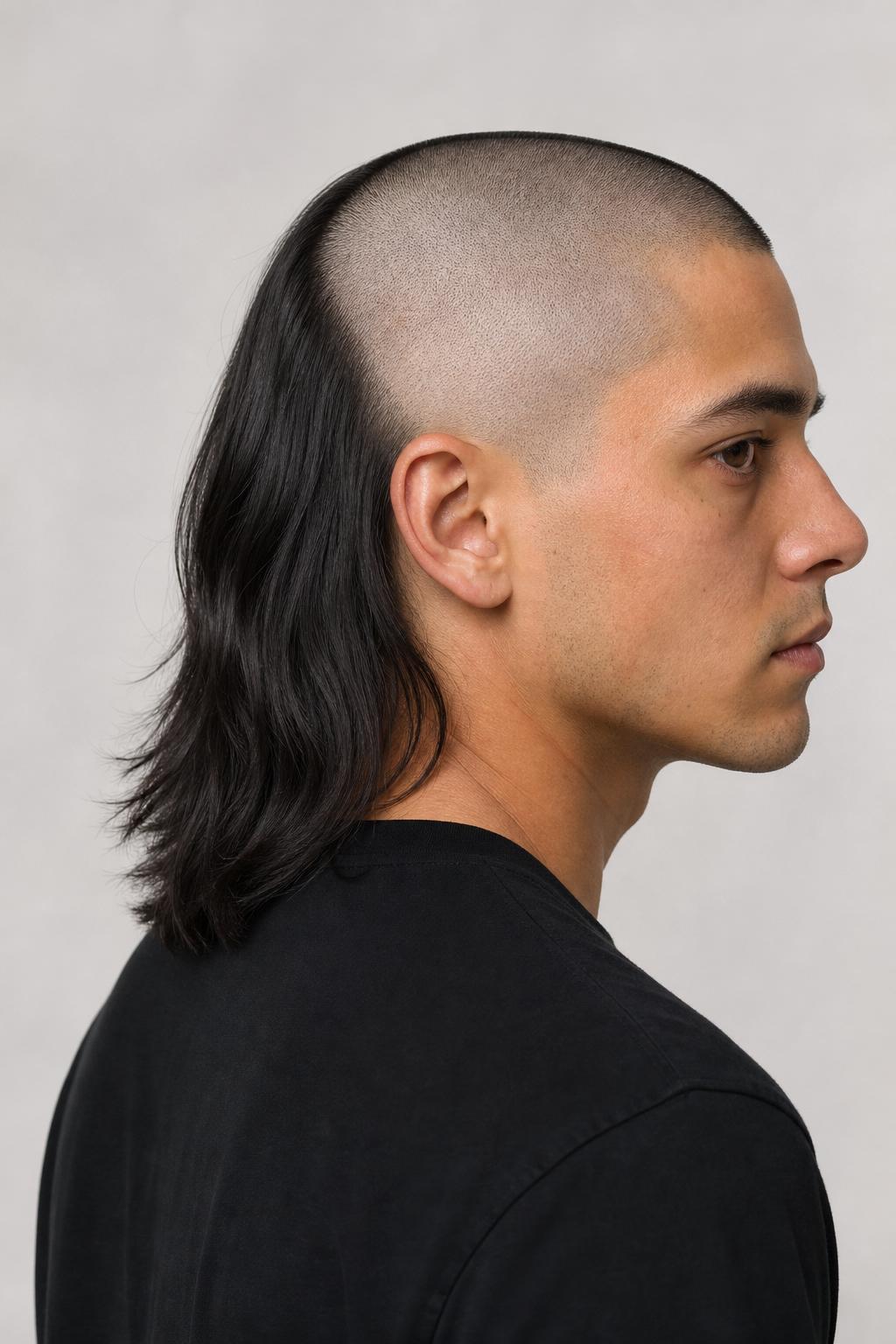
1. High Skin Fade Skullet
Clippers clear the sides and crown to skin, creating a near-seamless dome that directs every eye to the long, straight back section. The fade starts above the temples and blends using a zero guard, leaving the transition line as the only visible break between bare scalp and long hair. This is the version most people picture when they hear “skullet” — the highest contrast with the fewest adjustable variables.
2. Mid Fade Skullet with Blunt Back
Oval and oblong faces get the most from this version; the mid fade starting at ear level creates vertical emphasis without making the face look top-heavy. The back is cut blunt at the collar, which keeps the silhouette clean without requiring heavy styling product. Works best on straight to slightly wavy hair that falls into place naturally after washing.
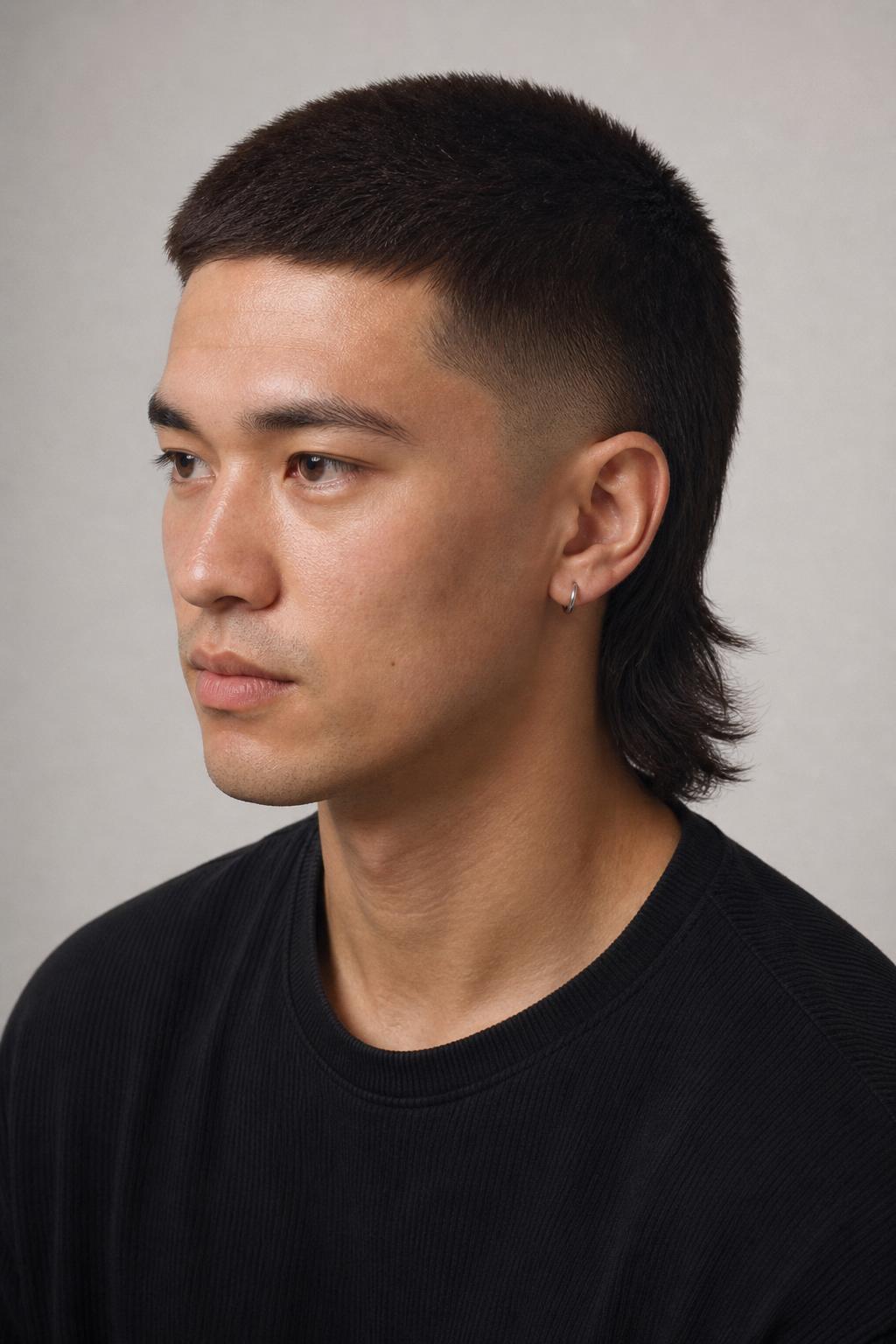
3. Skin Fade with Wavy Back
Natural wave through the back section works in your favor here, adding volume and texture to the longer hair, making the contrast between shaved crown and back feel more dynamic than a flat straight section achieves. Air-dry the back with a small amount of lightweight curl cream rather than blow-drying it flat, which eliminates the wave and leaves the back looking heavy.
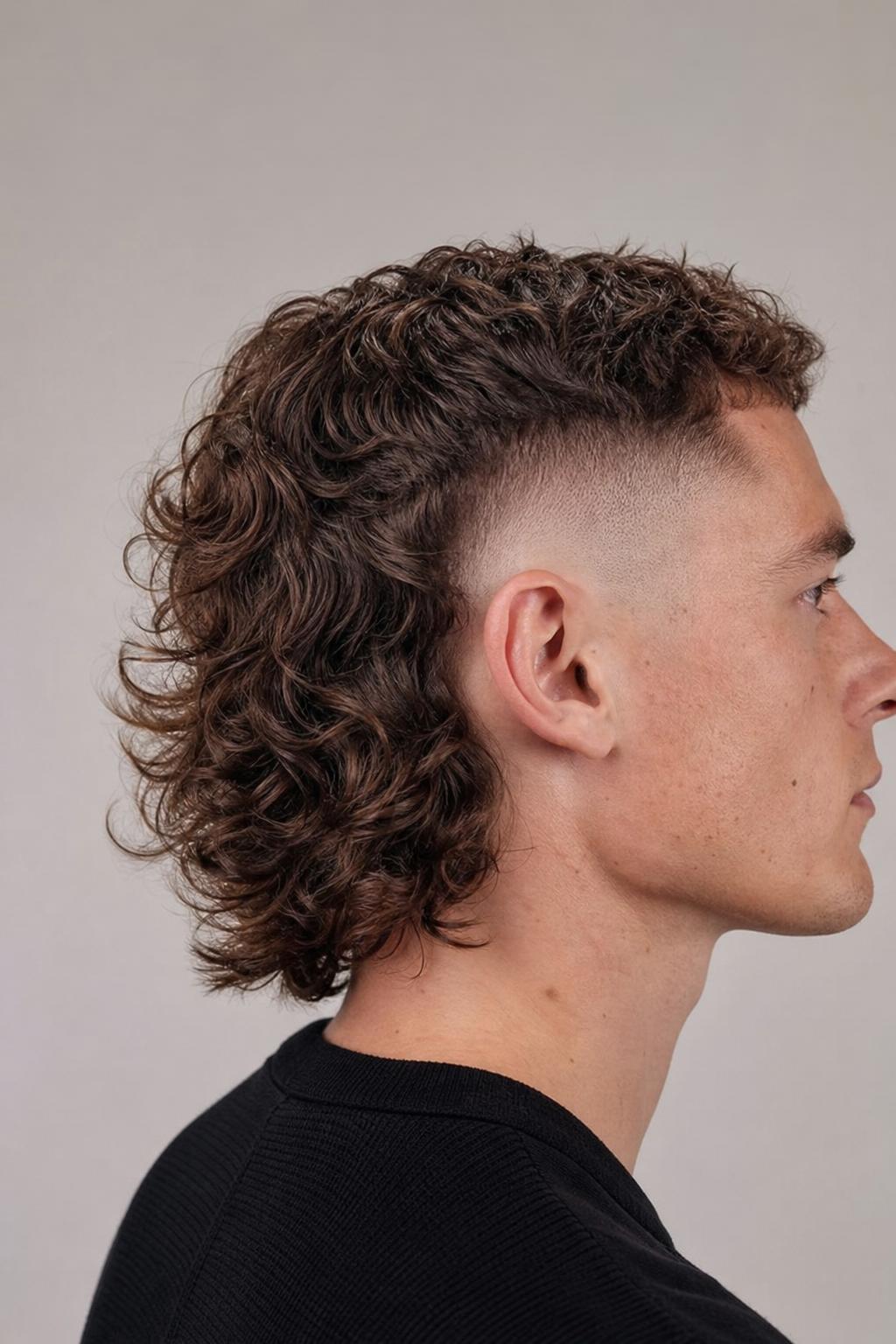
4. Skin Fade Skullet with Line-Up
Ask your barber for a hard line-up at the hairline using a fade blade as a finishing step, turning the shaved crown from raw to refined. Not all barbers include a line-up automatically, so the request needs to be explicit. On high-contrast combinations of dark hair and lighter skin, the defined hairline edge becomes an architectural detail that frames the forehead and draws definition to the face.
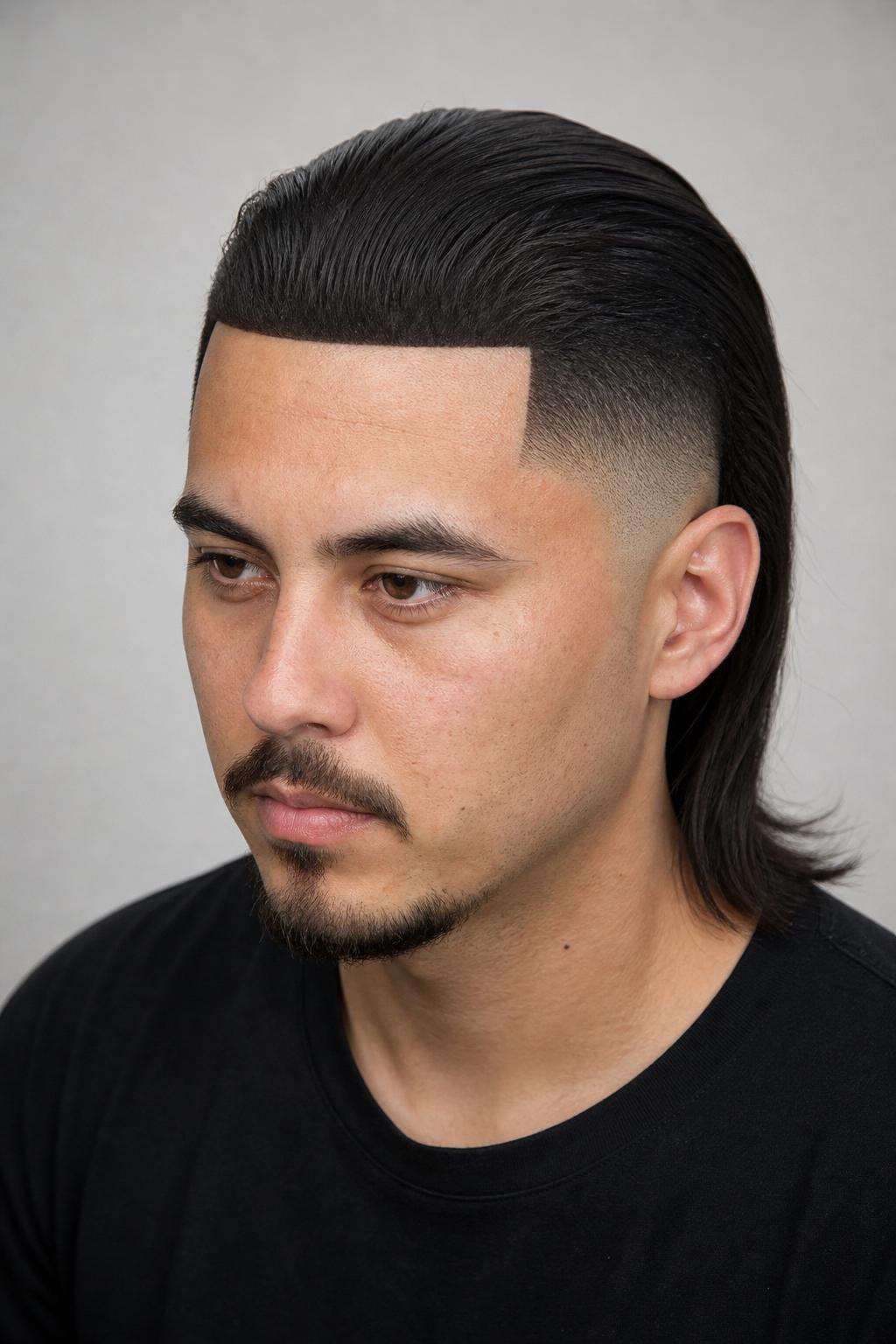
5. Low Fade Skullet
A low fade skullet keeps more hair density through the sides and tapers gradually from the crown down to ear level, creating a less severe transition than the high skin fade version. The contrast between shaved top and long back is still clear, but the overall silhouette is less extreme. This is the natural starting point for men exploring the skullet family without committing to a full skin fade schedule.
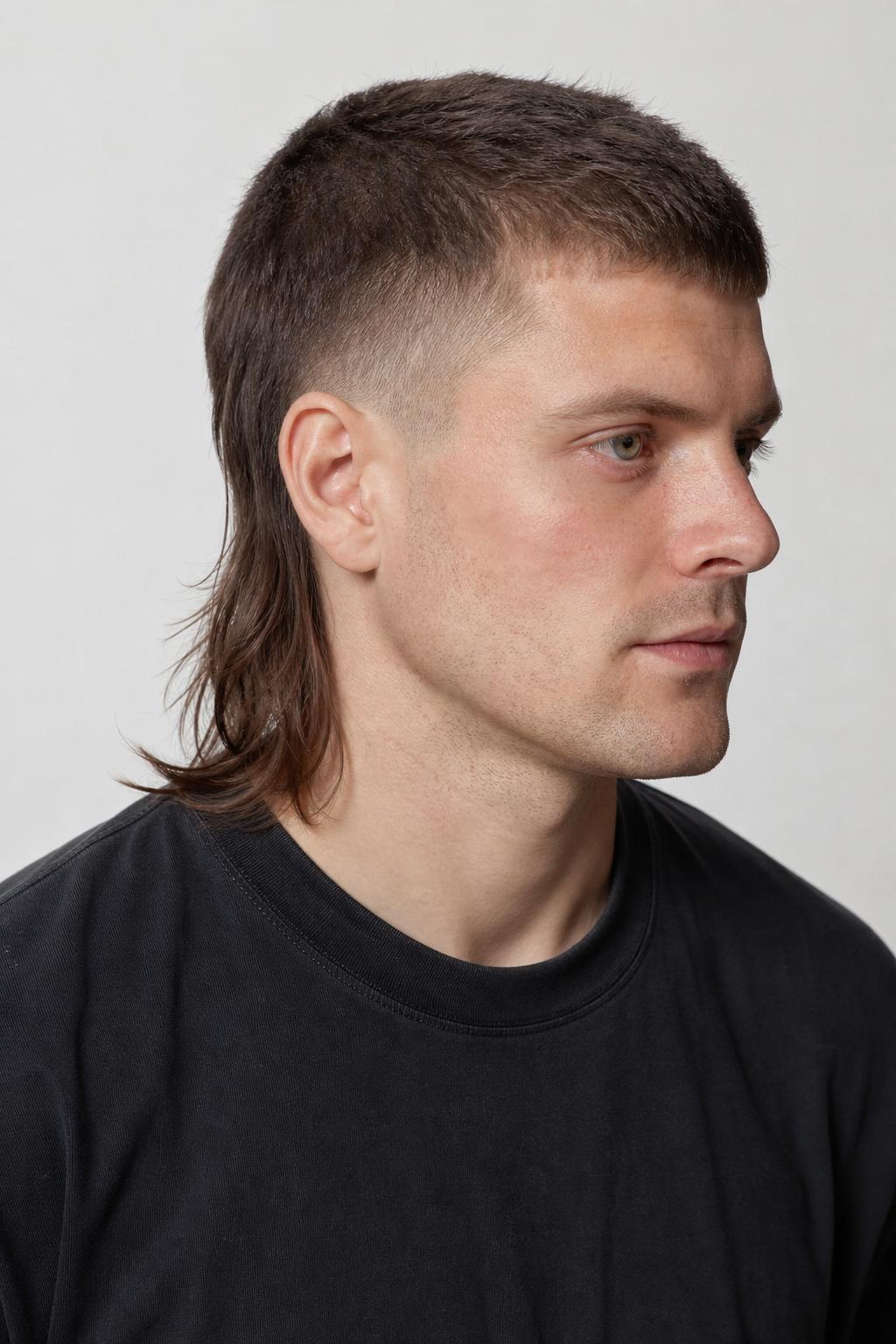
6. Textured Back Skin Fade Skullet
Point-cut ends through the back section add movement and remove bulk without shortening overall length, which is useful for men with thick hair that lies heavy and flat when left blunt at the back. The texturing also extends the useful life of each back trim: point-cut ends blend less visibly than a blunt cut as the section gains length between appointments, giving an extra week before a refresh is needed.
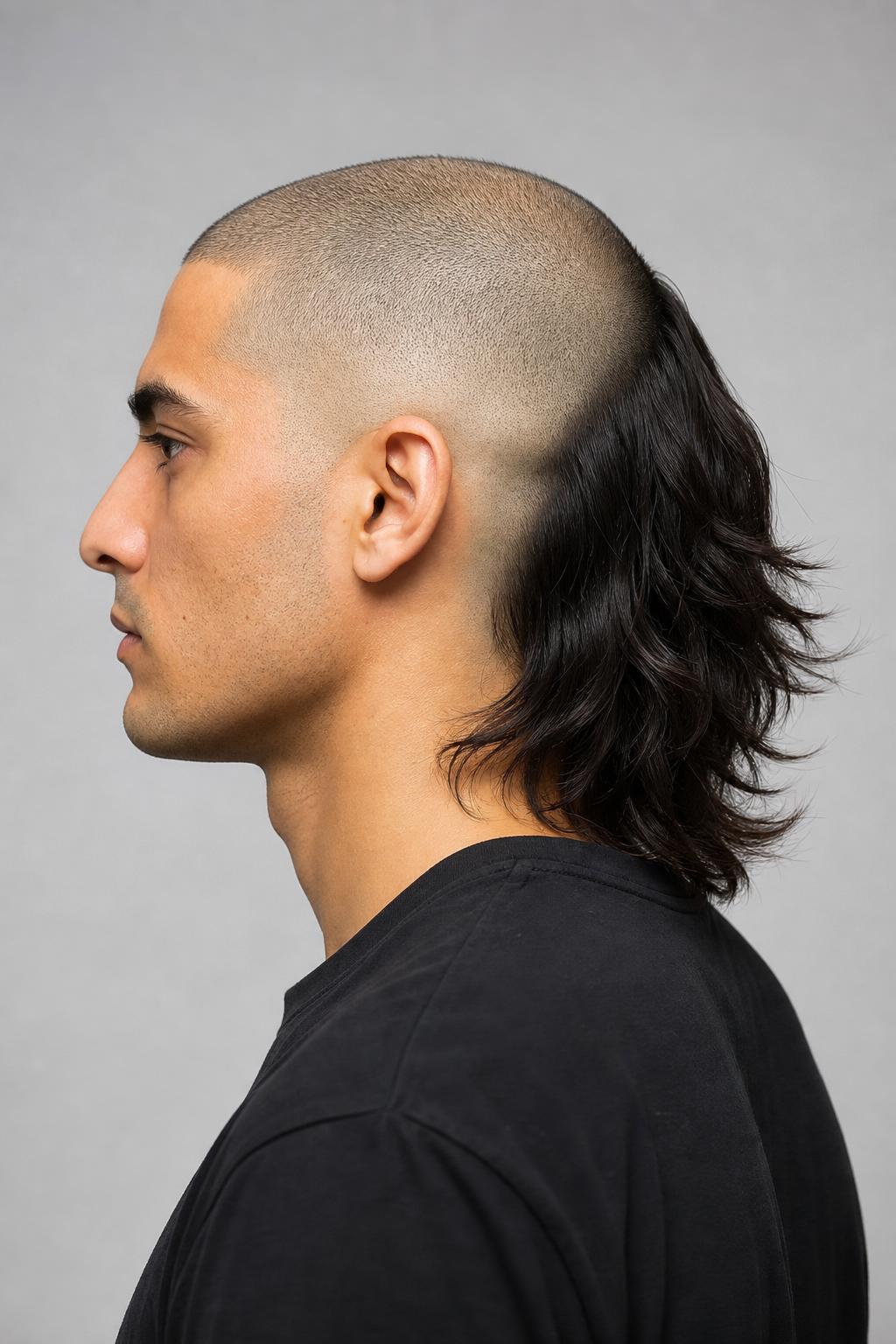
7. Skin Fade Skullet with Permed Back
Work a curl-defining cream through the permed back section while damp, then air-dry completely, diffusing creates unwanted volume that breaks the hanging structure the skullet’s back section is built on. Budget 90–120 minutes at the salon for a combined fade and perm appointment. The curl structure adds mass and movement to the back that straight hair cannot replicate on its own.
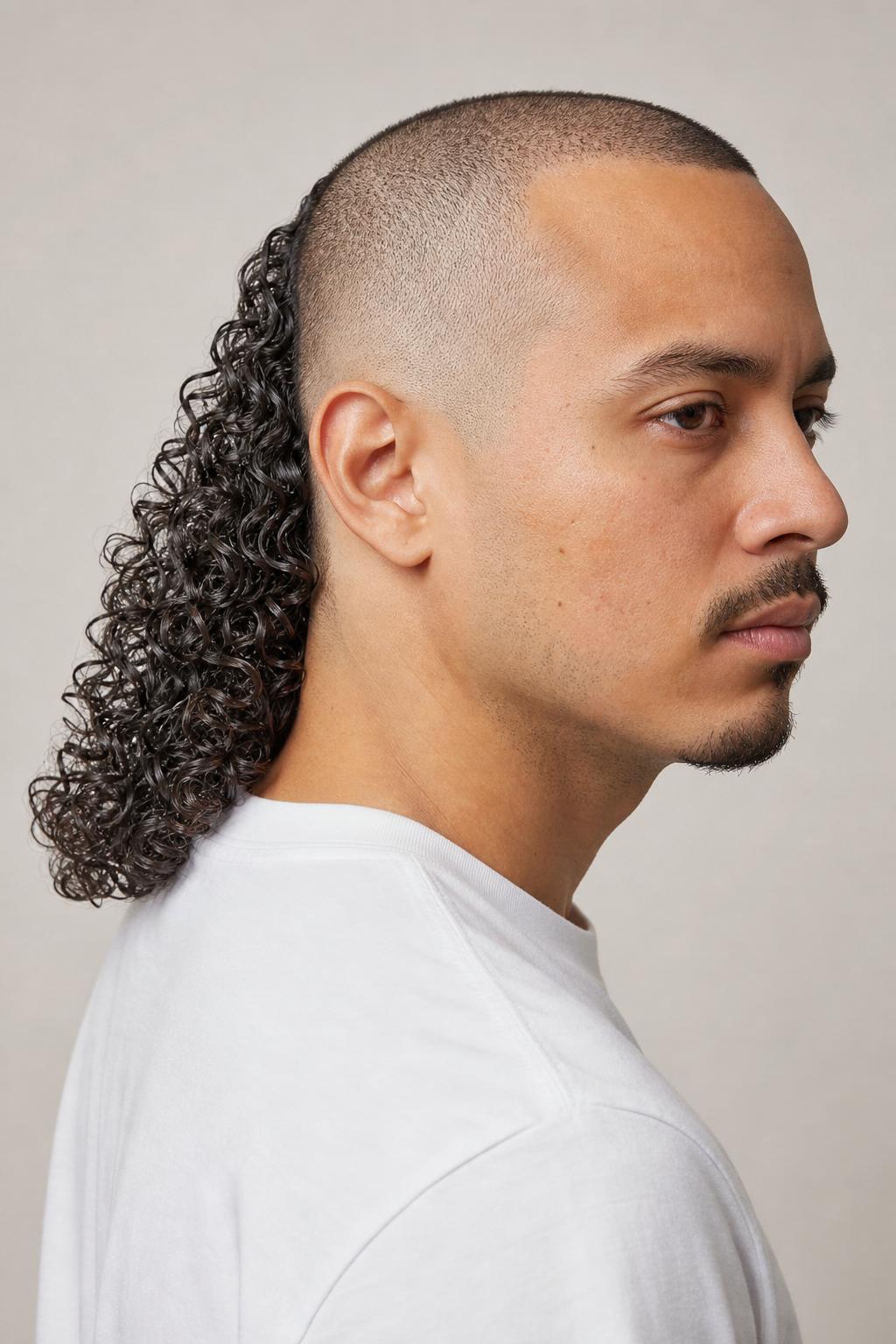
8. Zero Guard Skullet on Dark Hair
On very dark or black hair, the shift from bare scalp to dark, straight back hair creates a two-tone effect that studio fade shots rarely capture accurately, the contrast is sharpest in natural outdoor light. Dark hair also shows fresh crown stubble within 5–7 days of buzzing, meaning the barber schedule is tighter than it is for men with lighter or gray hair on top.
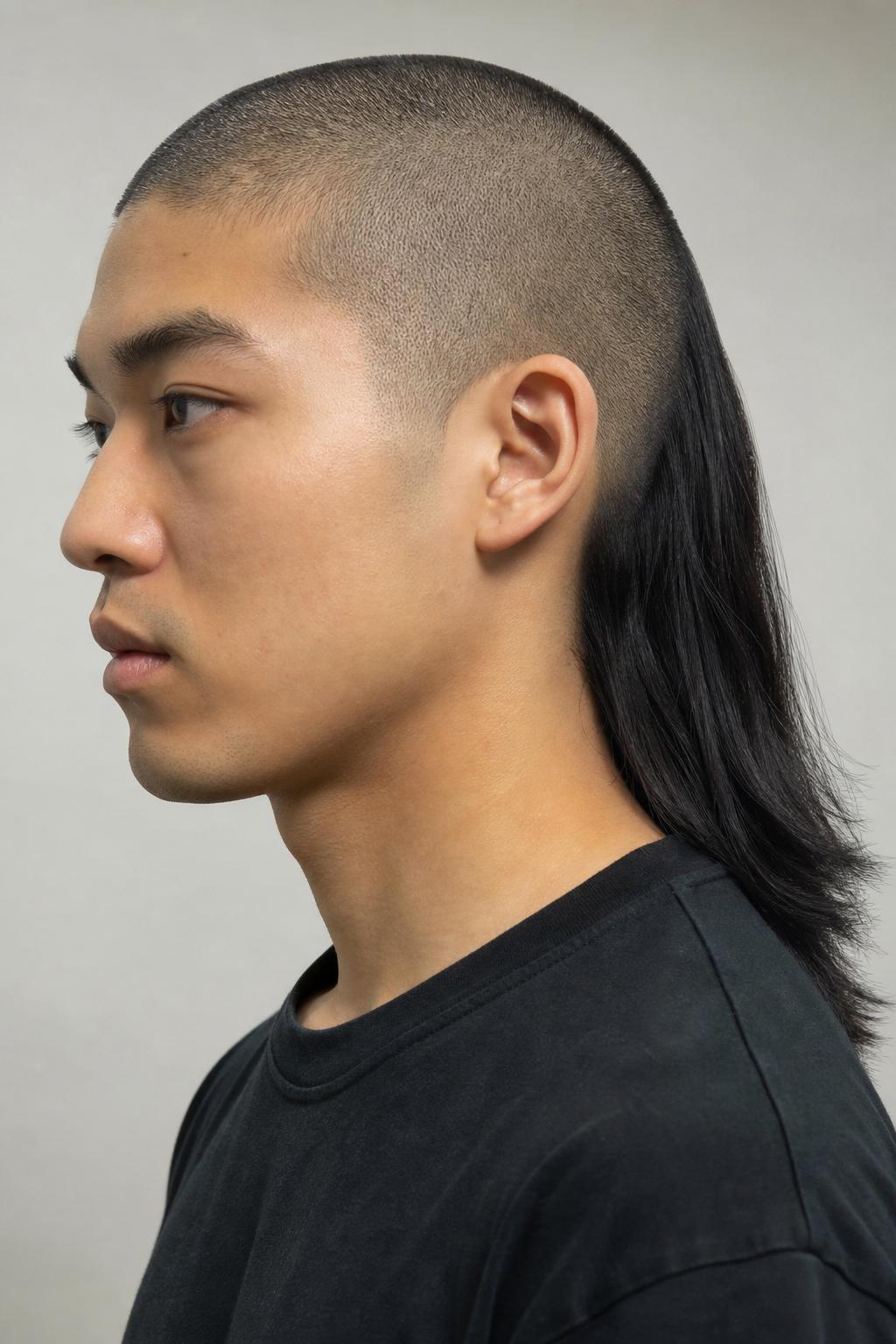
Textured, Layered, and Soft Skullets
Not every skullet is built around a skin fade. These nine variations use a mid-length buzz cut or taper on top with layering and texture through the back, creating the skullet silhouette with a less severe execution. These versions suit men who want the long-back contrast without the high-maintenance skin fade schedule.
9. Drop Fade Skullet
Ask your barber specifically for a drop fade that curves down behind the ear before blending into the longer back section. This creates a more rounded neckline shape that suits the skullet’s natural silhouette better than a horizontal fade line, the drop follows the ear contour, leaving more hair visible just above the nape and making the transition from faded sides to long back feel less abrupt.
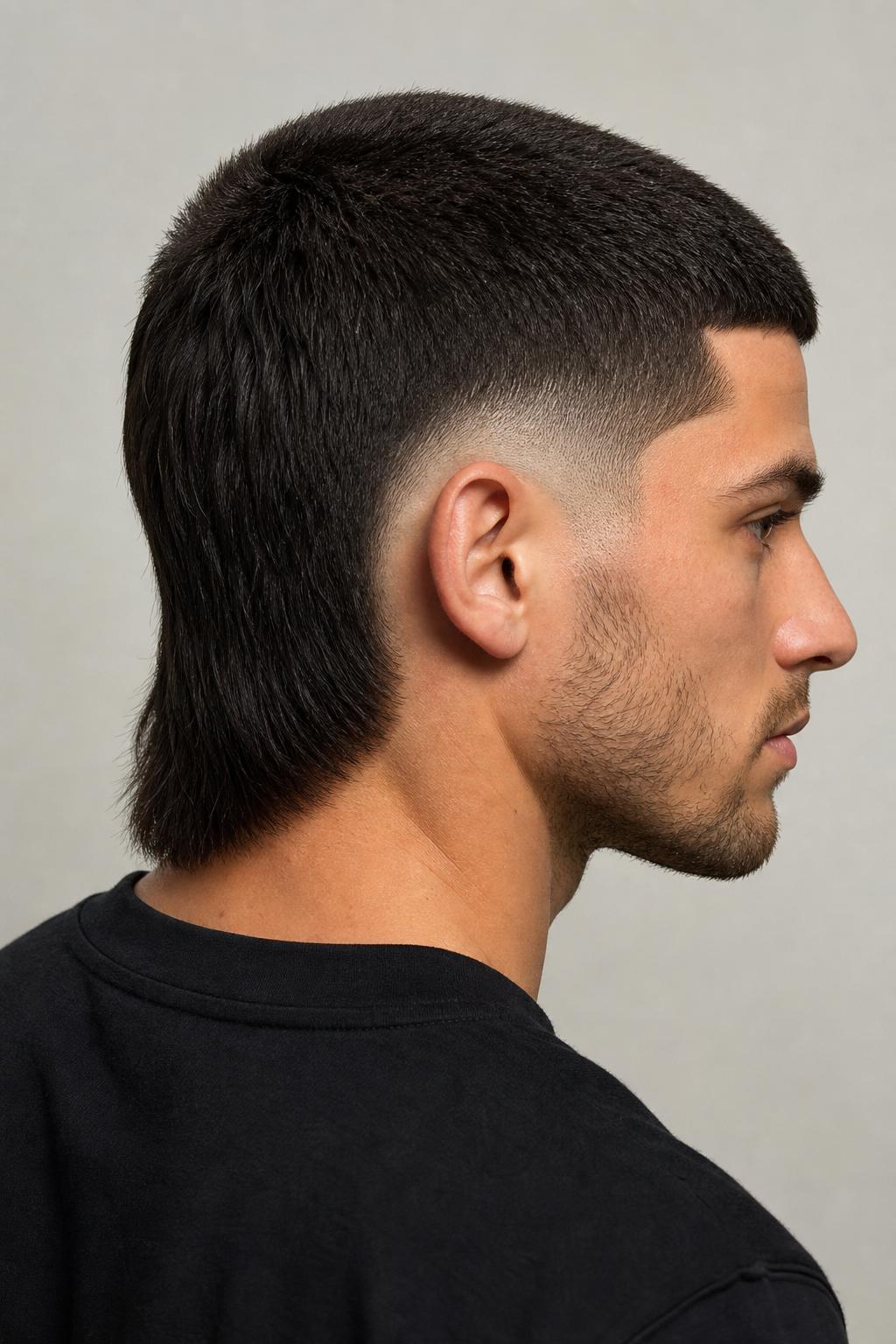
10. Number 2 Guard Top with Textured Back
Keeping the crown at a two guard rather than skin softens the skullet into something closer to a textured buzz cut with a mullet back, the long-back silhouette is the same, but the transition is gradual enough that the overall look is less severe. Straight or wavy hair in the back works equally well at this variation; it’s the crown choice, not the back, that defines the softened execution.
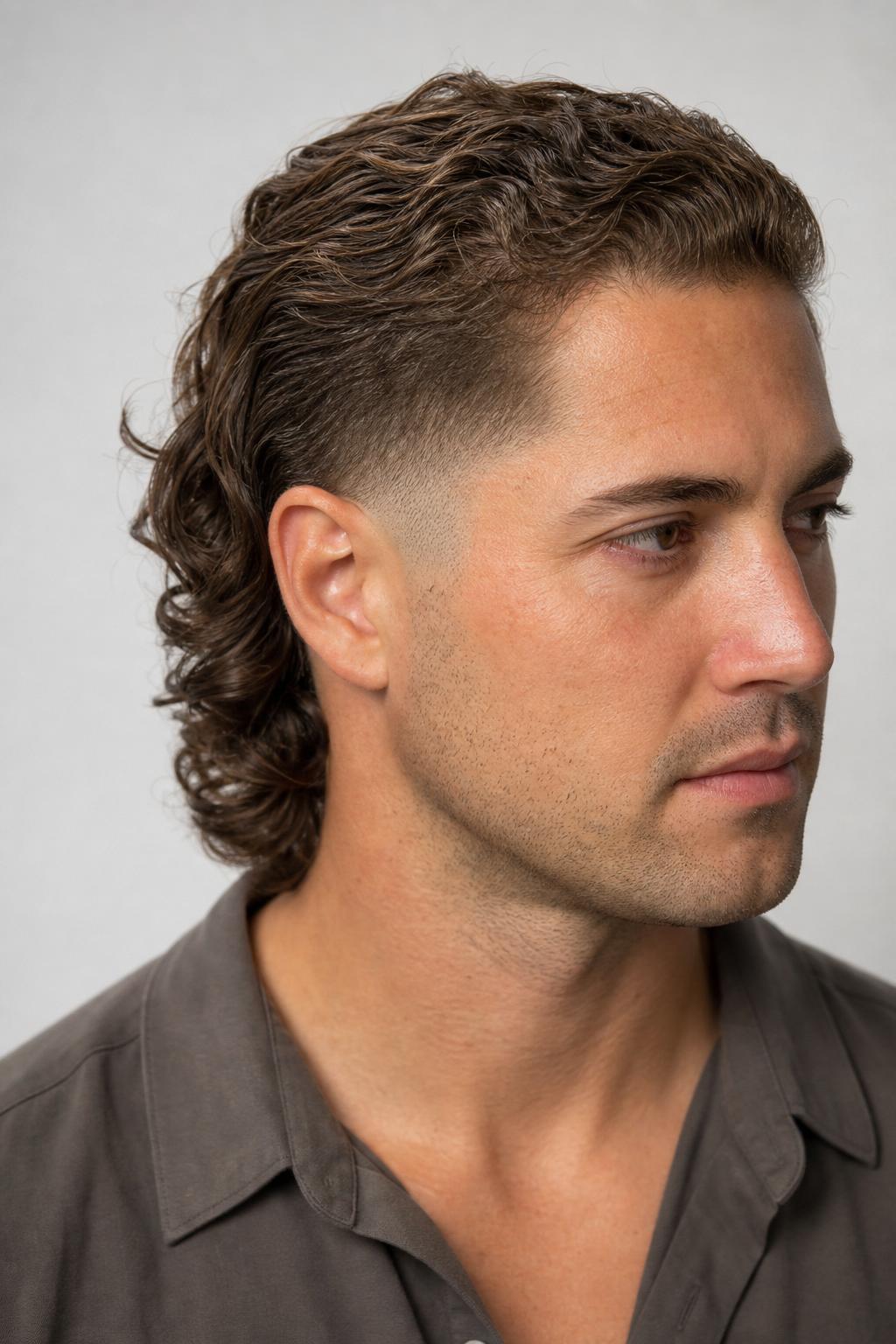
11. Layered Skullet Back
Internal layers through the back section prevent the longer hair from hanging as a flat panel against the shaved crown. Ask your barber to cut layers starting from ear level and graduating down, this creates movement so the back falls with some body rather than as a single flat sheet. Blonde and lighter hair specifically benefits from this layering because color variation between strands becomes visible once the hair separates and moves.
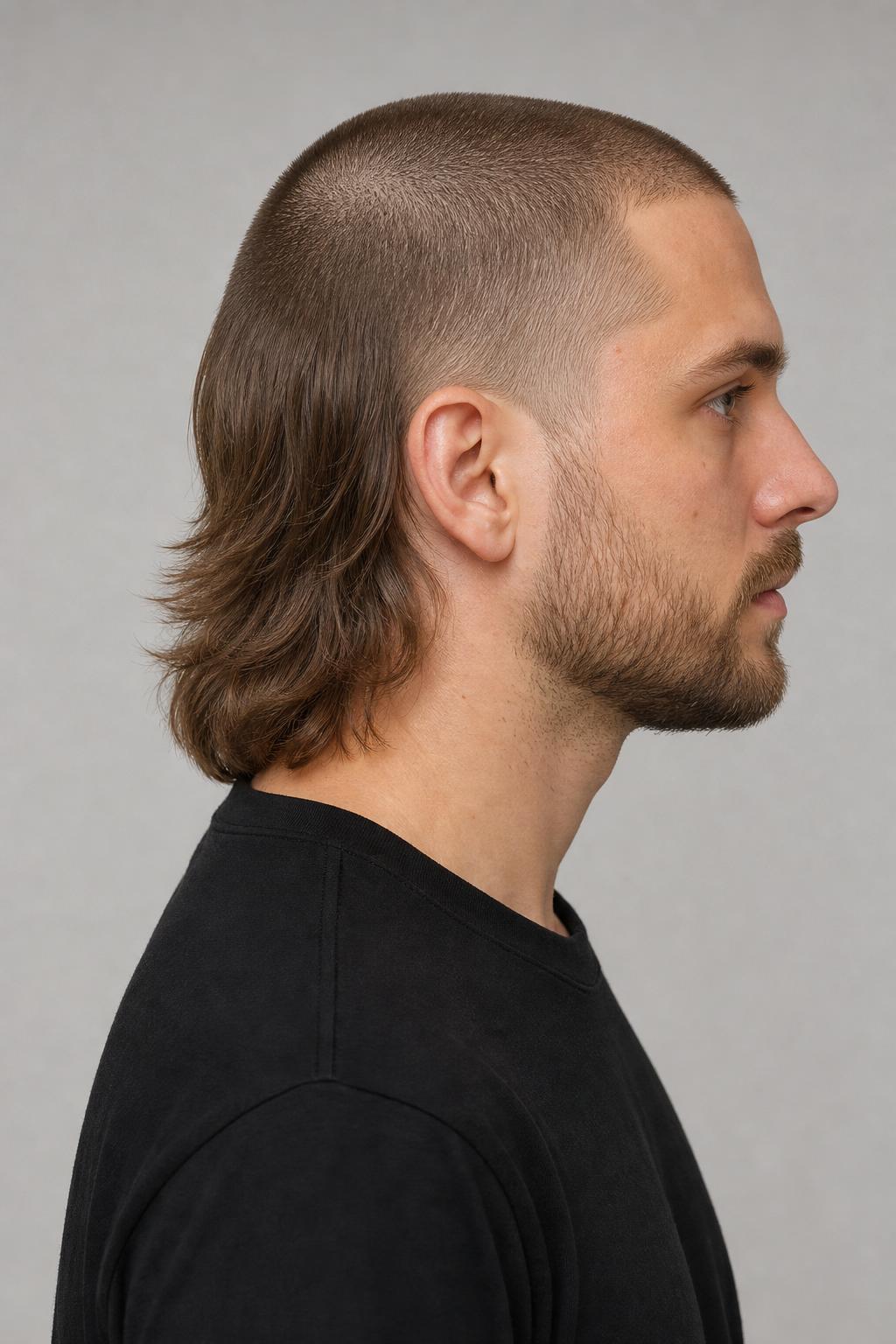
12. Curly Skullet
Natural 2b–3a curl through the back gives this variation substantial volume and visual energy that straight hair cannot replicate. Curly hair should be cut dry in the back so your barber can see the actual resting curl length. Wet cutting removes more length than intended and leaves the back shorter than expected once it dries. Apply a curl-defining cream and scrunch upward rather than brushing, which breaks the curl pattern entirely.
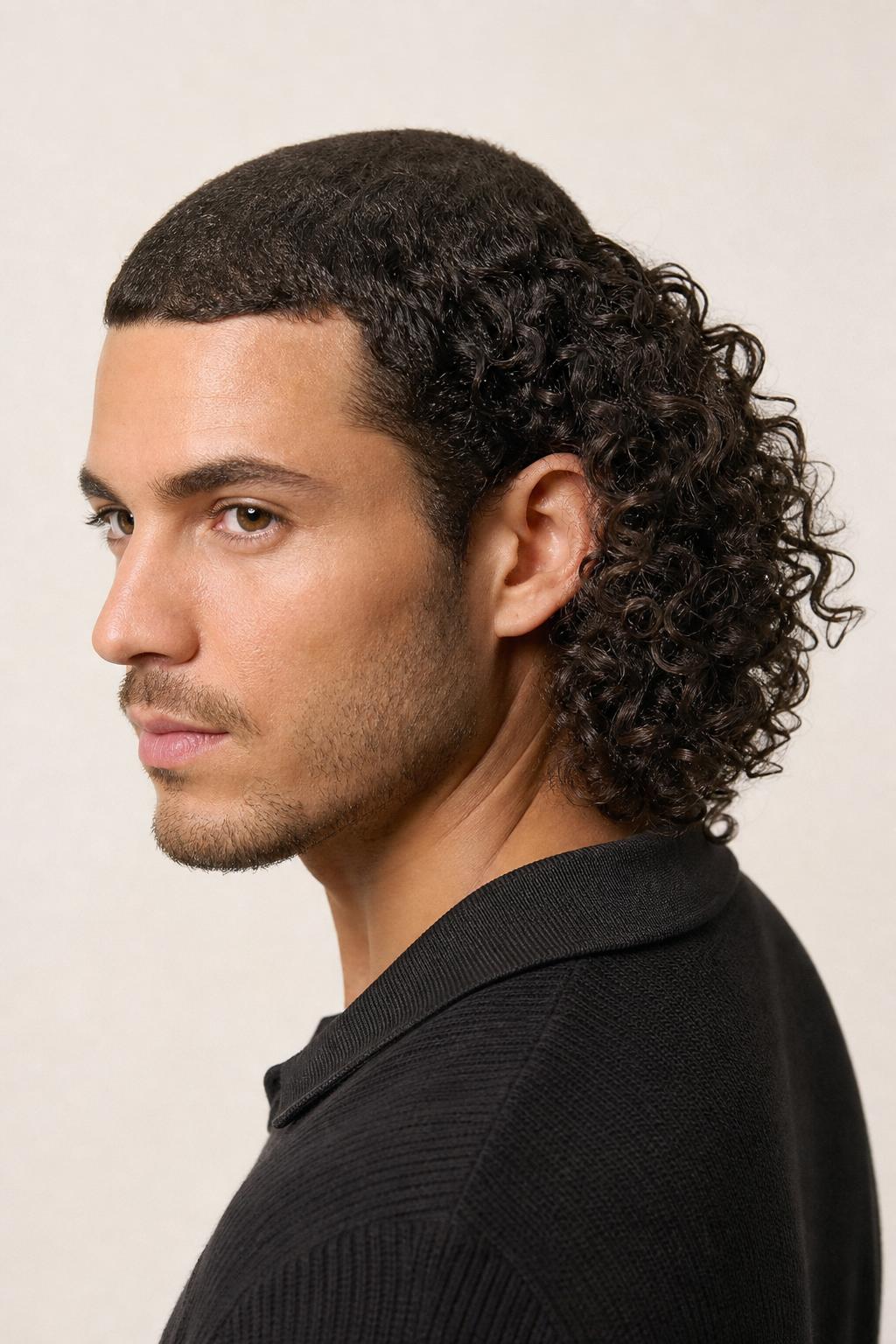
13. Skullet with Undercut Transition
Heart-shaped and diamond faces handle the hard undercut line well — the defined edge at ear level creates a horizontal reference that frames the cheekbones rather than amplifying them. Men with high cheekbones specifically benefit because the undercut line draws attention at exactly the widest facial point and provides a clean structural base below the shaved dome. This construction also holds shape between appointments better than a fade since there is no gradual blend to grow out unevenly.
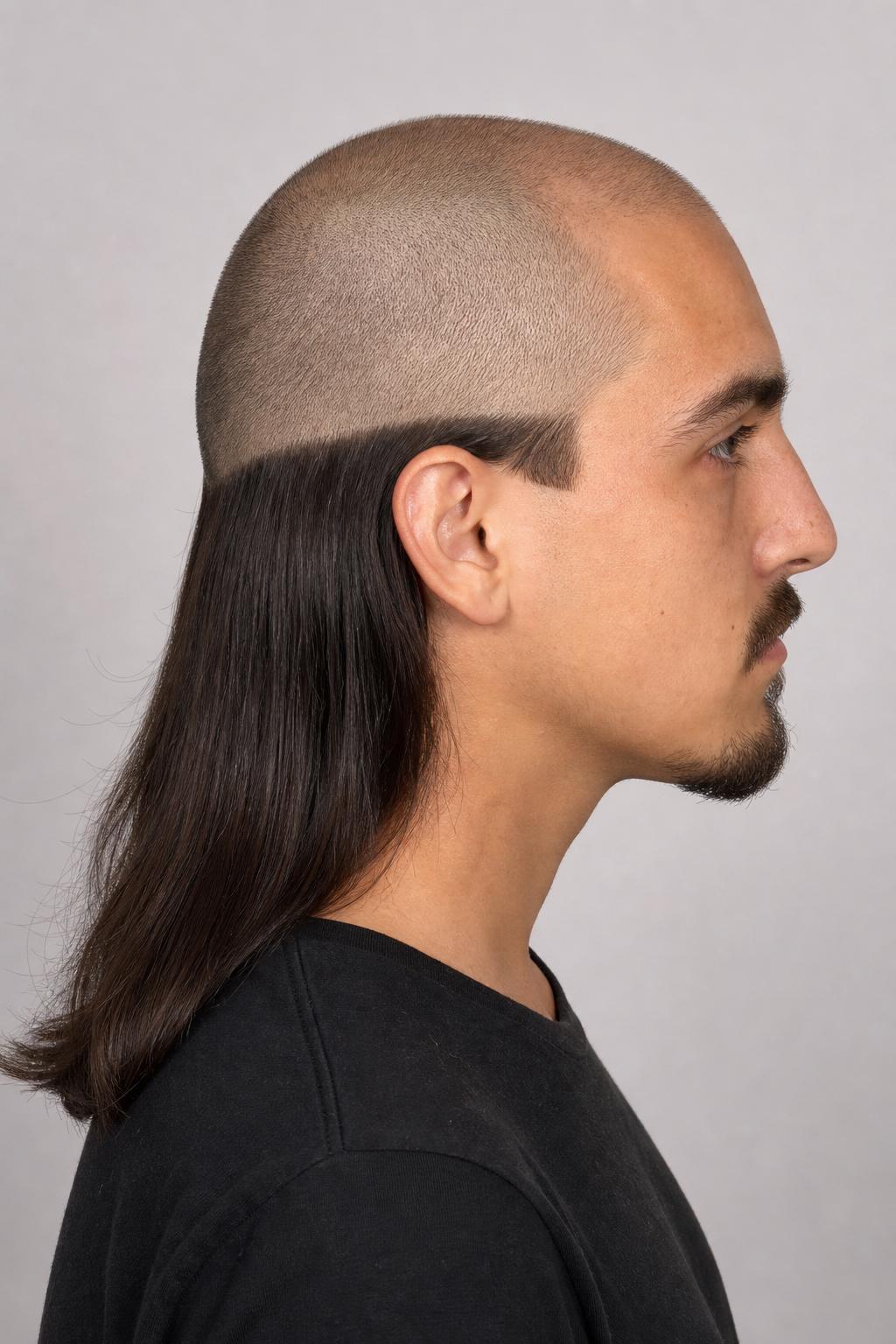
14. Skullet with Faded Neckline
A faded neckline extends the useful life of each appointment by about 1–2 weeks: instead of the long back section parting awkwardly from the shaved sides as growth occurs, the gradual blend keeps the back looking shaped for longer. Most barbers need a direct prompt to include this step, ask specifically for “a tapered neckline fade” when booking, rather than assuming it comes standard with the cut.
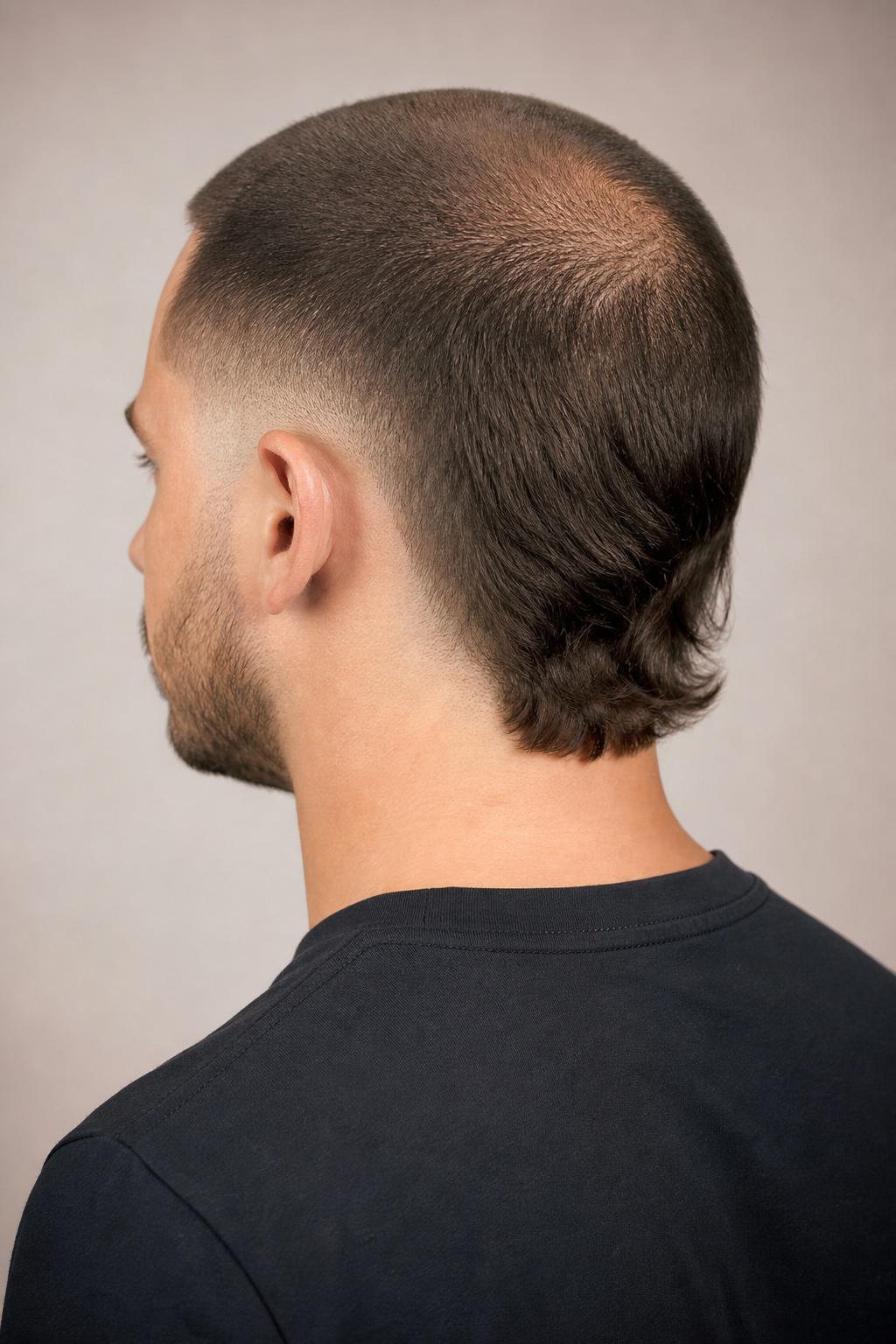
15. Skullet with Side-Swept Back
When the back section is long enough to be styled to one side, it adds an asymmetric element that breaks the uniform look of a center-hanging back. Work a small amount of sea salt texturizing spray through damp back hair and let it fall naturally, this keeps the sweep soft rather than stiff and lets the direction settle into place over the course of the day without product buildup.
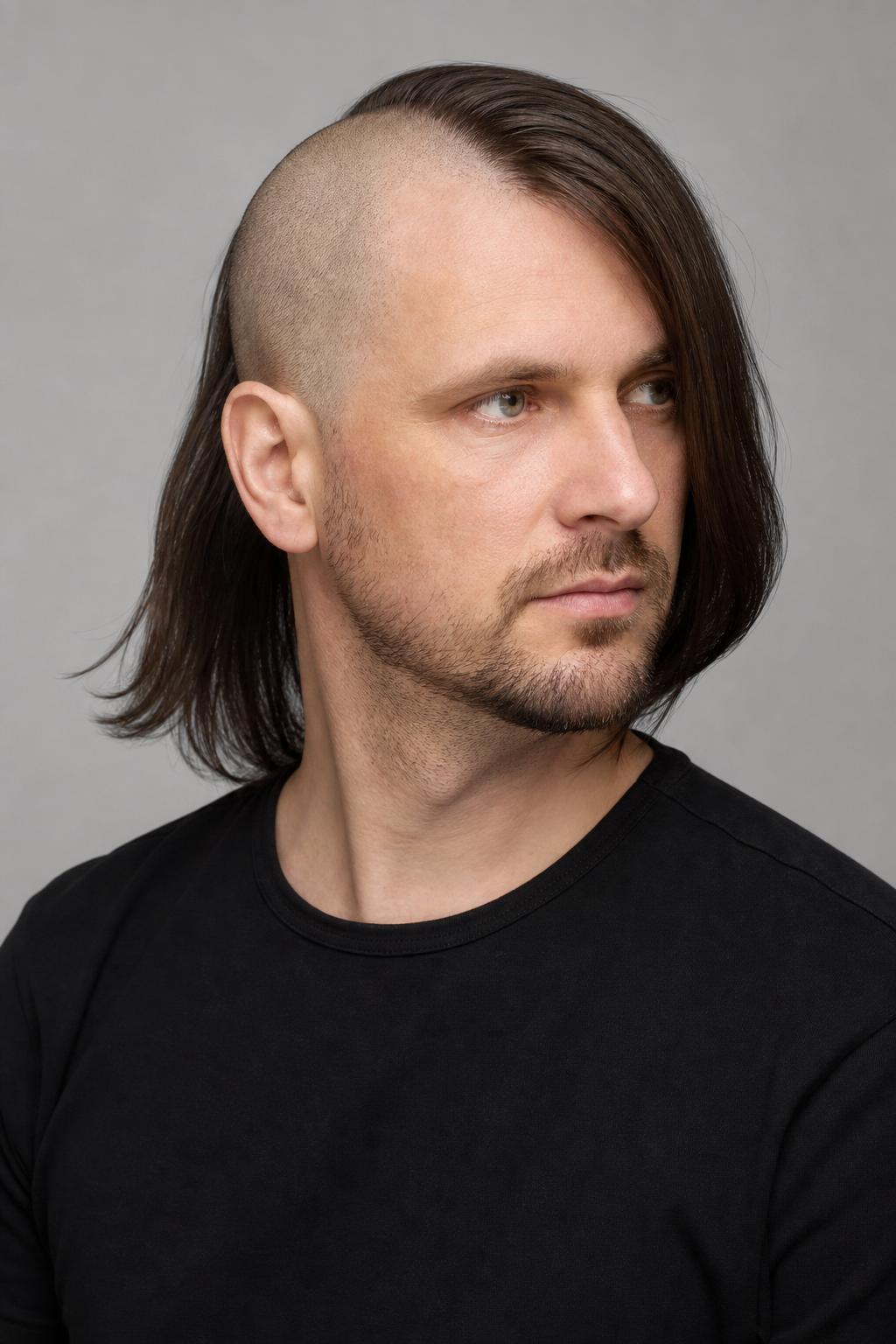
16. Salt and Pepper Skullet
Natural gray and silver through the back section adds color variation and depth that single-tone darker hair lacks, the interplay between white and dark strands creates dimension without any treatment. A low skin fade complements gray-haired skullets better than a high one: the gradual transition keeps the look from appearing too stark between the lighter crown and the lighter back section.
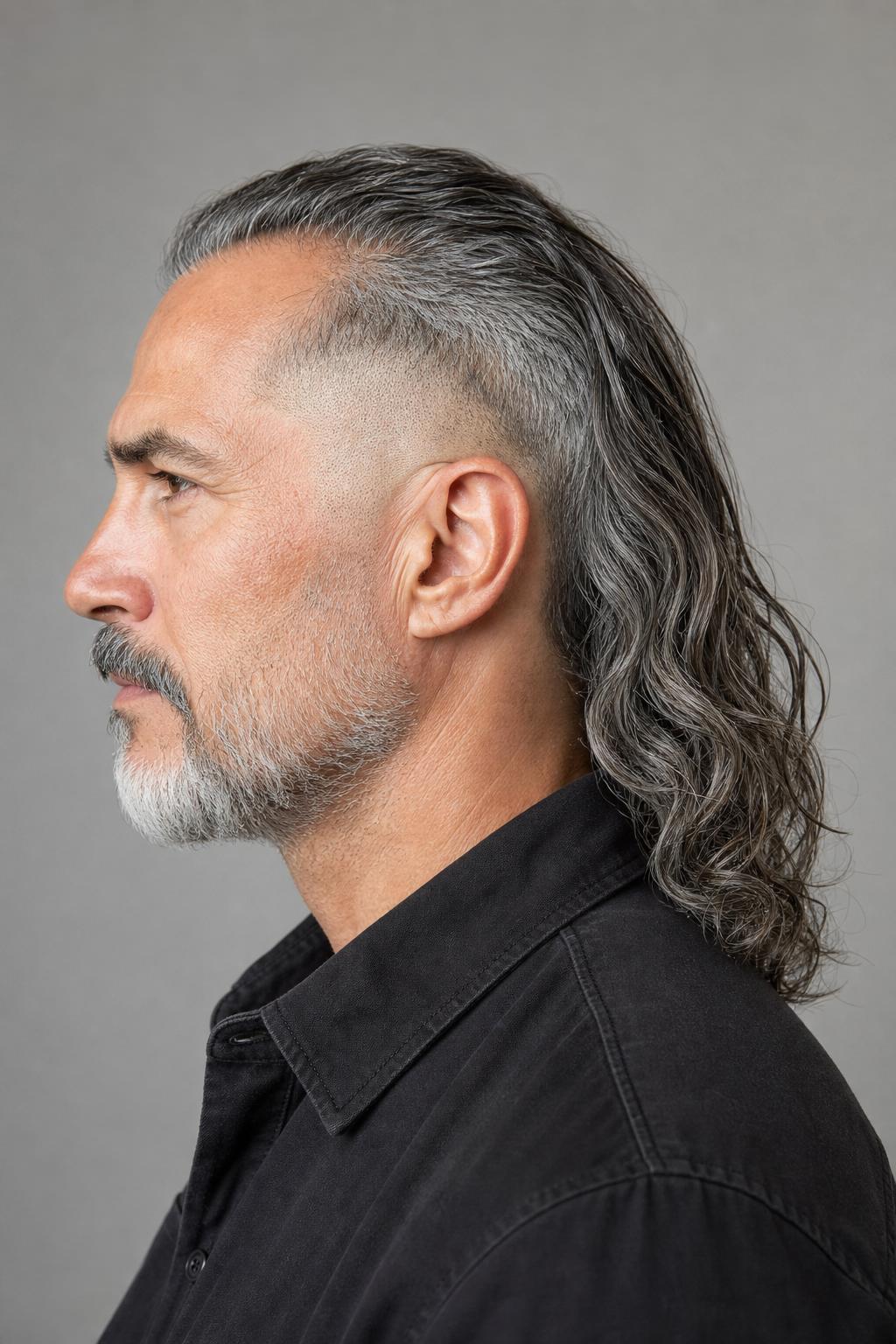
Statement and Modern Skullet Variations
The final group covers skullet variations that push the silhouette further: longer commitment, facial hair integration, color, and hybrid approaches. These are the versions for men who have already decided on the skullet and want to develop it from there.
17. Short Back Entry-Level Skullet
A blunt cut at collar length (two to three inches past the nape) is the most accessible starting point for the skullet. The contrast between shaved crown and back is clear and defined at this length without the full commitment of shoulder-length growth. For men starting out, this is the right first version: it can always grow longer, and cutting the back short again means restarting the growth phase.
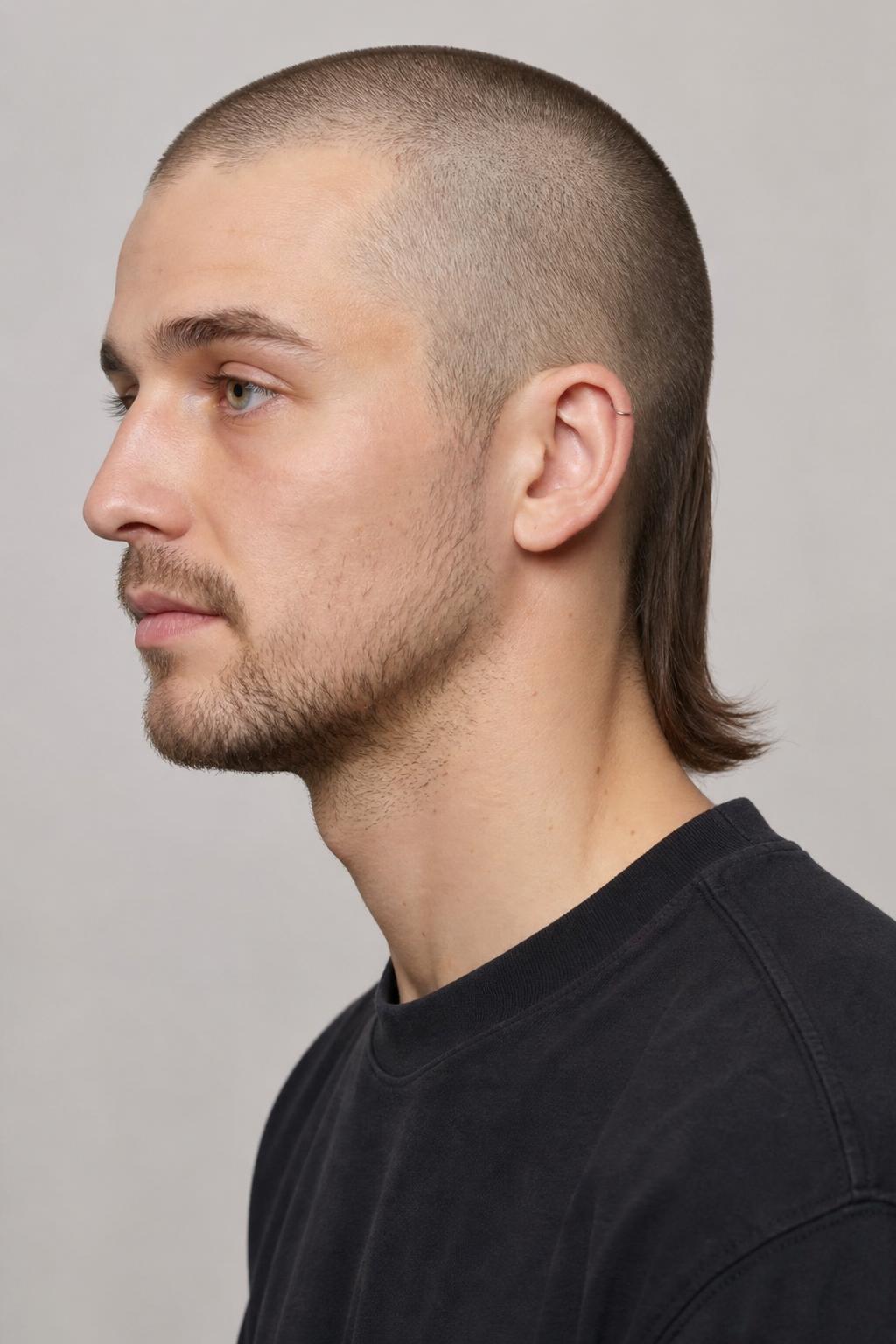
18. Skullet Adjusted for Square and Round Faces
Square faces do better with a low-to-mid fade and a textured or layered back, the soft movement in the back reduces visual emphasis on the horizontal jawline that a clean blunt skullet would otherwise amplify. Round faces benefit from a higher fade and a longer back section, where the added vertical length improves face proportions. Neither shape is off the table; the fade height and back length are the two variables to adjust.
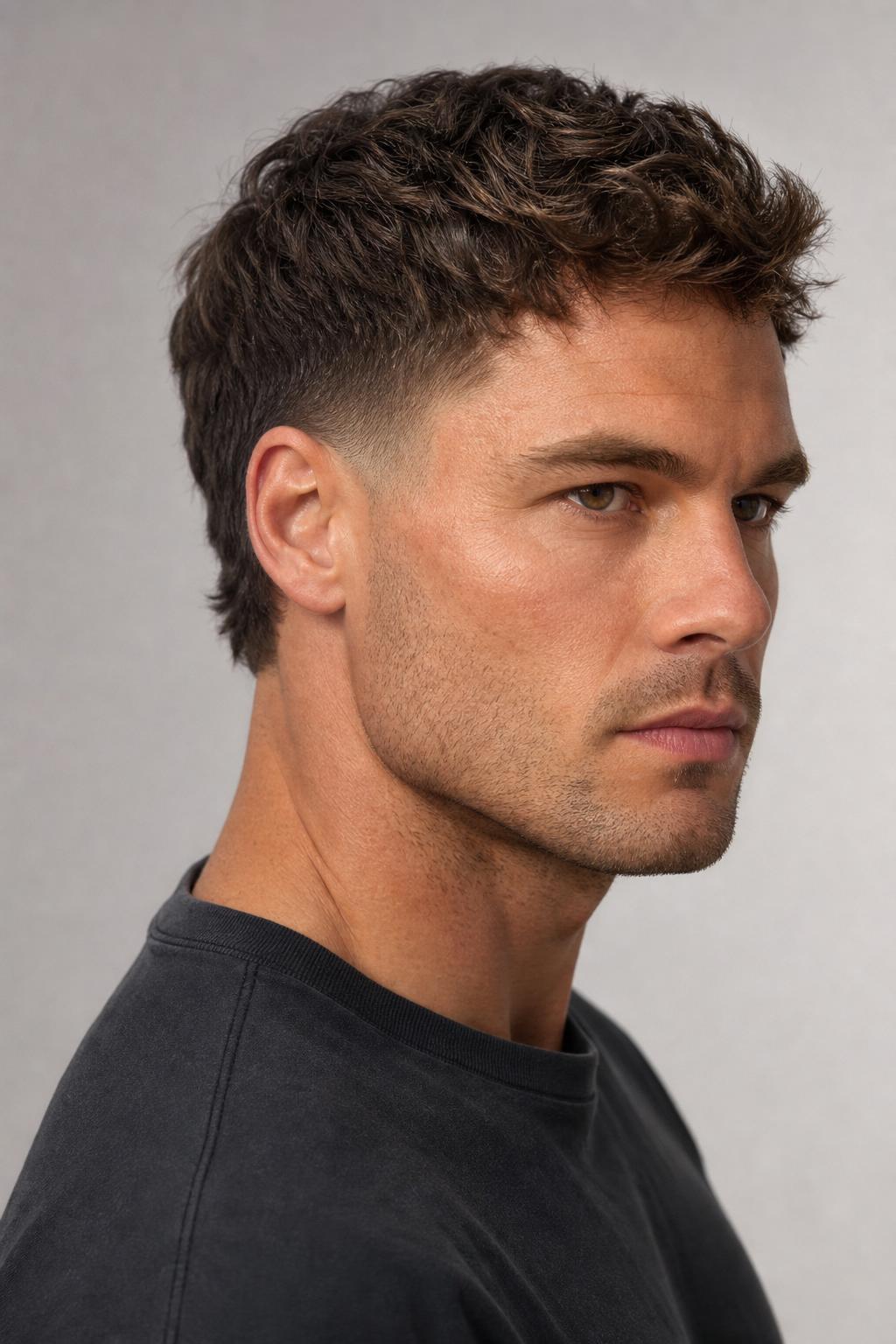
19. Skullet with Highlighted Back
Fine hair through the back gets an assist from highlights, color variation between strands creates the illusion of more density than a single-tone fine section has. Balayage or chunky highlights through fine, medium-length back hair add separation and make the section look fuller when it falls. Avoid heavy bleaching on fine back hair, which can leave strands prone to breakage at the nape where the hair is under stress from the shaved-to-long transition.
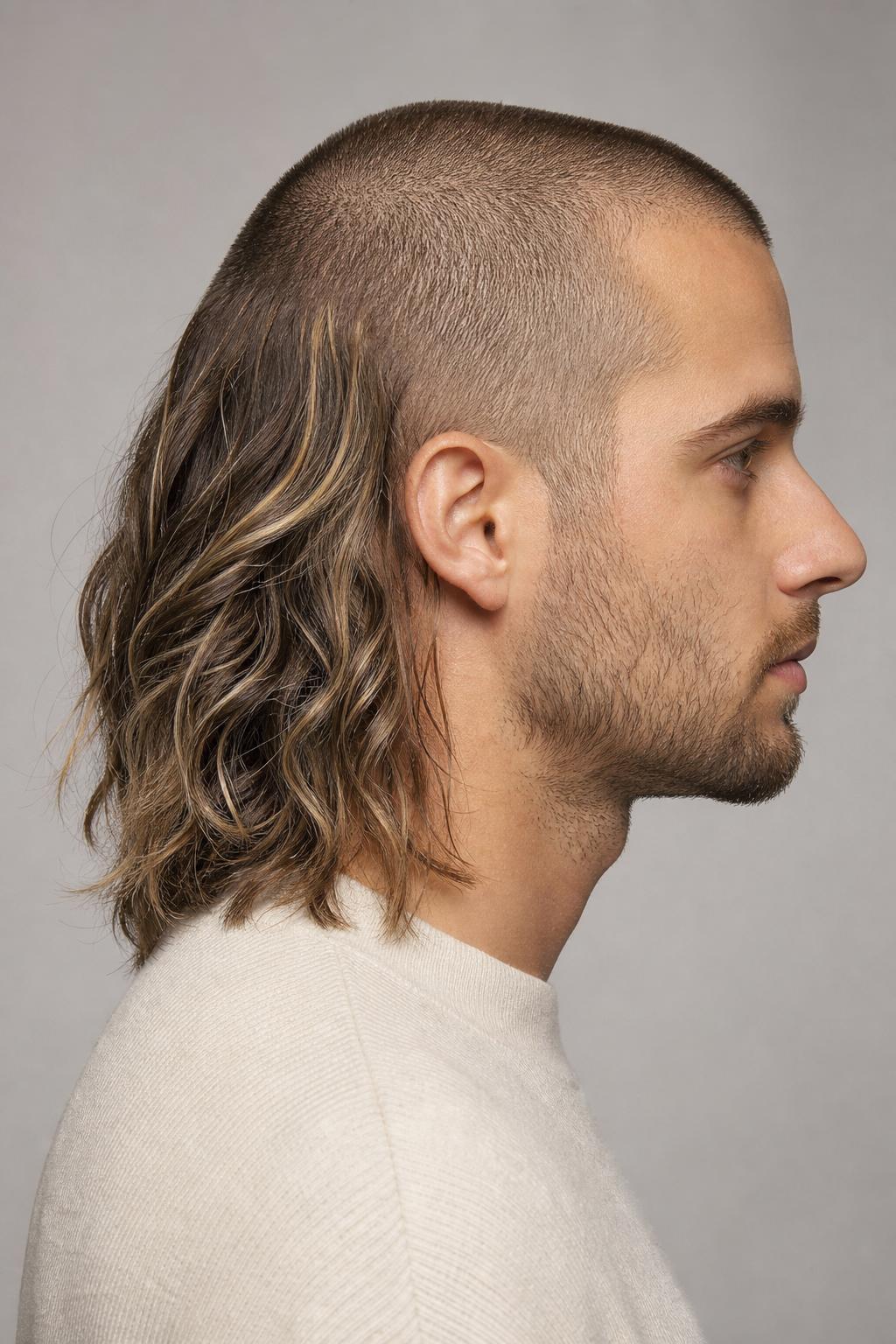
20. Taper Fade Skullet
A mid taper from the crown, blending down to a natural neckline, is the most wearable skullet construction for professional settings, the transition stays presentable for 3–4 weeks rather than the 2–3 week window a skin fade requires. Ask for “a skullet with a mid taper: two-guard crown blending down to natural at the neckline”, this language distinguishes it clearly from a full skin fade and gives the barber a precise brief. The mid taper breakdown covers guard number options in more depth.
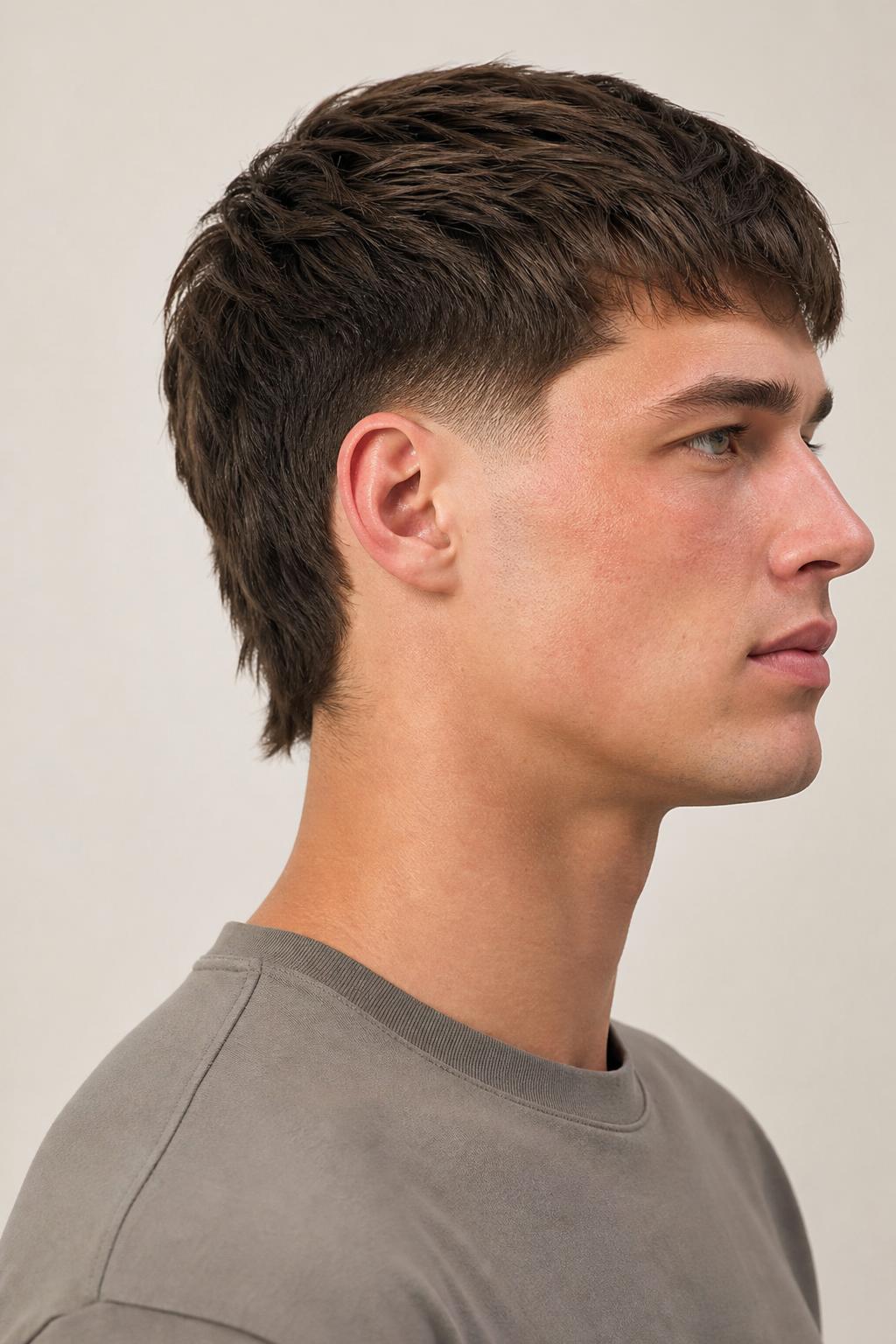
21. Skullet with Fringe Back
A fringe cut through the back, where the hair is trimmed to one even length and falls as a flat, blunt sheet, contrasts with the standard skullet’s layered or natural back. The geometric pairing of a rounded shaved dome and a flat rectangular back section creates a more graphic, structured silhouette than the organic flow of a layered back. On fine to medium hair, the blunt fringe adds apparent density to a back section that might otherwise look thin.
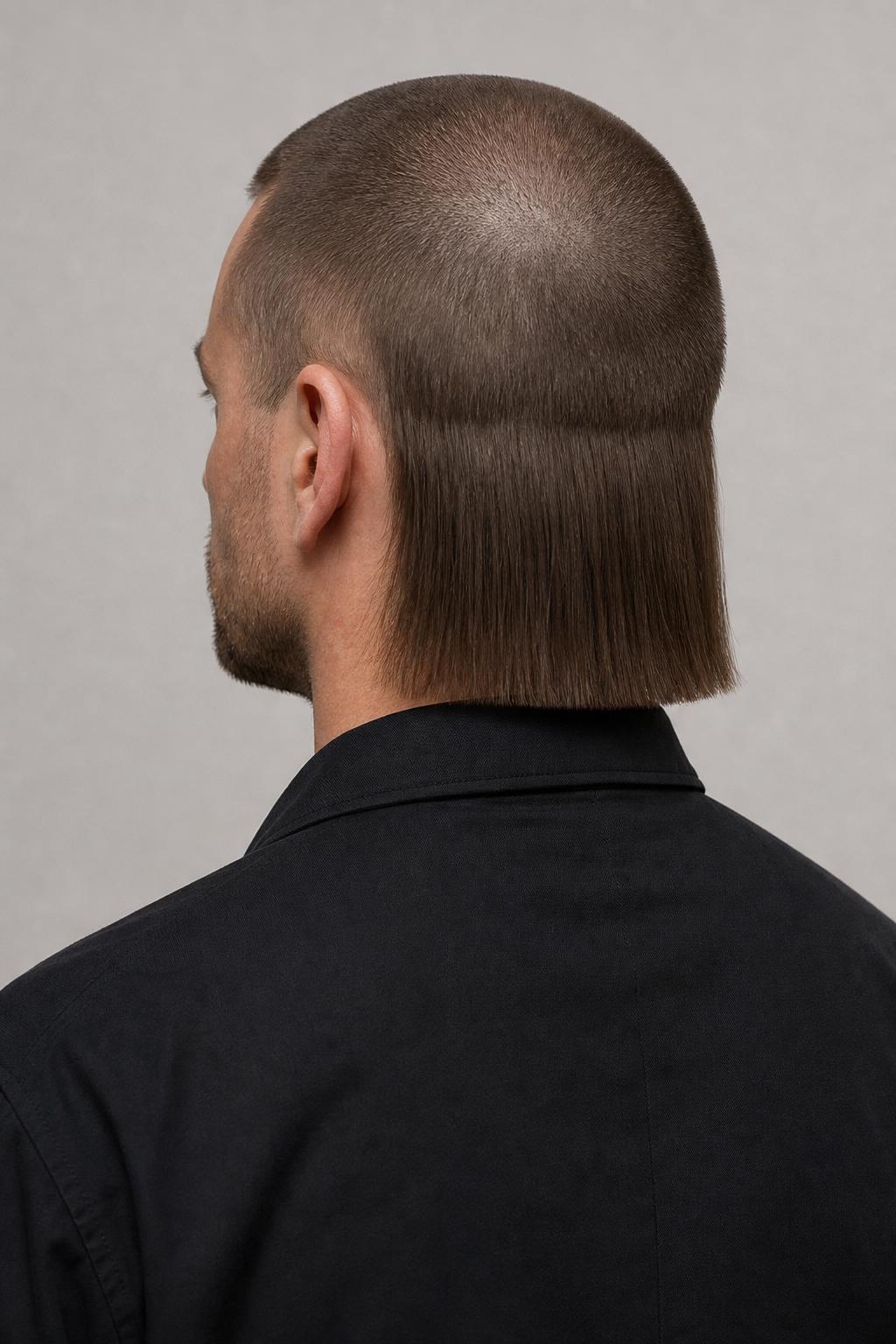
22. Skullet with Fade into Beard
Connecting the fade to a beard line combines two separate maintenance schedules into one barber visit: crown and sides get buzzed every 2–3 weeks as usual, and the beard trim happens in the same appointment. On heavy beards, the fade-to-beard connection also grounds the long back section visually; the facial hair provides a lower anchor that keeps the overall silhouette from looking unfinished around the jaw.
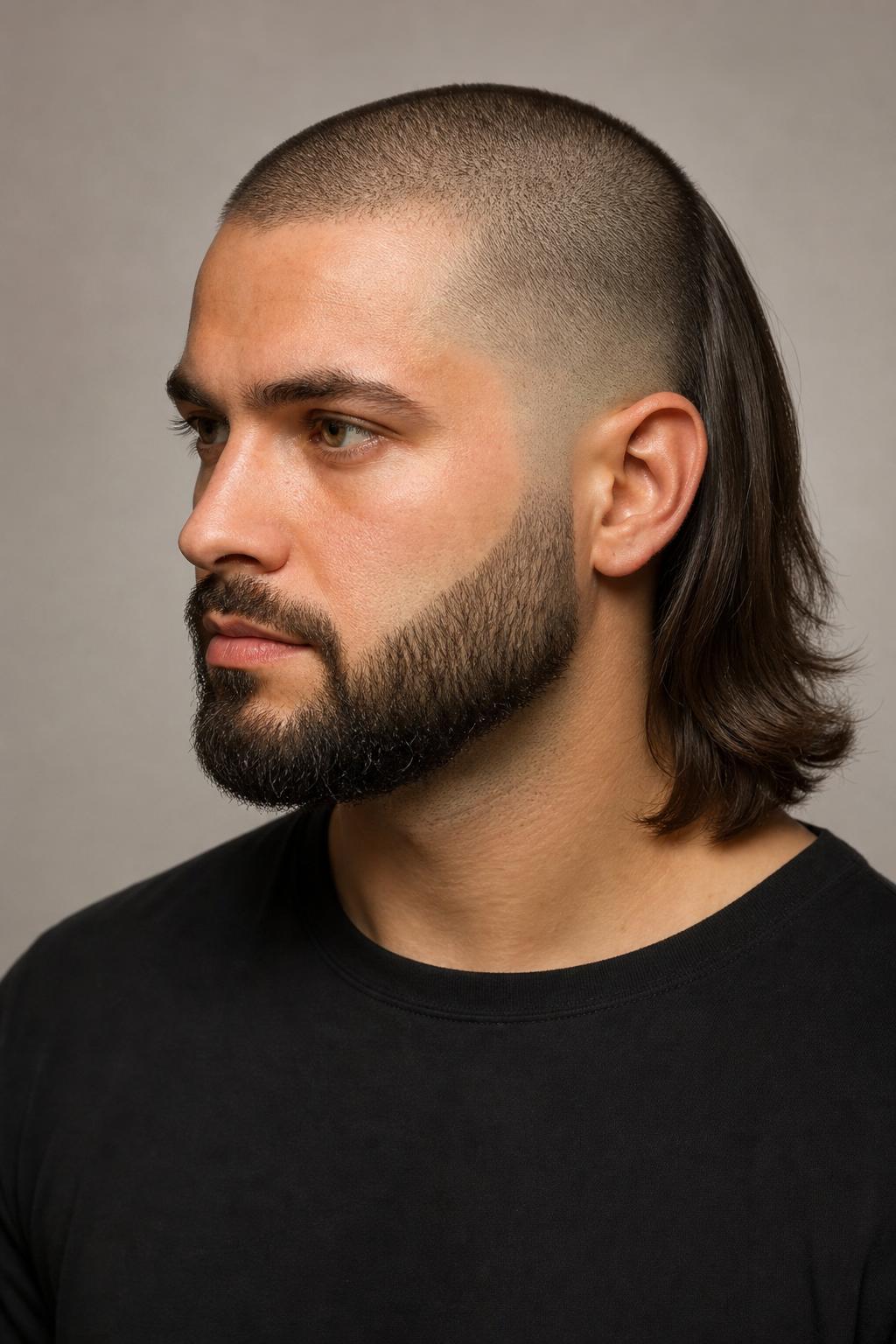
23. Soft Skullet with Textured Back
Work a lightweight texturizing spray through the damp back section and let it air-dry without touching. This allows the natural wave to set without frizz and produces movement that blow-drying removes. A one-guard crown reduces the severity of the contrast compared to a skin fade, making this version closer in feel to the burst fade mullet family. It suits men who want the long-back silhouette with less stark crown execution.
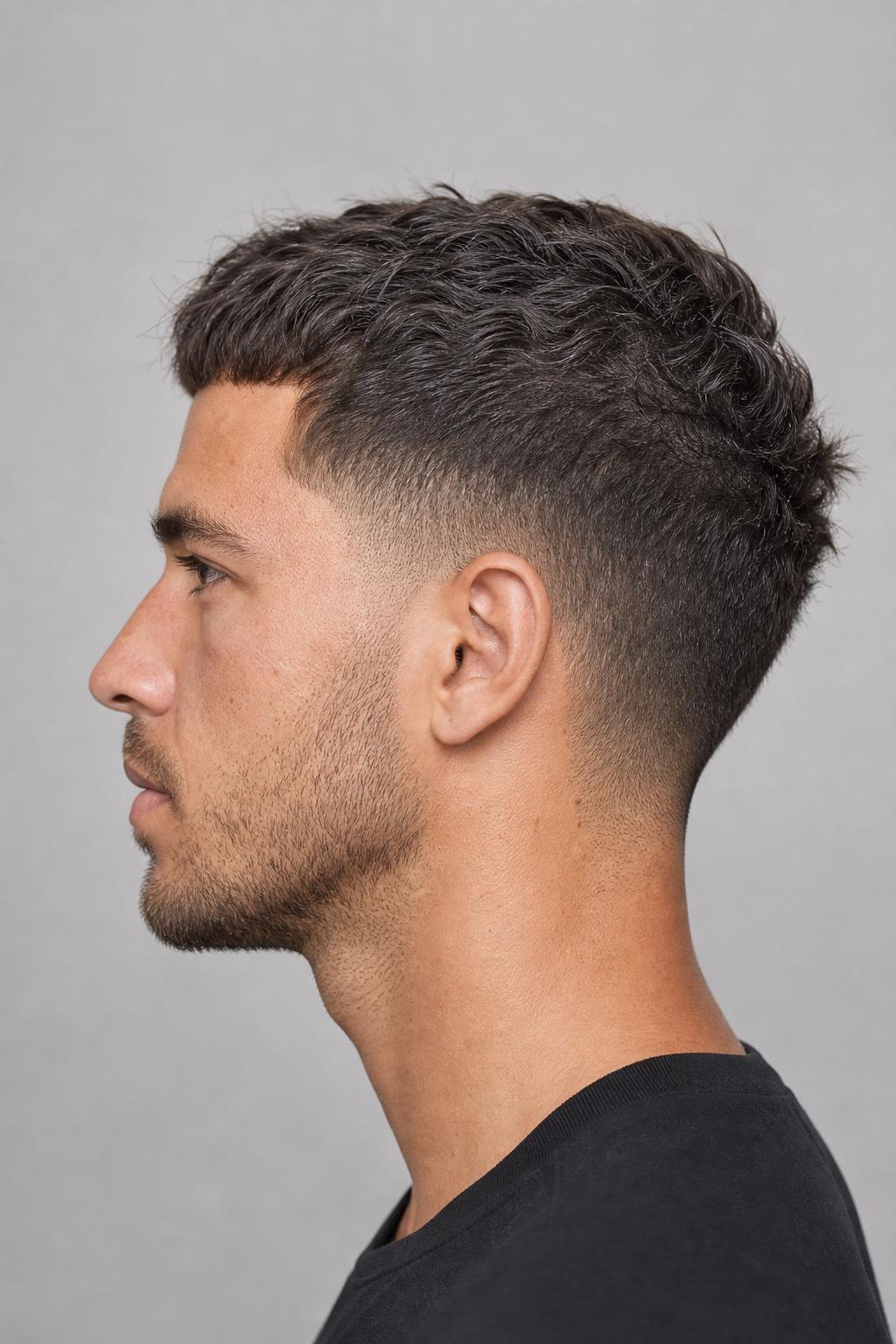
24. Skullet for a Balding Crown
Natural crown thinning creates a ready-made skullet template: the balding area becomes the shaved section by choice rather than circumstance, and a freshly buzzed crown with a clean fade looks far more considered than styling around the loss. Dark-haired men create the strongest crown-to-back contrast here; lighter or gray-hair versions benefit from a sharp line-up at the hairline to compensate for lower natural contrast between scalp and back.
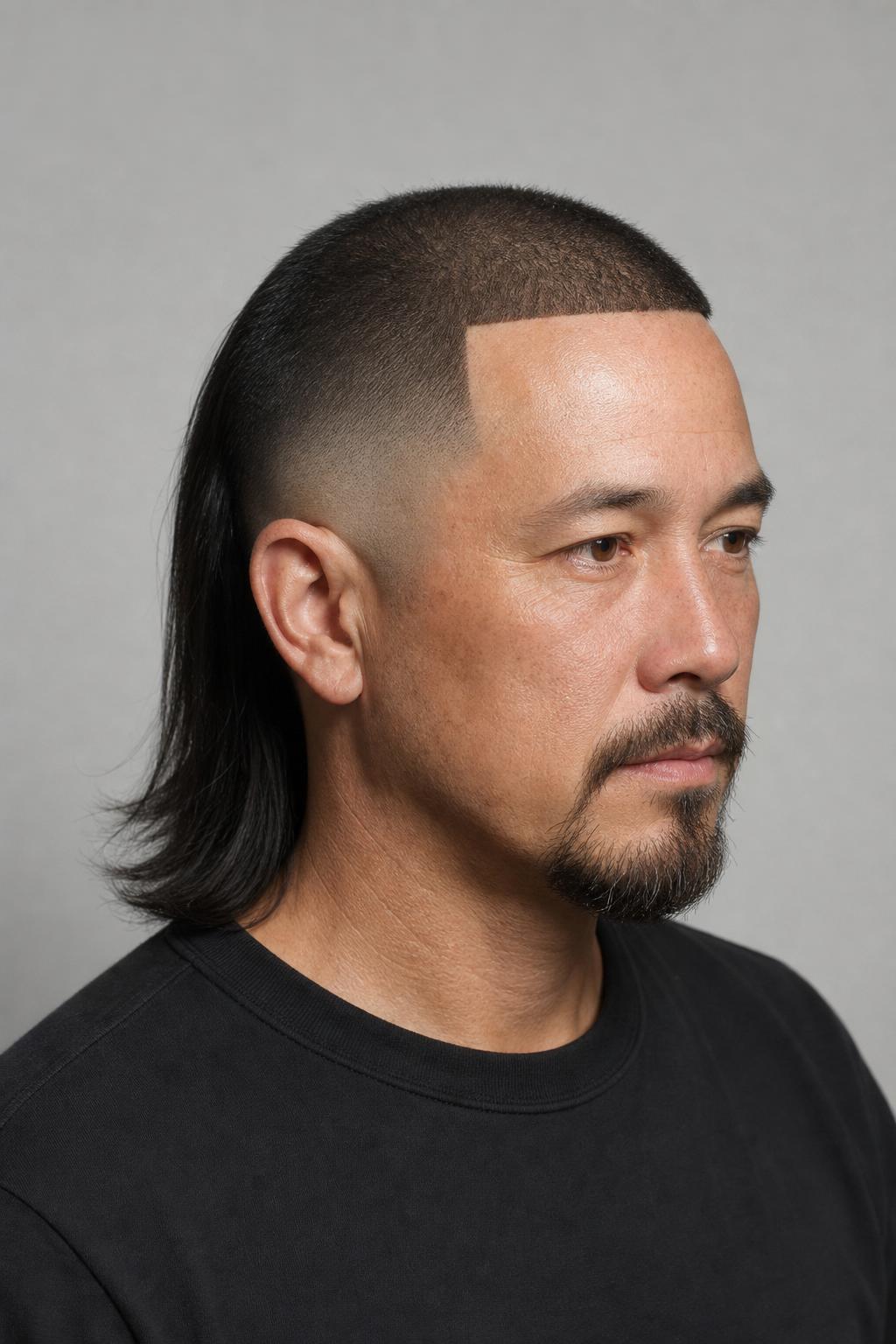
25. Skullet with Long Shaggy Back
Growing the back past the shoulders means building length over 12–18 months while maintaining the shaved crown every 2–3 weeks throughout. Ask your barber for long internal layers starting below the occipital bone, this adds movement through the mid-lengths without reducing the full length at the nape, and prevents the back from lying completely flat as it grows longer. The crown schedule stays the same; the back just keeps going.
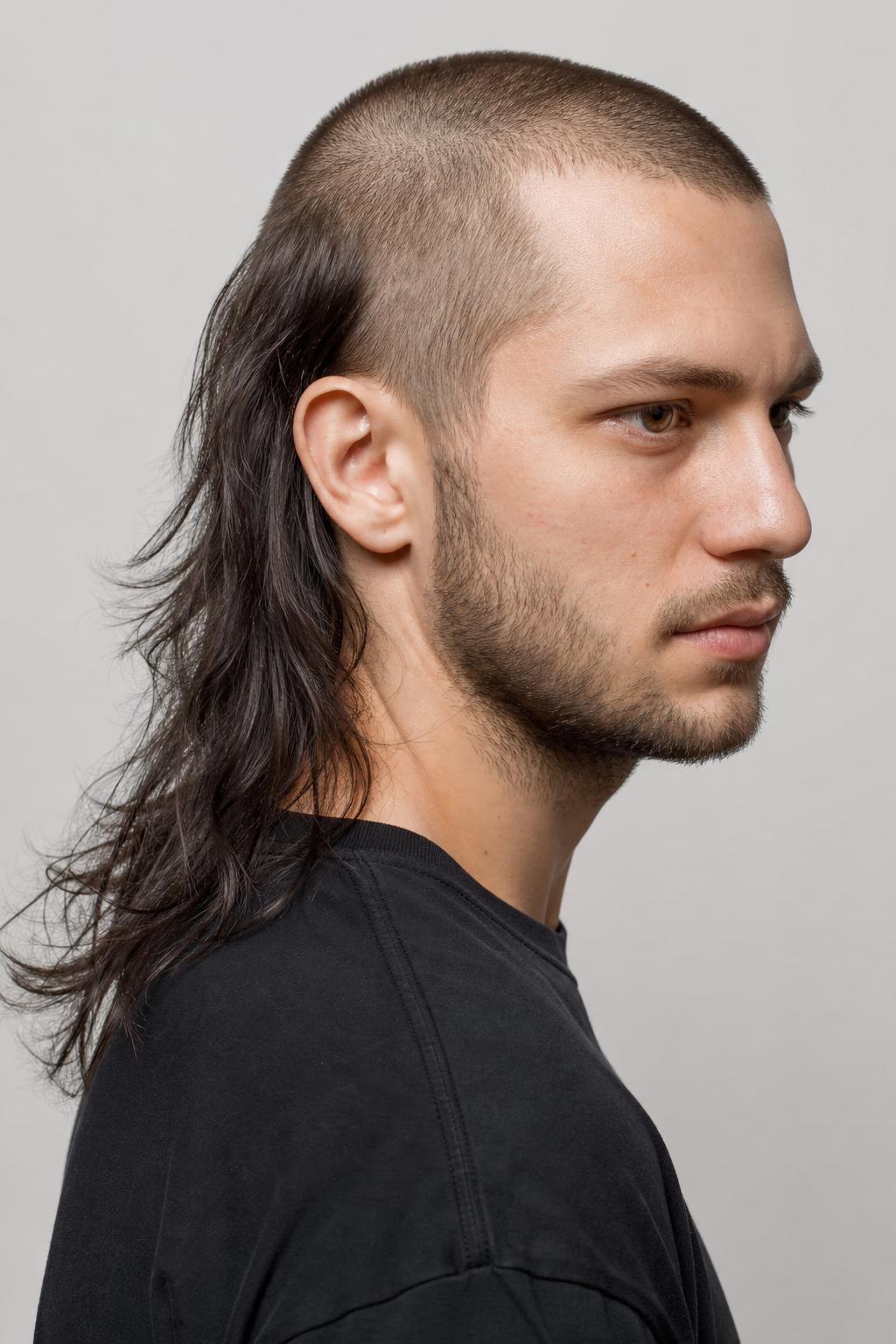
Face Shape Guidance for the Skullet
Because the top is shaved or closely clipped, the skullet amplifies the natural shape of your head and face more than most cuts do. Choosing the right fade height and back length for your face shape matters more here than in most men’s haircuts.
| Face Shape | Best Skullet Version | Avoid | Why It Works |
|---|---|---|---|
| Oval | Any version; high skin fade is especially effective | Nothing to avoid | Balanced proportions handle the high contrast without distortion |
| Oblong / Long | Low or mid fade; collar to shoulder back length | Very long back section past the shoulders | Extra vertical length in the back exaggerates an already long face shape |
| Square | Low fade with textured or layered back | Blunt hard neckline at the back | Soft layering in the back reduces emphasis on the horizontal jawline that square faces already carry |
| Round | High fade with longer back to add vertical length | Short collar-length back only | Long back adds vertical emphasis; short back keeps the eye on the width of the face |
| Heart | Mid fade with volume through the back | Very tight flat back with no volume | Volume in the back draws the eye downward and balances a wider forehead |
| Diamond | Taper fade with moderate back length | Full skin fade to zero | A gradual taper adds width at the crown, balancing prominent cheekbones rather than exposing them |
What to Tell Your Barber
Walk in with a reference photo and a clear decision on back length. Most barbers have cut skullets, but the term alone covers too much ground without a photo. Cover the three core variables: how short you want the top, what fade height you want on the sides, and how long to leave the back.
Exact language for the chair: “Take the top down to [skin / zero guard / one guard]. Fade the sides with a [high / mid / low] fade. Leave the back at [collar length / shoulder length / untouched, just clean the ends].” If you want a line-up at the hairline, ask for that as a separate finishing step.
Stylist tip from Ryan Whitfield, THP contributor and men’s cut specialist: Tell your barber the maximum guard for the crown before any clippers touch your head. Clipper guards only go down — there is no adding back what’s been removed. A one-guard crown gives you the skullet silhouette while leaving enough stubble to feel the texture. Going to skin is a permanent commitment until the crown grows back out, so confirm before sitting down.
Maintenance and Care
The skullet runs two separate maintenance schedules simultaneously. The shaved or clipped section needs regular attention to stay sharp; the long back can go much longer between trims. Managing both without conflating them is what keeps the contrast defined.
| Section | Trim Frequency | Daily Time | Key Products |
|---|---|---|---|
| Crown and sides | Every 2–3 weeks | 2–5 min | Scalp moisturizer; SPF on exposed crown for outdoor wear |
| Back (collar to shoulder) | Every 6–8 weeks | 5–10 min | Lightweight leave-in conditioner; sea salt texturizing spray for wavy hair |
| Back (shoulder+) | Every 3–4 months for shaping | 10–15 min if styling | Hair oil on ends weekly; heat protectant if blow-drying |
When a Skullet Is Not the Right Choice
The skullet has specific limitations worth understanding before committing. Check each of the following against your situation before booking.
- Very curly or coily back hair (3c–4c): Tight curl patterns create significant shrinkage, back hair that measures 5 inches stretched may land at 2–3 inches dry. Factor shrinkage into your target back length, or work with a stylist who specializes in natural curl patterns and can dry-cut the back section accurately.
- Conservative professional environments: The skullet is a statement cut in most professional settings. Some industries carry informal grooming expectations where this style creates friction regardless of how cleanly it is executed. A high taper fade or mid taper fade delivers a sharp, high-contrast look that clears most dress codes without the long back section.
- Round face with limited jaw definition: The shaved crown can amplify roundness at the temples. The longer back adds vertical length that helps, but doesn’t fully counteract the effect. An Edgar cut delivers a similarly graphic, structured look without the same face shape trade-off.
- Barber visits every 2–3 weeks are not workable: The shaved or clipped crown loses its precision within two weeks as stubble blurs the fade line. If your schedule only allows a cut every 6–8 weeks, the skullet’s defining contrast fades faster than a single appointment cycle can maintain it.
FAQ
Is a Skullet the Same as a Mullet?
No — the skullet and mullet share the long back section, but the top is completely different. A mullet keeps 2–5 inches of hair on top, styled into a fringe, quiff, or natural flow. The skullet shaves or buzzes the crown to near-zero, removing the front section entirely. The skullet is the more extreme commitment of the two constructions.
Can Any Face Shape Pull Off a Skullet?
Most face shapes work with a skullet when fade height and back length are matched to the face. Oval and oblong faces have the easiest time with any version. Round and square faces need a specific fade height and back length to look balanced, as covered in the face shape table above. Confidence matters as much as face shape, this cut works best on men who wear it deliberately.
How Long Does the Back Need to Be Before Getting a Skullet?
Collar length, roughly 2–3 inches below the nape, is the minimum for the skullet silhouette to be visible as the style. Most men grow the back to at least that point before committing to the shaved crown so the contrast is immediate from day one rather than developing gradually over weeks after the top is buzzed short.
How Often Does a Skullet Need Maintenance?
The crown and sides need trimming every 2–3 weeks to maintain the fade line. Stubble growth on a shaved crown becomes visible within 10–14 days, so the schedule matches a skin fade rather than a standard haircut timeline. The back section is far less demanding, every 6–8 weeks for shorter back lengths, every 3–4 months for shoulder-length and beyond.
What Products Does a Skullet Need?
The shaved section needs almost nothing beyond a scalp moisturizer and SPF for outdoor exposure. The long back section is where product choice matters: a lightweight leave-in conditioner keeps ends from splitting between back trims, while a sea salt texturizing spray adds movement and strand separation for wavy back hair. Avoid heavy waxes or pomades on the back, which weigh down longer hair and create buildup over multiple days.
Can Women Get a Skullet?
Yes — the skullet has a strong following in alternative and punk-adjacent communities for women and non-binary wearers. The structural logic is the same: shaved or clipped crown, length through the back. The barber conversation is identical, reference photo, target back length, and fade height decision. Women’s versions often feature colored back sections or perm-waved backs for added visual contrast.
How Long Does It Take to Grow Out of a Skullet?
Growing the crown back takes 3–4 months to reach 1–2 inches of even growth, during which the grow-out can look patchy and uneven at the crown. Many men transition out by gradually reducing fade height over several appointments rather than stopping all at once. The back section is not a problem; it keeps growing, but reclaiming crown length is the longer commitment of the two.
The skullet haircut rewards full commitment rather than half-measures. A freshly faded crown, a shaped back section, and a clear barber brief produce a result that looks far more considered than the cut’s reputation suggests. Grow the back to collar length first, choose your fade height based on face shape, bring a reference photo, and know the maintenance schedule before sitting down. A well-executed skullet with a sharp line and a clean fade is one of the more distinctive options in modern men’s hair.
Hair results vary based on your natural hair type, texture, density, and condition. Always consult with a licensed hairstylist before making significant changes, especially with chemical treatments or dramatic length changes. Photos may show styled results that require professional tools and products to replicate.