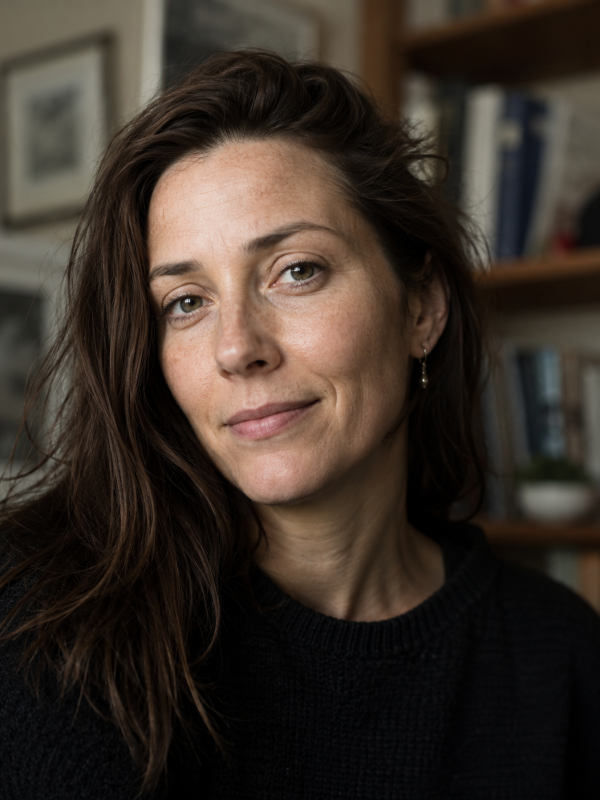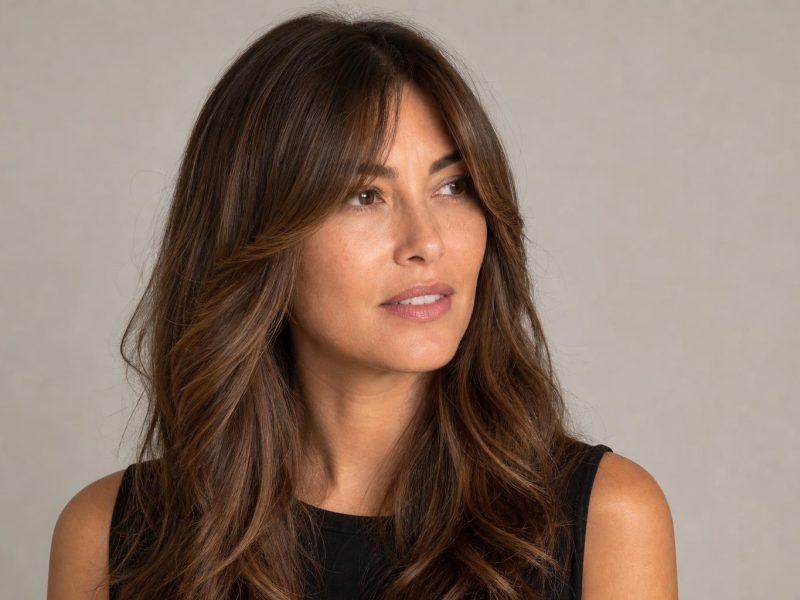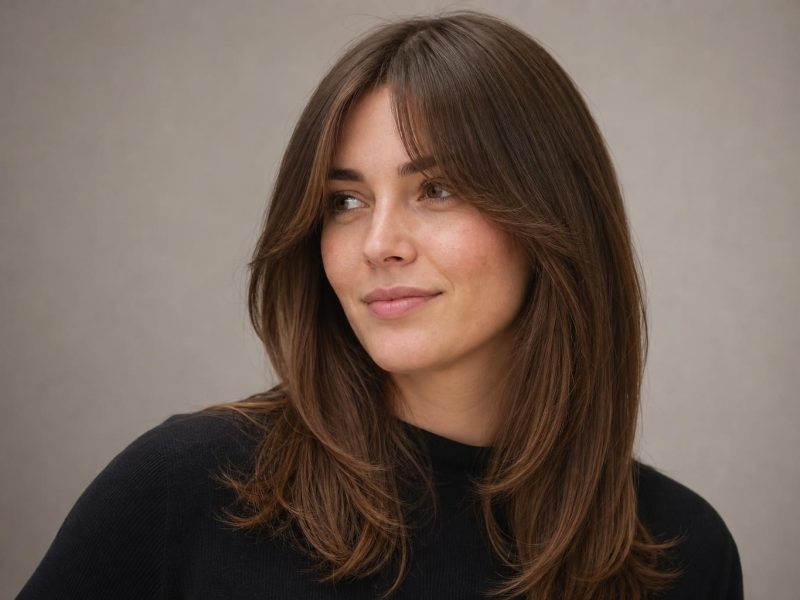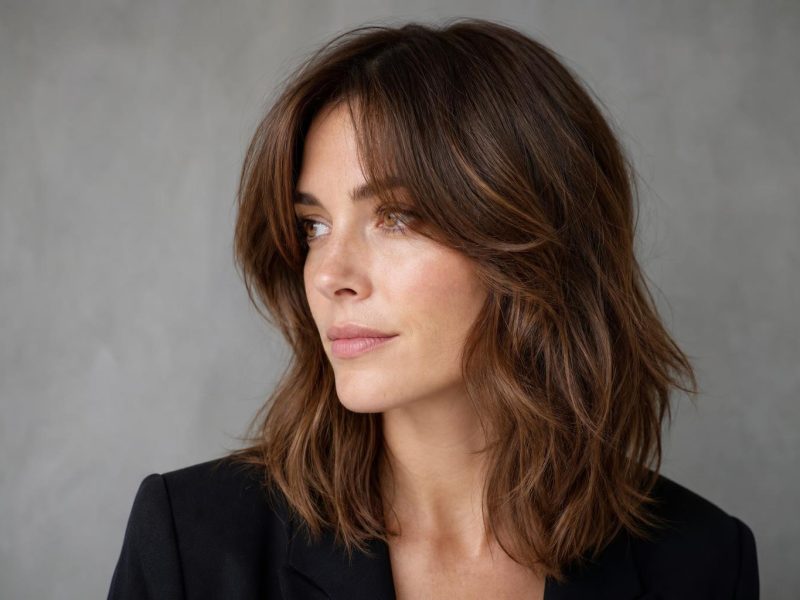


From chin-grazing wisps to long, feathered pieces, these 40 curtain bangs with layers prove why this pairing flatters every hair length, texture, and face shape.
Curtain bangs with layers create a seamless, face-framing effect that no other bang-and-cut combination quite matches. The bangs part softly at the center, sweep outward across the cheekbones, and blend directly into the layered lengths, so you get movement, dimension, and a natural flow from front to back. This collection features 40 stylist-approved variations covering short, medium, and long hair, along with options for fine, thick, wavy, and curly textures.
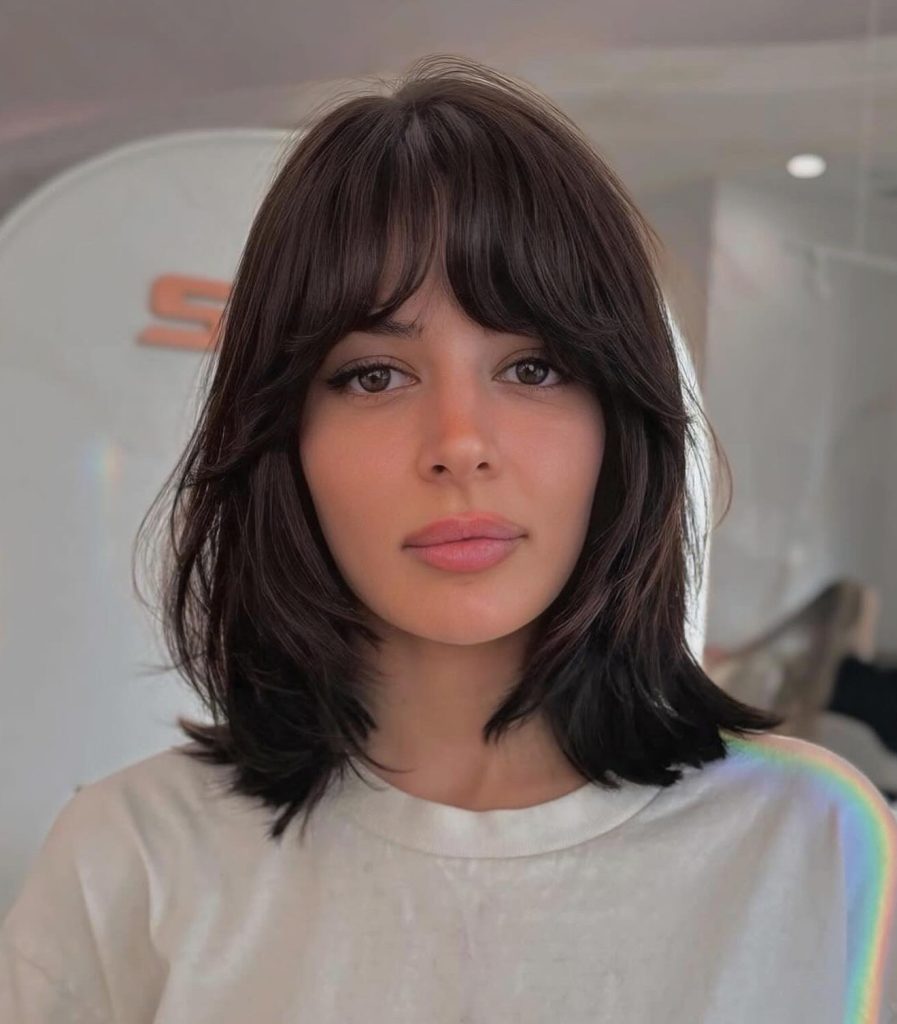
Below the gallery, you’ll find a face shape compatibility guide, salon communication tips, and a maintenance breakdown — everything you need to choose the right version and walk into your appointment with a clear plan. Whether you’re considering face-framing layers for the first time or refining a look you already love, there’s a match here for you.
Short Curtain Bangs with Layers
Short layered cuts and curtain bangs might sound like an unlikely duo, but the combination actually works beautifully on bobs and lobs. The bangs add softness around the face while the layers prevent the shorter length from looking boxy or bottom-heavy. If your hair tends to sit flat at chin level, this pairing gives it direction and shape.
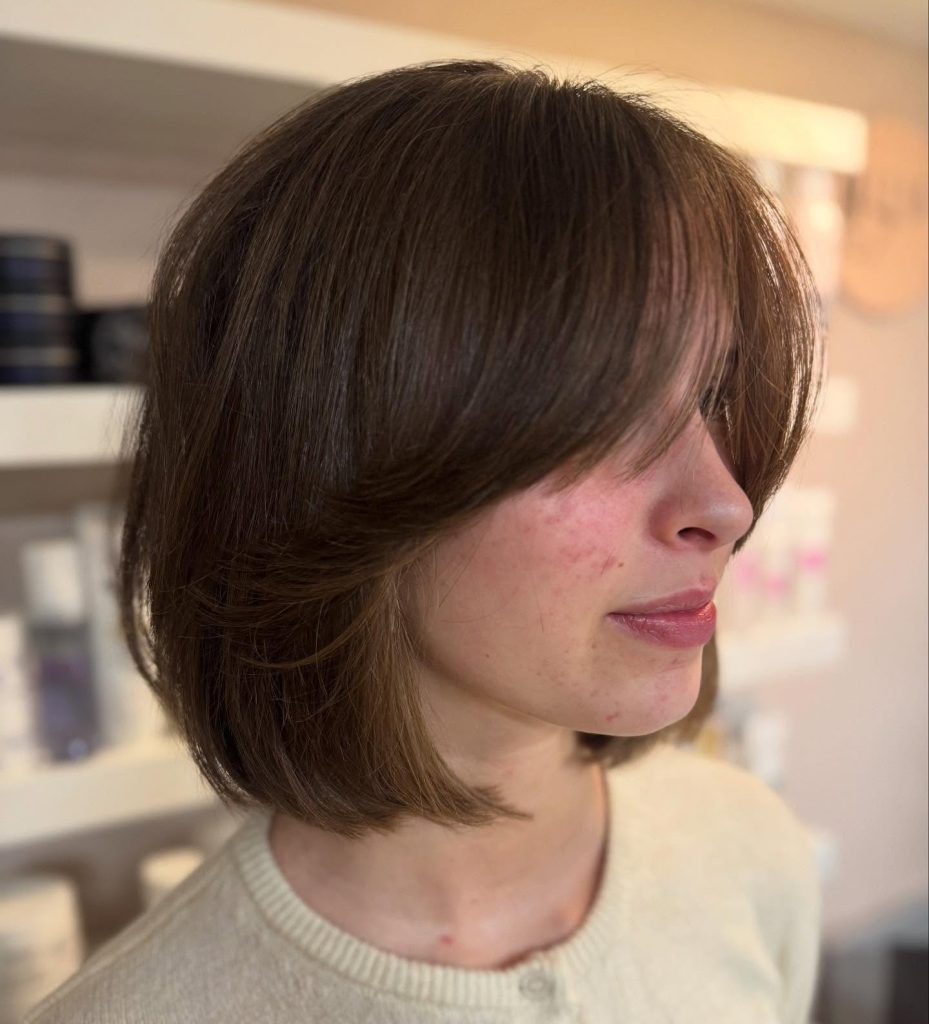
1. Chin-Length Layered Bob with Soft Curtain Bangs
Layers starting at cheekbone level open up this classic bob, and the curtain bangs blend right into the face-framing pieces for a cohesive, airy shape. Best for straight to slightly wavy hair with fine to medium density. The layers won’t overwhelm thinner strands but still create visible movement. Expect a trim every 5–6 weeks to keep the bangs from creeping past eye level.
2. Textured Shaggy Bob with Wispy Curtain Bangs
Razor-cut layers throughout the bob give it a deliberately undone, lived-in texture, and wispy curtain bangs soften the forehead without committing to heavy fringe. This works especially well on thick hair that needs weight removal. A texturizing spray is your daily essential here. It keeps the shaggy shape looking intentional.
3. Blunt Lob with Long Curtain Bangs
A one-length lob gets all its personality from long curtain bangs that sweep past the cheekbones and tuck behind the ears. The contrast between the clean perimeter and the soft, layered fringe creates a polished-meets-relaxed feel. Oval and heart-shaped faces wear this especially well because the bangs add width at the cheekbones.
4. Stacked Bob with Feathered Curtain Bangs
Graduated layers at the back build volume at the crown, while feathered curtain bangs bring softness to the front. The result is a cut with structure from behind and effortless movement when viewed from the front. It’s a strong option if your hair falls flat at the back of your head. Needs professional maintenance every 5 weeks to keep the stacking crisp.
5. Asymmetrical Bob with Side-Swept Curtain Bangs
An off-center part pushes the curtain bangs heavier to one side, creating an asymmetrical frame that adds visual interest to a simple bob. Layering through the longer side gives it movement without losing the angular shape. Square and round faces benefit from this version because the diagonal line elongates the face.
6. French Bob with Micro Curtain Bangs
Shorter curtain bangs that just graze the eyebrows pair with a jaw-length French bob for a distinctly Parisian feel. Internal layers keep the shape from going helmet-like, and the bangs are cut with a slight arc rather than straight across. This cut demands straighter textures; wavy or curly hair may need daily smoothing to keep the bangs in place.
7. Choppy Bob with Piece-y Curtain Bangs
Point-cut layers create deliberate choppiness through the bob, and the curtain bangs are cut with the same piece-y technique, so everything feels cohesive. Thick hair types especially benefit here — the choppy layers remove bulk without sacrificing volume. A matte styling paste rubbed through the mid-lengths keeps the texture defined. If you’re drawn to choppy bob hairstyles, this version adds the face-framing element that ties it together.
8. Ear-Length Crop with Soft Curtain Bangs
A cropped cut with curtain bangs proves you don’t need length for this style to work. The bangs are the longest pieces in the entire cut, creating a pretty graduation from fringe to sides. Works on most textures, though very curly hair may need the bangs cut slightly longer to account for shrinkage when dry.
Medium-Length Curtain Bangs with Layers
Medium-length hair (roughly collarbone to shoulder) is where curtain bangs with layers really shine. There’s enough length for the layers to cascade and the bangs to transition smoothly into the rest of the cut, but it’s short enough to hold shape without getting weighed down. This is the sweet spot for volume, movement, and easy daily styling.
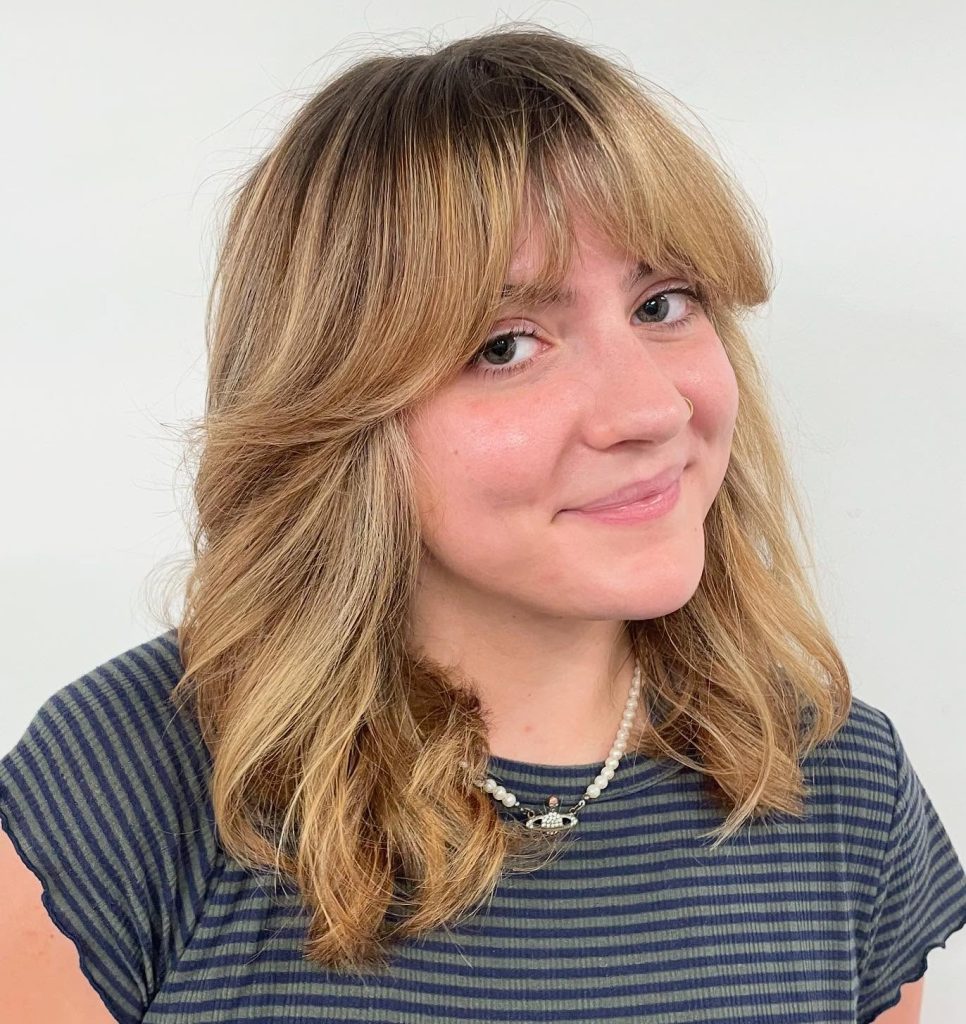
9. Shoulder-Length Shag with Curtain Bangs
Heavy layering throughout gives this shoulder-length cut a retro shag feel, and the curtain bangs kick the ’70s reference up a notch. Layers start high, around ear level, and graduate down, creating a rounded, full silhouette. Wavy and curly textures look especially good here because the natural bend defines each layer without heat styling.
10. Collarbone-Length Layers with Barely-There Curtain Bangs
Subtle, wispy bangs that barely touch the brow bone give this layered cut a low-commitment fringe option. The layers themselves are soft and blended rather than choppy, creating smooth movement without dramatic texture. A great entry point if you’ve never had bangs — the grow-out is virtually seamless.
11. Medium Wolf Cut with Curtain Bangs
The wolf cut’s dramatic layering pairs naturally with curtain bangs that frame the face at cheekbone level. Thick and medium-density hair types carry this best because the heavy layering can leave fine hair looking sparse at the ends. Air-drying with a curl-enhancing cream is the fastest route to the signature tousled shape.
12. Layered Midi Cut with Curtain Bangs and Face-Framing Highlights
Ribbons of lighter color around the face amplify the layering effect, making each piece of the curtain bangs stand out individually. The midi length (just below the collarbone) keeps the cut modern and manageable. Balayage or babylights concentrated at the front maximize the face-framing dimension without full-head color.
13. Medium Layered Cut with Flipped-Out Curtain Bangs
Styling the curtain bangs with an exaggerated outward flip gives this layered medium cut a touch of retro energy. A round brush and blow dryer are essential here. Curl each bang section away from the face using a 1.25-inch barrel or medium round brush, then let it cool before releasing. The flip adds width at the cheekbone level, which works well for longer and narrower face shapes.
14. Textured Medium Layers with Heavy Curtain Bangs
Thicker, denser curtain bangs make a bolder statement on a medium layered haircut. The key is point-cutting the ends of the bangs so they still move and breathe — heavy doesn’t have to mean helmet-like. Stylists often recommend this version for anyone with a wider forehead who wants more coverage without a blunt fringe.
15. Layered Lob with Curtain Bangs and Soft Waves
Loose, beachy waves through a layered lob create effortless volume, and the curtain bangs frame the top third of the face with a natural S-curve. Wrapping random sections around a 1-inch curling iron in alternating directions gives you waves that feel unstructured in the best way. Fine hair benefits from a root-lifting spray before blow-drying to keep the crown from falling flat.
16. Curtain Bangs on a Medium Blunt Cut with Internal Layers
From the outside, this cut looks like a clean, one-length bob. The secret is internal layers that remove bulk and add movement without disrupting the solid perimeter line. Curtain bangs are the only visible layering element, creating a sleek contrast that reads as polished and intentional. If you prefer a layered bob that’s more understated, this is it.
17. Medium Feathered Layers with Curtain Bangs
Feathered layering softens the ends of each section, giving the entire cut a lightweight, airy feel that practically styles itself. The curtain bangs follow the same feathered technique, so they blend naturally into the rest of the hair without any hard lines.
18. Curtain Bangs with Medium Layers and a Deep Side Part
Shifting the part off-center creates a dramatic curtain effect: one side sweeps heavier across the forehead, and the other tucks neatly behind the ear. The asymmetry is flattering on round and square faces because it breaks up symmetrical width. Use a volumizing mousse on the heavier side to maintain lift throughout the day.
Long Curtain Bangs with Layers
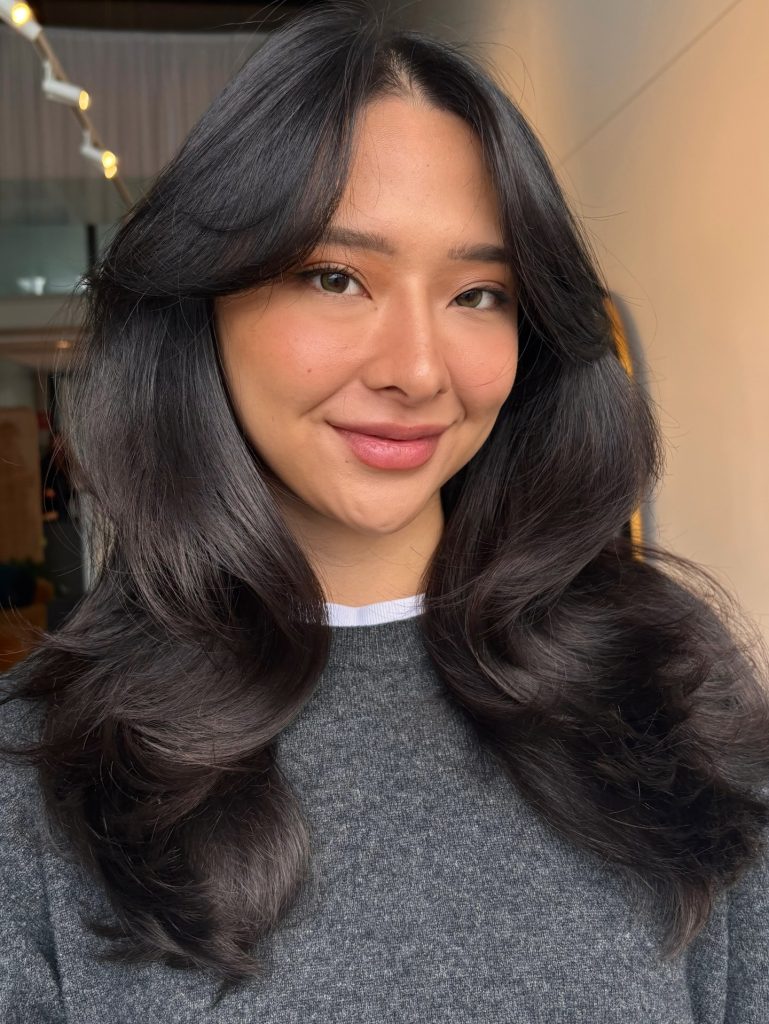
Long hair and curtain bangs are a natural match. The bangs act as the shortest layer in a cascading system that runs from the forehead to the ends, so the transition looks completely organic. Layers keep long hair from falling flat like a sheet, and curtain bangs add personality at the front without requiring a dramatic chop.
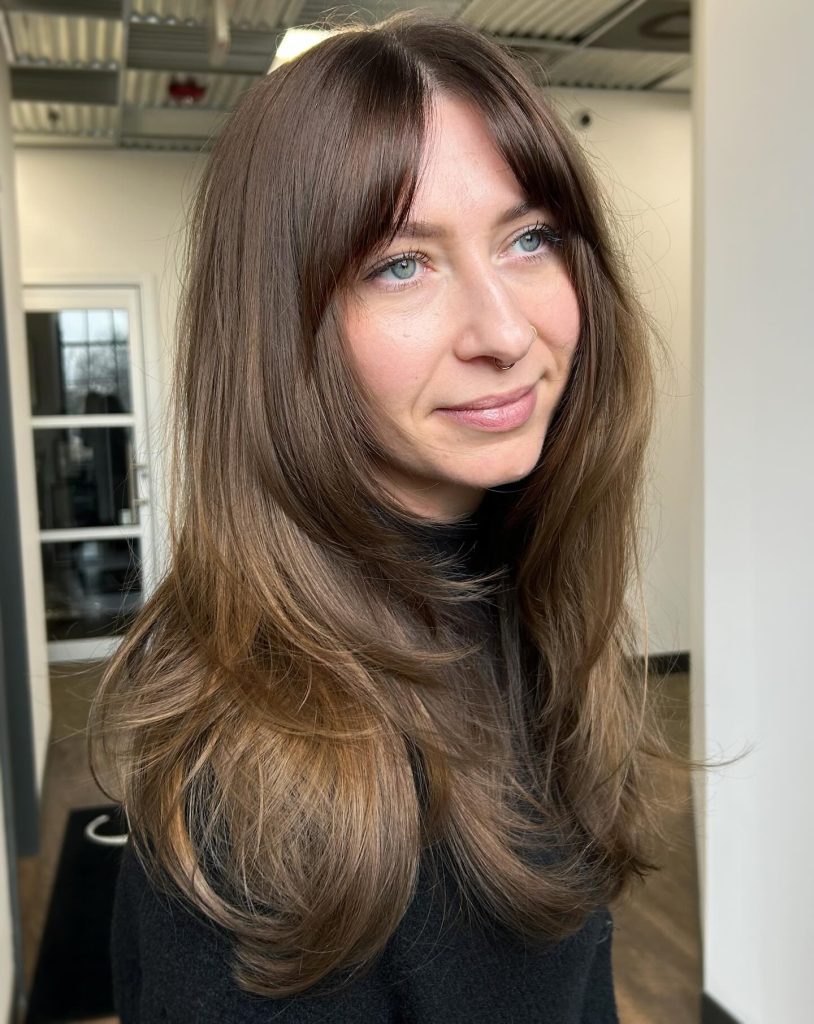
19. Classic Long Layers with Curtain Bangs
Layers beginning at chin level and graduating down to mid-back create the timeless long layered shape, and curtain bangs are the finishing touch that brings the whole look forward. This is the most versatile version in the entire gallery. It suits nearly every face shape and works on straight, wavy, and loosely curly textures. A trim every 8–10 weeks keeps the shape intact as it grows.
20. Long Curtain Bangs Blending into Face-Framing Layers
Longer curtain bangs reaching past the jawline transition so gradually into the rest of the layers that it’s hard to tell where the bangs end, and the layers begin. This is a low-commitment option that grows out gracefully and needs almost no special styling. Heart-shaped faces love this because the jaw-level framing balances a narrower chin.
21. Long V-Cut Layers with Curtain Bangs
A V-shaped perimeter viewed from the back concentrates length at the center while the sides frame inward, and curtain bangs echo that same inward movement at the face. The visual result is a cut that guides the eye toward the center of the face. Thick, straight hair shows off the V-shape most clearly.
22. Waist-Length Hair with Subtle Curtain Bangs
Very long hair risks looking one-dimensional, and soft curtain bangs solve that by adding visual interest at the top without removing any length. The bangs should be cut so they blend into the first layer by chin level, maintaining the long hair’s overall impact while framing the face. A heat protectant spray is non-negotiable at this length — the ends are old and vulnerable.
23. Long Shag with Curtain Bangs and Lots of Texture
Pronounced layering from crown to ends turns long hair into a modern shag, and curtain bangs integrate seamlessly into the shortest layers around the face. The texture registers as effortless and undone, like you just rolled out of bed looking incredible. Naturally wavy and curly textures are ideal because they emphasize the layered shape without heat tools.
24. Long Straight Hair with Curtain Bangs and Minimal Layers
Just two or three long layers plus curtain bangs keep this look sleek and polished without any of the shaggy texture from heavier layering. The bangs are the main event, framing the face against an otherwise clean backdrop. Flat-iron users, this one’s for you — the smoother the lengths, the more the curtain bangs pop as a design element.
25. Curtain Bangs with Long Layers and Curtain Highlights
Money pieces and face-framing highlights follow the same path as the curtain bangs, reinforcing the framing effect with color as well as shape. The lighter pieces catch light and draw attention exactly where the bangs direct the eye — cheekbones and eyes. Honey blonde on a brunette base or caramel on dark brown are classic combinations that amplify the curtain effect.
26. Long Layers with Curtain Bangs and Soft Inward Curl
Using a round brush to curl the ends inward during blow-drying gives long layers a polished, bouncy finish that recalls classic blowout styling. The curtain bangs get the same inward treatment, curling gently toward the cheekbones rather than flipping out. This is a dressier option for anyone who wants their curtain bangs with layers to look salon-fresh for an event or professional setting.
27. Long Razored Layers with Feathery Curtain Bangs
Razor cutting creates softer, more tapered layer transitions compared to scissor cutting. The result is layers that seem to melt into each other. Feathery curtain bangs cut with the same razor technique feel weightless against the forehead. A common issue clients face with this cut is that razor-cut hair can frizz in humid environments, so a lightweight anti-frizz serum is essential for keeping the layers smooth.
28. Extra-Long Curtain Bangs on Layered Hair
Curtain bangs that extend all the way to the collarbone are barely bangs at all. They function more as long face-framing layers with a center part. The advantage is virtually zero maintenance and a seamless grow-out path. For anyone hesitant about committing to fringe, this is the lowest-risk entry point.
Curtain Bangs with Layers for Every Hair Texture
Hair texture changes how curtain bangs with layers look and behave. The same cut on straight hair versus curly hair will produce completely different results, and that’s a good thing. It means you can adapt this pairing to your natural pattern. The key is knowing how your texture interacts with layering so you get the right cut, not just the right idea.
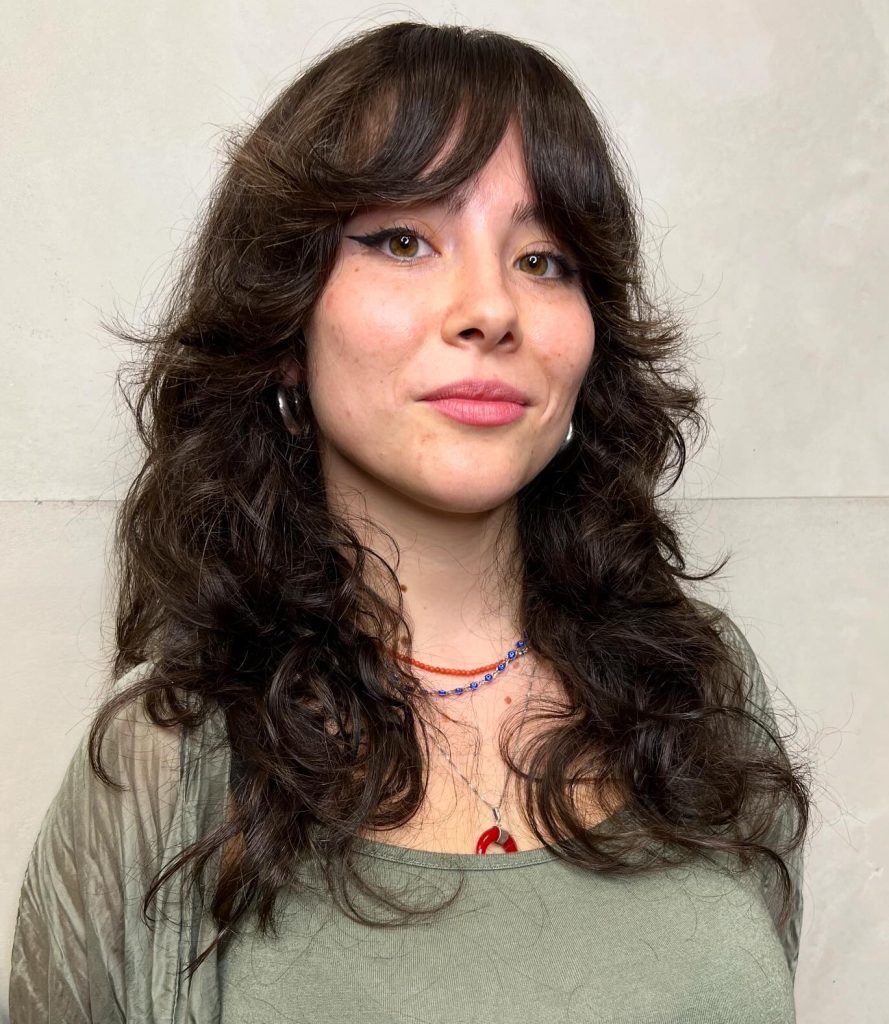
29. Curtain Bangs on Fine Straight Layers
Fine hair needs layers that add movement without making the ends look see-through. Keeping the layers longer and closer together in length (no more than a two-inch difference between the shortest and longest) gives the appearance of fullness, and the curtain bangs’ mission is to add shape at the front. A volumizing mousse applied at the roots before blow-drying is the single best product investment for this texture.
30. Thick Straight Hair with Curtain Bangs and Thinned Layers
Thick straight hair can feel like wearing a heavy blanket without proper layering. Internal thinning plus face-framing layers remove bulk but keep the outer shape intact. Curtain bangs give the front some breathing room.
31. Wavy Hair with Curtain Bangs and Layered Body
Natural waves and layers are a match made for each other. Each wave defines a different layer, creating dimension without styling effort. Curtain bangs on wavy hair tend to have a natural S-curve that frames the face beautifully. Let the hair air-dry with a curl-enhancing cream and scrunch lightly at the mid-lengths for maximum definition.
32. Beachy Waves with Curtain Bangs and Long Layers
Loose, tousled waves styled with a salt spray give this layered cut a vacation-ready look year-round. The curtain bangs pick up the same textured movement as the rest of the hair, so nothing looks separate or staged. A 1.25-inch curling iron with alternating curl directions creates the most natural-looking wave pattern.
33. Curly Hair with Curtain Bangs and Layered Shape
Curly textures (2C–3B) need layers cut into dry hair so the stylist can see exactly where each curl falls. Curtain bangs on curly hair should be cut longer than you think. Curls shrink by 30–50% when dry, and bangs that look perfect wet may spring up above the eyebrows once they dry. In the salon, this cut typically takes longer than on straight hair because the dry-cutting process is more precise.
34. Coily Hair with Curtain Bangs and Defined Layers
Coily textures (3C–4C) can absolutely wear curtain bangs. The key is working with the curl pattern. Layers should be shaped to frame the face while maintaining volume, and the bangs should be long enough to stretch past the eyebrows when pulled straight. A stylist experienced with natural hair textures is essential here, as the wrong cutting technique can create uneven results.
35. Curtain Bangs on a Layered Cut for Thin Hair
Thin hair (meaning fewer strands per square inch) needs curtain bangs that are lightweight and wispy rather than thick and dense. Too-heavy bangs will expose the scalp at the part line. Keep the bangs narrow (about two inches of hair from the front hairline) and the layers concentrated at the surface level to maximize the illusion of volume.
36. Curtain Bangs with Layers on Very Thick Wavy Hair
When you have both thickness and wave, layers and curtain bangs work together to distribute volume and prevent the dreaded triangle shape. Layers placed from ear-level down allow the natural wave to expand without creating width at the jawline. The curtain bangs add a visual entry point at the top, giving the eye somewhere to land before taking in the full volume below.
Bold and Color-Enhanced Curtain Bangs with Layers
Color techniques can amplify the layering effect and make curtain bangs even more striking. When highlights, balayage, or dimensional color follow the layered structure, each piece of hair reads individually, adding depth that a single-process color can’t match. These entries show how color and cut can work as a team.
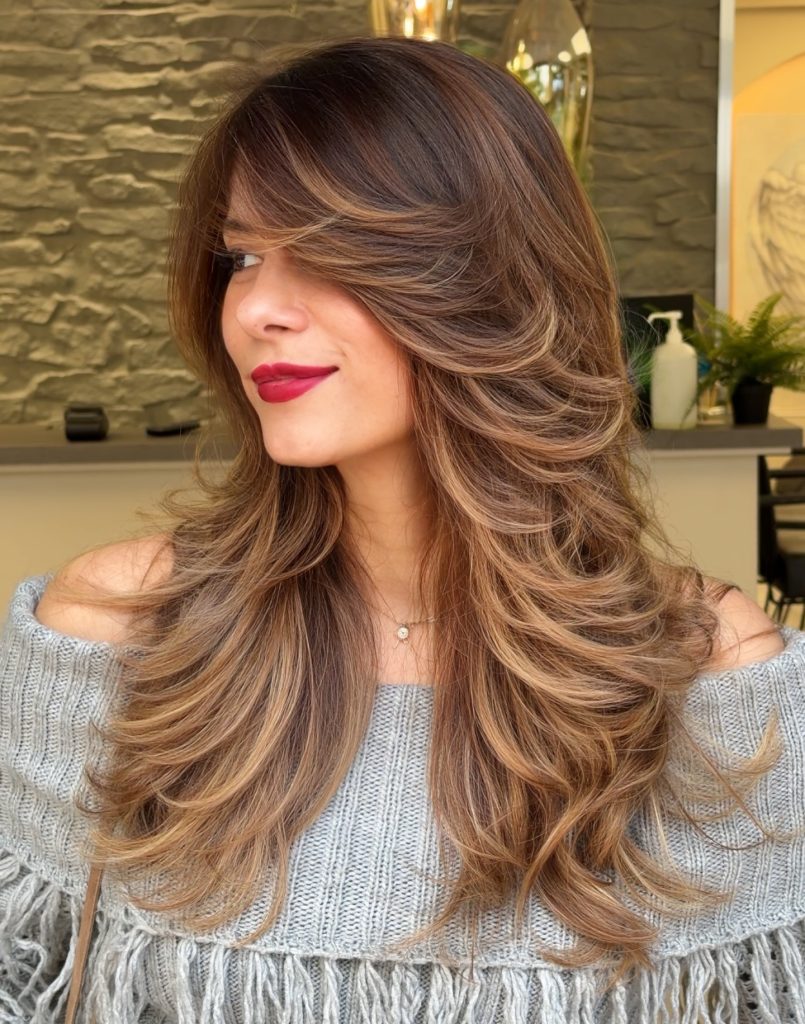
37. Copper Curtain Bangs on Layered Auburn Hair
Warm copper tones catch light beautifully, and when concentrated around the curtain bangs and face-framing layers, the effect is like a natural glow around the face. The layered cut gives the copper strands individual movement, so the color shifts as you turn your head. Color-safe shampoo and a weekly gloss treatment keep copper from fading to brassy orange.
38. Blonde Balayage with Curtain Bangs and Layered Ends
Hand-painted balayage creates a natural, sun-kissed gradient that follows the layers and curtain bangs organically. The lighter pieces at the face frame pull attention to the eyes and cheekbones, while the darker roots add depth at the crown. This combination works on every base color from light brown to dark blonde. If you’re exploring balayage hair color options, this version with curtain bangs adds a structural element to the color.
39. Dimensional Brunette with Curtain Bangs and Layered Movement
Chocolate, espresso, and chestnut tones woven throughout give brunette hair a rich, multi-tonal depth that single-process color lacks. The layers separate these tones so each shade catches light independently. Curtain bangs with the same dimensional coloring frame the face with warmth and depth. The maintenance is lower than blonde because brown tones fade more gracefully.
40. Platinum Ends with Dark Roots, Curtain Bangs, and Layers
A high-contrast root melt — dark at the crown, platinum through the mid-lengths and ends — makes a striking visual statement when paired with layered curtain bangs. The bangs themselves transition from dark to light, mirroring the gradient in miniature. Fair warning: achieving and maintaining platinum requires multiple salon sessions and weekly toning to prevent yellow. This is not a low-maintenance option, but the impact is undeniable.
How to Choose Curtain Bangs with Layers for Your Face Shape
The right curtain bangs depend on your face shape. Small adjustments in length, density, and where the layers start make the difference between a cut that highlights your features and one that works against them. Use the guide below to find your match, and bring this information to your stylist so you can fine-tune together.
| Face Shape | Best Curtain Bang Length | Best Layer Placement | Why It Works |
|---|---|---|---|
| Oval | Any length — cheekbone to jaw | Layers starting at chin or below | Balanced proportions suit most bang lengths; layers add movement without disrupting symmetry |
| Round | Longer — past cheekbones, reaching jaw | Layers below the chin to create vertical lines | Long bangs and below-chin layers create lengthening vertical lines that slim the face |
| Square | Cheekbone length with soft, feathered edges | Soft, blended layers around the jaw | Feathered bangs and rounded layers soften angular jawline and forehead |
| Heart | Jaw-length curtain bangs | Layers that add width at or below the chin | Wider layers at the jaw balance a narrow chin and soften a wider forehead |
| Oblong | Shorter — at or above cheekbone level | Layers adding width at the sides (cheekbone to jaw) | Shorter bangs reduce forehead length; side volume shortens the visual length of the face |
| Diamond | Cheekbone length with volume at the temples | Layers adding fullness at the forehead and jaw | Bangs add width at the narrow forehead; jaw-level layers balance the widest point at the cheekbones |
If you need help choosing hairstyles for your specific face shape, knowing your proportions is the first step.
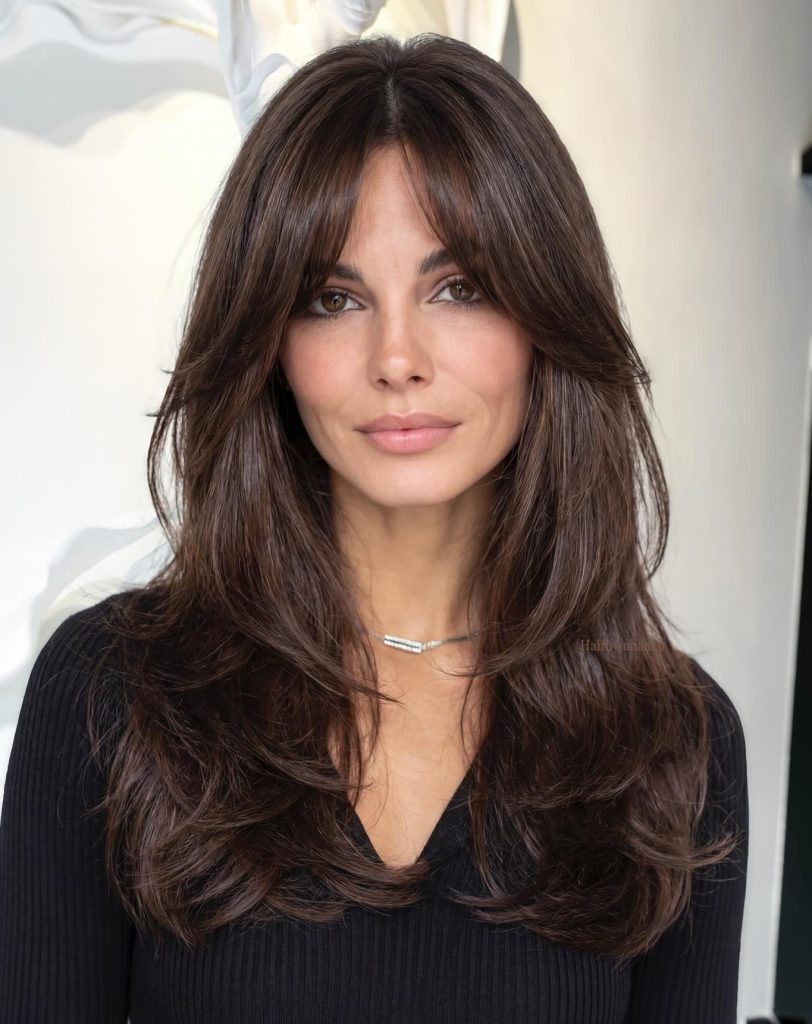
What to Ask Your Stylist
Walking into the salon with the right language makes the difference between getting the cut you imagined and getting a version that’s close but not quite right. Curtain bangs with layers involve specific decisions about bang length, density, layer placement, and blending technique. And most clients don’t know how to communicate all of those details.
Stylist tip: Bring two or three reference photos that show the exact bang length and layering density you want. Photos from different angles are even better. A front view and a side view give your stylist the complete picture. Point out what you like about each photo specifically, not just “I want this.”
Here’s a salon-ready script you can adapt to your situation: “I’d like curtain bangs starting at [cheekbone / eyebrow / jaw] level, blended into layers that begin at [chin / collarbone / shoulder]. I want the bangs [wispy and light / medium density / full but still textured]. My hair is [straight / wavy / curly] and [fine / medium / thick], so I need the layers to [add volume / remove weight / create movement].” That level of specificity gives your stylist a clear starting point.
Ask about the cutting technique, too. Point cutting creates softer, more textured edges, while blunt cutting gives sharper definition. Razor cutting produces the lightest, most feathered results, but it can cause frizz on some hair types, so mention if your hair tends to frizz in humidity. For anyone also considering a broader style update, exploring different layered hairstyles before your appointment helps you narrow down the overall direction.
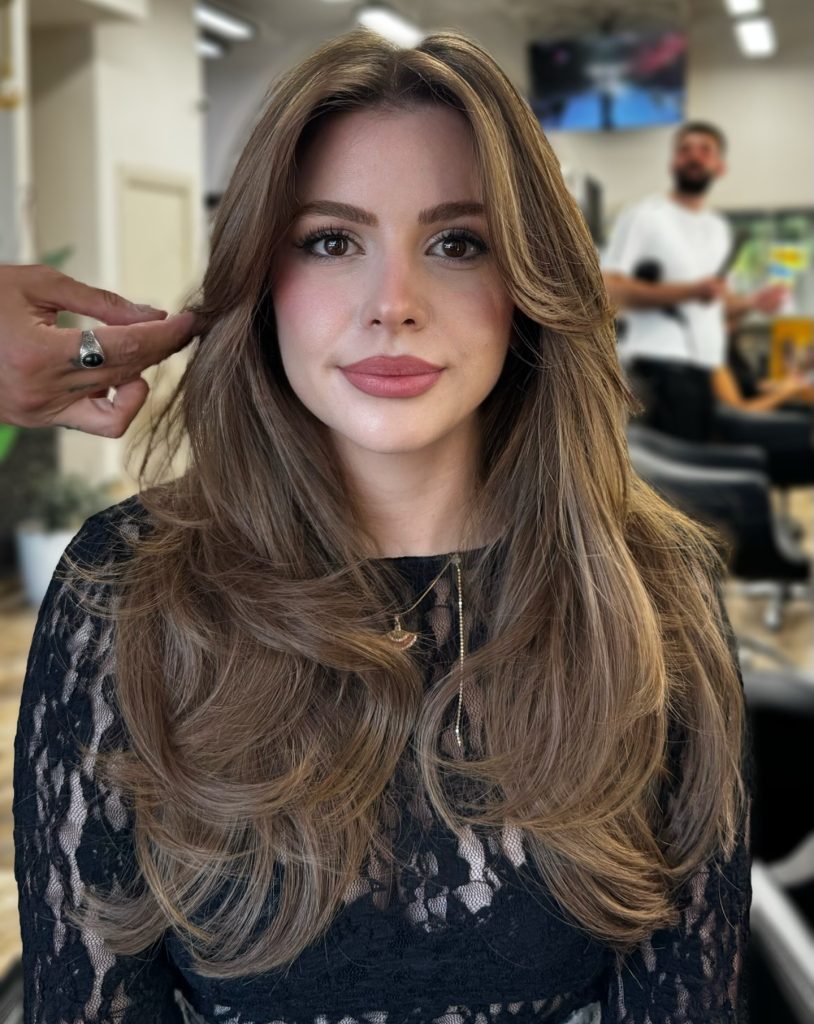
Maintenance and Styling Tips
One of the biggest reasons people love curtain bangs with layers is the relatively low upkeep compared to blunt bangs. That said, “low maintenance” doesn’t mean “no maintenance.” Knowing what you’re signing up for before the cut saves you from frustration during the grow-out period.
| Maintenance Detail | What to Expect |
|---|---|
| Bang trims | Every 4–6 weeks to keep the length where you want it |
| Full layer trims | Every 8–12 weeks depending on hair growth rate |
| Daily styling time | 3–5 minutes for a quick round-brush blow-dry on the bangs; the rest can often air-dry |
| Products needed | Heat protectant spray, round brush (medium barrel), optional dry shampoo for second-day bangs |
| Grow-out behavior | Graceful — curtain bangs transition into face-framing layers naturally as they lengthen |
Stylist tip: When blow-drying your curtain bangs, wrap each side around a medium round brush and direct the air downward from root to tip while curling slightly away from the face. This creates the signature sweep. Avoid blasting the bangs with hot air straight on. It lifts them and kills the curtain shape.
Dry shampoo is a lifesaver for bangs that get oily by mid-afternoon. Spray it at the roots of your bangs before they start looking greasy — prevention works better than rescue. Oil-absorbing powders work too, especially on darker hair, where white residue from spray formulas can be visible.
FAQ
Do Curtain Bangs Work on All Hair Types?
Curtain bangs can be adapted to straight, wavy, curly, and coily hair, but the cutting technique and length need to change with each texture. Straight and wavy hair are the most straightforward — the bangs sit predictably and style easily. Curly and coily textures need dry cutting to account for shrinkage, and the bangs should be left longer than you’d think, so they fall at the right place when the curls spring up. Very fine hair may need thinner, wispier bangs to avoid exposing the scalp at the part line.
How Long Does It Take to Grow Out Curtain Bangs?
Most people can grow out curtain bangs in 4–6 months, depending on their starting length and how fast their hair grows. The good news is that curtain bangs are one of the easiest fringe styles to grow out because they already blend into face-framing layers. As they lengthen, you can simply tuck them behind your ears or sweep them back. There’s no awkward in-between stage as you’d get with blunt bangs.
Can I Cut Curtain Bangs Myself at Home?
It’s technically possible, but the results rarely match what a trained stylist achieves. Curtain bangs require precise angle cutting that accounts for your face shape, hair texture, and how the fringe falls naturally. If you do attempt a trim between salon visits, cut into the hair vertically (point cutting) rather than straight across, and only trim dry hair. Wet hair appears longer, and you’ll cut off more than intended.
What Face Shape Looks Best with Curtain Bangs and Layers?
Oval faces have the most flexibility because their balanced proportions suit nearly any bang length and layer placement. That said, curtain bangs with layers can be customized for every face shape. The key is adjusting the bang length and layer position. Round faces benefit from longer bangs and below-chin layers for a slimming effect, while square faces look best with feathered bangs that soften angular features. There’s no face shape that categorically can’t wear this combination.
Are Curtain Bangs High Maintenance?
Compared to blunt bangs or micro bangs, curtain bangs are relatively low maintenance. The bangs need trimming every 4–6 weeks, but daily styling takes just a few minutes with a round brush and blow dryer. The rest of the layered cut can often air-dry or be styled minimally. The biggest adjustment is keeping the bangs clean. Forehead oil can make them look flat by mid-day, so dry shampoo becomes an everyday essential.
Should I Get Curtain Bangs if I Wear Glasses?
Curtain bangs actually pair well with glasses because they frame the face around the frames rather than competing with them. The center part and outward sweep naturally clear the bridge of the nose and the top of the frames. If your glasses have thick frames, slightly longer curtain bangs work best. They’ll sweep alongside the frames rather than getting caught under them. Ask your stylist to cut the bangs with your glasses on, so the length works with the frames.
What’s the Difference Between Curtain Bangs and Face-Framing Layers?
Curtain bangs start at the center of the forehead and part outward, creating a literal curtain effect over the brow. Face-framing layers are longer pieces that start at or below the cheekbone and run alongside the face. The two overlap significantly — longer curtain bangs essentially become face-framing layers as they grow. Many of the looks in this gallery use both elements together, with the curtain bangs transitioning seamlessly into longer face-framing pieces.
Curtain bangs with layers remain one of the most versatile and forgiving hairstyle pairings you can ask for, whether you’re working with a short bob or waist-length hair, fine strands or thick curls. The combination frames the face, adds movement, and grows out gracefully, which is why it keeps showing up in salons year after year. Bring your reference photos, communicate clearly with your stylist about bang length and layer placement, and you’ll walk out with a cut that fits your face, your routine, and the aesthetics you’re going for.
Hair results vary based on your natural hair type, texture, density, and condition. Always consult with a licensed hairstylist before making significant changes, especially with chemical treatments or dramatic length changes. Photos may show styled results that require professional tools and products to replicate.