Flattering cuts for silver hair, softer features, and a life that doesn’t revolve around the blow-dryer
Hairstyles for women over 70 look best when the cut works with your natural texture and keeps daily styling realistic, here are 30 ideas covering cropped pixies, classic bobs, lobs, and silver-embracing looks, each with stylist notes on who it suits and how to ask for it. The collection spans fine and thinning hair, natural gray and white, and everything from wash-and-go styles to polished cuts that photograph beautifully.
The gallery runs from shortest to longest, pixies and cropped cuts first, then bobs, mid-length options, silver-specific styles, and finally a section on volume-building techniques for thinning hair. If you’re weighing options in the 50s range too, the roundup of best haircuts for women over 50 covers the fuller spectrum of mature-hair cuts across that decade.
Short Pixie and Cropped Styles for Women Over 70
Pixie cuts suit this stage particularly well, they’re fast to style, easy to maintain, and a skilled cut can add the crown volume that naturally thins with age. Anyone considering a pixie for the first time should browse the full range of pixie cut variations for women before the appointment.
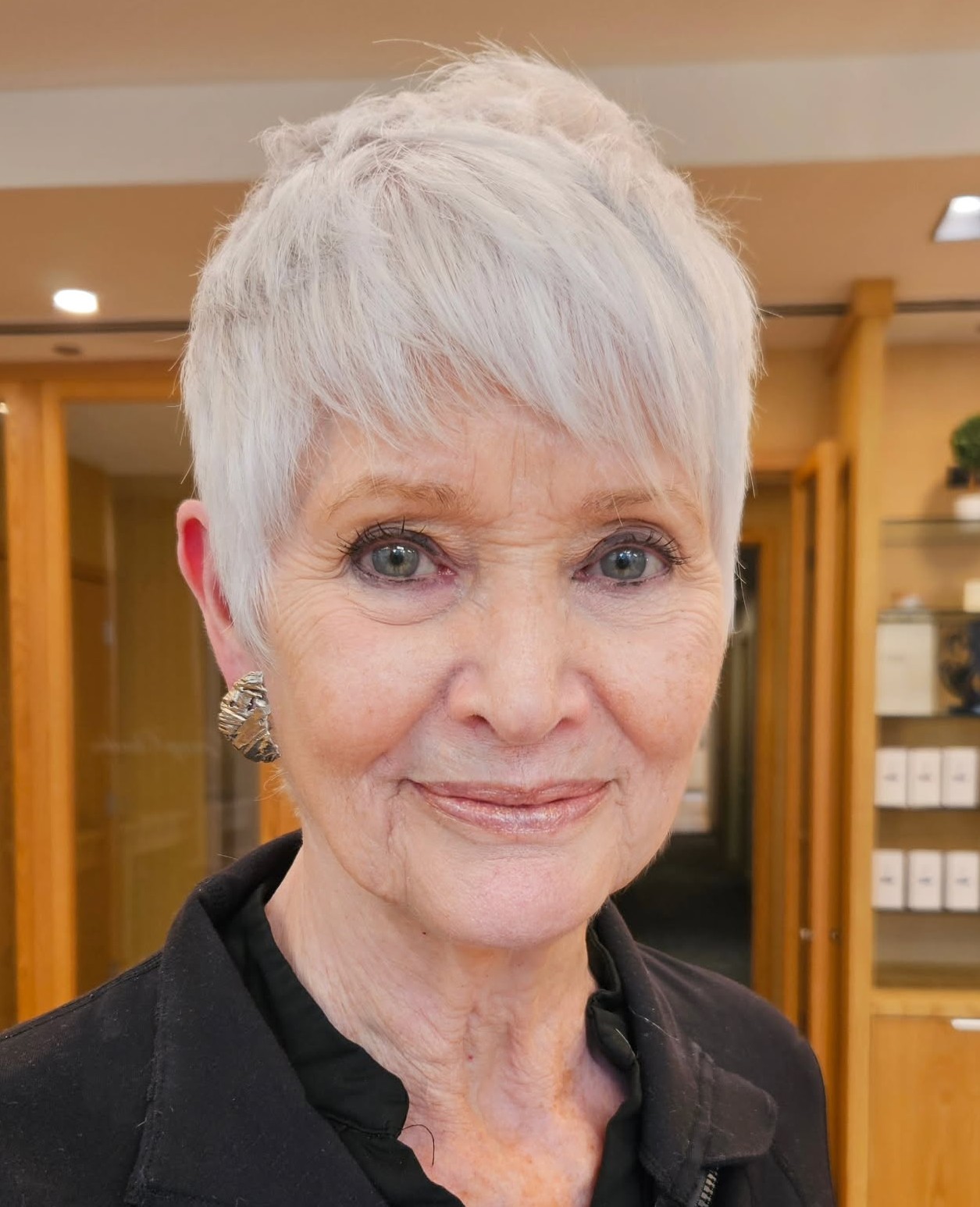
1. Classic Textured Pixie with Crown Volume
Point-cut layers at the top create natural separation and lift without product weight, the go-to pixie for anyone whose hair has thinned at the crown. Ask your stylist for a “disconnected top” with roughly an inch of length difference between the sides and the crown section.
2. Silver Pixie with Side-Swept Fringe
The diagonal fringe adds asymmetry that softens a round or square face shape without a dramatic style change overall. Silver and white hair catches light beautifully, and the side-swept fringe draws the eye toward the cheekbones rather than the forehead. This fringe needs a trim every three to four weeks to stay at eyebrow level.
3. Tapered Nape with Volume at the Crown
Ideal for oval and long face shapes, this keeps length at the crown while tapering tightly through the nape and sides. The longer top section can be styled forward, backward, or to the side depending on the occasion.
4. Soft Rounded Crop for Fine Hair
This cut works with the hair’s natural growth pattern rather than a defined part, the result looks deliberately effortless. Fine hair benefits from keeping overall length between one and two inches, which reduces the visible scalp contrast that longer fine hair creates. A volumizing mousse on towel-dried roots before air-drying gives this cut enough body to hold its shape.
5. Brushed-Back Pixie with Deep Side Part
A deep side part (70/30 ratio) visually narrows a round face and adds perceived length to a square one. The brushed-back styling reads as polished without looking fussy, a light-hold finishing spray keeps the part in place all day.
6. Wispy Cropped Cut for Very Fine Hair
Feathered ends cut with a razor or thinning shears remove the blunt weight lines that look harsh on fine white or gray hair, the result is airy, light, and photographs beautifully. This is one of the lowest-maintenance styles in the gallery: a diffuser or just fingers are enough each morning.
Classic Bob Cuts for Women Over 70
Bobs are practical at any age, and they’re especially versatile after 70 because the length can be adjusted to work with a specific jawline and chin. A French bob sits above the chin for a bold look, while a chin-length bob is softer and more universally flattering.
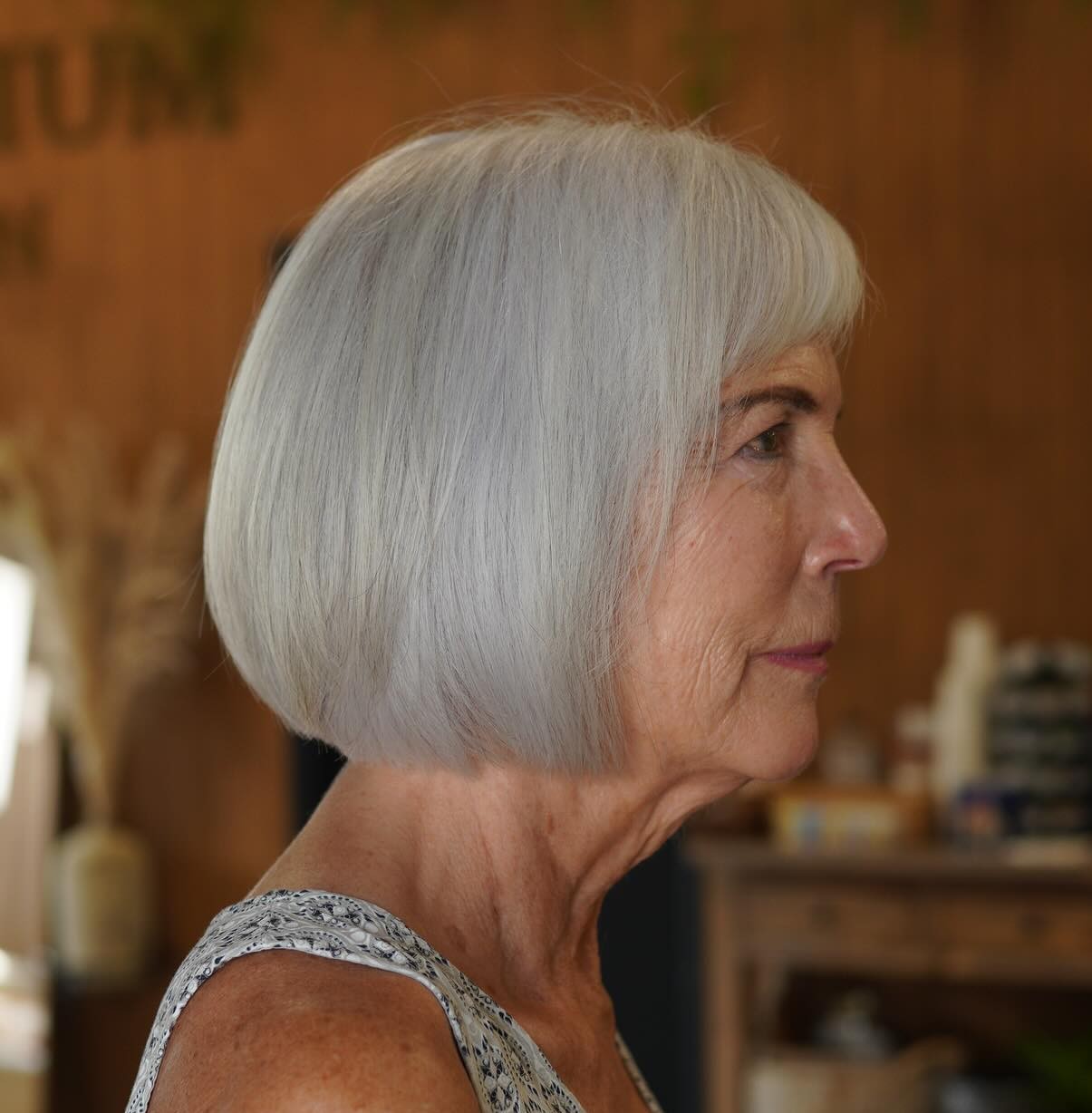
7. Chin-Length Blunt Bob on White Hair
The clean blunt perimeter gives white or near-white hair a modern, deliberate look. It works best on medium-to-thick hair, on very fine hair, a blunt bob can look flat without daily blow-drying. Ask for the line to be cut straight across at chin level with no graduation at the ends.
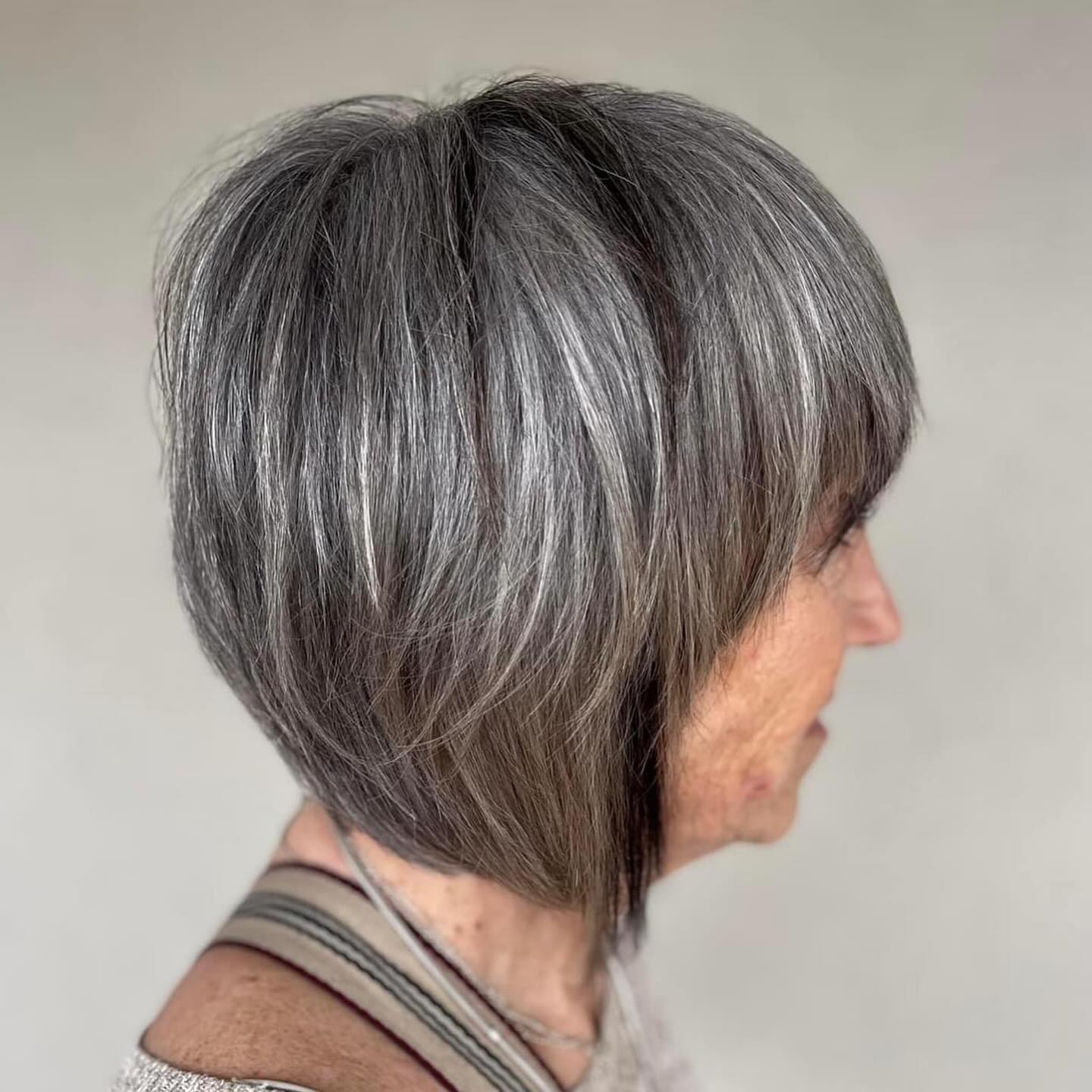
8. Angled Bob with Face-Framing Layers
The back is shorter at nape level and the front pieces are longer, framing the face in a diagonal line. This is one of the most flattering bob variations for women who feel their face has softened at the jawline, the diagonal redirects attention toward the cheekbones.
9. Stacked Bob with Height at the Back
Internal graduation through the back creates visual height without adding bulk, exactly what hair that’s lost density at the crown needs. This cut requires trimming every five to six weeks to maintain the stacked silhouette, as it grows out unevenly.
10. French Bob for Silver and White Hair
Sitting above the chin, the French bob creates more face-framing structure than a standard chin bob. Silver and white hair takes on a graphic quality in this cut, oval and heart-shaped faces carry it best; round faces should ask for a version that sits closer to the chin.
11. Softly Layered Chin Bob for Round Faces
Internal layers through the mid-lengths remove bulk while keeping the perimeter at chin level, creating movement without the cut looking short and round. A side part adds asymmetry that further elongates the face, useful on medium-density hair where a blunt bob would look heavy.
12. A-Line Bob Grazing the Jaw
The back is cut shorter, with the longest front pieces grazing or just touching the jaw in a gentle diagonal. Unlike an aggressive angled bob, this version grows out gracefully over eight to ten weeks and suits both square and round face shapes.
Lob and Mid-Length Styles with Movement
Lobs, long bobs falling between chin and collarbone, are a practical middle ground if you prefer some length. The full lob haircut gallery covers the broader range of lob variations across all ages and hair types.
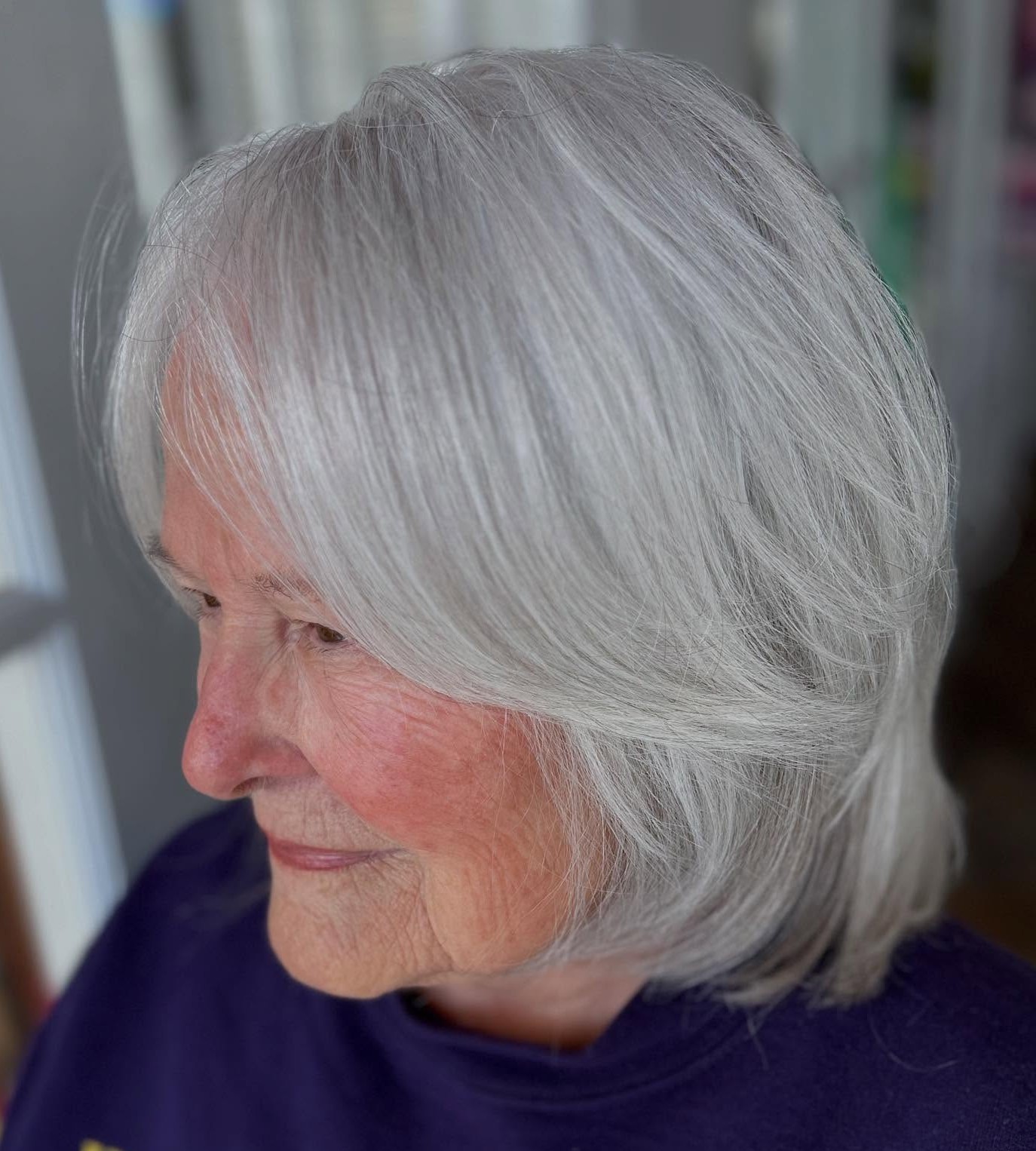
13. Classic Shoulder-Length Lob for Gray Hair
A shoulder-length lob with minimal layering looks clean and polished on straight or slightly wavy gray hair, styling easily with a round brush and blow-dryer. Avoid heavy layering at this length on fine hair, it causes ends to look thin rather than full.
14. Wavy Textured Lob with Soft Layers

Layers starting at the collarbone remove enough weight that the hair moves freely without looking undone. Style with a 1.25-inch curling iron in loose, alternating waves, or air-dry if your gray hair has natural wave to it.
15. Side-Swept Lob for Oval and Heart Faces
A deep side part combined with a collarbone lob creates a sweeping diagonal that draws attention toward the eyes and cheekbones, particularly effective for oval and heart-shaped faces. No daily heat styling needed if the cut was shaped correctly in the salon.
16. Collarbone Lob with Subtle Highlights
A few brightening highlights or a face-framing balayage near the front gives dimension to flat gray hair without masking the natural color. Soft platinum or ash-toned pieces blend seamlessly with white and gray tones, and this is a once- or twice-a-year salon visit, not a regular color commitment.
17. Shaggy Mid-Length Cut with Curtain Bangs
Curtain bangs, soft pieces parted at the center that taper to a point at cheek level, frame the face without the commitment of a full fringe. Combined with a lightly layered mid-length cut, they add texture and movement that flat or fine hair lacks.
18. Smooth Blow-Dried Lob for Straight Silver Hair
Straight silver hair catches light beautifully when blow-dried smooth and sealed with a light shine serum. A paddle brush and medium-heat blow-dryer are all you need, over-product weighs fine silver strands flat within a few hours, so less is consistently more here.
Silver and Gray Hairstyles Worth Embracing
More women over 70 are choosing to work with their natural gray and silver rather than covering it, and the texture and dimension that come with natural gray are genuinely easier to work with than many dyed alternatives at this cut range.
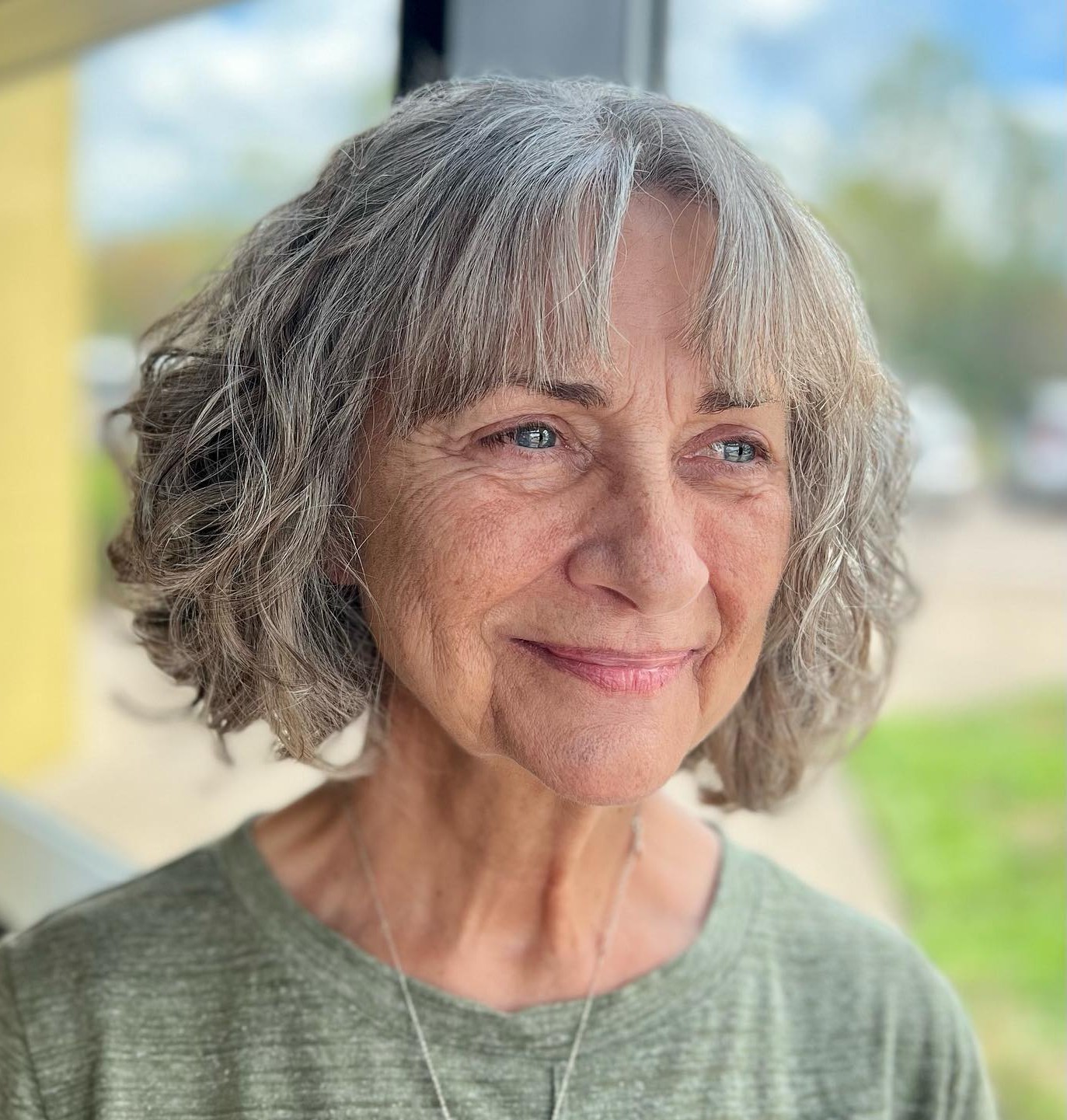
19. Natural Gray Bob with Glossing Treatment
A clear or silver gloss service eliminates the flat, chalky appearance that natural gray can take on between salon visits, it costs far less than color and typically lasts four to six weeks. Ask for a “clear gloss” or “anti-brass silver toner” depending on whether your gray reads warm or cool.
20. Full Silver Pixie with Soft Crown Volume
On medium-to-thick hair, a full silver pixie carries a natural boldness that needs no color enhancement. The crown volume comes from lifting roots upward with a small round brush during blow-drying, then setting with a cool blast, it holds all day without product.
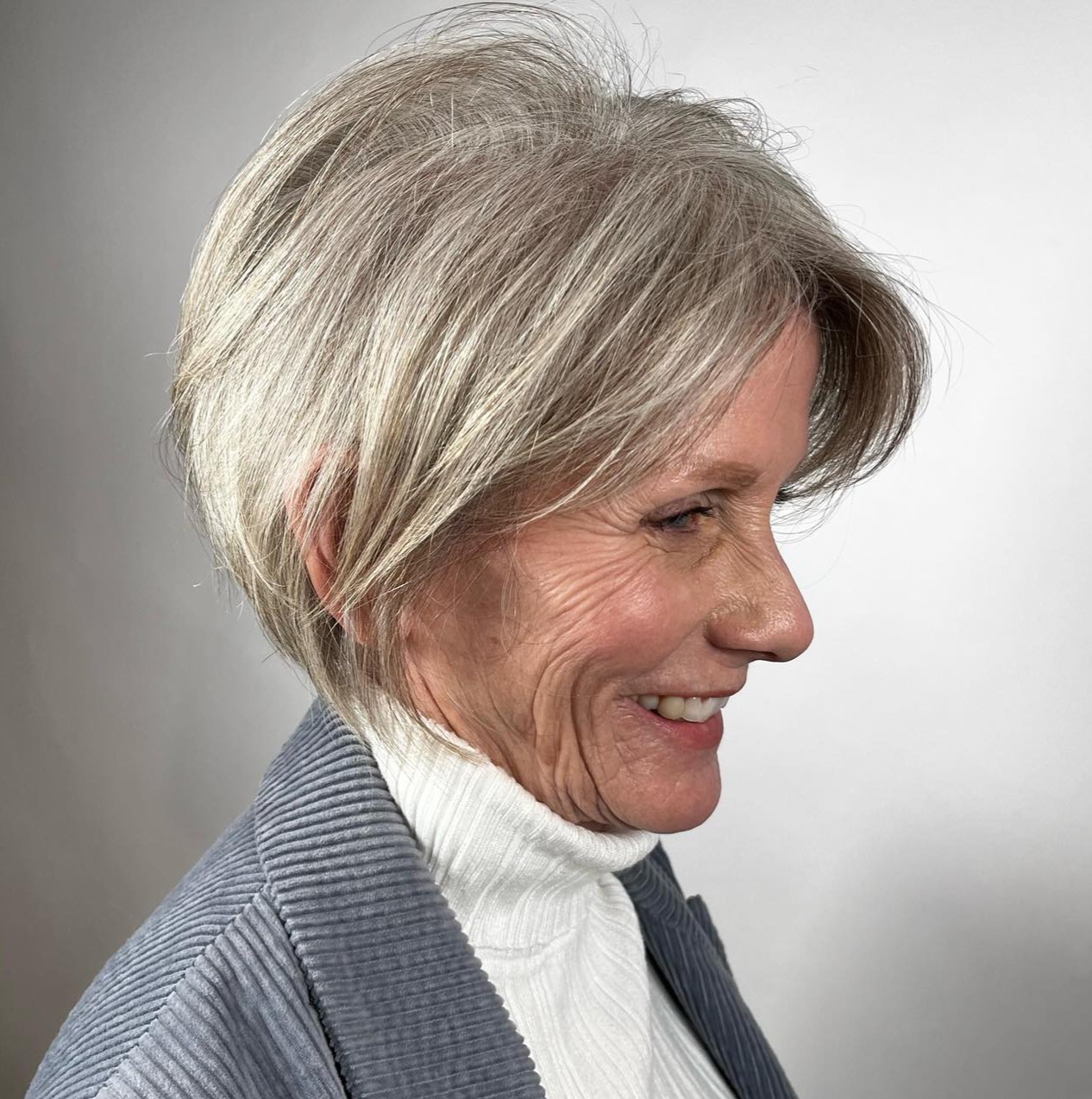
21. Icy White Shoulder-Length Lob
Hair that has transitioned to near-white reads almost like platinum blonde, with the right styling and a good cut, it looks more deliberate than any dyed alternative. A purple-toning shampoo once a week prevents any yellow cast from water minerals or sunlight.
22. Gray Balayage on Mid-Length Wavy Hair
Balayage on gray hair works in reverse of the traditional technique: the stylist brightens specific sections to create contrast within naturally multi-tonal gray rather than lifting dark strands. Discuss this specifically with a stylist experienced in working with natural gray, not just covering it.
23. Salt-and-Pepper Shag with Fringe
Salt-and-pepper hair shows beautifully in a shag, the color contrast between darker and lighter strands is amplified by the layering, creating a naturally dimensional result. This cut suits medium-to-thick hair best; very fine hair loses the texture when there isn’t enough density to support the layering.
24. Platinum White Cropped Bob
When hair goes fully white, a cropped bob with a graphic blunt perimeter reads as a deliberate style choice rather than one by default, and the jaw-grazing length keeps proportions balanced across multiple face shapes. A weekly toning shampoo prevents yellowing between salon visits.
Volume and Texture for Thinning Hair
Hair thinning at the crown, temples, or throughout is common after 70 and affects which cuts look their best. The techniques below are specifically chosen to create the appearance of density and lift. Understanding how layered cuts add volume and movement is useful context before deciding which of these approaches to discuss with your stylist.
Stylist tip: Request a dry consultation before any cutting begins. Seeing your hair in its natural state, not wet and elongated, gives your stylist an accurate picture of where density is concentrated and where the scalp is more visible, which directly affects placement of volume-building techniques.
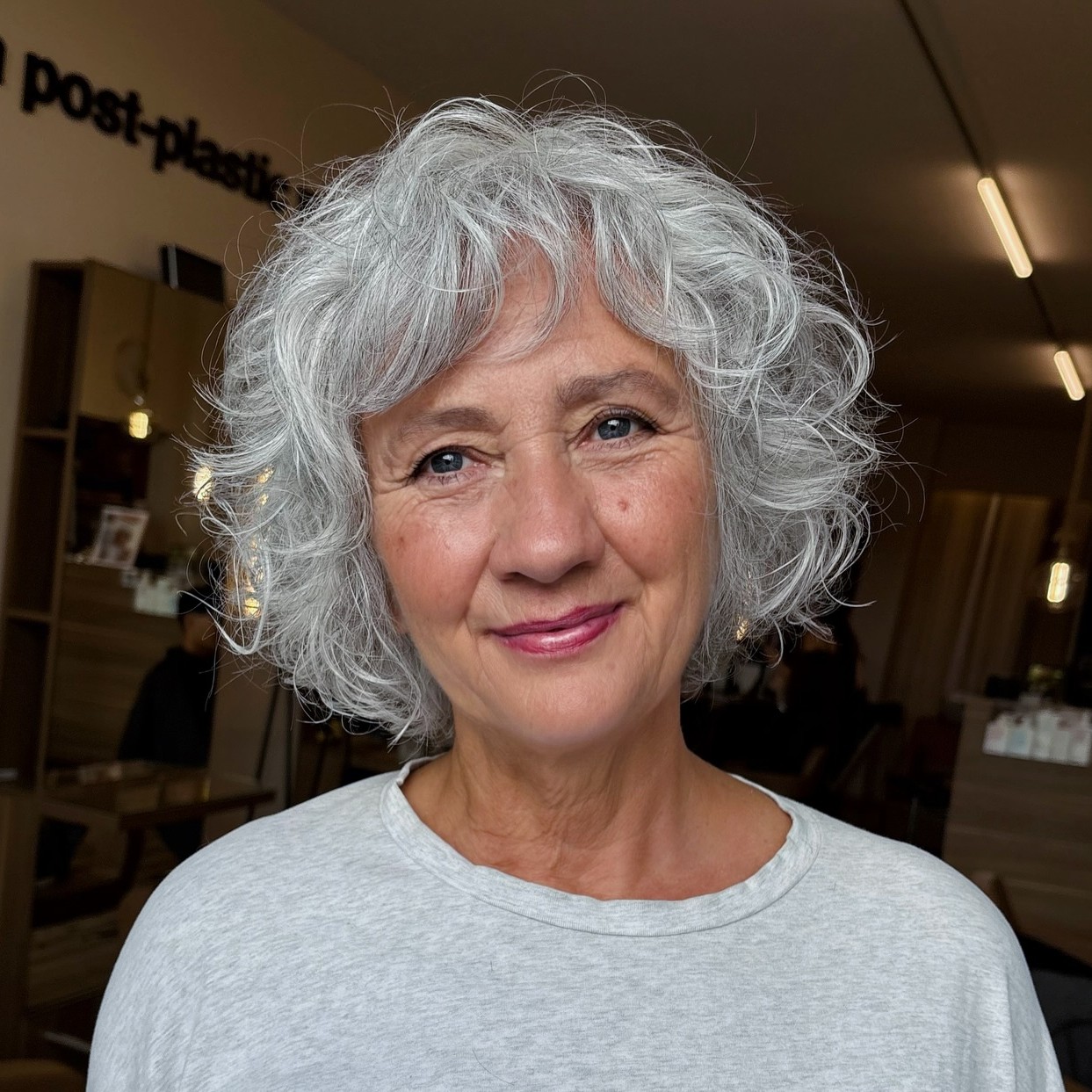
25. Feathered Bob with Internal Layering
Feathering, using thinning shears or a razor to remove weight from within the mid-shaft, creates movement and separation without removing length from the perimeter. On fine or thinning hair, this is more effective than traditional layering because it doesn’t expose sparse ends at the bottom of the cut.
26. Crown-Lifting Pixie for Flat Fine Hair
When hair lies flat at the crown regardless of product, the cut itself can solve the problem. Ask your stylist to keep two to three inches of length at the very top while keeping the sides and back short, the weight differential means the longer top section naturally lifts forward and upward rather than collapsing flat.
27. Soft Razor-Cut Bob for Volume
A razor creates beveled, slightly irregular ends that catch the light and appear thicker than the same bob cut with scissors. On fine silver hair, the ends look intentionally undone rather than sparse, though very straight fine hair may need a diffuser to fully activate the cut’s natural texture.
28. Wispy Layered Cut with Side-Swept Bangs
Side-swept bangs cover thinning at the hairline or temples, one of the most common areas of age-related thinning, while adding face-framing shape. Ask for bangs long enough to sweep fully to one side past the eyebrow; short curtain-style bangs may not cover the hairline effectively.
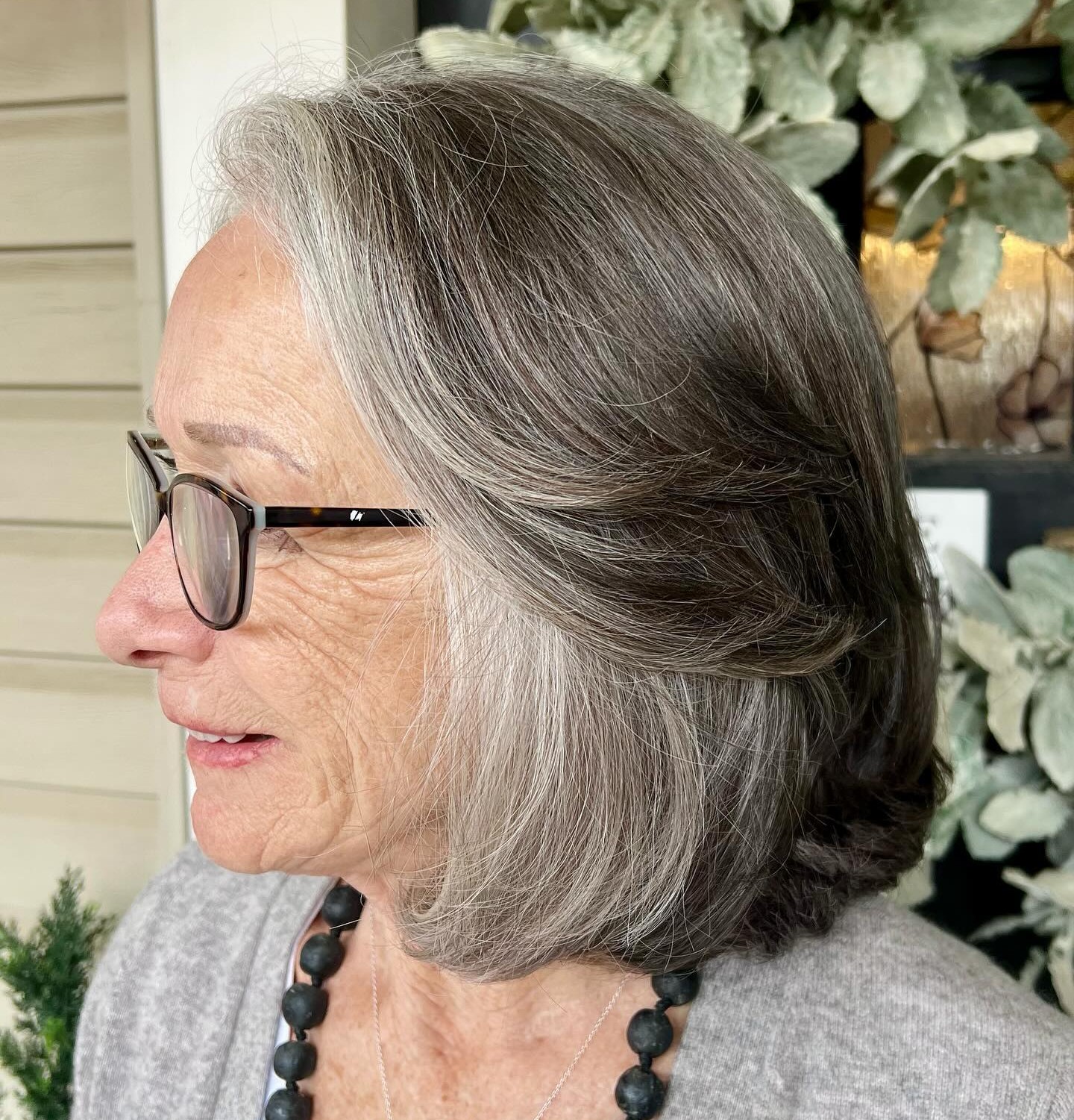
29. Textured Short Bob with Point-Cut Ends
Point cutting, angling the scissors into the ends rather than cutting straight across, creates irregular, feathered tips that reflect light and look fuller than blunt ends. On gray or white fine-to-medium hair, this is often the difference between a bob that looks sparse and one that looks healthy and intentional.
30. Airy Mid-Length Layers on Fine Gray Hair
Face-framing layers starting at chin level add movement to mid-length gray hair without removing overall length. The lightweight feathered layering here works better for fine hair than heavy classic long layers, the result is the illusion of fullness even when the hair itself is sparse.
FAQ
Common questions about hairstyles for women over 70, with specific answers.
What are the most flattering hairstyles for women over 70?
Chin-length bobs, tapered pixie cuts, and shoulder-length lobs consistently rank as the most flattering because they work with hair that has thinned or lost density. The key is finding the right variation for your face shape, an angled bob versus a blunt bob, for instance, rather than defaulting to a generic short cut.
Should women over 70 avoid long hair?
Not categorically, but hair past the collarbone after 70 often requires more effort to look intentional rather than unattended. A collarbone lob with soft layers is typically the longest style that still looks polished with minimal daily effort. Fine or thinning hair especially loses its shape and body at longer lengths.
Is gray hair harder to style than dyed hair?
Gray and white hair tends to be coarser and drier, which means it responds differently to products. Heavy creams weigh it flat; alcohol-based sprays cause frizz. Lightweight serums and clear gloss treatments work best for shine and texture control. A well-structured cut on natural gray needs very little daily styling beyond that.
What haircut is best for thinning hair after 70?
Short to medium cuts with internal layering or feathering consistently outperform longer styles for thinning hair. The crown-lifting pixie, feathered bob, and razor-cut bob in this gallery are each specifically chosen for this concern. Ask your stylist about volume-building technique, not just length, the cutting approach matters as much as where it lands.
How often do bobs and pixies need trimming after 70?
Every five to seven weeks for pixies and stacked bobs, the shorter the cut, the faster it loses its shape. Chin-length bobs can stretch to eight weeks. Lobs are the most forgiving at eight to ten weeks between trims. A maintenance trim takes around fifteen minutes, which is far less disruptive than a full cut appointment.
Are bangs a good idea for women over 70?
Soft bangs, side-swept or curtain-style, are genuinely useful for covering a thinning hairline and adding face-framing shape. Hard blunt fringes cut straight at mid-forehead look dated and require precise daily styling to stay neat. The bangs featured in this gallery all use the softer swept approach, which is more forgiving between salon visits.
Finding the right hairstyles for women over 70 comes down to matching the cut to the hair you have now, its current density, texture, and the natural silver or white that’s part of the picture. Bring two or three reference photos from this gallery to your next appointment, describe your actual morning routine, and ask specifically about volume-building techniques if thinning is your main concern. A cut that’s designed for your hair at this stage takes less time, less product, and less effort to look right every day.
Hair results vary based on individual hair type, density, texture, and condition. Always consult with a licensed hairstylist before making significant changes. Photos may show styled results that require professional tools to replicate.