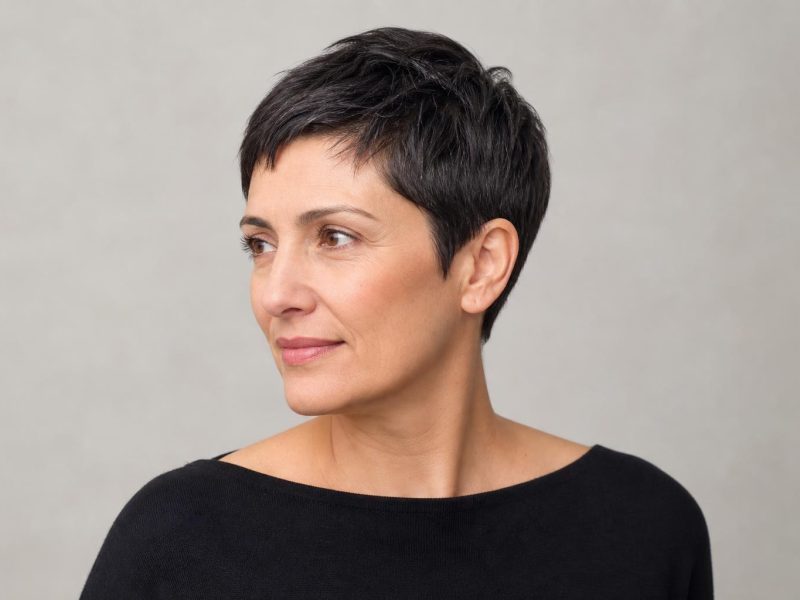

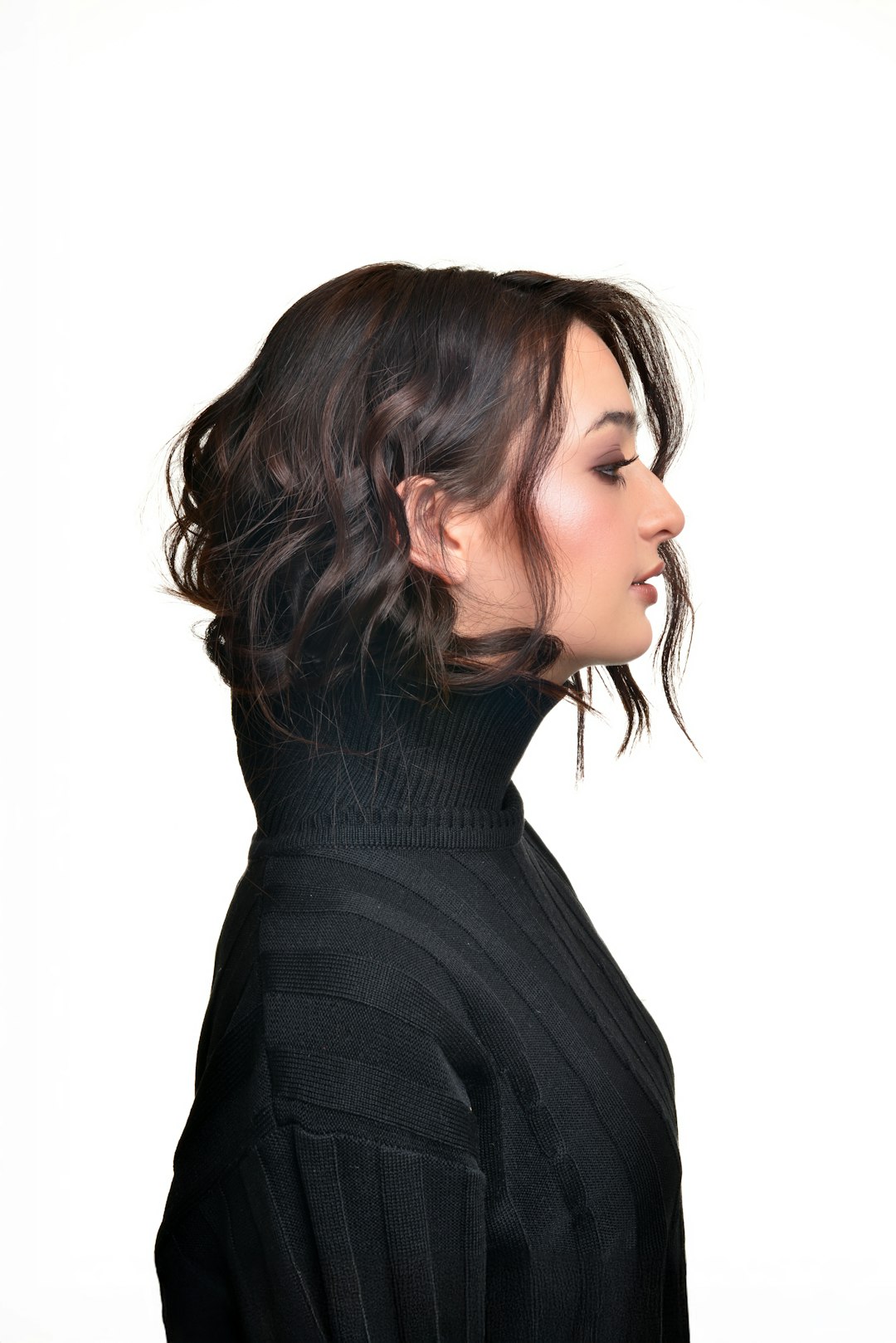
A chopped bob is cut, not styled — the piece-y, lived-in texture that defines it comes from how the stylist applies the razor or shears at the perimeter and mid-lengths, not from sea salt spray or a blowout technique.

The chopped bob is a short-to-medium bob cut where razor or point-cutting techniques are applied throughout the perimeter and mid-lengths to create separation, movement, and a deliberately undone finish. Unlike a blunt or classic bob, where all the ends land at the same point and produce a solid weight line, a chopped bob has ends that vary in length, feather slightly at the tips, and move independently of each other. The texture is built into the cut. Nothing you do with product replicates it on a blunt bob, and nothing you skip removes it from a properly chopped one.
This article explains what “chopped” means technically and how it differs from similar styles like the airy bob and the textured bob. It then covers 20 specific chopped bob variations from chin length through the shoulder zone. Use the face shape table and stylist script at the end to narrow down which version works for your hair type and proportions.
| Factor | Details |
|---|---|
| Best for | Fine to medium-thick hair; oval, heart, and square face shapes; anyone wanting texture without daily styling effort |
| Avoid if | Very frizz-prone or coarse hair (razor cutting can cause puffing rather than feathering); recently bleached or over-processed hair |
| Length range | Ear to shoulder; works across all bob lengths but shows best at chin to collarbone |
| Maintenance | Trim every 6–9 weeks; the textured perimeter grows out more gracefully than a blunt bob |
| Daily styling | 5 minutes or less on cooperative hair types; texturizing paste or salt spray; no heat required |
What the Chopped Bob Actually Is and What It Isn’t
The word “chopped” gets applied loosely online to any bob that looks undone, textured, or piece-y in photos. In cutting terms, it refers to a specific set of techniques that vary the perimeter length and remove weight at the ends rather than producing a clean, uniform line. Knowing the distinction helps you ask for it correctly and avoid walking out with a standard layered bob under a different name.
Razor Cutting and Point Cutting Produce the Chopped Effect Differently
A razor cuts through hair diagonally as it moves along the strand, producing ends that taper to a fine point rather than a blunt face. The result is fine, feathered tips that separate easily and catch light at different angles. Point cutting uses scissors held vertically at the perimeter, snipping into the ends rather than across them, which creates a similar piece-y separation but with slightly more control over exactly how much variation appears. Razor cutting gives more pronounced texture; point cutting gives a subtler version of the same effect. On frizz-prone or coarse hair, razor cutting can open the cuticle and cause puffing — point cutting is the safer technique in those cases. Both produce a chopped bob; your hair type determines which the stylist should use.
Stylist tip: If you’re asking for a chopped bob for the first time, let your stylist choose between razor and point cutting based on how your hair behaves when it dries. Bringing a reference photo and asking for “piece-y, textured ends that look lived-in” gives them the freedom to use the right tool for your specific texture rather than a technique that may not suit your hair.
The Chopped Bob Sits Between the Airy Bob and the Textured Bob
Three styles get confused regularly. A textured bob is typically blunt-cut and then processed with thinning shears internally, creating a softer silhouette at the surface without varying the perimeter length itself. A airy bob focuses on removing weight and density throughout the mid-lengths and ends for maximum lightness, prioritizing movement over visible texture at the edge. The chopped bob sits between them: it varies the perimeter itself through razor or point cutting, producing visible, intentional unevenness at the ends rather than just internal weight removal. Of the three, the chopped bob has the most visible edge texture and the most obviously “undone” silhouette.
Chin and Ear-Length Chopped Bobs (Ideas 1–8)
Short chopped bobs are where the technique shows most clearly: with less weight pulling the ends down, the piece-y quality at the perimeter is visible from the front and stays visible through the day without restyling. These eight variations cover the main cutting angles and hair type considerations at the shortest bob lengths.
1. Classic Razor-Cut Chin-Length Chopped Bob
The stylist applies a feather razor across the final inch of each perimeter section, removing weight strand by strand and producing ends that vary in length by up to 1/4 inch. On straight hair at this length, the piece-y quality is most visible when the hair is air-dried and falls naturally without any product weight pulling the ends together. This is the foundation version of the chopped bob from which most of the variations below are built.
2. Round-Face Chin-Length Chopped Bob with Side Part
Round face shapes benefit from vertical line over horizontal width, and the chin-length chopped bob delivers this through end movement rather than through a geometric silhouette. A deep side part creates asymmetry that draws the eye diagonally from forehead to jaw rather than across the widest part of the face. Keep layers concentrated below the ear to avoid adding visual width at the cheekbones, where round faces carry the most fullness.
3. Fine-Hair Point-Cut Chopped Bob at Chin Length
Fine hair gets a measurable benefit from a chopped perimeter over a blunt one: the separated, variable ends distribute the strands across a wider visual area rather than stacking them in a single dense mass that can read as thin. A blunt bob on fine hair shows the color saturation of every strand at one point; a chopped bob separates those strands so the perimeter looks fuller and more three-dimensional. Ask for point cutting specifically at fine hair — a razor removes too much weight and can make very fine ends look sparse.
4. Salt-Spray Air-Dry Chopped Bob
Work a quarter-sized amount of salt spray through damp hair section by section, scrunching each section upward, then let the hair finish on its own without touching it. Once dry, press a pea-sized amount of texturizing paste between your palms and press it through the ends only — not the roots or mid-lengths. The goal is to separate any sections that dried fused together while leaving everything else where it fell; the less you intervene after the spray, the more the cut’s natural texture shows through.
5. Grow-Out-Friendly Ear-Length Chopped Bob
At ear length, the chopped bob’s textured perimeter continues to provide visual interest through the grow-out toward chin length in a way a blunt ear-length bob doesn’t. A blunt bob at ear level develops an obvious horizontal grow-out line by week 5 or 6; the chopped version’s variable perimeter absorbs several weeks of growth before the texture starts looking unintentional rather than deliberate. Most clients at this length refresh every 8–9 weeks, which is notably longer than the 5–6 weeks a blunt short bob demands.
6. Copper Chin-Length Chopped Bob with Money Pieces
Warm copper and auburn tones make the piece-y perimeter of a chopped bob more visible through color contrast: the separated ends catch light differently from the interior sections, and each individual piece shows as a distinct unit. Money pieces (a face-framing section lightened a few shades at the front) add extra definition exactly where the bob’s movement is most visible as the hair swings and settles. Copper fades from the ends first, which over 6–8 weeks creates a softer, lighter perimeter that subtly reinforces the chopped look.
7. Asking for a Chin-Length Chopped Bob with Bangs
Pair the chopped bob with a curtain fringe using the same point-cut finish across the ends of the bang sections for a cohesive texture throughout the front of the style. Ask your stylist to “match the texture of the fringe to the perimeter. I don’t want the bangs looking blunt while the rest of the cut is piece-y.” A curtain fringe at eyebrow level works well with this combination; a heavy blunt bang sits too heavily and cancels the light quality the chopped technique creates everywhere else.
8. Chopped Bob vs. Textured Bob
A textured bob is blunt-cut at the perimeter and then thinned internally with thinning shears, creating a softer silhouette without actually varying the outer edge. The surface of a textured bob looks cleaner in still photos; the surface of a chopped bob shows more obvious variation at the tips. In motion, the chopped bob has more visible separation and piece-y movement; the textured bob moves more as a unit. If you want a look that’s clearly undone and tactile, the chopped version delivers it more directly. If you want texture that reads as polish rather than undone, the textured bob is closer to that outcome.
Jaw-Length Chopped Bobs (Ideas 9–14)
Jaw length gives the chopped technique more perimeter to work across, producing a fuller and slightly more complex result than the same cutting method at chin or ear length. These six variations cover the main technical approaches and style considerations at this mid-length zone.
9. Combined Razor and Point-Cut Jaw-Length Chopped Bob
At jaw length, a skilled stylist may use both techniques in one cut: razor cutting at the perimeter for the most visible piece-y texture, and point cutting deeper in the mid-lengths for invisible internal weight removal that keeps the overall silhouette from going boxy. The two methods work different problems simultaneously, and the combination produces more interior lightness than point cutting alone while controlling the texture more precisely than razor cutting alone would allow.
10. Square-Face Jaw-Length Chopped Bob
Square faces have strong, defined jawline corners that a blunt jaw-length bob tends to echo and emphasize. A chopped perimeter at this length softens those corners through movement and variation rather than through a structural angle or specific silhouette adjustment. Keep the layers sweeping slightly toward the face so the ends frame the jaw from the front; a side part with asymmetric framing shifts focus from the squareness of the jaw to the overall flow of the hair.
11. Thick-Hair Jaw-Length Chopped Bob
Thick hair in a standard jaw-length bob can sit heavy and rigid, particularly through the sides and behind the ears. Interior slide cutting removes the bulk that creates that stiffness without shortening the exterior length, while the chopped perimeter eliminates the solid outer edge that makes thick bobs look block-shaped. Hold back aggressive thinning from the final 1/2 inch of the perimeter; over-thinning the outermost layer of thick hair produces sparse-looking, frayed ends rather than clean piece-y texture.
12. Diffuser-Dried Wavy Jaw-Length Chopped Bob
Natural waves and the chopped technique reinforce each other at jaw length: the wave pattern creates its own variation in the sections, and the razor or point-cut ends allow each wave to define itself without clumping at a dense perimeter. Diffuse on medium heat until about 85 percent dry, then press sections gently between your palms rather than scrunching further. The less friction during the last stage of drying, the more the chopped ends stay separated rather than re-fusing into smooth clumps.
13. Jaw-Length Chopped Bob for a Natural Grow-Out
As a jaw-length chopped bob grows toward the collarbone, the layered, textured ends carry the movement into the longer length rather than creating a hard weight line that makes the grow-out look untidy. A minimal “dusting” trim every 8–9 weeks removes split ends from the razor-cut or point-cut sections without giving up the length progress. Clients growing a bob to a lob often find the chopped version much easier to grow out than a blunt bob, which develops a solid horizontal line at the old perimeter level that can look awkward for weeks.
14. Dark Brunette Jaw-Length Chopped Bob
Dark brunette hair shows the texture of a chopped perimeter through the way the separated ends catch light differently at different angles. Unlike lighter hair, where the perimeter texture is visible as a color variation, dark hair shows it through contrast between the lit and shadowed tips as the bob moves. Avoid heavy gloss treatments that seal the cuticle completely; a slightly matte, rough cuticle on the perimeter ends is what gives the separated pieces their distinct edges and keeps the chopped quality visible after styling.
Collarbone and Shoulder-Length Chopped Bobs (Ideas 15–20)
At longer lengths, the chopped technique requires a more precise approach to maintain visible texture: more hair weight means the razor or point-cut ends tend to fall together unless the stylist works in finer sections. These six variations show how the chopped quality adapts from collarbone length through the shoulder zone.
15. Asking for a Collarbone Chopped Lob
The most precise brief for a stylist at this length: “I want a collarbone-length bob with point-cut or razor-finished ends throughout, long internal layers that don’t show at the surface, and a deliberately piece-y perimeter. No blunt line at the ends at all.” This distinguishes the chopped lob from a standard layered lob (which has visible layer lines) and from a blunt lob (which has a solid, defined edge). The “long internal layers” specification is important. Without it, the stylist may cut short internal layers that create disconnected sections rather than continuous movement.
16. Chopped Lob vs. Airy Bob at Collarbone Length
Both styles use texturing techniques at the perimeter to create light, undone movement, but they target different outcomes. The airy bob prioritizes removing as much weight as possible throughout the full length for maximum lightness and movement as a unified piece. The chopped lob retains more interior weight and concentrates the texture at the ends, producing more noticeable perimeter variation while keeping the hair’s overall body. For medium to thick hair that would lose too much structure from full-length weight removal, the chopped approach holds its shape better through the day.
17. Small-Section Razor Work on a Shoulder-Length Chopped Bob
At shoulder length, maintaining visible chopped texture requires the stylist to work in narrower sections than at shorter lengths. More hair weight at this length pulls the razor-cut ends back toward a smooth, blended finish unless the stylist keeps sections fine enough that the texture holds on its own. Ask the stylist to check the result on dry hair in natural light before finishing; the perimeter texture changes noticeably between wet and dry, and adjustments made after drying stay where they’re intended rather than correcting the wrong zone.
18. Heart-Face Collarbone Chopped Lob
Heart-shaped faces, with a wider forehead tapering to a narrower chin, benefit from visual fullness at the jaw and collarbone level. A collarbone chopped lob delivers this without adding mass: the piece-y perimeter creates perceived width through separation and movement rather than through volume. Keep the layers concentrated in the lower half with a more solid crown interior; layers that start at crown level add visual interest where the forehead is already wide, which is the opposite of what a heart face needs.
19. Wavy-Hair Collarbone Chopped Lob Cut Dry
Wavy hair that’s cut wet rebounds to a shorter, more textured length than where the wet strands fell, which means the stylist is making cutting decisions on an approximation. Ask specifically for a dry cut on wavy hair: the stylist sees exactly how each section sits at its natural length, where the wave peaks and valleys are, and how the chopped texture will read once the hair settles. On wavy hair cut dry, the perimeter texture integrates with the wave pattern seamlessly; cut wet, the result may look right on wet hair and too short or misaligned once the waves return. A layered bob cut dry follows the same principle.
20. Minimal-Product Finishing for a Collarbone Chopped Lob
Air-dry fully, then use fingers only to separate any sections at the perimeter that dried fused together. A pea-sized amount of lightweight pomade pressed between palms and applied to the ends (not smoothed through) adds just enough definition without collapsing the piece-y texture into a single smooth mass. The most common mistake with a chopped lob is reaching for a brush or paddle at the end of drying; brushing through the perimeter smoothes the ends back to a near-blunt finish, undoing exactly what the razor or point cutting created.
Face Shape Guide for the Chopped Bob
The chopped bob’s undone perimeter makes it more flexible across face shapes than a blunt bob, because the textured edge doesn’t rigidly echo the face’s angles. That said, length and layer placement still need to be adjusted to get the best proportional result.
| Face Shape | Best Length | Key Adjustment | Avoid |
|---|---|---|---|
| Oval | Any length; most adaptable | No modification needed; all variations work | Nothing specific |
| Round | Chin length or longer | Side part; layers sweeping toward jaw, not outward at cheekbones | Ear-length with center part; heavy volume at cheekbone level |
| Square | Jaw to collarbone | Layers framing the jaw with movement; side part for asymmetry | Blunt jaw-length version that reinforces the angular jawline |
| Heart | Chin to collarbone | Layers concentrated in the lower half; full crown avoids adding width at forehead | Heavy volume at crown level; very short versions that narrow the chin |
| Oblong | Chin to jaw; shorter adds width | Maximize side movement at cheekbone level; center part | Long collarbone versions that elongate further |
| Diamond | Jaw to collarbone | Perimeter texture at jaw level balances wide cheekbones; avoid wide layering at cheekbone height | Wide feathering at the widest cheekbone zone |
What to Tell Your Stylist
The word “chopped” may or may not land with your stylist as a clear technical brief. Leading with the technique and the outcome you’re after gives them the information they need regardless of the term.
For the cut: “I want a bob with a razor-finished or point-cut perimeter, not a blunt edge. I want the ends to be piece-y and slightly varied in length so the style looks lived-in. I don’t want internal layers that show — if there’s layering, I want it hidden inside. The result should look undone, not like I forgot to brush it.”
For texture and weight: “Please don’t over-thin the interior. I want the piece-y quality at the ends, but I still need enough weight in the mid-lengths for the bob to hold its shape. Take the texture to a medium level, not heavy.”
Stylist tip: Ask the stylist to check the result on dry hair before finishing. The perimeter texture on a chopped bob looks completely different on wet, extended hair than it does once the hair dries and the cut settles. Adjustments made dry address the actual result; adjustments made wet correct something the stylist can’t fully see yet.
When the Chopped Bob Doesn’t Work
The chopped technique depends on the hair’s ability to hold a razor or point-cut edge without fraying, puffing, or collapsing. Some hair types and conditions make that result impossible regardless of the stylist’s skill.
- Very frizz-prone or coarse hair: Razor cutting opens the hair cuticle, and on frizz-prone hair that opening never fully closes; the perimeter puffs rather than feathers. Point cutting at the perimeter is safer, but on very coarse or highly frizzy hair, even point-cut ends can swell rather than separate. A curved bob with a smoother finish works better for coarse hair types that don’t hold a feathered edge.
- Bleached or over-processed hair: Fragile, weakened hair ends don’t taper cleanly with a razor; they break mid-shaft instead of tapering to a point, producing a ragged perimeter that looks damaged rather than intentionally chopped. Bring the hair back to a healthier state with protein treatments before attempting a razor-cut finish.
- Tightly coiled or 4a–4c curl patterns: The chopped technique was developed for straight to wavy hair and doesn’t translate the same way to tight coil patterns, where shrinkage affects the final perimeter length significantly and the coil’s natural spiral overrides the feathering effect at the tips. Consult a stylist experienced with your specific curl pattern before requesting a razor or point-cut perimeter on coily hair.
- Anyone wanting a polished, precise finish: The chopped bob’s intentionally undone quality is inseparable from the technique. If you prefer a silhouette that holds its shape throughout the day and looks the same after an hour as it did right after styling, a blunt bob or a structured graduated bob is closer to that outcome. The chopped version moves, shifts, and varies across the day by design.
FAQ
Common questions from people researching the chopped bob before booking.
Is a Chopped Bob the Same as a Choppy Bob?
The terms are often used interchangeably, but “choppy bob” is an aesthetic description: a bob that looks rough, layered, or heavily textured — while “chopped bob” in a salon context refers to the specific technique of razor or point cutting the perimeter. A choppy bob could be created by heavy layering, thinning shears, or a blunt cut with specific styling; a chopped bob specifically uses the cutting technique at the perimeter. When talking to your stylist, “chopped bob” is the more useful technical term.
Can I Get a Chopped Bob if My Hair Is Naturally Straight?
Yes, and straight hair often shows the chopped effect most clearly because there’s no wave pattern to blend the perimeter variation. The piece-y ends and varied tip lengths are visible and distinct on straight hair in a way that wavy or curly hair sometimes obscures. Air-drying amplifies the effect on straight hair; blow-drying smoothes it slightly. If you want maximum visible texture, finish with fingers rather than a brush.
How Is a Chopped Bob Different from a Shag?
A shag haircut uses multiple visible, distinct layers throughout the length with curtain bangs and significant interior layering. The chopped bob applies texture at the perimeter while keeping the interior largely intact; the layers, if any, are long and hidden rather than short and visible. A shag has an unmistakably layered silhouette from all angles; a chopped bob looks more like a bob with textured ends than a fully layered cut.
How Often Does a Chopped Bob Need Trimming?
Most chopped bobs stay looking intentional for 6–9 weeks, longer than the 5–6 weeks most blunt bobs require. The variable perimeter absorbs growth more gracefully because there’s no single hard line to maintain. Very short versions at ear length need refreshing at the shorter end of that range; collarbone-length chopped lobs can often go the full 9 weeks before the ends start looking too grown-out to read as deliberately textured.
Can I Color-Treat Hair Before Getting a Chopped Bob?
You can, but the order matters. If the color involves bleaching, do the bleach first and let the hair recover with protein treatments before the razor or point-cut perimeter. Bleached hair is softer and more porous, and razor cutting on recently bleached strands can cause breakage at the tips rather than a clean taper. If you’re doing a single-process color with no bleaching, the order is flexible; many stylists prefer to cut before coloring so the freshly cut perimeter gets an even color application.
What Products Work Best with a Chopped Bob?
Lightweight texturizing products work with the cut rather than against it: salt spray applied to damp hair before air-drying, or a small amount of texturizing paste pressed through the dry ends to separate pieces. Avoid heavy creams, serums, and oils on the perimeter; they coat the razor-cut tips and pull the separated ends together, removing the piece-y quality the technique created. The lighter the product, the more the cut shows through. On days when nothing else works, dry shampoo on the roots and nothing on the ends is a better choice than a heavy finishing product.
The chopped bob is one of the few haircuts where doing less is genuinely better: the fewer products applied and the less heat used, the more the razor or point-cut texture comes through. A well-executed chopped bob on compatible hair looks more considered the day after washing, once the weight of freshly cleaned hair has settled, than it does straight out of the salon.
Hair results vary based on your natural hair type, texture, density, and condition. Always consult with a licensed hairstylist before making significant changes, especially with chemical treatments or dramatic length changes. Photos may show styled results that require professional tools and products to replicate.