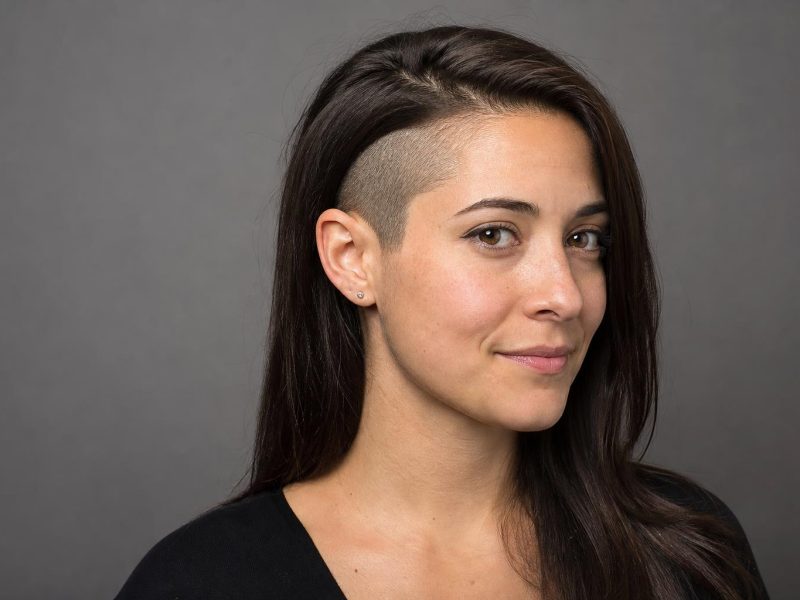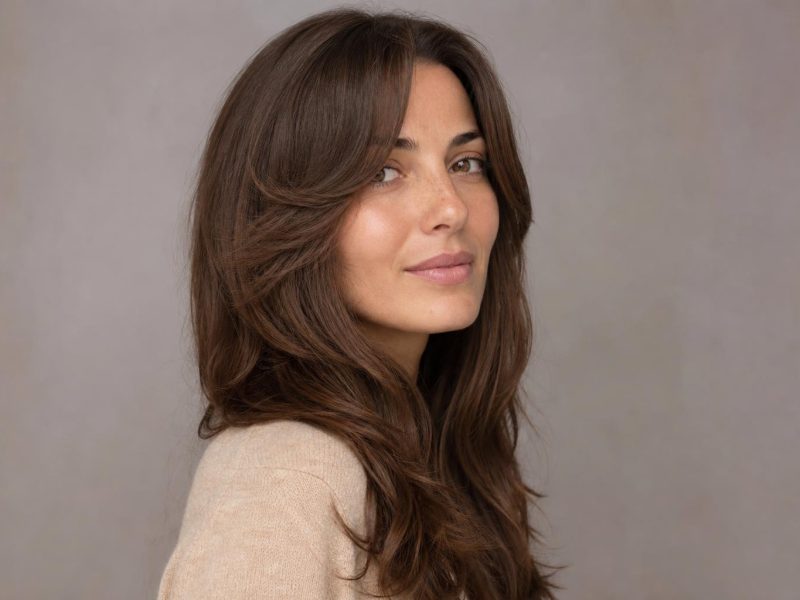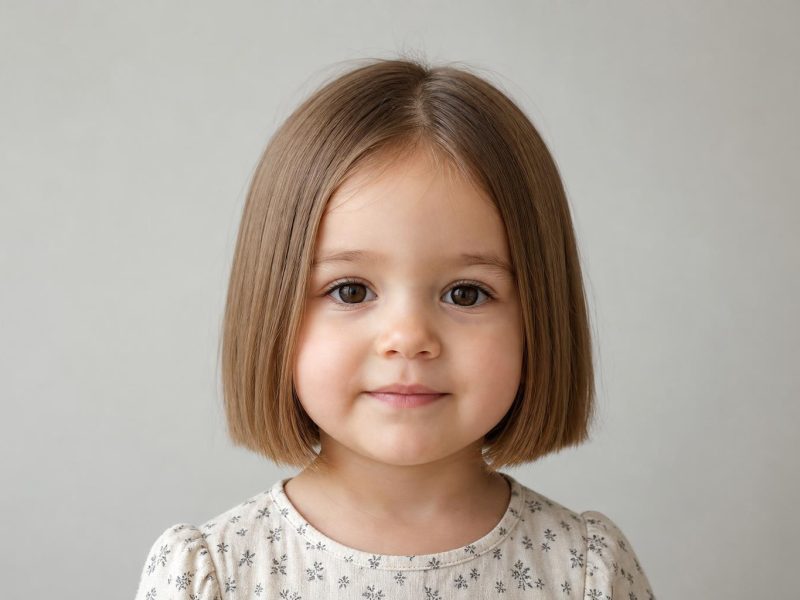


The kitty cut lands right where a wolf cut feels too choppy and a plain lob feels too flat: soft feathered layers and a curtain fringe that frames the face without the mess.

A kitty cut is a collarbone-length lob built on fine, face-framing layers and a soft curtain fringe, and these 30 ideas show the full range of the trend across straight, wavy, curly, fine, and thick hair. The layering stays gentle rather than stacked, so the shape grows out without the awkward flip a heavier cut leaves at the nape. It works best on anyone who wants movement and a little face-framing softness but does not want the daily texturizing a shag demands. For the full breakdown of how the cut is built and where it came from, our kitty cut explainer and origin story covers the technique in depth.
The ideas below are grouped by length and shape, then by fringe style, then by hair texture, and finally by color, so you can jump to the section that matches your goal. After the gallery you will find a face shape compatibility table, the exact words to give your stylist, a realistic maintenance and styling breakdown, and an honest section on when this cut is not the right call. Every entry names a specific variation and who it suits, so a quick scroll gives you a short list to bring to your appointment.
| Factor | Details |
|---|---|
| Best for | Oval, round, and heart faces; fine to medium hair wanting soft movement |
| Length | Collarbone to just below the shoulder, with layers starting near the chin |
| Maintenance | Trim every 8 to 10 weeks; 5 to 15 minutes of daily styling |
| Avoid if | You want a sharp, edgy silhouette or zero fringe upkeep |
| Salon time | 45 to 75 minutes for a cut, longer with color |
Kitty Cuts by Length and Shape
Length is the first decision, and the kitty cut has a comfortable window between the chin and just past the collarbone. Shorter versions read as a lob with attitude, while longer ones keep the layering subtle so the shape stays soft. These first entries walk through that range so you can match the length to your styling patience and how much hair you want to keep.
1. Classic Collarbone Kitty Cut
Ending right at the collarbone, this is the baseline version most stylists picture when they hear the term. Feathered layers begin near the jaw and fall in soft steps toward the ends, giving the shape gentle bounce. Center-parted curtain pieces frame the cheekbones and blend straight into the length with no hard line.
2. Shoulder-Grazing Long Kitty Lob
Cut to skim the top of the shoulders, this longer take keeps more weight for anyone nervous about going short. The layering stays light so the ends still feather rather than sit blunt. People with heavier hair like this length because it holds the curtain shape without collapsing by midday.
3. Chin-Grazing Mini Kitty Cut
A shorter reading of the trend, this one brings the perimeter up to the chin while keeping the signature soft fringe. The higher layers add lift through the crown, which flatters anyone with a longer face who wants width at the sides. Point-cut ends stop the shorter length from looking severe.
4. Rounded Long Bob with Soft Layers
If your stylist does not know the trend name, this is the cut to describe: a long bob with rounded, invisible layers rather than stacked ones. The rounded perimeter curves gently toward the face instead of hanging straight, giving a slightly more polished edge than the choppier variations. It draws a natural comparison to a collarbone bob shaped for everyday wear, just with more feathering through the ends.
5. Asymmetric Angled Kitty Cut
Here the front pieces fall a touch longer than the back, creating a subtle forward angle that draws the eye toward the face. The layers still feather, so the angle feels soft rather than graphic. Anyone who likes a little structure without a full A-line will find this a comfortable middle ground.
6. Blunt-Perimeter Kitty with Internal Layers
For thicker hair that thins out too fast with surface layering, this version keeps a fuller perimeter and hides the movement inside. The blunt outer line preserves density while internal layers remove enough bulk to let the fringe do its work. Ask for the layering to stay above the mid-shaft so the ends keep their weight.
Kitty Cuts by Fringe and Face-Framing
The fringe is what separates a kitty cut from an ordinary lob, and the style of that fringe changes the whole personality of the look. Curtain pieces can be long and cheekbone-grazing or short and wispy, parted in the center or swept to the side. This section covers the fringe variations that pair most naturally with the feathered layering.
7. Center-Parted Curtain Fringe
The most recognizable pairing, a center part with curtain pieces that sweep away from the nose on both sides. The fringe blends into the face-framing layers so there is no obvious start or stop point. Bring a photo and ask for the two front pieces to graze the cheekbones for the softest frame.
8. Wispy Bottleneck Fringe
A bottleneck fringe pulls in tighter at the center and flares wider at the sides, mimicking the shape of a bottle neck. On fine hair the wispy density keeps the fringe from looking heavy or flat against the forehead. This shape flatters a wider forehead by adding a soft vertical break down the middle.
9. Side-Swept Curtain Pieces
Not everyone wants a center part, and swapping to a deep side sweep gives the same face-framing effect with more volume on one side. The longer pieces drape across the forehead and tuck into the layers behind the ear. People growing out old bangs love this because it uses that awkward length instead of fighting it.
10. Cheekbone-Length Face Framing
When the fringe pieces stop at the cheekbones, they highlight the upper face and open up the eyes. This length is short enough to notice but long enough to tuck back on days you want it out of the way. It works especially well for heart-shaped faces, where fullness at cheekbone level balances a narrower chin.
11. Long Curtain Fringe Past the Chin
For a barely-there fringe, the curtain pieces can run all the way past the chin and simply melt into the front layers. This is the lowest-commitment way to try the trend because there is almost nothing extra to style. Longer faces benefit here, since the extended pieces avoid adding the width that a shorter fringe creates.
12. Micro Curtain Fringe for Bold Framing
A shorter, more defined curtain fringe brings the framing higher and makes more of a statement. The pieces sit closer to the brow, so the feathered ends need point cutting to stay soft rather than blunt. This is the version to skip if you dislike touching up bangs, since it shows grow-out within a couple of weeks.
Kitty Cuts by Hair Texture
One of the trend’s real strengths is how far it stretches across textures, from pin-straight to loose curls. The layering technique shifts to match, and so does the way the fringe behaves once it dries. These entries show how the same core shape translates onto different hair types so you know what to expect from your own texture.
13. Fine Straight Kitty Cut
Fine straight hair gets a clean version of this shape because the feathered layers show up clearly without any product. Keep the layering conservative so you do not thin out already-delicate ends; a lighter touch preserves the fullness fine hair needs. If your strands run especially fine, our guide to an airy bob built for delicate hair shares layering tricks that carry straight over.
14. Tousled Wavy Kitty Cut
Natural waves and a kitty cut are a easy match, since the layering gives the waves somewhere to break and bend. Scrunch a texturizing spray into damp hair and either air-dry or diffuse for that lived-in finish. The fringe on wavy hair tends to want a quick round-brush pass so it does not wave in a different direction than the length.
15. Soft Curly Kitty Cut for Loose Curls
Looser 2c to 3a curls carry this shape well when the cut is done dry so the stylist can see where each curl actually lands. Shrinkage means the collarbone length should be cut a touch longer to account for the lift. Curtain pieces on curly hair are best left slightly longer, since a short curly fringe can spring up higher than planned.
16. Thick Hair Kitty Cut with Weight Removal
Thick, dense hair needs internal weight removed so the feathered layers do not pile into a pyramid shape. Ask for point cutting and internal texturizing rather than heavy surface layers, which keeps the perimeter clean while thinning the interior. The payoff is a shape that finally moves instead of sitting like a helmet.
17. Medium-Density Everyday Kitty Cut
Medium hair is the most forgiving texture for this cut, holding the shape with minimal fuss. The layers feather naturally, and the fringe usually falls into place after a rough dry with your fingers. Most people in this density range can stretch trims a little longer than the fine or curly crowd.
18. Coarse Hair Kitty Cut with Smoothing Layers
Coarse hair benefits from longer, blended layers that keep the ends from puffing out at the sides. A smoothing cream on damp lengths tames the natural volume so the feathering stays soft rather than wide. Coarse textures should ask the stylist to leave a little more length than the reference photo suggests, since this hair type falls fuller than fine hair at the same cut.
Kitty Cuts by Color and Styling
Color and styling are where a kitty cut goes from a solid cut to a personal one, and the feathered layers give color placement real dimension to play with. Face-framing highlights catch the light along the fringe, while a lived-in style shows off the movement the layers build. These final entries pair the cut with color and finishing ideas.
19. Honey Balayage Kitty Cut
Soft honey balayage painted through the mid-lengths lights up the feathered layers and adds warmth around the face. The gradual color melt keeps regrowth gentle, so touch-ups stretch to every 10 to 12 weeks. Warm tones like this flatter medium and deeper skin tones especially well.
20. Cool Ash Brown with Face-Framing Money Pieces
A cool ash brown base with brighter money pieces at the front makes the curtain fringe the star of the whole cut. The lighter front sections draw the eye toward the face and emphasize the framing. Because the brightness stays near the surface, this look grows out without an obvious line.
21. Sun-Kissed Blonde Feathered Ends
Lighter ends on a darker root give the feathered layers a natural, sun-lifted glow. The color concentrates where the layers feather most, so movement and brightness land in the same place. Keep in mind that blonde ends need a bond-repair routine to stay soft through the styling this cut invites.
22. Rich Copper Kitty Cut
A bold copper brings serious warmth, and the feathered layers keep the color from reading flat. Copper is a genuine standout on this shape, catching light along every layered edge. The trade-off is upkeep, since copper pigment softens within a handful of washes and wants a color-depositing conditioner between salon visits.
23. Sleek Straight Styled Kitty Cut
Blow-dried smooth with a round brush and finished with a flat iron, the kitty cut turns polished enough for the office. Smoothing serum on the ends controls flyaways and lets the feathered layers lie clean. This finish suits anyone who wants the trend without the tousled, undone vibe most photos show.
24. Air-Dried Lived-In Kitty Cut
Skipping heat entirely, this version leans on the cut’s natural feathering with a little texturizing spray worked through damp hair. The result is a soft, undone finish that gets better as it dries down through the day. It is the lowest-effort way to wear the style and the reason so many people call it low maintenance.
25. Diffused Textured Kitty Cut
A diffuser on low speed encourages the layers and any natural bend without frizzing the fringe. Work a curl cream through damp hair first, then cup sections into the diffuser to build soft volume. This styling route gives fine and wavy hair the most body for the least tool time.
26. Voluminous Blowout Kitty Cut
For special occasions, a full blowout lifts the roots and bends the ends inward for a bouncy, rounded finish. A medium round brush and a volumizing mousse at the roots do most of the work. The feathered layers hold this shape longer than a blunt cut would, since there is less weight pulling the volume down.
27. Deep Side Part Kitty Cut
Shifting the part off-center adds instant volume and a bit of asymmetry to the soft shape. The heavier side sweeps across the forehead and blends into the curtain pieces for a fuller frame. This styling trick is the fastest way to add drama to the cut without changing a single layer.
28. Tucked-Behind-the-Ear Everyday Style
One side tucked behind the ear shows off the layered length while keeping the fringe soft on the other side. It is a five-second styling move that works because the feathered layers hold the tuck without pins. Great for anyone who wants an effortless look that still feels finished.
29. Pinned-Back Half-Up Kitty Cut
Pulling the top section back into a small clip leaves the curtain fringe out to frame the face. The half-up shape keeps the length off your neck on warm days while preserving the cut’s softness up front. This is a practical option that proves the shape is versatile, not just wear-it-down.
30. Glossy Wet-Look Kitty Cut
A slicked, glossy finish through the lengths turns the soft cut sharp and modern for an evening out. Work a shine oil or gel through damp hair and comb the layers into a clean, wet-look drape. Because the cut is feathered rather than blunt, the wet look stays soft at the ends instead of looking severe.
How to Choose the Right Kitty Cut for Your Face Shape
Face shape decides where the fringe should fall and how much length you want to keep at the sides. The soft layering flatters most faces, but the fringe length and part placement are what make it truly yours. The table below matches each shape to the fringe and length that balance your proportions best.

| Face Shape | Best Variation | Ideal Length | Avoid |
|---|---|---|---|
| Oval | Almost any version; center curtain fringe | Collarbone with chin-level layers | Very heavy fringe that hides balanced features |
| Round | Longer side-swept curtain pieces | Just below the shoulder for length | Short center fringe that widens the face |
| Square | Soft feathered layers, wispy fringe | Collarbone with softening layers | Blunt perimeter that echoes a strong jaw |
| Heart | Cheekbone-length face framing | Collarbone with fullness at the jaw | Heavy top volume over a narrow chin |
| Oblong | Bottleneck fringe, layers with side width | Chin to collarbone, not longer | Long straight lengths that elongate further |
| Diamond | Curtain fringe with cheekbone framing | Collarbone with soft jaw-level layers | Slicked-back styles that expose a narrow forehead |
Round and oblong faces get the biggest change from adjusting fringe length, so those two are worth a longer consultation. If your features fall between two shapes, our roundup of flattering cuts for a triangle face shape shows how the same framing logic adapts, and a fuller face looks slimmer with the side-swept approach covered in our guide to length and layers for rounder faces.
What to Tell Your Stylist

The kitty cut is new enough that not every stylist knows the term, so lead with the shape rather than the trend name. A clear description gets you the cut even if your stylist has never heard the word. Bring two or three reference photos from the gallery above, and be specific about how much length you are willing to lose.
Ask for this: soft collarbone-length layers with center-parted curtain pieces that blend into the cut, and no hard lines anywhere. If your stylist looks unsure, translate it as a long bob with rounded, invisible layers and a curtain fringe that grazes the cheekbones. Say clearly whether you want the ends feathered and soft or slightly more defined, because that single detail changes the whole finish.
Stylist tip: Ask for the fringe ends to be point cut rather than blunt cut, so the curtain pieces melt into the layers instead of showing a hard edge. Point cutting on the fringe is the difference between a soft, grown-in look and one that reads like a separate set of bangs stuck onto the cut.
Bring a photo of your hair air-dried, not just styled, so your stylist can plan the layers around your real texture. The most common mistake is showing only a glossy blowout photo and expecting the same shape from wash-and-go hair. Curtain fringe and curtain bangs share the same styling logic, and our curtain bangs guide for finer hair covers exactly how to keep those front pieces from falling flat between washes.
Maintenance and Styling
The kitty cut earns its low-maintenance reputation honestly, but the fringe is the part that needs attention. The soft layering grows out gracefully and even improves as it loosens, which is why many people stretch their appointments. The front pieces are a different story and show grow-out faster than the length.
Plan on a trim every 8 to 10 weeks to keep the layers balanced, though fine and curly hair may want the shorter end of that range. The fringe alone benefits from a quick shape-up every 4 to 5 weeks if you wear it short, and many salons do a fringe trim between full appointments at little or no cost. Daily styling runs 5 to 15 minutes depending on your finish, with air-drying at the low end and a full blowout at the high end.
Product-wise, fine and wavy hair does best with a lightweight texturizing spray, while thick and coarse textures want a smoothing cream to keep the feathering soft. A small round brush handles the fringe, and a medium round brush shapes the lengths for a bouncier finish. Skip heavy creams and waxes on the whole head, since they weigh down the movement the layers are built to create.
Stylist tip: Learn to rough-dry your fringe first, before it air-dries into a cowlick. Aim a dryer at the front pieces for 30 seconds while shifting the hair side to side, then let the rest dry naturally. This single habit keeps the curtain shape sitting right without any hot tools.
When a Kitty Cut Is Not the Right Choice
This cut flatters a wide range of people, but it is not universal, and a little honesty here saves a salon regret. The soft, blended nature that makes it easy is exactly what makes it wrong for certain goals and hair types.
- You want a bold, edgy silhouette: the kitty cut is deliberately soft, so if you are after sharp contrast and choppy texture, a wolf cut delivers that graphic look instead. Compare the two directly in our layered versus choppy shape breakdown before you commit.
- You have very tight 4a to 4c coils: the feathered, curtain-fringe shape relies on layers falling downward, which fights the way tightly coiled hair grows outward. A shape built specifically for your curl pattern, cut dry, will serve you far better than forcing this trend.
- You refuse any fringe upkeep: the curtain pieces are the heart of the look, and they need occasional trimming to stay in shape. If you will not maintain a fringe, a layered lob without front pieces gives you movement with zero bang commitment.
- You are growing out a pixie or very short cut: there is not enough length yet for the collarbone shape or the curtain framing. Wait until your hair reaches at least the chin, then revisit the idea with your stylist.
If a genuinely undone, low-structure finish is what you are chasing, the softer undone bob approach may suit you better than a curtain-fringe cut. And if you love the layered movement but want to see it on a longer canvas, the styling logic in our butterfly cut styling walkthrough carries across neatly.
FAQ
What is a kitty cut hairstyle?
A kitty cut is a collarbone-length lob built with fine, feathered face-framing layers and a soft curtain fringe. Think of it as the polished, wearable cousin of the wolf cut, with gentle movement instead of choppy contrast. The name comes from the soft, feline-like framing the layers create around the face.
What is the difference between a kitty cut and a wolf cut?
A kitty cut has soft, blended layers and a curtain fringe, while a wolf cut has sharp contrast between a short crown and long perimeter with heavy, choppy texture. The kitty cut aims for polished softness, and the wolf cut aims for a bold, tousled edge. If you want office-appropriate and low-drama, the kitty cut wins; if you want statement-making, the wolf cut is your pick.
Does a kitty cut work on fine hair?
Yes, fine hair is one of the best matches for a kitty cut because the light layering adds movement without removing the density fine strands need. Ask for conservative layering and point-cut ends rather than heavy texturizing, which can thin delicate hair too much. A wispy, lighter fringe also suits fine hair better than a dense one.
How long does hair need to be for a kitty cut?
Your hair needs to reach at least chin length, though collarbone or just past the shoulder gives the fullest version of the shape. Shorter than the chin and there is not enough length for the layered movement or the curtain framing. If you are growing out a shorter cut, wait until you hit the chin before booking.
How often does a kitty cut need trimming?
Plan on a full trim every 8 to 10 weeks, with the layers growing out gracefully in between. The fringe is the exception and wants a shape-up every 4 to 5 weeks if you keep it short. Many salons offer a free or low-cost fringe trim between your regular appointments.
Can you get a kitty cut with curly hair?
Yes, looser 2c to 3a curls carry the shape well, especially when the cut is done dry so the stylist can see where each curl lands. Length should be cut a little longer to account for shrinkage, and the fringe left longer so it does not spring up too high. Very tight coils are the exception, since the downward layering fights the way that hair grows.
Is a kitty cut high maintenance to style?
No, the cut is genuinely low effort, which is a big reason for its popularity. Air-drying with a little texturizing spray gives the lived-in finish most people want, taking about five minutes. The only regular effort is a quick rough-dry of the fringe to keep the front pieces sitting right.
The best kitty cut is the one matched to your texture, face shape, and how much time you actually spend on your hair each morning, so pull two or three ideas from this collection and take them to your next appointment. Describe the soft layers and curtain fringe clearly, ask for point-cut ends, and be honest about your styling patience. A kitty cut shaped around your real hair, rather than a copied photo, is what turns a trend into a cut you genuinely reach for.
Hair results vary based on your natural hair type, texture, density, and condition. Always consult with a licensed hairstylist before making significant changes, especially with chemical treatments or dramatic length changes. Photos may show styled results that require professional tools and products to replicate.