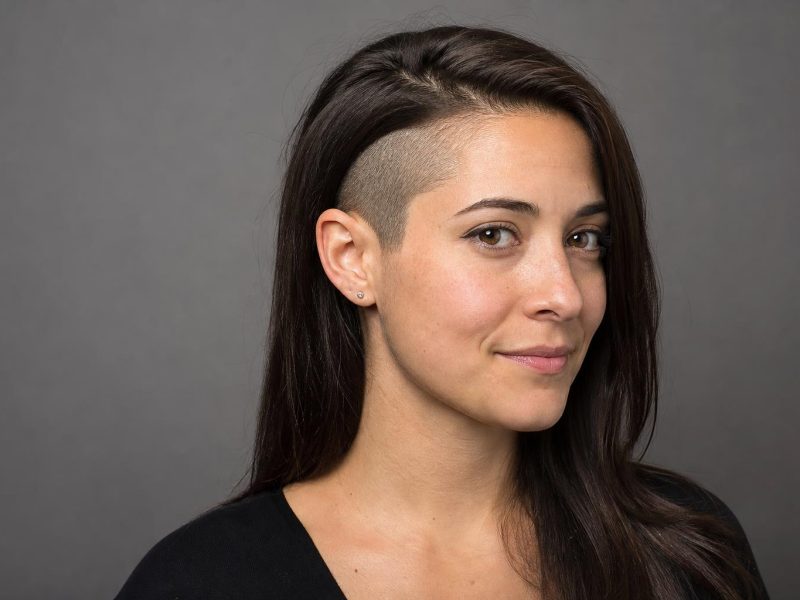

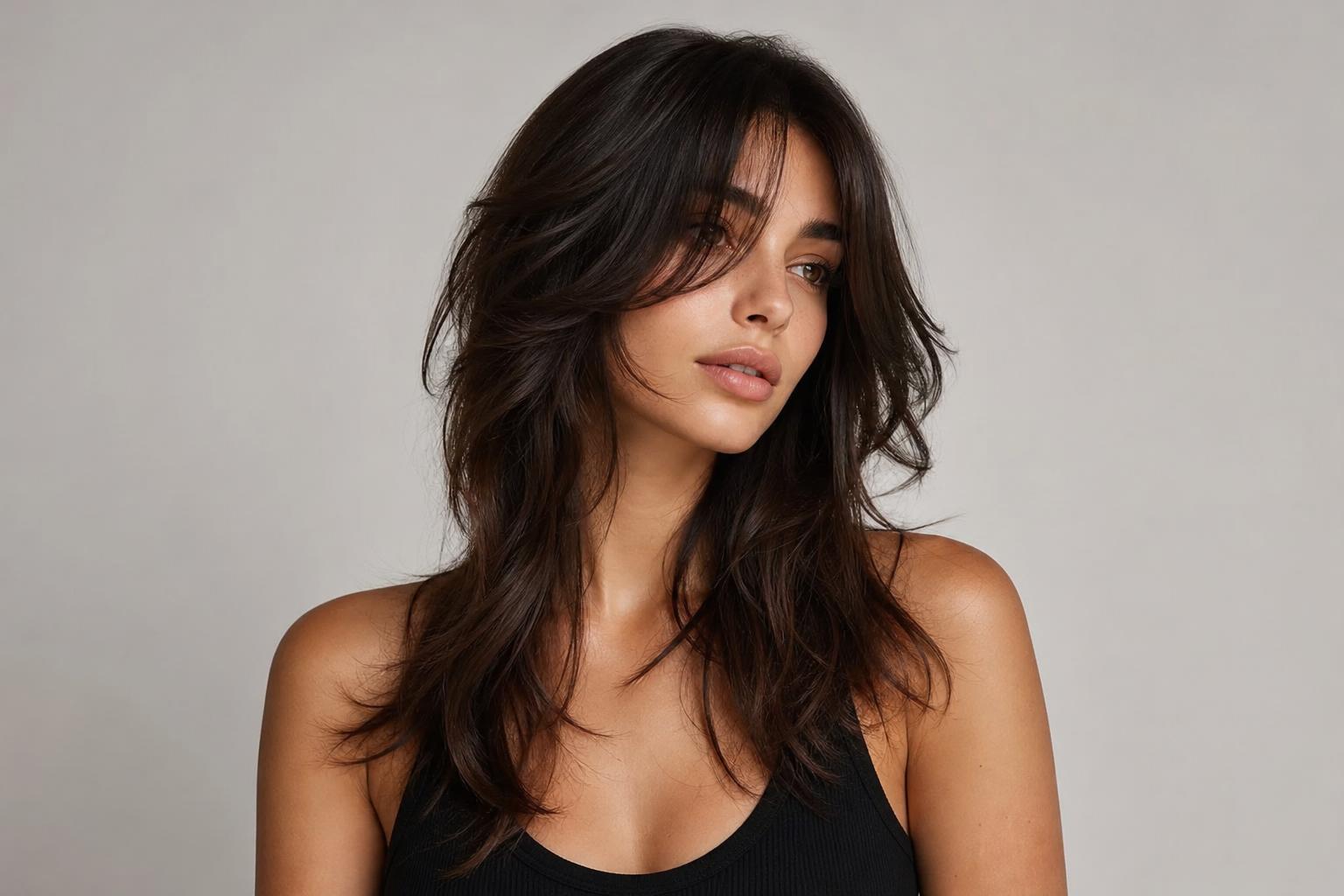
The octopus haircut builds a full, rounded crown section and long wispy lengths that trail like tentacles, giving you more crown drama than a wolf cut with far less daily styling effort.
An octopus haircut is built around two distinct zones: a full, rounded crown section loaded with short, choppy layers, and a longer lower section where the hair thins out into wispy, flowing lengths. The cut belongs to the animal-named family of modern layered styles alongside the wolf cut and the kitty cut, but its defining feature is a sharper disconnection between crown volume and length than either style delivers. These 20 variations span collarbone to hip-length hair, straight to curly textures, and everything from natural brunette to bleached platinum.
Below you’ll find gallery sections grouped by length, a side-by-side comparison of the octopus cut against the wolf cut and shag, a face shape compatibility table, a maintenance schedule, and exact words to use at your salon appointment. If you’ve been drawn to heavily layered styles but want more crown drama and lighter, more defined ends, the octopus cut is worth a close look.
| Factor | Details |
|---|---|
| Best for | Medium-to-thick hair; wavy, curly, and straight textures; oval, heart, and square face shapes |
| Maintenance | Trim every 8–10 weeks; daily styling under 10 minutes with light products |
| Works with | Collarbone to hip length; layered looks with minimal daily effort |
| Avoid if | Very fine, low-density hair; you prefer a polished structured silhouette; hair shorter than the collarbone |
| Salon time | 60–90 minutes for the cut alone; add 60–90 minutes for any color work |
What Sets the Octopus Cut Apart from a Wolf Cut and Shag
Three names dominate the layered-haircut conversation right now, and all three share DNA: choppy texture, lived-in movement, and a rejection of polished salon finishes. But they are not the same cut, and choosing the wrong one for your hair type or lifestyle can mean a year of awkward grow-out. The octopus cut is closer to a shullet in silhouette, it has the upper-section fullness of a shag and the longer, lighter perimeter of a mullet, but the defining characteristic is a pronounced disconnection between the crown layers and the lower lengths. That gap is what creates the “head and tentacles” effect. The wolf cut layers blend downward toward the perimeter with moderate blending; the shag graduates smoothly from crown to ends without a hard break. The octopus cuts the crown as a near-separate rounded section, then lets the length trail away from it.
Stylist tip: The degree of disconnection determines the drama level of your octopus cut. A subtle version has the crown layers finishing at collarbone level with a soft transition, while a sharp version cuts the crown to jaw level and keeps the perimeter well past the shoulders, making the two zones look almost like separate sections. Decide how much contrast you want before your appointment and describe it specifically, the difference between a subtle and a sharp octopus requires very different cutting decisions that are hard to reverse mid-appointment.
| Feature | Octopus Cut | Wolf Cut | Shag |
|---|---|---|---|
| Crown volume | Concentrated at crown, distinct from the lengths below | All-over, heaviest at crown and along fringe | Gradual, blended from crown to mid-lengths |
| Disconnection | Pronounced, visible step between crown and length | Moderate, blended into lengths with layering | Soft graduation; no distinct break |
| Perimeter shape | Wispy, thinned ends, deliberately light | Solid perimeter with layered face framing | Textured but fuller perimeter |
| Best hair type | Medium-to-thick, wavy-to-curly | Medium density, straight-to-wavy | Thick, wavy, curly |
| Trim frequency | Every 8–10 weeks | Every 6–8 weeks | Every 8–12 weeks |
| Grows out | Gracefully, wispy ends soften as they lengthen | Crown layers flatten noticeably around week 7–8 | Very forgiving; blends naturally between trims |
Short and Collarbone-Length Octopus Cuts
The collarbone is the minimum viable length for an octopus cut, any shorter and there isn’t enough room to create the two-zone effect. At this length, the crown layers are typically cut to jaw level, with the perimeter landing at or just below the collarbone. The silhouette is sharp and compact, with distinctly more crown lift than a standard choppy layered cut, and the shorter perimeter means daily styling shapes up fast without needing to manage significant length.
1. Disconnected Crown Cut with Razor-Sliced Ends
A razor tool used on the crown layers creates a shattered, piece-y separation that makes the transition between zones look deliberate rather than accidental. The crown section is cut first as a separate rounded shape, then the length is razor-sliced at the ends to match the lightness throughout. This technique works best on medium-density straight hair, where the razor removes just enough bulk to create movement without stripping the weight the cut needs to hold its shape. Ask specifically for “razor crown, blunt-cut perimeter” to prevent the stylist from razoring all the way through to the ends if you need some perimeter density.
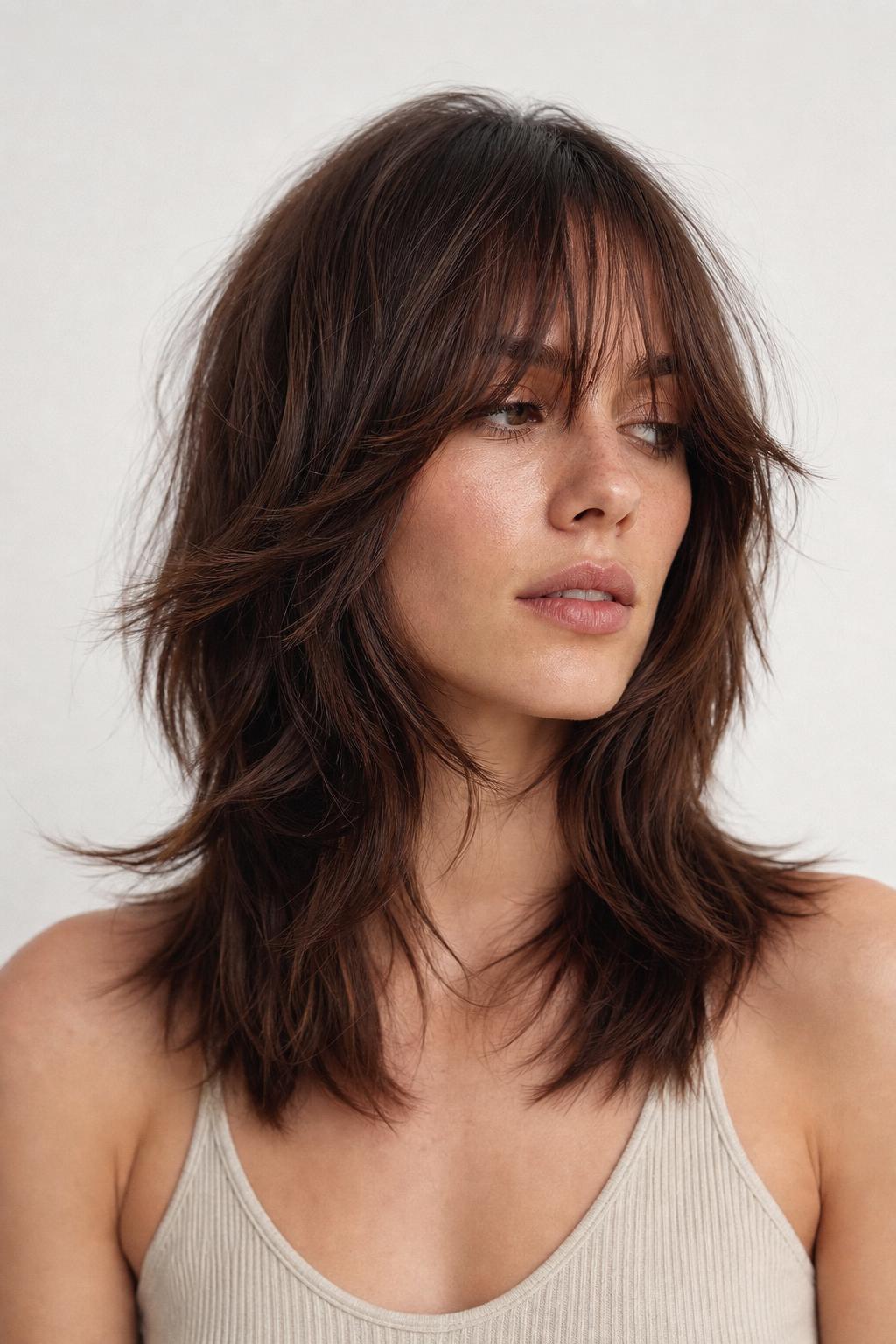
2. Collarbone Octopus with Side-Part Face Framing
Oval faces carry any variation of this cut well, but a collarbone-length version with a side part and face-framing layers starting at cheekbone level is particularly versatile for everyday wear. The side part redirects volume to one side of the crown, creating asymmetry that keeps the silhouette from looking too symmetrical or boxy. Keep the face-framing pieces about two inches longer than the shortest crown layers to bridge the transition zone without blurring the two-zone structure.
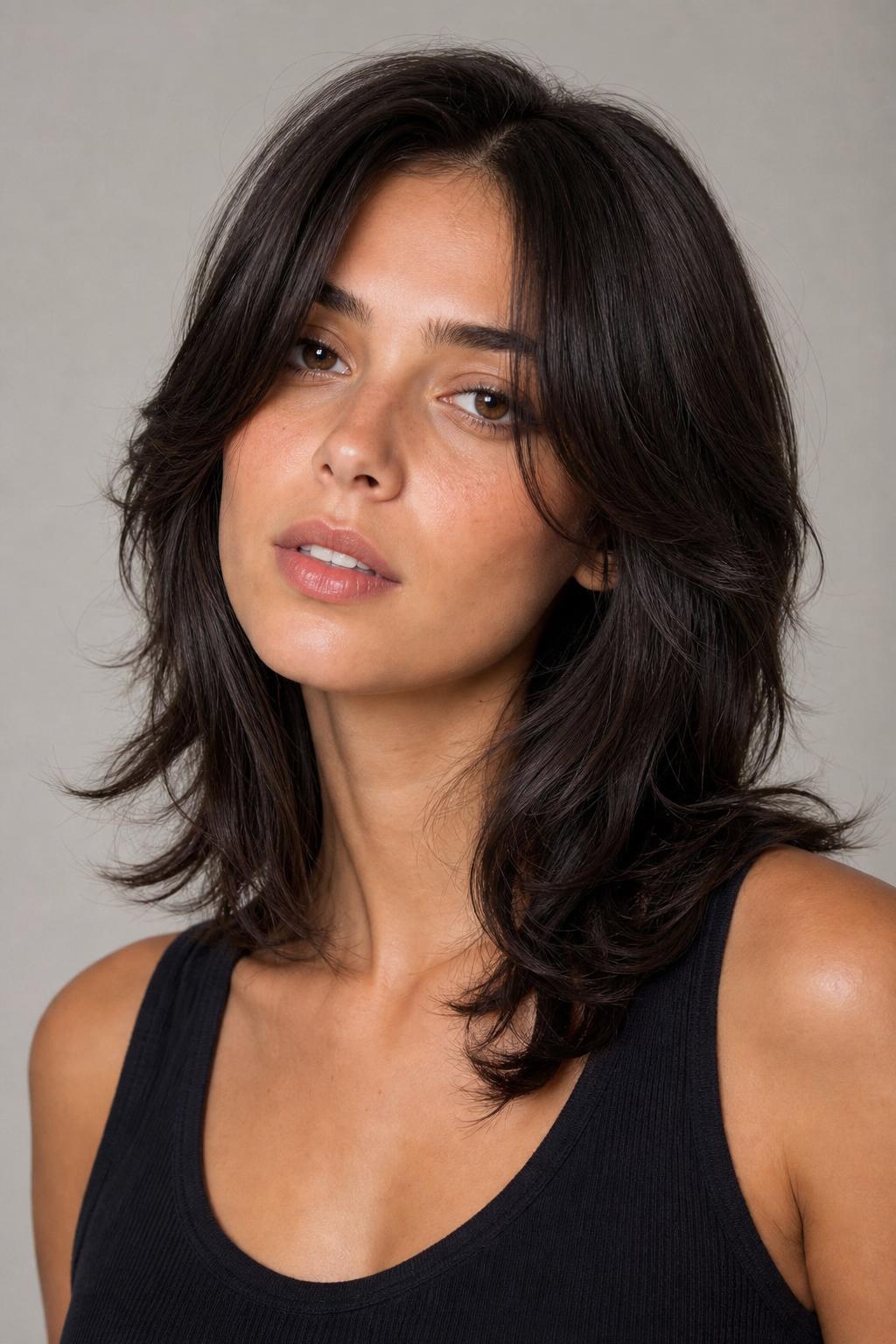
3. Fine-Hair Octopus with Internal Volume Layers
Fine hair needs a more conservative disconnection than thick hair, a dramatic gap between crown and length will make sparse ends look stringy rather than flowing. On fine textures, ask for the crown layers to be cut with point scissors rather than a razor, which removes bulk more gradually and leaves some weight at the perimeter. The result is a softer octopus silhouette that still delivers crown lift without thinning the ends to translucency. A volumizing mousse worked into damp roots, then blow-dried upside down with a medium round brush, gives fine octopus cuts the crown lift they need to hold shape through the day.
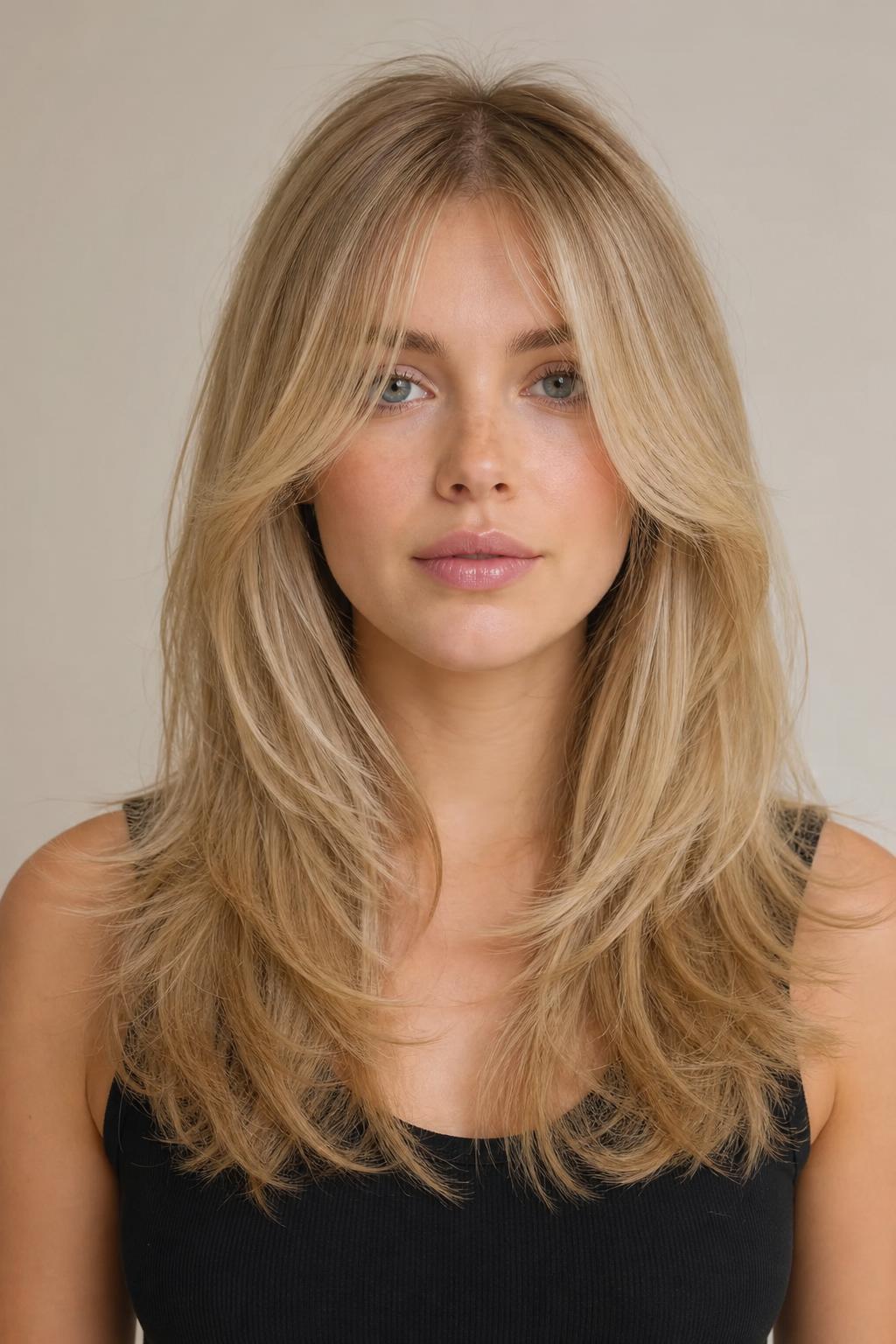
4. Wavy Air-Dried Octopus with Texturizing Spray
Rake a dime-sized amount of lightweight texturizing spray through damp hair, scrunch upward from ends to crown, then let the hair fall without touching it while it dries. The wavy texture will separate the crown layers into piece-y sections naturally, and the lower lengths will form loose, open S-waves without any heat needed. Revive the next morning by misting the roots with water and scrunching once, the octopus shape comes back quickly on wavy hair without full rewashing.
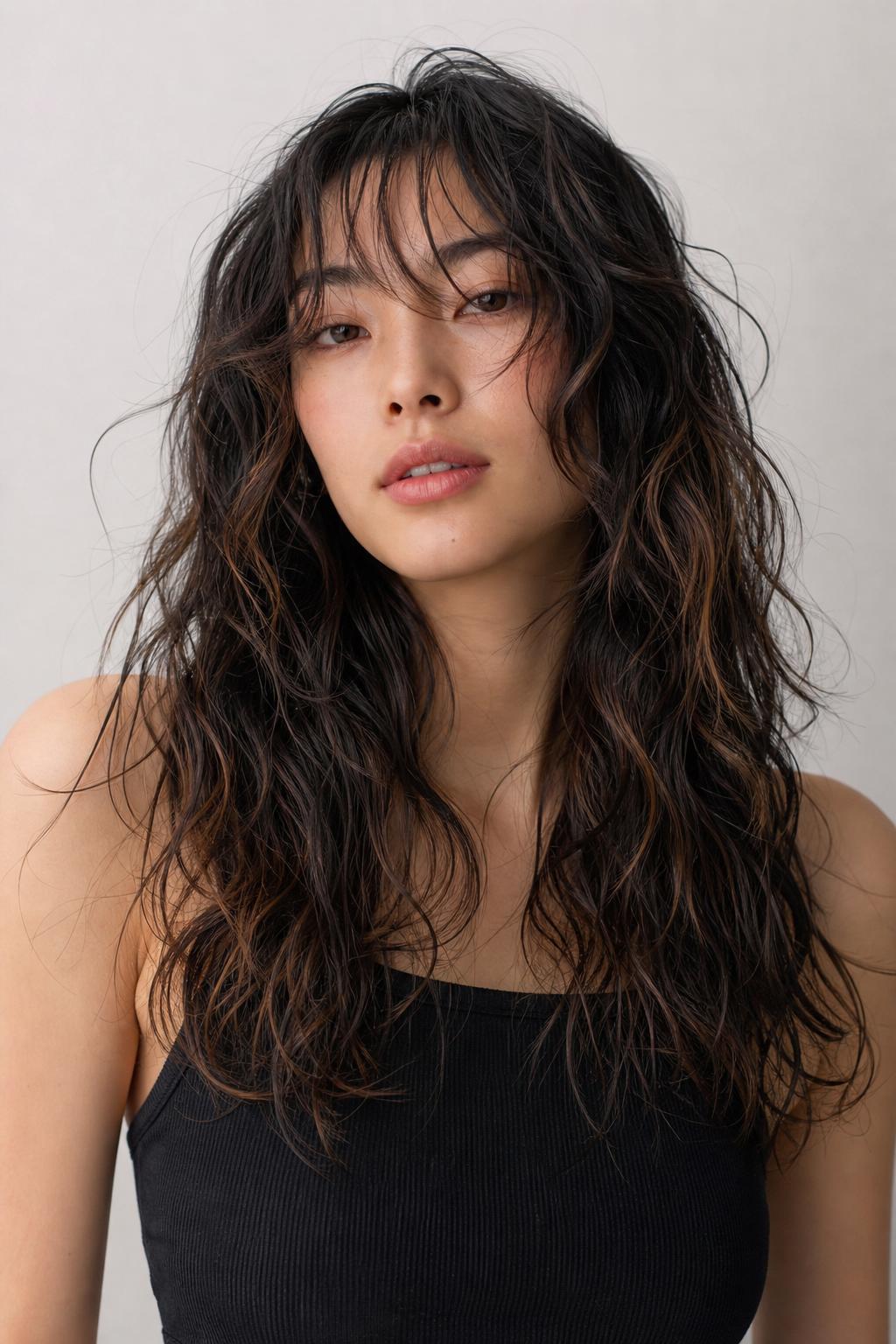
5. Grown-Out Collarbone Octopus with Softened Disconnection
At the 10–12 week mark, the crown layers of a collarbone octopus grow enough to soften the disconnection naturally, transitioning the cut toward something closer to a blended shag. This is one of the most flattering grow-out phases in the animal-named haircut family, unlike the wolf cut, where the crown layers flatten noticeably by week 7–8, the octopus retains movement because the light perimeter continues to flow even as the crown layers lengthen. If you’re testing whether the style works before committing to a sharper disconnect, let the grow-out version serve as your trial run first before requesting more contrast at the next appointment.
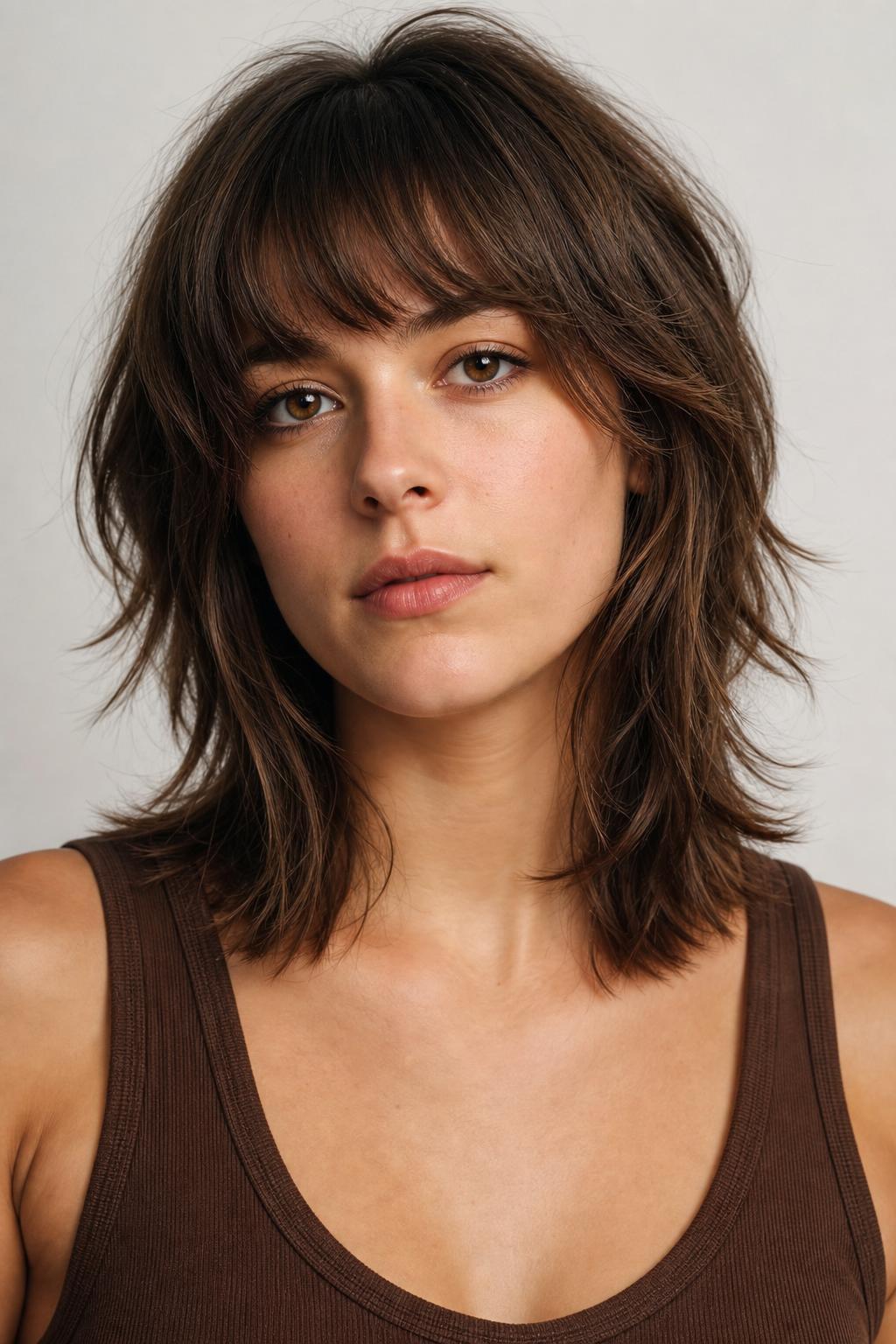
6. Brunette Octopus with Crown-Concentrated Highlights
Placing the brightest highlights specifically at the crown reinforces the two-zone structure visually, lighter pieces pop against the darker lengths and draw the eye upward to the fullest part of the cut. A money piece framing the face adds a third tonal accent without requiring full-head highlights. On a dark brunette base, a warm caramel balayage concentrated in the shortest crown layers creates dimension that photographs with strong contrast and deepens naturally as the highlights grow out.
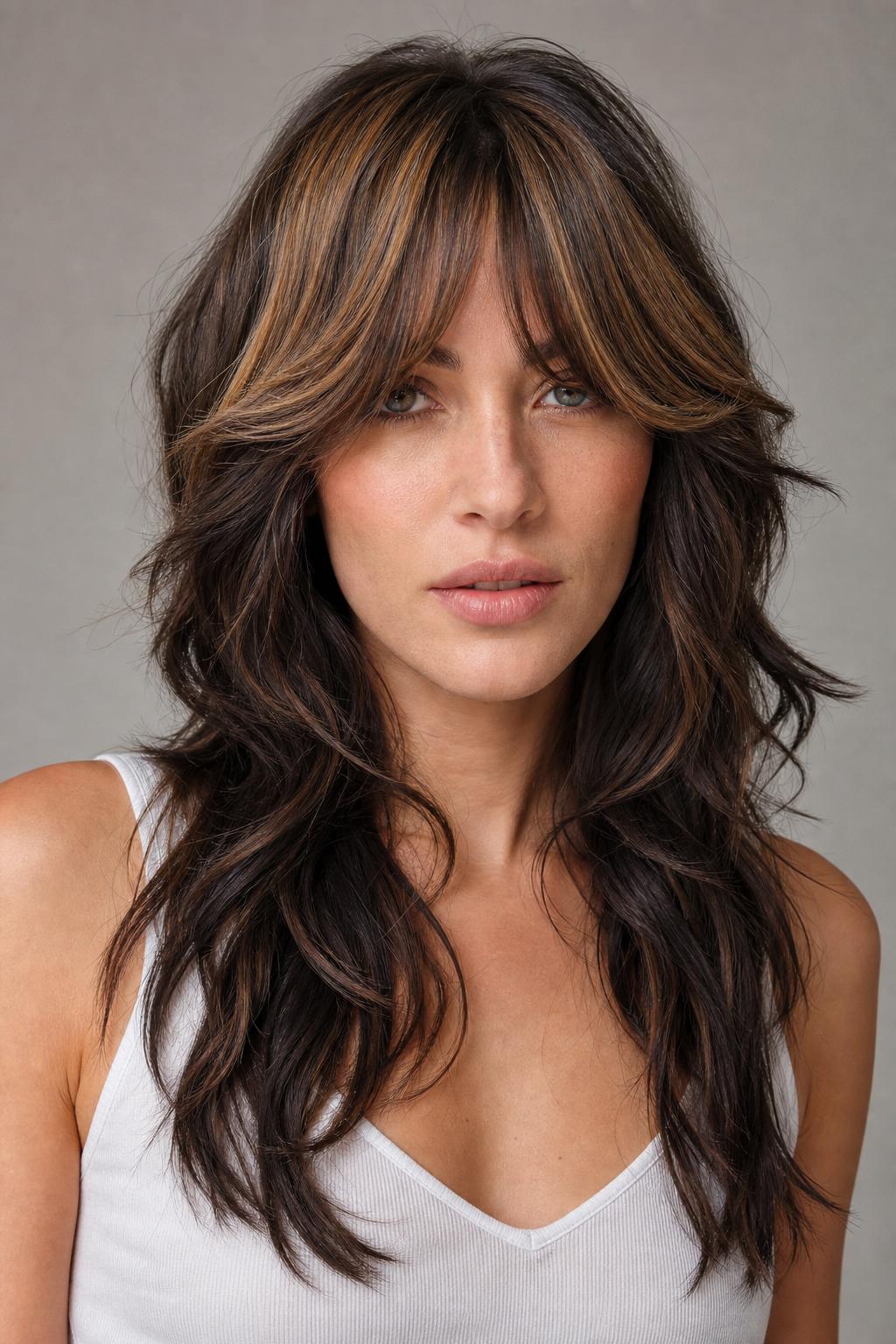
7. Short Octopus with Point-Cut Crown and Blunt Perimeter
Specify a collarbone-length blunt perimeter with the crown section cut into a separate rounded shape, then detailed with point scissors at the edges rather than cut blunt. The blunt perimeter prevents the ends from going too thin at shorter lengths, while the point-cut crown creates the piece-y texture the style depends on. Coming in with two separate reference photos, one for the crown shape, one for the perimeter finish, removes ambiguity and gives your stylist something concrete to work from at both zones of the cut.
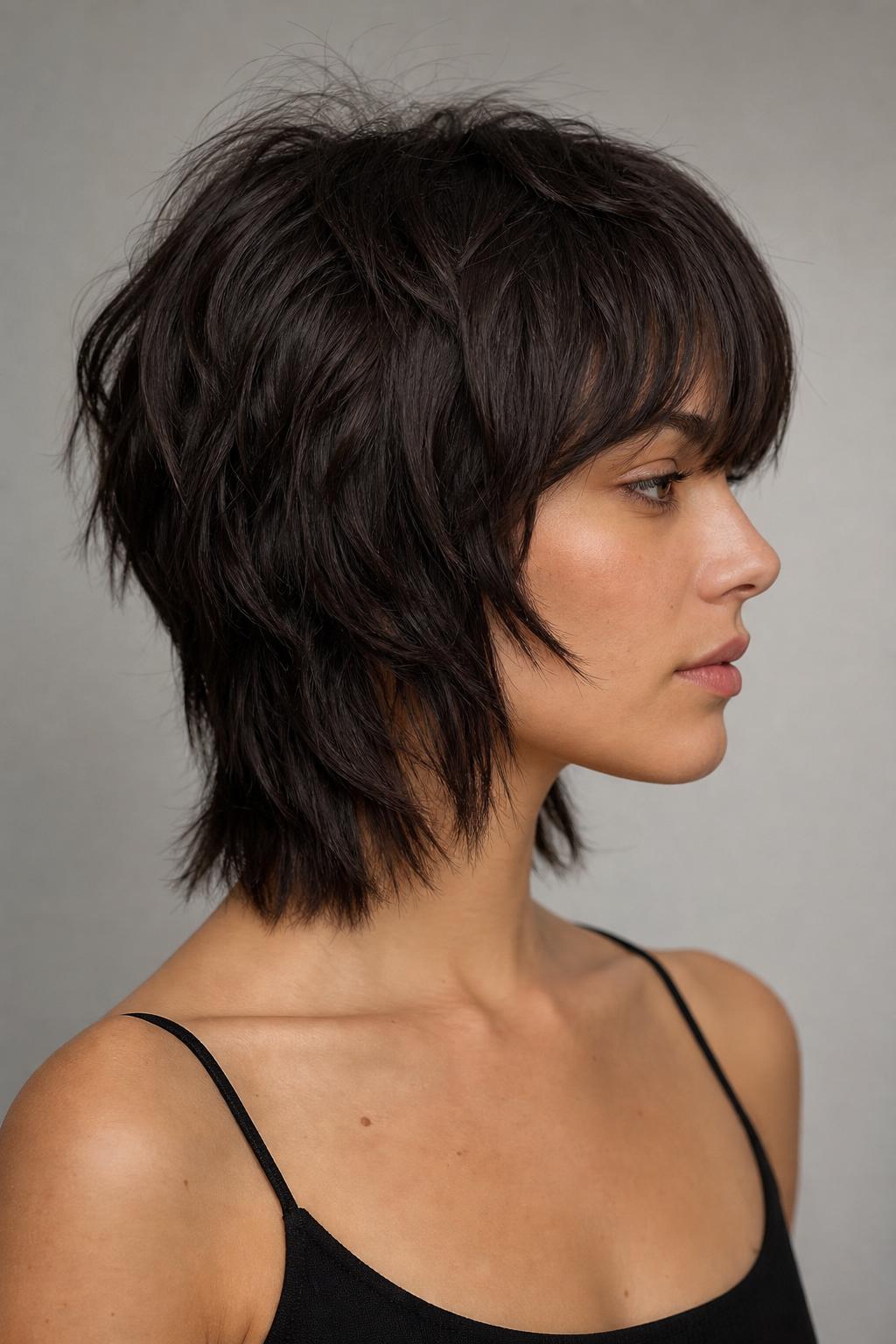
Medium-Length Octopus Cuts: Chest to Mid-Back
Chest to mid-back length gives the octopus cut the most room to display its signature silhouette. The crown has space for a fuller, rounder shape, and the lower lengths have enough weight to flow downward in defined, separated sections. At this proportion the style’s name becomes most visually obvious, the rounded head and trailing tentacles are unmistakable, and this length is also the most forgiving for the grow-out phase between trims.
8. Octopus-Shag Hybrid with Graduated Disconnection
Unlike a true shag, where layers graduate gradually from crown to perimeter with no hard break, this hybrid version uses a measured disconnection of about two to three inches between where the crown layers end and the length picks up. The effect is edgier than a shag but softer than a sharp octopus silhouette. For anyone who loves the shag’s effortless movement but wants more crown drama, this split-the-difference version is worth requesting by description specifically, since most stylists will default toward one parent cut or the other if left without guidance.
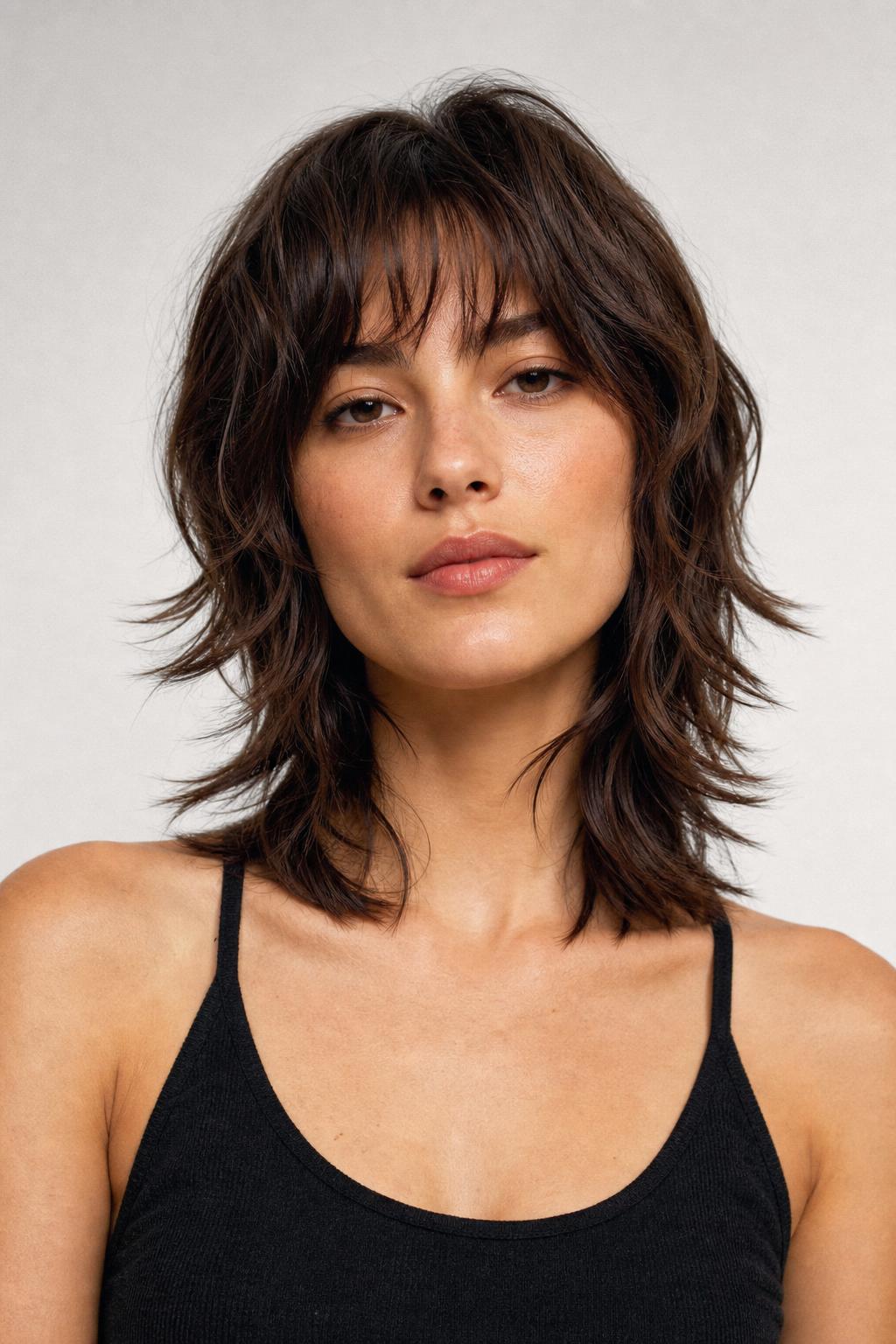
9. Mid-Length Octopus with Razor-Cut Crown on Thick Hair
Thick hair holds an octopus cut better than any other texture, the density supports the rounded crown shape without needing product, and the naturally heavy perimeter creates the tentacle weight that makes the style flow correctly. A razor used only in the crown section removes bulk at exactly the right location, thinning the shortest layers while leaving the lengths full. Avoid razor-cutting the perimeter on thick hair; blunt-cut or point-cut ends keep the lower section from disappearing and maintain the contrast between the two zones that makes the cut worth having.
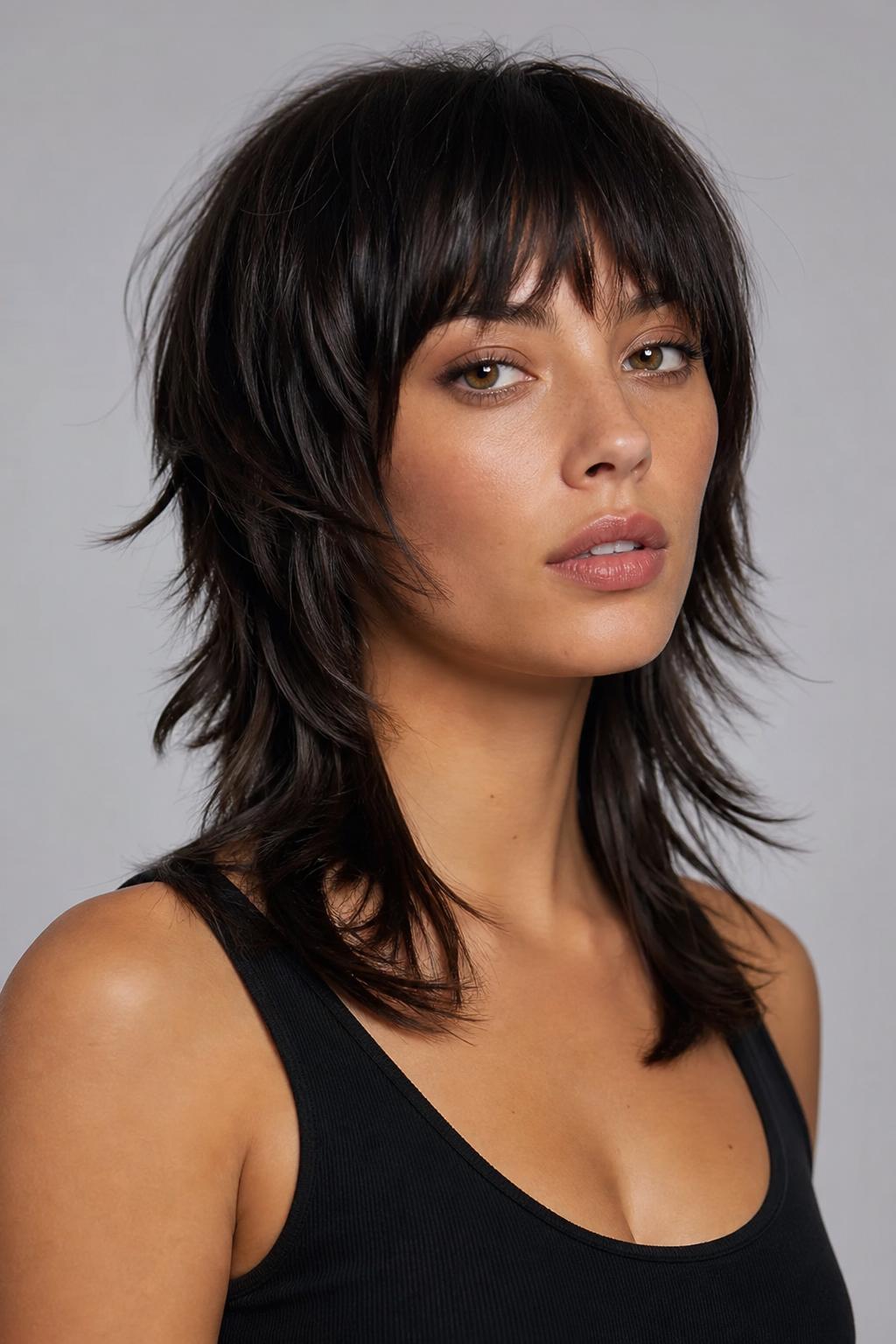
10. Chest-Length Octopus for Round Faces
A round face needs the octopus cut’s perimeter to fall past the collarbone, where the trailing layers create a vertical line that visually elongates the face. Face-framing pieces that curve inward at the chin add further definition without adding width. Avoid pulling the crown layers too short on a round face, a jaw-level crown section removes the length that counteracts roundness. A center part works better here than a side part, maintaining symmetry and keeping the eye moving vertically rather than horizontally across the face.
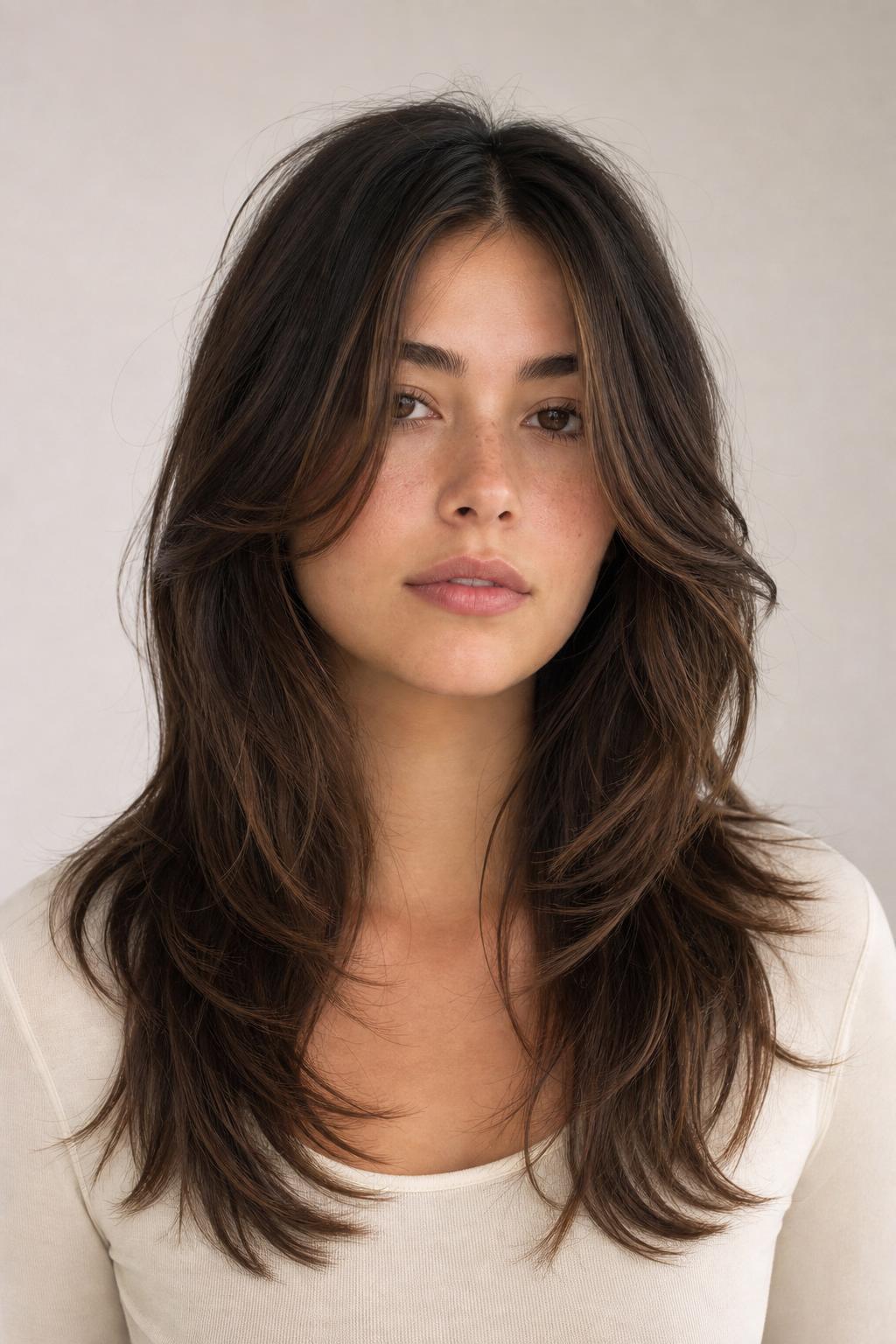
11. Coarse Thick Hair Octopus with Weight-Reduction Layering
Coarse, high-density hair needs significant weight removed from the mid-shaft before the two-zone silhouette becomes visible through the volume. Slide cutting in the crown and channeling cuts through the mid-section reduce bulk without removing length, giving the hair room to move rather than sitting compressed. Our haircut density guide breaks down which techniques work best at each density level, which is worth reviewing before your appointment so you can ask for the right approach with confidence.
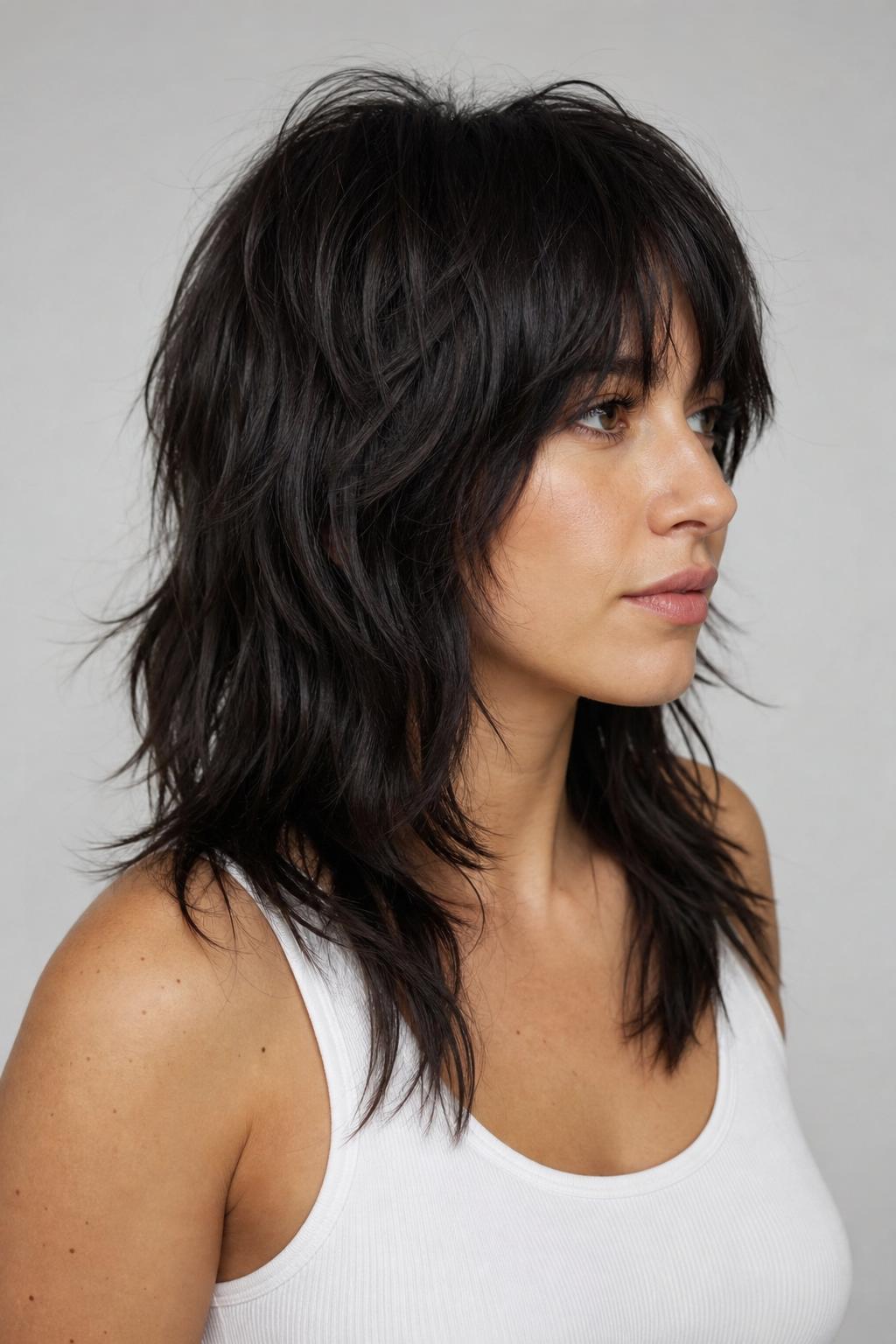
12. Diffuser-Dried Octopus on 3a Curls
Flip the hair upside down and diffuse on low heat until the crown is fully dry before lifting the head upright, this lets the short crown layers form a rounded, lifted shape rather than pressing flat from gravity. The lower lengths can finish air-drying naturally once the crown is set. On 3a curls, the layering removes the weight that was forcing the spirals to stretch and lose definition, allowing the crown ringlets to contract into a dense, springy shape while the lengths maintain elongated, defined curls.
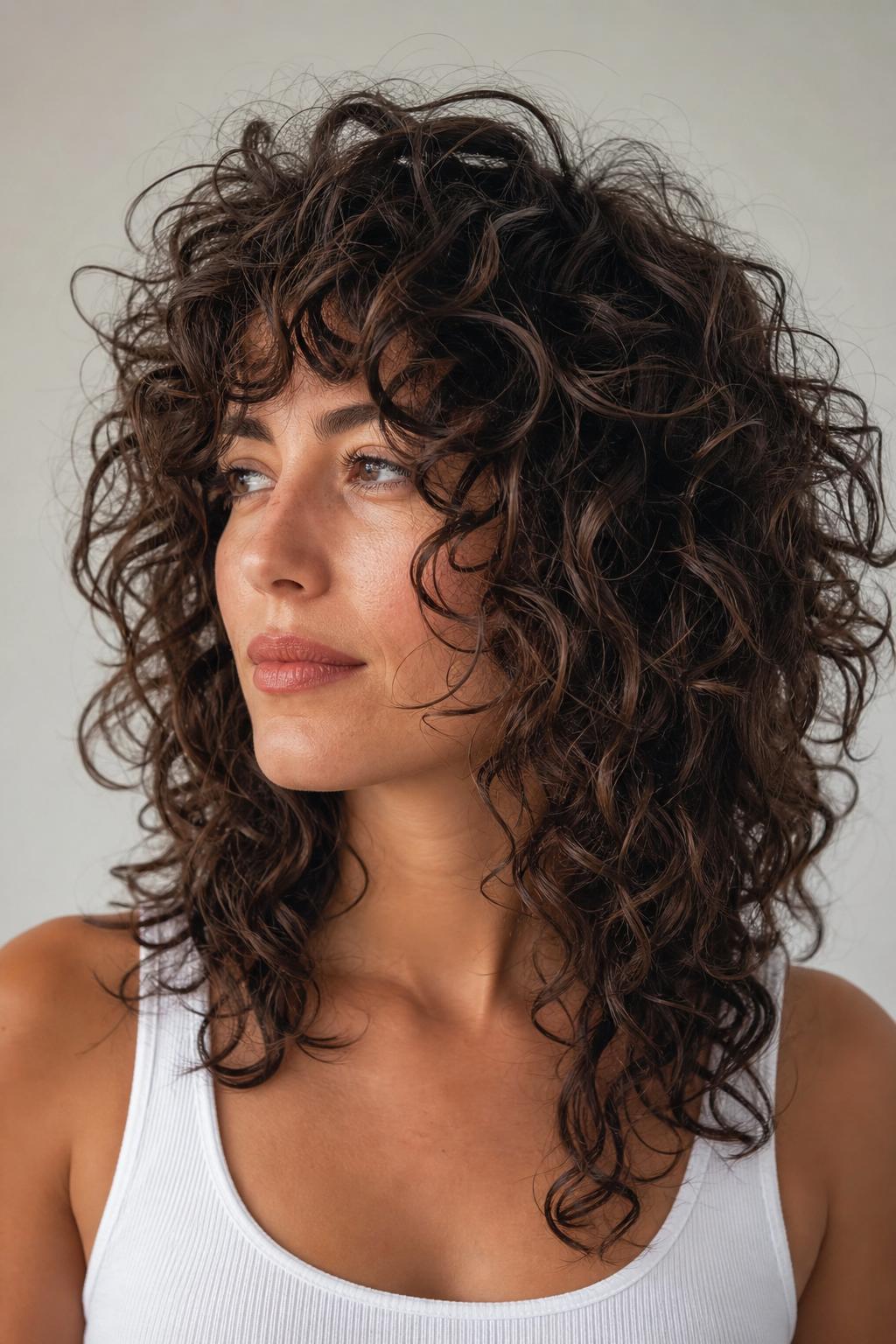
13. Grow-Friendly Octopus with Point-Cut Perimeter
Point-cut perimeters grow out far more gracefully than blunt-cut ones, the slightly irregular edge softens instead of splitting, which means the style looks well-maintained for longer between appointments. Budget a trim every 10–12 weeks rather than the 6–8 weeks a wolf cut requires, and ask your stylist to refresh the crown shape before touching the perimeter. Skipping a crown refresh while only trimming the ends causes the two-zone silhouette to blur, which is where most octopus cuts gradually lose their character between appointments.
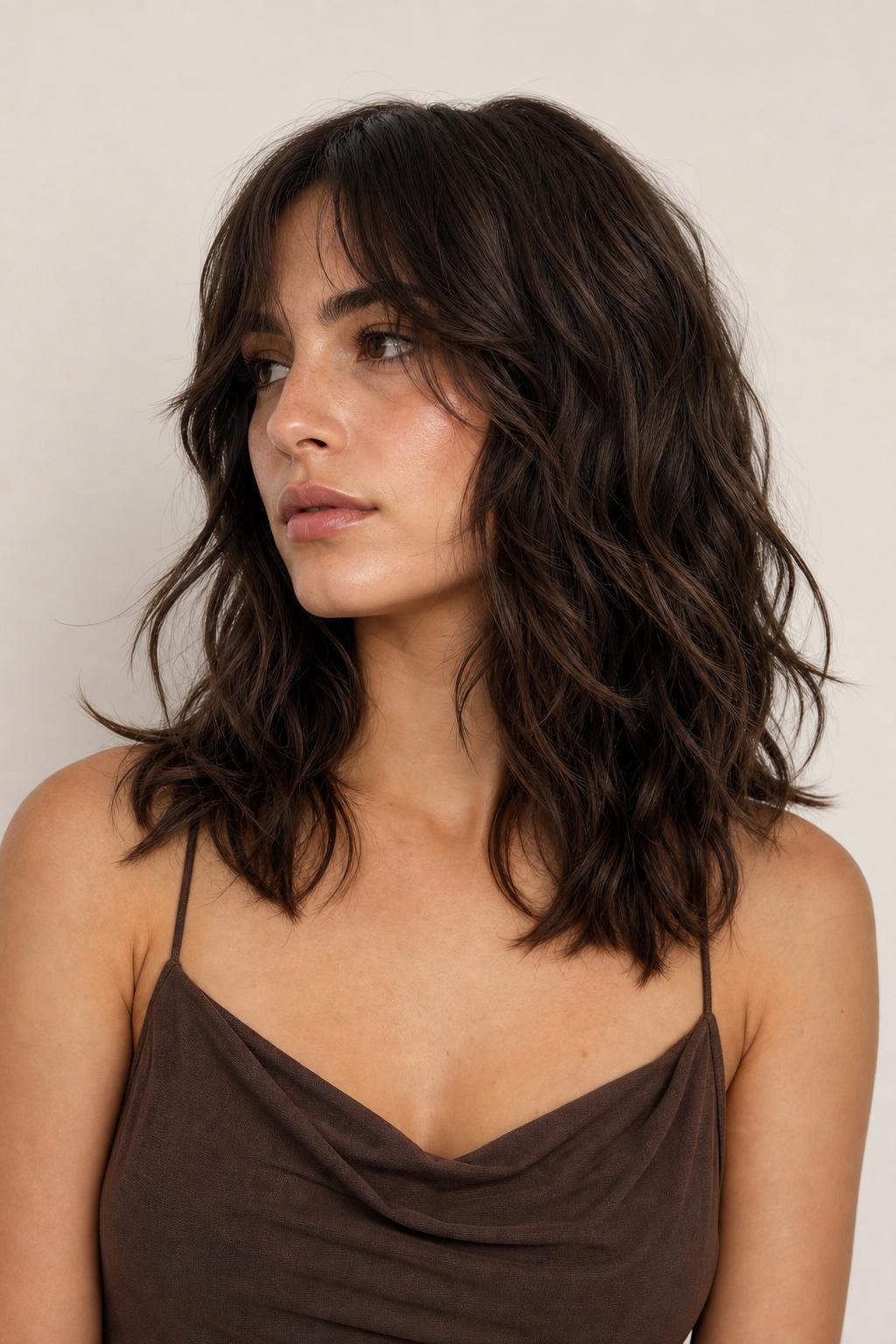
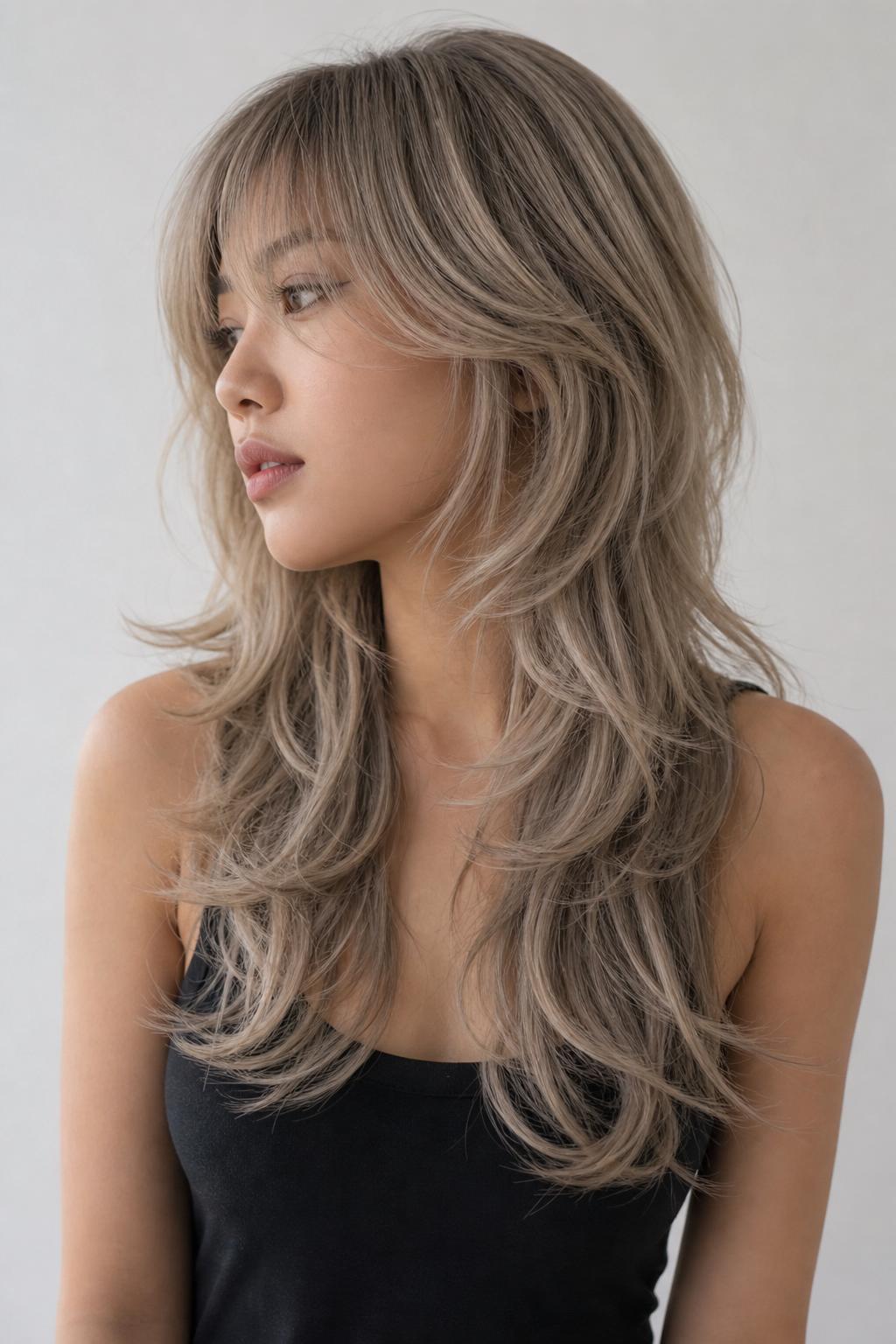
14. Ash Blonde Octopus with Shadow Root
A shadow root on an ash blonde octopus cut adds dimensional depth that separates the crown visually from the lengths even without a sharper physical disconnection. The darker root bleeding into the ashy mid-shaft creates a cool-toned gradient that photographs with high contrast and requires fewer touch-ups than a uniformly lightened look. Keep the shadow root soft-edged rather than a hard line of demarcation, a smudged transition at the root-to-highlight border blends naturally and stretches the time between color appointments.
Long Octopus Cuts: Mid-Back to Hip Length
Long hair amplifies the tentacle effect considerably, the wispy ends have more room to move and separate, and the contrast between the full crown and the trailing lengths becomes more dramatic the longer the hair gets. The primary challenge at this length is calibrating the perimeter weight carefully so the lower section stays full enough to flow without going thin and fragile. These entries focus on how stylists and product choices can maintain that balance.
15. Hip-Length Octopus with Curtain Bangs
Specify curtain bangs cut from the crown section itself, swept to each side of a center part and left at eyebrow level, at hip length, the bangs become the forward frame for the entire silhouette and blend naturally into the crown layers without looking like a separate addition. If you’re unsure how curtain bangs behave on your specific texture before requesting them with this cut, our guide to curtain bangs on wavy hair covers the key styling nuances. Curtain bangs on an octopus cut need a trim every three to four weeks to stay at the right length relative to the rest of the crown zone.
16. Long Octopus vs Long Shag: The Perimeter Difference
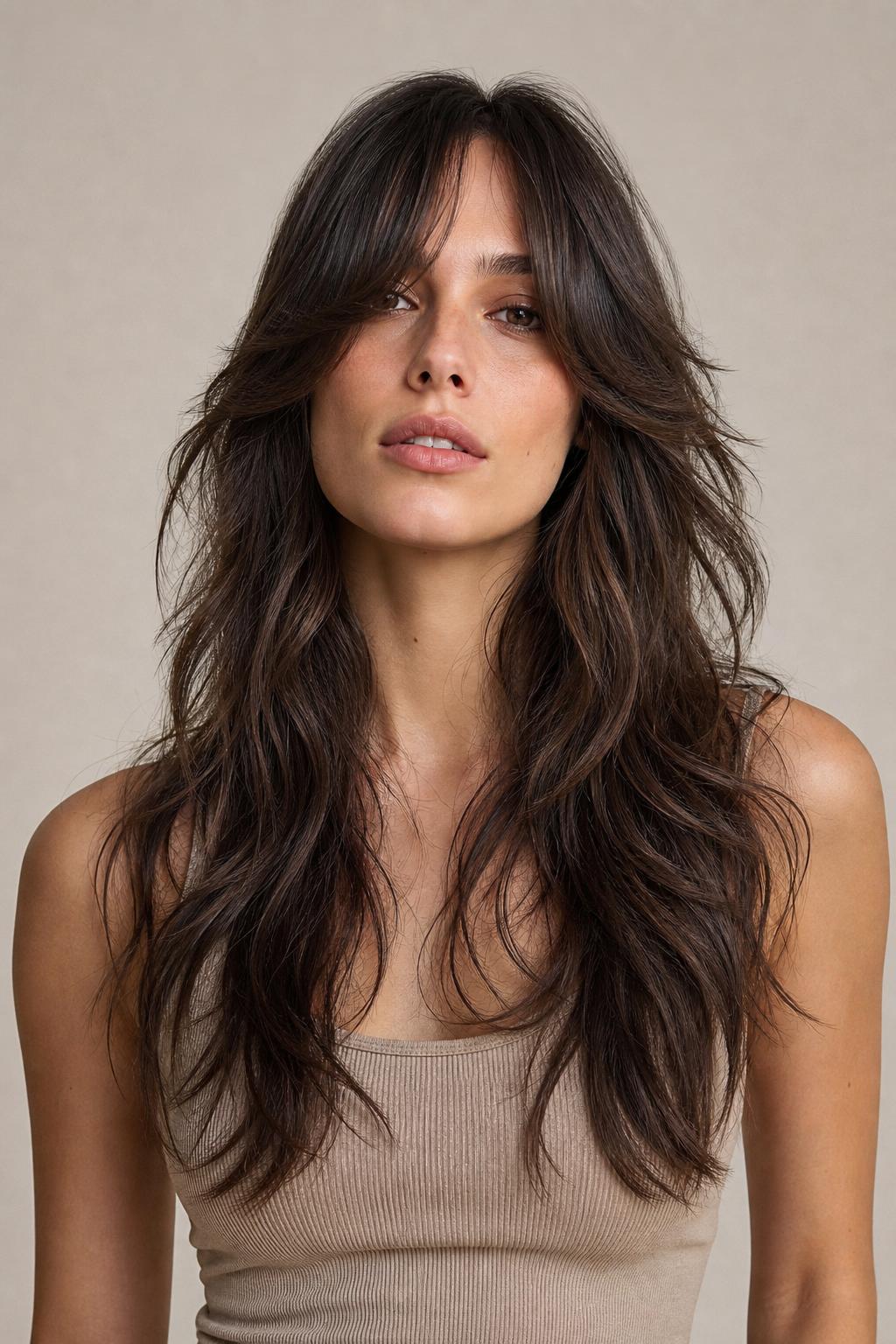
Both styles at hip length look similar from the front, lots of layers, full crown, movement throughout. The difference becomes clear from the side: a long shag has a gradual graduation where layers blend smoothly from crown to perimeter, while the long octopus shows a visible step where the shorter crown layers end abruptly before the long, thinned perimeter begins. From behind, the octopus exposes more of the nape and mid-back because the weight removal is heavier there. If you prefer a seamless visual blend, a long shag fits better. If the stepped disconnection is the specific detail you’re drawn to, the octopus is the more distinctive choice.
17. Crown-Loaded Long Octopus with Point-Cut Crown Layers
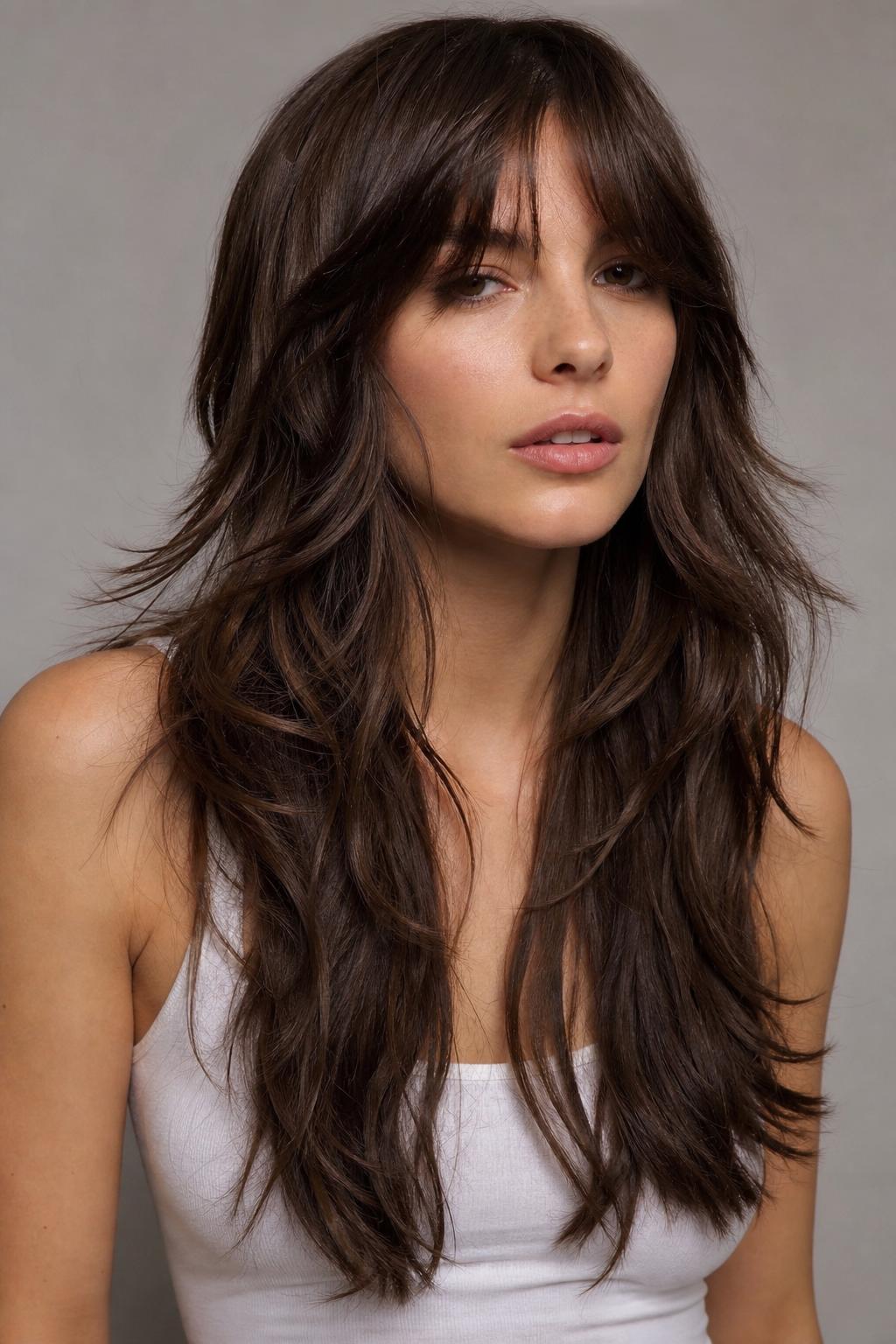
Cutting only the crown layers with point scissors, while leaving the lower section untouched with scissors closed, creates maximum textural contrast between the two zones. The pointed ends at the crown look shattered and piece-y while the lengths stay smooth and dense. This is the structural foundation of the traditional octopus cut, and it’s the right ask when you want a clean, clearly defined version of the style rather than a blended or hybrid interpretation. On straight hair, the contrast between the textured crown and the smooth, heavy lengths below is most visible.
18. Long Octopus for Heart-Shaped Faces
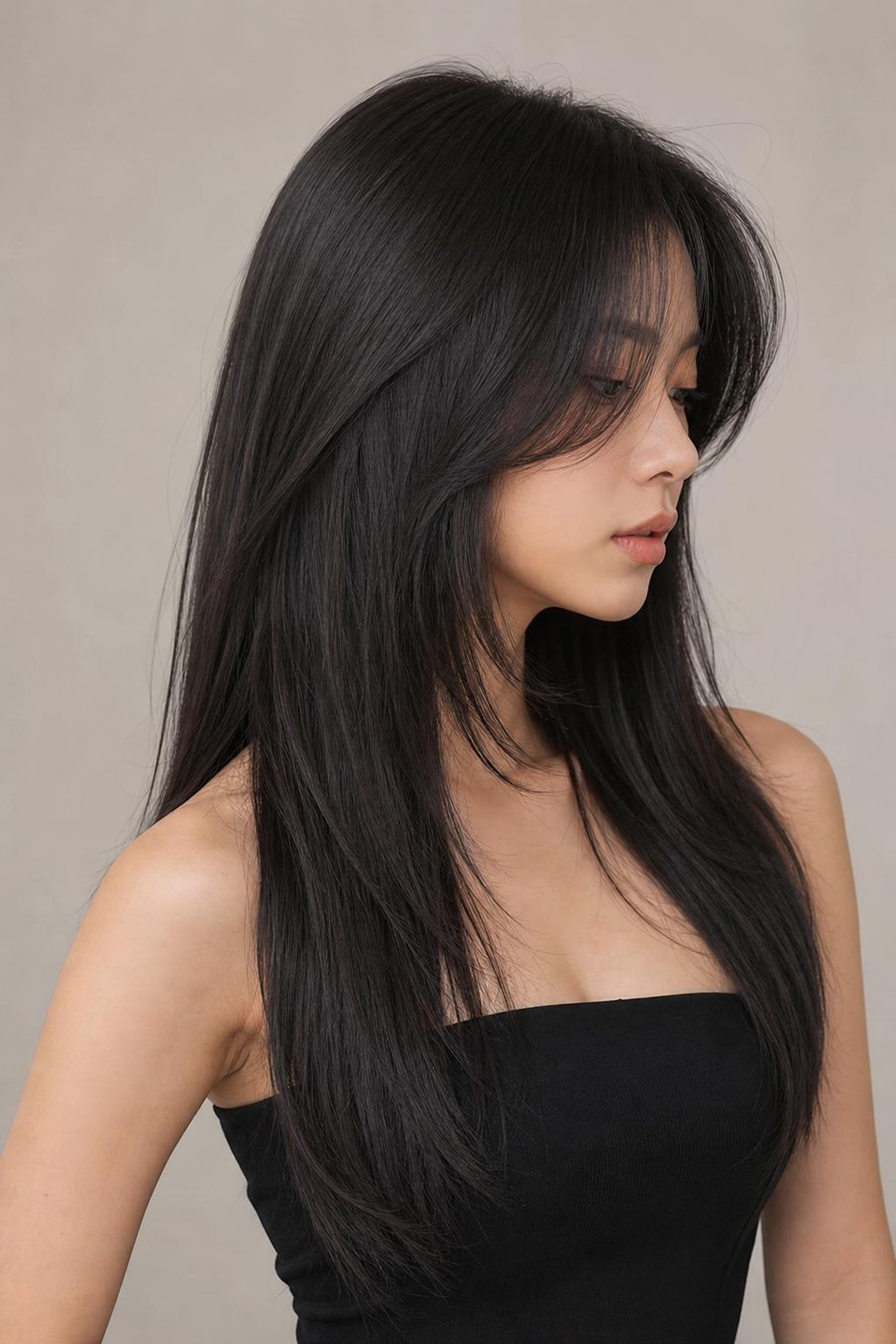
Heart-shaped faces have a wider forehead and a narrower chin, so the goal with an octopus cut is to add visual fullness at the jaw and lower lengths while keeping the crown volume measured. A long octopus achieves this naturally, the lengths fan out below the jawline, widening the lower face, while the shorter crown layers don’t pile volume above the cheekbones. Keep the crown layers long enough to avoid adding bulk above the widest point of the face, and consider a soft side part over a center part to further redirect visual weight away from the forehead.
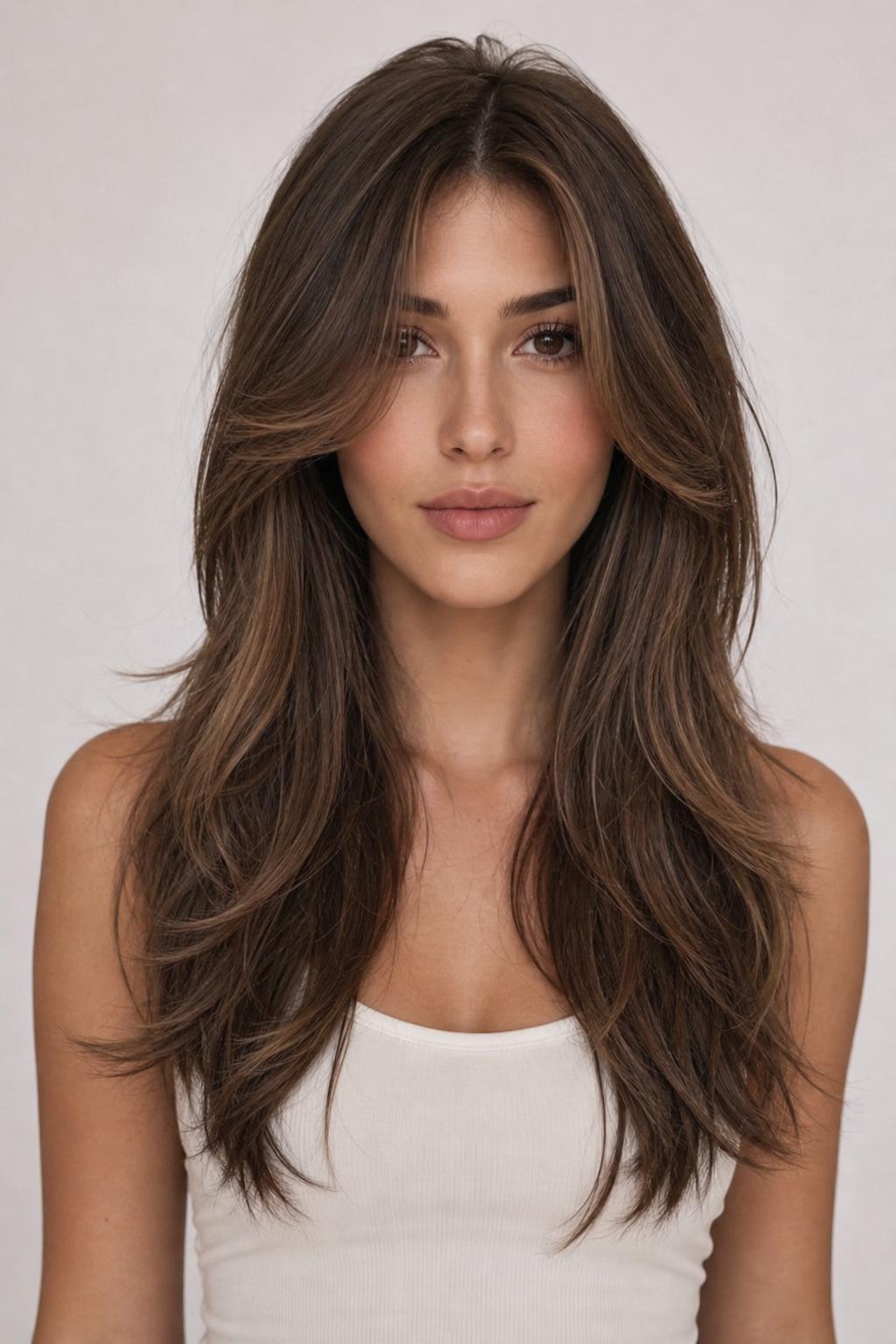
19. Naturally Wavy Hip-Length Octopus That Air-Dries into S-Waves
Naturally wavy hair at hip length responds to the octopus layering by separating the crown into buoyant, piece-y sections that lift away from the scalp, while the lower lengths air-dry into loose, elongated S-waves with minimal intervention. The visible difference between a wavy octopus and a wavy wolf cut is in the ends: the wolf cut creates a relatively even wave pattern from crown to tip, while the octopus shifts wave tightness noticeably, with smaller, livelier waves at the crown and longer, open waves through the lengths. A leave-in conditioner and a light curl cream are enough to define the pattern without weighing the tentacle sections down.
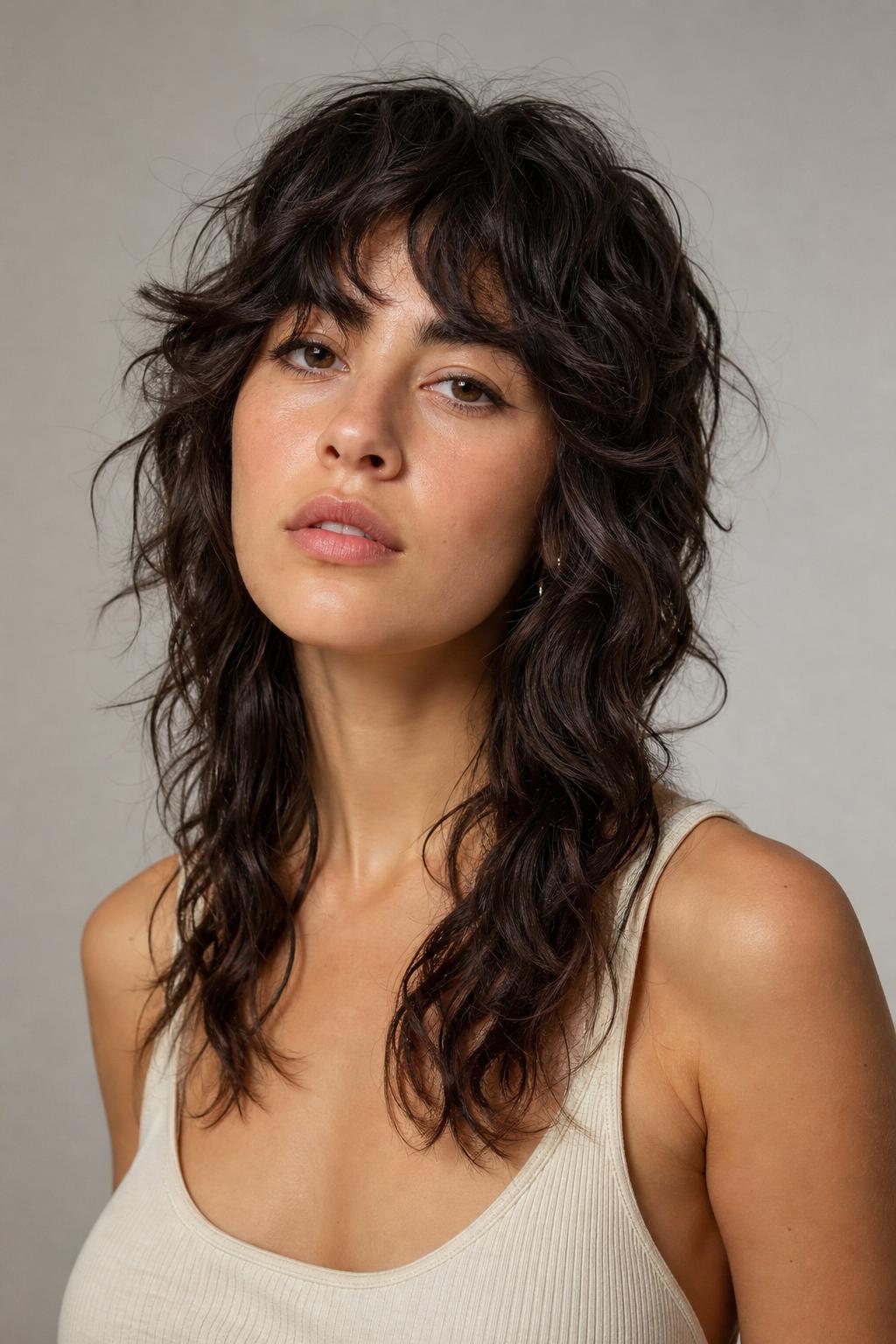
20. Braided Crown Octopus for a Half-Up Variation
Twist or loosely braid the crown section back and pin it so the shorter layers gather at the center back of the head, then let the long lengths fall freely below. The contrast between the contained, lifted crown and the cascading lower section creates a half-up variation that works for special occasions without requiring heat tools. At least mid-back length gives the lower section enough weight to display the tentacle separation clearly even with the crown pinned up, at collarbone length, the lengths don’t have quite enough room to fan out once the crown is contained.
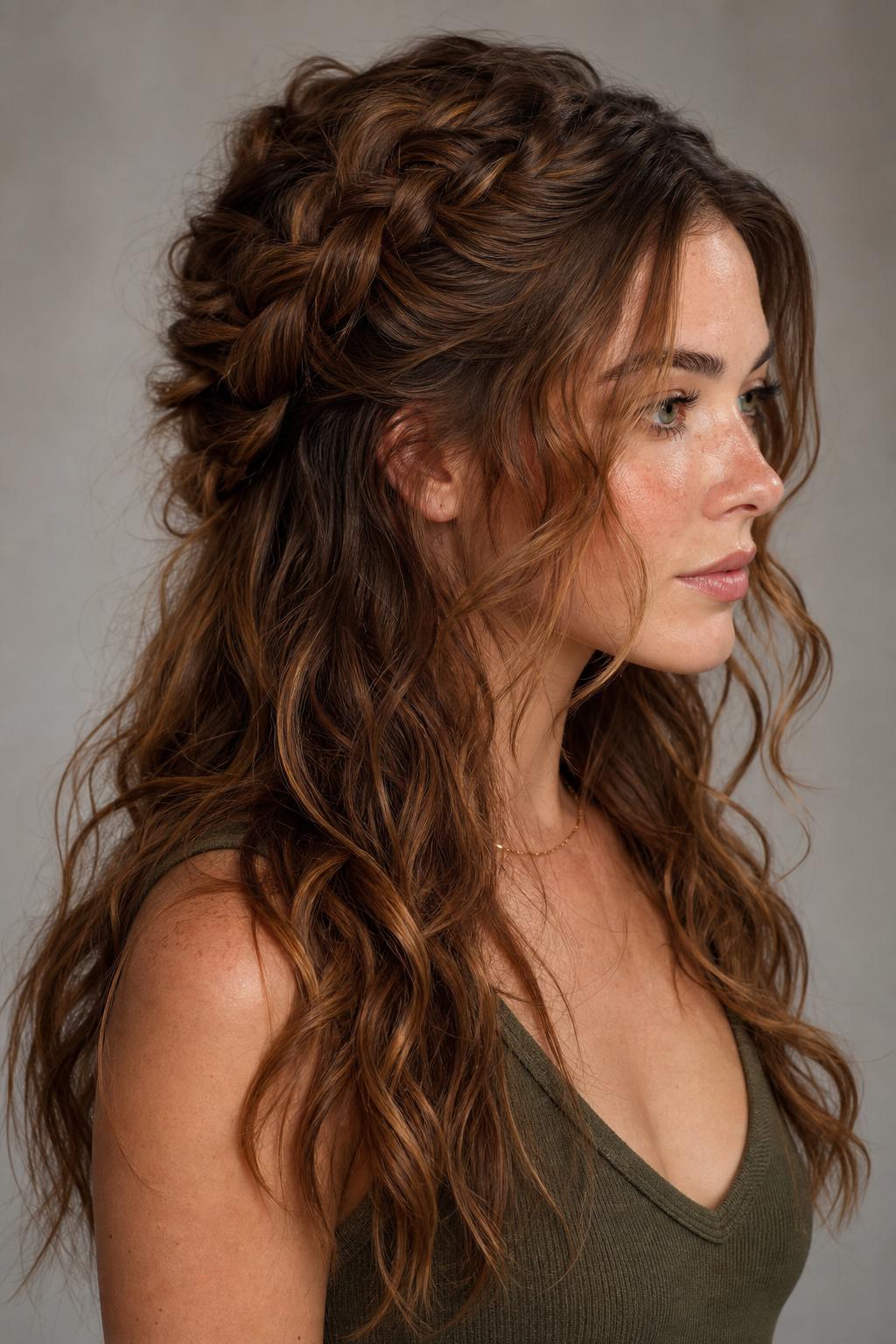
Which Face Shape Suits an Octopus Haircut Best
The octopus cut is more adaptable than most heavily layered styles because the two key variables, crown layer length and perimeter length, can be adjusted independently for different face shapes. A stylist with face-shape knowledge can make the same basic cut work for a round face and an oblong face simply by changing where the crown zone ends and how much the perimeter is thinned. The table below maps the best approach for each shape.
| Face Shape | Best Variation | Crown Layer Length | Avoid |
|---|---|---|---|
| Oval | Any variation; sharp or soft disconnection both work | Jaw to collarbone | Nothing specific, most versions suit this shape |
| Round | Chest-to-hip perimeter length; center part; longer crown layers | Collarbone minimum, jaw-level crown adds width | Short perimeter; full crown volume at eye level; wide side-swept crown sections |
| Square | Softer disconnection; curtain bangs; side-swept crown layers for softening | Jaw to collarbone | Very blunt crown section; heavy volume concentrated directly at jawline corners |
| Heart | Long perimeter (mid-back minimum); restrained crown; face framing below the cheekbone | Collarbone, avoid short crown layers above the cheekbone | Crown volume that widens above the cheekbones; very short crown layers |
| Oblong/Long | Collarbone-to-chest perimeter; full crown volume; curtain bangs to shorten visual length | Jaw to collarbone | Very long perimeter past mid-back without compensating crown volume; center parts that elongate further |
| Diamond | Face-framing layers at forehead and jaw; medium perimeter length | Collarbone | Maximum crown volume that adds width at the widest cheekbone point |
What to Tell Your Stylist
Most stylists understand “octopus cut” as a reference point, but describing the specific version you want prevents the most common misinterpretations. The key variables to specify are the degree of disconnection, the crown layer length, and whether you want a razor, point-cut, or blunt finish at the perimeter. Show reference photos before the cutting starts, not after, the octopus cut has several distinct variations and an instruction like “layers with volume” could resolve in several directions.
For a classic octopus cut, say: “I want a two-zone octopus cut. Crown layers cut as a separate rounded section finishing at jaw level, then the length stays at [your target length] with wispy, thinned ends. Point-cut the crown, razor the ends lightly. I want a visible disconnection between the two zones, not a gradual blend.”
For a softer hybrid version, say: “I want an octopus-inspired cut with a gentler transition than the traditional version, closer to a shag-octopus hybrid. Crown layers starting at collarbone level, perimeter at [target length], blended but with some visible layering gap. No razor on the perimeter, point-cut throughout.”
Stylist tip: Bring two photos to this appointment, one from the front showing the crown shape and any bangs you want, and one from the back or side showing the perimeter length and finish. The octopus cut’s two-zone structure means front and back look genuinely different, and your stylist needs both views to execute it accurately. If you’re uncertain about how to present reference photos or which details to flag, our guide on how to bring inspo photos to your salon appointment walks through the entire consultation process.
Maintenance and Daily Styling
The octopus cut is genuinely lower maintenance than it looks. The deliberate dishevelment of the two-zone structure means the cut still looks styled on low-effort days, and the wispy perimeter disguises split ends better than a blunt-cut style. The one caveat is the crown section, it needs consistent refreshing to maintain its rounded shape, because when it grows out flat, the two-zone silhouette starts to collapse. Planning a crown-refresh trim separately from a full trim every second appointment is a good way to manage the maintenance cost without coming in every 6–8 weeks.
| Aspect | Details |
|---|---|
| Trim frequency | Every 8–10 weeks; crown zone needs attention sooner than the perimeter |
| Daily styling time | 5–10 minutes air-dry with product; 10–15 minutes with diffuser or light heat |
| Key products | Lightweight texturizing spray or sea-salt spray; air-dry cream for wavy and curly textures; lightweight smoothing serum on the perimeter ends only |
| Tools | Diffuser for curly and wavy hair; 1.25-inch barrel curling iron for straight hair wanting wave definition in the lengths |
| Grow-out behavior | Graceful, wispy ends soften as they lengthen; crown zone gradually blurs toward shag territory |
| Bangs (if included) | Curtain bangs need a separate trim every 3–4 weeks to maintain proportion relative to the crown |
Avoid heavy creams and thick serums in the crown section, they weigh down the shortest layers and collapse the rounded shape the cut is built on. A lightweight texturizing spray in small amounts on dry hair adds grip and separation without drag. Anyone coming from a wolf cut with bangs will find the two-zone styling approach transfers almost directly, since the crown-versus-length product dynamic is similar, light in the crown, slightly heavier at the ends for definition.
When an Octopus Cut Is Not the Right Choice
The octopus cut is more versatile than its edgy reputation suggests, but it has genuine limitations that are worth knowing before committing to the first cut. These aren’t dealbreakers so much as conditions where a different layered style would perform better and spare you a frustrating grow-out phase.
- Very fine, low-density hair: The wispy perimeter requires some natural weight to look flowing rather than sparse. On fine hair with low density, the thinned ends become translucent and the tentacle effect disappears. A layered bob with point-cut internal layers delivers movement without removing the weight fine hair depends on to look full.
- Hair shorter than the collarbone: The two-zone disconnection needs length to function. Below collarbone length, the crown layers and the perimeter merge too quickly, and the cut resolves into a choppy short style rather than an octopus. The collarbone is a true minimum, not just a preference.
- Lifestyles requiring a polished, structured silhouette: The octopus cut is an undone style. If your work environment or event calendar calls for consistently groomed, smooth finishes, getting the cut to cooperate will require significant daily styling effort that cancels out its low-maintenance appeal.
- Very tightly coiled 4a–4c textures: The octopus cut needs visible length in the lower section to display the tentacle effect. On tightly coiled hair, significant shrinkage when dry makes the two-zone disconnection difficult to see and hard to predict across different humidity conditions. A specialist cut built for the curl pattern, with dry cutting, will serve tight coils more reliably.
FAQ
The octopus cut generates more questions than most layered styles because its two-zone construction looks more complex than it is to maintain. Here are the most common ones, with direct answers.
What Is an Octopus Haircut, Exactly?
An octopus haircut is a layered cut built around two distinct zones: a full, rounded crown section of short, choppy layers and a longer lower section where the hair thins into wispy, flowing lengths. The name comes from the visual contrast between the full “head” of volume at the top and the trailing “tentacles” below. It’s a close relative of the shag and the wolf cut, but with a sharper disconnection between zones than either typically delivers.
How Is the Octopus Cut Different from a Wolf Cut?
The main difference is where the volume lives. A wolf cut has all-over volume with defined face-framing layers that blend down toward a more solid perimeter, while the octopus cut concentrates volume specifically at the crown with a visible break before the longer, thinned lengths begin. The wolf cut grows out less gracefully, crown layers tend to flatten noticeably by week seven or eight, while the octopus perimeter softens instead of losing its shape as it grows.
Is the Octopus Haircut Good for Fine Hair?
Yes, with modifications. Avoid razor-cutting the perimeter, which removes too much weight from already-sparse ends. Ask for point cutting throughout instead, which removes bulk more gradually and leaves enough perimeter density for the lengths to look full. A softer disconnection works better on fine hair than the dramatic two-zone gap that suits thicker textures, less contrast still reads as an octopus cut, just a quieter version of it.
How Often Does an Octopus Haircut Need a Trim?
Every 8–10 weeks is the realistic schedule for most octopus cuts. The crown section needs attention sooner than the perimeter, once the shortest crown layers grow past the cheekbone, the rounded crown shape starts to flatten and the two-zone silhouette softens toward a blended shag. Curtain bangs, if included, need a separate trim every three to four weeks to stay in proportion with the rest of the crown zone.
Can I Get an Octopus Haircut on Curly Hair?
Yes, curly hair often responds well to this cut because the layering removes weight that was forcing the curls to stretch and lose definition. On 2b–3c curls, the crown section contracts into a dense, springy shape after layering, which naturally creates the rounded crown the style is built around. Ask your stylist to cut the hair dry so they can see exactly where the curl pattern shortens each layer before making any cuts, wet-cutting curly hair for this style can produce a very different result than expected once it dries.
Does an Octopus Haircut Have to Have Bangs?
No, bangs are optional. Many octopus cuts are worn without any fringe, relying purely on the two-zone layer structure. Curtain bangs pair naturally with the cut because they originate from the same crown section, creating a seamless connection. A blunt or wispy fringe also works, but adds a more structured front edge that shifts the aesthetic toward something more directional than the usual relaxed octopus look.
What Products Work Best for Styling an Octopus Haircut?
Lightweight products are the right call throughout. A sea-salt texturizing spray or air-dry cream on damp hair works well for most wavy and curly textures, scrunch upward and let the hair dry without touching. On straight hair, a small amount of texturizing spray on dry hair separates the crown layers without weighing them down. A fingertip-amount of lightweight smoothing serum applied only to the perimeter ends controls frizz in the lengths without disrupting the separation in the tentacle sections above.
The octopus haircut rewards hair that has enough density to support the two-zone structure and enough length to let the wispy perimeter flow. Whether you choose the sharp, clearly disconnected version or the softer shag-hybrid approach, bring specific reference photos to your appointment, one from the front for the crown zone, one from the back or side for the perimeter, and tell your stylist exactly how much contrast you want between the two zones. Done well, the octopus haircut delivers more movement and more personality than most comparable layered cuts, with a grow-out phase that keeps working in your favor rather than against it.
Hair results vary based on your natural hair type, texture, density, and condition. Always consult with a licensed hairstylist before making significant changes, especially with chemical treatments or dramatic length changes. Photos may show styled results that require professional tools and products to replicate.