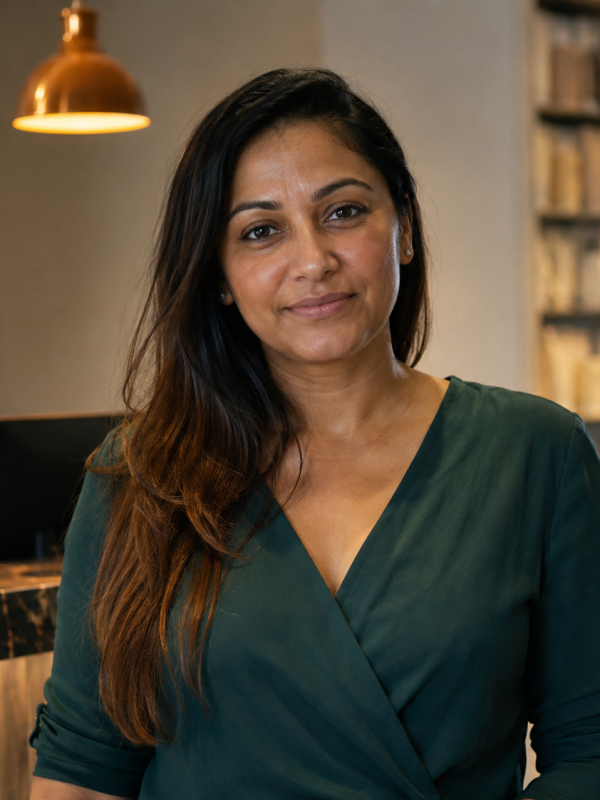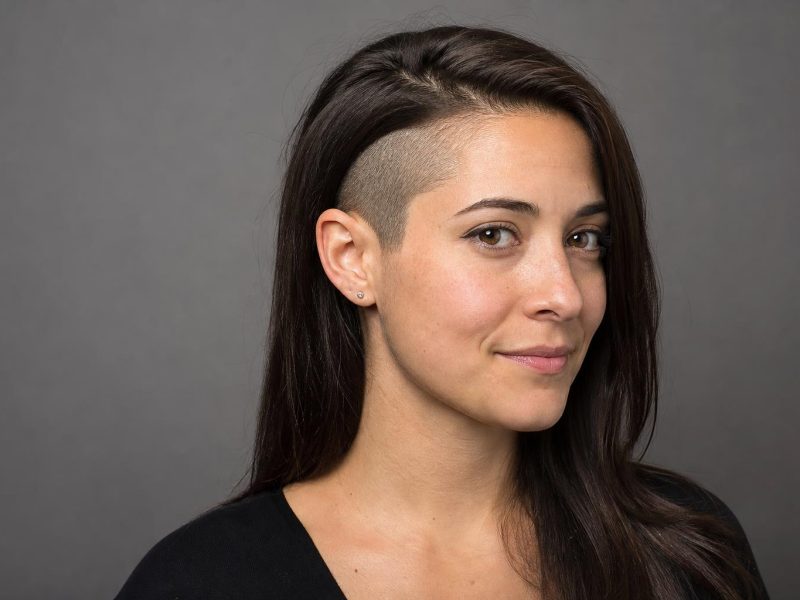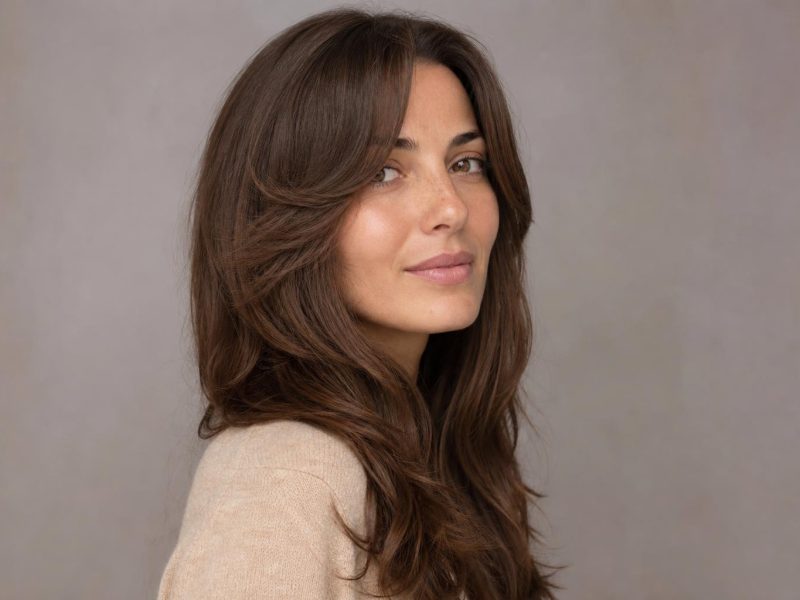
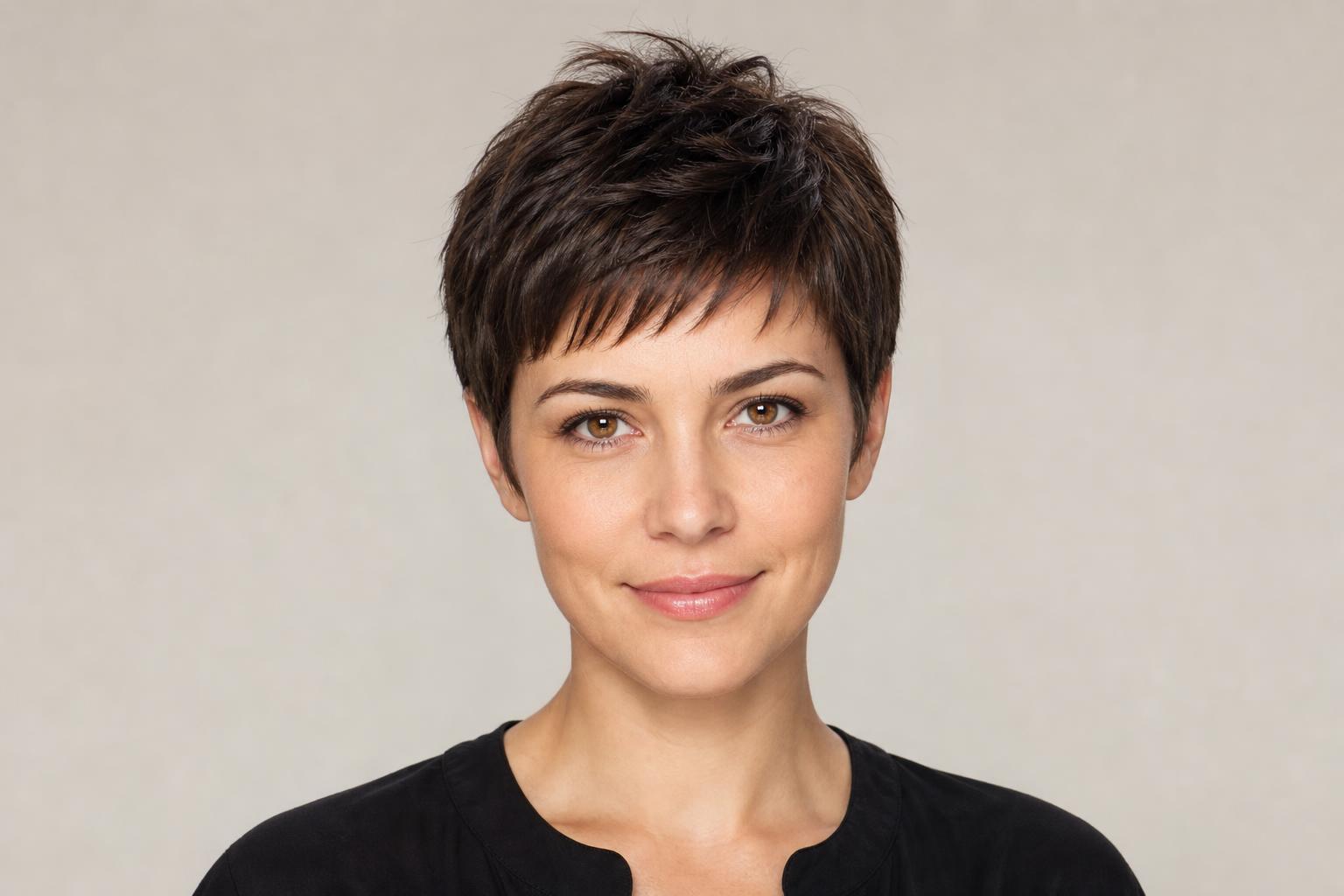
An oval face is the one shape that can wear any pixie variation without worrying about correcting proportions, which means the only question is which style you want.
Oval faces are balanced from top to bottom, slightly longer than wide, with no dominant feature that needs softening or compensating for. That makes a pixie cut on an oval face a choice of pure preference rather than a shape-management exercise. These 30 pixie cuts for oval faces cover the full range, from the shortest one-length crops to longer bixies, from clean and sleek to tousled and textured, from natural color to bold color statements.
Because oval faces are the most forgiving for short hair, this gallery leans into variety. A face shape reference table, a stylist script section, and styling advice by hair type follow the gallery.
| Factor | Details |
|---|---|
| Face shape advantage | Balanced proportions mean no restriction on pixie style, length, or fringe type |
| Best variations | All variations, classic crop, textured, asymmetric, fringe, undercut, longer pixie |
| Hair textures | Fine through coily; technique and product differ by texture, not by face shape |
| What to avoid | Nothing is forbidden, choose based on your hair texture and styling lifestyle, not face shape |
| Trim frequency | Every 4-6 weeks; closer to 4 for very short crops, 6 for longer pixies |
Classic Short Crops
The clean, uniform short crop is the most straightforward pixie option, and on an oval face it is also one of the most flattering because the balanced face shape carries minimal length without anything to counteract. These six cuts prioritize simplicity and easy upkeep over dramatic styling effects.
1. One-Length Crop with Tapered Nape
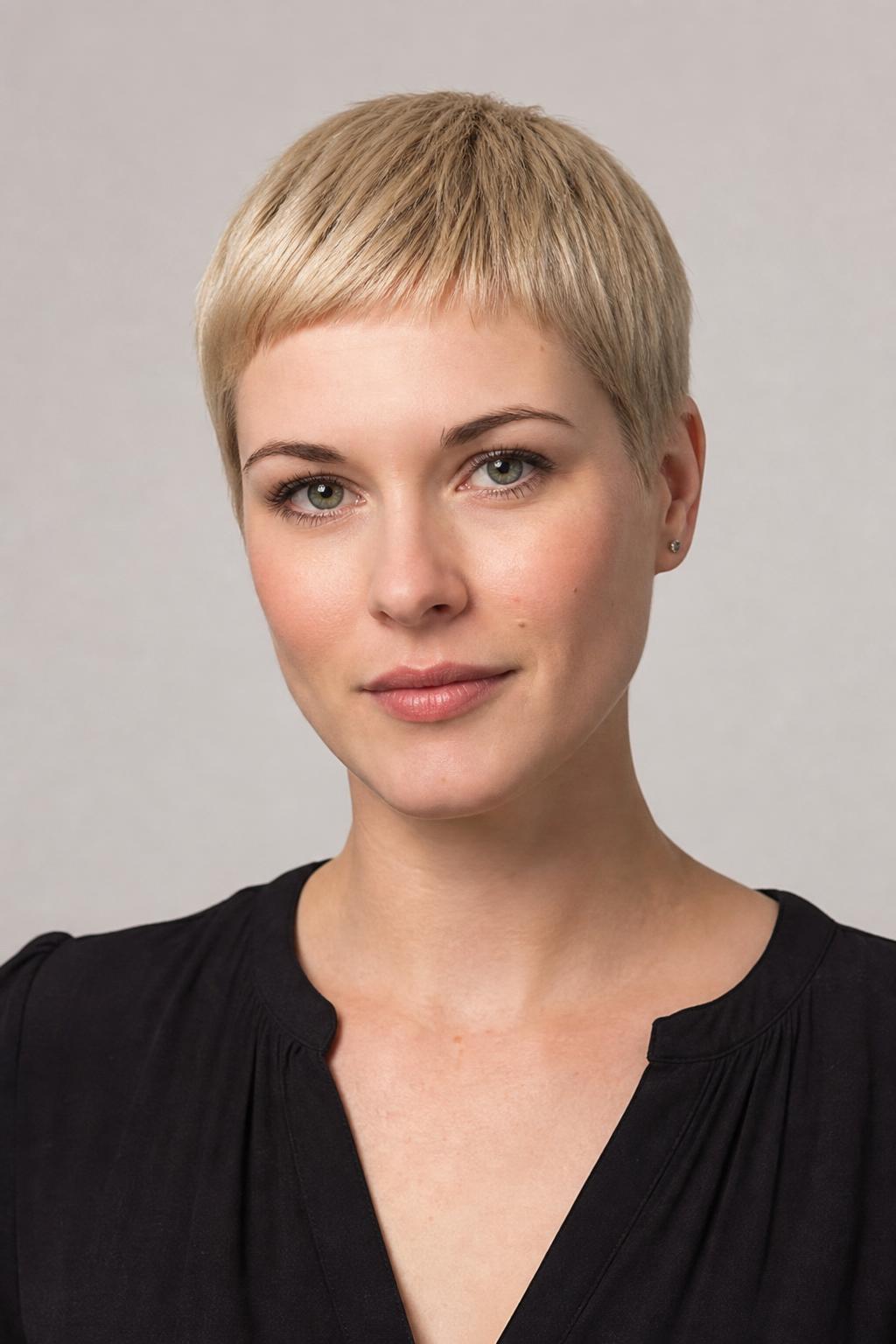
A close-cropped pixie cut to one uniform length with a tapered nape is the most minimal pixie option, and on an oval face it leaves the face’s natural proportions fully visible. The taper at the nape keeps the cut clean without a hard line at the back. Fine hair suits this version especially well because the uniform length requires no special volume support. For medium and thick hair, the one-length crop may need internal thinning to prevent the sides from expanding outward as it grows between trims.
2. Classic French Pixie
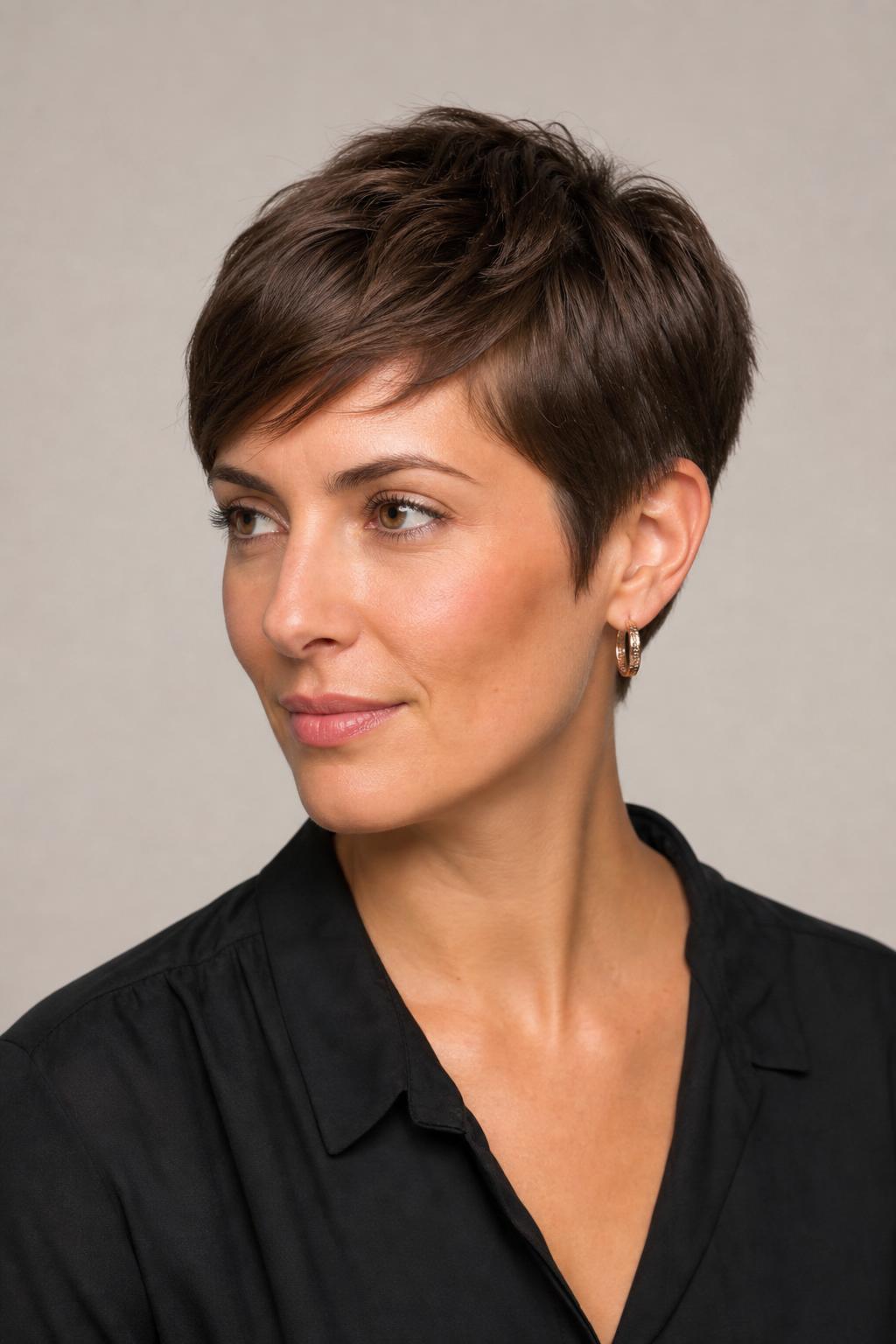
Short at the sides, slightly longer at the crown, with a soft piece or two left at the front, the classic French-style pixie is the archetype of this cut for good reason. On an oval face, the version works without any adjustment because the face’s balanced structure holds the simple silhouette cleanly. Ask your stylist to cut the top no longer than needed to brush forward and the sides to a clean finger-length taper. No dramatic layering or asymmetry required.
3. Buzz-Adjacent Micro Crop
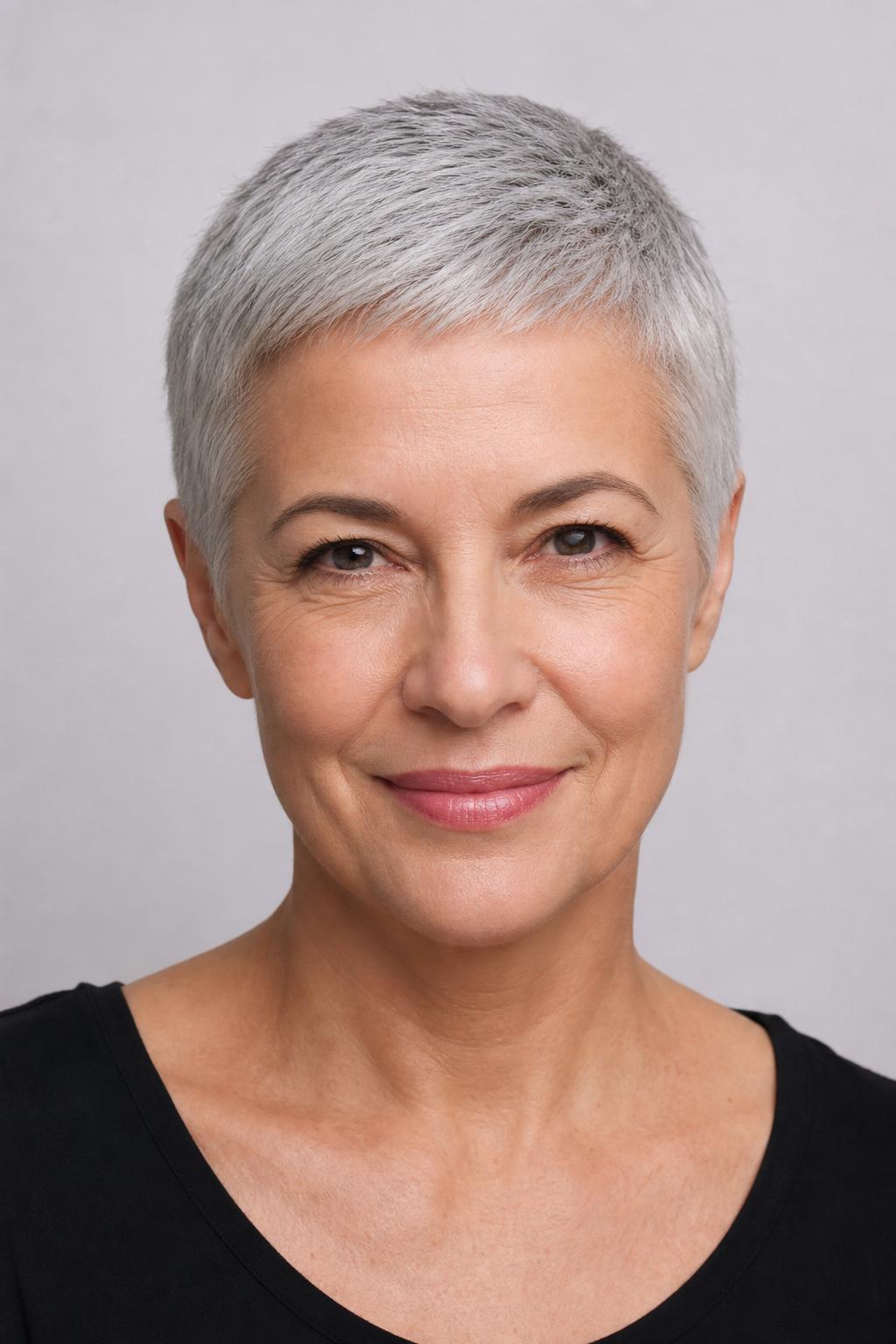
A micro crop cut to half an inch or less on an oval face is a bold choice that most other face shapes cannot carry as easily. The very short length exposes the entire face, and on an oval shape those balanced proportions read clearly without the length to frame them. Natural silver and white hair looks especially striking at this length; the color and the structure work together rather than competing. Budget a trim every 2-3 weeks if you want to maintain the micro-crop length.
4. Soft Crop with Zero-Fade Nape
A zero-fade at the nape blends the hair into the skin with a gradient that finishes cleanly without a visible line. The fade keeps the back looking sharp much longer than a scissor-tapered nape, which is why this version needs less frequent salon visits for the nape specifically, even if the top still needs trimming at the usual 4-5 week interval. On an oval face, the clean nape and soft top create a shape that reads as both structured and effortless.
5. Sleek Blowout Short Crop
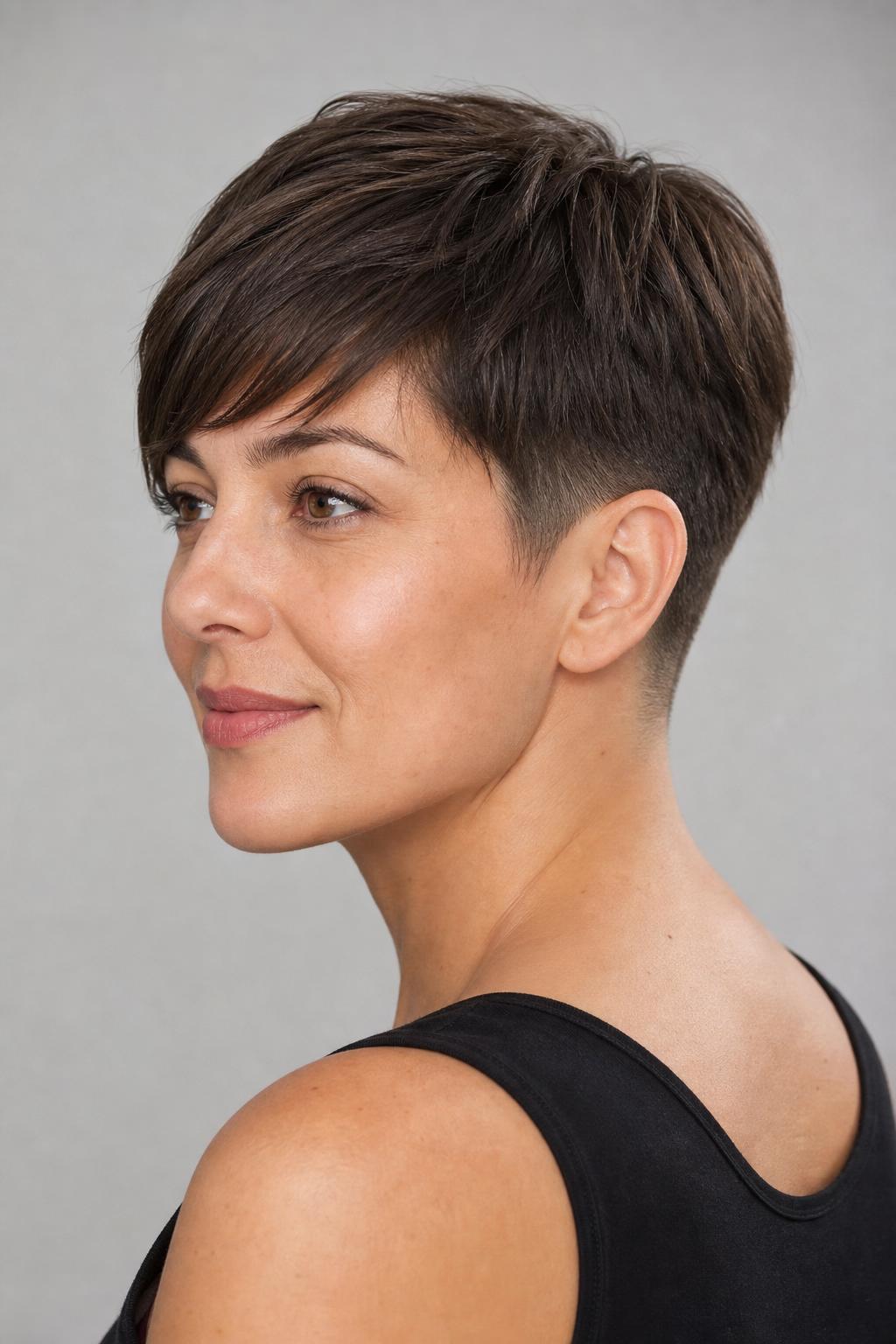
A round brush blowout on a short crop lifts the top section and smooths the sides for a polished finish that reads as intentional rather than casual. On an oval face, a sleek blown-out crop has a classic, almost architectural quality because the face’s balanced proportions anchor the structured styling. Use a heat protectant, a soft-hold blowout cream, and a small round brush; finish with a light-hold spray to keep the smoothed sections in place through the day.
6. Short Crop Styling Script
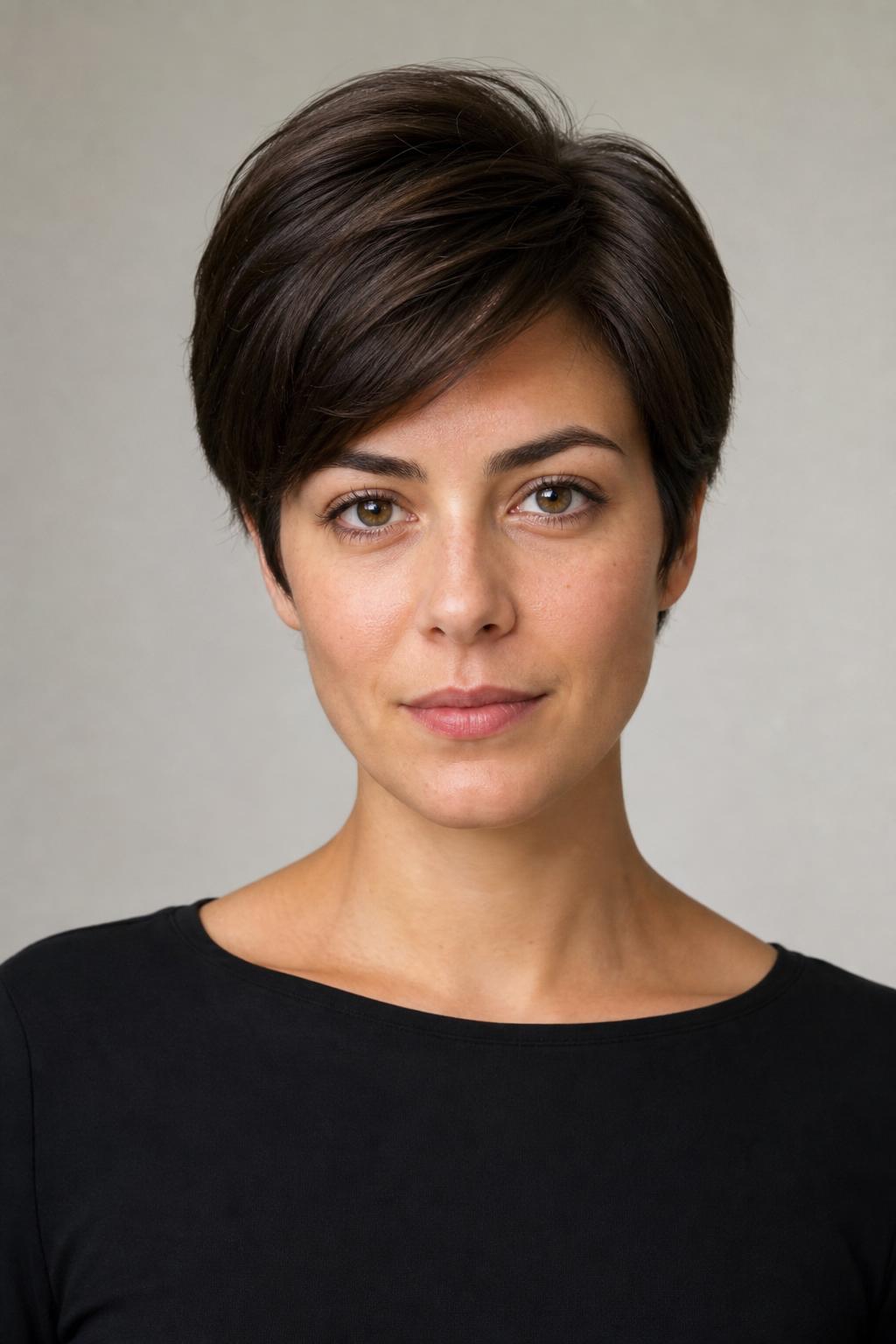
Request: “I want a clean short crop, slightly longer on top than the sides, with the nape tapered rather than blocked. I have an oval face so I do not need any particular face shape correction, just a clean, simple cut.” That last sentence is useful: it tells your stylist not to overcomplicate the cut with adjustments designed for other face shapes. A short crop on an oval face is one of the simplest cuts to execute correctly, and overengineering it is the most common way it goes wrong.
Textured and Layered Pixies
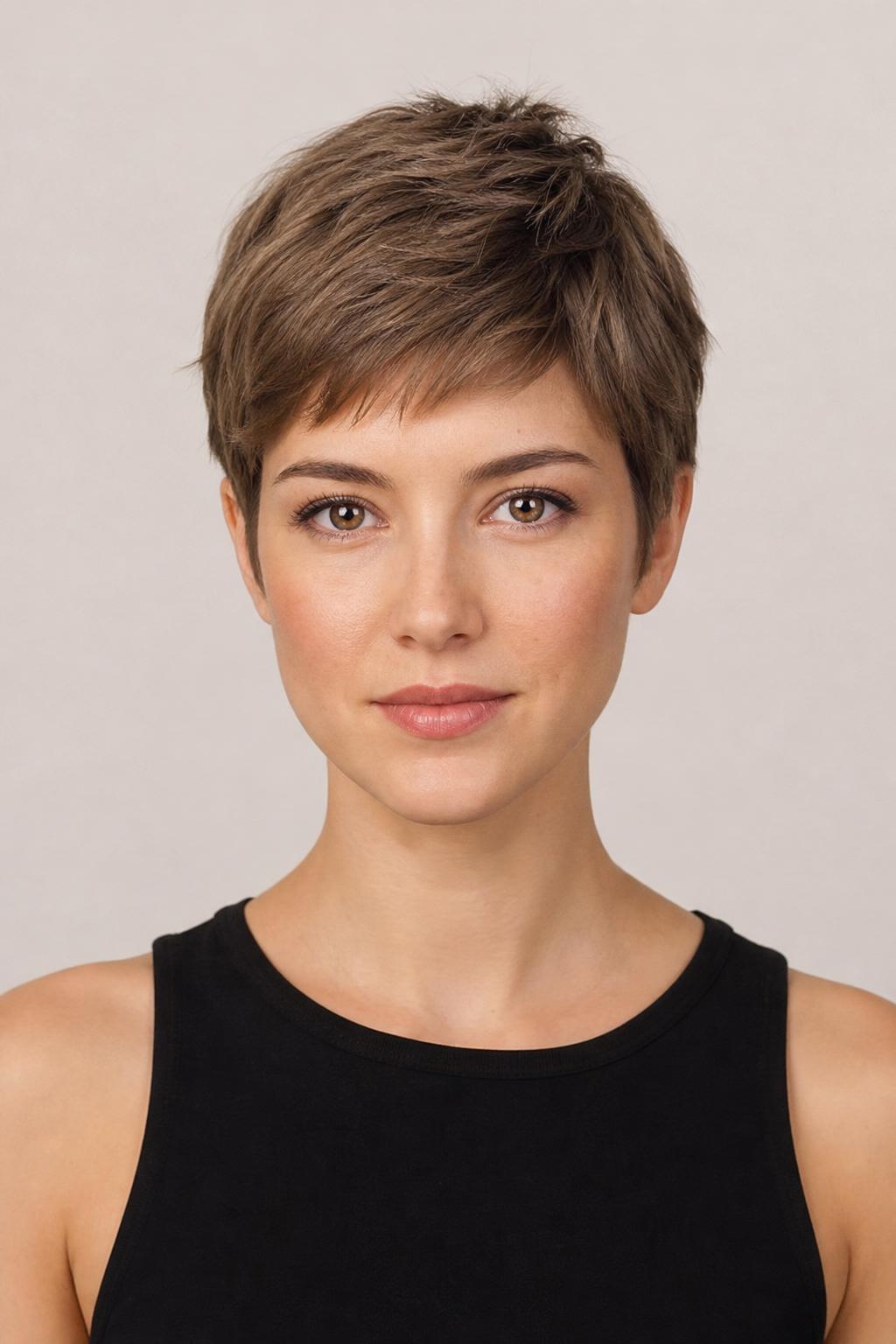
Textured layering adds movement and visual interest to a pixie without adding length. For oval faces, textured cuts work in any direction, including point-cut layers for a soft piecey finish, razor-cut for a feathered edge, and tousled styling for a casual result. These six entries cover the texture spectrum.
7. Point-Cut Piecey Crown
Point-cutting through the top layers creates separated pieces that catch light differently and add movement without the need for product. On an oval face, a piecey crown on a short pixie reads as modern and effortless. Style with a small amount of matte texturizing paste worked through dry fingers: rub the paste between the palms first, then press it lightly into the top layers without combing, so each piece stays defined rather than merging into a solid mass.
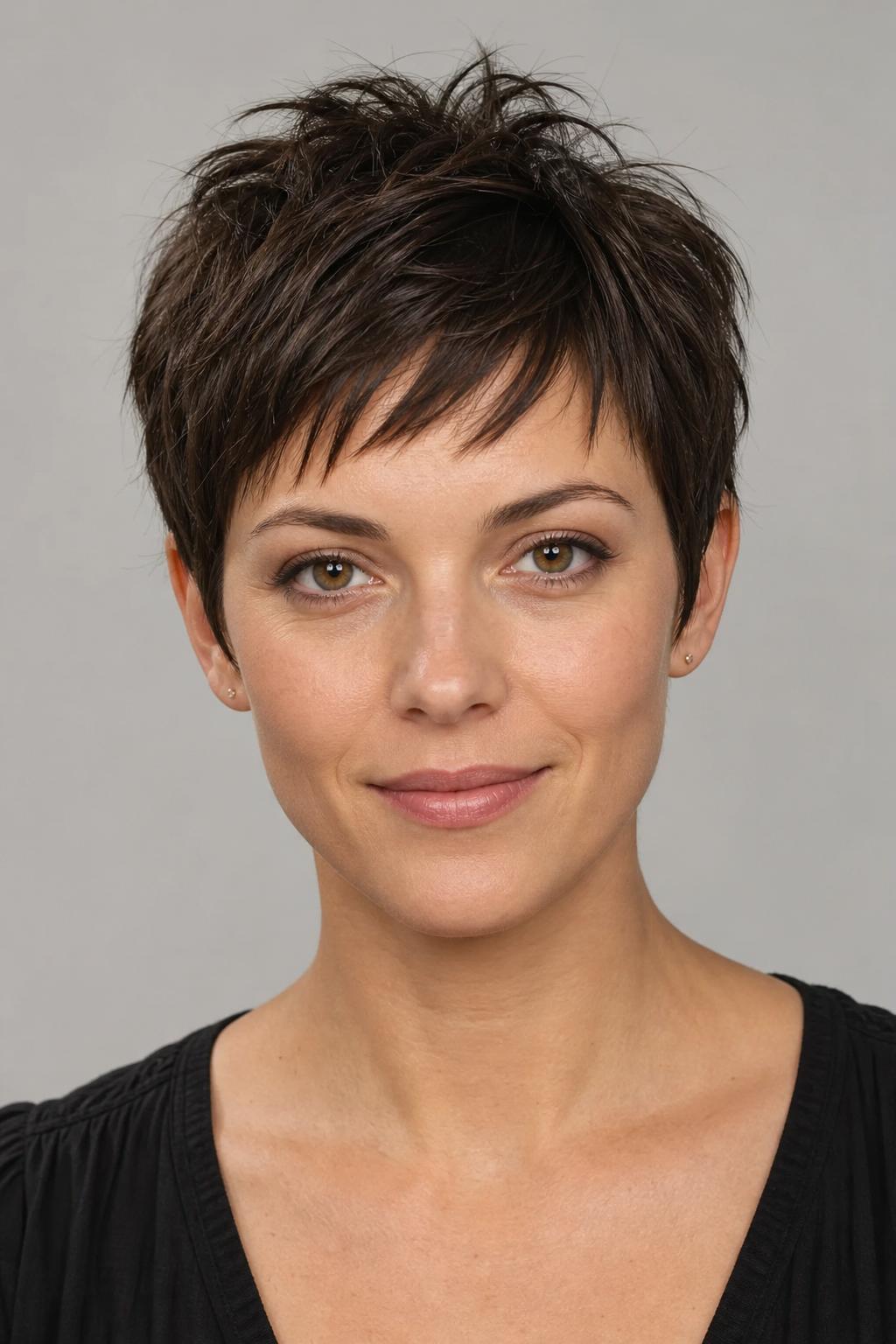
8. Razor-Cut Feathered Pixie
A razor-cut pixie creates edges that taper to near-nothing at the tips, giving the hair a feathered, organic outline rather than a blunt scissor line. On an oval face the feathered edge is purely aesthetic, not corrective, which frees the stylist to place the razor lines for maximum visual effect. Razor cuts suit medium-density straight to wavy hair; on very fine hair the razor can remove too much weight and leave the ends looking wispy rather than feathered.
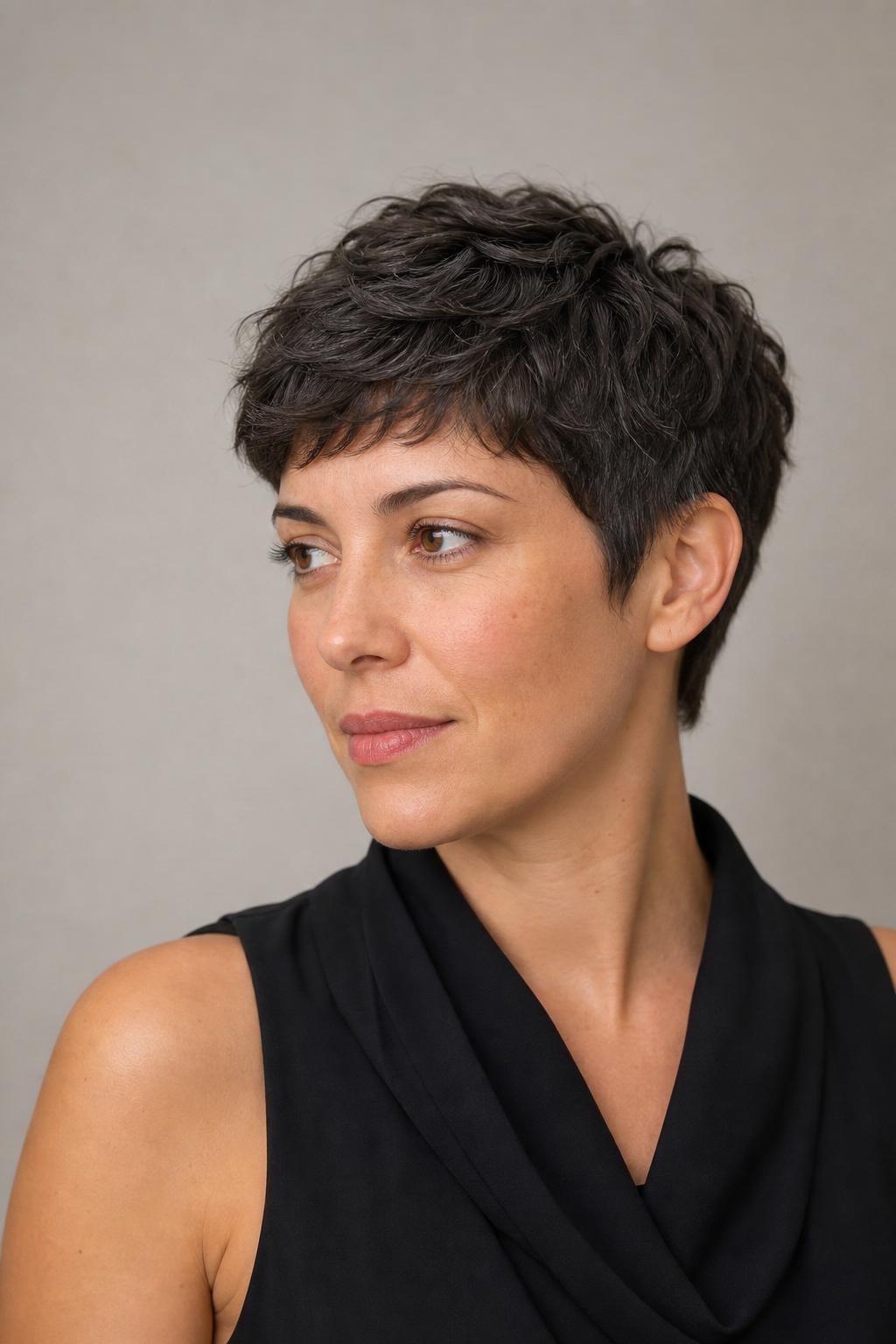
9. Natural Wave Tousled Pixie
Naturally wavy hair in a short pixie produces tousled, organic movement without any product when diffused on low heat and left to set. On an oval face, the tousled finish creates a relaxed, lived-in look that requires almost no daily maintenance; the wave pattern does the work that product and heat tools would otherwise provide. The key is cutting the wave on dry hair so the stylist can see where each curl falls and avoid the most common mistake of cutting a wave pattern too short, which creates springs rather than soft movement.
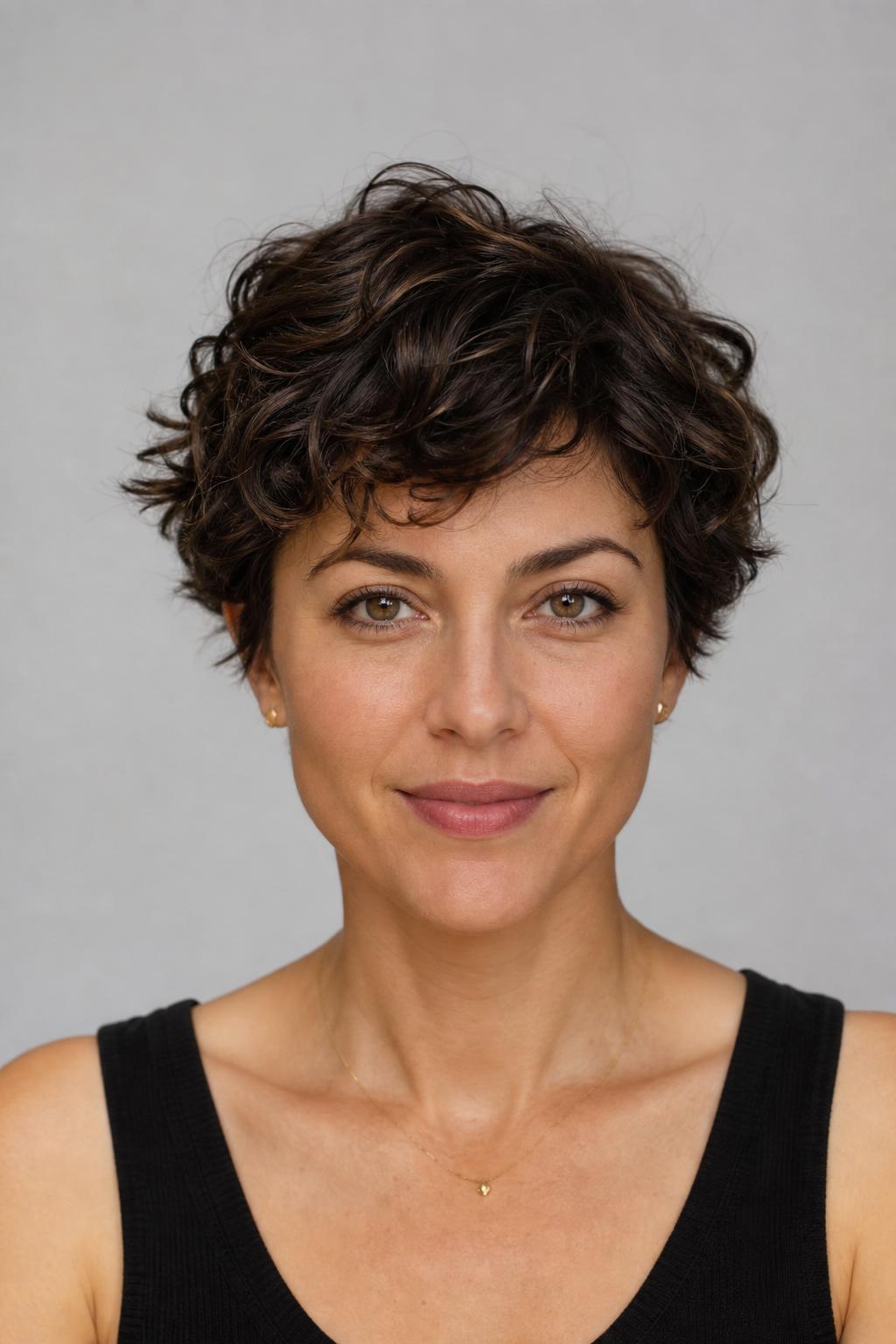
10. Layered Crown for Fine Hair
Fine hair needs layers stacked at the crown to create the appearance of thickness that comes naturally to denser hair. On an oval face, stacked crown layers read as intentional volume rather than compensation for a problematic proportion, so the result looks both flattering and deliberately styled. Use a volumizing mousse on damp hair before blow-drying with a small round brush, rolling from the scalp upward; the lift the mousse and round brush create together adds more apparent volume than either tool alone.
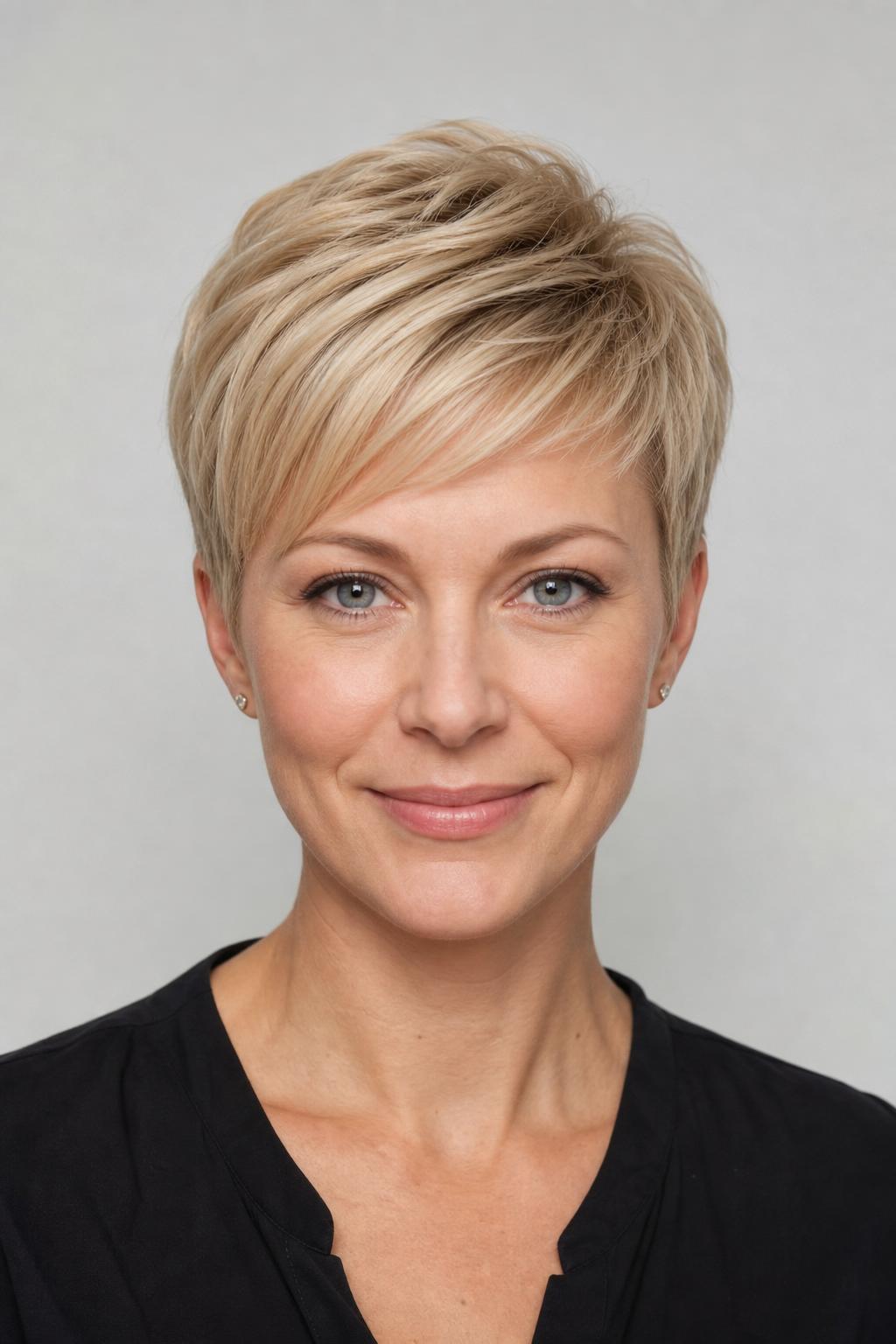
11. Thick-Hair Internally Thinned Pixie
Thick hair in a pixie tends to expand outward rather than lying close, especially on the sides, which can make even an oval face look wider than it is. Internal thinning with slide-cut or point-cut techniques reduces bulk from inside the sections without making the hair look visually thinner from the outside. Ask specifically for thinning on the sides and through the crown, not at the very ends, end-thinning creates the soft tip texture but does not reduce the bulk that causes the side-expansion problem.
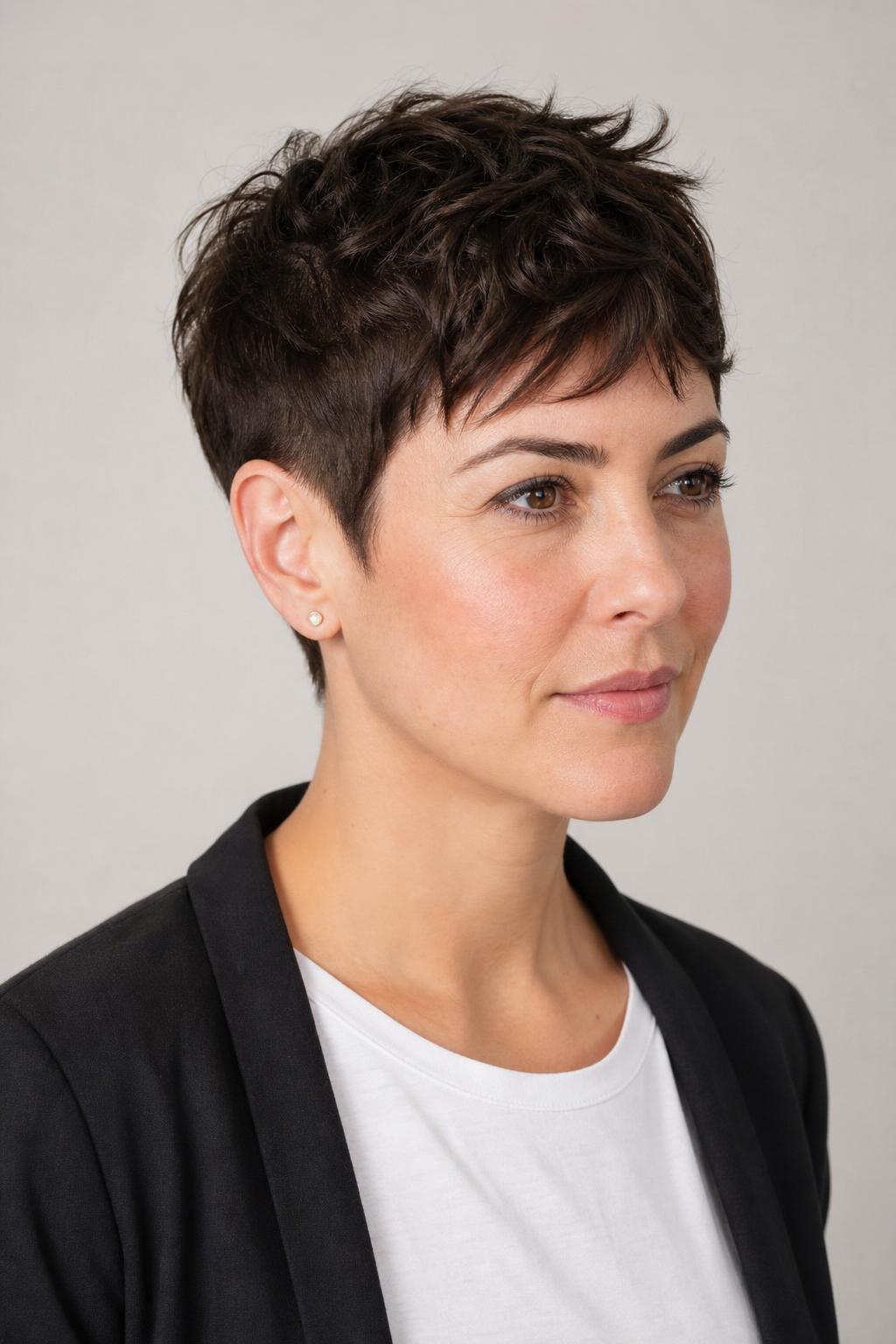
12. Tousled Styling Routine for Textured Pixie
The fastest tousled pixie styling routine for an oval face takes under three minutes: towel-blot (not rub) the hair after washing, apply a pea-sized amount of texturizing cream through the top layers with fingers, diffuse on low heat for 90 seconds while scrunching, then leave it. The low heat and scrunching motion encourages whatever natural texture exists without overprocessing it into stiffness. For straight hair, skip the diffuser and simply air-dry with the texturizing cream applied; the product provides enough separation to read as styled.
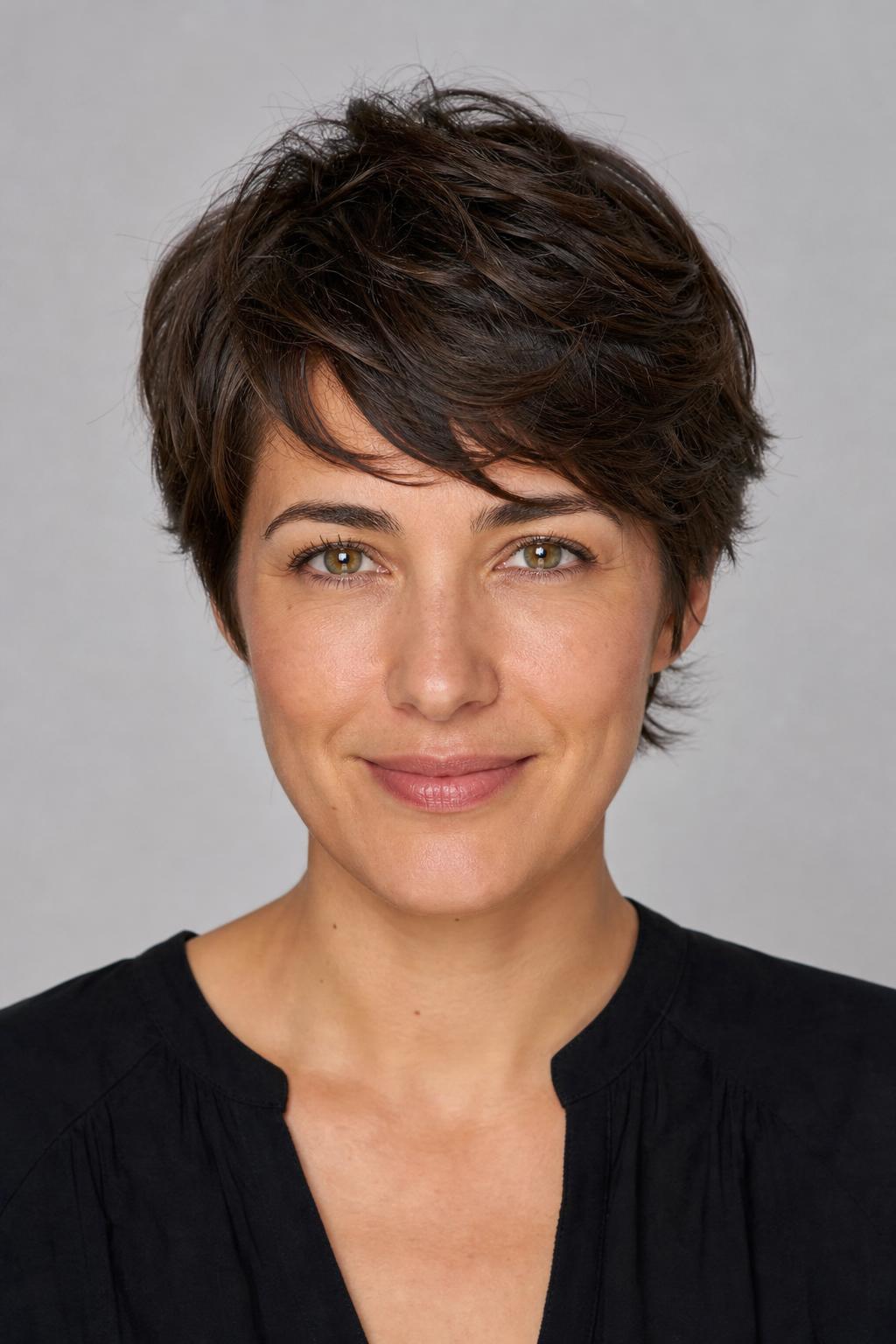
Fringe Styles for Oval Faces
Oval faces can carry any fringe type without the constraints that other shapes impose. A heavy full fringe, a barely-there wispy fringe, a side sweep, a curtain fringe, a blunt micro fringe, all work because the oval shape has no wide forehead to cover or narrow chin to balance. These six entries cover the most requested fringe options and what makes each one work well at this length.
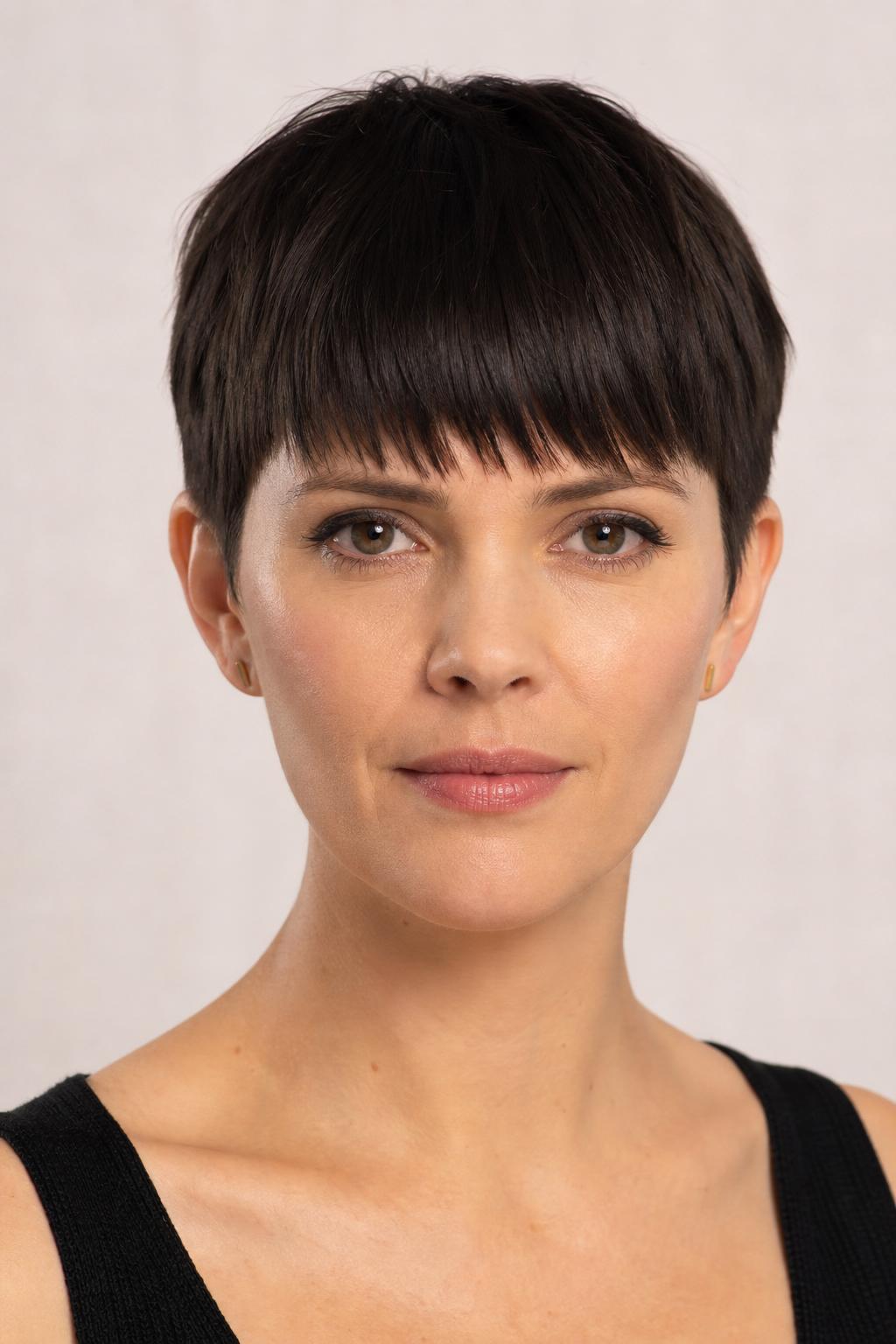
13. Blunt Full Fringe Pixie
A blunt, full fringe cut straight across at eyebrow level is one of the few fringe styles that only works on oval and round faces without modification. The horizontal line of a blunt fringe adds width to most face shapes and shortens the visible face; on an oval face those effects create a more compact, expressive look rather than an imbalanced one. Have the fringe cut a centimeter longer than your target at first, then trim it again once it settles, fringe always appears shorter when dry than when wet.
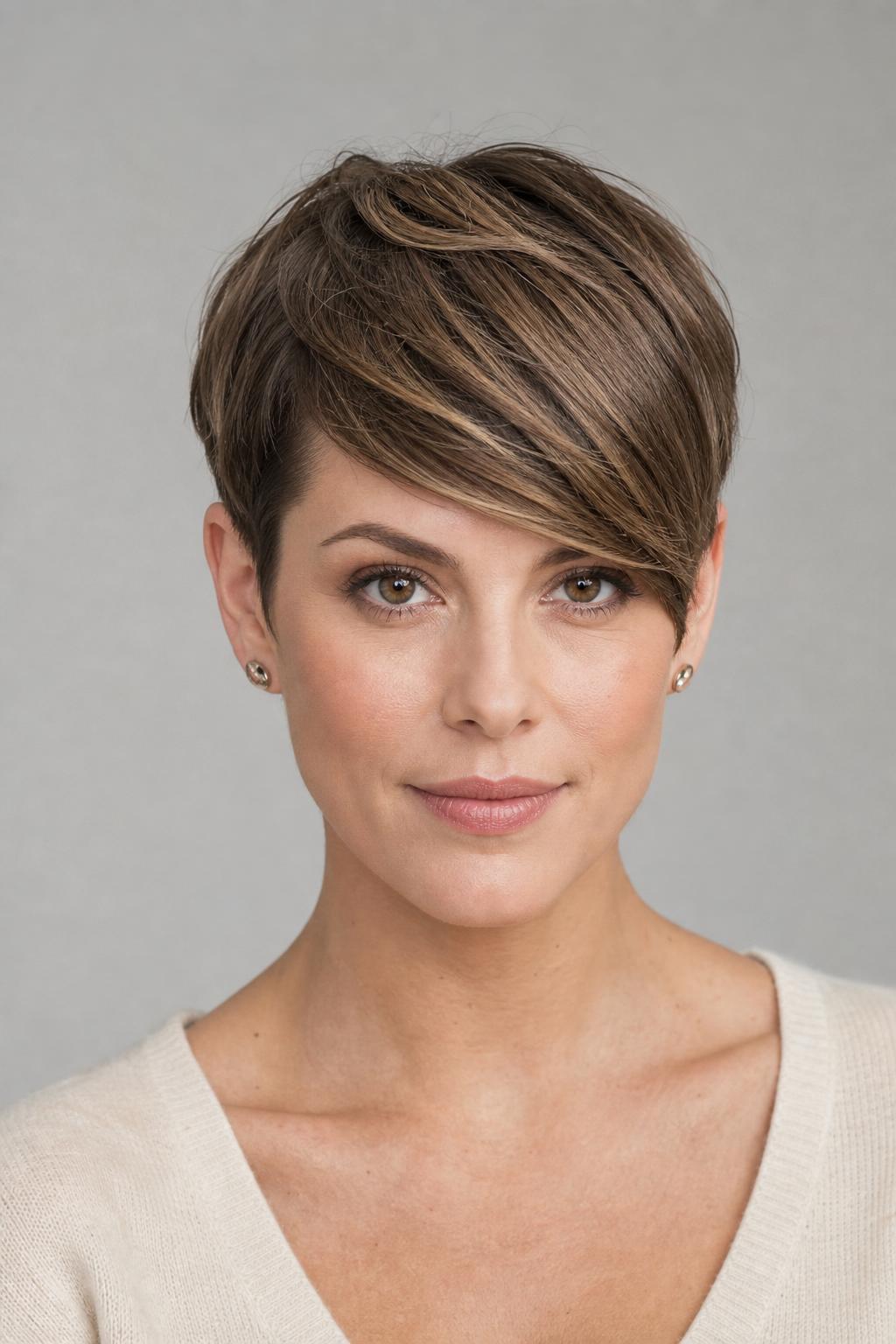
14. Side-Swept Fringe Pixie
A long side-swept fringe on a pixie adds a diagonal line that creates movement and visual interest without the shape-correction function it serves on heart or square faces. On an oval face, the sweep direction can go either way depending on the natural growth pattern. Ask your stylist which direction your hairline naturally falls, working with the growth pattern rather than against it means the fringe holds its style longer between washes and requires almost no product to stay in place through the day.
15. Curtain Fringe Pixie
A center-parted curtain fringe on a pixie creates soft face-framing pieces that fall to each side of the forehead. On an oval face, curtain fringe adds a gentle romantic quality without any of the practical concerns it raises on other shapes. The pieces should reach just below the eyebrow; shorter than that and they become more of a split micro fringe, longer and they start bridging toward a side-swept bang. Use a round brush on each piece to curl it slightly inward for the classic curtain curl shape.
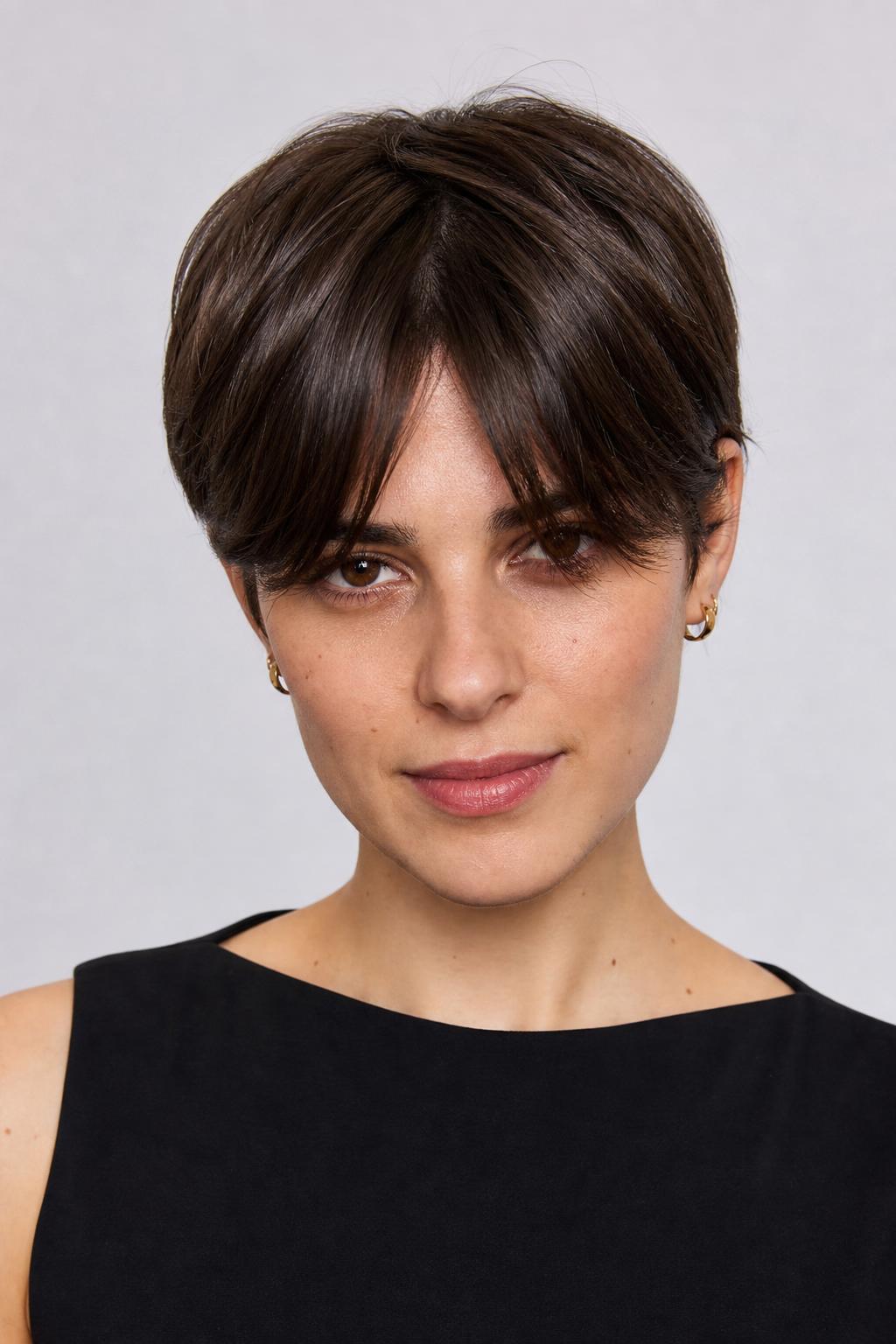
16. Wispy Micro Fringe Pixie
A micro fringe cut above the eyebrows with separated, wispy tips creates a striking accent on the forehead without the full-coverage look of a traditional fringe. On an oval face, a micro fringe on a pixie gives the cut a fashion-forward quality that reads as deliberate and bold. The wispy version is more forgiving than a sharp blunt micro fringe; the separated tips are less precise and easier to maintain as the fringe grows. It suits fine hair particularly well, since the lightness of the fringe prevents the flat, sparse look that thicker fringes can create on thin hair.
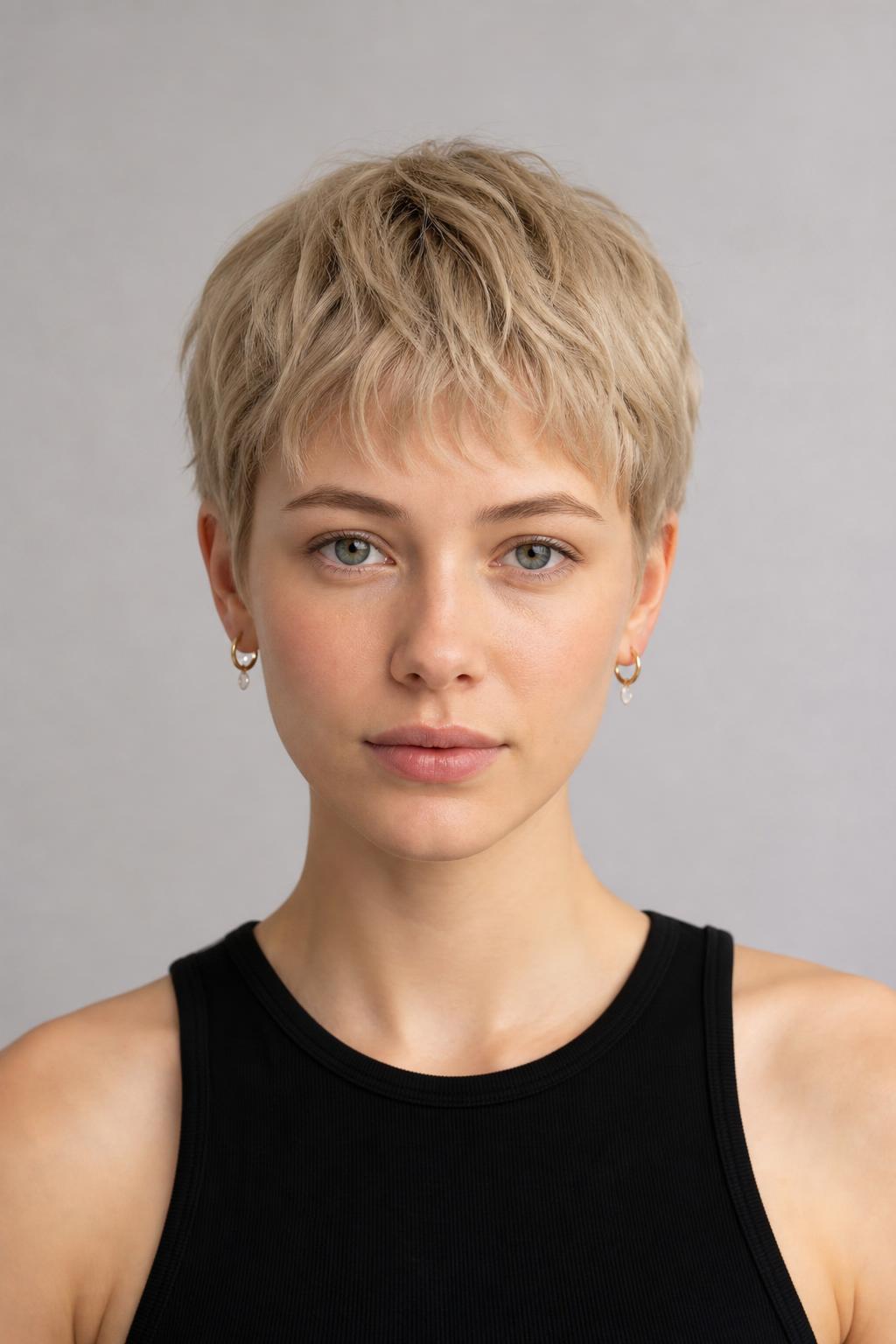
17. See-Through Fringe Pixie
A see-through fringe, fine enough to reveal the forehead through the strands, bridges between a full fringe and no fringe, adding interest without the coverage commitment. On an oval face, the sheer quality of a see-through fringe creates a delicate, almost editorial look. Medium-fine to fine hair naturally achieves this with minimal thinning; thick hair needs the fringe significantly thinned to achieve the transparency, and even then it may not lie flat enough to let light through consistently.
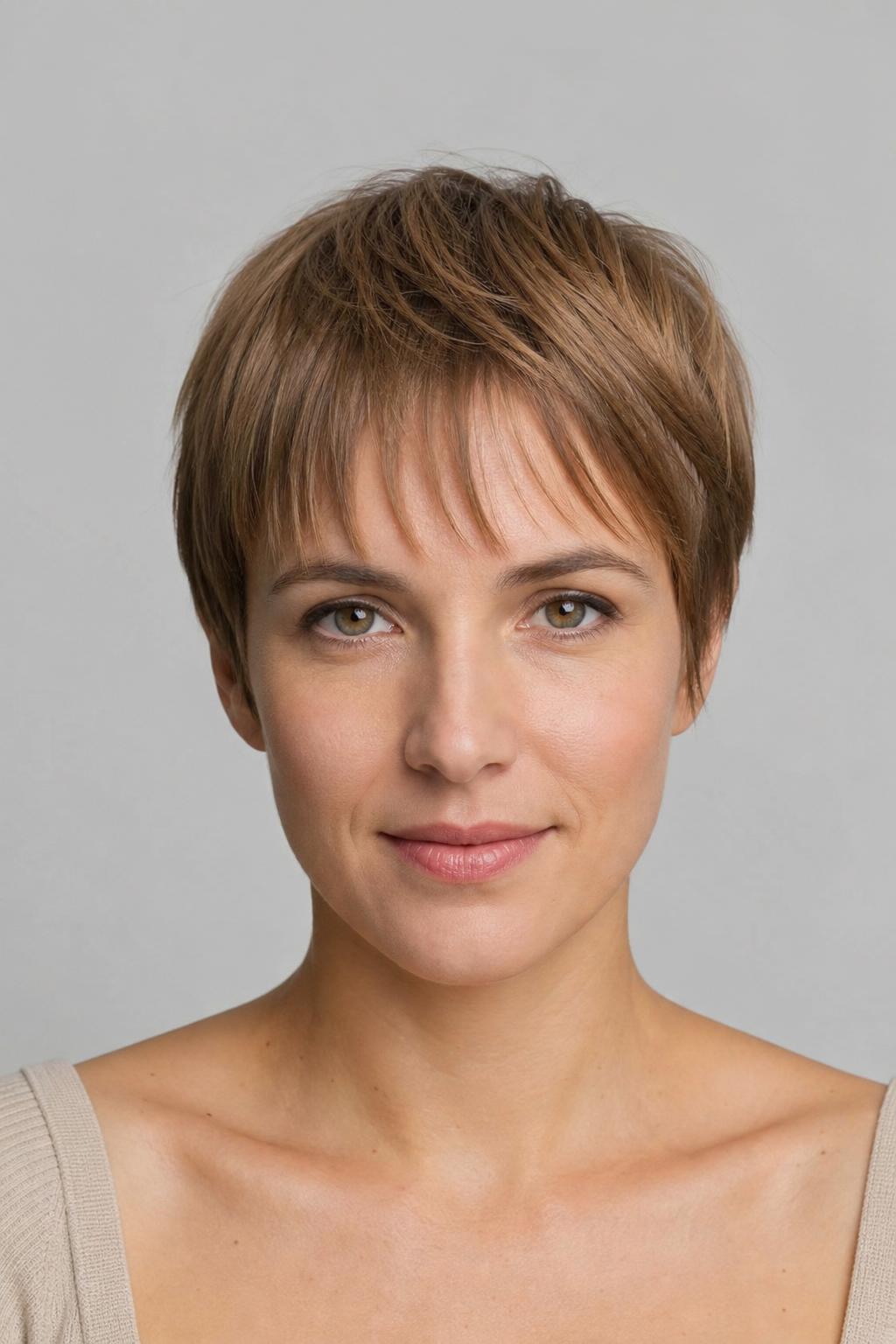
18. Color-Forward Fringe Pixie
Coloring the fringe section a different shade from the rest of the hair, platinum on dark, copper on brunette, cool blonde on warm brown, creates a color-block accent on the forehead that works as a statement without requiring additional length. On an oval face, this color technique adds the visual interest that the face’s neutral proportions can hold without it tipping into imbalanced. Keep the colored section to the fringe pieces only; extending it down the sides shifts the effect from a focal point to a streaky result.
Asymmetric and Bold Pixies
An oval face carries asymmetric and bold pixie variations particularly well because the shape’s balanced proportions provide a stable visual anchor for dramatic styling choices. Dramatic undercuts, one-sided designs, and angular edges all work without the face shape constraints that limit these choices on less balanced shapes. These six entries are the bolder end of the oval-face pixie spectrum.
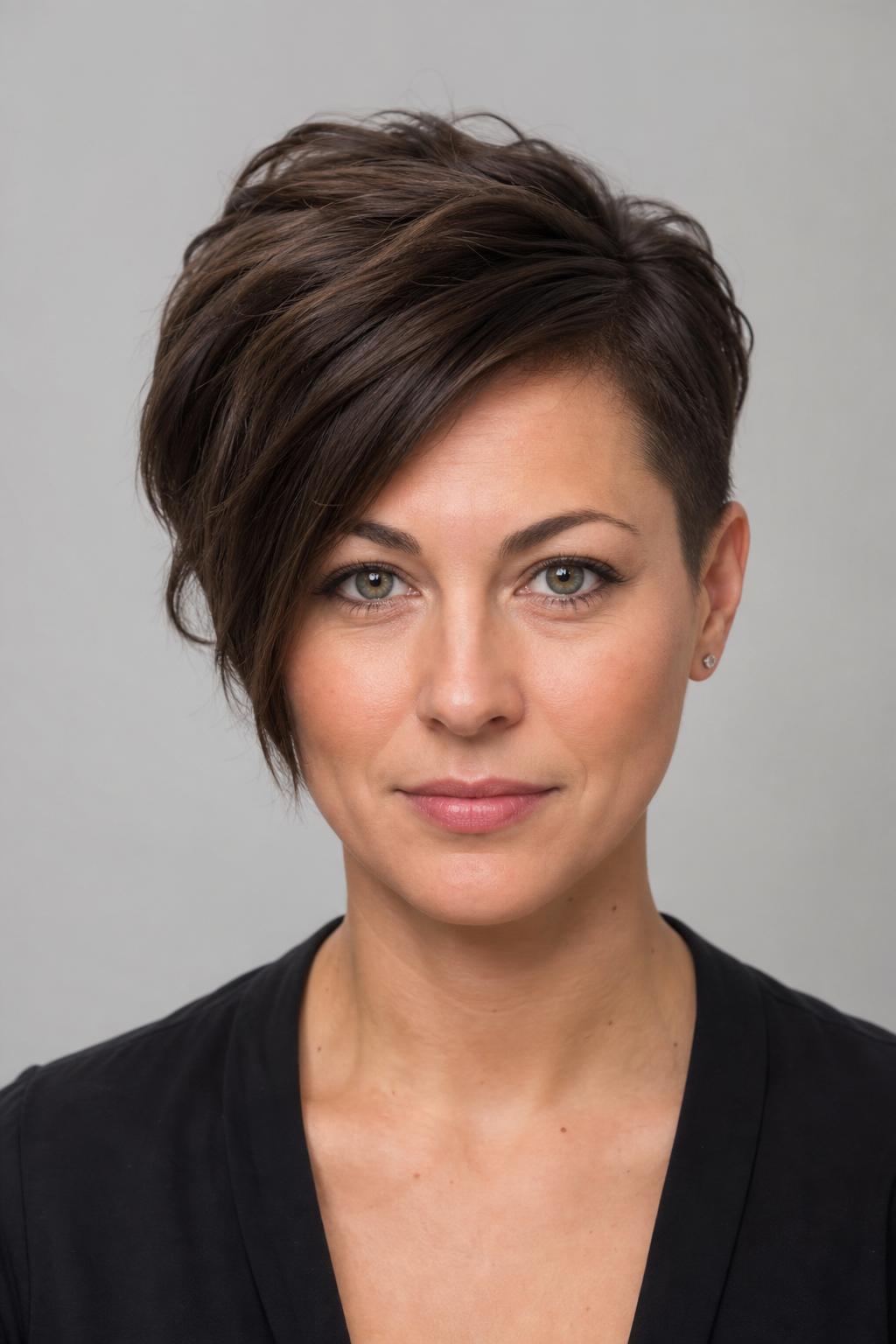
19. Deep Asymmetric Side Part
A deep side part divides a pixie into a heavier swept side and a closely tapered short side. On an oval face, the asymmetry is purely about personality and styling preference rather than face-shape management, which gives the cut a relaxed, uncalculated quality. The heavier side can be worn forward across the forehead, slicked back, or tucked behind the ear depending on the occasion. Very little product is needed; the cut’s natural movement does most of the work.
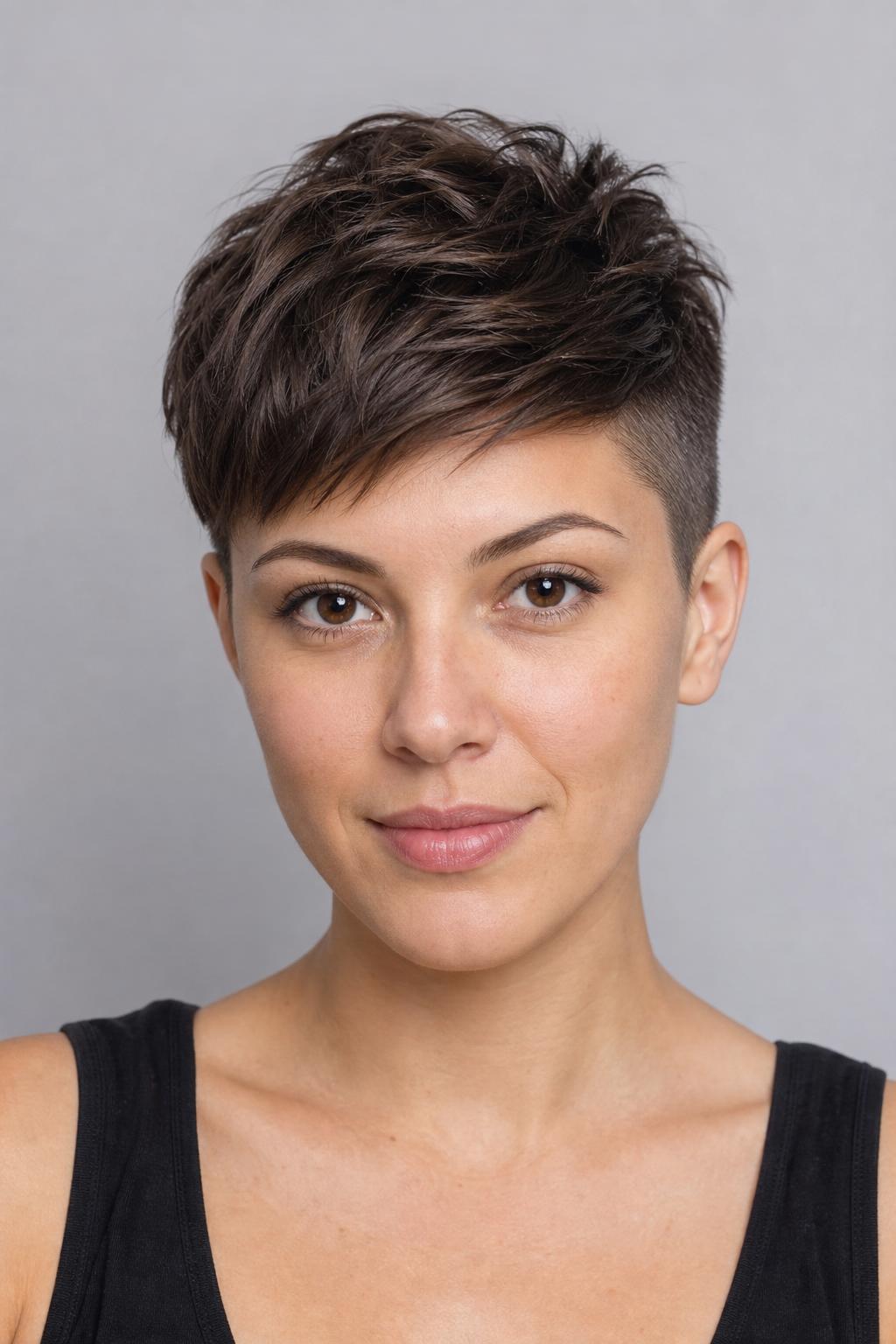
20. Classic Undercut Pixie
A feminine undercut pixie shaves or fades one or both sides close while leaving the top and crown at standard pixie length. On an oval face, the undercut creates maximum contrast between the close sides and the longer top, and the face’s balanced proportions carry that contrast without looking severe. The undercut needs maintenance every 3-4 weeks to stay sharp; the top sections hold longer between trims, typically 5-6 weeks.
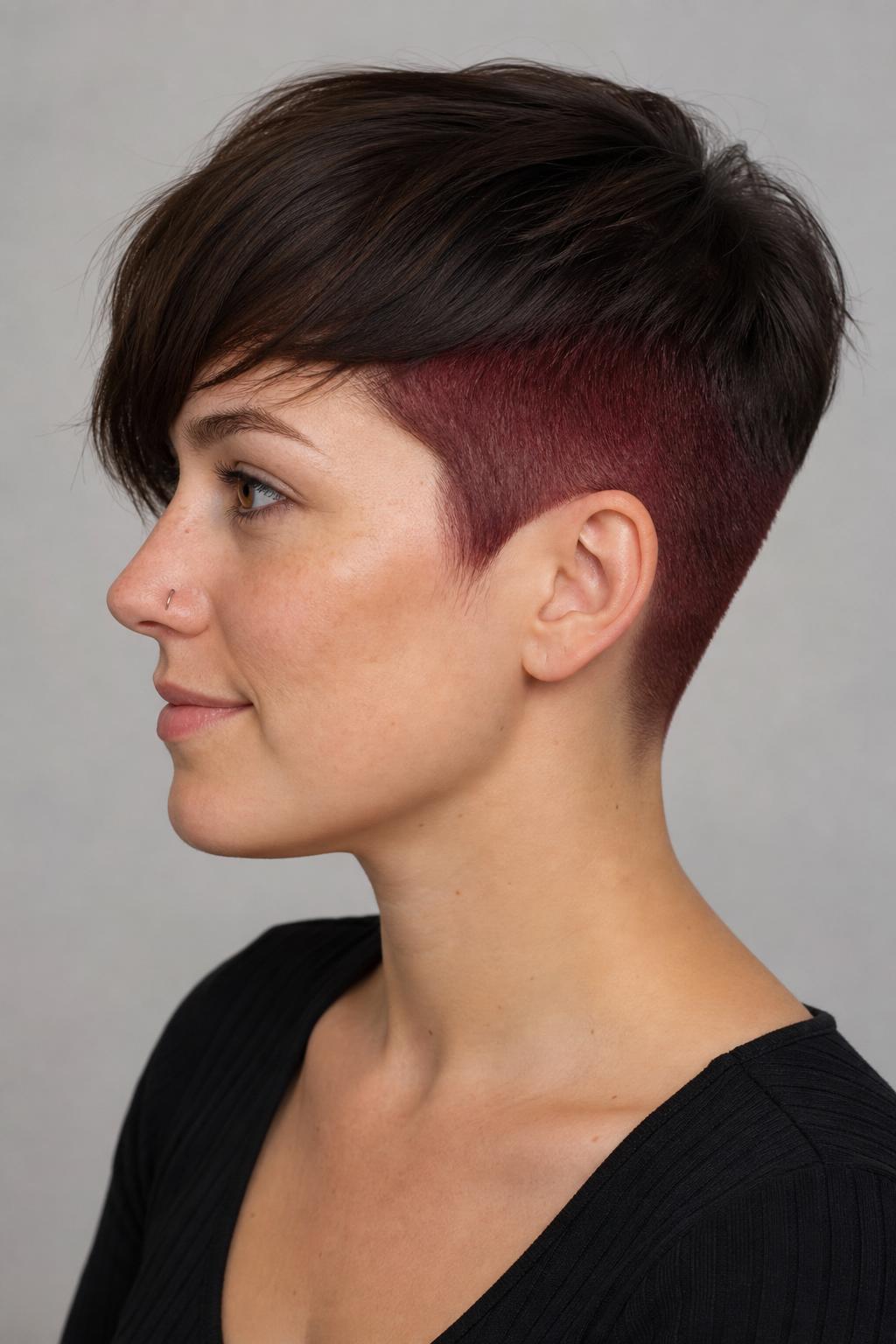
21. Disconnected Undercut with Color
Dyeing the undercut a bold accent color, sapphire, burgundy, copper, that peeks from beneath the longer top creates a detail visible only when the hair moves or the undercut is shown deliberately. On an oval face, this kind of hidden color detail is a lower-risk version of a bold color choice: subtle from the front, visible from the side, entirely concealable by styling the top down. The undercut section holds semi-permanent color well because the short, close-clipped hair absorbs pigment evenly across a small area.
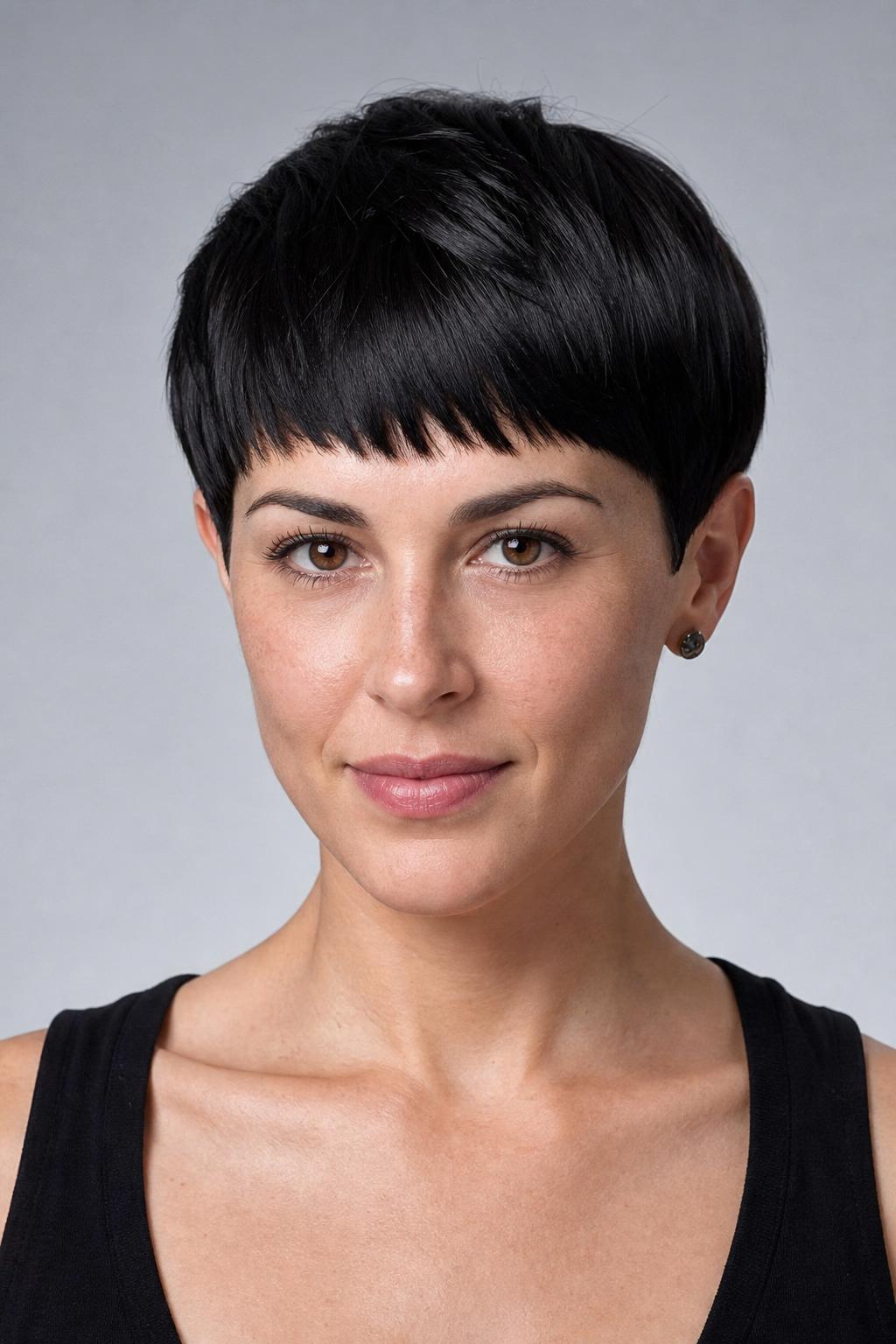
22. Angular Geometric Crop
An angular geometric crop uses sharp, intentional lines at the perimeter, including at the nape and above the ear, rather than the soft gradients of a tapered cut. On an oval face, the geometric quality reads as deliberately designed rather than severe. The look is closest to early-2000s geometric short cuts with a modern execution: less rigid than the original versions, with some texture at the top to prevent it from looking too uniform. Pomade or a light wax keeps the perimeter lines defined between trims.
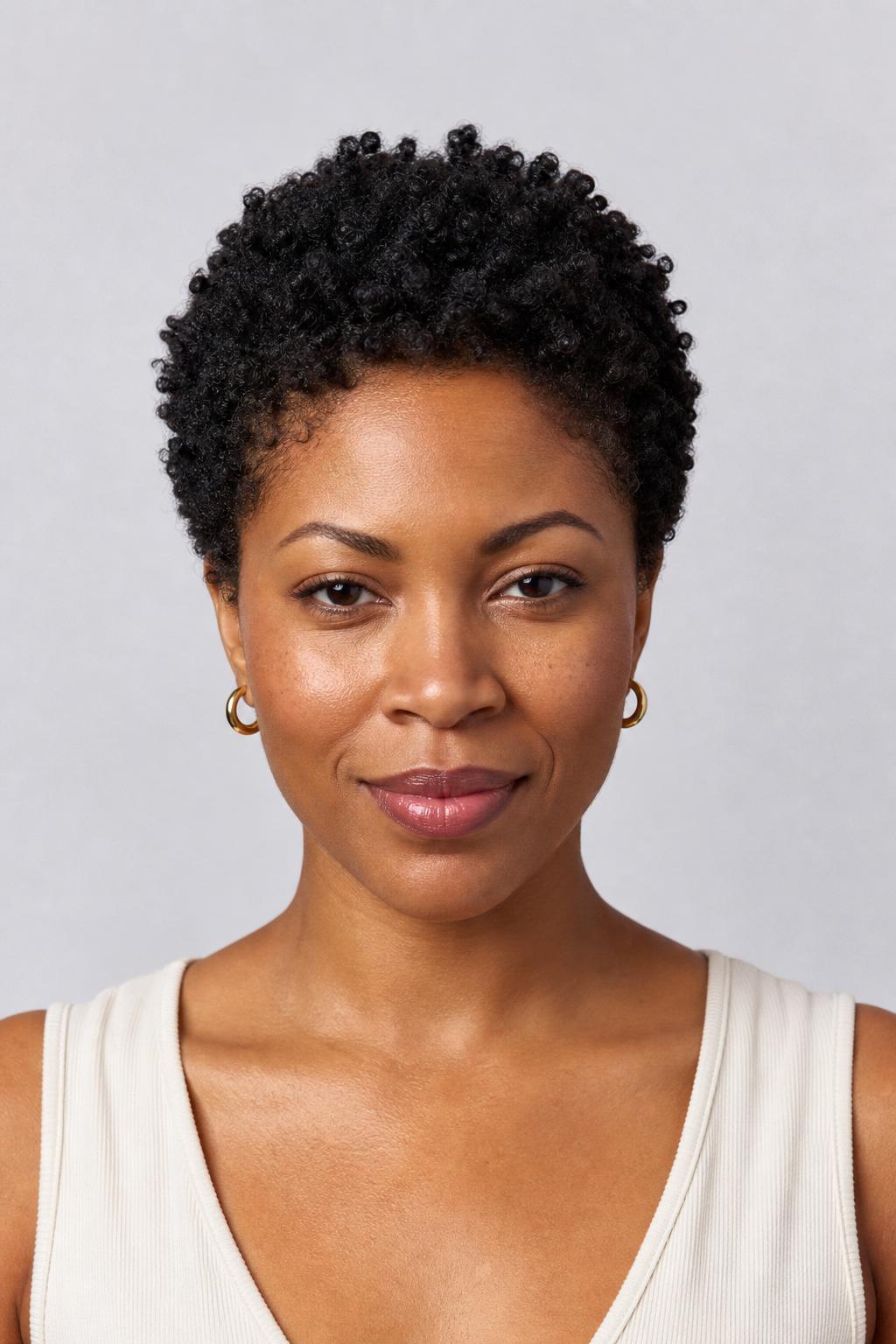
23. Coily and Natural Cropped Pixie
Coily and tightly curled hair in a short pixie on an oval face creates a shape-defining cut that other textures cannot replicate. The coil’s natural compression means a half-inch cut on wet hair may spring to a quarter-inch when dry, so always communicate your target length to your stylist as a dry-hair measurement. On an oval face, the coil’s natural volume and shape are purely about showcasing the texture; there are no proportion concerns to manage. See our curly pixie cut styles for more detail on cutting by curl pattern.
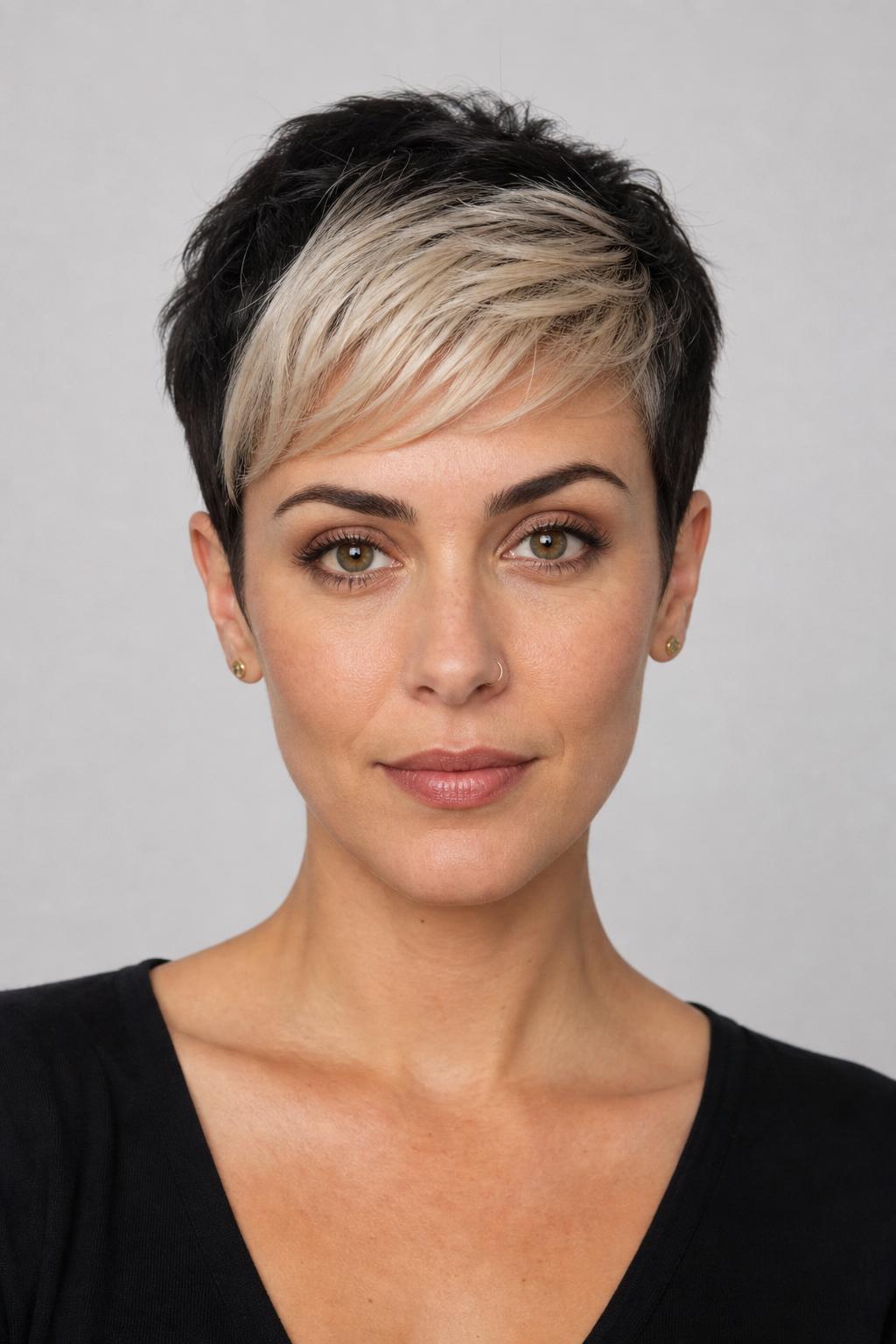
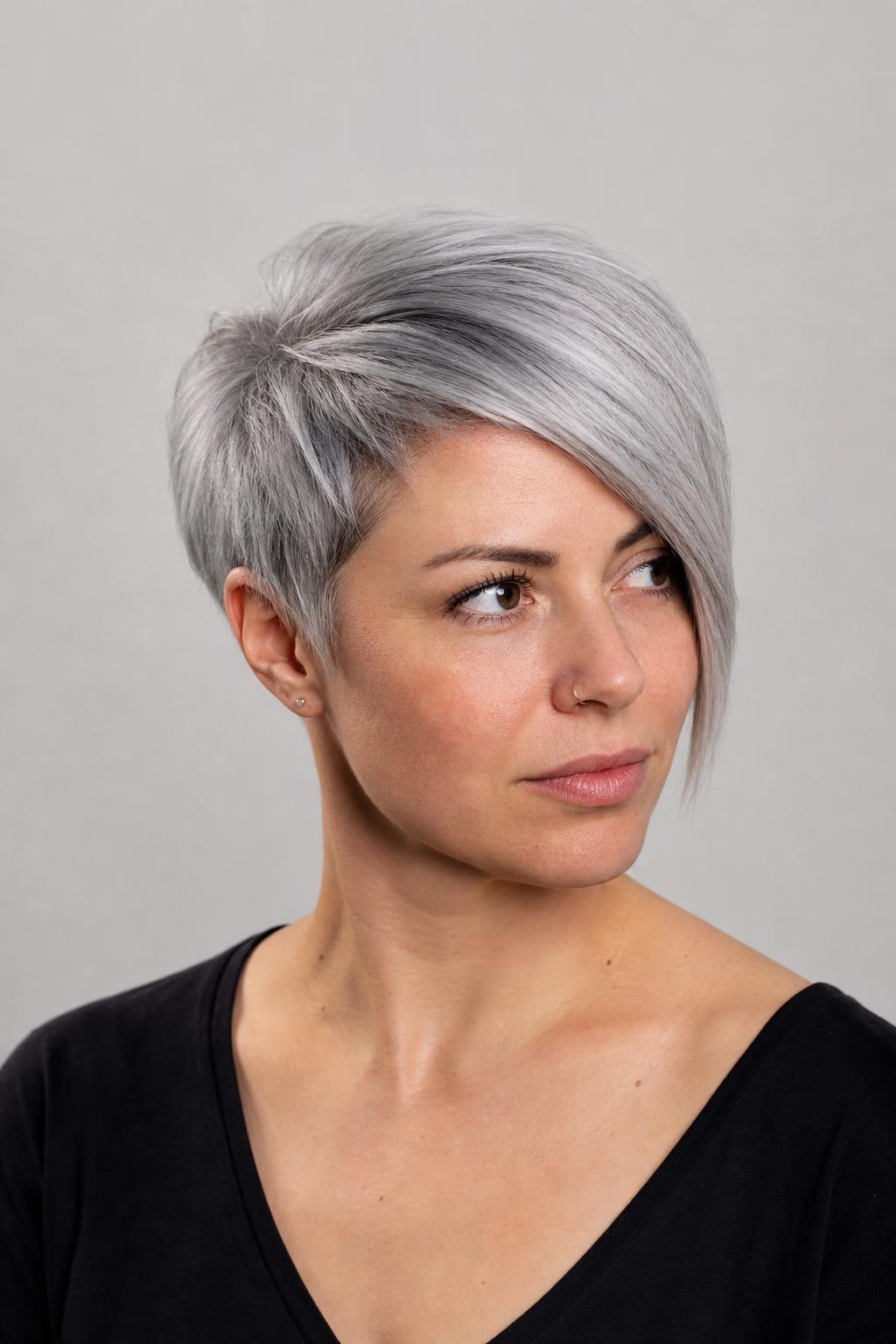
24. Bold Silver Asymmetric Pixie
Silver and platinum color on a short asymmetric pixie is one of the strongest possible combinations on an oval face. The color draws immediate attention to the face’s proportions, and the asymmetric cut ensures that attention is accompanied by visual interest. On dark hair, lifting to silver requires multiple bleach sessions and consistent toning; on hair that is already light or fading to grey naturally, the silver result is achievable more quickly and holds longer between toning sessions. A weekly violet shampoo counteracts brassiness between full toning appointments.
Longer Pixies and Bixies
Longer pixie options and bixie hybrids give an oval face a little more length to style and a wider window between trims. These six cuts stay short enough to read as pixie-adjacent while providing enough hair to tuck, sweep, and vary day to day.
25. Ear-Grazing Longer Pixie
Ear-grazing length on the sides adds just enough hair to tuck behind the ear or let fall loose, without crossing into bob territory. On an oval face this version is the most low-maintenance longer pixie because the extra length is forgiving during grow-out and does not rely on a specific styling direction to look intentional. The top and crown can be cut in the same layered or smooth style as a shorter pixie, giving the cut a classic structure with a slightly more relaxed silhouette.
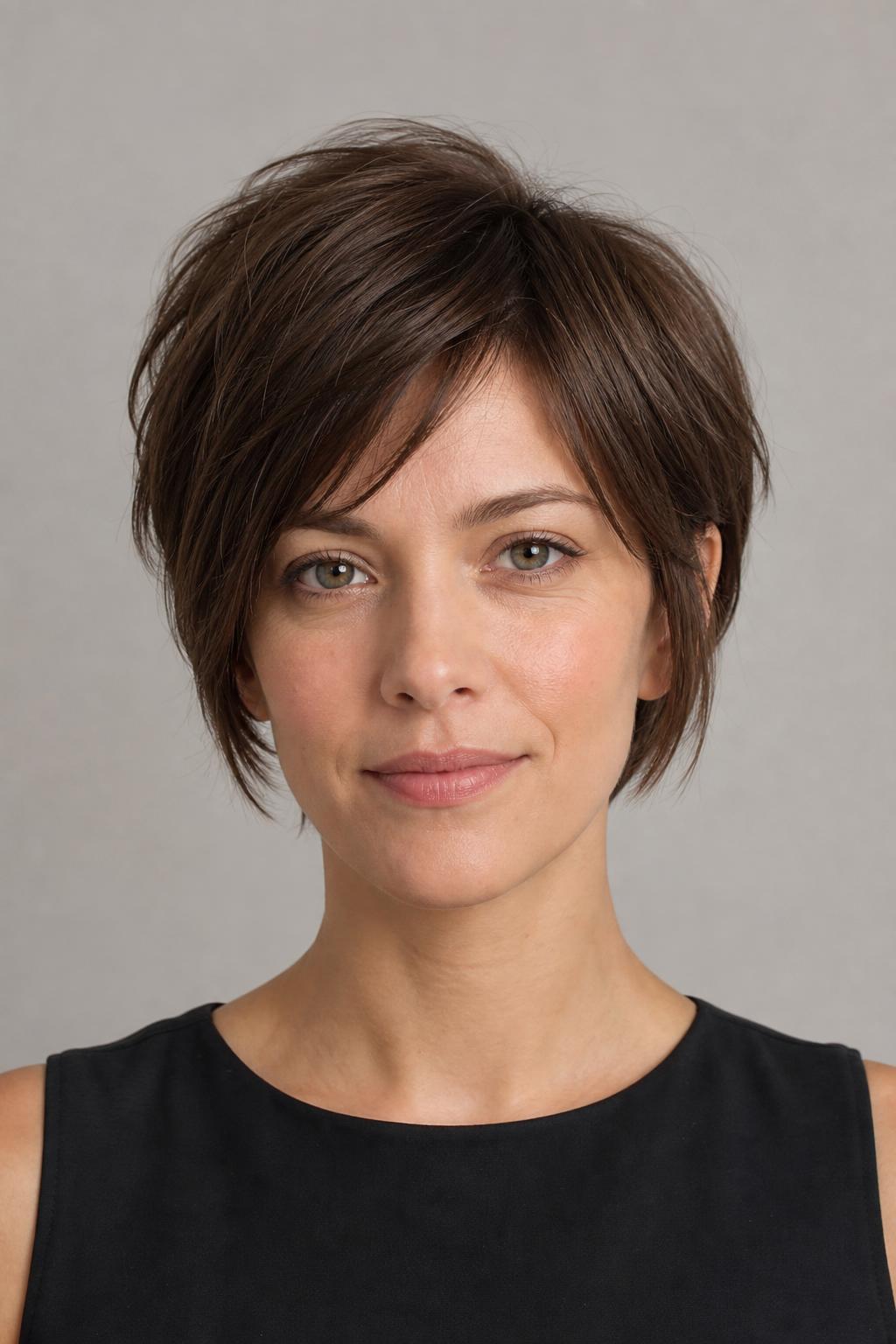
26. Bixie for Oval Faces
A bixie, longer than a pixie but shorter than a bob, is particularly well suited to oval faces during a grow-out period or as a permanent style for those who want short-but-not-very-short hair. The side pieces reach below the ear toward the cheekbone, and the back is cropped shorter. On an oval face, both the side length and the cropped back are proportionally neutral; neither dimension needs adjusting for the face shape. The pixie grow-out guide gives a week-by-week breakdown of what the bixie stage looks like as it progresses.
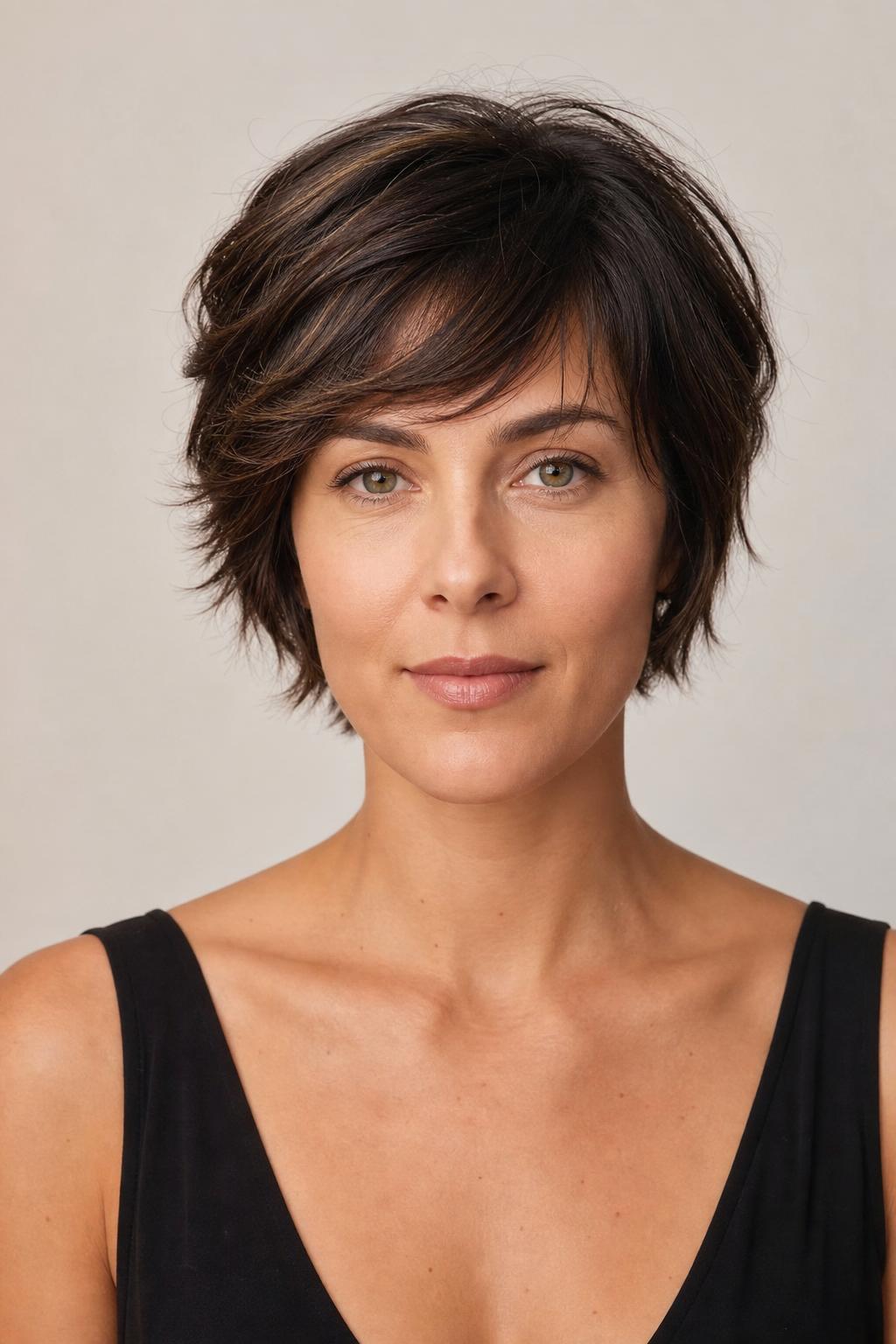
27. Wavy Longer Pixie with Movement
A longer pixie on naturally wavy hair produces a silhouette with built-in movement: the wave pattern creates soft bends at the sides and top that require almost no product to maintain. On an oval face, this organic movement reads as relaxed and effortless. Diffuse on low heat and scrunch to set the wave pattern, then break it apart lightly with fingers for a softer finish. The extra length gives the wave more room to develop than a very short close crop, producing a more visible result.
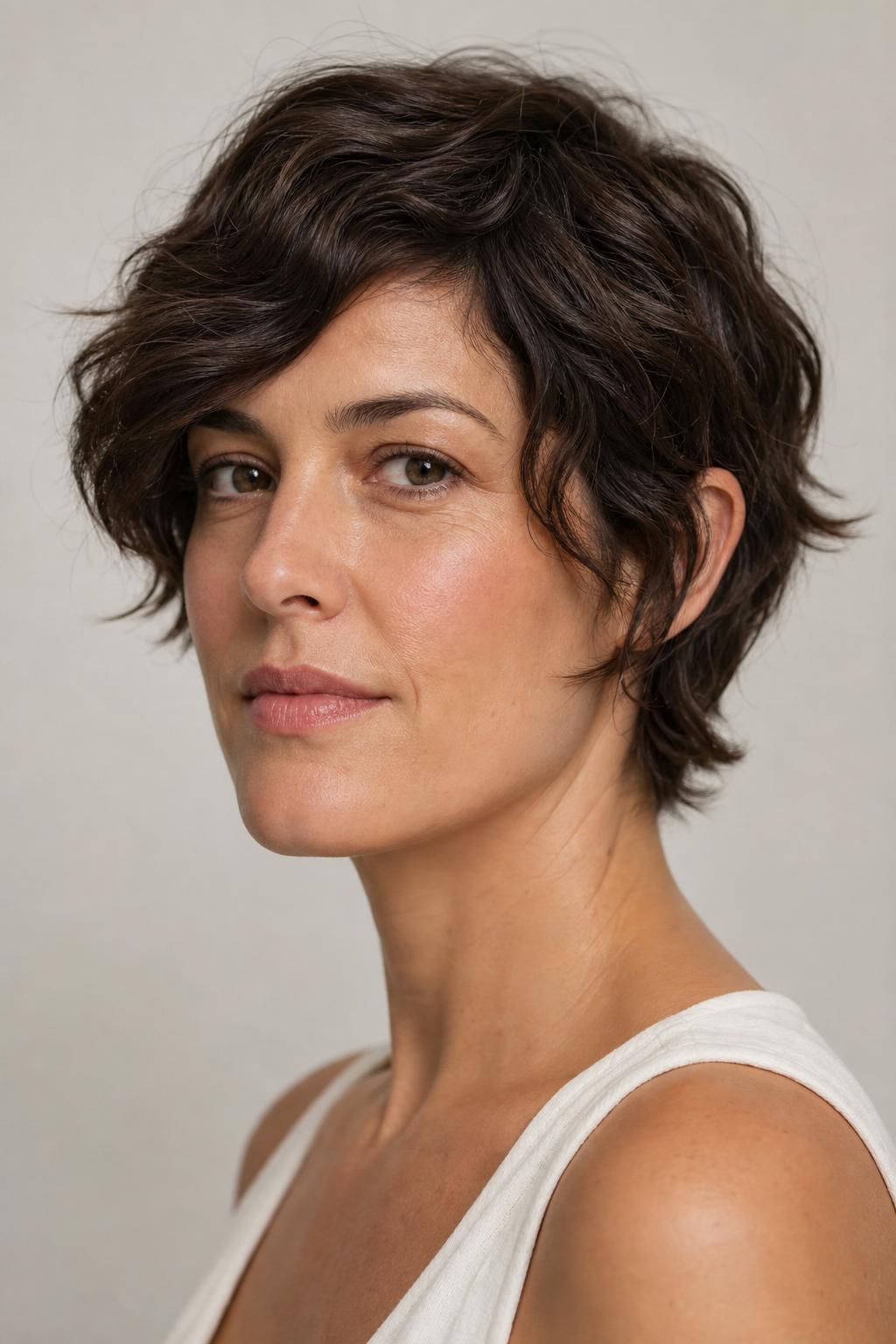
28. Longer Pixie Styling Versatility
A longer pixie on an oval face can be styled in at least four different directions depending on the occasion: swept to one side with product for a polished look, tousled without product for a casual finish, tucked behind both ears for a clean preppy appearance, and blown out smooth for a more formal style. On most other face shapes, at least one or two of these directions is unflattering; on an oval face all four work, which is a genuine advantage. The pixie maintenance guide covers product recommendations and technique for each of these styling approaches.
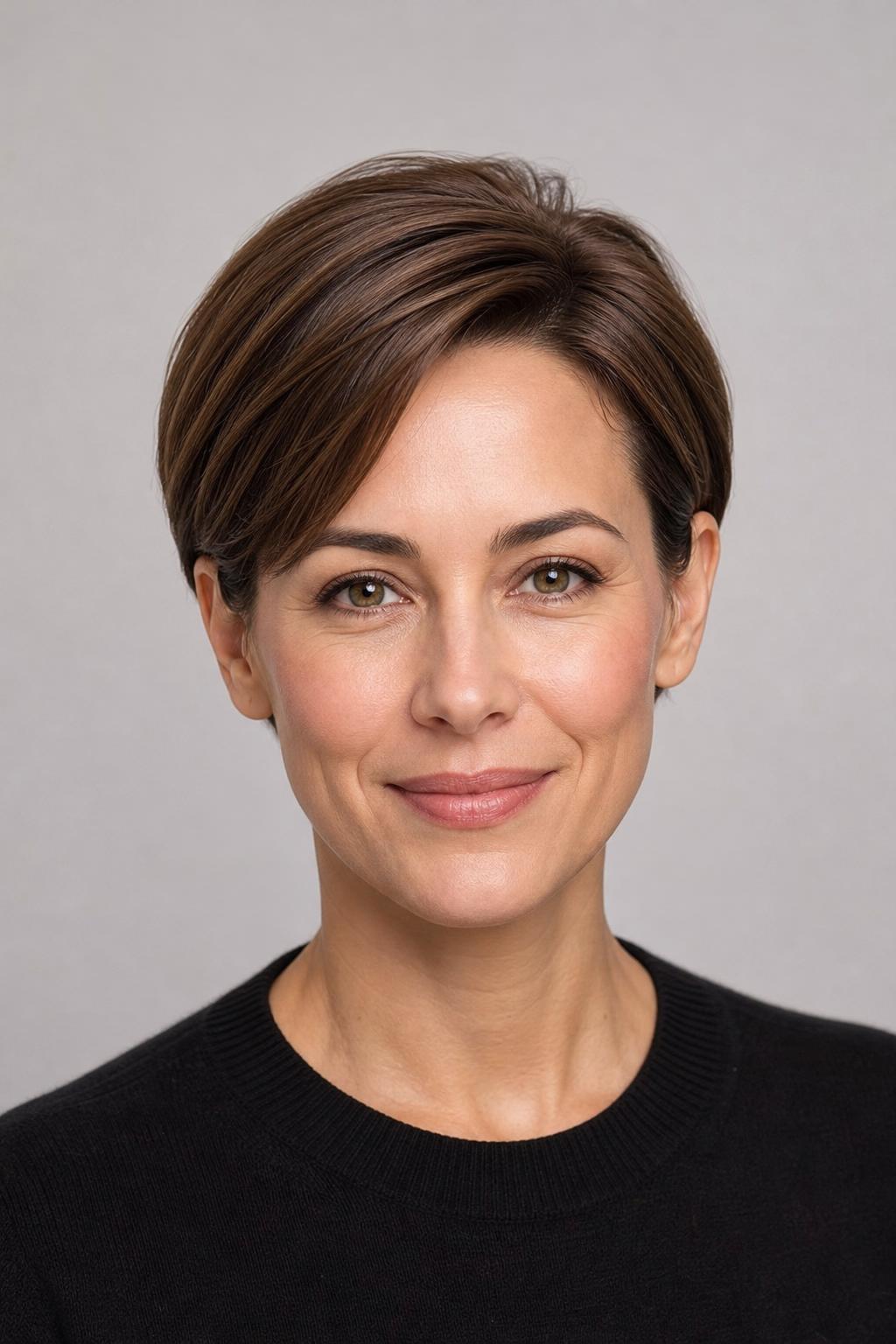
29. Warm-Tone Longer Pixie
Caramel, copper, or honey tones on a longer pixie create dimensional color that is particularly visible at the extra length the sides and front provide. On an oval face, warm tones add a softness that the face’s neutral proportions carry without the tones appearing to advance the forehead or jaw in an unflattering way. Warm tones fade warm rather than brassy on most natural hair bases; a color-safe shampoo and a monthly gloss treatment extend the richness without the cost of a full color retouch.
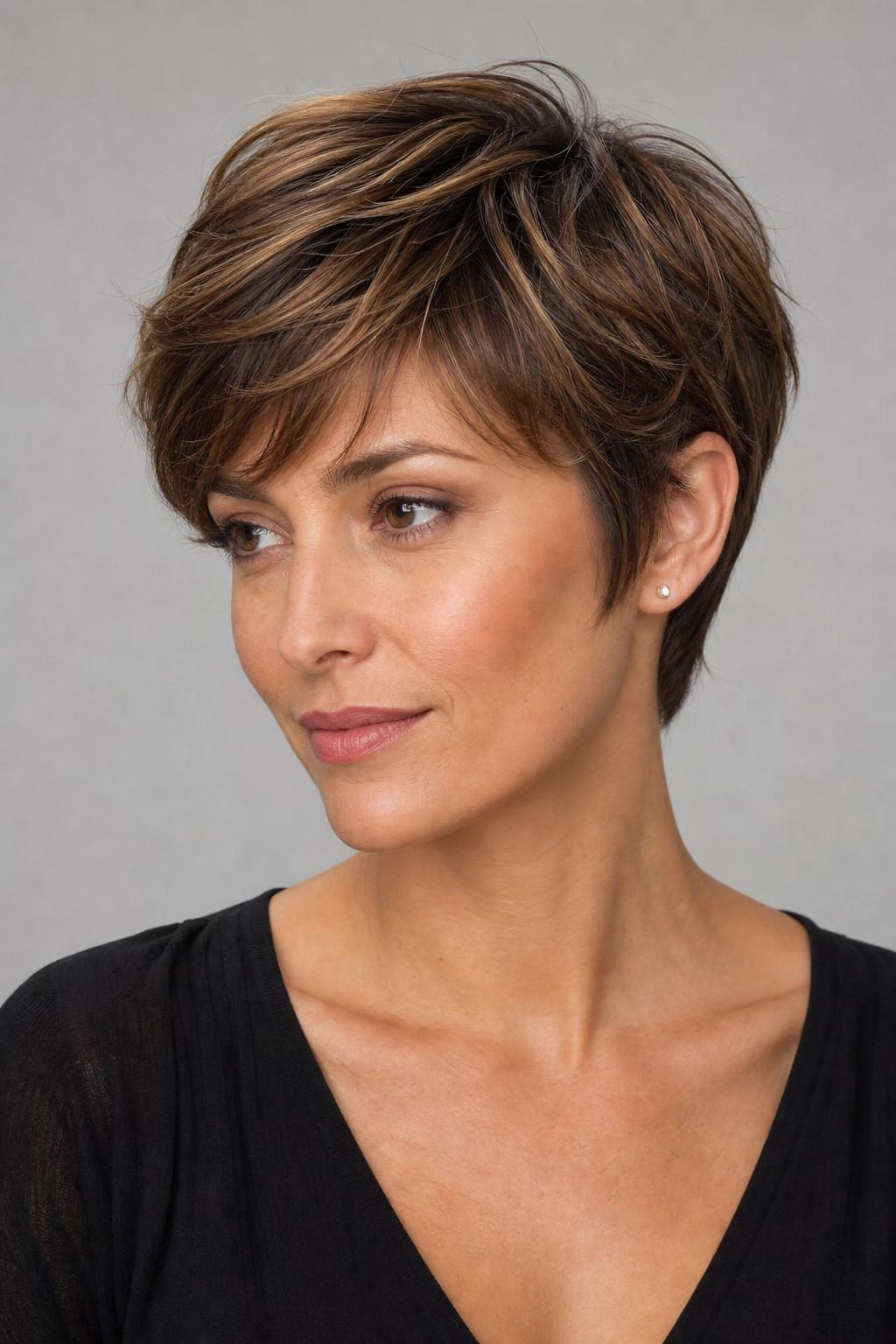
30. Graduated Bixie for Maximum Face Framing
A graduated bixie with a stacked back and longer front sections creates the most face-framing option in the pixie-to-bixie range. The front sections reach to cheekbone level, the crown is layered and textured, and the back is cut shorter in a stacked graduation that adds shape without bulk. On an oval face this graduated structure works cleanly because the balanced proportions support the front-heavy shape without any corrective adjustment. It is the version closest to a mixie hybrid and shares the same grow-out characteristics.
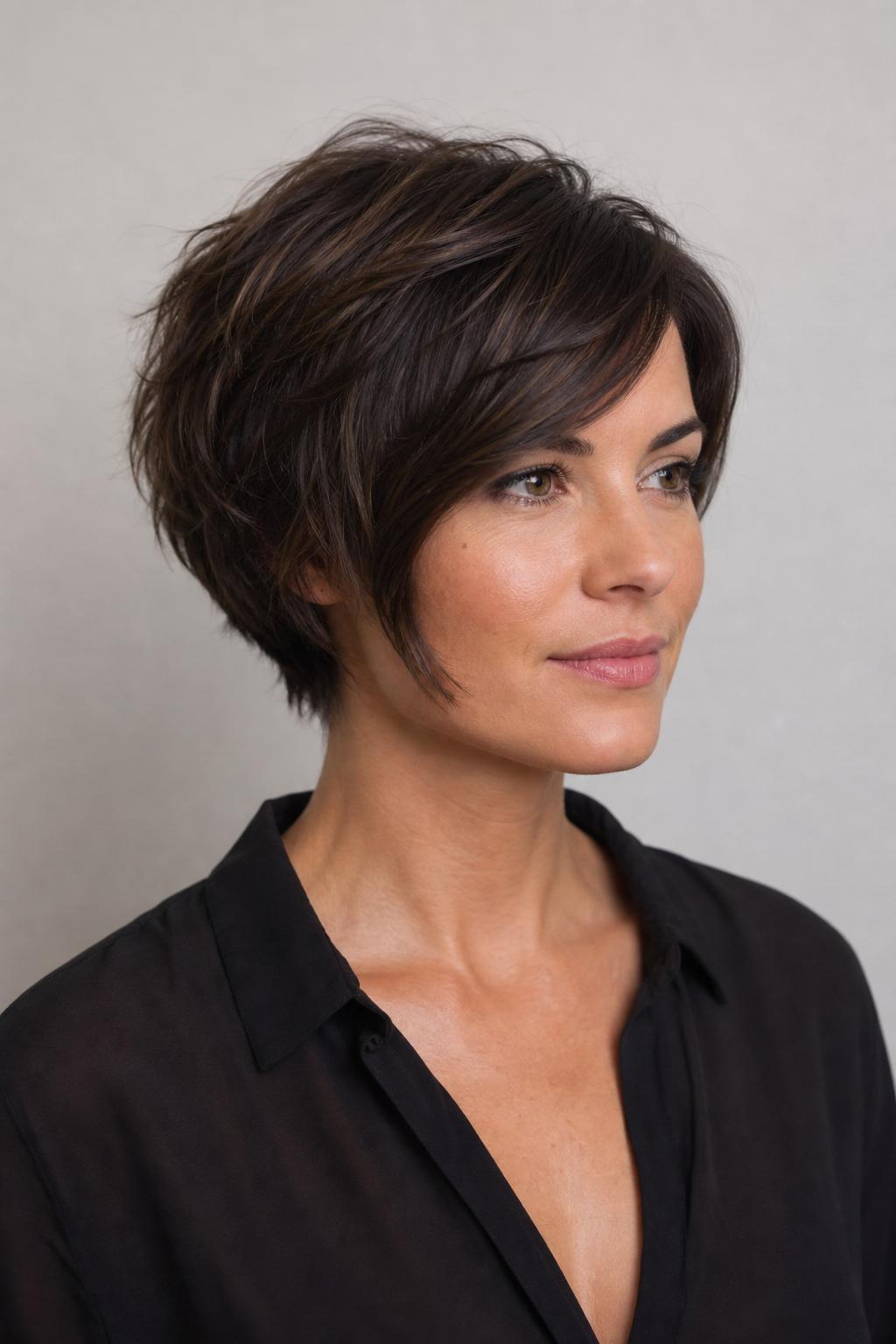
What to Tell Your Stylist
Because oval faces do not need specific face-shape correction in a pixie, the consultation conversation can focus entirely on what you want rather than what your face shape requires. That is a freeing position to be in.
A clear, complete request: “I have an oval face, so I am not constrained by face shape. I want a [short/longer/textured/clean] pixie, and I prefer [low maintenance/versatile styling options/a bold cut]. Can you show me what would suit my hair texture specifically?”
Stylist tip: The most useful thing to communicate to your stylist is your lifestyle and product tolerance, since those are the real variables once face shape is removed from the equation. A two-minute morning routine requires a very different cut than a willingness to spend ten minutes with a round brush and product every day. Be honest about which you actually practice, not which you aspire to, a cut designed for high maintenance styling is a disappointment when you discover you never do it.
For bolder variations such as an undercut or a geometric crop, finding a stylist who has executed that specific technique before is worth the extra effort. Ask to see portfolio photos in the salon’s Instagram or website rather than relying on a general “yes I can do that.”
When a Pixie May Not Be the Right Choice
An oval face has no face-shape reason to avoid a pixie, but a few lifestyle and hair-texture situations point toward a different approach.
Very high-porosity or damaged hair: Short hair concentrates the visible effect of damage because there is less length to hide it. If the hair is significantly damaged from bleach or heat, restoring it to a healthier state before a dramatic cut gives a better end result than cutting short and having the damaged ends exposed at close range.
Wanting very long hair in the near future: A pixie takes 18-24 months to grow to shoulder length on average. If you are planning to grow long within a year, a lob or bob is a lower-risk starting point than a pixie that commits you to a multi-year grow-out. The growing-out guide gives realistic timelines if you are already weighing this.
Discomfort with a shorter style not framing the face: Some people find short hair uncomfortable to wear regardless of face shape, because they rely on the framing effect of longer hair for how they feel about their appearance. That is a completely valid reason to keep some length, and a lob provides a compromise that still reads as a shorter, modern style.
Stylist tip: For a first pixie, starting with a longer version (ear-grazing length or a bixie) and going shorter at the next appointment is always smarter than cutting the shortest version immediately. Even on an oval face, it is easier to cut more later than to wait for it to grow back.
FAQ
Are Pixie Cuts Flattering on Oval Faces?
Yes, oval faces are considered the most versatile face shape for pixie cuts. The balanced proportions work with any variation, from very short close crops to longer bixie hybrids, from clean and structured to tousled and textured. There is no version of a pixie that is specifically unflattering on an oval face shape.
What Is the Best Pixie Style for an Oval Face?
The best pixie for an oval face is the one that suits your hair texture and daily routine. A textured layered pixie is the most versatile starting point because it works on fine through thick hair and requires moderate rather than high maintenance. Beyond that, an oval face gives you genuine freedom to choose based on lifestyle preference, color ambition, and how bold or understated a look you want.
Can an Oval Face Wear a Blunt Fringe with a Pixie?
Yes, a blunt full fringe is one of the few fringe styles that works especially well on an oval face. The horizontal line of a blunt fringe adds width and shortens the apparent face length, which is a concern on longer or narrower faces but not on an oval. On an oval face, a blunt fringe pixie creates a compact, expressive silhouette that other shapes often cannot pull off without adjustment.
Is a Pixie Good for Fine Hair on an Oval Face?
Fine hair benefits from a pixie because short cuts remove the weight that makes fine hair lay flat and look thin. Stacked crown layers and a volumizing mousse create the appearance of density that fine hair lacks at longer lengths. An oval face removes the need to manage fine hair around face-shape constraints, making the cut choice purely about texture management.
How Often Does a Pixie Need Trimming on an Oval Face?
Every 4-6 weeks. Very short close crops with shaved elements need the closest attention, around 3-4 weeks, because the shaved sections grow visibly fast. Longer pixies and bixies can stretch to 6-7 weeks before needing reshaping. On an oval face, the grow-out direction does not create a proportional problem the way it might on other shapes, so you have a slightly wider timing window before the cut starts looking unkempt.
Should an Oval Face Get a Pixie with or Without Fringe?
Both work equally well on an oval face, which is the one shape where that answer is genuinely true rather than hedged. Without fringe, the cut shows the entire face and has a cleaner, more modern feel. With fringe, it adds visual interest at the forehead and a softer overall impression. The choice is about personal style preference, not about correcting a face-shape challenge.
What Hair Colors Suit a Pixie on an Oval Face?
Any color works on an oval face in a pixie. Natural tones look classic and low-maintenance; warm highlights add dimension; bold colors such as copper, platinum, and fashion shades show up dramatically at short lengths since the color is concentrated near the face. The oval face’s balanced proportions support even the most contrasting color choices without the risk that bold color draws attention to an imbalance in the face’s proportions.
Pixie cuts for oval faces offer more creative freedom than any other face shape and short hair combination. The balanced oval proportions remove the constraint of shape correction, leaving the choice entirely about hair texture, lifestyle, and personal style. Bring photos of the variations from this gallery that match your texture and maintenance tolerance, tell your stylist your oval face shape so they know no adjustment is needed, and start with a version that suits your daily routine. From there, going bolder is always a straightforward next step.
Hair results vary based on your natural hair type, texture, density, and condition. Always consult with a licensed hairstylist before making significant changes, especially with chemical treatments or dramatic length changes. Photos may show styled results that require professional tools and products to replicate.