
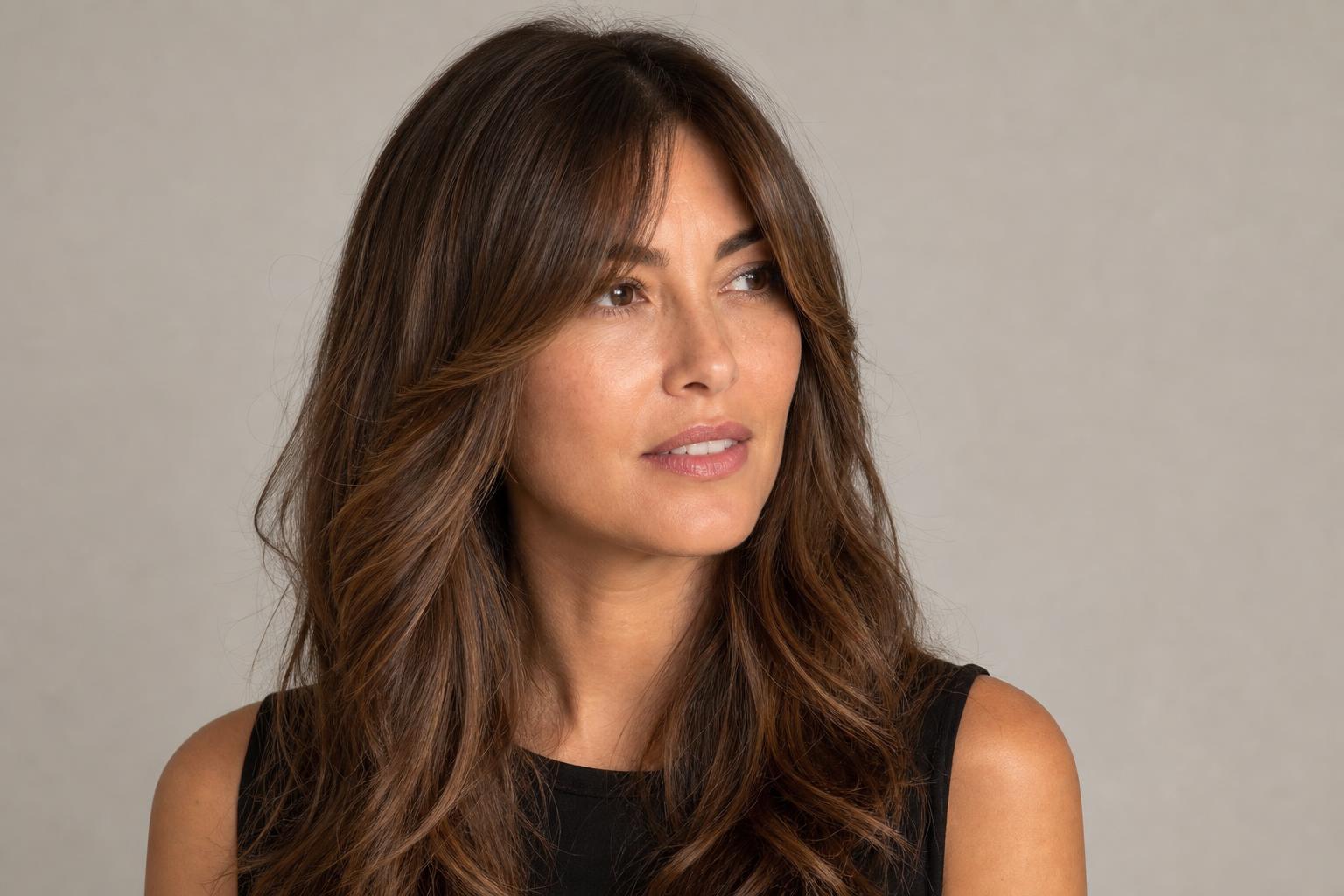
Curtain bangs are a single face-framing fringe you can add to almost any haircut, while a butterfly fringe is a full set of layered, feathered pieces cut into the front of your hair, so the real question is how much of your length you want to commit to the frame.
Both part in the middle and both sweep away from your face, which is why they get confused. The difference is scope. Curtain bangs are one clean fringe with a short center around your eyebrows or nose that blends into your existing length. A butterfly fringe is a layered structure, with the shortest pieces framing your cheeks and progressively longer layers cascading down to your collarbone, built to look voluminous and feathered like a pair of wings.
This guide breaks down exactly how the two differ in length, layering, and commitment, shows which one frames your face better based on your shape and hair type, explains the overlap zone where they start to look alike, and gives you the exact words to ask your stylist for each. Start with the comparison table for the quick answer, then read on for the nuance.
| Feature | Curtain Bangs | Butterfly Fringe |
|---|---|---|
| What it is | A single center-parted fringe | A layered face-framing cut |
| Shortest point | Eyebrows to bridge of nose | Cheekbone to chin |
| Longest point | Cheekbone to jaw | Collarbone or lower |
| Layers | Minimal; one soft sweep | Many stacked, feathered layers |
| Commitment | Low; adds to any cut | Higher; reshapes the front |
| Styling | Air-dries well; quick round brush | Needs blow-drying for volume |
| Best for | A subtle frame, low effort | Big movement, dramatic framing |
What Curtain Bangs Are
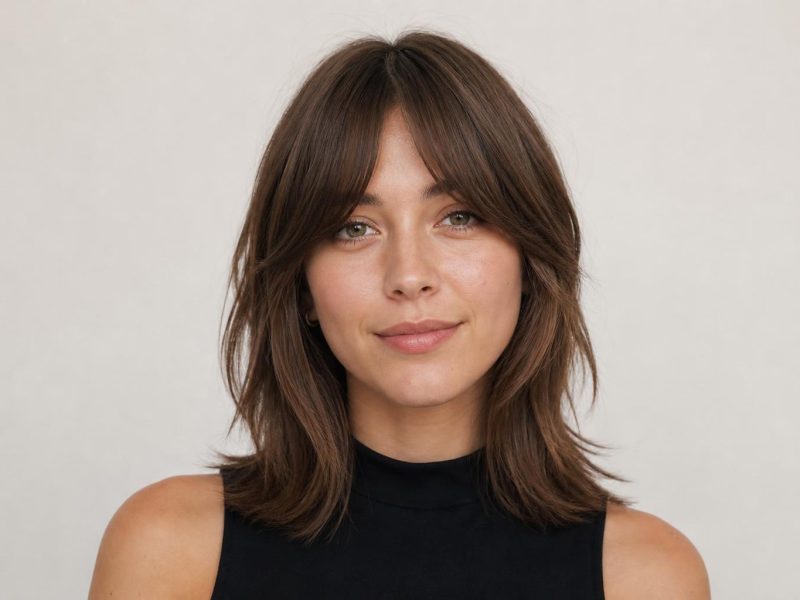
Curtain bangs are a face-framing fringe split down the middle, with the shortest point in the center of the forehead and longer pieces that sweep to each side and melt into your length. They read as one continuous drape rather than a set of separate layers. Because the cut only touches the front section of your hair, you can add curtain bangs to a bob, a lob, or long hair without changing the rest of the shape.
Their biggest advantage is flexibility. Longer curtain bangs grow out gracefully, tuck behind your ears on an off day, and need very little styling beyond a quick round-brush sweep. If you have never had a fringe and want to test the water, this is the low-risk option, and our full breakdown of how to ask for curtain bangs walks through the exact length choices.
What a Butterfly Fringe Is
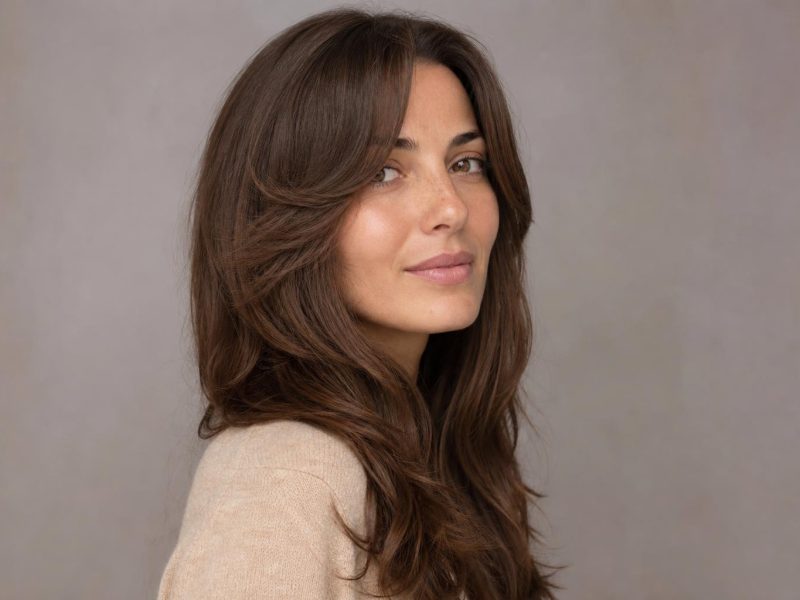
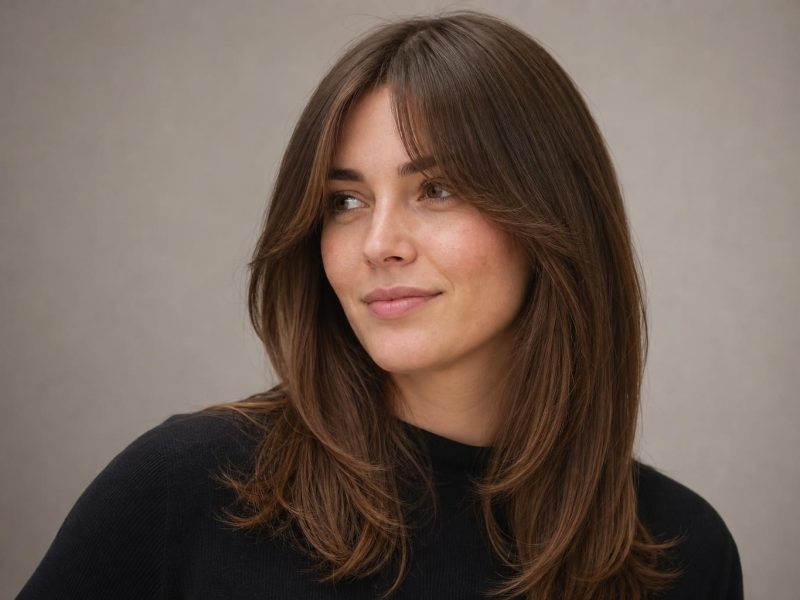
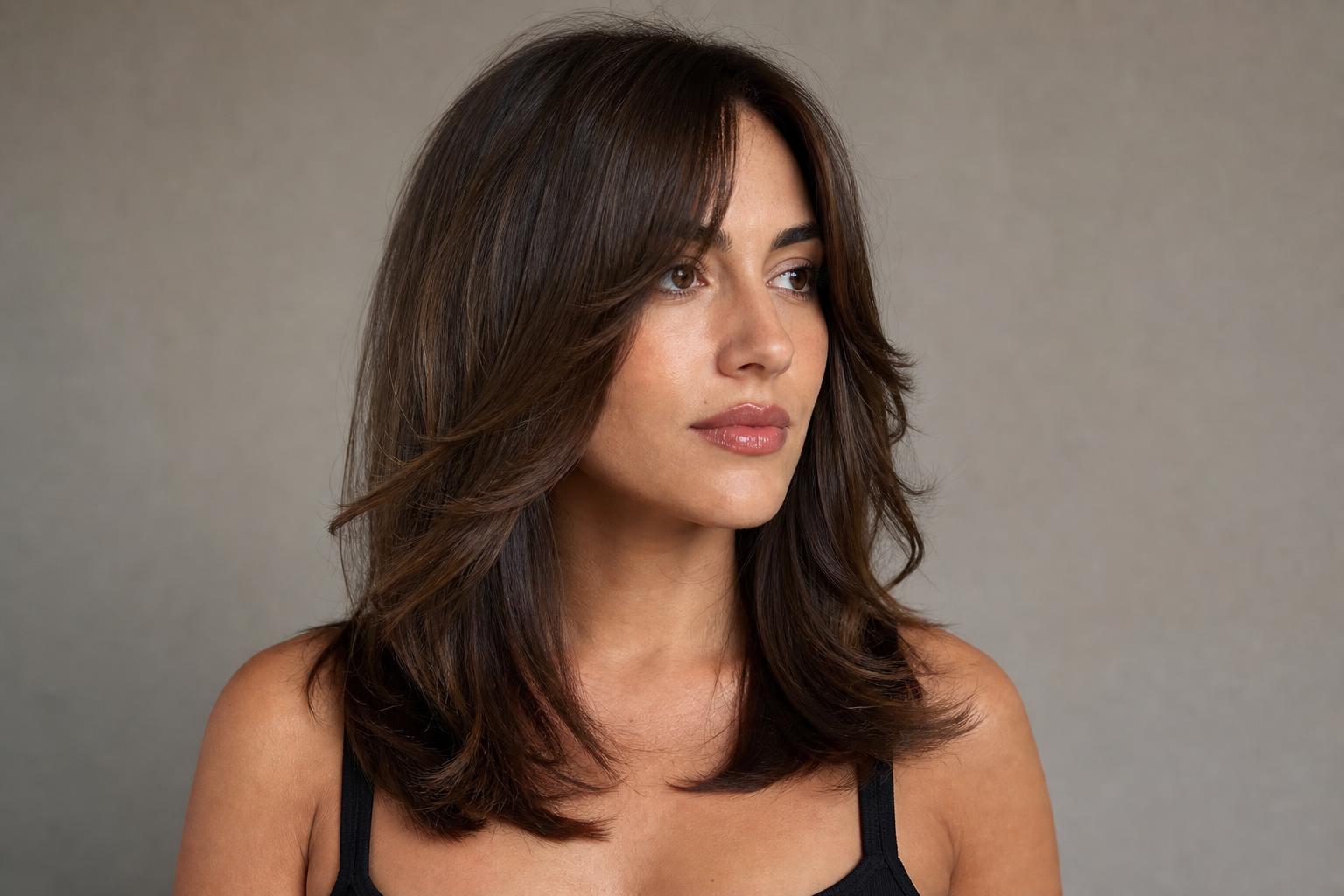
A butterfly fringe, sometimes called butterfly bangs, is a layered face-framing cut rather than a standalone bang. The shortest layers start around your cheekbones or chin and each layer below gets longer, cascading toward your collarbone to create the feathered, wing-like volume the style is named for. It is essentially a set of dramatic front layers that frame the whole face, not just the forehead.
This makes the butterfly fringe a bigger change. It removes real length from the front of your hair to build the layered shape, so it is closer to committing to a haircut than adding a fringe. The payoff is movement and body: butterfly layers give thin hair the illusion of fullness and give thick hair shape and swing. It is a close relative of the butterfly haircut, which extends the same layering idea through the whole style.
The Core Differences That Actually Matter
Beyond the definitions, three practical differences decide which one is right for you. Read these before you book, because they shape your daily routine and how the cut grows out.
Butterfly Fringe Has Many Layers, Curtain Bangs Have One Sweep
This is the defining split. Curtain bangs are cut as a single soft frame with minimal internal layering, so they fall as one piece on each side. A butterfly fringe is built from several stacked layers of increasing length, which is what creates the feathered cascade. If you love visible layers and movement around your face, the butterfly wins; if you want a clean, uncomplicated frame, curtain bangs deliver it.
Curtain Bangs Are a Lower Commitment Than a Butterfly Fringe
Adding curtain bangs changes only the front fringe and can be reversed in a few months of growth. A butterfly fringe reshapes the front of your hair with layers that reach your collarbone, so you are committing to a longer grow-out and a more involved cut. If you are nervous or new to face-framing, start with curtain bangs and graduate to a butterfly later.
Butterfly Layers Need Blow-Drying, Curtain Bangs Air-Dry
Curtain bangs look good air-dried with a quick brush-through, which suits a fast morning. The volume in a butterfly fringe comes from the layers being blow-dried out and away from the face, so on wash days you will spend a few extra minutes with a round brush to get the wings to lift. If low-effort styling is your priority, that difference matters.
Which One Frames Your Face Better
Neither style is universally more flattering; the better frame depends on your face shape, hair type, and what you want the cut to do. Use these guidelines to match the style to your goal.
Round and Full Faces Slim Faster With a Butterfly Fringe
The long, layered pieces of a butterfly fringe create strong vertical lines down the sides of the face, which visually lengthens and slims a round or full shape more aggressively than a single fringe can. Curtain bangs also help a round face when cut with a short center and long steep sides, but the butterfly’s cascade does more of the work. If slimming is your main goal, lean butterfly.
Fine Hair Often Frames Better With Curtain Bangs
Fine or thin hair can look sparse when heavily layered, and a butterfly fringe removes weight that fine hair may not have to spare. A soft curtain bang keeps more density in the frame and gives a clean line without thinning things out, and choosing between a wispy or fuller curtain bang lets you fine-tune how much weight stays in the fringe. If your hair is fine and you still want the butterfly effect, ask for fewer, softer layers so the ends do not wisp away.
Long, Thick Hair Gets the Most From a Butterfly Fringe
Thick hair with length to spare is the ideal canvas for a butterfly fringe, because there is enough hair to build the full layered cascade without looking stringy. The layers also remove some of the weight that makes thick hair feel heavy and shapeless. On this hair type, curtain bangs alone can look flat by comparison.
The Overlap: When They Look Almost the Same
The two styles blur together at one point: a long curtain bang and a short butterfly fringe can look nearly identical. A curtain bang cut to the jaw with a bit of extra layering starts to feather like a butterfly, and a butterfly fringe kept short and minimal reads like a soft curtain. If you like both, this middle ground is where you can hedge.
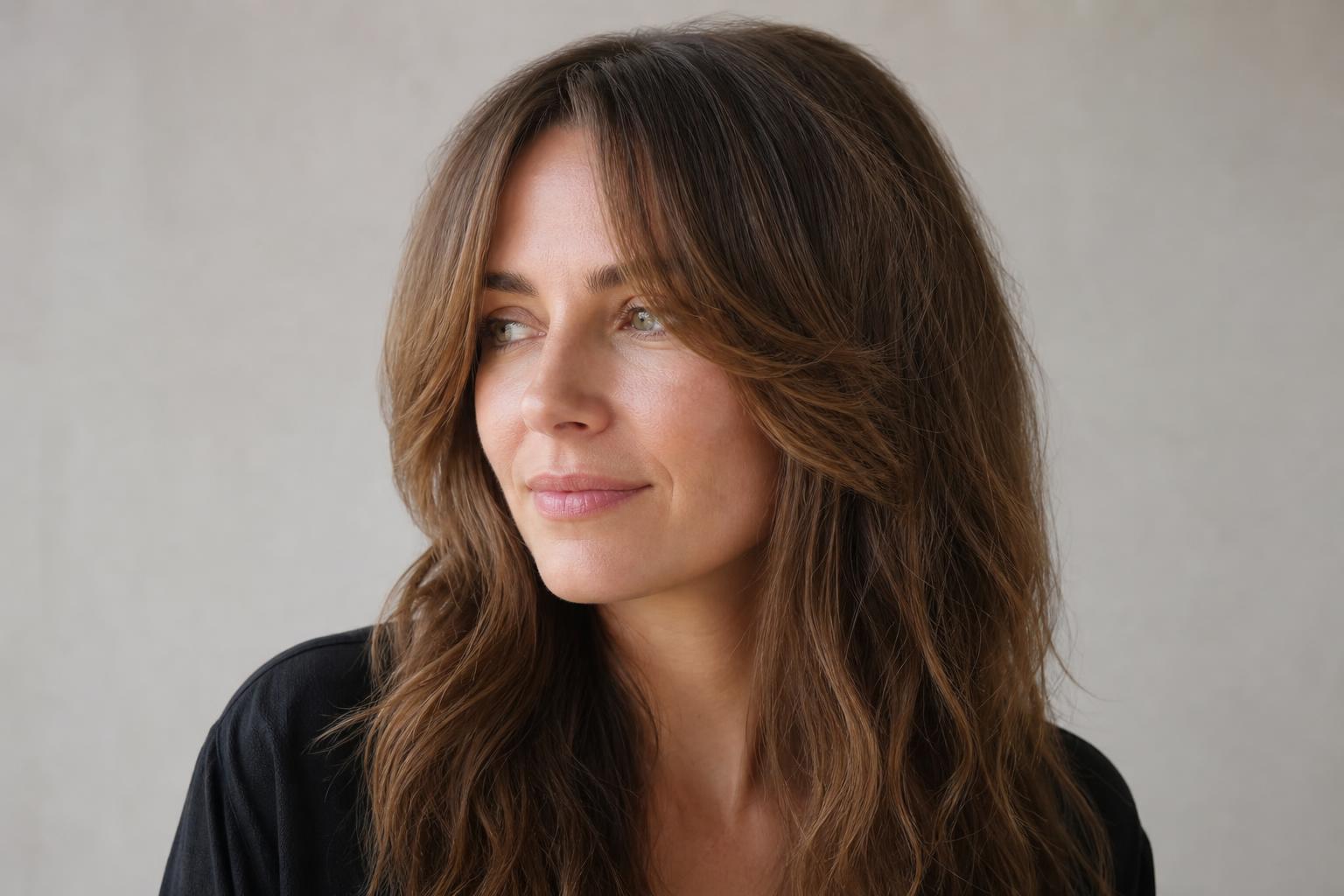
Stylist tip: If you cannot decide, ask for long curtain bangs with a couple of soft internal layers. You get the easy styling and low commitment of curtain bangs with a hint of the butterfly’s movement, and you can always add more layers at your next visit to lean fully into the butterfly shape.
What to Ask Your Stylist for Each
The words you use decide which cut you walk out with, and asking for one while describing the other is the most common way people end up disappointed. Use these scripts.
For Curtain Bangs, Ask for a Single Center-Parted Frame
Say “curtain bangs, center-parted, shortest at my eyebrows and sweeping longer past my cheekbones, blended softly into my length.” Emphasize that you want one soft sweep, not heavy layering. Avoid the word blunt, which signals a straight-across fringe instead of the soft curtain shape.
For a Butterfly Fringe, Ask for Layered Face-Framing Pieces
Say “a butterfly fringe with feathered face-framing layers, the shortest around my cheekbones and the longest reaching my collarbone, cut for volume and movement.” Make it clear you want multiple layers cascading down, not a single fringe. Bring a photo that shows the wing-like feathering so the length of the layers is unmistakable.
Common Mistakes That Get You the Wrong Cut
A few misunderstandings send people home with a cut they did not want. Watch for these before your appointment.
Myth: A Butterfly Fringe Is Just Longer Curtain Bangs
Reality: the difference is layering, not just length. A butterfly fringe is built from many stacked layers to create volume, while curtain bangs are one soft sweep at any length. Asking for “long curtain bangs” will not give you the feathered butterfly cascade unless you specifically request the layers.
Myth: You Can Switch Between Them Freely Anytime
Reality: going from curtain bangs to a butterfly fringe is easy because you are adding layers, but going the other way means growing out the shortest butterfly layers, which takes months. Choose the more involved butterfly only when you are ready for that grow-out, and start with curtain bangs if you want to keep your options open.
FAQ
What Is the Main Difference Between Curtain Bangs and a Butterfly Fringe?
Curtain bangs are a single center-parted fringe, while a butterfly fringe is a set of layered, feathered face-framing pieces. Curtain bangs stay short in the center and blend into your length; a butterfly fringe cascades in stacked layers from your cheekbones to your collarbone. In short, curtain bangs are a fringe, and a butterfly fringe is closer to a layered haircut.
Which Is Better for a Round Face?
A butterfly fringe usually slims a round face more, because its long layered pieces create strong vertical lines down the sides. Curtain bangs also flatter round faces when cut with a short center and long steep sides, but the butterfly does more slimming work. If elongating your face is the priority, choose the butterfly fringe.
Which One Is Lower Maintenance?
Curtain bangs are lower maintenance in both styling and commitment. They air-dry well, need only a quick round-brush sweep, and grow out gracefully because there is no heavy layering to blend. A butterfly fringe needs blow-drying for volume and a longer grow-out, so it asks more of you day to day.
Can I Have Both Curtain Bangs and a Butterfly Fringe?
Yes, the two blend naturally, and a long curtain bang with soft added layers sits right between them. This hybrid gives you the easy styling of curtain bangs with some of the butterfly’s feathered movement. It is also the safest way to test the butterfly look before committing to the full layered version.
Does a Butterfly Fringe Suit Fine Hair?
A butterfly fringe can suit fine hair, but it needs fewer, softer layers so the ends do not look wispy or sparse. Heavy butterfly layering removes weight that fine hair often cannot spare. If your hair is fine and you want a clean frame instead, curtain bangs usually hold their shape better.
Which Frames the Face Better Overall?
Neither frames better in every case; it depends on your goal. Curtain bangs give a subtle, low-effort frame that suits fine hair and cautious first-timers, while a butterfly fringe gives dramatic, voluminous framing that suits long, thick hair and round faces. Match the style to your hair type and how much movement you want, and compare a few reference photos from our guide to the main bang styles before deciding.
Choosing between curtain bangs vs butterfly fringe comes down to how much of your length you want to give to the frame and how much styling time you are willing to spend. Curtain bangs are the low-commitment, air-dry-friendly fringe that suits fine hair and first-timers, while a butterfly fringe is the layered, voluminous option for long, thick hair and anyone who wants dramatic movement. Bring a clear reference photo, use the right script for the one you want, and your stylist can tailor either to frame your face.
Hair results vary based on your natural hair type, texture, density, and condition. Always consult with a licensed hairstylist before making significant changes, especially with chemical treatments or dramatic length changes. Photos may show styled results that require professional tools and products to replicate.