
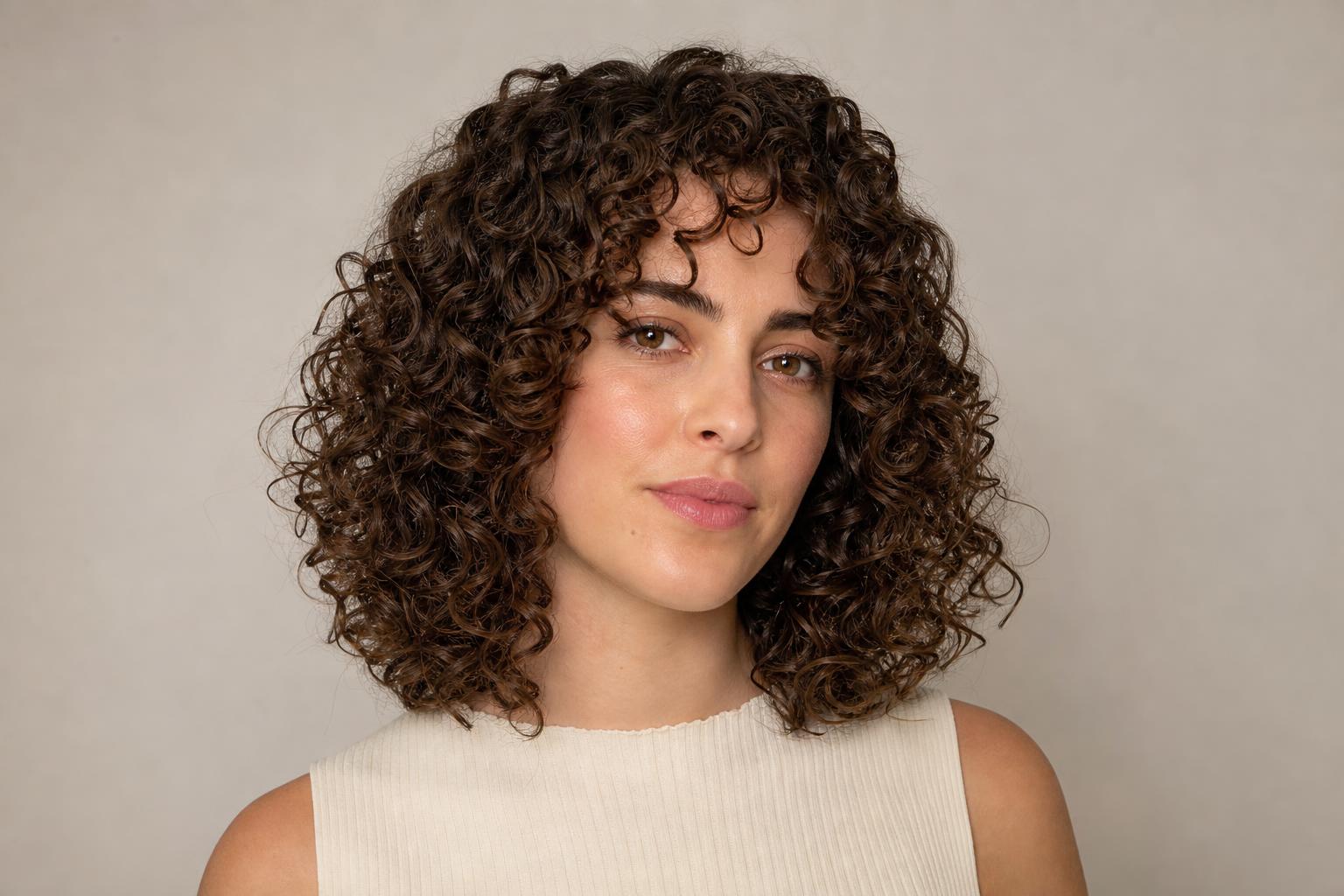
A DevaCut is a dry, curl-by-curl haircut shaped around how your hair actually falls when nobody is stretching it.
A DevaCut is cut on completely dry, product-free, unstretched curls, one curl at a time, so the length you see in the chair is the length you leave with. The technique came out of Devachan Salon in New York, the same place that produced the Curly Girl Method, and it is a cutting approach rather than a product package. Budget 50 to 75 minutes for the consultation, the cut, and the wash-and-style at the end.
This guide walks through what happens at each stage of the appointment, which curl patterns get the most from the method, how the DevaCut differs from a Rezo cut and a standard dry curly cut, what it typically costs, when to book something else instead, and the exact wording to bring to your consultation.
| Factor | Details |
|---|---|
| Best for | Type 3a to 3c curls worn in their natural pattern most days |
| Cut on | Dry, detangled, product-free hair, curl by curl |
| Chair time | 50 to 75 minutes including the wash and style-out |
| Rebook | Every 10 to 16 weeks depending on curl tightness and length |
| Avoid if | You blow-dry or flat-iron smooth more than a couple of times a month |
What a DevaCut Actually Is
The DevaCut is a dry-cutting method in which the stylist works through your hair curl by curl, shaping each spiral where it naturally lands instead of cutting even sections and hoping they spring up evenly. Because curls shrink at wildly different rates across one head, a section that measures collarbone length wet can land two or three inches higher once it dries. Cutting dry removes that guesswork entirely. Your stylist is looking at the finished result the whole time, not a prediction of it.
That is the practical difference from a traditional wet cut, where hair is combed straight down under tension and sliced in horizontal or diagonal lines. Tension flattens the curl pattern, and the moment the tension releases, every curl retracts by a different amount. The classic complaint after a wet cut on curly hair is a shelf of length at the back and a shorter, wider shape at the sides, which is what happens when identical wet lengths dry into non-identical curls. If you want the fuller picture of how these two approaches differ mechanically, our breakdown of razor cutting versus scissor cutting covers the tools involved.
Stylist tip: Ask whether your stylist cuts with your hair down and untouched or lifts each section as they work. The DevaCut is done with hair falling in its resting position, and a stylist who keeps lifting sections away from the head is cutting a different shape from the one you will wear.
Who Gets the Most Out of a DevaCut
The method was built for hair that forms a visible, repeating pattern on its own, which puts type 3 curls squarely at its center. Waves and coils both benefit from dry cutting, but each needs the technique adjusted rather than applied straight from the manual. Knowing where your hair falls on the curl type chart before you book saves a lot of consultation time.
Loose Waves Need a Modified Version of the Curl-by-Curl Approach
Type 2a through 2c hair does not form the discrete spirals the curl-by-curl method is designed to isolate. Cutting individual strands on loose waves creates visible steps once the hair is styled smooth, because there is no curl to hide the transition. A good curl stylist handles waves with dry sectioning and point cutting instead, checking the shape as it dries but keeping the internal structure connected. If your hair holds a soft S in the mid-lengths and goes nearly straight at the ends, say so during the consultation so the stylist adapts.
Type 3 Curls Are the Method’s Home Territory
Ringlets from loose 3a spirals to tight 3c corkscrews respond to curl-by-curl shaping better than any other texture, because each curl is a discrete unit with its own resting position. The stylist can remove length from a curl that hangs longer than its neighbors without disturbing the ones around it, which is how the method produces an even outline without the hair looking layered in the conventional sense. Density matters here too: very dense 3b and 3c hair often needs internal weight removal on top of the shape work, which adds 15 to 20 minutes to the appointment. Our gallery of cuts built for 3c curls shows what a well-shaped result looks like at that pattern.
Coils and Zigzag Patterns Often Do Better with a Shape-First Cut
Type 4 hair can absolutely be cut dry, and it should be, but the curl-by-curl logic gets harder to apply as the pattern tightens. A 4b or 4c zigzag does not hang as an isolated spiral, so there is no single curl to trim and release. Stylists experienced with coily textures usually shape the silhouette first, working in sections and checking the outline from a distance, then refine within it. The result is the same goal reached from the opposite direction. Look for a stylist whose portfolio shows finished shapes on hair like yours rather than a certification badge alone.
What Happens During a DevaCut Appointment
The appointment runs in a fixed order, and most of the disappointment people report comes from skipping or rushing the first two stages. Arriving with the wrong hair prep is the single most common reason a DevaCut underdelivers.
Step 1: Arrive Dry, Detangled, and Product-Free
What you need: Second-day or third-day hair, fully dry, with no gel cast, no dry shampoo, and no clips or elastics for at least an hour beforehand.
How: Wash and style as normal the day before, then let the hair settle overnight. Take out any pineapple or clip before you leave the house so there is no dent at the crown.
Why: Product cast glues neighboring curls into clumps that read as one thick spiral, and your stylist will cut them as one. Once the cast breaks in the shower, that single cut edge becomes three or four blunt ends.
Common mistake: Turning up with hair in a bun to hide a wash-day gap. A crown that has been compressed for eight hours does not show its real pattern for another day.
Step 2: The Consultation Sets the Length You Keep
This is where you decide, out loud and in inches, how much length you are willing to lose. Curly hair shrinks between 20 and 70 percent depending on pattern, and a stylist who removes an inch of dry length may be removing three inches of stretched length. Say the number, point to where you want the shortest curl to land on your body, and confirm whether you want face-framing shorter pieces or an even outline. The stylist should also ask about your wash frequency and styling routine, because a cut shaped for a wash-and-go behaves differently from one shaped for stretched or braided styles.
Step 3: The Curl-by-Curl Cut Happens on Dry Hair
The stylist works around the head selecting individual curls, holding each one at its natural fall, and cutting a single spiral at a time with shears held vertically. It is slow and it looks unstructured while it is happening, with no visible sections or guide lines. Expect 30 to 45 minutes of this on shoulder-length hair. You will see loose hair on the cape and very little on the floor, which is normal for the method and not a sign that nothing is being removed.
Step 4: The Wash and Style-Out Is the Part You Should Pay Attention To
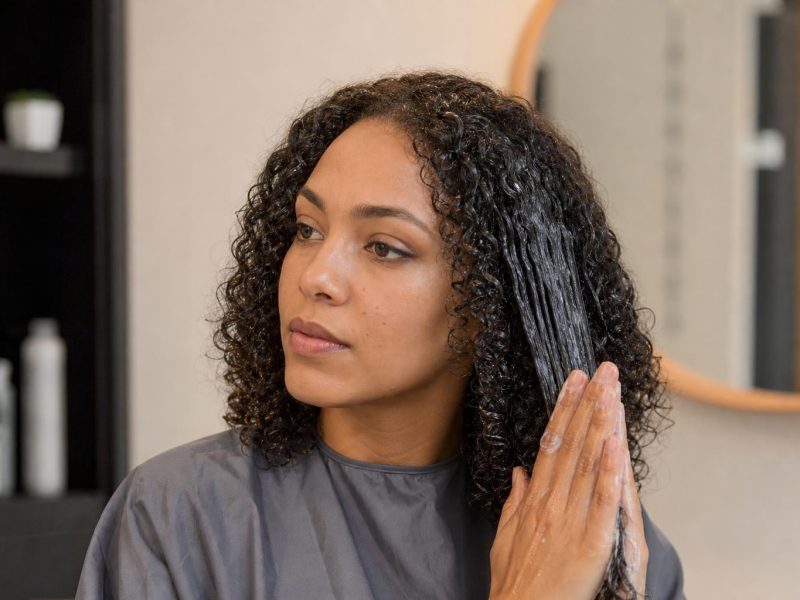
After the cut, your hair gets washed, conditioned, and styled wet with product applied to soaking-wet hair, then dried under a hood dryer or diffused. This stage is a demonstration, not a finishing touch. Watch how much product goes in, how it is distributed, and whether the stylist scrunches, rakes, or uses praying hands. Ask questions while it is happening rather than afterward, because reproducing the routine at home is what keeps the shape looking the way it did in the chair.
How a DevaCut Compares to Other Curly Cutting Methods
Several dry-cutting methods compete for the same client, and the differences are real rather than marketing. The table below covers the four you are most likely to be offered.
| Method | Cutting Logic | Resulting Shape | Best Suited To |
|---|---|---|---|
| DevaCut | Dry, one curl at a time, hair in resting position | Face-framing, personalized, follows your own pattern | Type 3 curls worn natural most days |
| Rezo cut | Dry, triangular parting, cut in rounded sections | Uniform, rounded, volume-heavy, length preserved | Dense curls that want maximum body |
| Carving and slicing | Wet sectioning, then internal weight removal | Reduced bulk, softened corners, less pyramid effect | Thick, coarse curls that expand at the sides |
| General dry curly cut | Dry, freehand, no standardized system | Depends entirely on the individual stylist | Anyone with a stylist whose curly work they trust |
The most useful distinction to hold onto is that the DevaCut prioritizes shaping around the face while the Rezo method prioritizes an even, rounded outline and holds onto more length. Neither is better in the abstract. They produce genuinely different silhouettes, and the right question is which silhouette you want.
When a DevaCut Is Not the Right Choice
The method has clear limits, and a stylist worth booking will name them before you sit down.
- You straighten your hair regularly. A cut shaped around individual curls looks uneven when blow-dried smooth, because the lengths were never meant to line up in a flat plane. Ask for a shape that works both ways instead.
- Your hair is fine and low density. Curl-by-curl removal takes weight from hair that has little to spare, and sparse ringlets can end up looking stringy rather than defined.
- You want a dramatic length change. Removing six inches curl by curl is slow, expensive, and harder to keep even than a sectioned approach. Book a shape change with a curl-experienced stylist and keep the curl-by-curl work for refinement.
- Your curl pattern is chemically altered or heat damaged. Damaged sections hang at a different length from healthy ones, so cutting them where they fall locks the damage into the shape. Grow it out or cut it off first.
- Your budget is tight and you rebook often. At typical curl-specialist pricing, three DevaCuts a year costs more than most people expect. Stretching to two appointments and a trim is often the smarter plan.
Common DevaCut Myths That Lead to Salon Regrets
Myth: A DevaCut Commits You to a Specific Product Line
Reality: The cut is a technique, not a subscription. Your stylist will likely use the products stocked at their salon during the style-out, and many curl specialists have moved to other lines entirely. You can walk out with the cut and use whatever gel, cream, or foam already works on your hair. If a salon frames the products as mandatory to maintain the result, that is a retail pitch rather than a technical requirement.
Myth: Dry Cutting Means Barely Any Hair Comes Off
Reality: The floor looks emptier because curls fall individually rather than in combed sheets, but the amount removed can be substantial. A stylist trimming half an inch from each dry curl on tightly shrinking hair may be taking well over an inch of stretched length. Confirm the number in dry inches during the consultation, since that is the measurement the scissors will follow.
Myth: A DevaCut Is a Haircut Style You Can Point To in a Photo
Reality: It is a method, not a look. One person walks out of a DevaCut with a chin-length shape and the next walks out at mid-back, because the outcome is built from their own curl patterns and stated goals. Bringing a reference photo still helps, but describe what you like about it in structural terms, such as where the shortest pieces land or how much volume you want at the crown.
Cost, Rebooking, and How It Grows Out
Curl-specialist pricing runs well above a standard salon cut in most metro areas, and the gap widens for the first appointment, which usually includes a longer consultation. Expect a specialist premium of roughly 40 to 80 percent over a general salon cut in your area, and ask whether the quoted price includes the wash and style-out or bills it separately. First appointments are often priced higher than rebooked maintenance visits at the same salon.
Grow-out is the quiet advantage. Because the shape follows your own curl distribution rather than a geometric guide, there is no hard line to lose. Curls simply lengthen, and the outline stays coherent for months. The point at which people usually rebook is when the crown starts to lie flat under the weight of new growth, or when a few curls begin hanging noticeably longer than their neighbors.
| Curl Pattern | Rebook Window | First Sign It Is Due | Daily Styling Time |
|---|---|---|---|
| Loose waves (2b to 2c) | 8 to 12 weeks | Ends separate and lose their S bend | 5 to 10 minutes |
| Loose curls (3a to 3b) | 10 to 14 weeks | Crown flattens under new weight | 10 to 15 minutes |
| Tight curls (3c) | 12 to 16 weeks | Outline widens at the sides | 15 to 20 minutes |
| Coils (4a and tighter) | 12 to 16 weeks | Ends tangle and knot more often | 15 to 30 minutes |
What to Tell Your Stylist
Bring numbers and behaviors, not adjectives. The most useful sentence you can open with names your pattern, your routine, and your length limit in one go: “My hair is around 3b, I wear it in a wash-and-go four days a week, and I do not want to lose more than an inch of dry length.” Follow it with where you want the shortest curl to land, whether you want shorter pieces around the face, and how much volume you want at the crown versus the sides. Some of the vocabulary curl stylists use is worth learning ahead of time, and our glossary of salon terms covers the ones that come up most.
Two questions get you a long way in a first consultation. Ask how the stylist handles the difference between your tighter crown curls and looser under-layer, and ask what the shape will look like at week ten. A stylist who answers both specifically has thought about your head rather than the method.
Stylist tip: If you also wear your hair in stretched styles, say so before the cut, not after. Curl-by-curl shaping and blow-dried smoothness pull in opposite directions, and a stylist who knows you do both can leave the perimeter slightly more connected so the shape holds up either way.
FAQ
How Much Length Will I Lose with a DevaCut?
You lose exactly the dry length you agree to, which is the main appeal of the method. The catch is that dry inches and stretched inches are different measurements, so half an inch removed from a tightly shrinking curl can equal an inch and a half of stretched hair. Agree the number in dry inches and point to a spot on your body rather than describing it in words.
Can I Get a DevaCut on Color-Treated Hair?
Yes, and dry cutting is generally kinder to colored curls because there is no combing under tension on hair that is already more porous. Schedule the color first and the cut second if you are doing both, so the stylist shapes around the finished tone and any lightened pieces. Highlighted ends sometimes hang differently from natural ones, which is worth pointing out during the consultation.
Is a DevaCut Worth It If I Have Short Hair?
Short curly shapes benefit enormously from dry cutting, though the curl-by-curl portion matters less than the overall silhouette at that length. On a cropped shape, a millimeter of error is visible, so the value comes from the stylist seeing the finished outline as they work. A curly pixie cut dry holds a clean outline that the same cut done wet rarely achieves.
How Often Should I Rebook a DevaCut?
Most people land between 10 and 16 weeks, with tighter patterns going longer because shrinkage hides new growth. The trigger to watch for is the crown lying flatter than it used to, which happens when new length adds weight before the shape can support it. Stretching past six months usually means paying for more removal at the next appointment.
Do I Need a DevaCurl-Certified Stylist Specifically?
Certification confirms training in the method but not skill on your particular texture. A portfolio full of finished results on hair with your density and pattern tells you more than a badge does. If you are choosing between a certified stylist with no visible work on coily hair and an uncertified curl specialist with plenty, choose the portfolio.
Will a DevaCut Fix Frizz?
It reduces the frizz caused by mismatched lengths, which is a real and common source, but it does not address frizz caused by dryness, damage, or humidity. Curls that no longer have shorter neighbors sticking out of the clump look smoother immediately after a good dry cut. The rest is a moisture and styling question, and a well-cut shape simply makes that routine easier to execute.
Can I Get a DevaCut with Layered Hair I Already Have?
Yes, and existing layers are usually an advantage rather than an obstacle. The stylist works with what is already there, trimming curls that hang out of line and softening any hard transitions from a previous wet cut. If your current layers on curly hair were cut with heavy tension, expect the first dry cut to spend most of its time correcting those steps rather than adding new shape.
A DevaCut is worth booking when you wear your curls in their natural pattern most of the time and you want a shape built from how your own hair behaves rather than a template applied to it. Go in with second-day hair, a specific dry-inch limit, and a clear description of where you want the shortest pieces to land. The technique itself is only half of the result, and the other half is a stylist who can show you finished work on hair that behaves like yours.
Hair results vary based on your natural hair type, texture, density, and condition. Always consult with a licensed hairstylist before making significant changes, especially with chemical treatments or dramatic length changes. Photos may show styled results that require professional tools and products to replicate.