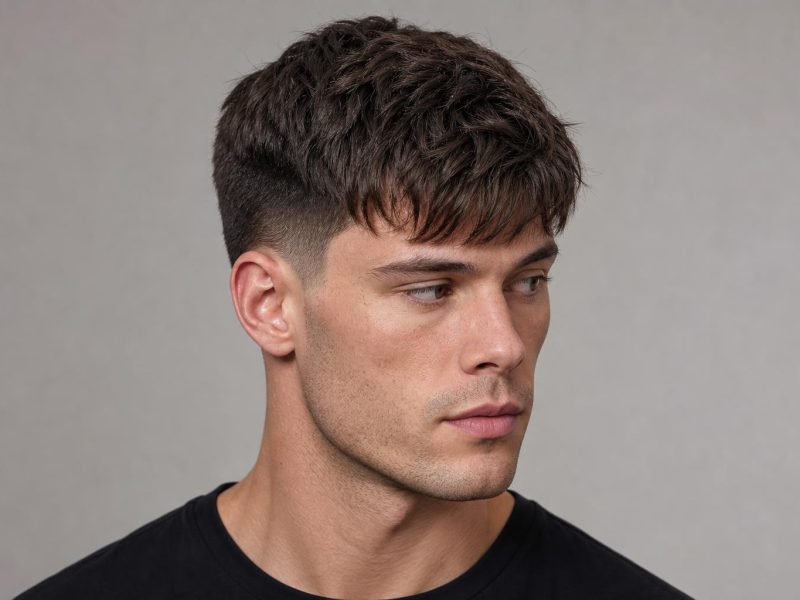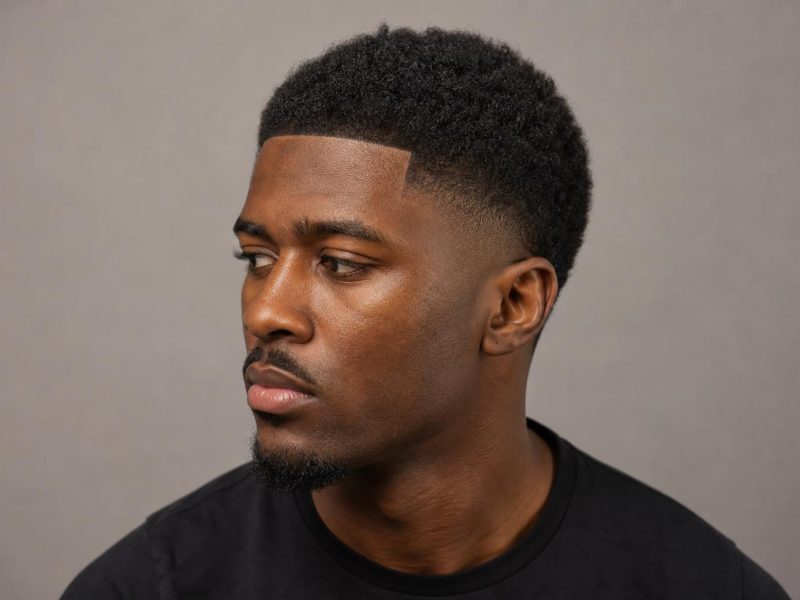

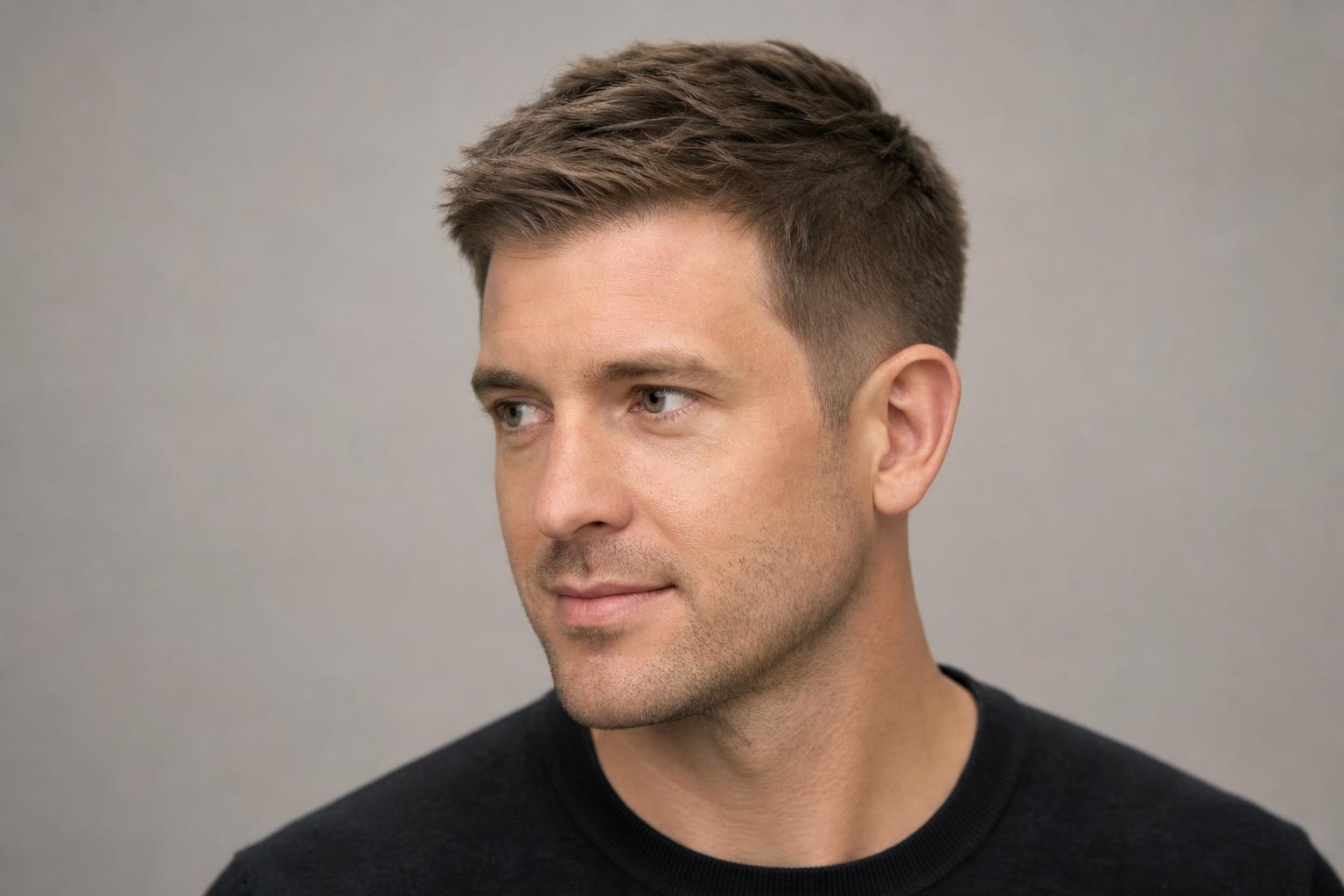
A simple men’s hairstyle is one where the cut holds its own shape, so the only thing you do in the morning is get it wet or leave it alone.
Simple is a property of the cut, not of the length. A badly shaped buzz still looks wrong, and a four-inch grown-out crop can be genuinely zero-effort if it was cut to follow the way your hair already falls. The useful way to sort men’s styles is therefore by minutes rather than by name: some need nothing at all, some need one product and sixty seconds, and a few need about five minutes but still count as low effort because you are not fighting anything.
This guide sorts the practical options into those time brackets, explains the three things that make a cut hold itself, covers the one product that handles almost every style on the list, shows how to work with a cowlick or crown whorl instead of against it, and marks the point where a style stops being simple no matter what anyone tells you at the barbershop.
A Simple Hairstyle Is One the Cut Holds Without You
Three things separate a cut that behaves from one that needs managing. The first is that it follows your growth pattern rather than opposing it, so the hair falls where it was cut to fall the moment it dries. The second is that it needs no daily reshaping, meaning you are not creating a part, a direction or a volume that gravity will undo by lunchtime. The third is that it grows out into something acceptable rather than something awkward, which is what determines whether week five is fine or a problem.
Length affects none of those three directly. What length changes is how visible the mistakes are: a short cut hides an unhelpful growth pattern under sheer lack of material, while at three inches or more the pattern starts to assert itself. That is why men who buzz everything often assume long hair is automatically high effort, when in practice a well-cut mid-length shape can be just as hands-off. The difference is whether the barber cut with the hair or against it.
| Daily Time | Styles in This Bracket | Product Needed | Barber Cycle |
|---|---|---|---|
| Zero minutes | Buzz cut, wash-and-go on curls, scissor-cut short back and sides | None | 2 to 8 weeks depending on the cut |
| One minute | Crew cut, Ivy League, natural side part | A pea of matte clay | 4 weeks |
| Three minutes | Textured crop, French crop, short flow | Clay or paste, occasionally a dryer | 3 to 5 weeks |
| Five minutes | Brushed-back mid-length, mid-length curtains | Sea salt spray plus a dryer | 6 to 10 weeks |
Zero-Minute Styles Need No Product at All
These are the cuts that look the same wet, dry, slept on and rained on. There is no styling step because there is nothing to arrange, which makes them the honest answer for anyone whose real requirement is not thinking about their hair.
A Buzz Cut Removes the Decision Entirely
One guard over the whole head, usually a 2 or 3, and the morning routine ends at the towel. There is no product, no drying and no direction to set, and it looks identical every day of the two to three weeks it stays even. The trade-off sits entirely at the barbershop, since a buzz shows growth fast and drifts out of shape sooner than any other cut. Anyone who wants zero daily effort and can hold that cycle will not find a simpler option, and the shortest end of the men’s range is where most people land after trying it once.
Curly Hair Air-Dries Into Shape on Its Own
A wash-and-go on 2c to 3c hair is genuinely zero effort as long as the cut removed weight in the right places. Wash, squeeze out the excess with a towel rather than rubbing, and let it dry untouched. The mistake that turns this into a high-effort style is combing after washing, which pulls the curl clumps apart and leaves you with frizz that then does need product. Curl-specific shaping matters more here than on any straight-hair cut, and cuts built around a curl pattern behave completely differently from a generic short cut applied to curly hair.
A Scissor-Cut Short Back and Sides Holds for Two Months
No clipper line anywhere means nothing to grow out unevenly. The sides stay at an inch or two, cut with scissors over a comb, and the top sits around two inches with a natural side part. It looks tidy straight out of the shower, needs no product on most hair types, and stretches to six or eight weeks between appointments. This is the lowest total-effort cut once you count barbershop time alongside daily time, which is a calculation most men never actually run.
One and Three Minute Styles Need a Single Product
Adding a small amount of one product opens up most of the recognizable men’s cuts without adding real complexity. The routine in every case is the same: warm a pea-sized amount between your palms until it disappears, work it in at the roots, and finish with your fingers. Nothing here needs a comb, a mirror or a second product.
A Crew Cut Takes About Sixty Seconds
An inch at the front graduating shorter toward the crown gives you enough to push forward or up, and the graduation means it falls into shape either way. Run clay through it with your fingers and you are finished. Fine hair does especially well with this shape because the graduation stacks the density where it shows, and the Ivy League version simply leaves slightly more length at the front for a side part.
A Textured Crop Needs Three Minutes and Nothing Else
Two to three inches on top falling forward, ends broken up so they separate on their own, sides faded or tapered. It covers a high forehead, works on straight and wavy hair, and the only step is clay and a rake of the fingers. The closely related French crop with its blunter front line and the softer point-cut textured fringe both style the same way, which is why this family of cuts dominates barbershop requests among men who want to look styled without learning to style.
A Natural Side Part Works Only Where the Hair Already Parts
Push wet hair straight back with your hands and let it fall; wherever it splits is your natural part. A side part cut on that line stays put with no product and no combing, while one cut two inches away from it needs resetting every single morning. This single check is the difference between a one-minute style and a permanent daily argument, and most men have never done it.
Short Flow Suits Wavy Hair That Refuses to Sit Down
Three to four inches with the sides left long enough to tuck behind the ears, no fade, and the hair pushed back off the face. Wavy hair that fights every short cut usually behaves here, because the length gives the wave somewhere to go. A sea salt spray on damp hair and thirty seconds of rough-drying is the whole routine, and it grows out gracefully for two months.
One Product Covers Almost Everything on This List
A matte clay handles every style above except the wash-and-go and the buzz. It gives grip without shine, works on straight, wavy and thick hair, and restyles with your fingers through the day. Cream is worth owning only if your hair is very coarse and needs softening, and sea salt spray only if you have waves you want to encourage. Three products is already more than this list requires; one is the honest number.
Stylist tip: use half as much product as you think, and put it at the roots rather than the ends. Almost every complaint about hair looking greasy, flat or stiff by midday traces back to too much product sitting on the mid-lengths where it adds weight and does nothing structural. A pea-sized amount worked into the roots holds the shape; a walnut-sized amount smeared over the surface just makes your hair heavy.
Washing frequency matters more than product choice for anyone with fine or oily hair. Daily shampooing strips the natural oil that gives hair grip, which leaves it slippery and harder to style, so most men do better washing every two or three days and rinsing with water in between. A shampoo without harsh sulfates makes that schedule far more comfortable, especially on a scalp that runs dry.
Work With Your Growth Pattern, Not Against It
Every head has fixed directions built into it, and no amount of product overrides them for a full day. Identifying yours turns a difficult cut into an easy one, because the barber can shape around the pattern instead of asking you to fight it every morning.
A Crown Whorl Decides Which Way the Back Lies
The spiral at the back of your head sets the direction the crown hair travels, and cutting it too short makes it stand up in a spike that nothing flattens. Leaving the crown slightly longer lets the weight of the hair hold it down. If you have two whorls, which is common, a very short crown will always separate between them, so a slightly longer length is the only real fix.
A Front Cowlick Pushes the Fringe Sideways
A cowlick at the hairline lifts the front section and sends it in one direction regardless of where you want it. The workable answer is a cut that uses that direction, usually a side-swept or angled fringe rather than a straight-forward one. Fighting it with product means restyling every few hours, and the cowlick wins by mid-afternoon every time.
Hairline Direction Sets Whether a Part Will Hold
Hair at the temples grows forward on some heads and backward on others, which decides whether a side part stays crisp or keeps softening. Point this out during the consultation and a barber can cut the part line to sit on the natural break. Nothing else you do will hold a part that was placed against the growth.
Stylist tip: go to your appointment with unwashed, unstyled hair, and let the barber see what it does on its own. Arriving with the hair freshly styled the way you want it to end up hides every cowlick and whorl the cut needs to account for, and it is the most common reason a cut looks great in the chair and behaves differently at home two days later.
Longer Hair Can Be Simple Too
Mid-length hair has a reputation for high maintenance that mostly comes from men growing it out without ever having it shaped. Once past about four inches, a cut with the weight removed from underneath falls into place with a sea salt spray and a rough dry, and the appointment cycle stretches to eight or ten weeks. The daily time is five minutes rather than one, and the total including barbershop visits is often lower than a skin fade.
Two shapes carry this well. Mid-length hair worn brushed back needs enough weight to stay off the face, and a light spray plus thirty seconds of drying sets the direction for the day. Alternatively, a center-split curtain shape uses the natural break in the hair and takes almost no work once the length is right. Both grow out gracefully, which is the third test of a simple cut.
When a Style Stops Being Simple
Some cuts are sold as low maintenance and are not. Watch for these.
- Anything requiring a hard part or a set direction that opposes your growth. It will look sharp for two hours and then drift, and no product fixes a structural mismatch.
- Skin fades and bald fades. The daily styling is unchanged, but the barbershop cycle drops to two weeks, so the total effort roughly doubles. The upkeep a bald fade actually needs is the part most men underestimate.
- Volume that has to be built with a dryer every day. If the height comes from heat rather than from the cut, you are committed to the dryer permanently.
- Any style that needs two or more products layered. A cut that only works with a mousse plus a clay plus a spray is not simple, whatever it is called.
- Very short cuts on hair with a strong crown whorl or double crown. The shorter you go, the more the pattern shows, and the more time you spend flattening a spike that keeps returning.
FAQ
What Is the Easiest Hairstyle for a Man to Maintain?
A buzz cut needs no product, no drying and no styling at all, so it wins on daily effort. Counting barbershop time as well, a scissor-cut short back and sides is easier overall, since it takes under a minute each morning and only needs cutting every six to eight weeks. Which one is genuinely easier depends on whether your constraint is mornings or appointments.
Can I Have a Simple Hairstyle with Thick Hair?
Thick hair works well with simple styles as long as weight is removed from underneath the top section, leaving the surface length intact. Without that internal thinning, dense hair grows outward and turns boxy by week four regardless of how you style it. Ask for weight taken out from underneath rather than layers cut into the surface, which is a different request and a different result.
What Product Should I Use for an Easy Men’s Hairstyle?
One matte clay covers nearly every simple style, since it grips without shine and restyles with your fingers during the day. Use a pea-sized amount worked into the roots, not the ends. The only reasons to own something else are very coarse hair, which softens with a cream, or waves you want to encourage, which respond to a sea salt spray.
How Do I Stop My Hair Sticking Up at the Back?
That is almost always a crown whorl cut too short, and the fix is length rather than product. Leaving the crown half an inch longer lets the weight of the hair hold the spiral down. Ask your barber to check the crown before cutting, because once it is short the only option is waiting for it to grow.
Is Long Hair Harder to Maintain Than Short Hair for Men?
Not necessarily, and often the opposite once appointments are counted. Mid-length hair with the weight properly removed takes about five minutes a day and only needs cutting every eight to ten weeks, while a skin fade takes one minute a day and needs a barber every two weeks. The total time across a year frequently favors the longer cut.
How Often Should I Wash My Hair If I Want Low-Effort Styling?
Every two to three days suits most men, with a water rinse on the days in between. Daily shampooing strips the natural oils that give hair grip, which makes it slippery and harder to style rather than cleaner-looking. Very oily scalps and men who train daily are the exception and may need to wash more often, ideally with a gentler formula.
What Should I Ask For If I Just Want Something Easy?
Tell your barber how many minutes you are willing to spend each morning and how often you can come in, and let them recommend the shape. Those two numbers narrow the options faster than any style name, and they surface the trade-off between daily effort and appointment frequency that most requests hide. Adding that you want it to work with your natural growth pattern gives them the last piece.
A simple hair style for men is less about picking the right name than about matching three things: the minutes you will actually spend, the appointment cycle you can hold, and the direction your hair already grows. Check where your hair naturally parts before your next appointment, tell your barber the two numbers, and buy one matte clay rather than a shelf of products. A cut that works with your growth pattern will keep looking deliberate long after the styling wears off.
Hair results vary based on your natural hair type, texture, density, and condition. Always consult with a licensed hairstylist before making significant changes, especially with chemical treatments or dramatic length changes. Photos may show styled results that require professional tools and products to replicate.