

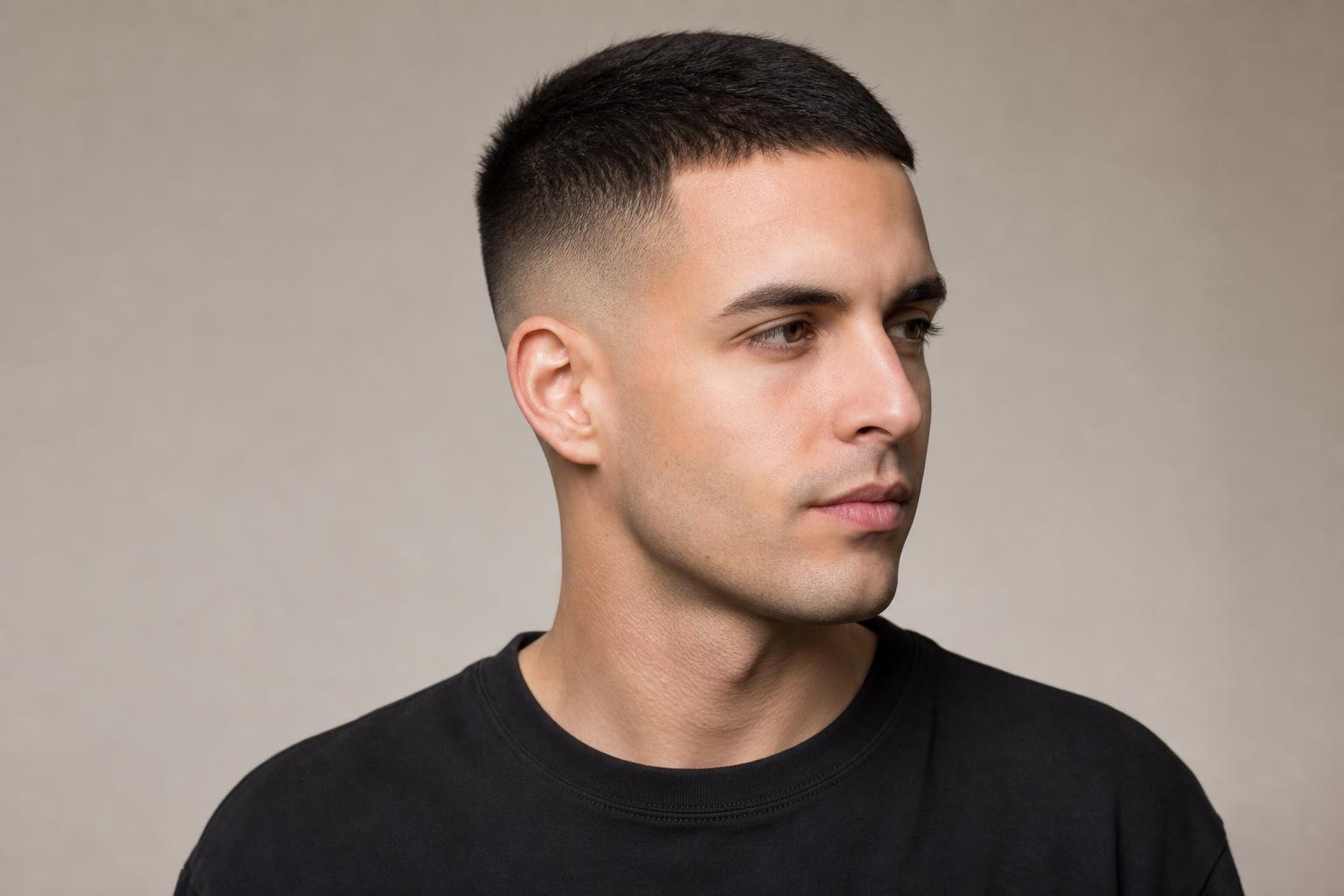
A bald fade is any fade taken all the way down to bare skin at its lowest point, and it is the same cut most barbers call a skin fade.
The two names describe one finish: the hair graduates from its length on top down through progressively shorter clipper work until there is nothing left but scalp at the bottom. What actually changes the look is not the name but the height, meaning how far up the head that graduation begins. A low bald fade that starts just above the ear and a high bald fade that starts at the parietal ridge are dramatically different haircuts with the same finish, and asking for one and getting the other is the most common way this cut goes wrong.
This guide separates the terminology from the decision, sets out the four fade heights and who each suits, gives you a barber script that removes the ambiguity, covers what a bald fade does on coarse curly hair and on a scarred or uneven scalp, and lays out the two-week reality of keeping one sharp.
Bald Fade and Skin Fade Mean the Same Thing
Barbers use the terms interchangeably, and neither has a technical definition that separates it from the other. Both mean the clipper work runs out at zero, with the foil shaver or a straight razor finishing the last section so the skin shows through cleanly. If a shop treats them as different, the distinction is usually about attitude rather than technique: bald fade tends to signal a tighter, more obvious contrast, while skin fade sounds slightly softer to some ears. Say either one and add the height, and you will be understood anywhere.
The genuinely different cut is a taper. A taper shortens the hair gradually around the ears and the neckline only, stopping well short of skin, and it leaves the bulk of the sides intact. Because there is no bare scalp anywhere, a taper grows out with no visible line and can go five or six weeks between appointments. Anyone weighing a bald fade against a taper is really choosing between contrast and maintenance, and that trade is the whole decision.
| Feature | Bald or Skin Fade | Taper |
|---|---|---|
| Shortest point | Bare skin, no hair at all | A number 0 or 1, hair still present |
| Tools used | Clippers, then foil shaver or razor | Clippers and a taper lever only |
| Where it starts | Anywhere from above the ear to the parietal ridge | Around the ears and the nape only |
| Barber cycle | 1 to 2 weeks to stay crisp | 5 to 6 weeks |
| Skin exposure | Full; scalp tone and texture are visible | None |
| Suits | Strong contrast, even scalp, tight schedule | Conservative settings, longer gaps between cuts |
Fade Height Is the Real Decision
Height means the point on the side of the head where the graduation begins and the hair starts getting shorter. Below that point everything blends down to skin; above it, the length on top stays untouched. Move that starting point half an inch and the balance of the whole head changes, which is why height deserves more thought than the finish does. The landmarks barbers use are the top of the ear, the temple, and the parietal ridge, which is the corner where the side of your skull turns into the top.
| Height | Starts At | Effect | Best For |
|---|---|---|---|
| Low bald fade | Just above the ear | Subtle; most of the side keeps length | Conservative workplaces, round and heart faces |
| Mid bald fade | At the temple | Balanced contrast, the default request | Most face shapes and most hair types |
| High bald fade | At the parietal ridge | Sharp; nearly all the side goes to skin | Round faces, thick hair, high-contrast looks |
| Drop bald fade | Arcs down behind the ear | Curved line that follows the skull | Longer tops, curly hair, softer outlines |
| Burst bald fade | Radiates around the ear only | Keeps weight at the back and nape | Mohawk shapes, textured tops, curls |
Face shape narrows the choice quickly. A round face gains from a high or mid bald fade, because taking the sides to skin removes width exactly where the face is widest and pushes the eye upward. A long or oblong face wants the opposite: a low bald fade keeps some visual weight at the sides so the head does not read as narrower still. Square jaws sit comfortably anywhere in the range, though a drop fade softens the corner where the jaw meets the neck. If you want more detail on the shape below the fade, the high fade covered on its own terms and the more conservative low fade both go further into the styling that sits on top.
What to Tell Your Barber
Name four things and the cut is specified: the height, the finish, the length on top, and the neckline. A complete request sounds like “Mid bald fade, blend starting at the temple, leave about two inches on top with some texture through it, tapered neckline.” That is fifteen seconds of speech and it closes every gap a barber would otherwise have to guess at. Saying only “bald fade” hands over the single most consequential decision, which is height, and most barbers will default to mid.
Point at your own head rather than describing landmarks in the abstract. Put a finger where you want the skin to stop and the blend to begin, and watch in the mirror while your barber confirms it. Anatomical words such as parietal ridge are useful for reading articles and much less useful in a noisy shop where you and the barber may picture different spots. The photo helps here too, though bring one of a man with your hair density, since a bald fade against thick black hair and the same fade against fine light-brown hair produce very different amounts of contrast.
Stylist tip: ask for a number 0 rather than skin on your first bald fade. A zero-guard pass leaves a shadow of hair that looks nearly identical from a normal conversational distance, grows out far more gracefully, and tells you whether you actually like the contrast before you commit to bare scalp. Plenty of men discover at that point that a zero suits them better and never go to skin at all.
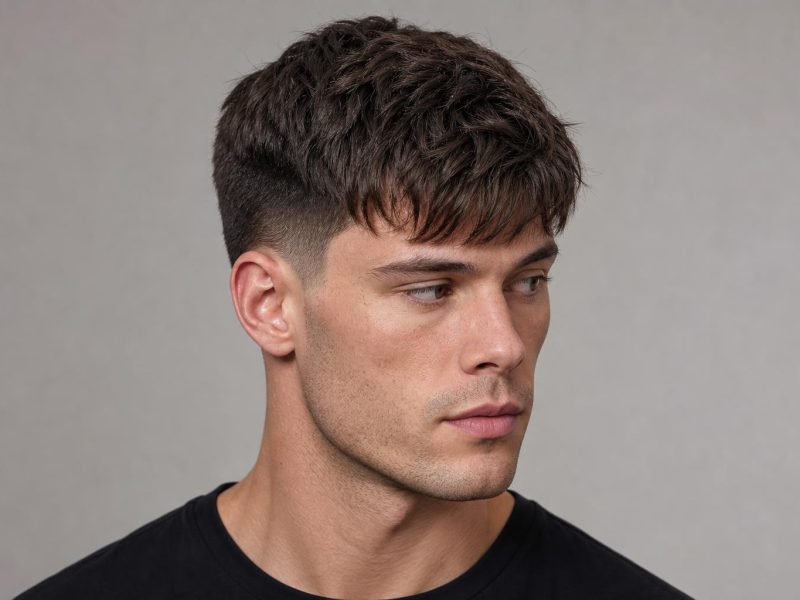
The top matters as much as the sides. A bald fade against a scissor-cut, textured top reads as a modern barbershop cut, while the same fade under a blunt heavy top can look severe. If you are unsure what to pair it with, the four base shapes in the guide to choosing a short men’s cut all take a bald fade, and a forward-falling textured fringe is the pairing most requested at the moment.
Hair Type and Scalp Change What a Bald Fade Does
Taking hair to skin exposes everything underneath it, so the same cut behaves differently depending on what your scalp and hair actually look like. None of the situations below rules the cut out, and each one needs a specific adjustment that is worth raising before the clippers start.
Coarse Curly Hair Is Prone to Bumps After a Skin Finish
Cutting coarse, tightly curled hair to skin level leaves a sharp tip that can curl back and re-enter the skin as it grows, producing the raised bumps dermatologists call pseudofolliculitis. The American Academy of Dermatology notes this is most common in men with coarse or curly hair and recommends against shaving too closely when it flares. The practical fix at the barbershop is asking for a foil shaver rather than a straight razor for the final pass, since it cuts marginally above the skin, and stopping at a zero guard entirely during a breakout.
Fine or Light Hair Produces Less Contrast
A bald fade is a contrast effect, and contrast needs dark hair against light skin or the reverse. On fine blond or light-gray hair the graduation is barely visible from two feet away, so the cut delivers the maintenance cost of a skin fade with little of the visual payoff. A taper achieves the same tidy outline, or you can compensate by leaving more length on top so the difference between top and sides carries the shape instead.
An Uneven or Scarred Scalp Shows Immediately
Old scars, birthmarks, and areas of uneven pigmentation are invisible under a number 2 and obvious under a skin finish. Check the back and sides with a hand mirror before booking, because that is the part of your head you never look at. A low bald fade keeps the exposed area small and confined to the area around the ears, which is usually the least marked part of the scalp.
Thinning at the Crown Is Not Hidden by a Bald Fade
Taking the sides to skin raises the contrast between the sides and the top, which makes a sparse crown more visible rather than less. The common assumption runs the other way and it is worth checking in a mirror from behind. A shorter, more uniform cut usually serves better once thinning is established, and there are specific shapes built around a thinning crown that manage the contrast deliberately.
The Two-Week Reality of Keeping One Sharp
Hair grows roughly half an inch a month, which is about an eighth of an inch a week. On a number 4 that growth is invisible; against bare skin it is the difference between a fade and a shadow. This is the honest cost of the cut, and it is the reason men abandon bald fades more often than any other men’s shape.
| Week | What the Fade Looks Like | What to Do |
|---|---|---|
| Days 1 to 5 | Sharpest point; skin fully visible | Moisturize the exposed area; avoid picking at bumps |
| Week 2 | Skin section fills in to a shadow | Book the touch-up; most shops charge less for sides only |
| Week 3 | Contrast mostly gone; reads as a short taper | Still presentable; the shape is intact |
| Week 4 | Blend lines blur; sides look bulky against the top | Full cut needed, not just a sides tidy |
| Week 6 and beyond | No fade remains; the cut has grown into a different shape | Rebuild from scratch or switch to a taper |
Stylist tip: book a sides-only appointment at the two-week mark and a full cut at four, alternating between them. Most shops price a fade touch-up at roughly half a full cut, so the yearly total lands close to a monthly full cut while the fade stays sharp for far more of the year. Ask whether your barber offers it, because plenty do not advertise the service.
Skip the temptation to fix the fade yourself with clippers between visits. A blend is built from four or five overlapping guard lengths worked at changing angles, and a single pass with one guard flattens the gradient into a step that a barber then has to cut around. Learning what each guard number leaves behind is useful for describing what you want, not for attempting the blend at home.
When a Bald Fade Is Not the Right Choice
The cut is popular for good reason and there are clear cases where it works against you.
- You cannot get to a barber every two weeks. Everything about this cut assumes that cycle, and at four weeks it has become a different haircut entirely.
- You get razor bumps. Coarse curly hair cut to skin level is the classic trigger, and repeated flares can leave lasting marks. A zero guard or a taper avoids the problem without changing the look much.
- Your scalp is marked or unevenly pigmented. A skin finish puts that on display permanently, and no styling on top compensates.
- You have a long, narrow face or a small head. Removing all the side volume narrows the silhouette further, and the result can look severe rather than sharp.
- You are thinning at the crown. Raising the contrast between sides and top draws attention to the sparse area rather than distracting from it.
Common Bald Fade Myths
Myth: A Bald Fade and a Skin Fade Are Different Cuts
Reality: they are two names for the same finish, and no technical standard separates them. Any perceived difference is about how tight the contrast looks, which is a function of height and hair color, not of which word you used. Specify low, mid or high and the ambiguity disappears.
Myth: Shaving to Skin Makes Hair Grow Back Thicker
Reality: density is fixed at the follicle and no cutting or shaving changes it. Regrowth feels coarser because a blunt-cut tip has a wider cross-section than a tapered grown-out end, which is a texture effect that fades within a couple of weeks. Nothing about a bald fade influences how much hair you have.
Myth: A Bald Fade Suits Everyone Because It Is Simple
Reality: it is the least forgiving men’s cut available, because it removes every bit of hair that would otherwise soften the shape of your skull and hide marks on it. Protruding ears, a flat back of the head and old scars all become part of the haircut. A number 1 or 2 delivers most of the same effect while keeping a thin margin of coverage.
FAQ
What Is the Difference Between a Bald Fade and a Skin Fade?
There is no technical difference; barbers use the two terms for the same cut, in which the fade graduates to bare skin at its lowest point. Some shops treat bald fade as the sharper-sounding request and skin fade as the softer one, but the clipper work is identical. Adding the height, meaning low, mid or high, is what actually specifies the cut.
How Often Do You Need to Get a Bald Fade Touched Up?
Every one to two weeks to keep the contrast crisp, and three weeks at the outside before it reads as a plain short taper. Hair grows about an eighth of an inch a week, which is invisible on a longer cut and obvious against bare scalp. Booking a cheaper sides-only touch-up at two weeks and a full cut at four is the usual way regulars manage the cost.
Does a Bald Fade Suit a Round Face?
Yes, and a mid or high bald fade suits it best, because taking the sides to skin removes width at the widest part of the face and directs attention upward. Keep at least two inches of length on top so there is height to balance the narrowed sides. A low bald fade does far less for a round face, since it leaves the width around the temples intact.
Can You Get a Bald Fade with Curly Hair?
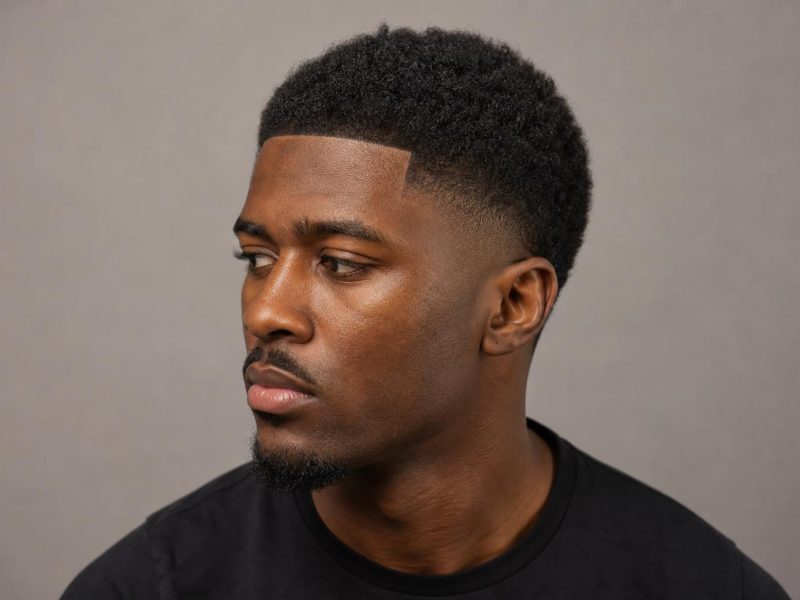
Curly hair takes a bald fade well and a drop or burst version usually suits it better than a straight horizontal line, because the curve follows the shape of the head under the curl. The one caution is skin irritation, since coarse curls cut at skin level can grow back into the skin. Ask for the final pass with a foil shaver rather than a straight razor, and stop at a zero guard if you are prone to bumps.
Is a Bald Fade Unprofessional for an Office?
A low bald fade with a scissor-cut top is conservative enough for almost any workplace, since the exposed skin sits below the ear where it is barely visible from the front. High bald fades read as much bolder and draw the eye immediately. If you are unsure of the culture at a new job, start low and move higher once you have a sense of the room.
What Should I Ask For If I Want a Bald Fade for the First Time?
Ask for a low or mid fade taken to a number 0 rather than to skin. A zero leaves a faint shadow of hair that looks almost the same at conversational distance, grows out with no hard line, and lets you judge whether you like the contrast. Moving from a zero to full skin at the next appointment is a small step; going back from skin is a month of awkward regrowth.
How Much Length Should Stay on Top of a Bald Fade?
Two to four inches is the usual range and it depends on what you want the top to do. Under two inches the cut reads as close to a buzz with faded sides, while past four inches the contrast between the top and bare skin becomes very high and needs daily styling to look deliberate. Around three inches with some texture through it is the most forgiving starting point.
A bald fade comes down to two numbers you should decide before you sit in the chair: how high the blend starts and how much length stays on top. Everything else, including whether you call it bald or skin, is vocabulary. Be honest about whether a two-week barber cycle fits your life, because that single constraint decides more about how this cut looks on you than any styling choice you make afterward.
Hair results vary based on your natural hair type, texture, density, and condition. Always consult with a licensed hairstylist before making significant changes, especially with chemical treatments or dramatic length changes. Photos may show styled results that require professional tools and products to replicate.


2 responses