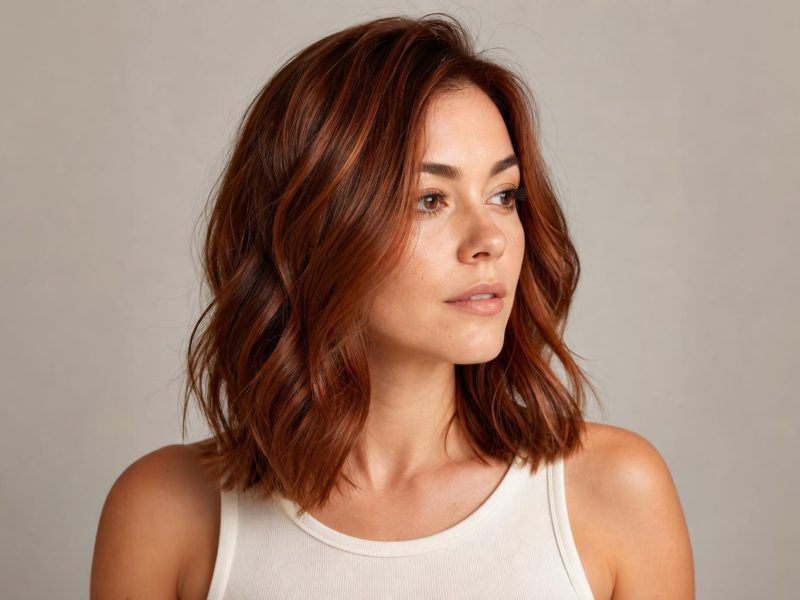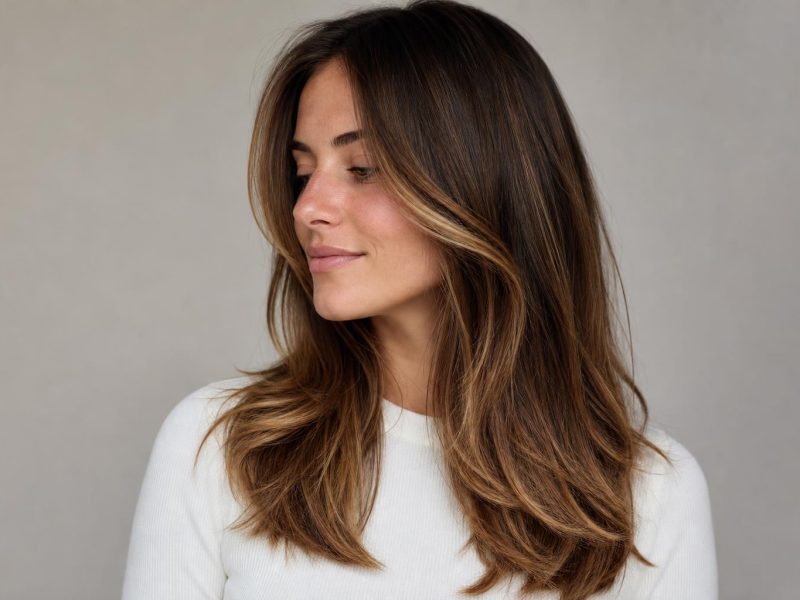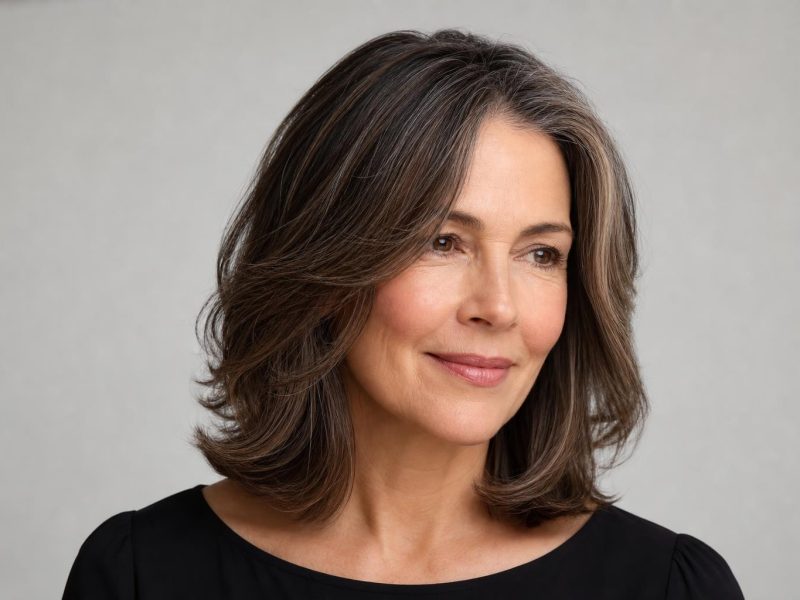

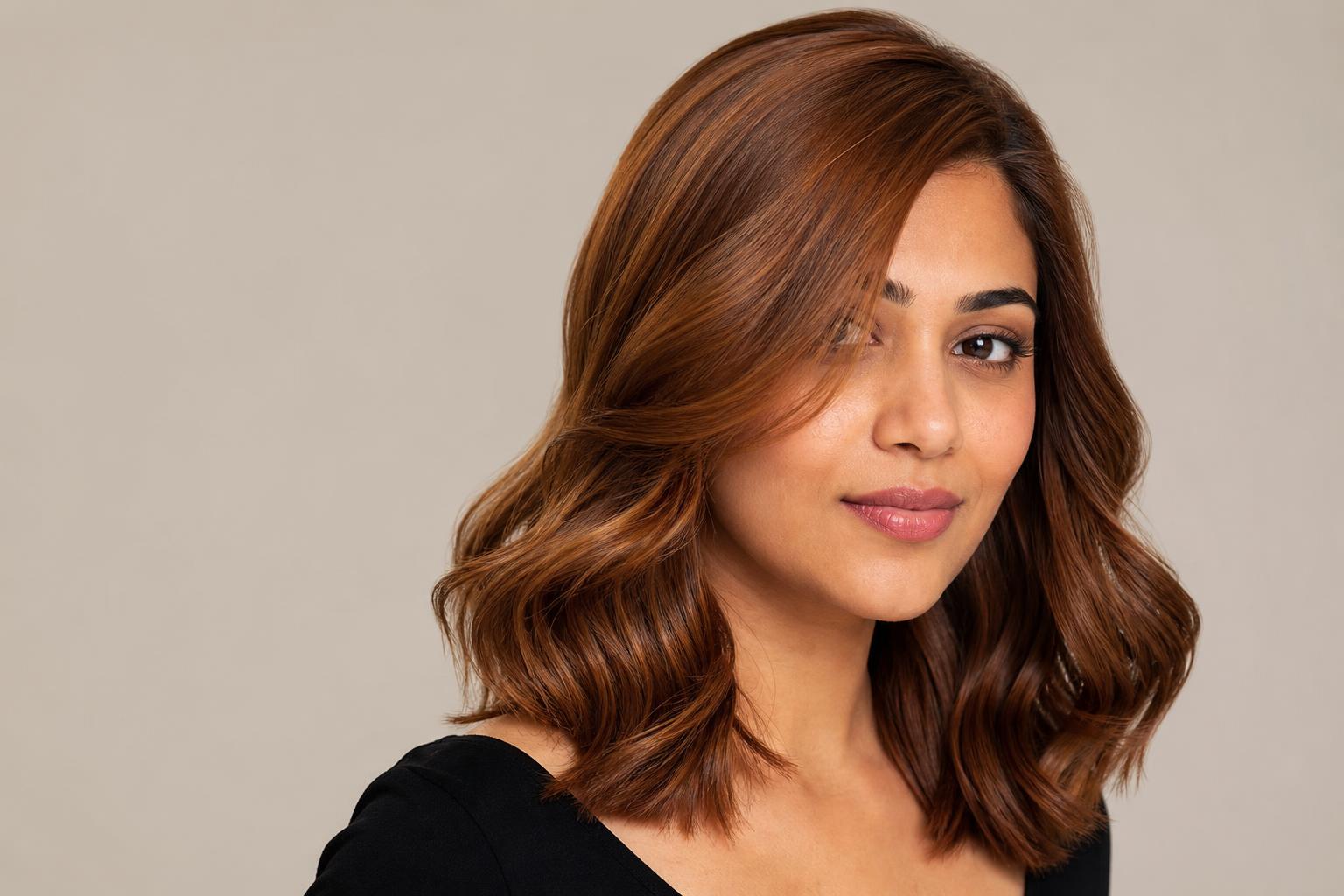
Golden auburn is the warm red-brown with a lit-from-within gold shimmer, and it is the easiest way to wear red without the intensity of a true copper or bright ginger.
Golden auburn is a warm brown base carrying soft red and clear golden reflect, so it glows amber in the light and settles into a rich chestnut in the shade. It is a red-family color for people who want warmth and dimension rather than a loud, saturated red, which makes it a comfortable middle ground between brunette and full auburn. The gold is what keeps it from reading heavy: instead of a flat rust tone, you get a shade that shifts and catches light like polished bronze.
This spotlight covers how golden auburn differs from copper, mahogany, and standard auburn, which skin tones it flatters, the exact language to give your colorist, and the real reason red tones need a specific care routine. There is also a frank section on who should skip it, because the same warmth that makes golden auburn glow also makes it fade in a way you need to plan around.
| Factor | Details |
|---|---|
| Depth | Level 5 to 7 warm brown with red and gold reflect |
| Tone | Warm red-brown with a bright golden shimmer |
| Best for | Warm, olive, tan, and deep skin; green, hazel, and brown eyes |
| Technique | All-over glaze or warm base plus fine golden highlights |
| Maintenance | Color-depositing care; gloss every 4 to 6 weeks as red fades first |
| Avoid if | You want low-fade color or cannot commit to red upkeep |
What Separates Golden Auburn from Copper and Mahogany
Auburn is the family; golden auburn is the warm, gold-forward member of it. Where copper leans orange and bright, and mahogany pulls cool and purple-red, golden auburn balances a soft red with an obvious golden shine that keeps the whole tone sunny rather than intense. The base stays brown enough to look natural, so it flatters people who like the idea of red but do not want to be the person with unmistakably red hair.
| Shade | Undertone | Intensity | Reads As |
|---|---|---|---|
| Golden auburn | Warm red with gold | Soft and glowy | Sun-warmed chestnut |
| Copper | Orange-red | Bright and bold | Vivid ginger |
| Mahogany | Cool red-purple | Deep and rich | Wine-tinted brown |
| Standard auburn | Neutral red-brown | Medium | Classic reddish-brown |
If you want more punch, a full dark red in cherry or auburn takes the same warmth deeper and more saturated. If you want to lean lighter and softer, the strawberry family sits next door; a strawberry blonde keeps the golden-red glow but at a much lighter level. Golden auburn is the grounded, wearable option between them.
Golden Auburn Flatters Warm and Deep Complexions Beautifully
The gold-and-red warmth is a natural match for warm, olive, tan, and deep skin, where it echoes the warmth already in the complexion and makes it look lit up. Fair skin can absolutely wear it, but the shade should be softened and kept out of heavy copper so it does not overpower delicate coloring. Green, hazel, amber, and warm brown eyes get a noticeable lift from the red-gold reflect.
| Skin Tone | How It Reads | What to Adjust |
|---|---|---|
| Deep | Luminous; the gold catches light against rich skin | Keep the base deep so the red stays elegant, not loud |
| Tan and olive | The most natural fit; warmth mirrors the skin | Full golden-red range works well |
| Medium warm | Glowy and dimensional | Add fine golden highlights for extra movement |
| Fair or cool | Striking but can read strong | Soften the red, favor gold, and keep depth in the base |
Stylist tip: If your skin flushes easily, ask your colorist to weight the formula toward gold and pull back the red. Too much true red next to a ruddy complexion can make the skin look pinker, while a gold-forward auburn brightens without amplifying redness.
How to Ask Your Colorist for Golden Auburn
Say the two words that define it: warm and golden. Auburn covers a wide range, so bring photos and point specifically to the golden shimmer you want, not just the red. If you are coming from an uncolored brown base, this is a straightforward warm deposit; from blonde or pre-lightened hair, your colorist will likely fill the hair first so the red does not grab unevenly.
Ask for: “A golden auburn around a level 6, warm red-brown with a bright golden reflect. I want it glowy and dimensional, not a flat solid red, and lean it toward gold rather than copper.” That gives the depth, the tone, the finish, and the warmth balance. Tell your colorist if your hair is prone to grabbing warm or has old highlights, because pre-lightened sections take red much faster than virgin hair.
Stylist tip: Ask for a demi-permanent glaze rather than a permanent red for your first try. It gives the same glow with less commitment, fades more gracefully than a permanent, and lets you decide whether golden auburn is your long-term color before you lock it in.
Red Tones Fade First, So the Routine Is Non-Negotiable
Here is the honest trade-off: the red pigment in golden auburn is the first thing to wash away, well before the gold and the brown base give up. That is simply how red-family color behaves, and no salon can make it permanent. What you can do is slow the fade dramatically with the right habits, so the color stays vivid for weeks instead of days.
| Habit | What to Do | Why It Helps |
|---|---|---|
| Wash less, cooler | 2 to 3 times a week in cool water | Hot water and frequent washing strip red fastest |
| Color-depositing conditioner | A warm red or copper tint weekly | Tops up the red between salon visits |
| Salon gloss | Every 4 to 6 weeks | Revives red and refreshes the golden shine |
| Heat and UV protection | Heat protectant plus a hat in strong sun | Sun and hot tools accelerate red fade |
The full color grows out gently because the base is a natural brown, so root regrowth is far less obvious than with blonde. The tone, not the roots, is what you are maintaining. If the constant glossing sounds like more than you want to take on, a warmer brunette like a honey brown with caramel warmth gives you glow with a fraction of the fade management.
When Golden Auburn Is Not the Right Choice
- You want low-maintenance color. Red-family shades fade the fastest of any color family, and golden auburn needs regular glossing and color-depositing care. If upkeep is a dealbreaker, a warm brunette holds far longer.
- Your complexion is very cool and pink. Heavy warm red can amplify pink in the skin. Ask for a gold-forward, softened version, or step toward a cooler cherry cola with a brown-red base.
- You are chasing a bright ginger or vivid red. Golden auburn is deliberately soft and grounded. For real vibrancy, a saturated copper or true red is the honest choice, with the higher upkeep that comes with it.
- Your hair is heavily pre-lightened and porous. Very porous blonde grabs red unevenly and can turn muddy. A color filler and a strand test come first so the golden auburn lands true and even.
Common Golden Auburn Myths
Myth: Auburn Only Suits Pale, Freckled Skin
Reality: Golden auburn is one of the most flattering reds on warm, olive, tan, and deep skin. The gold-and-red warmth mirrors the skin’s own tone. The pale-and-freckled association comes from natural redheads, not from who the color actually flatters.
Myth: All Red Shades Look the Same
Reality: Copper, mahogany, and golden auburn read completely differently. Golden auburn is warm and soft with a golden glow, copper is bright and orange, and mahogany is deep and cool. The undertone and intensity change the whole effect.
Myth: You Cannot Go Golden Auburn from Blonde
Reality: You can, but the hair usually needs a filler first. Adding a warm base back into lightened hair keeps the red from grabbing patchy or turning too bright. It is a normal step, not a barrier.
FAQ
What Is Golden Auburn Hair?
Golden auburn is a warm red-brown color with a clear golden shimmer running through it. It sits in the auburn family but leans softer and more gold-forward than copper or mahogany. The effect is a sun-warmed chestnut that glows amber in the light.
Is Golden Auburn Hard to Maintain?
The tone takes more upkeep than a brunette because red pigment fades first, but the roots grow out gently thanks to the natural brown base. Plan on a color-depositing conditioner at home and a salon gloss every four to six weeks. Cooler, less frequent washing does most of the heavy lifting.
Who Does Golden Auburn Suit Best?
It flatters warm, olive, tan, and deep skin most naturally, along with green, hazel, amber, and brown eyes. Fair and cool complexions can wear it too with a softened, gold-forward version. The key is balancing the red and gold to your undertone.
How Is Golden Auburn Different from Copper?
Copper is a bright, orange-forward red, while golden auburn is a softer red-brown with a golden reflect and a deeper base. Golden auburn reads more natural and less vivid. If copper feels like too much, golden auburn is the gentler version of the same warmth.
Will Golden Auburn Fade to an Ugly Color?
Fade is manageable with the right care. Because the gold and brown base outlast the red, a neglected golden auburn drifts toward a warm light brown rather than anything harsh. A color-depositing conditioner and regular glosses keep the red vivid so you never reach that stage.
Can I Do Golden Auburn at Home?
A demi-permanent gloss in a golden auburn shade can refresh existing color at home, but a full change is safer in a salon. Red is unforgiving when it grabs unevenly, especially on previously lightened or porous hair. If you do try a box, choose a demi over a permanent and strand test first.
Golden auburn hair gives you the warmth and dimension of red in its most wearable form: a brown base, a soft red, and a golden shimmer that keeps the whole thing glowing rather than loud. Bring gold-forward reference photos, ask your colorist to balance the red to your skin tone, and build the fade-slowing routine into your week from day one. Treated with that bit of care, golden auburn is a rich, flattering color that suits far more people than the old pale-redhead stereotype suggests.
Hair results vary based on your natural hair type, texture, density, and condition. Always consult with a licensed hairstylist before making significant changes, especially with chemical treatments or dramatic length changes. Photos may show styled results that require professional tools and products to replicate.