
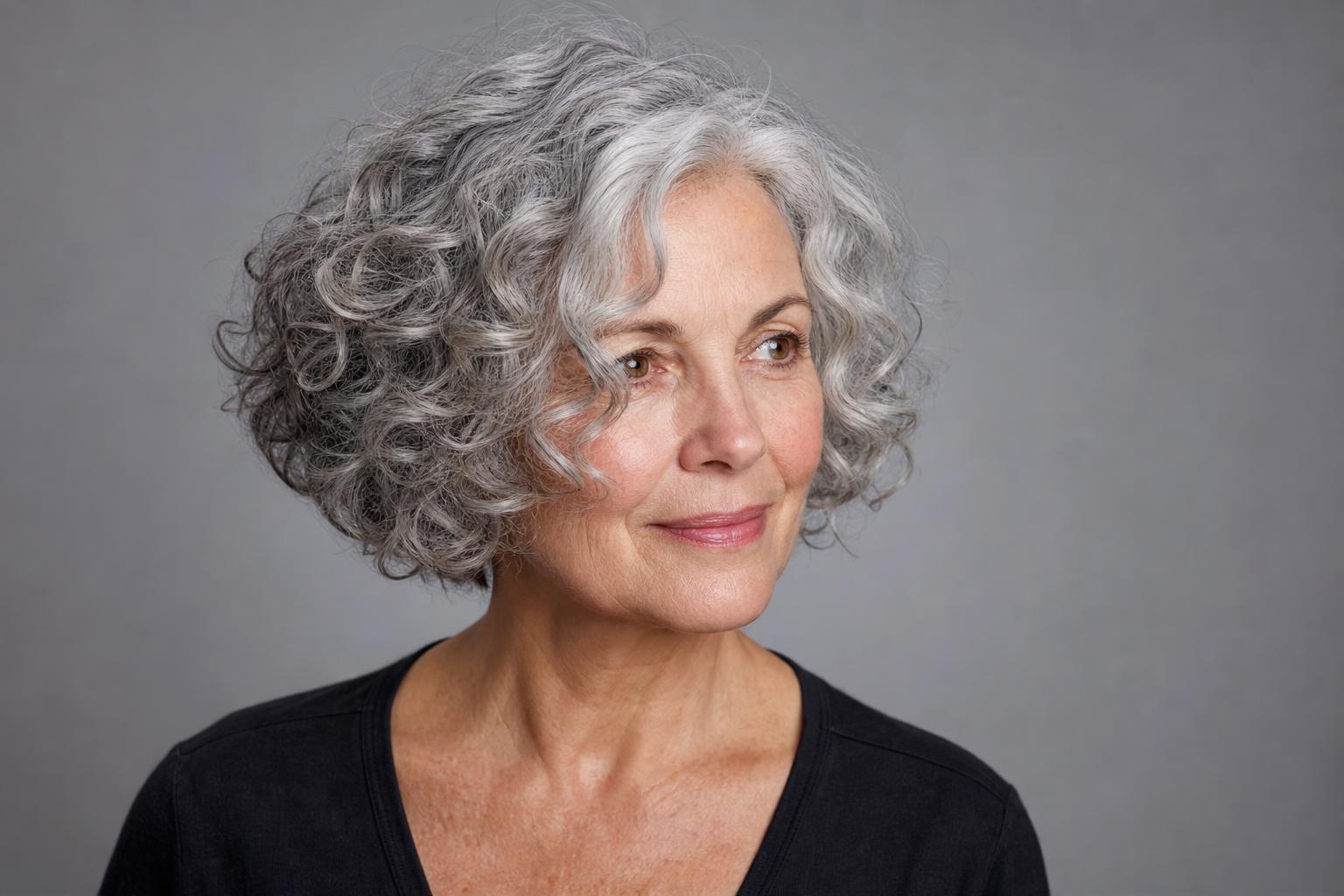
Curly hair after 60 is a different texture than it was at 40, and the cut has to answer the texture you have now, not the one you remember.
Curly hair over 60 holds shape best at chin length or shorter, because gray strands are coarser and drier than pigmented ones and lose curl definition as length pulls them down. These 25 cuts are sorted by length, from cropped curly pixies through mid-length curls, with a final section built specifically for curls that have thinned at the crown.
Each entry names the cutting structure, the curl pattern it suits, and what to say at the salon. After the gallery you will find a face shape table, a trim and styling schedule with real numbers, honest limits on heavy layering, and the exact wording that stops a stylist from cutting your curls as if they were straight.
| Factor | Details |
|---|---|
| Best for | 2b through 4a curl patterns, medium to coarse gray or silver texture |
| Maintenance | Trim every 8 to 12 weeks; 5 to 15 minutes of styling on wash days only |
| Works with | Cropped, chin, jaw and collarbone lengths cut dry, curl by curl |
| Avoid if | Density has dropped sharply and the plan involves heavy internal layering |
| Salon time | 60 to 90 minutes for a dry curl cut, longer with color |
Short Curly Cuts That Hold Their Shape
Cropped curls carry their own lift because there is no length pulling the curl pattern flat. That matters more after 60 than at any earlier age, since the follicle produces less oil and gray strands have a wider, more irregular shaft that resists the spring it once had. The cuts in this section keep weight concentrated at the top and back, where curly hair loses volume first.
1. Cropped Curly Pixie with a Tapered Nape
Cutting the nape close and leaving three to four inches through the top lets the crown curls stand up on their own rather than collapsing onto the neck. The taper is done with scissors over comb on dry hair so the curl pattern stays visible while the length comes down. Ask for the taper to stop above the occipital bone, which keeps a rounded silhouette instead of a flat back.
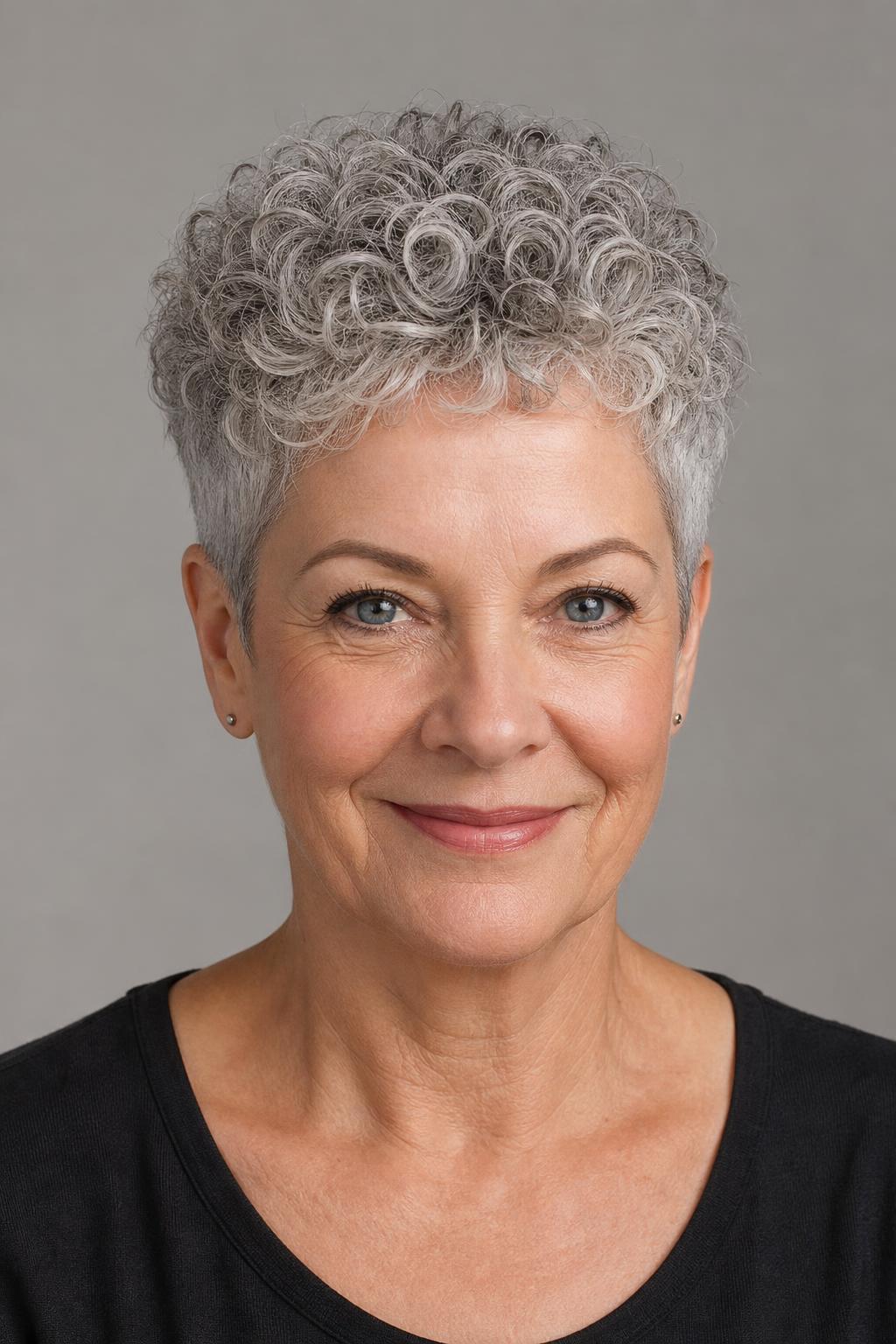
2. Rounded Curly Crop for Round Faces
Round faces need height rather than width, so this crop keeps the sides close to the head and builds two to three inches of curl above the forehead. The vertical lift draws the eye upward and narrows the face, while flat sides stop the curls from widening the cheeks. Width at ear level is the single thing to watch on a round face with curly hair.
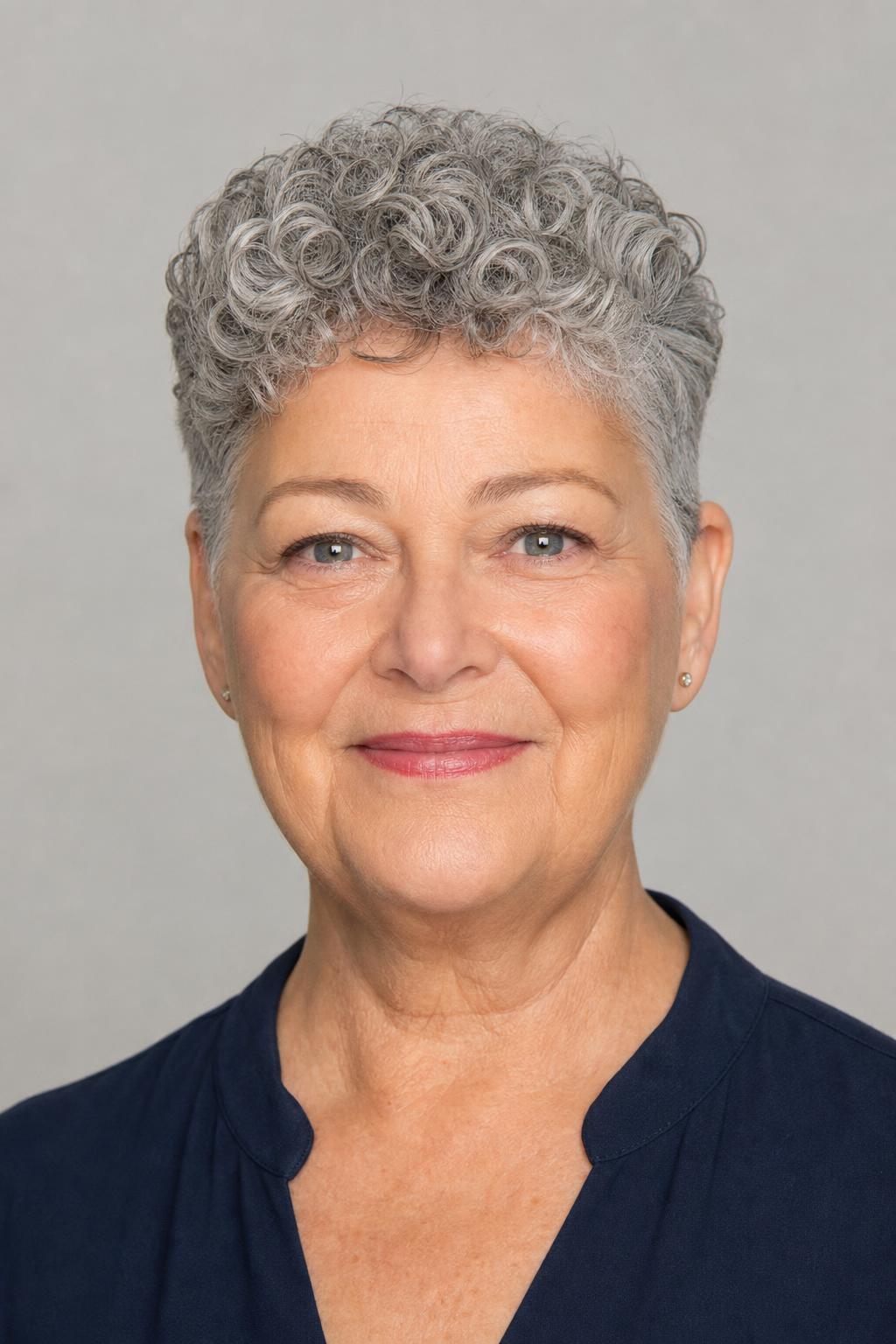
3. Curly Pixie Bob for Loose 2c Waves
Loose 2c waves do not have the spring to hold a very short crop, so this length stops just below the ear where the wave can complete one full bend. Anyone whose curl loosened after menopause will get more shape here than from a true pixie. Density through the mid-lengths stays intact, which keeps the ends from looking wispy.
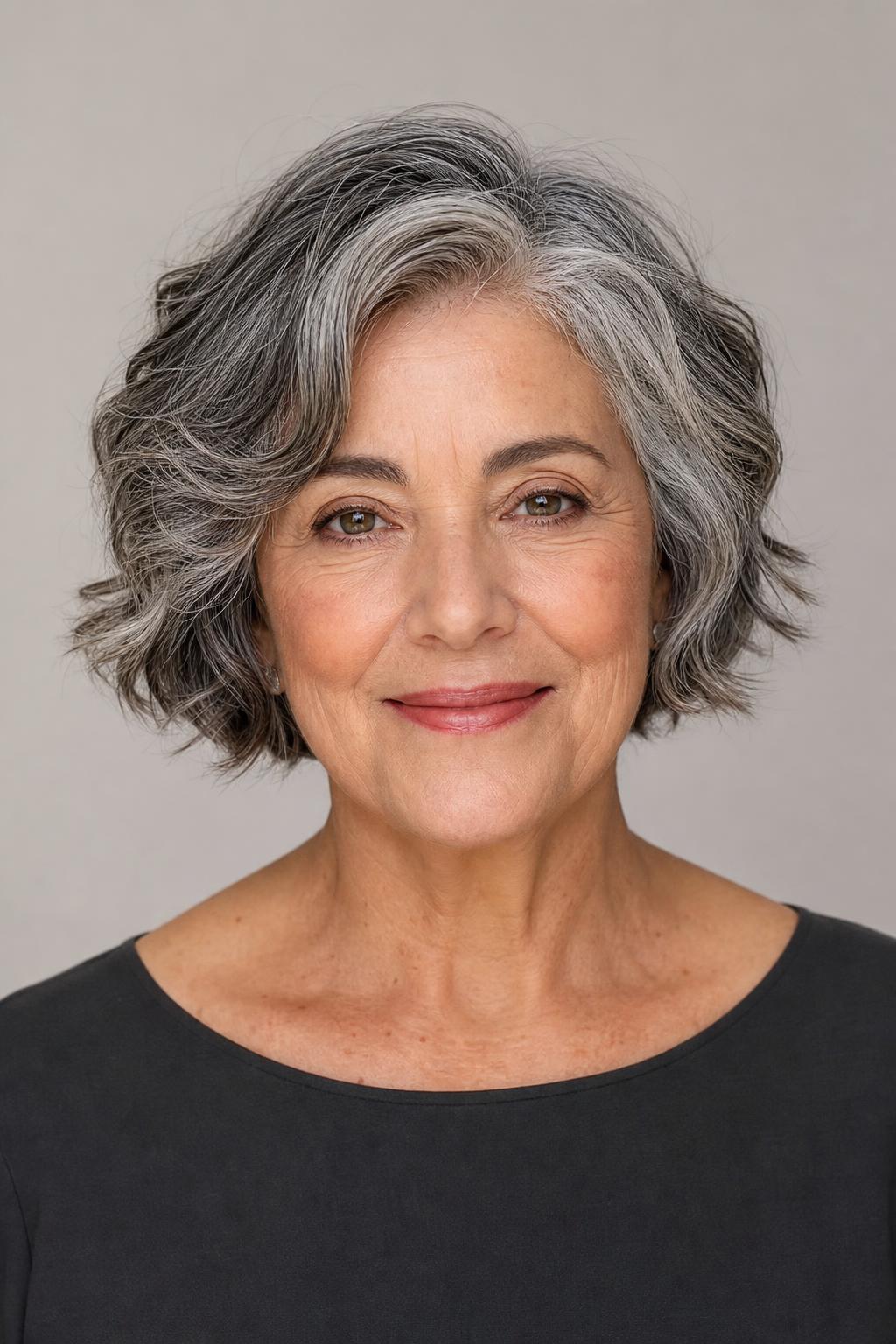
4. Diffused Curly Crop with Lifted Roots
Getting root lift on a short curly cut takes a diffuser held at the scalp, not at the ends. Tip your head to one side, cup a section of curls into the bowl, and hold it against the roots on medium heat for 20 to 30 seconds before moving on. A light mousse worked into soaking wet hair gives the curl something to hold onto while it dries.
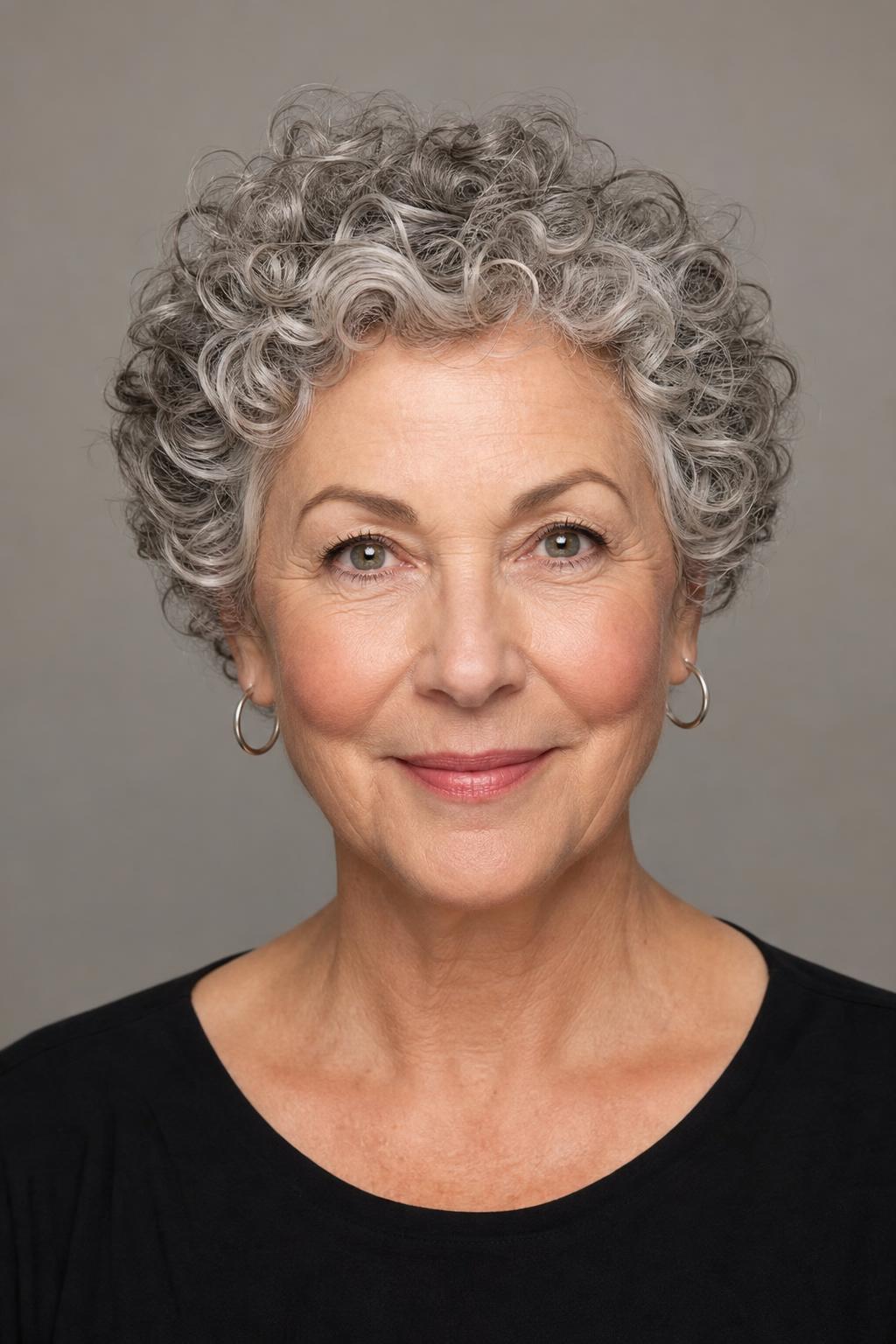
5. Low-Upkeep Curly Crop with Grown-Out Sides
Leaving the sides a half inch longer than a standard crop buys an extra three to four weeks between appointments, because there is no sharp taper line to blur as it grows. Expect 10 to 12 weeks rather than the 5 to 6 a tight crop demands. The trade-off is a slightly softer outline, which most people find easier to live with than a shape that goes fuzzy on schedule.
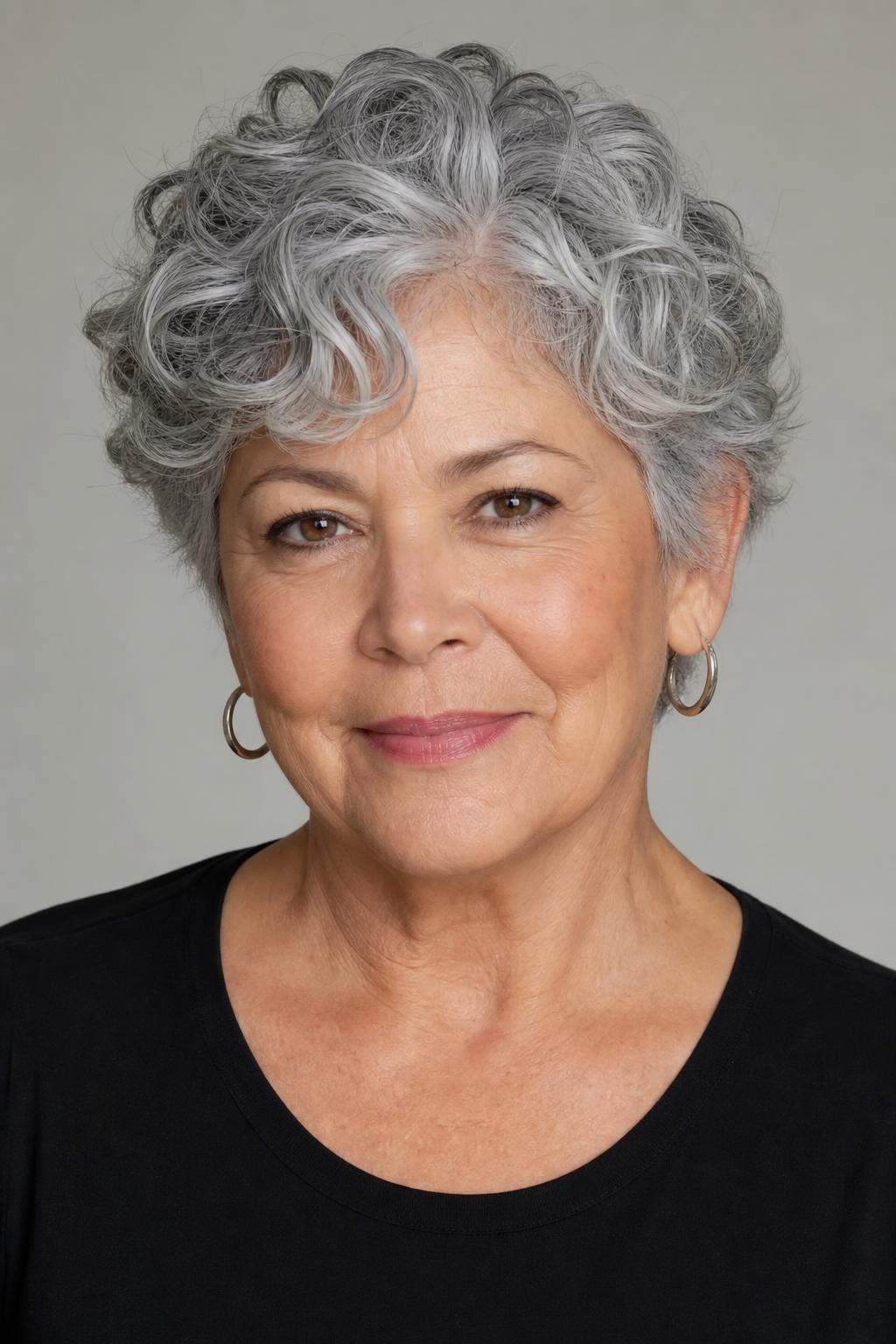
6. Silver Curly Pixie with a Soft Root Shadow
A root shadow one shade deeper than the silver length adds the illusion of density at the scalp, which is where curly hair looks sparsest under overhead light. The color is applied only to the first inch and blurred downward, so there is no regrowth line to chase. Toning every 8 to 10 weeks keeps the silver from turning yellow at the ends.
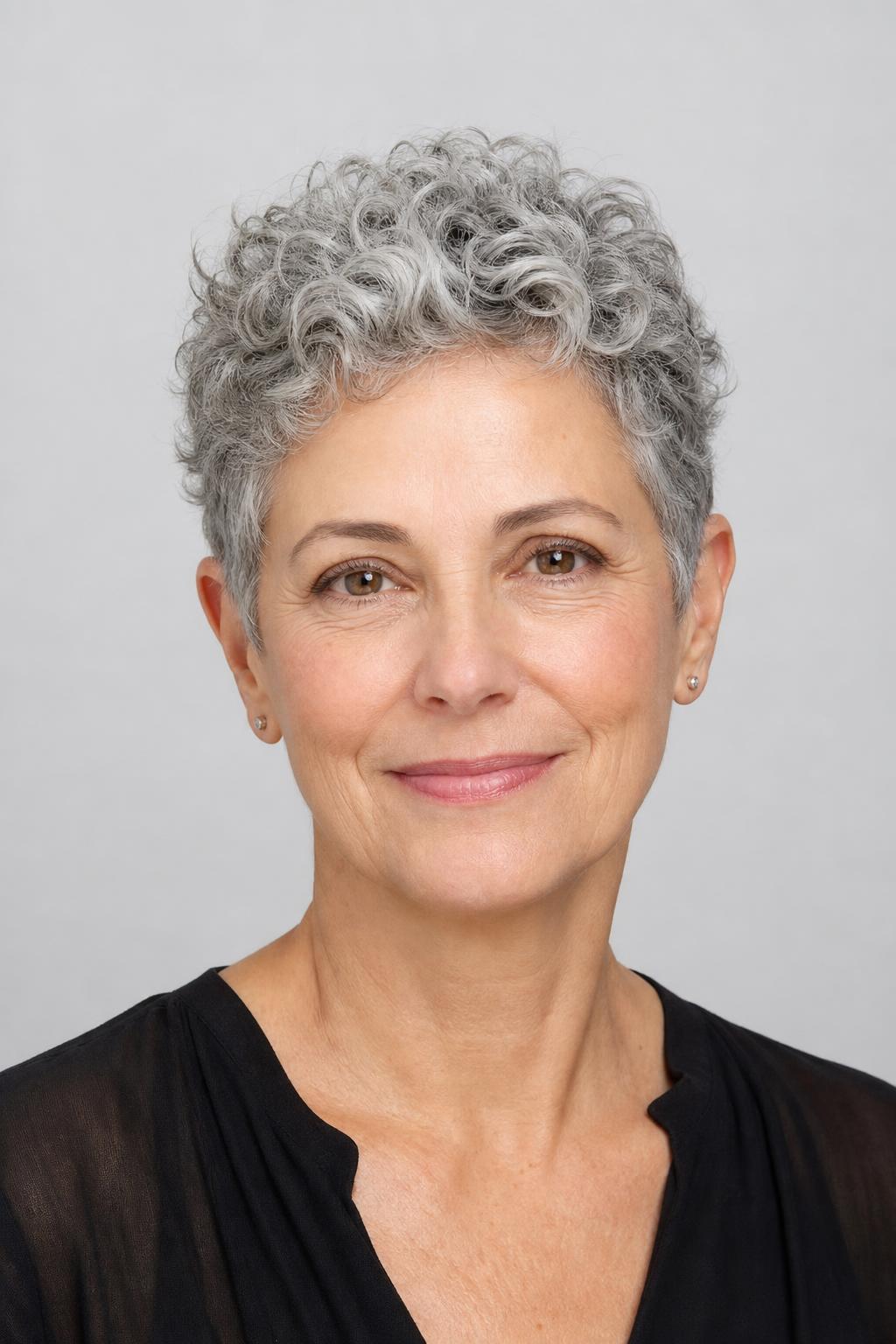
7. Curly Crop with a Squared Perimeter
Ask for a squared perimeter through the back rather than a rounded one, and bring a photo taken from behind if you have one. The phrase that gets this right is a flat back line with the sides kept tight to the head, no graduation. Stylists trained on straight hair will round it by reflex unless told otherwise.
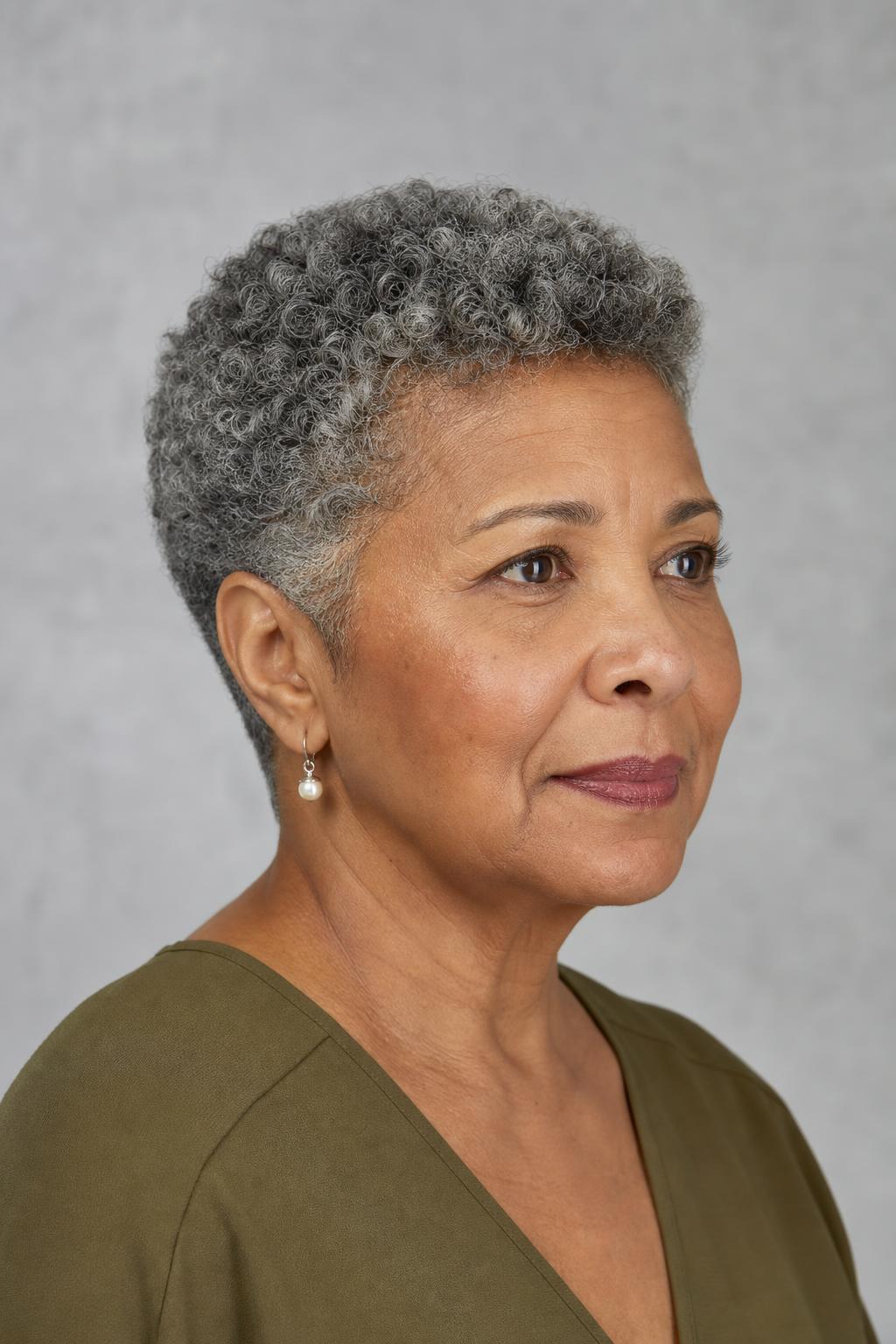
Chin and Jaw-Length Curly Bobs
The chin-to-jaw range is where curly hair over 60 tends to behave best. There is enough length for the curl to form and enough weight to stop frizz from taking over, without so much that the pattern stretches out. Every cut here should be done dry, since a curl cut wet can spring up two inches shorter than intended once it dries.
8. Curly Bob Cut Curl by Curl
Unlike a bob sectioned in horizontal panels, this one is cut one curl at a time, each strand trimmed where it naturally falls. The result has no visible cut line, which is the point, since a hard line across a curly perimeter creates the triangle shape most people are trying to avoid. The approach is the core of the DevaCut method for curly hair and works on anything from 2c to 4a.
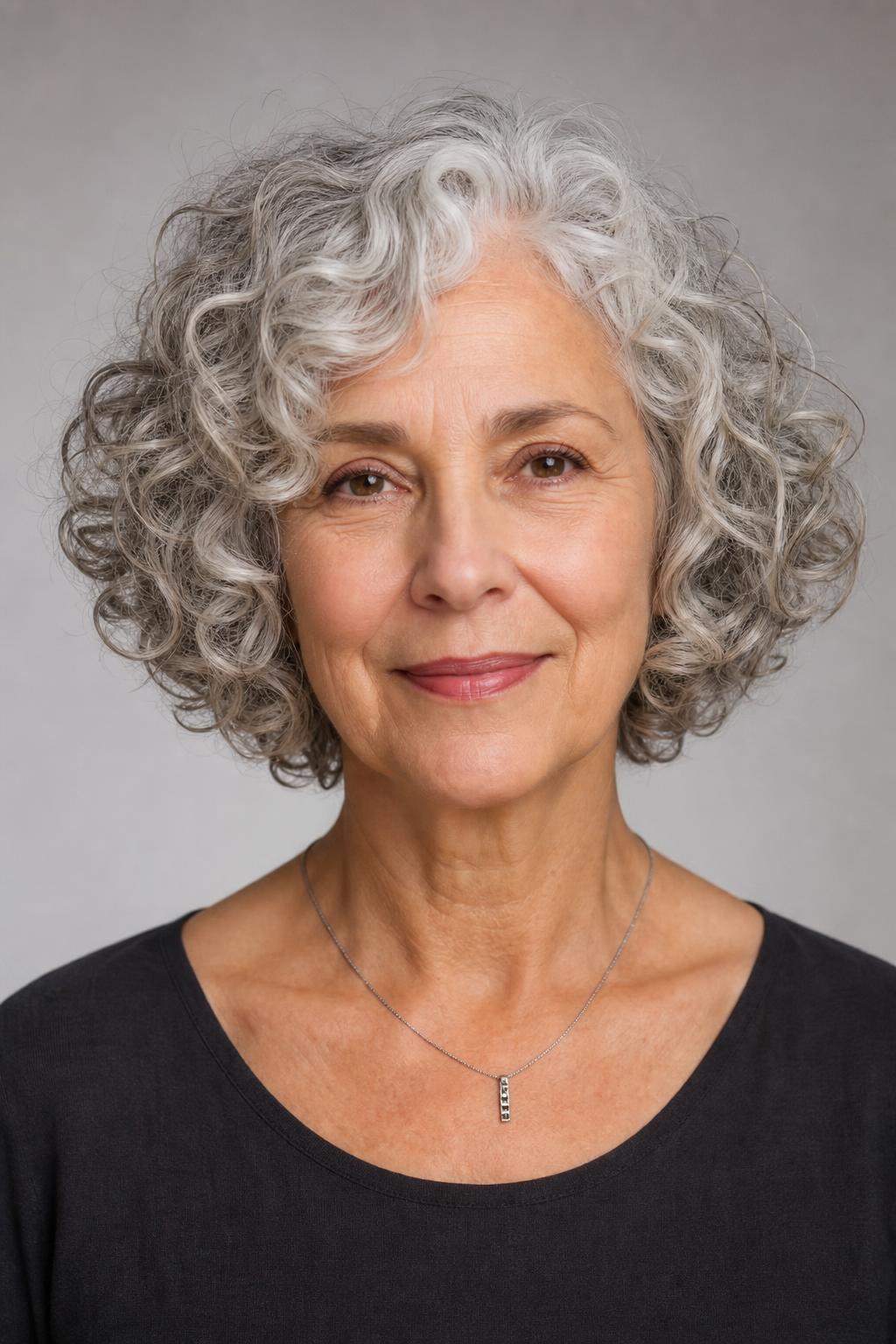
9. Jaw-Length Curly Bob with Internal Layers
The layers here are cut inside the shape rather than on the surface, removing bulk from the middle of the hair while the outer curls stay full length. On thick curly hair this stops the widening that happens just below the ear. Understanding the difference between internal layers and visible layers is what keeps a curly bob rounded rather than pyramid shaped.
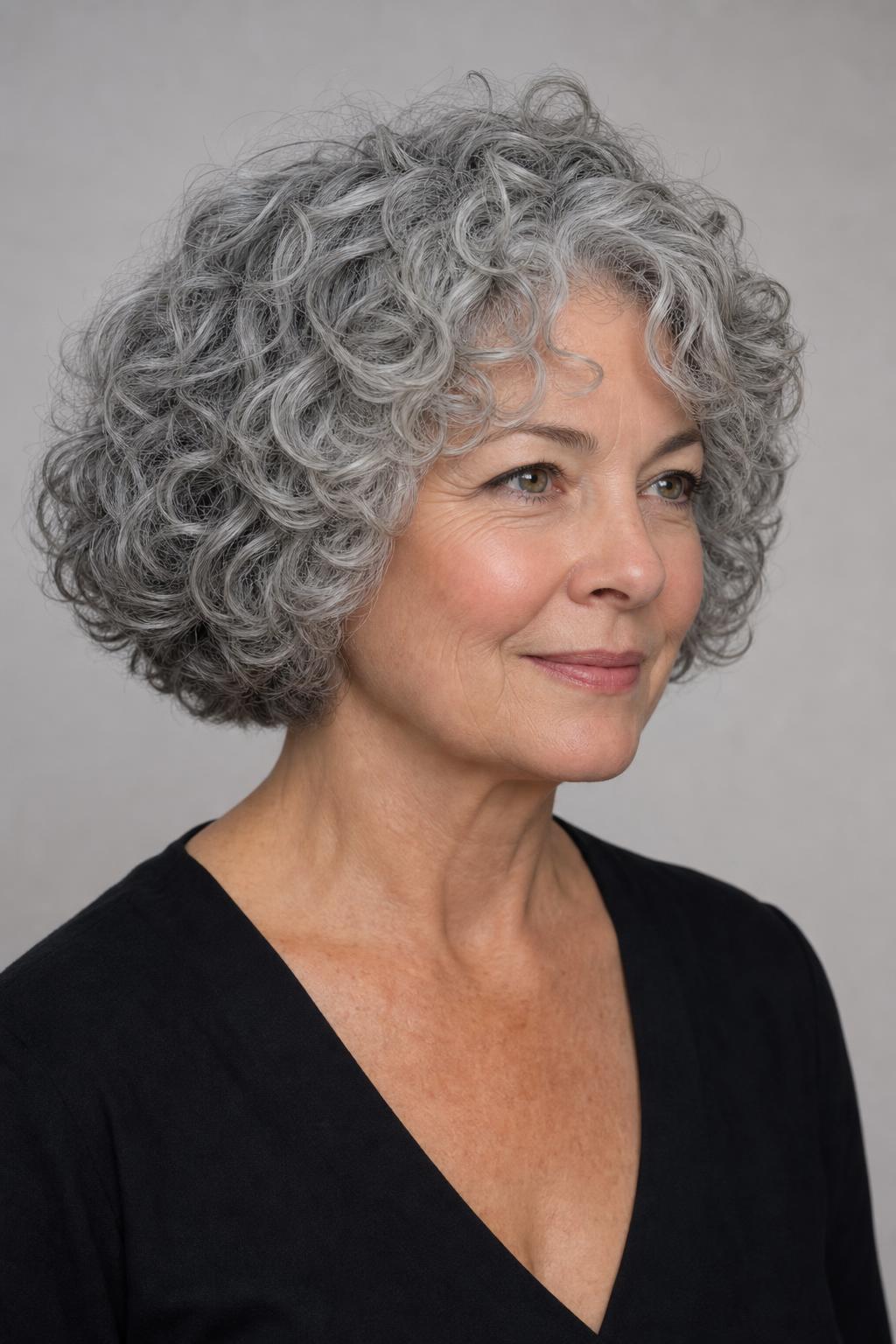
10. Chin-Length Curly Bob for Square Jawlines
Square jawlines soften when the curl lands just past the corner of the jaw rather than directly on it. Landing on the jaw draws a horizontal line exactly where the face is widest, which is the one thing to avoid. A half inch of extra length changes the whole balance, so mention the jaw specifically at the consultation.
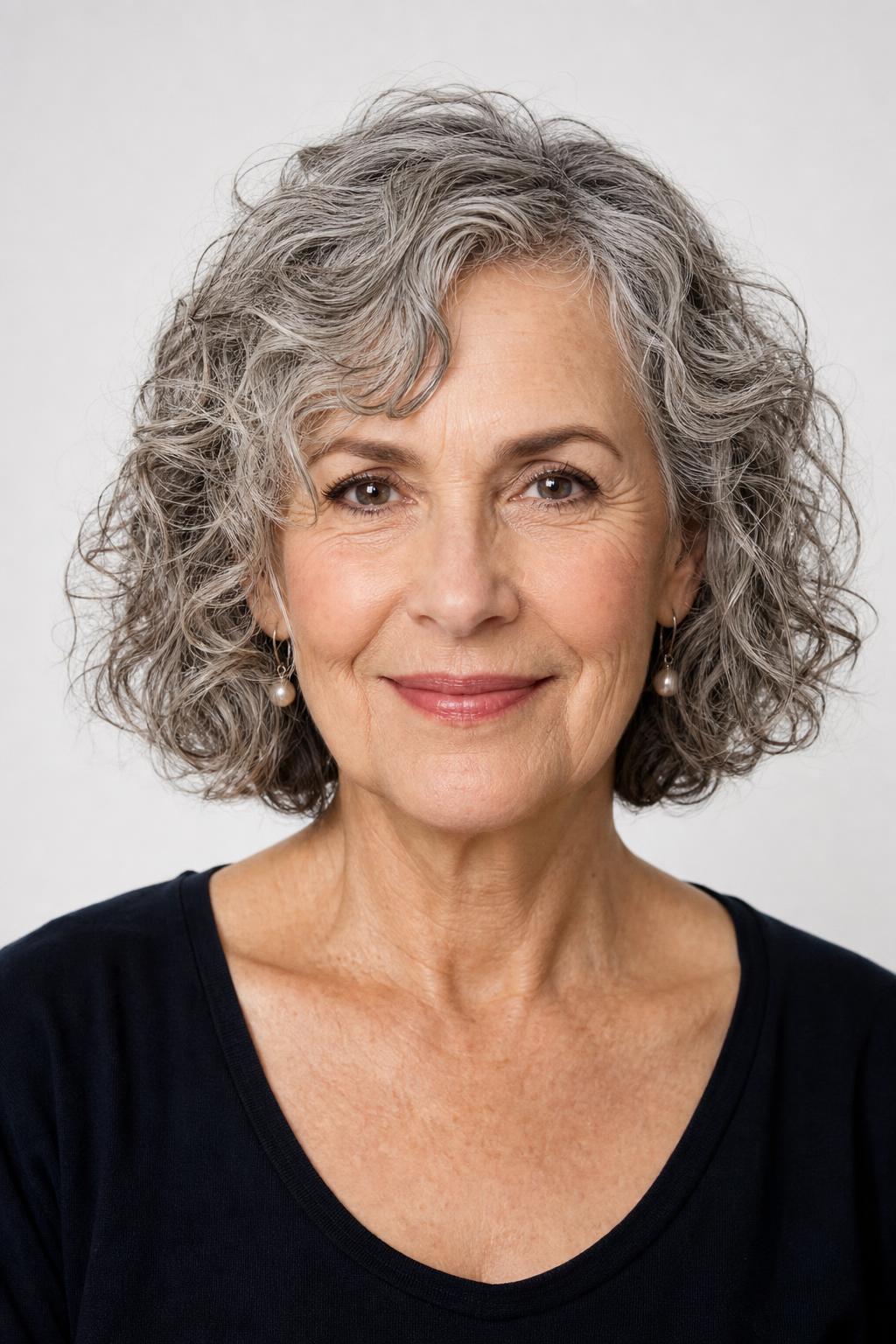
11. Curly Bob for Coarse Gray Texture
Coarse gray curls have a thicker individual strand and a drier surface than pigmented hair, so they hold a heavier shape without going limp. A blunter perimeter suits this texture better than a feathered one, since feathering coarse gray ends tends to produce flyaway pieces that never lie down. Weekly deep conditioning does more for definition here than any styling product.
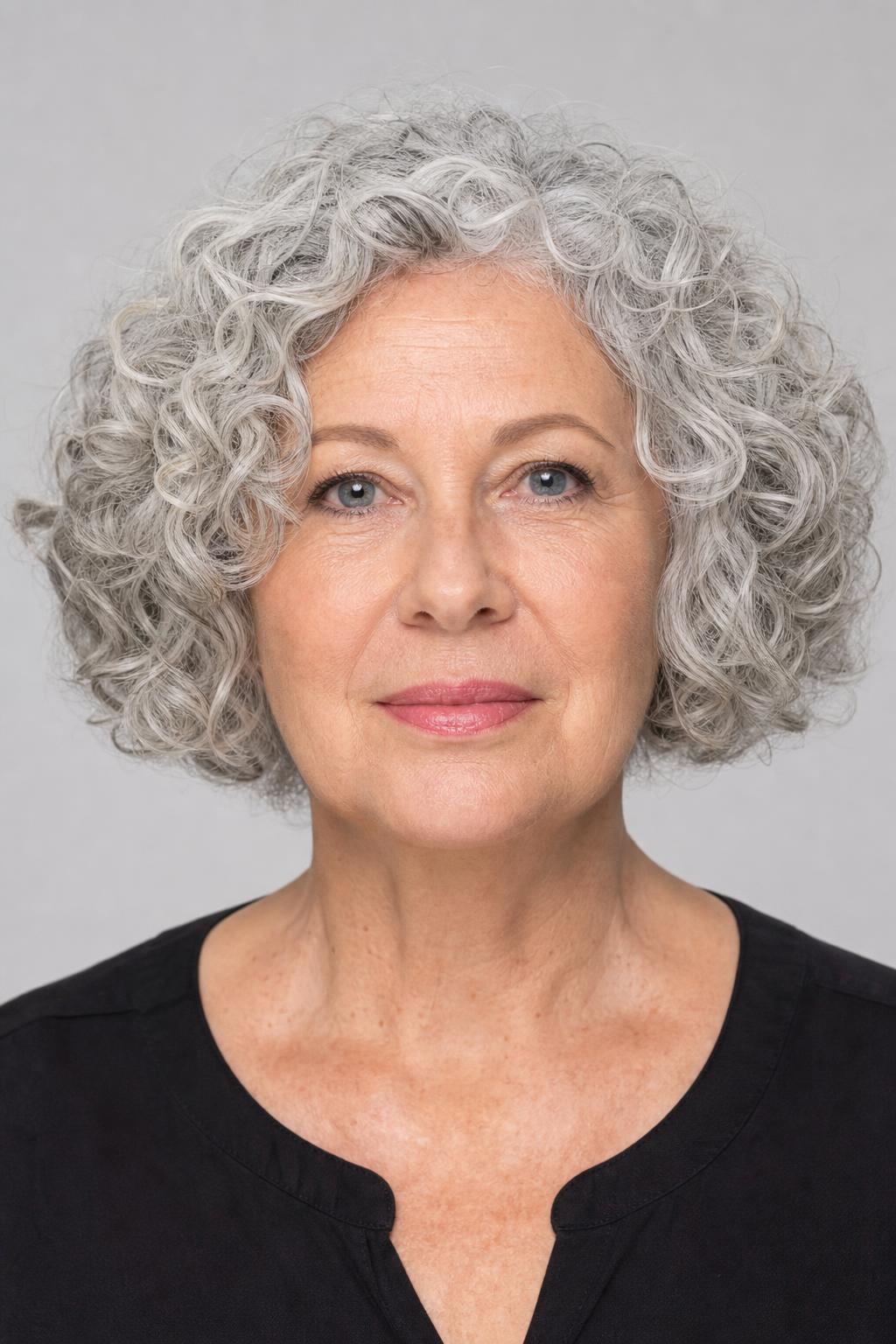
12. Curly Bob Set on Flexi Rods
Setting a chin-length bob on medium flexi rods overnight gives a uniform curl on days when the natural pattern has gone uneven. Work on damp hair with a curl cream, wrap two-inch sections from the ends upward, and unwrap gently in the morning without combing. It takes about 20 minutes to set and holds three to four days.
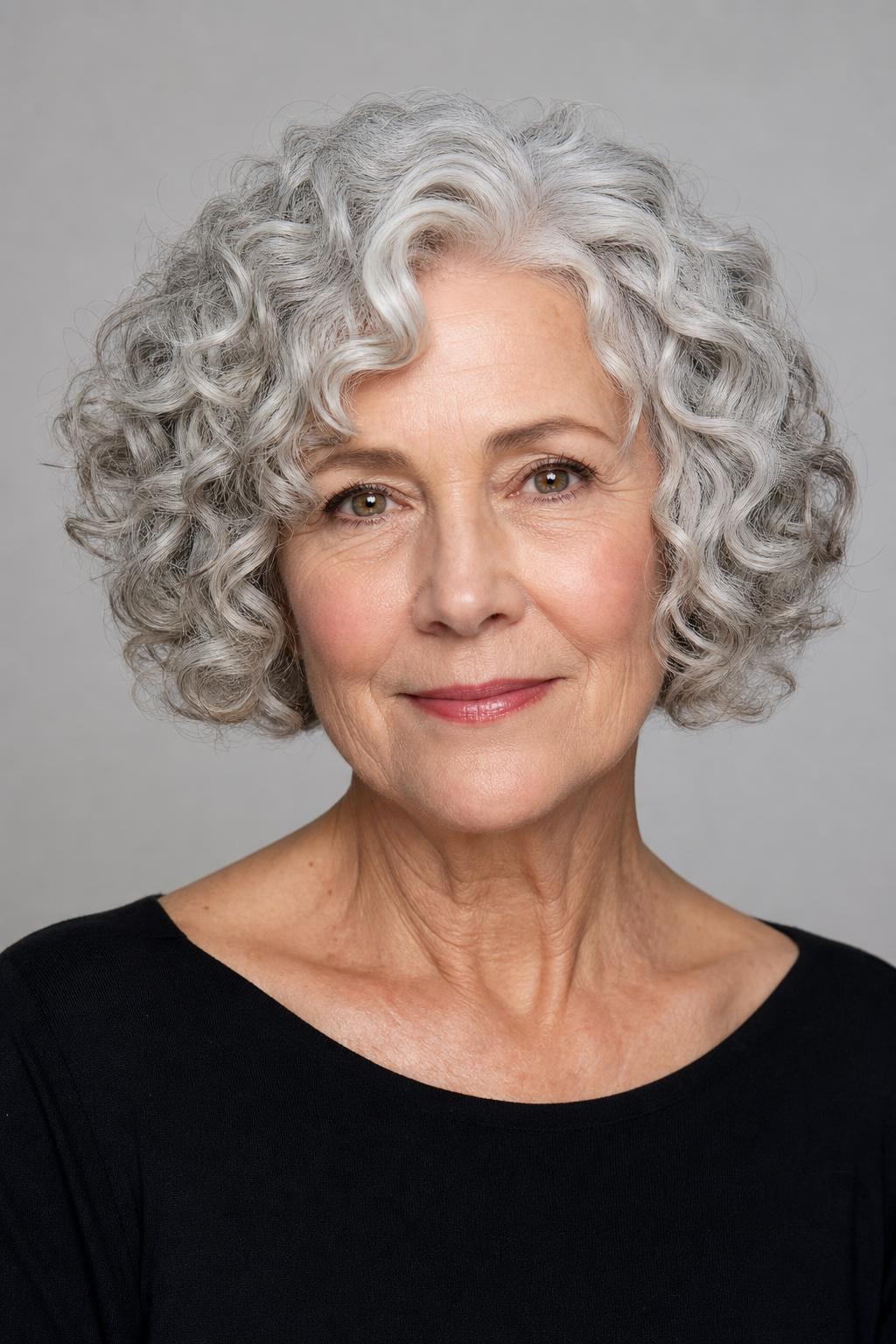
13. Curly Bob That Grows Out Evenly
A one-length curly bob with no graduation grows down rather than out, so there is no stage where the back puffs while the front hangs. Expect 10 to 12 weeks between trims instead of the 6 to 8 a graduated shape needs. That difference is roughly two salon visits a year.
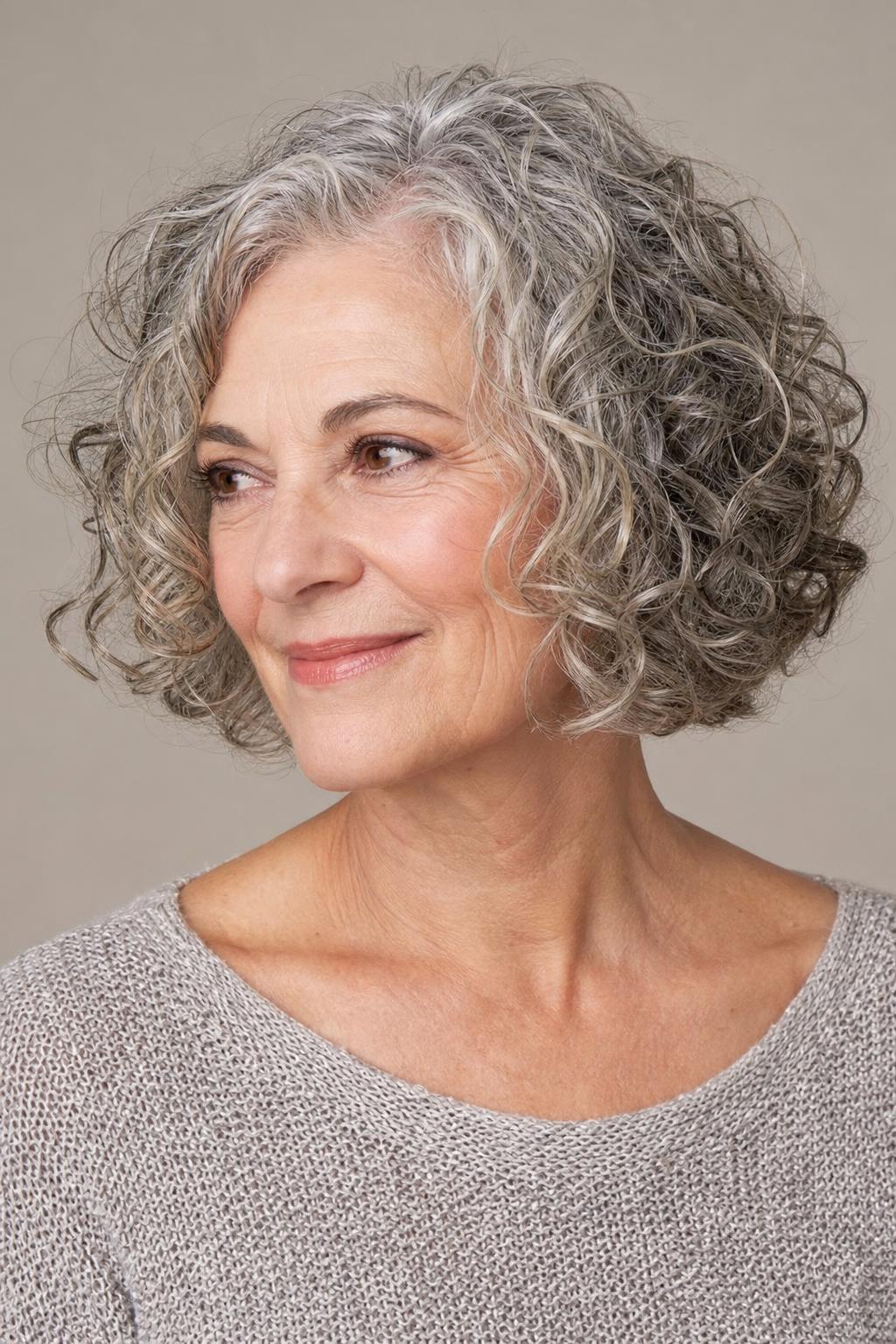
14. Curly Bob with Soft Silver Highlights
Fine highlights placed on the outer curls only catch light along the curve of each spiral, which makes the whole shape look deeper without lightening the base. Keep them within two shades of the natural gray or the contrast turns stripey as the curl moves. On curly hair the placement matters far more than the number of foils.
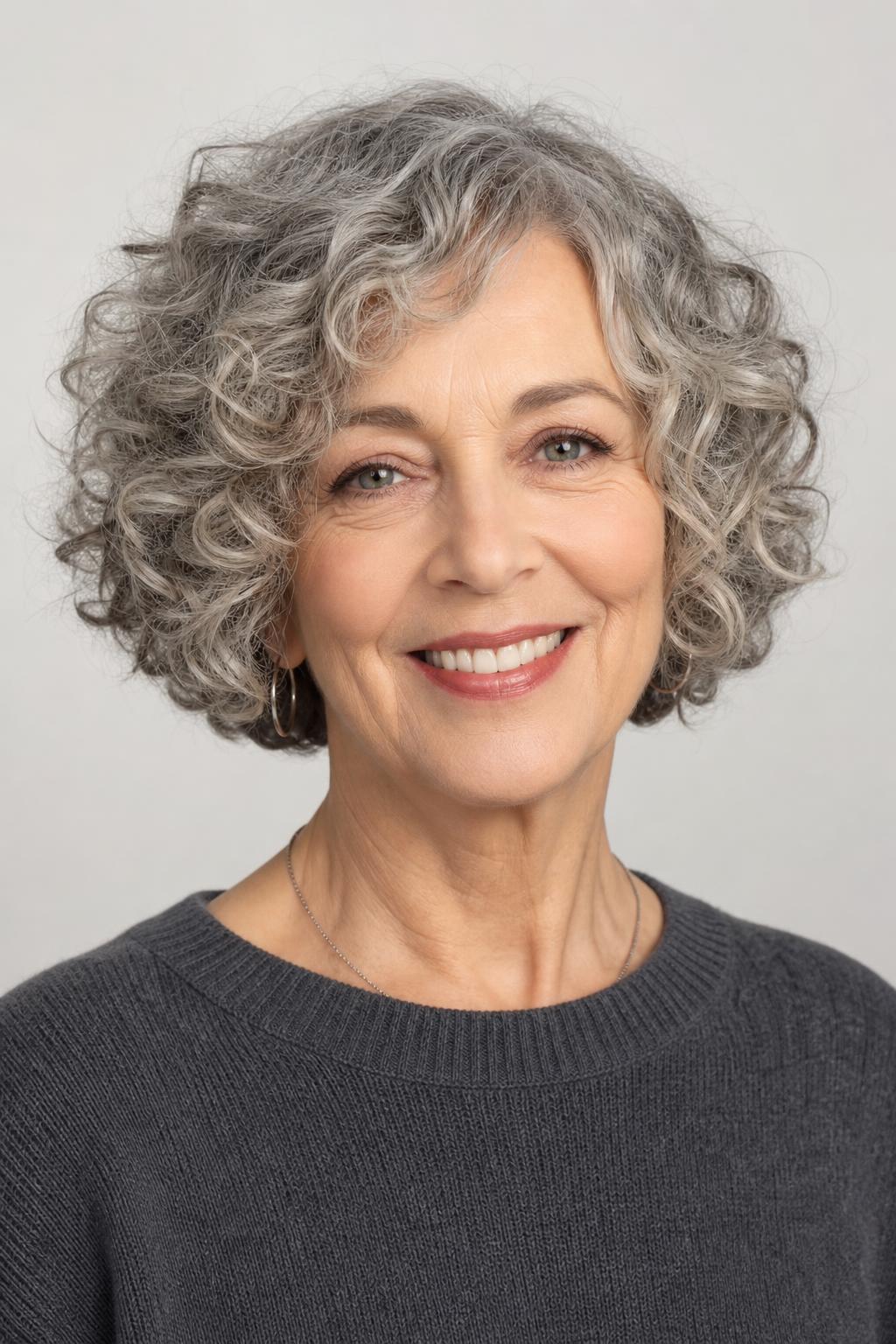
Mid-Length Curls That Still Read as Shaped
Length past the collarbone gets harder to justify after 60, not because of any rule about age, but because weight flattens the root area where curly hair already struggles for lift. These cuts stop between the jaw and the collarbone and use layering placed high enough to keep the crown alive. Anyone with dense curls can carry the longer end of this range comfortably.
15. Collarbone Curls with a Salon-Script Shape
The wording that gets this cut right is a collarbone length with the shortest layer at my chin, cut dry, and nothing thinned out. Say the last part clearly, because thinning shears on curly hair remove the strands that hold the pattern together and leave frizz behind. Bring a photo of your own hair on a good day rather than a stranger’s curls.
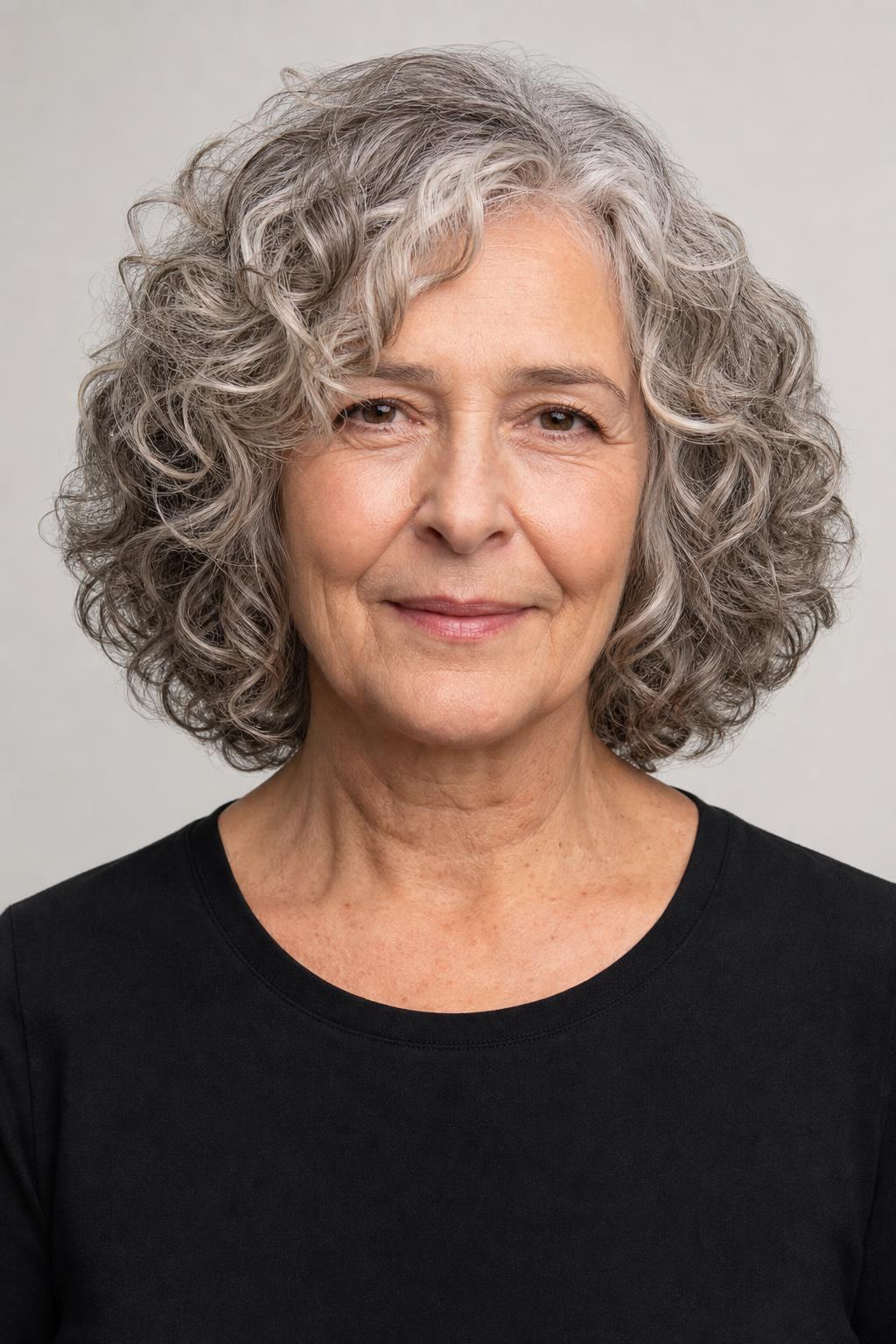
16. Shoulder-Length Curly Shag
Where a standard shag stacks short layers all through the crown, a curly shag keeps the top layers longer and concentrates the shorter pieces around the face. That difference matters because tight crown layers on curly hair spring up into a halo rather than lying in the intended stack. The face-framing pieces do the work the crown layers would do on straight hair.
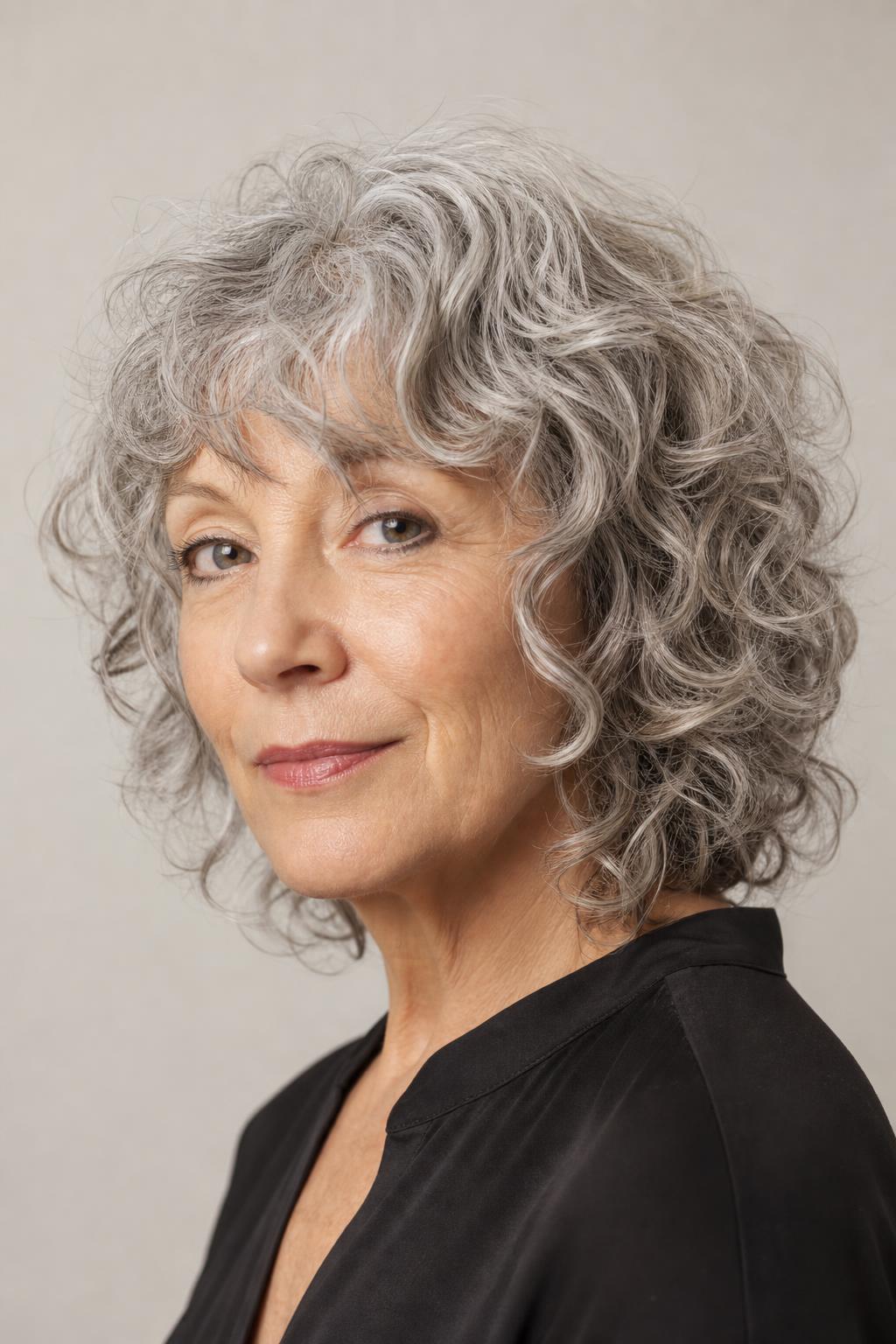
17. Curly Lob with Face-Framing Pieces
The face-framing pieces are carved by lifting a triangular section from the front hairline and cutting it at an angle from cheekbone down to the length. Cut dry and one curl at a time, they fall into the shape instead of separating from it. The technique is the same one used on a shorter curly bob, only applied over a longer perimeter.
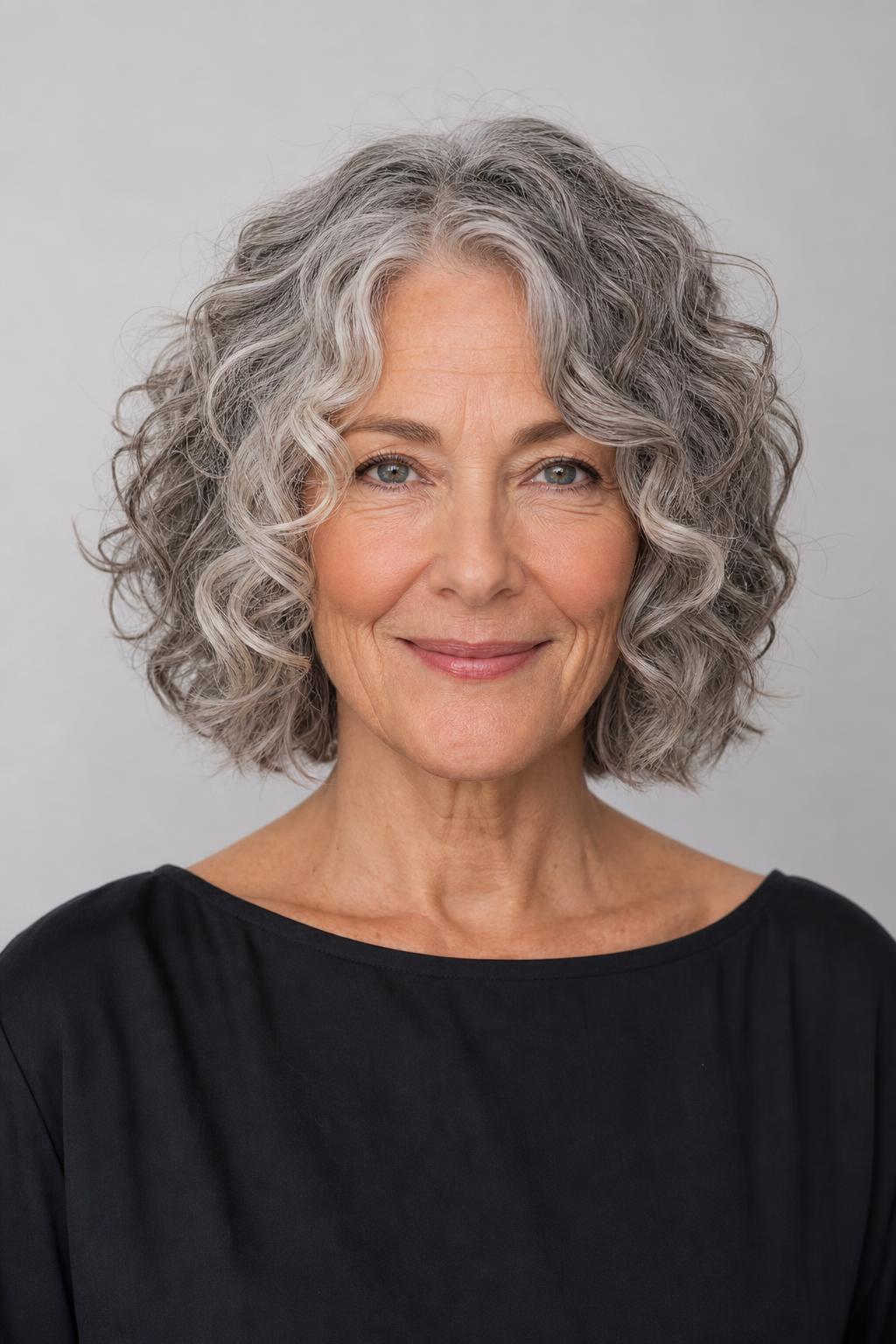
18. Mid-Length Curls for Heart-Shaped Faces
Heart-shaped faces are widest at the forehead and narrowest at the chin, so volume needs to sit low. Keeping the curl fullest between the jaw and collarbone builds width exactly where the face tapers, while keeping the crown flatter avoids adding to the forehead. Height at the top is the thing to skip here.
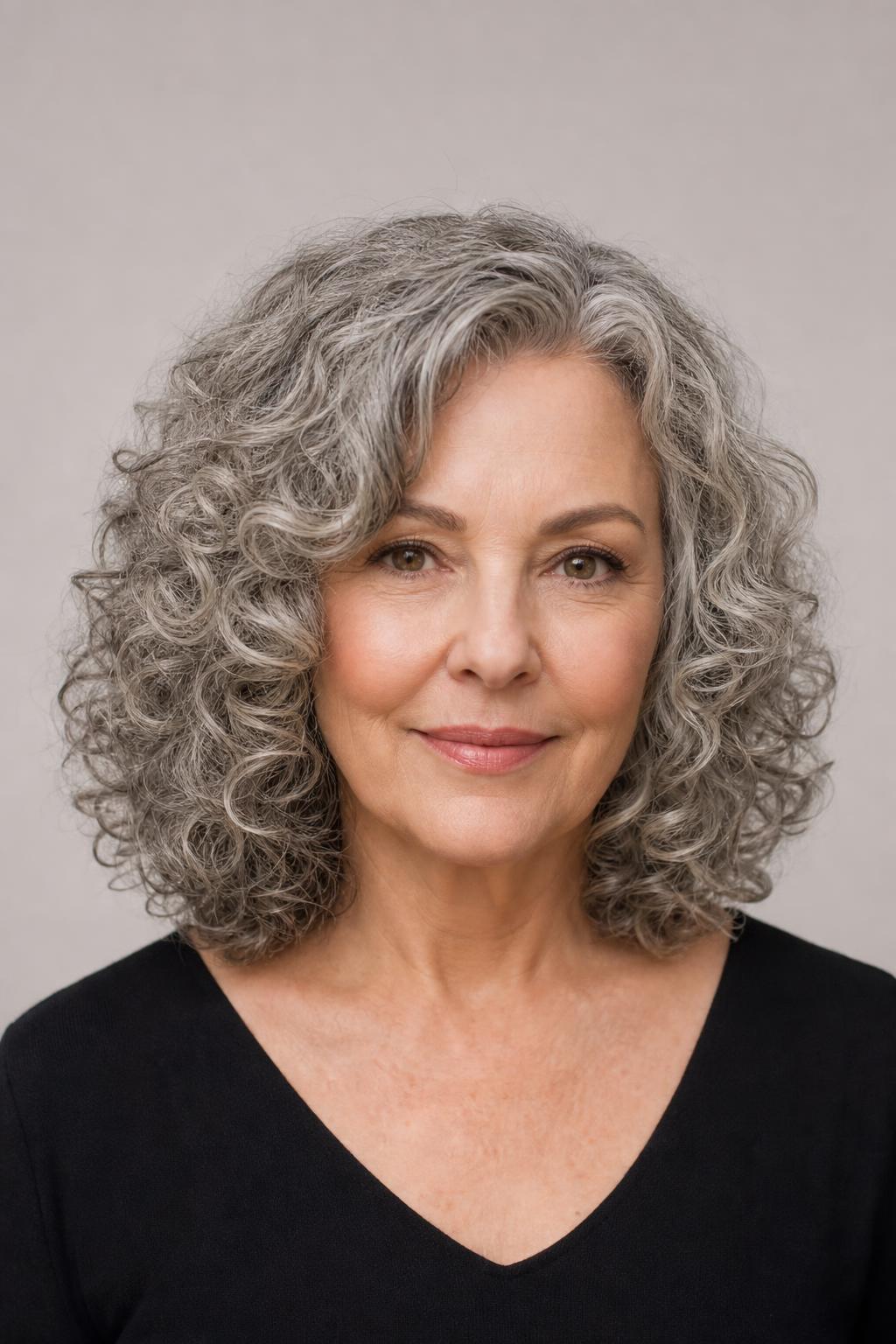
19. Loose Waves for Fine 2b Texture
Fine 2b hair carries a soft S-bend rather than a true curl, and it flattens under any layering that removes weight from the perimeter. Keeping the ends full at shoulder length preserves the density the wave needs to stay visible. Anyone working with a looser wave pattern gets more from length retention than from shape.

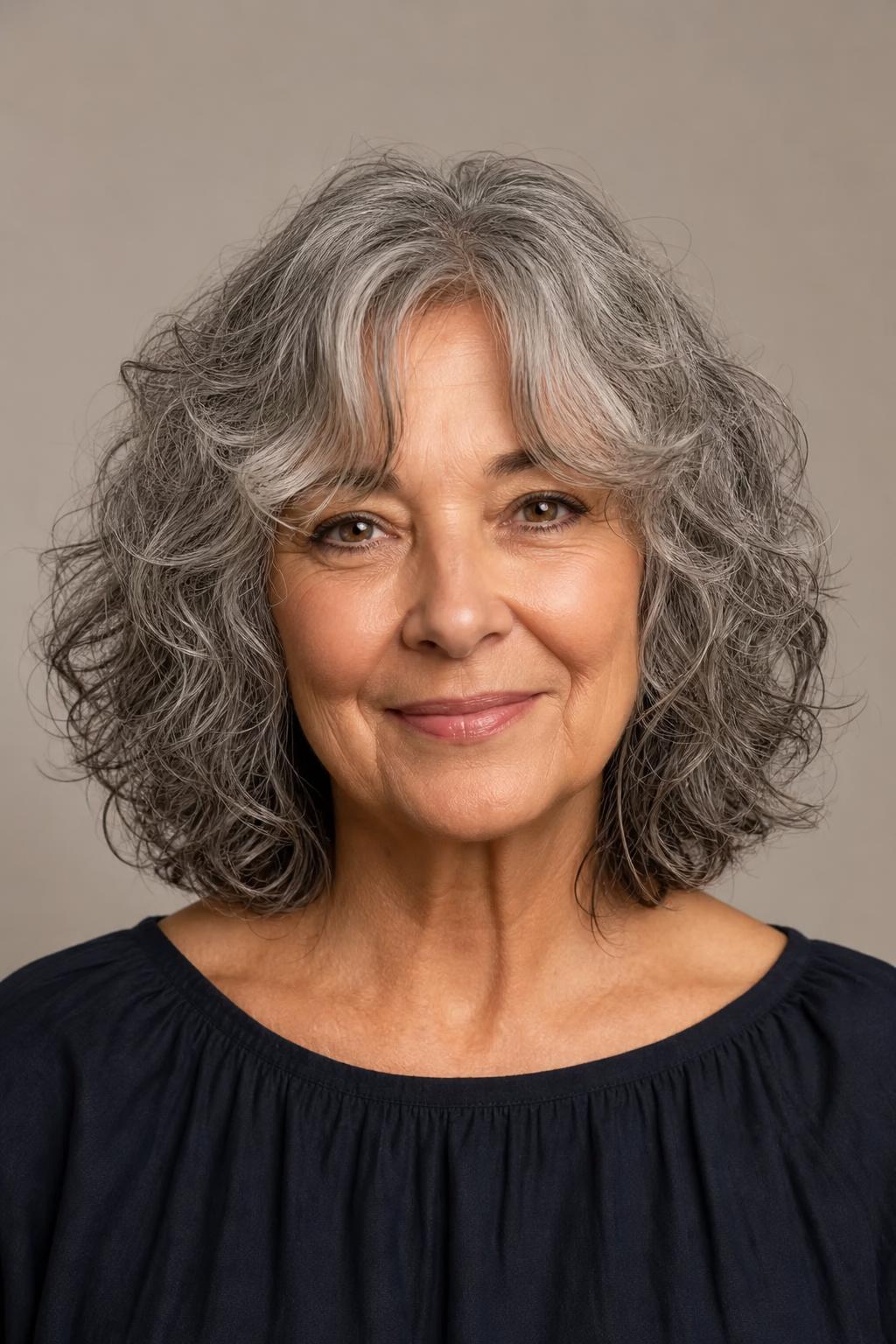
20. Air-Dried Mid-Length Curls with Curtain Bangs
Air drying works on this length if the hair is left completely alone from the moment product goes in until it is fully dry. Rake a curl cream through soaking wet hair, scrunch upward four or five times, then do not touch it again. Curtain bangs cut to cheekbone level dry into a soft parted frame without any tool at all.
Curly Cuts Built Around Thinning Density
Density loss after 60 shows up on curly hair differently than on straight hair. The curl itself hides individual strand loss well, but the scalp becomes visible along the part and at the crown, where the spiral separates. The cuts below concentrate weight rather than removing it, which is the opposite of what most layering advice suggests.
21. Blunt-Perimeter Curly Bob for Sparse Ends
When ends have thinned to the point of looking see-through, cutting straight across the perimeter puts every strand at the same length and rebuilds a solid edge. It costs an inch or two of length, which is worth it. Trims every 8 weeks keep that edge from thinning out again.
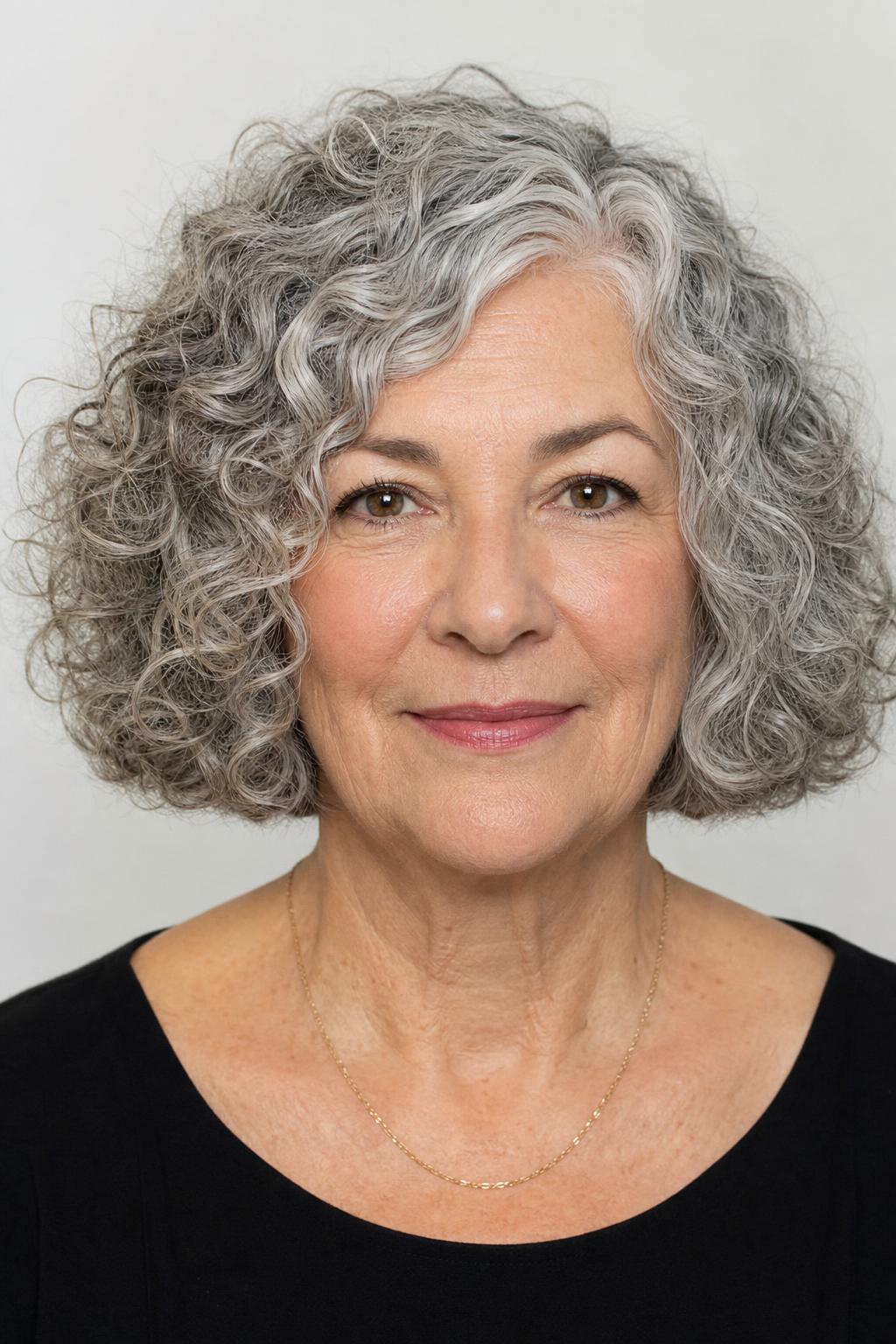
22. Curly Cut with Warm Lowlights for Density
Adding lowlights two shades deeper than the base creates shadow between the curls, and shadow is what the eye reads as thickness. On thinning gray curls this does more visually than any volumizing product. Placement should follow the curl clumps rather than straight foil sections, or the depth lands in the wrong places once the hair dries.
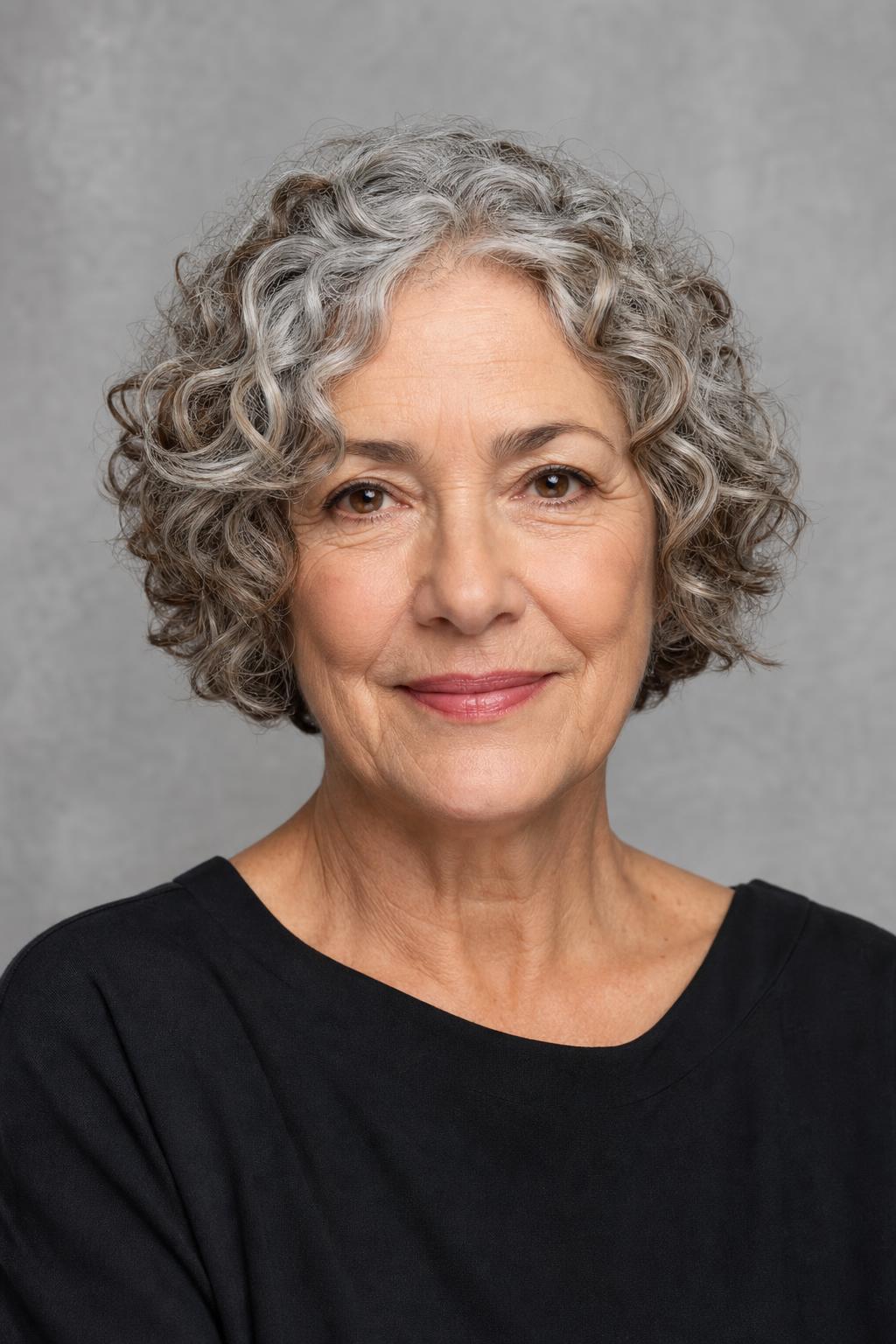
23. Short Curly Shape with a Concentrated Crown
Ask for the length kept longest at the crown and graduated down toward the nape, with nothing removed from the top. The sentence that works is please leave the crown as dense as possible and take the weight from underneath. Most stylists reach for the crown first out of habit, so say it before the first cut.
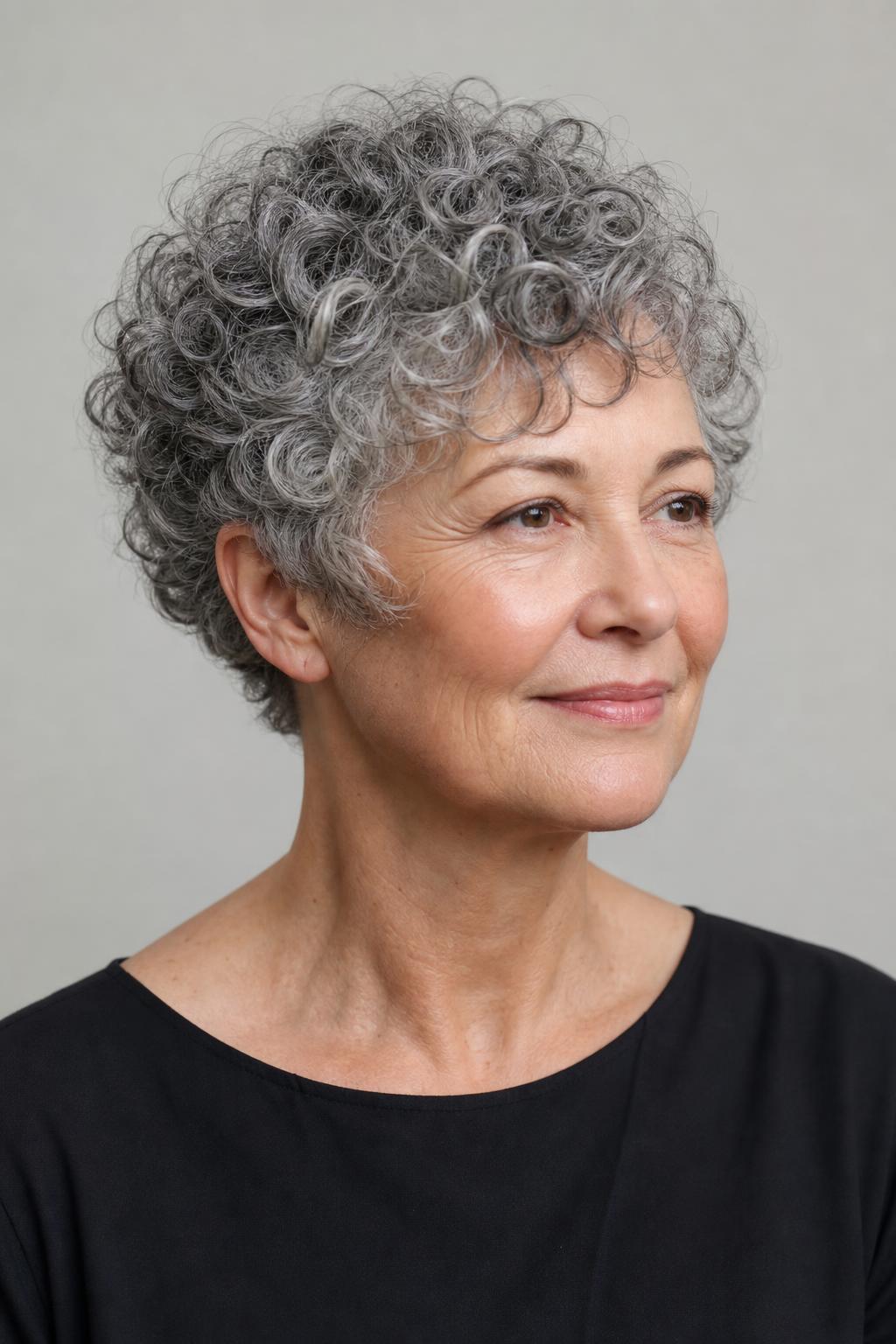
24. Rounded Curly Bob That Looks Fuller Than a Layered One
A rounded one-length bob and a layered bob of the same length behave in opposite ways on thinning curls. The one-length version keeps every strand contributing to the outline, while layering separates the curl into visible sections and lets light through. On dense curls layering wins; on sparse ones it does not.
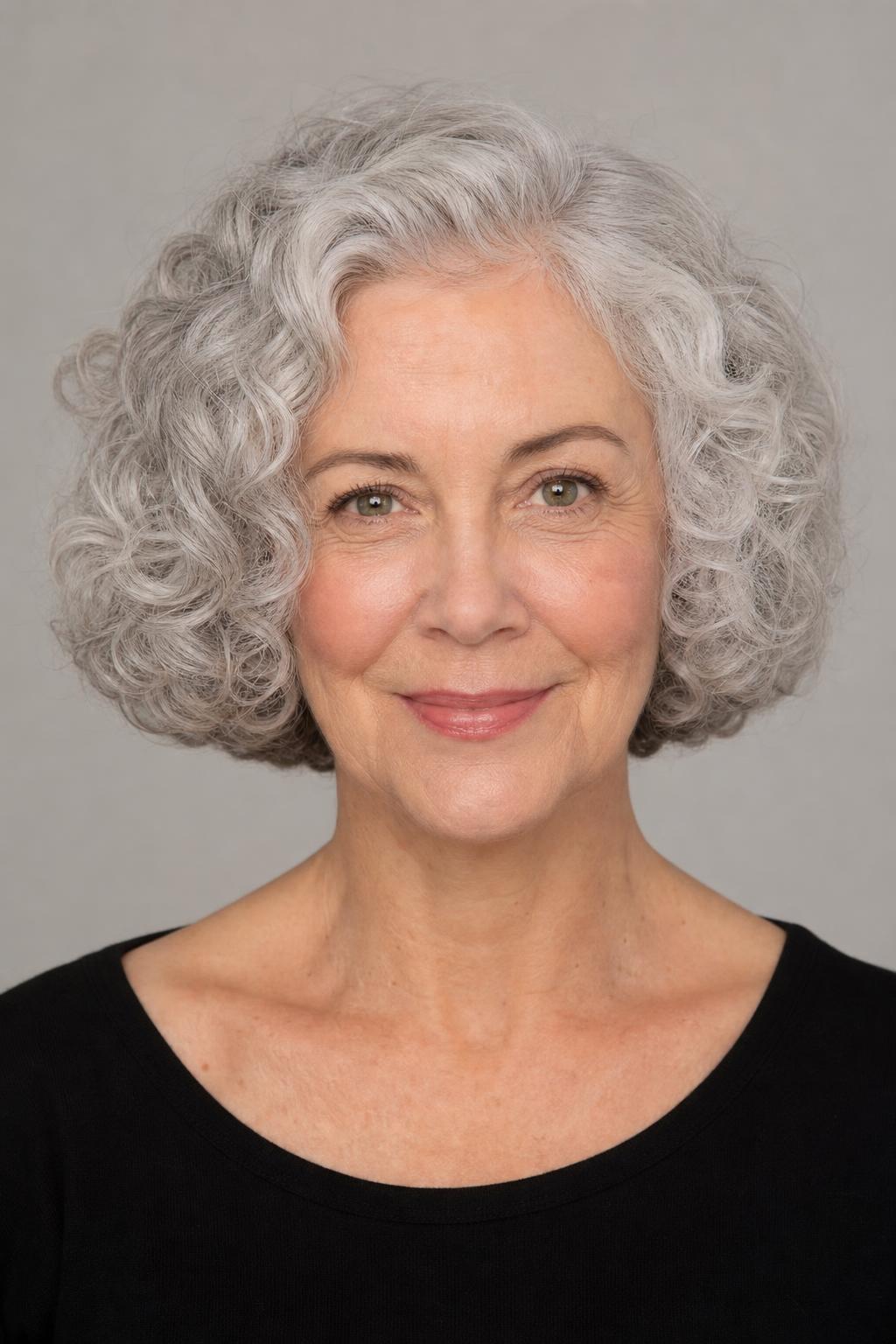
25. Curly Crop with Point-Cut Ends for Fine Curls
Point cutting into the very tips of fine curls softens the edge by a few millimeters without removing weight from the body of the hair. The scissors go in vertically at the ends only, never up into the length. Done correctly it takes the hard stop off a blunt line while leaving the density that fine curls cannot spare.
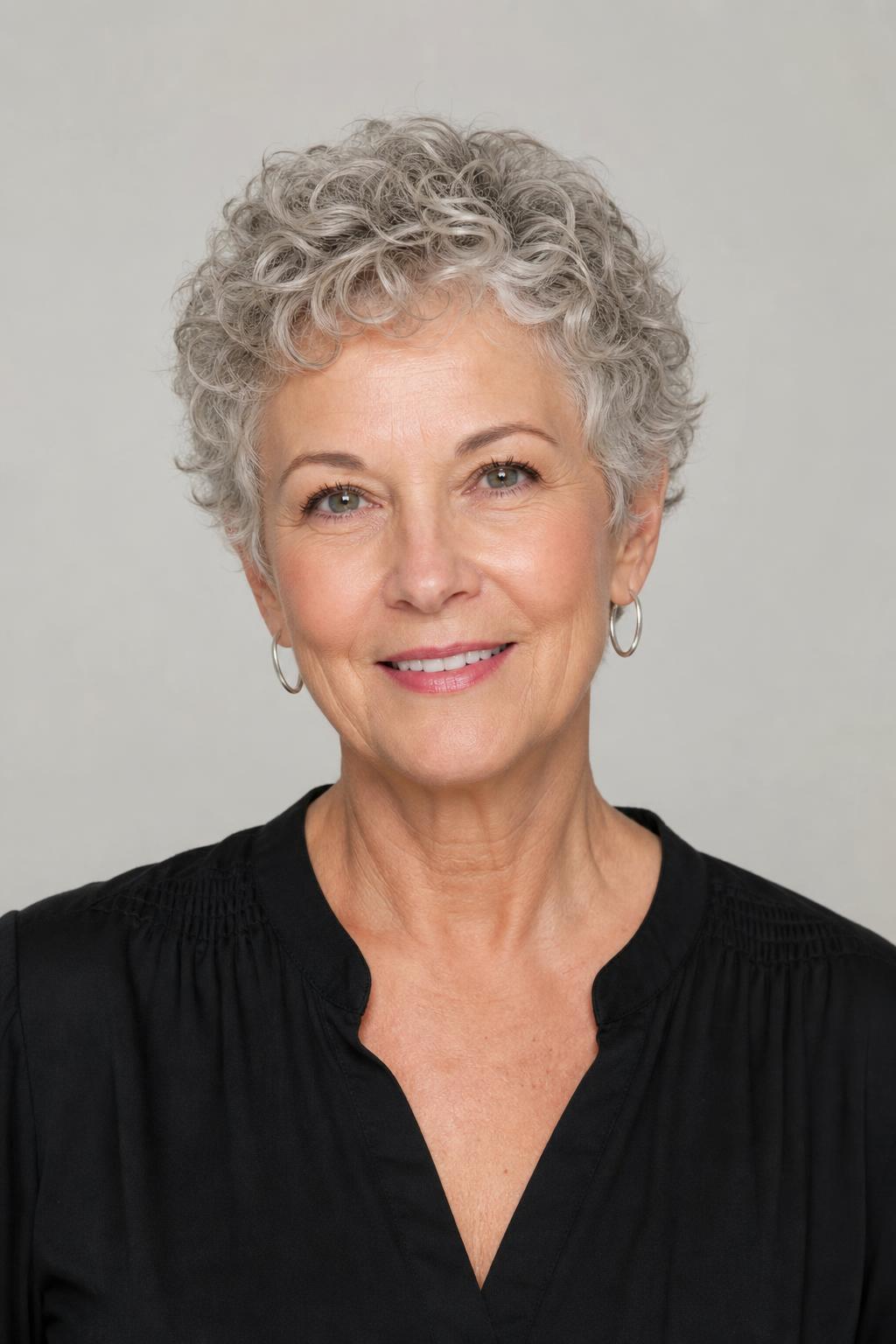
How Curl Texture Changes after 60
Curl pattern is not fixed for life. As pigment production stops, the hair shaft changes shape and diameter, and most people find their curls either loosen into waves or tighten into a coarser, more irregular pattern. Gray strands also produce less natural oil, which is why definition that once happened on its own now needs a cream to appear.
The practical consequence is that a cut which suited your hair at 50 may be working against it now. If your curls have loosened, the short crop that once sprang up will hang flat and needs an inch or two more length. If they have tightened and coarsened, the mid-length shape that used to fall smoothly may now widen at the sides and needs weight removed from underneath.
Stylist tip: Book a consultation on a day you have not washed your hair rather than arriving freshly styled. Stylists generally recommend seeing the curl in its resting state, because a blow-dried consultation hides both the pattern and the density they are cutting for.
Choosing a Curly Cut for Your Face Shape
Curly hair adds width wherever the curl is fullest, so face shape guidance comes down to controlling where that fullness lands. The table below pairs each shape with a length and a structural feature, plus the one thing to steer away from.
| Face Shape | Best Curly Variation | Ideal Length | Avoid |
|---|---|---|---|
| Oval | Most shapes work; curl-by-curl bob is the safest default | Chin to collarbone | Very heavy fringe, which hides balanced proportions |
| Round | Crop with height at the top and close sides | Cropped, or past the jaw | Curl width at ear level, which broadens the cheeks |
| Square | Soft curly bob landing below the jaw corner | Just past the jaw | A blunt line level with the jaw, which squares it further |
| Heart | Mid-length curls with fullness low and a flatter crown | Jaw to collarbone | Crown height, which widens an already wider forehead |
| Oblong | Chin-length curly bob with curtain bangs | Chin length | Long curls with a flat top, which lengthen the face |
| Diamond | Curly bob with face-framing pieces at the jaw | Chin to jaw | Fullness at cheekbone level, the widest point already |
What to Tell Your Stylist
The single most useful thing to establish before anyone picks up scissors is that the hair will be cut dry. Curly hair stretches when wet and springs back as it dries, so a wet cut regularly finishes two inches shorter than agreed. The distinction between a wet cut and a dry cut is the difference between the length you asked for and the length you get.
Beyond that, three sentences cover almost everything: cut it dry, curl by curl; take weight from underneath rather than off the top; and no thinning shears anywhere. If a stylist hesitates at any of those, that is useful information about whether they cut curls regularly. Asking how many curly clients they see in a week is a fair and unawkward question.
Stylist tip: Bring two photos of your own hair rather than one of someone else’s. A picture of your curls on a good day and another on a difficult day tells a stylist more about your pattern, density, and shrinkage than any reference image of a stranger, whose curls almost certainly behave differently from yours.
Maintenance and Styling
Curly hair over 60 needs fewer salon visits than straight hair of the same length, because there is no blunt line to go soft. What it needs instead is moisture, since gray strands are drier at the surface and lose definition to frizz before they lose shape to growth.
| Cut | Trim Frequency | Styling Time | Key Products | Grow-Out Behavior |
|---|---|---|---|---|
| Curly pixie or crop | 5 to 8 weeks | 5 to 10 min | Light mousse, curl cream | Widens at the sides by week 6 |
| Curly bob, one length | 10 to 12 weeks | 10 min | Curl cream, leave-in conditioner | Grows down evenly, very forgiving |
| Curly bob, layered | 8 weeks | 10 to 15 min | Curl gel, diffuser | Layers separate visibly after week 8 |
| Curly shag or lob | 10 weeks | 10 to 15 min | Curl cream, light hold gel | Face-framing pieces blur first |
Between washes, the goal is reviving the curl rather than restyling it. A spray bottle of water with a small amount of leave-in, scrunched into the ends, brings back definition on day three without a full wash, and the same approach works for refreshing curls between wash days at any age. Most people over 60 find two washes a week is enough, and some do well on one.
When a Heavily Layered Curly Cut Is Not the Right Choice
Layering is the default recommendation in almost every article about curly hair, and after 60 it is frequently the wrong one. The cases below call for a different approach.
- Density has dropped noticeably at the crown or part. Layers separate the curl into visible sections and let scalp show through; a one-length or blunt-perimeter shape keeps the outline solid instead.
- The curl has loosened into a soft wave. Layering a 2a or 2b pattern removes the weight the wave needs to form, and the result goes limp rather than airy; keep the perimeter full and shorten the overall length instead.
- Hair is coarse, gray, and prone to flyaways. Cut ends on coarse gray strands stand away from the shape rather than blending, so heavy internal layering multiplies frizz; ask for weight removed only at the very bottom of the interior.
- You want to go 12 weeks between appointments. Layered curly shapes lose their balance around week 8 as the shorter pieces grow into the longer ones; a single-length cut holds far longer.
FAQ
Should Women over 60 with Curly Hair Keep It Short?
Not as a rule, but shorter lengths do tend to hold curl definition better after 60 because there is less weight pulling the pattern straight. The practical cutoff is usually the collarbone. Below that, most gray curls lose their spring at the roots and the shape flattens on top, which is what makes longer curls look untidy rather than the length itself being unflattering.
Why Did My Curls Change Texture as I Got Older?
The shape and diameter of the hair follicle changes as pigment production winds down, which alters the curl pattern along with the color. Some people find their curls loosen into waves and others find them tighten and coarsen. Gray hair also produces less natural oil, so the same curls that once defined themselves now need a cream or gel to clump properly.
How Often Should Curly Gray Hair Be Trimmed?
Every 8 to 12 weeks for most shapes, which is less often than straight hair of the same length needs. One-length curly bobs stretch to 12 weeks comfortably because there is no crisp line to go soft. Cropped and layered curly cuts need 5 to 8 weeks, since the shorter pieces change the balance of the shape as they grow.
Can I Get a Pixie Cut If My Curls Are Fine and Thinning?
Yes, and it often works better than a longer cut, provided the weight stays concentrated at the crown. Ask for length left long on top and graduated shorter toward the nape, with nothing thinned out anywhere. The approach mirrors what works on a density-driven pixie, only reversed, keeping bulk where thick hair would have it removed.
Do I Need a Specialist Curly Stylist?
Not necessarily a certified one, but you do need someone who cuts curls dry and regularly. The useful screening question is how many curly clients they see in a typical week, and anything under a handful is a reason to keep looking. A stylist who wants to wash and comb your hair straight before cutting is not the right fit regardless of credentials.
What Makes Gray Curls Frizz More Than They Used To?
Reduced oil production at the scalp leaves the outer layer of each strand drier and rougher, so strands catch on each other instead of clumping into curls. A leave-in conditioner applied to soaking wet hair, followed by a curl cream and no touching until dry, solves most of it. Weekly deep conditioning matters more here than any anti-frizz product used on dry hair.
Are Curtain Bangs a Good Idea on Curly Hair after 60?
They work well as long as they are cut at cheekbone level or longer and cut dry. Shorter than that and shrinkage lifts them into a tight fringe across the forehead. On looser patterns they need almost no styling, while tighter curls benefit from a small amount of cream raked through the front section before air drying.
Finding the right hairstyles for women over 60 with curly hair comes down to two decisions: a length your curl pattern can still support, and a stylist willing to cut it dry. Take an honest look at whether your texture has loosened or tightened in the past decade, pick the section of this gallery that matches what you have now, and bring two photos of your own hair to the consultation. The cut that suited your curls at 50 is rarely the one that suits them today, and that is a reason to reassess rather than a loss.
Hair results vary based on your natural hair type, texture, density, and condition. Always consult with a licensed hairstylist before making significant changes, especially with chemical treatments or dramatic length changes. Photos may show styled results that require professional tools and products to replicate.