

A middle part splits the hair evenly down the center so it falls to both sides like curtains, and getting it to sit right usually needs at least four to six inches of length on top.
The middle part haircut sends the hair from a central line out to each side, framing the face with a balanced, symmetrical shape that suits almost any length or texture. It has moved well past its 90s curtain revival into a modern staple built on natural texture and movement rather than stiff, gelled flatness. Here are 30 middle part styles sorted by length, fade pairing, and hair texture, each with notes on who it suits and how to keep the part holding through the day.
The gallery runs from short and medium cuts through long curtains, then into fade and taper pairings, texture-specific looks, and current trend variations. After the styles you will find the length and growth a middle part needs, a face shape table, the words for your barber, a realistic styling and maintenance plan, and a section on when a center part is the wrong call.
| Factor | Details |
|---|---|
| Best for | Oval, round, and oblong faces; medium to long top length; most textures |
| Length needed | About 4 to 6 inches on top so each side falls and frames evenly |
| Maintenance | Trim every 4 to 6 weeks; daily styling 5 to 10 minutes |
| Works with | Curtain fringes, fades, tapers, mullets, waves, and curls |
| Avoid if | You have a prominent center cowlick or want a no-styling routine |
Middle Part Styles by Hair Length
Length sets the whole character of a middle part, from a short, controlled split to long curtains that frame the jaw. Shorter versions need the least styling, while longer ones carry the most movement. The looks here move from the shortest workable length up to flowing long hair.
1. Short Middle Part Crop
A short crop parted down the center keeps the look tidy and low-effort while still nodding to the curtain shape. The barber leaves roughly four inches up top, just enough for each side to fall. A touch of matte paste through damp hair holds the split without making it look wet.
2. Medium Curtain Middle Part
Medium length sits in the sweet spot for a middle part, long enough to frame the face and short enough to stay easy to manage. The sides sweep out from the center and graze the tops of the ears. Blow-dry each side outward with a round brush to set the curtain shape.
3. Long Curtains for Oval Faces
Oval faces carry long middle-part curtains well because the balanced shape echoes the face’s natural proportions without throwing them off. Grow the top past the cheekbones so the curtains frame from forehead to jaw. The length gives the most dramatic sweep when styled with a little texture.
4. Short Middle Part on Thick Hair
Thick hair holds a short middle part with almost no product because the density keeps each side standing where you place it. Ask the barber to remove a little weight so the part lies flat instead of pushing up at the center. The result reads clean and full at the same time.
5. Grown-Out Middle Part
A middle part is one of the most graceful ways to grow hair out, since the center split stays flattering through every awkward in-between length. That makes it the go-to while transitioning from short to long. Tuck the sides behind the ears on the days the length feels unwieldy.
6. Long Middle Part with Highlights
Subtle highlights through long curtains catch the light as the hair sweeps to each side, adding dimension to the movement. Keep the lightening soft so it reads as natural sun rather than stripes. A color-safe shampoo keeps the tone clean as the length grows.
7. Medium Middle Part Versus a Side Part
Unlike a side part that pushes volume to one side, a middle part keeps both sides even for a softer, more symmetrical frame. Choose the center split for balance and the side part for a sharper, more traditional look. The same length works for both, so you can switch day to day.
8. Long Layered Middle Part
Layers through long middle-part hair take out bulk and let each side fall with movement instead of hanging as a heavy curtain. The barber point-cuts the ends so the layers blend softly. This keeps long hair from looking flat and lifeless at the part.
Middle Part with Fades and Tapers
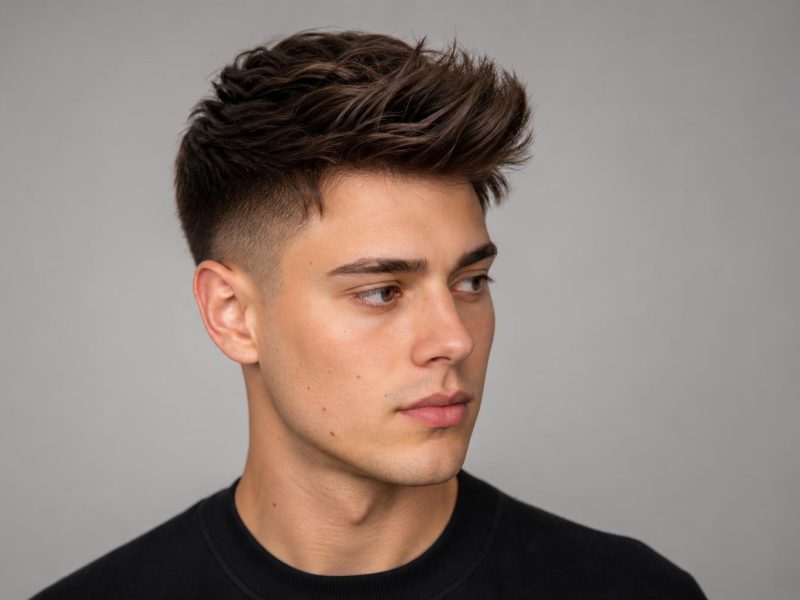
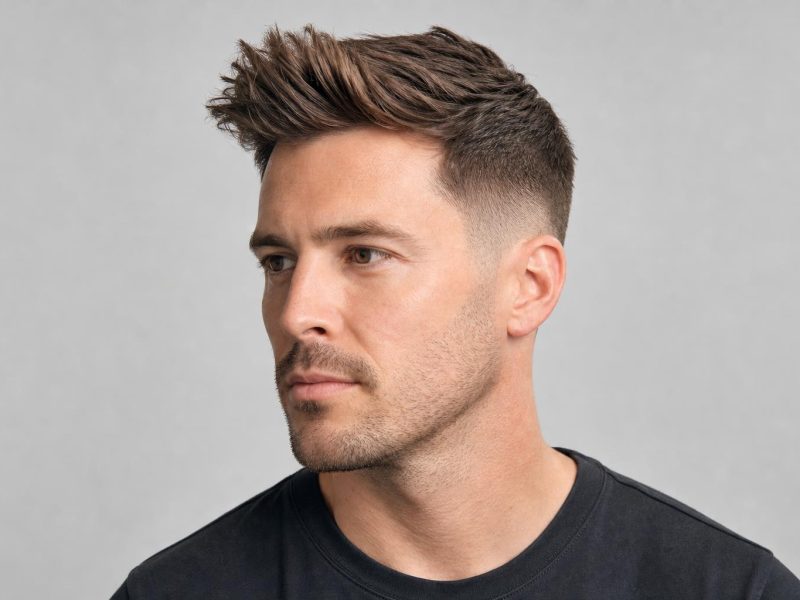
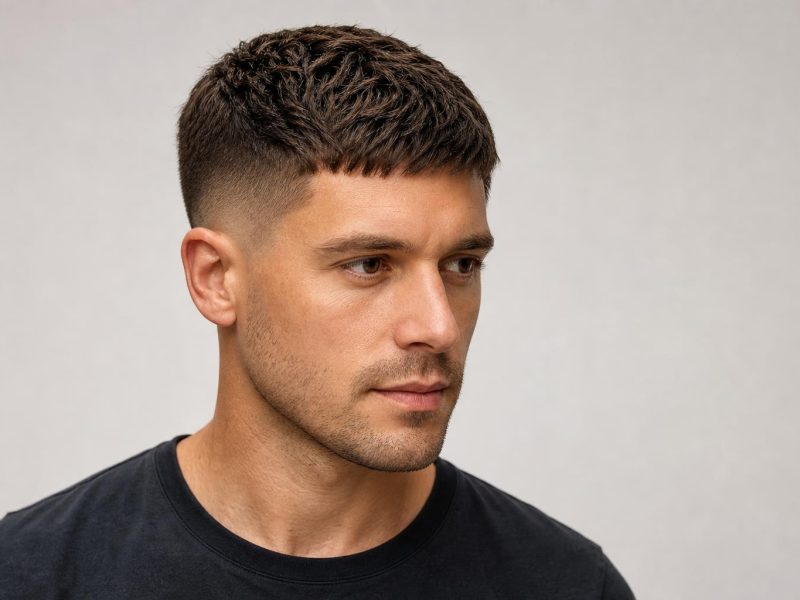
Pairing a middle part with a fade or taper on the sides adds contrast and keeps the cut looking groomed rather than shaggy. The faded versions read cleaner and sharper, while the length up top carries the curtain shape. These looks suit men who want structure around the soft center split.
9. Middle Part with Low Taper Fade
A low taper on the sides keeps most of the side length while cleaning up the hairline, which suits a middle part that still wants some fullness around the ears. The contrast stays subtle and office-friendly. It is the easiest fade to grow out under a curtain top.
10. Middle Part with Mid Taper Fade
A mid taper fade gives balanced contrast that frames the curtains without exposing too much skin. The mid placement sharpens the look while keeping it versatile across settings. Ask the barber to leave enough length up top to part cleanly down the center.
11. Middle Part with High Skin Fade
Taking the sides to a high skin fade makes the curtain top the clear focal point and gives the boldest contrast in this section. The bare sides need a touch-up about every two weeks to stay crisp. It suits a wearer who likes a sharp, high-impact finish.
12. Middle Part with Temp Fade
Focusing the fade around the temple sharpens the front hairline while keeping the sides longer, a clean frame for a center part without short sides everywhere. The result pairs the defined edge of a temp fade with curtain length up top. It is a lower-upkeep way to add structure.
13. Middle Part for Round Faces
Round faces lengthen under a middle part with height kept at the part and a fade on the sides, since the vertical center line and clean sides draw the eye up and in. Avoid wide volume at the temples, which adds width. A little lift at the root through the front extends the slimming effect.
14. Middle Part with Drop Fade
A drop fade that dips behind the ear follows the head down and frames the curtain top with a connected, flowing line. The dropped shape suits longer curtains that sweep past the ears. It keeps the sides clean while echoing the movement up top.
15. Middle Part Burst Fade
A burst fade curves around the ear and leaves the back fuller, which softens the jump from faded sides to a curtain top. The rounded shape flows naturally with the center split. It is a strong pick for wavy hair that wants movement on every side.
Middle Part by Hair Texture
Texture decides how the curtains fall and how much the barber shapes them, even at the same length. Straight, wavy, curly, and coily hair each give the middle part a different feel. The cuts below match the part to the texture carrying it.
16. Straight Hair Middle Part
Straight hair gives the cleanest, most defined middle part because each side falls in a smooth, even sweep with no curl to break the line. The trade-off is that straight hair can fall flat, so a little root lift helps. A matte clay keeps the curtains separated without grease.
17. Wavy Middle Part with Natural Movement
Wavy hair makes a middle part look effortless because the waves add body and texture as the sides sweep out. Air-dry with a sea-salt spray to play up the natural bend. The waves keep the curtains from looking too neat or dated.
18. Curly Middle Part
Curly hair parts down the center into two full, springy curtains that frame the face with volume. Tell your barber to shape the curls dry so the part lands where the curl actually falls once it dries. A curl cream on damp hair keeps each side defined rather than frizzy.
19. Coily Middle Part on Type 4 Hair
Coily type 4 hair holds a bold, sculptural middle part where the dense curl pattern stands full on each side. Keep the coils hydrated with a leave-in so the shape stays springy through the day. A faded side keeps the silhouette clean against the volume up top.
20. Asian Hair Middle Part
Straight, thick Asian hair is a natural fit for the middle part trend, falling into clean curtains that frame the face with weight and shine. A light layering removes bulk so the sides do not push out wide. This is one of the most-requested versions in the current curtain wave.
21. Fine Hair Middle Part
Fine hair looks fuller in a middle part when the cut keeps some length to create the look of denser curtains on each side. Keep the fade low so it does not expose the scalp at the part. A volumizing paste at the root adds lift where fine hair tends to fall flat.
22. Coarse Hair Middle Part
Coarse hair carries a middle part with built-in body, so the barber removes weight to keep the curtains from looking bulky. The density holds the part in place with little product. A smoothing cream tames any frizz along the sweep of each side.
23. Curly Middle Part Versus a Curly Quiff
Unlike a curly quiff that pushes the volume up and back, a curly middle part splits the curls down the center for a softer, face-framing shape. Choose the part for a relaxed frame and the quiff for height and a bolder profile. Both rely on a good dry cut to control the curl.
Modern and Trend-Driven Middle Parts
These looks push the middle part toward current trends, from messy curtains to mullet and two-block pairings. They keep the center split but add an edge through texture, length, or contrast. Treat them as the most fashion-forward end of the range.
24. Messy Textured Middle Part
A messy, shaggy middle part channels a relaxed 70s feel with longer, piece-y curtains that move freely. Work a texturizing spray through dry hair and break up the sides with your fingers. This is the least fussy version and the most forgiving as it grows.
25. Middle Part Mullet
Pairing center-parted curtains up front with mullet length in the back blends two trends into one bold cut. The middle part frames the face while the back carries the statement, much like a modern mullet fade. It suits wavy or straight hair that shows the length clearly.
26. Two-Block Middle Part
Borrowing from the Korean two-block, this version disconnects a longer center-parted top from short sides for a sharp, stepped contrast. The disconnection reads more graphic than a blended fade. Straight, thick hair shows the clean lines best.
27. Middle Part with Curtain Bangs
Cutting the front into true curtain bangs softens the hairline and frames the eyes while the rest parts down the center. Blow the bangs out to each side so they sweep away from the face. It is the cleanest way to get the full curtain effect up front.
28. Slicked Middle Part
Slicking medium curtains down and back from a center part gives a refined, almost formal take on the trend. A light pomade keeps the sweep in place without crunch. This version dresses the middle part up for an event or office setting.
29. Middle Part with Bleached Tips
Lifting the ends of the curtains to a lighter tone draws the eye to the movement as the hair sweeps to each side. Keep the root natural so the contrast stays at the tips and the regrowth stays forgiving. Purple shampoo keeps bleached ends from going brassy.
30. Long Wavy Middle Part with Layers
Long wavy hair with layers and a center part gives the fullest, most romantic curtain shape, with movement on every side. The layers keep the length from hanging heavy and flat. Air-dry and scrunch for the most natural, lived-in finish.
What a Middle Part Needs to Sit Right
A middle part needs about four to six inches of length on top so each side can fall and frame the face evenly. Shorter than that and the hair pushes up at the center instead of sweeping down. The growth phase to reach that length takes most people a few months from a short cut, and a center part stays flattering the whole way, which is part of why it is such a good grow-out style.
The other factor is your natural growth pattern. Hair that grows forward or has a strong cowlick near the center can fight a middle part, pushing one side up or refusing to split cleanly. A barber can work with most patterns by training the hair and adjusting where the part sits, and pairing the curtains with a structured men’s cut on the sides keeps the whole shape controlled.
Stylist tip: Train the part by setting it in the same spot every day while the hair dries. Comb it down the center on damp hair, then blow-dry each side outward. After a couple of weeks the hair learns to fall into the split on its own, which cuts your daily styling time in half.
How to Choose a Middle Part for Your Face Shape
Face shape decides how much height and length the curtains need to stay balanced. The center part draws a vertical line down the face, so it lengthens some shapes and needs adjusting for others. Use the table as a starting point, then refine with your barber.

| Face Shape | Best Middle Part | Length | Avoid |
|---|---|---|---|
| Oval | Any version, short to long curtains | Medium to long | Little to avoid; most lengths suit |
| Round | Middle part with height and a fade | Medium with root lift | Wide volume at the temples |
| Oblong | Fuller curtains with width at the sides | Medium, not too tall | Tall height that lengthens the face |
| Square | Soft, textured curtains | Medium | Hard, blunt lines at the jaw |
| Heart | Curtains with fullness near the jaw | Medium to long | Heavy volume at the forehead |
| Diamond | Curtains with width at the forehead | Medium | Slicked sides exposing narrow temples |
What to Tell Your Barber
Name the length you want to keep on top, the side treatment, and whether you want curtain bangs up front. A middle part lives or dies on having enough length, so be clear you want it kept long enough to part. The right request gets you a cut you can style the same way every day.
Say something close to this: “I want to grow or keep a middle part, so leave at least four to six inches on top, and add soft layers so each side falls instead of sitting heavy. Clean up the sides with a low taper but keep some length around the ears.” Mention if you want a curtain fringe at the front, and tell the barber about any cowlick so they can cut around it.
Stylist tip from a barbershop floor: If your hair is not long enough yet, ask the barber for a curtain cut that works at your current length rather than forcing a full middle part too early. Pushing a center part on three-inch hair makes it stick up at the crown. A good barber shapes the front so it grows into the part cleanly over the next few cuts.
Styling and Maintenance
A middle part needs a trim every four to six weeks to keep the curtains shaped and the layers blended, and daily styling runs about five to ten minutes. Start on damp hair, comb the part down the center, then blow-dry each side outward with a round brush or your fingers for movement. Finish with a matte clay or paste so the curtains stay separated without looking wet.
The biggest day-to-day challenge is keeping the part trained and the hair off a flat finish. A light root lift while drying stops fine or straight hair from falling limp at the center. On wavy and curly hair, a sea-salt spray or curl cream gives the curtains their natural movement, so you can skip heavy product. Wash every other day rather than daily so the hair keeps enough texture to hold the part.
When a Middle Part Is Not the Right Choice
The middle part is versatile, but it is not the best fit for every head of hair or routine. A few honest exceptions:
- A strong central cowlick: hair that grows forward or swirls at the center fights the part and pushes one side up, so a side part or a textured forward style works with the growth instead of against it.
- You want zero styling time: a middle part needs daily training and a few minutes of drying to sit right, so a short crop or buzz suits a no-effort routine better.
- Hair shorter than four inches on top: there is not enough length to sweep to each side, so wait for more growth or ask for a curtain cut shaped for your current length.
FAQ
How Long Does Hair Need to Be for a Middle Part?
Hair needs to be about four to six inches on top for a proper middle part, so each side can fall and frame the face evenly. Shorter than that and the hair pushes up at the center instead of sweeping down. If you are not there yet, ask your barber for a curtain cut shaped to grow into the part over the next few trims.
Does a Middle Part Suit My Face Shape?
A middle part flatters oval, round, and oblong faces best because the central line creates symmetry and can lengthen or balance those shapes. Round faces benefit from added height at the part, while oblong faces look best with fuller curtains and less height. Square and heart shapes can wear it too with soft, textured curtains rather than blunt, heavy ones.
How Do I Keep My Middle Part from Falling Flat?
Keep a middle part from falling flat by adding root lift while you blow-dry and using a matte clay or paste instead of a heavy, wet-look product. Drying each side outward with a round brush builds movement that holds the curtain shape. Washing every other day rather than daily leaves enough natural texture to keep the part from going limp.
Can I Get a Middle Part with Curly Hair?
Yes, curly hair makes a full, face-framing middle part with two springy curtains on each side. Ask your barber to cut the curls dry so the part lands where the curl naturally falls once it dries. A curl cream on damp hair keeps each side defined rather than frizzy through the day.
Why Won’t My Hair Part in the Middle?
Hair usually resists a middle part because of a cowlick or a forward growth pattern near the center that pushes one side up. Training the part by setting it in the same spot daily helps the hair learn to fall into the split over a couple of weeks. If a strong cowlick keeps fighting it, a barber can adjust where the part sits or recommend a side part instead.
Is a Middle Part Good for a Fade?
Yes, a middle part pairs well with a fade or taper, which cleans up the sides and makes the curtain top the focal point. A low or mid taper keeps it versatile, while a high or skin fade gives the boldest contrast. Tell your barber to keep enough length on top to part down the center after the fade.
The middle part haircut gives you a balanced, symmetrical frame that works across short crops, long curtains, fades, and every texture, as long as you keep enough length on top to sweep to each side. Grow the top to at least four to six inches, train the part daily, and ask your barber for soft layers and a side treatment that suits your face shape. A middle part cut and styled to your texture is one of the most flexible looks in the chair, and you can pair it with related styles like the Edgar cut or a high taper fade.
Hair results vary based on your natural hair type, texture, density, and condition. Always consult with a licensed barber or hairstylist before making significant changes, especially with chemical treatments or dramatic length changes. Photos may show styled results that require professional tools and products to replicate.