
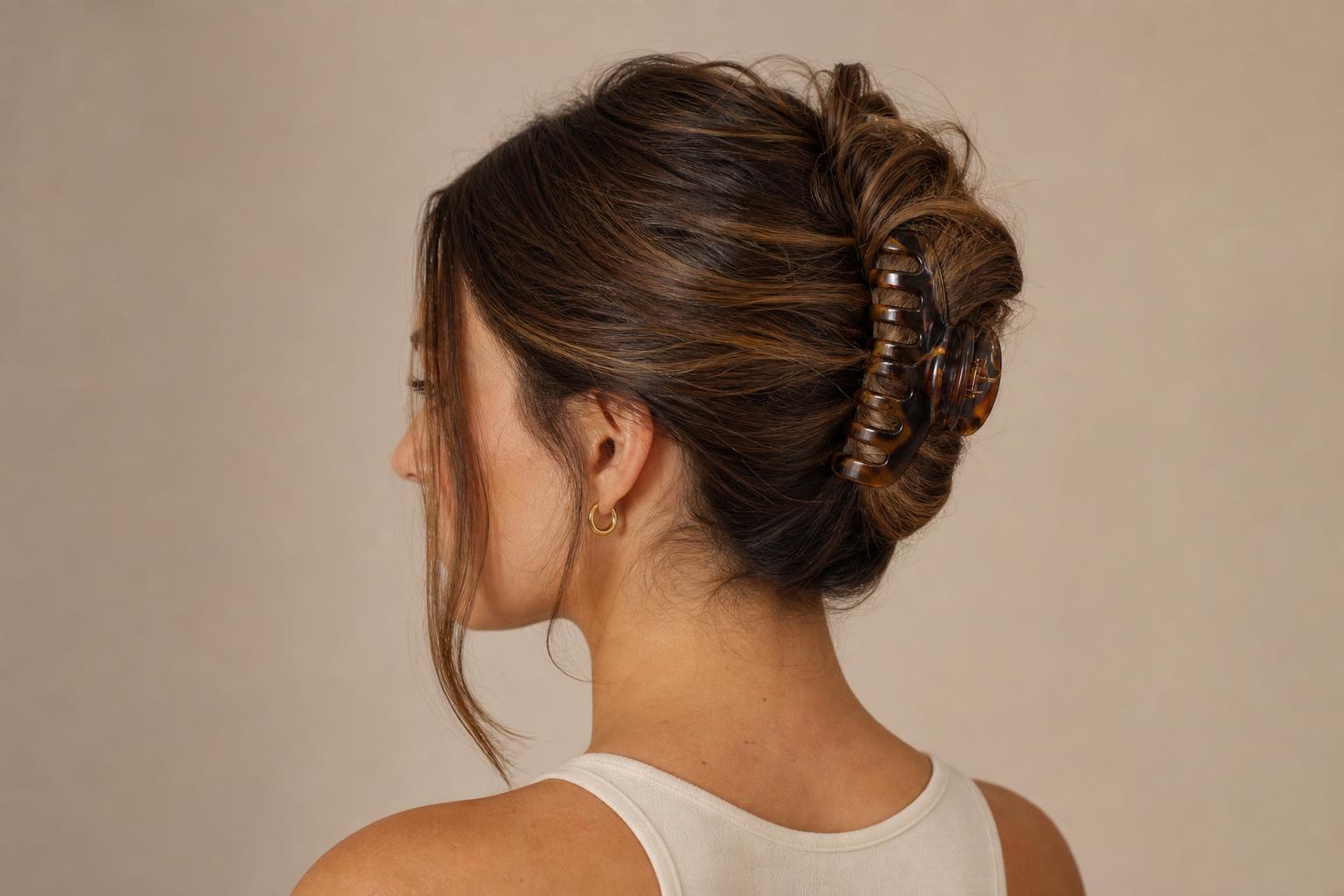
A claw clip hairstyle holds or slips depending on whether the clip is big enough for the amount of hair inside it, far more than on which twist you use.
Claw clip hairstyles work on hair from chin length to the waist, provided the clip matches the volume: a 1.5-inch mini clip handles a bob’s top section, a 3-inch clip holds fine shoulder-length hair, and thick hair past the shoulder blades needs a 4.5-inch clip or larger. Below are 22 claw clip hairstyles sorted by hair length and texture, each with the clip size and grip trick that keeps it in place.
The gallery starts with short hair, moves through medium and long thick hair, then covers curly and coily textures and a pair of polished options for work and events. After the styles you will find a clip size chart, a step-by-step basic twist, face shape pairings, the haircut details that make clip styles easier, and an honest list of situations where a clip is the wrong tool.
| Clip Length | Holds | Typical Styles | Grip to Look For |
|---|---|---|---|
| 1 to 1.5 inches | Small sections, bangs, bobs, twists and braids | Half-up on short hair, side clips, accent clips | Fine teeth that close fully |
| 2 to 3 inches | Fine or thin hair to the shoulders, half-up on medium hair | Nape rolls, half-up twists, low twists on fine hair | Interlocking teeth, matte finish |
| 3.5 to 4 inches | Medium density from collarbone to mid-back | French twists, full updos, waterfall styles | Firm spring, long curved teeth |
| 4.5 inches and up | Thick or coarse hair past the shoulder blades | Full updos, propped ponytails, chignons | Heavy-duty spring, wide jaw opening |
Claw Clip Hairstyles for Short Hair
Chin-length to shoulder-length hair rarely fits into a full updo, so short hair styles clip part of the hair and leave the rest down. Small clips and a half-turn before clipping do most of the work here, and slightly textured, second-day hair holds far better than silky, just-washed strands.
1. Mini Clip Half-Up on a Chin-Length Bob
Gather only the top section from temple to temple, give it one half-turn, and bite it with a 1.5-inch clip placed an inch behind the crown. The half-turn gives the teeth something solid to grip, which a straight gathered section on a bob does not.
2. Twin Side Clips on a Lob
Round faces benefit from two small clips pulling hair back just above the ears, since the exposed temples lengthen the face while the ends stay down past the jaw. Set both clips at the same height, slightly behind the ear line, so they do not poke out when you look straight ahead.
3. Rolled Nape Clip on Fine Shoulder-Length Hair
Fine hair holds best when it is rolled rather than twisted, because a flat roll gives the teeth a wider surface to catch. Roll the ends under toward the nape and clip across the roll with a 2 to 2.5-inch clip with interlocking teeth. It is a practical everyday option for bobs cut for fine hair that are just long enough to gather.
4. Textured Flip-Top on a Shaggy Bob
Spray a dry texturizing product through the lengths, twist the hair at the back, and let the ends fan out above the clip in a loose spiky top. Hair washed the day before gives the right grip, while freshly washed hair tends to slide straight out of this style.
5. Back-Section Clip for Growing Out Bangs
A small clip holding the front section back is the least fussy way through the months of growing out a fringe. Twist the bangs back once before clipping, and move the clip a little higher or lower each day so it does not leave a crease at the same spot.
Claw Clip Hairstyles for Medium-Length Hair
Collarbone to bra-strap length is the easiest range for claw clips, because the hair is long enough to twist fully but light enough for a mid-size clip to hold all day. Most of the classic clip looks you see online are done at this length with a 3.5-inch clip.
6. Sleek Low Twist with a Tortoiseshell Clip
Tortoiseshell and matte brown clips blend into brunette and dark blonde hair, so the twist itself stays the focus. On black or very dark hair, a cream, sage or clear clip turns the same simple twist into a deliberate accent.
7. Half-Up Twist with Face-Framing Pieces
Ask your stylist for face-framing layers that start at the chin or lower, because pieces cut shorter than that fall out of a half-up clip within an hour. With chin-length framing, two strands left loose at the front stay put and soften the whole look.
8. Claw Clip French Twist
Unlike a traditional pinned French twist, the clip version needs no bobby pins. Twist the full length upward along the back of the head, tuck the ends in or let them spill over the top, and clamp the clip vertically along the twist. Once you have practiced a few times, it takes under a minute.
9. Coiled Low Bun with a Rectangular Clip
Twisting the length into a tight coil at the nape before clipping creates a compact bun that stays flat against the back of the head. A rectangular clip with a flat back is the best shape for it, since it rests comfortably against a chair or car headrest.
10. Waterfall Clip with Ends Spilling Over
Long and oblong faces do better with this lower-volume look, where the ends spill over the top of the clip at the back of the head instead of piling up at the crown. Keep the twist below the crown so the style adds width rather than height.
11. Double Twist with Two Clips
Medium-thick hair that overflows a single clip can be split into two vertical twists, each fastened with its own clip side by side at the back. Each clip carries half the weight, so a pair of 3-inch clips outlasts one overloaded larger clip.
Claw Clip Hairstyles for Long and Thick Hair
Long, thick hair is where cheap clips fail, because the spring cannot close fully around the volume and the style slowly slides down the head. The styles below lean on jumbo clips, two-clip setups and folds that shorten the length before it goes into the clip. Many of the everyday long hairstyles can be adapted the same way.
12. Propped Low Ponytail
Start with a low ponytail twisted once, fold it upward against the back of the head, and clip across the fold so the rest of the length hangs down. From the front it looks like a ponytail with lift at the base, and no elastic touches the hair.
13. Jumbo Clip Full Updo on Thick Hair
Thick, waist-length hair needs a clip of 4.5 to 5 inches with a strong spring. A weaker clip gradually slips and needs re-clipping every hour or two, while a well-sized one holds a full twist through a workday. Check the spring by opening the clip fully; if it closes slowly or unevenly, it will not handle heavy hair.
14. Loose Braid Folded into a Clip
Balayage and highlights show off beautifully when the hair is braided first, because the plait brings light and dark strands to the surface in alternating sections. Braid loosely to the ends, fold the braid in half upward, and clip across the fold.
15. High Top-Knot Clip for Workouts
If you plan to wear high clip styles often, ask your stylist to keep crown layers long, at least to the shoulders, since short crown layers break out of a high twist as soon as you move. Twist the hair straight up from the nape and clip at the top of the head for a style that keeps hair off the neck during exercise.
16. Twisted Chignon with Two Stacked Clips
Compared with a single jumbo clip, two medium clips set one above the other spread the weight of very long hair across more of the head. That spread feels noticeably more comfortable over a long day, especially for hair that has been cut into layers that remove some bulk from thick hair.
17. Braided Half-Up Crown with a Clip
Take a thin braid from each temple along the hairline, bring the two braids together at the back of the head, and fasten them where they meet with a medium clip. A Dutch braid stands out more than a French braid here because it is braided on top of the hair rather than tucked under it.
Claw Clip Hairstyles for Curly and Coily Hair
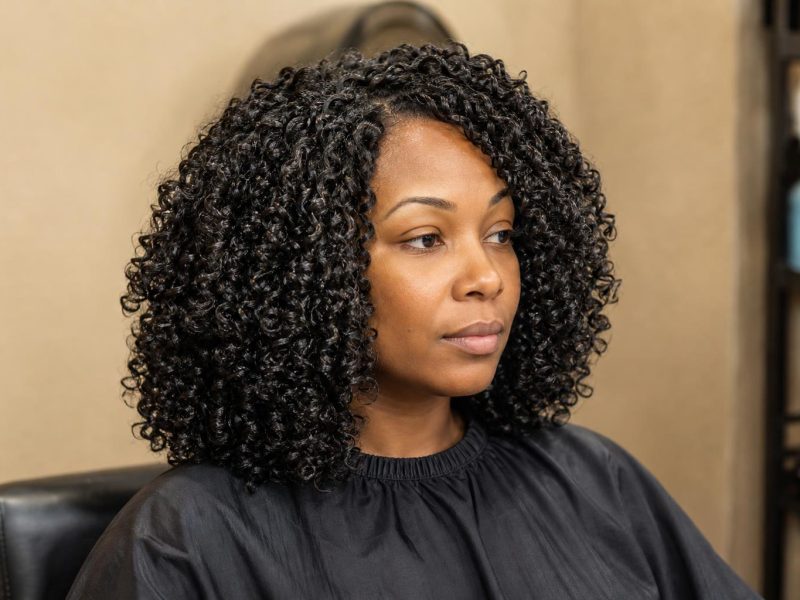
Curly and coily hair has more volume at the same length, so plan on a clip one size up from what the length alone suggests. Textured hair also grips clip teeth well, which means smaller clips can hold twists and braids that would slide straight out of silky hair.
18. Loose Curly Pineapple Clip
Square and round faces get welcome height from curls gathered loosely at the very top of the head. A wide claw clip holds a curly pineapple without the tight band an elastic leaves around the base, so curls keep their shape for the next day.
19. Mini Clips on Twists or Braids
Type 4 hair that has been twisted or braided holds tiny clips well because the texture catches the teeth. Place mini claw clips at the base of the front twists to keep them off the face, or use one small clip to gather two or three twists into a half-up section.
20. Half-Up Clip on a Wash-and-Go
Clip only after curls have dried completely and any gel cast has been scrunched out, since a clip on wet curls presses a flat dent into them. If you usually air-dry curly hair, give it an extra 30 minutes before gathering the top section.
Polished Claw Clip Styles for Work and Events
A smooth finish and a well-chosen clip make the same basic twist look office-ready. For a formal occasion that needs to last into the night, a pinned updo or a sleek bun holds more securely, but these two clip styles cover most workdays and daytime events.
21. Sleek Center-Part Clip Twist
Smoothing cream combed through before twisting keeps flyaways down, and a little hairspray on a clean toothbrush tames the part line. This polished version lasts a full workday on shoulder-length hair if the clip is at least 3.5 inches long.
22. Low Twist with a Pearl-Trimmed Clip
Pearl-trimmed and gold-tone clips add enough shine for a wedding or dinner, and they stand out most against dark brown or black hair. Choose one with a lightweight resin body and a metal accent, as all-metal clips are heavy and tend to drag a twist downward.
How to Do a Basic Claw Clip Twist
Almost every full claw clip hairstyle builds on the same vertical twist. Learn this one and the variations above become quick adjustments to where you start and how you finish.
- Brush all the hair back as if making a low ponytail, and hold it at the nape with one hand.
- Twist the length two or three times in one direction until it forms a firm rope.
- Lift the twist straight up along the back of the head, folding the ends so they point toward the crown.
- Open the clip, place the lower row of teeth under the twist near the scalp, and close it so both rows grip the fold.
- Pull out a few strands at the front or loosen the top if the style feels too tight.
Stylist tip: Clip slightly off center, about an inch to one side of the middle of the head. The skull curves less there, so the clip lies flatter and the twist is far less likely to slide down during the day.
Matching Claw Clip Styles to Your Face Shape
Where the volume ends up changes the proportions of the face, so the height of the clip matters as much as the style. Use this as a starting point and adjust by how much hair you leave loose around the face.
| Face Shape | Best Clip Placement | Leave Loose | Avoid |
|---|---|---|---|
| Oval | Any height | Optional | Very few limits; heavy front pieces hide balanced features |
| Round | At or above the crown | Long pieces past the jaw | Low clips with all hair slicked back tight |
| Square | Mid-back of the head, messy finish | Soft pieces at the temples | Sleek center parts with no loose hair |
| Heart | Low, at the nape | Chin-length pieces | Voluminous high top-knots |
| Oblong | Below the crown, ends spilling sideways | Side-swept bangs or cheekbone pieces | High clips that add vertical height |
| Diamond | Half-up at the back of the head | Fullness at the jaw | Tight styles that expose the cheekbones fully |
What to Tell Your Stylist for a Clip-Friendly Cut
If you wear your hair up most days, mention it at your next cut, because layering decides how cleanly hair goes into a clip. A useful request is: “I clip my hair up most days, so please keep the shortest layers at chin length or longer, and keep the crown layers long enough to reach the nape.” Thin hair can still have movement without short pieces escaping, and long layers for thin hair give shape while staying clip-friendly.
Stylist tip: Bring your everyday clip to the appointment and put your hair up at the end of the cut. A stylist can see straight away which pieces fall out and take a quarter inch less off them, which saves weeks of fighting the same strands.
When a Claw Clip Is Not the Right Choice
Clips are fast and gentle on the hair, but they have real limits, and pushing past them leads to headaches or snapped clips rather than a better style.
- Very heavy hair in a single undersized clip creates a pressure point that can trigger tension headaches, so use two clips or switch to a low braid on long days.
- Long drives, flights and lounging on a sofa press a large clip into the back of the skull, and a low braid or loose bun is more comfortable anywhere you lean back.
- Helmets for cycling, riding or sport cannot fit over a clip safely, so choose a low braid instead.
- Hair shorter than the chin has too little length to twist, and a headband or small barrette holds it better.
- Very silky, fine, freshly washed hair slides out of most clips, so add a dry texturizing spray or wait until the second day.
Caring for Your Clips and Your Hair
Take the clip out before sleeping, since lying on it can crack the clip and bend the spring, and a loose satin scrunchie or the methods for sleeping with long hair protect the ends better overnight. Check the teeth every few weeks for chips or rough edges, which snag and break strands each time you take the clip out. Open the clip fully before removing it instead of sliding it down the hair, and replace any clip whose spring no longer snaps shut, since a weak grip makes you clamp harder and closer to the scalp.
FAQ
What Size Claw Clip Do I Need?
Most shoulder-length hair of medium thickness needs a 3.5-inch clip, while fine hair of the same length can use a 2 to 3-inch clip. Thick hair past the shoulder blades needs 4.5 inches or more. If the clip cannot close all the way around your twist, go up a size.
Are Claw Clips Bad for Your Hair?
No, claw clips are one of the gentler ways to wear hair up, because they hold without an elastic cinching one spot of the strand. Problems come from chipped teeth that snag hair and from clamping the clip hard against the scalp every day in the same position. Rotate placement and replace damaged clips.
Why Does My Claw Clip Keep Slipping?
A clip usually slips because it is too small for the amount of hair, the hair is freshly washed and silky, or it is placed right at the center of the head where the skull curves most. Try a larger clip with interlocking teeth, a dry texturizing spray, and placement an inch off center.
Can You Do Claw Clip Hairstyles on Short Hair?
Yes, as long as hair reaches at least the chin. Short hair suits half-up styles, side clips and small rolled sections at the nape with 1.5 to 2.5-inch clips. Anything shorter usually needs a barrette or bobby pins instead.
Do Claw Clips Cause Headaches?
They can, when a heavy twist in a small clip creates a pressure point or the clip is pressed against a headrest for hours. Splitting the hair between two clips and positioning them slightly off center usually solves it. If headaches continue, take the style down and wear a loose low braid instead.
Can I Sleep with a Claw Clip In?
It is best not to, because lying on a clip bends the spring, can crack the clip and presses the teeth into your scalp. A loose braid, a silk scrunchie or a satin bonnet protects hair better overnight.
The best claw clip hairstyles start with the right clip for your hair’s length and thickness, then a firm twist placed just off center. Pick two or three styles from the section that matches your hair, practice them on second-day hair, and size up whenever the clip struggles to close. More everyday updo ideas are waiting in our hairstyles and updos collection.
Hair results vary based on your natural hair type, texture, density, and condition. Always consult with a licensed hairstylist before making significant changes, especially with chemical treatments or dramatic length changes. Photos may show styled results that require professional tools and products to replicate.
1 response