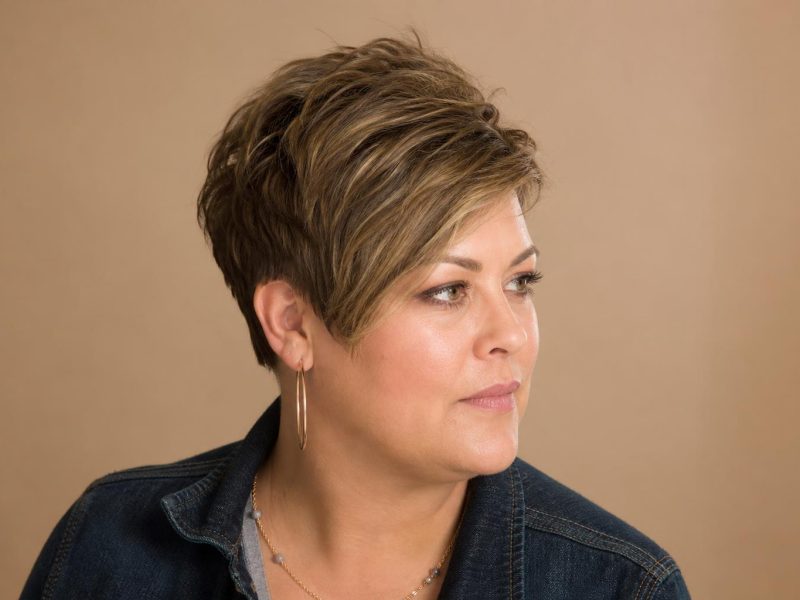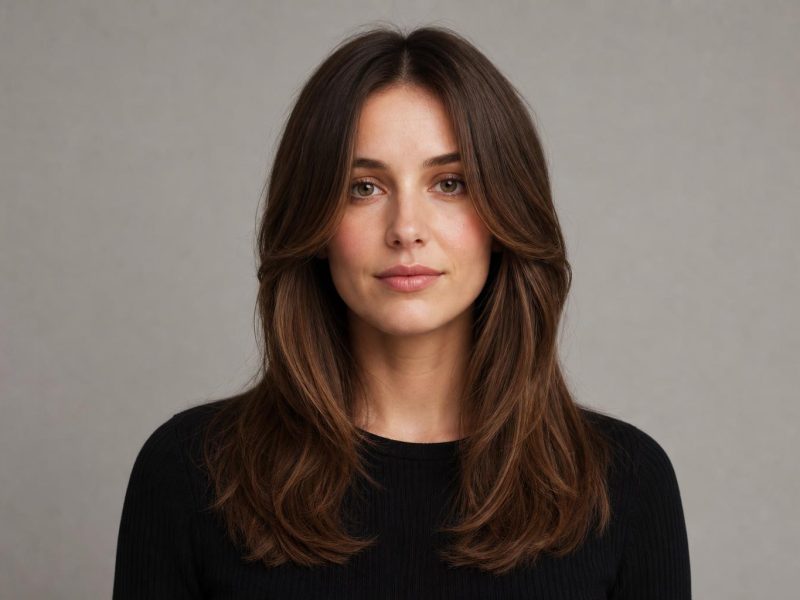

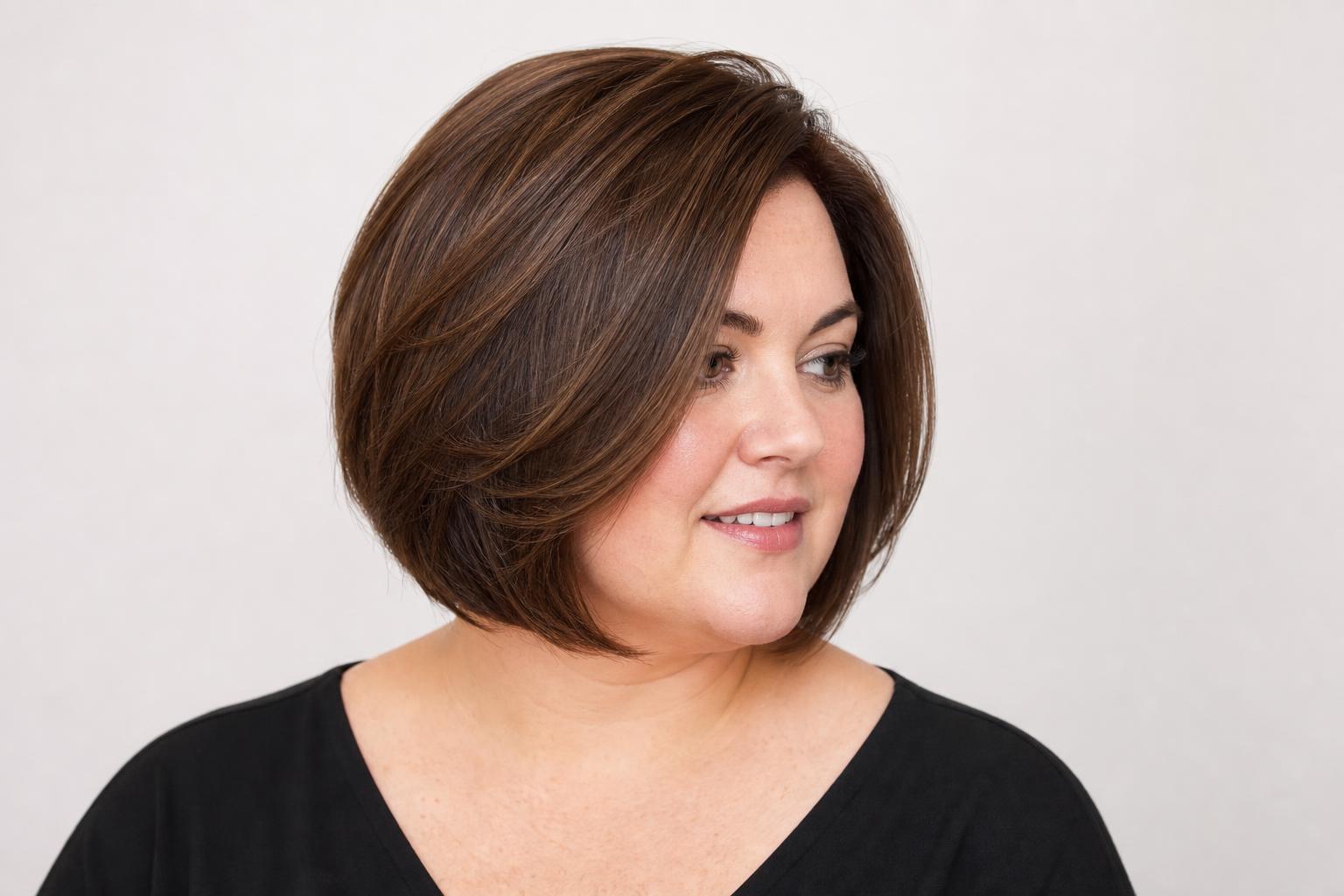
On a fuller face, the length of a short cut matters far less than where the first layer starts.
Short layered haircuts work on a chubby face when the shortest layers begin below the widest part of the cheek, which keeps volume away from the area you want to look narrower and puts movement where it lengthens instead. Layers that start at or above the cheekbone do the opposite and add width exactly where a fuller face already carries it. Every one of the 25 cuts below follows that single rule, at four different lengths.
The collection is sorted from pixie and crop lengths up through chin-length bobs, collarbone lobs, and layered cuts paired with bangs, so you can browse by the length you are actually willing to commit to. After the gallery you will find a layer placement table, the exact language to use at the consultation, a realistic maintenance breakdown by cut, and an honest section on when short layers are the wrong choice for a fuller face.
| Factor | Details |
|---|---|
| Best for | Round, full, and soft square face shapes with medium to thick density |
| The rule | Shortest layer starts below the widest point of the cheek, never above it |
| Works with | Straight, wavy, and loosely curled hair; tighter curls need a dry cut |
| Avoid if | Your hair is very fine and sparse, where heavy layering thins the perimeter further |
| Salon time | 45 to 75 minutes for the cut alone, longer if face-framing color is added |
Pixie and Crop Lengths
Very short cuts are the format people with fuller faces are most often warned away from, and the warning is only half right. A pixie that keeps its weight low and flat at the sides does widen a round face, but a pixie built with height at the crown and length left through the fringe creates a vertical line that no bob can match. The six cuts here all put volume above the temple line and keep the sides close.
1. Long Pixie with a Side-Swept Fringe
Length left through the fringe and swept diagonally across the forehead breaks the symmetry that makes a round face read as round. Because the sides stay close to the head while the crown carries height, the eye travels up rather than out. Anyone whose cheeks are the fullest part of their face gets the most from this proportion, and the same logic drives most pixie cuts shaped for round faces.
2. Textured Crop with Crown Volume
Point cutting through the top two inches removes weight without removing length, so the crown lifts on its own instead of needing daily backcombing. Ask for the texturizing to stop at the parietal ridge so the sides keep a clean line.
3. Pixie Bob with a Tapered Nape
Unlike a standard pixie, a pixie bob leaves enough length at the front to graze the jaw, so the shape narrows toward the chin rather than stopping at the widest point of the face. The tapered nape keeps the back from puffing outward, which is the failure most people notice on a grown-out crop. It is the safest first step for anyone moving down from a bob but not ready to lose all length.
4. Choppy Pixie for Thick Hair
Dense hair is the easiest texture to over-shorten on a full face, because bulk left at the sides becomes a triangle within three weeks. Deep internal texturizing solves it by hollowing out the interior while the outline stays intact, and thick hair holds the resulting shape all day without product. A choppy razor-cut pixie takes the idea further if your hair is coarse as well as dense.
5. Grown-Out Pixie with Longer Sideburns
Leaving the sideburn area long is what stops a growing-out pixie from ballooning at the ears around week six. Those two thin sections fall against the cheek and hold a vertical line while everything else expands. Plan a shape-up every five weeks rather than a full cut, which stretches the grow-out considerably.
6. Soft Pixie with a Deep Side Part
Shifting the part two inches off center creates one high side and one low side, and that asymmetry does more visual slimming than any amount of layering. Style it by drying the fringe forward first, then sweeping it back at the last moment so it keeps lift at the root.
Chin and Jaw Length Bobs
Chin length is the most requested and most misjudged length for a fuller face. A blunt bob cut straight across at the widest part of the cheek draws a horizontal line right where you least want one, which is where the old advice to avoid bobs comes from. Layered versions solve it by breaking that line, and angling the perimeter forward pulls the eye down toward the chin.
7. Angled Bob with Internal Layers
Internal layers sit under the top section and remove interior weight while the outer perimeter stays intact, so the bob keeps a clean edge but loses the bulk that pushes it outward at the cheek. The angle from back to front does the lengthening work. Fine to medium hair holds this shape best, and layered bob variations range widely in how aggressive that interior removal needs to be.
8. Layered Bob with Curtain Bangs
Round and full faces gain the most from a curtain fringe because the two halves fall diagonally across the forehead and cover the outer corners, narrowing the top third of the face. Keep the shortest point at the brow and let the outer edges reach the cheekbone.
9. Chin-Length Bob with Point-Cut Ends
Ask specifically for point cutting on the perimeter and no blunt line at the jaw, because a hard edge at chin level is what turns a flattering bob into a widening one. The phrase that gets it right at the consultation is a soft, broken perimeter with weight removed from the last inch. Say it before the cut starts, not after the first pass.
10. Wavy Bob with Cheekbone Layers
Rough-dry to eighty percent, then bend alternating sections away from the face with a 1.25-inch iron for the loose, undone wave this shape depends on. Waves that all turn the same direction create a rounded halo, which works against a fuller face.
11. Stacked Bob with a Longer Front
A stacked back builds height at the occipital bone rather than at the sides, so the silhouette becomes taller instead of wider. Compared with a one-length bob, the stacking also keeps the nape from flipping outward as it grows. Front sections left an inch longer than the back finish the vertical line at the jaw.
12. Bob with Money-Piece Highlights
Two brighter face-framing panels at the front pull attention to the center of the face and away from the outer cheek, which is the cheapest slimming tool in a colorist’s kit. Keep the brightness to the front two inches only; a full head of lightness has the opposite effect and widens the whole shape.
13. Textured Bob for Fine Hair
Fine hair and a full face need a careful compromise, because the layering that adds movement also thins an already sparse perimeter. Limit the layering to two long interior sections and keep the outline blunt, which preserves the density that makes the shape hold. Root-lifting mousse at the crown does the rest.
Lob and Collarbone Layers
Once length passes the jaw, layers gain room to do their most useful work: creating a long, unbroken vertical line from cheekbone to collarbone. This is the safest category for anyone who is nervous about going short, and it is also the most forgiving as it grows. The trade is that a lob needs styling to avoid falling into a heavy curtain that widens the jaw.
14. Collarbone Lob with Long Face-Framing Layers
Face-framing pieces cut to start at the jaw and graduate down to the collarbone draw two long diagonal lines beside the face, and diagonals slim where horizontals widen. Fuller faces with a soft jawline gain the most definition from this placement. A collarbone bob without the framing pieces sits flatter and does less.
15. Shaggy Lob with Razored Ends
Razoring the last two inches thins the perimeter to a soft, feathered edge, which stops the ends from sitting in a solid block at the shoulder. Reserve this technique for medium to coarse hair, since a razor on fine hair frays rather than softens.
16. Lob with Undone Waves
Sea-salt spray on damp hair, scrunched and left to air-dry, gives this shape the irregular texture it needs; a uniform curl set makes it look rounder. Twist the front two sections away from the face while damp so they dry with a bend that pulls back rather than forward.
17. Wolf-Cut Lob with Crown Layers
Where a standard lob keeps its weight low, a wolf-cut version pulls short layers up to the crown and leaves the perimeter long, producing a much stronger height-to-width ratio. That contrast is exactly what a full face benefits from. The cost is more daily styling, because the crown layers go flat without texturizing product.
18. Low-Maintenance Lob with a Blunt Perimeter
Two long interior layers plus a blunt outline is the version that survives twelve weeks between salon visits without turning shapeless. Nothing about the shape depends on precise layer placement, so it grows down rather than out. Anyone tracking what a low-maintenance short haircut actually saves will recognize the trade being made here.
19. Lob with Ashy Dimensional Color
Cooler, ashier lowlights placed at the sides recede visually while warmer tones stay at the front, which creates depth exactly where a fuller face wants shadow. Ask the colorist to keep the darkest pieces behind the ear rather than at the parting.
Layered Cuts with Bangs
Bangs are the most effective and most misunderstood tool for a fuller face. A heavy blunt fringe cut straight across shortens the face and emphasizes width, which is why the blanket advice has always been to skip bangs entirely. Separated, side-swept, and long styles do the reverse by exposing part of the forehead and adding a diagonal.
20. Curtain Bangs with a Layered Bob
Bring a photo and ask for a curtain fringe with the shortest point at the brow, splitting from a center or slightly off-center part, blended into the face-framing layers rather than cut as a separate section. That last instruction is the one stylists most often need spelled out, and skipping it leaves a visible step where the fringe ends. Browsing how to ask for curtain bangs before the appointment saves a correction visit.
21. Side-Swept Fringe on a Short Shag
A fringe swept hard to one side crosses the forehead diagonally and covers one outer corner, which visually narrows the top of the face and lengthens the whole silhouette. Full cheeks and a low hairline are the two features this handles best.
22. Wispy Bangs with Chin-Length Layers
Fine hair cannot carry a dense fringe without leaving the rest of the head looking sparse, so a wispy version taken from a shallow triangle of hair is the workable option. The see-through effect keeps some forehead visible, which prevents the face from looking compressed.
23. Long Bottleneck Bangs on a Lob
Bottleneck bangs are cut narrow and short at the center, then flare out and lengthen toward the temples, producing a shape that pinches inward at the middle of the forehead. That pinch is doing precise slimming work that a straight fringe cannot. The cut needs a skilled hand, since the graduation happens across only a few inches.
24. Grown-Out Bangs Blended into Face-Framing
Rather than trimming bangs back every three weeks, letting them grow to cheekbone length and asking your stylist to blend them into the face-framing layers turns the awkward phase into the actual cut. Expect one blending appointment around week eight, then nothing until your regular trim. The full range of fringe shapes is worth reviewing before you commit either way.
25. Curly Bangs with Short Layers
Curl shrinkage means a fringe cut at brow level while wet will land two inches higher when dry, so this one has to be cut dry, curl by curl. Diffuse on low speed with the head tipped forward to build height at the root, which is what keeps curly layers from expanding sideways.
Where the Layers Start Decides Whether a Cut Slims or Widens
The single measurement that determines whether a short layered cut flatters a fuller face is the starting point of the shortest layer around the face. Layers that begin above the widest point of the cheek push volume outward at exactly the wrong height. Layers that begin at or below the jaw create a narrow column beside the face. Everything else, including length, texture, and color, is secondary to that one decision.
| Face Shape | Best Short Layered Cut | Layer Start Point | Avoid |
|---|---|---|---|
| Round and full | Angled bob or collarbone lob with long framing pieces | Jaw level or lower | Blunt chin-length bob with a center part, which draws a horizontal line at the widest point |
| Full with a soft square jaw | Shaggy lob with razored ends | Just below the jaw corner | Layers ending exactly at the jaw, which underlines the corner instead of softening it |
| Full with a heart shape | Pixie bob or chin-length layered bob | Mid-cheek, with weight kept low | Heavy crown volume, which widens an already broad forehead |
| Full with a short neck | Long pixie or tapered pixie bob | Crown, with a tapered nape | Shoulder-grazing lengths that cover the neck and compress the silhouette |
| Full with a low hairline | Side-swept fringe on a short shag | Temple level for the fringe only | A blunt straight-across fringe, which shortens the visible face further |
Stylist tip: Find your own widest point before the appointment by looking straight into a mirror and placing two fingers horizontally where your face is broadest. On most fuller faces that lands at the mid-cheek, roughly an inch below the outer corner of the eye. Any layer that ends above that line adds width, and knowing the number turns a vague request into a precise one.
What to Tell Your Stylist
Describing the effect you want rather than the cut you want is what produces a mismatch, because the words that sound clear to you carry no measurement. Give the stylist a starting point and a perimeter instruction and the rest follows. A workable script: keep my shortest face-framing layer at jaw level or below, remove weight from the interior rather than the outline, and point cut the perimeter so there is no hard horizontal edge at my cheek.
Two consultation questions are worth asking before any cutting begins. Ask where the shortest layer will fall relative to your cheekbone, and ask how the shape will look at week eight rather than on the day. A stylist who can answer both is thinking about the grow-out, which is where most short cuts on fuller faces go wrong. If you want a broader view of the options first, the full range of haircuts for chubby faces covers longer lengths as well.
Stylist tip: Bring two photos, not one, and make them contradictory on purpose. One of the finished styled result, one of the same cut worn plainly on a second day. The gap between them tells your stylist how much styling you are realistically signing up for, and it is the single most useful thing you can hand over at a consultation.
Maintenance and Styling by Cut Length
Short layered cuts trade salon frequency for daily ease, and the exchange rate is steeper the shorter you go. A pixie takes five minutes each morning and needs a salon chair every four weeks. A layered lob is the reverse. Neither is lower maintenance in absolute terms; they simply move the effort to different places.
| Cut | Trim Frequency | Daily Styling | Grow-Out Behavior |
|---|---|---|---|
| Long pixie | 4 to 5 weeks | 5 to 10 minutes with paste or wax | Widens at the ears from week 6; a sideburn trim buys two weeks |
| Pixie bob | 6 weeks | 10 minutes, round brush at the crown | Grows into a chin bob cleanly, which makes it a good exit cut |
| Angled layered bob | 6 to 8 weeks | 10 to 15 minutes to keep the angle visible | The angle flattens first; the shape reads as a plain bob by week 9 |
| Shaggy lob | 10 to 12 weeks | 5 minutes of texturizing spray, air-dry friendly | Grows out gracefully; layers stay visible for months |
| Any version with bangs | Fringe trim every 3 to 4 weeks | Add 3 to 5 minutes for the fringe alone | The fringe outgrows the cut; plan a blending visit at week 8 |
When Short Layers Are Not the Right Call
Three situations make short layers a poor fit for a fuller face, and the honest answer is to choose a different length rather than a different layering pattern. Very fine, low-density hair is the first. Layering removes weight, and hair that has little weight to begin with ends up with a wispy perimeter that exposes the scalp at the sides, which draws the eye outward rather than down. A blunt chin-length bob with no interior layering serves that hair far better.
Tight curl patterns in the 3c to 4c range are the second. Short layers on tightly coiled hair build a rounded silhouette by default, because every layer springs upward and outward, and a round shape beside a full face compounds the effect. Length past the shoulder gives the curl somewhere to fall. The third is a genuinely low styling tolerance combined with a strong cowlick at the front hairline, since a cowlick will lift a short face-framing layer off the cheek every morning no matter how it was cut, and fighting one daily is a losing arrangement.
FAQ
Do Short Haircuts Make a Chubby Face Look Rounder?
Not on their own; the width comes from where the volume sits, not from the length. A short cut with height at the crown and close sides makes a fuller face look longer, while a short cut with volume at the ears makes it look wider. That difference is set entirely by layer placement and the direction of the styling, which is why two people can leave a salon with the same length and completely different results.
Should I Get a Center Part or a Side Part with a Fuller Face?
A deep side part is the safer choice because it creates asymmetry and a diagonal line across the top of the head, both of which counteract roundness. Center parts work when the cut is long enough that the hair falls past the jaw and creates two vertical lines instead of framing the cheeks. If your hair is chin length or shorter, shift the part at least two inches off center.
Can I Wear a Blunt Bob If I Have a Round Face?
Yes, provided the blunt edge lands below the jaw rather than at the cheek. A blunt line at jaw level or lower reads as a clean vertical finish, while the same line at mid-cheek widens the face. Fine hair actually does better with this version than with a heavily layered one, since it keeps the density that makes the shape hold.
How Do Bangs Affect a Fuller Face?
Bangs shorten the visible length of the face, so the style matters more than the decision itself. Curtain, side-swept, and bottleneck shapes leave part of the forehead exposed and add a diagonal, which keeps the face looking long. A dense blunt fringe across the brows does the opposite and is the version worth skipping.
What Layer Length Slims a Round Face the Most?
Face-framing layers that begin at the jaw and graduate to the collarbone produce the longest unbroken diagonal beside the face, which is the most slimming placement available. On shorter cuts the equivalent is a fringe swept from a deep side part. Both work by replacing horizontal lines with diagonal ones.
How Often Will I Need a Trim?
A pixie needs the chair every four to five weeks, a layered bob every six to eight, and a shaggy lob can stretch to twelve. Cuts with bangs need a separate fringe trim roughly monthly regardless of the base length. The general logic behind those intervals is covered in more detail in our guide to how often to cut your hair.
Does Hair Color Change How Slimming a Cut Looks?
It does, though less than the cut. Darker or cooler tones at the sides recede visually while brighter face-framing pieces at the front pull attention inward, so a dimensional color placed with the sides in mind supports the shape. A single flat all-over shade gives the layers nothing to catch, which flattens the effect the cut was built to create.
Choosing among short layered haircuts for chubby faces comes down to one measurement rather than a style name: know where your face is widest, and keep the shortest layer below it. Take that number to the consultation along with two photos, and ask what the shape will look like eight weeks out. A cut built around your own proportions holds its shape long after the salon blowout has washed out.
Hair results vary based on your natural hair type, texture, density, and condition. Always consult with a licensed hairstylist before making significant changes, especially with chemical treatments or dramatic length changes. Photos may show styled results that require professional tools and products to replicate.