

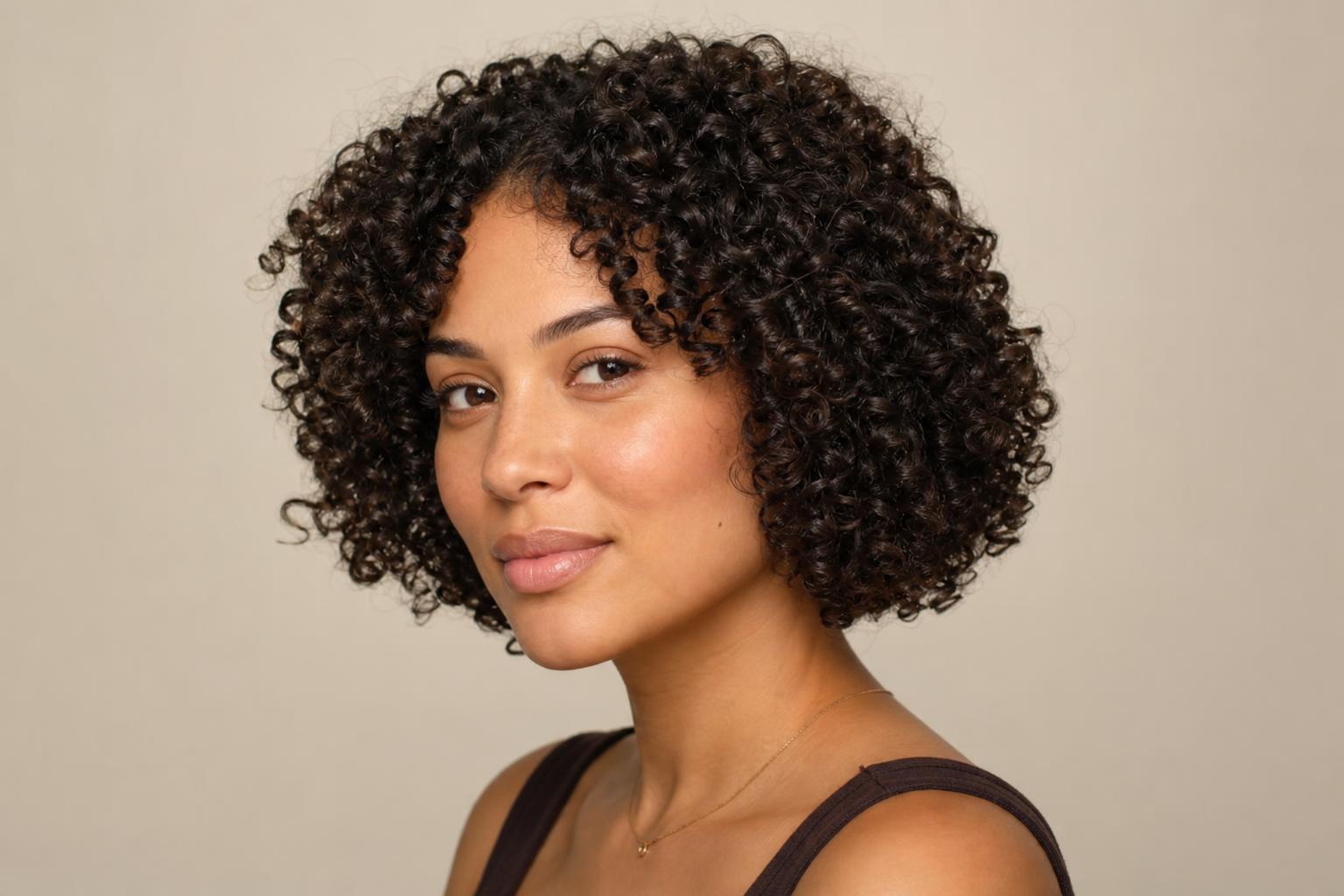
3C curls shrink up to 60 percent when they dry, so the haircut you ask for and the haircut you see in the mirror are two different lengths unless your stylist plans for it.
Haircuts for 3C hair work best when they build a deliberate silhouette instead of chasing length. A 3C spiral is roughly the width of a pencil, dense enough to hold its own shape, and springy enough that every inch removed reads as two. The 25 cuts below are sorted by length, from tapered crops through collarbone bobs to long sculpted layers, with the structural detail that makes each one hold up on tight spirals.
After the gallery you get the parts most curl articles skip: a shrinkage chart that translates stretched length into dry length, a face shape table, the exact wording to use at the consultation, and an honest maintenance schedule.
| Factor | Details |
|---|---|
| Best for | Tight corkscrew spirals with medium to high density, most face shapes when the silhouette is adjusted |
| Maintenance | Trim every 10 to 14 weeks; 10 to 20 minutes of wash-day styling, almost none between washes |
| Works with | Dry cutting, curl-by-curl shaping, internal layering, tapering at the nape and sides |
| Avoid if | Your stylist wants to use thinning shears, or wants to cut the whole head soaking wet |
| Salon time | 90 minutes to 2.5 hours for a dry curl cut, longer with a wash and diffuse finish |
Short 3C Cuts That Keep Volume Where You Want It
Short cuts on 3C hair succeed or fail on one decision: where the weight sits. Take length off the sides and back while leaving the crown full and you get a rounded, lifted shape. Take it evenly off the whole head and dense spirals spread outward into a triangle. Everything in this section keeps the widest point above the ear, which is where 3C volume looks deliberate rather than accidental.
1. Tapered TWA with Sponge-Defined Coils
Cut to roughly two inches on top with the sides taken down gradually rather than faded to skin, this shape lets the curl pattern read clearly even at its shortest. A curl sponge worked in small circles on damp hair pulls the spirals into visible clumps. The gradual taper is what separates it from a plain buzz, so ask for scissors over clippers on the top section.
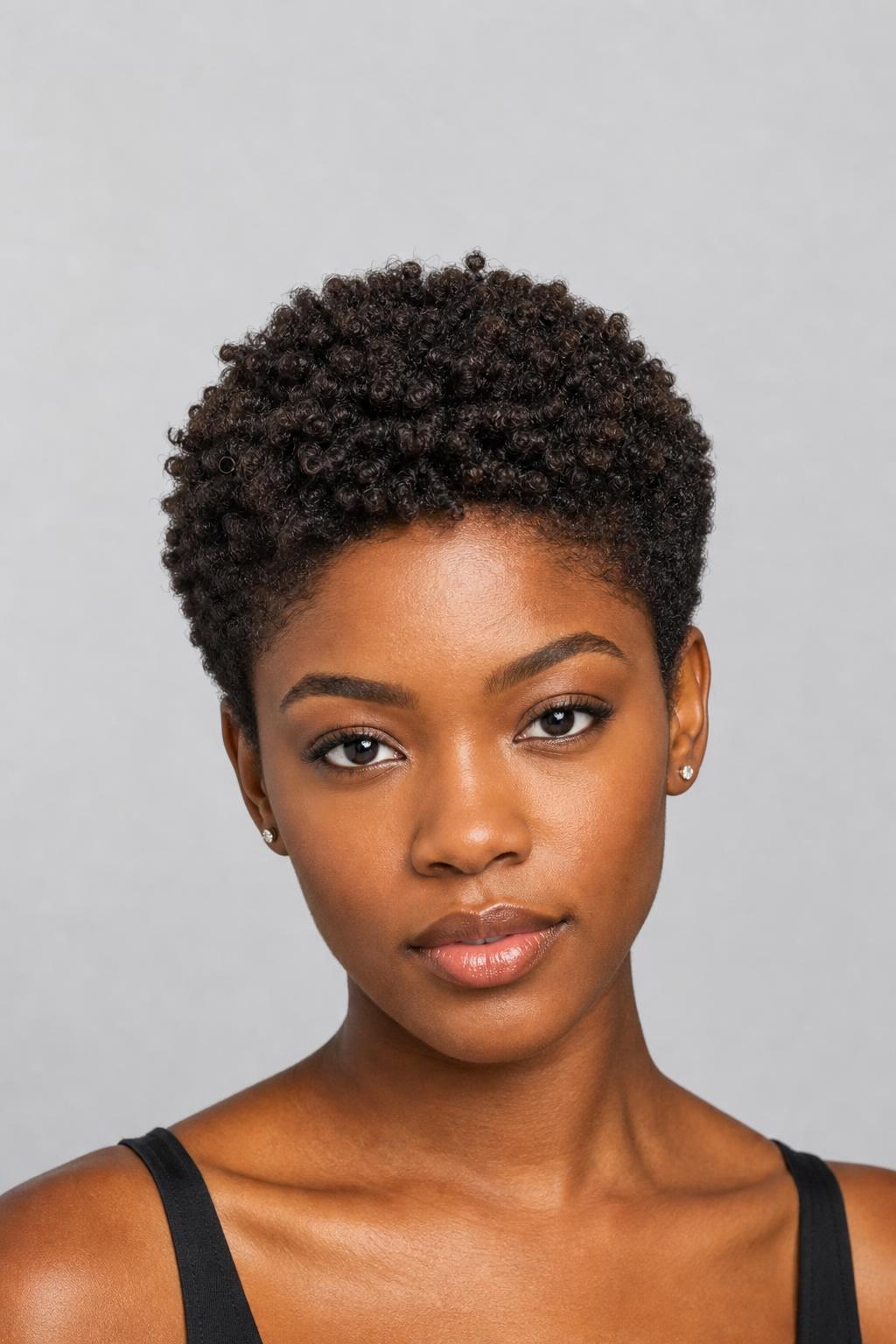
2. Curly Pixie with a Longer Crown
Leaving three to four inches at the crown and cropping the sides close creates height without width, which balances a round or square face by drawing the eye upward. The longer top also gives you something to sweep sideways on days when the curl clumps unevenly. Anyone considering a short curly pixie shape should look at their growth pattern first, since a strong cowlick at the front changes where the crown length needs to fall.
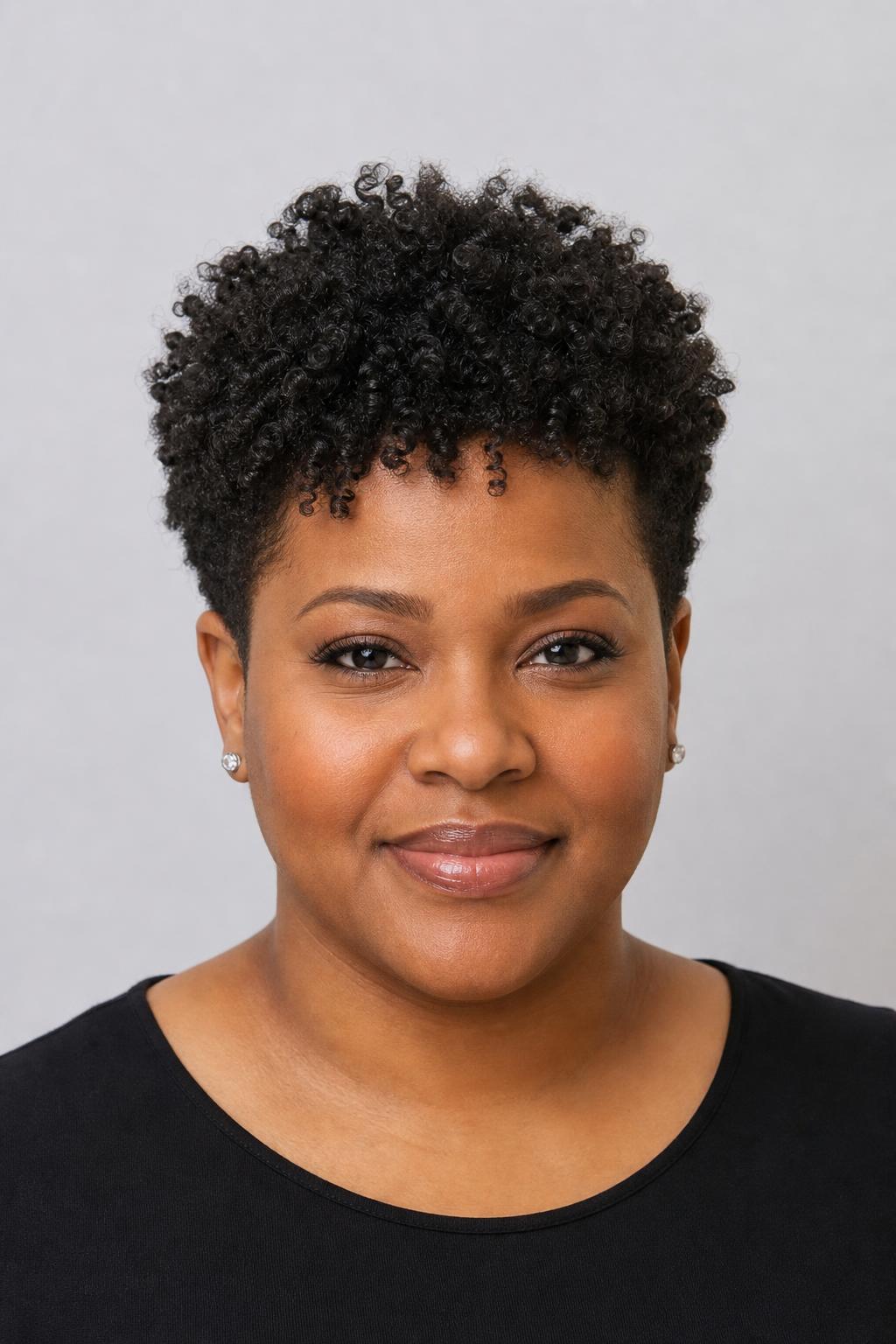
3. Rounded Crop with a Soft Perimeter
Style this by raking a curl cream through soaking wet hair, then diffusing on low speed with the head tipped forward until the roots lift. The perimeter is cut without a hard line, so the coils fall into a rounded halo instead of a blunt edge.
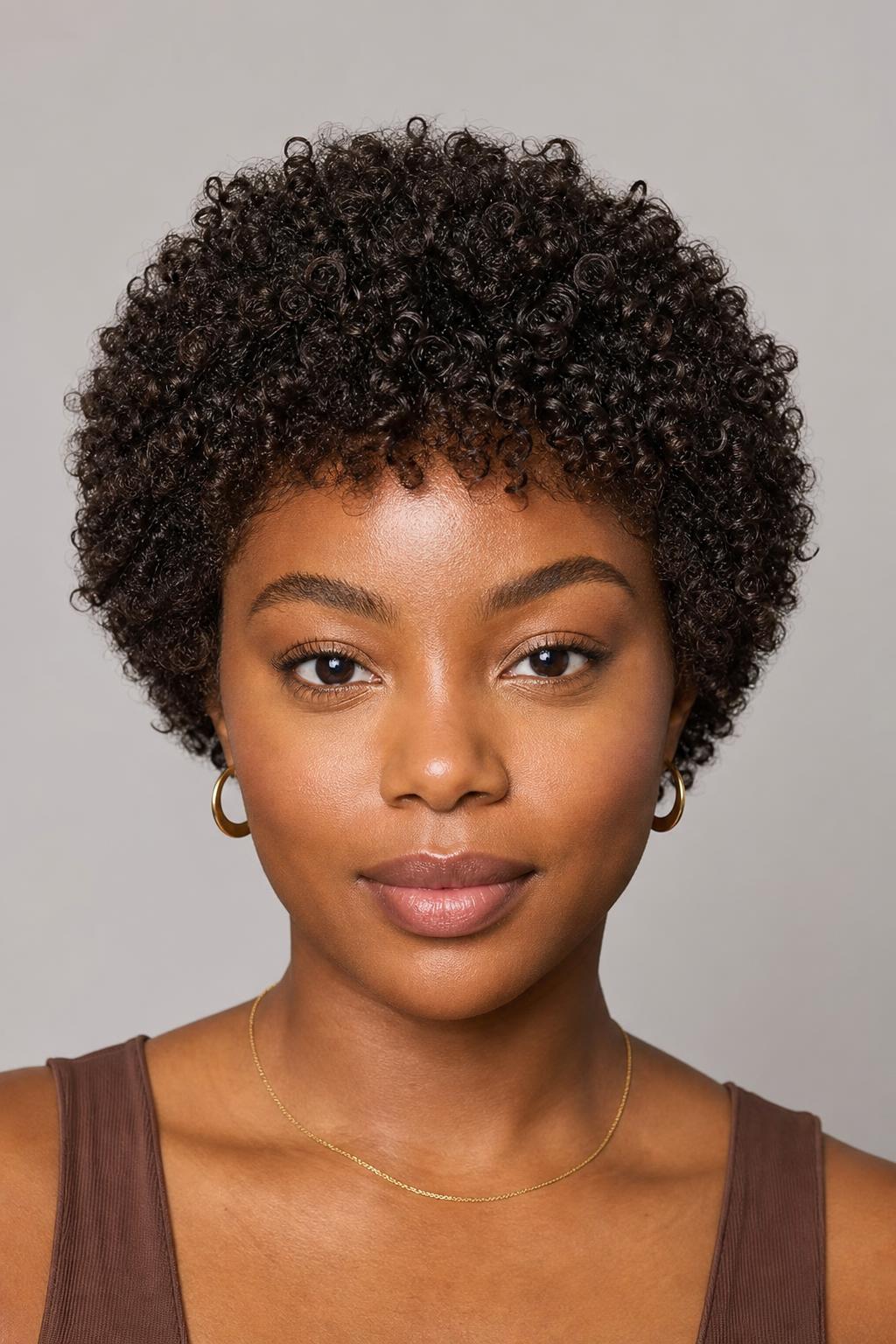
4. Ear-Length Curly Crop for Dense Hair
Very dense 3C hair carries a lot of bulk at ear level, and this crop removes it from the inside while keeping the outer layer intact. The result sits close at the sides and full through the top, which suits hair that would otherwise pouf outward at the widest point. Density matters more than curl pattern here, and if your ponytail is thicker than a quarter across, this shape will hold better than a longer bob.
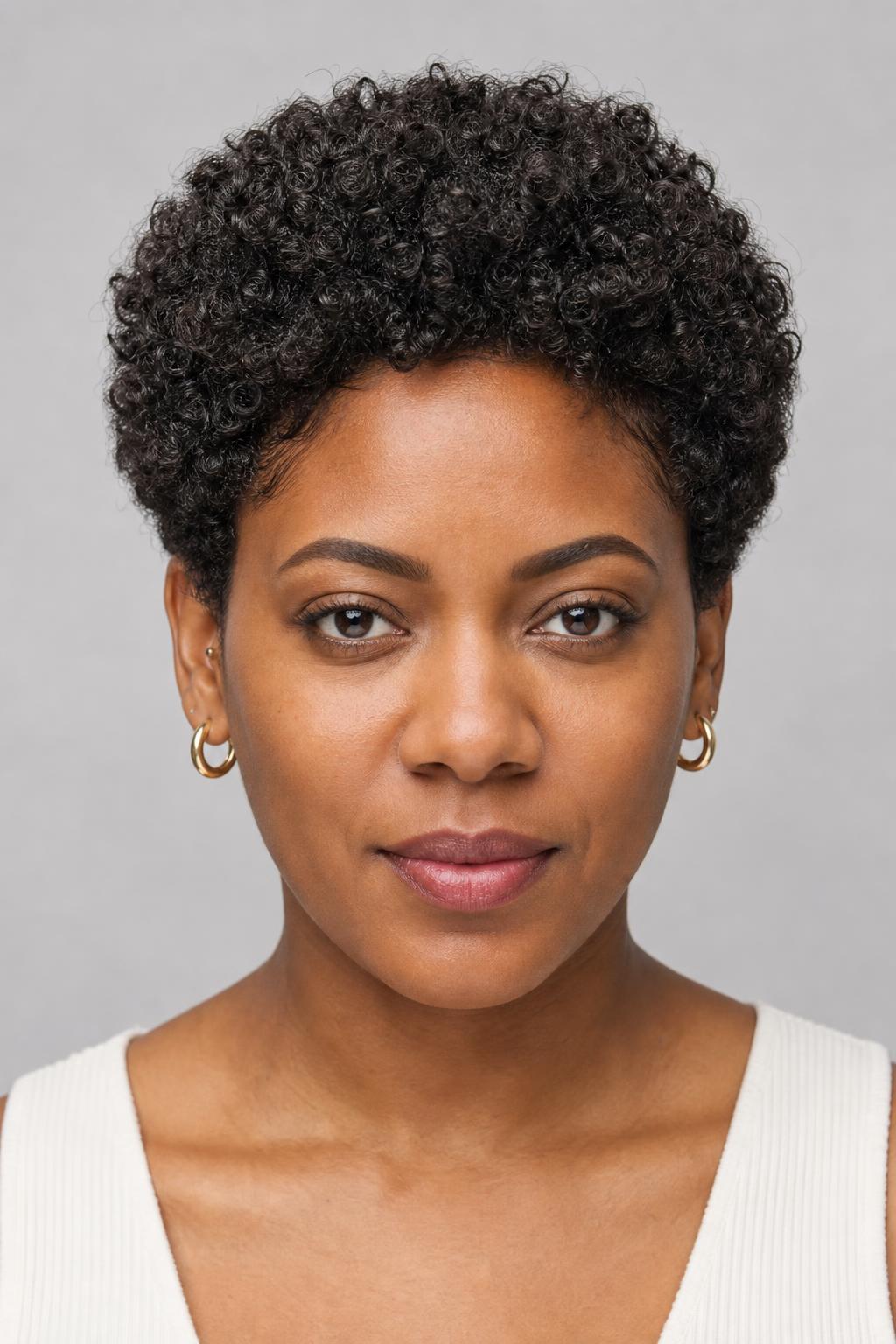
5. Copper-Highlighted Short Curly Shape
Warm copper pieces placed on the outer spirals catch light along the curve of each coil, which makes a short cut look layered even when the layering is subtle. Placement matters more than saturation on tight curls, so ask for pieces painted on individual clumps rather than a full head of foils. Expect the copper to soften within six to eight washes, which is why a color-depositing conditioner earns its place in the shower.
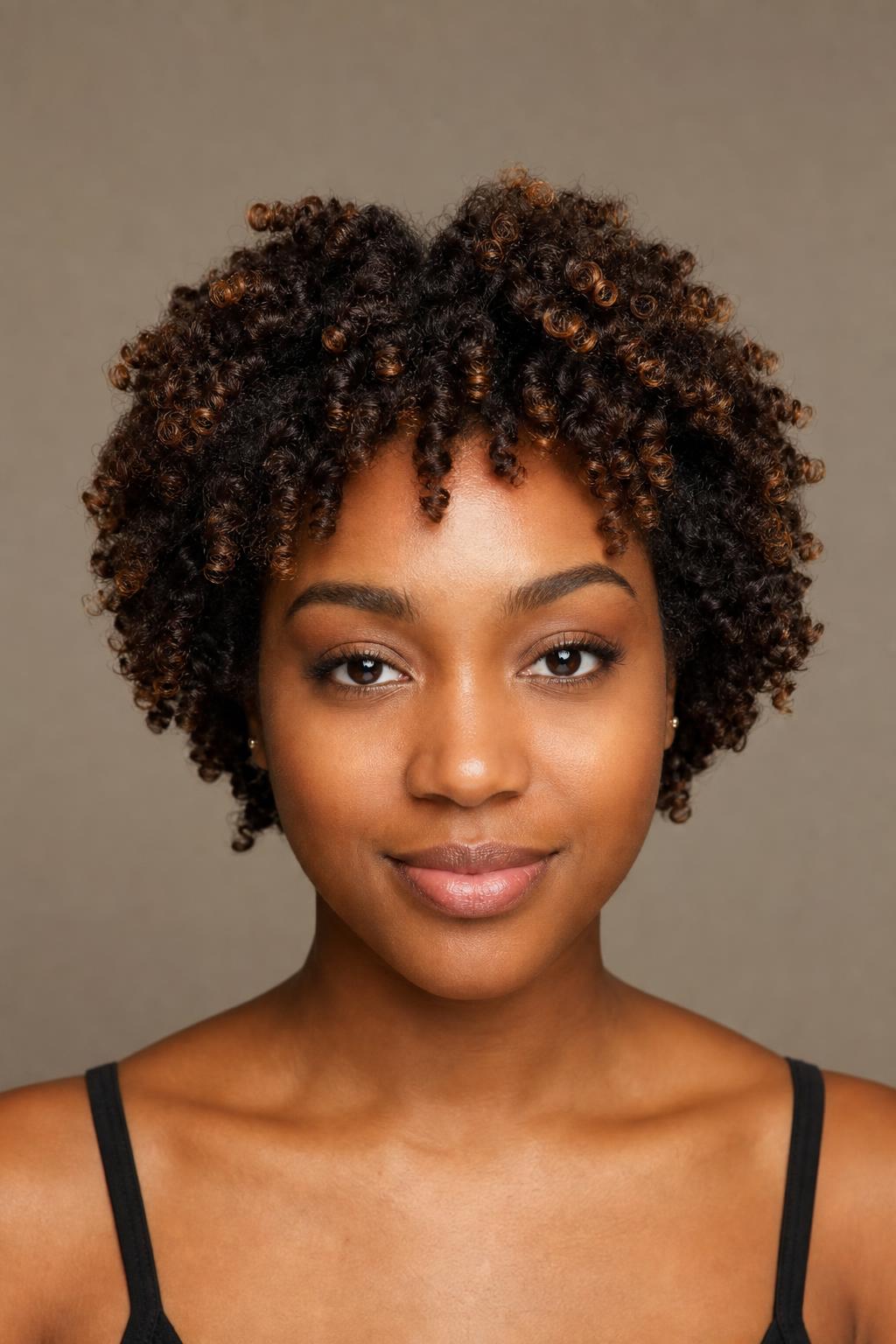
6. Faded Sides with Full Curl on Top
A clean fade at the sides needs a barber visit every three to four weeks, while the curly top can go three months without a trim. That split schedule is worth knowing before you commit, because the shape looks unbalanced by week five if only the top is maintained.
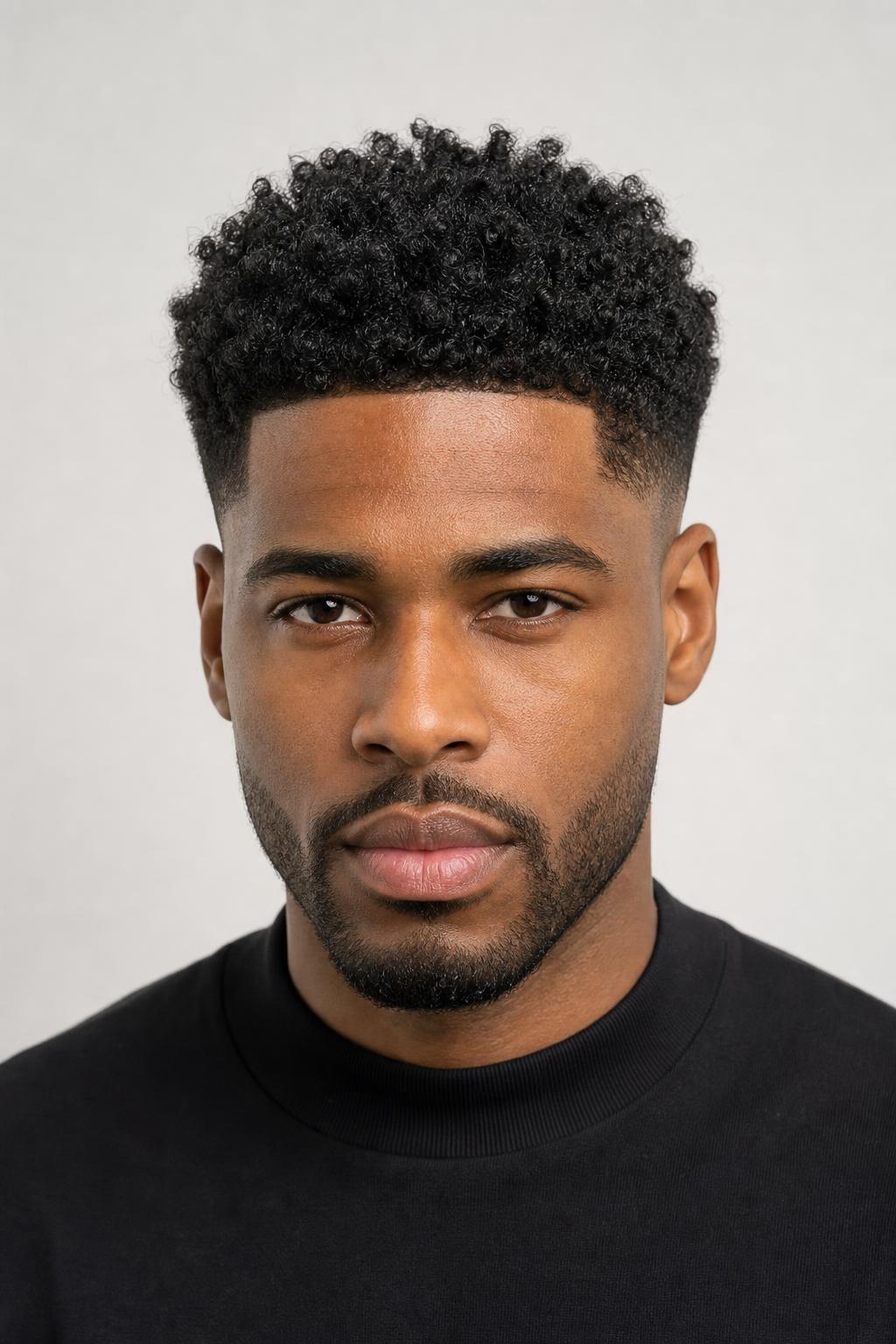
Curly Bobs and Lobs for 3C Spirals
Bob length is where 3C hair gets tricky, because chin length dry can mean shoulder length wet. Curly bobs need to be cut with the shrinkage already accounted for, and the perimeter needs enough weight to stop the ends from flaring. The shapes below range from a blunt chin-length bob to a collarbone lob, and each one handles that flare differently. The same weight-distribution logic applies across the broader family of curly bob haircuts.
7. Chin-Length Curly Bob with a Blunt Perimeter
Unlike a layered curly bob, which lets the ends separate and spring in different directions, a blunt perimeter keeps the bottom line dense enough to weigh the shape down. That weight is what stops 3C hair from widening at the jaw. The trade-off is less movement at the ends, so this reads more structured and less lived-in than a shag bob at the same length.
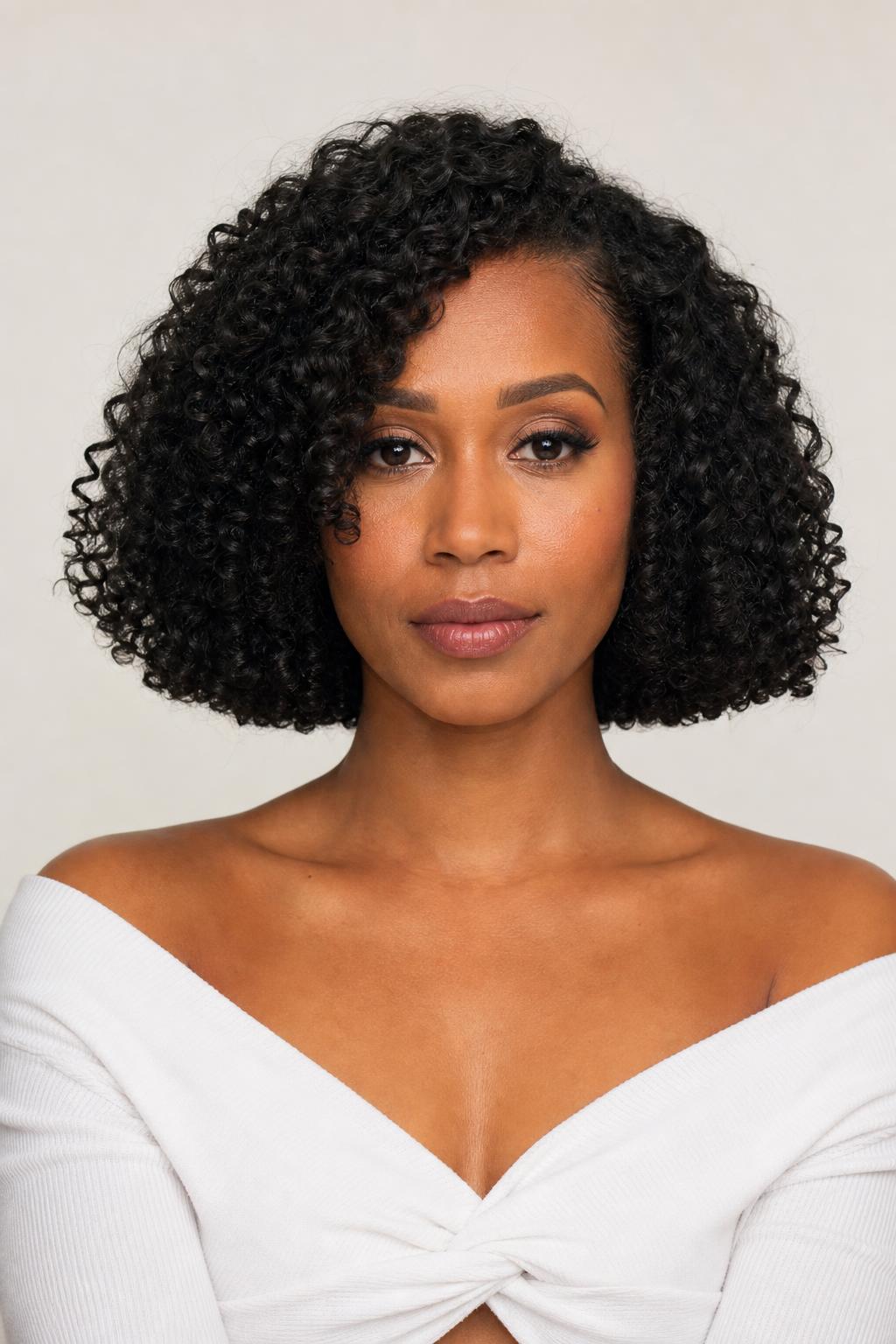
8. Collarbone Curly Lob
Ask for a lob cut to the collarbone in its dry, shrunken state, and say plainly that you do not want it measured wet. Add that you want the perimeter kept close to one length with only internal layers for bulk removal. Those two sentences prevent the most common 3C lob problem, which is walking out with a cut two inches shorter than the photo you brought.
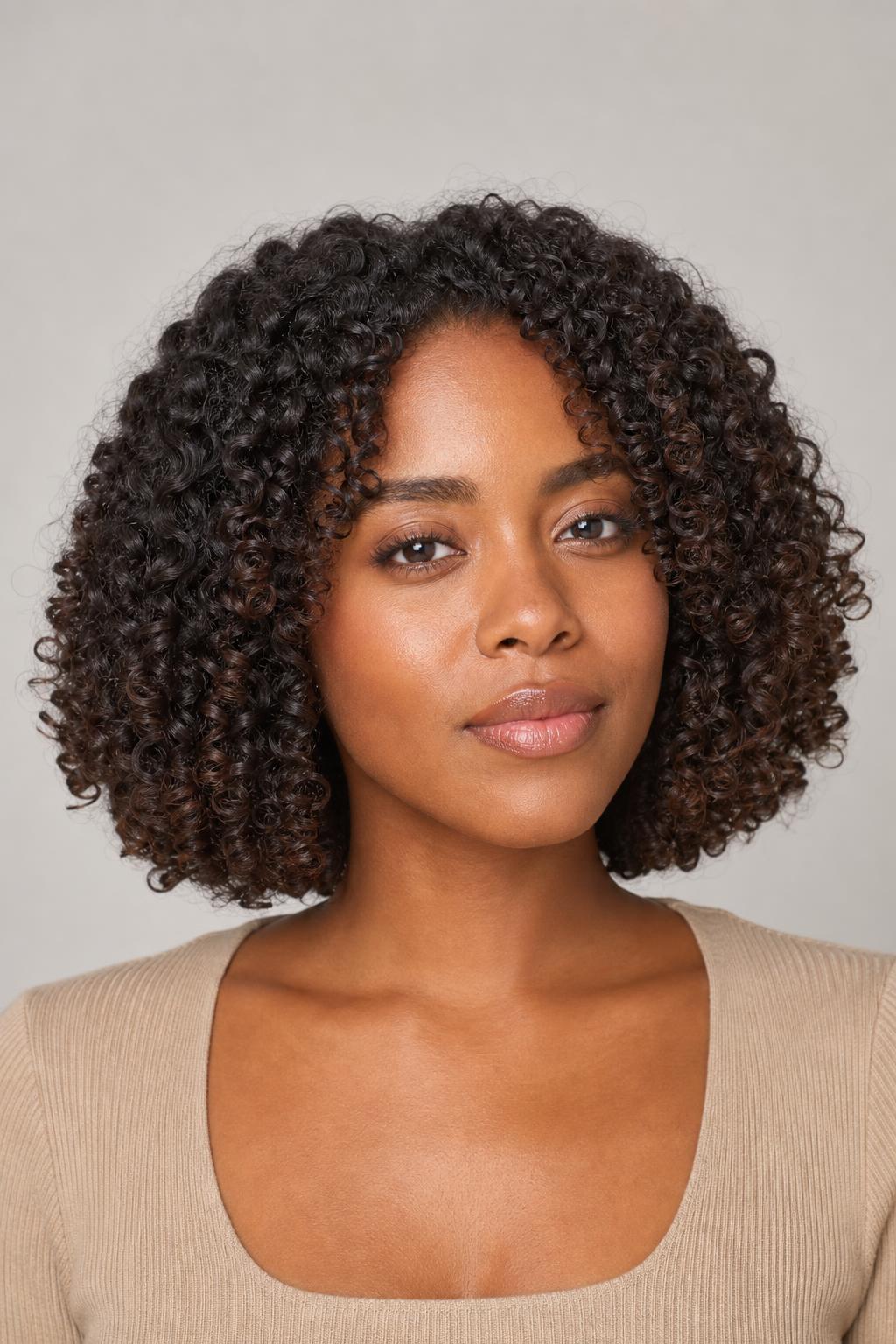
9. Stacked Curly Bob with a Short Nape
Fine-strand 3C hair, where the individual strands are thin even though the curls are tight, benefits from stacking at the back because the graduated layers push the coils upward into a rounded shape. Coarse 3C hair does the opposite and puffs at the stack line. Check strand thickness by rolling a single hair between your fingers before asking for this one.
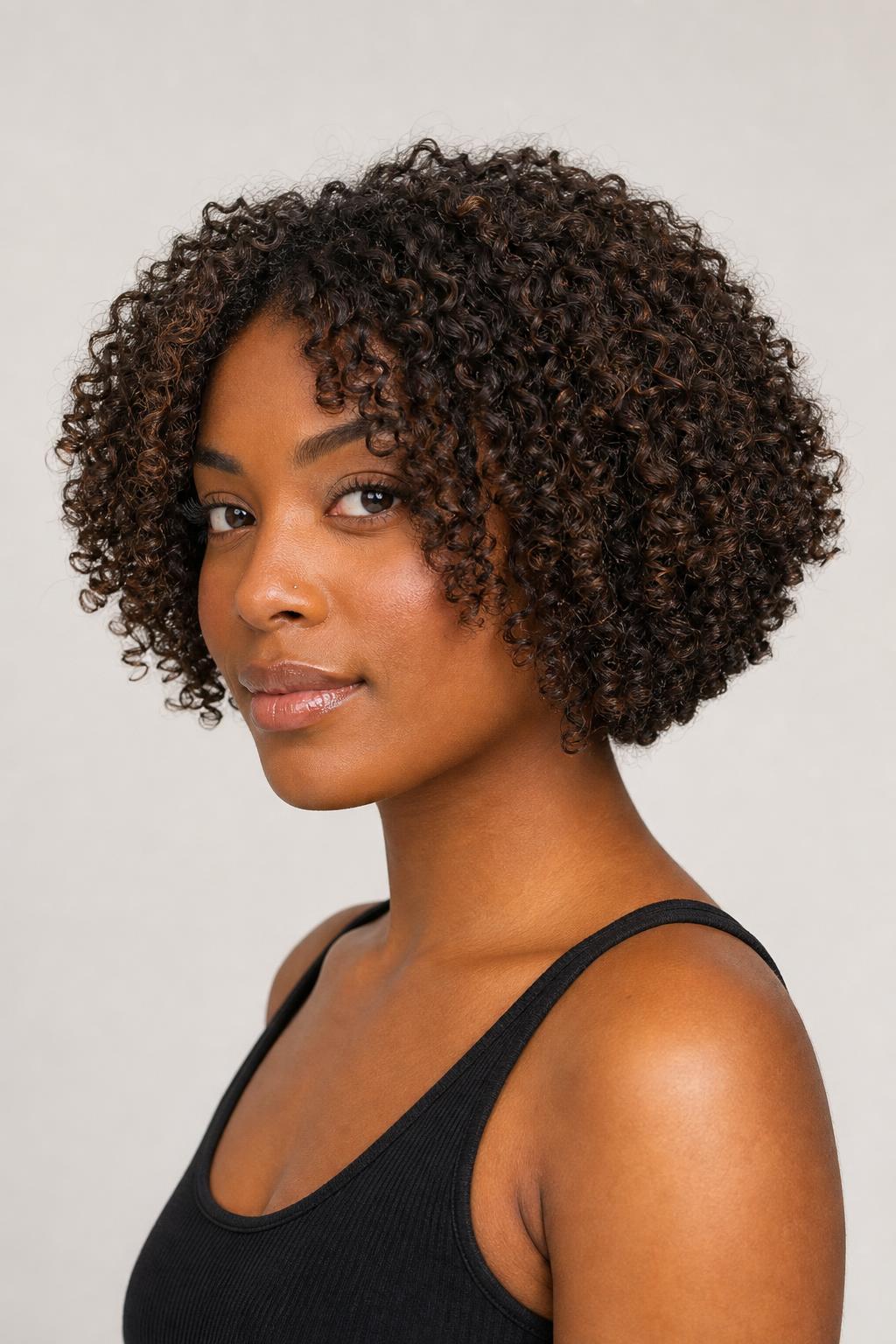
10. Angled Curly Bob, Longer at the Front
The angle is cut curl by curl on dry hair, with the stylist following the natural resting point of each spiral rather than a straight guideline. Done properly the front pieces land an inch or two below the back and the transition is invisible. Cut wet, the angle exaggerates as the hair dries and the front ends up dramatically longer than intended.
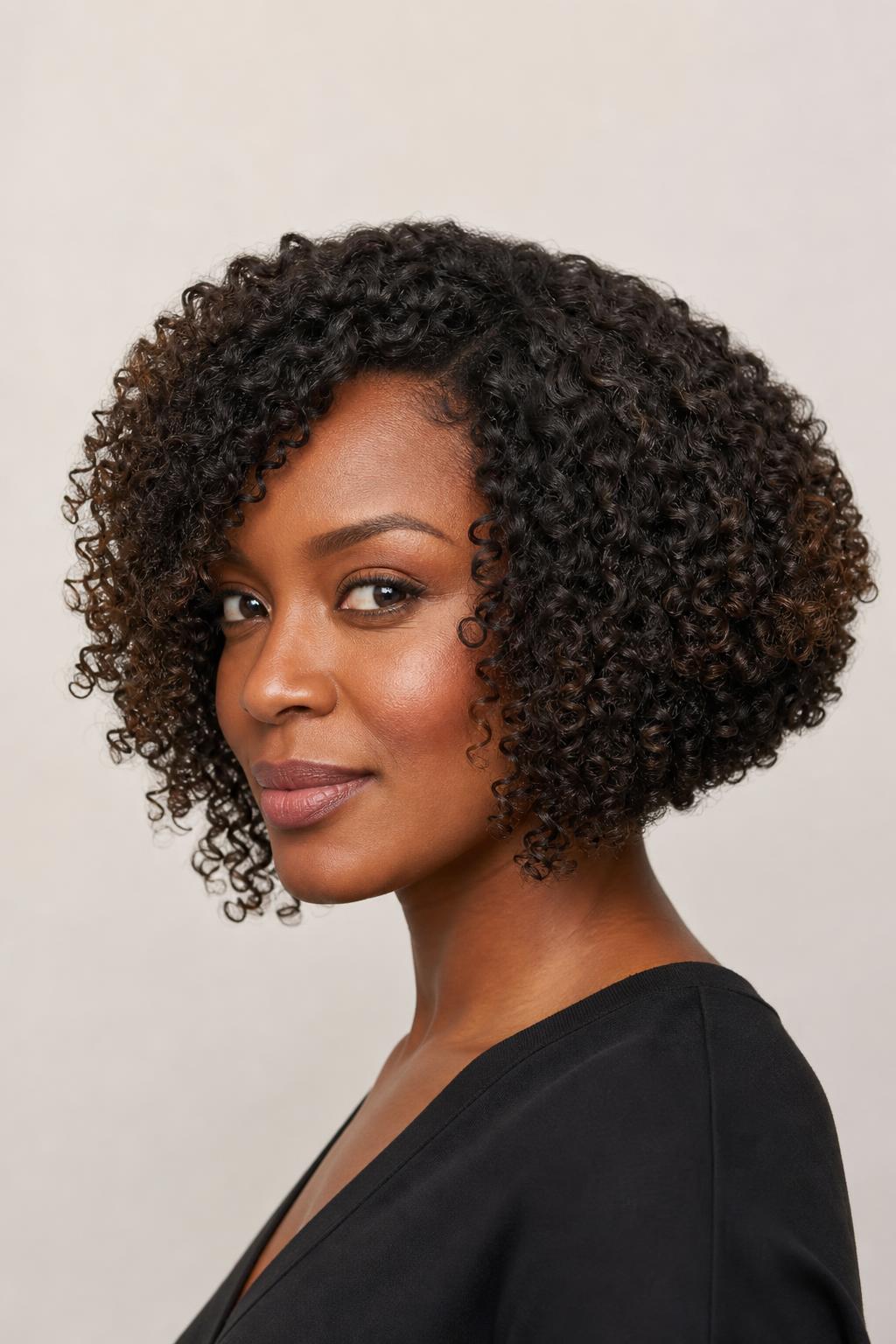
11. Curly Bob with Curtain Bangs
Curly curtain bangs need a trim every five to six weeks even when the rest of the bob can wait three months, because a half inch of growth changes where they sit on the face. Budget for that extra visit or learn to trim them yourself with the hair fully dry. Getting the initial length right is the hard part, and the rules for curtain bangs on curly hair are different enough from straight-hair bangs that it is worth understanding before you sit down.
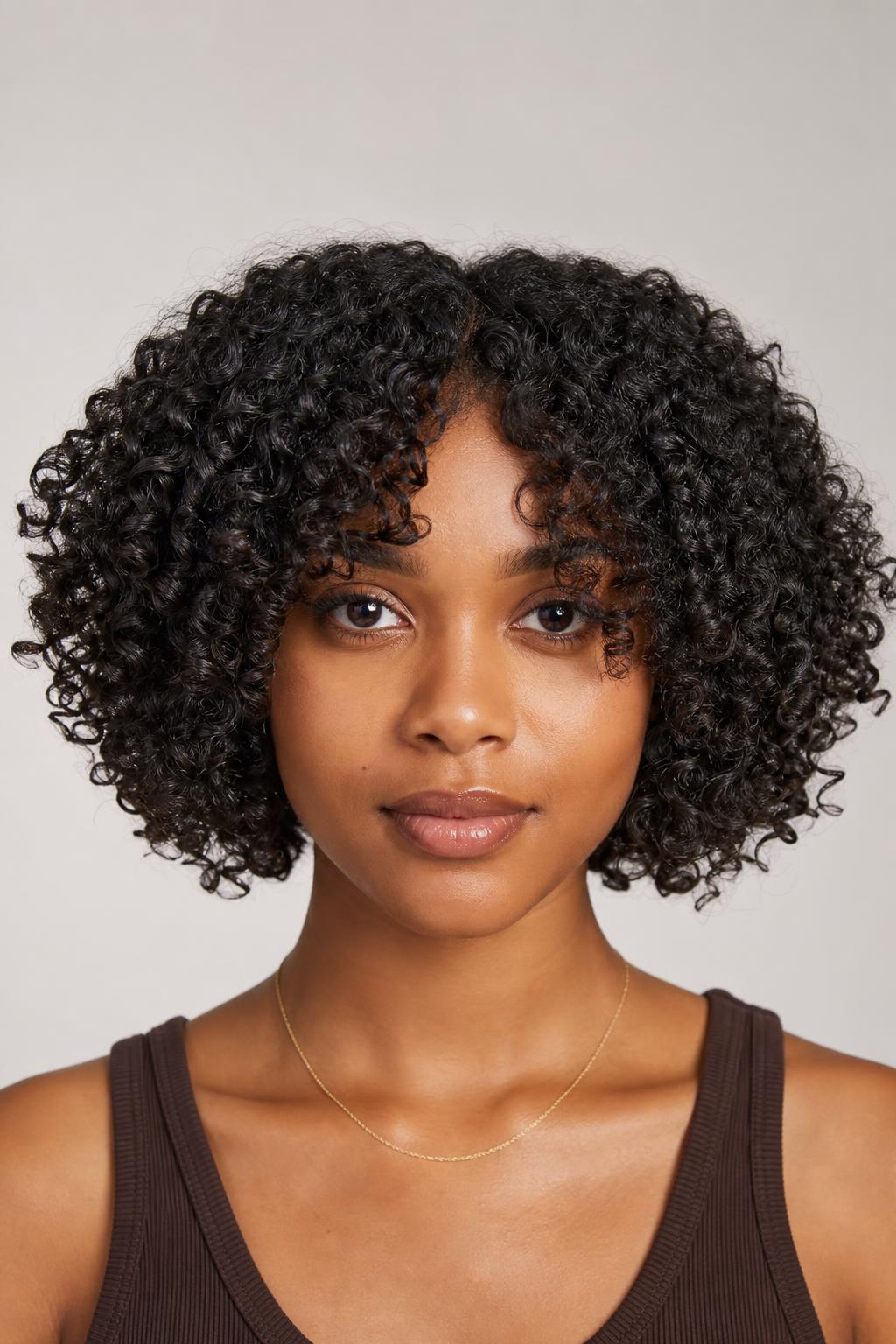
12. Deep Side-Parted Curly Lob
Moving the part two inches off center piles volume on one side and creates a diagonal line across the face, which softens a wide forehead and adds interest to an oval or oblong shape. The heavier side needs slightly less internal layering so it holds the lift.
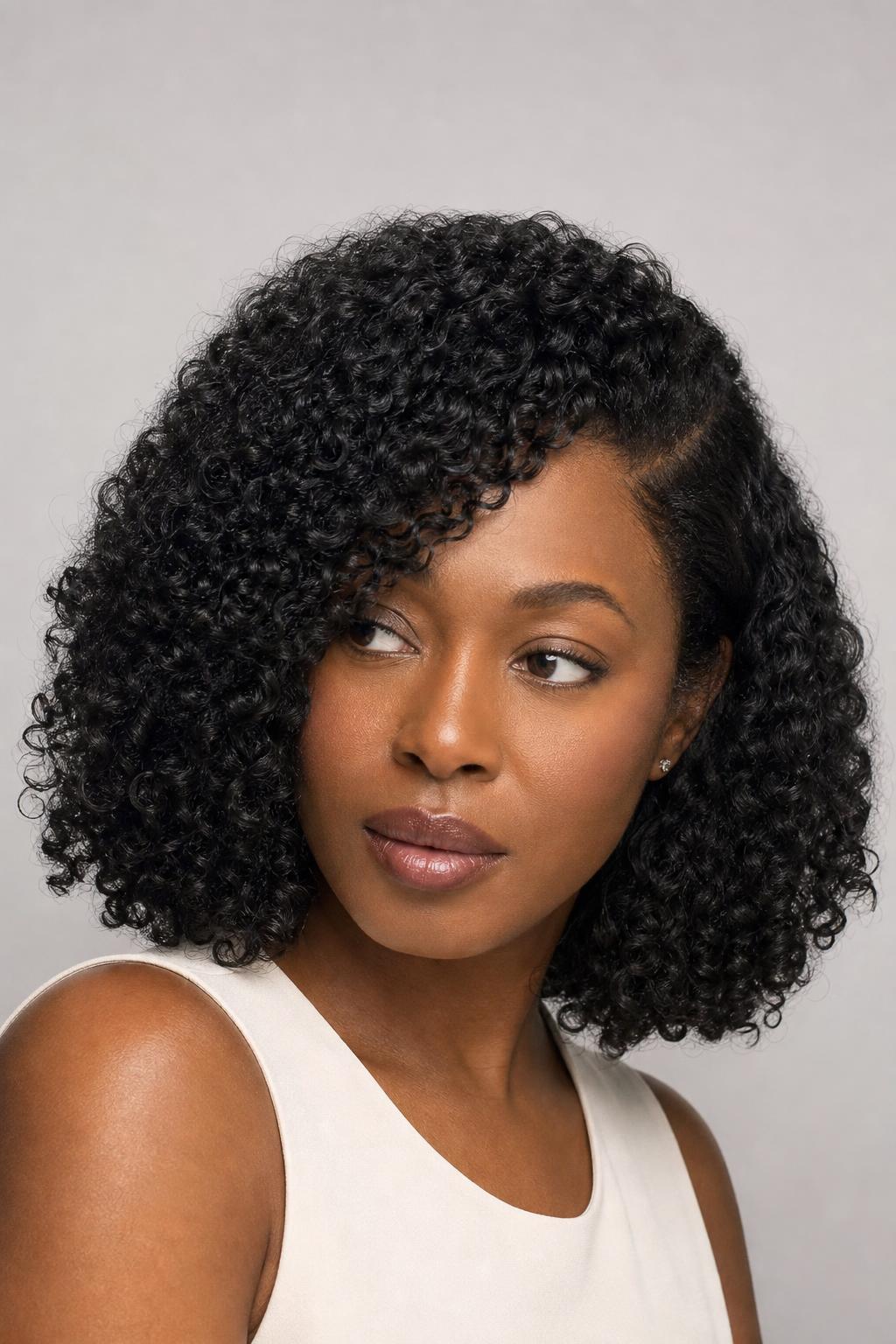
13. Curly Shag Bob with Piecey Ends
Ask for a curly shag at bob length with visible separation between the layers and no blending at the perimeter. Use the word piecey, and say you want to see individual curl clumps rather than one solid mass. If your stylist reaches for thinning shears at this point, stop them, because notched thinning on 3C hair creates frizz halos that take months to grow out.
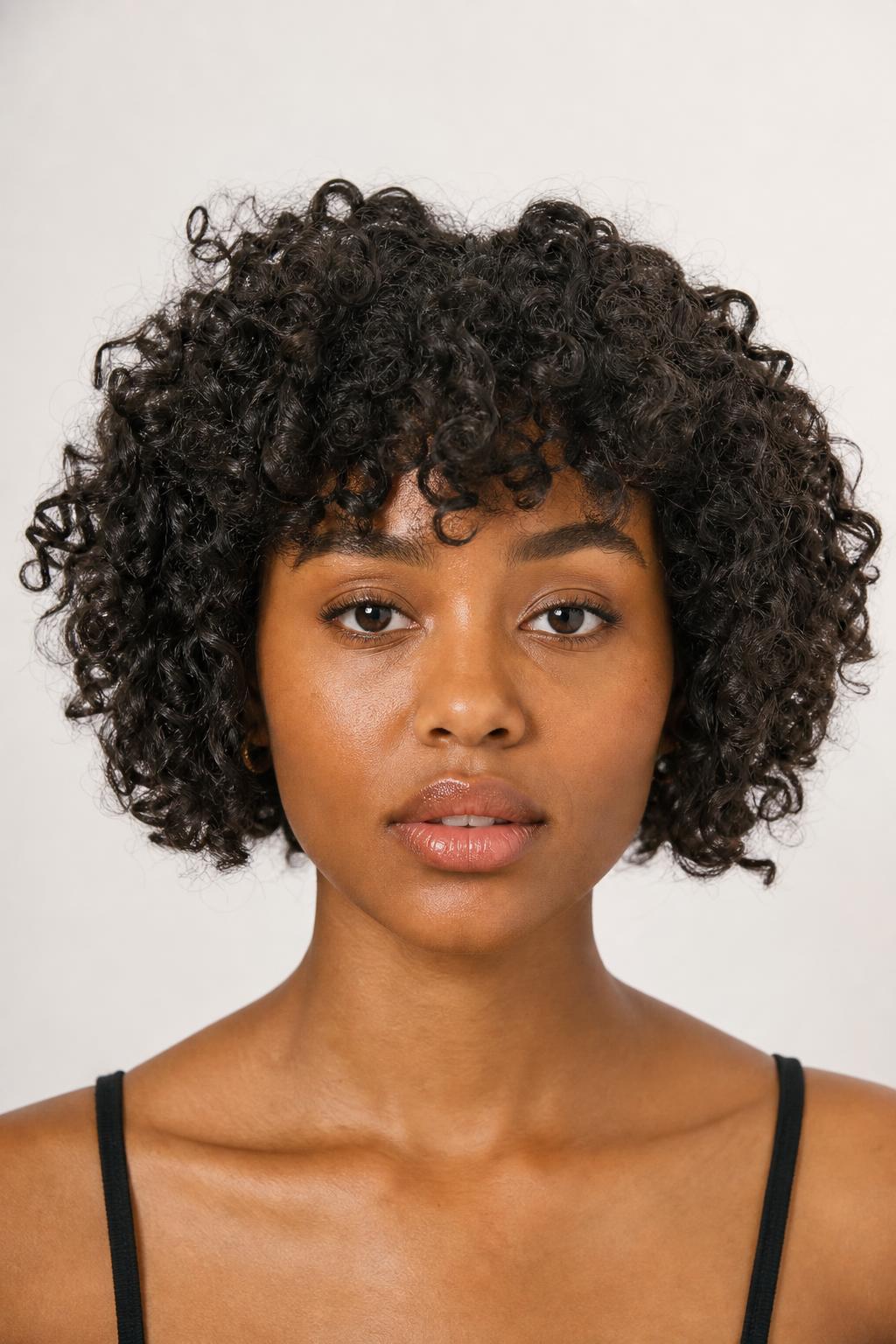
Mid-Length and Long Shapes for 3C Hair
Longer 3C hair carries real weight, and weight is both the problem and the solution. Too much and the curl pattern stretches out and goes flat at the roots. Too little and the ends thin into wisps. The cuts in this section manage that balance through where the layers start rather than how many there are, which is the same principle behind most layered cuts for curly hair.
14. Long Layers with a Rounded Silhouette
Style this by applying a leave-in and a gel to soaking wet hair in sections, scrunching upward, then air-drying for twenty minutes before diffusing the roots only. The rounded outline comes from layers that start at the jaw and lengthen gradually toward the back. Breaking the gel cast with a drop of oil at the very end is what turns a crunchy set into soft, separated spirals.
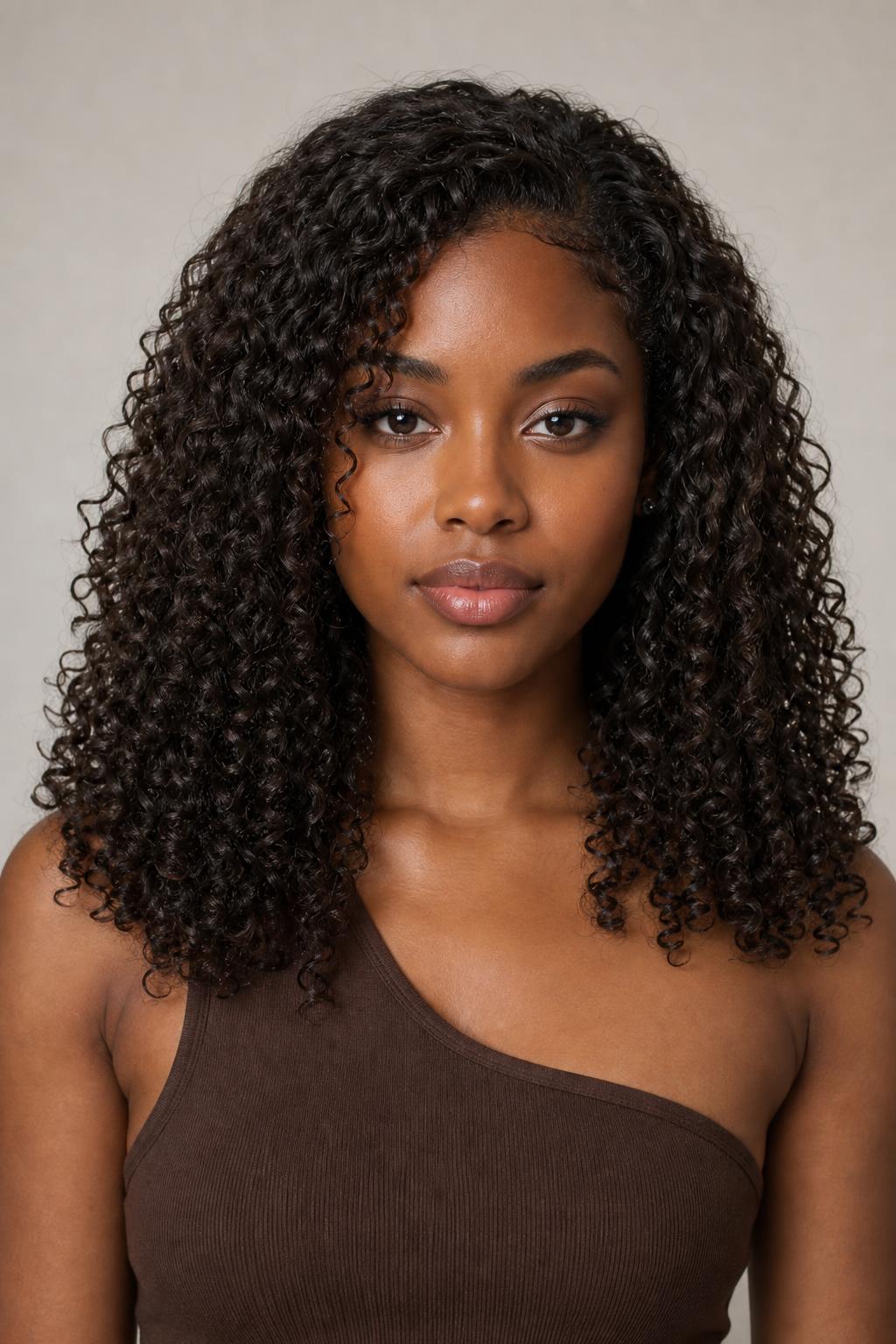
15. Honey Balayage on Long Curly Layers
Honey-toned balayage painted on the mid-lengths and ends follows the spiral shape down each curl, which reads as dimension rather than stripes. On 3C hair the lightener should stop short of the root by at least two inches so new growth blends instead of announcing itself. Lightened curls lose some spring, so a bond-repair treatment every third wash keeps the pattern intact.
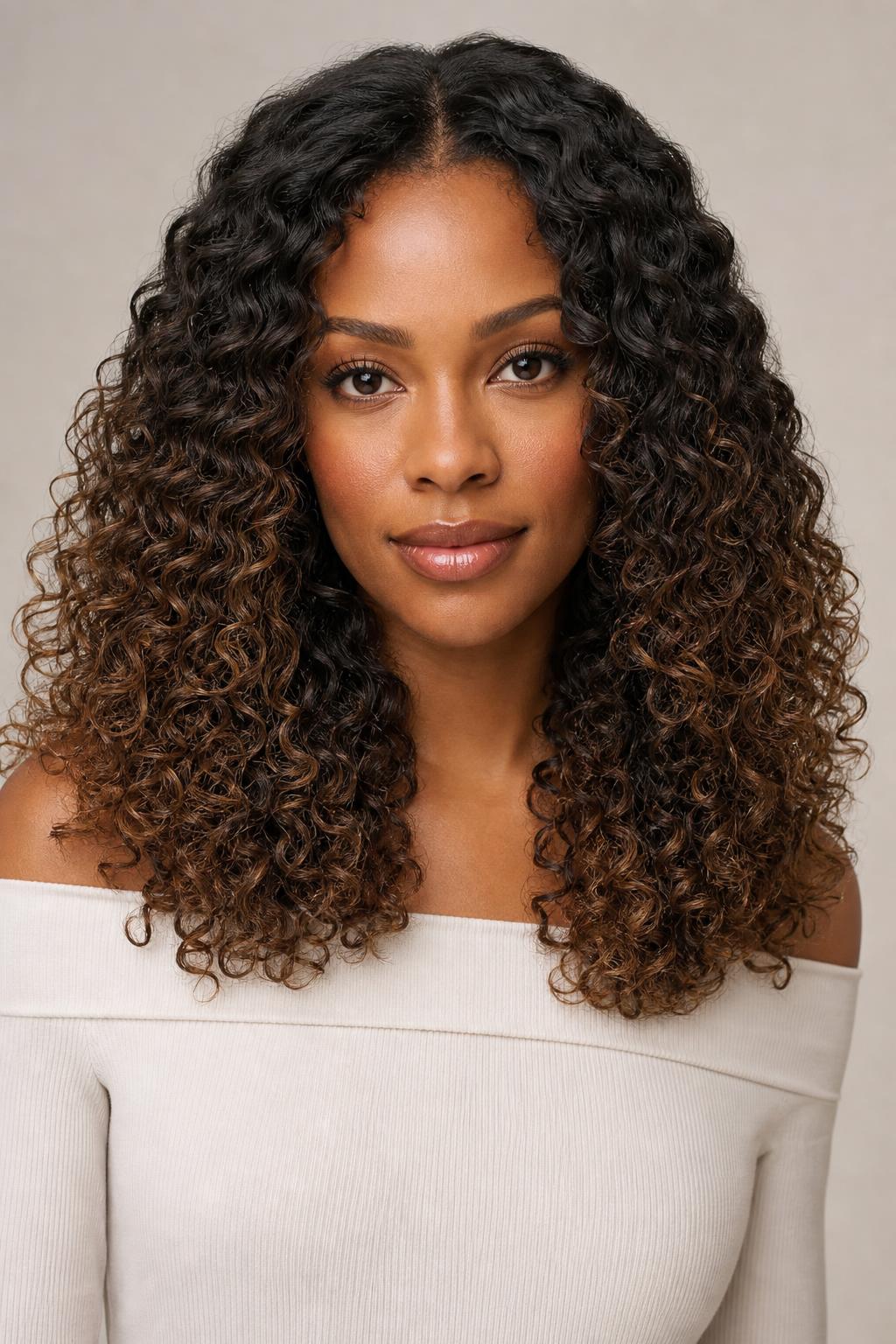
16. U-Shaped Cut with a Soft Bottom Line
A U-shape keeps the perimeter fuller than a V-shape does, which suits people who feel their ends look sparse. The bottom line curves gently instead of coming to a point, so the overall silhouette stays wide and rounded rather than tapering. Choose this over a V if your density drops noticeably below the shoulders.
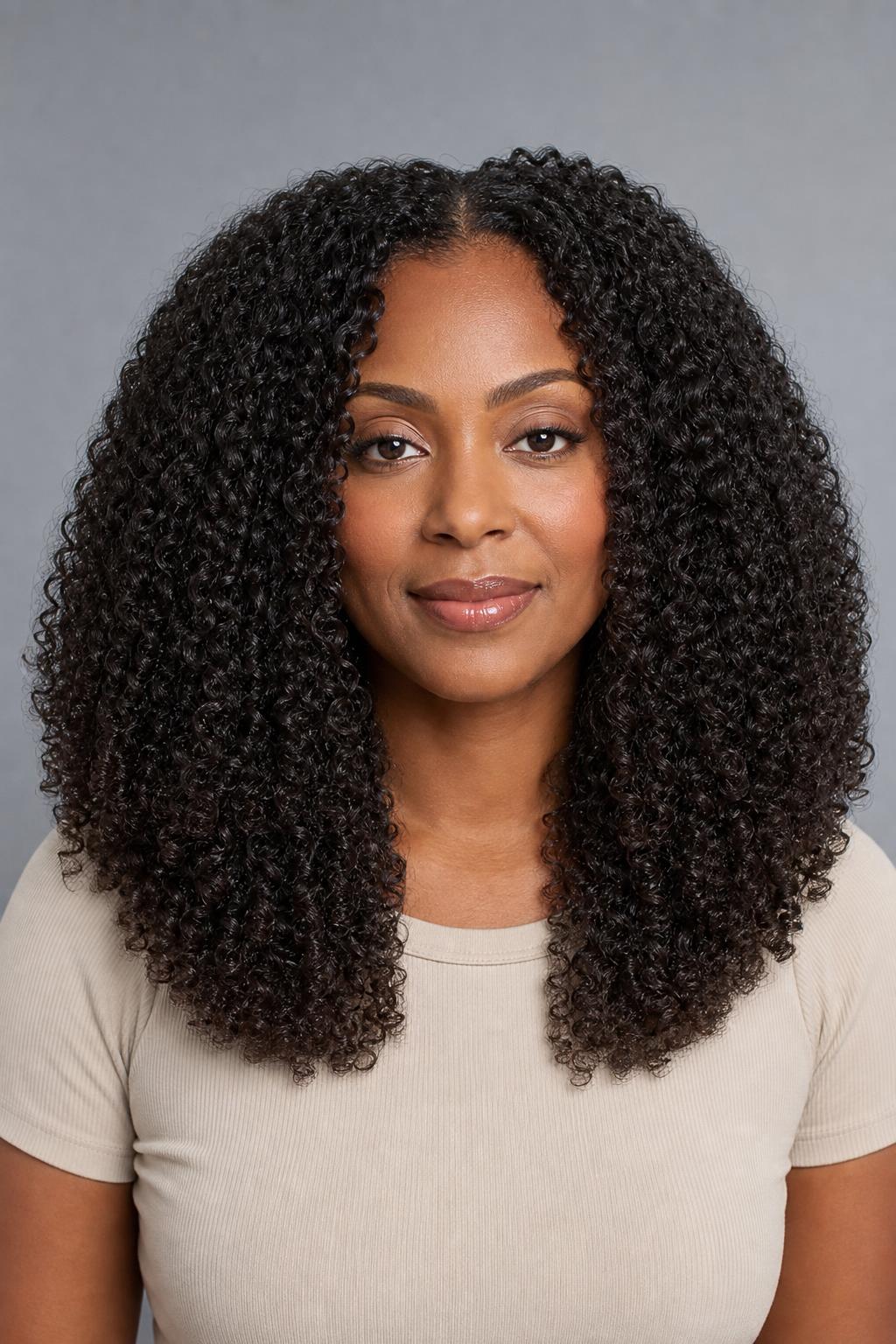
17. V-Shaped Cut for Extra Back Length
To keep the point visible, gather the back section over one shoulder while it dries so the length sets in a defined line rather than merging into the sides. The V works best on hair that is dense all the way through, since the point relies on having enough hair at the very center back.
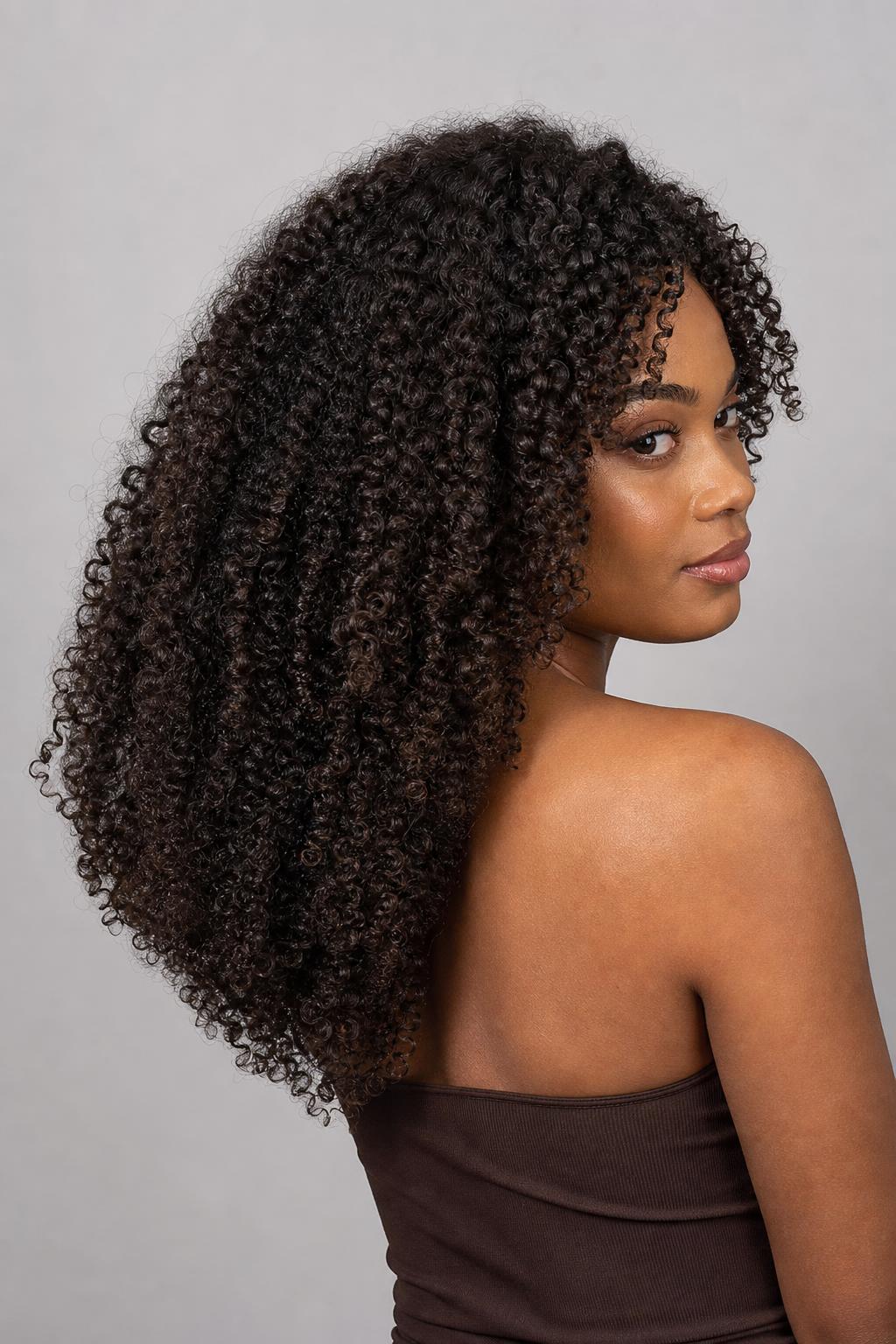
18. Caramel Face-Framing Pieces on Mid-Length Curls
Two or three caramel pieces placed at the temples brighten the face without committing to an all-over change, and on tight spirals the lighter strands weave through the darker ones as the curls interlock. Keep the placement to the front two inches, since scattered highlights disappear entirely inside a dense 3C canopy. Ask for the pieces to be painted rather than foiled so the transition stays soft.
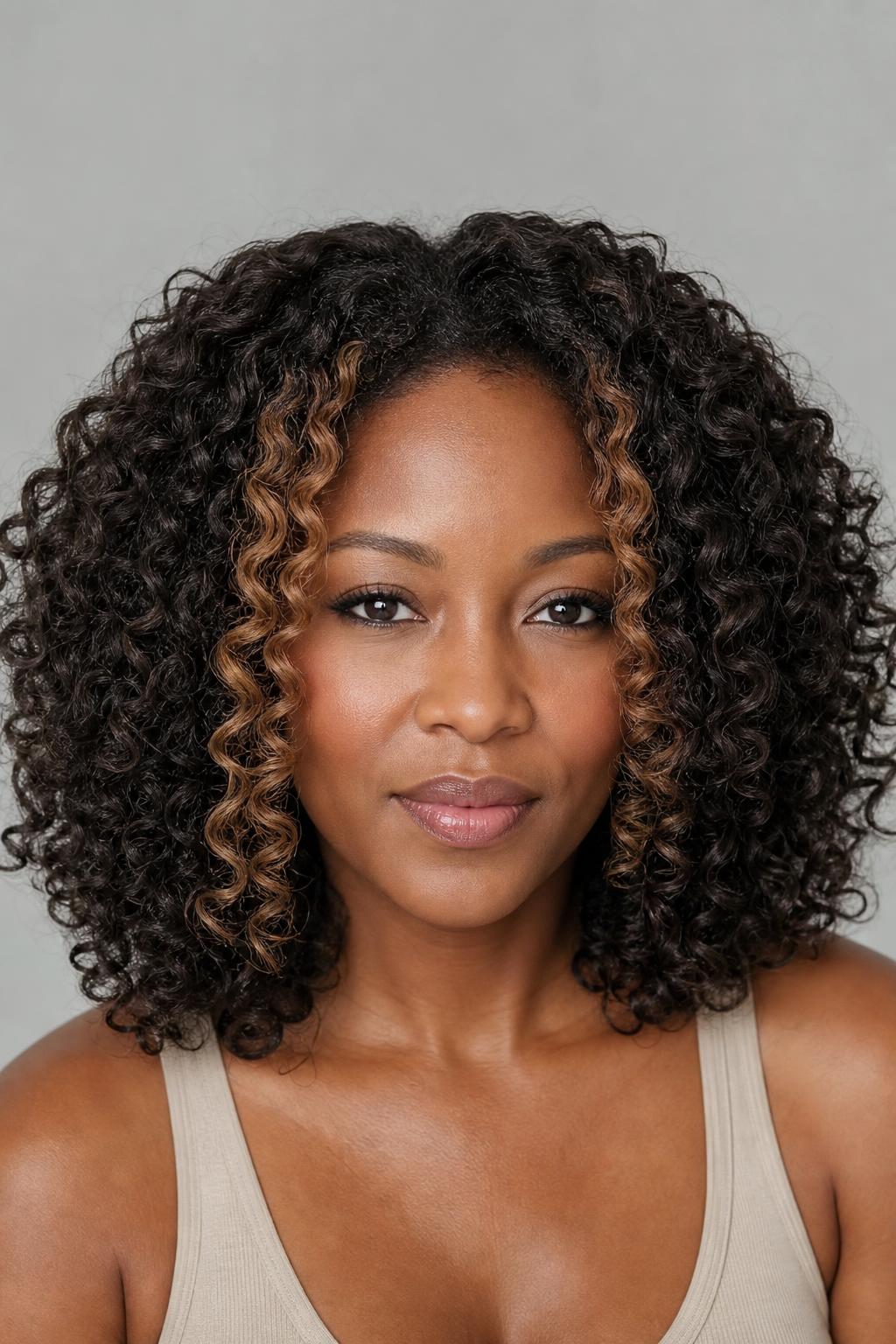
19. Internal Layers That Remove Bulk, Not Length
The stylist lifts sections from underneath and removes weight in the interior while the outer layer keeps its full length. Nothing changes on the perimeter, so the cut looks the same length as before but sits closer to the head and moves more freely. This is the single most useful technique for anyone whose hair triangles out at the shoulders.
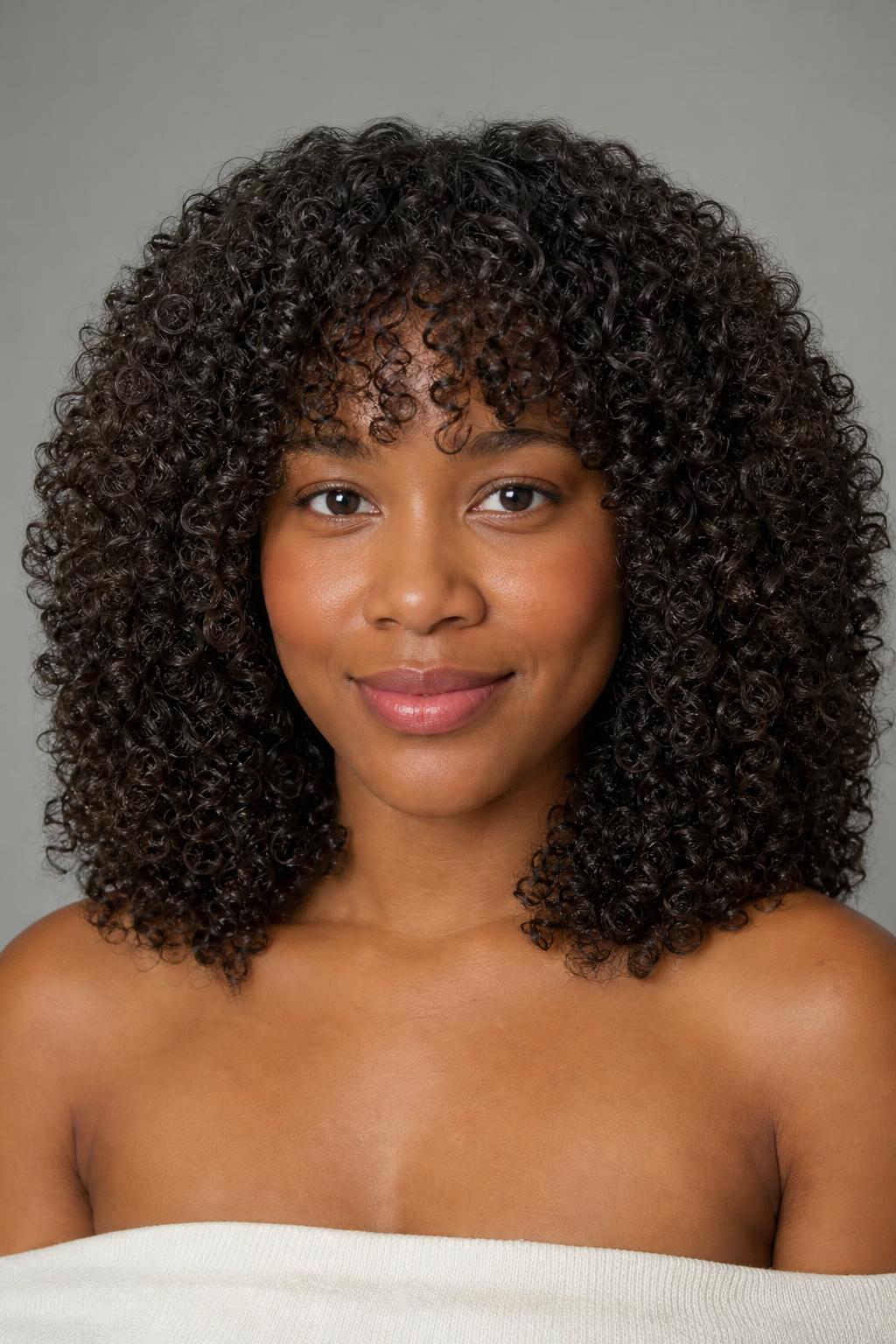
20. Curly Butterfly Cut with a Short Top Layer
A butterfly cut differs from standard long layers in that the top section is cut deliberately short, around chin length, to sit as a distinct layer over the longer body underneath. On 3C hair the contrast is more visible than it is on wavy textures because each layer holds its own shape. Skip it if you want a seamless blend, since the whole point is the visible step between the two lengths.
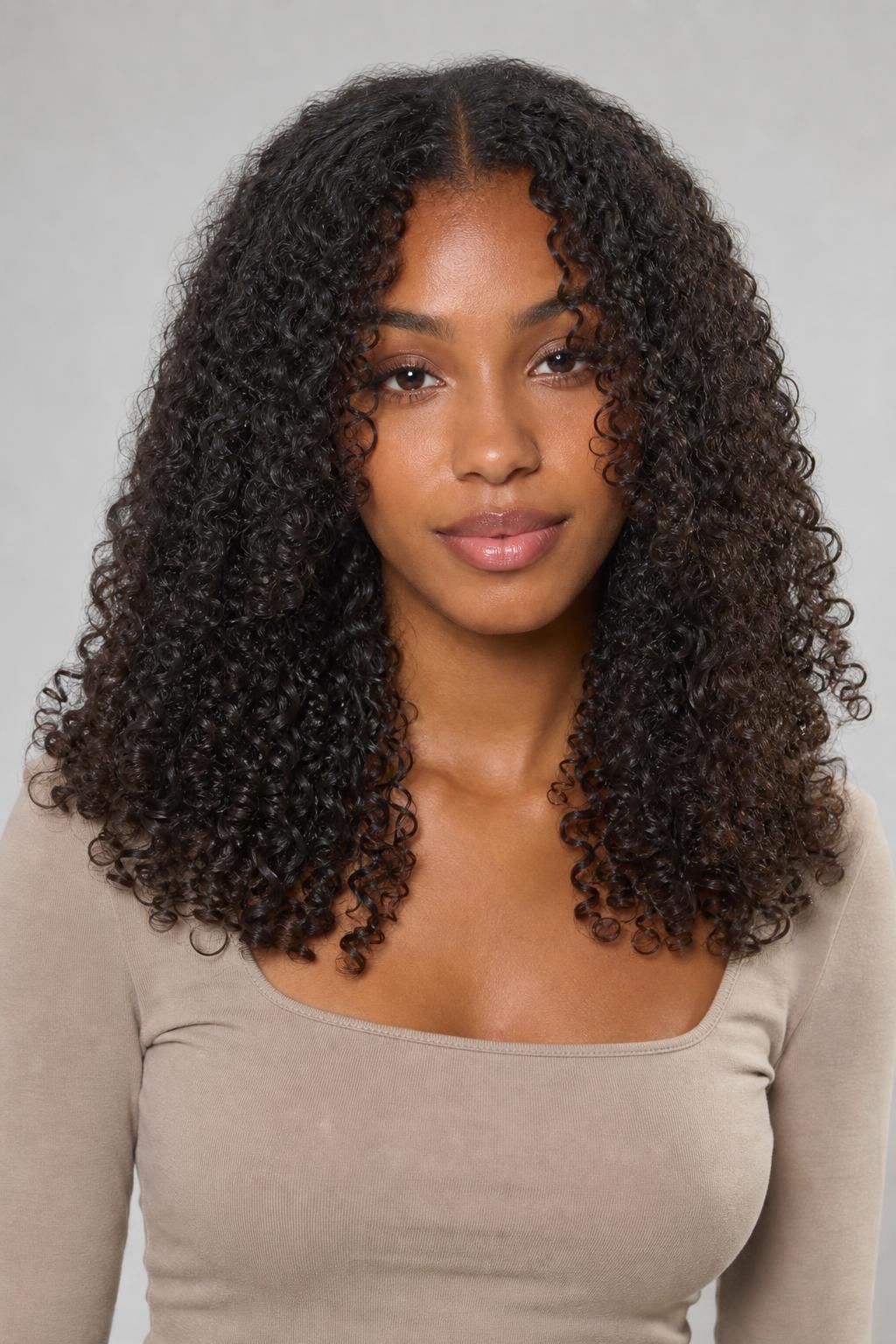
21. Shoulder-Length Curls with Face-Framing Layers
Face-framing pieces cut to land at the cheekbone widen the upper face and balance a narrow forehead or a pointed chin. On a heart-shaped face, moving that starting point down to the jaw instead adds fullness where it is needed. The rule is simple: put the shortest framing piece at the level you want to look wider.
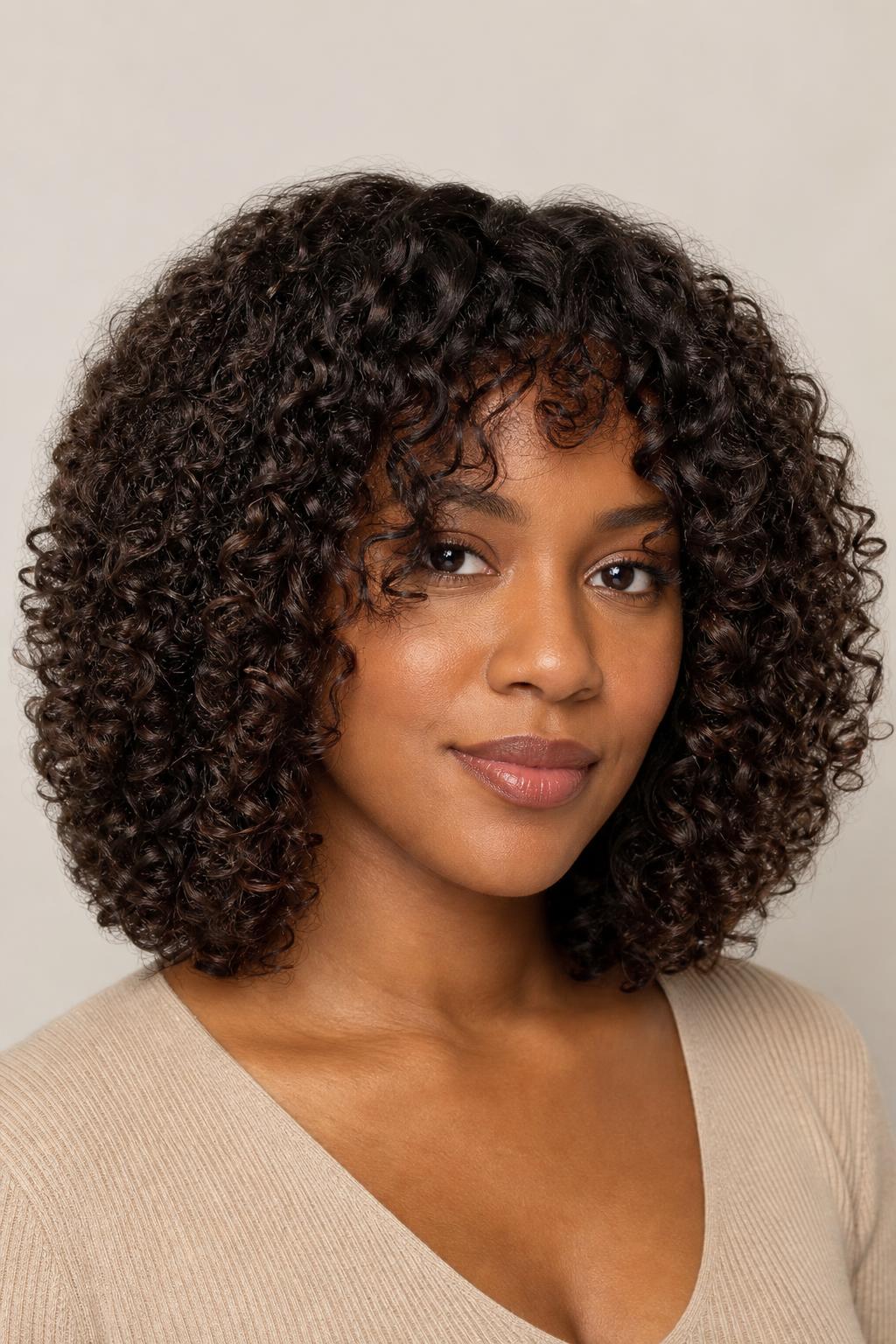
Tapered and Sculpted 3C Shapes
Tapered cuts treat 3C hair as a sculptural material, using close sides and a full crown to create a shape that holds without daily styling. They are also the lowest-effort option in this article, since a taper looks intentional even on a bad curl day. The tapering principle carries across textures, and the taper fade on curly hair follows the same logic at shorter lengths.
22. Tapered Curly Cut with a Rounded Crown
Plan on a nape and side cleanup every four to five weeks and a full reshape every twelve, since the tapered area grows out faster than the crown length. Total wash-day styling runs about ten minutes, which is the shortest routine of any cut in this collection.
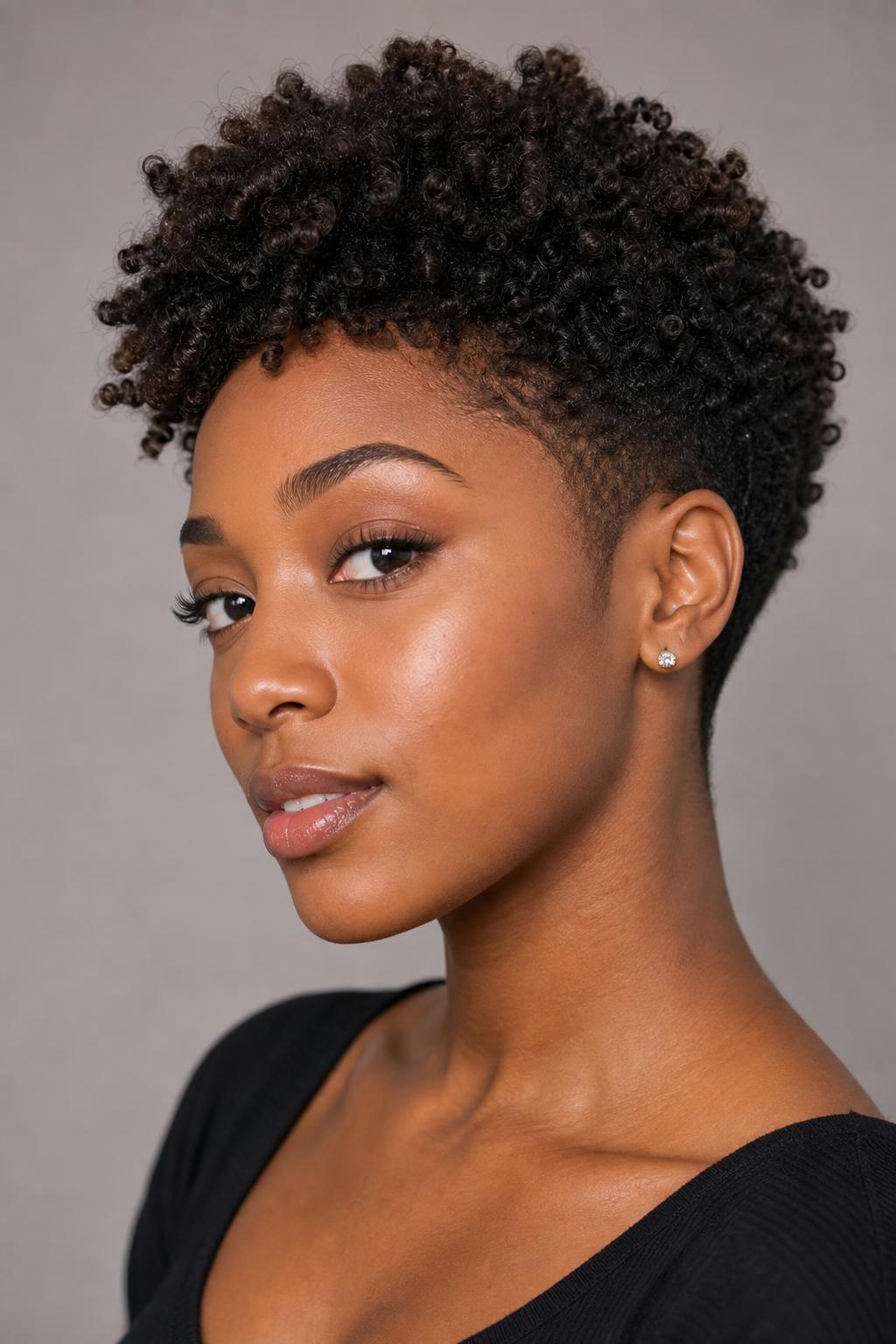
23. High-Density Taper for Thick 3C Hair
Very thick 3C hair needs the taper carried higher up the sides than usual, often to just below the temple, or the crown volume overwhelms the shape. Medium density looks better with a lower taper that keeps more width. Hair that is dense but fine-stranded sits between the two and usually wants the taper to stop at ear level.
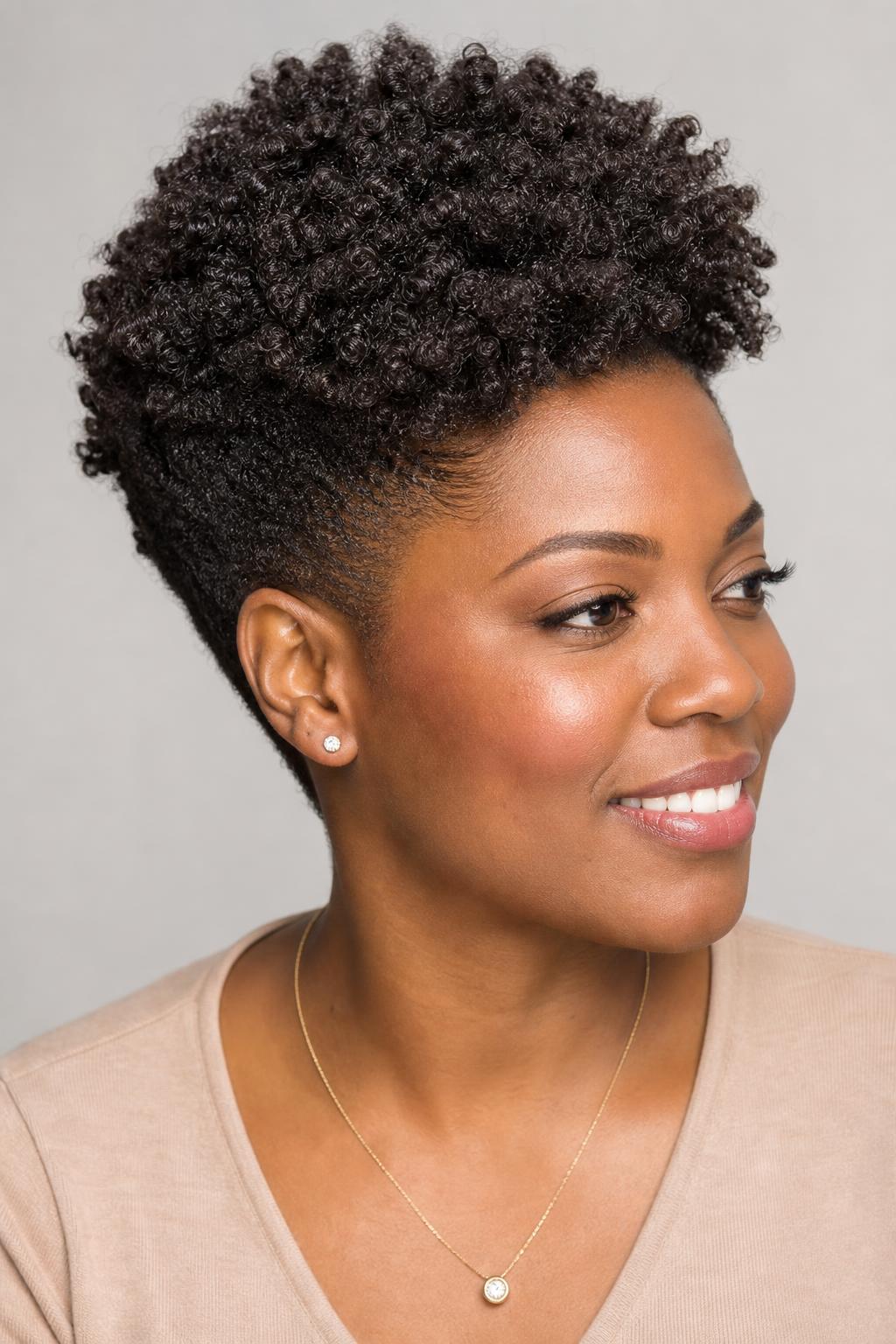
24. Frohawk Shape with Tapered Sides
Ask for a frohawk with a tapered rather than faded side, and specify how far back you want the full section to run, since stopping at the crown looks very different from carrying it to the nape. Mention whether you want to be able to wear it flat on some days, because that changes how much length stays at the sides. Bringing two photos, one of the front and one of the profile, prevents most misunderstandings here.
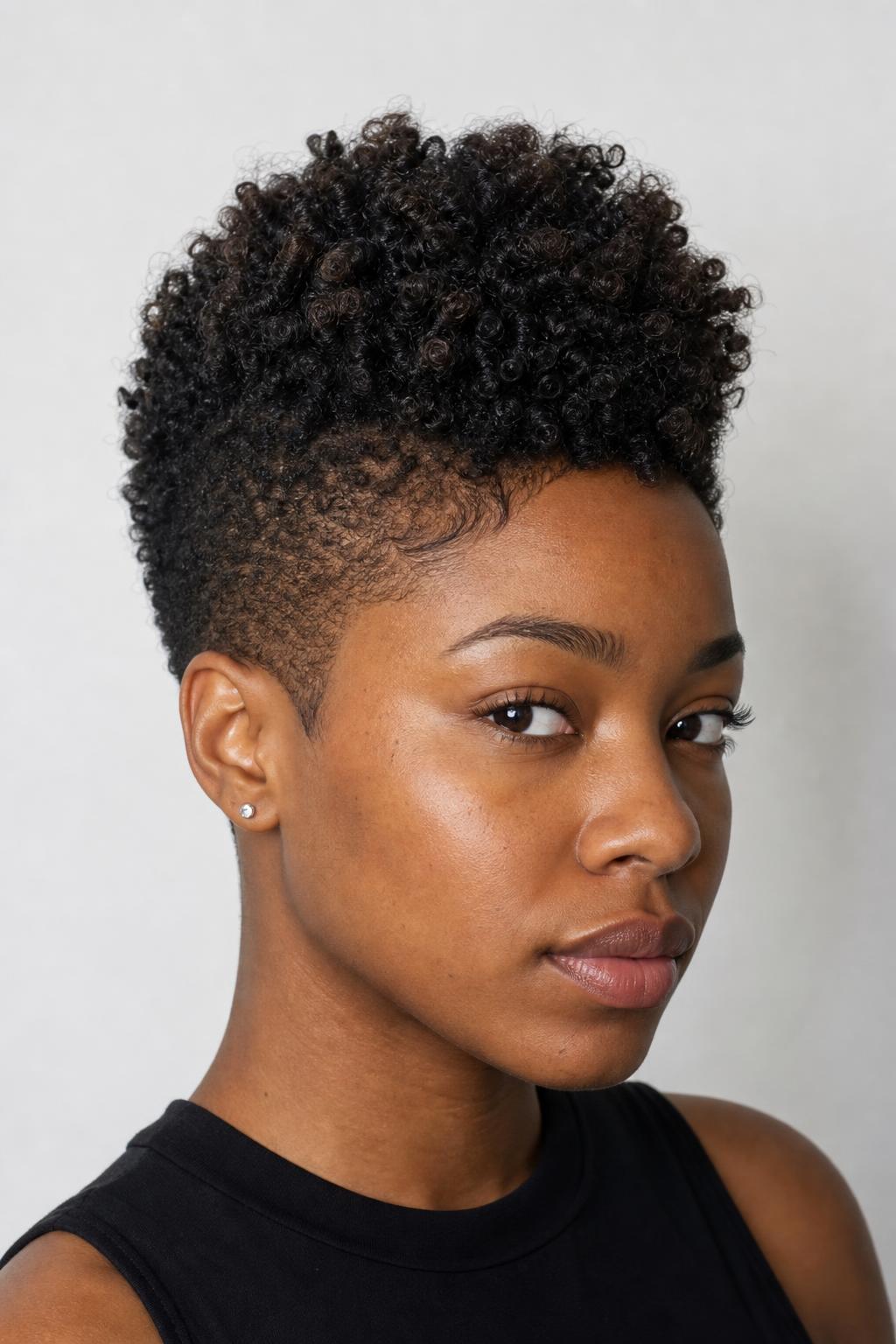
25. Dry-Cut Rezo Shape for Even Volume
The Rezo technique cuts every curl to the same length while the hair is dry and stretched into its natural position, which produces even fullness from root to end rather than a graduated shape. It suits people who want maximum roundness and volume with no visible layering. Not every salon offers it, so confirm the stylist is trained in the method before booking a long appointment.
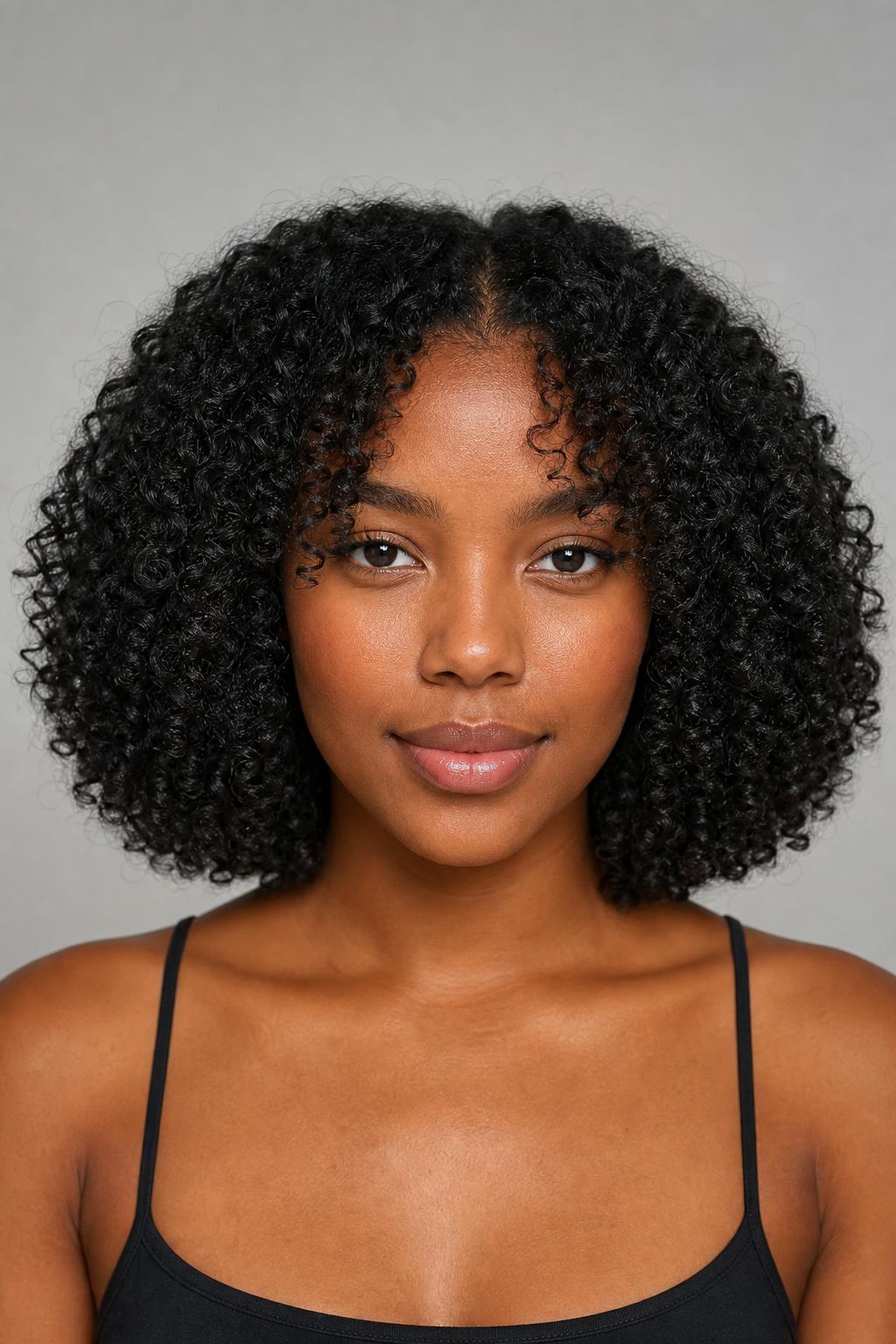
How Much 3C Hair Shrinks and What That Means for Length
3C hair typically shrinks between 40 and 60 percent, meaning hair that measures 14 inches when stretched sits closer to 6 or 7 inches dry. This is the single biggest cause of curl-cut regret, because clients ask for a length in stretched terms and stylists cut in dry terms, or the reverse. Use the table below to translate before your appointment, then say the number out loud at the consultation.
| Stretched Length | Roughly Where It Sits Dry | Cut That Fits This Range |
|---|---|---|
| 6 to 8 inches | Ear to just below the ear | Tapered crop, curly pixie, rounded short shape |
| 10 to 12 inches | Chin to jaw | Blunt curly bob, angled bob, shag bob |
| 14 to 16 inches | Collarbone to top of the shoulder | Curly lob, shoulder-length layers with framing |
| 18 to 22 inches | Mid-back area | Long layers, U-shape, V-shape, butterfly cut |
Stylist tip: Pull one curl straight, measure it, then let it go and measure again. Bring both numbers to your appointment and give them to your stylist before any hair is touched. Two measurements remove the guesswork that a single vague description leaves behind.
How to Choose a 3C Haircut for Your Face Shape
Face shape guidance for tight curls is different from the standard advice, because 3C hair adds width wherever it is left full. The goal is to control where that width sits rather than to add or remove length. Find your shape below, then pick a cut from the gallery that puts the widest point where the table suggests.
| Face Shape | Best 3C Shape | Where the Width Should Sit | Avoid |
|---|---|---|---|
| Oval | Almost any length, from tapered crop to long layers | Anywhere, since proportions are already balanced | Heavy blunt fringe that hides the balance |
| Round | Curly pixie with a longer crown, or a lob past the jaw | Above the temple, with height at the crown | Chin-length bob with volume at the cheeks |
| Square | U-shaped cut or a soft curly shag bob | Just below the jaw, softening the corners | Blunt perimeter landing exactly at the jawline |
| Heart | Shoulder-length curls with framing starting at the jaw | At and below the jaw, to balance a wider forehead | Piled-high crown volume with tight sides |
| Oblong | Chin-length curly bob, ideally with curly bangs | At the cheekbone, adding horizontal width | Long flat-rooted layers that add vertical length |
| Diamond | Collarbone lob with a deep side part | At the forehead and jaw, not at the cheekbone | Maximum volume level with the cheekbones |
What to Tell Your Stylist
The consultation matters more for 3C hair than for almost any other texture, because most of what goes wrong is a communication failure rather than a technical one. Book with someone who lists curl cutting specifically, and ask on the phone whether they cut curls dry. If the answer is that they always cut wet and shape it afterward, book elsewhere.
Use language like this at the chair: “My hair is 3C and it shrinks about half. I want it to sit at my collarbone when it is dry, not when it is stretched. Please cut it dry, curl by curl, and take bulk out from the inside rather than off the perimeter. No thinning shears anywhere.” Saying it in one block at the start is far more effective than correcting things halfway through. It also helps to bring reference photos of hair with a similar curl diameter to yours, and the general rules for showing inspiration photos at the salon apply doubly here, since a 3A photo will not translate to a 3C head.
Stylist tip: Arrive with your hair washed, styled, and fully dry in the way you normally wear it, not in a protective style or a bun. A stylist cannot shape what they cannot see, and hair that has been flattened by a hair tie for two days will not sit in its true resting position for another hour.
Maintenance and Styling a 3C Cut
The good news about 3C haircuts is that they are low-maintenance between appointments and forgiving on grow-out, since a curl pattern hides a growing perimeter far better than a straight blunt line does. The trade-off is a longer, more involved wash day and a higher product spend. Here is what each length actually asks of you.
| Cut | Trim Frequency | Wash-Day Styling | Grow-Out Behavior |
|---|---|---|---|
| Tapered crop | Sides every 4 to 5 weeks, full shape every 12 | 10 minutes | Sides lose the line first; crown stays fine |
| Curly bob | 10 to 12 weeks | 15 to 20 minutes | Widens at the jaw around week 10 |
| Curly bob with bangs | Bangs every 5 to 6 weeks, length every 12 | 20 minutes | Bangs drop into the eyes fast |
| Long layers | 12 to 16 weeks | 25 to 35 minutes including drying | Very forgiving; layers soften gradually |
| Rezo or U-shape | 12 weeks | 25 minutes | Silhouette lengthens evenly, keeps its shape |
Product-wise, a 3C routine runs on a leave-in conditioner, a curl cream or gel for hold, and something to refresh with between washes. Apply everything to hair that is genuinely soaking, not towel-damp, because 3C spirals clump properly only when water is still running out of them. Most people wash every four to seven days and refresh with a water and leave-in mix in a spray bottle on the days in between.
When a 3C Haircut Is Not the Right Choice
Some situations call for a different plan, and it is better to know before you book. Each of these is a real reason to pause, along with what to do instead.
- Your hair is chemically relaxed or has a partial relaxer growing out. The two textures need different cutting approaches, so wait until the line of demarcation is grown out or plan a transition cut instead.
- You wear protective styles most of the year. A shaped cut is wasted under braids or twists, and the ends will grow uneven under tension. A simple one-length trim serves you better.
- Your curl pattern varies widely across your head, with looser waves at the crown and tight spirals underneath. A uniform cut will look lopsided, so ask for a shape built around the loosest section instead.
- You blow-dry straight more often than you wear your natural texture. A curl-specific cut looks uneven when stretched, and a cut built for straight styling with internal texturizing will serve both looks better.
- Heat damage has loosened part of your pattern. Cutting a curl shape around damaged sections locks the damage into the silhouette, so trim the damaged length off first and shape at the next appointment.
FAQ
Should 3C Hair Be Cut Wet or Dry?
Dry, in almost every case. Cutting 3C hair wet hides the shrinkage and the natural resting point of each curl, which is how people end up several inches shorter than they asked for. The exception is a straightforward one-length trim on hair that will be worn stretched, where a wet cut is faster and the risk is low. If a stylist insists on wet cutting a shaped curl haircut, treat that as a signal to find someone else.
How Often Should I Trim 3C Hair?
Every 10 to 14 weeks for most shaped cuts, and every 12 to 16 weeks for long layers. Tight curls hide split ends longer than straight hair does, but once a split travels up the strand it breaks mid-shaft and the curl loses its spring. A useful signal is single-strand knots: when you start finding several per wash, the ends are ready for a trim.
Do Layers Make 3C Hair Look Thinner?
Badly placed ones do. Layers cut too short and too close to the perimeter remove the weight that holds the outline together, which leaves the ends looking wispy. Internal layers taken from underneath do the opposite, removing bulk while the outer length stays intact. The fix in the chair is to ask for weight removal from the interior and no change to the perimeter line.
Can I Get Bangs with 3C Hair?
Yes, and curly bangs on tight spirals are one of the most flattering options for oblong and heart-shaped faces. The catch is that they must be cut dry and left longer than looks right at first, because they will spring up as they set. Plan on a trim every five to six weeks, and never cut them yourself while they are wet.
What Is the Difference Between a 3C Cut and a 4A Cut?
3C spirals hold a visible corkscrew shape that a layered cut can follow, so length-based shapes like bobs and long layers translate directly. 4A coils are tighter and shrink more, so cuts for that texture lean toward sculpted silhouettes built with tapering rather than layering. If your pattern sits between the two, the looser 3B cutting approach is worth comparing against the tighter options to see which side of the line your hair falls on.
Will a Curly Cut Work If My Hair Is Also High Density?
Yes, though density changes which shapes are realistic more than curl pattern does. High-density 3C hair needs internal weight removal at every appointment or the silhouette grows outward instead of downward. Working out your haircut by hair density before you choose a length prevents the most common mismatch, which is picking a chin-length bob on hair that has the volume for a lob.
The best haircuts for 3C hair are the ones that respect what tight spirals do naturally, which means shaping in the dry state, taking bulk from the inside, and putting the width where your face wants it. Pick two or three cuts from this collection at a length you can actually maintain, measure your hair stretched and shrunken before the appointment, and lead the consultation with those numbers. A curl-literate stylist and a clear brief will get you far closer to the photo than any single technique will.
Hair results vary based on your natural hair type, texture, density, and condition. Always consult with a licensed hairstylist before making significant changes, especially with chemical treatments or dramatic length changes. Photos may show styled results that require professional tools and products to replicate.


3 responses