

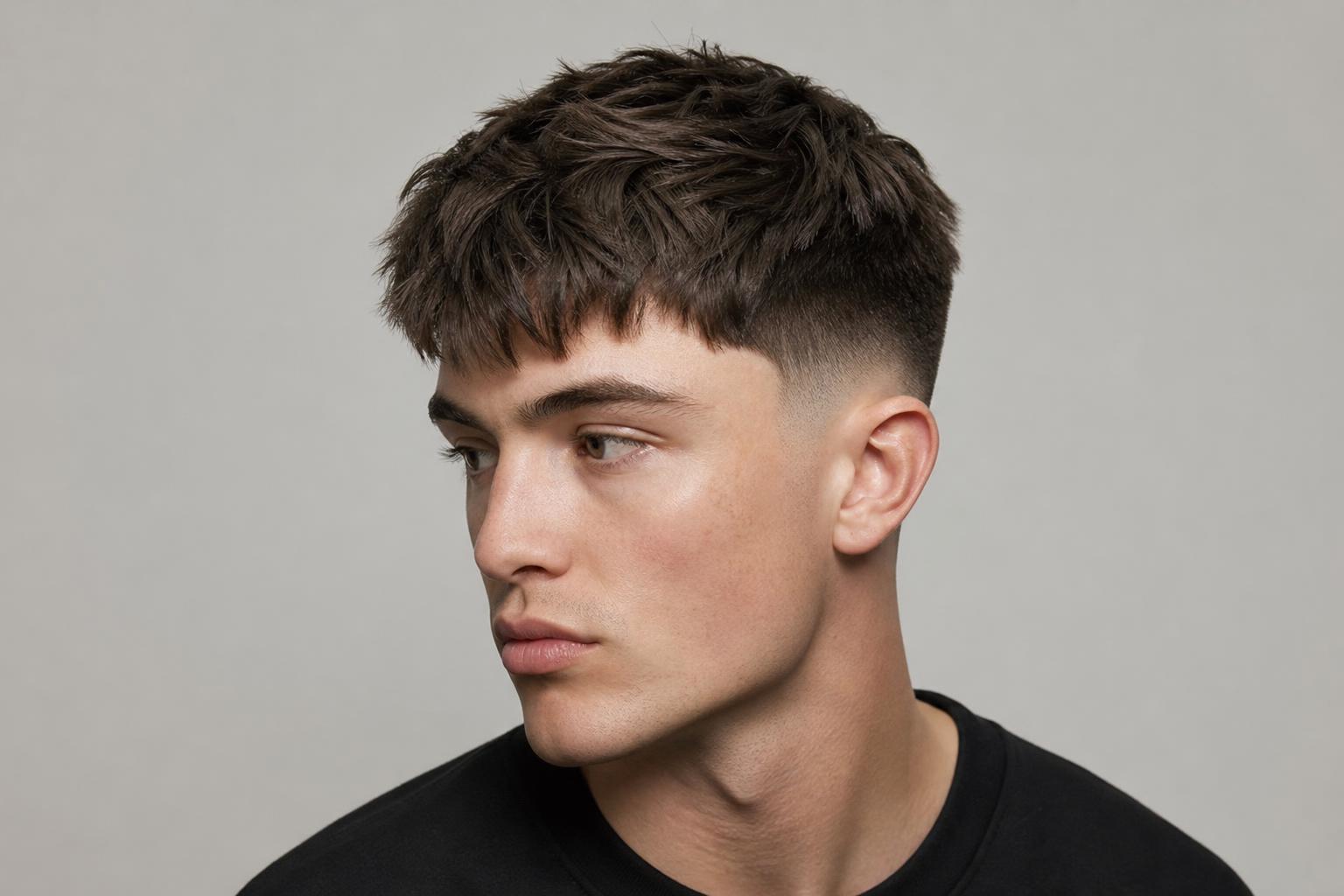
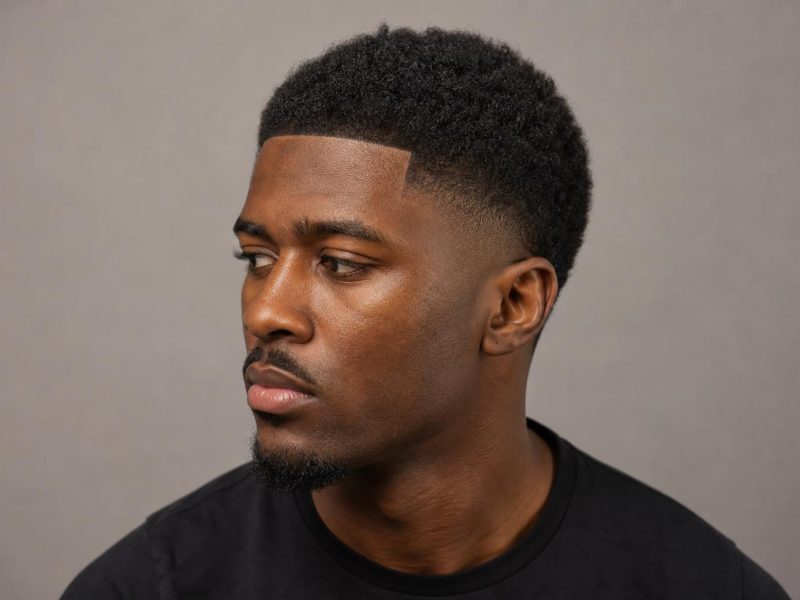
A low fade starts about a finger’s width above the ear and blends down to the neckline, which makes it the most forgiving fade to grow out.
A low fade haircut keeps the taper low on the head, beginning just above the ear and curving around the back to the neckline. That low starting point leaves more length on the sides than a mid or high fade, so the cut stays conservative enough for a client-facing job while the blend still looks sharp up close. Below are 30 variations sorted by top length, texture, and contrast.
After the photos come the parts most barbershop galleries skip: a face shape breakdown, the exact guard numbers to say out loud, an honest maintenance schedule, and the cases where this cut is the wrong call. If you want more contrast than a low blend gives, a high taper fade starts the same work up at the temple instead.
| Factor | Details |
|---|---|
| Best for | Oval, square, heart, and long faces; straight, wavy, curly, and coily textures |
| Maintenance | Barber every 4 to 6 weeks for a taper finish, every 2 to 3 weeks for skin |
| Works with | Any top length from bare clipper work to eight inches and a bun |
| Avoid if | You have a round face and want a slimming effect, or heavy temple recession |
| Barber time | 25 to 45 minutes, longer if a line up or hard part is included |
Low Fades with Short Tops
These are the versions where clippers do most of the work on top as well as the sides, which keeps styling under two minutes and skips the product routine entirely. A short top also puts all the visual interest in the quality of the blend, so the barber matters more here than anywhere else in this gallery.
1. Low Fade Buzz Cut
The whole head goes to one short guard length, then the barber drops the sides through two shorter guards in the last inch above the ear. That final inch of blending is the only thing separating this from a plain all-over buzz, and it hides early thinning at the temples better than a hard clipper line does.
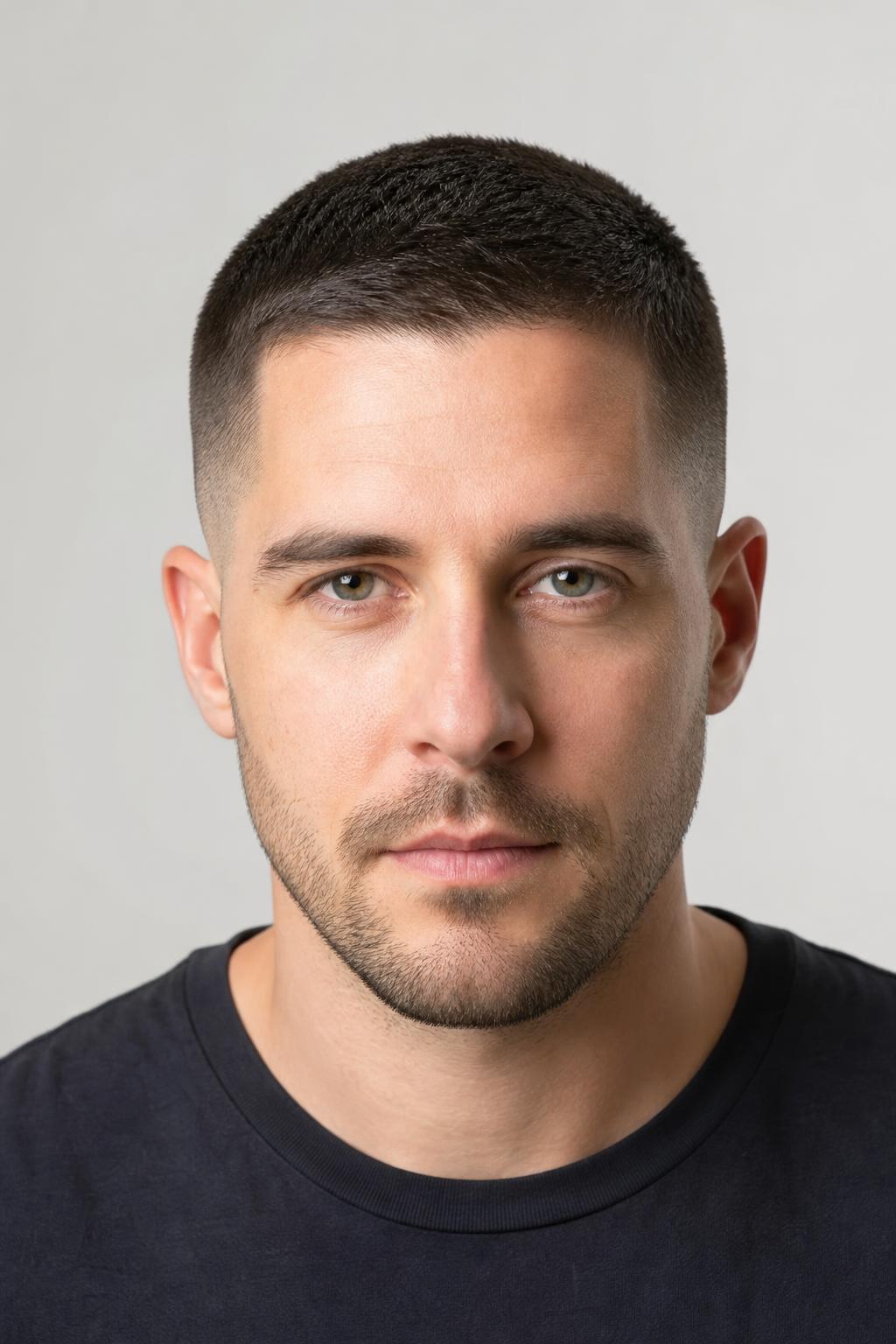
2. Low Fade Crew Cut
A crew cut keeps more length at the front than a buzz and tapers back toward the crown, while the low fade leaves the sides full enough to balance a narrow head. Long, oval, and square faces all handle this well, because the extra height at the front adds vertical lift without widening the silhouette.
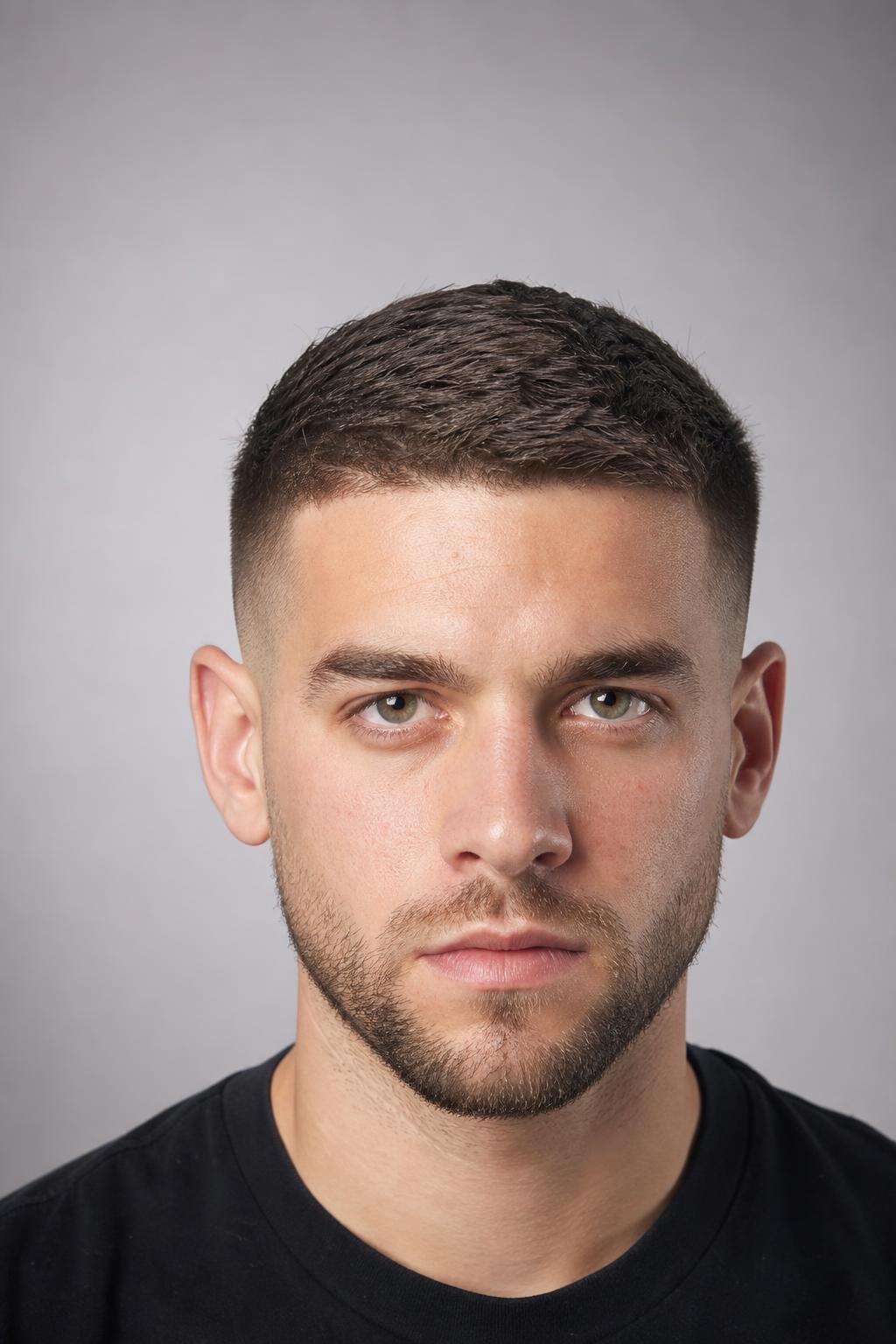
3. Low Fade Caesar Cut
Coarse, thick hair holds the flat forward-combed fringe of a Caesar without much product, which is why the cut has stayed in rotation on dense hair types for decades. The top stays around an inch and a half and is combed straight forward into a short, even line across the forehead. Fine hair needs a matte paste to keep that fringe from separating into gaps.
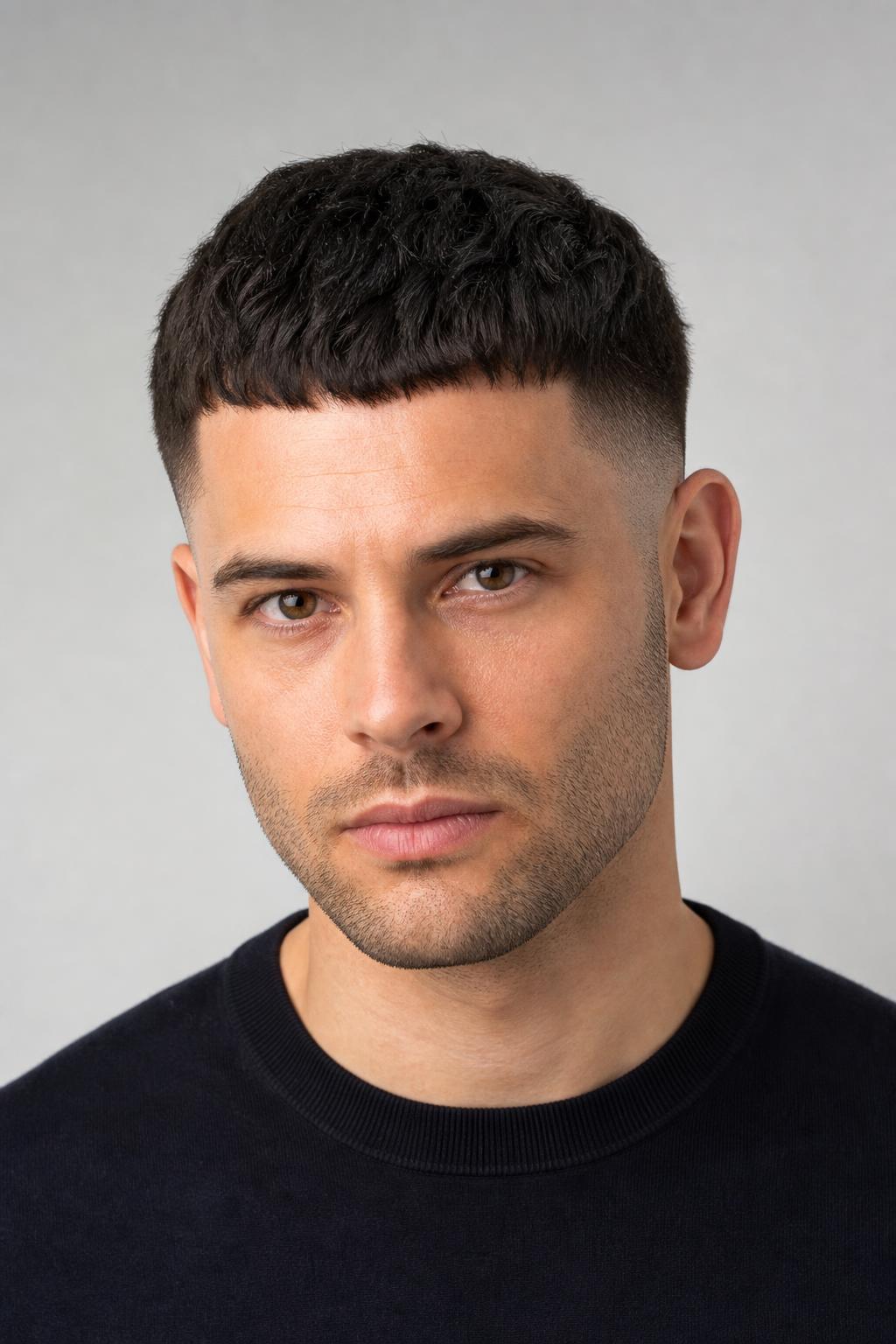
4. Low Fade with a Textured Crop
Rough-dry the top on medium heat while pushing the hair forward with your fingers, then work a pea-sized amount of matte clay through the ends only. The crop is cut to roughly two inches with point-cut ends so it breaks into separate pieces instead of lying flat, and the whole routine takes about three minutes.
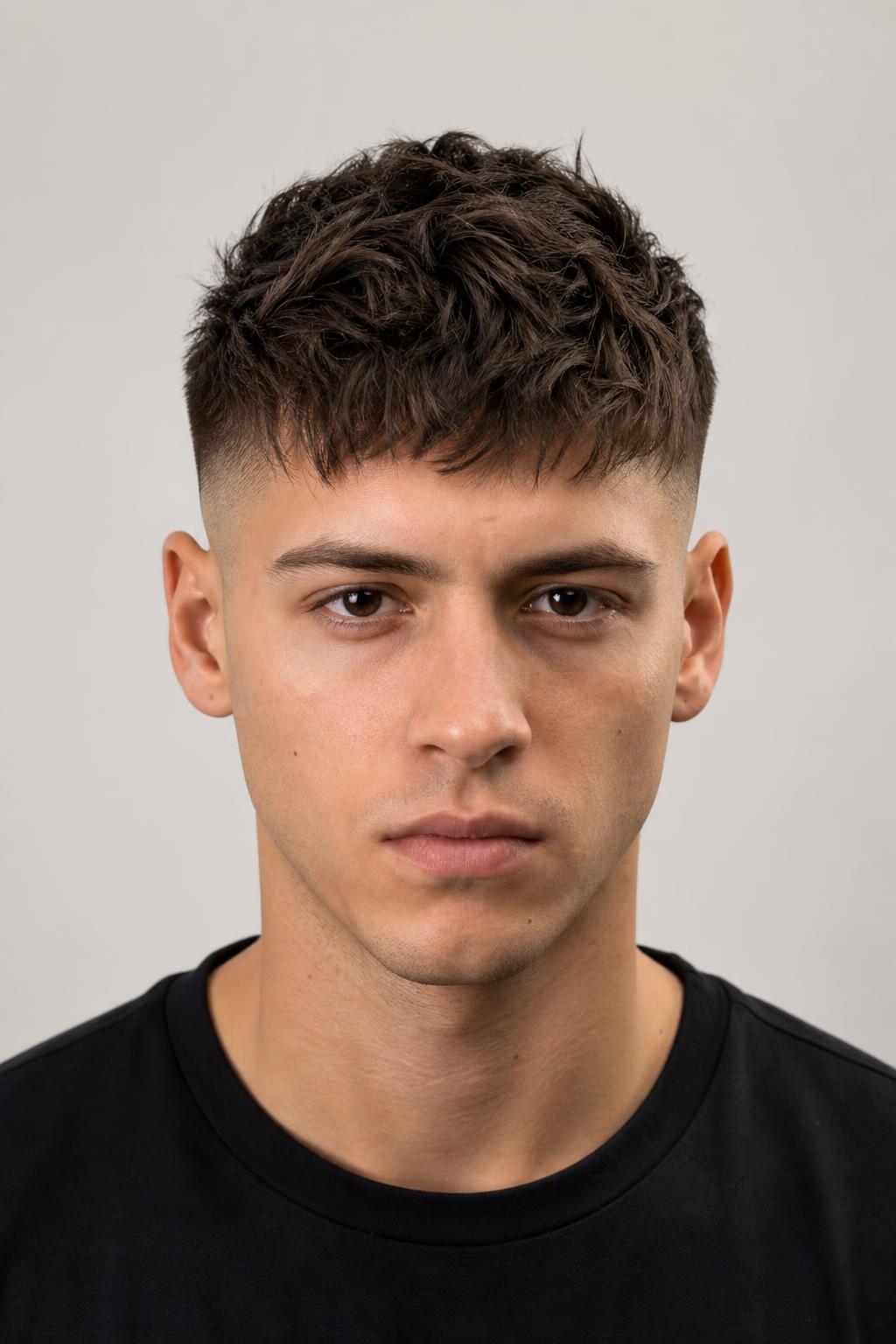
5. Low Fade Induction Cut
Everything above the fade line comes off with no guard, so there is nothing to style and no product to buy. The catch is frequency, because a shaved top shows regrowth within about ten days, making this a two-week cut rather than a monthly one.

6. Silver Low Fade with a Short Top
Natural silver and salt-and-pepper hair gains definition from a low fade, because the shorter sides concentrate the darker pigment at the bottom of the taper while the top stays light. The top is left at about an inch and brushed back. Grey hair often grows in coarser than the hair it replaced, so a light cream stops the ends standing away from the head.

7. Low Fade with a Hard Part
Ask for a low skin fade with a hard part razored along your natural part line, roughly two inches long and angled back from the front hairline. The words that carry the meaning are low, skin, and hard part, because a barber who hears only fade will often default to a mid. A hard part is the simplest of the razored lines barbers cut into short hair, and a deep one grows out as a visible stripe, so bring a photo of the depth you want.
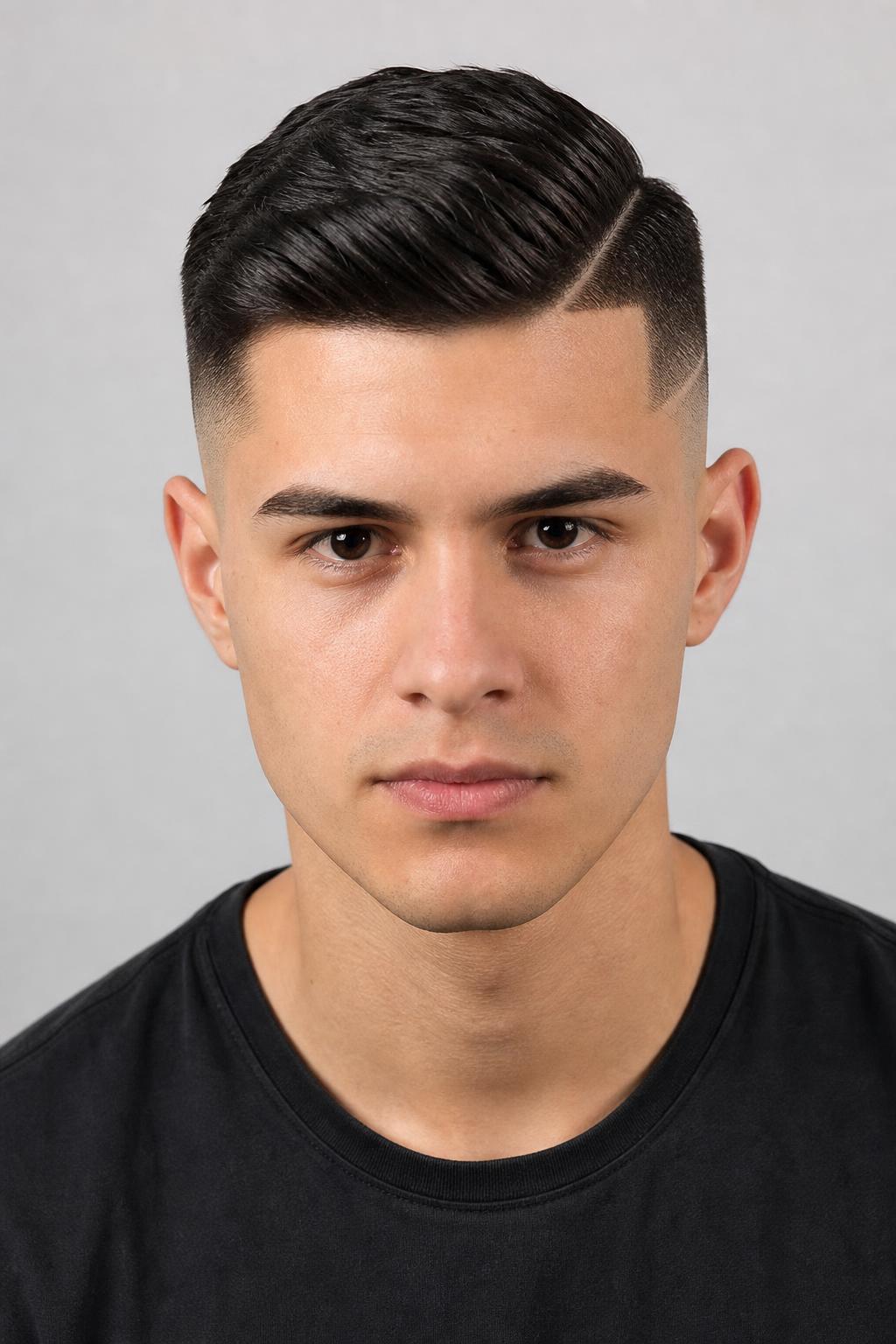
8. Low Skin Fade with a Blunt Crop
Where a low taper leaves a soft edge of stubble at the bottom, this version takes the sides all the way to bare skin, which draws a much harder line between the top and the neckline. The crop above is cut blunt straight across the front rather than point cut, so the fringe holds one clean edge.
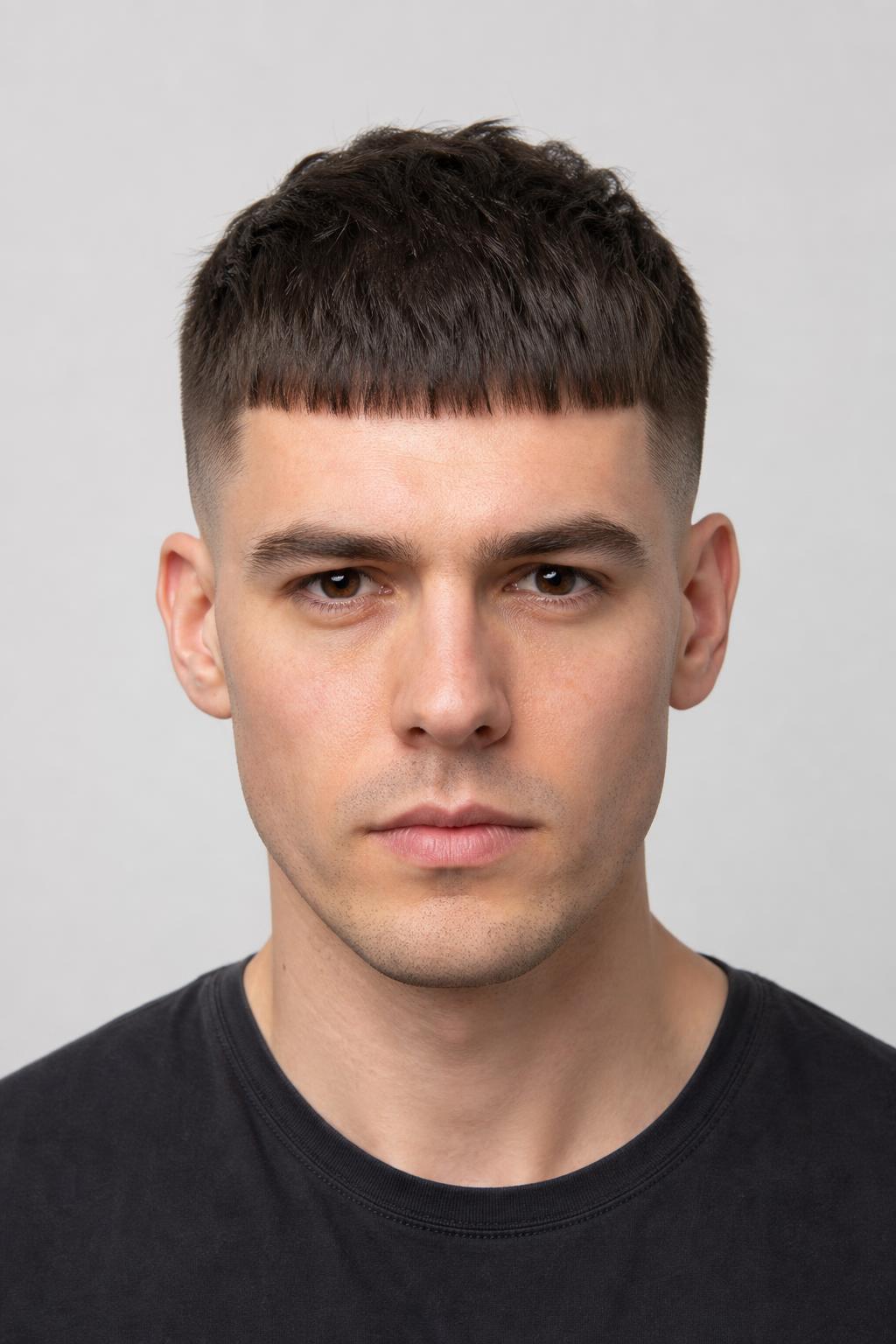
Textured and Messy Low Fades
Everything in this section keeps two to five inches on top and relies on movement rather than length for its shape. These are the versions that need a hairdryer or at least a towel-rough and a product, and they reward hair with some natural body. Fine, straight hair can wear most of them, but the styling window is shorter.
9. Low Fade with a Messy Quiff
The quiff is built by cutting the front longer than the crown, around three to four inches, then graduating backward so the length falls forward under its own weight. Point cutting through the top removes bulk so the shape moves instead of forming a solid block. Getting the height right is mostly about the drying technique, which is why asking a barber for a quiff works better when you name the front length in inches.
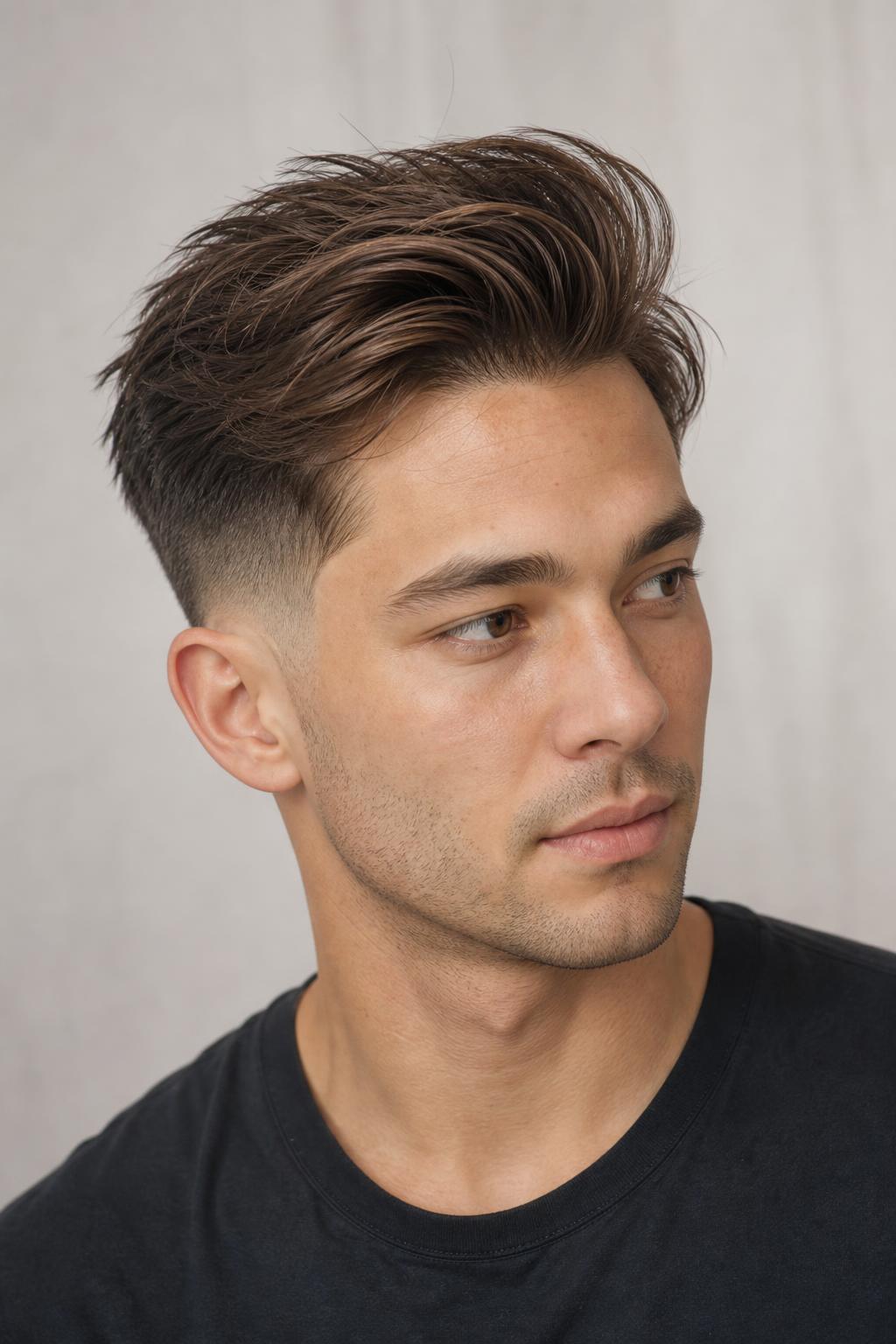
10. Low Fade Comb Over
A side-swept comb over draws a diagonal line across the top of the head, which helps square and rectangular faces by breaking up the horizontal width of a strong jaw. The top runs about three inches, combed from a defined side part across to the opposite side.
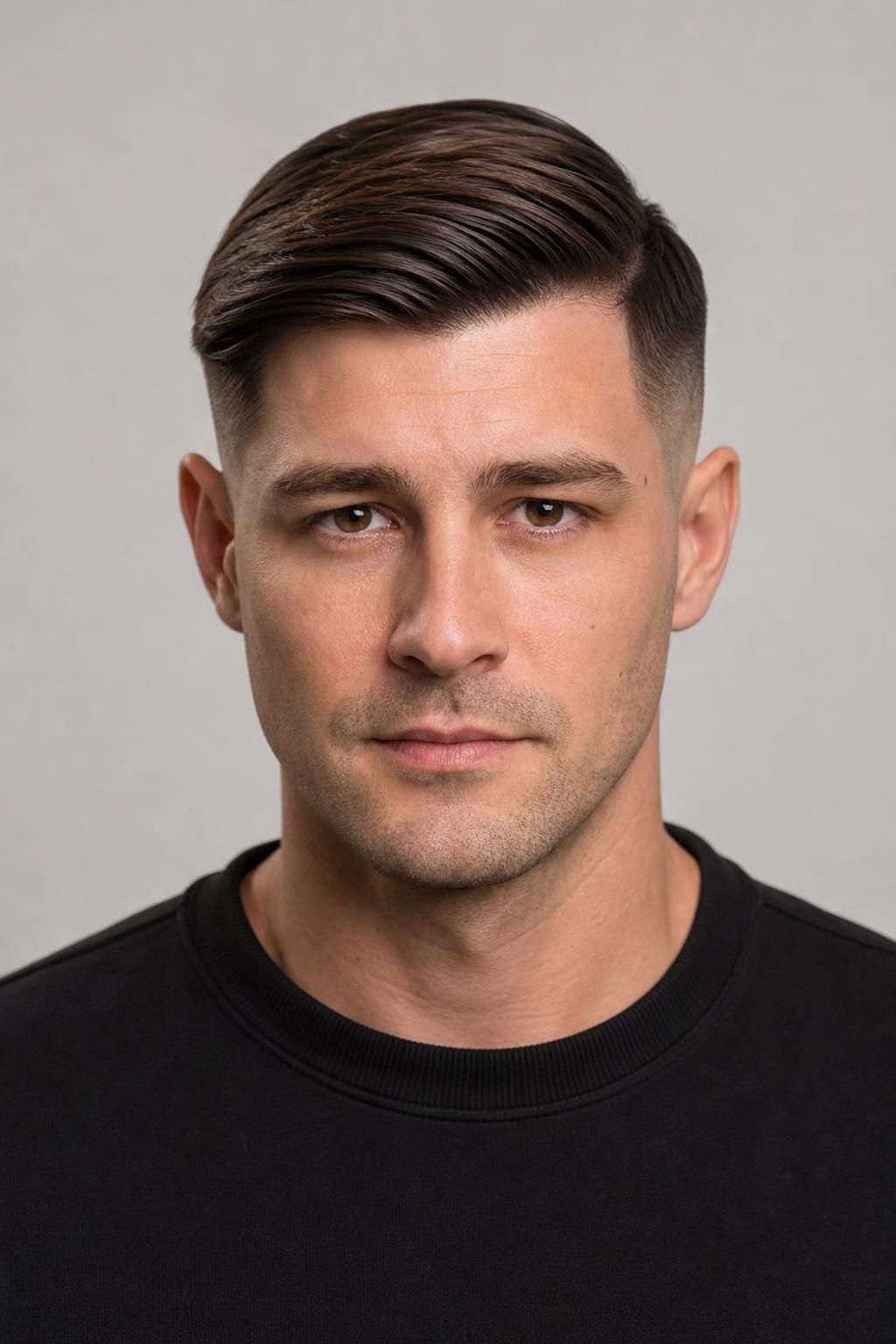
11. Low Fade with a Textured Fringe
Fine, straight hair struggles to hold height all day, so a forward fringe beats a quiff for anyone whose hair goes flat by lunchtime. The top is kept around two and a half inches and cut with heavy point cutting so the ends break into visible pieces.
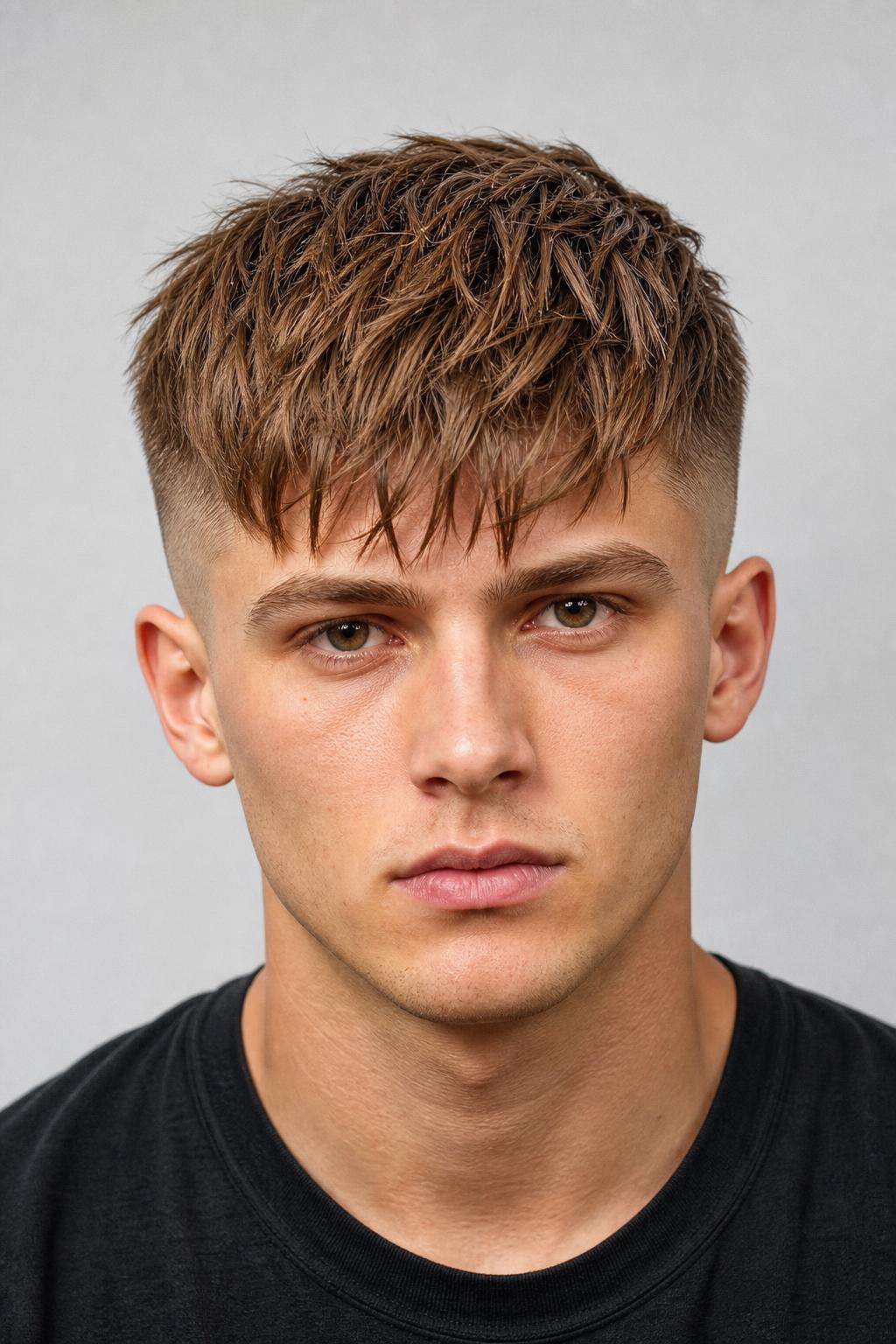
12. Low Fade Pompadour
Blow-dry the front section straight up with a vent brush while the hair is still damp, curve it back once it cools, then set it with a firm-hold pomade. The top needs at least four inches at the front before the shape will hold. Skipping the blow-dry is the single most common reason a pompadour collapses by mid-morning.
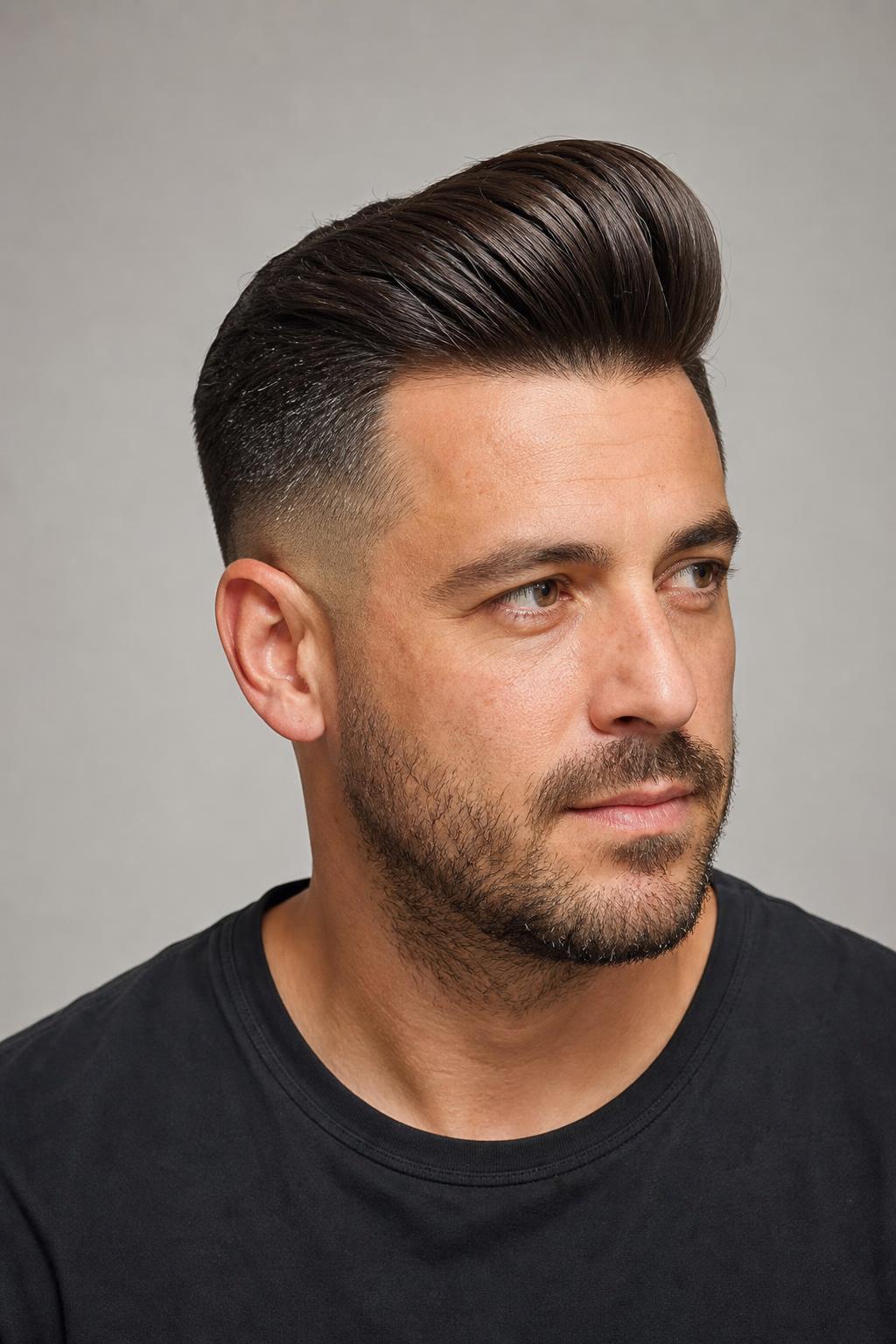
13. Low Fade with a Loose Side Part
Because the taper begins so low, the line blurs gradually rather than dropping off, so this still looks deliberate at week five when a high fade would look neglected. The top is left about three inches and parted where the hair naturally falls, with no razored line to keep up.

14. Ash Brown Low Fade with a Tousled Top
An ash-toned brown cancels the warm orange cast that surfaces when dark hair is clipped very short, which matters most inside the faded band where the scalp lightens the color. The top stays around three inches and is left tousled rather than combed into place.
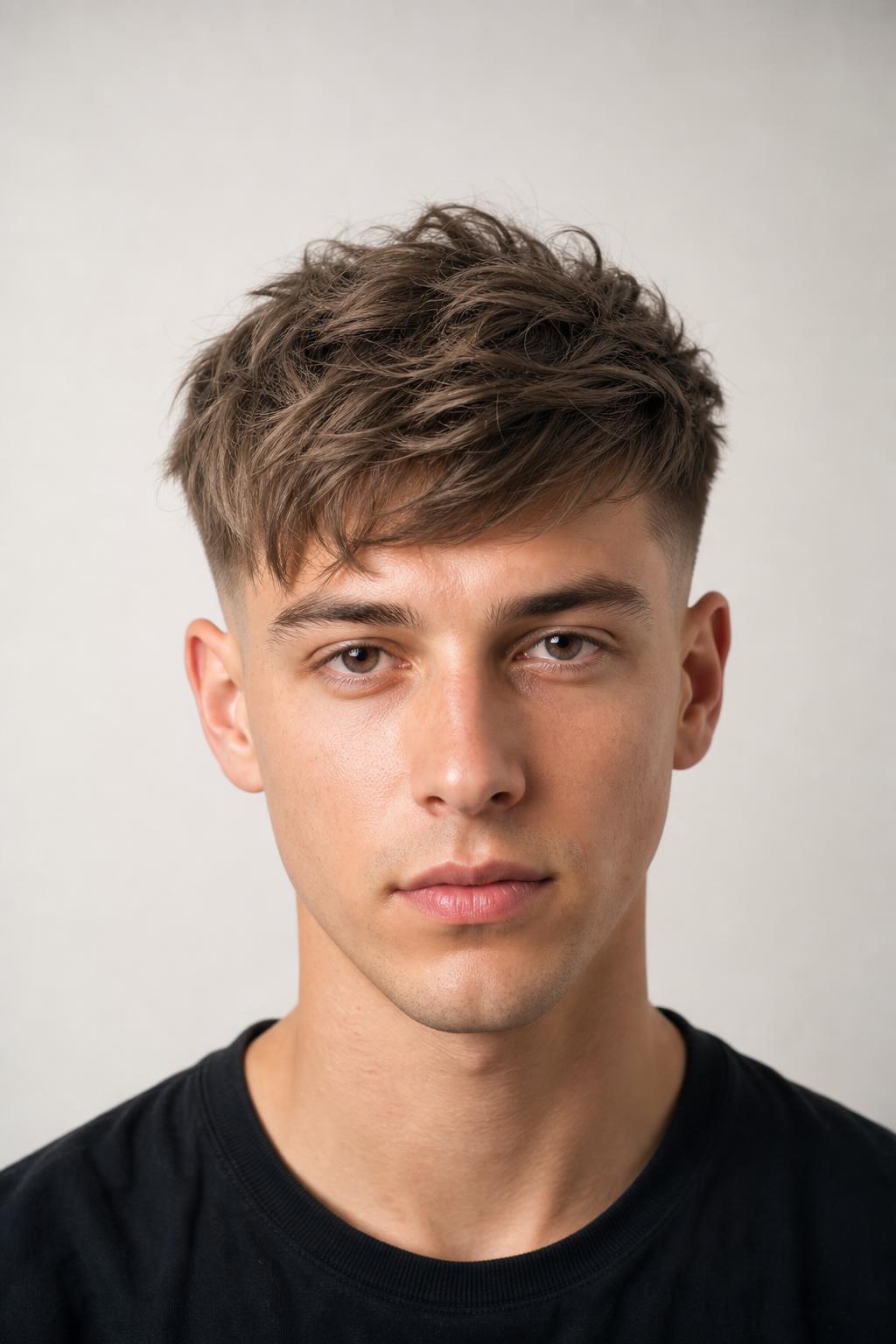
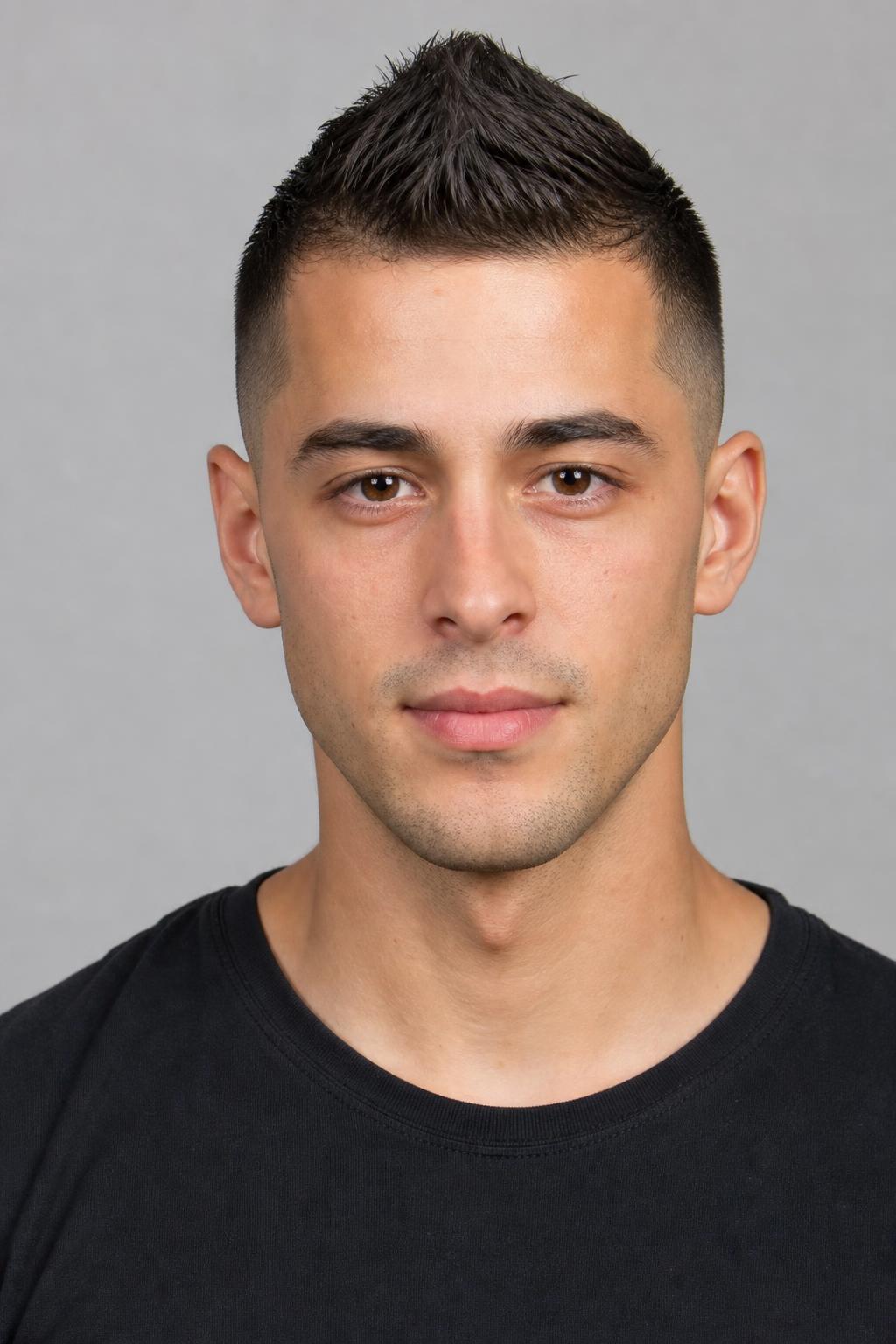
15. Low Fade Faux Hawk
Ask for a low fade on the sides with about three inches left through a center strip, and specify that the length should reduce gradually toward the sides rather than dropping off. The phrase that gets this right is connected faux hawk, which tells the barber to blend instead of disconnect. Say how far back the strip runs, because some barbers stop at the crown and others carry it to the nape.
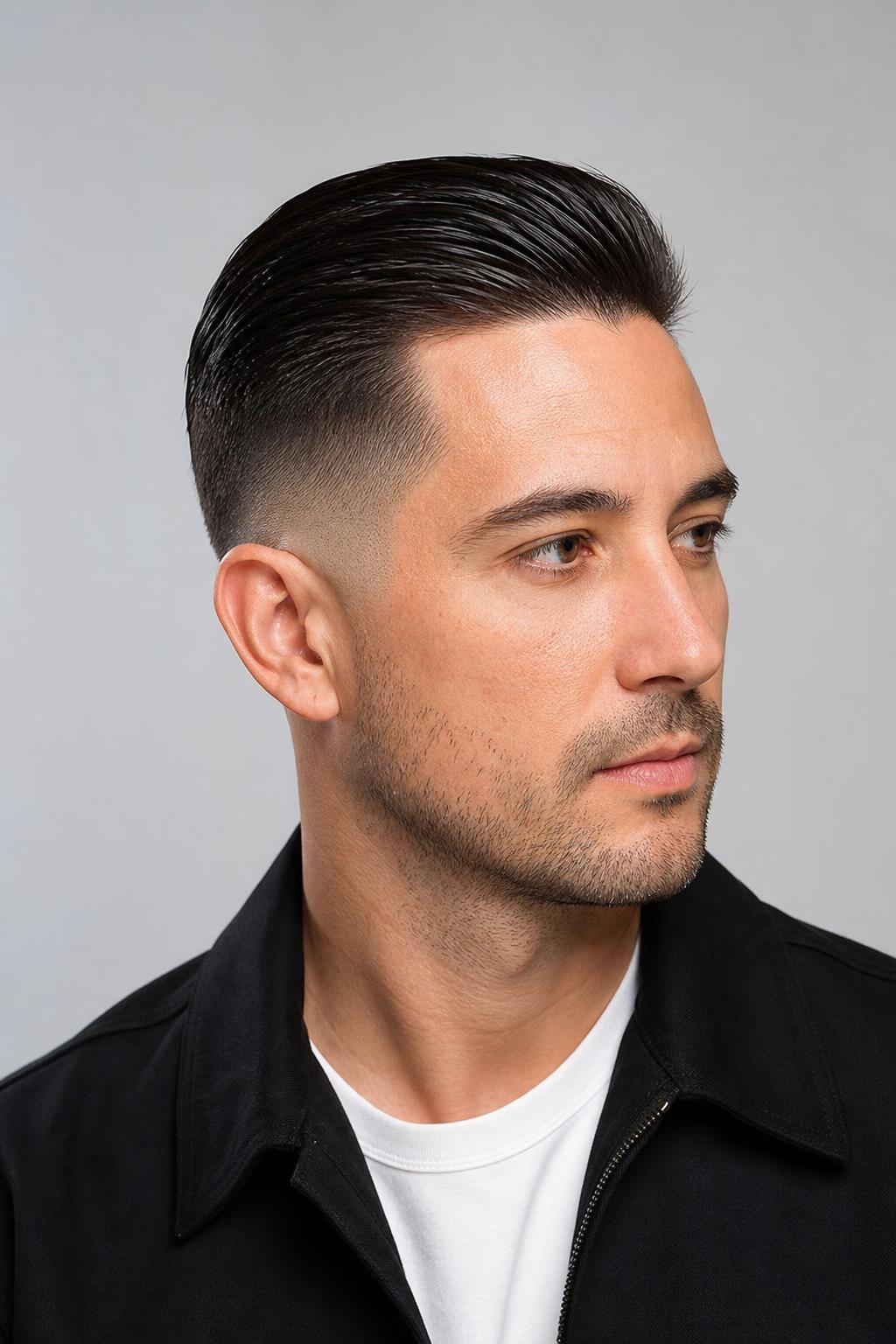
16. Low Fade Slick Back
Unlike the pompadour, which builds height at the front, a slick back over a fade keeps the top flat to the head and pushes all the length straight backward. That makes it quicker to style and kinder to fine hair, which cannot support a tall front section for long. The top needs about four inches to reach the crown cleanly, and a water-based pomade gives shine without turning stiff.
Low Fades for Curly and Coily Hair
A low fade is the friendliest fade height for curls and coils, because the length left on the sides keeps the head from looking pinched at the temples once the top expands. Cutting should happen on dry hair so the barber can see where the curl pattern actually falls.
17. Low Fade with a Curly Sponge Top
The top is left at about an inch and a half and worked with a twist sponge in small circles, which locks loose coils into defined, separate curls. The barber cuts the top with scissors on dry hair so the finished length shows before anything comes off.
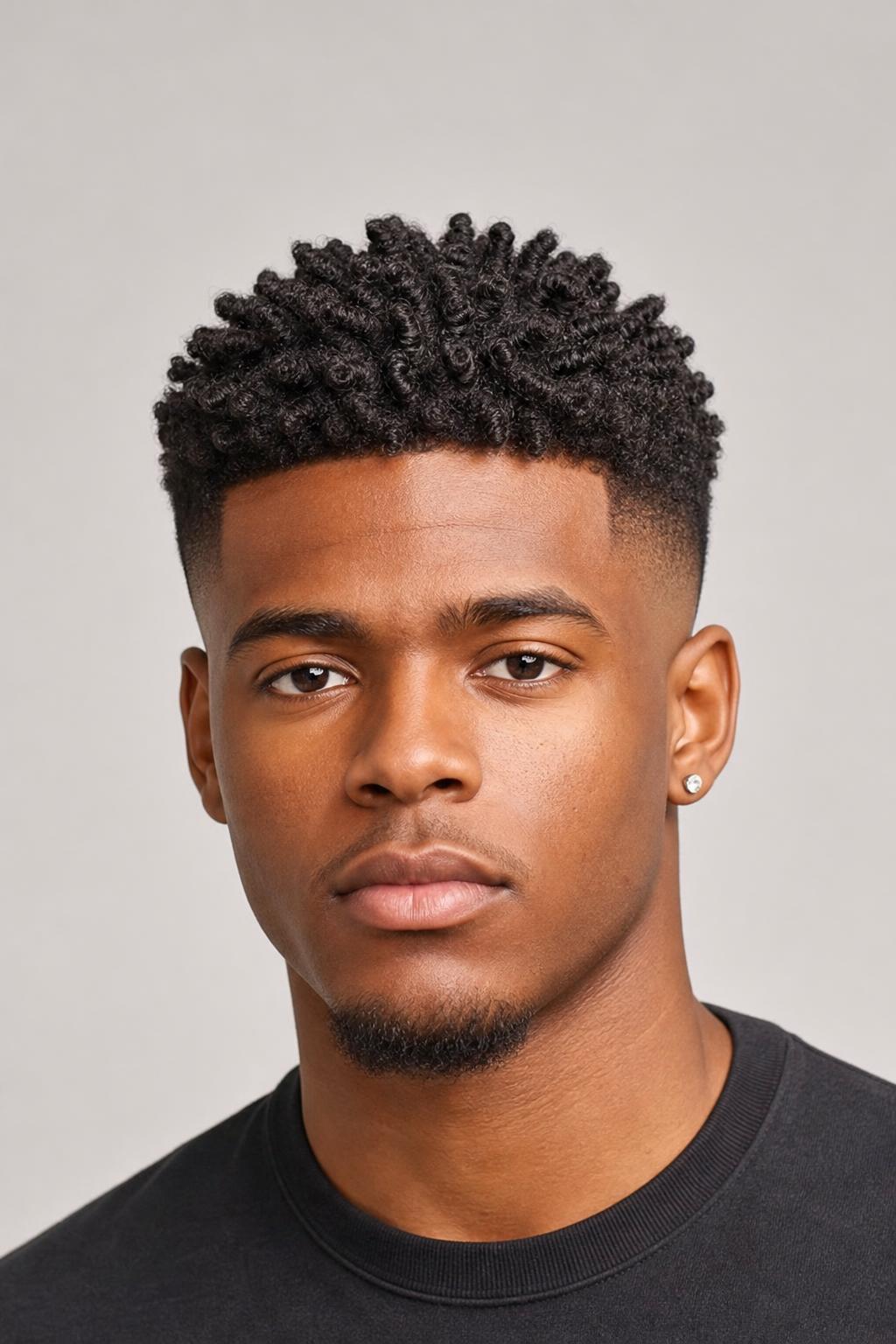
18. Low Drop Fade with Loose Curls
The drop version curves the fade line downward behind the ear instead of carrying it straight around, which follows the skull and softens a heavy jaw or a wide back of the head. Loose curls left around three inches on top add height that balances the rounded line below. Heart-shaped faces gain the most from a low drop fade, because the visual width lands at the jaw rather than the temples.
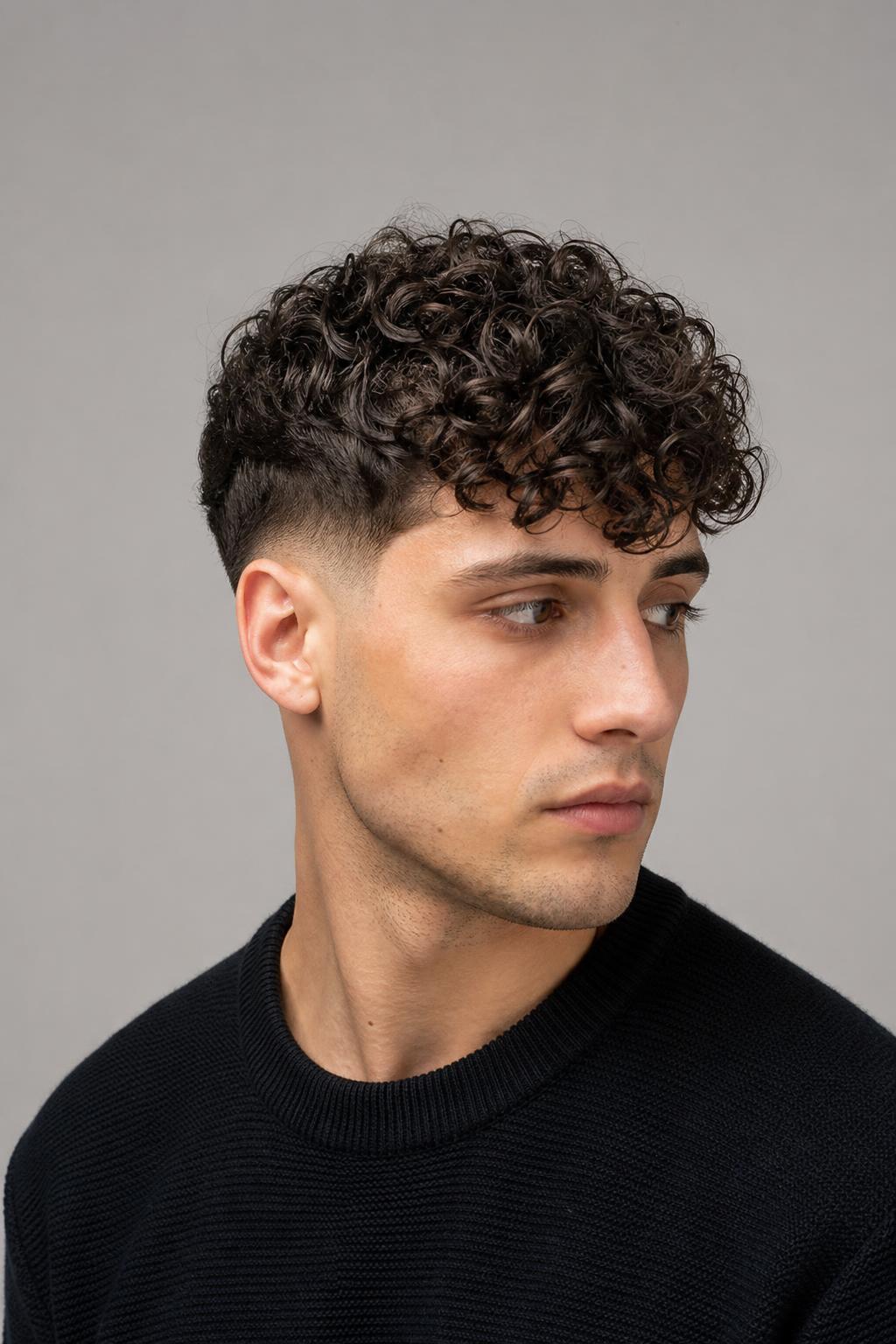
19. Low Fade for Coarse Coily Hair
Dense 4b and 4c hair does well with a fade that starts low, since the length remaining on the sides stops the head looking narrowed at the temples. The top runs about two inches and is cut level so the silhouette stays square instead of rounding off, and moisturize the faded band, which dries out fast once the scalp is exposed.
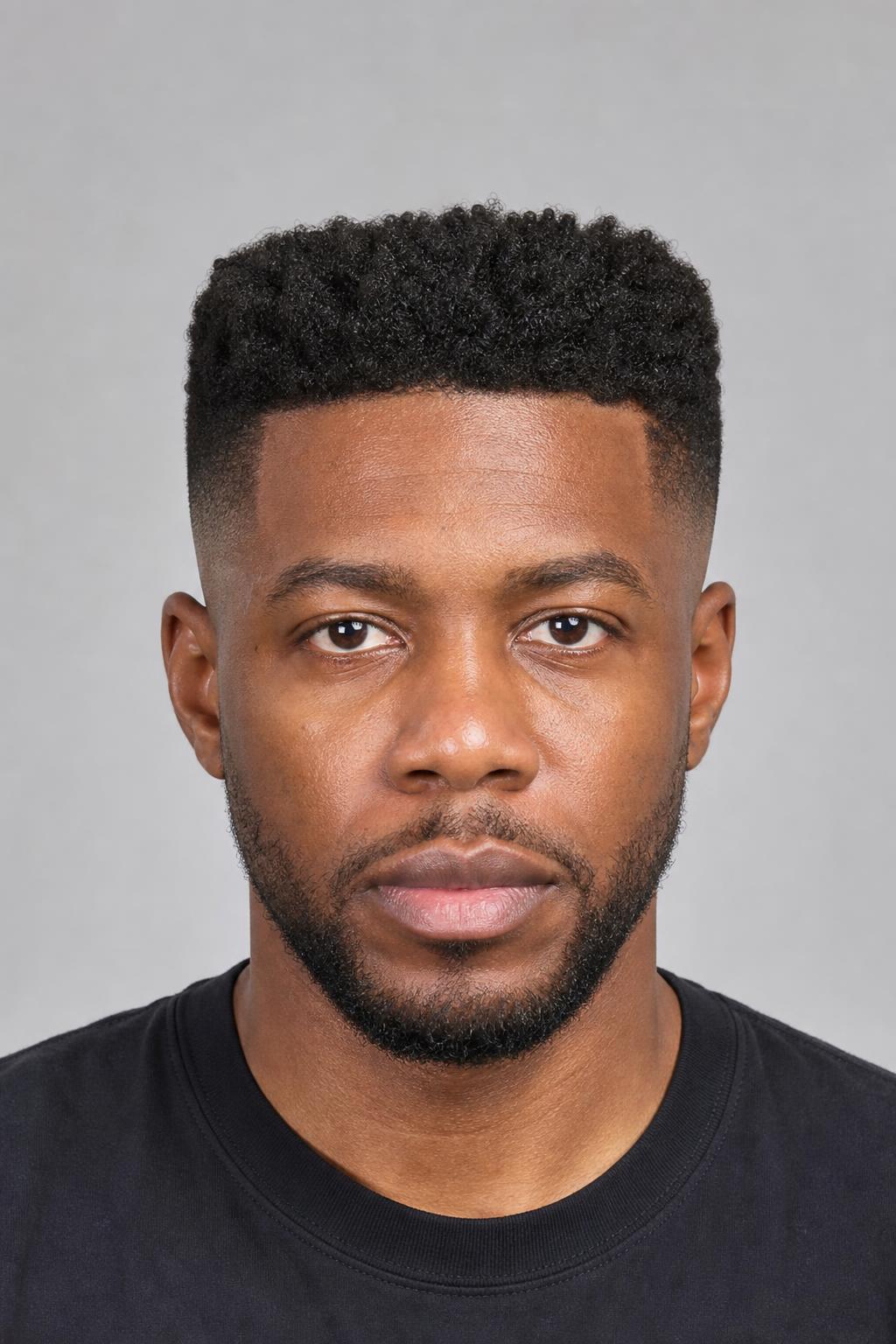
20. Low Fade with Finger Coils
Section damp hair into small squares, apply a curl cream, then twirl each section around a finger from root to tip and let it air-dry fully before touching it. The top needs three inches or more before the coils hang rather than stand up. Budget forty minutes the first few times, dropping to fifteen once the sectioning becomes automatic.
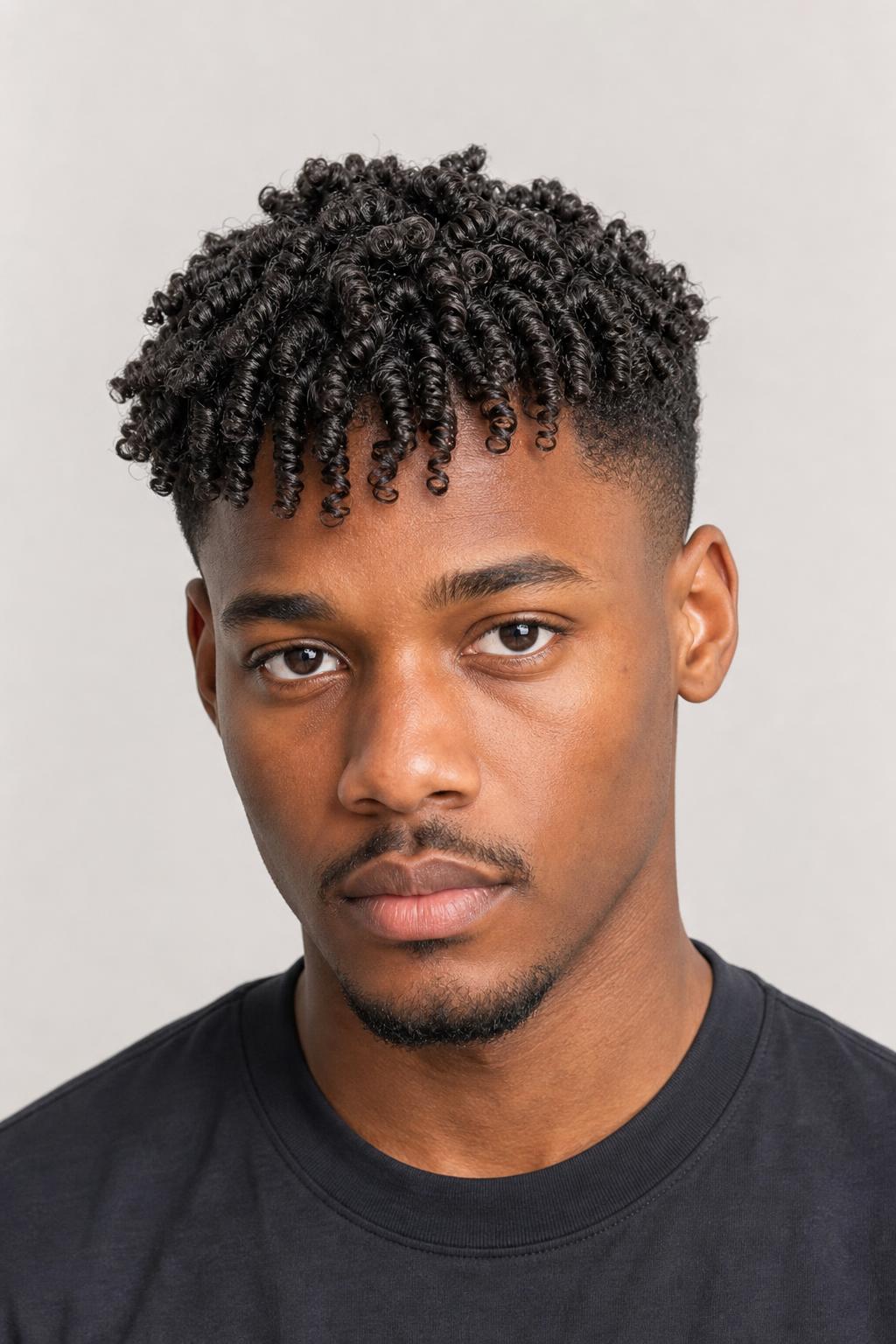
21. Low Fade with a Short Afro
A two-inch afro over a low fade holds its outline for roughly three weeks before the sides catch up and the shape goes soft. Pick the hair out daily from the roots with a wide-tooth pick, and sleep in a durag or satin bonnet to hold the shape overnight.
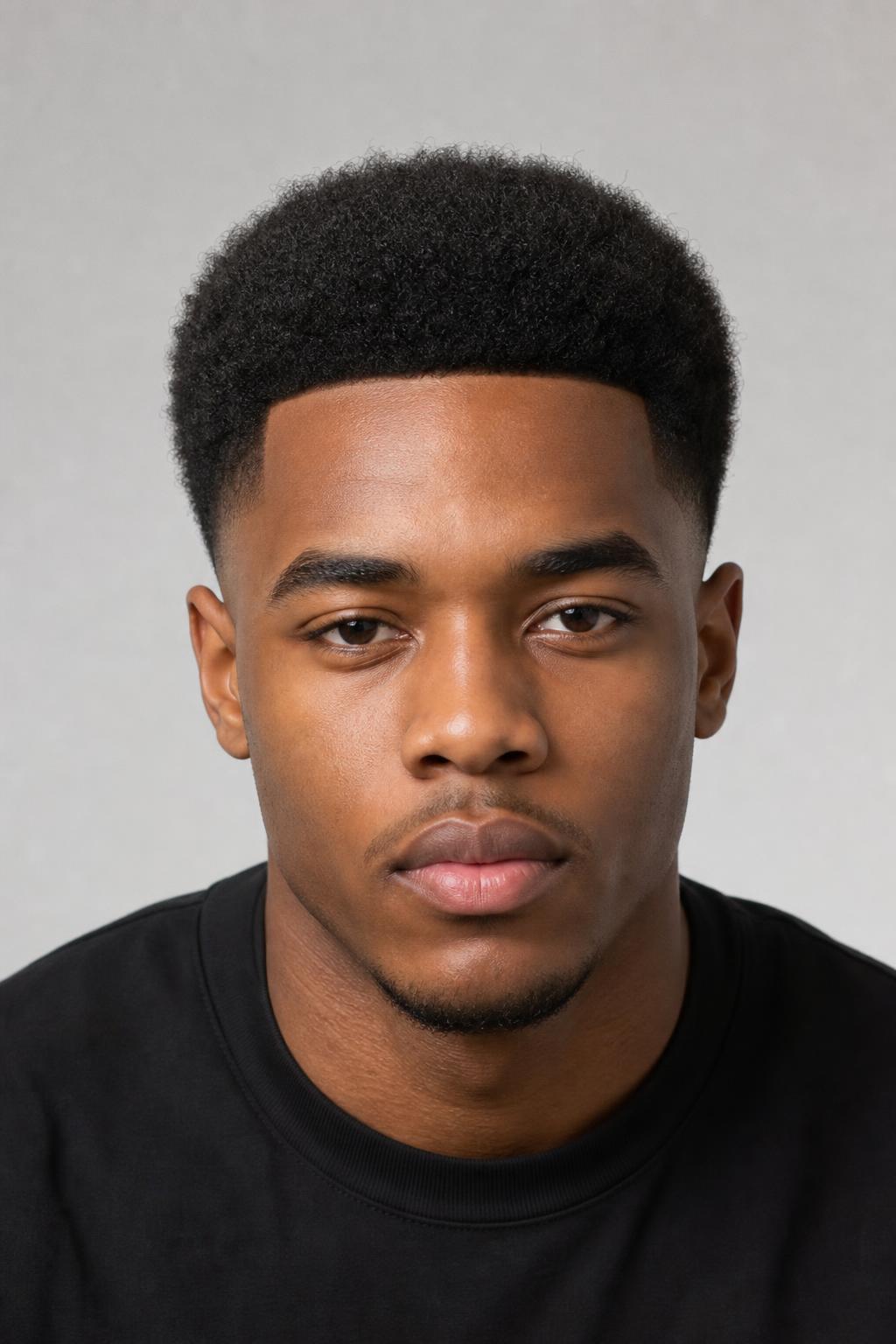
22. Honey Highlighted Low Fade with Curls
Lightening only the tips of the curls to a honey tone makes the curl pattern visible from across a room, because the lighter ends trace the outline of each spiral. The base stays natural dark brown so the faded sides do not turn brassy as they grow through.
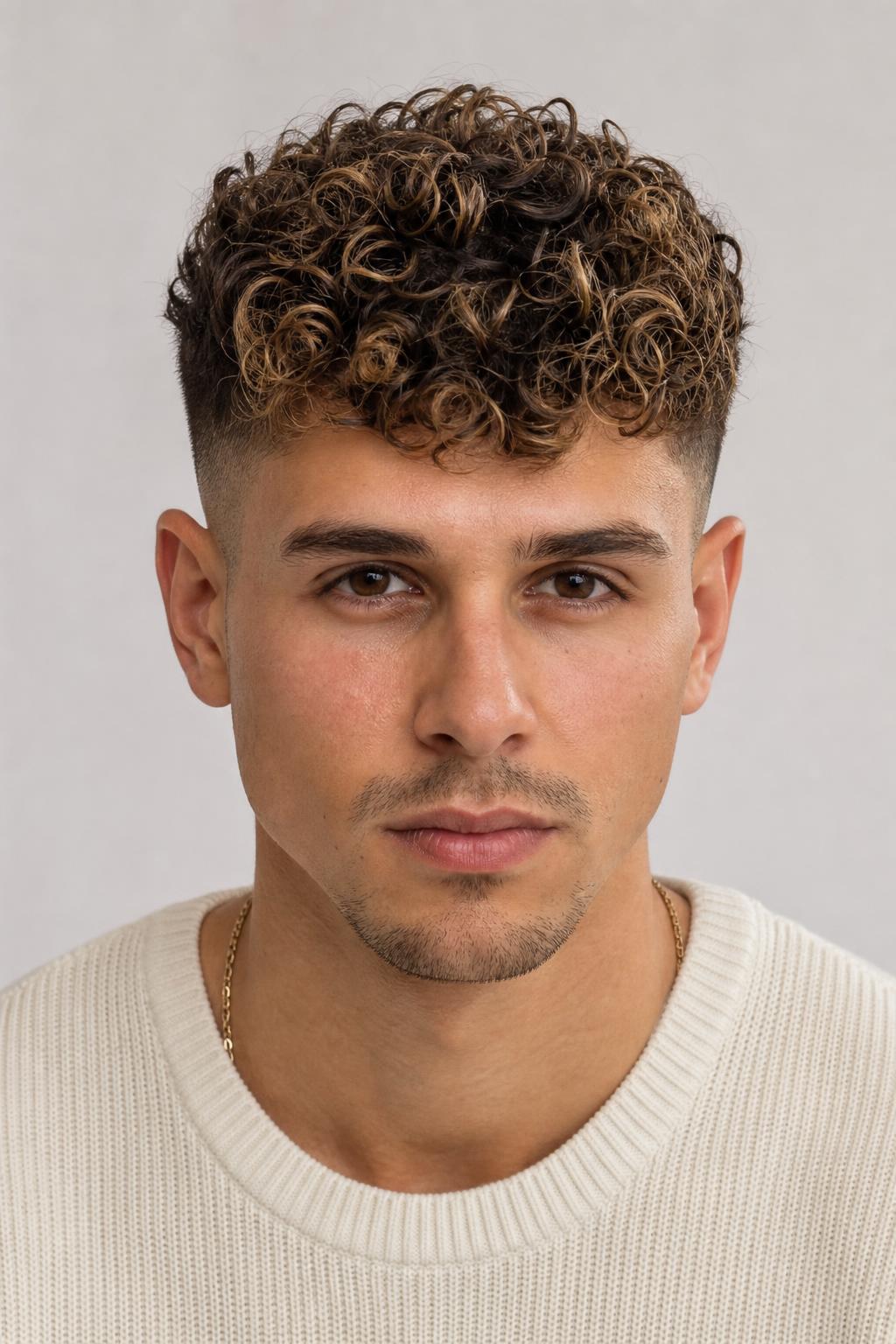
23. Low Fade with 360 Waves
Tell your barber you are keeping waves and ask for the fade to begin just above the ear so the pattern on the sides is not cut into. The sentence that works is fade the sides but keep my waves connected.
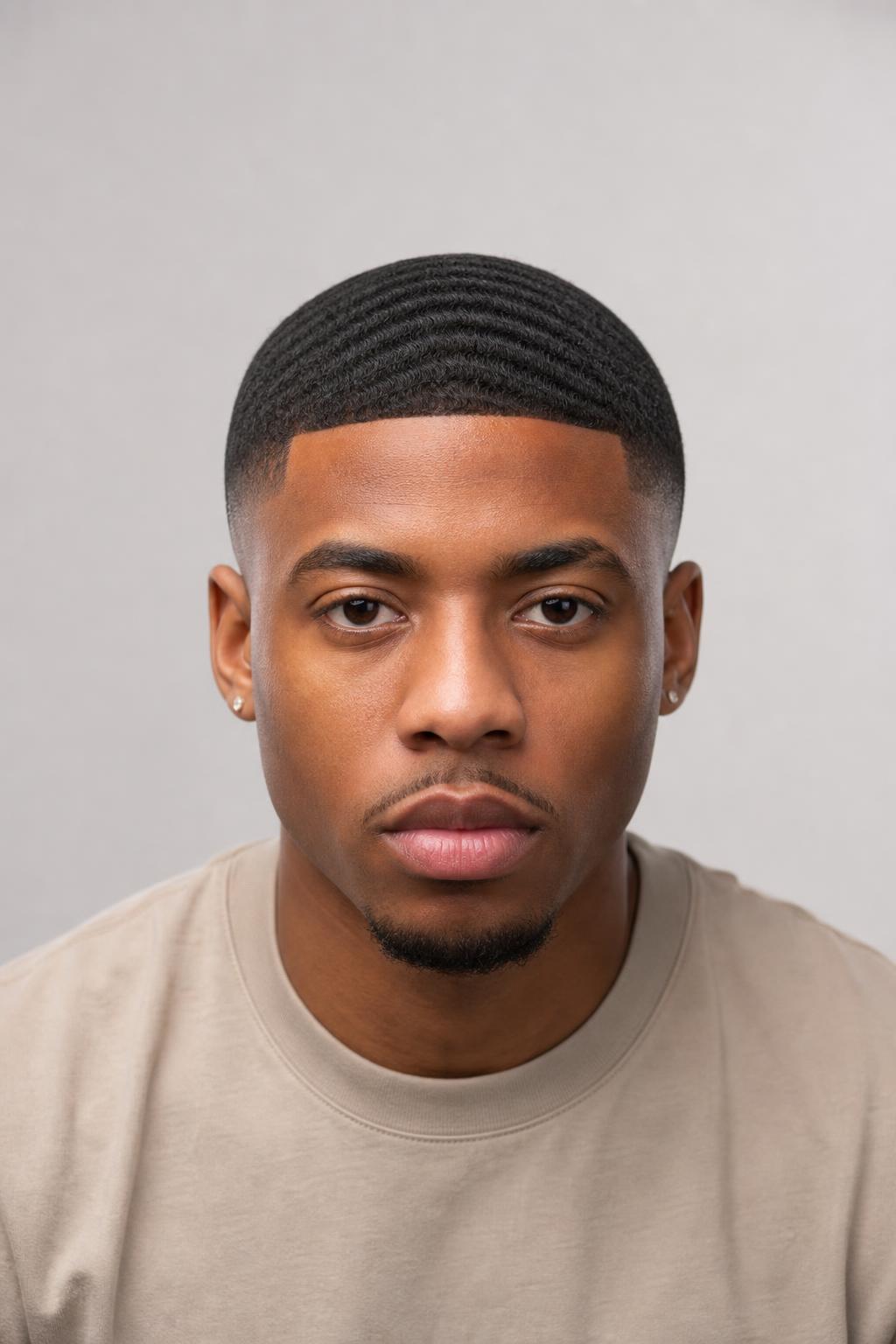
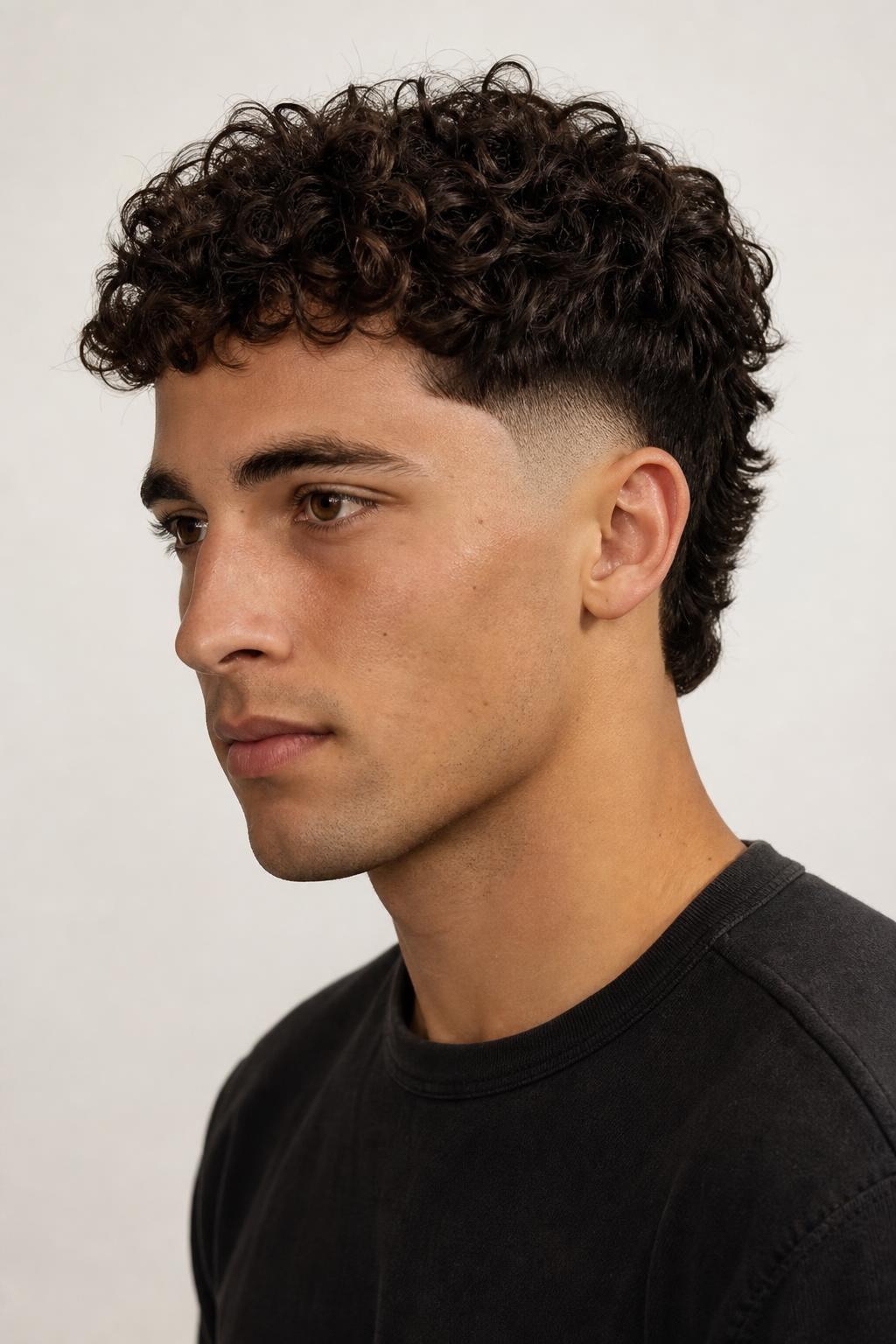
24. Low Burst Fade with a Curly Top
A burst fade arcs around the ear in a half circle and leaves the nape long, where a standard low fade carries the same short length the whole way around the back. That arc suits curly tops that need weight left at the back to balance height on top, which is why so many burst fade variations are built on curls. If you like the shape but want a cleaner neckline, the standard low fade is the safer choice.
Low Fades with Longer Length on Top
Once the top passes four inches, the low fade stops being the focus and starts doing a supporting job, keeping the sides flat so the length has somewhere to fall. These are the most forgiving versions on the calendar, since only the narrow faded band needs clipper work, but they demand the most patience up front: growing through the awkward three-to-five-inch stage takes the better part of a year.
25. Low Fade with Curtain Bangs
The top is grown to five or six inches and split down the middle, then the front sections are cut on a forward angle so they fall to either side of the forehead. The barber uses a slide cut through the interior to take out weight without shortening the outline. A low fade underneath stops the sides puffing out beneath the length, which is the usual failure point on men’s curtain styles.
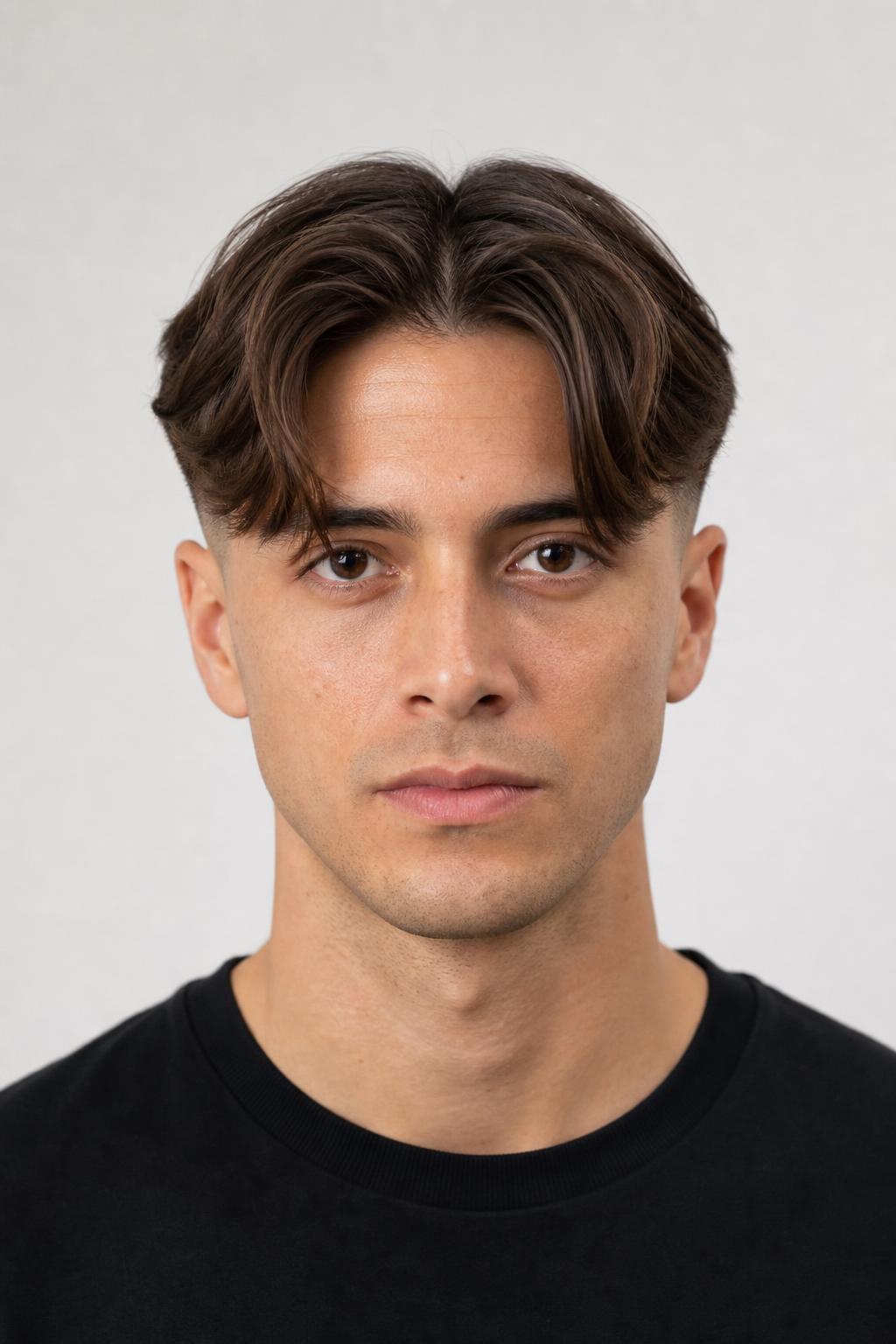
26. Low Fade with a Middle Part
A center part splits the forehead into two equal halves, which lengthens a round or square face and pulls the eye downward. The top needs at least five inches so both sides fall past the eyebrow rather than jutting out sideways. Long, narrow faces should take a side sweep instead.

27. Low Fade with Grown-Out Length on Top
Thick, wiry hair grown to four or five inches expands outward as much as upward, and a low fade contains that width at the sides while keeping the volume where it looks good. Ask for internal thinning through the mid-lengths rather than layering the surface, which would leave short pieces standing up. Fine hair goes limp past about three inches, so take a shorter version instead.

28. Low Fade Man Bun
Gather the top section back with your fingers while the hair is slightly damp, twist once, and secure it with a fabric tie rather than an elastic that snags on the way out. The top needs seven inches or more before a bun will hold without pieces dropping.

29. Low Fade Mullet
The top and front stay moderate at about three inches while the nape is left long, so the only area needing regular clipper work is the low fade at the sides. That splits the upkeep neatly: sides every three weeks, back every three months or so.

30. Bleached Blonde Low Fade with a Long Top
Lifting dark hair to a pale blonde on the top only, while leaving the faded sides at their natural depth, produces a hard color break that follows the fade line exactly. The top is kept around four inches so there is enough lightened hair to register, and root regrowth shows at about three weeks, sooner than a full head of blonde would.

How to Choose a Low Fade for Your Face Shape
A fade changes the width of your head at ear level, and a low fade changes it least, which is why it works across more face shapes than any other height. The real decision is what happens on top: height at the front lengthens a face, a side sweep widens it, and a center part splits it.
| Face Shape | Best Low Fade Version | Top Length | Avoid |
|---|---|---|---|
| Oval | Almost anything, crop or quiff first | 2 to 4 inches | Extreme height, which unbalances even proportions |
| Round | Quiff or pompadour over a low skin fade | 4 to 5 inches | Flat side sweeps, which add width at the cheeks |
| Square | Textured crop or soft side part | 2 to 3 inches | A hard part plus a blunt fringe, doubling the angles |
| Heart | Low drop fade with curls or a comb over | 3 to 4 inches | Slicked-back tops that expose the forehead width |
| Oblong or long | Textured fringe or curtain bangs | 4 to 6 inches | Tall pompadours, which stretch the face |
| Diamond | Forward fringe with a low taper finish | 3 to 4 inches | Slicked-back styles, which narrow the forehead further |
What to Tell Your Barber
The word low tells your barber where the blend starts, not how short it finishes, and those are two separate decisions. Give both: where the fade begins, and what the shortest point is. A useful full sentence is, “Low fade starting a finger above the ear, blending from a two down to a one, and leave about three inches on top with a natural part.”
| Version | Where the Blend Starts | Guard Sequence | Finish at the Bottom |
|---|---|---|---|
| Low taper fade | A finger above the ear, straight to the nape | 3 to 2 to 1 | Soft stubble edge, no hard line |
| Low skin fade | Same start, taken all the way down | 3 to 2 to 1 to 0, then a foil shaver | Bare skin, strong contrast |
| Low drop fade | Above the ear, curving down behind it | 3 to 2 to 1 | Rounded line following the skull |
| Low burst fade | A half circle around the ear only | 2 to 1 to 0 around the ear | Nape left long, arc at the side |
Stylist tip: Name the guard number where you want the fade to finish, not just the word low. A low fade ending at a guard one and a low fade taken to bare skin are two different haircuts on the same head, and low on its own does not tell your barber which one you came in for.
Bring a photo of the side of a head, not just a front-facing shot, because fades live on the profile and a front photo hides the one detail you are actually asking for. If you have a cowlick at the crown or a whorl above one ear, point it out before the clippers are running.
Maintenance and Grow-Out Reality
Here is the part most fade galleries leave out: a low skin fade needs the barber more often than a high taper fade, even though it looks like the more conservative haircut. The visible faded band on a low fade is narrow, so a few millimeters of regrowth inside it turns into a hard edge instead of blending away. The taper finish is what buys you time, not the height of the fade.
| Version | Barber Visit | Daily Styling | Products | Grow-Out Behavior |
|---|---|---|---|---|
| Low taper, short top | 4 to 6 weeks | 0 to 3 minutes | None, or a matte paste | Blurs gradually, tidy at week five |
| Low skin fade | 2 to 3 weeks | 2 to 5 minutes | Matte clay | Stubble ring appears around day ten |
| Low fade, pompadour or quiff | 4 to 5 weeks | 8 to 12 minutes | Pomade plus a blow-dryer | Top loses shape before the sides do |
| Low fade, curls or afro | 3 to 4 weeks | 5 to 15 minutes | Curl cream, pick, satin bonnet | Outline softens at week three |
| Low fade, long top | 6 to 8 weeks | 3 to 10 minutes | Light oil, fabric tie | Forgiving, only the sides need attention |
Stylist tip: Book the next appointment before you leave the chair. A fade is the one men’s cut where the calendar matters more than the mirror, because the shape degrades evenly across the whole side rather than at one obvious point you would notice.
When a Low Fade Is Not the Right Choice
This cut suits most heads, but there are four situations where a different fade height or a uniform clipper cut serves you better.
- You have a round face and want a slimming effect. The low fade leaves bulk at the temples, which widens the face at its widest point. A mid or high taper lifts the visual weight upward instead.
- You have heavy temple recession. The fade line runs straight through the thinnest area and draws attention to it. A uniform short clipper cut across the whole head hides the contrast far better, and there are specific cuts built around thinning at the crown and temples worth looking at first.
- You cannot commit to the barber every two to three weeks. Take a low taper finishing at a guard one rather than a skin fade, since a taper blurs as it grows while skin breaks into a hard ring.
- You have scarring or uneven pigment low on the sides. Skin fades expose the scalp exactly where those marks live, so ask for a guard one minimum at the bottom.
FAQ
What Is the Difference Between a Low Fade and a Low Taper?
A low fade blends the entire side and back from top length down to very short, while a low taper only shortens the edges around the sideburns and neckline. The taper is the more conservative of the two and leaves most of your side length untouched. If you want the sides visibly shorter than the top, ask for the fade; if you only want the outline cleaned up, ask for the taper.
How Often Do I Need to Get a Low Fade Touched Up?
Every four to six weeks for a taper finish, and every two to three weeks if the fade goes to bare skin. The skin version needs more frequent visits because regrowth in the shaved band shows as a defined ring within about ten days. Men with very dark hair against lighter skin notice it soonest, since the contrast makes even a few days of growth visible.
Does a Low Fade Work on Curly Hair?
Yes, and it is generally the best fade height for curls, because the length left on the sides prevents the head from looking narrow once the curls expand on top. Ask for the top to be cut dry so the barber can judge where the curl pattern actually falls after shrinkage. THP covers this in depth with texture-specific examples in the low fade on curly hair gallery.
Is a Low Fade Good for a Receding Hairline?
It depends on where the recession is. A low fade helps when the hairline has moved back evenly, because keeping the sides fuller balances a higher forehead. It works against you when the temples specifically have thinned, since the fade line crosses that exact area and highlights the gap.
Can I Get a Low Fade with Long Hair on Top?
Yes, and the combination is one of the lowest-maintenance options in this gallery. Only the narrow band above the ear needs clipper work, so the top can grow for months between shape-ups while the sides get refreshed every six to eight weeks. Ask for internal thinning rather than surface layers so the length falls cleanly over the faded sides.
What Guard Number Should I Ask for on a Low Fade?
A three to two to one sequence is the standard for a taper finish, and adding a zero plus a foil shaver takes it to skin. The guard numbers describe how short each step goes, while the word low describes where the sequence begins on your head. Give both, because one without the other leaves the decision to your barber.
Does a Low Fade Suit Coily and 4C Hair?
It suits it particularly well, since the extra side length stops the head from looking pinched at the temples the way a high fade can on dense hair. Keep the top cut level rather than rounded so the shape stays square, and moisturize the faded area, which loses moisture fast once the scalp is exposed. Similar shaping logic applies to the low taper fade on Black hair, where the blend is gentler but the top is shaped the same way.
The right low fade haircut comes down to two choices made separately: how short the sides finish, and what you want the top to do for your face shape. Save one profile photo and one front photo before your next appointment, and give your barber the guard number along with the word low. That one extra detail is the difference between the fade you pictured and the fade you got.
Hair results vary based on your natural hair type, texture, density, and condition. Always consult with a licensed hairstylist before making significant changes, especially with chemical treatments or dramatic length changes. Photos may show styled results that require professional tools and products to replicate.


4 responses