

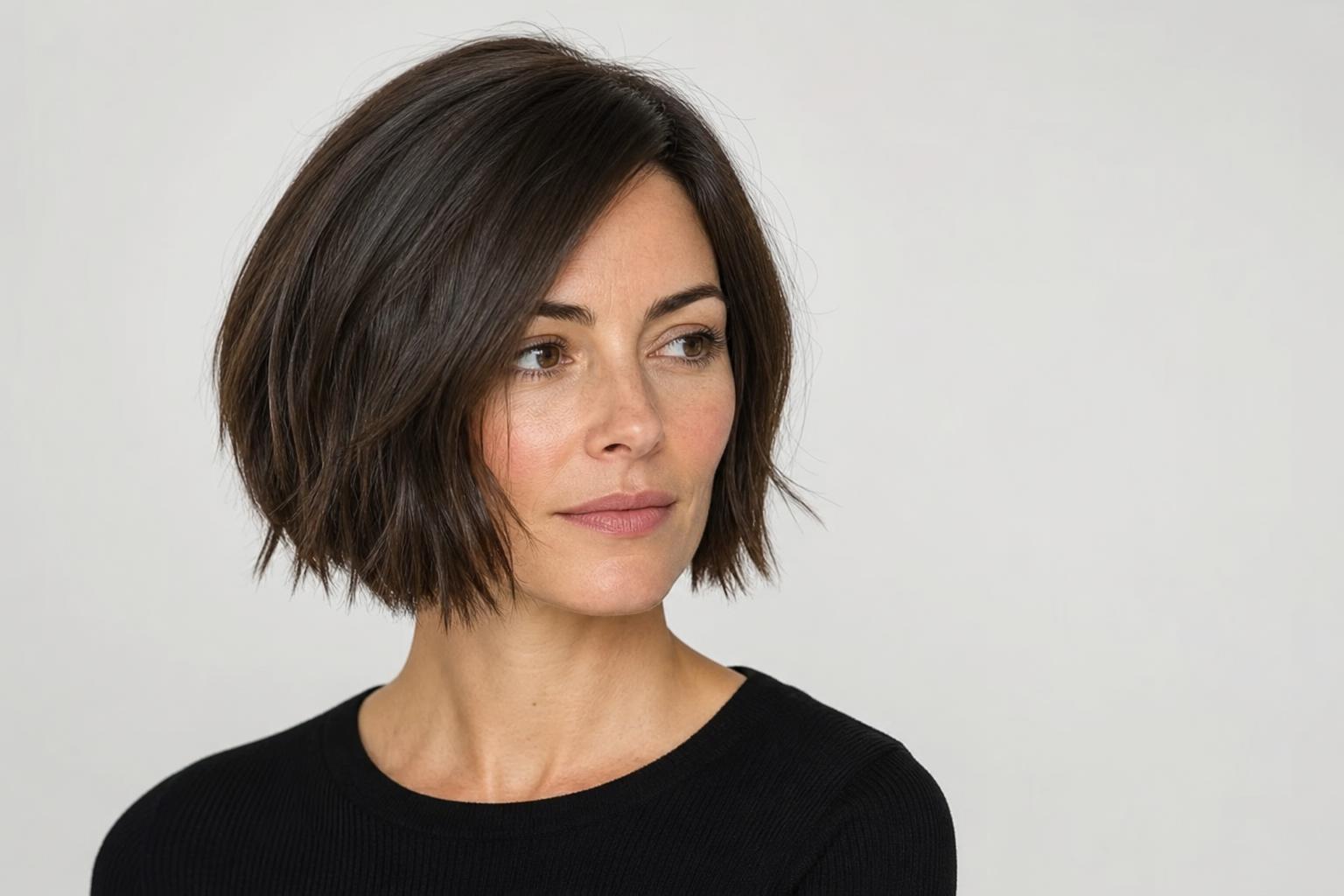
Short hair is not one haircut, and picking the wrong version of it is what turns a good chop into six months of regret.
Hairstyles for short hair fall into three families: bob-length cuts that stop between the chin and the collarbone, pixie-length cuts cropped above the ears, and textured shags that blur the line between the two. This collection covers 30 versions across all three families, each one matched to the hair density, texture, and face shape it genuinely works on rather than presented as a universal option.
Entries are grouped by silhouette so you can compare like with like, and every description names the cutting technique behind the shape. After the gallery you get a face shape compatibility table, a maintenance schedule with real trim intervals, the exact wording to bring to your appointment, and an honest list of situations where going short is the wrong call.
| Factor | Details |
|---|---|
| Length range | Above the ears (pixie) through collarbone (long bob) |
| Best for | Fine to medium density, oval, heart, and square faces with visible cheekbones |
| Maintenance | Trims every 3 to 8 weeks depending on length; 5 to 15 minutes of daily styling |
| Avoid if | You have a strong cowlick at the crown and no tolerance for daily product |
| Salon time | 40 to 75 minutes for the cut alone, longer with color |
Bob-Length Cuts for Short Hair
Bob-length cuts are the least drastic entry point into short hair because the perimeter still reaches the jaw or chin, which keeps some softness around the face. The variable is where the weight falls in the shape: a blunt line holds weight at the bottom, a graduated cut moves it to the back, and a razored finish removes it altogether. Density decides which of those three you should be asking for.
1. Chin-Length Blunt Bob
Cut to one unbroken line at the chin with no internal layering, this shape relies entirely on the weight of the perimeter to hold its form. Fine hair benefits most, since every strand stays in the bottom line instead of being thinned out above it. Ask for scissor-over-comb finishing rather than a razor, which frays the edge you are paying for.

2. French Bob with Micro Bangs
Unlike a standard chin-length bob, the French bob keeps its perimeter higher, landing between the earlobe and the jaw, paired with a fringe cut well above the brow. That combination shortens the visual length of the face, which is why it suits oblong shapes and works against very round ones.

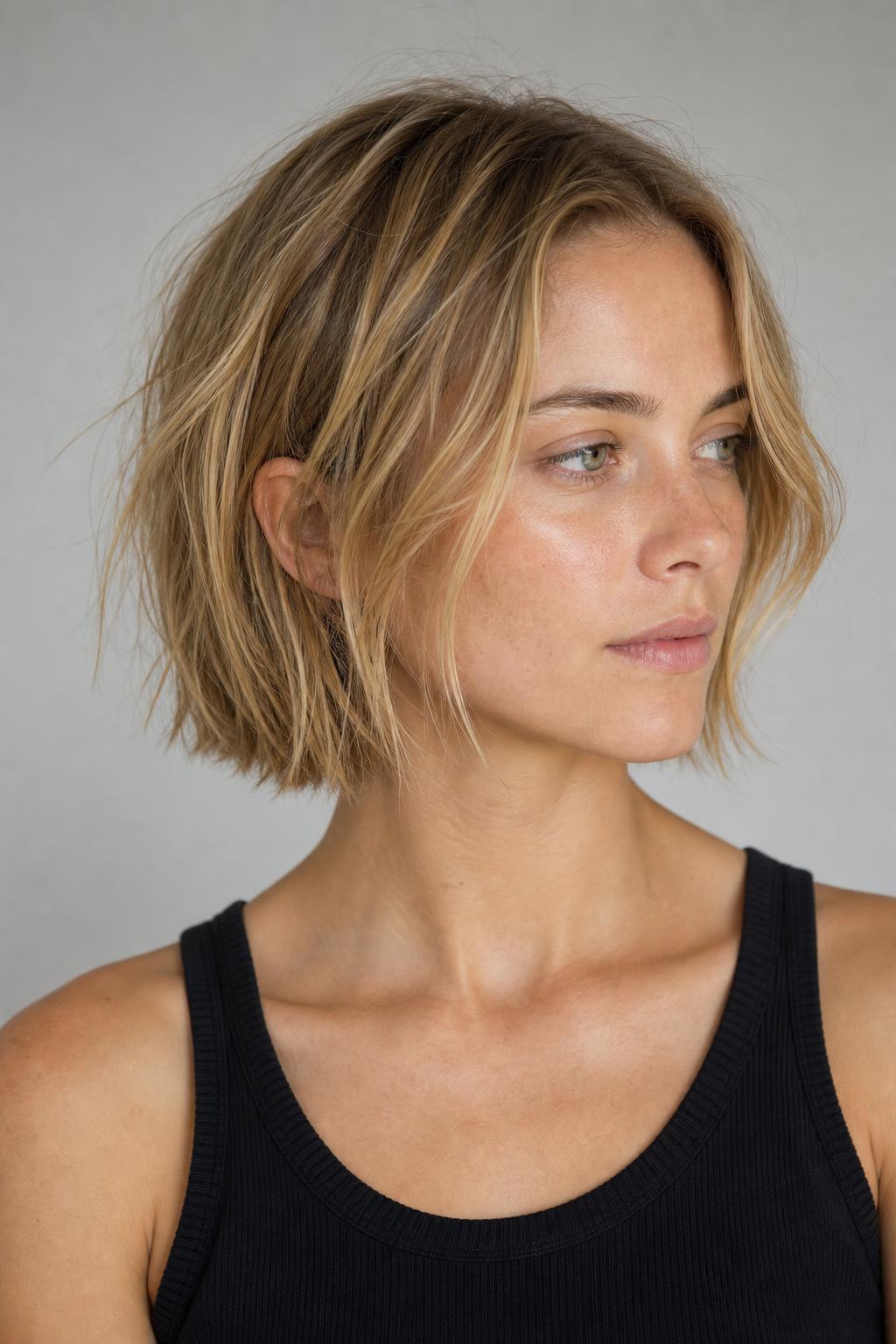
3. Textured Bob with Point-Cut Ends
Thick hair cut to a blunt bob tends to widen into a triangle by week three, and point cutting the last inch is the fix. The stylist cuts vertically into the perimeter so the ends break up and the bulk falls inward instead of flaring. Medium to coarse textures get the most out of it, and it handles wavy hair better than a razored finish does.

4. Stacked Bob with a Graduated Nape
Layers stacked tightly at the back build a rounded shelf of volume just below the crown, then the length angles forward toward the jaw. Flat hair at the back of the head is the specific problem this solves, and it solves it without a round brush.
5. Jaw-Length Curly Bob
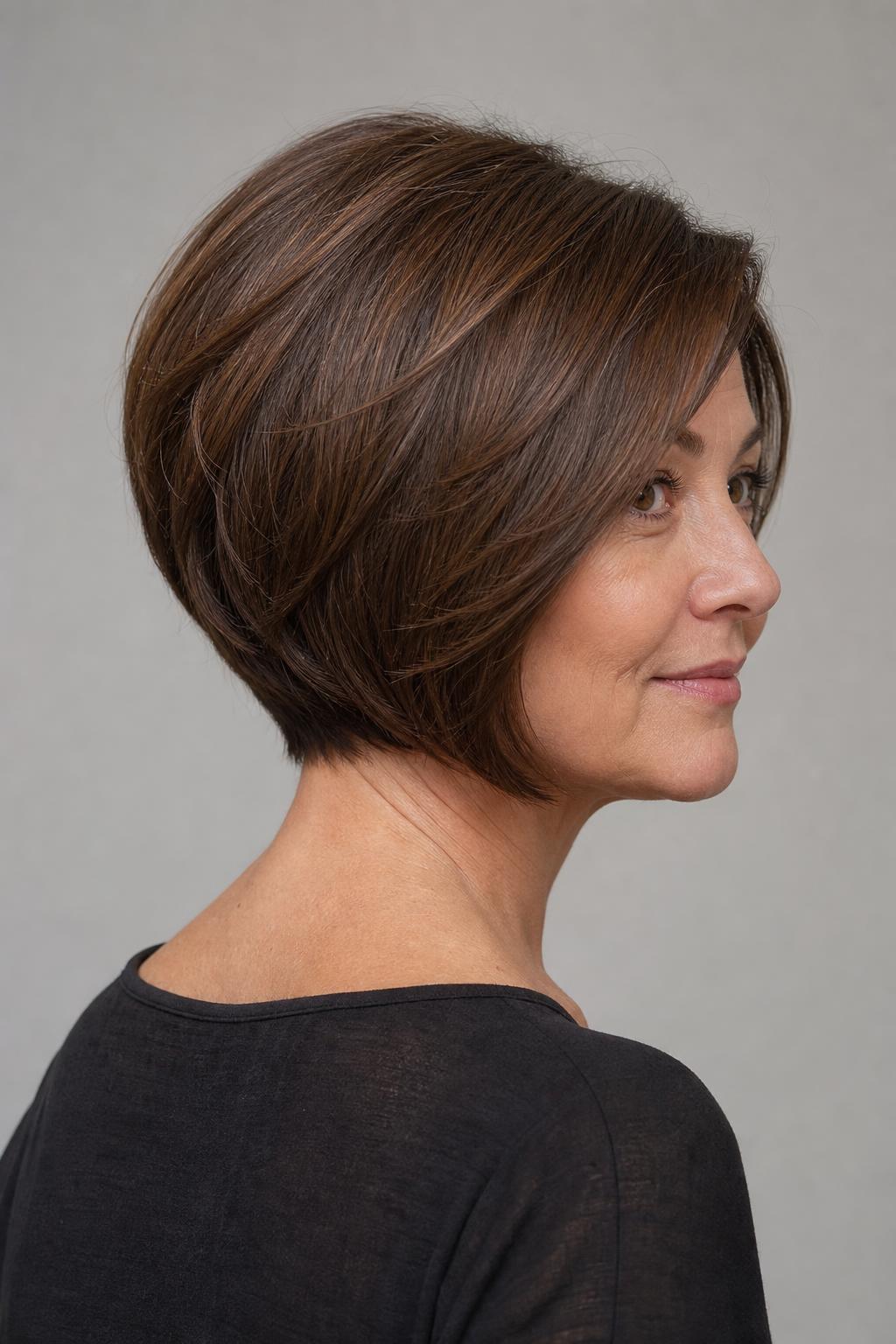
On 3a to 3c curls, a bob has to be cut dry so the stylist can see where each curl actually lands once it springs up. Wet-cut curly bobs come out two to three inches shorter than planned and often land unevenly.

6. Sleek Bob with a Deep Side Part
Bring a photo and ask for a chin-length bob with a strong side part set roughly two inches off center, with the perimeter kept solid. The phrase that matters is no internal texturizing, because a smoothed finish shows every thinned-out section.

7. A-Line Bob Angled Toward the Front
The back is cut shortest at the nape and the length climbs steadily forward until it reaches the collarbone at the front, creating a long diagonal on each side. Those diagonals draw the eye down rather than across, which is the mechanism that makes this the standard recommendation for round faces.
8. Bob with Curtain Bangs
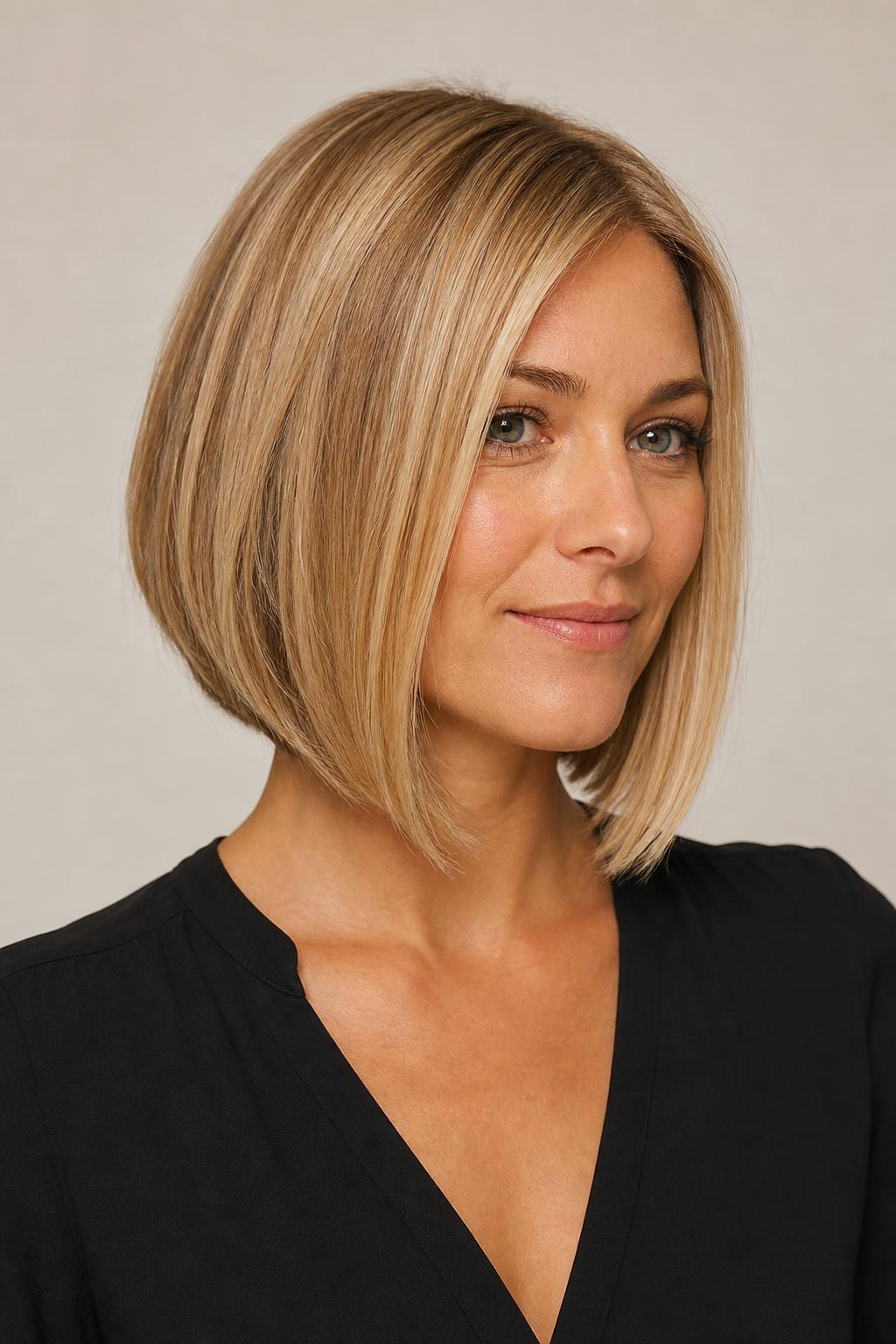
A center-parted fringe that splits and sweeps outward toward the cheekbones softens the horizontal cut line of a bob without committing to a full blunt fringe. It is the most reversible bang option available, since the shortest pieces are still long enough to tuck behind an ear within a few months. Pairing curtain bangs with a chin-length bob keeps a wider forehead in proportion.

9. Choppy Bob with Razored Ends
A razor drawn down the last two inches of each section removes weight progressively rather than in one cut, leaving ends that separate on their own. Medium-density straight-to-wavy hair takes this well; fine hair does not, because the razor thins ends that were already sparse.

Pixie-Length Cuts and Crops
Pixie-length cuts remove the option of hiding behind your hair, so the shape of the cut has to do all the work. Everything depends on three decisions made at the consultation: how tight the taper runs at the nape, how much length stays on top, and whether the fringe is cropped or left long enough to sweep. Get those right and a pixie is the lowest-effort short hairstyle there is.
10. Classic Tapered Pixie
Weight tapers gradually from about three inches on top down to a close, graduated nape, with the sides cut short around the ears. Heart-shaped faces do well here because the narrow nape keeps attention on the cheekbones rather than the chin. It is the most conservative pixie shape and the easiest to grow into something longer later.

11. Textured Crop with a Piecey Top
Rub a pea-sized amount of matte clay between your palms until it warms, then push it through dry hair from the back forward and finish by pinching pieces at the front. That is the entire styling routine, and it takes under two minutes.
12. Long Pixie with a Side-Swept Fringe
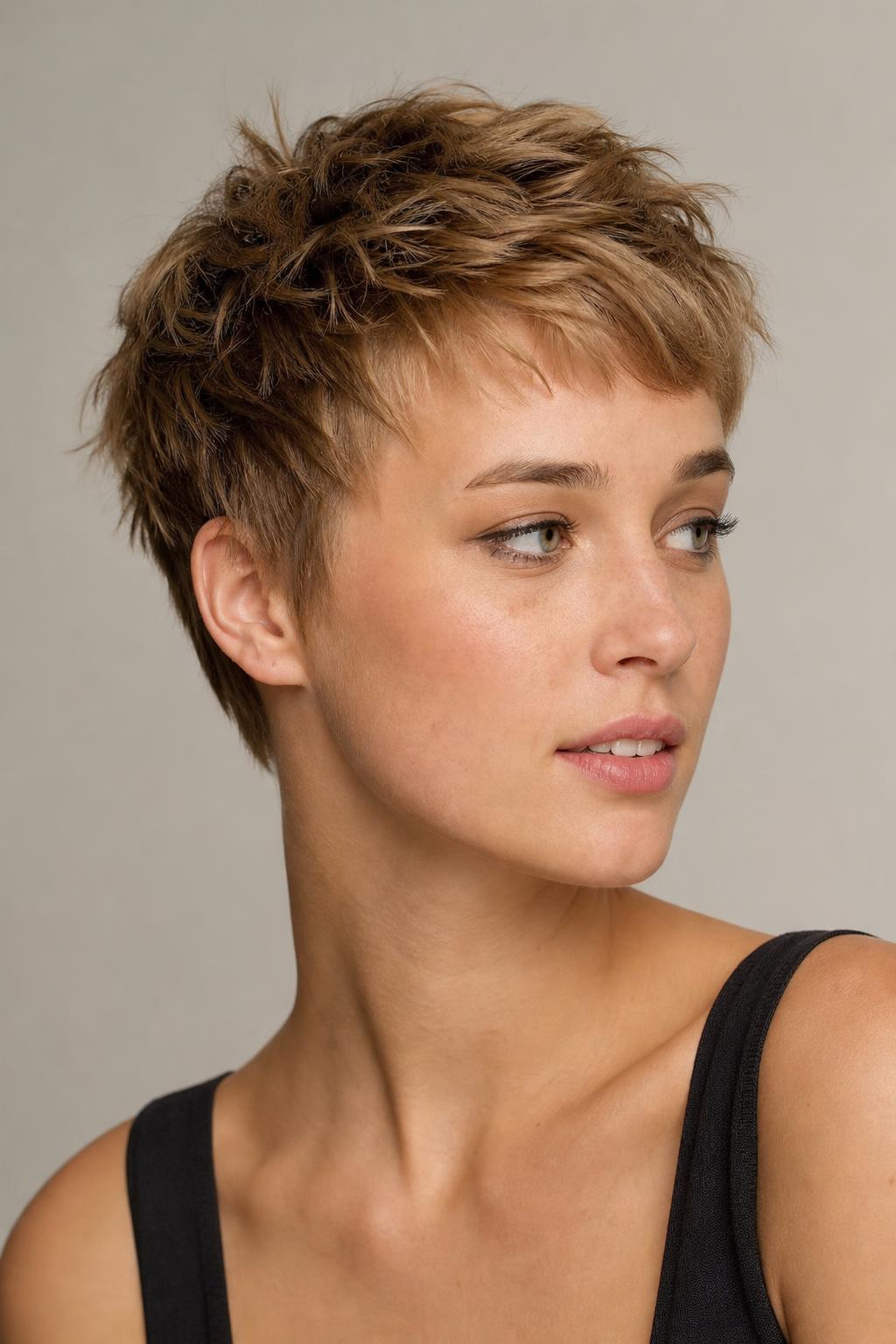
Fine hair gets more mileage from a long pixie than from a cropped one, because the extra length on top gives you something to lift at the root. The fringe is left long enough to sweep across the forehead and tuck behind the ear on one side. Density under about medium is the sweet spot; on thick hair this same shape balloons at the sides.
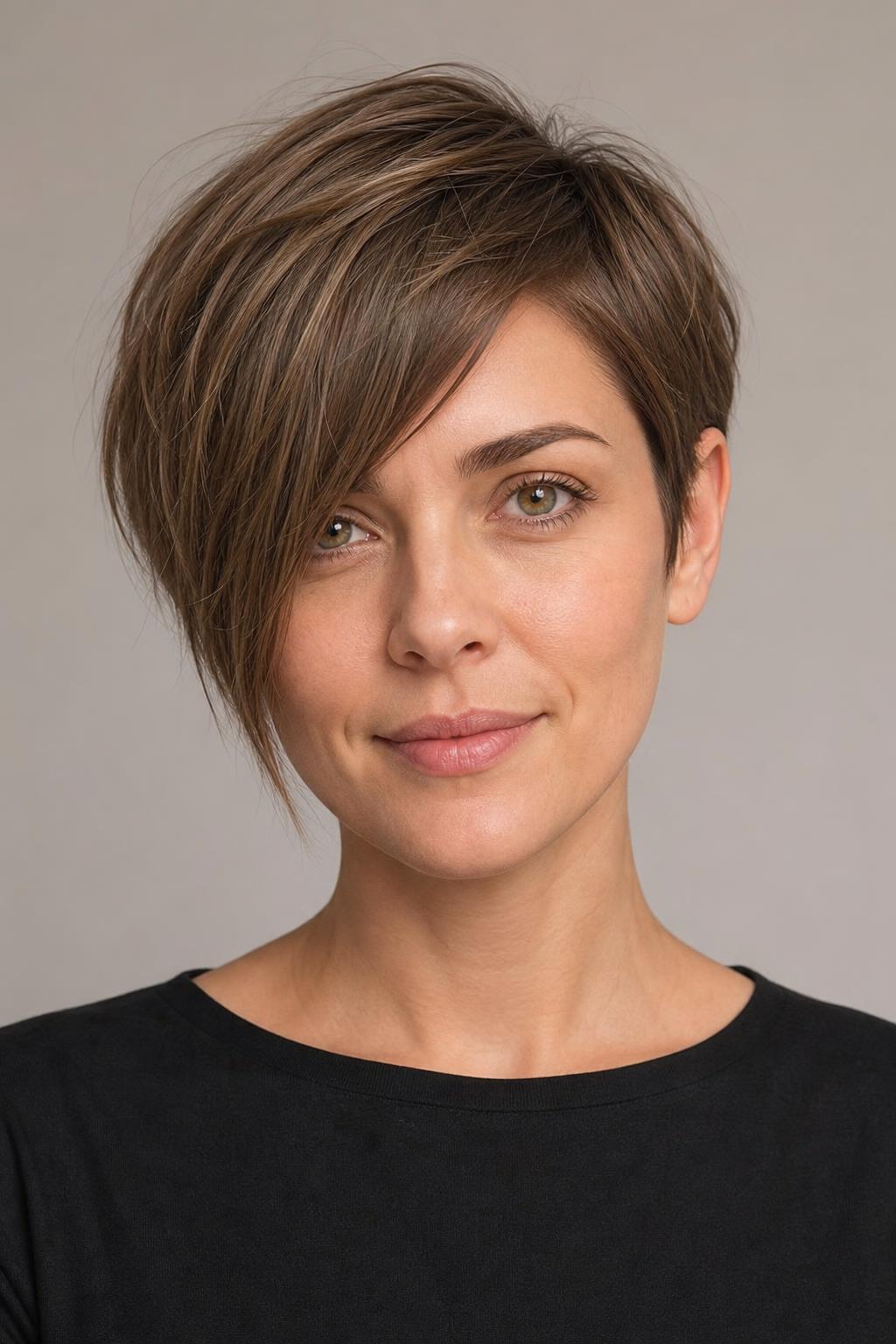
13. Pixie with an Undercut at the Nape
The hidden section under the occipital bone is clipped short so the hair above lies flat instead of pushing outward, which is a real solution for thick or coarse density. The trade-off is a four-week clipper appointment, since an undercut grows into a visible ridge faster than the cut around it. Budget for those touch-ups before you commit.
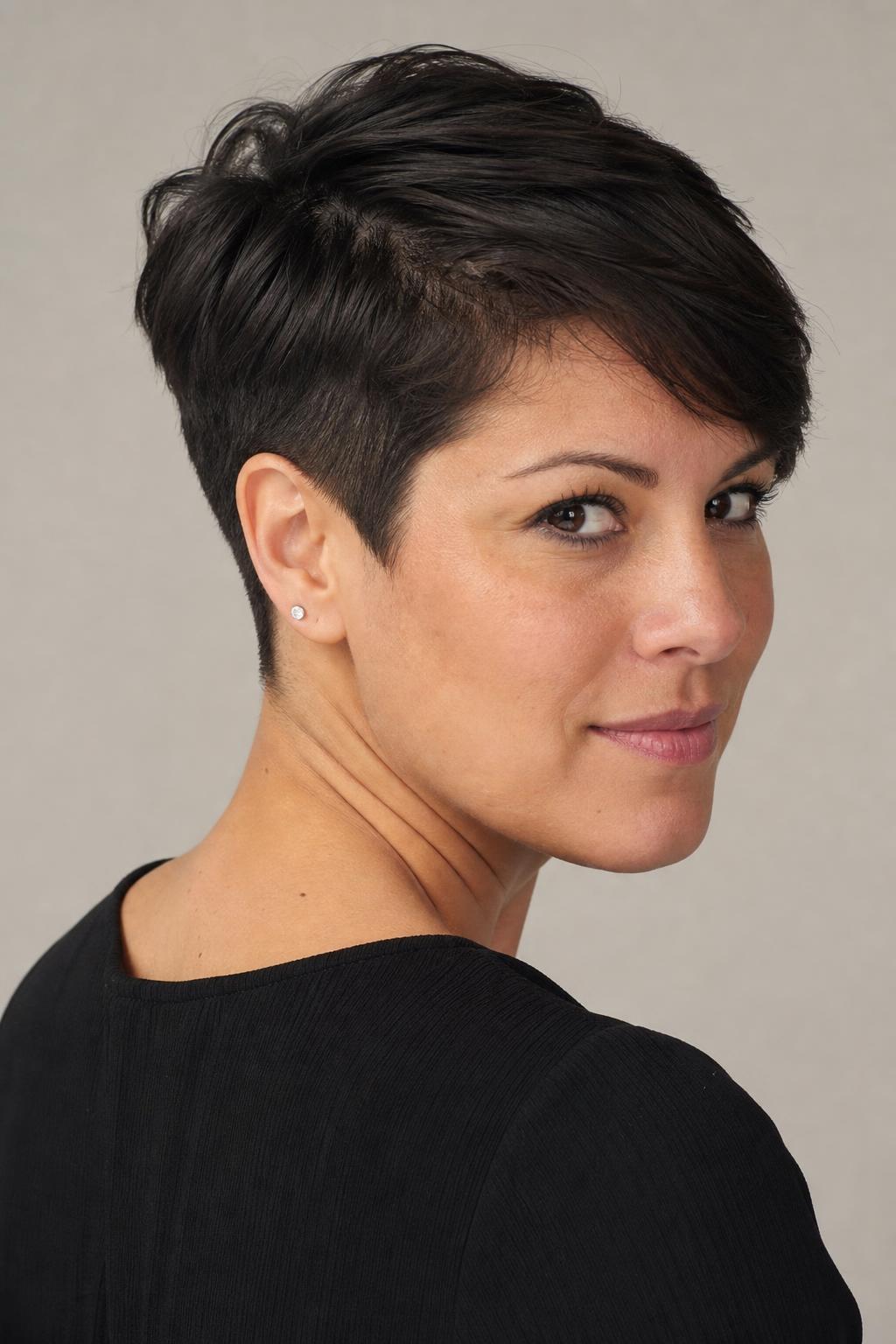
14. Curly Pixie with Defined Coils
Cutting curl by curl in its dry, natural state is the only way to control where a curly pixie lands, because shrinkage on 3c to 4a hair can be half the stretched length. The stylist shapes each coil individually rather than cutting a line through the whole head.
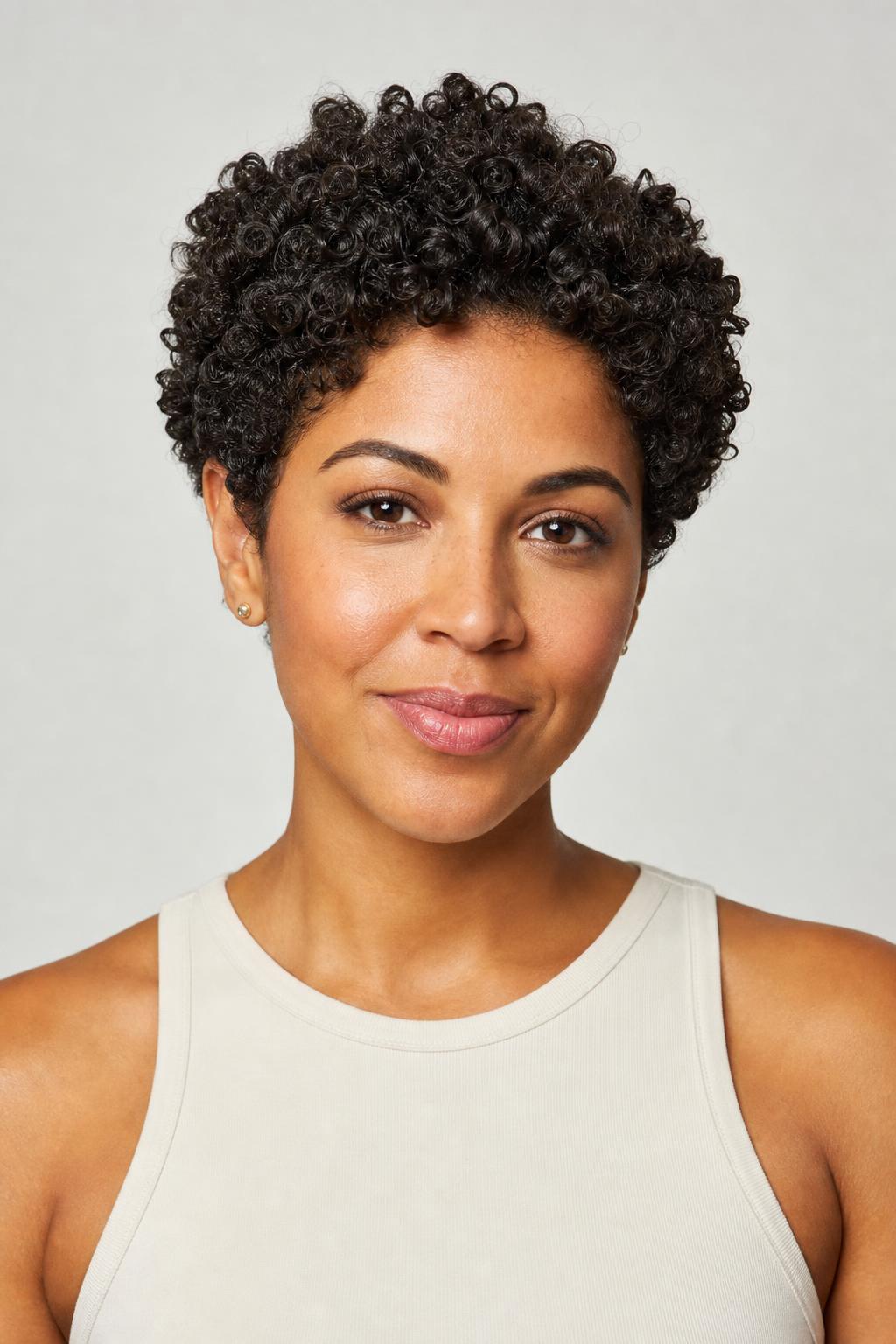
15. Bixie with a Rounded Perimeter
Where a pixie tapers to nothing at the nape, a bixie keeps a soft rounded perimeter that covers the top of the neck, so it splits the difference with a very short bob. The extra weight at the back makes it noticeably less flat than a true pixie on straight hair.
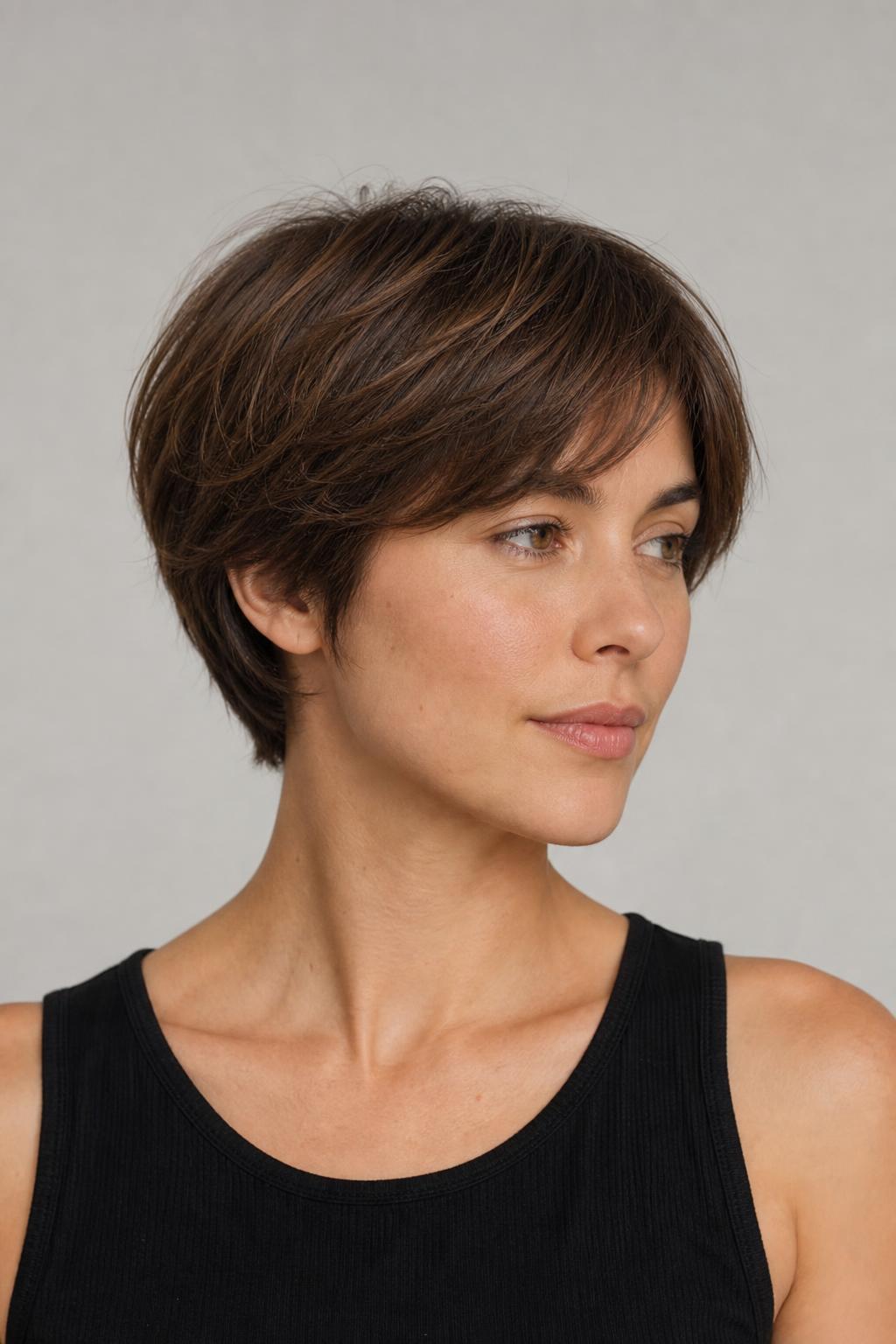
16. Silver Pixie with Soft Layers
Fully silver hair reflects more light than pigmented hair, so soft layering matters more here than it would on brunette: without separation the whole shape can flatten into one bright block. Layers cut about an inch apart through the top break the surface up and give the silver somewhere to shade.

17. Pixie with Baby Bangs
A fringe cut to roughly an inch and a half above the brow exposes the full forehead and pulls attention up toward the eyes. Long or oblong faces should skip this one, because the short fringe adds visual height exactly where they do not need it.

18. Grown-Out Pixie at Ear Length
Around week eight a pixie stops holding its shape and the sides start to flip out over the ears, which is where most people give up and cut it all off again. Asking for the sides and nape to be cleaned up while the top is left untouched buys another six weeks of length.
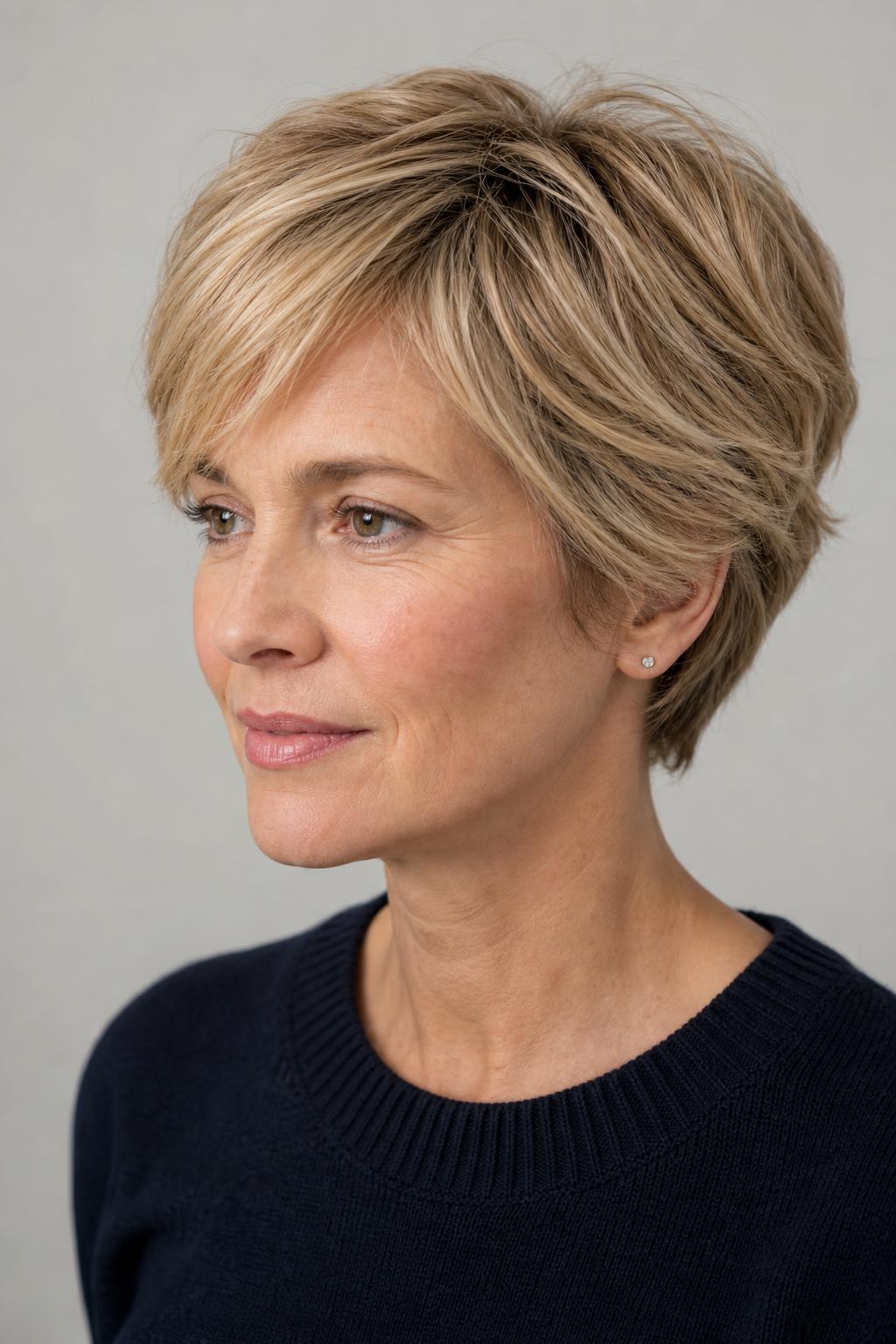
Textured Short Cuts with Layers
This group covers the cuts that live between a bob and a pixie, where heavy internal layering rather than the perimeter creates the shape. They are the most forgiving short hairstyles on grow-out because there is no single line to lose, and the most demanding day to day because they need product to look deliberate rather than untended. Wavy and thick textures get the best results.
19. Short Shag with Choppy Layers
Layers are cut short at the crown and graduate down through the sides in visible steps, with the shortest pieces landing near the top of the ear. The stepping is what separates a shag from a plain layered cut, and it is deliberate rather than blended away. Medium to thick density holds the steps; fine hair loses them within a wash.

20. Short Wolf Cut with Crown Volume
Scrunch a mousse into damp hair from the ends upward, then diffuse on low speed with your head tipped forward until the crown is dry. Skipping the tip-forward step is the single most common reason a wolf cut looks flat on top by mid-morning.
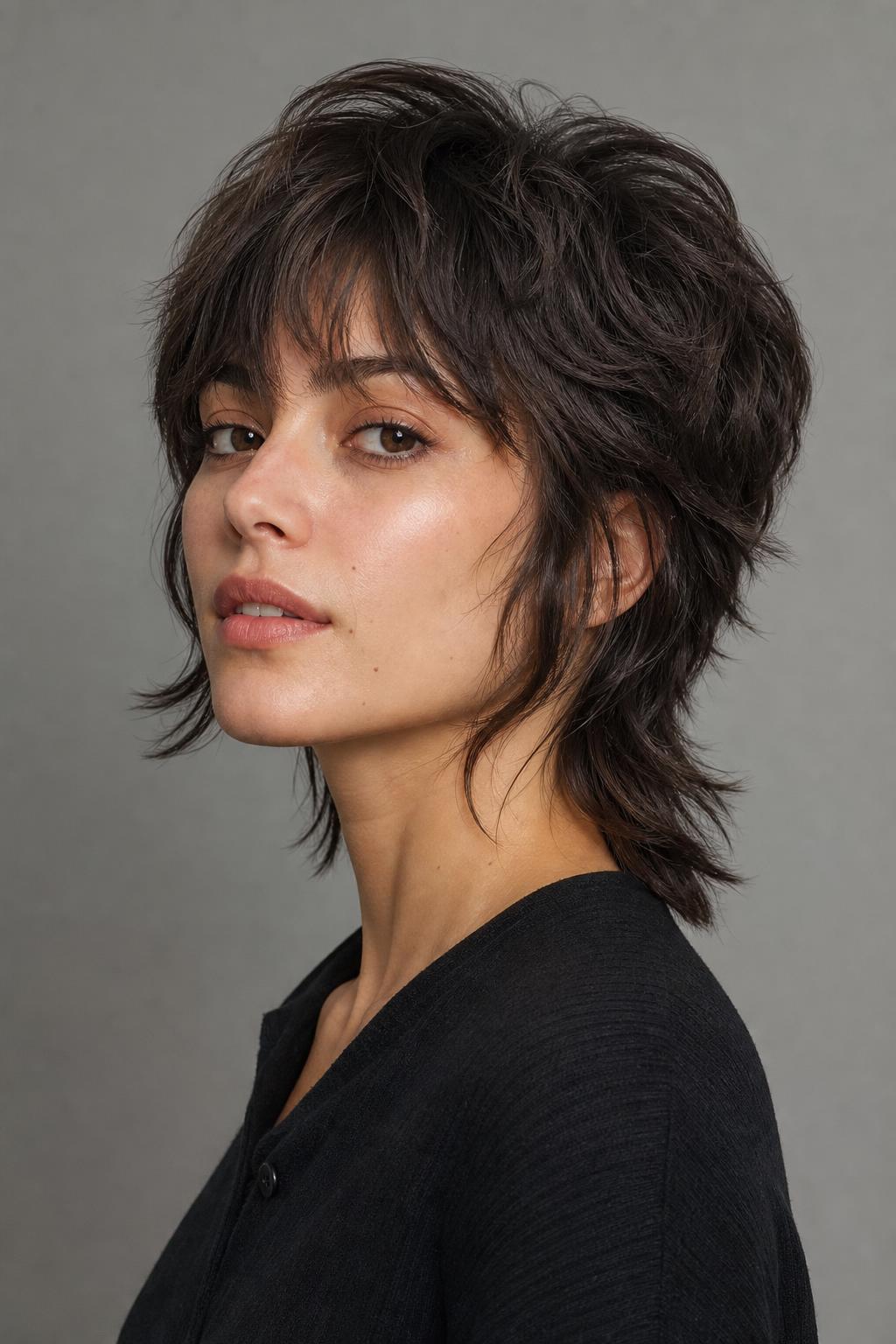
21. Shaggy Bob with a Wispy Fringe
Fine hair usually loses out with heavy layering, but a shaggy bob works around that by keeping the layers short and concentrated in the top third only, leaving the perimeter intact. The wispy fringe is cut with the ends thinned so it separates instead of forming a solid block across a thin hairline.

22. Short Mullet with a Soft Transition
Compared with a short shag, which distributes layers evenly around the head, a mullet concentrates the length change at the back, keeping the sides and top cropped while the nape stays longer. The modern version blends that transition over several inches instead of stepping it in one cut.
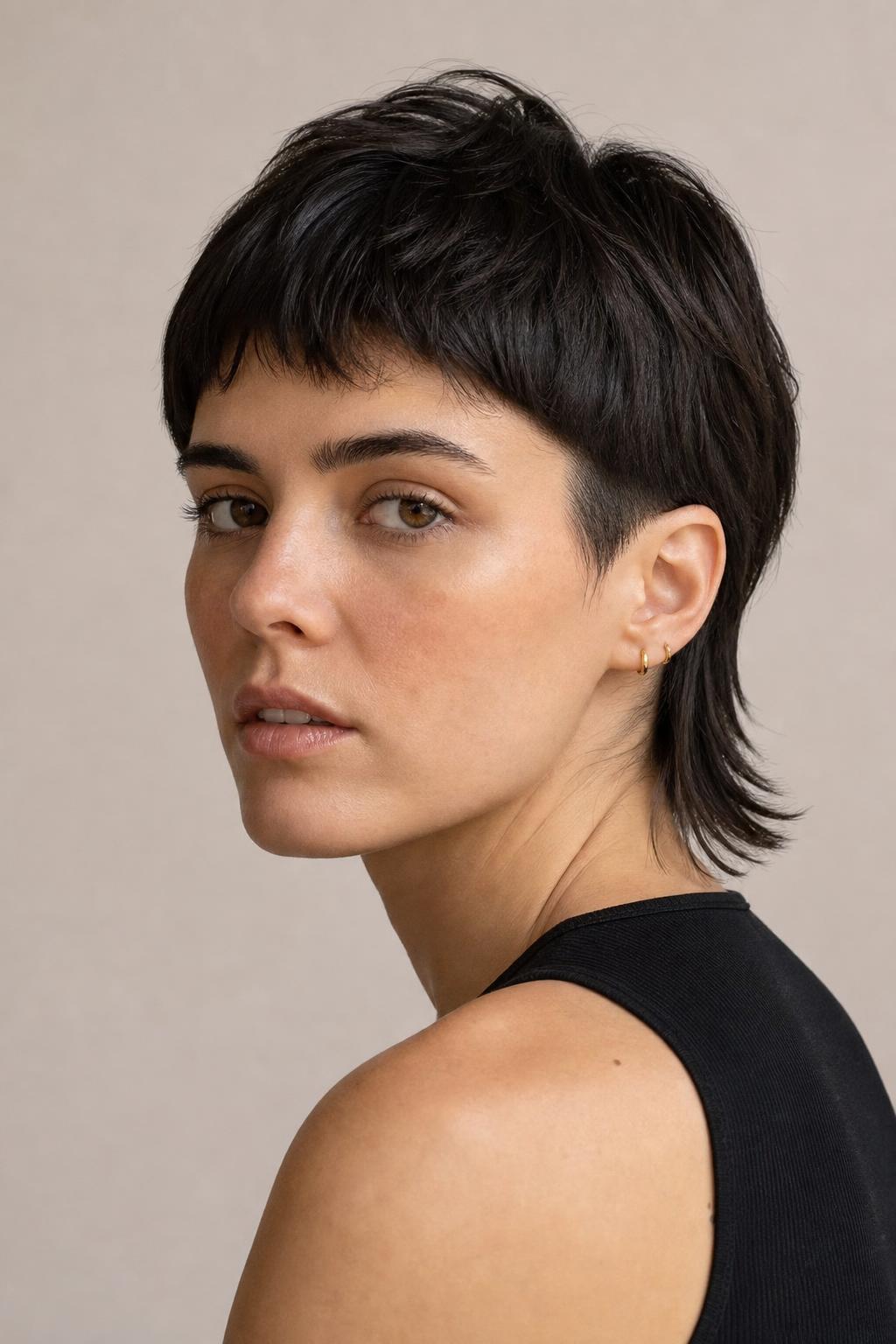
23. Layered Crop for Thick Hair
The words to use are internal layers only, keep my perimeter solid. That tells the stylist to remove bulk from underneath the surface while leaving the outer line intact, which is exactly what stops thick hair from building a triangle at ear level.

24. Short Shag for Wavy Hair
Apply a curl cream to soaking wet hair, cup handfuls upward toward the scalp, and then leave it completely alone until it is dry. Touching a wavy shag while it dries is what produces frizz, not the cut.

25. Cropped Cut with Face-Framing Pieces
Two longer pieces left at the front, cut to land just under the cheekbone, give a square or wide face a vertical line to break up the horizontal width of a cropped cut. They also give you something to tuck or push back, which a uniform crop does not. Ask for these to be cut to your cheekbone rather than your jaw if width is the concern.

Ways to Style Short Hair Without Cutting It
Not every hairstyle for short hair requires a new cut. If you already have a bob or a grown-out pixie, the styling choices below change the silhouette enough to look like a different haircut, which is useful when you are between appointments or not ready to commit to a shorter length. Each one works on hair from ear length to the collarbone.
26. Slicked-Back Short Hair
Work a strong-hold gel through soaking wet hair with a fine-tooth comb, dragging everything straight back from the hairline, then let it dry untouched. Applying gel to damp rather than wet hair is what produces visible comb tracks, so go wetter than feels right.

27. Half-Up Twist on a Bob
Take the top section from temple to temple, twist it back on itself twice, and pin it flat against the crown with two crossed bobby pins rather than one clip. The double twist is what stops short lengths from slipping out within an hour.
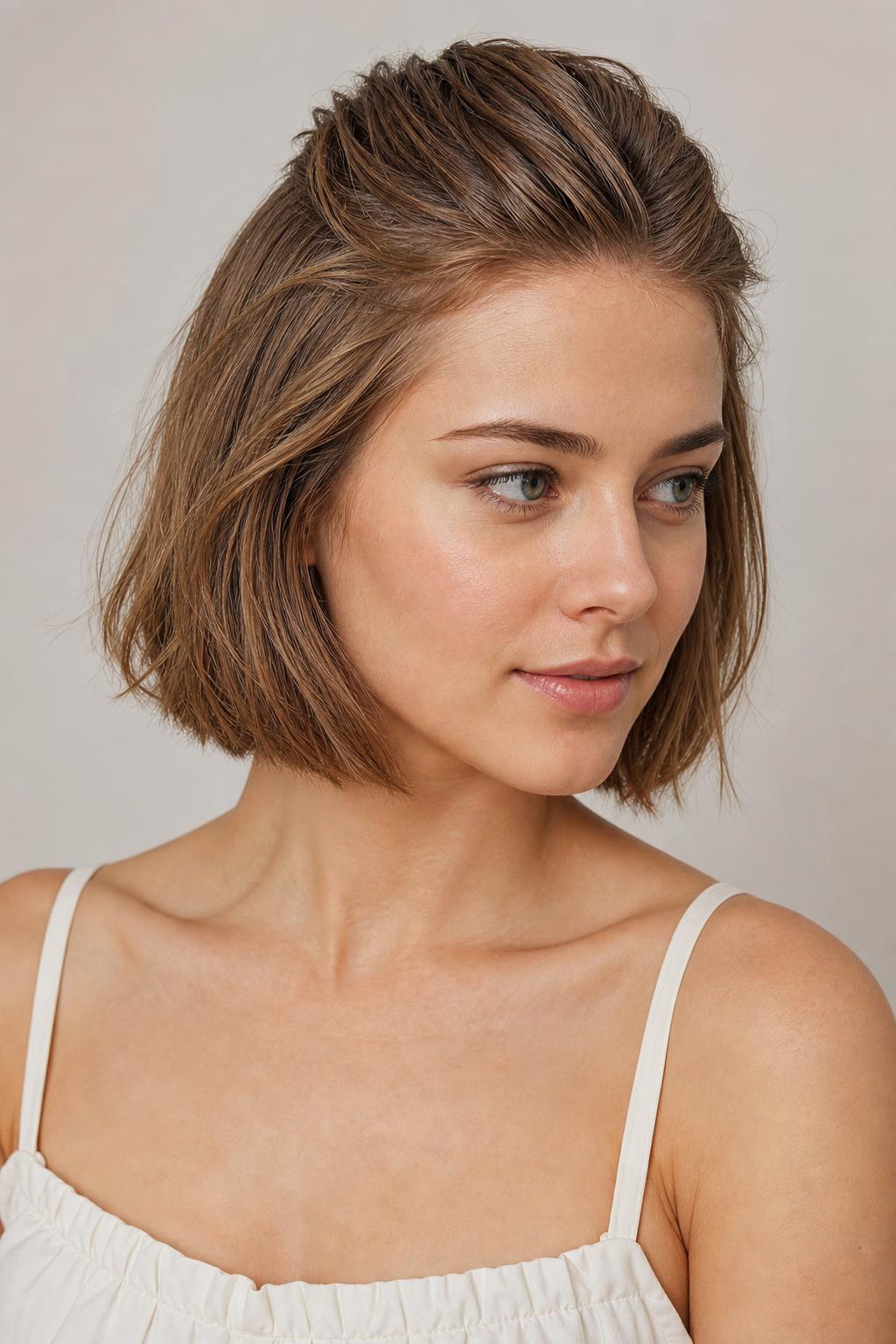
28. Beachy Waves on Chin-Length Hair
Coarse and thick hair holds a bent wave far better than fine hair does at this length, because the weight keeps the shape from dropping by lunchtime. Use a one-inch barrel, alternate the direction on each section, and leave the last inch straight. Anything under one inch produces ringlets rather than waves at this length.

29. Deep Side Part with One Side Pinned Back
Parting well off center and pinning the shorter side flat behind the ear creates an asymmetric outline, which is the quickest way to counter the width of a round face without touching the length. The exposed side also brings the cheekbone forward.

30. Air-Dried Texture with Sea Salt Spray
Two to four spritzes of a sea-salt-based texturizing spray on damp hair, scrunched once and left to dry, gives short hair grip and separation with no heat at all. More than four spritzes crosses into stiff and gritty, and washing it out means starting over.
How to Choose a Short Hairstyle for Your Face Shape
Short hair removes the vertical line that long hair draws down either side of the face, which is why face shape matters more here than at any other length. The working principle is simple: where the cut ends, the eye stops. A perimeter that finishes at the widest part of your face emphasizes that width, and one that finishes above or below it does not. If you are unsure which category you fall into, measuring your forehead, cheekbones, and jaw takes about two minutes with a tape measure.
| Face Shape | Best Short Variation | Ideal Length | Avoid |
|---|---|---|---|
| Oval | Almost anything, including cropped pixies and blunt bobs | Above the ear through collarbone | Heavy full fringe that hides already balanced proportions |
| Round | A-line bob or long pixie with a deep side part | Just past the jaw, or well above the ear | Chin-length blunt bob with a center part, which adds width |
| Square | Stacked bob angled forward, or a soft textured crop | Below the jaw or clearly above it | Blunt perimeter landing exactly at the jaw corner |
| Heart | Tapered pixie or chin-length bob with soft layers | Chin level or cropped with a narrow nape | Volume concentrated at the crown, which widens the forehead |
| Oblong | French bob, or a bob with a full or curtain fringe | Earlobe to chin, with width at the sides | Baby bangs and high crown volume, both add visual height |
| Diamond | Bixie or shaggy bob with face-framing pieces | Ear length through jaw length | Slicked-back styles that expose a narrow forehead and chin |
Stylist tip: Hold a hand mirror flat against the side of your face and slide your finger to the widest point you can feel, then note whether it is your temples, cheekbones, or jaw. Whatever short cut you choose, the perimeter should end at least an inch above or below that point, never level with it.
What to Tell Your Stylist
Short cuts leave no margin for a vague consultation, because there is nothing to hide a misjudged length behind. Bring two reference photos: one of the shape you want and one of the length you absolutely do not want to go past.
Use physical reference points rather than adjectives. Say the perimeter should land at the bottom of my earlobe instead of asking for a short bob, and specify keep the weight at the back or take the weight out at the back depending on whether your hair falls flat there. If you have a cowlick at the crown or a strong growth pattern at the nape, mention it before the first cut rather than after, because both change where the stylist has to start.
For a pixie, the three questions worth asking in the chair are how short the nape will be clipped, how much length will stay on top, and how the fringe will be cut. Those three answers describe the entire haircut. The same three-part logic works when you are asking specifically for a bob, and it prevents almost every short-hair disappointment.
Stylist tip: Ask your stylist to cut half an inch longer than the photo on the first visit, then check the result in a mirror before committing to the final length. Going shorter takes five minutes at the end of the appointment. Going longer takes three months.
Maintenance and Styling Reality for Short Hair
The counter-intuitive part of short hair is that it costs more in salon time, not less. A pixie needs shaping every three to four weeks because a quarter inch of growth visibly distorts the outline, while long hair can drift for three months without anyone noticing. What you gain is daily time: most short styles are finished in five to ten minutes, against twenty or more for a blow-dried long style.
| Cut | Trim Frequency | Daily Styling | Key Products | Grow-Out Behavior |
|---|---|---|---|---|
| Cropped pixie | 3 to 4 weeks | 5 to 10 minutes | Matte clay, light hold spray | Sides flip out from week 8; needs a nape clean-up |
| Long pixie or bixie | 5 to 6 weeks | 5 to 10 minutes | Volumizing mousse, texturizing spray | Grows into a short bob reasonably cleanly |
| Blunt bob | 5 to 6 weeks | 10 to 15 minutes | Heat protectant, smoothing serum | The line softens visibly after week 5 |
| Short shag | 8 to 10 weeks | 5 to 15 minutes | Sea salt spray, diffuser | Most forgiving option; layers keep working as they grow |
| Undercut pixie | 4 weeks | 5 minutes | Pomade or paste | Clippered section forms a visible ridge by week 5 |
Product volume matters as much as product type at this length. A pea-sized amount of clay is right for a pixie; the same amount on a chin-length bob does nothing, and three times that on a pixie makes it greasy by noon. Short hair also shows heat damage sooner, since damaged ends are never far from eye level, so a heat protectant matters more here than it does on long hair.
When Short Hair Is Not the Right Choice
Short hair asks for a specific set of trade-offs, and there are situations where it honestly does not pay off. These are the ones that come up most often in consultations, along with what to do instead.
- You have a strong cowlick at the crown or front hairline. Short lengths cannot be weighted down, so the cowlick dictates the shape rather than the cut. A long pixie or a bob past the chin gives enough length for gravity to help.
- You tie your hair back most days for work, sport, or heat. A cut above the ears cannot be tied at all, and a chin-length bob only half can, which usually means loose pieces all day. Keep the length at collarbone level if a ponytail is non-negotiable.
- Your salon budget is annual rather than monthly. Short cuts need six to twelve appointments a year to hold their shape, against two or three for long hair. A shag or textured bob is the most tolerant short option, but nothing at pixie length is genuinely low cost.
- You are within a year of major hormonal change, including postpartum or menopause-related shedding. Density can shift enough to change which cut suits you, and a shape chosen for the old density often stops working. Wait it out, or choose a cut that tolerates a density change.
- You are cutting short mainly to remove damaged ends. Getting rid of the damage is worth doing, but a bob at the chin achieves the same repair as a pixie without the commitment. Cut to the healthy line, not past it.
FAQ
How Do I Know If Short Hair Will Suit Me?
Look at where the widest point of your face is and whether your hair has enough body to hold a shape without daily styling. Short hair suits faces with a defined jaw or cheekbone line and hair with at least medium density or natural wave; very fine, very straight hair often falls flat once the weight is removed.
What Is the Easiest Short Hairstyle to Maintain Day to Day?
A short shag or textured bob with air-dried texture takes the least daily effort, usually under five minutes with a texturizing spray and no heat. The trade-off is that heavily textured cuts need an appointment every eight to ten weeks to keep the layers working. If you want the least effort overall including salon visits, a chin-length bob with point-cut ends is the better answer.
Does Short Hair Work on Fine or Thinning Hair?
Yes, and it often looks fuller than long hair does at the same density, because removing length concentrates the remaining hair into a smaller area. A blunt perimeter at chin length or a long pixie with root lift are the two shapes that work best. Avoid razor cutting and heavy thinning shears entirely, since both remove weight from hair that has none to spare, and pixie shapes built specifically for fine hair use blunt internal cutting instead.
How Long Does It Take to Grow Out a Pixie Cut?
Roughly twelve to eighteen months to reach a chin-length bob, assuming average growth of about half an inch a month. The difficult stretch is months two through five, when the sides reach the ears and start pushing outward. Booking a shaping appointment that cleans up only the nape and sides while leaving the top untouched carries you through that phase without losing length.
Should I Get Bangs with a Short Haircut?
Bangs make sense with short hair if your forehead is tall relative to the rest of your face or if you want to break up a long face shape. They add a separate maintenance cycle though, since a fringe needs trimming every three to four weeks regardless of when the rest of the cut is due. Curtain bangs are the lowest-commitment version because they grow into face-framing layers rather than into an awkward stage.
Can I Get a Short Haircut with Curly Hair?
Absolutely, provided the cut is done dry so the stylist can see the true resting position of each curl. Shrinkage on tighter patterns can hide half the stretched length, and a wet cut regularly comes out several inches shorter than agreed.
What Short Haircut Makes You Look Younger?
Cuts that add volume above the ears and keep some softness around the jaw tend to look more youthful than very flat or very severe shapes, so a textured bob or a short layered cut usually beats a heavy blunt line. Movement matters more than length. A very short cut with visible texture looks far fresher than a chin-length bob styled completely flat against the head.
Choosing among hairstyles for short hair comes down to three honest answers: how much density you actually have, where the widest point of your face is, and how many minutes you will really spend on it each morning. Pick the shape that matches those three rather than the one in the photo you liked most, and bring both a yes photo and a no photo to your appointment. A short cut chosen against your real hair rather than an aspirational version of it is the one you will still like in month three.
Hair results vary based on your natural hair type, texture, density, and condition. Always consult with a licensed hairstylist before making significant changes, especially with chemical treatments or dramatic length changes. Photos may show styled results that require professional tools and products to replicate.



1 response