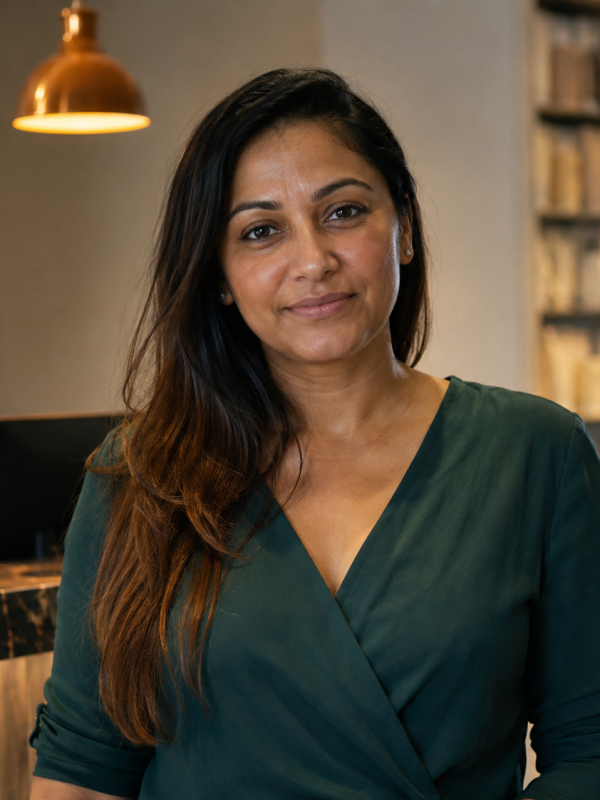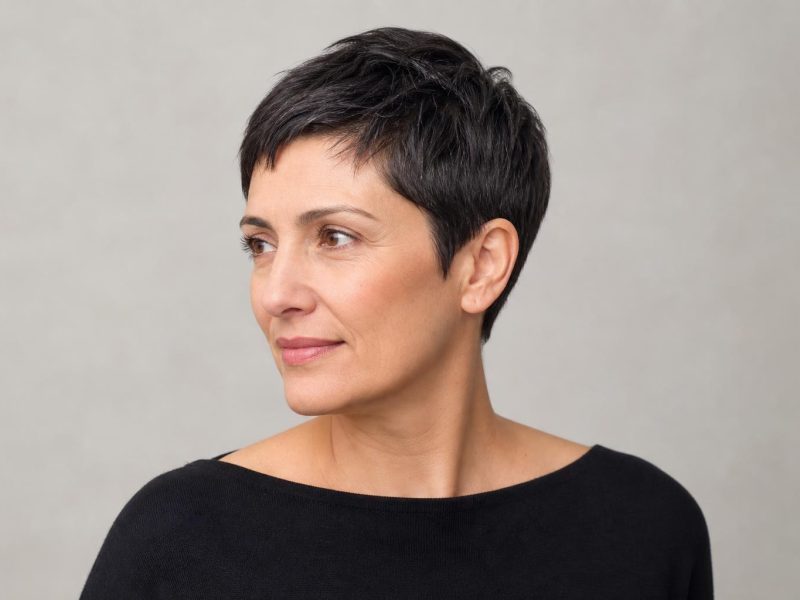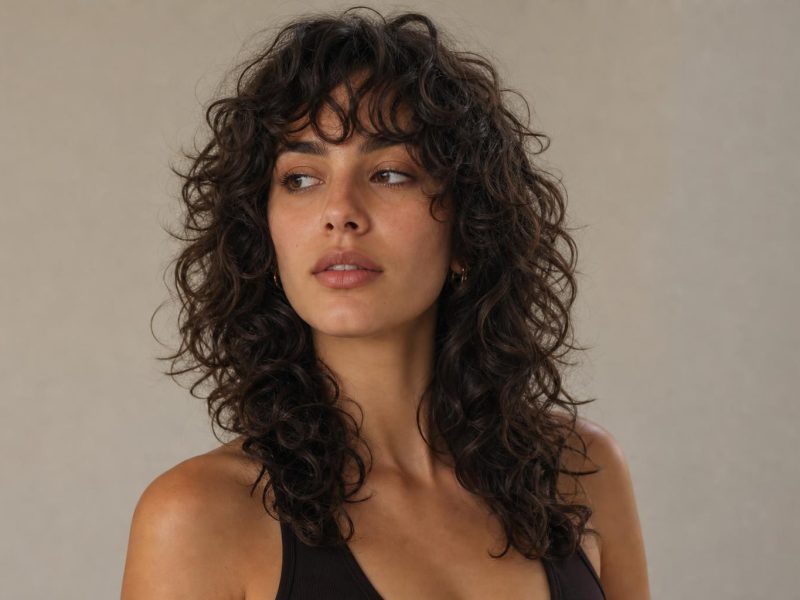

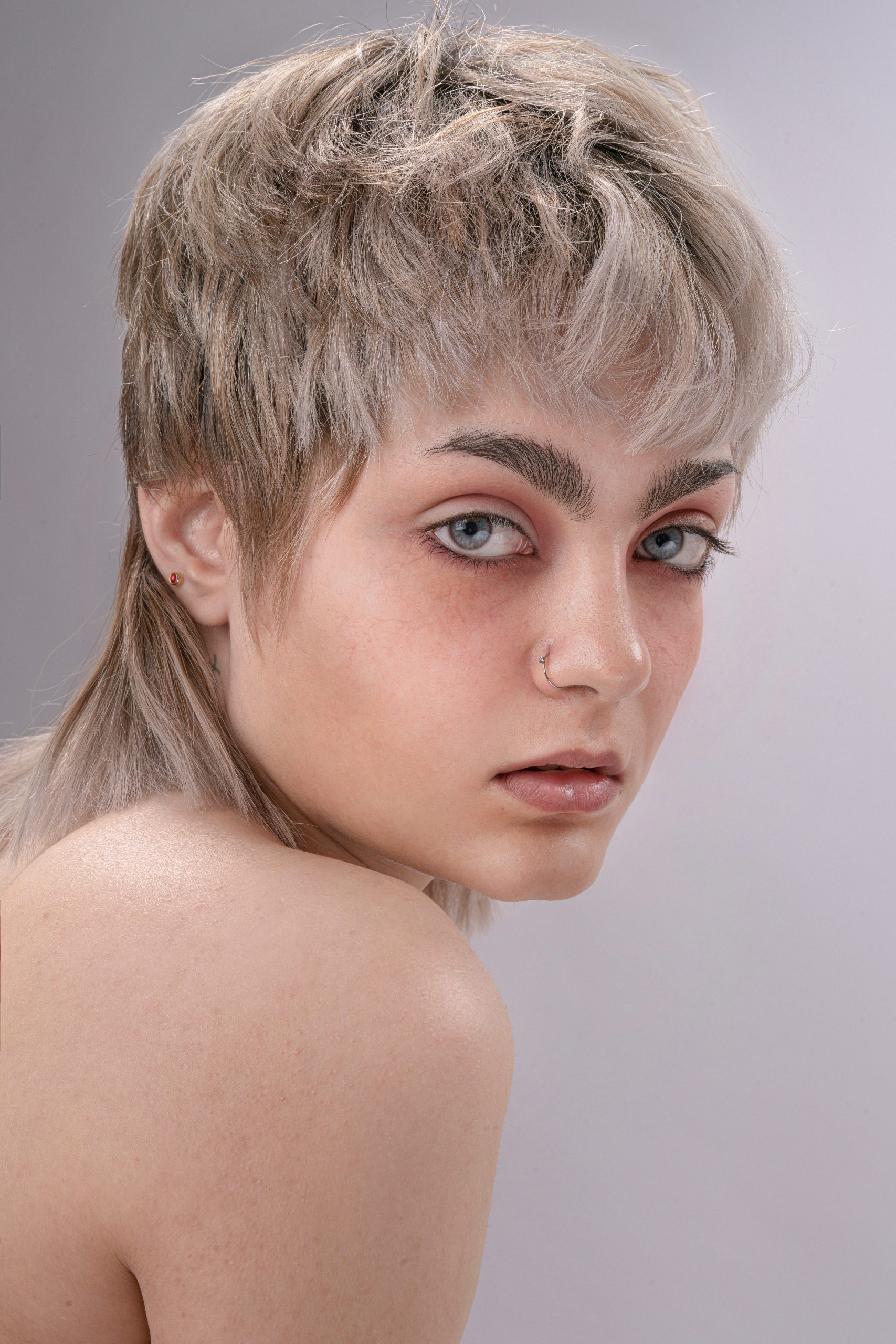
The mixie is what happens when a pixie’s cropped crown meets a mullet’s long, textured nape in one cut.
A mixie haircut keeps the top and sides short and graphic like a pixie, then leaves a longer, layered tail at the nape that nods to the mullet. The contrast is the whole point: cropped through the crown for lift, with two to five inches of movement left at the back so the shape has somewhere to go. It works on straight to wavy hair and can be shaped around curls, and it flatters most face shapes once the fringe and nape length are dialed in.
Below are 24 mixie ideas grouped by feel, from tidy cropped versions to shaggy grown-out ones to color-forward statements. After the gallery you get a face-shape compatibility table, the exact words to bring to your appointment, a realistic maintenance schedule, and an honest look at when this cut is the wrong call.
What Is a Mixie Haircut
The mixie is a hybrid of the classic pixie cut for women and the mullet. The front, crown, and temples are cut short and piece-y, while the perimeter at the back stays long enough to flick, curl, or lie flat against the neck. That split personality is what separates it from its cousins. A pixie is short all over; a mullet keeps length through the sides and back; the mixie borrows the cropped face-framing of one and the elongated tail of the other.
People often confuse the mixie with the bixie haircut, but the two aim at different silhouettes. A bixie blends a bob and a pixie for a rounded, fuller shape with no dramatic length at the nape. The mixie keeps that deliberate short-to-long contrast, which looks edgier and more androgynous. Fringe choice does a lot of the work here, and micro, wispy, or side-swept bangs each shift the mood of the finished cut.
Stylist tip: Ask your stylist to point out where the disconnection between the short crown and the long nape falls before any cutting starts. That single decision controls whether the mixie looks soft and blended or sharp and graphic, and it is much easier to agree on it with a mirror and a comb than to correct it afterward.
Cropped and Classic Mixies
These versions keep the top tight and the nape modest, so the pixie side of the family leads. They suit anyone testing the waters who wants the shape without a bold length difference, and most air-dry into place with a swipe of product.
1. Cropped Crown Mixie
Short scissor-over-comb work through the crown builds a rounded, lifted top that tapers into a nape left about two inches long. The graduation between the two is soft rather than blunt, so the eye travels smoothly from front to back. This is the most wearable entry point into the shape for someone coming from a standard pixie.
2. Rounded Mixie for Round Faces
Round faces gain length when the crown carries extra height, and this variation stacks volume right at the top to draw the eye upward. Keeping the sides close and the nape narrow adds a vertical line that slims a fuller cheek. Pair it with a slightly longer front piece to break up width near the jaw.
3. Fine-Hair Mixie with Piece-y Layers
Fine hair gets its best result from point-cut, separated layers rather than heavy thinning, which can leave sparse ends looking wispy. The short crown creates the impression of density where fine hair tends to fall flat, and the longer nape gives a little weight to anchor the shape. A texturizing spray at the roots keeps it from going limp by midday, and a textured pixie approach to the top translates directly to this cut.
4. Slicked-Back Mixie
Comb a small amount of pomade straight back through damp hair to pull the whole shape into a sleek, wet-look finish that shows off the nape length. The look leans polished and androgynous, and it takes under five minutes once the cut is right. Reach for a strong-hold, high-shine pomade if you want the effect to last through a long evening.
5. Low-Upkeep Cropped Mixie
Between salon visits, a shorter mixie holds its shape longer than a blunt pixie because the piece-y ends disguise early grow-out. You can stretch to six weeks before the crown starts looking heavy, though the nape will feel it first. A quick dry trim on the fringe at home buys you an extra week or two.
6. Ash Brown Mixie
A cool ash brown flattens warmth and lets the choppy layers show up as shadow and separation instead of shine. The muted tone suits the cut’s edgy leaning and keeps a grown-out root looking deliberate rather than neglected. Ash shades fade toward brassy on porous hair, so a blue-based toning conditioner every couple of weeks holds the color true.
7. Micro-Fringe Mixie
Ask your stylist for a blunt micro-fringe that stops well above the brow to pair with the short crown, then keep the nape soft to balance the sharpness up front. The tiny fringe is a strong style statement, so bring a photo and be honest about whether you will commit to trimming it every two weeks. If a full baby bang feels like too much, a wispy version borrowed from pixie cuts with bangs softens the same idea.
8. Mixie vs Bixie Crop
Unlike a bixie, which rounds out into a bob-like fullness with no tail, this crop keeps a clear length break at the nape. Choosing between them comes down to how much contrast you want, since the bixie stays uniform while the mixie plays short against long. Go with this version if the tail is the feature you are after rather than overall volume.
Textured and Shaggy Mixies
Loosen the layering and let the nape grow, and the mullet side of the mixie takes over. These shaggier cuts trade precision for movement, which makes them forgiving on wavy hair and easy to wear undone.
9. Razor-Textured Shaggy Mixie
Razor cutting through the mid-lengths and nape carves out feathery, tapered ends that fall into loose, lived-in separation. The technique removes bulk while keeping a soft perimeter, so the tail flicks out instead of hanging heavy. Razor work suits medium to thick hair best, since it can over-thin fine strands.
10. Heart-Shape Mixie with Soft Fringe
Heart-shaped faces balance a wider forehead and narrower chin when a soft, wispy fringe blurs the hairline up top. The longer nape adds a little visual weight lower down, which evens out the proportions. Keep the fringe airy rather than blunt so it flatters instead of shortening the face.
11. Wavy Mixie with Built-In Movement
Wavy hair does half the styling on its own here, since the natural bend activates the layers without heat. The shaggy nape springs into loose S-waves while the crown stays cropped and controlled. Scrunch a curl cream into damp lengths and let it air-dry for the easiest version of the look.
12. Air-Dried Textured Mixie
Let the cut dry naturally, then break up the pieces with a pea-size amount of matte paste worked between your fingertips. The finish is undone and slightly rough, which is exactly the point of a shaggy mixie. Skip the brush entirely, since combing flattens the separation you want.
13. Grow-Friendly Shaggy Mixie
Because the nape is already long and layered, this shape moves through the awkward months better than most short cuts as it grows toward a shaggy lob. The crown catches up gradually rather than sticking out, so you avoid the classic mushroom stage. Anyone weighing the commitment should read up on growing out a pixie cut before booking, since the mixie follows a friendlier version of that same path.
14. Honey Balayage Mixie
Warm honey balayage painted through the mid-lengths and tail lights up the layers with soft dimension. Because the color concentrates lower down, regrowth stays low-key and touch-ups can wait eight to ten weeks. The brighter ends draw attention to the nape, which plays up the mullet half of the cut.
15. Wispy Curtain-Fringe Mixie
Tell your stylist you want a center-parted curtain fringe that blends into the shorter sides for a softer, more romantic take on the mixie. The parted bang frames the face without the commitment of a blunt fringe, and it grows out cleanly into face-framing pieces. Mention how far past the brow you want it to fall so the length matches your styling habits.
16. Mixie vs Wolf Cut
Where a wolf cut keeps length and heavy layering through the whole head, the mixie crops the crown much shorter and confines the drama to the nape. The result is tidier up top and more graphic overall, even though both share that shaggy, textured attitude. If you love the layered energy but want less bulk around the face, this is the cleaner choice, and comparing it against a full wolf cut makes the trade-off obvious.
Color-Forward and Edgy Mixies
This last group pushes the cut with disconnection, bold color, and stronger contrast. These are the versions that turn heads, and they ask a little more of both your colorist and your morning routine.
17. Undercut Nape Mixie
Disconnecting the nape with a clippered undercut sharpens the split between the short crown and the long tail, so the length lies flat and clean against the neck. The hidden undercut also removes weight, which helps thick hair fall without puffing out. Fans of a machine-cut finish will recognize the same crispness found in a modern mullet fade, applied here to the mixie’s shape.
18. Square-Jaw Mixie with Feathered Sides
Square jawlines soften when feathered layers fall around the cheeks instead of stopping in a hard line at the jaw. Angling those side pieces forward introduces a diagonal that breaks up a strong corner. Keep the nape textured rather than blunt so the whole silhouette stays fluid.
19. Coily Mixie for Natural Texture
Coily and tightly curled hair wears the mixie as a sculpted cloud up top with a defined, springy nape below. The cut has to be shaped dry so the stylist can account for shrinkage at every section, otherwise the finished length is a guess. A curl-forward version borrows heavily from the curly mullet, tightening the crown while letting the back coil freely.
20. Matte Pomade Piece-y Mixie
Work a pea-size amount of matte pomade through dry hair to pull apart the crown into distinct, separated pieces with zero shine. The finish is textured and a touch messy, which suits the cut’s rebellious streak. A little goes a long way, so start small and add rather than trying to fix an over-loaded top.
21. Two-Tone Mixie with Grown-Out Color
Shadow roots melting into brighter ends keep this version looking sharp for months without frequent salon trips. The deliberate root gives the cut a rooty, worn-in quality that flatters the choppy layers. Low upkeep on the color side balances the more frequent trims the shape itself needs.
22. Copper Mixie
Copper turns the mixie into a genuine statement, glowing warm across the cropped crown and catching the light along the nape. The vivid tone is one of the more striking ways to wear the cut, though copper pigment fades quickest of all the shades. A color-depositing conditioner once a week stretches the vibrancy between appointments.
23. Platinum Editorial Mixie
Show your colorist a reference photo and confirm how many sessions your hair needs to reach a clean platinum without breakage. The icy shade exaggerates every layer and shadow in the cut, which makes the mixie’s structure the star. Be upfront about your hair’s history, since previous color or heat damage changes the lightening plan entirely.
24. Long Mixie Edging Toward a Shullet
At the far end of the range, the nape grows long enough that the cut flirts with shag and shullet territory while the crown stays cropped. The extended tail gives more to style and more contrast, at the cost of a shape that needs shampooing and product attention more often. Anyone who prefers this longer balance might also like a long pixie cut, which keeps similar length up top without the dramatic nape.
How to Choose the Right Mixie for Your Face Shape
The mixie flexes to most face shapes because you control three levers: crown height, fringe style, and nape length. Adding height at the crown elongates a rounder face, while a softer fringe balances a wider forehead. The table below maps each shape to the version that flatters it and the choice to skip.
| Face Shape | Best Mixie Variation | Ideal Fringe | Avoid |
|---|---|---|---|
| Oval | Almost any version, cropped to shaggy | Micro, wispy, or curtain | Very little; keep balance front to back |
| Round | High-crown mixie with close sides | Side-swept or longer front piece | Wide, flat crown that adds width |
| Square | Feathered sides, textured nape | Soft, angled forward | Blunt lines stopping at the jaw |
| Heart | Wispy-fringe mixie, weighted nape | Airy, brow-grazing | Heavy, wide crown over a narrow chin |
| Oblong | Lower-crown mixie with fuller sides | Blunt or full curtain | Tall crown height that lengthens the face |
| Diamond | Textured crown, soft face-framing | Side-parted, feathered | Slicked styles that expose a narrow forehead |
What to Tell Your Stylist
The mixie lives or dies on the consultation, because the short-to-long contrast is easy to get wrong without agreeing on specifics first. Bring one or two reference photos and describe the length break in your own words rather than trusting the name alone. Try language like: “I want a short, piece-y pixie top and crown, kept close at the sides, with the nape left about three inches long and textured so it flicks out.” Then confirm the fringe: “A wispy, brow-grazing fringe, not blunt.”
Talk through your real routine too, since the same cut can be built for wash-and-go or for daily product work. Say how many minutes you actually spend styling and whether you own a blow-dryer you will use. Ask where the disconnection falls and whether the grow-out heads toward a shaggy lob, so there are no surprises in two months.
Stylist tip: Photograph the back of your own head after the cut while you still have the salon mirror behind you. The nape is the one section you cannot see day to day, and a reference shot on your phone tells your next stylist exactly how long the tail should stay when you go in for a trim.
Maintenance and Styling
Plan on a shape-up trim every four to six weeks to keep the crown from going heavy and the nape from losing its edge. Daily styling runs five to ten minutes for most versions: a texture spray or a pea-size dab of matte paste is usually all the shorter cuts need, while a shaggy nape benefits from a curl cream scrunched in as it air-dries. Skip heavy waxes on fine hair, which drag the crown down and kill the lift the cut depends on.
Grow-out is one of the mixie’s quiet strengths. Since the nape already carries length, the shape drifts toward a shaggy lob instead of a mushroom, and the crown blends in gradually. The maintenance schedule below sets realistic expectations for the three most common versions.
| Version | Trim Frequency | Daily Styling | Key Products | Grow-Out Behavior |
|---|---|---|---|---|
| Cropped mixie | 4 to 5 weeks | 5 minutes | Matte paste, texture spray | Crown goes heavy first; nape holds |
| Shaggy mixie | 6 to 8 weeks | 5 to 10 minutes | Curl cream, sea salt spray | Drifts toward a shaggy lob gracefully |
| Undercut mixie | 3 to 4 weeks | 5 minutes | Pomade, light hold spray | Undercut fills in fast; needs re-clipping |
When a Mixie Is Not the Right Choice
The mixie is versatile, but it is honestly not the cut for everyone. These are the situations where another shape will serve you better, and what to try instead.
- Very fine, sparse hair at the nape can look stringy where the mixie wants length, so a fuller pixie or a rounded bixie holds up better through the day.
- Corporate or conservative dress codes may clash with the cut’s edgy, mullet-leaning tail, in which case a soft, blended pixie gives a similar crop without the statement back.
- A truly zero-maintenance routine fights the four-to-six-week trim cycle, and a longer layered cut that hides grow-out is the calmer option.
- Tight coils cut by a stylist unfamiliar with shrinkage can end up far shorter than planned, so book only with someone who cuts textured hair dry and understands the pattern.
FAQ
What Is a Mixie Haircut?
A mixie is a hybrid of a pixie and a mullet, with a short cropped crown and sides plus a longer, textured nape. The contrast between the short top and the elongated back is what defines the shape. It works on straight, wavy, and curly hair and can be worn tidy or shaggy depending on how the layers are cut.
Is a Mixie the Same as a Bixie?
No, they are different cuts aimed at different silhouettes. A bixie blends a bob and a pixie into a rounded, fuller shape with no length at the nape, while a mixie keeps a clear short-to-long contrast that borrows the mullet’s tail. If you want a graphic length break at the back, choose the mixie; if you want uniform fullness, the bixie fits better.
Does a Mixie Work on Curly Hair?
Yes, a mixie can look great on curly and coily hair when it is cut correctly. The stylist should shape it dry to account for shrinkage, tightening the crown while leaving the nape to spring up naturally. Curl-specific cutting matters more than the trend name here, so book with someone who works with your pattern regularly.
How Often Does a Mixie Need Trimming?
Most mixies need a shape-up every four to six weeks to keep the crown light and the nape defined. Undercut versions need re-clipping closer to every three to four weeks because the shaved section fills in fast. Shaggier, longer variations can stretch to eight weeks since grow-out blends into the texture.
Will a Mixie Grow Out Awkwardly?
A well-built mixie grows out more gracefully than most short cuts because the nape already carries length. Instead of a mushroom stage, the shape drifts toward a shaggy lob as the crown catches up. Ask your stylist to plan the cut with that grow-out path in mind at your first appointment.
What Face Shapes Suit a Mixie?
The mixie flatters most face shapes because crown height, fringe, and nape length are all adjustable. Round faces do well with added crown height, heart shapes with a soft fringe, and square jaws with feathered sides. Oval faces have the most freedom and can wear nearly any version.
How Do I Style a Mixie at Home?
Most mixies need only a few minutes and one product to look finished. Work a pea-size amount of matte paste or a spritz of texture spray through dry hair to separate the crown, or scrunch a curl cream into a wavy nape and let it air-dry. Keep a light hand, since too much product flattens the lift the cut relies on.
The mixie haircut rewards a clear consultation more than almost any other short style, since the whole look hinges on where the cropped crown gives way to the longer nape. Bring two reference photos from this collection, describe the length break in plain words, and be honest with your stylist about how much time you will really spend styling. Get those three things right and the mixie becomes one of the most flexible short cuts you can wear.
Hair results vary based on your natural hair type, texture, density, and condition. Always consult with a licensed hairstylist before making significant changes, especially with chemical treatments or dramatic length changes. Photos may show styled results that require professional tools and products to replicate.